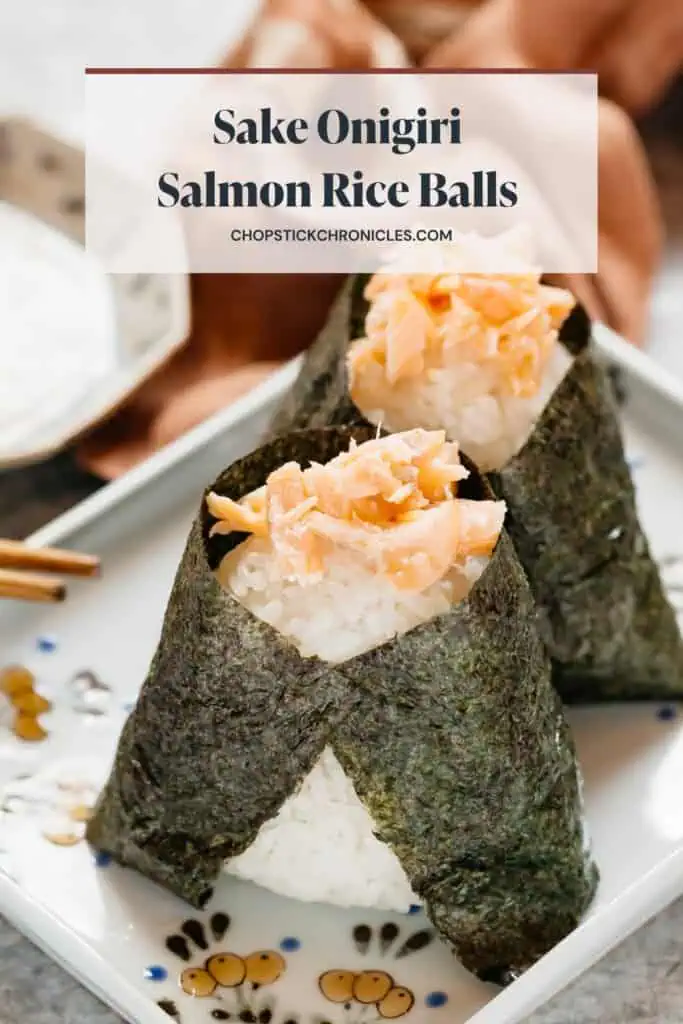
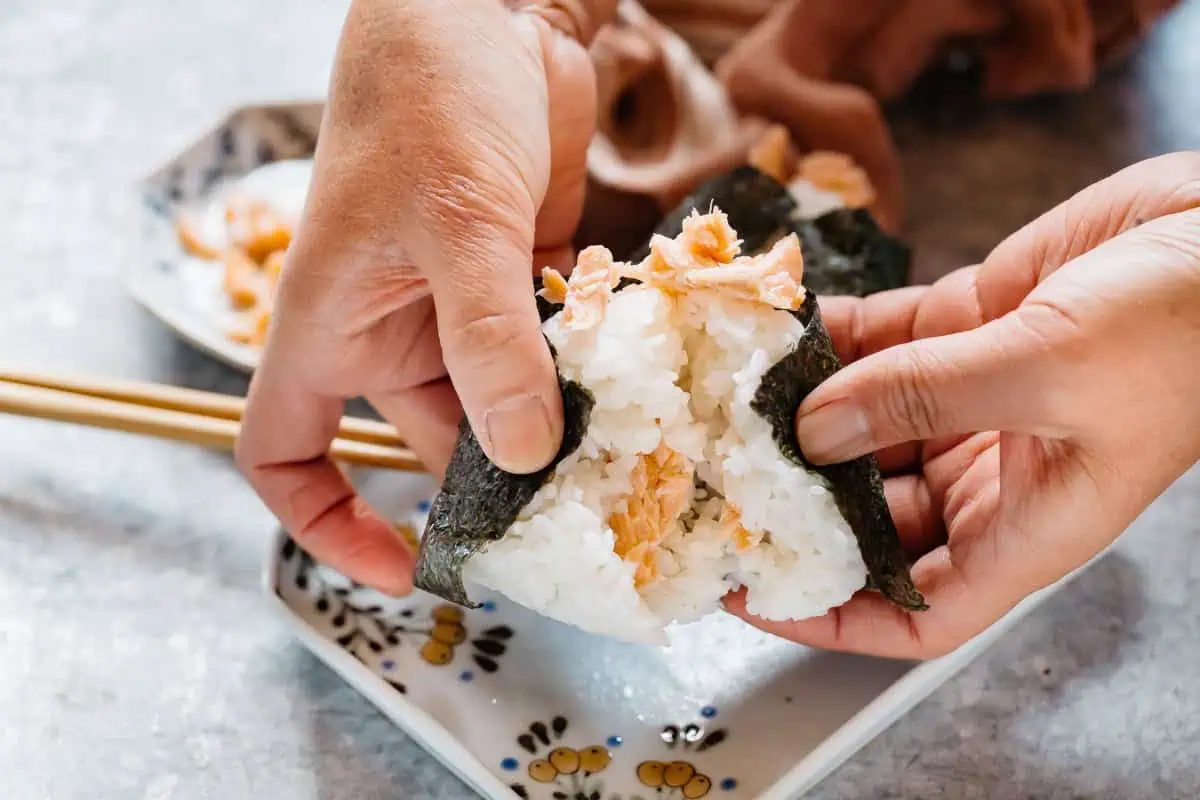
Japanese rice balls are a popular food for a reason! They’re healthy, convenient, easy to eat on-the-go and have so many flavors and filling options you’ll never get tired of them. These particular rice balls are filled with salmon seasoned with salt. It’s simple but the salty flavour of the salmon matches so well with the plain white rice making it super delicious. Salmon onigiri are perfect as part of a larger meal or in a bento box or on their own as a snack or light meal!
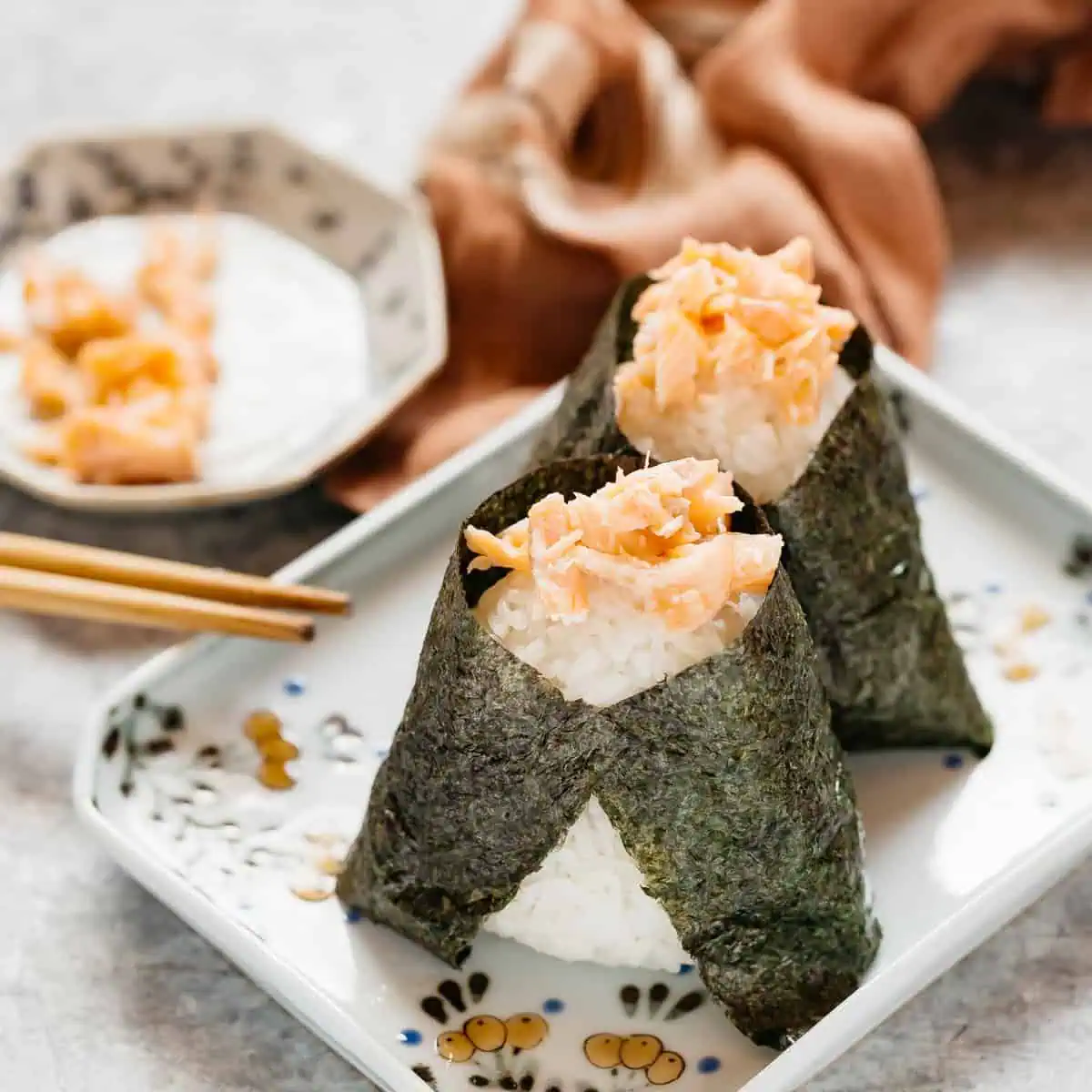
Table of contents
What is Salmon Onigiri?
Salmon onigiri is a traditional Japanese dish or food that combines grilled and flaked salmon with steamed white rice. Onigiri, also known as omusubi or rice balls, are a staple in Japanese cuisine and have many other flavour variations including tuna mayo and umeboshi (pickled plum). Salmon onigiri is one of the most popular and common types of onigiri because the flavor combination works so well. The salmon used to make this type of onigiri is usually salted and is called “Shiosake“.
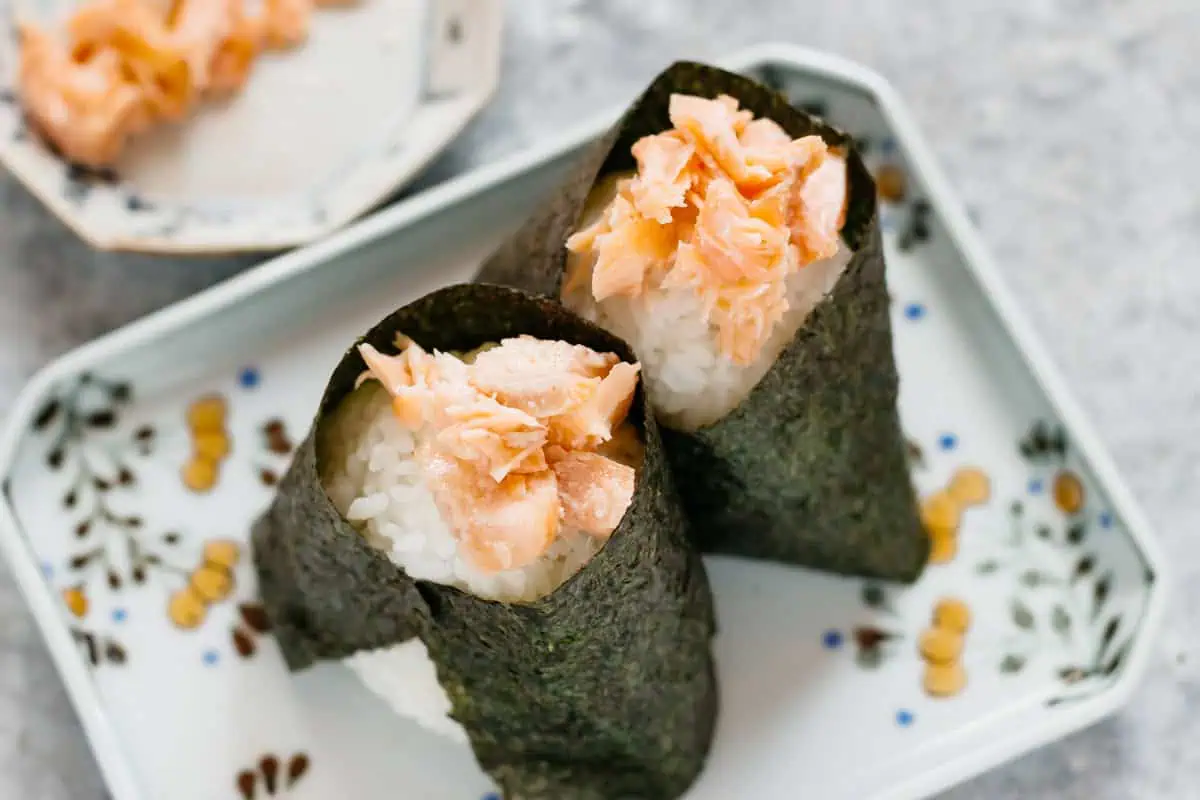
Salmon onigiri, and other types of onigiri, are very popular items at convenience stores because they’re affordable, filling, and portable. They were also an essential food for me during my high school years. My mother would make salmon onigiri for me while I studied and I would sit at my desk with an onigiri in my left hand and pencil in my right hand.
Ingredients You’ll Need
To make delicious salmon onigiri, you will need the following ingredients:
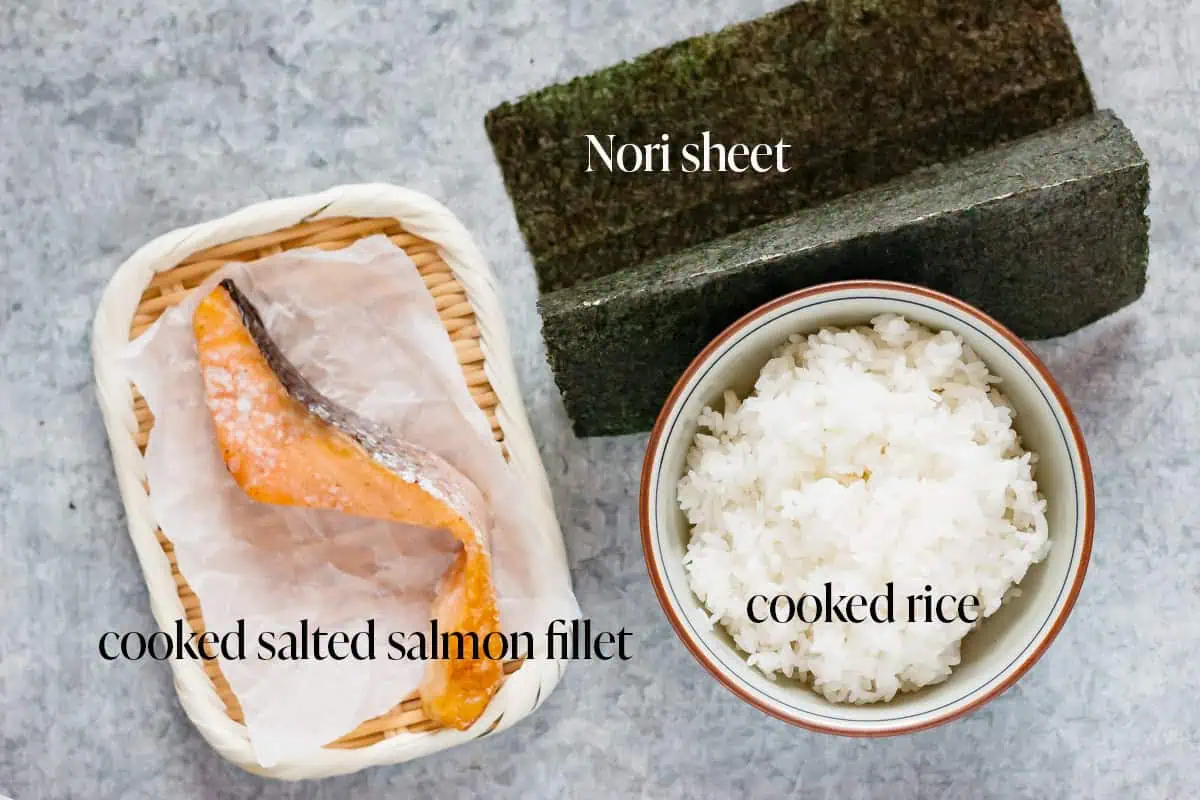
- Cooked short grain rice: Use short-grain white rice or rice labeled as sushi rice. The rice may be called sushi rice but onigiri is not sushi. Sushi and onigiri are different because sushi is seasoned with rice vinegar and onigiri is not. The same rice can be used to make both. In order to hold the shape of rice balls, you need sticky rice. See the instruction to cook rice Japanese way.
- Salmon: The salmon onigiri you will find in convenience stores in Japan are filled with salted salmon. To make that salted salmon, see my recipe for salted salmon. You can grill, bake, or pan-fry the salmon before adding it to the onigiri.
- Nori sheets: These are dried seaweed sheets that are used to wrap the onigiri. Cut the nori into strips or rectangles for easy handling.
- Salt: A small pinch of salt will enhance the flavors of the plain rice.
- Optional toppings: Consider adding toasted sesame seeds, furikake (Japanese seasoning), or kewpie mayonnaise for extra flavor.
Make sure to gather all the ingredients before you start making the onigiri. If you are making salted salmon from scratch, start making the salted salmon a day before as the salmon needs to be salted overnight.
Step by Step Instructions
Follow these step-by-step instructions to make salmon onigiri:
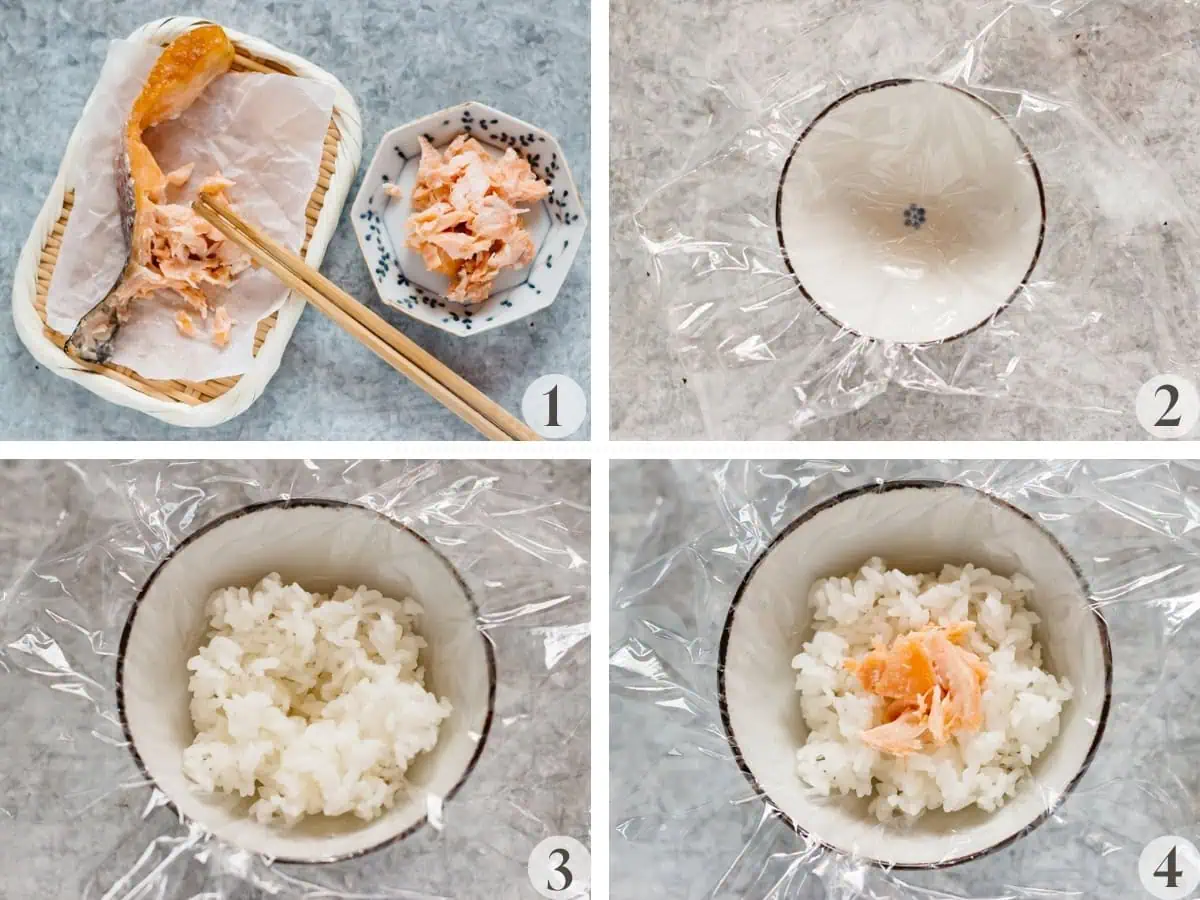
- Prepare the salmon: Salt the salmon the day before. Grill, bake, or pan-fry the salted salmon until cooked through. Alternatively, you can use leftover cooked salted salmon. Flake or break the cooked salmon to bite size and set aside.
- Prepare the rice: Cook the Japanese short grain rice (sushi rice) according to the package instructions. I usually use my rice cooker but if you don’t have a rice cooker, see this post to cook rice without a rice cooker. Once cooked, let it cool slightly before handling.
- Shape the Onigiri: here are various ways to shape the onigiri either with a mold or by hand.
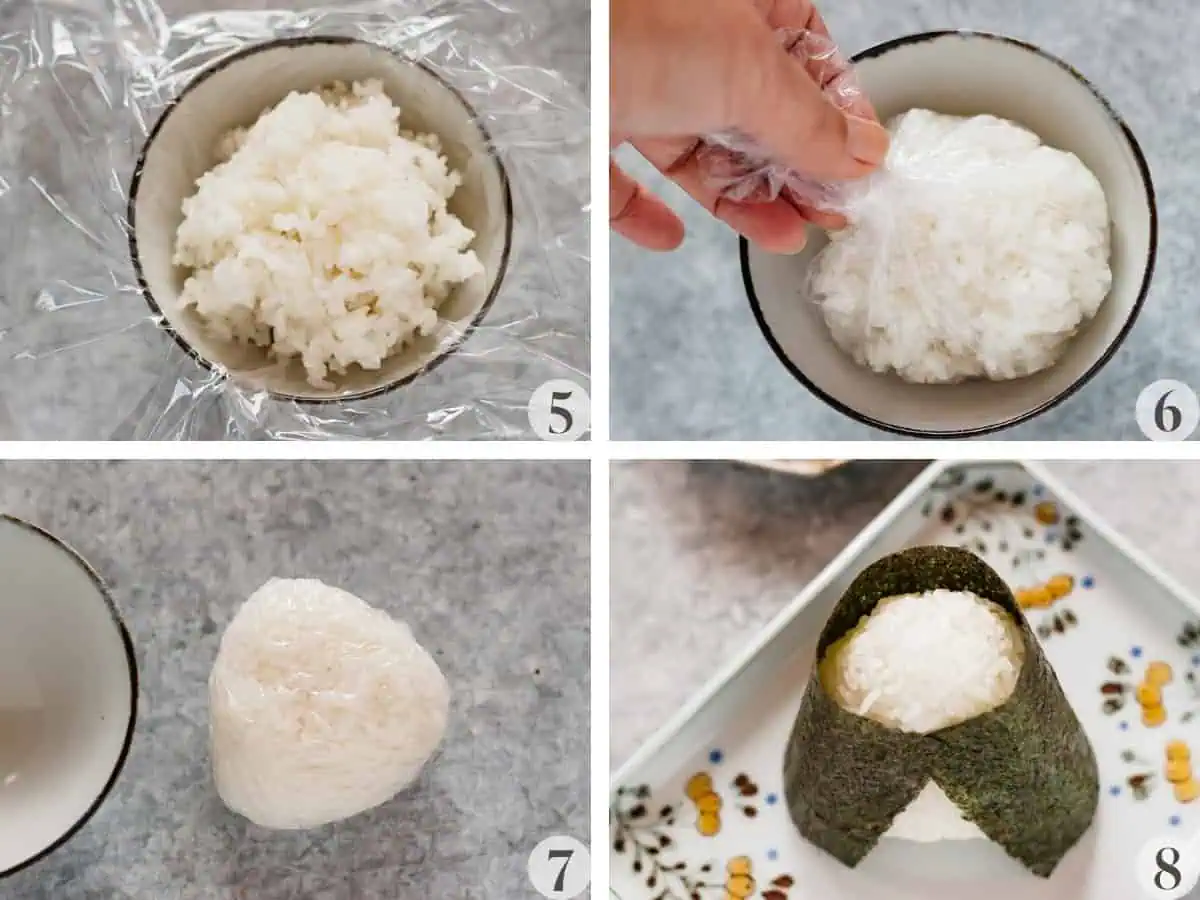
- By hand with plastic wrap – Layer a rice bowl with plastic wrap. Place 1/2 cup of cooked rice. Make a small well in the middle of the rice. Place a piece of salmon in the center. Top with another 1/2 cup of rice to cover the salmon piece. Lift up the plastic wrap and wrap around the rice ball to shape.
- By hand without plastic wrap – Wet your hands with water to prevent the rice from sticking. Place 1/2 cup of cooked rice. Make a small well in the middle of the rice. Place a piece of salmon in the center. Top with another 1/2 cup of rice to cover the salmon piece. Shape the rice round or triangle by squishing gently with your hands.
- Using an onigiri mold – submerge the onigiri mold in a small bowl of water to wet the mold to avoid rice sticking to the mold.
- Repeat this process until all the rice and salmon are used. Read more about shaping onigiri here.
- Wrap the onigiri: Take a sheet of nori and cut it into strips or rectangles. Wrap each onigiri with a nori strip. *You can buy nori sheets that are ready cut for rice balls in Japanese grocery stores/Asian stores. If it’s not available, cut the sushi nori sheets to size. I usually cut sushi nori sheets to 1/3 of the size.
- Serve and enjoy: Your salmon onigiri is now ready! Serve them as a snack, bento box addition, or part of a larger Japanese meal. They can be enjoyed warm or at room temperature.
Tips for Perfect Onigiri
Here are some tips to make perfect salmon onigiri:
- Turn the rice evenly : when the rice cooker beeps to let you know that cooking cycle is completed, turn the power off, and turn the rice evenly. The texture of the rice is crucial for the overall taste and shape of the onigiri.
- Wet your hands: Wetting your hands with water before shaping the onigiri will prevent the rice from sticking to your hands if you are making the onigiri by hand without plastic wrap.
- Keep the fillings moist: make sure the cooked salmon stays moist to prevent the onigiri from becoming dry.
Variations to Try
While salmon onigiri is delicious on its own, you can also try out different variations. Here are some ideas:
- Mixing the salmon flakes into the rice: Instead of putting the salmon in the middle of the rice ball, you can mix it into the rice. Flake the grilled or fried salmon and mix them into the cooked rice before shaping.
- Teriyaki salmon onigiri: Cooking the salmon in teriyaki sauce is a simple yet rich and flavorful twist to this classic onigiri.
- Miso glazed salmon onigiri: Another flavor variation is miso. Cooking the salmon fillet in a sweet and savoury miso glaze adds a delicious taste that goes so well with the salmon rice ball.
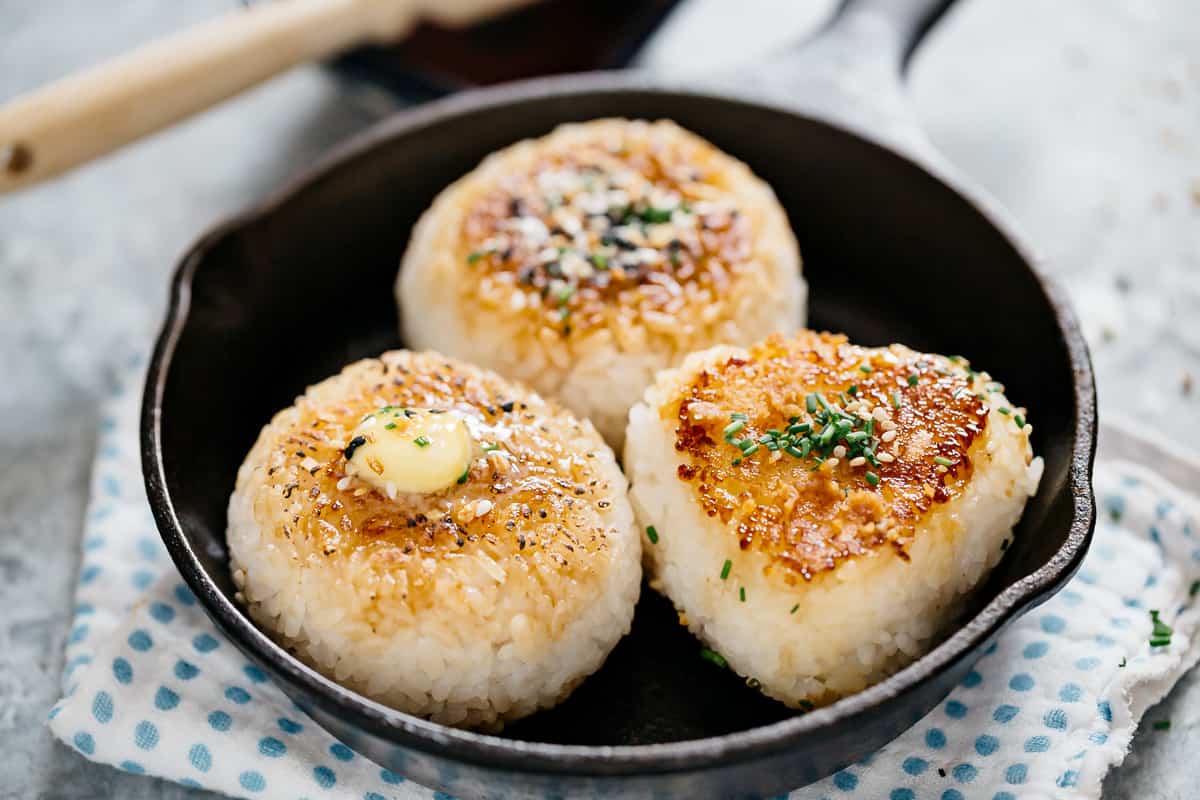
- If you’re looking for more onigiri flavors, check out this roundup of 14 popular onigiri fillings including tempura shrimp and yaki onigiri(grilled onigiri).
What to Serve Salmon Onigiri with ?
- Savory Miso Soup with Tofu and Vegetables : a warm bowl of miso soup is a comforting and nutritious side dish. Serve it alongside the salmon onigiri for a complete and balanced meal.
- Hearty Pork Miso Soup : for a heartier option, try pork miso soup to eat along with the onigiri. It adds a protein boost and is extra filling.
- Crunchy Asian Slaw: this refreshing and crunchy side dish combined with a tangy dressing creates the perfect contrast to the soft and savory onigiri.
- Zesty Cucumber Sunomono: this cucumber salad is made by pickling cucumber slices. It’s refreshing and light and goes great with onigiri.
- Shirae Mashed Tofu Salad: The creaminess and slightly sweet flavor of mashed tofu combined with various vegetables creates a light and refreshing salad that compliments the flavors of the onigiri.
FAQ
A : According to the weathernews.jp, over 60% of Japanese people pronounce it as shake and about 40% say “sake”. It could be a regional thing too. People in Hokkaido tend to say shake as the origin of the word “shake” comes from the Ainu (Japanese indigenous people) word “shakembe” which means summer food.
A : According to the weathernews.jp, over 60% of Japanese people pronounce it as shake and about 40% say “sake”. It could be a regional thing too. People in Hokkaido tend to say shake as the origin of the word “shake” comes from the Ainu (Japanese indigenous people) word “shakembe” which means summer food.
A : A: Yes, you can make onigiri in advance and store them in an airtight container in the refrigerator. However, for the best taste and texture, it is recommended to consume them within 24 hours.
A : A: Yes, you can freeze salmon onigiri for up to 1 month. Wrap each onigiri tightly in plastic wrap and place them in a freezer-safe container or bag. Thaw them in the refrigerator overnight before consuming.
A : A: Absolutely! While salmon is a popular choice, you can use other types of fish such as canned tuna, mackerel, or cooked shrimp for your onigiri.
A : A: Yes, you can reheat leftover onigiri in the microwave for a short time to warm them up. However, be careful not to overheat them, as the rice may become dry or hard.



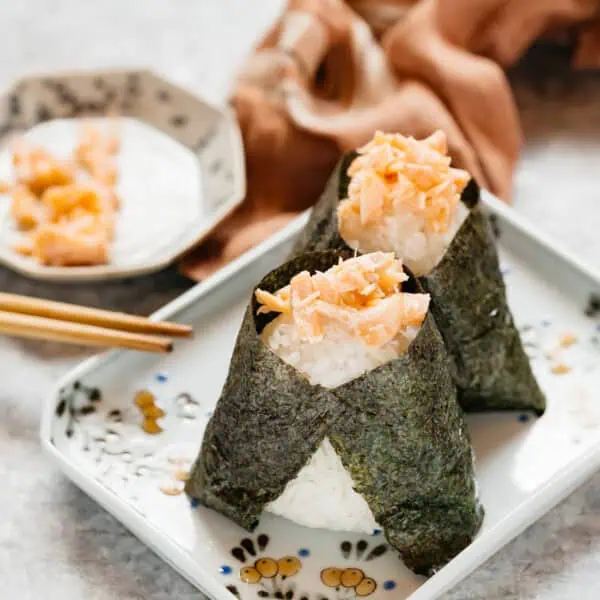
Sake Onigiri 塩鮭のおにぎり
Ingredients
- 2 cups of cooked rice
- 1 piece of cooked shiosake
- 1 nori sheet
Instructions
Preparation of Rice & Salted Salmon
- Prepare the sushi rice by rinsing it under cold water until the water runs clear. Then, cook the rice according to the package instructions or by using a rice cooker. *1
- Grill or pan fry salted salmon following this recipe (internal link). Break the cooked salted salmon into small flakes. Set aside.
Shaping Sake Onigiri
- Place ½ cup of cooked rice in a rice bowl layered with plastic wrap.
- Make a small well in the middle of the rice.
- Place a piece of salmon in the center. Top with another 1/2 cup of rice to cover the salmon piece.
- Lift up the plastic wrap and wrap around the rice ball to shape with your hands.
- Toast nori sheet briefly over heat, cut them into 3 strips.
- Remove the plastic wrap off the onigiri and wrap it with a nori sheet.
- Repeat for the remaining ingredients.





Shake. Not the drink sake. Ffs
Hi Thank you for leaving the comment. I have explained how to read the 鮭 kanji in this post 😀
what an amazing recipe i love it
Thank you so much, Pablo!