
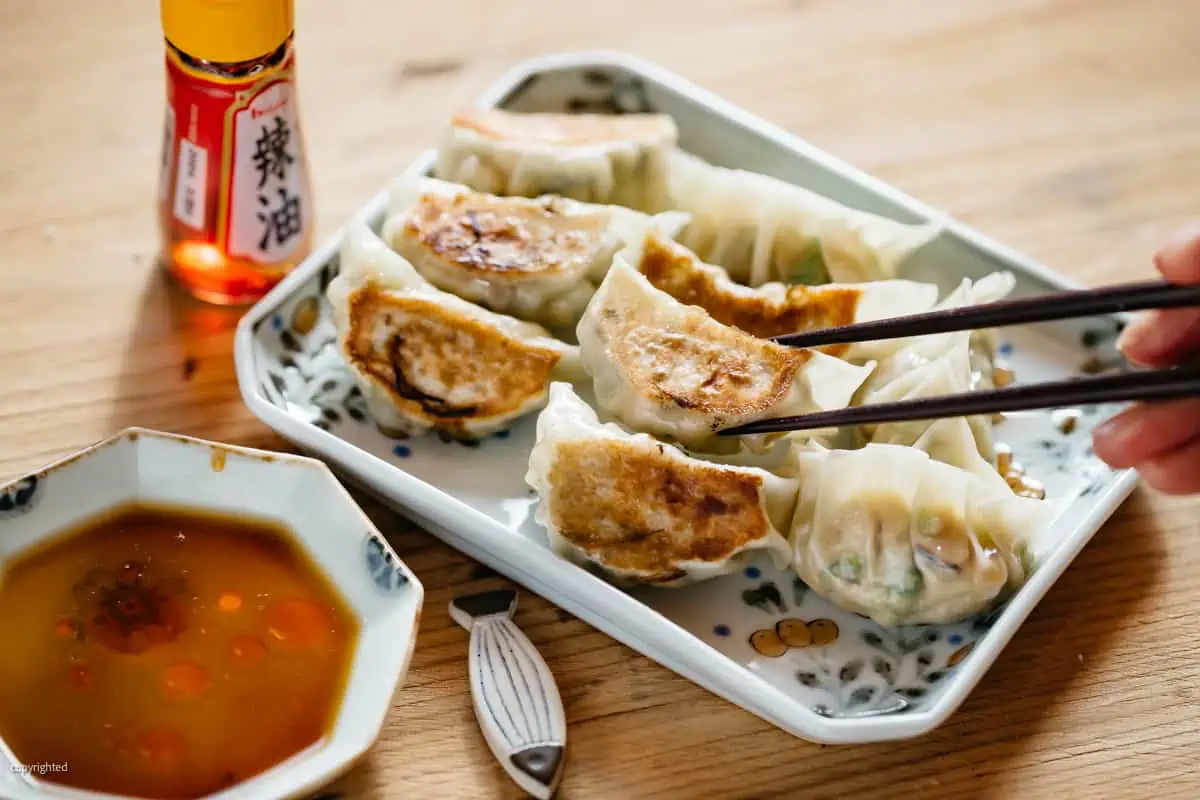
Are you looking for a delicious and healthy appetizer to impress your guests at the next gathering? Vegetable gyoza is for you! Made from a base of tofu and packed full of veggies, these vegan dumplings are an easy and delicious way to eat your daily vegetables and get a dose of protein. This vegan gyoza recipe makes dumplings that are perfectly crispy on the outside and bursting with flavour on the inside so they’re sure to be a hit with everyone. They’re easy to make and perfect to cook in bulk for many people or smaller servings just for you!

Table of contents
What is vegetable gyoza?
Gyoza, or potstickers, are a delicious and popular Japanese dumpling dish introduced from Chinese cuisine and adapted to suit Japanese tastes and preferences. They’re usually made from a thin, delicate gyoza wrapper filled with a savoury mixture of meat such as pork or chicken with cabbage, garlic, ginger, soy sauce, and other seasonings. However, vegetable gyoza offers a delightful alternative for those following vegetarian or vegan diets or simply looking to enjoy a lighter option. The dumplings are made from tofu, mushrooms, cabbage and chives and a delicious blend of seasoning making every bite full of flavour. They’re pan fried so the cooked gyoza are crispy and golden on the bottom yet juicy and soft on the inside.
Ingredients
The Fillings
The fillings of vegetable gyoza typically includes various finely chopped vegetables like cabbage, carrots, mushrooms, onions, scallions (green onions), and tofu.

1. Cabbage: Cabbage is a staple ingredient in traditional vegetable gyoza fillings. It provides a mild taste along with a satisfying crunch. To prepare the cabbage filling, finely chop or shred fresh cabbage and squeeze out any excess moisture before mixing it with other ingredients like garlic chive and tofu.
2. Garlic Chive: Garlic chives add a delightful aroma and subtle garlicky flavor to your vegetable gyoza filling. These long, flat green leaves are packed with nutrients and give the dumplings an extra kick. Chop them finely and combine them with other vegetables.
3. Shiitake Mushrooms: Shiitake mushrooms lend an earthy umami flavour to your vegan gyoza filling that perfectly complements the other ingredients. Slice these savory mushrooms thinly or chop them into small pieces before incorporating them into your mixture.
4. Tofu: Using tofu as part of your vegetable gyoza filling adds texture and protein to make it more satisfying. Firm tofu works best since it holds its shape when cooked without disintegrating inside the dumpling wrapper. Crumble or dice the tofu into small pieces before combining it with other flavorful ingredients.
5. Scallions: Scallions, also known as green onions or spring onions, provide a pleasant onion-like flavour without overpowering the other vegetables in your gyoza filling. Finely chop both the white and green parts of the scallions, and mix them evenly to ensure a well-balanced flavour in every bite.
Gyoza Wrappers

An important and obviously crucial part of the dumplings are the gyoza wrappers. These thin, round sheets of dough are the foundation of the gyoza and hold the whole thing together. Whether you prefer them pan-fried, steamed, or deep-fried, gyoza wrappers play a crucial role in delivering that satisfying bite.
Gyoza wrappers are typically made from wheat flour and water, resulting in a soft and slightly chewy texture. While they can be purchased pre-made from grocery stores, making your own allows you to control their thickness and tailor them to your liking. Rolling out the dough into thin circles requires patience and practice but is well worth the effort when you taste the homemade goodness. An easy way to make uniform round wrappers is to use a mold like I did here.
Cooking Method
1: Prepare the Filling
- Remove excess water from tofu and finely chop the vegetables.
- Combine all filling ingredients in a large mixing bowl thoroughly.

2: Assemble the Gyoza
- Take one gyoza wrappers on your palm and place fillings on its centre.
- Wet half of the edge of the wrapper and fold them together to seal with pleating.
- Repeat with the remaining wrappers and filling.
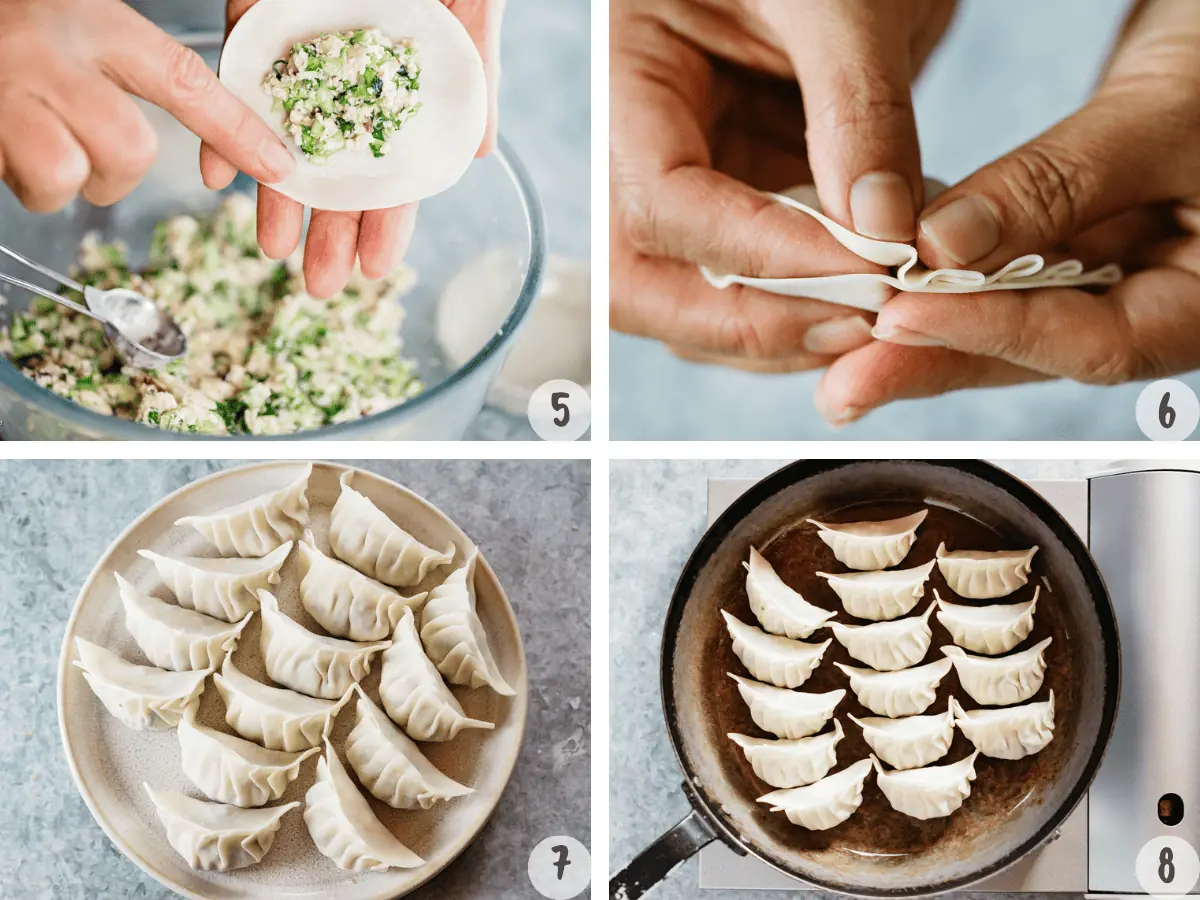
3: Cook the Gyoza
- Heat a frying pan or a skillet over medium-high heat and add a small amount of vegetable oil.
- Arrange the gyoza in a single layer, pleated side up, without overcrowding the pan.
- Allow them to cook for about 2-3 minutes until the bottom becomes slightly brown.
- Pour hot water into the pan to steam fry and put a lid on.
- Remove the lid to let the water evaporate and to make the bottom turn crisp and golden brown.
- Turn the heat off and serve.

Tips for Making Vegetable Gyoza
While they may seem intimidating to make from scratch, fear not! With a little practice and these tips, you’ll be making perfectly pleated and delicious vegetable gyoza in no time.
- Choose the right vegetables and ensure all vegetables are finely chopped or shredded for an even filling consistency.
- Mastering Pleating Technique: Pleating the edges of your gyoza not only adds visual appeal but also helps seal in the filling during cooking. Start by placing about one teaspoon of filling at the center of the wrapper (avoid overfilling). Fold and pinch as you go along the edge and press to seal.
Gyoza Dipping Sauce Suggestions
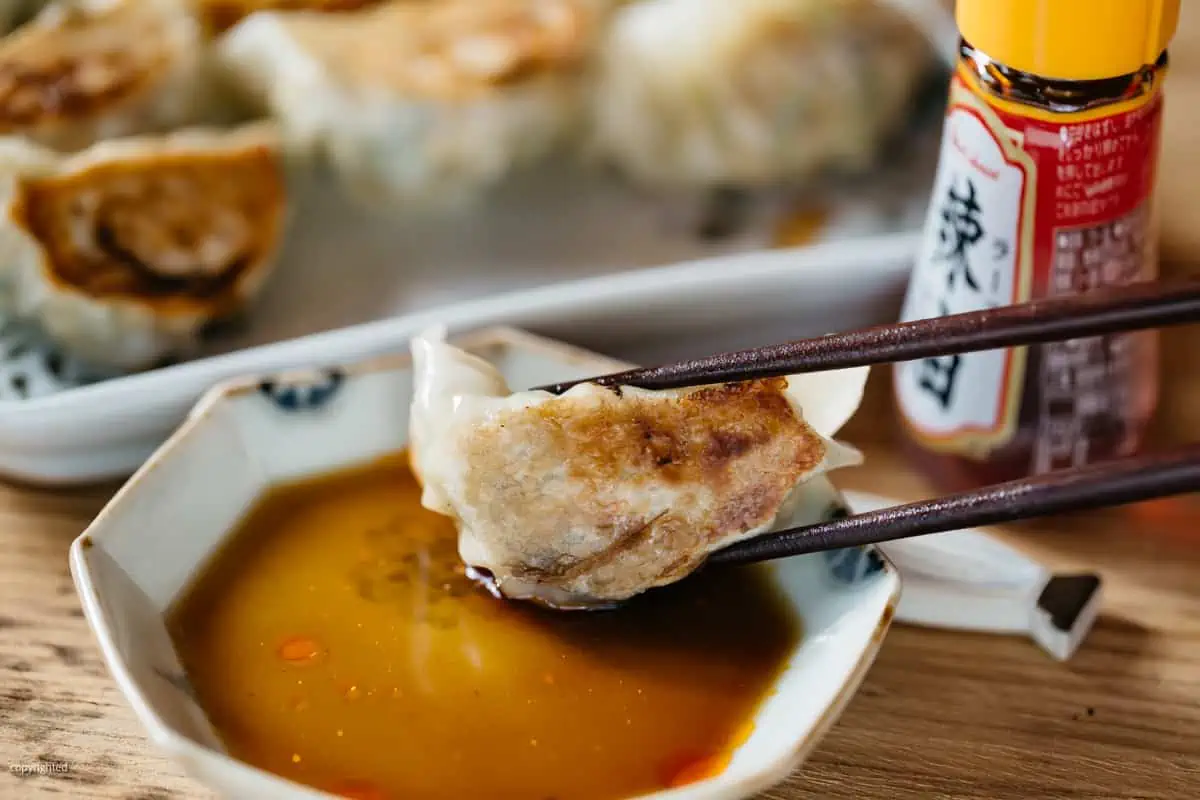
Vegetable gyoza is often served alongside a dipping sauce made from soy sauce combined with rice vinegar and chili oil. This tangy yet slightly spicy sauce perfectly complements the flavors of the dumplings. You can also serve just with soy sauce or with ponzu (a Japanese citrusy soy sauce).
Storing Gyoza dumplings
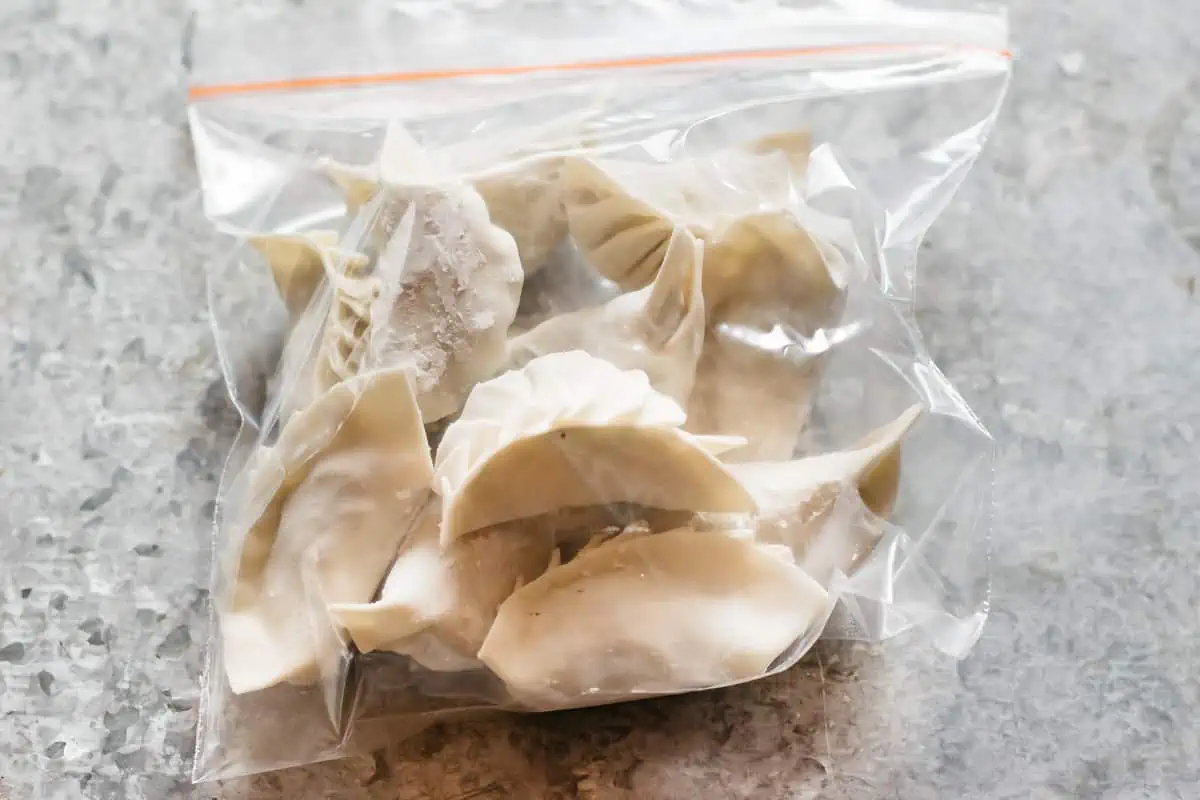
Freezing is an excellent method for storing vegetable gyoza dumplings. They’ll last for a few weeks in the freezer.
- Dust a stainless steel tray with katakuriko potato starch or line with parchment paper.
- Arrange the vegetable gyoza so that they do not stick together and do not overlap, cover with plastic wrap and put in the freezer.
- When the vegetable gyoza are completely frozen, put them in a ziplock freezer bag and store them.
FAQ
A : Veggie gyozas can be a healthy and nutritious option for those looking to incorporate more plant-based foods into their diet. Packed with vegetables, high in fiber, and low in saturated fats, these dumplings offer a delicious alternative to traditional meat-filled versions. However, it is important to consider the cooking method and ingredients used in the preparation of veggie gyozas. Opting for steamed or baked versions over deep-fried ones can further enhance their health benefits. Ultimately, moderation and mindful consumption are key when enjoying this delectable dish as part of a well-balanced diet.
A : Yes, gyoza wrappers are typically made from wheat flour and contain gluten.

Vegetable Gyoza 野菜の餃子
Ingredients
Fillings
- 200 g Firm tofu
- 3 Cabbage leaves or 100g
- 30 g garlic chives *1
- 3 dried shiitake mushrooms *2
- 1 tsp salt
- 2 tsp vegetarian oyster sauce
- 1 tsp soy sauce
- 1 tsp cooking sake
- 1 tsp grated ginger
- 1 tsp minced garlic
- 1 tbsp katakuriko potato starch
Assembling and Cooking
- 26 Gyoza wrappers
- 1 tbsp oil
- ½ cup hot water
Instructions
Make Fillings
- Remove excess moisture off the tofu. Wrap with kitchen paper towel and place a weight on to leave for 15min.
- Chop cabbage and green onions finely and sprinkle the salt. Leave it for 5 min to draw moisture out of the cabbage and scallions. After 5 min, squeeze excess water out.
- In a large bowl, combine the finely chopped cabbage, green onions, chopped shiitake mushrooms, minced garlic, and grated ginger and crumble the Tofu in.
- Add soy sauce, sake, oyster sauce, sesame oil and katakuriko potato starch to the large bowl too to combine.
- Mix everything together thoroughly until all ingredients are well combined.
Assemble Gyoza Dumplings
- Take one gyoza wrapper on your palm and place about one and half tsp of filling on its center.
- Dip your finger in water and moisten half of the edge of the wrapper to help it seal properly.
- Fold over the wrapper into a half-moon shape while pressing firmly around the edges to seal them tightly.
- Using your fingers, create small pleats along one side of the dumpling by pinching and folding.
- Repeat with the remaining wrappers and filling.
Frying gyoza
- Heat a frying pan or a skillet over medium-high heat and add a tablespoon of vegetable oil.
- Arrange the gyoza in a single layer, pleated side up, without overcrowding the pan.
- Allow them to cook for about 2-3 minutes until the bottom becomes slightly brown.
- Pour hot water into the pan to steam fry and put a lid on for a further few minutes.
- Remove the lid to let the water evaporate and to make the bottom turn crisp and golden brown.
- Turn the heat off and serve.





These are fantastic and my son loves vegetable gyoza so an easy way to get him to eat vegetables.
Great Maxwell, Thank you! eat more veggies 😀