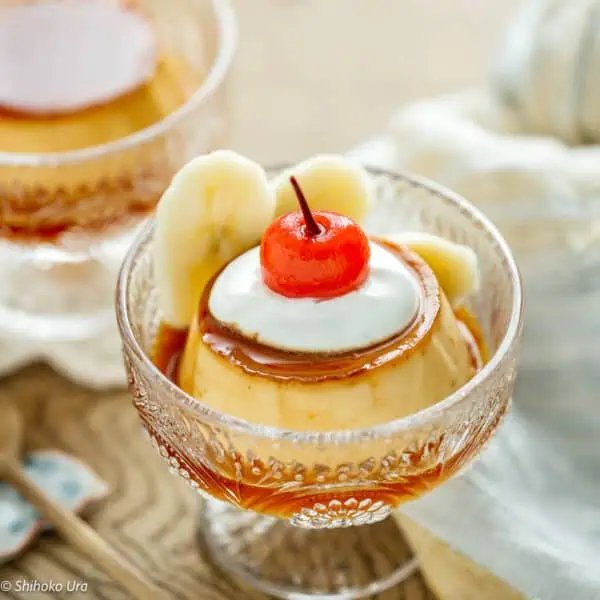
Are you a fan of indulgent desserts but want to reduce your carb and sugar intake? This low carb Japanese custard pudding is for you! Japanese pudding, also known as ‘purin‘ or crème caramel, is a creamy, velvety, and sweet dessert that can be easily modified to a healthier treat. With a few simple ingredient swaps, you can enjoy a delicious creme caramel without sacrificing on flavour or dietary goals. So satisfy your sweet tooth with this delectable low-carb twist on a classic Japanese dessert!
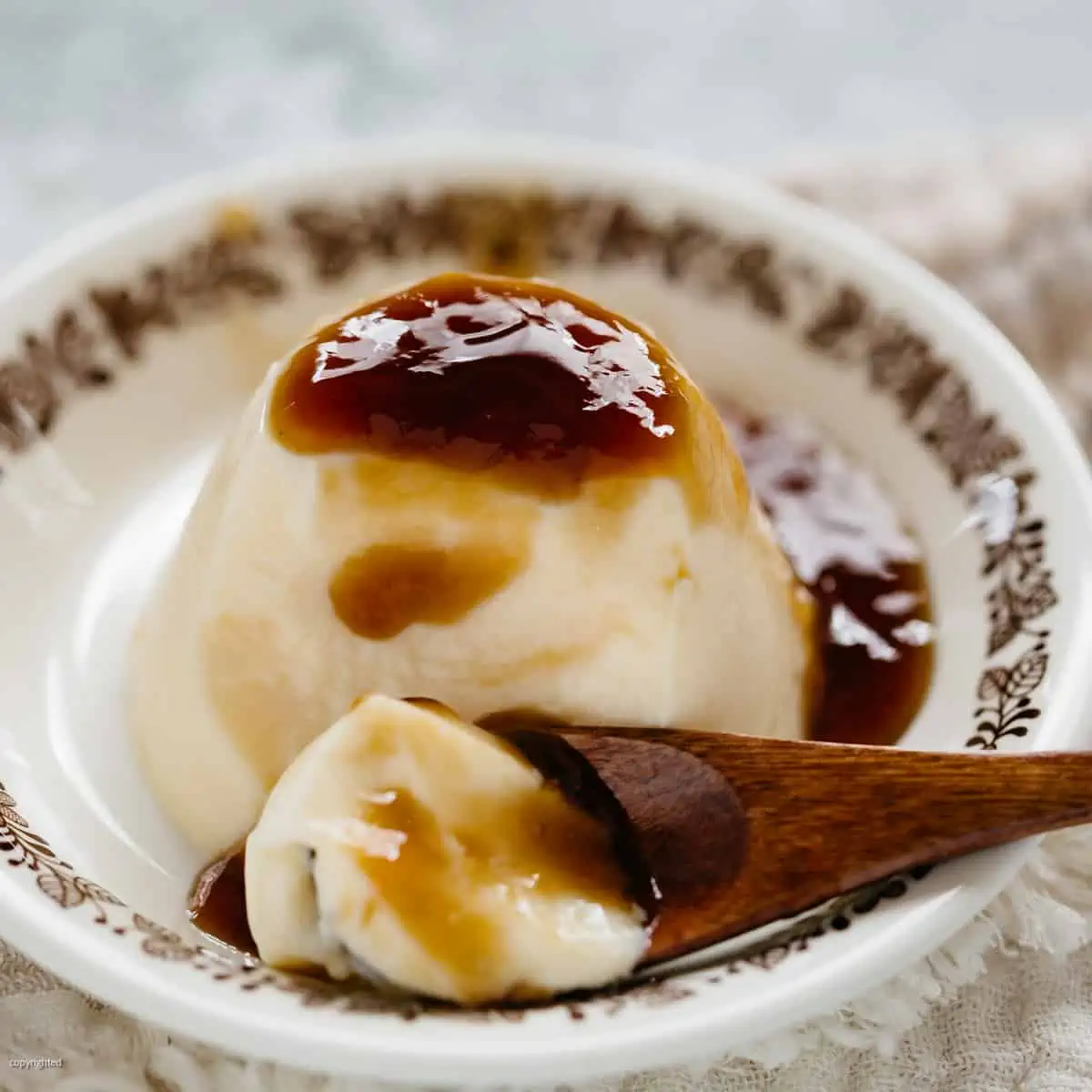
Table of contents
What is Creme Caramel
Creme caramel, also known as flan or caramel custard, is a classic and indulgent dessert that has been a popular dessert around the world for centuries. In Japan this delectable sweet treat is known as custard pudding or ‘purin’. It features a smooth and creamy custard base topped with a luscious layer of golden caramel sauce. Unlike crème brûlée, the caramel is not burnt and crystallised but is silky and flowy.
It’s a deliciously sweet dessert but for people who want a sugar-free, low carb version, this creme caramel recipe uses monk fruit sugar instead of regular sugar. It’s just as deliciously creamy and indulgent without the added sugar.

Ingredients
For the Custard
Eggs – One of the key ingredients that gives this creamy delicacy its rich and velvety texture is eggs. Eggs play a vital role in creating the smooth custard base of creme caramel. I use large eggs weighing about 50g each.
Milk – Whole milk is an essential ingredient to creating the rich and luxurious consistency of the creme caramel.
Monk fruit sugar – While traditional recipes call for granulated sugar to achieve the desired sweetness, there’s an alternative ingredient that has been gaining popularity among health-conscious individuals – monk fruit sugar. Derived from a small green gourd native to Southeast Asia, monk fruit sugar offers a natural and low-calorie sweetening option without compromising on taste.
Vanilla extract – With its enchanting aroma and delicate flavour, vanilla extract is an essential ingredient that elevates the flavour of the creme caramel. Vanilla extract uses the essence of real vanilla bean to add a rich sweetness and subtle floral notes to the dessert.

For the Caramel
Traditional caramel sauces are loaded with sugar and carbohydrates. This can be a nice indulgence once in a while but to enjoy the dessert without the sugar load, making the caramel sauce with a sugar-free alternative is the way to go. This caramel sauce is a low carb version of the beloved topping that mimics the taste and texture of traditional caramel but without all the added sugars. It’s made using monk fruit sugar that won’t spike your blood sugar levels or derail your healthy eating goals.
Monk fruit sugar – One of the setbacks of monk fruit sugar is that it will not caramelise. It will also crystallize when it goes through extreme temperature changes such as being heated up and then refrigerated. Please see the list of tips section to avoid those problems.
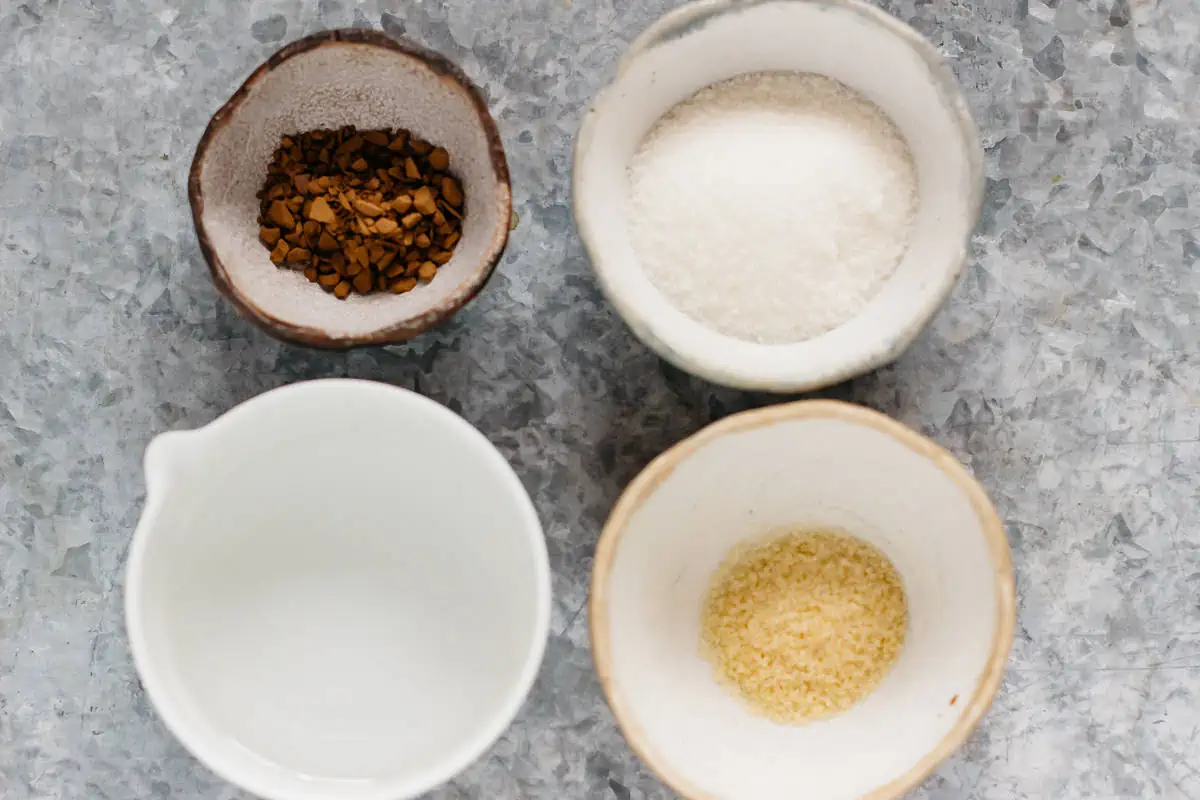
Coffee – Instant coffee makes this mock caramel sauce mimic the golden amber color of real caramel.
Gelatine – monk fruit sugar does not caramelise so the role of gelatine in this mock caramel sauce is that it acts as a stabilizing agent to get the sauce to its desired consistency.
Water – to dissolve all the above ingredients.
How to Make
Making custard mixture
1 : In a large bowl, whisk together the eggs, half the monk fruit sugar, and vanilla extract until well combined but not frothy. Be careful not to overmix as this can result in air bubbles on top of the finished crème caramels. Heat milk mixture of whole milk and the other half of the monk fruit sugar in a pan over medium-low heat. Turn the heat off before the milk mixture boils.
2 : Pour the milk mixture into the egg mixture bowl to whisk together, again be careful not to overmix.

3 : Pore and strain (using a fine mesh sieve) the custard mixture into another bowl. Divide the custard mixture into molds using a ladle, ensuring an even distribution. Leave a small gap at the top to allow room for expansion during cook time.
4 : Place those molds into boiling water of a large shallow pan or frying pan over low heat. It works like the water bath method when using an oven but instead we use a shallow pan (I found it is easier using a frying pan). Wrap the pan lid in a kitchen towel (to avoid any condensation dripping) and place over the pan to cook for 3-5 minutes. Turn the heat off and leave it for 15 min with the lid on.
5 : Let it cool down.

Make the Caramel Sauce
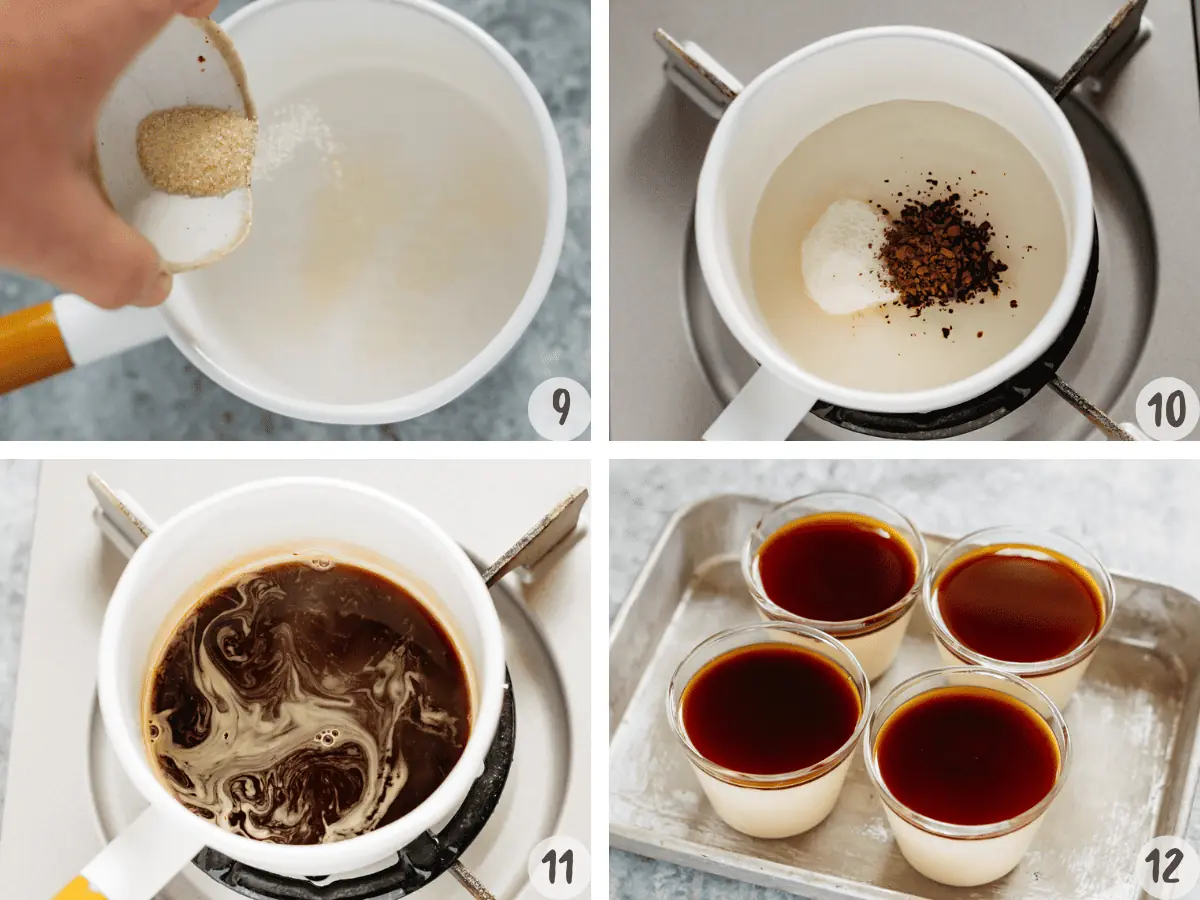
In a small saucepan, pour water in and sprinkle gelatine powder and leave for 5 minutes. Heat it over low heat. Gelatine melts at a temperature of 25°C-40°C/77°F-104°F and we don’t want to boil to avoid monk fruit sugar to crystallize. When the gelatine melts, turn the heat off and add monk fruit sugar and instant coffee. Stir gently until all the sugar and coffee has dissolved.
How to Serve Creme Caramel
Because the caramel sauce will crystallise in the fridge if left for too long (due to the monk fruit sugar), it either needs to be eaten very quickly or don’t refrigerate it.
If you are going to eat straight away, you can leave the crème caramel to chill in the refrigerator for max 1 hour. This will allow the caramel to chill without crystallising. I used heat safe glass molds to make the custard part then I pour over the caramel sauce and leave it to set together in the fridge (just for about an hour).

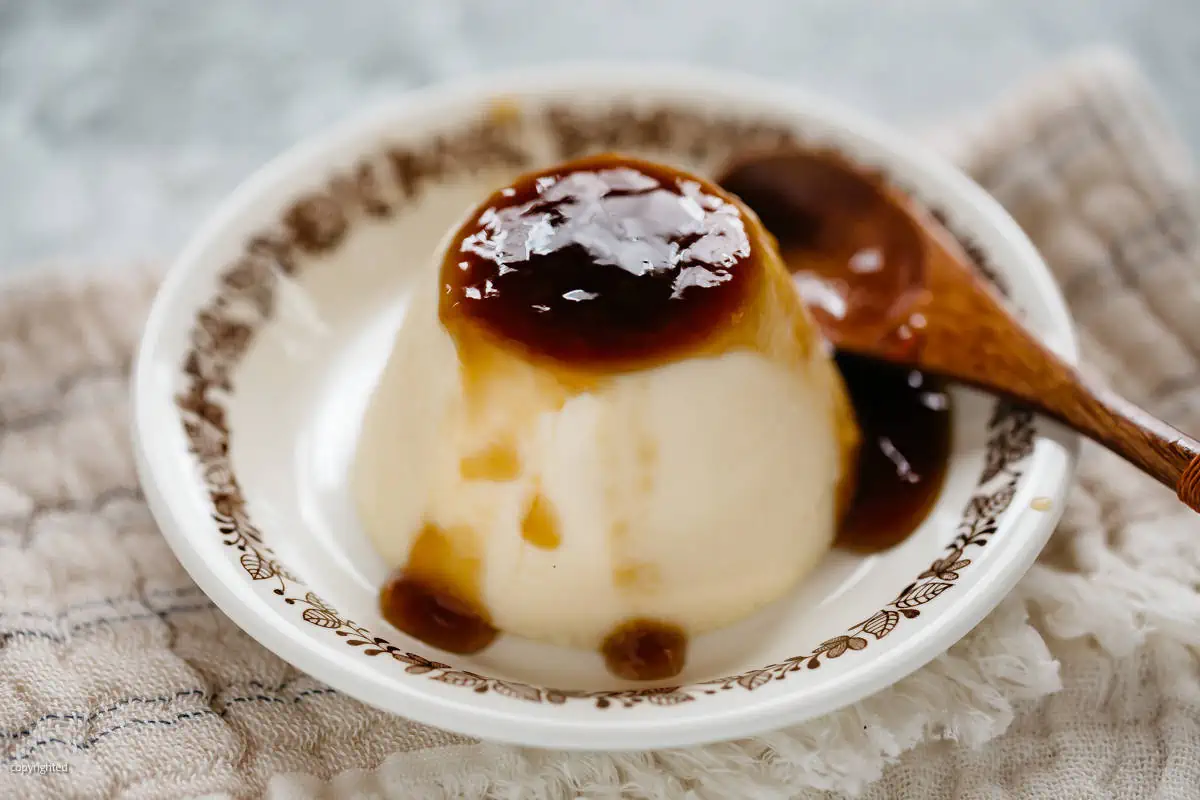
The second option is to serve the custard pudding and caramel separately. You can adjust the gelatine amount to your liking for the consistency of the caramel sauce, but I reduced the gelatine amount by half from 1/2 to 1/4 teaspoon. After adding the coffee and monk fruit, I left it at room temperature (it is currently winter and around 10 degrees room temp where I live) as gelatine start to sets at 15°C/60°F or you can leave it in the fridge for a short period of time. Run a sharp knife around the inside of the molds and invert the custard onto a serving plate. Then serve the caramel on top of the custard (as shown in the images below).
reference : https://www.lakanto.com/blogs/recipes/how-to-prevent-crystallization-in-sugar-free-simple-syrup
Tips for Making Low Carb Crème Caramel
Its smooth and creamy texture, combined with the golden brown caramel sauce, makes it irresistible. Although making low carb creme caramel may seem intimidating at first, with a few helpful tips and tricks, you can easily achieve delicious results without compromising your health goal.
- to achieve silky smooth custard, strain the mixture through a fine-mesh sieve to remove any lumps or impurities
- place a kitchen towel around the lid to catch any condensation that may drip onto the custard.
FAQ
A : the custard part will last a few days in the fridge. i would not store the mock caramel sauce in the fridge to avoid crystallisation.

Crème Caramel Low Carb 低糖質プリン
Ingredients
custard
- 3 eggs
- 300 ml milk
- 75 g monk fruit sugar
- vanilla essence
caramel
- ½ tsp gelatin powder
- ½ tsp instant coffee
- ¼ cup water
- 1 tbsp monk fruit sugar
Instructions
Custard
- In a large bowl, whisk together the eggs, half the monk fruit sugar, and vanilla extract until well combined but not frothy. Be careful not to overmix as this can result in air bubbles on top of the finished crème caramels.
- Heat milk mixture of whole milk and the other half of the monk fruit sugar in a pan over medium-low heat. Turn the heat off before the milk mixture boils.
- Pour the milk mixture into the egg mixture bowl to whisk together, again be careful not to overmix.
- Pore and strain (using a fine mesh sieve) the custard mixture into another bowl.
- Divide the custard mixture into molds using a ladle, ensuring an even distribution. Leave a small gap at the top to allow room for expansion during cook time.
- Place those molds into boiling water of a large shallow pan or frying pan over low heat. It works like the water bath method when using an oven but instead we use a shallow pan (I found it is easier using a frying pan). Turn the heat off and leave it for 15 min with the lid on.
- Wrap the pan lid in a kitchen towel (to avoid any condensation dripping) and place over the pan to cook for 3-5 minutes.
- Turn the heat off and leave it for 15 min with the lid on.
- Let it cool down.
- Leave the crème caramel to chill in the refrigerator for max 1 hour. *2
Mock Caramel Sauce
- In a small saucepan, pour water in and sprinkle gelatine powder and leave for 5 minutes.
- Heat it over low heat. *1
- When the gelatine melts, turn the heat off and add monk fruit sugar and instant coffee.
- Stir gently until all the sugar and coffee has dissolved.