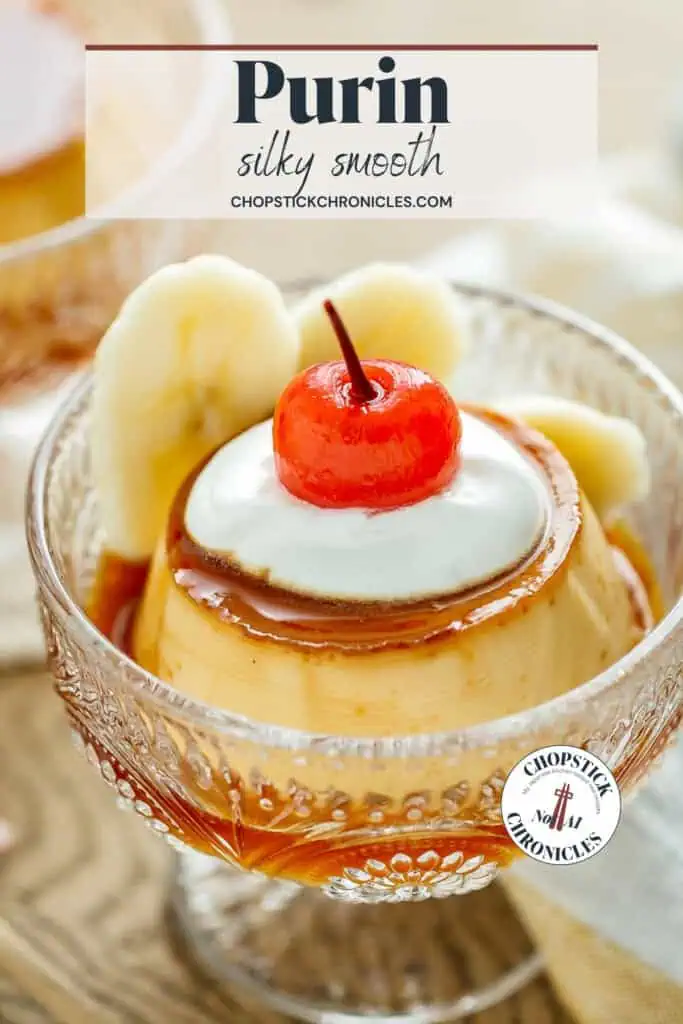
With its smooth and creamy texture and rich caramel sauce, Purin is one of Japan’s most popular desserts. It’s also one of the easiest desserts to recreate at home. You don’t need any special tools and just 5 simple ingredients! I’ve updated the recipe and simplified the caramel method so you can make a smooth, golden caramel every time.
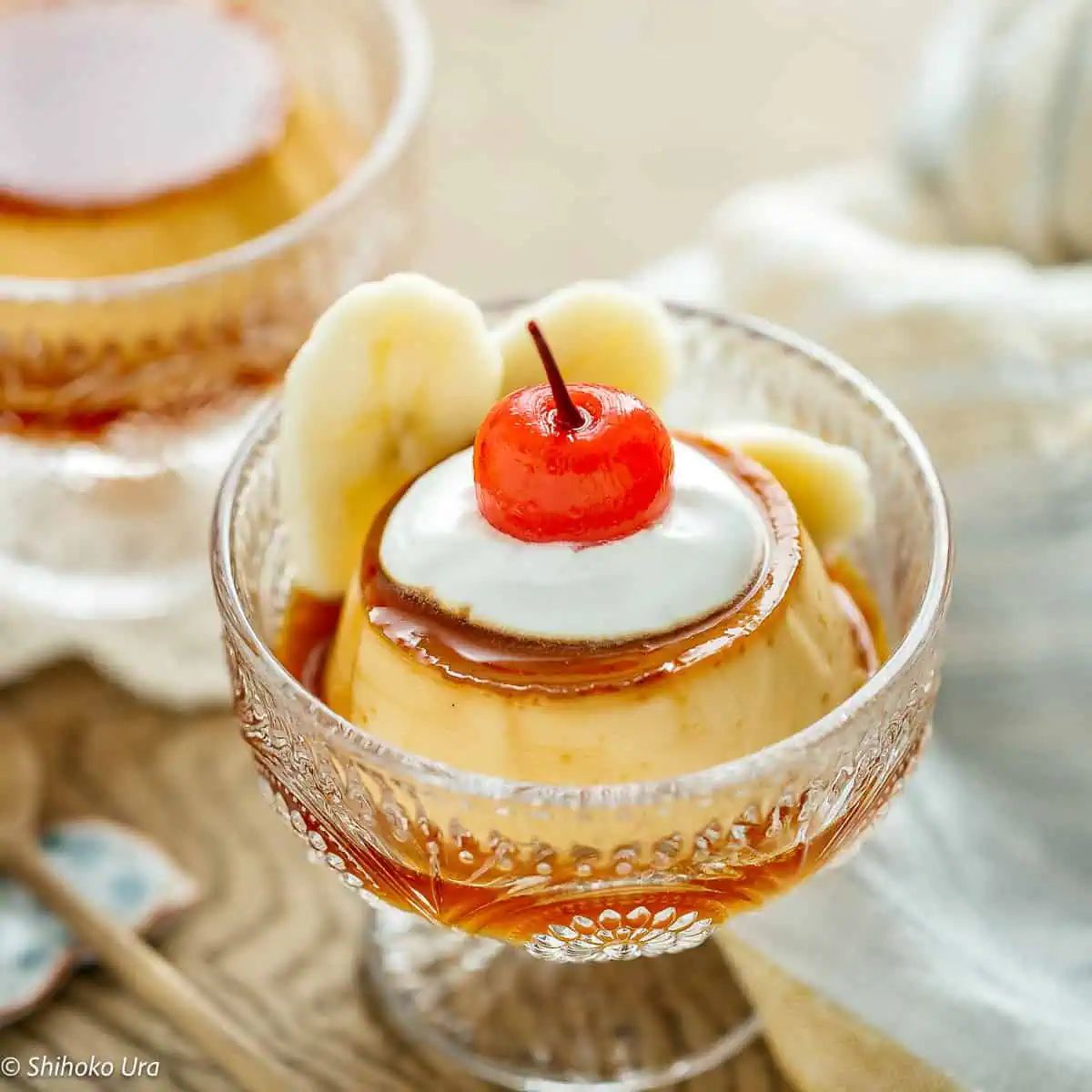
Table of contents
Why You’ll Love This Purin Recipe
- Easy no fail caramel: The updated caramel method is simple to follow and gives you smooth, golden caramel with less stress.
- Silky smooth custard: A gentle water bath creates a creamy custard with a soft, melt in your mouth texture.
- Made with simple ingredients: You only need eggs, milk, sugar, and vanilla to make this classic Japanese dessert.
- Perfect for making ahead: Chill the Purin for a few hours or overnight, then serve it straight from the fridge.
- Better than store bought: Homemade Purin has a fresher flavor and a rich caramel sauce that makes every spoonful extra special.
What is Purin?
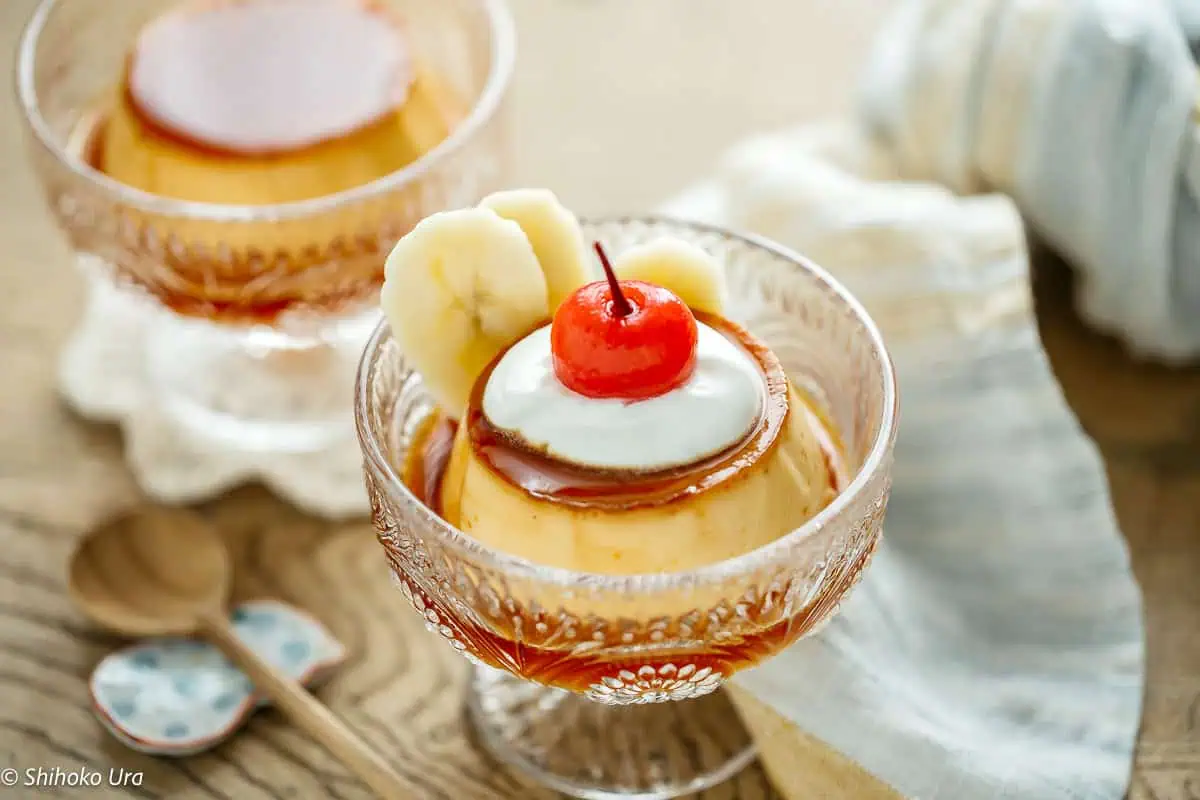
Purin (プリン) is Japan’s version of caramel custard pudding. It is made with a smooth egg custard topped with a layer of golden caramel sauce. The name comes from the English word “pudding,” but in Japan, Purin specifically refers to this classic custard dessert.
Purin is a very popular and typical dessert in Japan that you’ll find everywhere, including convenience stores, supermarkets, cafés and specialty dessert shops. But it’s easy to make at home too and nothing can beat the flavor of fresh homemade purin.
Purin Ingredients
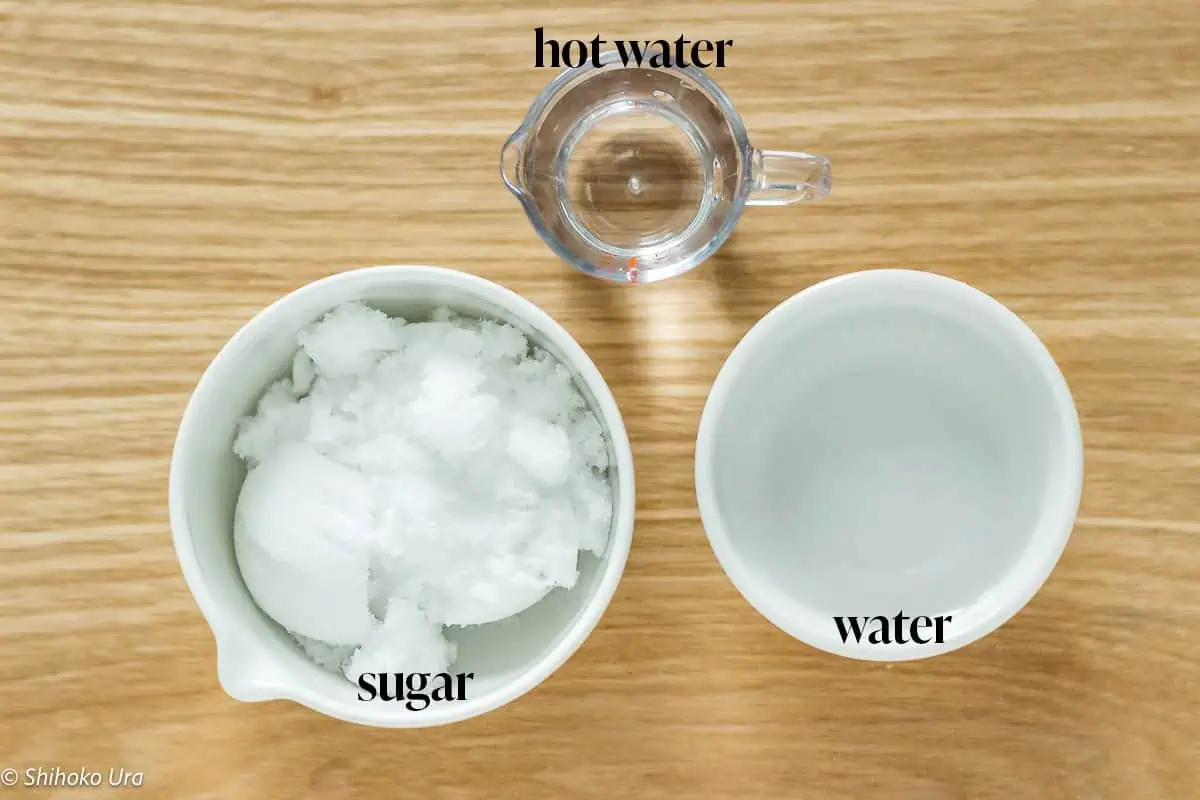
Caramel
- Sugar
Granulated white sugar melts evenly and creates a smooth caramel with a clean, sweet flavor. Avoid brown sugar, as it changes both the flavor and color. - Hot Water
Once the caramel reaches a deep amber color, hot water is added to stop the cooking and create a pourable caramel sauce. Be careful, as the mixture will bubble up quickly.
Custard
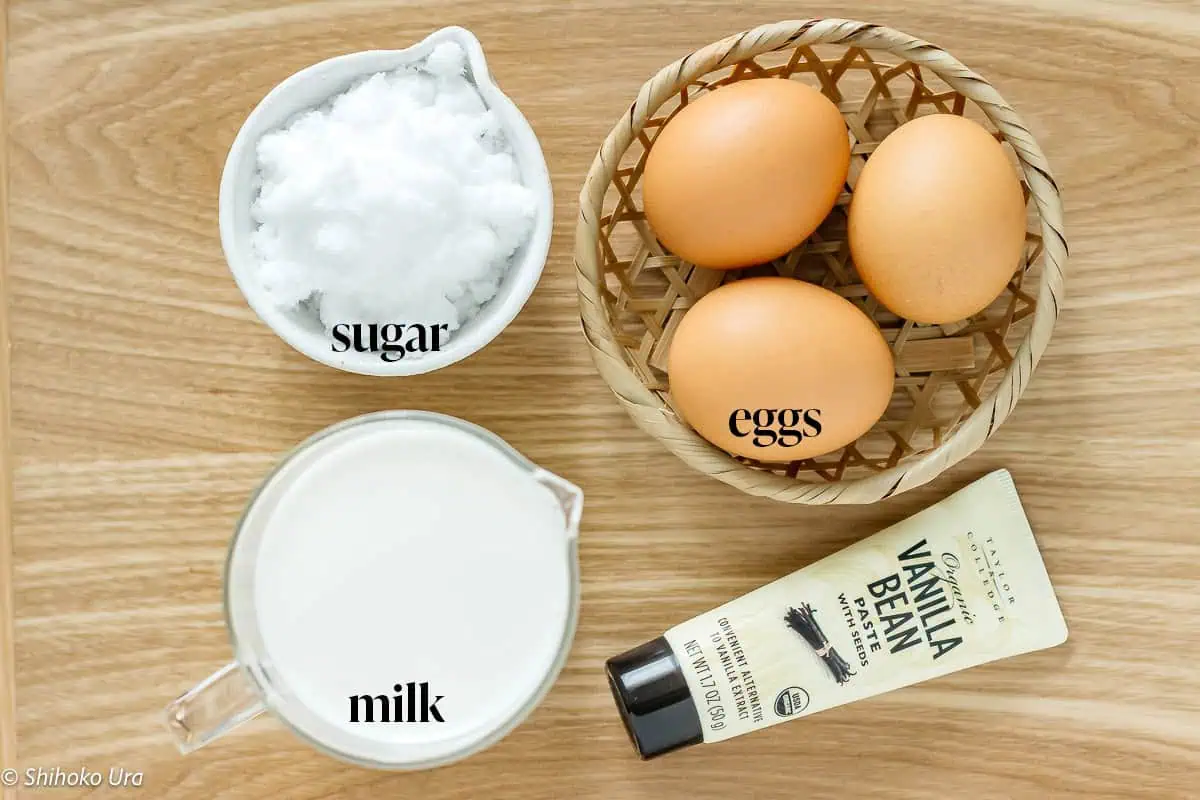
- Eggs
Eggs give Purin its rich flavor and silky texture. Whole eggs create a custard that is firm enough to hold its shape while staying smooth and creamy. - Milk
Whole milk gives the best balance of richness and a light, delicate texture. It creates a classic Japanese Purin that is creamy without being overly heavy and rich, which is why I avoid heavy cream. - Sugar
Sugar sweetens the custard and helps create a smooth texture. - Vanilla Extract
Vanilla is optional and not traditionally used, but I like to add a small amount for the aroma and flavor. It complements the egg custard without overpowering the flavor.
Best Molds for Making Purin
You can make Purin in several different types of molds. This recipe does not require an oven so you don’t need any kind of baking dish or oven-safe mold. It just needs to be heat-proof/heat-safe.
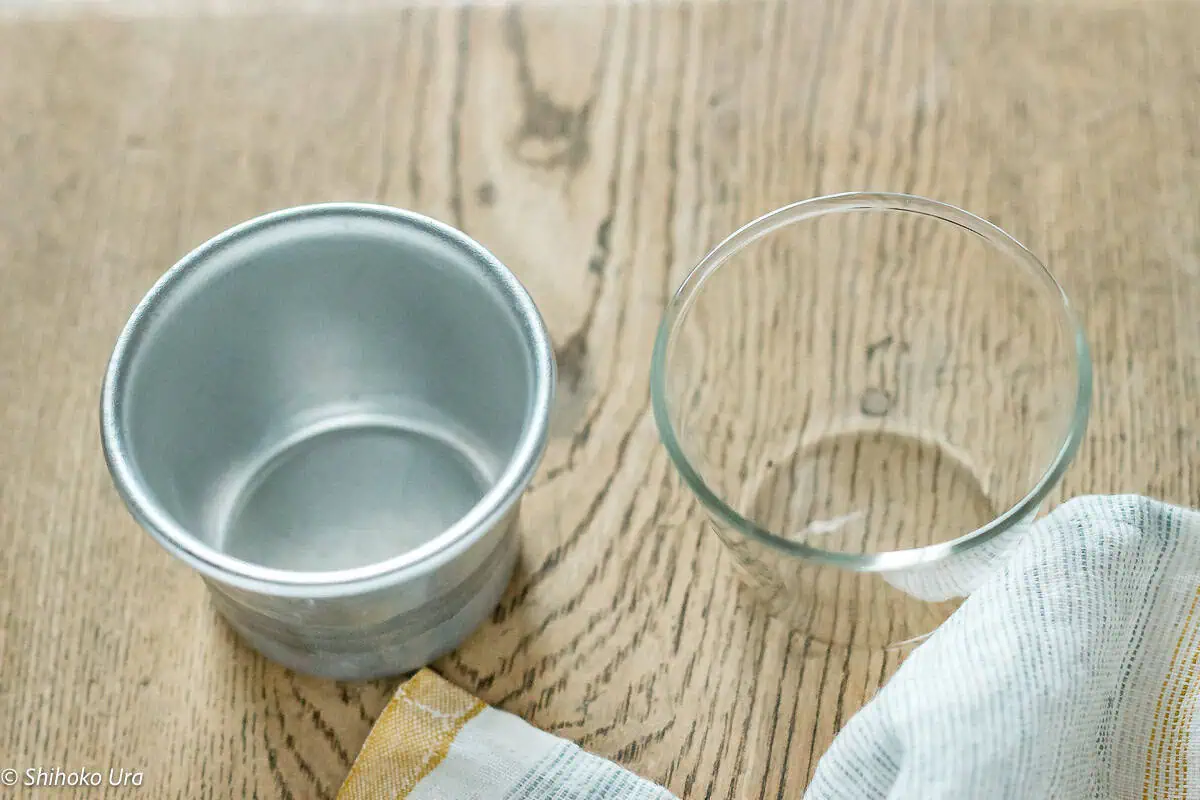
Heat Resistant Glass Molds
Heat resistant glass molds are easy to find and great for serving Purin straight from the container. Because the glass is clear, you can see the beautiful caramel layer at the bottom before unmolding. Glass heats up more slowly than metal, so the cooking time may be 1 to 2 minutes longer. It also holds heat well, helping the custard cook gently.
Aluminum Molds
Aluminum molds are the traditional choice for Japanese Purin. They conduct heat quickly and evenly, making it easier to achieve a smooth, silky custard. They are also flexible, so it’s easier to release the Purin after running a knife around the edge. If you want a classic Japanese café-style Purin, aluminum molds are an excellent option.
Ramekins
Ceramic ramekins are another popular choice because many home cooks already have them. They are sturdy and can go directly from the steamer to the refrigerator. Since ceramic is thicker than aluminum, it takes a little longer to heat through. Check the custard near the end of the cooking time and allow a few extra minutes if needed. If you plan to serve the Purin in the ramekin with a spoon, there is no need to unmold it.
Which Mold is Best?
For the smoothest texture and easiest unmolding, aluminum molds are my first choice. If you prefer to serve the Purin straight in the container, a heat resistant glass molds/pot will be best so you can see the caramel layer. No matter which mold you choose, try to use the same molds for all the purin so they cook evenly.
How to Make Purin
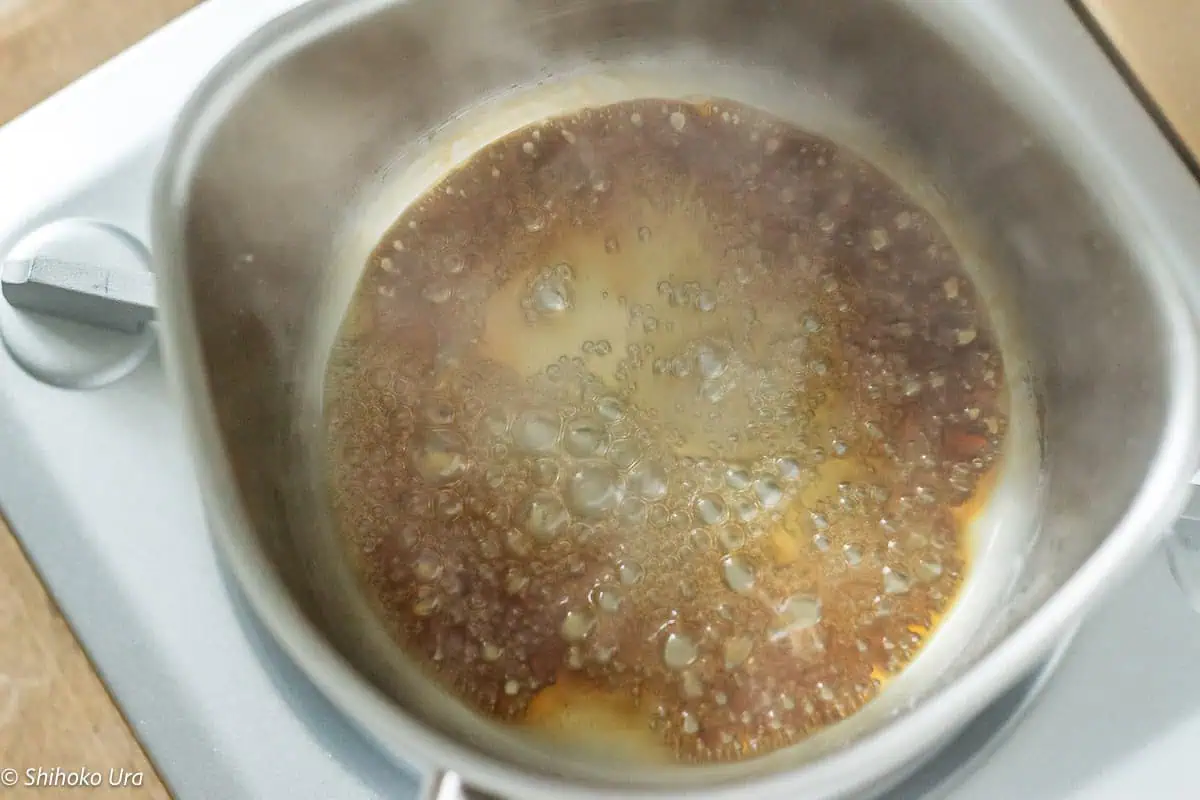
- Make the caramel : Add the sugar and water to a small saucepan over medium heat. Let the sugar dissolve without stirring. Once it turns a deep amber color, carefully add the hot water. Swirl the pan until smooth, then immediately divide the caramel between your pudding cups.

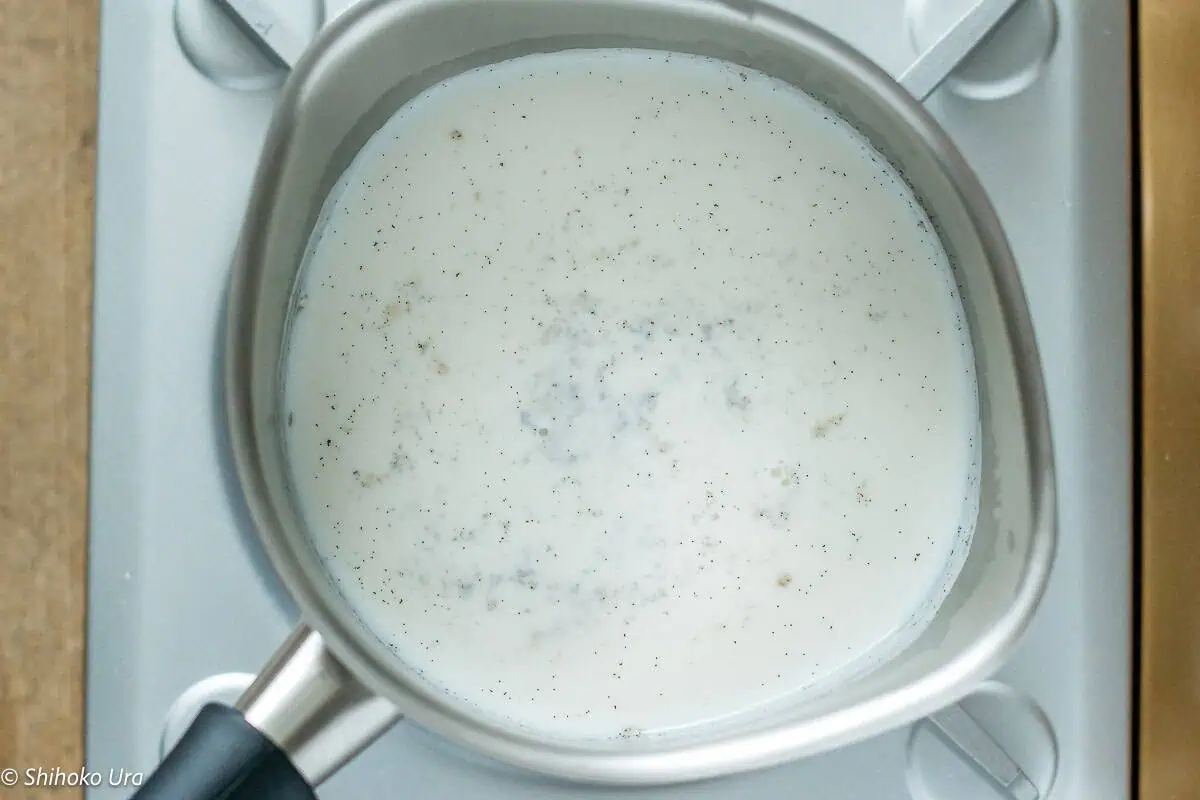
- Warm the milk : Heat the milk with sugar and vanilla extract in a small saucepan until it is warm but not boiling, about 140°F (60°C). Remove it from the heat.
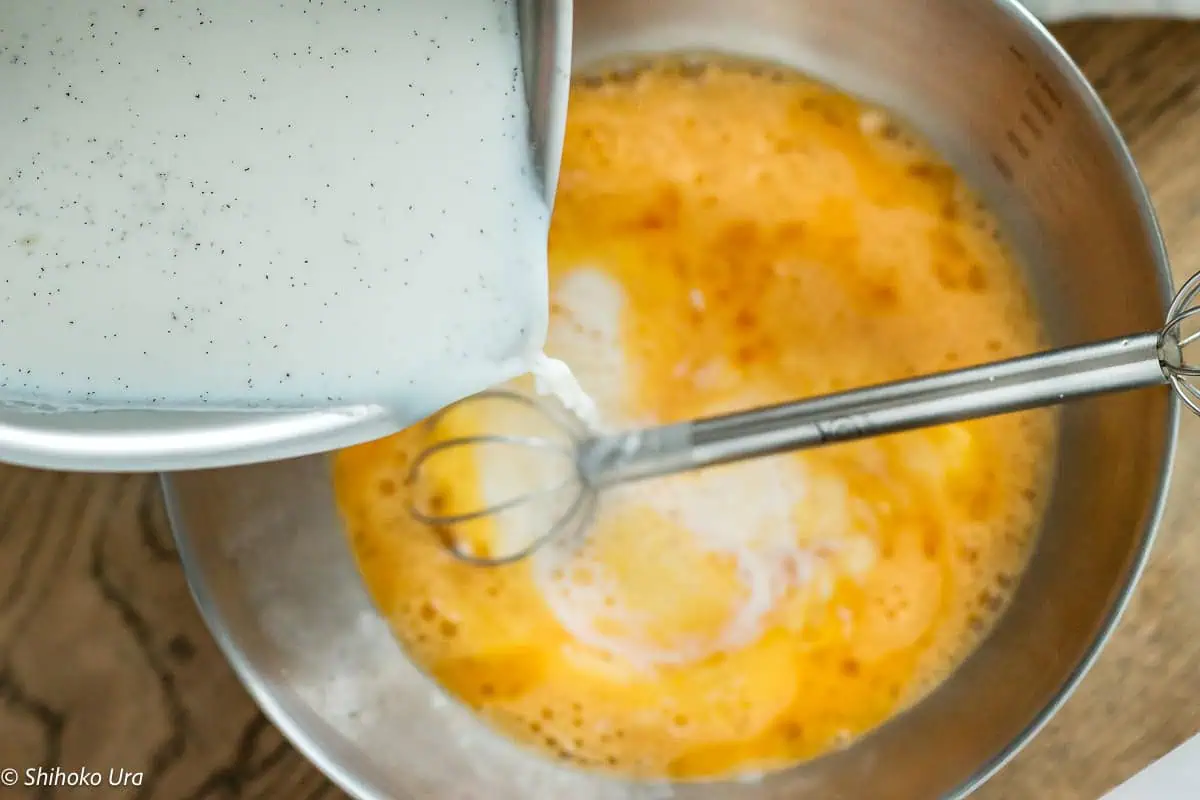
- Make the custard : In a bowl, gently whisk the eggs and sugar until the sugar dissolves. Slowly pour in the warm milk mixture while whisking gently.
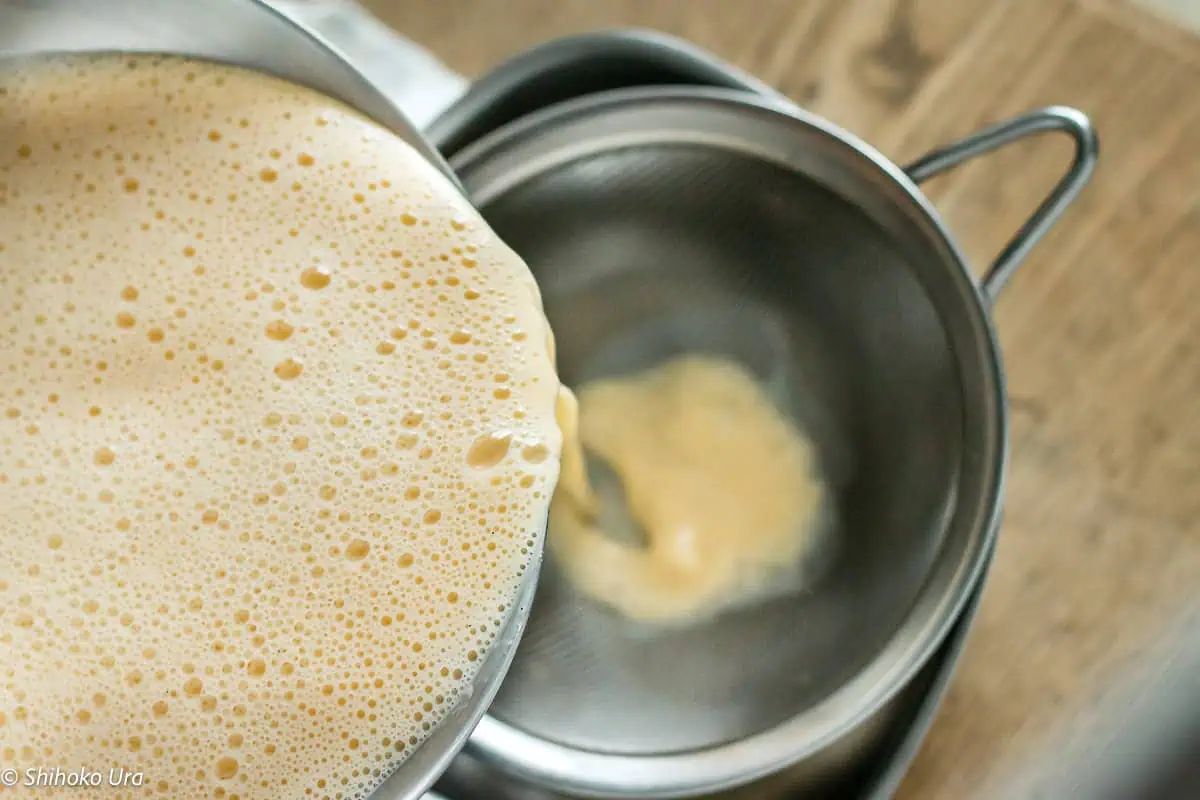
- Strain the mixture : Pour the custard through a fine mesh sieve into a measuring jug. This removes any bits of cooked egg and creates a silky smooth texture. Skim off any bubbles from the surface.
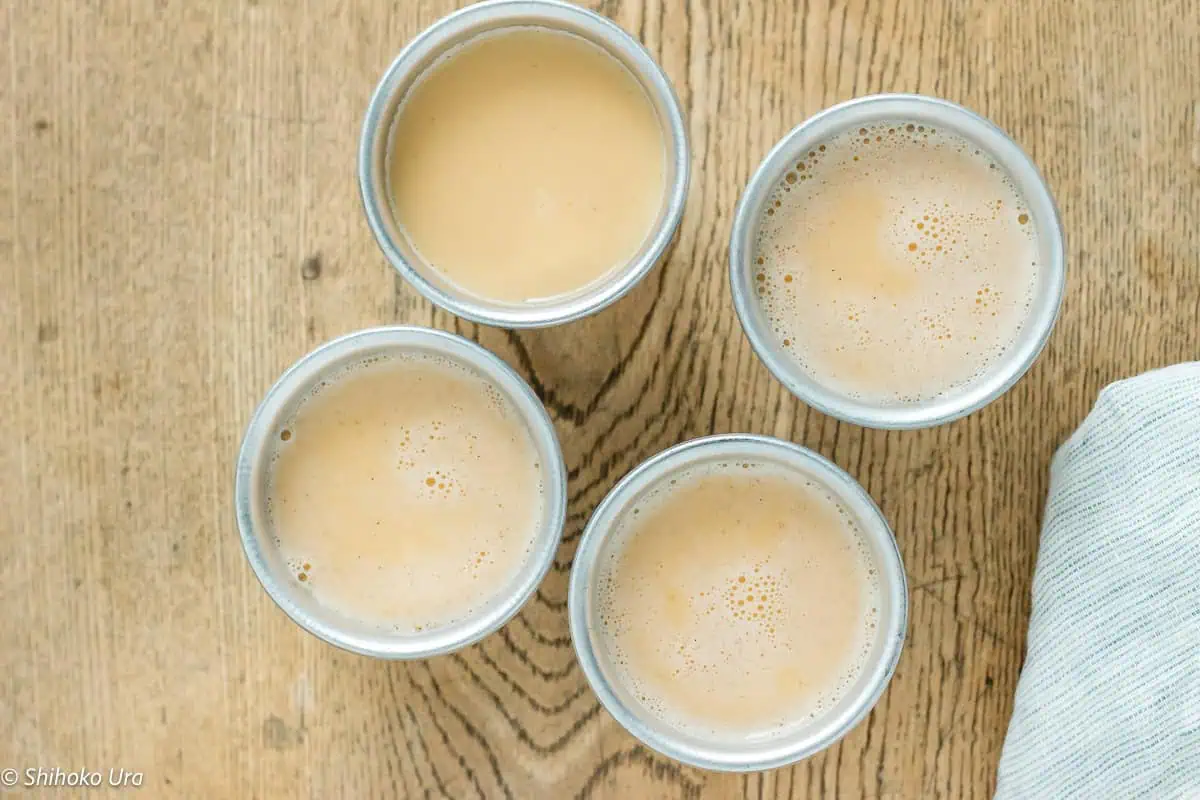
- Fill the cups : Carefully pour the strained custard into the prepared pudding cups over the caramel.
- Steam the Purin : Instead of baking, this Purin is gently cooked using a bain marie, or hot water bath. A frying pan with a lid works perfectly and gives the custard its smooth, silky texture. Arrange the filled pudding molds in a 10-inch (26 cm) frying pan. For 160ml-180ml molds, pour in 3 to 4 cups (750 ml to 1 litre) of boiling water so it reaches about ¾ inch (2 cm) up the sides of the pan. If you’d like, place a folded kitchen towel under the molds to keep them from sliding around. Bring the water to a boil, then immediately reduce the heat to low. Cover the pan with a lid lined with a clean kitchen towel to catch any condensation and keep water droplets from falling onto the custard. Or you can cover the individual molds with aluminum foil. Steam for 3 – 5 minutes over low heat, then turn off the heat. Leave the lid on and let the Purin sit for 15 minutes. The residual heat will gently finish cooking the custard, giving it a smooth texture without becoming spongy or full of holes.
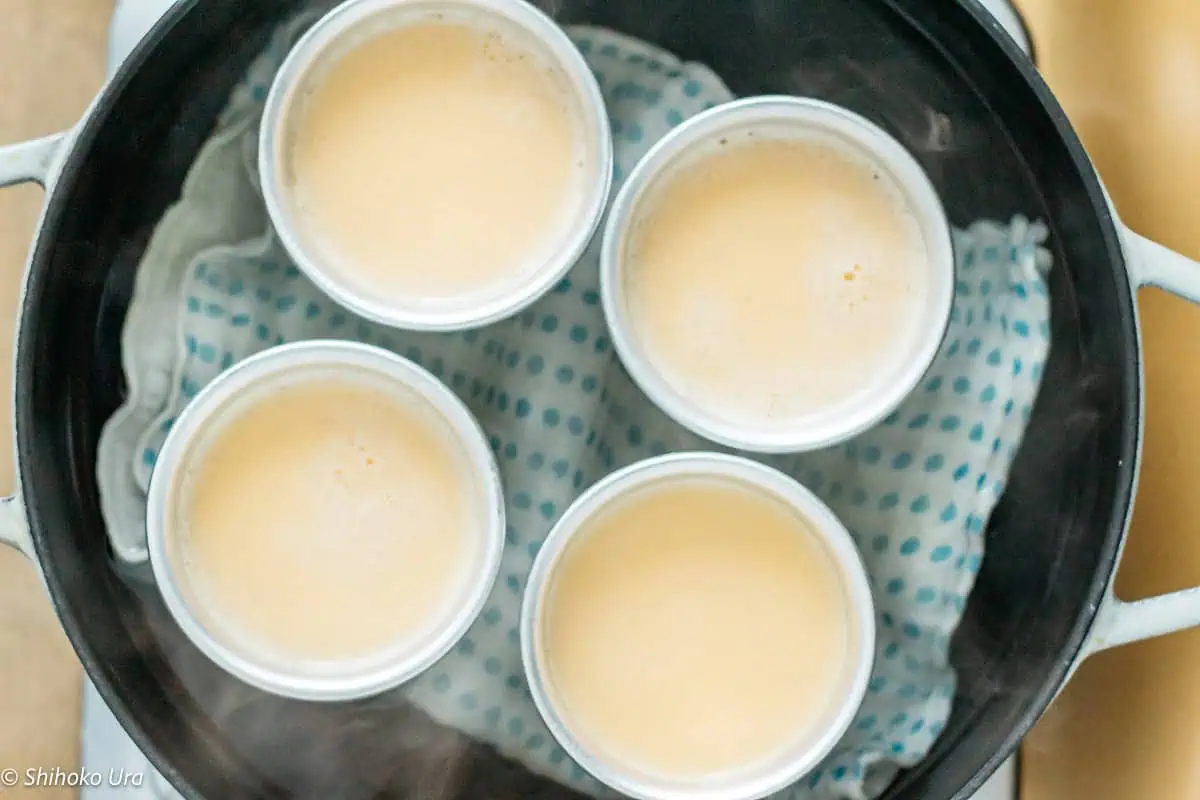 Bring the water to a boil, then immediately reduce the heat to low. Cover the pan with a lid lined with a clean kitchen towel to catch any condensation and keep water droplets from falling onto the custard. Or you can cover the individual molds with aluminum foil. Steam for 3 – 5 minutes over low heat, then turn off the heat. Leave the lid on and let the Purin sit for 15 minutes. The residual heat will gently finish cooking the custard, giving it a smooth texture without becoming spongy or full of holes.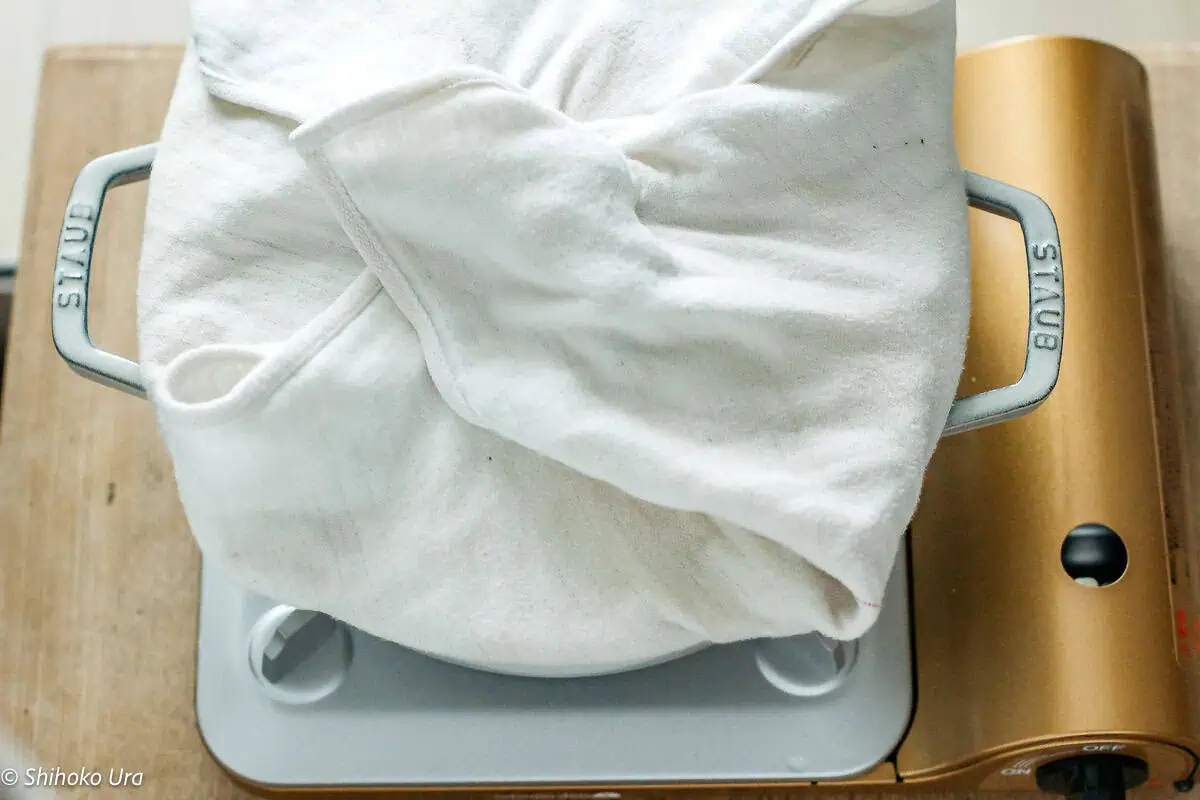
Shiho’s Kitchen Tips to Make Purin
- Watch the caramel closely. Once the sugar starts to turn golden, the color changes quickly and becomes too dark and burns. Remove it from the heat when it reaches a deep amber color to avoid a burnt, bitter taste.
- Strain the custard. Pouring the mixture through a fine mesh strainer removes any bits of egg and gives the Purin its signature silky smooth texture.
- Use gentle heat. Low heat is the secret to smooth Purin. Cooking it too quickly can cause the custard to become spongy or porous.
- Keep the lid covered. After turning off the heat, leave the lid on for the full resting time. The residual heat finishes cooking the custard without overcooking it.
Serving suggestions
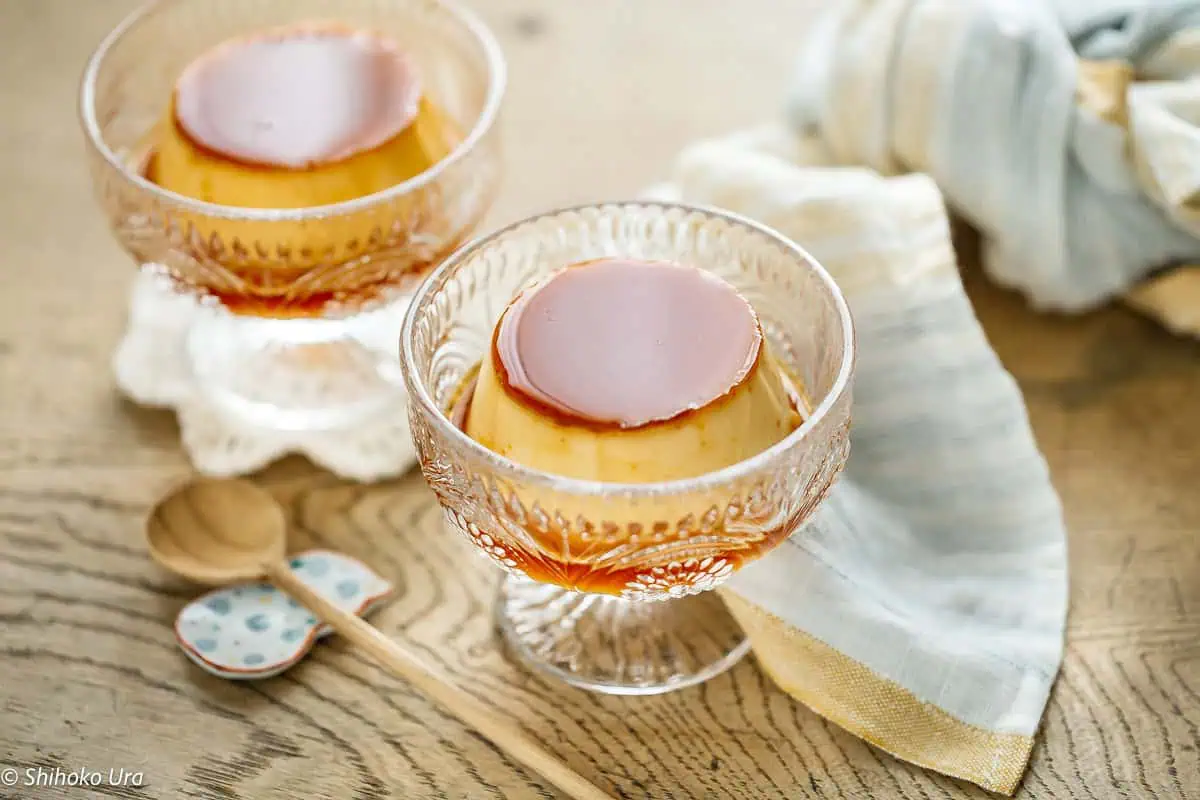
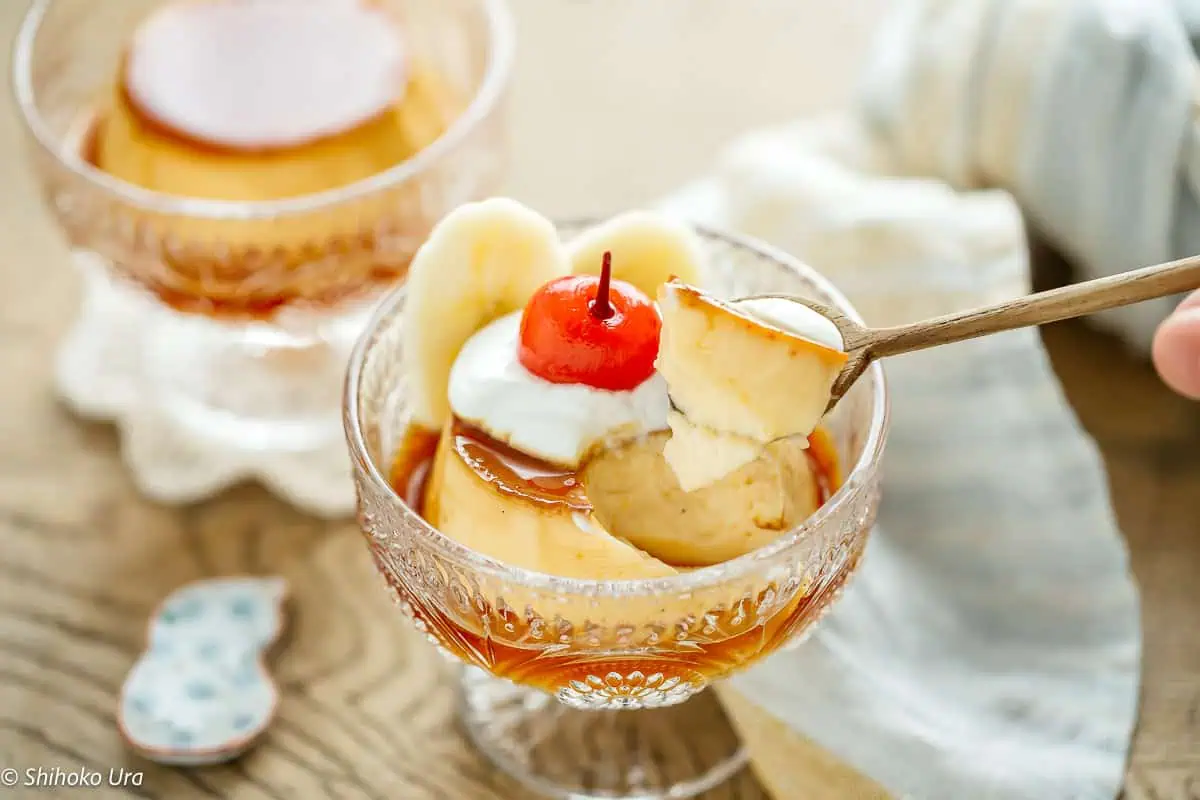
Purin is best served chilled, straight from the refrigerator. Turn it onto a serving plate just before serving so the rich caramel sauce can flow over the silky custard. Add your own toppings if you want, like whipped cream, fresh berries, or sliced seasonal fruit.
MatchaFor a classic Japanese café-style dessert, enjoy Purin on its own with a cup of hot coffee, matcha, or hojicha. The slight bitterness of the drink pairs perfectly with the sweet caramel.
You can also create flavor variations of the purin itself by adding matcha, chocolate, or coffee.
If you’re serving Purin as part of a Japanese meal, it makes a light and refreshing dessert after dishes like curry rice, omurice, or karaage.
Storage
Store the Purin covered in the refrigerator for up to 3 days. Keep each pudding in its mold or an airtight container until you’re ready to serve to help prevent it from drying out.
Purin is not suitable for freezing. Freezing changes the texture of the custard, making it watery and grainy once thawed.
FAQ
A: Yes, you can but remember fat content of the regular milk adds to the rich flavour.
A: You can choose metric or US measurements. Just click which you will use underneath the ingredients list in the recipe card. You can also change the servings as well. Click the serving number, a sliding scale appears so you just slide it left or right.

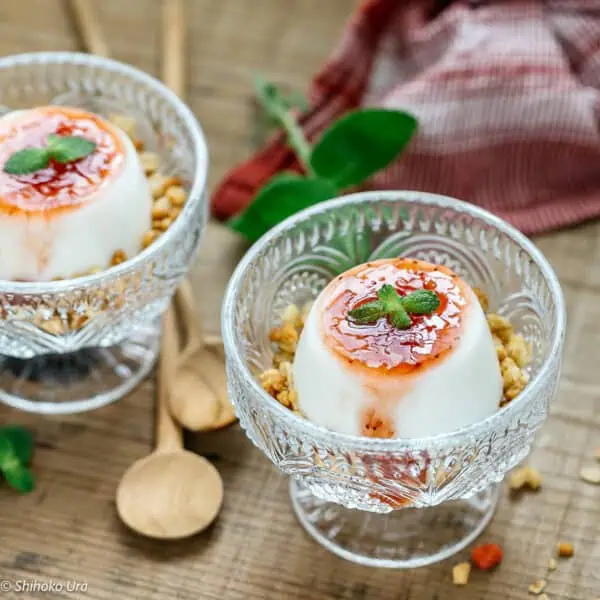

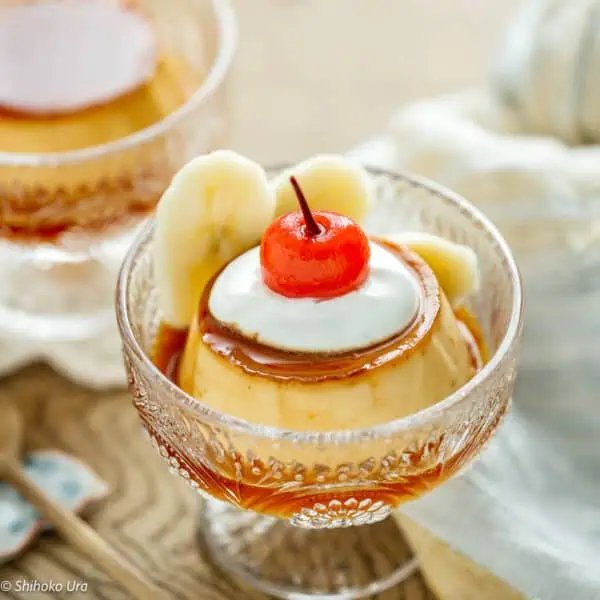
Purin プリン
Video
Equipment
- 4 160-180ml molds
- 1 bowl
- 1 saucepan
Ingredients
Caramel Sauce
- 3 tbs sugar
- 2 tbs water to dissolve the sugar
- 1 tbs hot water
Custard Base
- 360 ml milk
- 3 large eggs
- 60 g sugar
- 1/2 tsp vanilla essence or vanilla paste
Instructions
Caramel Sauce
- Place the sugar and water (for the caramel sauce) in a small saucepan over medium heat until the sugar has dissolved.
- Keep cooking over medium heat till the sugar and water mixture turns into a beautiful amber colour.
- Turn the heat off and add 1tbs of hot water.
- Pour the sauce into 4 pudding molds while it is still hot.
Custard base
- Add the milk, 30 g sugar, vanilla seeds, and pod to a saucepan. Gently heat to about 140°F (60°C), until the milk is hot and just beginning to steam. Set it a side.
- Add the egg, sugar and vanilla essence into a mixing bowl and whisk all together.
- Add warm milk into the egg mixture gradually and stir to combine them all together.
- Strain the custard base using a sieve or strainer.
- Divide and pour the custard mixture into the 4 pudding molds (on top of the caramel sauce).
- Place the molds in a shallow flying pan and add about 750-1000ml water over high heat.
- Bring it to boil then turn the heat down to low, wrap the pan lid in a dry towel and put the lid on and leave it for simmer for 3-5 minutes. *1
- Turn the heat off and leave it for 15 minutes( do not open the lid).
- Take the molds out of the frying pan and allow them cool down.
- Refrigerate the molds for at least 1 hour.
- Serve it on a plate.
Notes
Nutrition



I had to do the caramel three times as the first crystallized, the second burned, and the third worked only because I doubled the recipe (but it was still not really enough for four ramekins IMO). Not sure if I overcooked mine, but they weren’t as delicate as I’d hoped. My caramel fully seized up when I poured into the ramekins and I wondered if it’d soften when I served them…they did and everyone enjoyed them. Who knew making caramel was so difficult?! 🙂
This was the exact problem my mom had when she used to make the same type of caramel for a flan and she’d get so frustrated after wasting so much sugar. So I took over making it for her.
Adding 1/2-1 teaspoon of white vinegar per 1 cup of sugar prevents it from crystalizing. The same steps follows. Don’t stir. Just wash down the sides with a wet pastry brush. You won’t taste the vinegar in the caramel but I find that it takes longer to turn to amber. Once it does start though, it goes fast so swirl your pan to spread the color evenly.
I tried this a few days ago and I was so excited, only for it to turn out absolutely horrible. it tasted like a very strong egg taste, and the sugar was stuck on the bottom. this isn’t your fault at all, i messed up a lot. i found out what i did wrong. for the caramel sauce, im not supposed to swirl it around while its still not amber colored, thats why it stuck to the container. for the horrible egg taste in the custard, i found out that im supposed to put the custard into the pot and cover it AFTER the water boils, not before it boils, which made it overcook. i’m going to try this again soon and try to do everything the correct way, but i mainly came here to ask, how long do i let it cool before storing it in the fridge for a few hours? also do i cover it with anything like plastic wrap or a lid while its in the fridge chilling or when its cooling down or do i leave it bare and uncovered?
Hi Maryam, practice makes it perfect 😀 I usually cool it down to room temperature and cover it with plastic wrap.
This recipe Absolutely good. I see this ingredients..
Thank you 😀
Made it and don’t know why the sugar hardens when I flip the cake, it’s all stuck to the mold.
I made this but with less sugar in the egg custard, it turns out really good! This recipe is so easy to follow, will be making this again for sure thank you!
Thank you so much for the lovely comment and 5 star rating Esther 😀
Thabk you for the recipe when i tried,it completly failed i found out it was because my cups were not good they did not transfer the heat inside and cook the puding also the karamel suce got stuck to the cups so i would like to know what cups can i use?
It’s 2023 now, and I still make this for 60% of the family gatherings I go to! Everyone loves it! Ever since I discovered this (2020 quarantine) it’s been a fan fave :))
Ohhh Thank you Maddie 😀
Please disregard my previous comment, forgot we’re not eating out of the cup but to flip it lol. Is there any tips to prevent holes in our pudding like porous holes on the sides?? Nothing wrong with taste though, just presentation wondering.
Hi I want to ask why does my sugar remain hard after the boiling of the pudding altogether. I’ve made this recipe twice but the sugar bottom remains hard in the final result. After steaming it, it is slightly soft but cools so fast and goes back to being rock like.
Hi Shihoko, should we put the pudding into the water after it has boiled or leave it in the water as it is boiling? Otherwise, the recipe is really clear and easy to follow, thank you!
Hi Ana, at which point are you intending to leave it in water or boiling water?
Can this be baked in an oven? If yes, at what temperature and for how long? Thank you!
Hi Phil, yes you can in hot bath but I am not sure how long and what temperature as I have not tried.
Heya,
I prefer to do it in the oven. I set the temperature of a fan oven at 170C ((338F) for about 30-45 mins. Hope this helps! 🙂
Hi there. After doing this, it caused my fish to drown