
Chicken ham, or ‘torihamu’ in Japanese, is a versatile ingredient made perfectly tender and delicious without the need for any fancy cooking equipment. There’s only 3 ingredients needed and 2 methods to making this so it’s something we can all do at home. It’s superb on its own, in sandwiches and salads, and particularly served with ramen as an alternative to pork chashu. This tasty chicken ham is a great way to add protein and nutrients to a meal and is perfect for anyone following a low carb or low calorie diet.
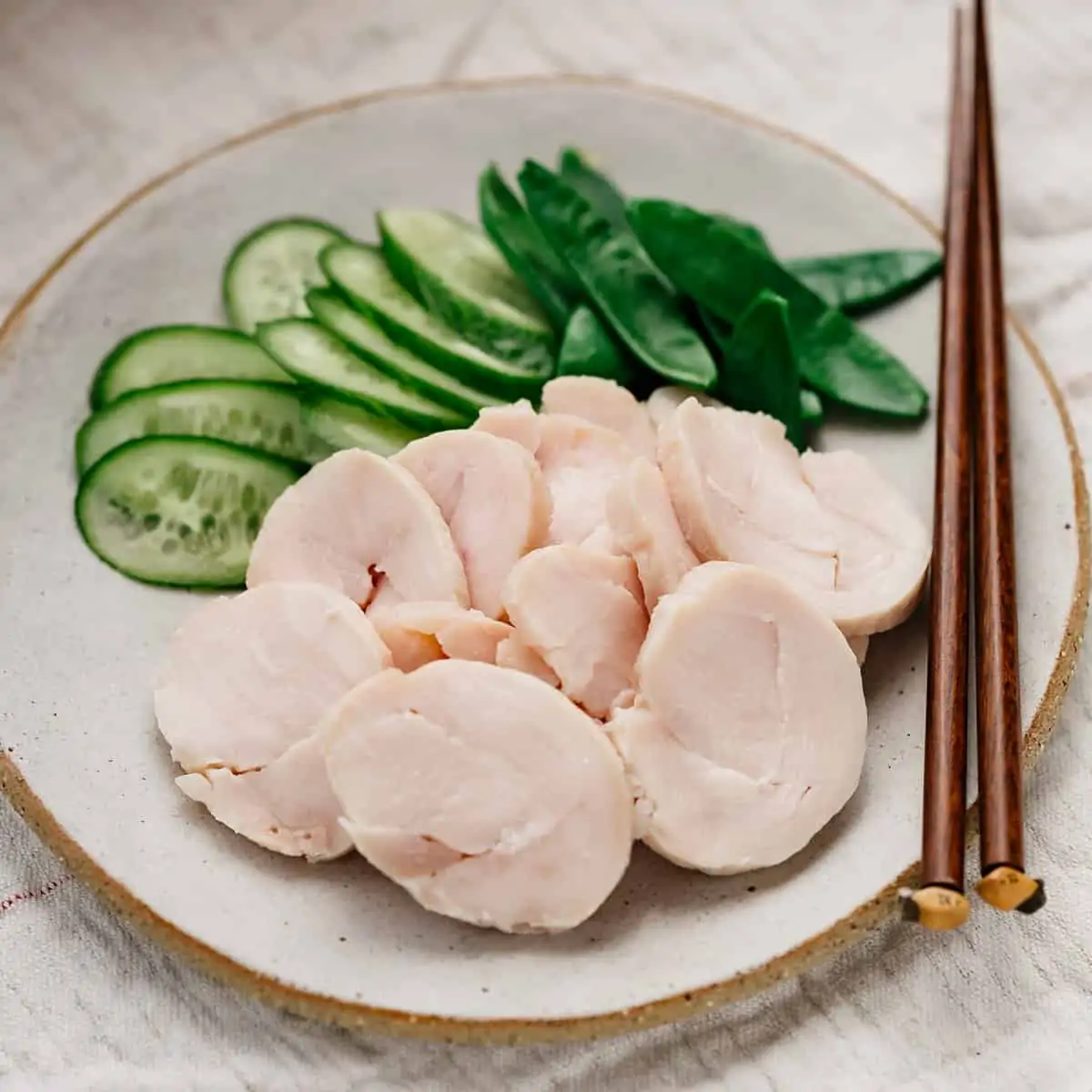
Table of contents
What is Torihamu Chicken Ham?
Torihamu is the Japanese word for Chicken Ham. It became popular a while ago in Japan when the high protein, low carb diet boomed. The main ingredient is skinless chicken breasts that are butterfly cut and tightly wrapped with cling wrap then cooked in a sous vide. But not everyone has a sous vide. Luckily, there are two alternative methods! A rice cooker is the next best option as they usually come with a “keep warm” function that will act in the same way as a sous vide. You can wrap up the chicken breast, set it in the rice cooker, and forget about it till it’s cooked. It’s that easy! The other alternative is to cook it in a pot. This is just as easy but a little more finicky as the temperature won’t stay consistent. Read on for a more detailed explanation of these 2 methods!
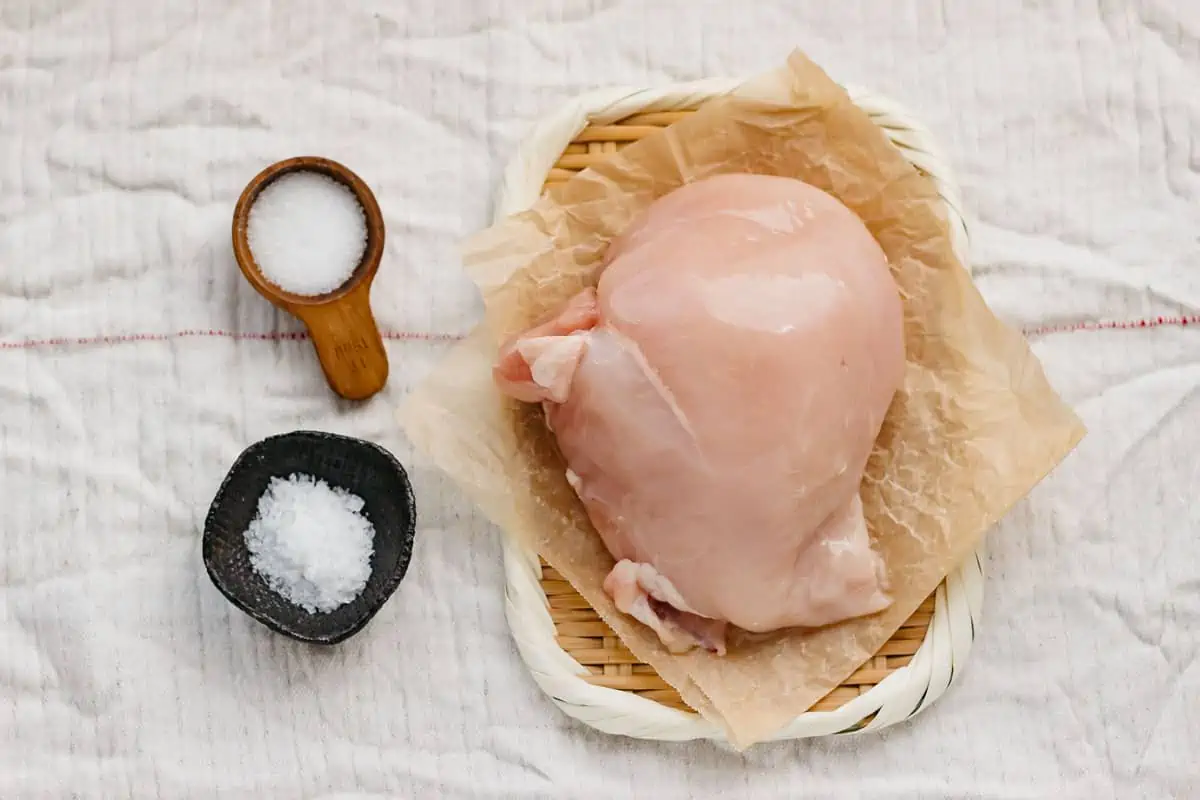
You will Need Only 3 ingredients !
This recipe only needs 3 simple ingredients that you’ll already have in your kitchen!
- Chicken Breast : generally, a chicken breast weighs about 10 oz (or 300g )
- Sugar : Half a tbsp for a 10 ounce chicken breast.
- Salt : 1 tsp for a 10 ounce chicken breast
How to Butterfly a chicken breast for rolling
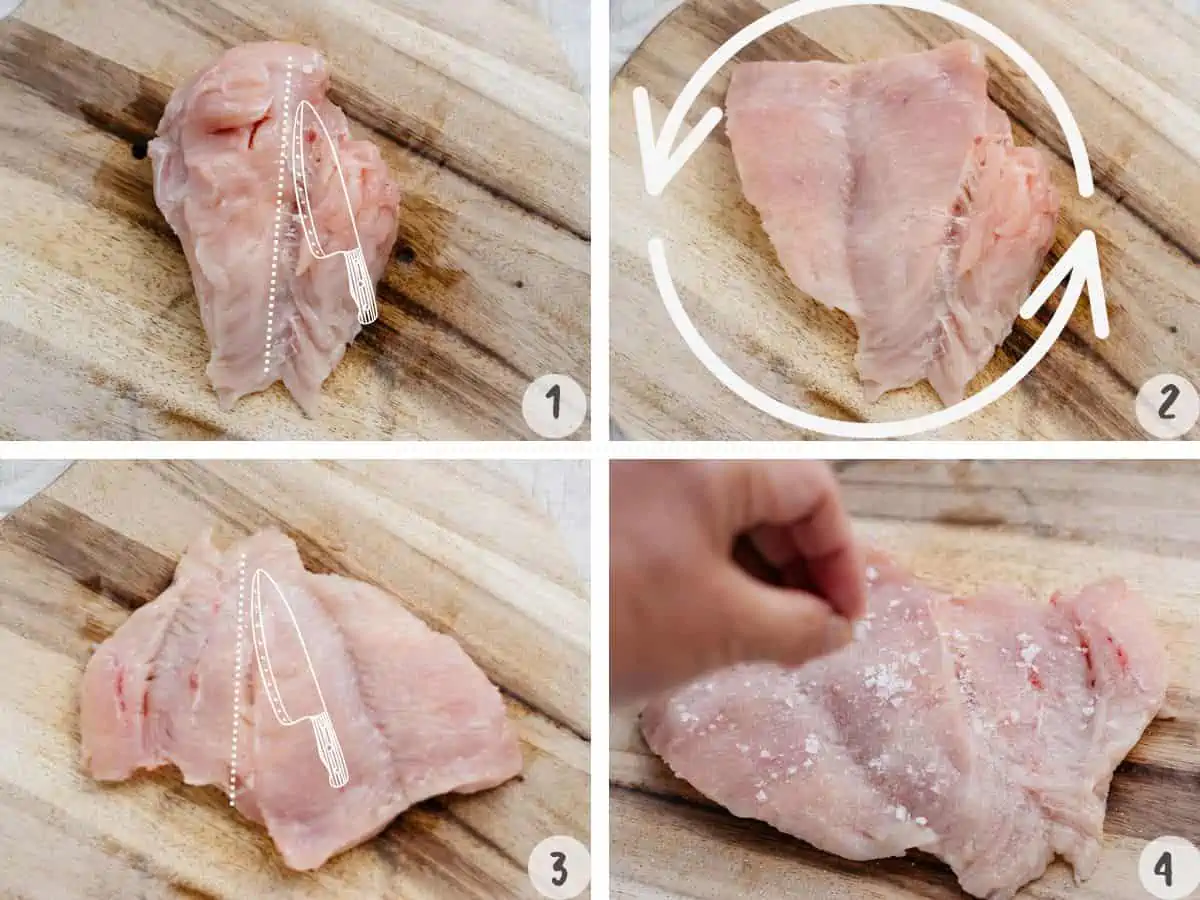
To butterfly or spatchcock a chicken means to make the chicken one flat thin layer. This technique makes it easier to cook the chicken evenly. For chicken ham, we do this so that we can roll it nicely to be a round shape like regular ham. To make the rolling easy, the chicken breast needs to be an even and flat thickness. In Japanese it is called “Kannon biraki”, which is equivalent to butterfly cut in English. Here’s how to do it:
Place a chicken breast on a clean chopping board. Slice the long side of the chicken from the centre to left. Do not cut it completely, but leave a little bit so you can open it up. – Picture 1
Turn the chicken breast 180° and repeat the above. – Picture 2
How to Make Chicken Ham: 2 Easy Methods
Now that the chicken breast is flat and ready to roll, it’s time for seasoning! Sprinkle 1 teaspoon of salt and half a tablespoon of sugar on each side and rub it in. To add more flavour to the chicken, try using other seasonings too like onion powder or garlic powder, and herbs like thyme, sage, or rosemary.
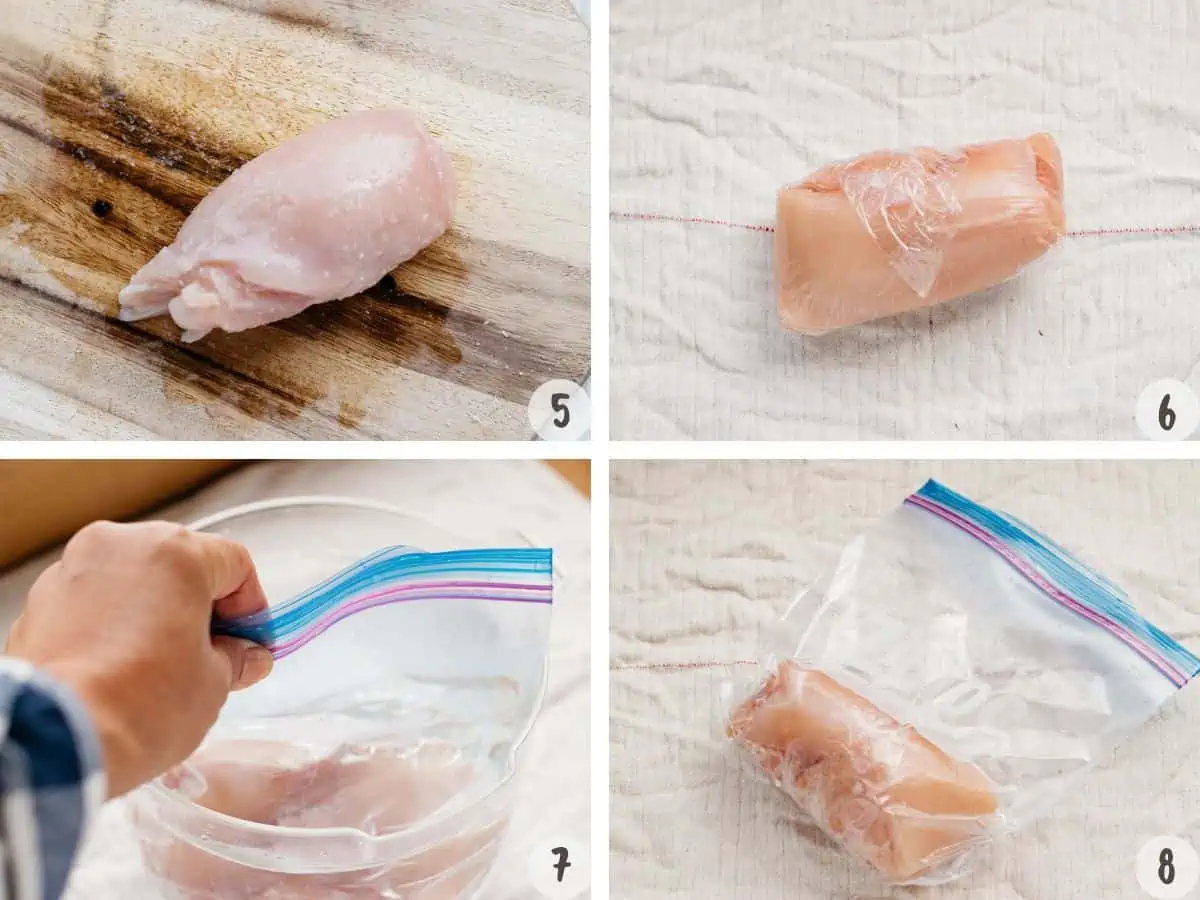
Place some cling wrap on a work surface and roll and wrap the chicken breast tightly. At the same time, shape it into a ham.
Put it in a ziplock bag. Place the ziplock bag into a bowl of water to seal the ziplock without any air pocket.
For Method 1 (Rice Cooker):
Pour 1 liter of boiling hot water into a rice cooker and 300 ml of cold water to make around 176 °F (80°C) water. Bacteria, such as salmonella, that may be present on the chicken can be killed when cooked at 165 F (75 C) or higher (https://www.chickencheck.in/faq/safe-cooking-temperature-chicken/). However, when the chicken meat is added, the temperature will decrease, so it’s best to use a higher temperature of 80 degrees and keep that temperature consistent by pressing the “keep warm” function of the rice cooker.
Leave the chicken in the rice cooker for 2 hours.
For Method 2 (Pot):
If you don’t have a rice cooker or sous vide, then you can use a pot on a stove. Firstly, prepare the chicken the same way as I explained above. Then, boil water over medium-high heat in a large enough pot that you can place the ziplock bag. Once the water boils, put the ziplock bag in and wait for the water to boil again. Place a lid on the pot and turn the heat off. Leave it for at least 30 minutes and check whether the chicken is cooked or not. Since the pot will be left at room temperature, it’s important to make sure it doesn’t cool down too much. Use a lot of water so that it doesn’t lose its heat too quickly.
Make sure to check that the chicken is fully cooked after this time. Once ready, you can slice the chicken ham and eat it however you like!
How to Serve Chicken Ham Slice
Chicken ham can be served on its own with fresh green vegetables such as lettuce leaf or broccoli and tomato slices or with roasted vegetables like potatoes, asparagus, or sweet potato. Or toss it in a salad with cucumber, red onion, carrot, tomato, cheese, bread crumbs, and anything else you can think of. Alternatively, it would be great in a sandwich. Try spreading some butter, mayo, or Dijon mustard then place the slices of chicken ham and top with leafy greens and other vegetables and your choice of cheese. In Japan, we often use chicken ham as chashu chicken for ramen. I usually slice it to about an inch thick then add it to shio ramen. It’s so delicious when it absorbs the flavours of the ramen soup and adds a good dose of protein.
Tips for Making Chicken Ham
- Cut the chicken breast to an even thickness for easy rolling and to ensure the chicken is cooked through evenly.
- Remove any air pockets as much as you can so that the chicken breast will sink in the rice cooker, not float.

FAQ
A: The best way to ensure that the chicken is thoroughly cooked is to use a kitchen thermometer. You can also check by cutting one of the pieces or by placing the chicken on some kitchen paper and pressing it with your finger to check the colour of the juice that comes out.
Use the pot method instead but make sure to check the temperature of the water. Since it won’t be kept warm like the rice cooker, it’s important to use a lot of water so that it retains heat for longer. This is especially important if it is left in a cooler room temperature.
A: It will keep for a few days in fridge and about 2 weeks in the freezer.

Easy Chicken Ham 鶏ハム
Ingredients
- 1 Chicken Breast *1
- ½ tbsp sugar
- 1 tsp salt
Instructions
Prepare Chicken Breast
- Place a chicken breast on a clean chopping board.
- Slice the long side of the chicken from the centre to left leaving a little bit so you can open it up.
- Turn the chicken breast 180° and repeat the step 2.
- Season the chicken breast with salt and sugar on each side and rub it in.
- Place some cling wrap on a work surface and roll then wrap the chicken breast tightly. At the same time, shape it into a round ham.
- Put it in a ziplock bag. Place the ziplock bag into a bowl of water to seal it so there is no air pockets.
Cooking the rolled chicken breast
- Pour 1 liter of boiling hot water into a rice cooker and add 300 ml of cold water to make the temperature of the water around 176 °F (80°C).
- Place the the ziplock bag with the rolled chicken into the rice cooker and put lid on.
- Press the "keep warm" function of the rice cooker and leave it for 2 hours.





I on a salt diet any japanese recipes without salt
Hi Randy, hmmmmm I can not think of many….
Easy simple and delicious.
Thank you for sharing!
You said this is usually cooked sous vide, do you have the time and temperature instructions for that method for those who do have one?
Hi Christina, 150°F(65.5°C) for 1 hour.