


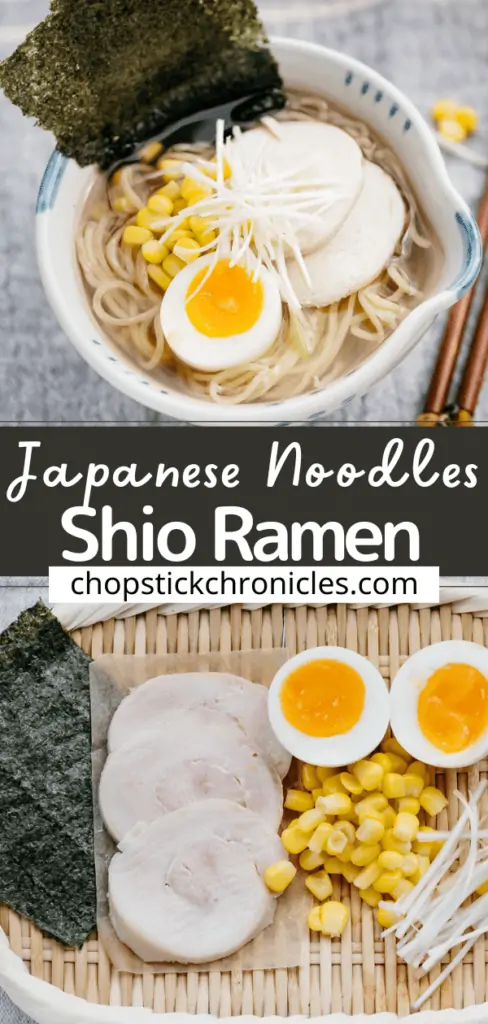
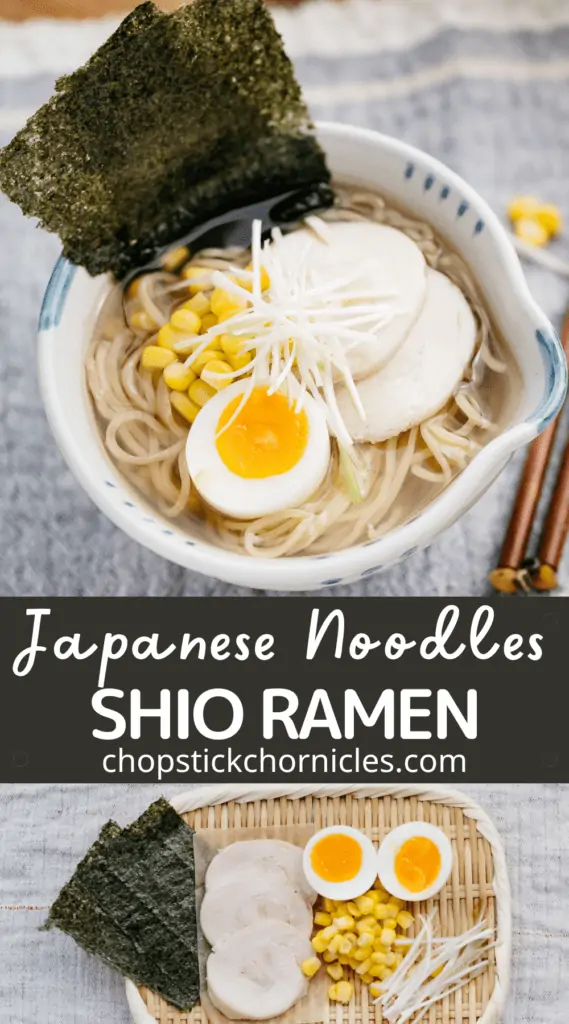
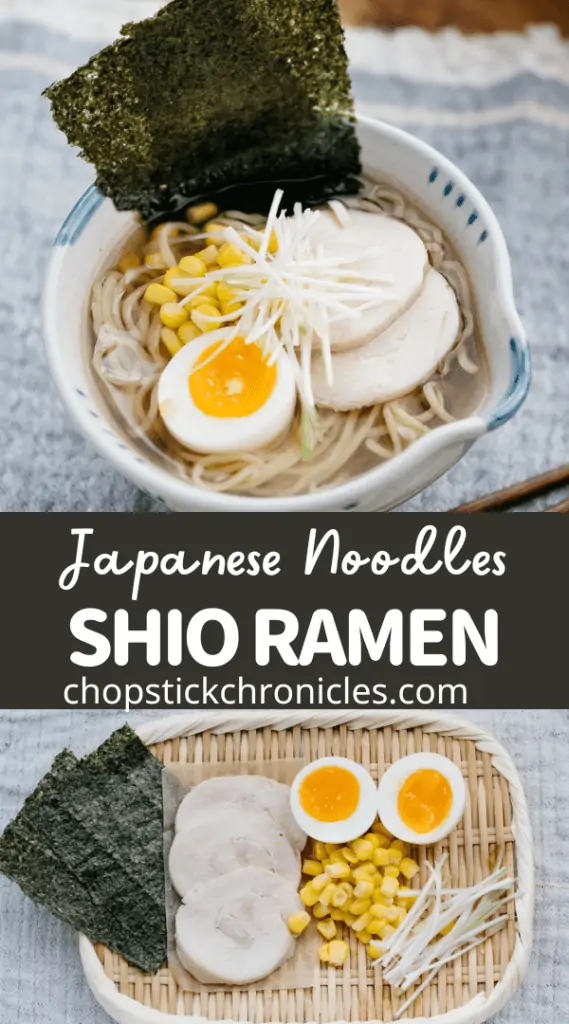

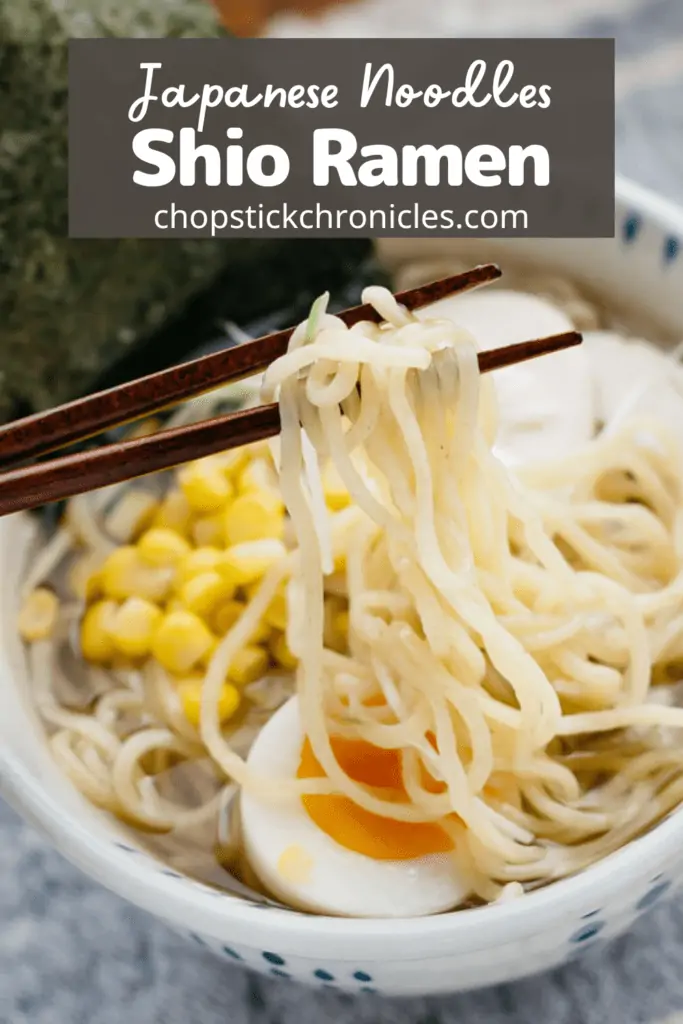
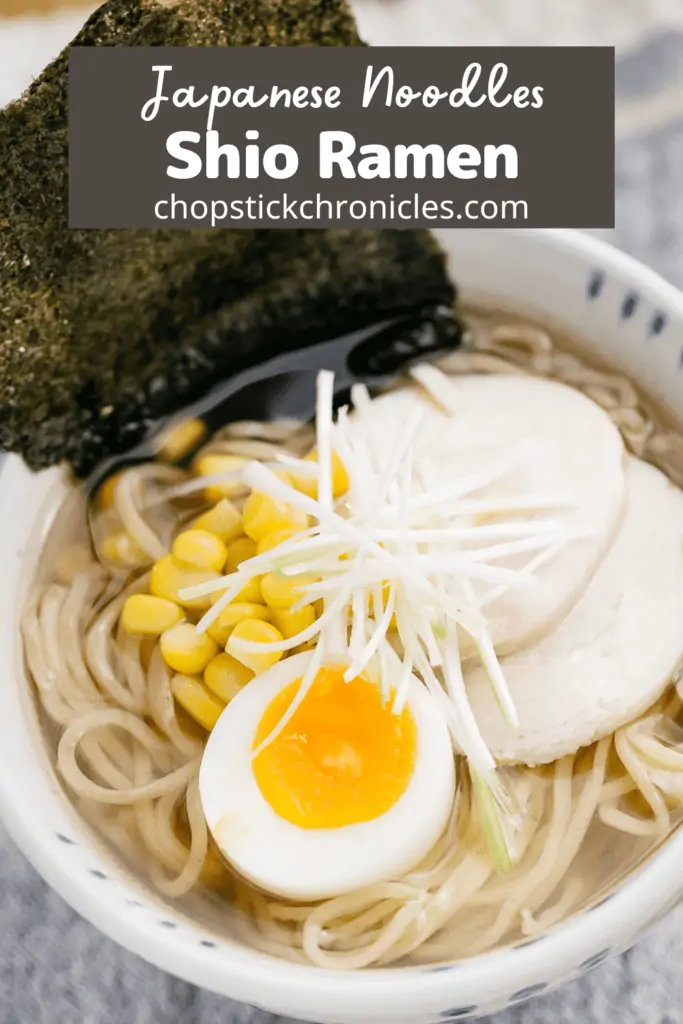

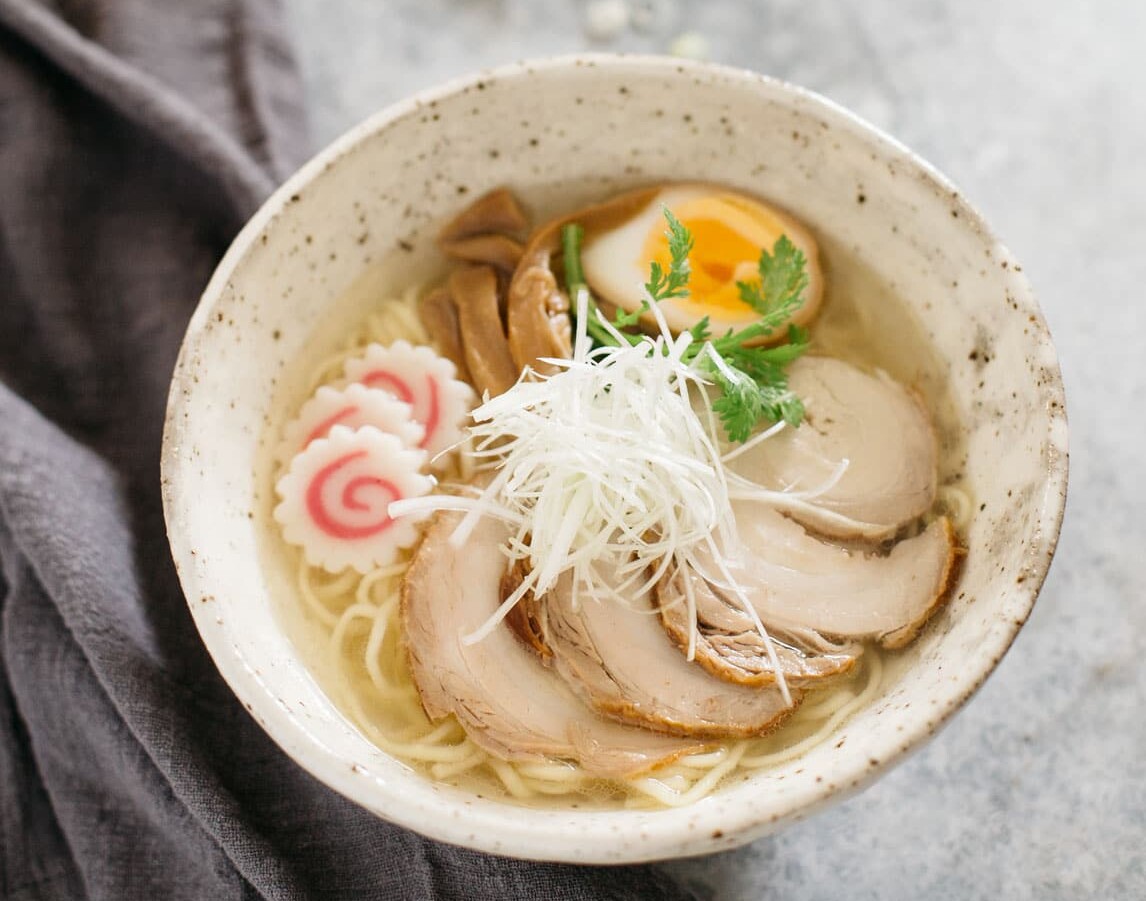
Shio ramen is one of the most popular and common types of ramen in Japan. It’s made from a delicate chicken based broth with a muted salty flavor providing a delicious soup for the noodles and toppings to sit. This heartwarming noodle soup embodies the simple and subtle yet flavourful quality of Japanese cuisine. Preparing it at home isn’t difficult and in no time you’ll have a comforting bowl of homemade ramen.
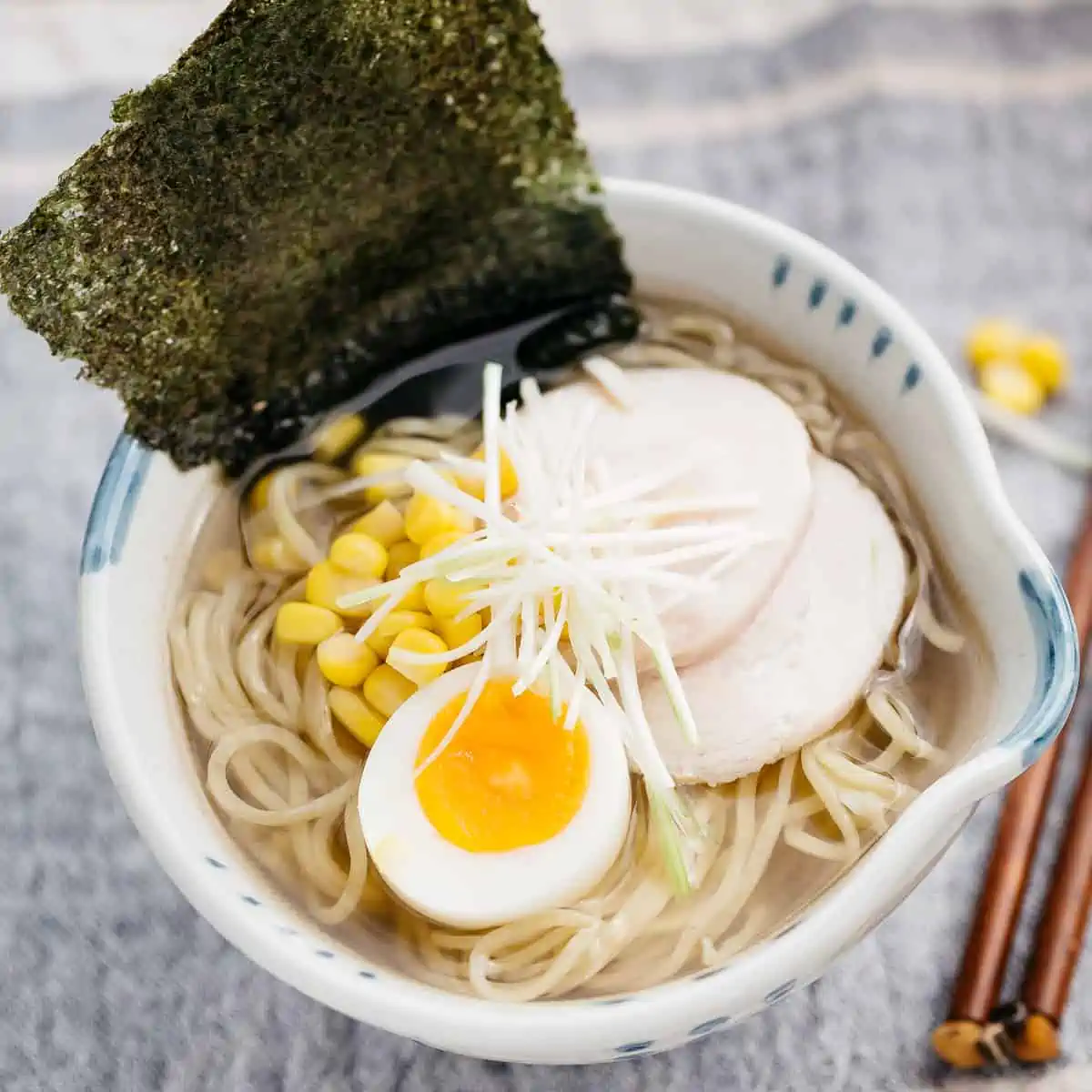
Table of contents
What is Shio Ramen Soup?
There are many different flavours of ramen in Japan with different prefectures having their own unique flavours of ramen specific to their region. Three common and popular flavours are:
- Miso ramen (it is in our cookbook The Secret to Japanese Cooking.)
- Shoyu ramen
- Shio ramen
The flavour of ramen is dependent on the type of stock used for the soup base and the additional seasonings added. For example, Tonkotsu ramen is made from a pork bone stock which creates a rich, hearty, and thicker soup.
This Shio ramen is made from clear chicken based soup giving it a lighter delicate quality. The name of this dish comes from the Japanese word for salt (shio) because of the added salt seasoning.
Shio ramen is created by adding a shio tare (sauce) to the chicken soup and dashi base making a sea salt infused flavour. The result is a simple but sophisticated ramen soup with a delicious umami flavor and a subtle saltiness that goes perfectly with toppings like chashu chicken, eggs, and vegetables.
Why You’ll Love This Shio Ramen Recipe
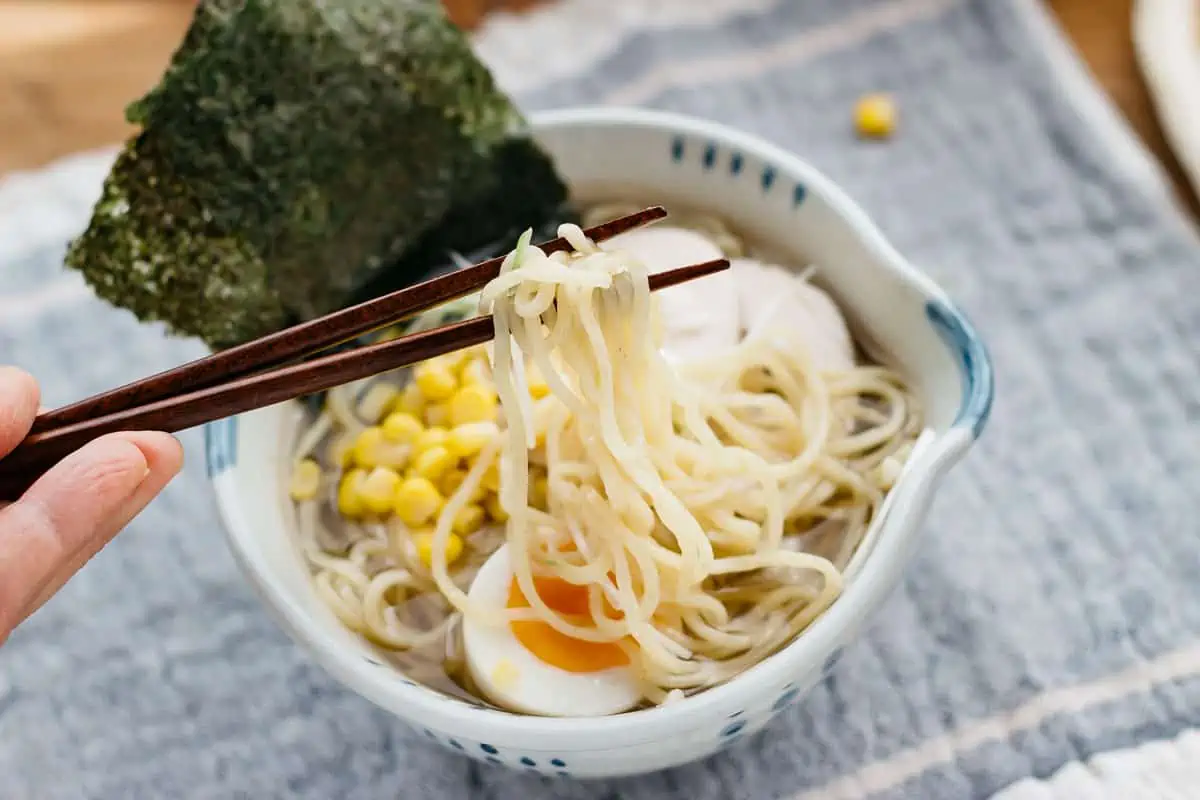
In Japan, you can experience delicious flavourful ramen where everything is cooked from scratch. This is what we want to achieve at home too – without the time consuming process. Luckily this ramen is easy to make with ready-made chicken stock so you can have authentic shio ramen at home without hours of labour in the kitchen.
The whole bowl of ramen can be made from scratch from the broth to the noodles meaning you know exactly what’s in it. Unlike instant ramen that is full of preservatives and harmful chemicals, this shio ramen is fresh and nutritious and a completely satisfying meal.
The delicate broth is perfect for those who prefer a lighter soup full of flavour. The elegant soup base features a pleasant saltiness that is deliciously balanced by the springy noodles and fresh toppings.
It can easily be tweaked to suit anyone on who is vegan/vegetarian. The bonito flakes (katsuobushi) dashi broth can be made with kombu (kelp). Kombu or shiitake mushrooms can also be used to replace the chicken stock making it a fully plant based bowl of ramen.
Ingredients Needed
For this recipe, I used some common and popular ingredients like chicken ham, corn, and eggs. Here is a bit more information about what I used and other topping suggestions:
Ramen Noodles
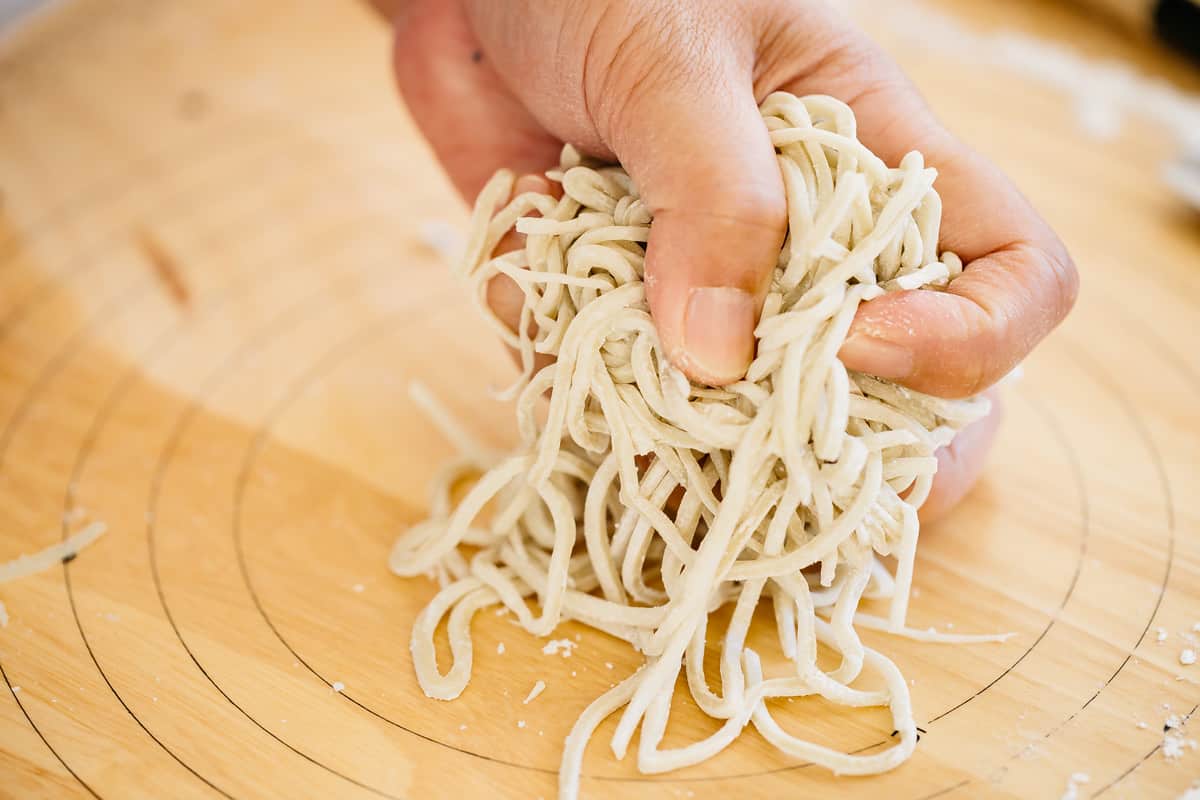
Ramen noodles are of course an essential component of this dish. I prefer to use frozen ramen noodles that typically come packed with a seasoning packet (which I omit when making the soup from scratch but will use when I’m craving 2 minute instant noodles). You can also use dry ramen noodles or even make your own from scratch!
Ramen Toppings
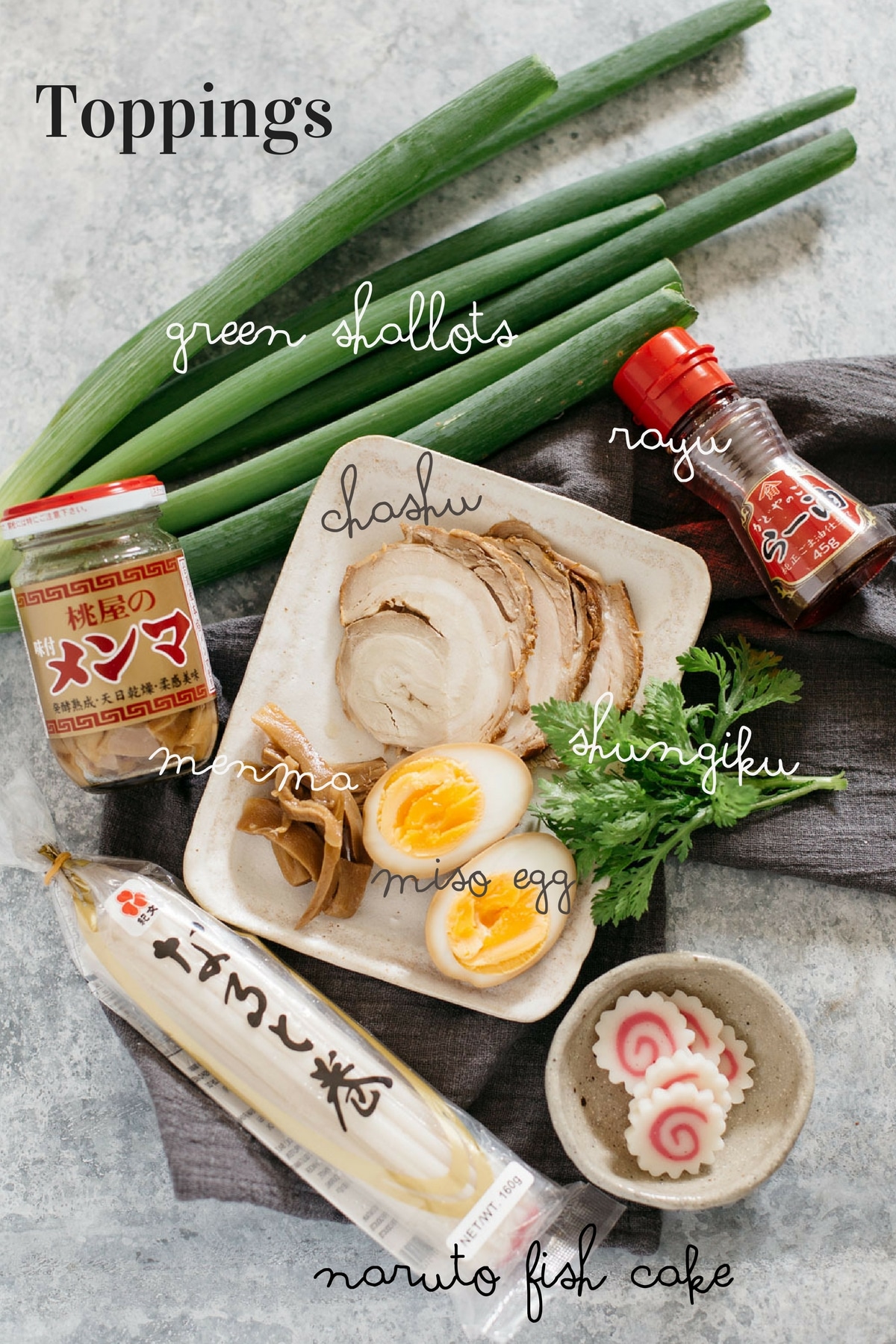
Toppings are another key element to making a bowl of ramen into something special. Adding vegetables and some sources of protein creates a balanced and healthy meal.
The most common ramen toppings are:
- Pork Chashu (or pork belly)
- Tori Hamu Japanese Chicken Ham
- Miso Egg
- Menma
- Naruto
- Vegetables
- Nori (seaweed) sheet
Menma and Naruto
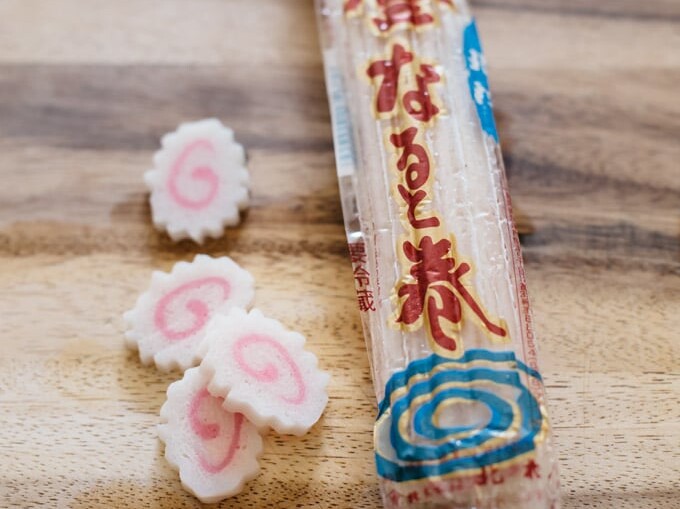
For those who don’t know, Menma is a Japanese condiment of bamboo shoots that are often used as a ramen topping. Naruto is a white fish cake decorated with a pink spiral (but you may know it more famously as a Japanese anime character’s name).
Vegetables
My mum always insisted that “You have to eat veggies!” even when we eat a bowl of noodles so she would add finely chopped green shallots and bean sprouts (Moyashi) into our ramen when I was young. There are many types of vegetables that go well in ramen which makes it easy to customise to suit your own taste buds.
You can add some:
- Shiitake mushrooms
- Kelp seaweed
- Garlic
- Bok choy
- Spinach
- Leeks
- Corn
- Thinly sliced carrots
- Edamame
- Broccoli
- Grated ginger
Shiraga Negi
Shiraga Negi, which is what we call the white part of green shallots (spring onions or green onions) are another tasty topping. They are cut in such a way so as to resemble fine strands of grey hair (Shiraga Negi is also what Japanese people call the bright white hair that you may see on older people).
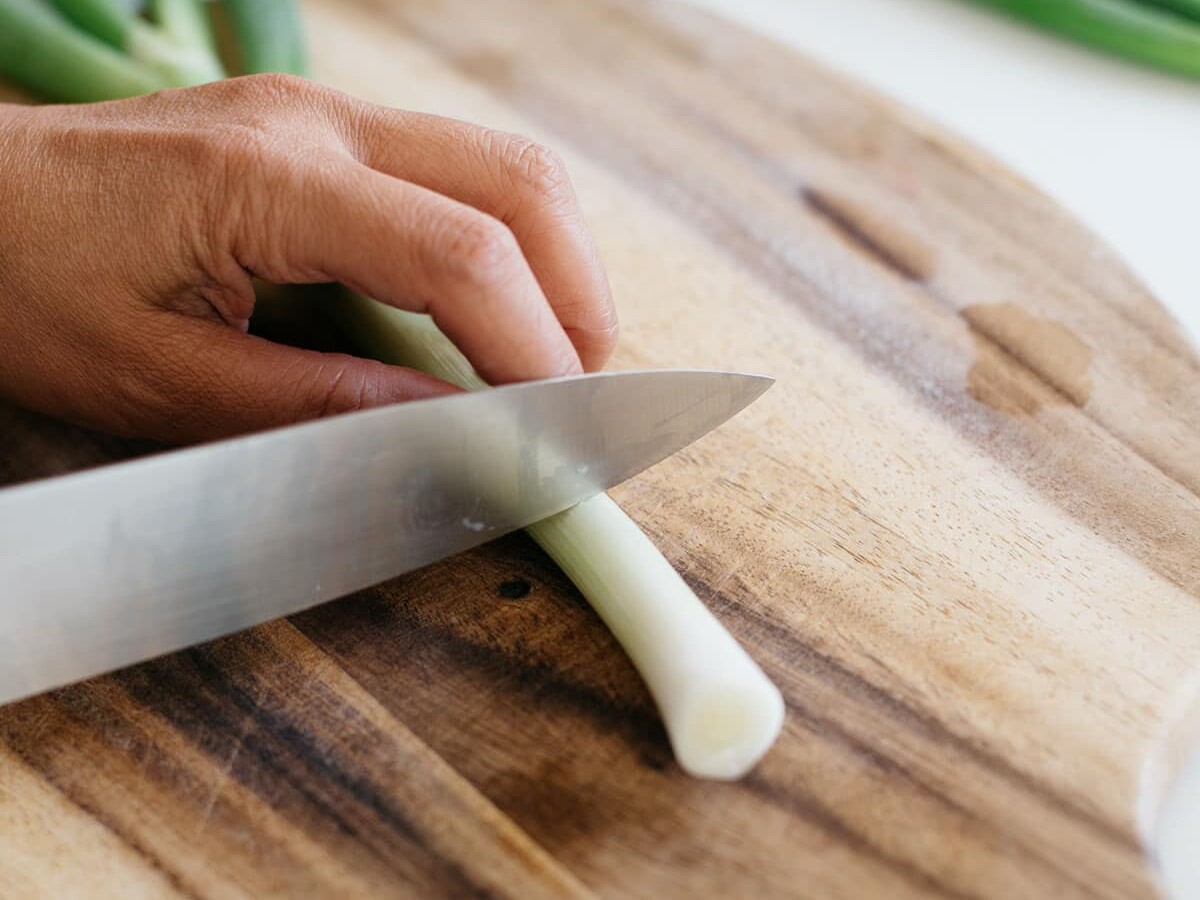
To make Shiraga Negi:
- Chop about 5 cm from the bottom of your green shallots (or scallion) and score in the centre.
- Lay the outer 2-3 layers flat on the chopping board and slice it thinly along the shallot fibre.
- Soak it in a bowl of icy water for 10 minutes.
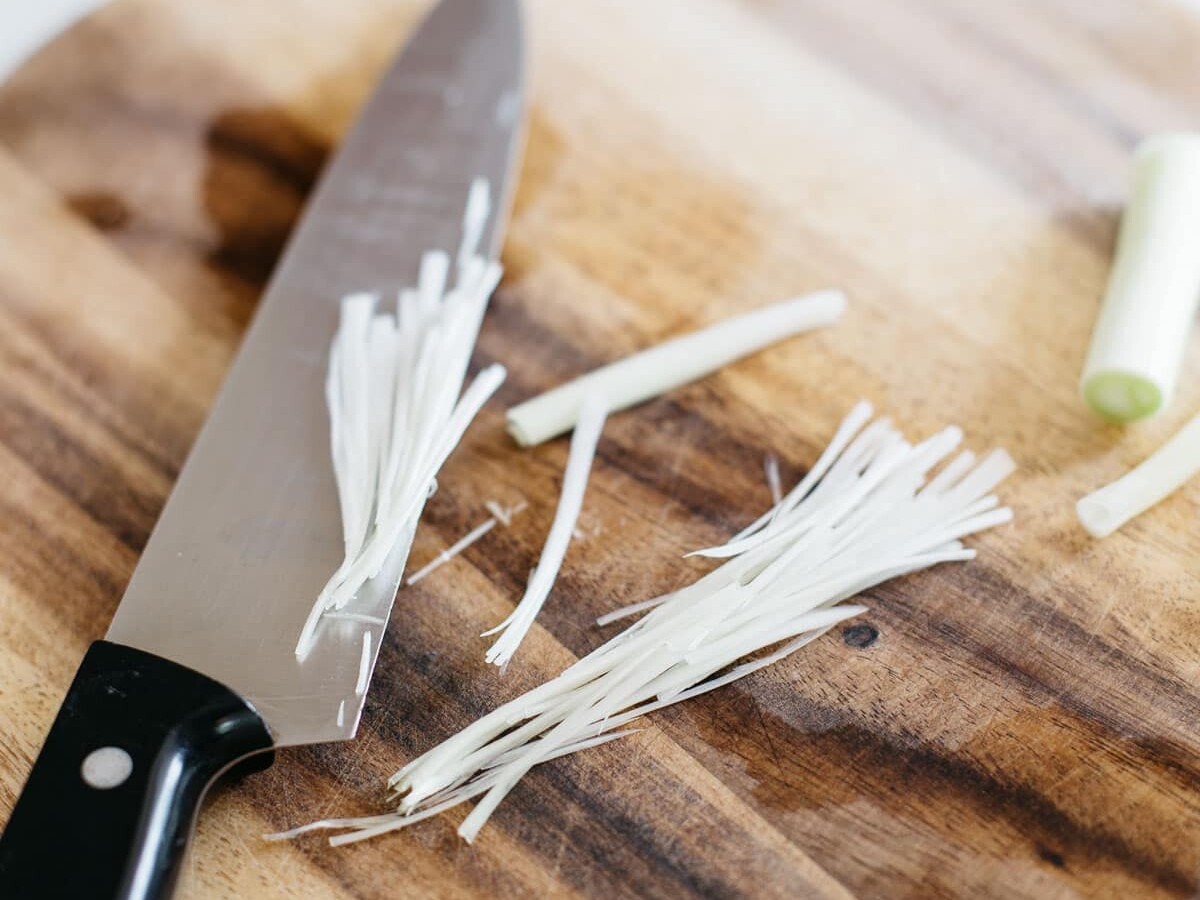
Shiraga Negi is also great for other dish toppings such as on Karaage chicken and Teriyaki Meatballs !
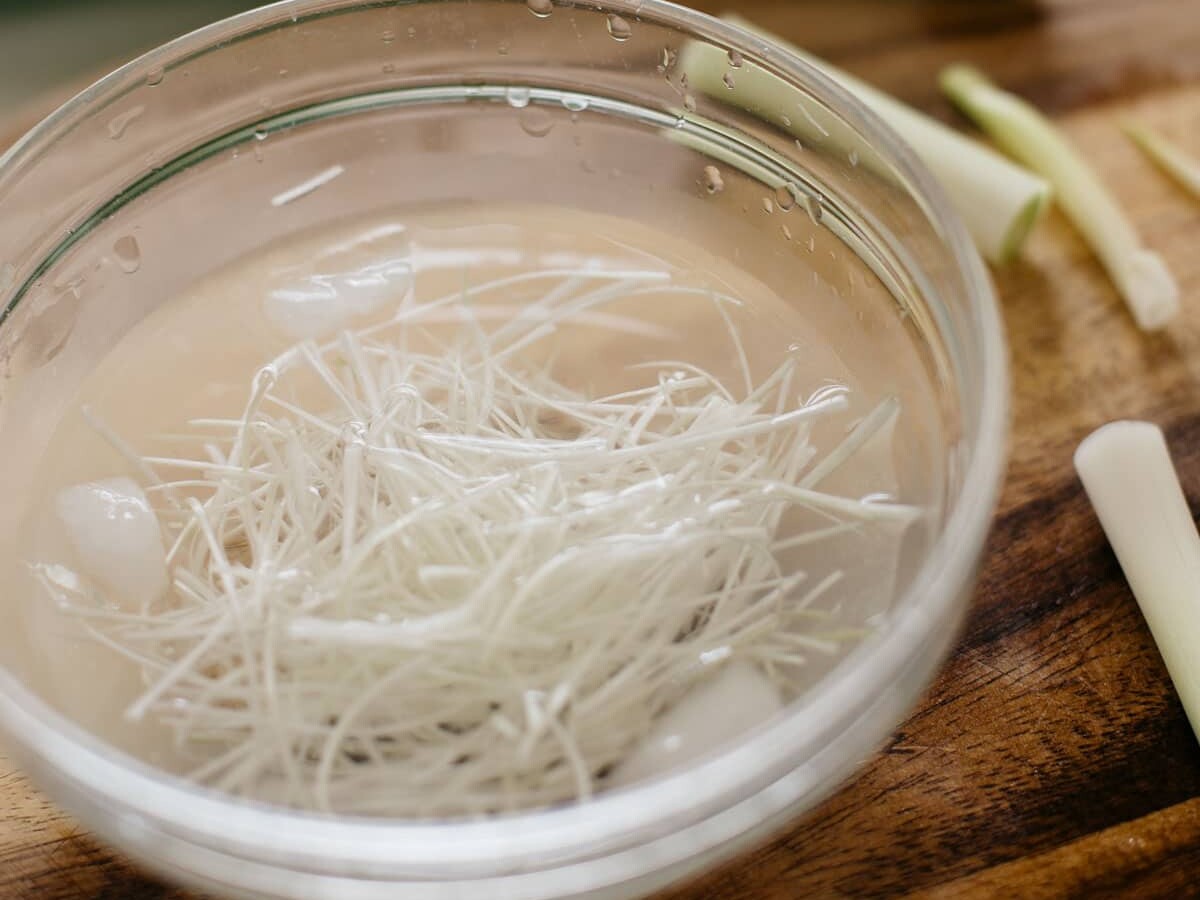
Other Toppings
Along with vegetables, adding a source of protein makes your bowl of ramen a well-rounded and delicious dish. Toppings include:
- Pork chashu
- Chicken chashu/Chicken ham
- Ramen eggs
- Grilled tofu
- Shrimp
- Grilled white fish
To finish it all off, add some garnishes like sesame seeds, sesame oil, or chill oil to enhance and add flavour.
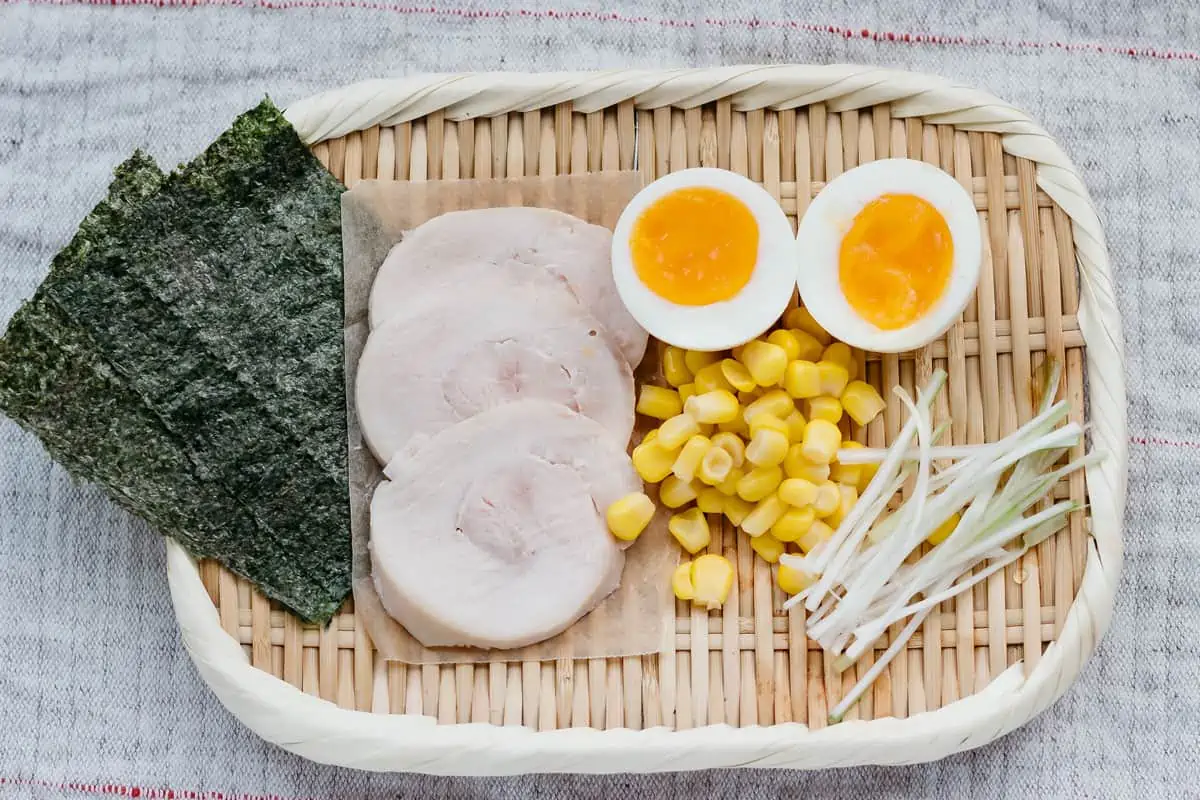
How to Make Shio Ramen
1. Make the soup. Divide the soup into serving bowls.
2. Cook the noodles.
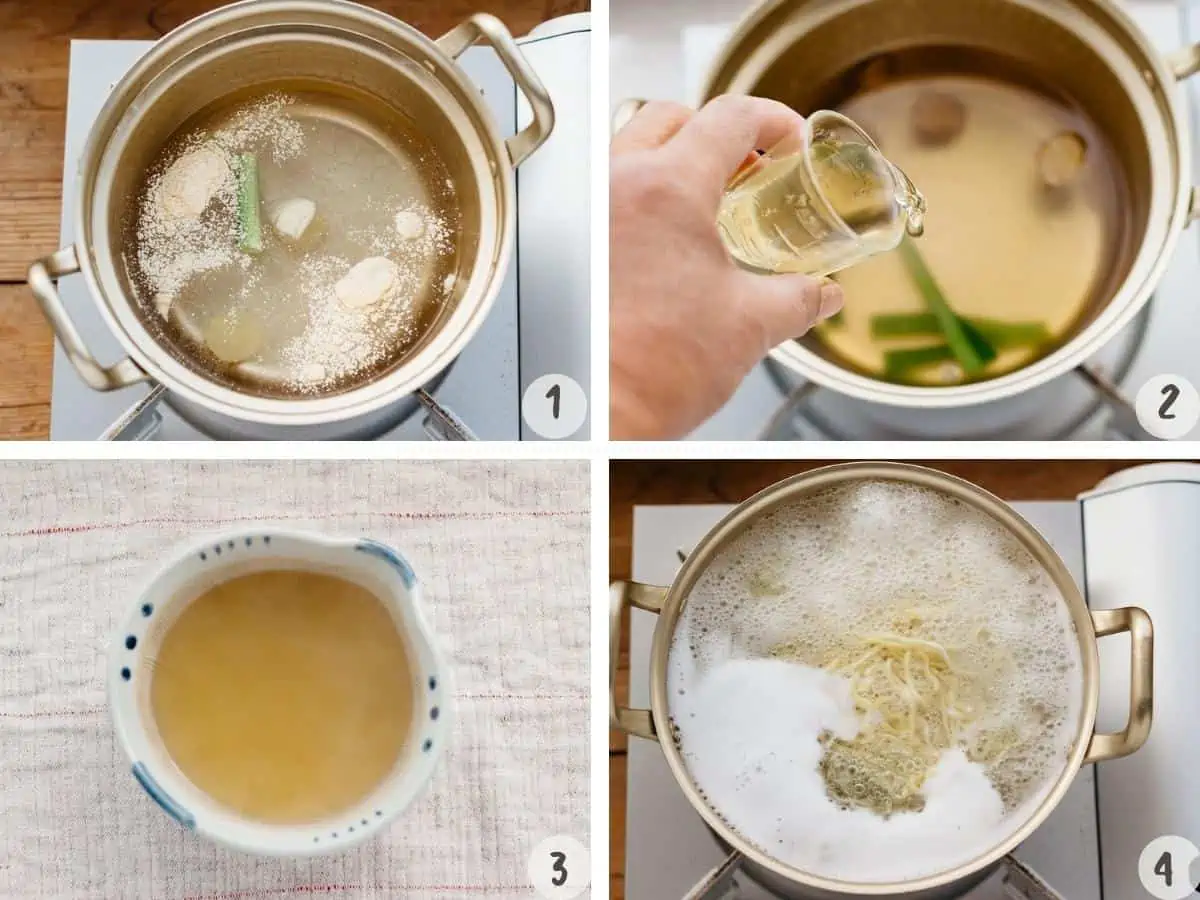
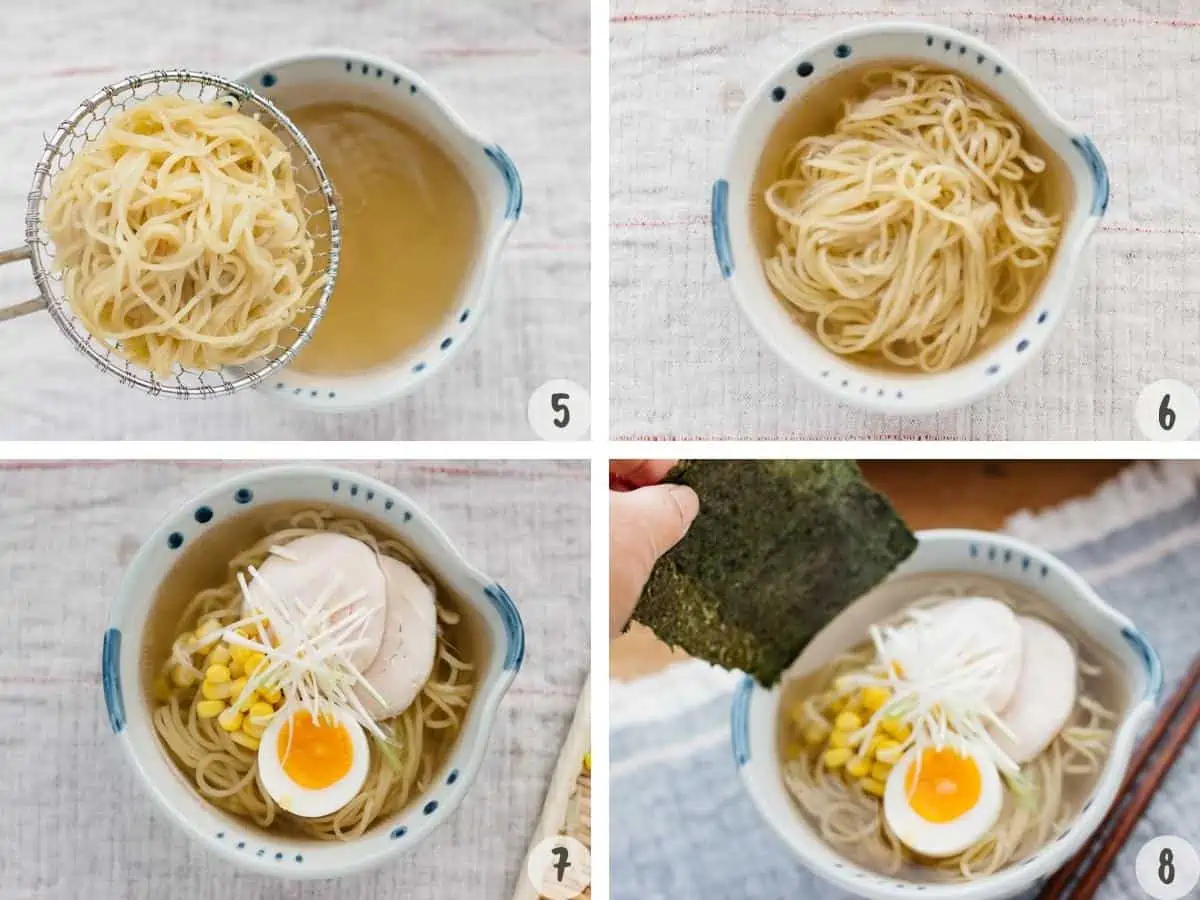
3.Drain the noodles. Add it to the soup in serving bowls.
4. Place toppings and garnishes.
FAQs
Shio ramen is a salt-based broth, so it is not as heavy as shoyu (soy sauce) or miso. The soup has a light and delicate taste that allows the natural flavours of the ingredients to come through. It has a subtle salty chicken taste with added umami from the dashi broth.
Shio ramen uses a salt-based broth, while shoyu ramen uses a soy sauce-based broth. The soup for shio ramen is light and delicate, while shoyu ramen is richer and has a stronger flavour.
Yes, you can! Substitute the chicken stock for vegetable stock or a shiitake mushroom base and change the bonito flakes in the dashi to kombu.
Shio ramen is traditionally served with chicken broth, but you could also use vegetable or pork stock. I have a great recipe for homemade ramen broth!
Ramen Recipes To Try
If you love this shio ramen recipe, try some of these other recipes as well:
- Ramen Egg
- Easy Ramen Noodles Recipe (ラーメン)
- Homemade Ramen Broth Recipe – Rich Flavoured
- Chashu: How To Make Melt In The Mouth Ramen Pork
- Shoyu Ramen
- Delicious Tantanmen
If you liked my recipe for shio ramen, please rate it and leave a comment below. Also, don’t forget to follow me on Youtube, Pinterest, Facebook, and Instagram to keep up to date with all the latest happenings on Chopstick Chronicles.
Don’t forget to use the hashtag #ChopstickChronicles so I see your wonderful creations!

Shio Ramen 塩ラーメン
Ingredients
Shio-Tare
- ¼ cup Dashi Stock *1
- 2 tbsp Sake *2
- 1 tbsp Mirin *3
- 1 tbsp Salt
Ramen Soup
- 2½ cups water
- 3 tsp Torigara Soup
- 1 garlic clove
- 3 slices ginger
- 2 inches scallions
- 2 tbsp Shio-Tare
Noodles & Topping suggestions
- 2 Portions Noodles *3
- 3 slices of Chicken Ham ( Tori Hamu) *4
- 1 Ramen egg *5
- 3 slices of Naruto fish cakes *7
- Shiraga Negi *6 White part of green shallots
- 2 tbsp Corn kernel
- 10 g Menma *7 Bamboo shoots
Instructions
Making Shio – Tare
- Combine all shio tare ingredients in a saucepan over mid-high heat.
- Once it’s boiled , turn the heat off and set aside. *8
Shiraga Negi
- Wash and cut the bottom 2 inches (5 cm) white stalks from a bunch of green shallots.
- Score the side through to the centre.
- Remove the core, using only the 2-3 outer layers of shallots.
- Lay them flat on a chopping board.
- Slice very thinly, then soak in a small bowl of icy water for 10 minutes.
Making Ramen Soup
- Boil 2½ cups of water with torigara soup powder, crushed garlic, ginger slices and scallions.
- Add the shio-tare (just 2 tbsp) when it boils and turn the heat off.
- Strain the garlic, ginger and scallions, and pour the soup into 2 ramen bowls.
Cooking Noodles
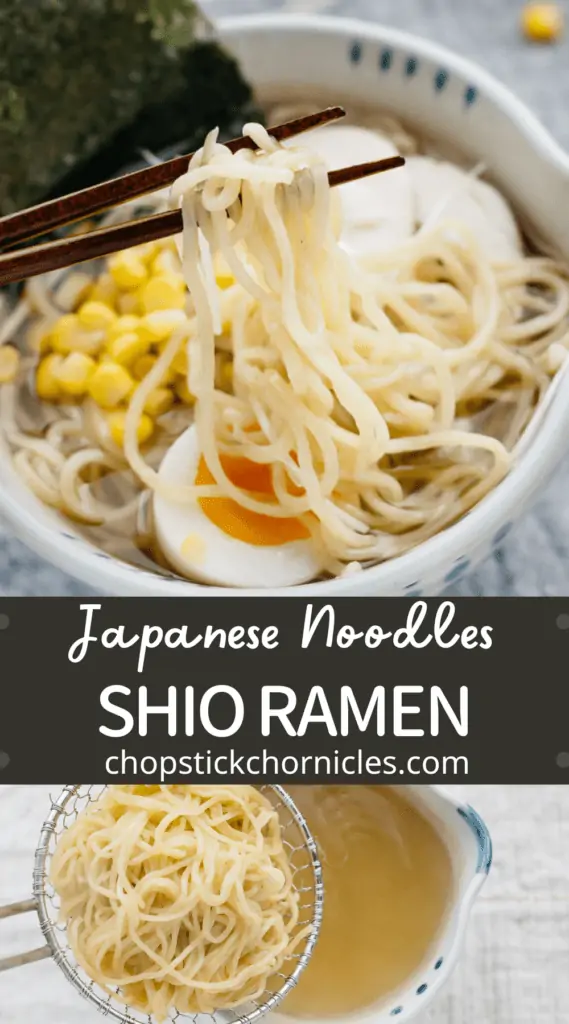
- Cook the noodles for 3 minutes to al dente.
- When the noodles is cooked to al dente, drain the cooking water.
- Add the noodles to the bowls of soup.
- Drain the ramen noodles and place into the ramen soup.
- Top with your choice of toppings. I used chicken ham, half boiled Egg, Shiraga Negi, and Corn.






Delectable!
This blog about Shio Ramen | Chopstick Chronicles helps me a lot in my diet.
Ohh Thank you so much Yahaira 😀 I am glad to know this post is helpful.
Did you find somewhere in locally to buy the Nissin Raoh ramen? Or did you just order them from Amazon?
I bought it from a local Japanese grocery stores in my town 😀
You’re so lucky! Nowhere I’ve looked has them 🙁
amazing i love it ! my favorite
Thank you!!:3
Simple but delicious 😋
Hei Ikuma, I know, right!?
Yum 😍
The clear broth is intriguing and invigorating. Thanks for just that!
You are welcome Dan 😀