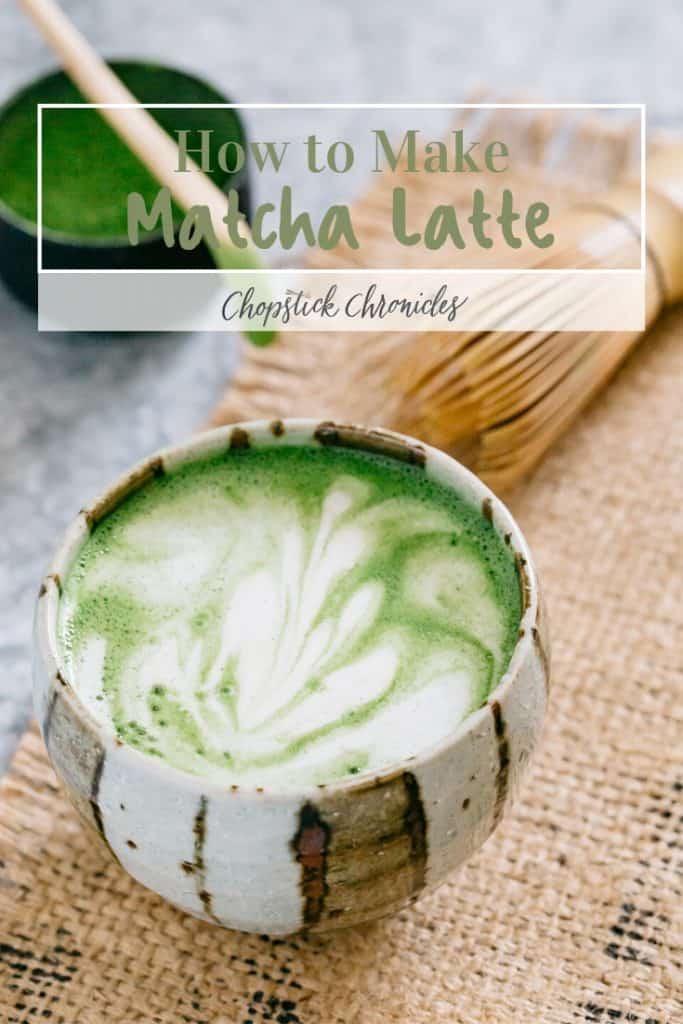
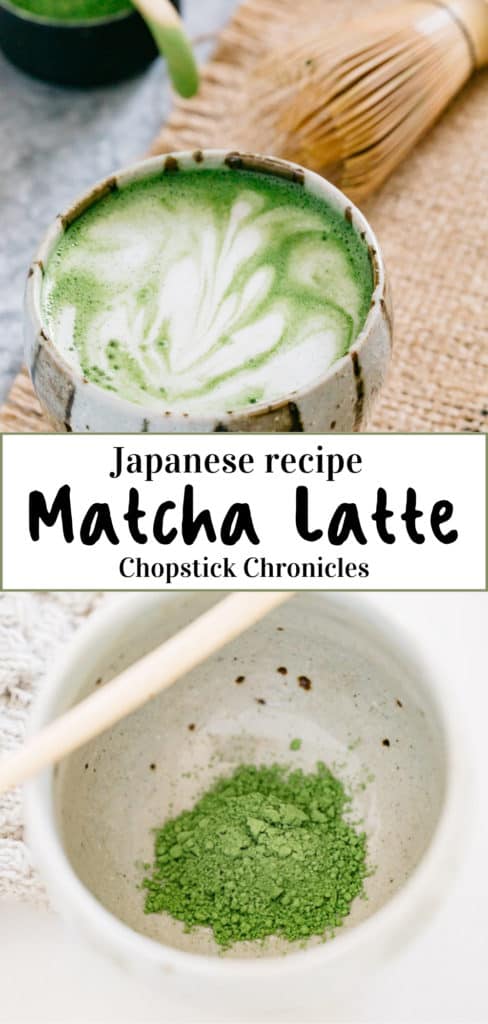
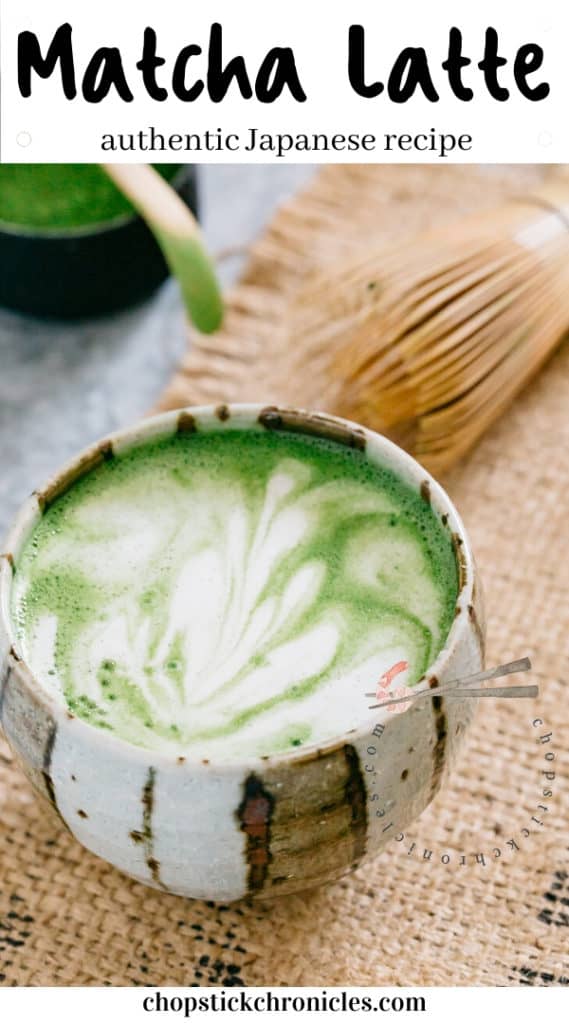
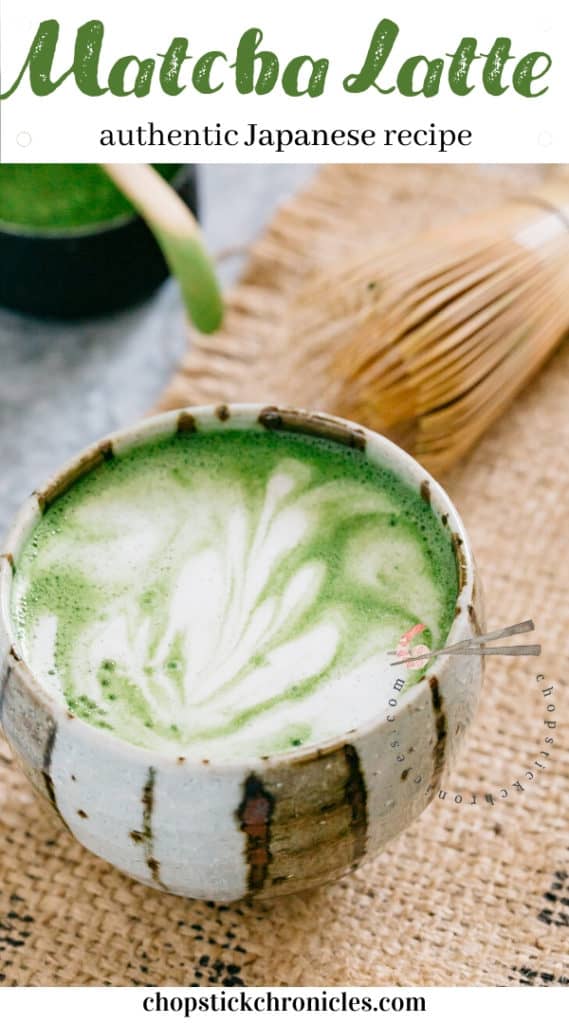
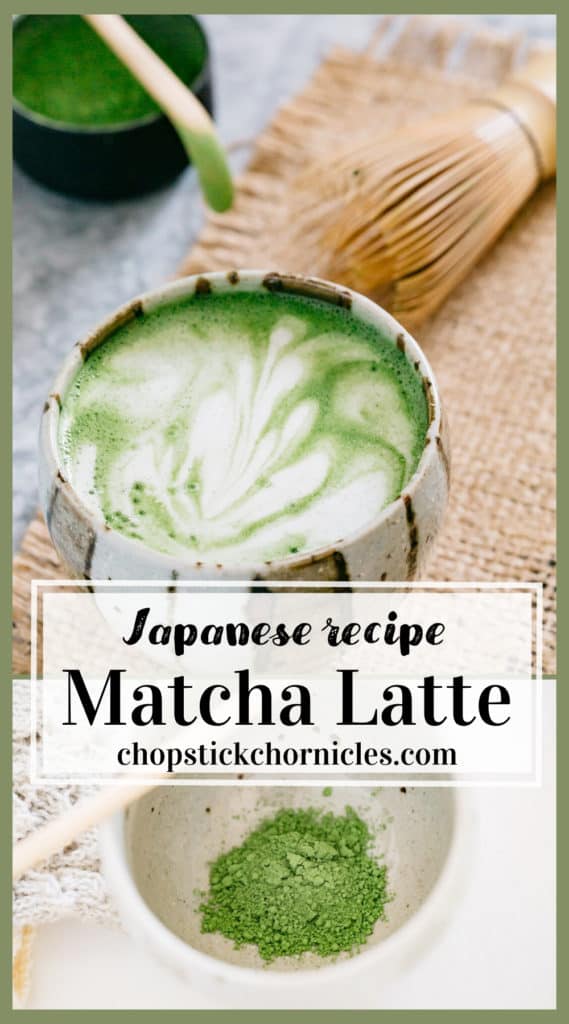
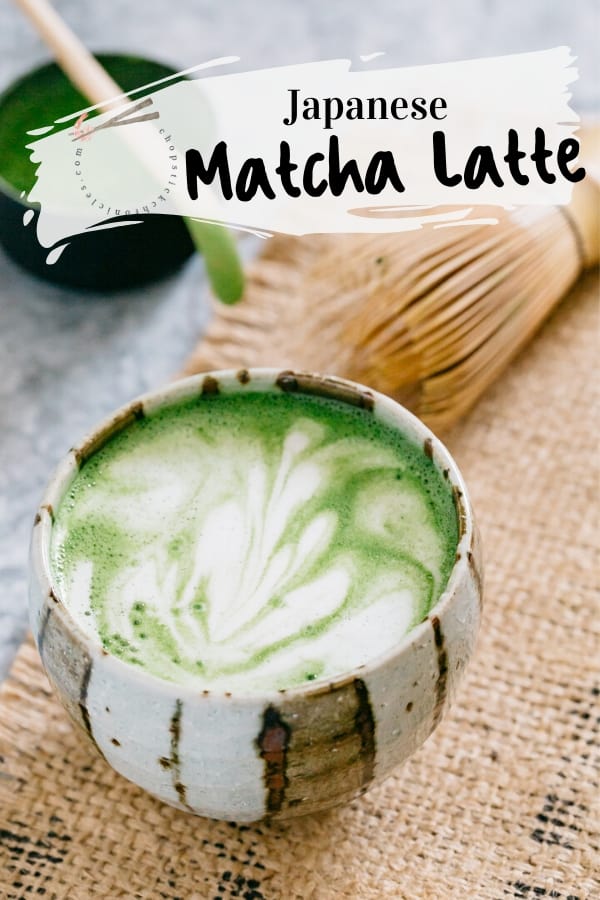
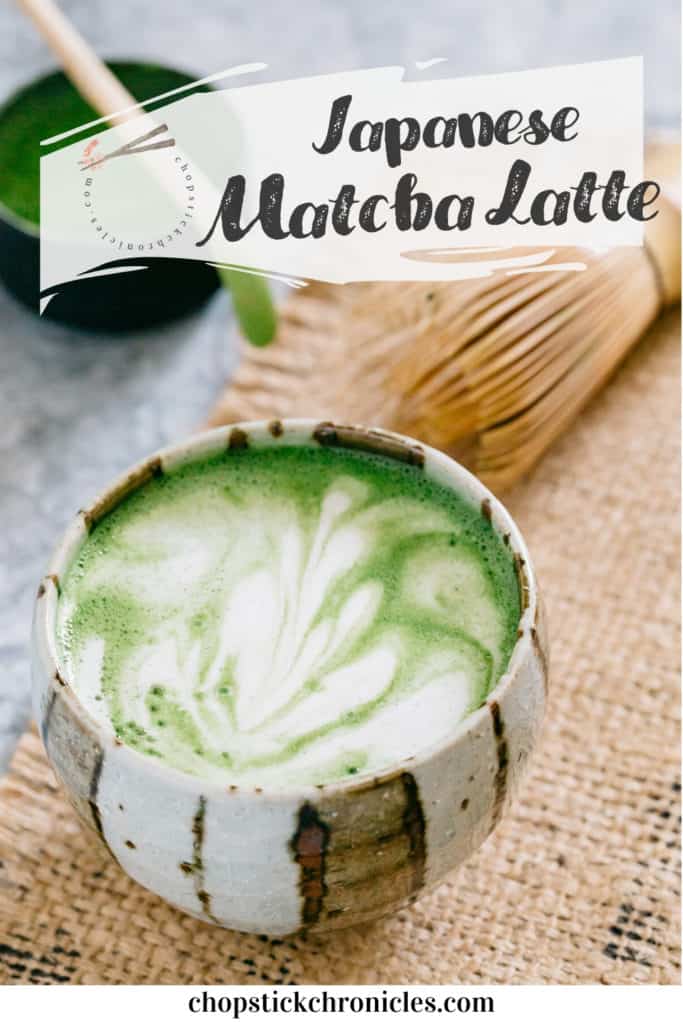
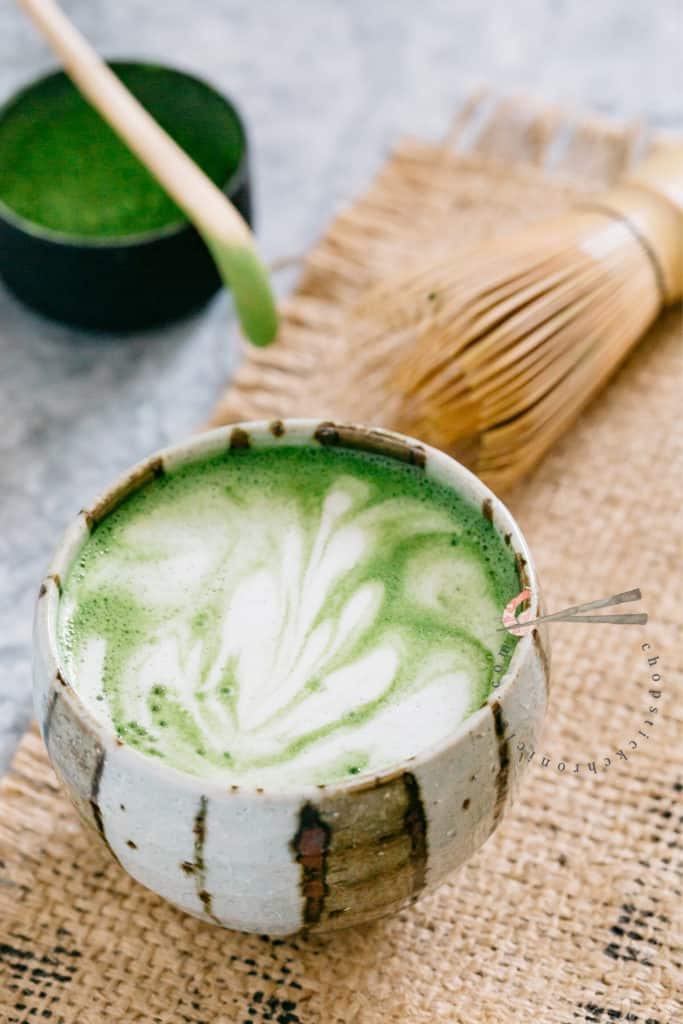
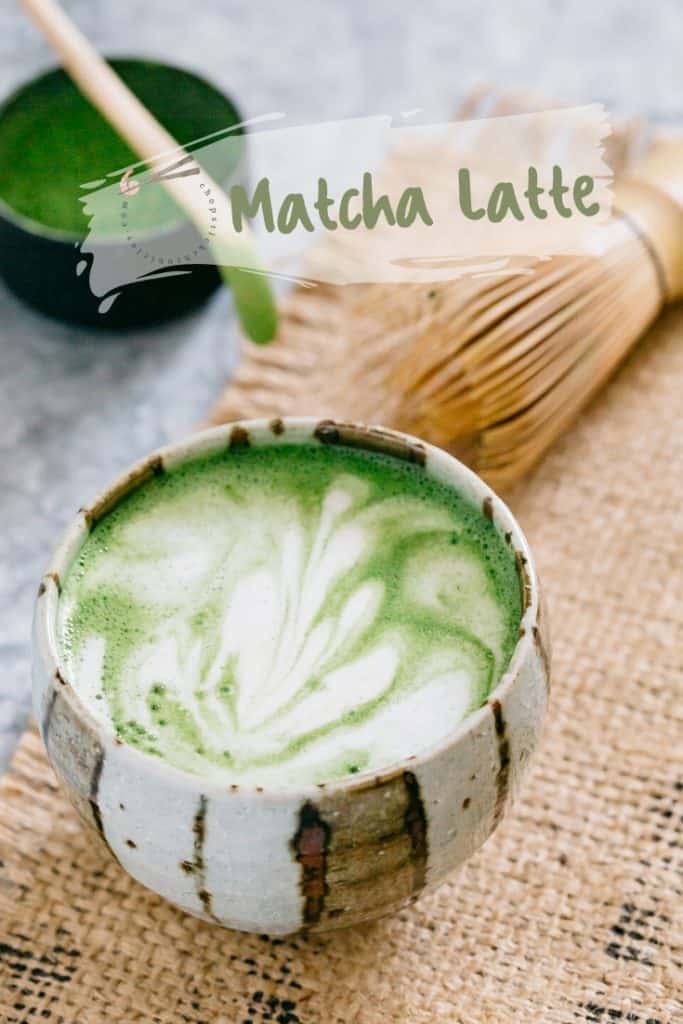
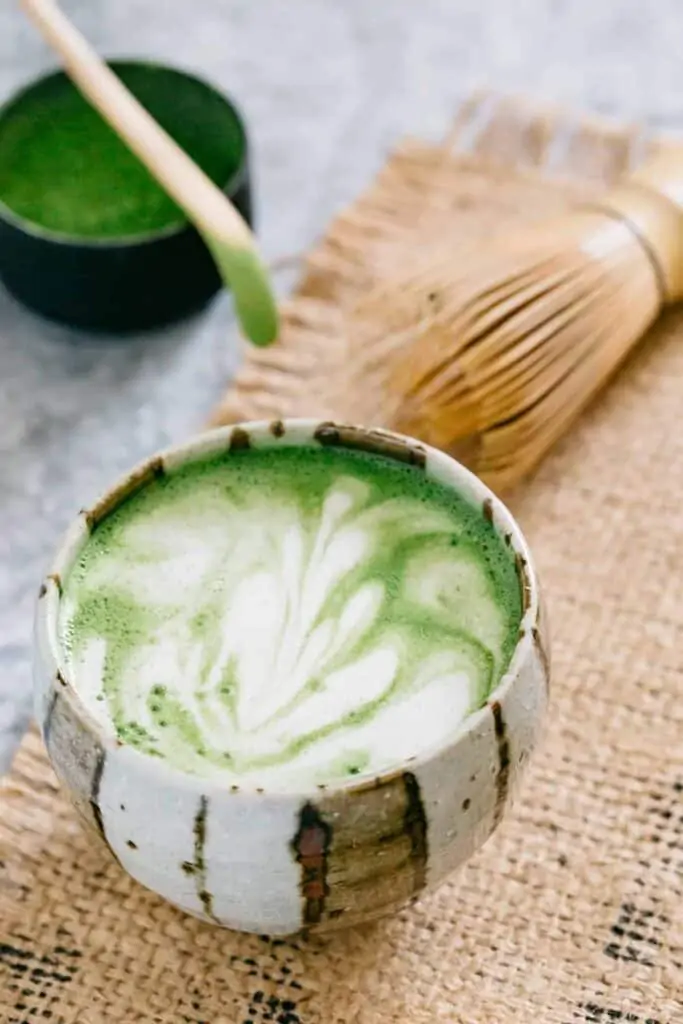
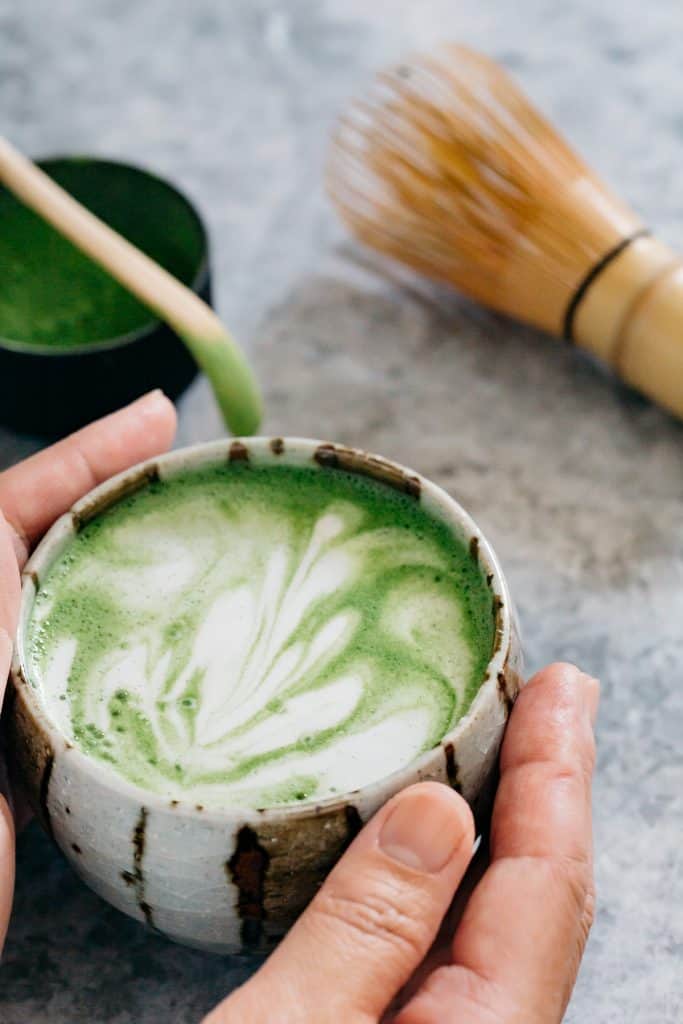
Matcha latte is a surprisingly nice relaxing drink at any time. Why was I so surprised? Because I learn and practice tea ceremony with my Japanese tea ceremony master every Sunday, and I always had straight pure matcha with nothing added like milk. Now I am hooked with matcha latte and I make it often at home. So read on to learn how to make it yourself.
What is Matcha?
Matcha literally means powdered green tea, however, it is NOT the green tea (Sen-cha) made into powdered form. The process of cultivating tea leaves and the process of making into powder are different. Matcha is made from camellia Sinensis tea leaves which are blocked from sunlight for a period of time before picking therefore it is high in theanine. If you would like to read more about Matcha, read Matcha Cookies post.
Which Grade of Matcha is good for Making Matcha Latte?
Not all matcha are the same. Matcha is classified into different grades, and how they are graded depends on the company. Some state high-quality matcha is ceremonial and low-quality culinary grade. Generally speaking, the higher the quality the texture is smoother, the colour is a blighter green, and the taste mellow and sweeter. I don’t think we need the highest end quality but I would choose mid to high quality for making Matcha Latte.
Where can I buy Matcha?
You can get Matcha from Japanese grocery stores and also Online easily nowadays because of its popularity. Even now you know what to look for in Matcha, it is hard to pick good quality matcha because it is usually packaged in a vacuum pack to prevent oxidation. So choose Matcha by where they are produced. Matcha  from Uji, Kyoto and Nishio, Aichi Prefectures are generally speaking vivid dark green in colour and mellow bittersweet with a rich flavour.
Useful Equipment
- Bamboo Matcha Tea Spoon
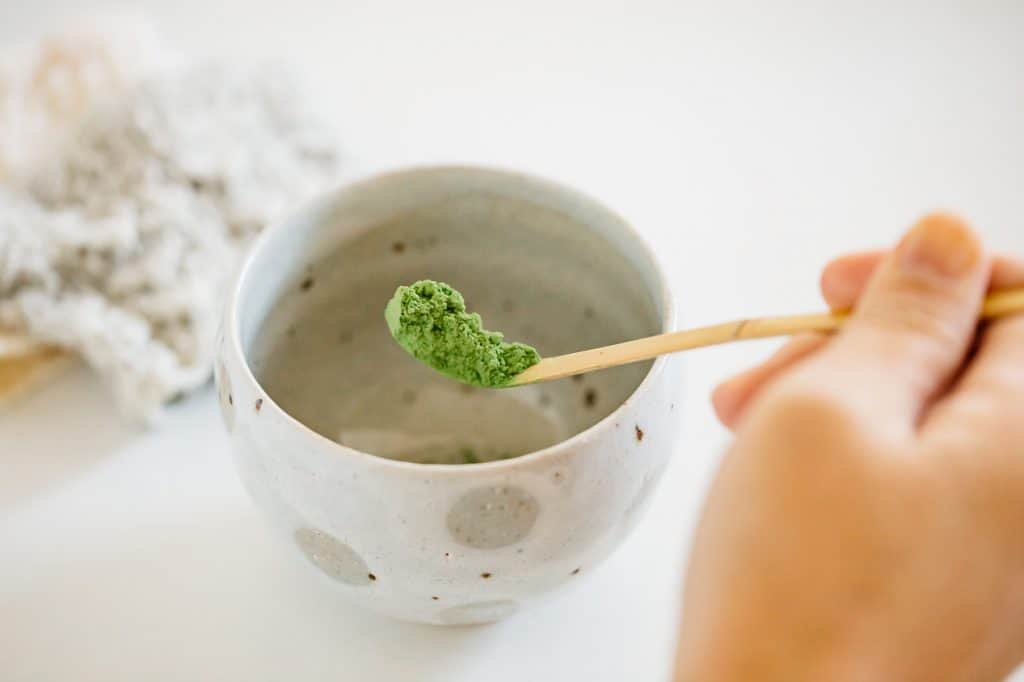
 : is designed to help portion the right amount of Matcha needed. (step by step photo 1 above)
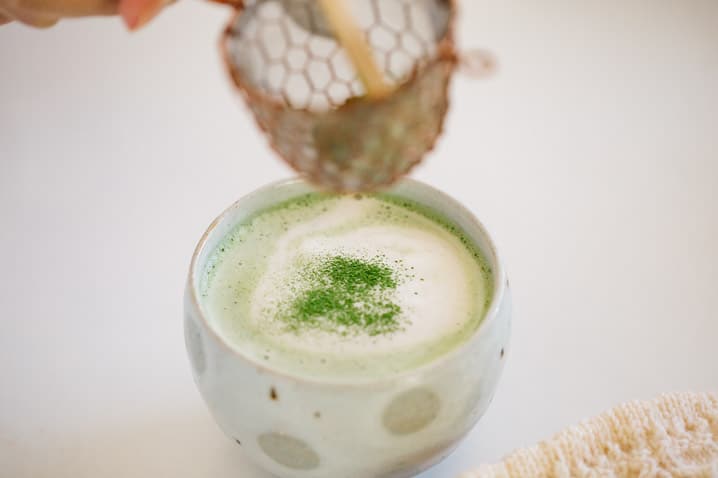
 - Fine sieve: If you don’t own a bamboo whisk, you need a fine sieve to disperse the matcha powder thoroughly. A fine-mesh sieve prevents creating unpleasant lumps of match powder. (photo below)
- Bamboo Whisk : If you drink Matcha often like me, but you don’t have a bamboo whisk for brewing matcha, it is a good investment to get a bamboo whisk. There are produced with either 80 or 100 prong. 100 prong one is better. (step by step photo 3 above)
 : is designed to help portion the right amount of Matcha needed. (step by step photo 1 above)
 : If you drink Matcha often like me, but you don’t have a bamboo whisk for brewing matcha, it is a good investment to get a bamboo whisk. There are produced with either 80 or 100 prong. 100 prong one is better. (step by step photo 3 above)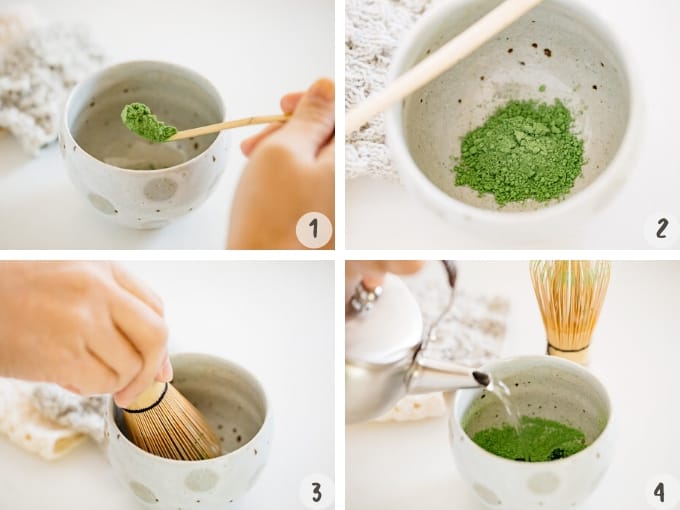
Tips to Brew Matcha Successfully
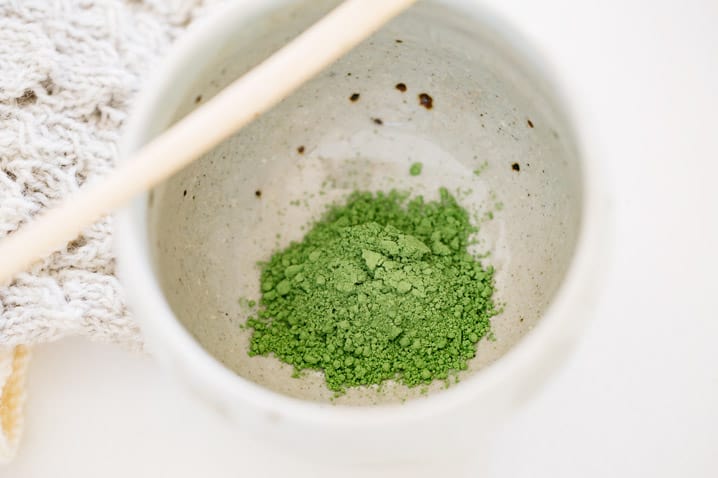
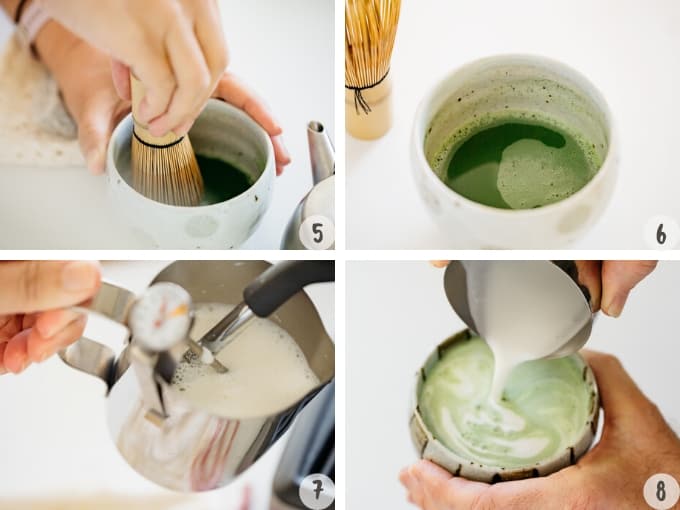
- Place three heaps of matcha powder from the bamboo spoon into a matcha bowl or a cup (step by step photo 1).
- Stir the matcha powder to disperse with a bamboo whisk. If you don’t have a bamboo whisk, you need to sieve through a fine-mesh sieve before you add hot water. Because we don’t want big lumps of powder in your latte. (step by step photo 3)
- Pour about 175°F (80°C) hot water. If the water is too hot, the tea will lose the beautiful mellow matcha flavour and sweet aroma.
- Using the bamboo whisk, whisk the matcha green tea vigorously. (step by step photo 5 & 6)
How to Froth Milk?
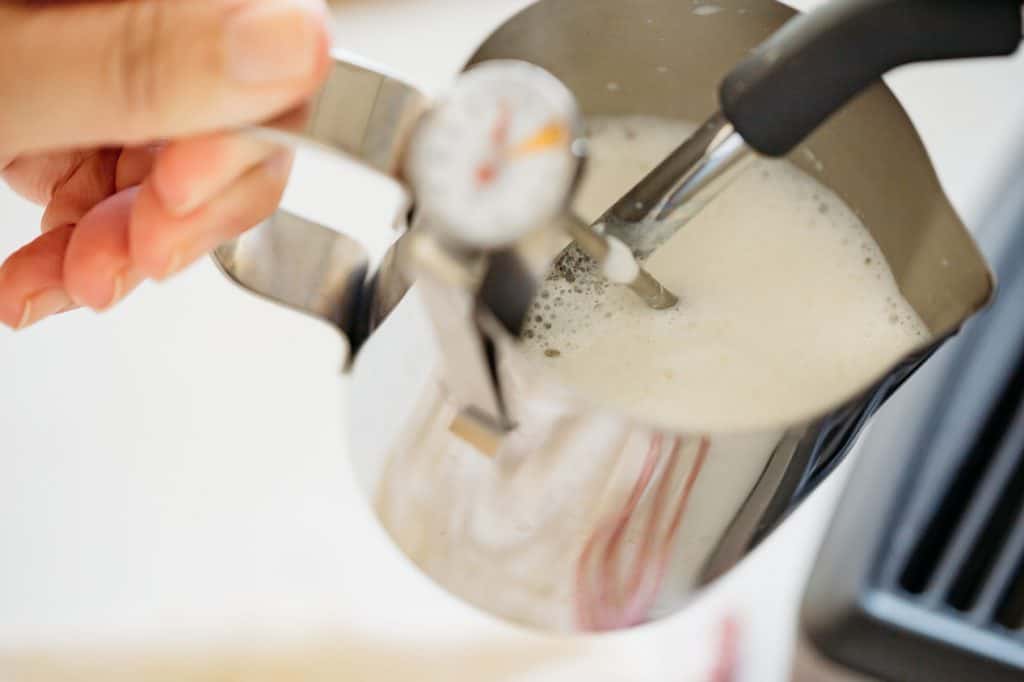
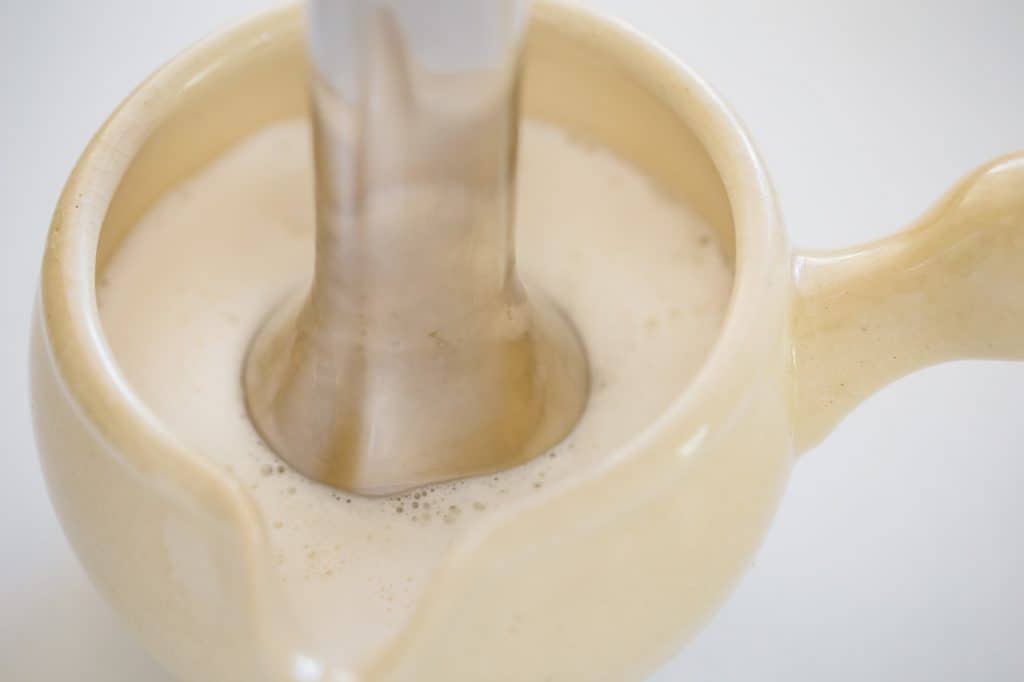
Heat the milk up to just before its boil, the temperature should be 140-160°F (60-70°C). The temperature of the milk affects the taste so be careful not to scorch the milk. I use a coffee machine milk frother but if you don’t have a machine, you could use a stick blender or handheld mixer. There are more ways to froth milk, see 8 ways to froth milk by thepioneerwomen.com
FAQ:
Q: I don’t have bamboo spoon and bamboo whisk, so what should i use?
A: If you don’t have a bamboo spoon, use a teaspoon. Three heaped bamboo spoons of matcha are equivalent to 1 teaspoon. If you don’t have a bamboo whisk you can use a small whisk which will fit into your latte bowl or cup. Though, if you are going to have matcha often, I recommend buying a bamboo whisk.
Q: Can I use other milk other than cow milk?
A: Yes of course. You can use any milk. I personally like to use either almond milk or soy milk because they add a nutty flavour to the matcha green tea latte.
Q: Could I add sweetness?
A: Yes, you can. If you would like to add sugar, honey, any sweetener, add to milk or add sugar, honey or any sweetener to matcha brewed just after it is whisked.
Stay Connected
Hope you enjoy and relax with matcha green tea latte too! I am lucky to have a friend who can make matcha latte art. But you know, you can always sprinkle more matcha over to disguise.
If you like the recipe please rate the recipe and leave comments below. Also don’t forget to follow me on Youtube, Pinterest, Facebook, Twitter and Instagram. This way you keep up to date with all the latest happenings on Chopstick Chronicles. Don’t forget to Sign up for a weekly newsletter so you never miss out on new authentic delicious Japanese recipes!

Matcha Latte 抹茶ラテ
Ingredients
- 3 tsp *1 good quality Matcha Powder * bamboo tsp
- 1/3 cup of hot water *2
- 3/4 cup of milk any kind *3
Instructions
- Place matcha powder in a matcha latte bowl.
- Whisk and stir matcha green tea powder with a bamboo whisk. *4
- Pour hot water to the bowl and whisk vigorously with the bamboo whisk. *5
- Froth the milk to 140-160°F (60-70°C) using coffee espresso machine milk frother. *6
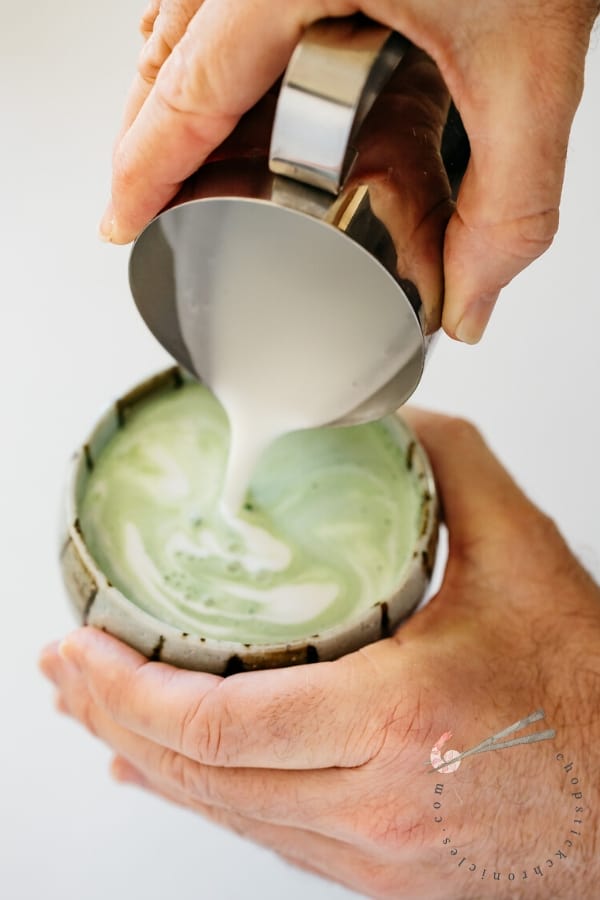
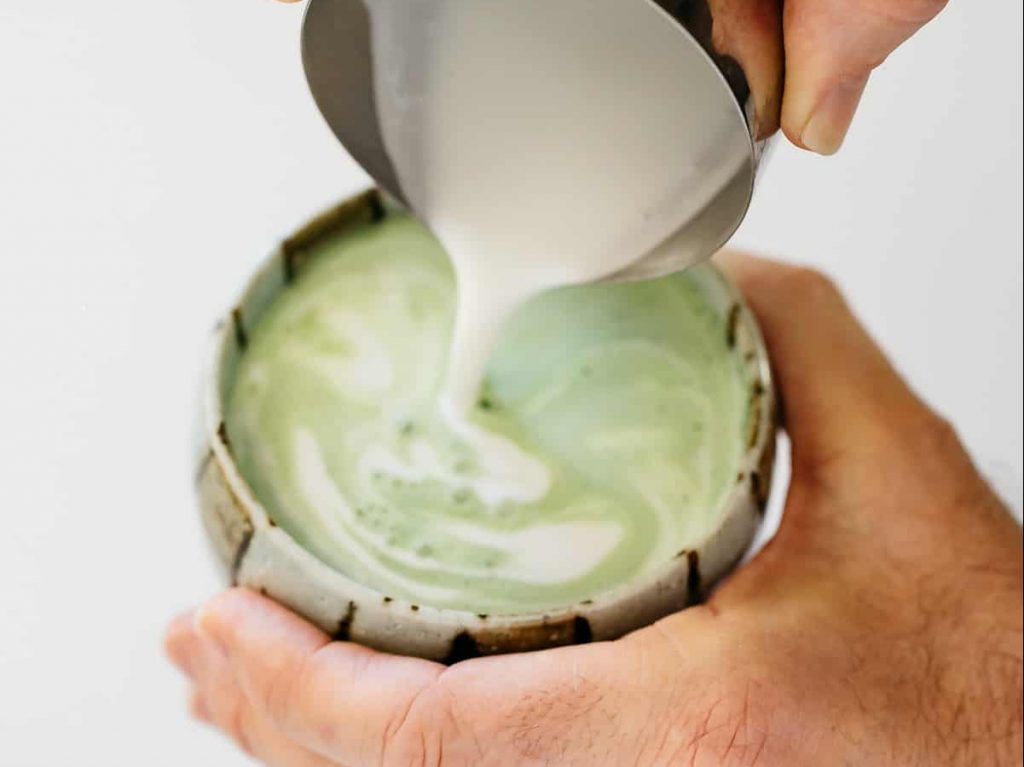
- Pour the milk into the cup of matcha.
- Sift a little matcha over the cup and serve! *7 Optional
Notes
Nutrition
Chopstick Chronicles is a participant in the Amazon Services LLC Associates Program, an affiliate advertising program designed to provide a means for sites to earn advertising fees by advertising and linking to Amazon.com. As an amazon associate I earn from qualifying purchases.





Thank you, you have explained so much in this artical! Now to properly look at matcha packs for future drinks!
You are welcome 😀
Hi! I’d LOVE to try this recipe but I don’t have access to vanilla paste. Could I substitute it with vanilla extract? I love your work, thanks!
Yes you can Maple 😀
so good I use it every day
this is a pieace of art so amazing
Thank you Pablo 😀
This is just what I want! Found Matcha powder in a local whole food shop by accident a few days ago. I suppose I can use vanilla extract instead, can’t I? Thanks for sharing!
He Wei, That’s fantastic! yes you can use vanilla extract 😀
Beautiful photos! They really capture the peace and calm I get out of drinking a matcha latte. I’ve never added vanilla to matcha before and I can’t wait to try. I’ll have to see if I can find vanilla paste too, as I’ve also never tried that.
Thank you Megan. I love Matcha calming effect too<3
Gorgeous! Nothing better than a photography workshop AND matcha latte. 😀 Your photos are looking fabulous, wish we could join you for a cuppa! Chat soon 🙂
Ohh Thank you Sarah and Laura. Are you still in Japan or back to Australia? Please let me know if you ever come to Brisbane. We can have Japanese food party:D
Yes, definitely! We are back in Adelaide now, and will definitely let you know if we are headed up your way. Vice versa, let us know if you’re ever in town too!
Ok,I have never been to Adelaide actually. I would love to visit Adelaide one day:D