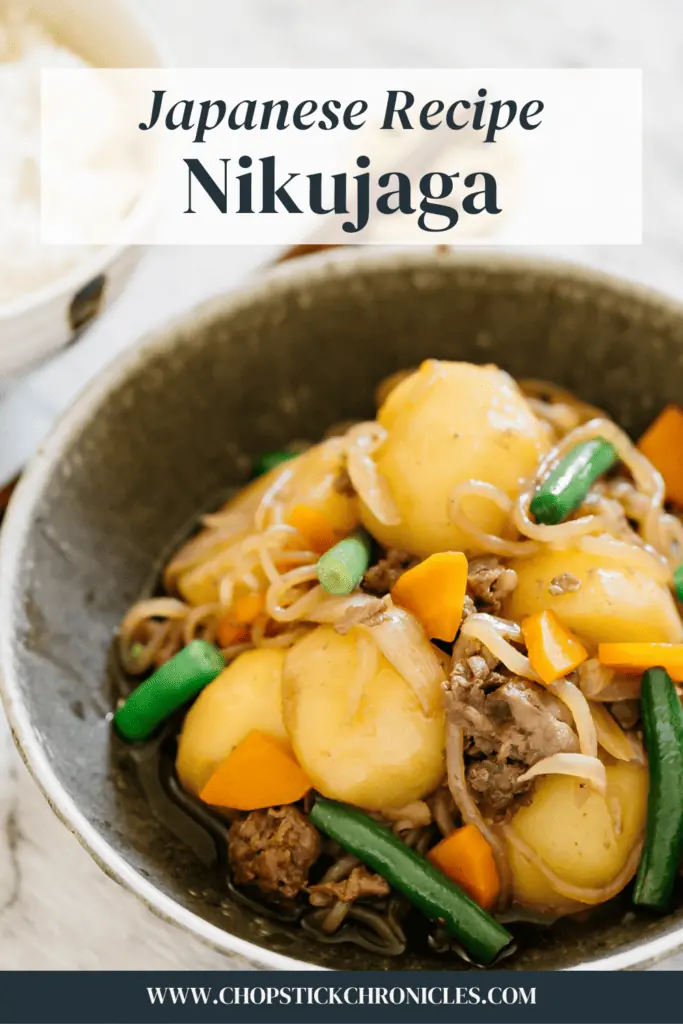
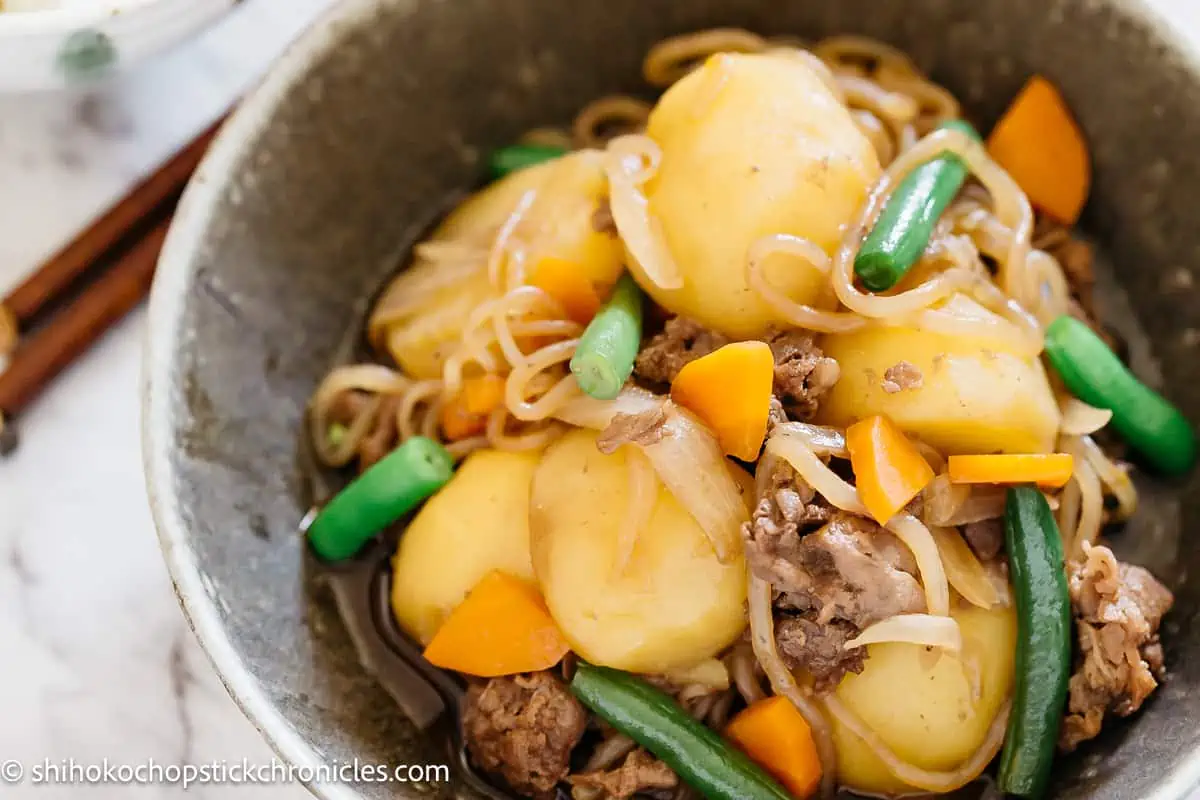
Nikujaga is a quintessential Japanese comfort dish and one of the most classic home cooking meals. This aptly named dish is made primarily from the two ingredients that make up the name: meat (” niku “) and potatoes (” jaga imo”). The thin tender slices of beef are simmered together with potatoes, onions, and other vegetables in a sweet-soy broth creating a delightful blend of textures and tastes. With its rich flavours and heartwarming quality, it’s sure to instantly transport you to the cozy comforts of home.
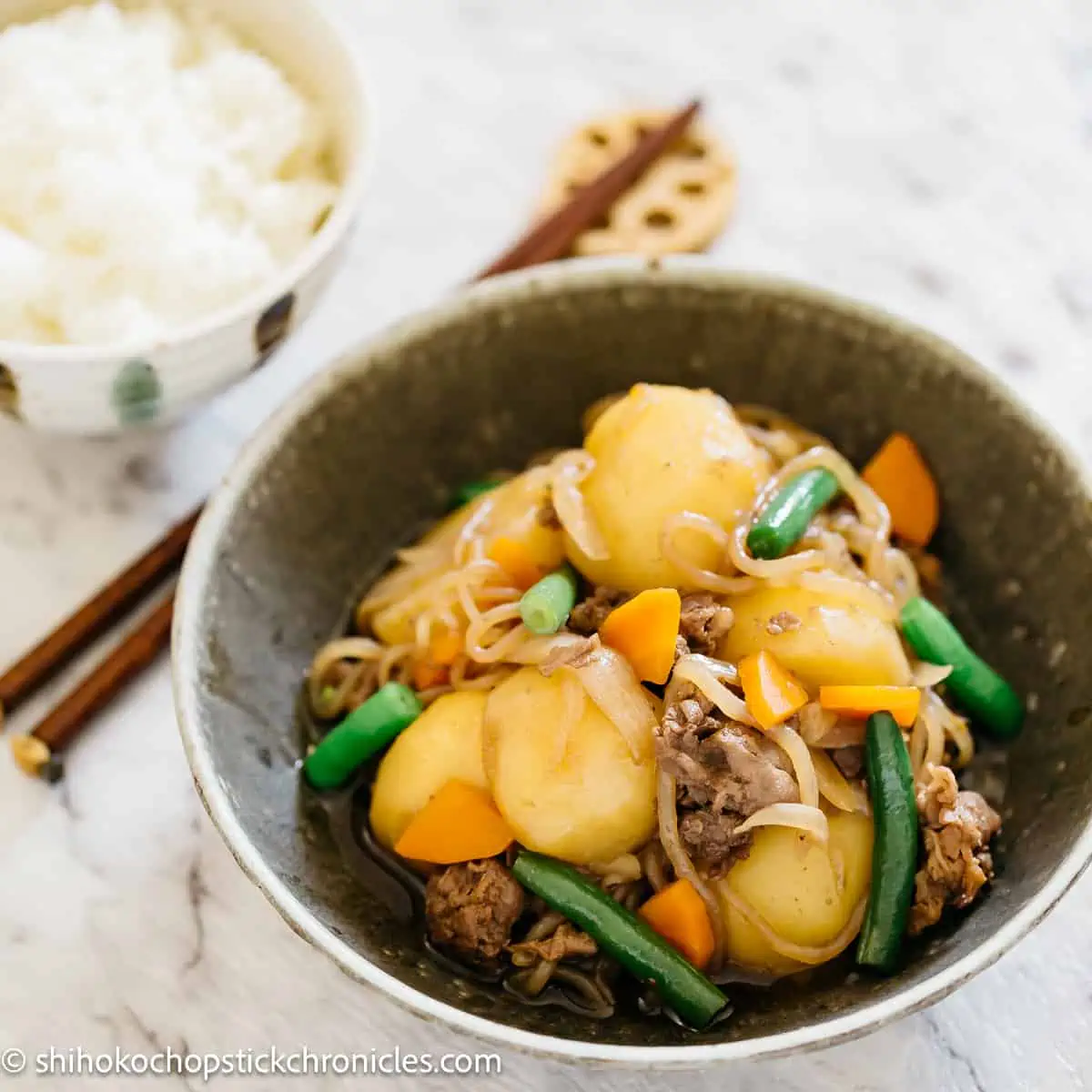
Table of contents
What is Nikujaga ?
Nikujaga is a traditional and popular Japanese stew-like dish. The word “nikujaga” translates to “meat” (niku) and “potato” (jagaimo), which perfectly describes the main ingredients of this delicious dish. The thinly sliced beef and chunks of potatoes are simmered in a savoury-sweet broth along with onions and other vegetables. It’s a hearty and comforting Yoshoku (Western) style dish that originated during the Meiji era in Japan when Western cuisine started to influence local culinary traditions. Nikujaga is one of the most typical home-cooking dishes and a staple weekday meal since it’s super simple, satisfying, and easy. It’s something that Japanese mothers pass down from generation to generation and is often referred to as “Ofukuro no Aji” which means the taste of a mother’s cooking because its homely and comforting.
Key Ingredients for Nikujaga
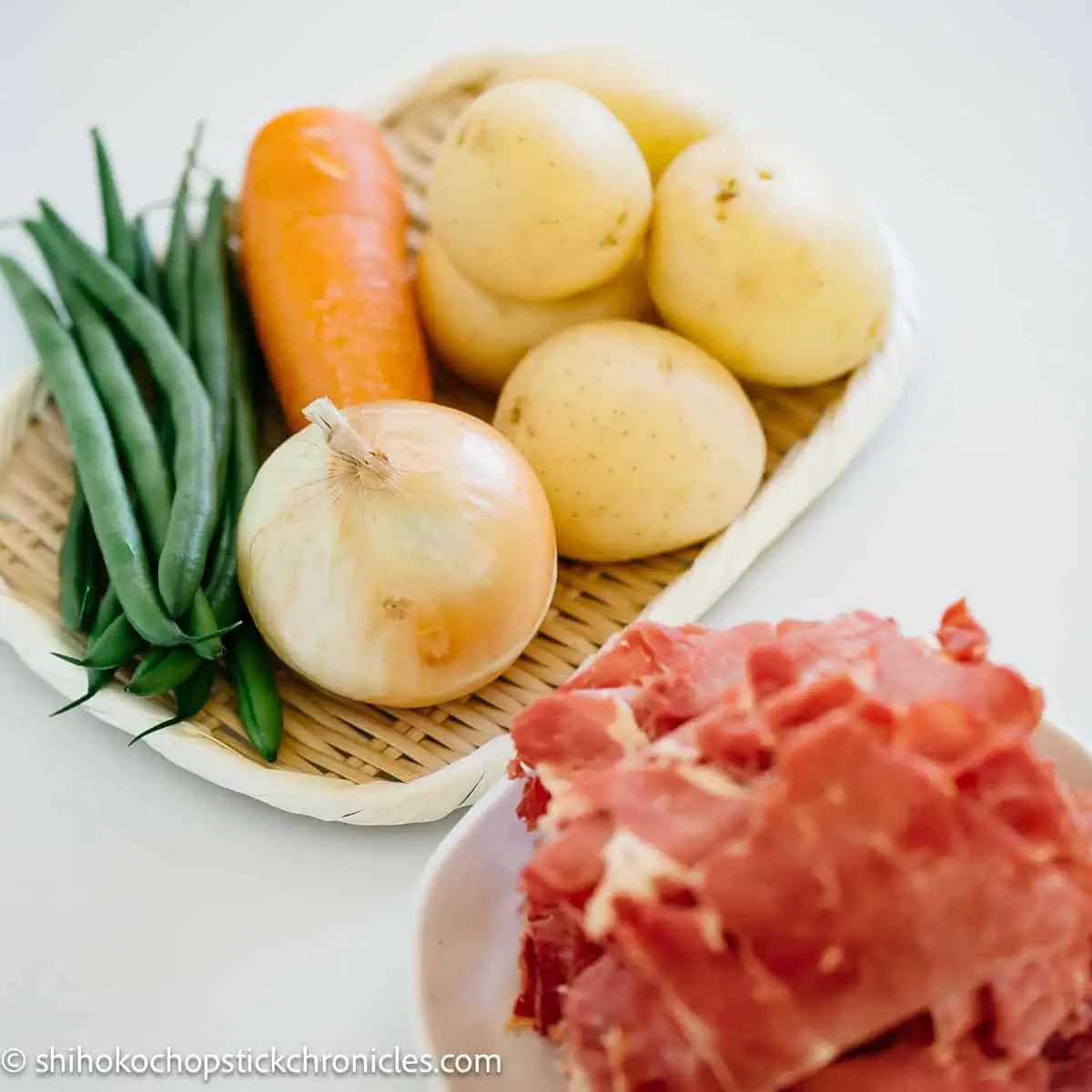
Thinly sliced beef or pork : Different areas of Japan will use either beef or pork as the main protein component. I am from western Japan where beef is typically used and is what I’ve grown up eating. However, the choice between beef or pork depends on personal preference and dietary restrictions. Japanese meat is usually sliced very thinly which allows for even and quick cooking and better absorption of flavours.
Potatoes : Potatoes are an essential component of Nikujaga as they provide a rich and comforting texture to the dish. They absorb the flavors of the sauce during cooking, becoming soft and melt-in-your-mouth tender. The starch from potatoes also helps thicken the sauce slightly, giving it a luscious consistency.
Other vegetables : Nikujaga is a beef and potato stew so they are the two essential ingredients, the other vegetables are totally up to preference and what you have on hand. However the most commonly used vegetables are carrots, onions, snow peas, and green beans. To complete this comforting meal, some variations may include additional ingredients such as mushrooms or daikon radish.
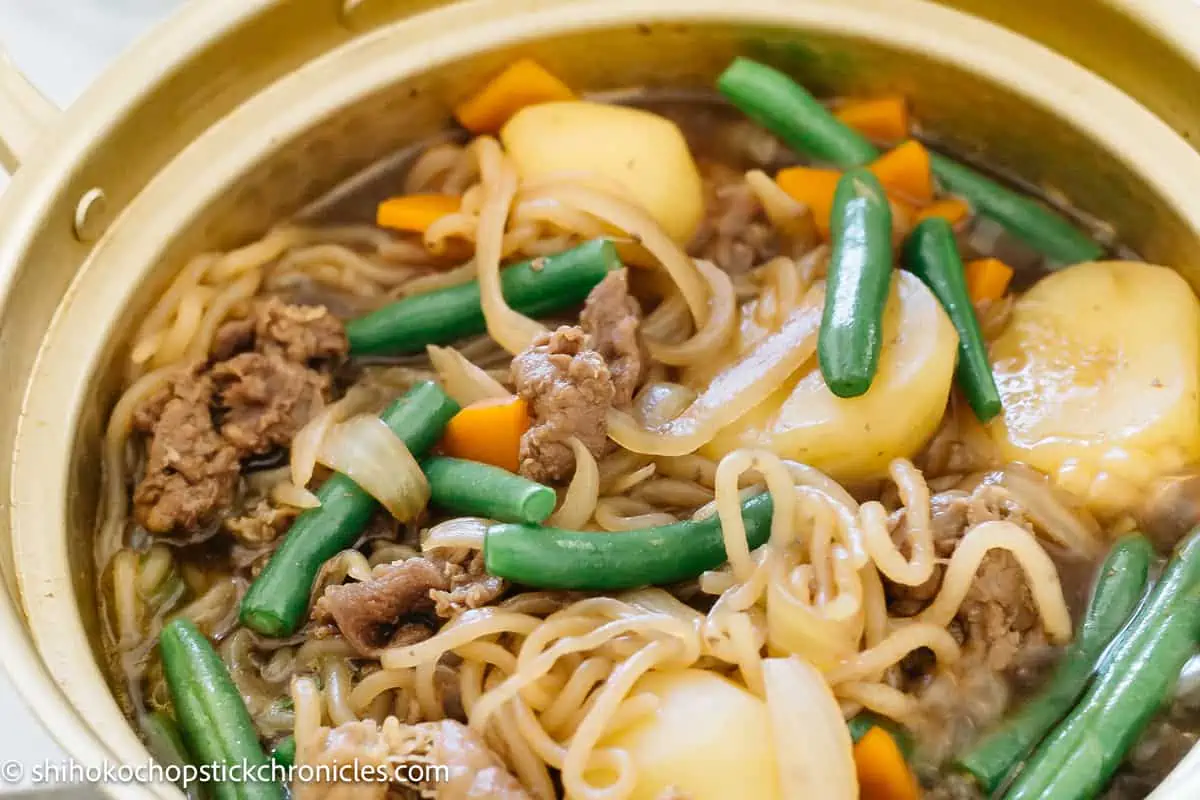
Konnyaku noodle : Konnyaku noodles, also known as shirataki noodles or miracle noodles, are thin translucent noodles made from the konjac plant’s root. These gluten-free noodles are usually added to nikujaga for added texture and are a popular ingredient due to their low-calorie content and various health benefits.
Dashi and broth : The delicious broth for nikujaga includes soy sauce, mirin, sake, sugar, and dashi. Dashi is a traditional Japanese soup stock that forms the foundation of numerous dishes in Japanese cuisine including nikujaga. Its umami-rich flavor greatly enhances the overall taste profile of the dish and elevates it to another level of deliciousness.
Step-by-Step Preparation Guide for Nikujaga
Preparing the meat
I usually buy thinly sliced meats at Japanese grocery stores or Korean grocery stores. If you cannot buy ready-made thinly sliced meat then you can do it yourself. There is a trick to slicing meat very thinly and it’s to cut it when it is very cold nearly semi-frozen.
Vegetable preparation
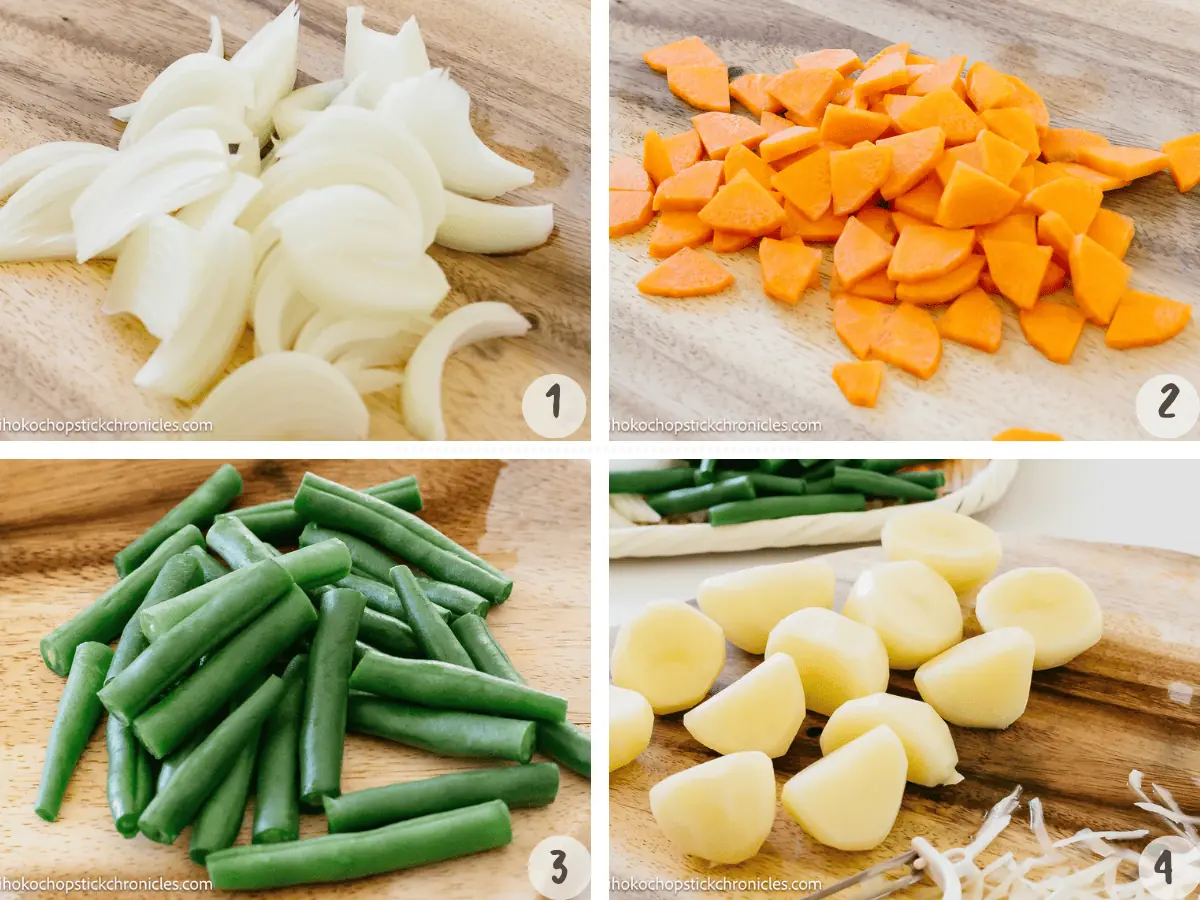
One of the key steps in preparing this dish is cutting the vegetables into bite-sized pieces. Cut the potatoes into chunks or wedges. Cut the carrots and other vegetables into small pieces and thinly slice the onions.
How to prepare the Konnyaku noodles
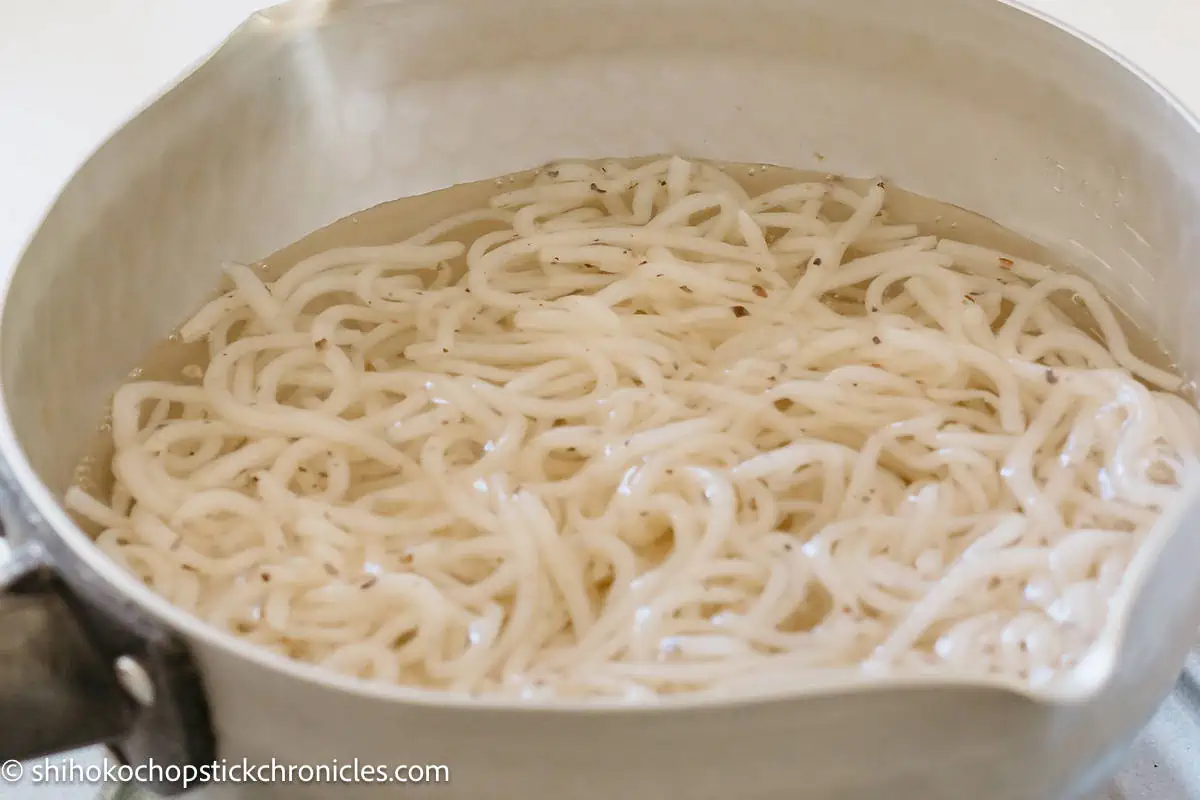
Konnyaku, is a popular diet food because of its dietary fibre of glucomannan and very low calories. However, it has quite a fishy odour and needs to be pre-cooked to remove this. Place 2 litres of water in a pot and bring the water to boil. Add the konjac noodle and cook for a few minutes. Turn the heat off and drain the boiling water. This will remove the smell.
How to Make Nikujaga
This step-by-step guide will help you recreate this traditional dish in your own kitchen.
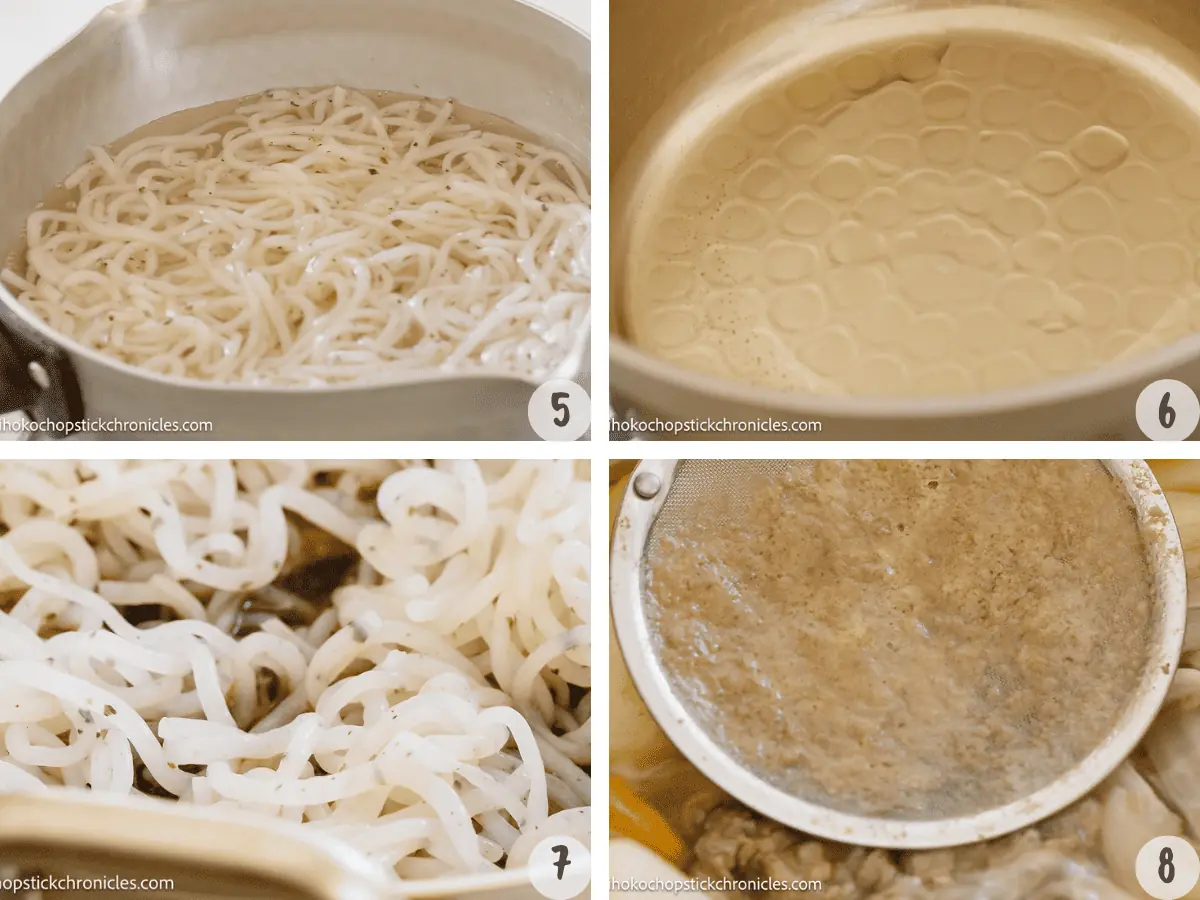
- Prepare the Ingredients. Peel the vegetables and cut them into bite-sized pieces. Thinly slice the onion. Pre-boil the konnyaku, drain it, then set it aside. Ensure all ingredients are ready before starting to cook.
- Heat some vegetable oil in a large pot or deep skillet over medium heat. Add the onions, potatoes, and carrots to the pot and cook until the potatoes have become slightly translucent on the edges.
- Add the sliced beef (or pork) and sauté until browned on all sides.
- Add the dashi stock and bring it to boil.
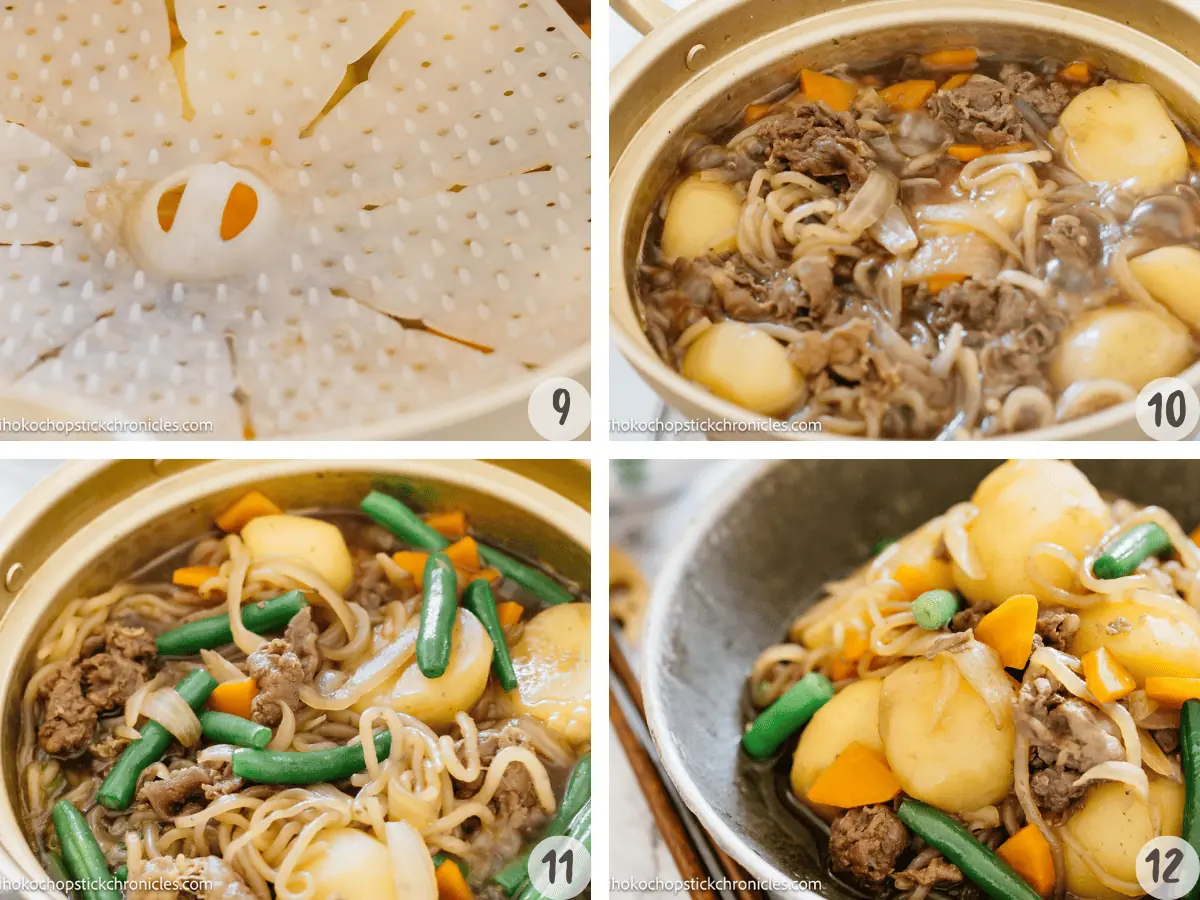
- Remove any scum that appears on the surface then place a drop lid (otoshibuta) or an aluminium foil sheet with a hole on top of the ingredients. Leave it to simmer for around 15 minutes.
- Add the soy sauce, mirin, sake, and sugar.
- Add the konnyaku and green beans and simmer.
- When the vegetables have all cooked, turn off the heat. Allow nikujaga to sit for a few minutes before serving.
Tips for Enhancing Flavour and Presentation
- Choose the Right Cut of Meat: When it comes to nikujaga, thinly sliced beef or pork is traditionally used. The thin slices cook quickly and become tender when simmered in the sauce.
- Soak Potatoes Before Cooking: Once you have sliced the potatoes, soak them in cold water for about 10-15 minutes before adding them to the pot. This process helps remove excess starch from the potatoes and prevents them from sticking together during cooking.
Serving Suggestions and Pairings
The traditional way to enjoy this delicious Japanese dish is with a bowl of steamed white rice. The combination of tender meat, flavourful potatoes, and umami-rich broth perfectly complements the simplicity of steamed white rice. It creates a well-balanced meal that is both comforting and satisfying. To enhance your dining experience, you can also consider adding some additional elements to your meal. Here are a few serving suggestions and pairings that work well with nikujaga:
Miso Soup: Start your meal with a bowl of warm miso soup. Its savoury flavours will prepare your taste buds for the meal.
Pickled Vegetables: Serve some pickled vegetables like tsukemono on the side. The acidity and crunchiness of these pickles provide a refreshing contrast to the hearty nature of nikujaga.
I hope you enjoy Nikujaga. If you can not remember the name of the dish, think about Mick Jagger 🤣 And if you liked Nikujaga, please rate this recipe and comment below!
FAQ
A : While nikujaga may not be the healthiest option in terms of its high calorie and fat content, it can still be enjoyed as part of a balanced diet. With its combination of protein-rich meat and nutrient-packed vegetables, nikujaga provides essential nutrients like fibre.
Also don’t forget to follow me on Youtube, Pinterest, Facebook , Twitter and Instagram to keep up to date with all the latest happenings on Chopstick Chronicles. Don’t forget to use the hashtag #ChopstickChronicles so I can see your wonderful creations!

Japanese Beef and Potatoes 肉じゃが
Ingredients
- 150 g thinly cut beef *1
- 5 small potatoes or 350g
- 1/2 medium carrot or 90g
- 1 small onion or 130g
- 10 green beans
- 250 ml Dashi stock *2
- 3 tbsp sake
- 3 tbsp mirin
- 3 tbsp sugar
- 4 tbsp soy sauce
- 100 g Konnyaku noodle
- 1/2 tbsp oil
Instructions
- Peel the potato and cut into irregular sized chunks. Round the corners off and soak in a bowl of water. *3
- Peel carrot and cut into 4 length wise, then slice it thinly.
- Peel and cut onion in half then thinly and diagonally.
- Trim both ends of green beans and cut into small pieces.
- Bring water to boil in a pot and cook Konnyaku to remove the fishy smell for a couple minutes. Drain the water and set aside.
- Heat oil in a pot over medium heat.
- Add onion, carrot and potato to cook.
- Once the onion, carrot and potato are coated with oil evenly and the edge of the potato become transparent, add the beef.
- When the beef colour has turned light brown, add the dashi stock and bring to boil.
- Remove all the scum from the top and put a sheet of aluminum foil, with a small hole cut in the middle, over the top. *4
- Simmer for about 15 minutes to cook until the potato has become soft.
- Add sake, mirin, sugar and soy sauce.
- Add Konnyaku and green beans and simmer until the sauce reduces a little bit.
- When the green beans colour has changed and cooked, turn the heat off and serve.





thank you for sharing the Japanese cuisine recipes, i love your website!
this particular one has already become one of the regulars in my house – so delicious yet simple!
Thank you Cayce 😀 and you are welcome.
Our whole family loves this dish!😊 The only thing I do differently is serve it over rice or cauli rice instead of the noodles.
Thank you Katherine, and sharing great serving ideas 😀
I made replacing the sliced beef with minced beef, the onion with spring onion and the sugar with black treacle. And it was delicious! どうもありがとう。PS. The adverts on your website are a pain. Otherwise it’s awesome.
I made it vegan with Gardein beefless ground and it was great. Thanks for the recipe.
Hi Lorne, thank you for making Nikujaga! That is great alternative for vegan version 😀
Just a question: I have a little person who cannot have soy due to allergies. Any suggestions for substituting the soy sauce – fish sauce or Worcestershire???
Hi Jules, you can use coconut amino. You can read Japanese food substitutions here https://www.chopstickchronicles.com/japanese-food-substitutions/
Is it possible to double the mirin and omit the sugar? Sake is too expensive in my area.
Hi KannaChan, yes posible 😀
Making for the second time tonight… love it!
Ohhh Thank you Simone 😀
Looking delicious and this dish i ll try
Thank you Evie 😀
I made this today. Very easy and delicious! Family loved it!
Thank you so much for your comment and 5 stars rating 😀 I am glad to know that your family loved it 😀
delicious thank you !
thank you!
Hi! What cut of beef is best to use?
Thanks!
Hi Caitlin, in Japan generally thinly sliced beef loin called “Kiriotoshi” or “Komagire” is used for Nikujyaga and they are the cut commonly and readily available from supermarket. They are cheap cut because Kiriotoshi means cut off. There isn’t such cut in Australia so I usually go to Japanese grocery store or Korean shop and buy thinly sliced meat. If you can’t find any Japanese shop or Korean shop, I would buy cheap cut and freeze it then cut thinly.
I can see why this dish is the or one of the most popular dishes in Japan. It looks great and your photos are very good.
Japanese culture is a complete contrast to my native Caribbean culture. I don’t eat beef very often, actually it’s not really eat much in the Caribbean but this sure does look appetising.
Hi Charla, yes, Japanese culture will be very different to your native Caribbean culture. So what types of meat do you usually cook? To be honest, I have actually never had Caribbean food before and I am very curious and interested in experiencing Caribbean food:D from your blog!
I have always love Japanese beef and potatoes. You are right, it’s such a comfort dish and takes me right back to attending cooking classes in Japan. I’ll have to try your recipe – It looks simply delicious.
Thank you Amanda:D, did you attend cooking classes in Japan? Wow! That’s what I want to do when I go back to Japan next time!
This looks so tasty and simple! What is mirin? I’ve never heard of it!
Hi Sarah, Thank you. Mirin is a staple condiment used in Japanese cooking. It is a type of rice wine like ‘Sake’ but Mirin has less alcohole and more sugar content so it is sweeter than Sake:D You can buy them from any Asian grocery store or even in supermarket like Woolworths and Coles(Australia).