
Have you ever tried the soft pink pickled ginger that often accompanies sushi? It comes in a little sachet when you buy sushi rolls or at sushi restaurants. The flavor is refreshingly sweet and sour, and it has a pretty light pink colour. It is called “Gari” in Japanese. Maybe you would like to try and make your own pickled ginger!
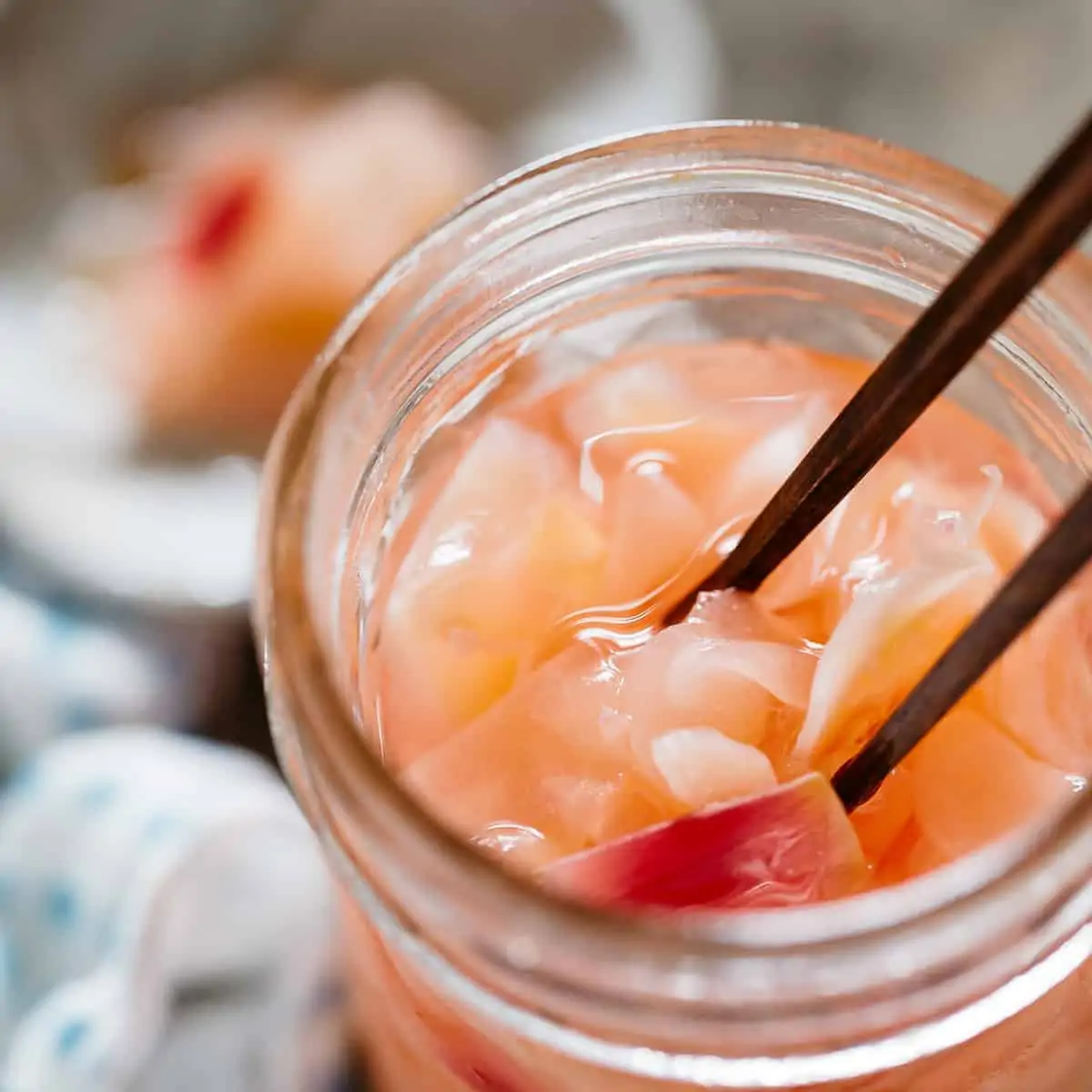
Table of contents
- What is Pickled Ginger?
- Palate Cleanser
- You Will Love This Pickled Ginger!
- Only 5 Ingredients!
- Difference Between New Ginger Roots and Ordinary Ginger
- How To Pick Good New Ginger Rhizomes For Pickling
- Grow Your Own Ginger
- Why Is Gari A Pretty Soft Pink?
- 5 Tips & Tricks
- How To Store Pickled Ginger
- Pickled Ginger Related Recipes
- Stay Connected
- Recipe Measurements
What is Pickled Ginger?
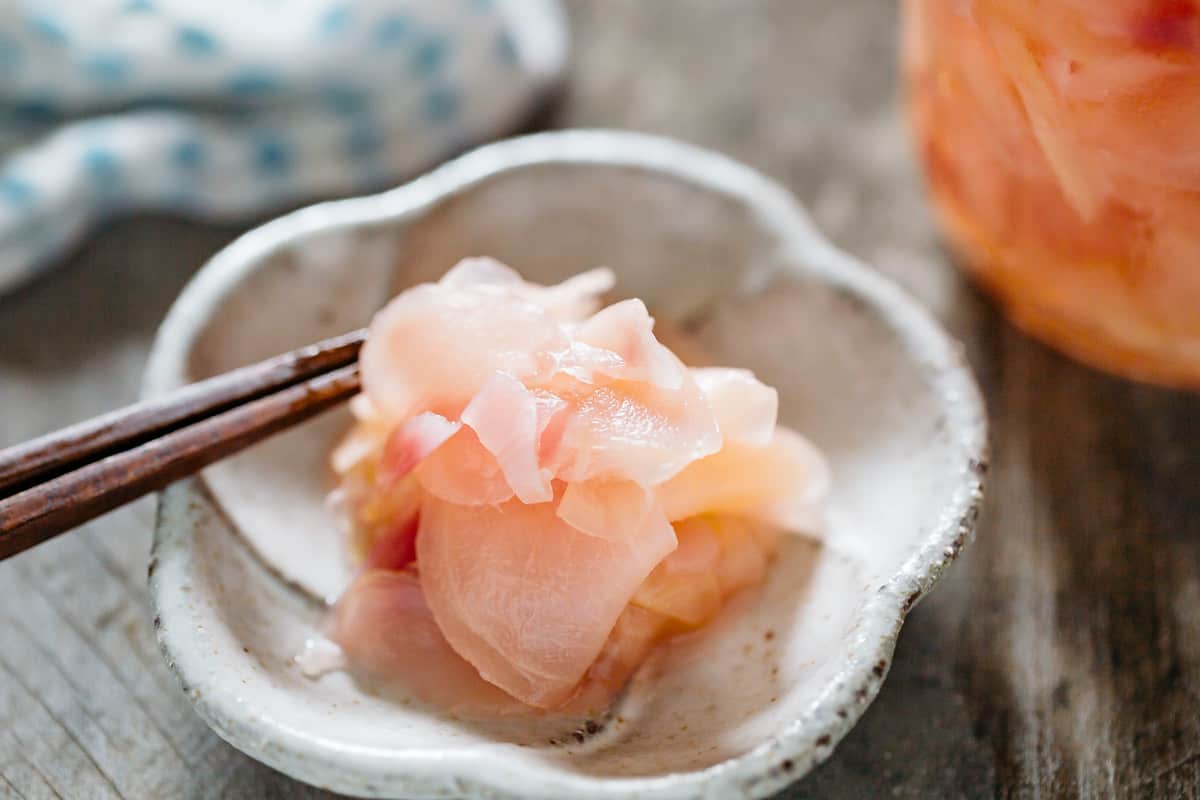
Japanese Pickled ginger is also known as “Gari” in Japanese. You will always find pretty soft pink thin ginger slices pickled in sweet rice vinegar mixture accompanying sushi. It is available from Japanese/Asian grocery stores and also you can purchase from the online shop as well. But you know, it is not difficult to make. It is quite simple and is much healthier if you make your own as you know it contains no artificial preservatives.

Palate Cleanser
Pickled ginger (Gari), or sushi ginger is often served with Sushi. But why? Because eating pickled ginger cleanses the taste buds between pieces of sushi. Eating refreshing ginger prevents the taste buds from becoming desensitized by eating the same taste food. As a result, your sushi experience is more delicious.
You Will Love This Pickled Ginger!
- Authentic Japanese Recipe – Japanese know which type of fresh ginger to pickle to get pretty soft pink and I will share the secret with Chopstick Chronicles readers.
- Simple and easy to make – requires only 5 ingredients. If you can’t find a fresh new ginger root, why not to grow your own, as I do. If I can, you can too. Rice vinegar might be difficult to get, if that’s the case, check out my Japanese food substitute post, or check out Chopstick Chronicles’ shop front at Amazon.
- Pretty in pink and refreshingly delicious – NO artificial colours, naturally in soft pink and cleanse your palate with refreshing flavor.

Only 5 Ingredients!
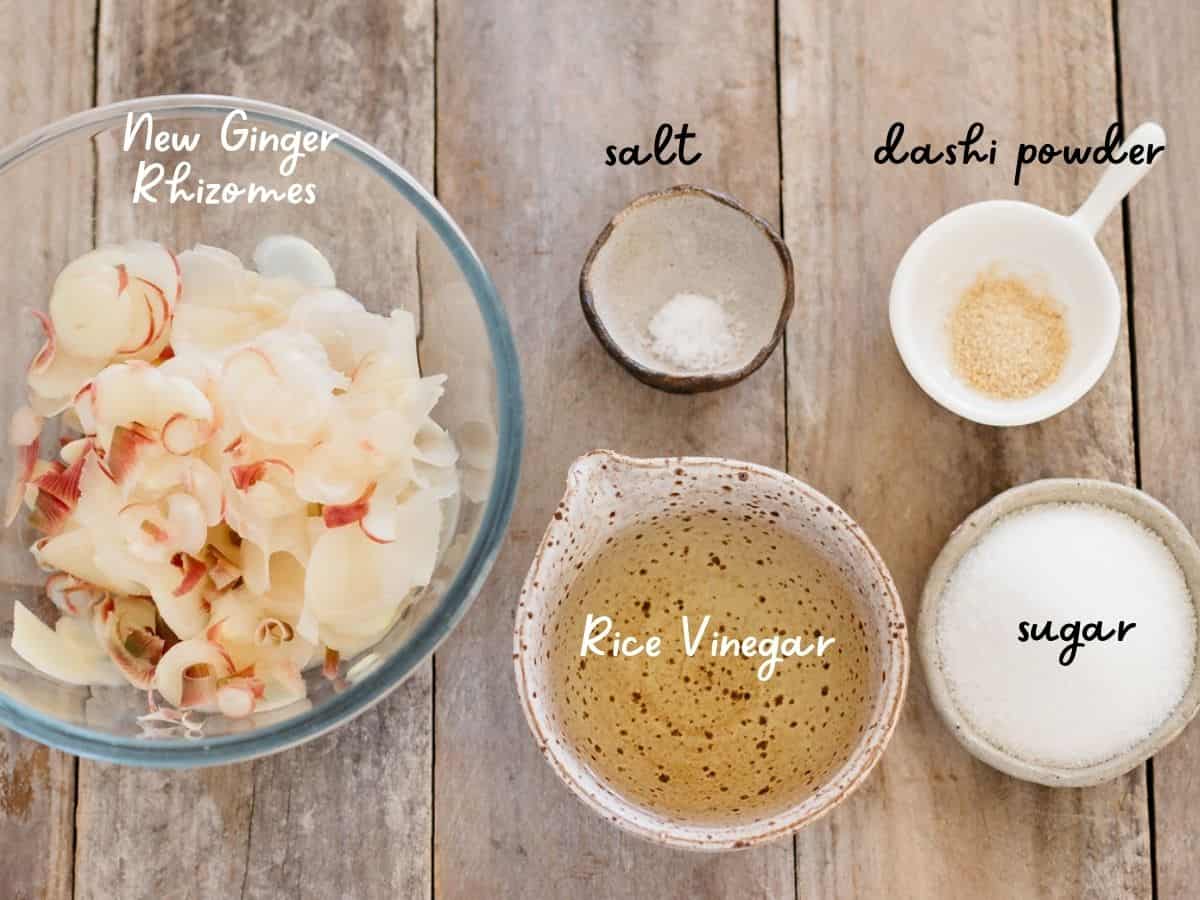
New ginger rhizomes –
Rice vinegar
Sugar
Salt
Kelp dashi powder
Difference Between New Ginger Roots and Ordinary Ginger
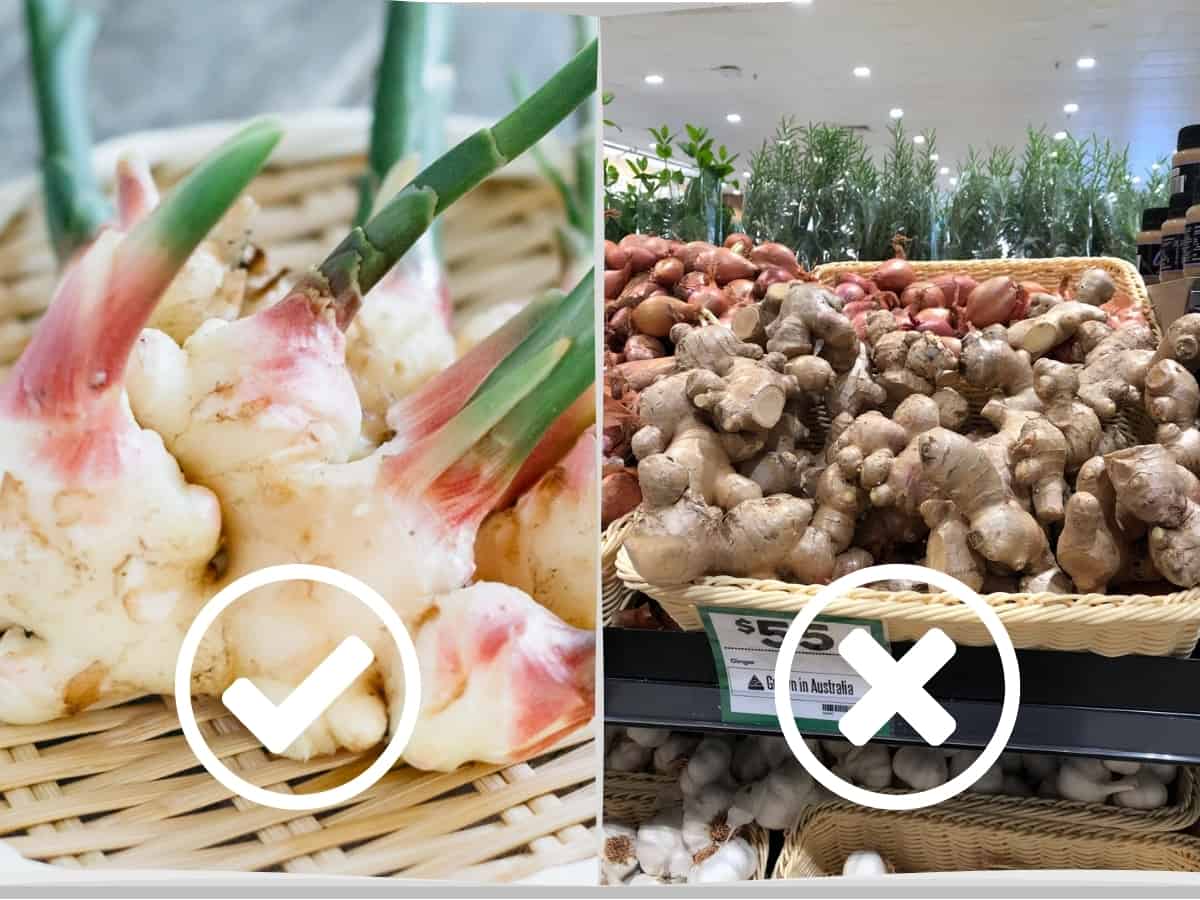
| New Rhizomes | Ordinary Ginger | |
| In Season | New rhizomes are harvested around June and you will find new rhizomes in supermarkets in early summer till Autumn. | Ordinary ginger that we are all familiar with are harvested at the same time but stored for a few months and see them all year round on supermarket shelves. |
| Appearance & Texture | Looks fresh and juicy, because it contains a lot of moisture. White and crimson where the foliage shoots. It is soft and less fibrous. | Yellow to light brown, dry and solid, because it lost some moisture while it is stored after harvesting. It becomes more fibrous than new rhizomes |
| Taste | Mild spicy and juicy | Peppery spicy and fibrous |
| Usages | Enjoy eating fresh, such as pickles | Grated and used for garnishing dishes such as chilled tofu, or added to simmered dishes to remove odor of ingredients such as fish |
How To Pick Good New Ginger Rhizomes For Pickling
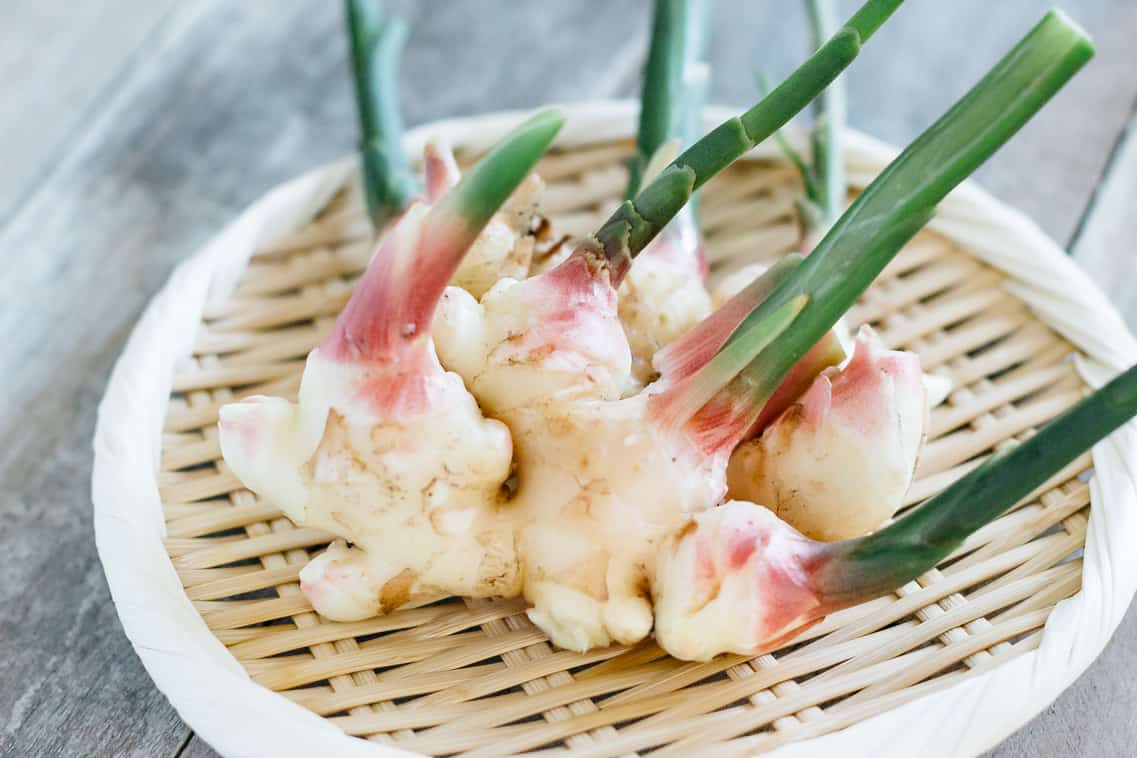
Look for ones that have a fresh-looking and white to pale yellow in colour with firm surface. Also the stems are a bright crimson colour.
Grow Your Own Ginger
I really wanted to make pickled ginger myself. So I purchased fresh ginger with the beautiful foliage still attached, at a local farmers market. I planted a part of it into my veggie patch. Now I don’t have green thumbs, so maybe I think if I can grow ginger, anyone can. Besides, it is always a great feeling to grow something you can actually eat. If you would like to know more about growing your own, check out growing ginger.

Why Is Gari A Pretty Soft Pink?
Pickled ginger is naturally a soft pink colour because new ginger roots are used to make sushi ginger. You can see them in the above photo. New ginger roots are red in colour. If some of the red pigment is thinly sliced with the ginger root, then the end result is this gorgeous colour. Isn’t it a beautiful pink?
5 Tips & Tricks
- Make pickled ginger with new ginger rhizomes.
- Keep some of the red pigment parts for that beautiful soft pink.
- Scrub wash the rhizomes. Peeling is NOT necessary.
- Slice thinly. Bunch and squeeze out the excess water as much as you can.
- Add sweetened vinegar while it is still hot.

How To Store Pickled Ginger
When it has cooled down, put the pickles in an airtight container and store it in a fridge. It will keep for about a month refrigerated. I only harvested about 150g of the new ginger rhizomes, so it did not last long in my fridge. We ate them all in about a week.

Pickled Ginger Related Recipes
Stay Connected
Also, if you liked my Pickled ginger “Gari” recipe, please leave comments below and don’t forget to follow me on Youtube, Pinterest, Facebook , Twitter and Instagram to keep up to date with all the latest happenings on Chopstick Chronicles. Don’t forget to use the hashtag #ChopstickChronicles so I can see your wonderful creations!

Recipe Measurements

Pickled ginger “Gari” ガリ
Ingredients
- 150 g new ginger rhizomes
- 1/4 tsp salt
- 1/2 cup rice vinegar
- 3 tbsp sugar
- 1/2 tsp kelp dashi powder *1
Instructions
- Prepare the ginger rhizomes by scrubbing them under running water.
- Cut stems off leaving the red part attached to rhizomes.
- Slice the ginger rhizomes as thin as possible with a slicer *2
- Boil water in a pot and parboil the sliced ginger.
- Drain the parboiled water and scatter the sliced ginger on a cooling tray and set aside.
- Place vinegar, sugar, salt and kelp dashi powder in a small saucepan over medium heat.
- Turn the heat off when the sugar and dashi powder has dissolved.
- Squeeze the sliced and parboiled ginger to remove excess water.
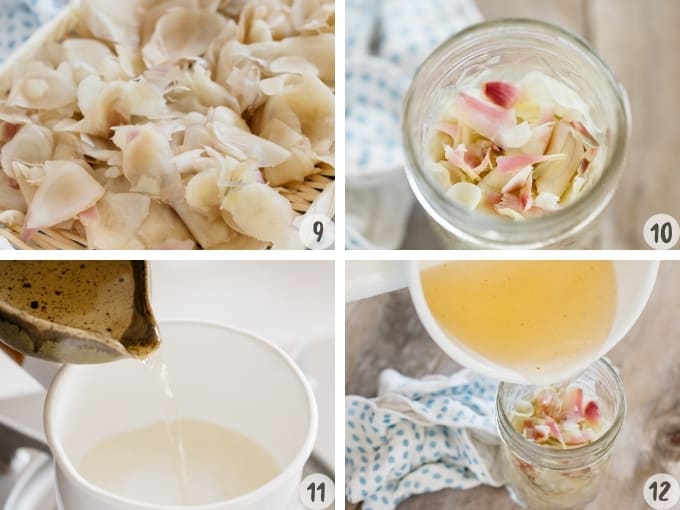
- Place the ginger in a container and pour the vinegar mixture over while the vinegar is still hot. The ginger colour will turn to pink straight away.
- Let it cool and refrigerate. You can start to eat after three hours pickled in the vinegar.
Notes
Nutrition
Chopstick Chronicles is a participant in the Amazon Services LLC Associates Program, an affiliate advertising program designed to provide a means for sites to earn advertising fees by advertising and linking to Amazon.com. As an amazon associate I earn from qualifying purchases.




Thanks for the recipe. You are right, ginger is easy to grow. And new ginger makes an excellent addition to any marmalade recipe.
I just started to grow wasabi. Now, it is cold and rainy in California, so the ginger is hibernating, but the wasabi is growing like weeds! I have never had real wasabi so I am pretty excited about this. Wasabi is also a rhizome, like ginger, but wasabi grows above ground. If you know, can wasabi also be pickled, like ginger in sweet rice vinegar? Or will it be to fibrous?
What does the konbu powder do for the pickle? Any reason why I cannot just toss a piece of dry konbu into my spice grinder to make a powder and use it?
Hi Otis, it is just easier to get umami, you can use piece of kombu 😀
😍😍😍
Thank you Graham 😀
I’ve got to try this!
Thank you Suzy 😀 You will like it.
Sushi here I come. Can not wait to try it. Thank you for sharing.
Thank you Carrie 😀
Fantastic! I’ve always disliked the artificial flavor of commercial pickled ginger. Just found your site, and I’m already inspired to try half a dozen new recipes. You do a great job of making these recipes accessible to everyone!
Thank you Jen 😀 Me too, I don’t like anything artificial. Trying to be my grandmother used to be.
Love this! I’ve always wanted to know how to make my own sushi pickled ginger. Thanks for sharing!
You are welcome Billy 😀
Hi, thank you for the recipe, I will try it when my home grow ginger is giving me these lovely shoots. Could you please help me source some kelp dashi powder that does not contain any E numbers or artificial anything…and possibly organic, as I have to stay away from artificial substances and stick to a diet as close to nature as possible due to autoimmune disorders and neuropathy that I managed to put in remission thanks to a holistic approach. I thank you in advance for your kind help and precious time, regards, Ghislaine.
Hi Ghislaine, It does not have to be kelp dashi, any dashi powder will add Umami kick. How about this one