
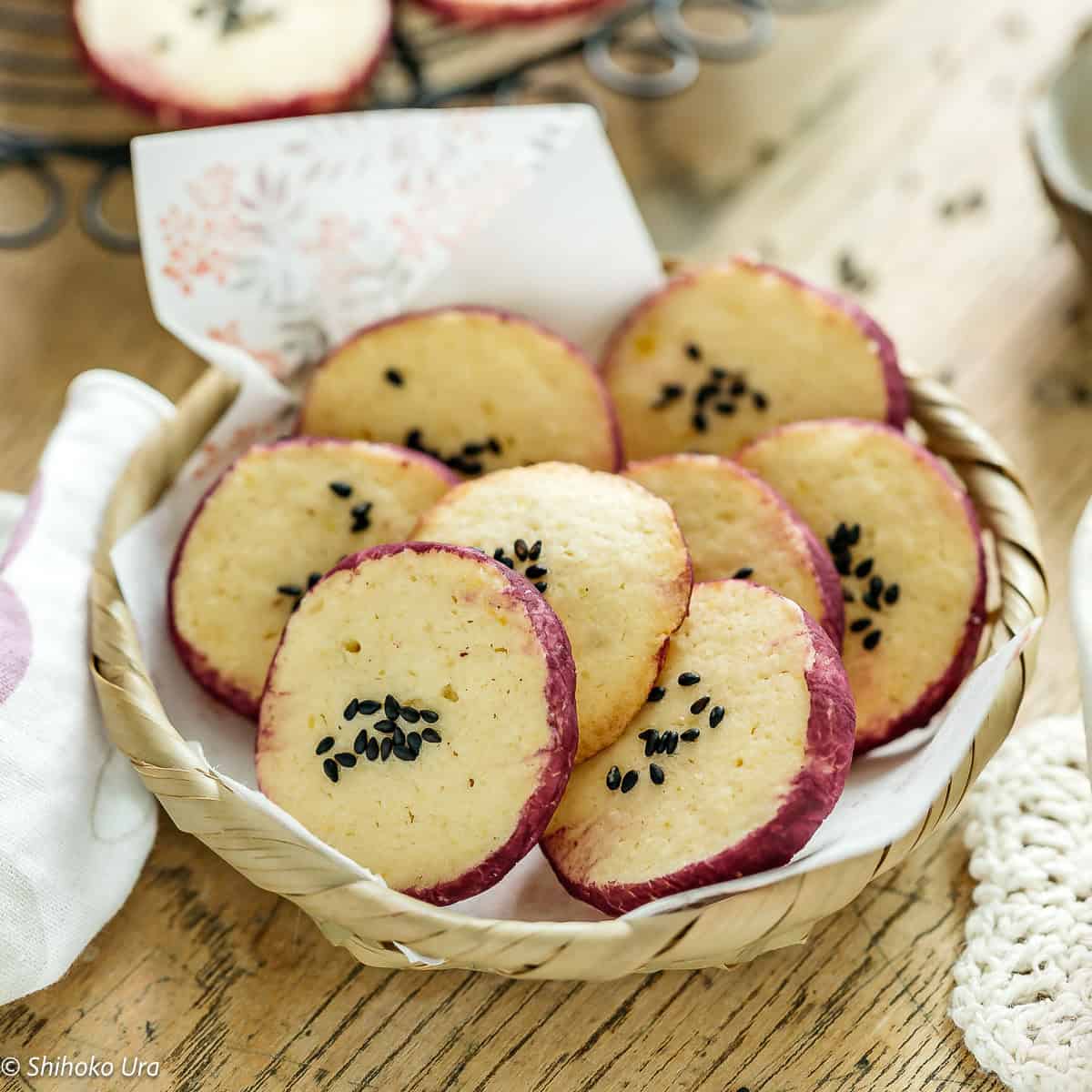
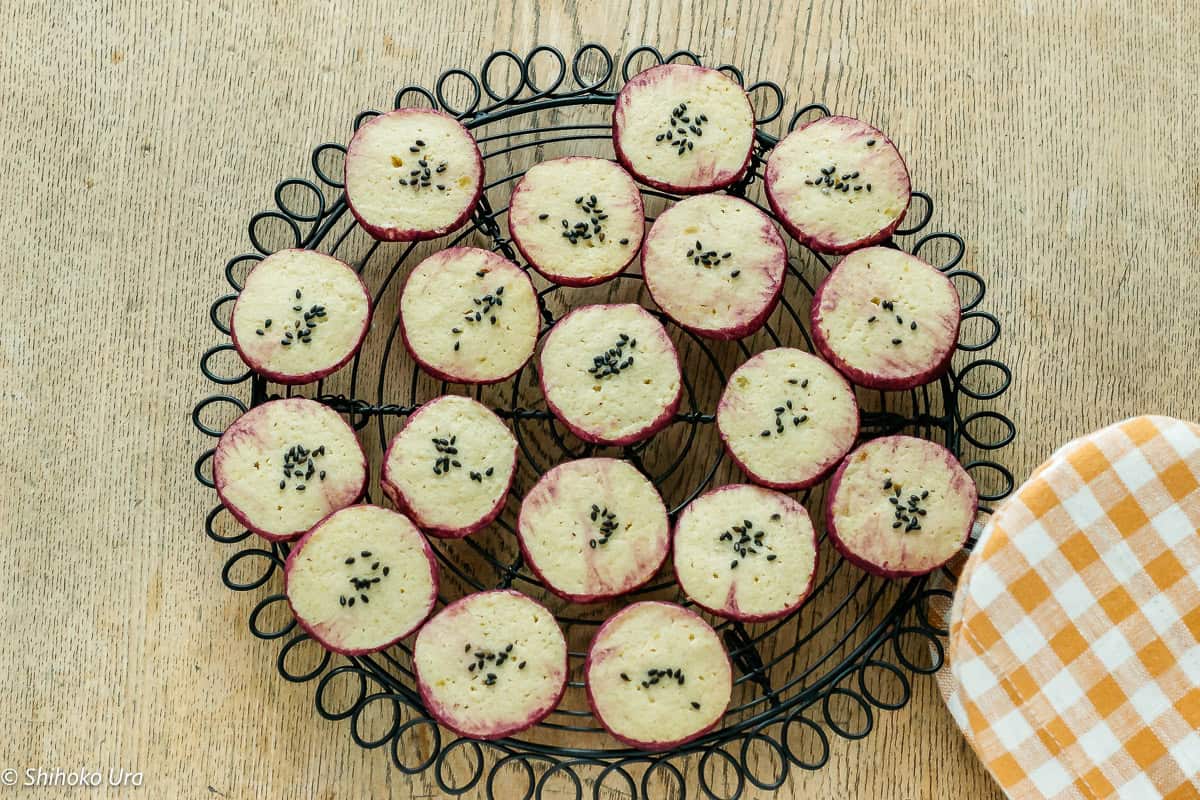
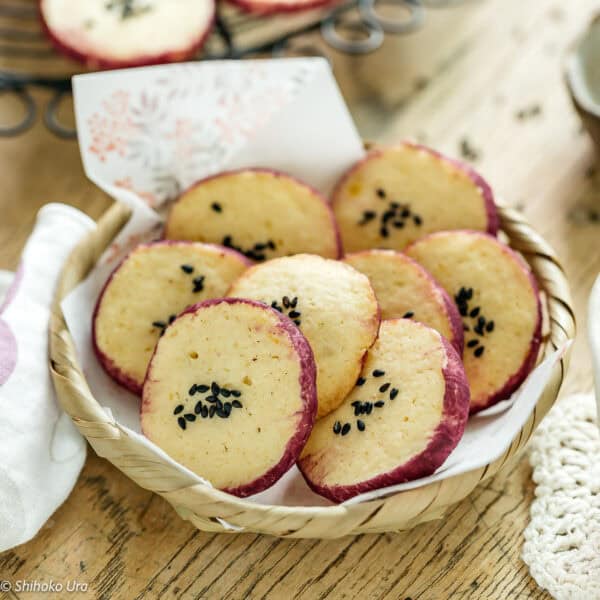
These cute Japanese sweet potato cookies are inspired by satsumaimo, the Japanese sweet potatoes I absolutely love. Each cookie looks like a tiny slice of sweet potato, with a golden yellow center, a thin purple-red edge that resembles the skin, and a few black sesame seeds to complete the look.
They are buttery and subtly sweet, with the natural flavor of real sweet potato and a slightly crumbly texture. I love this kind of playful Japanese baking, where a simple homemade treat becomes something special just by changing its shape and presentation. Make a batch and enjoy these little satsumaimo cookies with your favorite cup of tea!
What Are Japanese Sweet Potato Cookies?
Japanese sweet potato cookies, or さつまいもクッキー (satsumaimo kukkī), are made with sweet potato and shaped to resemble slices of satsumaimo (Japanese purple sweet potato). Japanese sweets often take inspiration from seasonal ingredients, including their colors and shapes. These cookies are a fun example, with a golden centre, purple-red “skin,” and tiny black sesame seed details.
They have a buttery crumbly texture and a subtly sweet flavor. They’re the perfect fall time treat to celebrate seasonal ingredients.
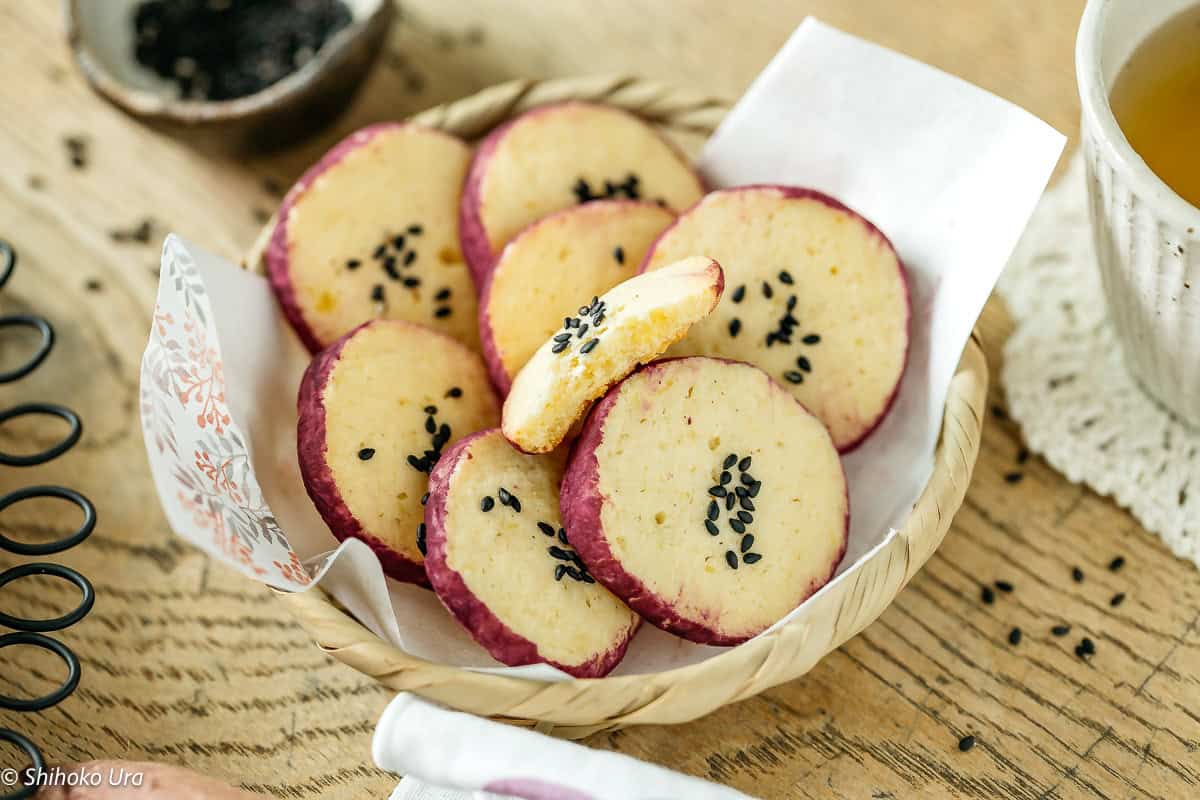
Table of contents
Why You’ll Love These Sweet Potato Cookies
- Made with real sweet potato: cooked satsumaimo gives the cookies natural sweetness, flavor, and their golden colour.
- Cute but surprisingly simple: You don’t need complicated decorating skills to create the little sweet potato design.
- Buttery and lightly sweet: They are not overly sugary, allowing the satsumaimo flavor to come through.
- Perfect for autumn: They make a lovely autumn baking project, afternoon snack, or homemade gift.
- Easy to make ahead: Prepare and chill the cookie dough in advance, then slice and bake when you’re ready.
What Do They Taste Like?
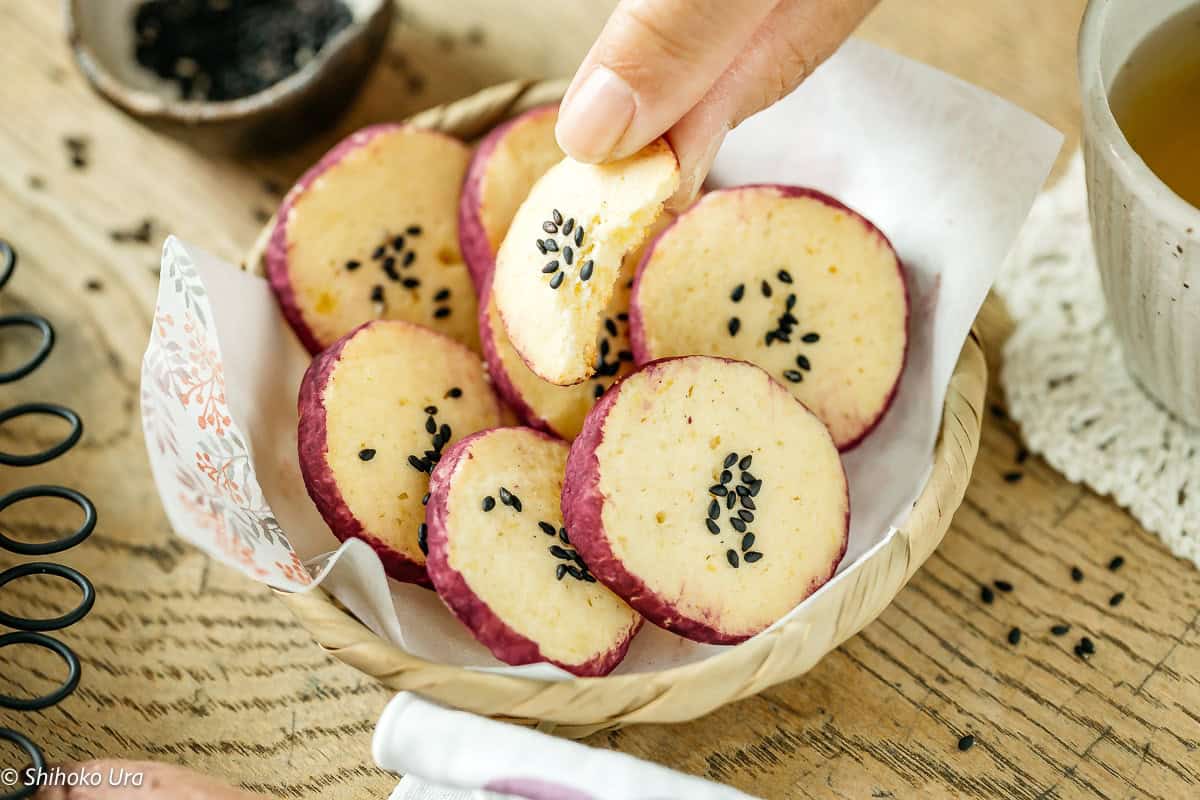
These sweet potato cookies have the mild, earthy sweetness of Japanese satsumaimo combined with a rich, buttery cookie flavor. They are not overly sweet, and the sweet potato adds more than just flavor. It also contributes to their tender, slightly crumbly texture.
Unlike American-style sweet potato cookies, these are not designed to be thick, soft, or cake-like. You also won’t find lots of cinnamon, nutmeg, or other spices in my version because I want the natural flavor of the Japanese sweet potato to stand out. The black sesame seeds add just a hint of nuttiness while creating the realistic sliced-sweet-potato appearance.
Japanese Sweet Potato vs Regular Sweet Potato
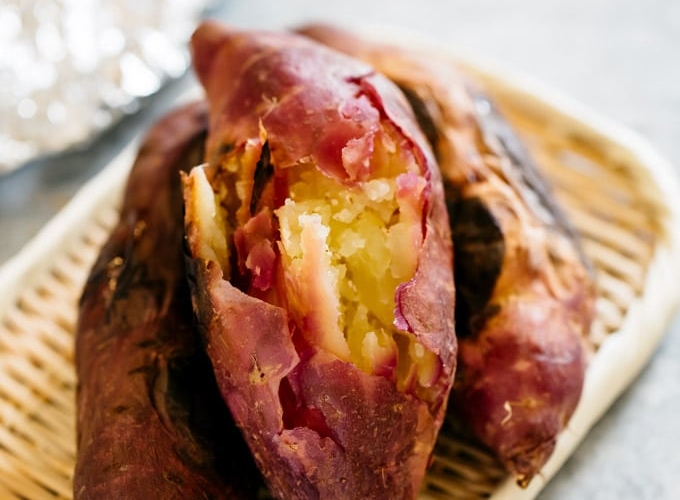
Japanese sweet potato, called satsumaimo (さつまいも), has reddish-purple skin and pale yellow flesh that becomes sweeter and more golden when cooked. Compared with many orange-fleshed sweet potatoes, satsumaimo tends to have a denser, starchier texture.
That relatively dry texture is particularly useful for these cookies because it adds sweet potato flavor without making the cookie batter or dough excessively wet.
If you cannot find satsumaimo, another sweet potato can work, but you may need to adjust the flour depending on its moisture content. Sweet potatoes are also sometimes confused with yams, but they are botanically different vegetables.
Ingredients You’ll Need
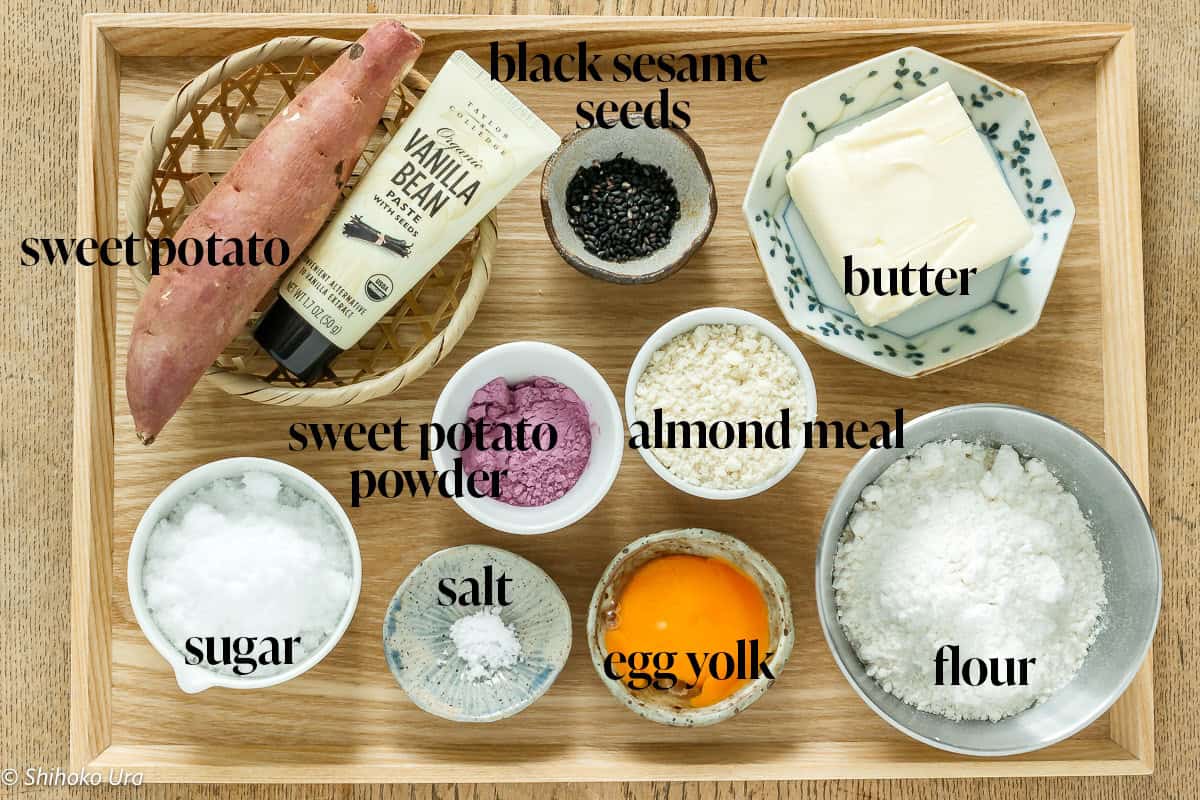
Japanese Sweet Potato (Satsumaimo)
The star of the recipe. Cook and mash it until completely smooth before measuring. I recommend weighing the cooked sweet potato in grams instead of relying on an estimate of one or two large sweet potatoes, since both size and moisture content vary.
Unsalted Butter
Softened butter is beaten with sugar to form the creamed butter base of the cookies. This gives them richness and a tender texture.
Sugar
Adds enough sweetness to complement the satsumaimo without covering its natural flavor. I use the type specified in the recipe rather than light brown sugar, white sugar, or maple syrup interchangeably, as changing the sweetener can affect both moisture and texture.
Egg Yolk
Bind the wet ingredients and help give the cookies structure.
All-Purpose Flour
Provides enough structure for the dough to hold its log shape and produce neat slices.
Almond Meal
Adds richness and helps create the delicate, slightly crumbly texture. Depending on where you live, it may be labeled almond flour or ground almonds.
Vanilla Extract
A small amount of vanilla extract is optional but works nicely with the butter and sweet potato. I used vanilla extract paste as you can see in the ingredients image.
Purple Sweet Potato Powder
This creates the reddish-purple outer layer that makes each cookie resemble real satsumaimo.
Black Sesame Seeds
A few seeds add subtle nutty flavor and make the centers look even more like sliced Japanese sweet potatoes.
How to Make Sweet Potato Cookies
1. Prepare the sweet potato
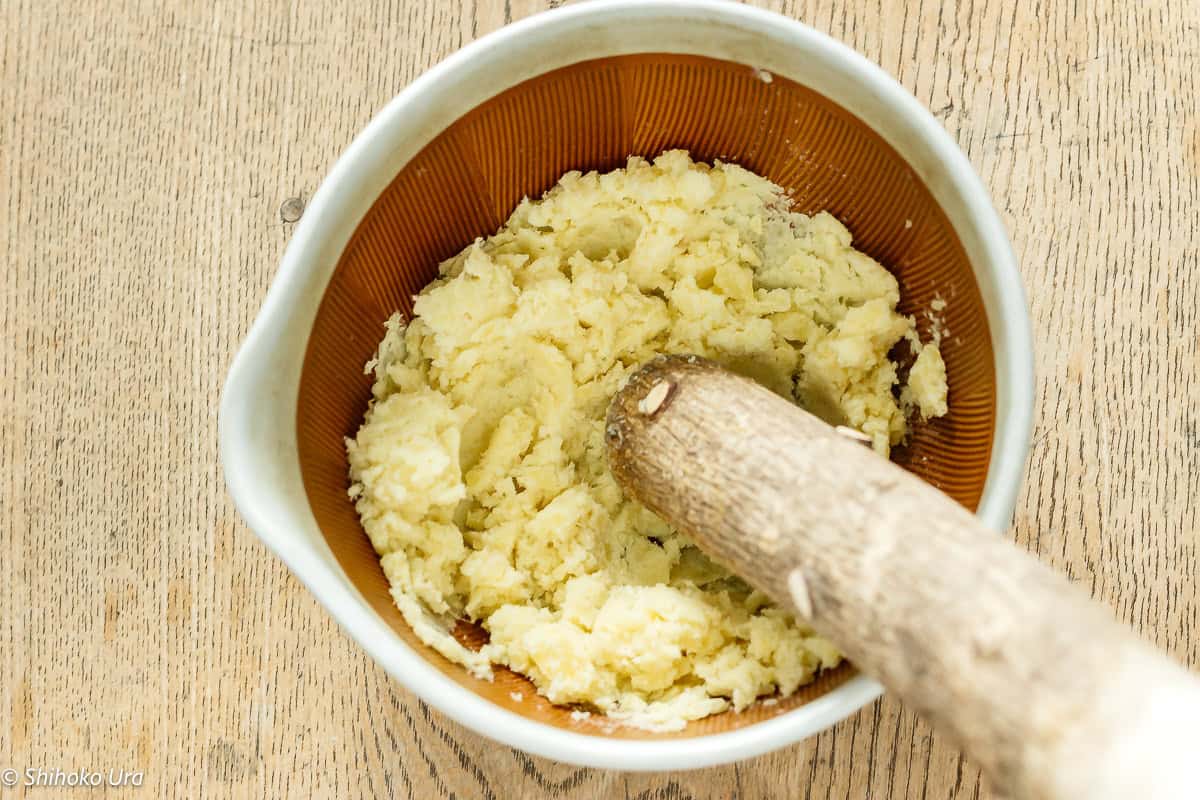
Peel the satsumaimo and cut it into evenly sized pieces so they cook at roughly the same rate. Steam or microwave until completely tender, then mash while still warm until smooth. For an especially smooth homemade sweet potato puree, you can use a food processor, but avoid processing it longer than necessary.
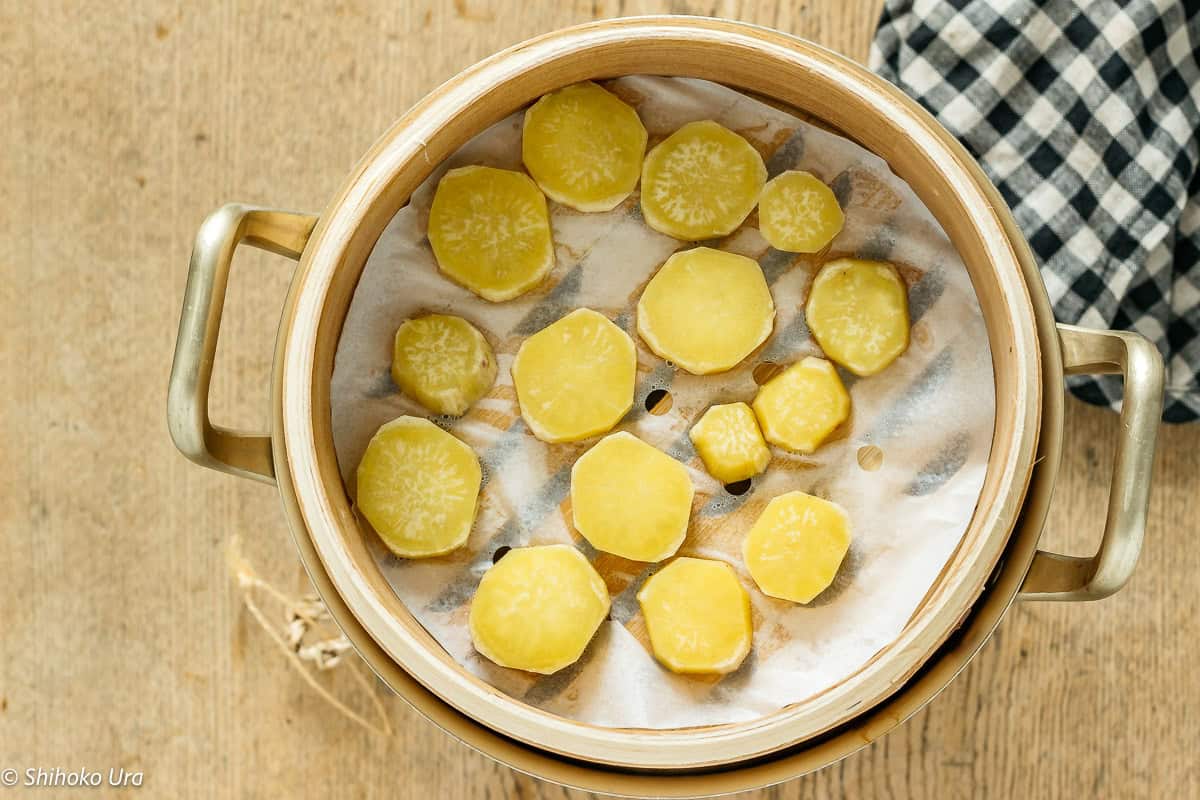
Let the puree cool completely before adding it to the cookie dough. Warm sweet potato can melt the butter, and excess moisture can make the mixture sticky and difficult to shape.
For the most consistent result, weigh the cooked sweet potato in grams rather than measuring by volume or simply using “one sweet potato.” This is especially important if substituting another variety, since moisture levels can differ significantly.
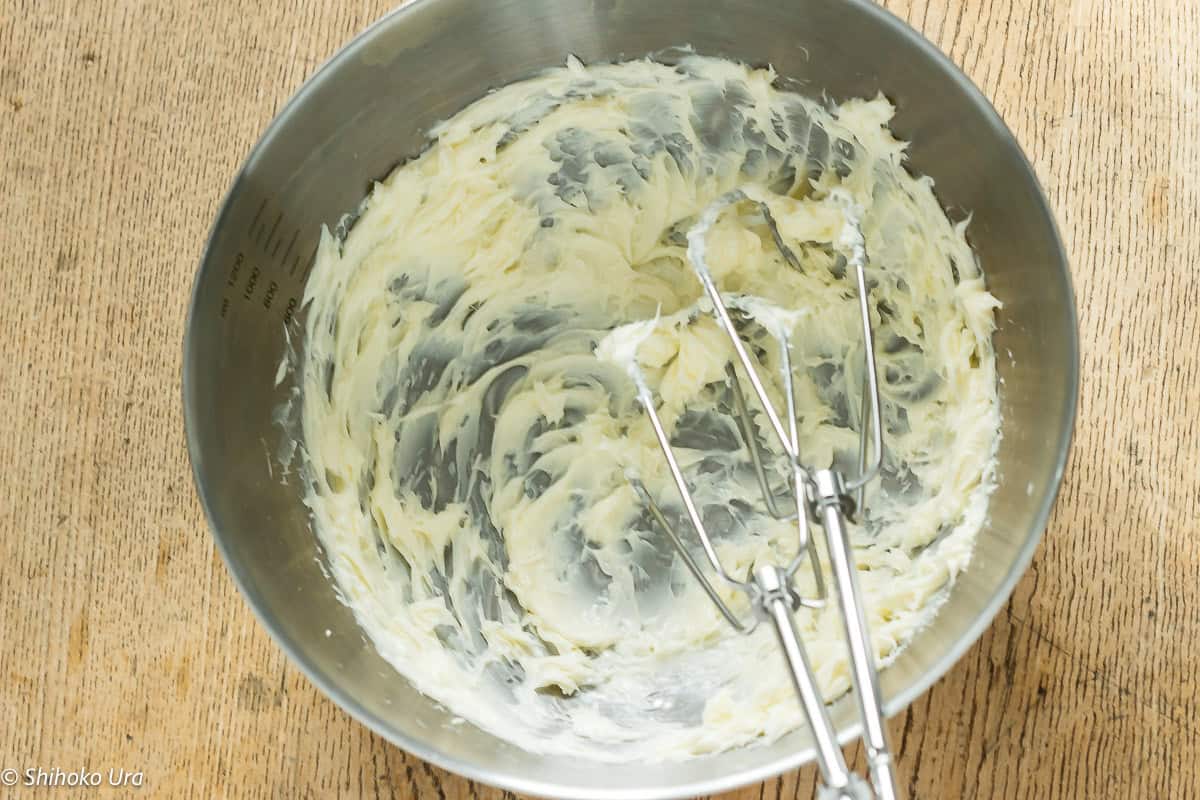
Make the Sweet Potato Cookie Dough
Place the softened butter and sugar in a large bowl or mixing bowl. Beat until the butter and sugar are smooth and creamy.
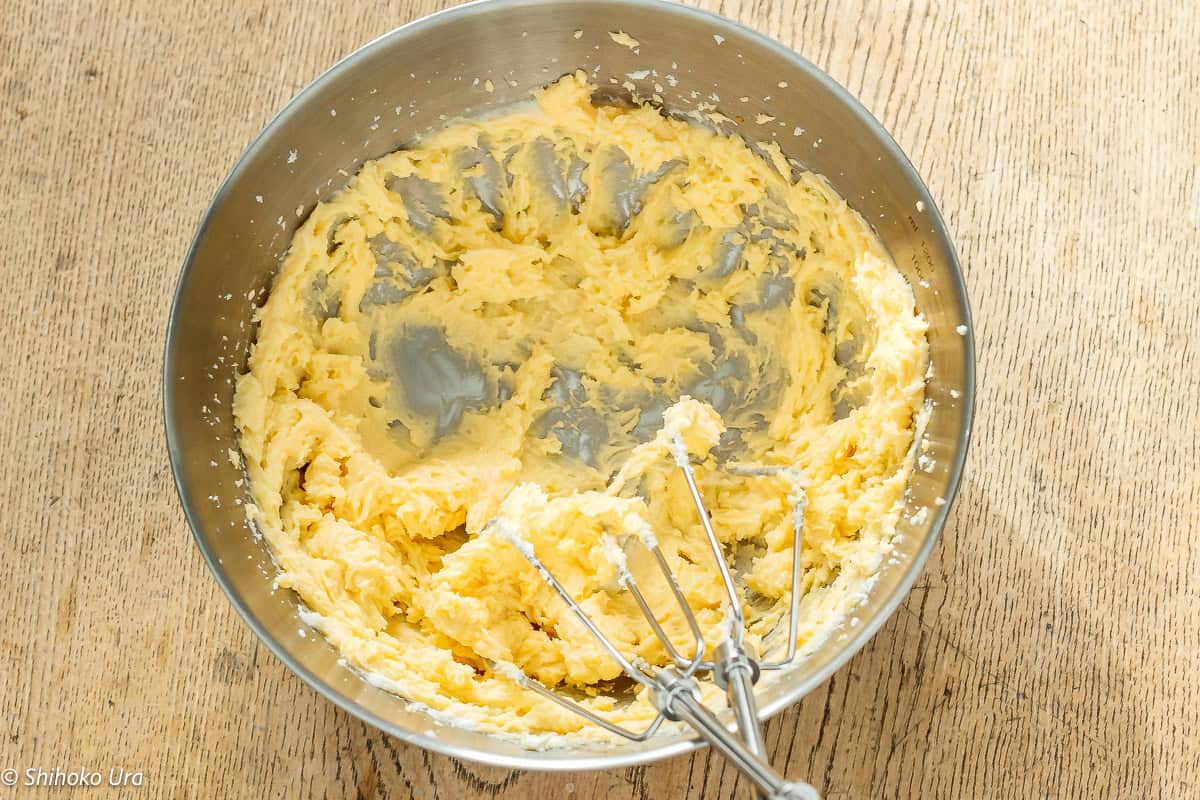
Add the cooled mashed sweet potato, followed by the egg and vanilla extract, and beat until the wet ingredients are evenly combined. If using an electric mixer/hand mixer, you can begin at medium speed, then scrape down the sides of the bowl as needed.
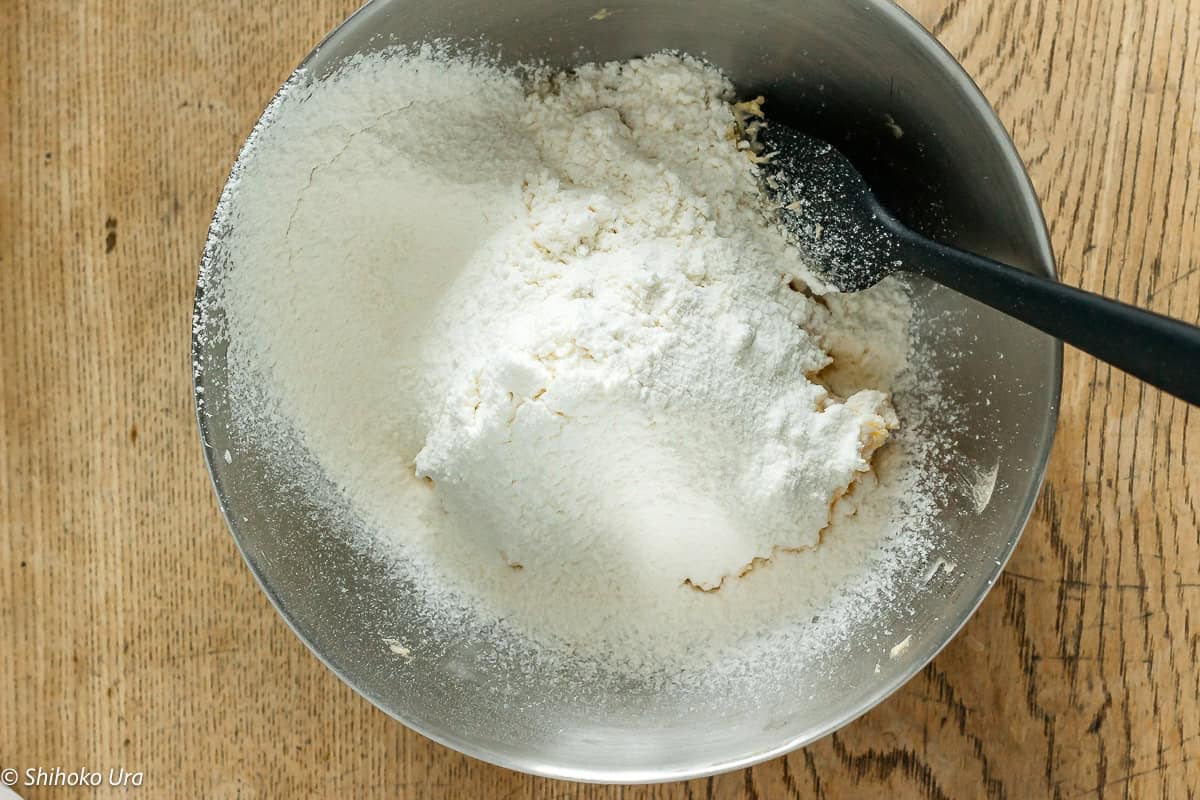
Add the all-purpose flour and almond powder. Switch to low speed and mix only until the dough comes together. Avoid overmixing once the flour has been added. Shape the dough into an even log.
Create the Purple Sweet Potato “Skin”
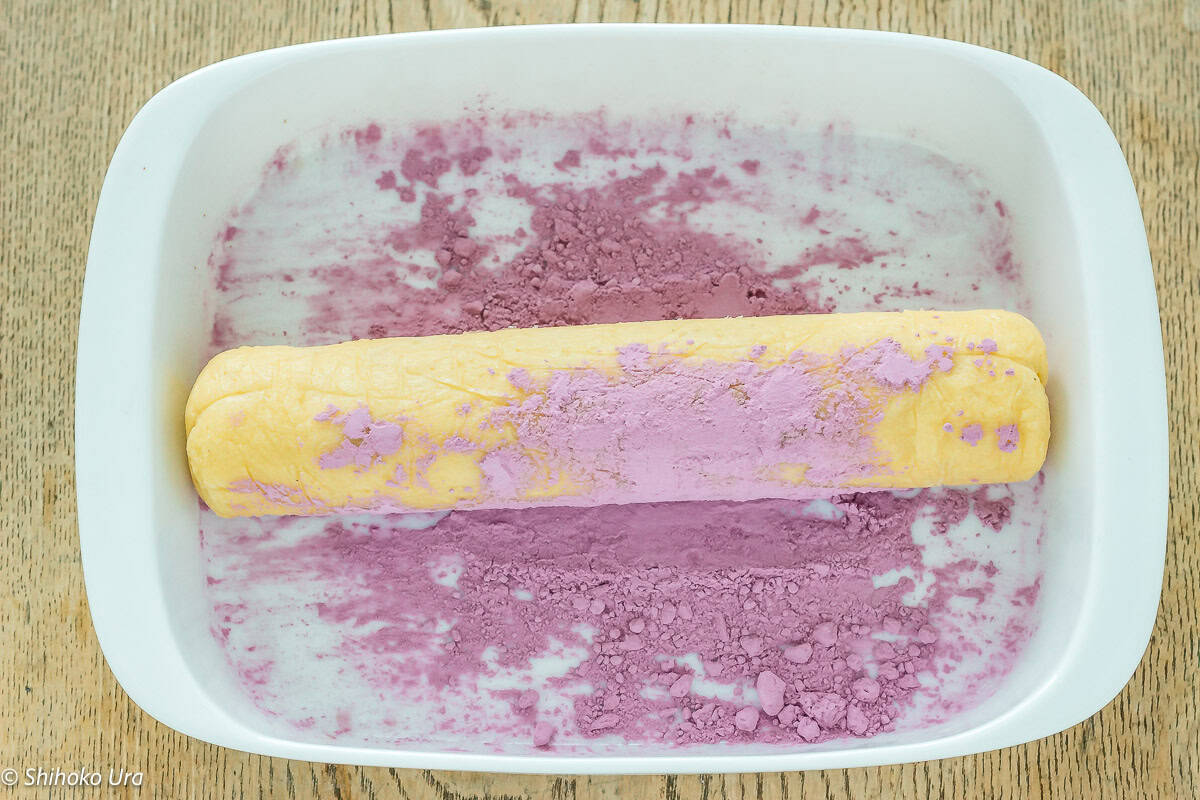
Spread the purple sweet potato powder into a tray and roll the shaped dough over it to evenly cover the surface of the dough. You want just enough purple powder to resemble the delicate reddish-purple skin of real satsumaimo.
Chill the Dough
Wrap the finished log tightly in plastic wrap and refrigerate until firm.
Chilling is important because soft dough will flatten when you cut it. Once firm, the log will produce much cleaner slices and maintain its shape.
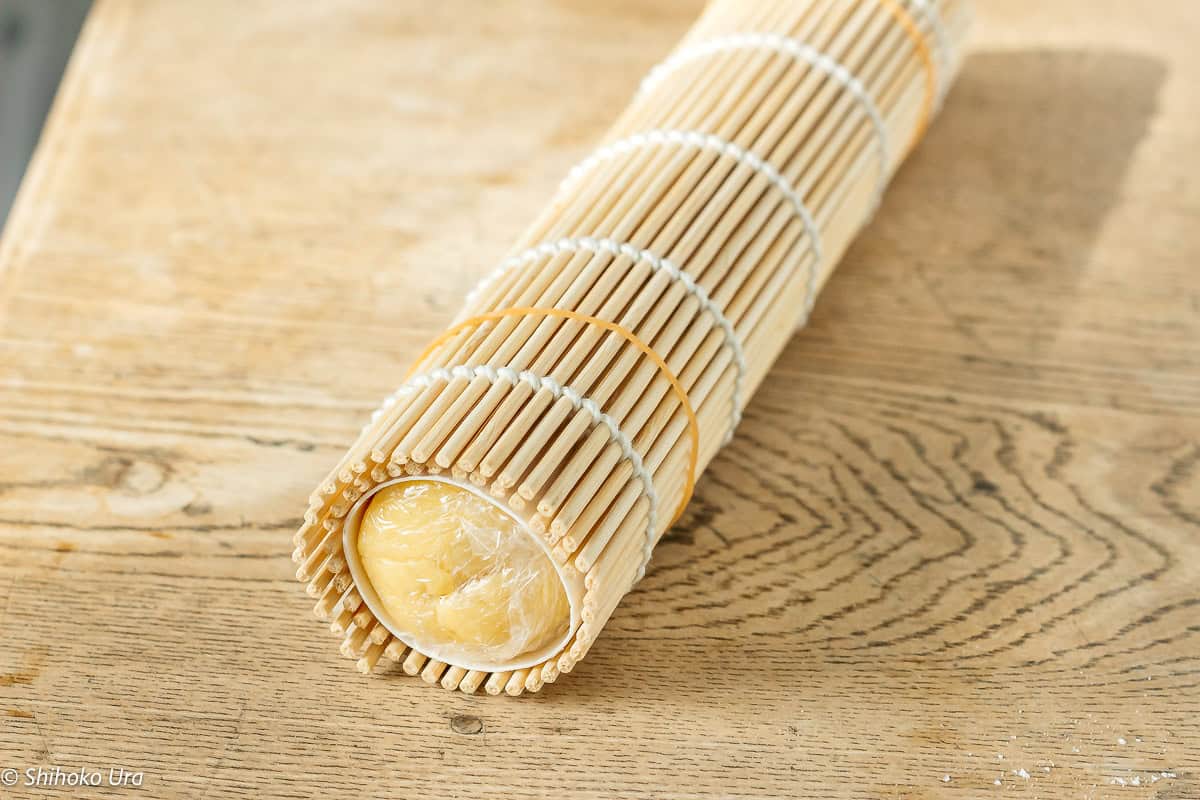
I place the dough into a core of kitchen paper or cling wrap and wrap it with sushi rolling mat.
Slice the Cookies
Line a baking sheet with parchment paper. Unwrap the chilled cookie dough and use a sharp knife to cut it into even slices.
Gently rotate the log as you slice if you notice one side beginning to flatten. Arrange the cookies on the prepared baking sheet, leaving a little room between each one.
Add the Black Sesame Seeds
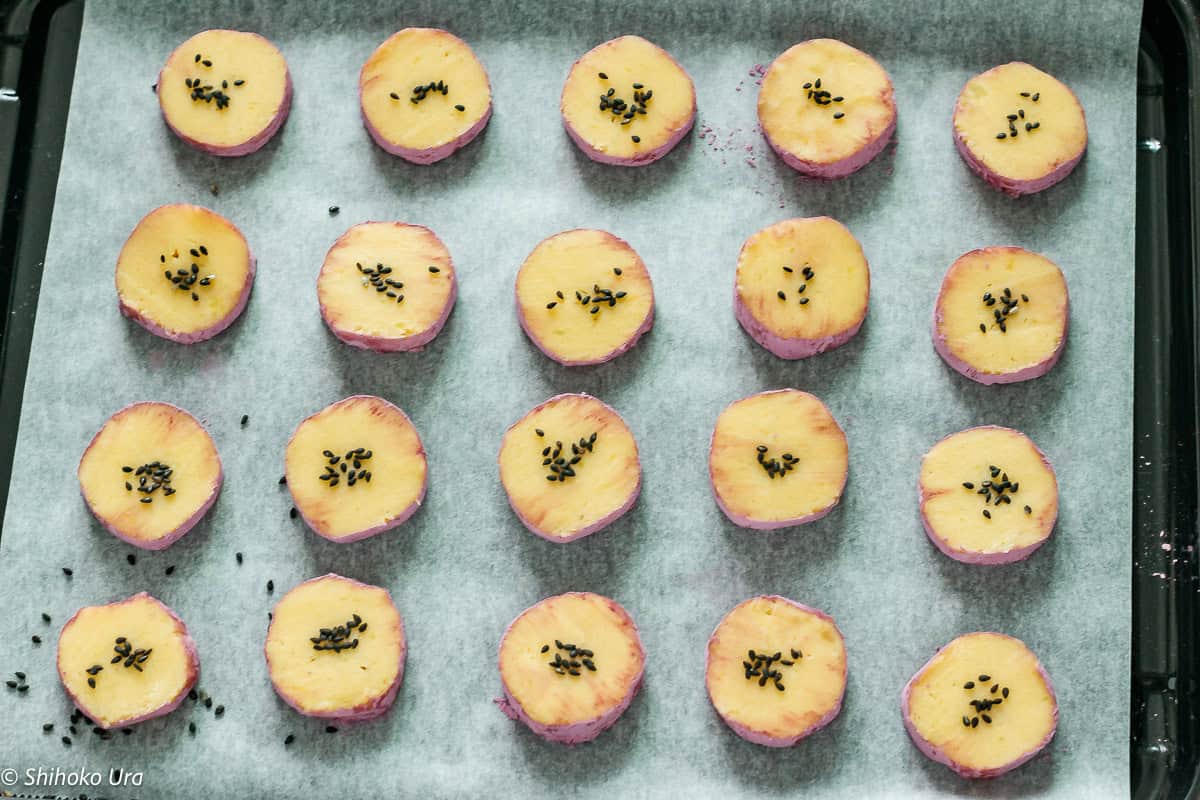
Gently press a few black sesame seeds onto the top center of each cookie. Don’t use too many or arrange them too perfectly. A slightly irregular pattern makes the cookies look much more like real slices of satsumaimo.
Bake
Bake it in 170°C for 15 to 20 minutes.
The cookies are ready when they are set and only lightly colored around the edges. Don’t wait for the tops to become golden brown. Keeping the centers pale yellow creates the contrast between the yellow flesh and purple skin that makes these cookies so cute.
Cool briefly on the baking sheet before transferring them to a wire rack.
Shiho’s kitchen Tips
- Weigh your cooked satsumaimo: Measure it after cooking rather than relying on the size or number of sweet potatoes. This gives you much more consistent cookie dough.
- Watch the moisture: The homemade sweet potato puree should be smooth but not watery. Excess moisture makes the dough sticky and harder to shape.
- Cool before mixing: Always cool the mashed sweet potato before combining it with the creamed butter. Warm puree can soften or melt the butter.
- Don’t overmix: Once you add the flour and almond powder, use low speed and stop as soon as the dough comes together.
- Keep the purple layer thin: A thin outer layer looks much more like real satsumaimo skin.
- Chill thoroughly: If the dough starts becoming soft as you slice it, put it back in the refrigerator until firm.
- Don’t overbake: Watch them carefully near the end of baking. The golden yellow center is part of what makes it resemble satsumaimo, so you don’t want the tops turning brown.
How to Serve Sweet Potato Cookies
Enjoy these cookies once they have cooled completely. Their gentle sweet potato flavor is especially good with Japanese green tea or hojicha, but they are just as lovely with coffee.
Their cute satsumaimo appearance makes them perfect for autumn picnics, afternoon tea, lunch box treats, or wrapping as small homemade gifts.
How to Store
Once completely cool, place the cookies in an airtight container and keep them at room temperature away from heat and direct sunlight. This helps preserve their delicate texture and prevents them from absorbing moisture.
You can also prepare the cookie dough ahead. Wrap the shaped log tightly and refrigerate it until you are ready to slice and bake. For longer storage, freeze the wrapped dough and thaw it in the refrigerator until it is firm enough to slice cleanly.
More Japanese Sweet Potato Recipes
If you love the naturally sweet, earthy flavor of satsumaimo, try some of my other Japanese sweet potato recipes such as Yaki imo. Japanese sweet potatoes can be used in everything from simple snacks and side dishes to traditional and modern Japanese sweets.
More Sweet Potato Recipes

Daigakuimo (Japanese Sweet Potato Bite)
Yaki Imo (Roasted Sweet Potato)

Sweet Potato Rice
Satsumaimo Cookies (Sweet Potato Coolies) さつまいもクッキー
Ingredients
- 50 g unsalted butter softened
- 35 g granulated sugar
- 1 egg yolk
- 35 g cooked Japanese sweet potato puree
- 80 g alll purpose flour
- 20 g almond flour
- pinch of salt
- ½ tsp vanilla bean paste
- 5 g purple sweet potato powder
- black sesame seeds for decorating
Instructions
Prepare the sweet potato
- Peel the Japanese sweet potato and steam until completely tender.
- While still hot, press it through a fine-mesh sieve or process it in a food processor until smooth.
- Measure 35 g of sweet potato puree and let it cool completely. *1
Making the cookie dough
- Place the softened butter in a mixing bowl and beat until smooth and creamy.
- Add the granulated sugar, salt, egg yolk, sweet potato puree, and vanilla bean paste, one at a time, mixing well after each addition.
- Sift in the all-purpose flour and add the almond flour. Gently fold until the mixture just comes together to form a soft dough. Do not overmix.
- Roll the dough into a log about 4 cm (1.6 inches) in diameter.
- Wrap the dough log in plastic wrap and refrigerate for 15 minutes.
- Spread the purple sweet potato powder on a sheet of parchment paper or small tray.
- Roll the log through the powder until the outside is evenly coated with a thin purple layer. *2
- Wrap the log tightly in plastic wrap and freeze for at least 1 hour, or until firm enough to slice cleanly. *3
Bake
- Preheat the oven to 170°C (340°F). Line a baking sheet with parchment paper. *3
- Cut the chilled log into slices about 8 mm (1/3 inch) thick. Arrange them on the prepared baking sheet.
- Place a few black sesame seeds in the center of each cookie and gently press them into the dough.
- Bake at 170°C (340°F) for 20 minutes, until the cookies are set and lightly colored. Avoid browning the cookies too much, so they can keep their golden sweet potato color.
- Transfer the cookies to a wire rack and cool completely. The cookies will become crisp as they cool.