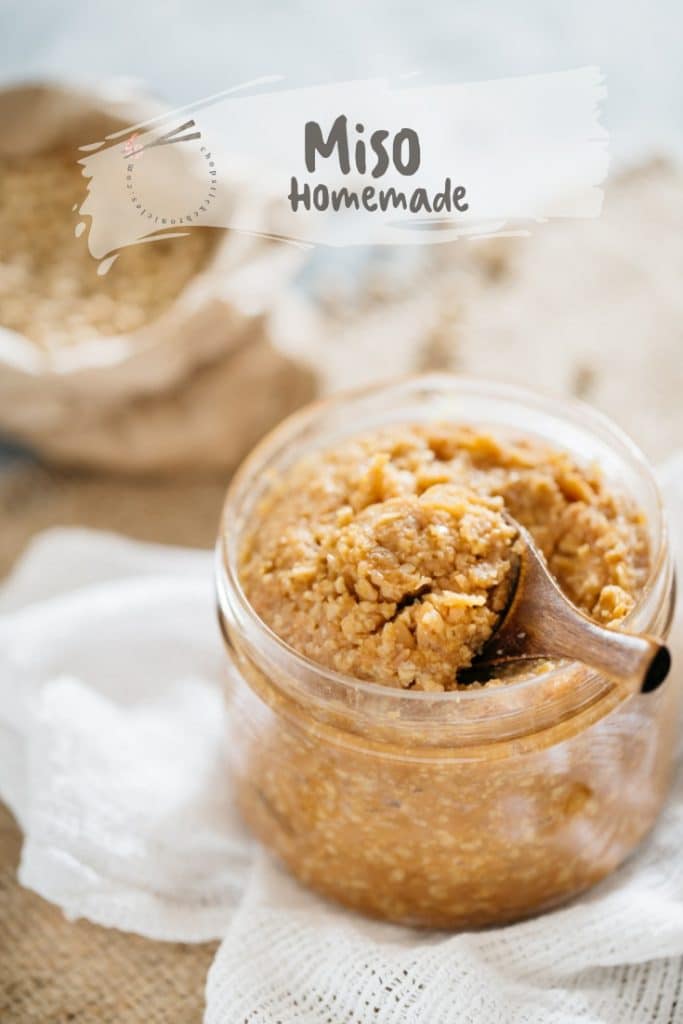
Miso is one of the integral ingredients of Japanese cooking. It is a well-known fermented food world-wide and can be purchased from supermarkets. Though it is still difficult to get ingredients for cooking Japanese dishes for some who live outside of Japan. Miso is actually easier to make than you think.

Types of Miso
Miso is a traditional and essential condiment of many Japanese dishes. It is an important part of Japanese cuisine. Miso is a fermented food and it is classified by the ingredients, colour, or taste. By ingredients, there are three types, rice (kome miso), burly (mugi miso), or beans (mame miso).
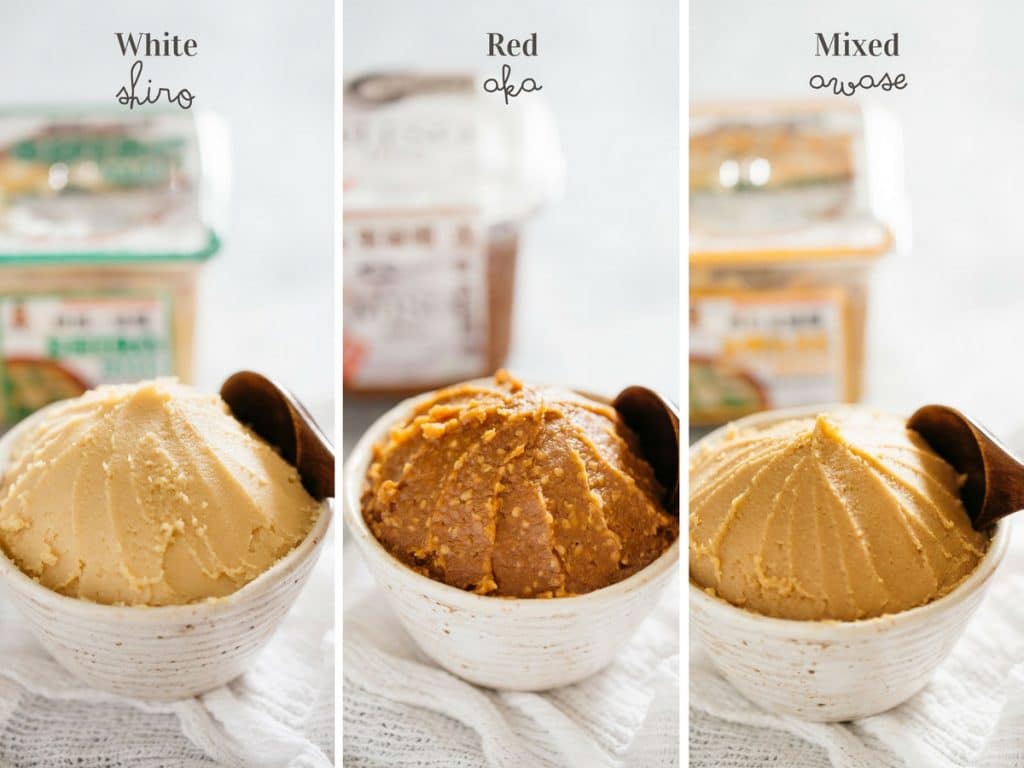
In terms of colour, there are white (shiro), red (aka), and mixed (awase) and this way of classification is the most commonly seen. For the taste, there are mainly either sweet or savoury/salty. Reference: Marukome Miso
Two regionally special sweet types
Sikyo miso on the left is Kyoto’s special sweet miso and it is often used for glazing fish and meat when grilling. Those dishes are called “Saikyo yaki” and are famous in Kyoto.
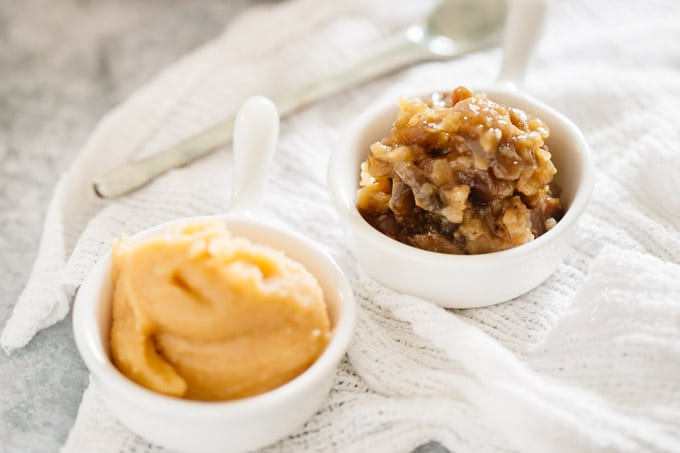
Kinzanji miso is Wakayama prefecture’s (where I am from) special sweet eating miso and this is my favourite. This paste is not for making miso soup or anything but for eating it as it is. It contains other ingredients like ginger, eggplants, and Shiso leaves. I buy this every time I go back to my hometown. (right on the photo above)
Hard to fail…
Making your own miso paste from scratch is not as difficult as you might imagine. It is actually hard to fail when making this condiment because 1. high percentage of salt (12-14%) kill bacterias. 2. Also Lactic acid bacteria changes the inside of the miso barrel into an acidic environment in which the bacteria cause miso rot and cannot tolerate sour (pH value around 5.o) environment.
How to make Miso
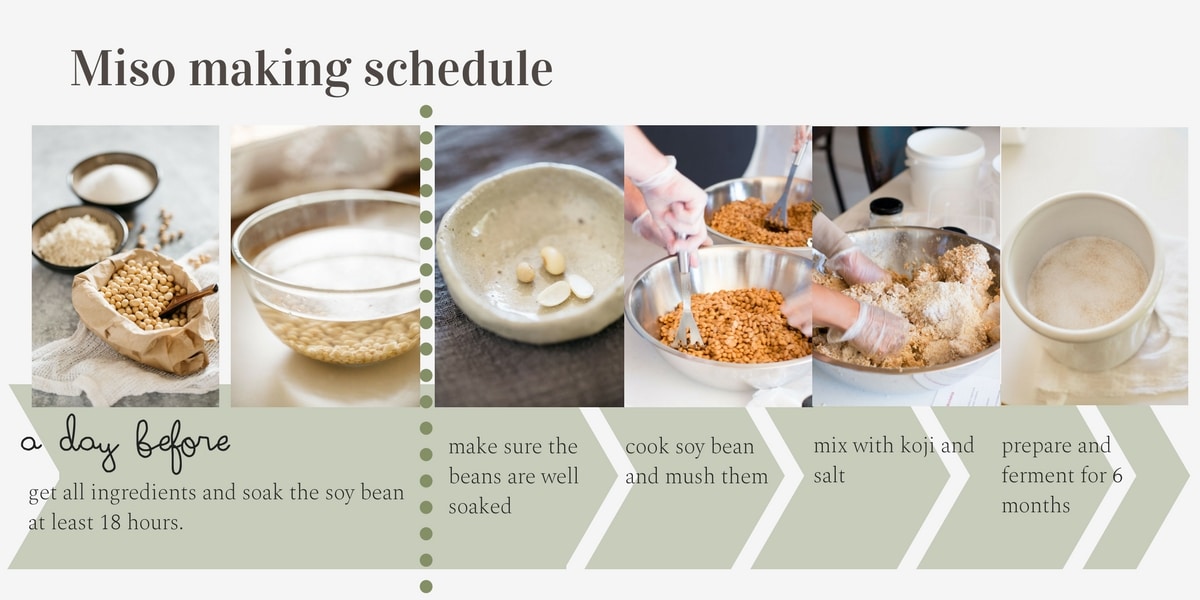
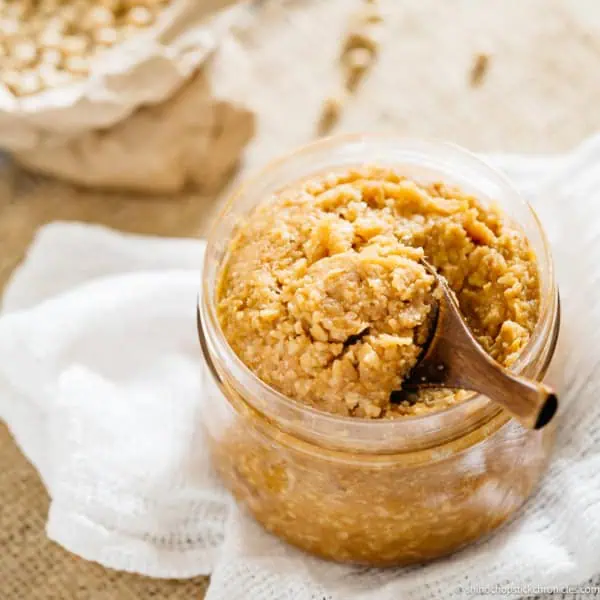
Making your own homemade miso from scratch is fun and is not hard to make. It only requires a few ingredients and a little patience as it takes about 6 months to mature. However, if you can not wait like me, you can start to use it after 3 months. It is totally worth the effort and time! See the making schedule above.
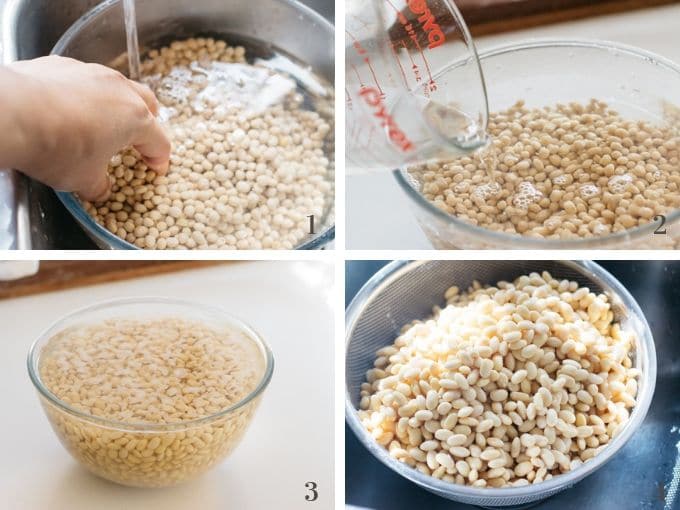
Making the miso takes about two days. The first day, you need to prepare the paste for fermenting; the soybeans need to be soaked for at least 18 hours, making sure that there is no core leftover to soak.
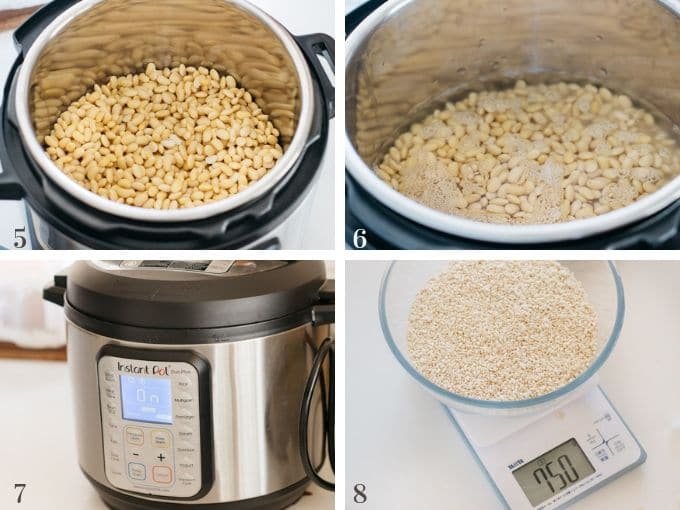
The next day, it needs to be cooked by either using a pressure cooker, which I did because you can make the process faster, or simmering for 3-4 hours. You need to cook the soybeans so that they are soft enough that you can mash soybean with your fingertips.
4 ingredients
Dry soybeans
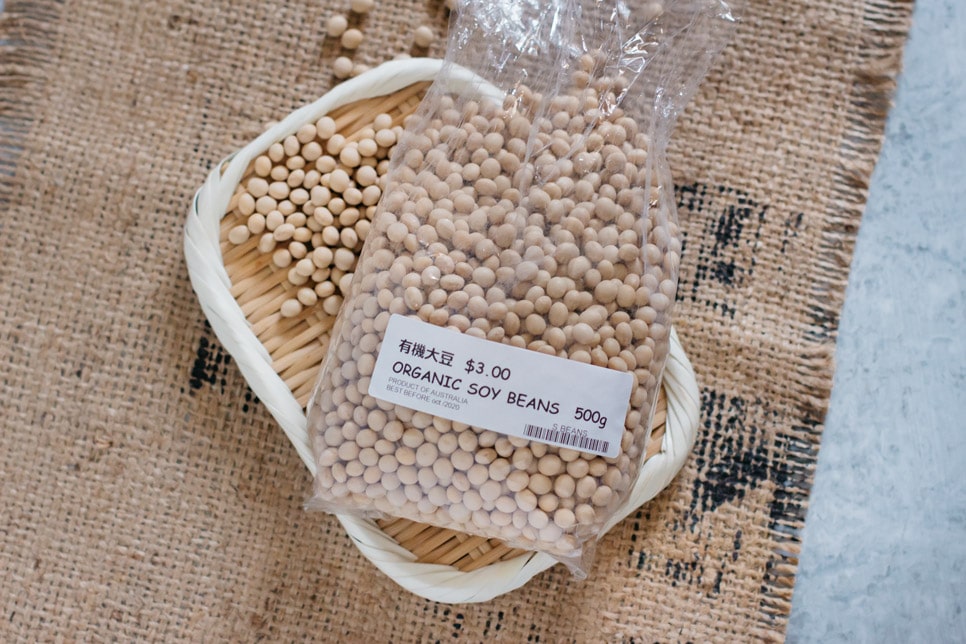
If you have choices, choose a larger grain of soybeans that are not cracked or chipped. These have a high water absorbency, good aroma and soften easily when cooked. All desirable characteristics for making a perfect paste. I purchase these from local Japanese grocery stores, whole food shops, and online shops .
.
Rice Koji
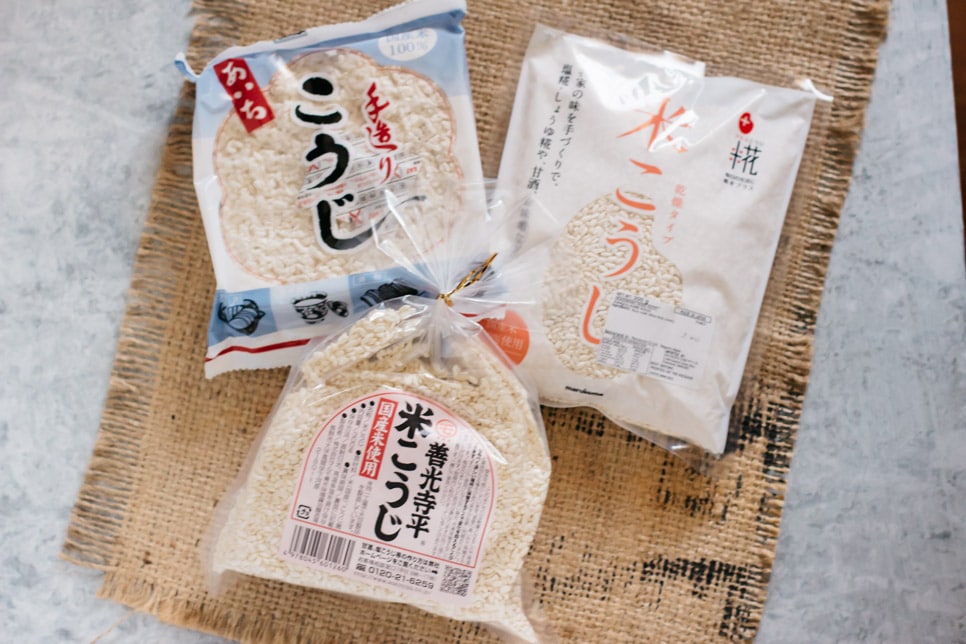
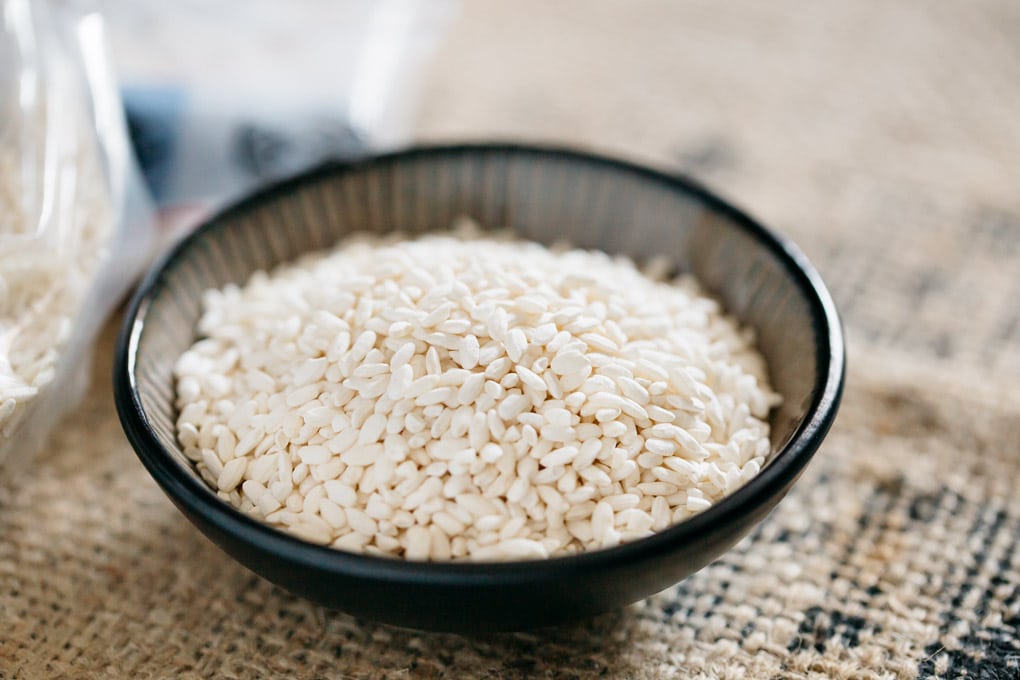
Koji is steamed rice (and/or other grains such as barley) that have been inoculated with a fermentation culture, Aspergillus oryzae. Aspergillus oryzae is known as ‘koji-kin’ widespread in Japan naturally. When it is added to other ingredients, enzymes in the koji break down carbohydrates and proteins into amino acids, fatty acids and simple sugars to ferment. I use Rice koji (dry type) from local Japanese grocery stores or online shops.
Salt
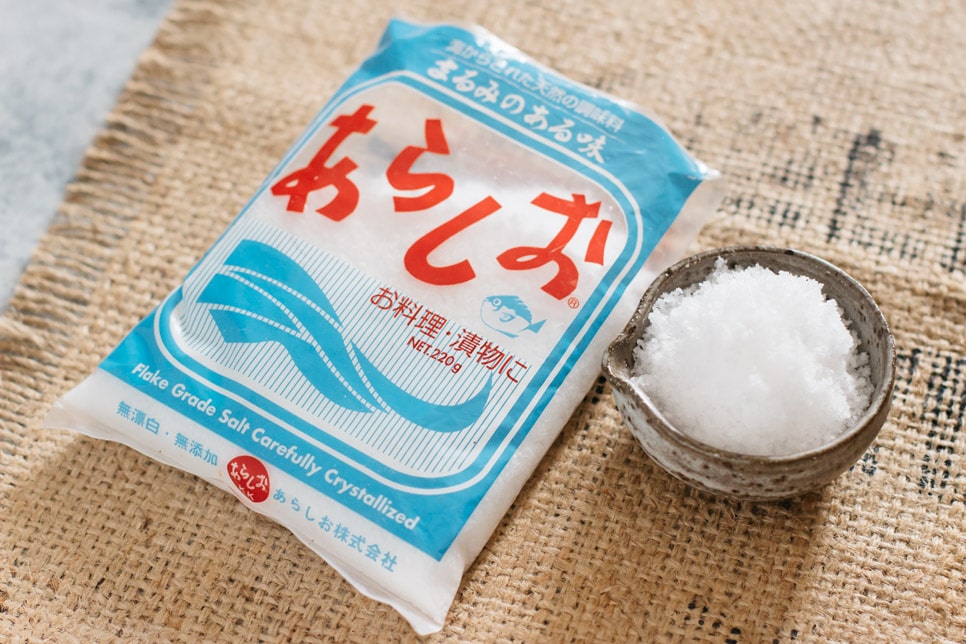
Any salt will work, though sun-dried, unrefined natural sea salt which is rich in minerals will make the best flavoured and nutritious miso. Generally you need about 12-14% of the total finished product weight in salt.
Water
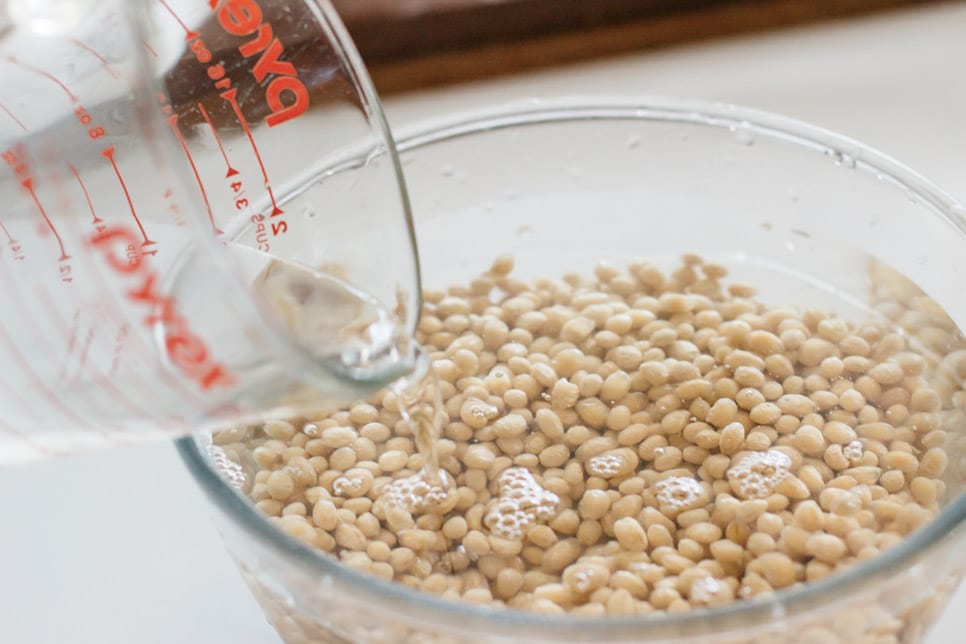
Any water can be used for cooking the soybeans. I actually have been using just Australian tap water for this. Though, fresh spring water is recommended for trouble free-fermentation. Because water containing chlorine or other chemicals may retard the activity of miso’s micro-organisms.
Ingredients calculator tool
The ratio of soybeans, koji, and salt determines the flavour of your miso. The more Koji that is used, the sweeter the miso gets. So to make the calculation easier, Chopstick Chronicles’ fantastic team created a calculator tool for you. All you need to do is input the dry soybeans amount you will use for the mixture.
Equipment you need
You need the following basic equipment; a large pot to soak and cook soybeans, A mixing bowl to combine rice koji and salt and cooked soybeans, a potato masher or electric mincer to mash the cooked soybeans. And also you need a vat for fermenting.
The size and type of vats
You can use food grade plastic, enamelled cast iron pots, earthwares or wooden tubs. The total amount of paste you wish to make determines the size of the vat you need. In general, the larger the vat, the easier to ferment, and better results. This is because the larger the vat, the smaller the surface area of the paste in contact with the container itself.
The best time to prepare
For the best result, preparing miso for fermentation in winter is the best season. Because 1.in those colder months, the air is relatively free of contaminating microorganisms. 2. Miso ferments slowly in the lower temperatures of winter and it makes a deeper flavour. 3. You could use freshly harvested ingredients (rice and soybeans) in Autumn. The fresher the ingredients, the better the flavour of course.
2 tips to avoid mold from growing
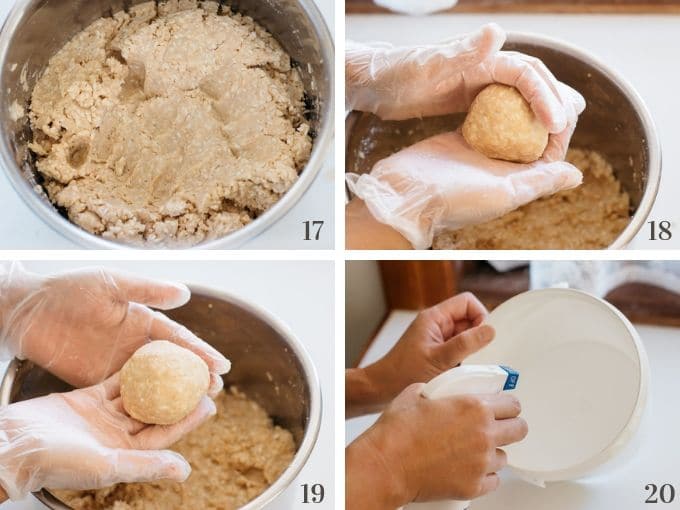
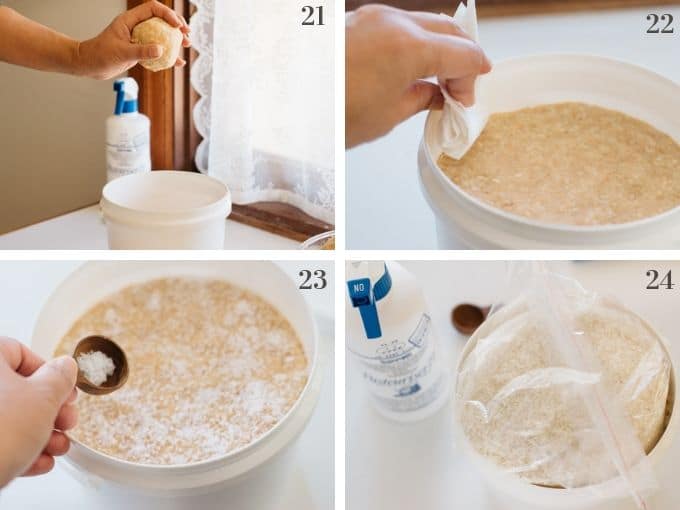
Two types of mold; aerobic and sole tolerance typically grow in miso vats. In order to avoid these molds to grow, 1. minimise contact with air. Making balls of the paste, thumping it down and packing it firmly is to expel any air pockets. Sprinkle salt over the smoothed miso surface. Place 20-30% of the total weight of the miso prepared, to cover the surface. 2. wipe the inside of the container with paper towel sprayed with alcohol such as vodka.
How to use homemade miso?
Obviously, this is the main and the most important ingredient of Miso soup. But it is also used for many different dishes and Japanese people use different types of miso for different purposes. The main ingredients for making any type of miso are the same but the process and the length of fermentation are what determines the final colour.
White miso paste
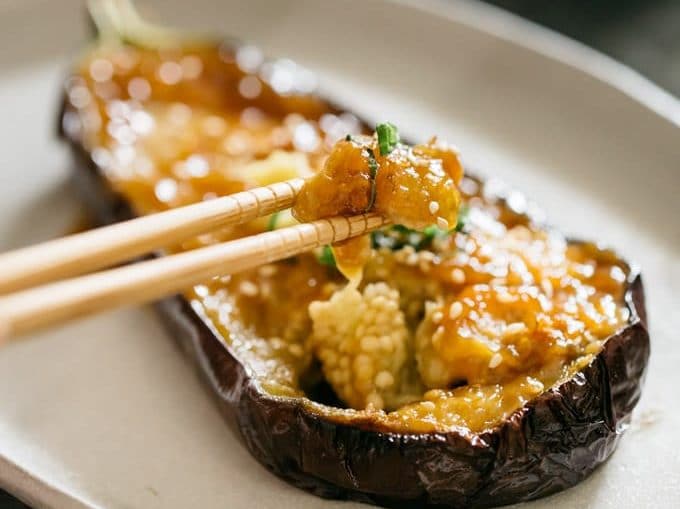
White miso paste is whitish in colour because the maturing period is shorter than red. The flavour of the white paste is sweeter and milder than the red paste so it is often used for salad dressing, for glazing such as miso dengaku like Nasu dengaku, and Onigiri Miso Butter or for baking and sweets such as Miso caramel.
Red miso paste
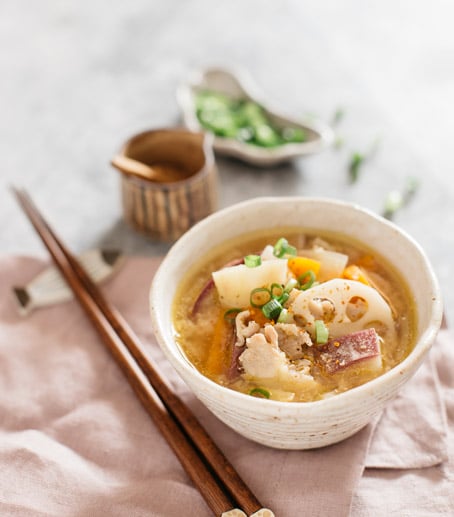
Red miso paste is matured longer than white so that the flavour is bolder and intense and the colour is much darker than white miso paste. This red paste is used for miso soup, noodle soup such as miso ramen, and miso nikomi udon, and for fish dishes such as Saba misoni because it will remove the fish smell.
Books about Miso
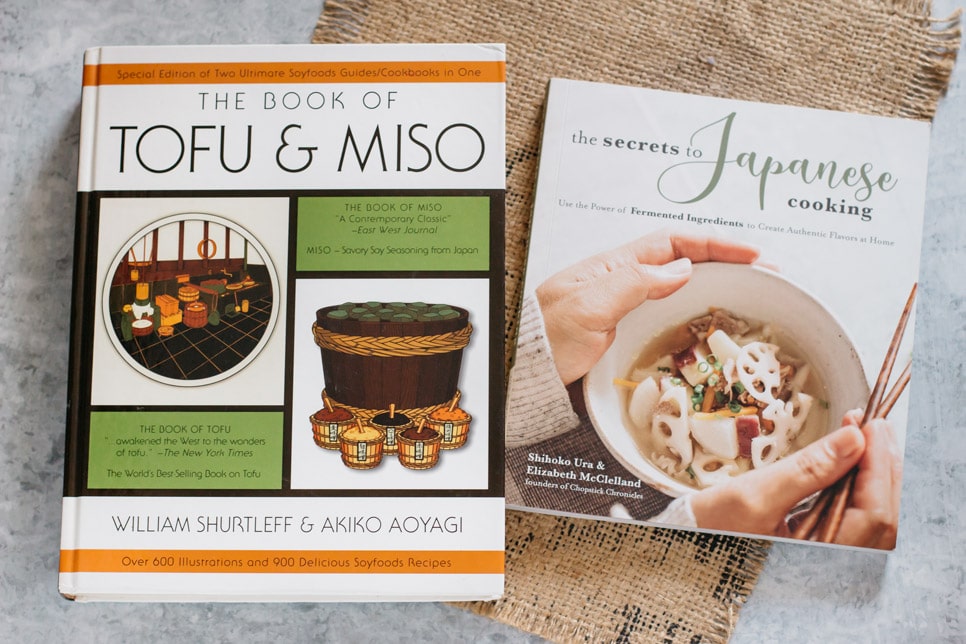
The book of tofu and miso is my bible when making this magical paste. This book is two books in one, but you can get The Book of Miso separately. Also, I have published the book The Secrets to Japanese Cooking: Use the Power of Fermented Ingredients to Create Authentic Flavors at Home
 to share more authentic Japanese dishes using miso.
FAQ
Q: What is “rice koji’?
A: Rice Koji is steamed rice (and/or other grains such as barley) that have been inoculated with a fermentation culture, Aspergillus oryzae. You can buy them from Japanese grocery stores in dry form, or purchase them from online stores. In USA, Cold Mountain brand dry rice koji is easy to get.
Q: Mold is growing, what should I do?
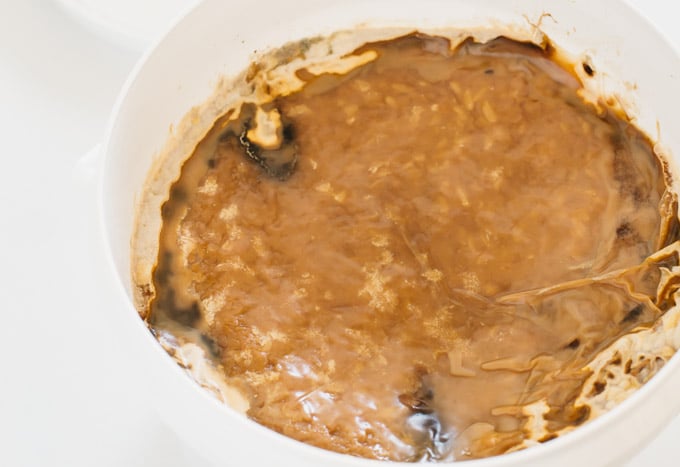
A: Don’t panic. It is ok, just scrape them and transfer the miso into a different container to store. They are only growing outside and is quite normal.
Q: When can I start to use the miso?
A: You need at least three months to let the paste to ferment. After 3 months, you need to mix them in order to oxidise the miso. You can remove the weight and keep it somewhere cool.
Q: Do you have recipes that use miso?
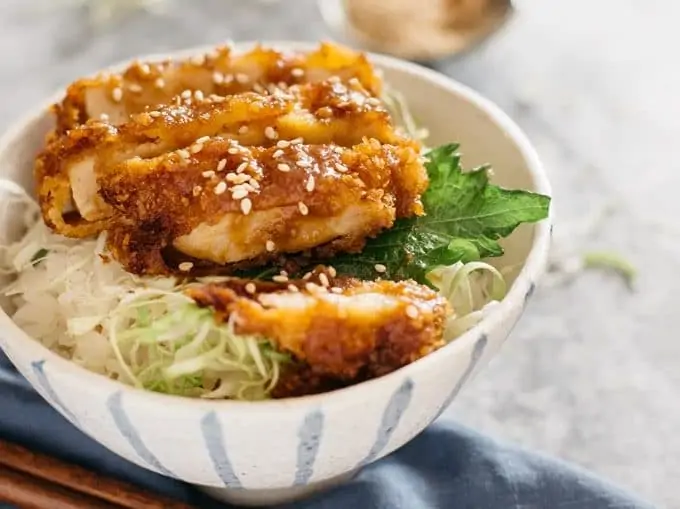
A: Yes, I have a lots to share actually as I love it so much. Check out the following recipes as well as the recipes already mentioned in the post! Miso katsu don, Miso tamago(ramen eggs).
Stay connected
If you like the recipe please rate the recipe and leave comments below. Also don’t forget to follow me on Youtube, Pinterest, Facebook, Twitter and Instagram. This way you keep up to date with all the latest happenings on Chopstick Chronicles. Don’t forget to Sign up for a weekly newsletter so you never miss out on new authentic delicious Japanese recipes!
Affiliate disclaimer
The site and our mobile application may contain links to affiliate websites. We receive a small affiliate commission for any purchases made by you on the affiliate website using such links.
We are a participant in the Amazon Services LLC Associates Program. This is affiliate advertising designed to provide a means for us to earn a small advertising fee by linking to Amazon. com and affiliated websites.
Miso 手前味噌
Video
Equipment
- a large mixing bowl to soak soybeans
- A large pot to cook soybeans or a pressure cooker
- a potato masher or a stand mixer with mincer attachment
- a large vat to set miso ferment
- alcohol to wipe the the vat *6
Ingredients
- 200 g dry soybean
- 450 g rice koji
- 130 g salt
- 1/2 cup the water soybean cooked in
- 2 tbs salt for sprinkle
Instructions
- Wash the dry soybeans under running water until the water become clear.
- Soak the washed dry soybeans for over 18 hours
- After over 18 hours have passed, drain the water and place the soaked soybeans in a pressure cooker. *1
- Add enough water to cover the soybeans, lock on the lid in place and select pressure cooker. *2
- Set the timer to pressure cook for 5 minutes. When the 5 minutes is up, let the pressure come down naturally.
- While the soybean is being cooked, place salt and koji in a mixing bowl and combine them well and set aside.
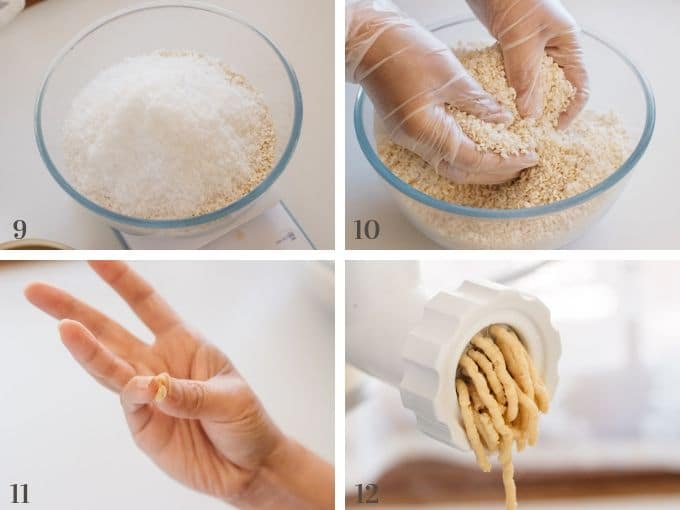
- Pick one bean and check if you can squish the bean with your finger tips. If it can be squished, it is the right softness to mash.
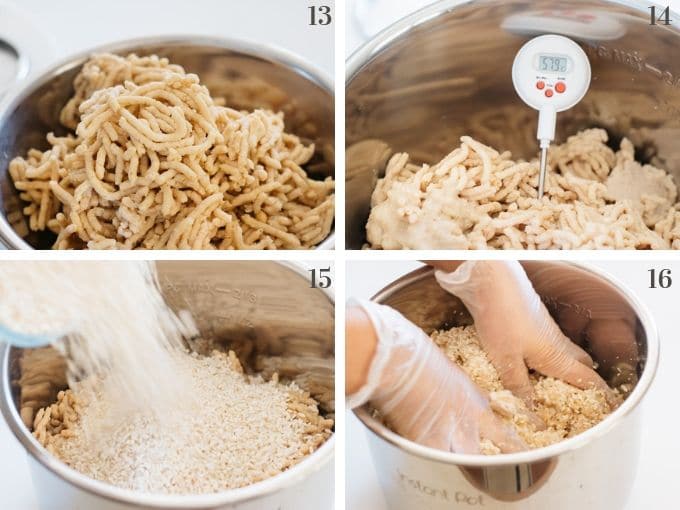
- Mash the cooked soybean. I used a stand mixer with a mincer attachment, but if you don’t have it, just use a potato masher and mash them finely.
- Place the mashed soybean in a large mixing bowl while it is still hot and add koji and salt to the bowl. *3
- Mix them well with your hands and add some liquid if necessary. I add about 1/2 cup of liquid.
- Make the mashed soybeans into baseball sized balls.
- Slam the mashed soybean mixture balls into a container that is going to be used for fermenting 2-3 balls at a time and press them compactly in order to let any air bubbles out. Repeat the process until all soybean balls are compressed into the container.
- Smoothe the surface and wipe off any soybean mash from the container.
- Sprinkle salt to cover the surface.
- Place 20% of the mixtures weight over the salt sprinkled surface. I used salt in a ziplock bag. *4
- Cover the container with cling wrap and place a lid.
- Store the container in dark and cool place for at least 3 months. Write the date prepared on the lid.
- After 3 months, open the lid, remove the weight and turn the mixture with an wooden spatula.
- Smooth the surface again and place a cling wrap on top.
- Place the container back to a dark and cool place for another 2-3 months.
- After 2-3 months, transfer the container to a cooler place like the fridge in order to stop the Miso from over fermenting. *5






This post is so informative! I’ve always wanted to try making miso at home, and your detailed steps make it seem much more approachable. I can’t wait to experiment with different types of beans. Thanks for sharing your expertise!
Hi and first thank you very much for this page and for the calculator.
I have a question about the koji weight :
In the recipe and in the calculator do you talk about dry koji (the one we can buy in sealed plastic bag in the store) or re-hydrated koji ?(fresh made koji or dry koji + water)
Hi Jean, I use dry store bought koji 😀
Thank you for this detailed guide on making miso! I’ve always been curious about the process, and your step-by-step instructions make it seem so approachable. I can’t wait to try making my own batch at home!
I loved this post on making miso! Your detailed instructions made the process feel approachable, and I can’t wait to try it myself. The tips on fermentation time were especially helpful. Thank you for sharing your knowledge!
Thank you for this detailed guide on making miso! I’ve always been intimidated by the process, but your step-by-step instructions and helpful tips make it look approachable. Can’t wait to try it out at home!
This post is incredibly helpful! I’ve always wanted to try making my own miso, and your step-by-step instructions make it seem so achievable. I appreciate the tips on fermentation times and flavor variations. Can’t wait to get started!
I am glad this post is helpful 😀
Hello, hanks for offering your knowledge and insight into Mido! I’m in the process of researching how to make Miso which will be my first time making! I do have a few questions if you could please answer?
I’ve noticed in some recipes, a starter from existing Miso is to be added. I noticed your recipe does not show to add any. What is it’s purpose and how much different will the Miso be without? Can pickling salt be used? Also, can the fresh Miso be placed into a zip lock bag and partly open, then into a pot and weighted… to ensure clean surfaces. Thanks!!
Hi Ed, first of all, thank you for reading my blog. For answering to the first question, homemade miso is made by mixing cooked soybeans, koji and salt, then fermenting them. So I am not sure the purposes of adding miso that has already been fermented as it can upset the balance of the fermentation, causing it to taste bad or spoilage. For the second question, yes you can use pickling salt, using variety of salt resulting in variety of flavour and taste of miso, so experiment using different salt to find your liking. For the last question, isn’t it easier to clean the surface of pot? Hope this helps your miso making 😀
This is such a detailed guide! I’ve always been curious about making miso at home, and your instructions make it seem approachable. Can’t wait to give it a try and explore different flavor variations. Thanks for sharing your expertise!
Thank you for this detailed guide! I’ve always wanted to try making miso at home, and your instructions make it seem much more approachable. I can’t wait to experiment with different beans and flavors. Looking forward to tasting my homemade miso soup soon!
Thank you! Hope your experiment goes well 😀
This is such a detailed guide! I’ve always wanted to try making miso at home, and your tips really make it seem achievable. I can’t wait to start fermenting my own! Thank you for sharing your expertise!
Thank you, Hope you succeed to make Miso, Please let me know how your miso turned out 😀
I was wondering if your miso calculator is in metric or imperial measurements? I assume it’s metric but I wanted to make sure before I ruin a bunch of soy beans!
Hi Sarah, yes it is metric 😀
Thank you so much! I have just tasted my first batch of miso after 6 months and it’s SUPERB!! Waaaaaay better than the one bought from the shops. Thank you so much for sharing. Now that I am confident, I’ll make a lot for next year.
Hi Daniela, I am glad to know! Yay!no more store bought Miso for you 😀
Thank you SO MUCH for the Miso ingredient calculator! I am making chickpea miso but ended up having an odd quantity of chickpeas that did not fit into any standard recipe I found, and was trying to investigate how much salt I would need for my miso. I also like that you have different recipes based on the the type of miso desired!
Hi Faith, I am glad to know that it is useful 😀
Hi,
Should I boil soy beans if I use freezed soy – it is soft and fresh with green colour.
Hi Olga, are you talking about edamame? I have never made miso with edamame but it is possible. Regarding to cook it before or not is depending on softness of the beens.