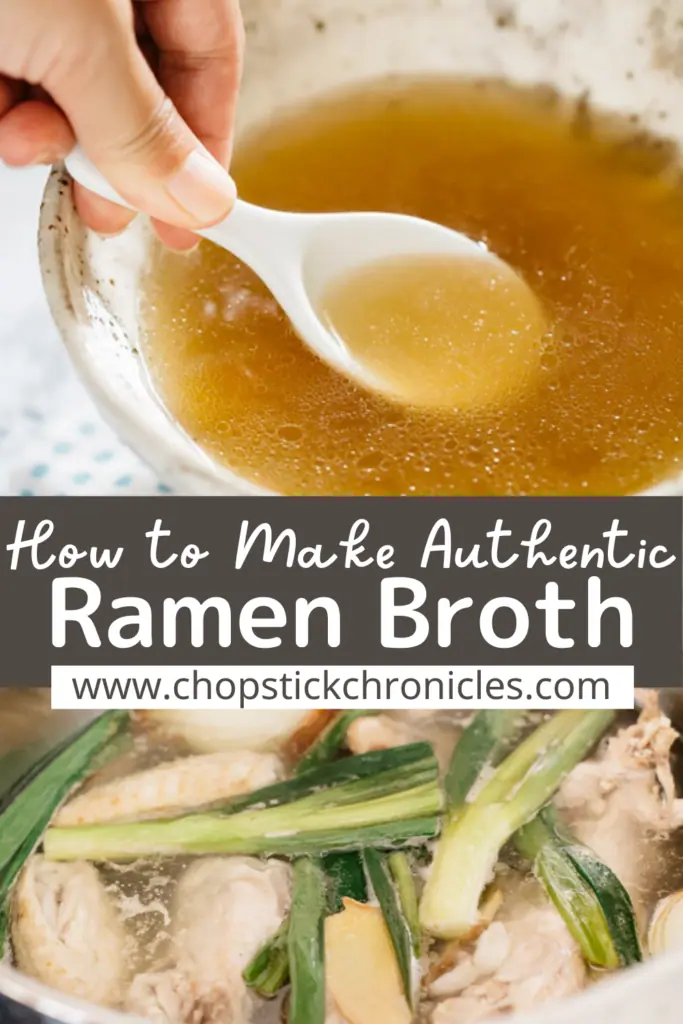
Ramen broth is by far the most important part of a bowl of ramen noodle soup. Do you think making a restaurant-quality complex flavored ramen broth at home is possible? You bet it is! Read on because I share my ramen broth recipe with secrets and tips to make an authentic, easy yet complex flavored broth.
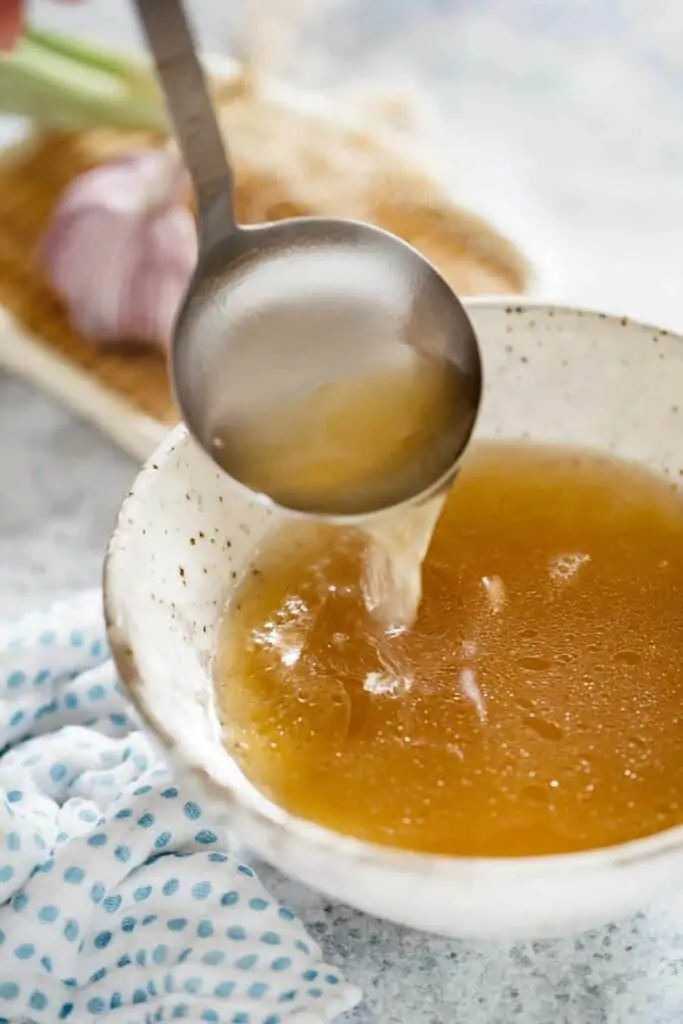
Types of Ramen Broth
Ramen broth can be classified by ingredients into three categories. The first one is chicken broth made from chicken carcass. The second is a combination broth made from chicken and Japanese dashi stock. And the third is Tonkotsu which is made from pork bones.
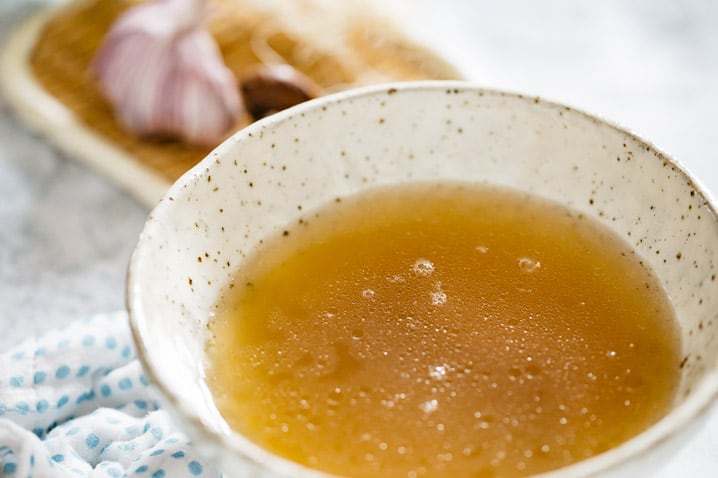
Ingredients for Homemade broth recipe
Many ramen restaurant chefs create their own unique flavored broth for their ramen and that is their secret weapon. In order to make a similarly full of Umami flavored broth, I go for the second type of broth. You need to gather the following ingredients.
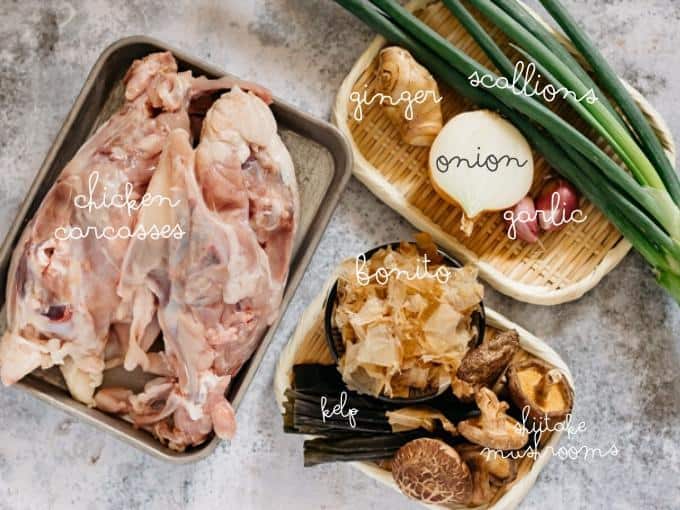
- Chicken Carcasses
- Chicken wings
- Scallions
- Ginger
- Garlic
- Sake
- Kelp
- Bonito flake
- Dried Shiitake mushrooms
Why are Chicken Carcasses used?
Well, it is because Chicken carcasses contain a large amount of one of the Umami components; glutamic acid. So this becomes the basis of the ramen soup flavor. Also, chicken feet, known as “Momiji”, are often used. However, it is a little difficult to get these so I substitute them with chicken wings.
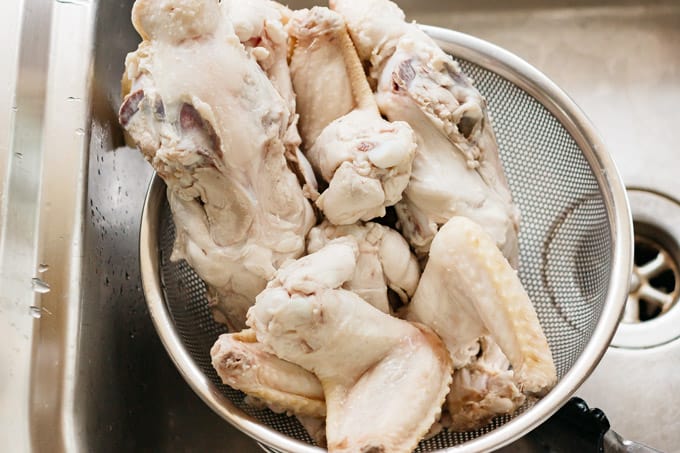
Adding a little bit of meat on those chicken wings will add sweetness and deep rich flavor to the broth without turbidity. Chicken wings are readily available and quite cheap from supermarkets. I get Chicken carcasses from local butchers. It is also cheap. I got 4 of them for A$2 (approximately US$1.3)
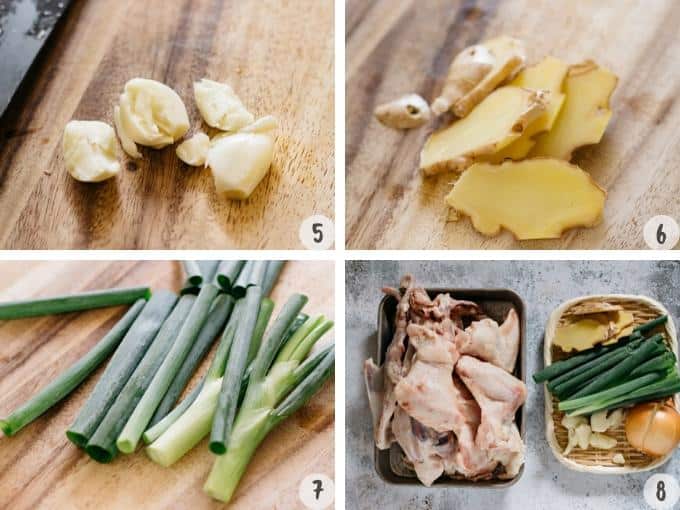
Why add Ginger, Garlic, Scallions & Sake
Because those aromatic root vegetables and Sake (Japanese alcohol) conceal the gamey odor of the chicken carcass. Also, onion adds natural sweetness to the broth. So all the vegetables added enrich the flavor of the broth. (step by step photo 4-7)
3 tips to Make Rich and Super Clear Chicken Broth
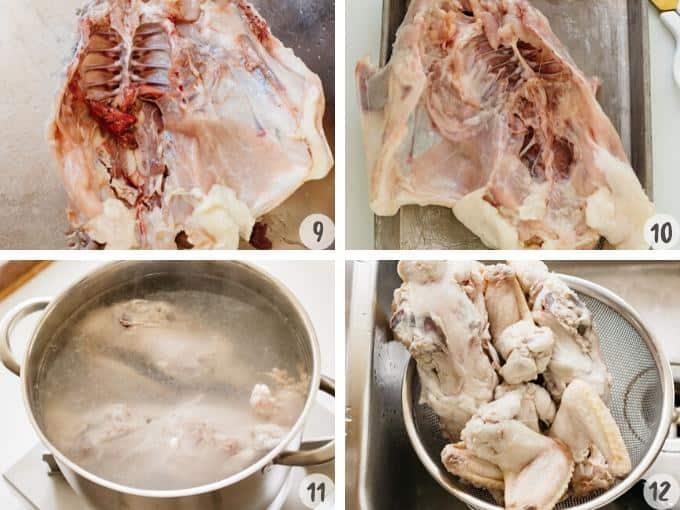
- Clean the chicken carcass under cold running water carefully so that no organs and blood remain. (step by step photos 9 & 10)
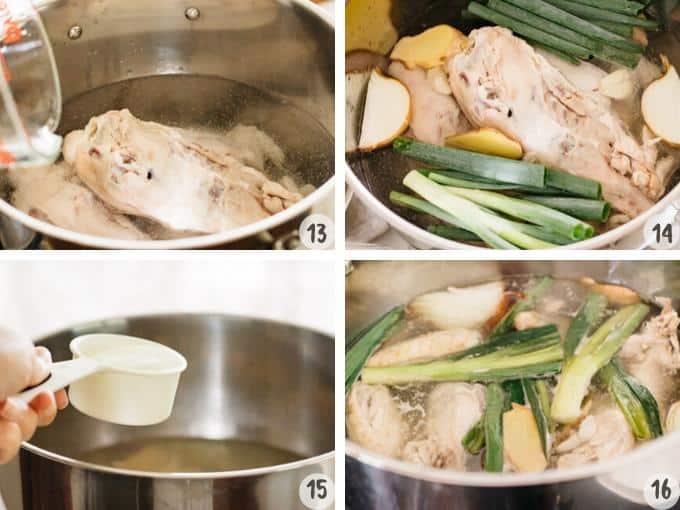
- Poach the chicken carcasses and wings for 30 seconds or until they become white. Don’t do this too long as we may lose the Umami flavor. This process is important to clean the chicken carcass further. Drain the chicken carcasses and wings. Discard the poaching water. (step by step photo 11 & 12 )
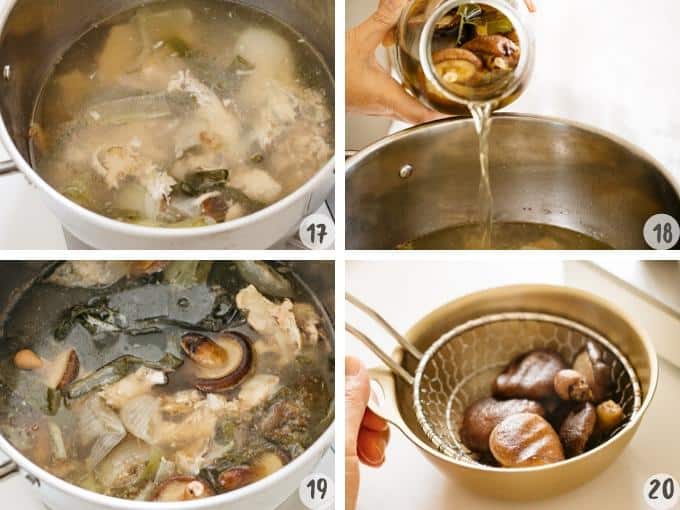
- Place prepared chicken and vegetables in a large pot with COLD water. Turn the heat down to low when it boils and remove the scum. Simmer gently for 3 hours. Skim the scum off occasionally. (step by step photos 13-16)
How to Make it a Rich & Flavourful Ramen Broth?
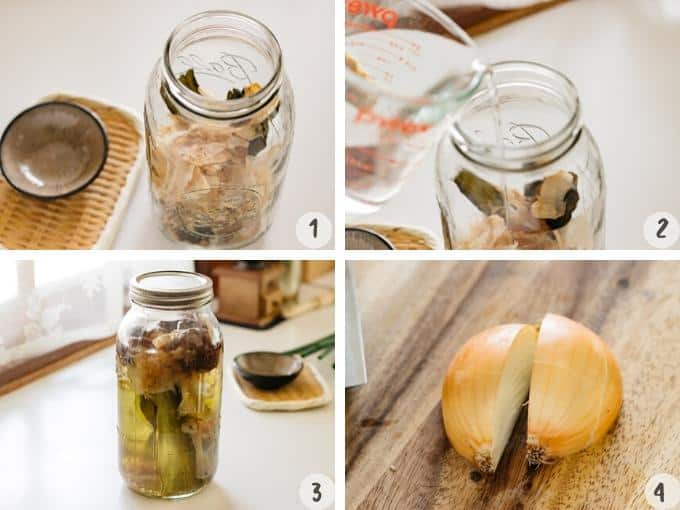
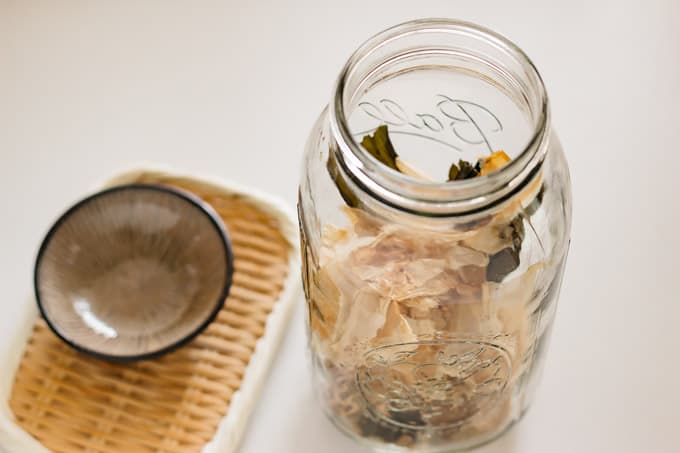
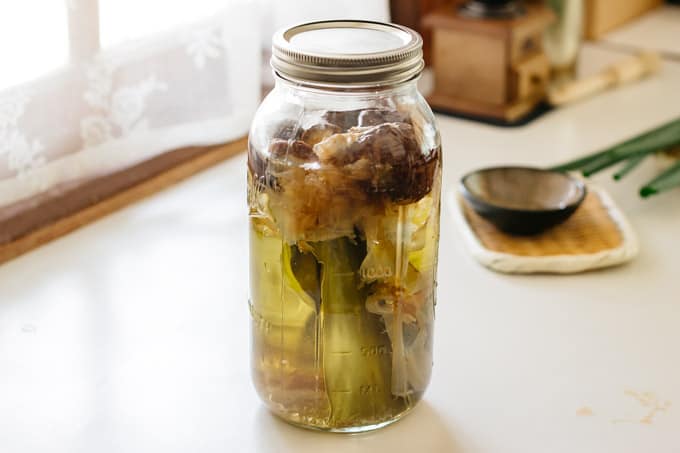
You can make delicious ramen with this chicken broth but there is a Japanese secret to make it richer and more flavourful; Adding dashi to the broth. The easiest way to make dashi for the broth is to place all dashi ingredients in a large jar, add water and leave it overnight.
Dashi Ingredients for the Broth
You need Kelp, Bonito flakes and dried Shiitake mushrooms. Combining inocine acid extracted from the Bonito flakes and glutamic acid abundantly contained in kelp gives the broth a complex and robust umami flavor.
TARE
Tare (tah-ray) is the seasonings added to the ramen broth to make different flavored ramen. Three common and classic flavors are, Shio, Shoyu and Miso.
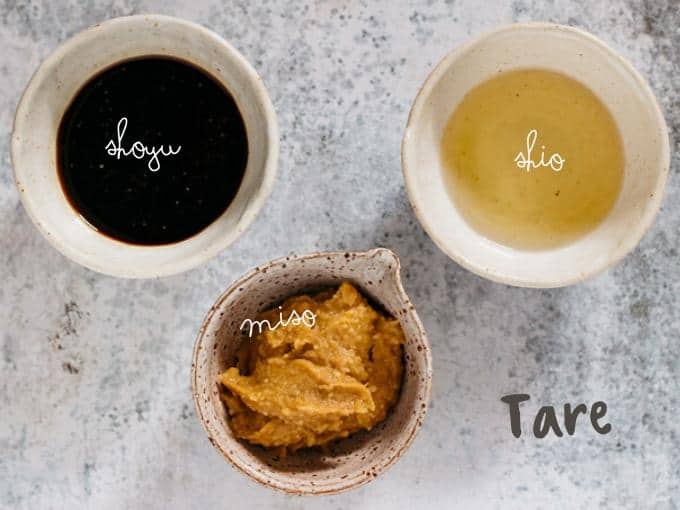
How to make each Tare
Shio – Combine dashi (you can take 1/4 cup from the overnight dashi made for the broth), Sake, and Mirin in a saucepan over low heat. Add salt and resolve it.
Shoyu – Convenient way to make Shoyu tare is to use the sauce that was used to make Chashu. After straining the sauce put it in a saucepan over low heat and reduce the amount to half. After it has cooled down, I usually divide the sauce into small portions and keep in the fridge/freezer for other uses.
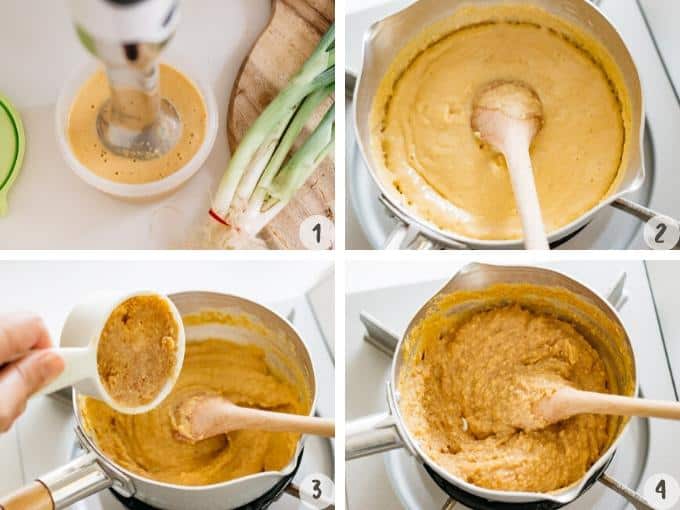
Miso – Blend all ingredients with a stick blender or food processor and add miso to combine. You can keep this in the fridge/freezer and use for other recipes such as Yaki Onigiri Grilled Rice Balls and stir fry.
Putting them Together
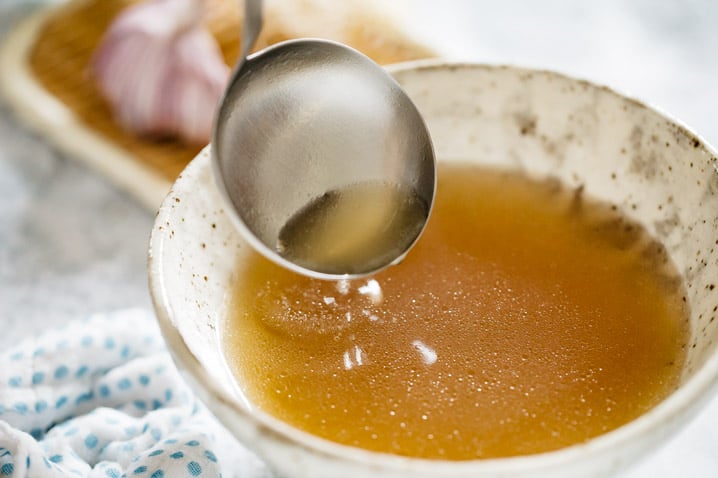
You can combine them together in individual ramen serving bowls as ramen restaurants do. Or put them together in a saucepan then pour into individual ramen bowls. You need a different amount of each tare, so see how much you need in the recipe below.
How to Store the Broth
Although it is worth the effort to taste such robust flavourful ramen at home, we don’t have time to make such long process broth. So I make it in batches and divide the broth into one use portion in a ziplock bag and freeze them. The broth will keep for a couple days in the fridge and about a month in the freezer.

Ramen Toppings & Side Dish Suggestions
You can make everything from scratch and if you do, you know what’s in it of course. It is cheaper and delicious. Make melt in your mouth ramen pork chashu and use the sauce for Shoyu tare. Also, read this easy ramen egg recipe too. The best companion dish for Ramen is of course Gyoza!

FAQ
A: Yes, you can. Basically, after cleaning and poaching the chicken, you can place everything in a slow cooker and leave it for 7 to 8 hours on low.
A: I remove the meat part from the bone and keep it in the fridge or freezer. You can use it for adding to fried rice, soup, or making a chicken sandwich etc. I also keep the mushroom too. Remove the stem to discard and then slice the mushrooms. Use it for adding to miso soup, use as ramen toppings etc.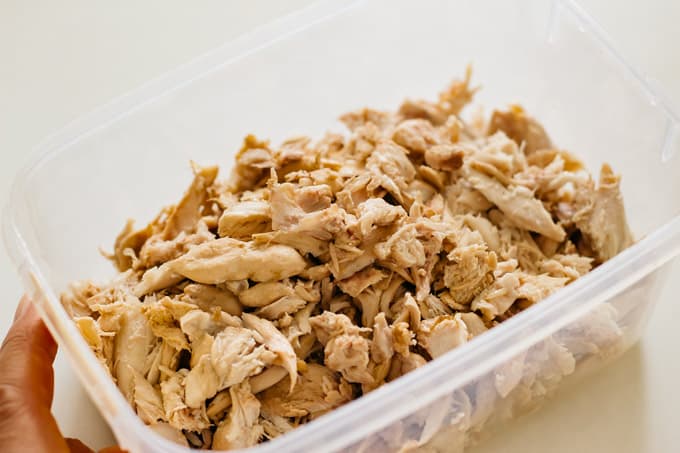
References and Resources
Resourceful website about Ramen in English that I referenced to write this post. Also I recommend this Ramen book Ramen: Japanese Noodles and Small Dishes that I own.
Stay connected
Did you like this ramen broth? If you made this and liked it, please leave a comment below and also give a good rating!
If you like the recipe please rate the recipe and leave comments below. Also don’t forget to follow me on Youtube, Pinterest, Facebook, Twitter and Instagram. This way you keep up to date with all the latest happenings on Chopstick Chronicles. Don’t forget to Sign up for a weekly newsletter so you never miss out on new authentic delicious Japanese recipes!

Basic Ramen Broth ラーメンスープ
Video
Ingredients
Overnight Dashi stock *2
- 0.35oz/10g Kelp
- 0.35oz/10g Bonito flake * or 1 cup
- 0.7oz/20g shiitake mushrooms *or 5 dried shiitake mushrooms
- 6cups/1.5L water
Chicken Broth
- 2 Chicken carcassess *1
- 4 Chicken wings
- 1/2 onion cut into quarters
- 2 cloves of garlic peeled and smashed
- 1oz/30g of ginger thinly sliced
- 2 Scallions chopped into one third length
- 1/2 cup sake
- 12cups/3L water
Shio Tare
- 1/4 cup Dashi stock *2
- 2 tbsp Sake *3
- 1 tbsp Mirin *4
- 1 tbsp Salt
Shoyu Tare
- 2.5 tbsp Chashu leftover sauce *5
Miso Tare
- 1/2 onion finely chopped
- 1 clove garlic finely chopped
- 1 tbsp finely chopped ginger
- 1 white part of scallion
- 2 tbsp Smooth peanut butter *All natural, no sugar added
- 1 tbsp Sake *3
- 2 tbsp Mirin *4
- 1 tsp Rayu Chilli oil
- 1/2 cup Miso paste *14
Instructions
Overnight Dashi Stock *6
- Place all ingredients in a large jar, pour in the water.
- Put a lid on, and soak the dashi ingredients overnight.
Chicken Broth
- Clean the chicken carcasses and wings under running water. Remove all organs, and wash off blood.
- Boil the water (not listed in the ingredients) in a large pot, poach the chicken carcasses and wings for about 30 seconds or till the chicken colour becomes white.
- Strain the the chicken carcasses and wings. Discard the poaching water.
- Place all ingredients in a large pot, pour in the water and bring it to boil over high heat. *7
- Once it has begun to boil, reduce the heat to low. Remove the scum that forms on the top of the soup. *8
- Simmer gently over low heat for about 3 hours. *9
Ramen Broth
- Occasionally, remove the scum that forms on the top of the soup and keep adding the overnight dashi stock as needed.
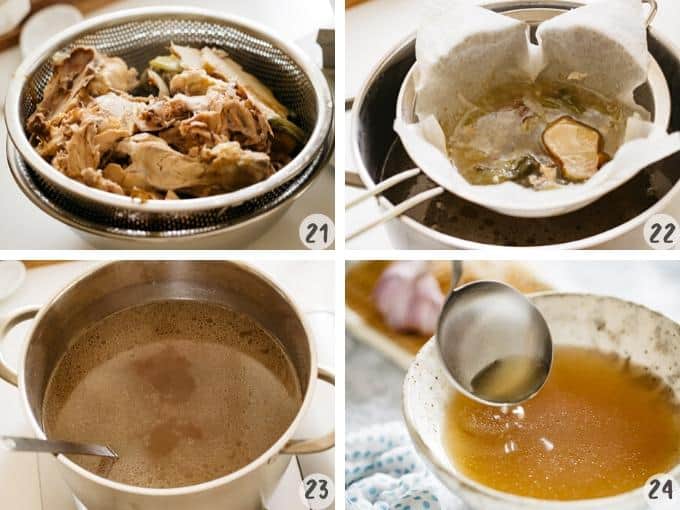
- Once it has simmered for 3 hours, add the remaining of the overnight dashi stock with kelp, bonito flakes and shiitake mushrooms. Remove from heat and strain the soup into another large pot or bowl. Throw away the remaining chicken carcass and vegetables.
- Simmer gently again for further 2 hours.
- Remove from heat and strain the soup into another large pot or bowl with a sieve lined with kitchen paper towel. *10
- The broth should be reduced to about 10cups/2.5L *11
- Use straight away for ramen soup or store in the fridge or freezer. *12
Shio Tare
- Combine all ingredients and stir to dissolve the salt.
- Place 2.5 tbsp of combined shio tare in a ramen bowl.
- Pour 2 cups/500ml of ramen broth into the ramen bowl and stir all together.
Shoyu Tare
- Place 3 tbsp shoyu tare in a ramen bowl.
- Pour 2 cups/500ml of ramen broth into the ramen bowl and stir all together.
Miso Tare
- Place all ingredients in a small container. Beat all ingredients with a stick blender or food processor until it become creamy.
- Transfer the mixture into a small saucepan and cook over low heat for about 3 minutes.
- Keep stirring constantly to avoid it burning.
- Turn the heat off and add miso paste. Combine all together well. *13
- Place 2 tbsp of miso tare in a ramen bowl. Pour 2 cups/500ml ramen broth.
- Stir well to dissolve the miso tare into ramen broth.
Notes
Nutrition
Chopstick Chronicles is a participant in the Amazon Services LLC Associates Program, an affiliate advertising program designed to provide a means for sites to earn advertising fees by advertising and linking to Amazon.com. As an amazon associate I earn from qualifying purchases.



This recipe is so delicious and comforting. I truly love the slow process of cooking this broth. Looking forward to making this again.
Thank you Tiffany!!
I can’t find a recipe for Tonkotsu, in your site but I did find the right name for it.
Please disregard my previous email about pork bones.
Thank you Nathan, sorry I don’t have tonkotsu recipe yet.
This recipe is very usefull for me.
I am glad to know 😀
In the miso tare instructions you said to mix ALL of the ingredients in the first step. The in the last step, after cooking, you say add the miso.
There goes the last of my miso.
Tasty recipe with confusing instructions.
beautiful, informative and DELICIOUS!
Thank you so much Jess 😀
Do you choose one of the tares or use all of them for each bowl? I can’t wait to make this for friends on Friday!
Hi Mel, you choose one tare flavour for a bowl 😀
I am a bit confused… if I am making ramen broth, do I follow the chicken broth recipe to step 5, and then go to step 1 of the Ramen Broth section of the recipe, or I do the chicken broth recipe step 6 and then move on to the Ramen?
The question is mostly… do I simmer for three hours as chicken broth and then simmer another 3 hours while adding the dashi?
Should this be a 3 hour or 6 hour exercise?
Thanks!
Hi Jason, no not 6 hours. Step 2 of Ramen Broth says, “once it has simmered for 3 hours” referring the chicken broth step 6 and you simmer further 2 hours so altogether 5 hours. Hope this clarify the process.
When you say chicken carcasses are talking whole chicken or just the ones?
Hi Kathleen, thank you for your comment, though sorry, I don’t quite understand your question.
I was all set to try this until I saw peanut butter. Hardly a traditional Japanese ingredient. Might taste great, but I’m looking for an authentic recipe.
Don’t be so rude. The author of this recipe is Japanese and therefore the recipe IS authentic. Don’t confuse authenticity with traditional or antiquated. British people didn’t put tomato ketchup on fish and chips 100 years ago, but guess what…..now that’s what most Brits in a chippy will have rather than the more traditional Tartare Sauce. Food is alive and it moves on. If you want a Ramen broth recipe in the style it was made a century ago, politely ask, open a book or go elsewhere. Anyway rant over. I’m currently making this recipe with Kelp found on the beach in the Autumn, put aside specifically for trying to make dashi. I can tell already its going to be wonderfully complex and flavoursome. Thank you,
Awwwww Thank you Bruce. I am curious and jealous that you can find kelp on the beach!!
Hi,
If you wanted to make more could you double or triple the recipe or would there need to be adjustments?
Love the recipe!
Thank you A, you don’t need to do any adjustments 😀
This was amazing! I used rotisserie chicken carcasses and bought the pork ready to eat. It took awhile, but it was worth every minute! 4 people ate a double recipe! I need to make this is bigger batches because everyone said it was their favorite meal I’ve made so far!
Thank you ZGal 😀
I made the ramen broth today and it is delicious! I must have made a mistake because I still had 40 minutes left to simmer the ramen broth but I only had around 2 cups of liquid left :O Maybe my simmer needed to be even lower?
Hi, thank you for the recipe. I read your article on different types of Miso as well and found it very interesting. What type of Miso do you use in the Tare for your broth recipe?
Hi Kim, I used Awase Miso 😀
I called my butcher… he asked me to explain what a chicken “carcass” was. How is it different from a chicken?
Hi Denise, in terms of flavour?
Hi! A chicken carcass is what is left after most of the meat has been removed. So, after they have taken the breasts off, and legs and thighs, you are left with a carcass. I would also term whatever is left after you have eaten your roast chicken ( besides the leftover cooked meat, if any) as a chicken carcass . Extremely shocked your butcher did not know this term.
I was saying the same thing until I read your comment, how in the world a “butcher” doesn’t know what a Carcass is??? Now I gotta go try this recipe. Thanks for the laugh at the last sentence.
Probably a person related to an employee who needed a job … not necessarily knowledgeable. Title of “butcher” given for job classification only. New world reality.
My thought exactly.
The carcass is what’s left after you remove the wing’s legs and thighs and then the breast is carefully cut off with a sharp knife and then you have the carcass.
Can you clarify please what the asterisks and numbers signify next to some of the ingredients or steps please.
Thank you.
Hi Ivan, they are explained further in notes section of recipe cards 😀
Do you strain the overnight Dashi to remove the bonito flakes, mushrooms, and kelp before using it in the broth?
Hi Seanna Yes.
I’m confused :/ Under Ramen Broth #2 it says to “add remaining dashi” but the dashi hasn’t been used in the recipe yet. So how much dashi am I putting in the Ramen broth? Thanks!
I am also wondering how to add the dashi.
What do you mean resolve it when talking about the shio tare
Hi Joseph, resolve the shio tare with the broth 😀
THANK you for ALL of this!! Every time I’d open a pkg of the instant broth packet in instant ramen, I thought I was taking one more step to my demise! A coupe of questions…. 1] recommendations for which brand of “fresh” noodles to use in the ramen? 2] a recipe for the shoyu tare if I do NOT make the chashu in this recipe?? Thanks again!!