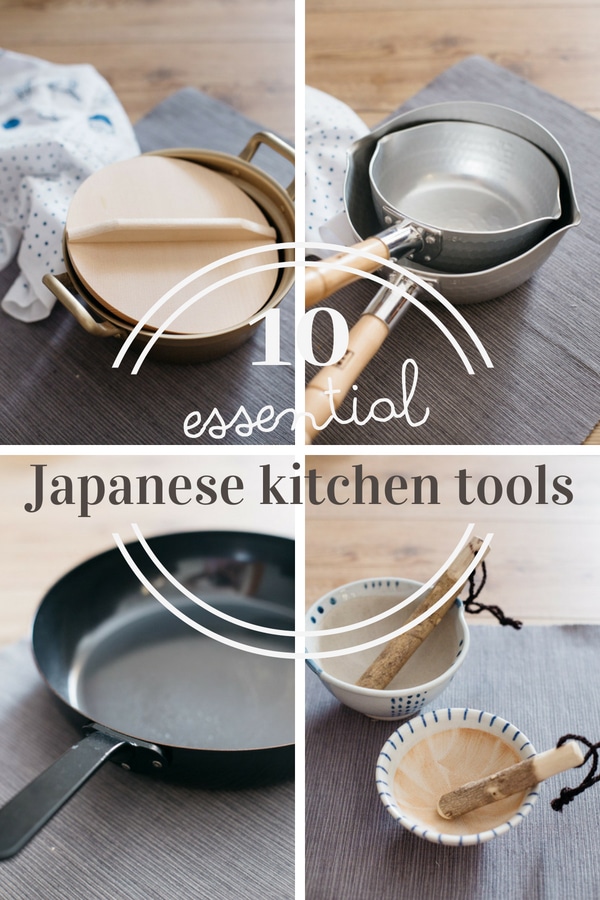
In this post I am going to tell you the 10 essential Japanese kitchenwares you need to take your Japanese home cooking dishes to the next level.

Japanese knives
I dream that one day I own Japanese knives (waboucho). Japanese knives are made to cut beautifully without damaging ingredients by Japanese craftsmanship. All traditional Japanese knives are single edged and are straight, strong, and very sharp. 3 common knives in a Japanese kitchen are:
- Nakiri-boucho for cutting vegetables. Length: 16-20cm(6.3inch-7.9inch)
- Deba-boucho for cutting and preparing fish. Length: 15-18cm(5.9-7.1inch)
- Sashimi-boucho for slicing fish. Length: 21-27cm(8.3-10.6inch).
My mother has all these 3 at her home and I am still scared to use them and am very careful to handle because they are so sharp. My father sharpens the knives by using a grinding stone. Those Japanese knives made by Japanese craftsman are quite expensive so I don’t have it in Australia. I use Santoku Kitchen knife (16-18cm, 6.3-7.1inch) which is an all-rounder knife.

Chopping board
Size – It is important to choose a cutting board by considering where to place it, the work space, and the size of the sink. 20 x 40cm is generally a middle size.
Wooden Chopping Boards – I prefer a wooden chopping board because the wooden chopping board catch kitchen knives softly and securely so that it does not damage the knives. Once the surface of the wooden board is damaged, it can be scraped and used again and again. Cheap ones or joint wooden boards can warp or crack. Also if you don’t keep it clean and dry, it will grow mould. Basically just wash off with water and a scrubbing brush. Disinfect by applying hot water and wipe off extra moisture with a kitchen towel. Keep it diagonally in a well ventilated area of the shade to dry.
Strainers
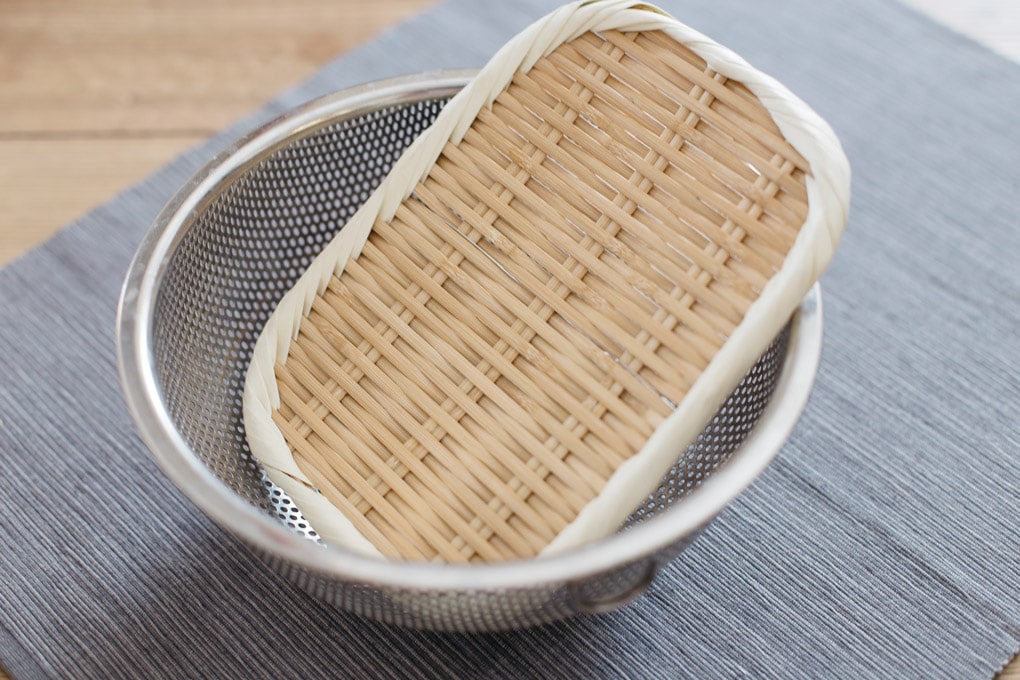
Choose one that is durable and hygienic and resistant against heat. The strainers can fit to the bowls you have when they are stacked together and in various sizes. I recently bought and add some bamboo weaved strainers as well from Kappabashi street in Tokyo. They are practical as well as photogenic.

Mixing bowls
Bowls are a must have product to prepare ingredients. It will be ideal if you can have a couple of bowls around 20cm in diameter for washing vegetables and one large enough to mix salad and a couple of small bowls (13-15cm 5.1-5.9inch). There are various materials, such as stainless steel, glass, and aluminium. If you use the bowls in a microwave oven, it is better to have microwave safe glass or heat resistant glass ware. I bought three different sized aluminium bowls when I went to Kappabashi street in Tokyo.

One handle pots
The one handled alminium pot called “Yukihira Nabe ” is a traditional Japanese pot that is widely loved by professional chefs and home cooks. That is because these pots are light in weight, have good heat conduction, and are relatively cheap. It is ideal if you can have two different sizes: one small (15cm 5.9 inch in diameter) and one large (18-20cm 7.1-7.9 inch in diameter). Well known and popular brands of Yukihira Nabe are “Nakao Arumi” and “Hokuriku Arumi”. I bought Hokuriku Arumi ones when I was in Kappabashi Street in Tokyo. Although they are light and durable, they are weak against acid and alkali so they are unsuitable for cooking western cuisines such as simmering for a long time with wines that contain acid.
Pots
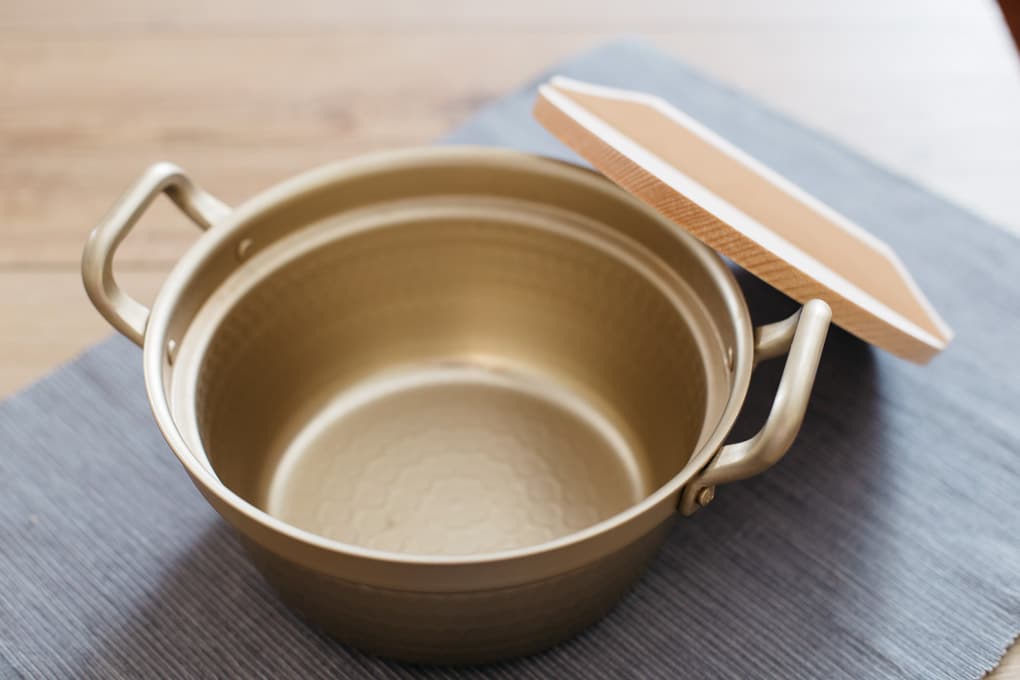
One large pot with two handles is essential to cook dishes such as Oden and cooking whole fish without overlapping. One large aluminium pot with two handles will do the job. If you can afford to have another, stainless steel pots with a lid will be very useful too. I bought the Aluminium pot with a wooden lid for making dishes like Oden. I have a small family so I bought an 18cm(7.1 inch) pot.
Frying pan
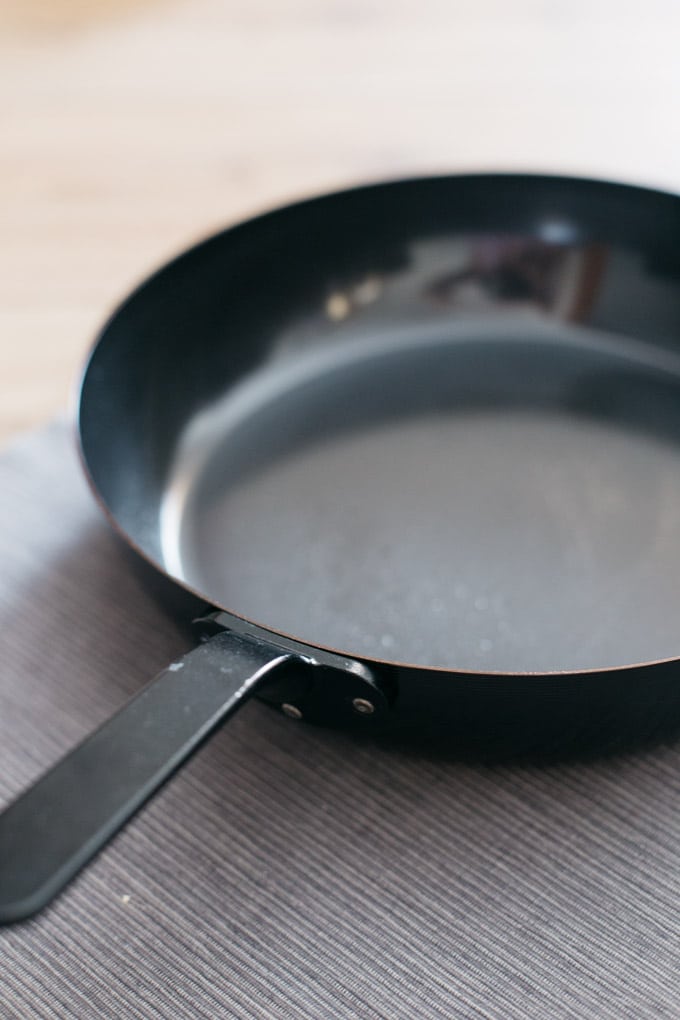
I have owned many different types of frying pans in terms of what they are made out of; e.g. steel, stainless steel, aluminium, non-stick Teflon pans, etc. Each has pros and cons but I prefer a good steel frying pan. They are resistant to heat so it can cook food in a short time and the more it will be used the more the oil will soak. And because of high durability, if you look after it well, it can last a very long time. The good size is 26cm in diameter in general. I bought la base frying pan when I went back to Japan and I love my new frying pan.
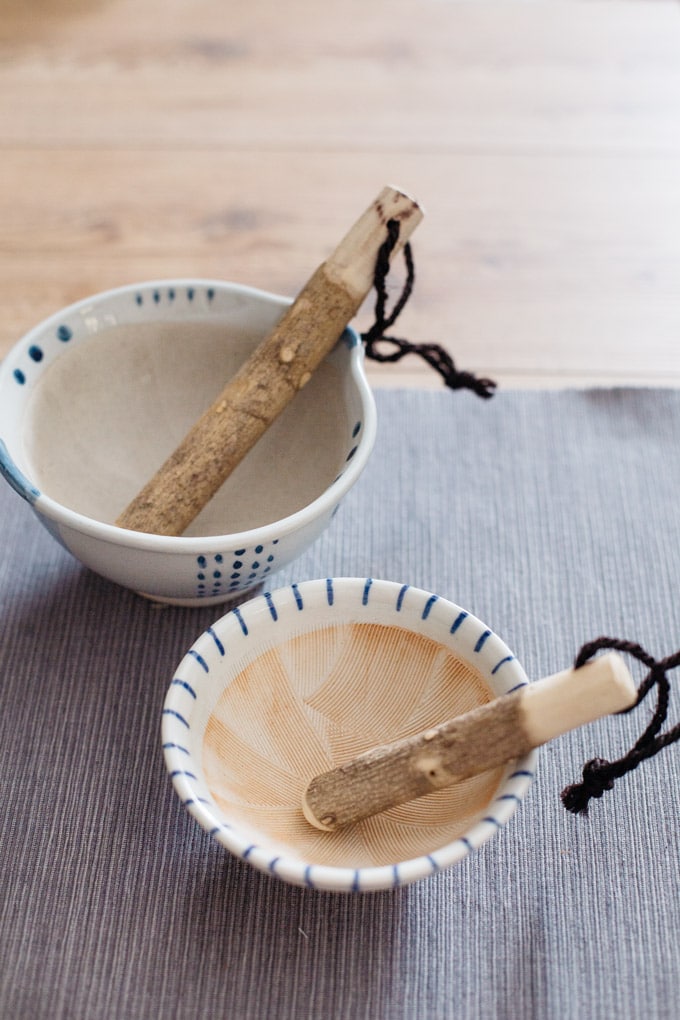
Japanese mortars and pestles
Japanese mortars are different from western mortars. Japanese mortars have grooves and use a pestle to grind. Generally speaking, 18cm in diameter is a good size of Japanese mortar to have. There are many different shapes of mortars. I like the one with a rounded bottom because they look cute enough to be served in the mortar to the table. The pestle is said to be 1.3- 1.5 times longer than the diameter of the mortars, so for 18cm (7.1 inch) mortars, 23-27cm (9.1-10.6 inch) pestle is an ideal length of pestle. The good pestles are made out of Japanese pepper tree or pickly ash (Sansho in Japanese) because they grow so slow and become dense trees, therefore it is very strong.
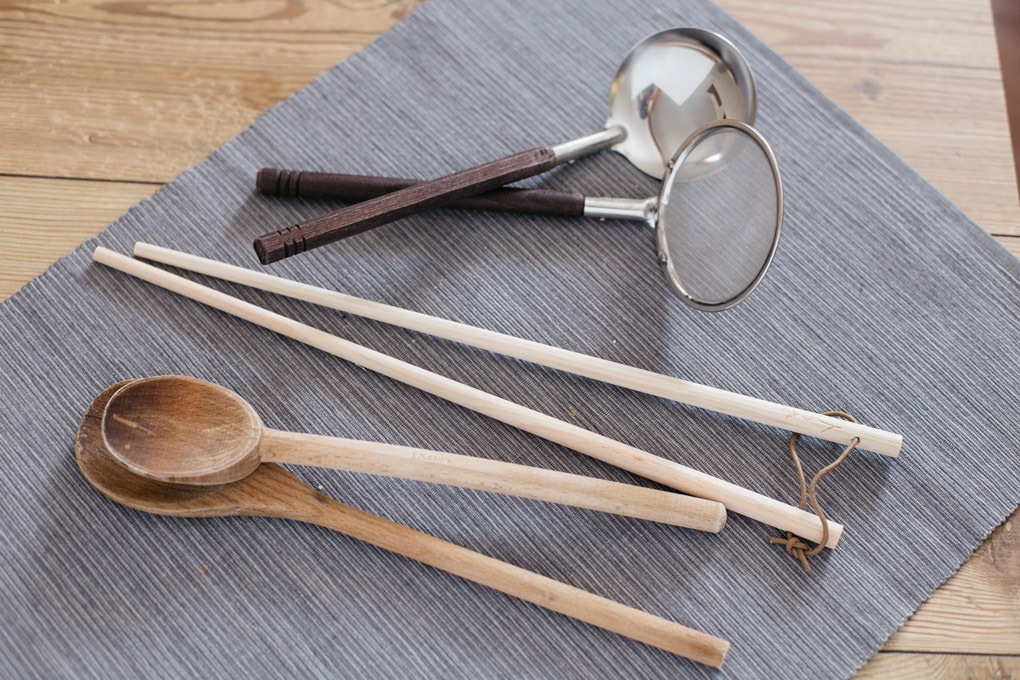
Cooking utensils
The large and longer wooden chopsticks are called Saibashi and used for cooking only. About 30cm (11.8 inch) long Saibashi is good and easy to use length.
We need ladles to scoop and serve miso soup and also sieves to skim the scum when we make dishes like Nikujaga and Simmered pumpkins.
Lastly wooden spatulas. The spatulas are used for stir frying, mixing, and serving food. There is wooden spatula for serving rice called “Shamoji” but if you don’t have one, an ordinary wooden spatula will do to scoop the rice.
If you liked the post, please leave a comment below. Also, don’t forget to follow me on Youtube, Pinterest, Facebook , Twitter and Instagram to keep up to date with all the latest happenings on Chopstick Chronicles. Don’t forget to use the hashtag #ChopstickChronicles so I can see your wonderful creations!




Could a steel wok be used in place of the frying pan for most things?
Hi Cal, hmmmm may be not. You need flat surface to cook like Okonomiyaki 😀
Thank You so much for showing pictures of Japanese cooking utensils and the ingredients that you use in cooking. This way when I go to the Asian Market here in Atlanta Georgia I know I’m getting the right ingredients for my dishes. I Love to cook and I Love all Asian food but it has to be authentic, that’s just the way I am. Thank You again for all you do Shihoko.
Thank you Wendy 😀 for lovely comments. I am glad to know that my blog is useful for you 😀
I’m looking to add some things to my kitchen. Of the items you listed here, I actually don’t own any of them. I do think it would be a good idea to add some as it would allow me to make more types of food.
Well, if you would like to make Japanese food, they are great to cook authentic Japanese dishes 😀