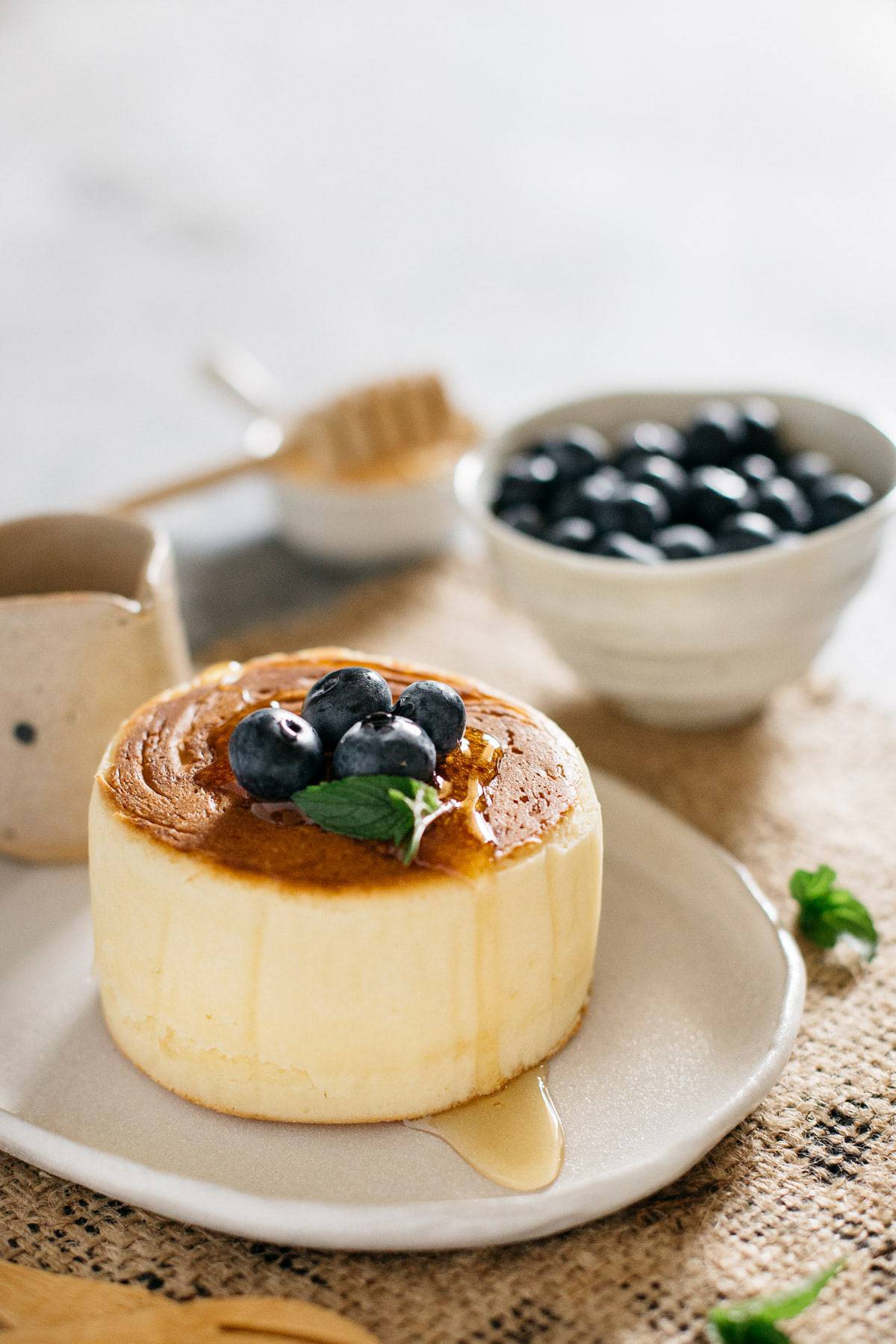
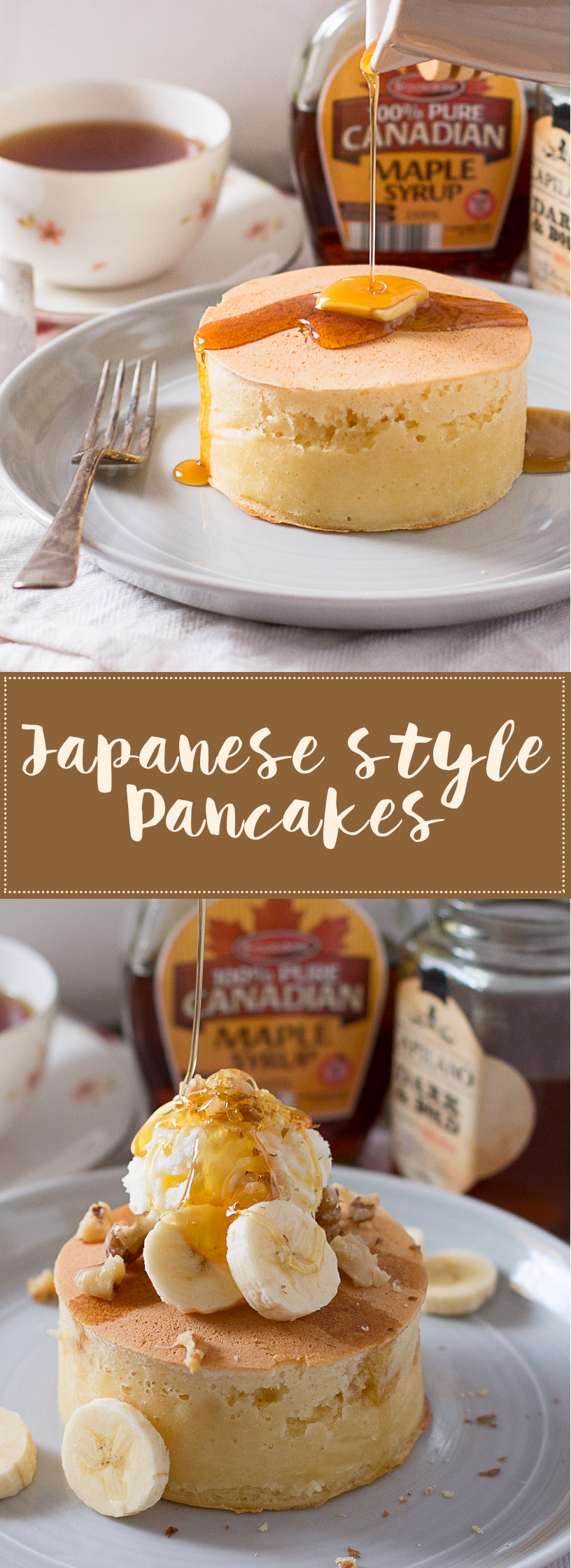
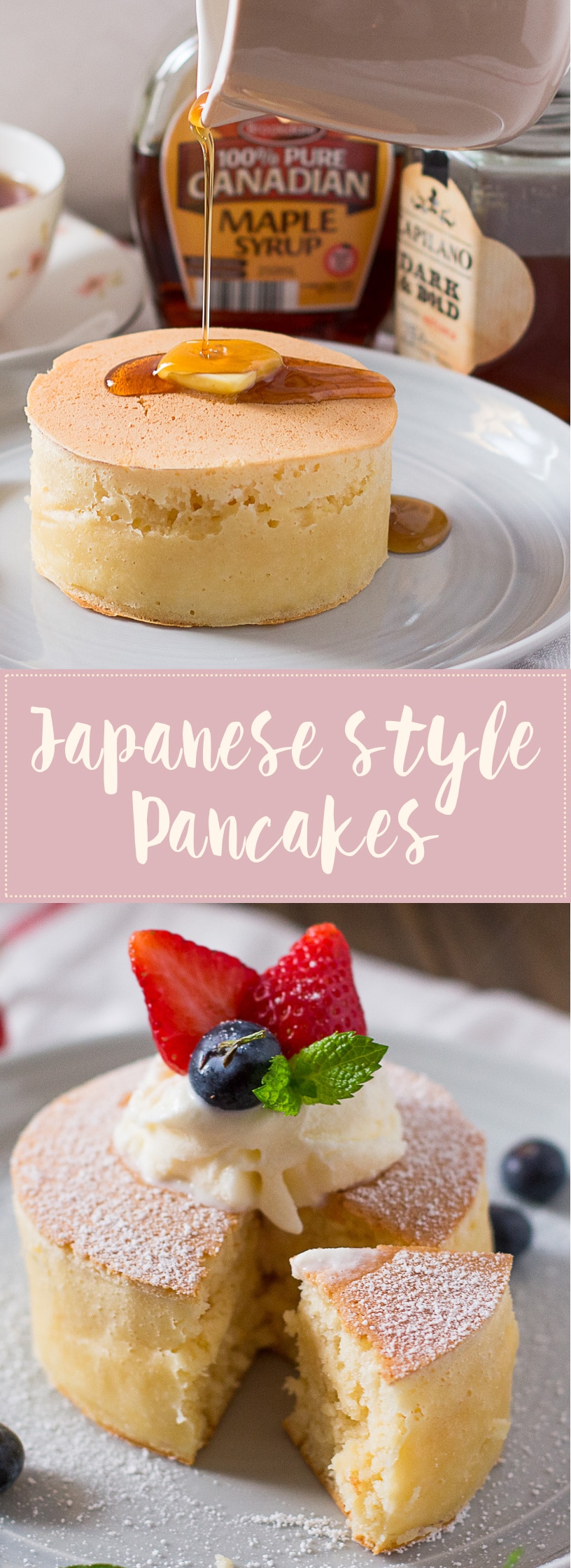
Look at these Extra Thick and Fluffy Japanese Pancakes! Is your mouth watering? Mine is. These pancakes were a big indulgence and may have cost me a few calories, but it was so worth it. This special treat tasted truly amazing; they were super soft, fluffy, spongy, thick, and oh-so-delicious!
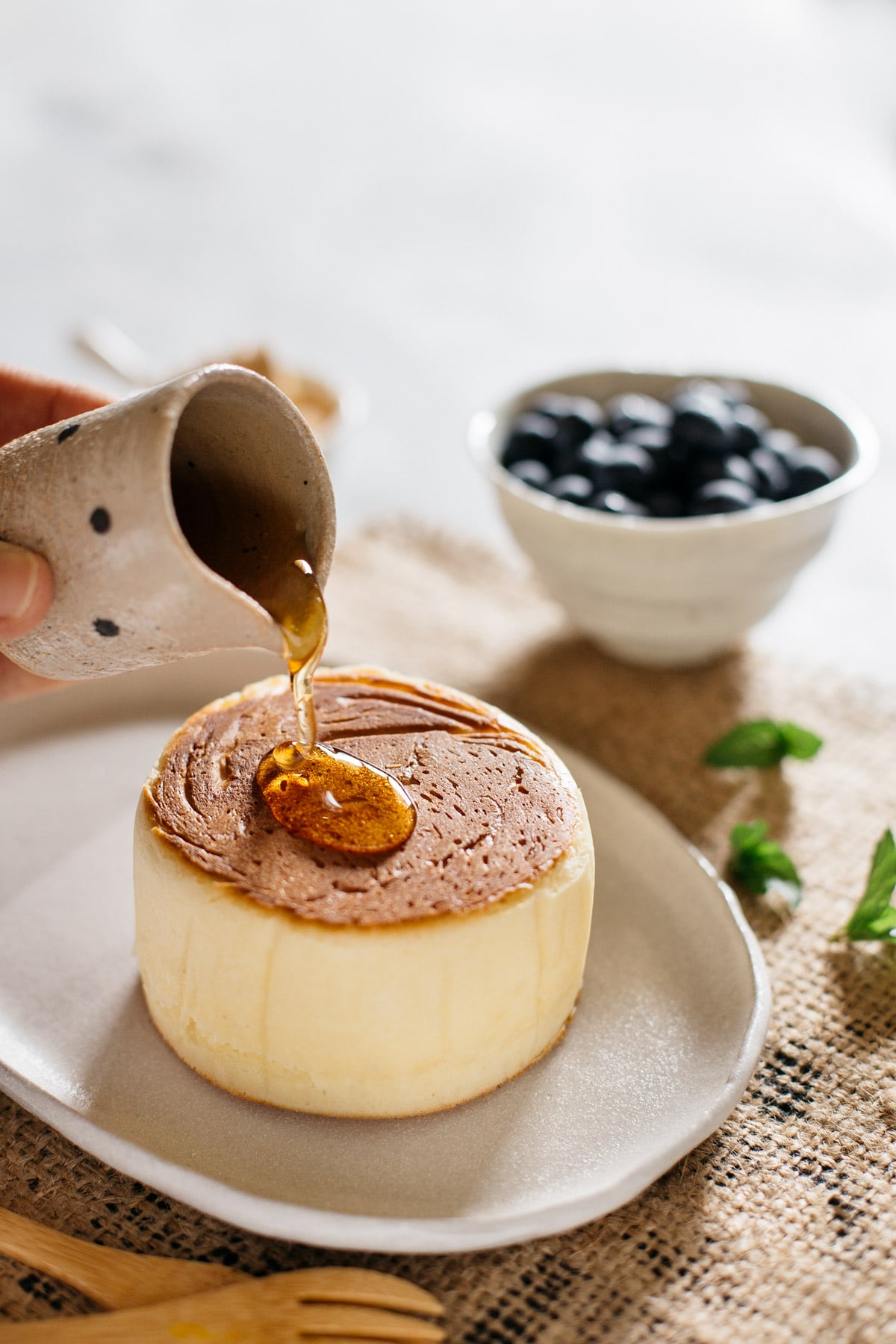
My original recipe for these Extra Thick and Fluffy Japanese Pancakes has been the most popular recipe on my blog since I shared it with you all about 2 years ago. As you might have noticed, us Japanese people can be a little bit OTT and come up with some very odd inventions like Gyoza Roses. But these pancakes are one of those times that this over-the-top attitude and innovation has paid off!
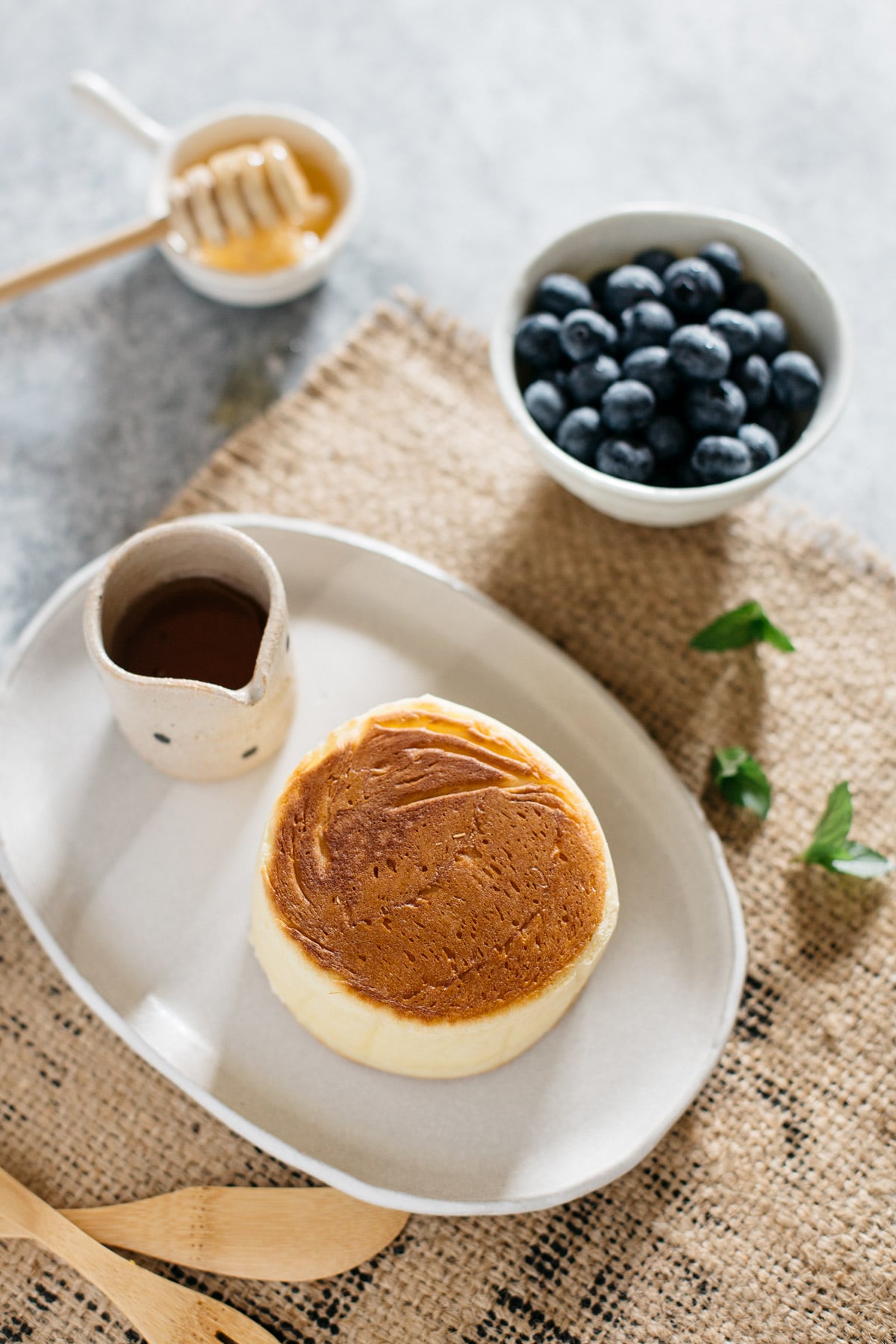
Traditional pancakes are often a lot thinner and flatter, whereas Japanese people have taken them to the next level and made them (clearly) way thicker and taller, which means they are a lot more intense and flavourful.
To get this incredible thickness is very simple. All you need is an old milk carton or a thin sheet or cardboard, some baking paper, and a stapler. Cut the milk carton/cardboard and the baking paper into long strips about 4.5cm wide and 30 cm long. Then all you do is staple the baking paper onto the cardboard then form it into a circle shape and staple it closed (with the baking paper on the inside). Done! If you’re not sure if you’ve done it right, I’ve detailed this process for you in the video I created below.

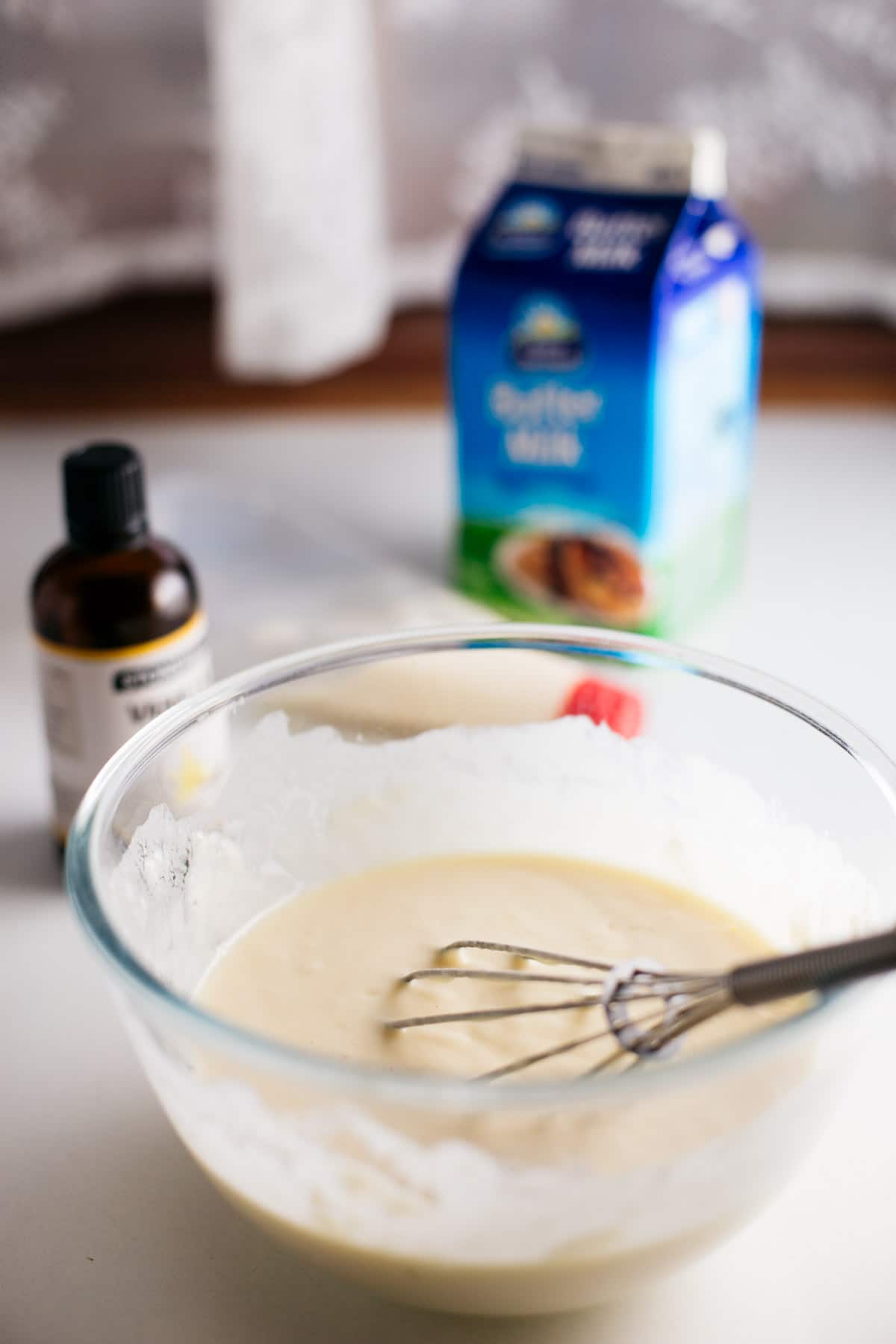
Now although the thickness of the pancake is due to it being cooked in a mould, the super fluffy, spongy, soft texture actually comes from two ingredients. One is simply buttermilk, but the other is a super special, secret Japanese ingredient… mayonnaise!
I know you’re probably thinking “WHAT?!? Mayonnaise in pancakes? Eeeewwww!” But hear me out. Mayonnaise is essentially just egg and oil, the reason for its slightly funky smell is that vinegar is also added. But when mayonnaise is baked, the vinegar evaporates, thereby eliminating any taste or smell of mayo and just leaving the pure base of egg and oil.
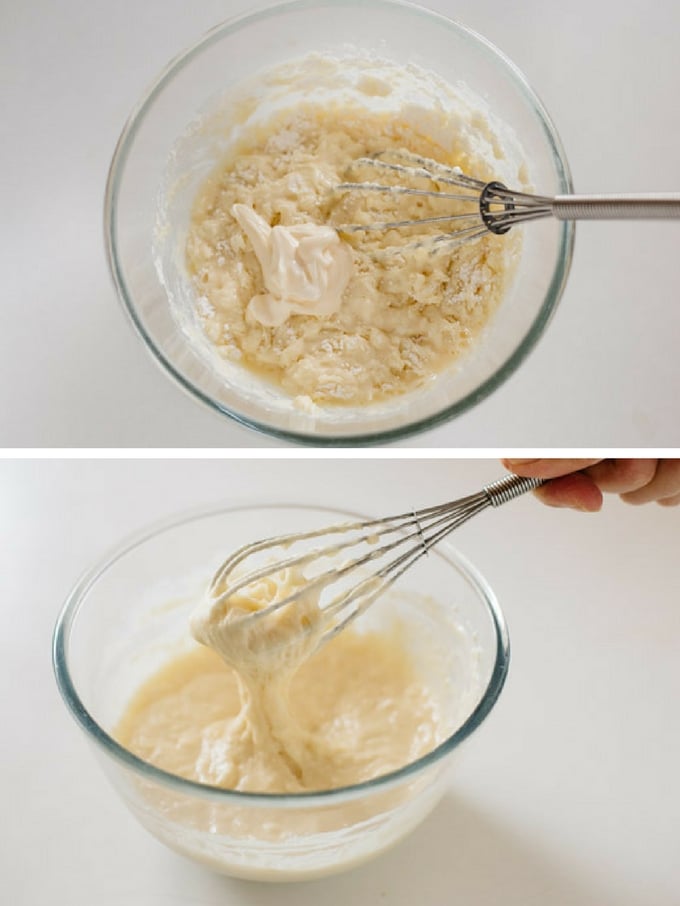
Trust me, you won’t taste the mayonnaise and this trick really is the key to making these pancakes so moist and delicious! I usually use the Kewpie brand Japanese mayonnaise but you can use any Japanese mayonnaise. Or you can omit mayonnaise completely, but you will end up with a denser, less fluffy pancake… and really, who would want that?
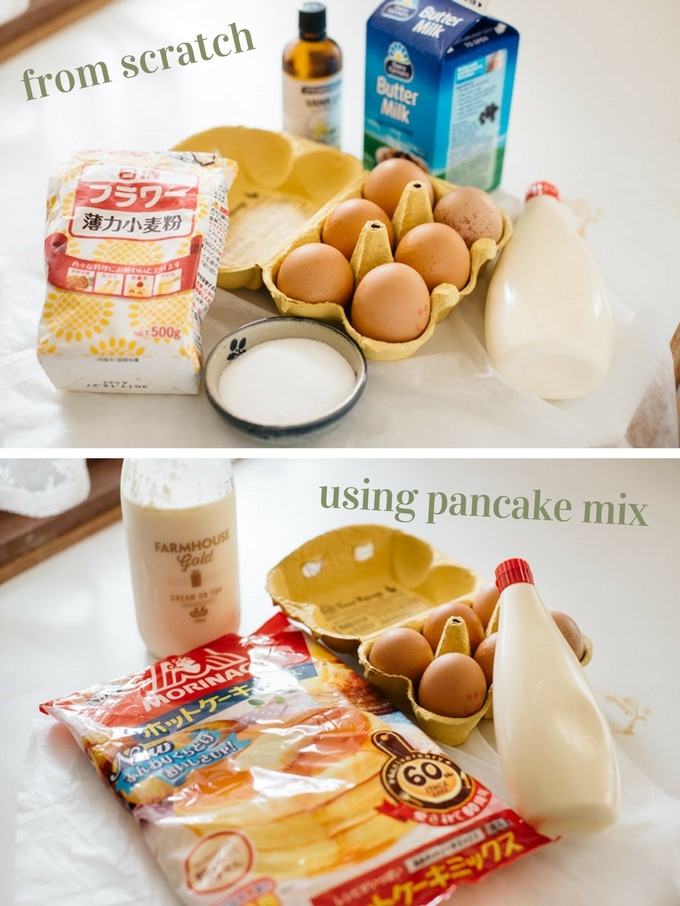
Most people in Japan use pre-made pancake (hotcake) mix but I have created this recipe so everyone can make it easily at home if you don’t have access to these pre-made mixes. If you wish to use a Japanese pancake mix however, I recommend Morinaga Hot Cake Mix which I sometimes use when I don’t feel like making things from scratch.
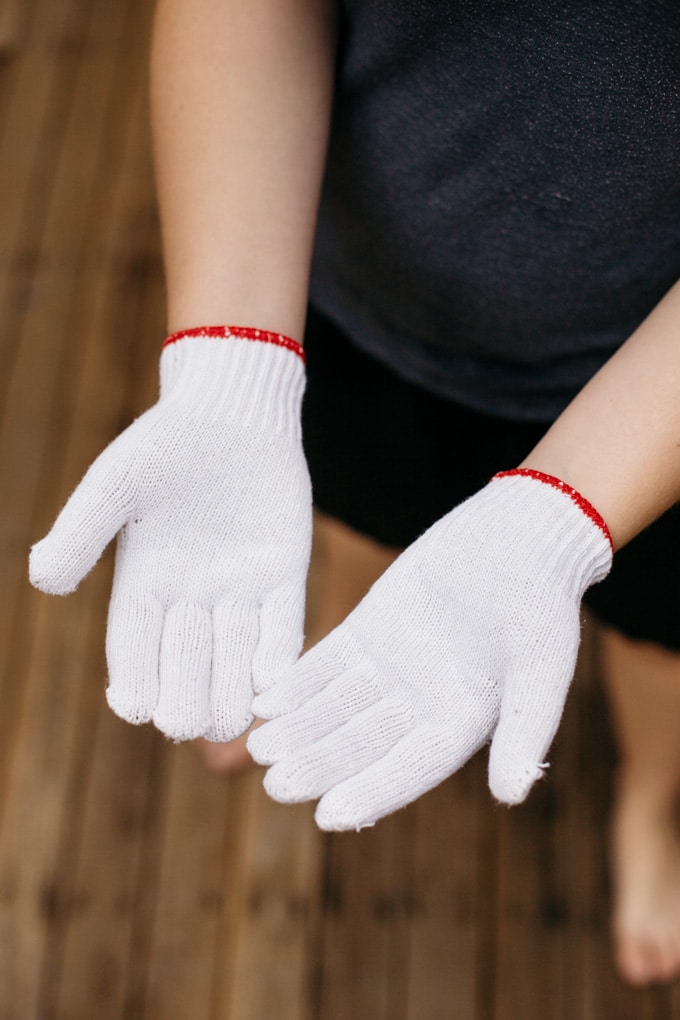
One last tip from me. The gloves shown in the video are very handy, and I am sure every household in Japan has them. They are called “Gunte” (goo-n-te) and are used for gardening, cleaning, cooking… you name it! I also used these for making German Tree Cake; Baumkuchen. I bought these Gunte from Daiso in Australia.
If you liked my recipe for Extra Thick and Fluffy Japanese Pancakes, please rate it and leave a comment below. Also, don’t forget to follow me on Pinterest, Facebook and Instagram to keep up to date with all the latest happenings on Chopstick Chronicles. Don’t forget to use the hashtag #ChopstickChronicles so I see your wonderful creations!


Extra Thick and Fluffy Japanese Style Pancakes 厚焼きホットケーキ
Ingredients
- 1 cup self raising flour
- 1/2 tsp baking powder
- 1/4 cup sugar
- 1 egg
- 3/4 Butter milk to make up 1 cup with the egg
- 1/4 tsp vanilla extract
- 1 tbsp Japanese mayonnaise
- Butter maple syrup, ice-cream, etc. for toppings
Instructions
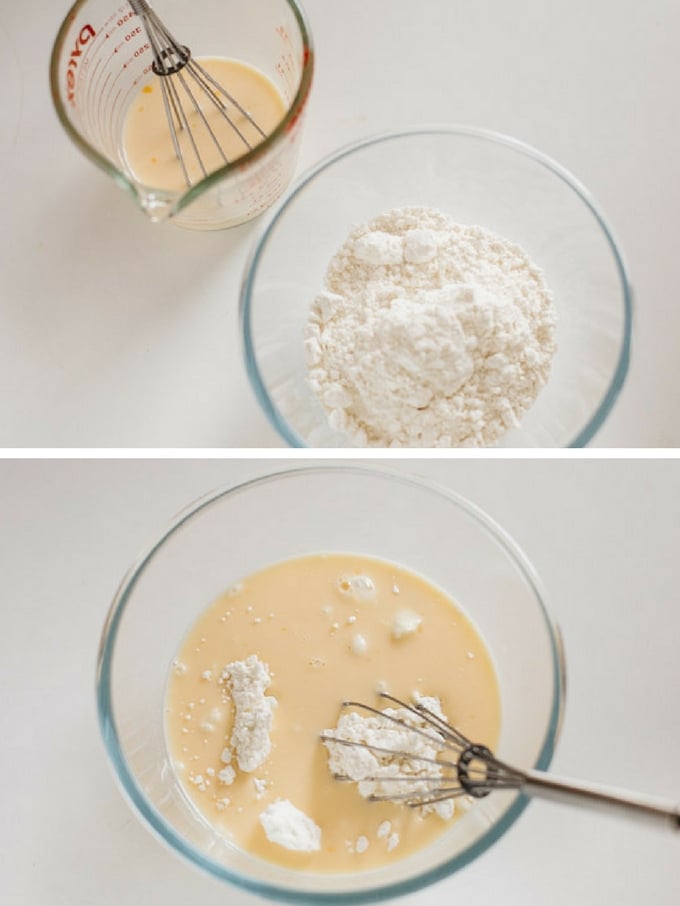
- Sift all the dry ingredients together into a bowl and combine.
- In another bowl (or jug) add the egg, buttermilk and vanilla extract and whisk until just combined.
- Make a well in the centre of the dry ingredients and pour the liquid mixture in.
- Mix together then add the mayonnaise and mix well to combine. (Don’t worry if you notice any scent coming from the mayonnaise, it will disappear completely after it’s cooked).
- Place a homemade pancake mould (instructions for this are listed in the blog post above) onto a frying pan over low heat and pour half the mixture into the mould. *1
- Place a lid on the frying pan and leave it for 15 minutes.
- Once little bubbles appear on the surface of the pancakes and the edge is slightly cooked, lift the bottom of the pancake with an egg flipper then cover the pancake with the inverted frying pan and flip the whole thing together before placing it back on the heat. *2
- Place the lid over the top again and cook for another 15 minutes on the other side.
- To test if it is done, stick a skewer into the pancake. If it comes out clean, then the pancake is cooked through.
- Remove the pancake from the heat, remove the staples from the mould and take the pancakes out of the mould wearing gloves or a cooking mitten.
- Serve the pancakes with your favourite toppings (e.g. whipped butter, maple syrup, fresh berries, ice-cream, chocolate flakes, etc. Let your imagination run wild!).




I used your recipe to make a pancake in the rice cooker. It tastes amazing!!! Thank you for sharing. This is going in the family weekend breakfast rotation.
Hi Brandon, That’s fantastic! I would like to try to use a rice cooker too 😀 Thank you for the idea!
Hi Shihoko, I made these this morning for Mother’s Day, and they turned out pretty good! Light, fluffy and delicious, as you’ve described. Perfect with a cuppa.
I didn’t have a stapler on me and kinda didn’t want to use one, so using the carton cutouts with loose parchment paper made the end result a bit uneven. Was thinking of using cookie cutters next time, as this recipe is definitely a keeper. Many thanks!
Hello Peter 😀 I am glad it turned out good for you to cerebrate Mother’s day 😀 Yes, large in diameter cookie cutter will work!
Well, this looks like fluffy perfection!
I will definitely give this pancake recipe a go.
Thank you Allore foodies 😀
Hello Shihoko!
Im really interested in making these pancakes, they look so good!
I am a little confused, 3/4 Butter milk to make up 1 cup with the egg
does that mean 3/4 cup of butter milk ?
thank you 🙂
Hi Melissa, it means you need 1 cup of wet ingredients. Egg size vary so with a egg you need about 3/4 cup of butter milk to make 1 cup of wet ingredients.
wow i will try this soon!
Enjoy! 😀
Hello! I just made these pancakes today, and they are amazing. I made a few alterations — Hellmans organic mayonnaise seemed to be the closest to Japanese mayonnaise, or at least, had the fewest ingredients, and it worked fine, as I didn’t have access to a Japanese market here. I also added a little almond flavour, just because I like it. They turned out so well! So fluffy and soft and so much better than American pancakes!
Hi, Kit Thank you for letting me know. I am glad that the pan cake turned out delicious 😀 and thank you for letting me know the ingredients you altered in America. It is hard to know what is available in America as I live in Australia 😀
These were absolutely fantastic and so special for Pancake Tuesday! The Internet told me what to use to substitute for self-raising flour and I used Hellmann’s mayonnaise and it was perfect. I burned the bottoms a bit but next time I’ll know how low to keep the burner. Also my moulds were not tall enough and the pancakes rose above them, so they became a bit misshapen, but did not affect the taste. I’m very excited to have this new dish up my sleeve. Thank you! I’m a fan.
Thank you Harumi san 😀 I am glad to know you liked it.
Hi Shiho-sensei, I am, like you a Japanese native living abroad — in my case Canada. I do cook and bake a lot from scratch to achieve a flavour, texture of food I am used to from Japan. I just discovered this site and am very excited about trying this and other recipes. I was looking for a pancake recipe for Pancake Tuesday this week!
I would really, really appreciate two things 1) weight equivalents provided with a click of a button (a “metric” button). Though many do still use “cup” measures for things like flour or butter, it is becoming more and more common to use gram weights. And, 2) North American friendly ingredient names. We have pastry flour, all-purpose and bread flour. Self-raising flour is less common and not something I would stock. Also, for milk and creams, we have skim, 1%, 2%, whole milk, half-and-half (5%), and cream for coffee (10%), and whipping cream (35% or so).
Thank you!
Konnichiwa Harumi san. Thank you so much for your valuable comment.I know most of my readers are in North America but I don’t really know the measurement used there and have been trying to put both Australian and American measurement using the recipe card function but I am still learning and common ingredients names in North America too. Thank you so much, I will keep those two in mind and keep improving my recipe posts. Arigatou gozaimasu.
Thank you for responding. I have spent quite some time translating a lot of volume measures used in North America into something I can understand in weights. As you probably know, Americans have an interesting measure of butter and it’s the “stick” — which is about how it is packaged — and an incomprehensible unit to most other cooks outside of the US. At some point I learned it was half a “cup” or 1/4 pound, i.e., about 115g. If I can be of any assistance, would be most pleased. Korekaramo yoroshiku!
Hi Haurmi san, yes I was just talking to my teaching colleague, who is from USA, the other day have just told me about butter “stick”. As you said, it is incomprehensible because my high school cooking club teacher was so strict about measurement and I am scared to mess up with measurement. So when I do bake, I use a kitchen scale and measure everything precisely. Doumo arigatou gozaimasu for your information. I really appreciate 😀
Hi there, great post. I will be attempting soon. I too live in Canada, born and raised and I am an avid baker. Cups is still the most common unit of measurement you’ll find in North American recipes. Although most seasoned bakers have a scale and perfer it for accuracy. Not a bad idea to have both units to appeal to the masses. I live in a big city and can get both self-raising flour and buttermilk at almost every grocery store. Although in a pinch, you can easily make both, if necessary. Self-raising flour: 1cup all purpose +1-1/2tsp baking powder +1/2 tsp salt. Buttermilk: 1cup milk +1tbsp white vinegar or fresh lemon juice, let sit for 5-10 minutes to curdle. Also living in a major city, I am lucky to have a few Asian grocery stores to get the mayo and pancake mix. Butter usually comes in 2cup foil wrapped blocks with measurement markings, sometimes they’re further divided into 4 elongated foil wrapped blocks -for leaving out at room temperature in a butter dish (for toast and pancakes) but it tends to be more expensive. Most serious bakers don’t get the stick form but know 1 stick equals a 1/4cup, as it’s sometimes referred to as a unit of measurement in recipes.
Hi Kate, Thank you so much for the information 😀 Great help for the people living in North America to convert my recipe( I am in Australia) to American measurement.
hi. im planning to serve these delish pancakes for our mini gathering (around 15 people). may i know if i can make/cook them a day before then just reheat them on the morning?
Hi Purple owl. Yes you can. After making them ahead, cool them down completely. Wrap them individually with cling wrap and also put them in ziplock bag and keep them in freezer. It will keep a few days. Reheat the pancakes in microwave for 30-40 seconds(depends on each microwave). If they are too dry, spread butter thinly before microwave 😀 If you want to make ahead longer than a few days, you can freeze them too in sameway and defrost in a fridge a night before and microwave next morning when you need them.
HI, what could I add as a substitute for the mayonaise? and how much? thanks xx
Hi Reva, just omit mayonnaise and you don’t need to substitute with anything.
Hello. Nice to read and all, I’ve tried sometimes to make japanaeses pancakes, so I will try your recipe too and see. Just a note: your “metric to us” conversion tab don’t convert it in metrics at all…and a cup or a tablespoon of an ingredient weight different so…why u use the american system, if not japan nor australia use it? …anyway thx for the recipe
Thank you Simon,I do understand what you are saying, but many readers in America requested me to put into cups.
Is it okay to store the batter overnight? I read with typical pancake recipes you just need to make sure additional baking powder is added the next day for a good rise, but I’m not sure if the mayonnaise adds another factor? The pancakes look gorgeous by the way!
Hi Balsam, I think it will be ok but I have not tried it before so I can not guarantee.
These look amazing! Going to give it a today! Merry Christmas from Fiji 🎄
Thank you Soso Leo 😀 Merry Christmas to you too!
Great recipe, photos look amazing.
Ohhh Thank you James 😀
Best pancakes I have ever seen and wish to try soon 😉
Thank you Pablo 😀
Amazing 😍😍😍
Thank you Jorja
I didn’t see the instructions on how to make the forms. Am I missing something?
Hi Kelster, Thank you for asking. I had to change the recipe card and when the recipe transferred from another, the form instruction missed, I think. I will post updated version this weekend. Thank you.
Hi Kelster, The instructions for making the forms is in the post, underneath the third photograph 😀 hope it helps, but if not send me a message.
I will try and make them…they look so yummy!!!!!!
Enjoy 😀
What do you mean to make up one cup with egg?
Hi Sal, You need one cup of liquid which contain egg, so crack the egg in a large measuring cup, add butter milk to make up one cup. Depends on the egg you use, the amount of the butter milk differ. Make sense?
hi
i’m currently living in Japan and can’t seem to find buttermilk. what can i use as a substitute?
Hi Joi Lucky you for living in Japan. I created this recipe because I could not get “the Hot Cake mix” (well, I can but kind an expensive). If you are in Japan, you can make with hotcake mix packet, eggs and milk 😀