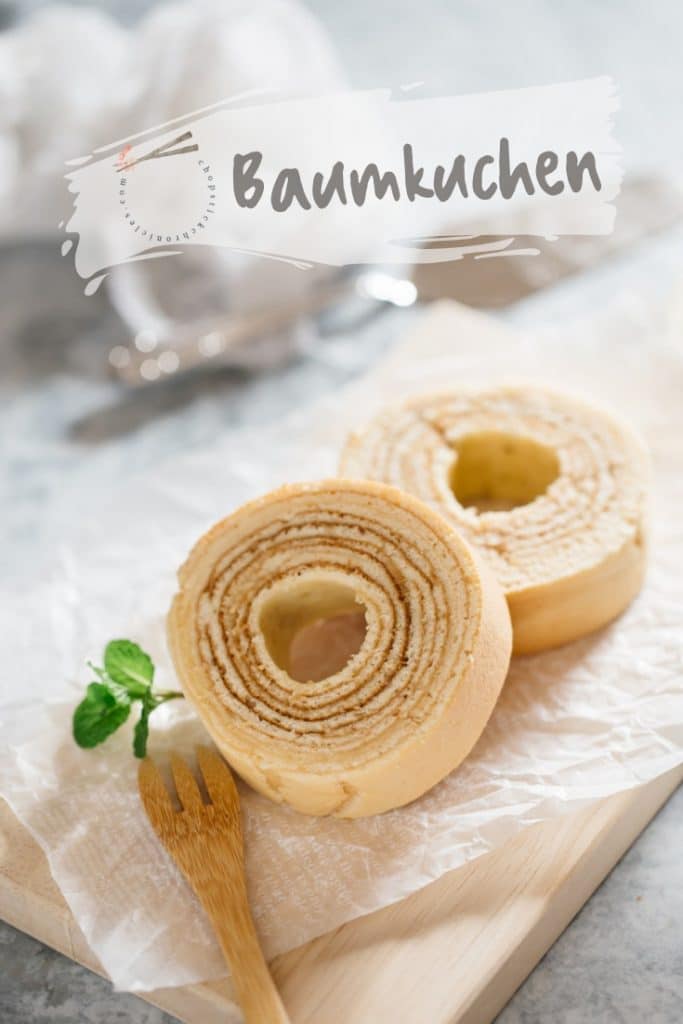
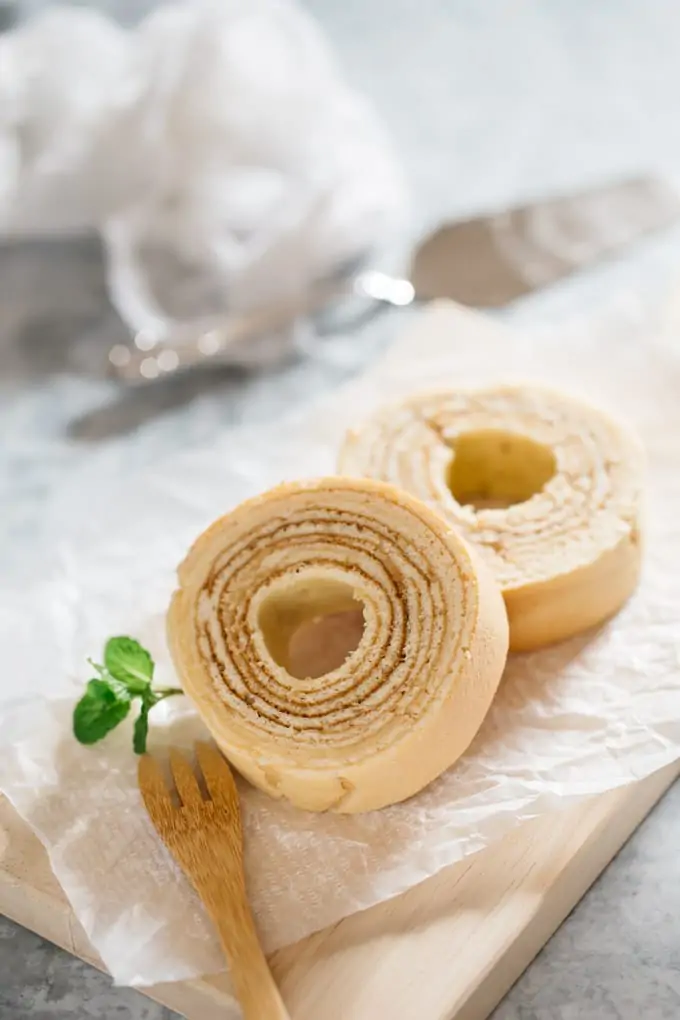
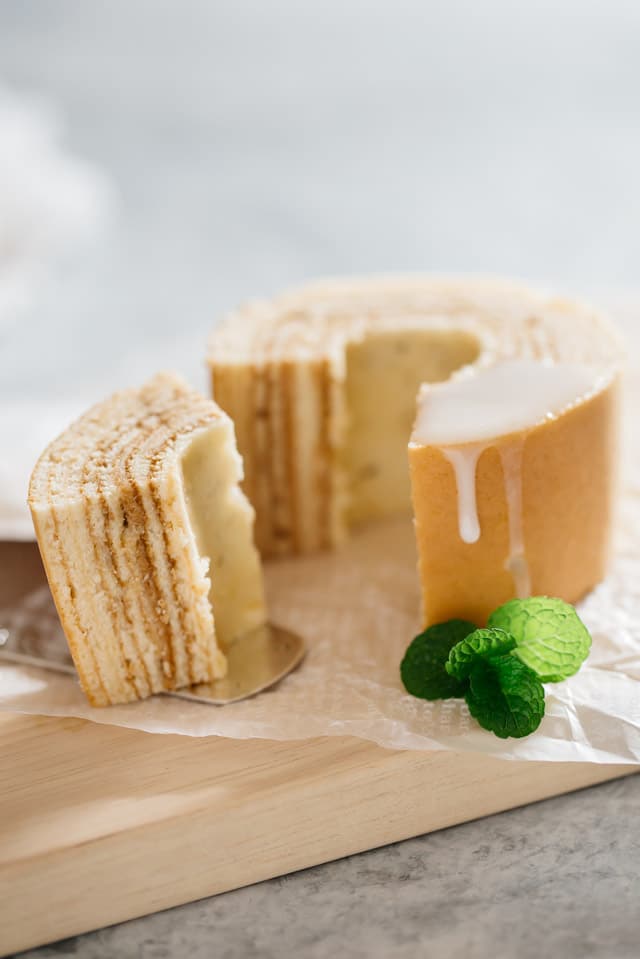
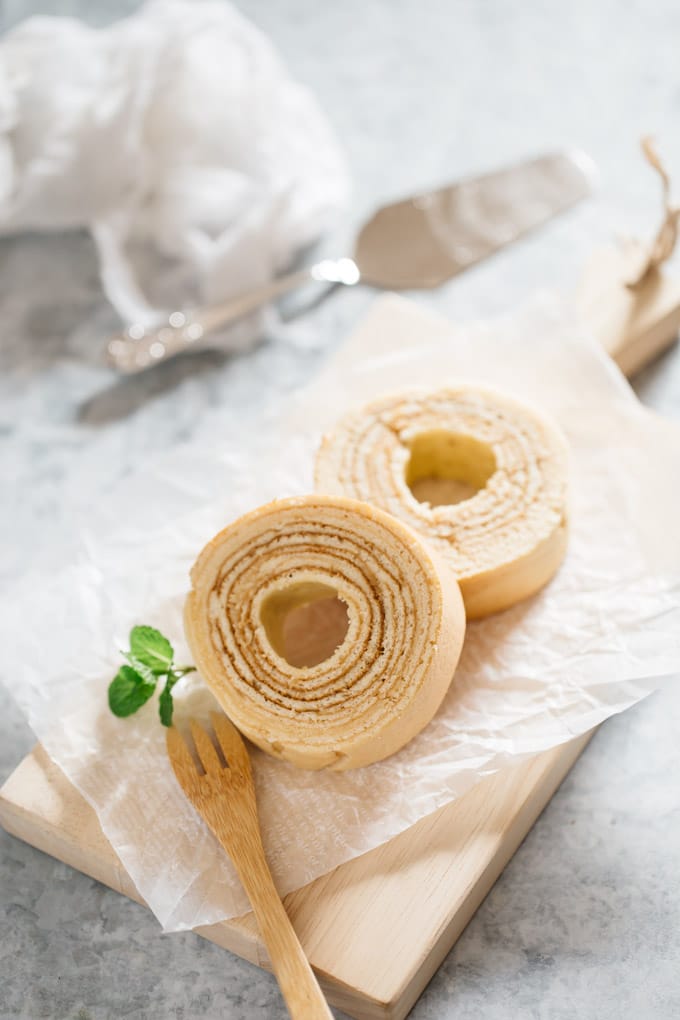
Baumkuchen is a traditional German cake. The appearance of the cake resembles a tree’s growth rings. It is labour intensive cake if you make it in the traditional way, but I am going to show you how to make this beautiful cake at home the easy way! It just looks like the Baumkuchen you see and can buy from shops in Japan.
Why is Baumkuchen on a Japanese food blog?
Baumkuchen’s popularity in Japan is phenomenal. The German tree cake is readily available from fancy pastry shops to convenience stores and supermarkets. Japanese love Baumkuchen and so do I! This cake is the king of cakes in Japan definitely. And probably it is more famous and popular in Japan than it is in Germany.
About 3 years ago, I had visited my daughter who was studying in Dusseldorf, Germany and then traveled along the Romantic road. I was so thrilled thinking I can finally taste authentic German tree cake in Germany. Disappointedly, I did not find any Baumkuchen while I travelled through.
Although I was a little disappointed that I could not find and taste real German Baumkuchen, I could easily understand why Japan is in love with this cake. Because Germany was covered with Beautiful forests, which vividly show the transition of the four seasons like it is in Japan. It was not surprising that German created sweets associated with the beautiful forests and no wonder Japanese love the cake.

Juchheim Baumkuchen
There are many sweets that originated outside of Japan such as Castella. German tree cake, Baumkuchen is one of them too. Juchheim (Japanese pronounce this You-Hi-Moo) is the well-known brand of Baumkuchen. A German confectioner, Karl Juchheim introduced German tree cake “Baumkuchen” to Japan.
How to bake thin layers of cake into the shape of a tree?
Traditionally, Baumkuchen is baked and layered into the shape of a tree. It resembles tree rings when the cake is sliced. The cake can be cooked on a rotating spit. Another method is to bake the cake in a special oven with a cylinder-shaped core that rolls inside the oven. This bakes one layer at a time.
How to create the tree shape at home?
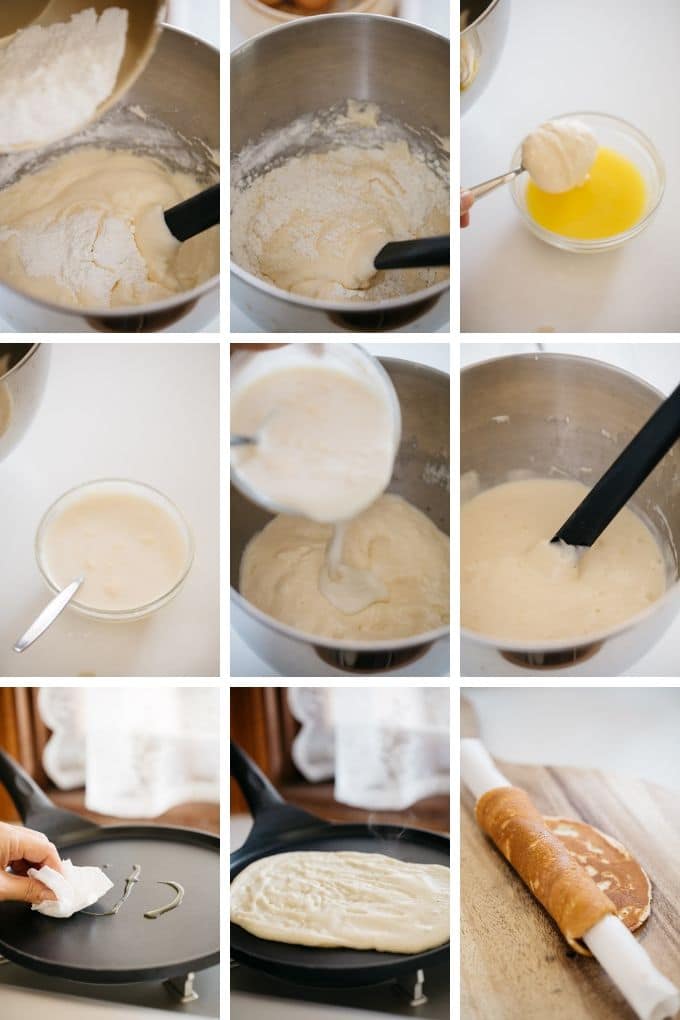
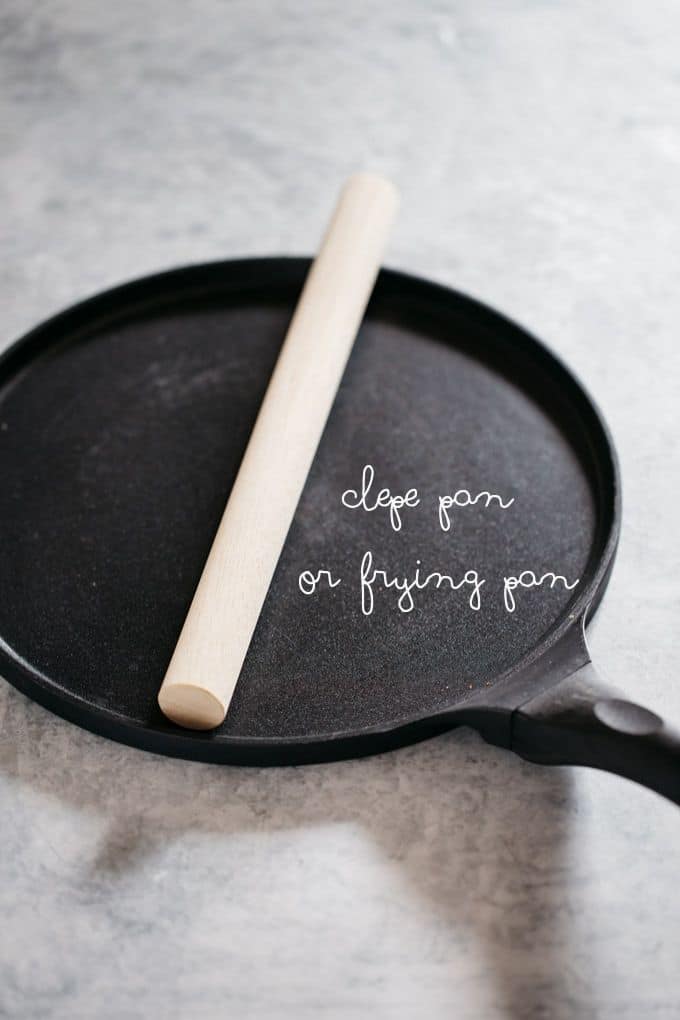
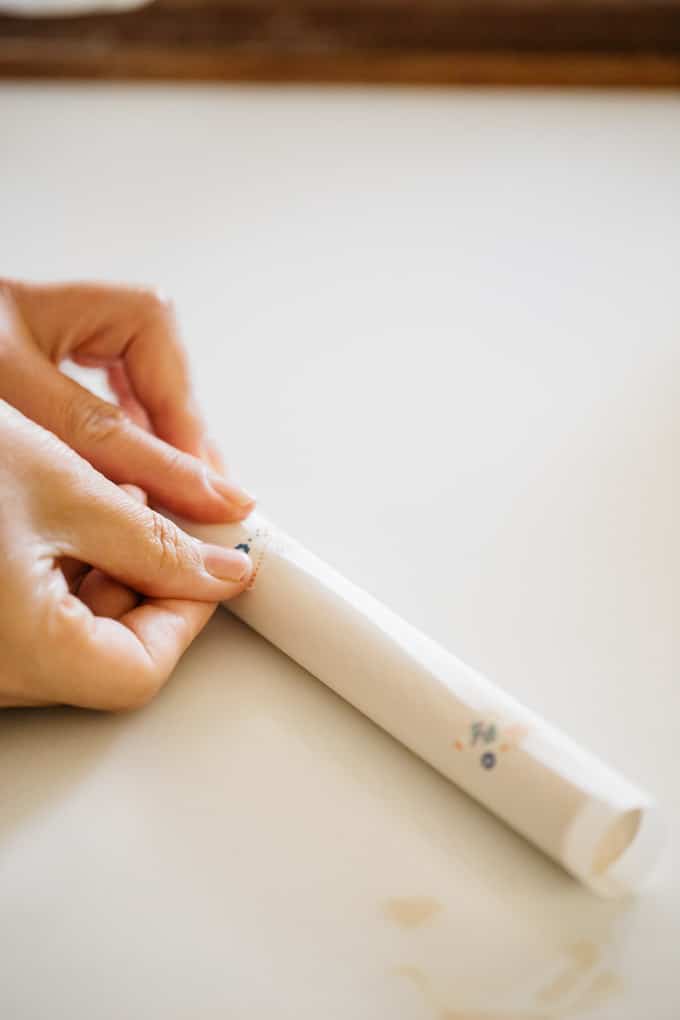
I am going to show you how I made the tree shape exactly look like the Juchheim baked Baumkuchen that you can buy in Japan! Follow the technique shown in the video. I used a crepe pan and a small rolling pin. I fried the first layer of thinly spread batter into a rectangle shape and then rolled it with a core which I made out of a small rolling pin wrapped with a baking sheet. After one layer cooked, I spread another layer exactly the same. So put the core back on the second layer and repeated the process. Repeat until you have used all the batter.
Tips to make it look like Juchheim Baumkuchen
- Use a crepe pan, shallow frying pan, or electric pan.
- Use a small rolling pin. I used a rolling pin 2.5cm (1 inch) in diameter and 28cm (11 inches) in length. If you use a frying pan shorter in length rolling pin would be better. Then cover it with parchment sheet.
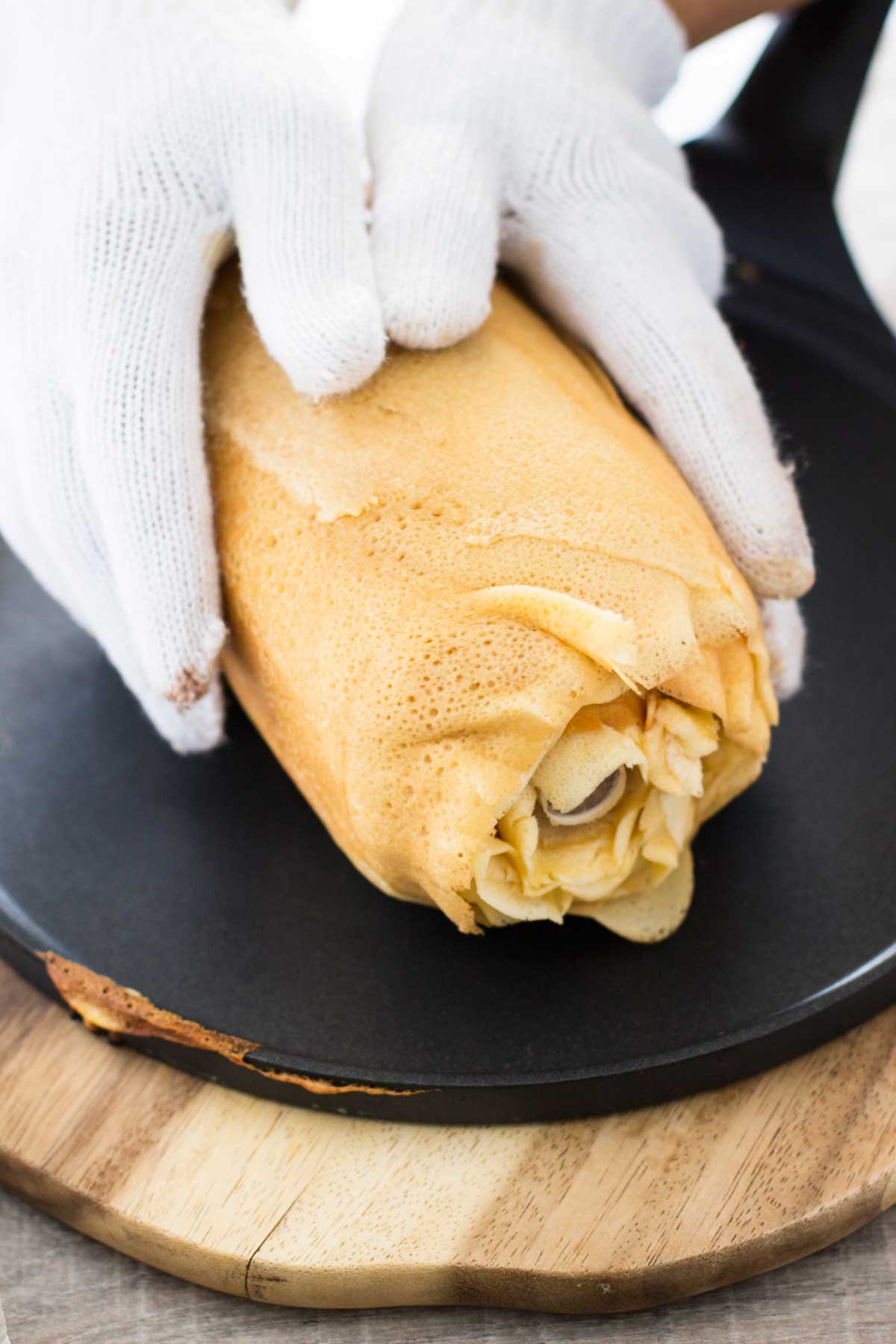
- Use some work gloves because it is really hot to roll the cake with bare hands. I used a pair of Japanese work gloves called “Gunte
 “
“
 “
“
How to store Baumkuchen
Baumkuchen will keep in the fridge for about two days. Also as you may have seen, Baumkuchen often sold frozen. You can freeze them easily to store. Slice the Baumkuchen and wrap them individually with cling wrap. Then place them in a ziplock bag and freeze. It will store for about 2 weeks in the freezer. When you would like to eat it, defrost slowly in the fridge.

Alternative shape and Variations
Alternatively, you can bake thin layers at a time in cake pans. Also, I have seen a Chocolate coated square shaped Baumkuchen or Sugar icing over the cake. Also, apricot jam layered in between cake layers. Though, in my humble opinion, Baumkuchen should look like a tree ring really.
Hope you like my Baumkuchen recipe. If you liked the recipe, please rate it and leave a comment below. Check out my other German recipes that Japanese love such as German Potato, and Easy Pretzel.
Also, don’t forget to follow me on Youtube, Pinterest, Facebook , Twitter and Instagram . This way you keep up to date with all the latest happenings on Chopstick Chronicles. Don’t forget to use the hashtag #ChopstickChronicles so I can see your wonderful creations!
affiliate disclaimer
The site and our mobile application may contain links to affiliate websites. We receive a small affiliate commission for any purchases made by you on the affiliate website using such links.
We are a participant in the Amazon Services LLC Associates Program. This is affiliate advertising designed to provide a means for us to earn a small advertising fee by linking to Amazon.com and affiliated websites.

Baumkuchen German Tree Cake バームクーヘン
Video
Ingredients
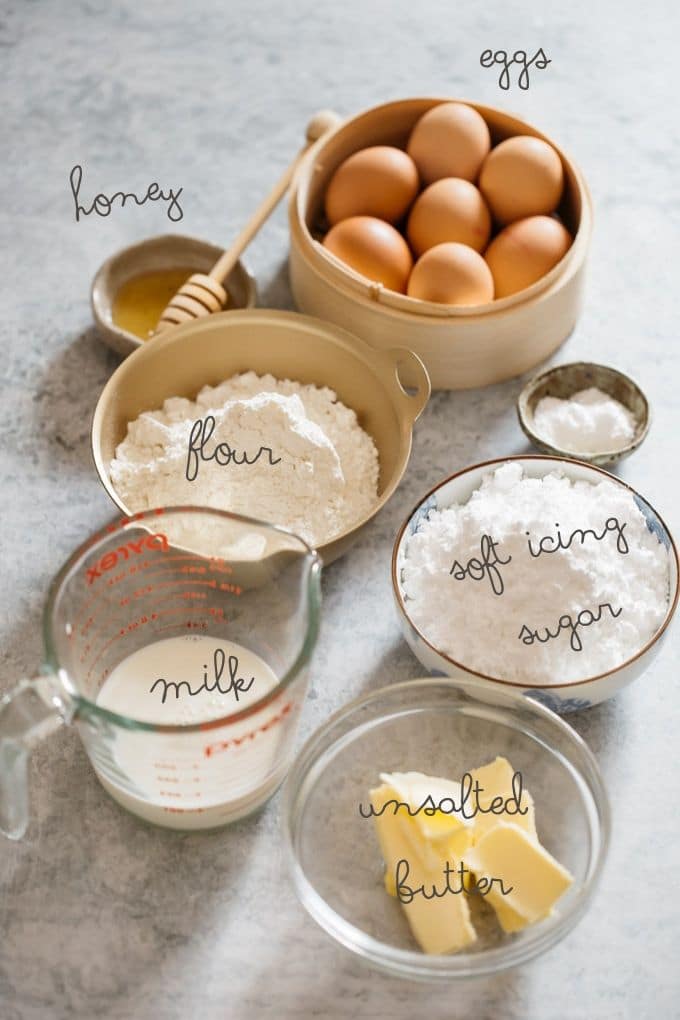
- 200 g Plain flour
- 2 tsp baking powder
- 6 eggs separated to white and yolks
- 160 g confectioner's sugar
- 140 ml milk
- 60 g unsalted butter
- 1 tbs honey
- Oil and a crepe pan
Instructions
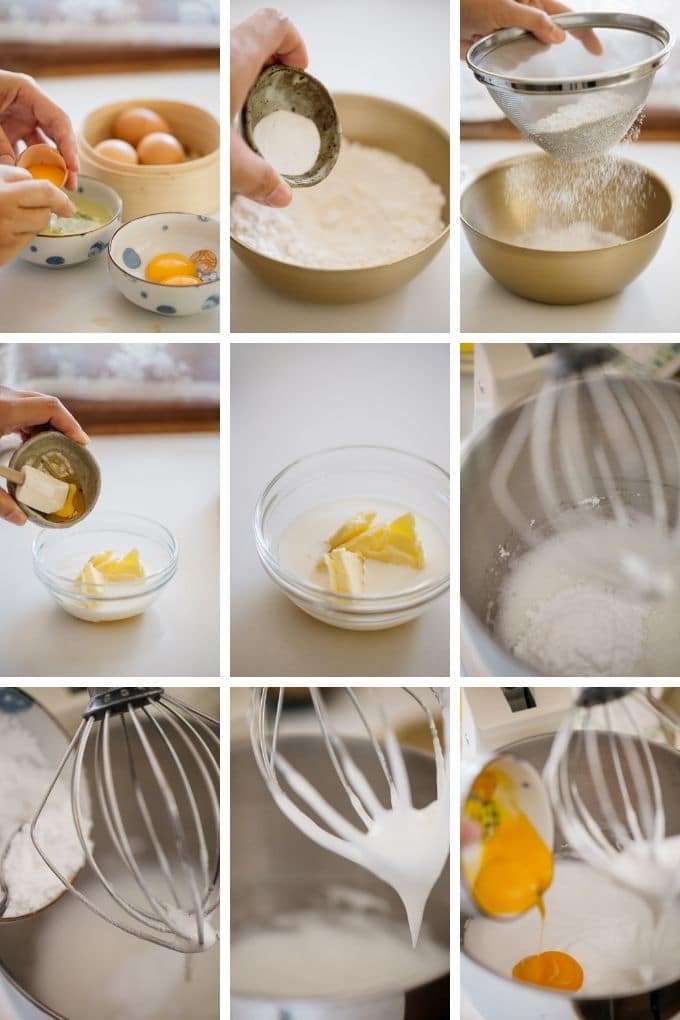
- Separate yolks and white. Leave the yolks in the room temperature and refrigerate the white.
- Sift plain flour and baking powder. Set it aside.
- Place butter, milk and honey in a microwave proof bowl and cover with cling wrap.
- Microwave the milk and butter mixture for 1 minute on 600w to dissolve butter completely.
- Make meringue. Place egg white and 1/3 of the sugar and beat. Add another 1/3 of sugar and beat. Add the remaining of the egg white and beat until the meringue is shiny and forms a stiff peak.
- Add all egg yolks at once and mix well.
- Fold the sifted flour in three different times.
- Take a scoop of the mixture from step 7 and add it to milk and butter mixture.
- Mix them well, then return it to the flour and egg mixture and stir wll to make batter.
- Heat 24cm crepe pan grease the surface with oil and spread flat thinly and rectangle shape if possible.
- When bubble formed, flip it over carefully to not break it and cook the other side briefly.
- Place the first layer on a chopping board. Place s prepared rolling pin over the edge and roll.
- On the crepe pan grease the surface with oil and spread the second layer.
- When bubble formed, place the core on the edge of the batter and roll.
- Repeat the process for remaining batter. Cool the cake down. *2 Take the core out and slice it about 2cm (0.8 inch) thick to serve.





Without wanting to rain on your parade this does not even come close to the essence of German Baumkuchen… It’s an invention of its own and a totally different thing (I must admit that I really dread the German one and need lots of coffee to get it down).
Simple reason: The layers are much too thick and not produced the way it’s made is completely different. The German cake is done by adding layer and layer of nearly liquid dough on a horizontal kebab machine and then smoothing it with a long spatula-like board. Every thin layer is more or less roasted into a crisp layer with a caramelised surface (that’s where the really dark brown rings are coming from) that’s crunchy. The highest art is making the thinnest layers without burning anything, creating the “oldest log possible”. To avoid it losing its crispness it is sealed in chocolate and immediately wrapped into plastic wrap after slicing it.
As you can easily see it’s the opposite of a tamago-like omelette. If it is not well executed it is dry as a log and the only thing you can do with it is start a fire. If El Cheapo Cheffu used cheap cocoa glaze instead of real chocolate to seal it it’s even worse. The better versions are handmade in a process that takes hours and quite expensive… You might get an idea why I dislike it.
Hi Thank you for explaining how it is made authentically though, this is the recipe I tried to recreate the Japanese version that you can buy anywhere in Japan in anytime. Japanese loves Baumkuchen perhaps more than German loves it as I could not find anywhere in Germany when I visited the country while ago. And also I tried to make it with everyday kitchen tools that many would have in their kitchen, not many people have horizontal kebab machine at home 😂 I hope you understand that is why this recipe is quite different from what you explained.
What a delightful introduction to Baumkuchen! The step-by-step instructions make it seem so achievable. I love the idea of its unique layers and history—it truly is a cake that tells a story. I can’t wait to try making it at home! Thank you for sharing this recipe and the beautiful photos!
I love how you captured the essence of Baumkuchen! It’s fascinating to learn about its history and the method of layering that makes it so unique. I can’t wait to try making it at home using your tips! Thanks for sharing such detailed insights!
I absolutely love Baumkuchen! The layers and the way it’s traditionally made are just fascinating. Your recipe seems so approachable, and I can’t wait to try it out at home. Thank you for sharing the history and tips!