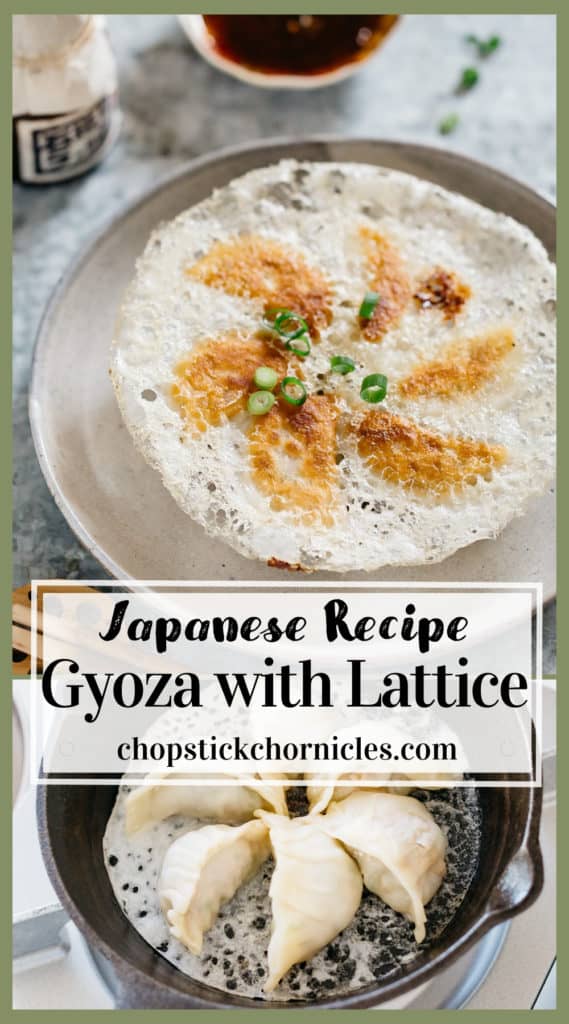
Everyone knows what Gyoza is nowadays, but have you tried the super crispy pan-fried Gyoza with lattice? Read on to learn how to make your pan-fried dumplings super crispy by following my Gyoza recipe with lattice!
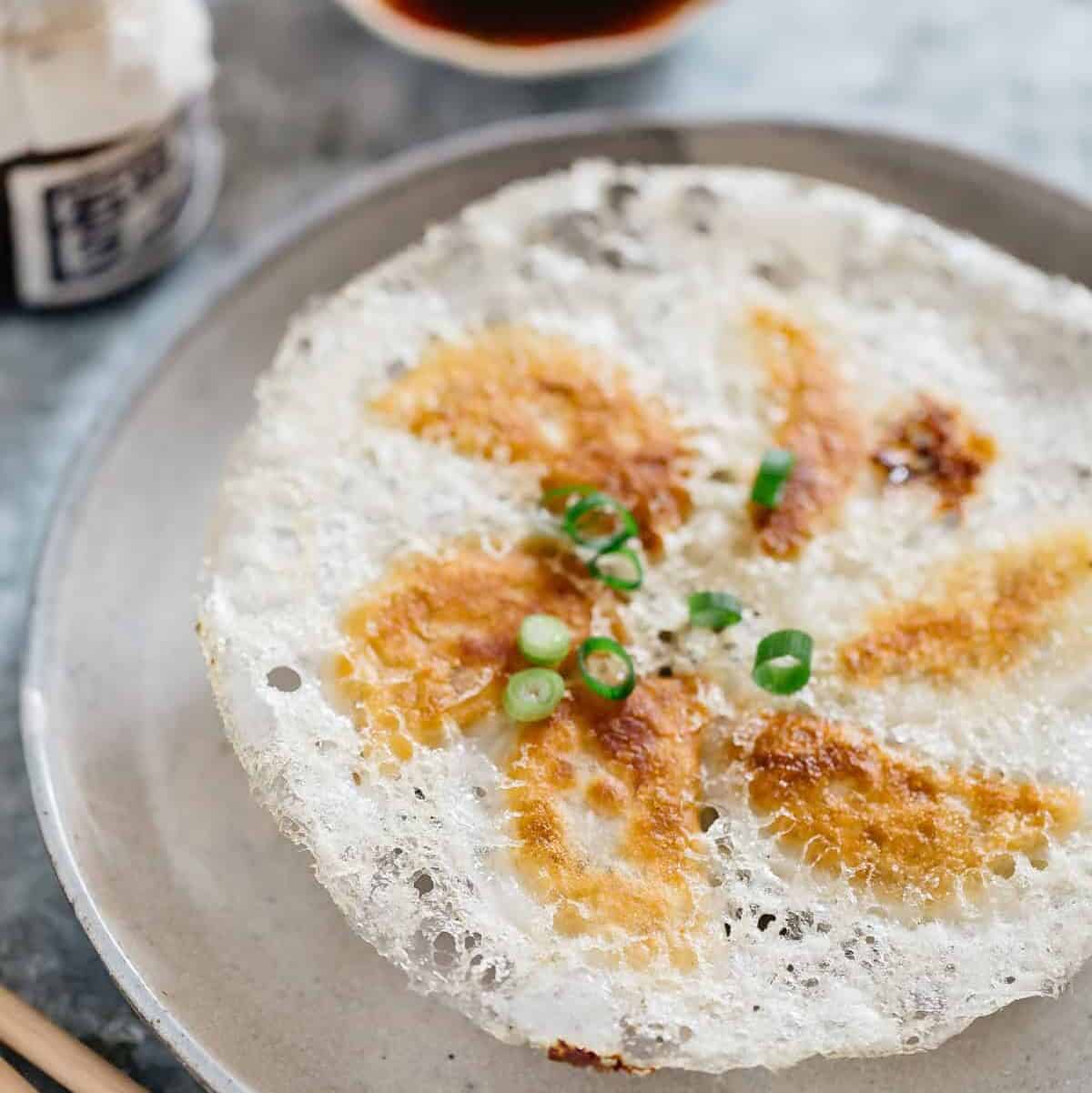
What is Gyoza with Lattice?
Gyoza is Japanese dumplings also known as potstickers in some countries. It is filled with ground meat (most often pork) and vegetables that are wrapped in a very thin piece of rolled dough (Gyoza Wrappers). Gyoza is classified and named by the cooking methods. This Gyoza Recipe is called Hanetsuki Gyoza (Gyoza with Lattice). If you are interested you can read more about it in my Gyoza authentic Japanese recipe post.
What does Hanetsuki mean?
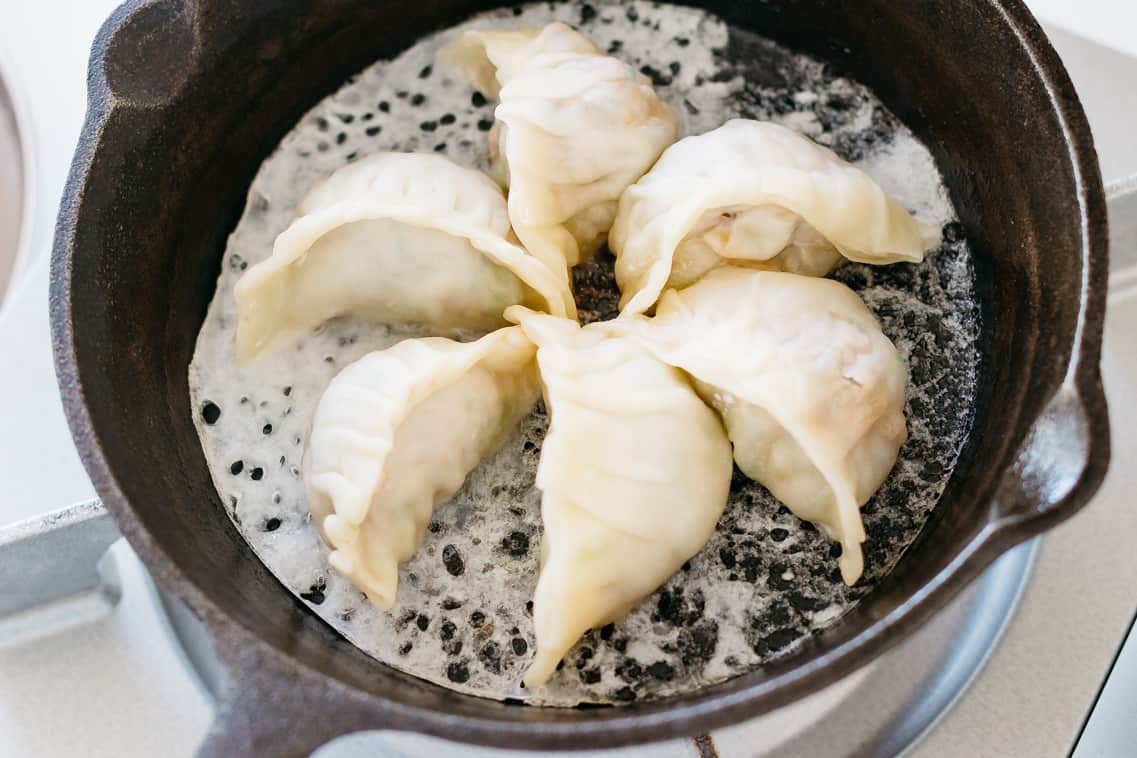
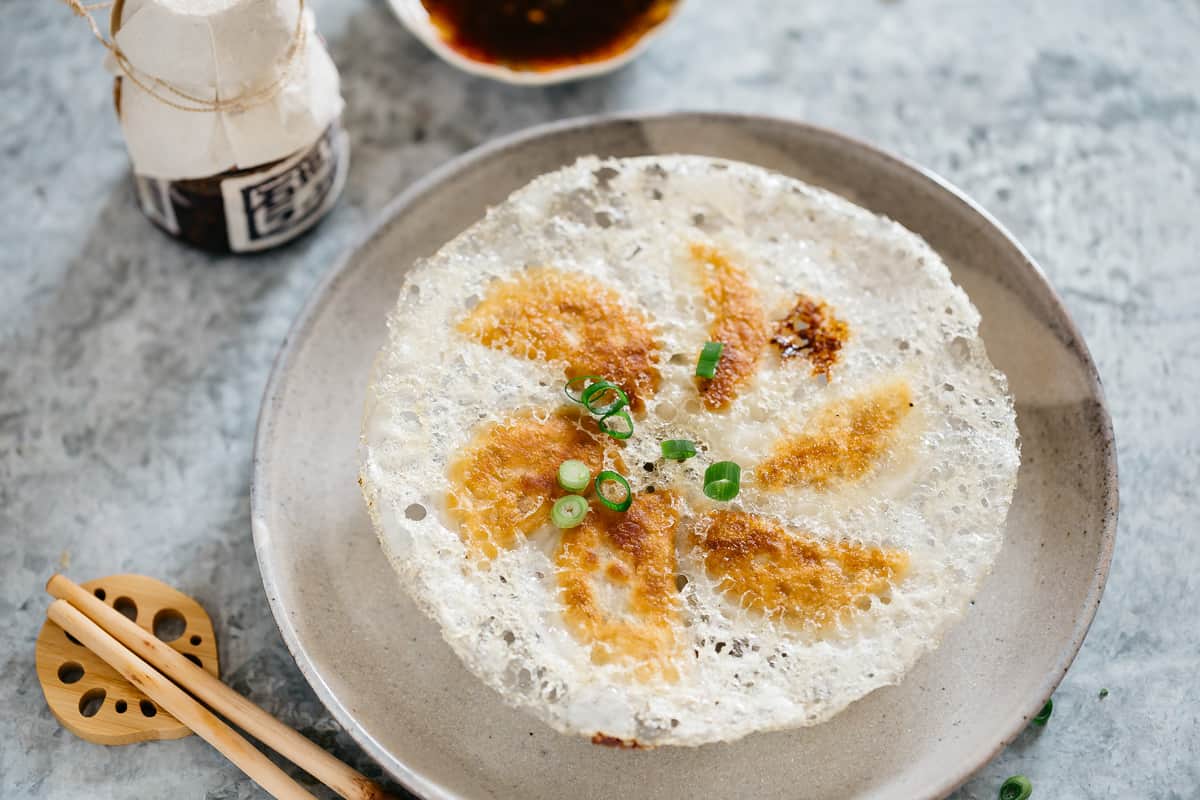
“Hanetsuki” literally means “with wing” in English. Hane is wings and tsuki means with. In this gyoza recipe, the gyoza is pan-fried and at the end of the process, we pour a mixture of potato starch (Katakuriko), flour and water into the frying pan with the gyoza. The mixture’s moisture will evaporate and it becomes a crispy golden brown lattice. And Japanese call it “Hane” wings.
What do I Need For This Gyoza Recipe?
- Gyoza Wrappers – Store bought or homemade. Make sure they are Japanese thin wrappers for extra crispness. You can follow my Homemade gyoza wrappers recipe here if you would like to make your own.
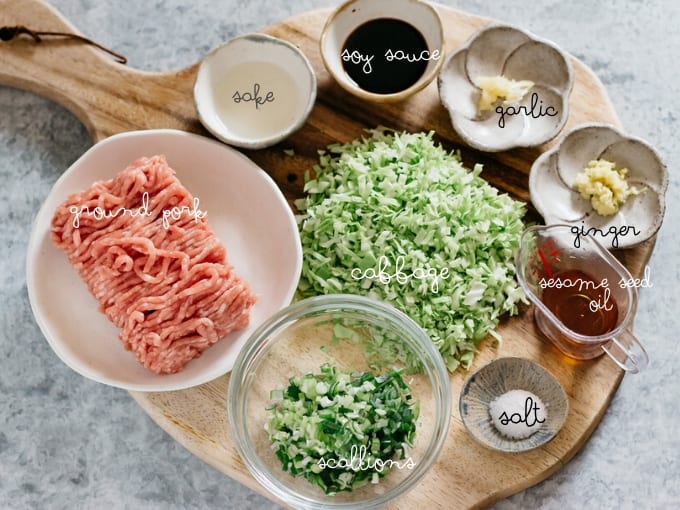
- Fillings – Ground meat, I used pork but you can use beef or chicken too. Furthermore you need finely chopped cabbages and scallions, ginger, garlic and seasonings.
- Crispy lattice – potato starch (Katakuriko), all purpose flour and water.
How to Shape the Gyoza
Yes, I know it is difficult because it can be quite tricky, but the more you practice the easier it will get. Seriously, the time and effort are all worth it in the end when you learn to make at home the delicious gyoza that you have experienced in a Japanese restaurant.
- Place a gyoza wrapper on the palm of your hand. I place it on my left palm because I am right-handed.
- Scoop out 1 tbsp of fillings. Place it in the centre of the gyoza wrapper on your palm.
- Dab your index finger in a little water Line one side of the wrapper with some water to act as glue.
- Fold the other half over: Pushing the filling in with your index finger and pleating the wrapper. Then pinch and press it into the other side with your thumb and forefinger.
- Place the piece of Gyoza on a tray to make sure the wrapper is sealed. Repeat the process for the rest of the wrappers and filling.

How to Create the Lattice
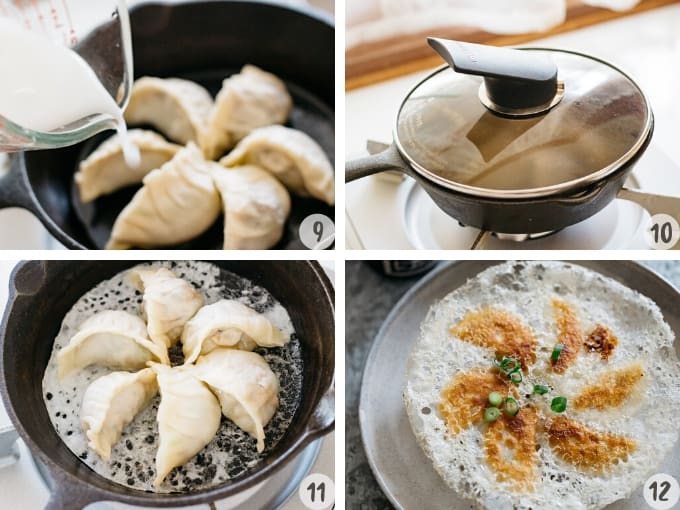
A simple mixture of water and Katakuriko (potato starch) will make all the difference! Pour the mixture over the gyoza in the frying pan and cover with a lid. We do this because it allows the gyoza to steam cook which will trap the juiciness inside. Finally, remove the lid once all moisture has evaporated. The dried potato starch will have left a thin crispy lattice-like layer on the bottom of the gyoza.
Tips to Follow My Gyoza Recipe
- Use a Cast Iron Skillet
 . The reason I use a cast-iron skillet is that the oil penetrates through the skillet surface evenly without repelling the oil. That will give the bottoms of the gyoza an even crispy golden brown. It is also because the heat is transferred evenly resulting in all the gyoza being cooked evenly.
 - When you fry the gyoza dumplings, leave some gap between each one. That’s where the water and potato starch mixture will be poured which will be turned into the crispy lattice connecting the all gyoza beautifully. Yum!
 . The reason I use a cast-iron skillet is that the oil penetrates through the skillet surface evenly without repelling the oil. That will give the bottoms of the gyoza an even crispy golden brown. It is also because the heat is transferred evenly resulting in all the gyoza being cooked evenly.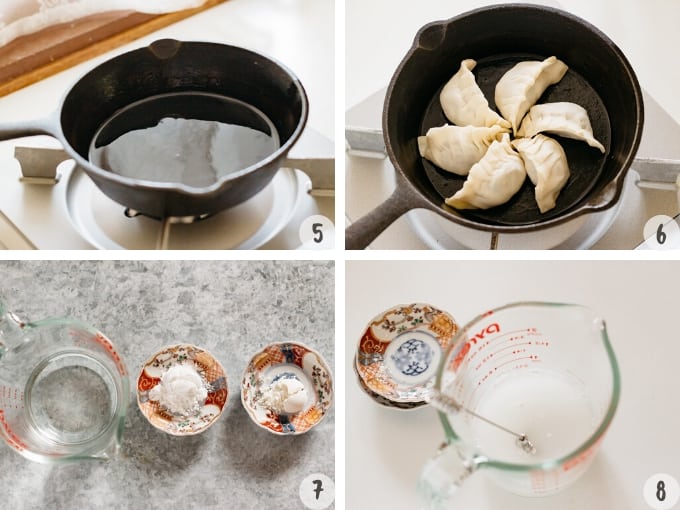
FAQ
A: You can substitute with cornstarch.
A: The second best option is a non-stick frying pan. If you don’t have that either, you can use a frying pan. Just heat the pan well and use enough oil so that the gyoza and lattice will not stick to the bottom of the frying pan.
Check Out Other Gyoza Recipes
Stay Connected
Did you make this gyoza recipe? If you liked it, please leave comment below and rate the recipe.
If you like the recipe please rate the recipe and leave comments below. Also don’t forget to follow me on Youtube, Pinterest, Facebook, Twitter and Instagram. This way you keep up to date with all the latest happenings on Chopstick Chronicles. Don’t forget to Sign up for a weekly newsletter so you never miss out on new authentic delicious Japanese recipes!

Pan-fried Gyoza with Crispy Lattice Coating 羽付き餃子
Video
Ingredients
- 9oz/250g pork mince *1
- 2/3 cup of finely chopped cabbage
- 1/2 cup of finely chopped scallions
- 1 tbsp soy sauce *2
- 1 tbsp sake *3
- 1 tbsp sesame oil
- 1/2 tbsp grated ginger
- 1 tsp salt
- A pinch of pepper
- 24 sheets gyoza wrappers *4
- 1/2 cup of water
- 4 tsp Katakuriko (Potato Starch) *5
- 2 tsp plain flour
Instructions
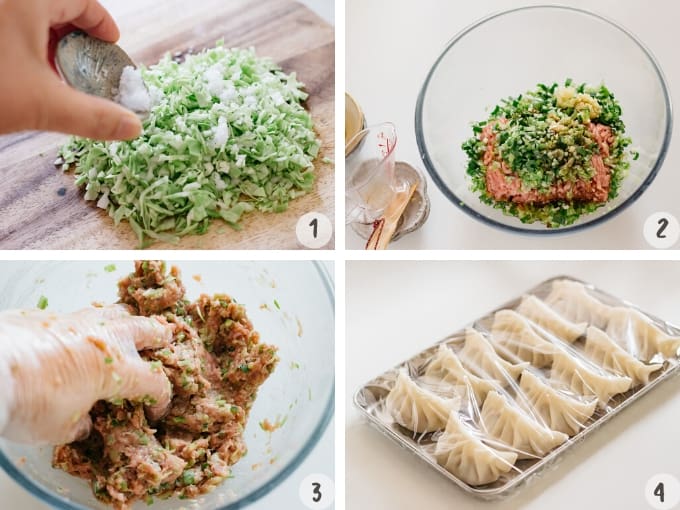
- Sprinkle the salt over the finely chopped cabbage and toss them. Leave it for 5 minutes to withdraw moisture from the cabbage.
- Squeeze out the moisture from the cabbage and discard the liquid withdrawn.
- Mix the pork mince, cabbage, spring onion, soy sauce, sake, sesame oil, ginger juice, and salt and pepper together in a large bowl.
- Spoon about a tablespoon amount of the mixture into the centre of a gyoza wrapper and fold it while pinching the sides together to close the gyoza. Repeat this step till all the filling is gone.
- Heat some oil in a fry pan over medium heat and place the 6 gyoza in circle on the pan and let the bottom of gyoza to brown. *6
- Mix the potato starch (Katakuriko), flour and water together and once the gyoza is slightly browned on the bottom, pour the starch mixture into the pan.
- Put a lid on the pan to steam the gyoza for about 5 minutes over low heat.
- Take the lid off and let the water evaporate so the cornstarch mixture can form a crispy lattice. You can heat up to medium but be careful not to burn the bottom of gyoza.
- Turn off the heat and serve the gyoza on a plate with the bottom up. *7
Notes
Nutrition
Chopstick Chronicles is a participant in the Amazon Services LLC Associates Program, an affiliate advertising program designed to provide a means for sites to earn advertising fees by advertising and linking to Amazon.com. As an amazon associate I earn from qualifying purchases.




I just tried this with frozen gyoza. It turned out so delicious! The crunchy lace effect is superb. Thank you!
You are welcome Debra 😀
Thank you for the recipe. I made them and it was a hit! Now i want to make the crispy gyoza in advance, how can i reheat them before serving them to my guests? Thanking you in advance for your answer.
Hi Dimà, unfortunately you can’t. Gyoza is best served freshly made.
Hello,
Thanks for the clear explanation and beautiful picture of those special Gyoza.
Can you kindly post a picture of the “cabbage” you use, I’m not sure what kind to buy and what it’s called in japanese and in english please.
Arigato,
Sylvie
Hi Sylvie. Thank you the cabbage I usually use is green cabbage in Japanese it is called “Kyabetsu” 😀
Can you use pre-made frozen gyoza? I always make them in huge batches, freeze the left overs, and than steam or boil when I want some.
Hi Jason, yes of course you can 😀
gyozas! my favorite
nice! I’m happy you like them 🙂
Hi Shihoko! Just came across your blog and wanted to say that this recipe looks amazing – I have always wanted to make my own gyoza but have never really been sure how to go about it, but after reading this I think it needs to happen sooner rather than later! Thanks for the explanation on how to fold and seal the wrappers too 🙂
Hi Claudia! thank you so much, I’m so glad you found my blog and liked the recipe! yes you definitely need to try it soon because homemade gyoza is really delicious. Folding them can be hard but you’ll eventually get the hang of it, good luck!
Hi Shihoko-san,
I never used corn starch when adding water to steam gyoza. I must try that. Crispy gyoza bottom makes a difference! Thanks for the tip.
I also add garlic as well as garlic chives when making filling at home as my family love it with garlic flavour.
Yumiko
Konnichiwa~ Yumiko san Ogenkidesuka? Yes, adding corn starch makes crispy bottom and it has Japanese name “Hanetsuki Gyoza”. I should use garlic chives as well, as it makes more defined flavour.
Hi Shihoko,
My name is Leanne – I also teach Japanese (in Coffs Harbour NSW) and I loooove cooking as well! I am going to try your delicious groups recipe….could you please tell me how to make the dipping sauce for the gyoza?
Thanks so much,
Leanne
Hi Leanne!
Oh that’s great, I’m so happy to hear from a fellow Japanese teacher.
For the gyoza dipping sauce I use 1/2 tbsp soy sauce, 1/2 tbsp rice vinegar, 1 drop of La-yu (chilli oil), and a couple of drops of sesame oil. Then I just throw in some sesame seeds and small spring onions.
I hope you have fun cooking, thanks for visiting my blog!