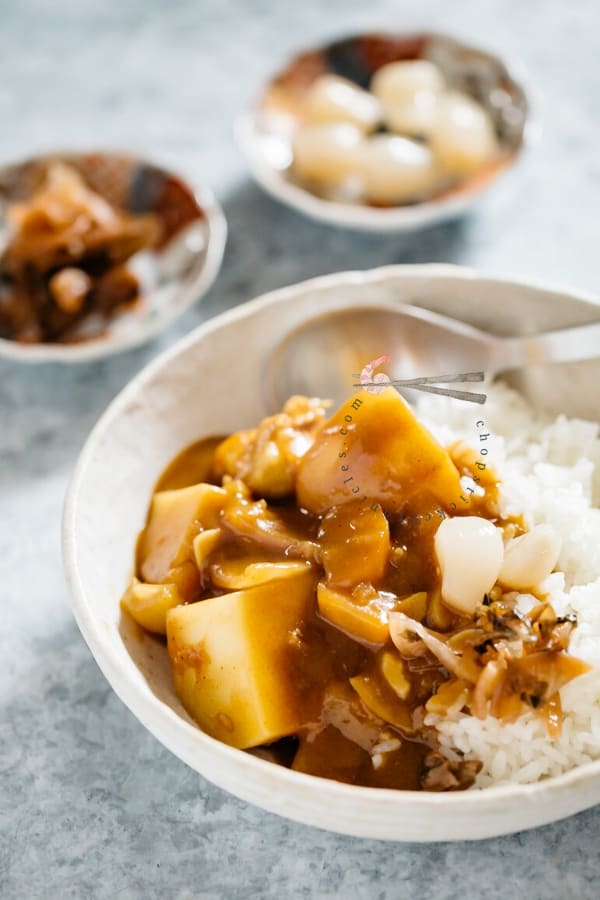
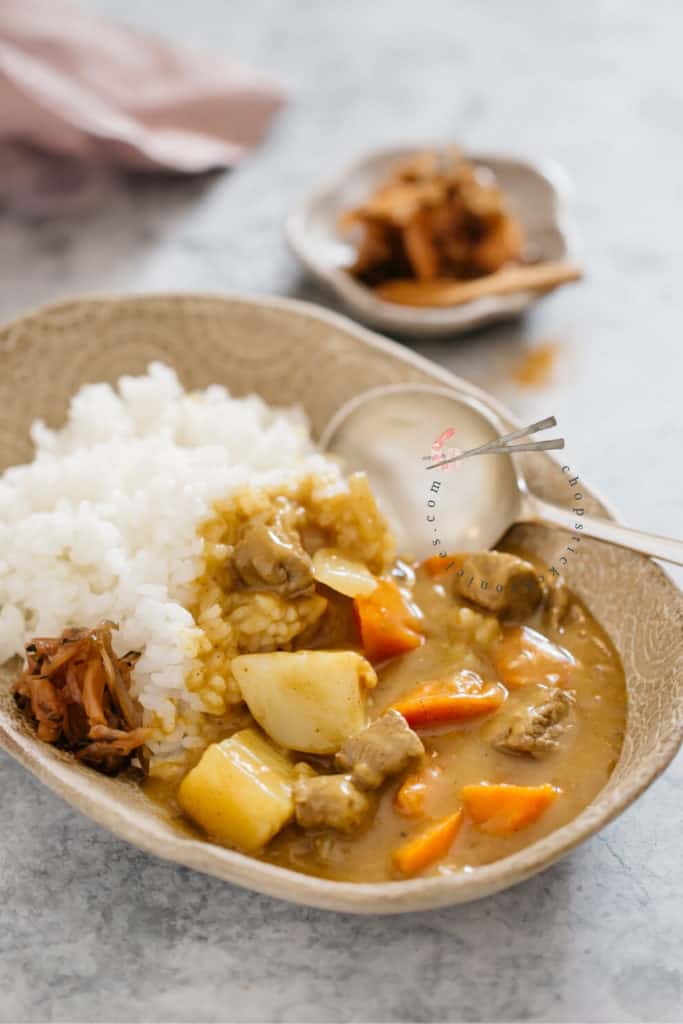
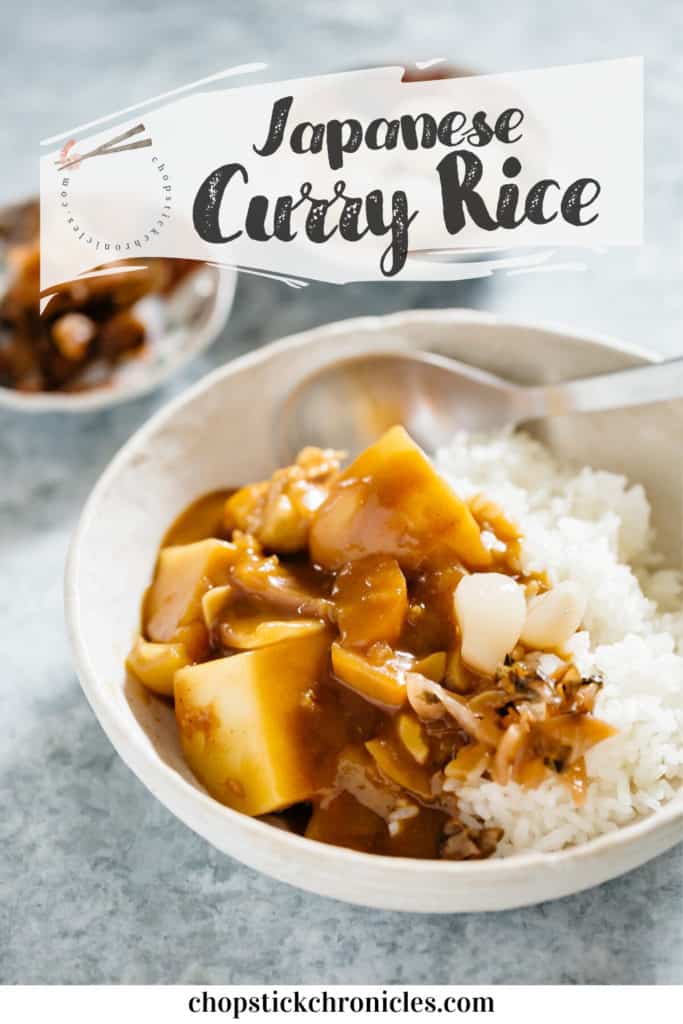
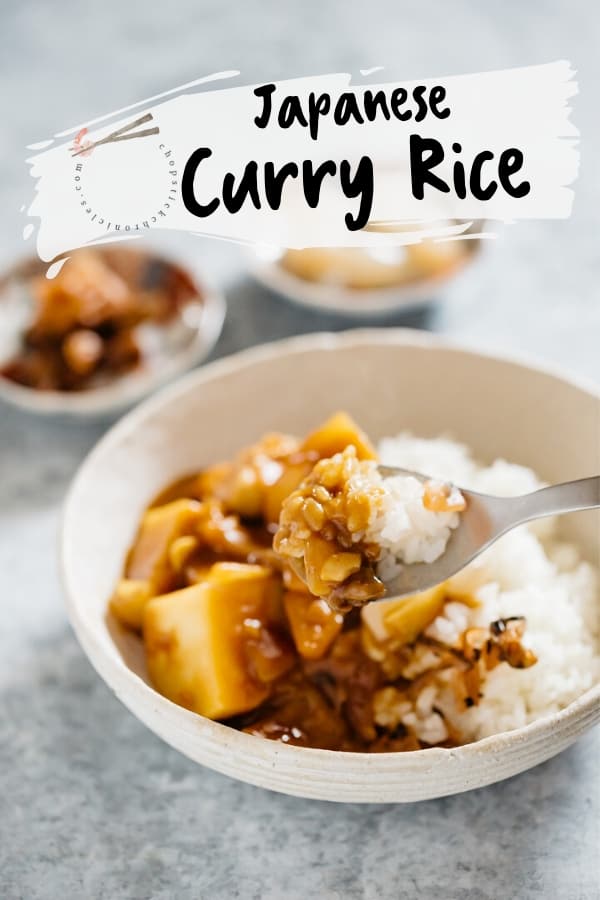
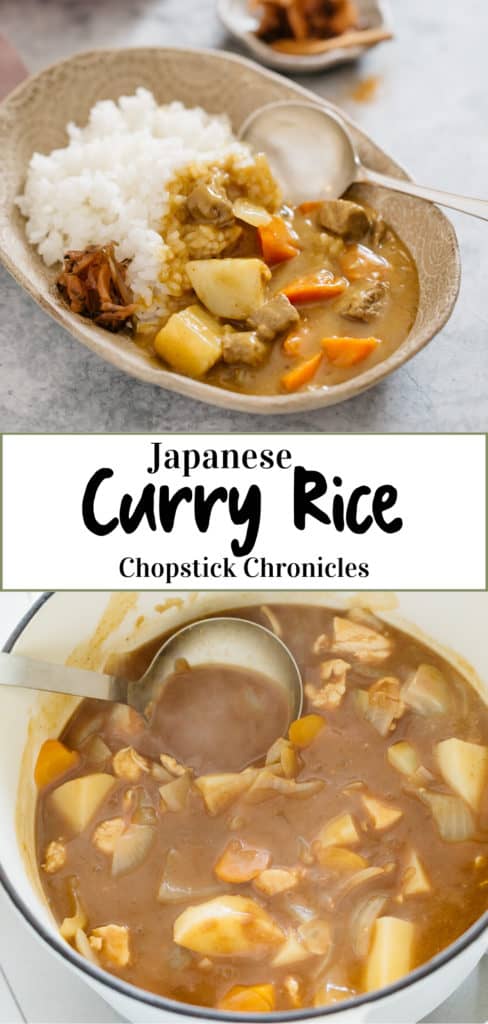
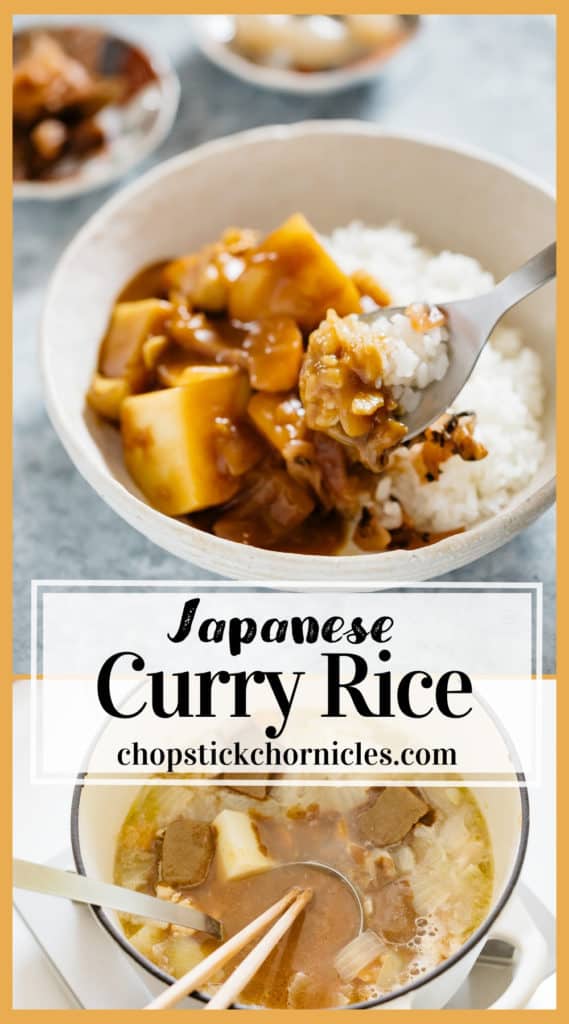
If you’ve ever had Japanese curry rice from a take-away sushi store or at a Japanese restaurant, you’ll know how incredibly delicious it is. Japanese curry is quite different from other curries from other places (like India). It is generally thicker and sweeter, so you must try it to taste the difference!
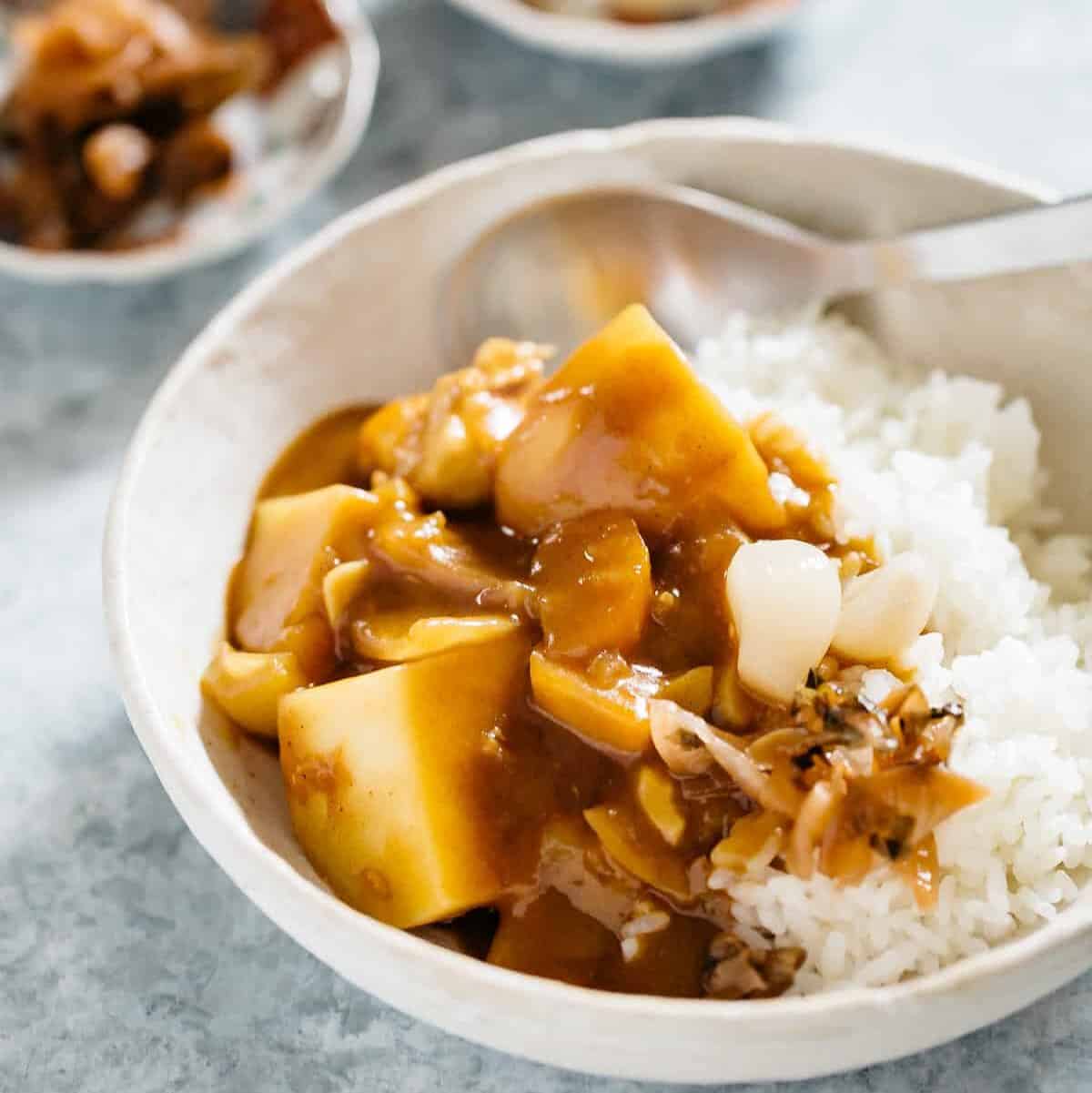
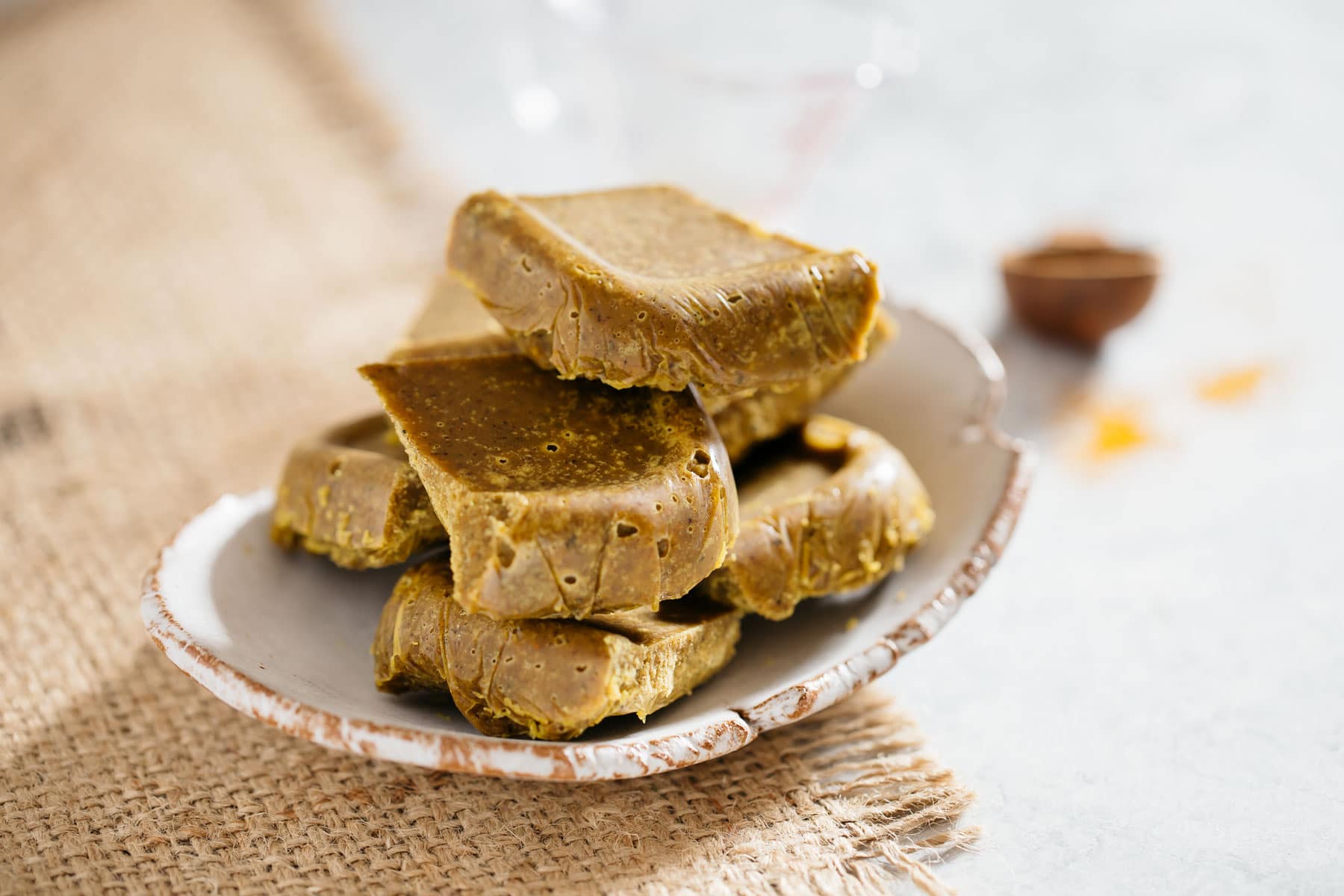
Curry Roux
Japanese curry rice is very easy to make and a very popular dish in Japan. Unlike other curries, Japanese people don’t mix up all sorts of different spices, but use store bought curry roux. Because they are so popular, there are many different varieties of curry roux available in Japan.
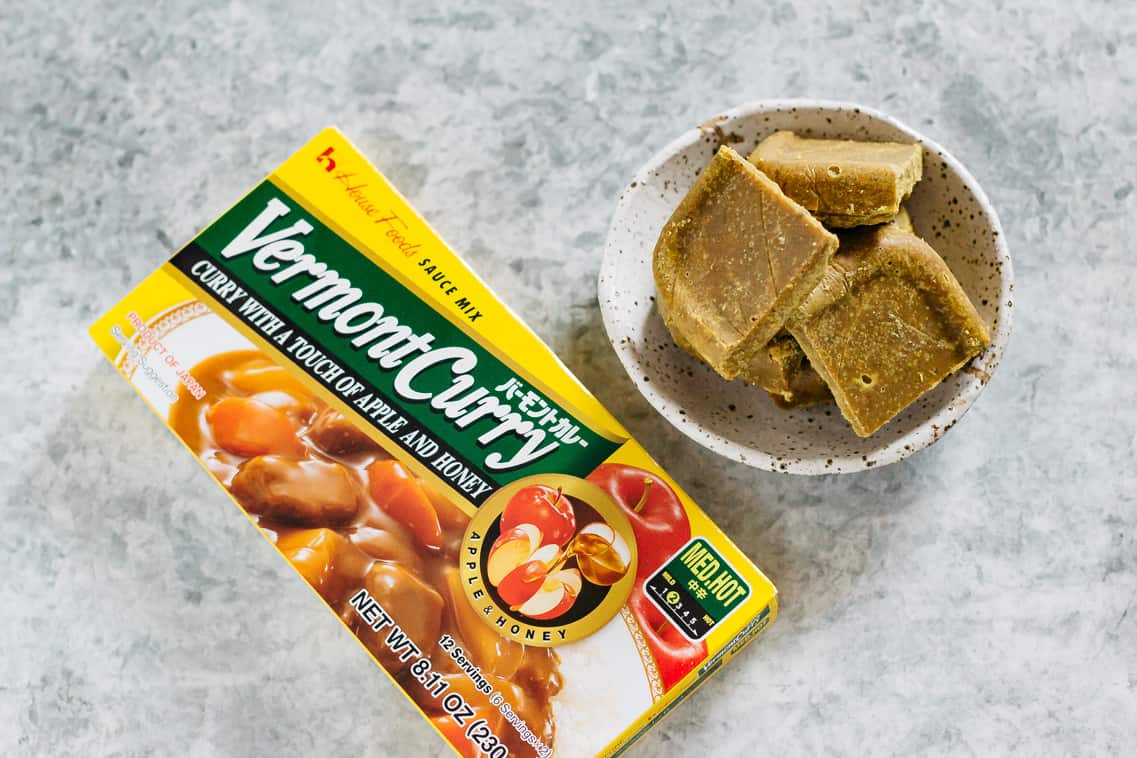
Japanese Curry Roux Brands
In Australia, S&B brand ‘Golden Curry’ sauce mix is readily available in the international isle of major supermarkets for around A$4. But my favourite is House brand ‘Java Curry Medium Hot’. This one is usually sold at Japanese grocery stores and Asian supermarkets.
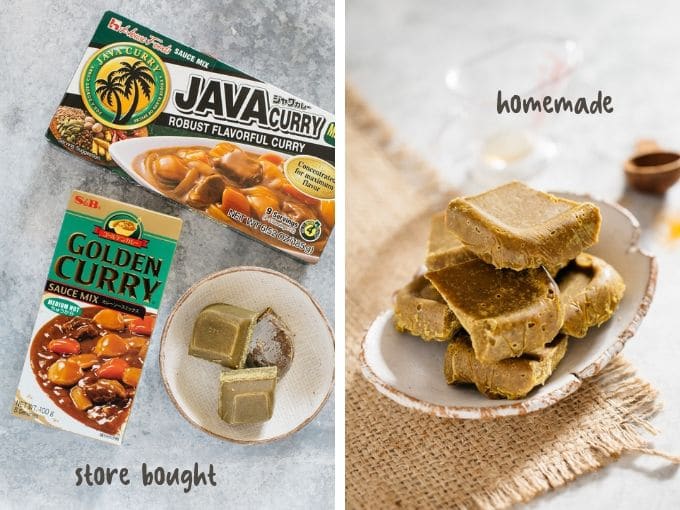
The other popular curry roux is House’s Vermont Curry which is a commonly purchased curry roux in Japan. This is the one my mum usually uses and is my children’s favourite because the mild flavour has a delicious sweetness.
Homemade Curry Roux
If your local Japanese/Asian grocery store or online Asian store does not stock the ready-made curry roux packs then don’t despair. You can also make curry roux from scratch. Read my Homemade Japanese Curry Roux post to learn how to make it at home.
Levels of Japanese Curry Spiciness
There are basically three levels of spiciness no matter which brand you buy: mild, medium hot, and hot. It seems that there is a common colour scheme used among all the brands to differentiate these spice levels. Red packets are usually mild, green packets are medium hot, and blue packets are usually hot.

If you look at the back of the packets, a table shows how spicy the roux is in colour and number. I prefer medium-hot because it has a bit of a spicy kick but not too much. However, my children only like mild (I think it is a better option for younger people because it has a sweeter flavour).
Japanese Curry Ingredients
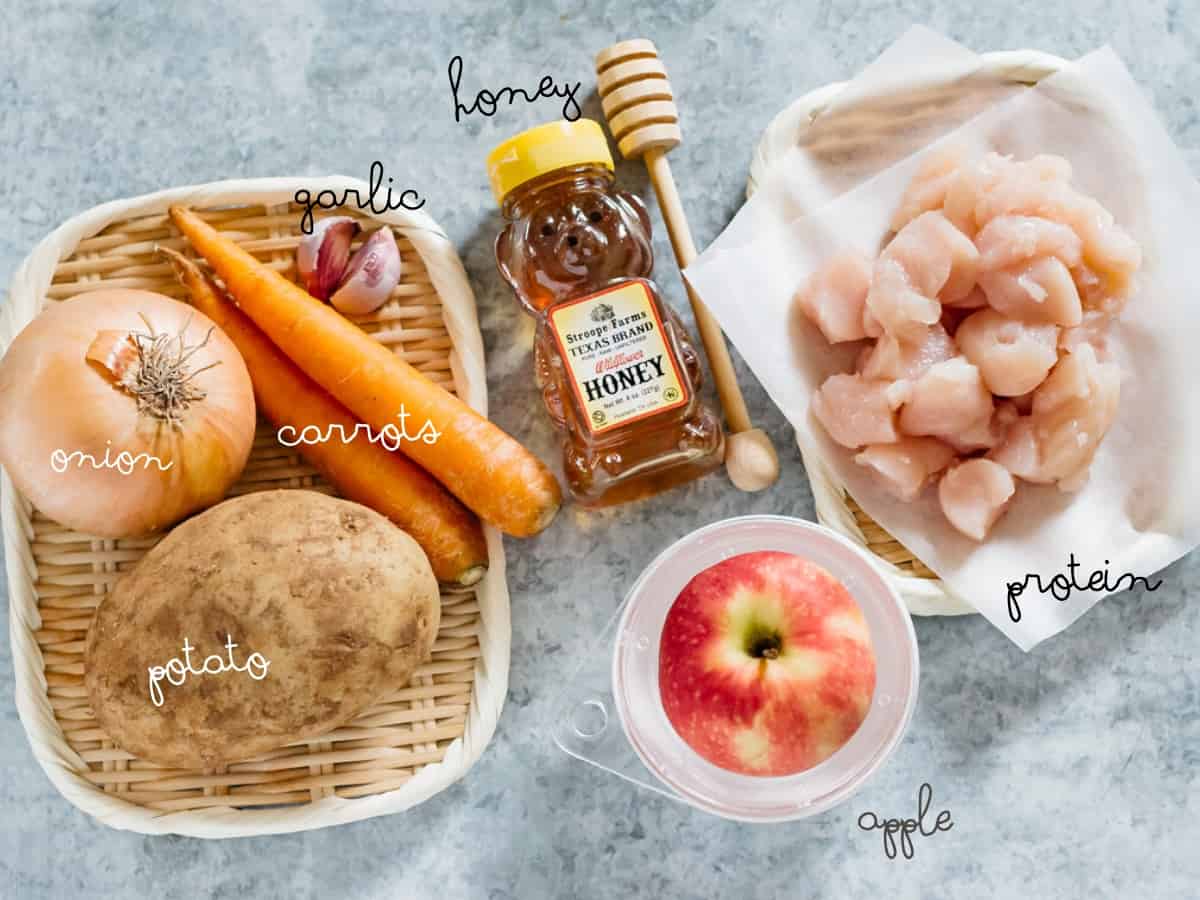
Commonly used ingredients for Japanese rice curry are a combination of protein and vegetables. Proteins such as chicken, beef, pork, and seafood such as shrimps are used generally. Common vegetables used are root vegetables such as potato and carrot.
Variations of Japanese Curry Rice
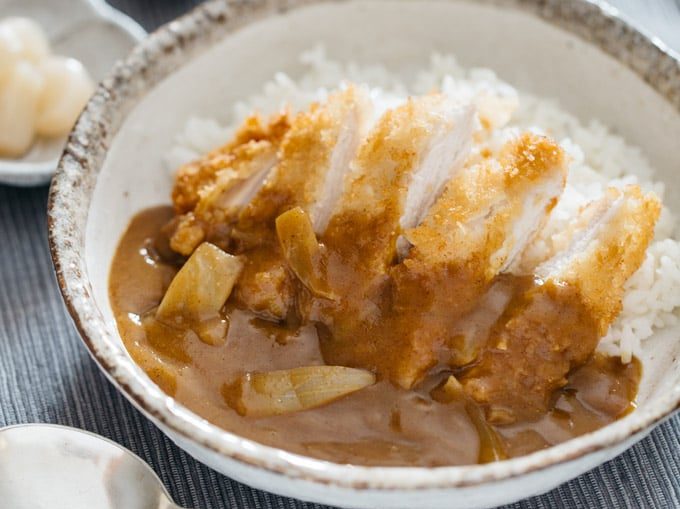
When different ingredients are used, the curry is named after that special ingredient. For example, mushroom curry or summer vegetable curry is clearly named after these ingredients. As you may already know if you add anything like Pork panko-crumbed cutlets, it is called “Katsu curry” and with Chicken panko-crumbed cutlets it is called “Chicken katsu curry“. The curry variations are endless.
How to Cut Ingredients
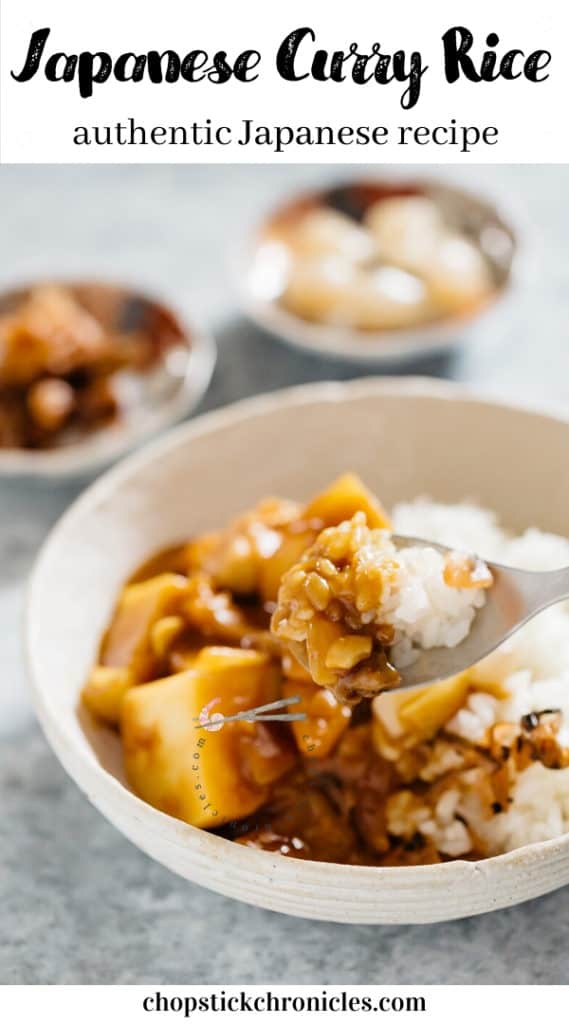
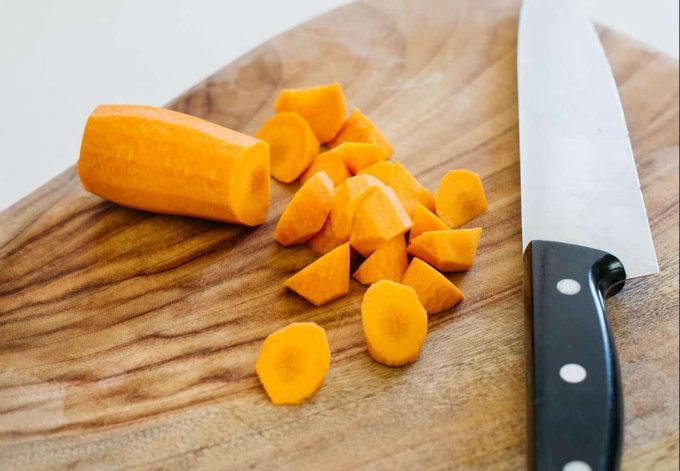
Cutting each ingredient is somewhat important. I like cutting the ingredients in big chunks, especially the potatoes. You can taste the curry flavour much more when the potatoes are chunkier because it gets coated with the curry and absorbs the flavour. It’s also better to use waxy or all-rounder type potatoes so that they keep their shape when cooked. If you would like to know more about potato types, read my Korokke- Japanese Potato Croquettes post.
Kakushi Aji (Secret Ingredients)
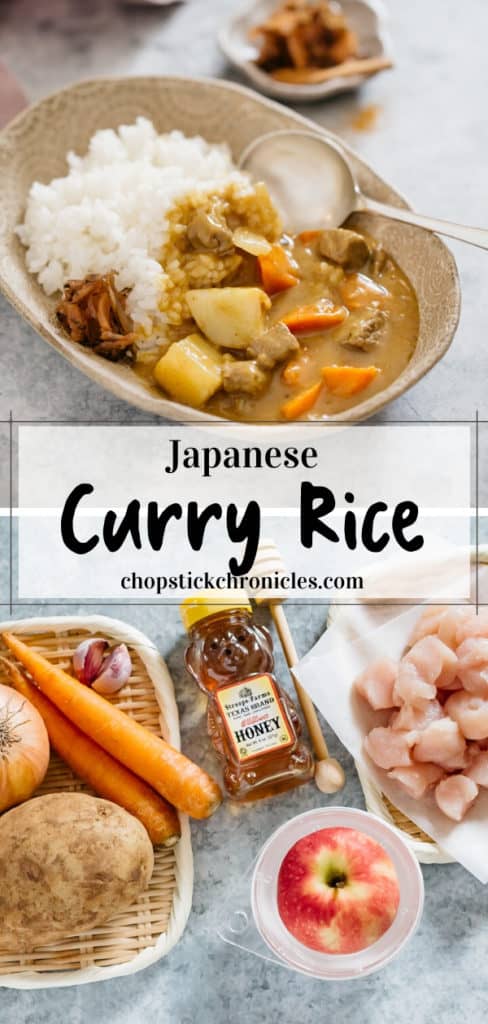
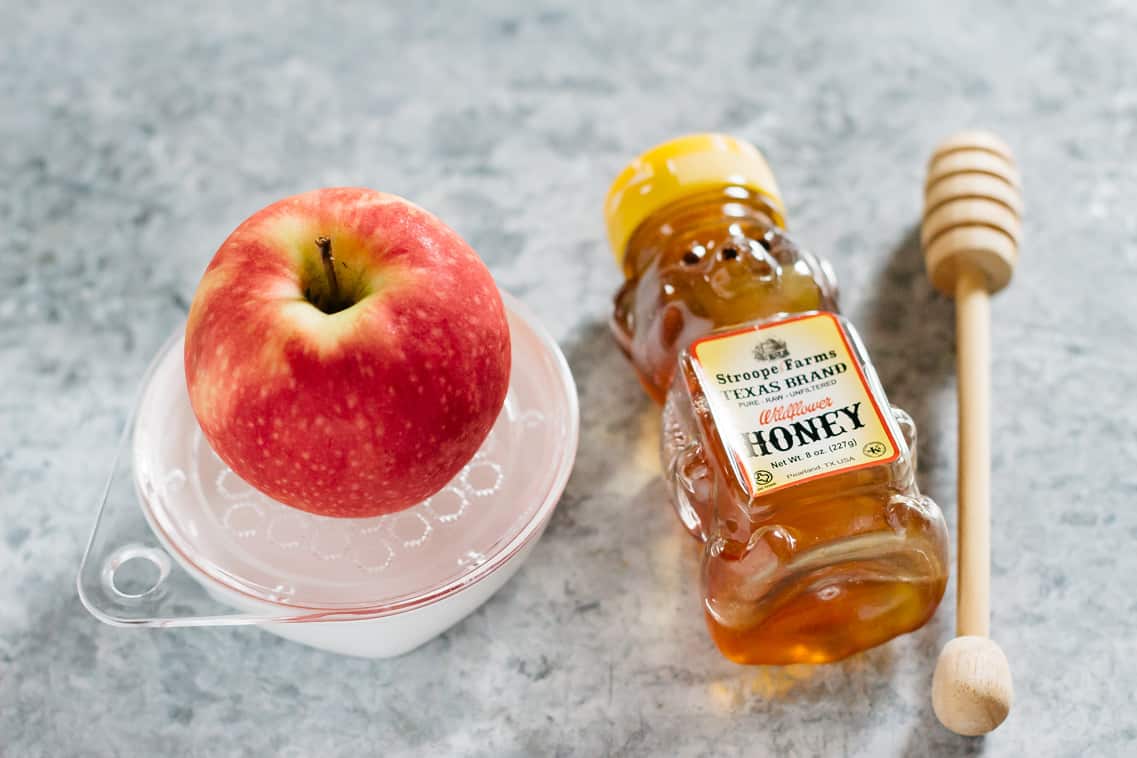
The ultimate Japanese curry rice secret ingredients “kakushi Aji”, which literally translates to “hidden taste”, are Apple and Honey. These are well-known Japanese curry rice ingredients among Japanese people so it’s not much of a secret anymore. Adding grated apple and honey gives the Japanese curry rice the signature sweeter flavour and is a staple for any Japanese mother’s home-cooked curry.
Worcestershire Sauce
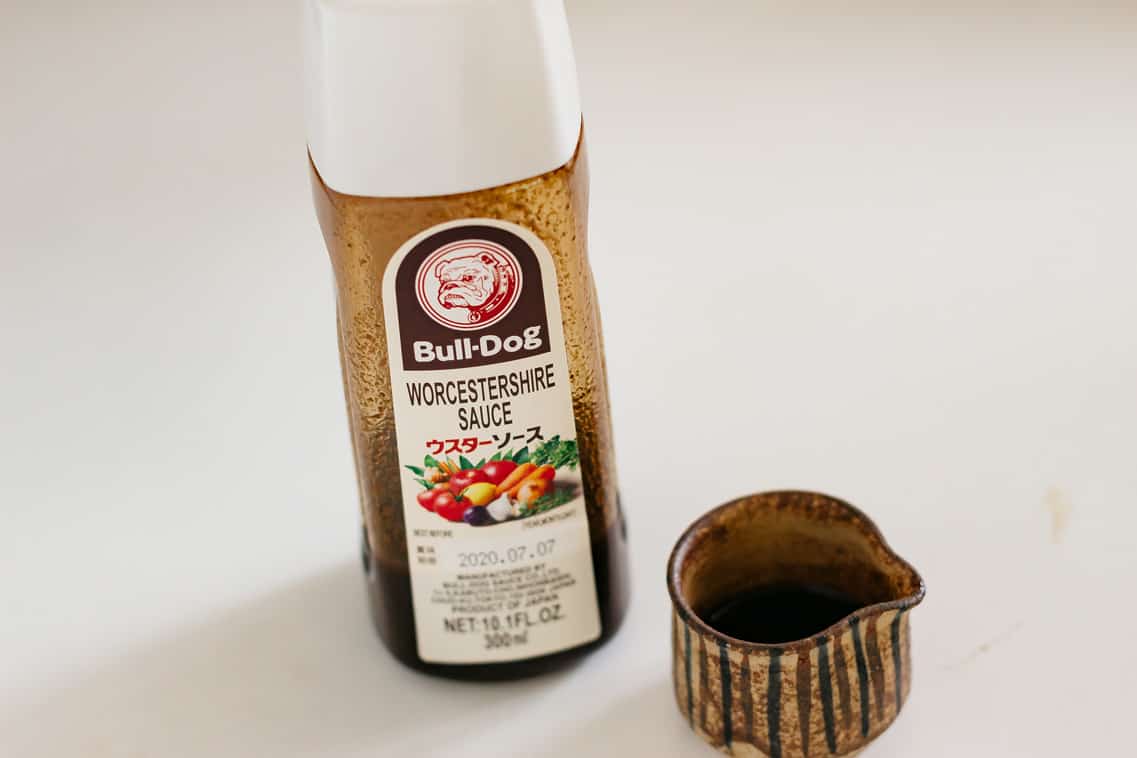
Usually, I prefer Worcestershire sauce over soy sauce. I use soy sauce on everything but Japanese curry rice and Yakisoba. Those are the only two dishes I use Worcestershire sauce. Somehow Worcestershire sauce enriches the Japanese curry rice flavour along with the hidden taste of apple and honey. Once you try it, you can never have Japanese curry rice without Worcestershire sauce.
Accompanying Condiments
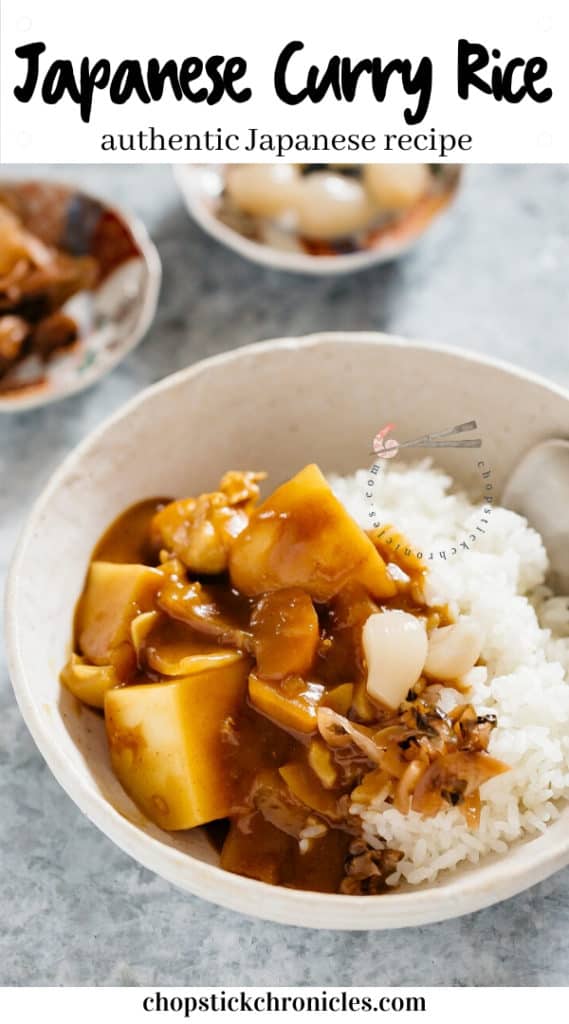
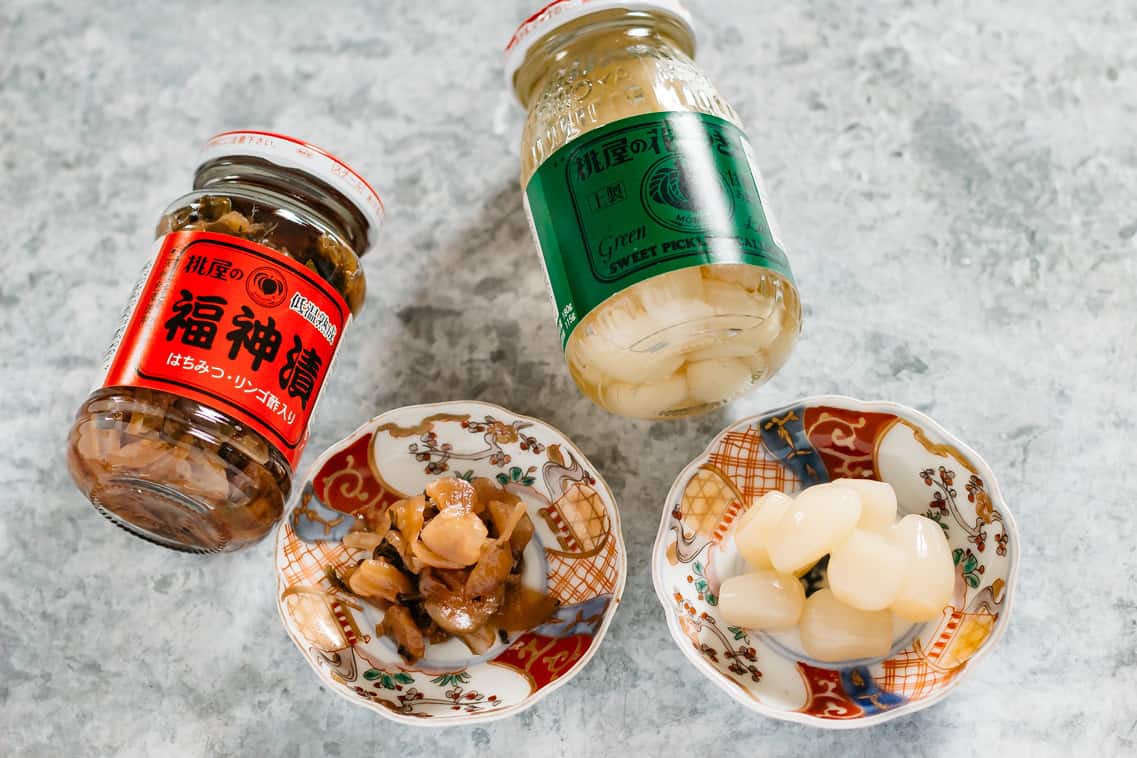
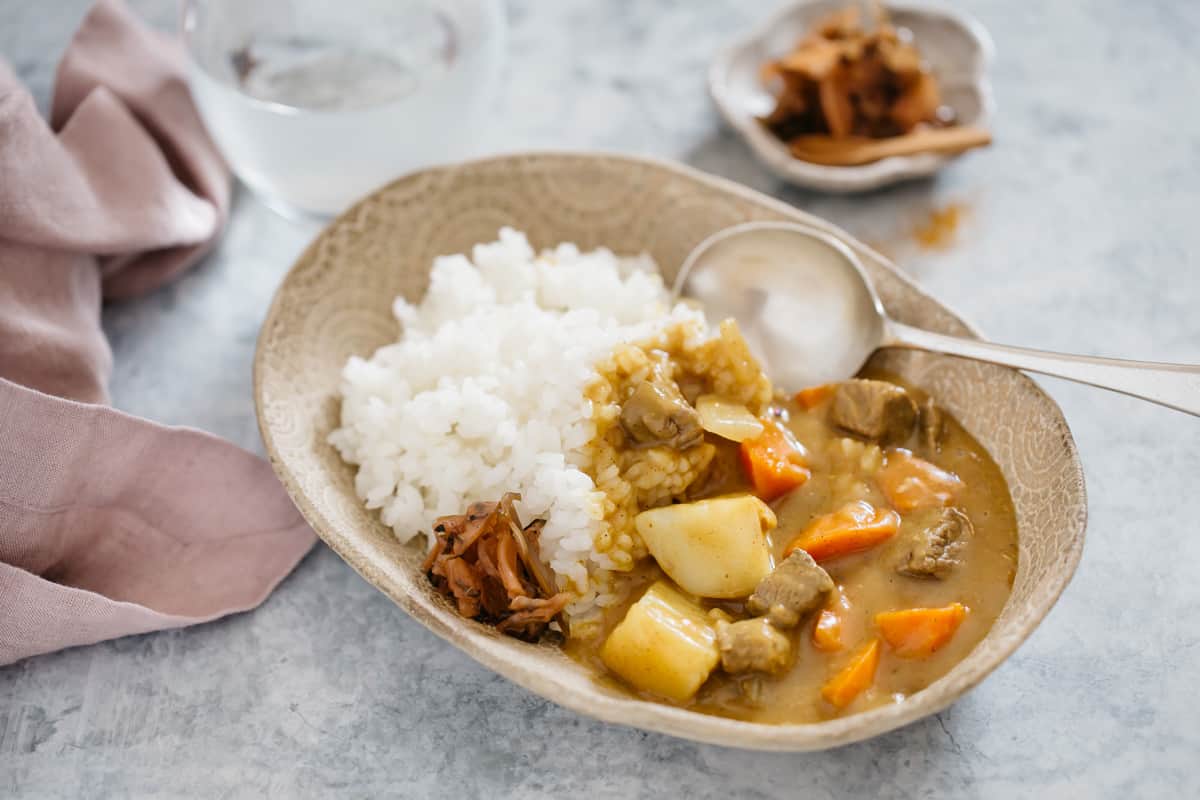
One last Japanese curry rice secret is the accompanying condiments; “Fukushinduke” and “Rakkyo“. Fukushinduke is pickled daikon, eggplants, cucumbers and other ingredients in sweet plum vinegar and soy sauce. (Photo, below right). Rakkyo is also pickled scallions in sweet vinegar. (Photo, below left).
Not Only Japanese Children’s favourite
Japanese curry rice is in the top 3 favourite dishes of Japanese children.
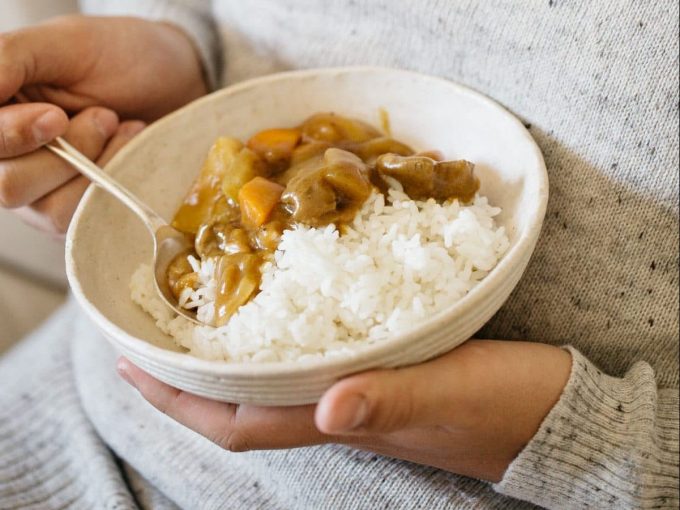
But I know it’s not only Japanese children who love it. All of my children’s friends loved eating it whenever they came over to our house, especially one of my son’s friends. Every time he came over he would request to have it for lunch, so I would always make a large batch and he would take home the leftovers.
How to Make Japanese Curry
Here is belief process of making Japanese curry rice.
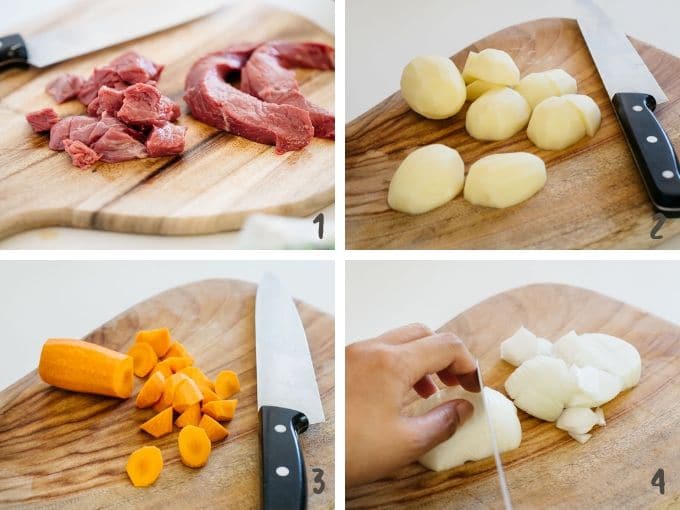
- Start to cook rice
- Cut the protein source of your choice, and vegetables into bite-sized chunks.
- Heat olive oil in a pot and add garlic and onion to add fragrance.
- Add vegetable chunks and chicken to fry.
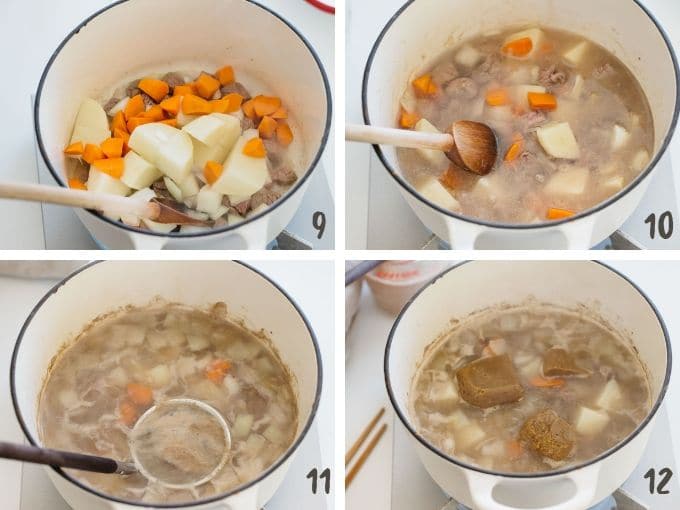
- Pour water into the pot and stir in the grated apple and honey.
- Skim the scum off occasionally.
- When the vegetable and chicken is cooked, add the curry roux and turn the heat off.
- Make the curry roux pieces dissolve in a ladle with pair of chopsticks, one by one.
- Serve with cooked rice.

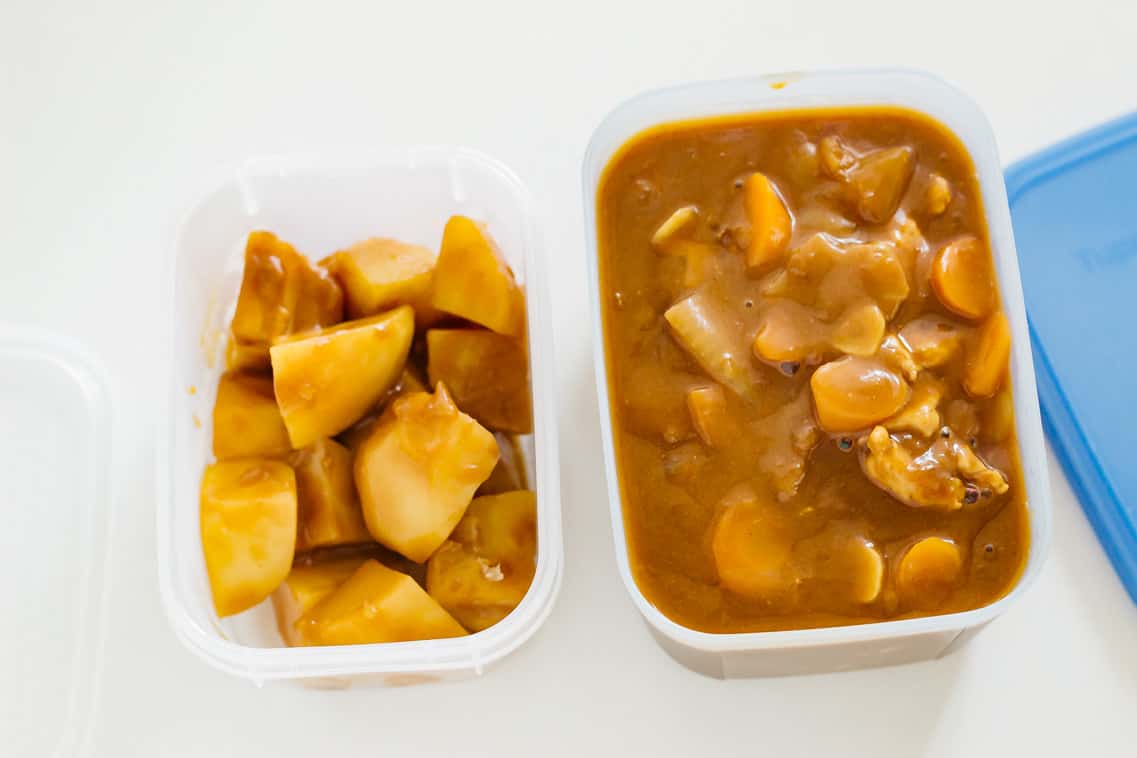
How to Store
So if you make bulk curry as I used to for my son’s friend, you can freeze it. Here is a very important tip to freeze Japanese curry. You need to separate the chunky potato pieces. They don’t freeze well. So you either eat all potatoes or take the potatoes out of the curry. Then mash the potato and freeze separately. You can reheat them in a microwave or in a saucepan.
Versatile Adaptations of the Curry
The Japanese curry’s flavour is also quite versatile and does not always have to be served with rice. In Japan, some common adaptations of the curry are: “Karee Udon“, udon noodles in a curry flavoured broth; “Karee chahan“, curry flavoured fried rice; and “Karee pan“, which is a thicker curry sauce inside a deep-fried bun. This one is a little evil for the body but it is one of my daughter’s favourite Japanese foods.

Stay Connected
If you liked my recipe for Japanese Curry Rice, please rate it and leave a comment below. Also, don’t forget to follow me on Youtube, Pinterest, Facebook , Twitter and Instagram to keep up to date with all the latest happenings on Chopstick Chronicles. Don’t forget to use the hashtag #ChopstickChronicles so I can see your wonderful creations!
Recipe Measurement Notes
- To alter the serving size click on the serving number and move the slider left or right to adjust the quantity.
- As you move the slider the quantities of the ingredients will adjust accordingly in both imperial and metric measurements.

Japanese Curry Rice カレーライス
Video
Ingredients
- 1 2/3 cups Uncooked rice – Follow the instructions on your rice cooker. *1
- 1/2 a large packet of Curry Roux *2
- 9 oz your preferred protein *3
- 1 brown onion
- 1 large potato *4
- 1 carrot *5
- 1 tbsp olive oil
- 2 cloves of garlic
- ¼ cup grated apple
- 1 tbsp honey
- Pinch of salt and pepper to taste
- 2 cups water approximately 500 ml
- Fukushinduke and/or Rakkyo to accompany condiments *6 optional
- Worcestershire sauce optional
Instructions
- Start to cook rice. *7
- Cut the meat into bite size pieces and set aside
- Peel and cut the potatoes, carrot, and onion into large bite size pieces and set aside.
- Peel and slice the garlic.
- Heat olive oil in a pot over medium heat and add garlic
- When the garlic is fragrant, add the onion to cook.
- Add the chicken to cook and when they change into whitish colour, add potato, carrot, and onion and stir with a wooden spatula.
- When the oil has coated evenly on all the ingredients and the outer-edge of the potatoes have become transparent, add the water, honey, and grated apple.
- Bring it to boil and then turn the heat down to low to simmer until the potatoes become soft. and all the other ingredients are cooked. (Takes about 15 minutes)
- Turn the heat off, break the curry sauce blocks apart and add to the pot.
- Make each piece of curry roux dissolve into the cooking water in ladle with a pair of chopsticks *8
- Turn the heat back on low and bring to simmer to thicken the sauce.
- Serve cooked plain rice in a shallow bowl and pour the curry over the rice.
- Garnish with Fukushinduke and Rakkyo if you like. *Optional





If using your Homemade Curry Roux recipe, how many cubes should you use in this recipe?
Hi Laurie, thank you for the question. It is a great question though the cube size will differ so I recommend adding one by one and see consistency and taste of your curry.
I’m looking forward to making this recipe! I’m also looking for a recipe for Katsudon. Can you point me in the right direction? It was one of my husband’s favorites when he lived in in Japan in the 1960s.
Hi Micki, Thank you foe reading my recipe blog. Katsudon is here.
Love the food recipes
I always used to dice the garlic instead of slicing it + add the apple after stirring in the roux blocks but I followed your method this time round and it was SO MUCH BETTER.
Thank you Valerie 😀
Just tried this today. It was very good. I did add the Worcestershire sauce during cooking but I’ll try it at the end next time after reading your comment. Thank you for the great recipe and the recipe for the Roux. My husband said the spices smelled so good.
Thank you so much Beth <3
Ohayo! Thank you for this recipe – we are big fans of Japanese food and any easy way to get introduced to it in home cooking is something I cherish! I have personally used this recipe for years, but there are some clarifications I hope to get:
1. There are two sets of cooking instructions – I’ve been following the 2nd one, so hoping I’m doing it right!
2. Not too sure when to try adding the Worchestershire sauce, or should we keep it separate?
3. In the 2nd set of instructions, at step 6 and 7 we add onion twice. Should we be dividing it into two batches?
Other than that, keep on doing what you’re doing! We’ll explore your other recipes for sure 🙂
Hi Leon, Thank you for making Japanese curry with my recipe.
1. The instruction in the post is just brief process, and the second is detailed. So you are doing right.
2. I like just pouring over the worcestershire sauce over the served curry rice just before I eat 😀
3. Thank you for bringing my attention to it, It is supposed to be just add onion once.
Thank you!!
I love this recipe! Once you get it under your fingers it’s quick and easy and SUPER tasty! My roommate and I absolutely LOVE this curry!