
Tonjiru is a traditional Japanese soup made with pork, miso, and a variety of vegetables and spices. Learn how to make this delicious hearty soup at home.

Table of contents
What is Tonjiru?
Tonjiru is a type of miso soup made from pork belly slices, konnyaku, root vegetables including gobo and daikon radish, in a dashi stock broth packed with umami. It is also known as “butajiru”, buta or ton which means pork as it depends on how the kanji character 豚 is pronounced.
Why You will Love this Tonjiru
Tonjiru is a winter comfort food in Japan and you will love this tonjiru recipe because it is easy to make, and the vegetables can be substituted with whatever vegetables you have in your fridge.

Tonjiru Ingredients
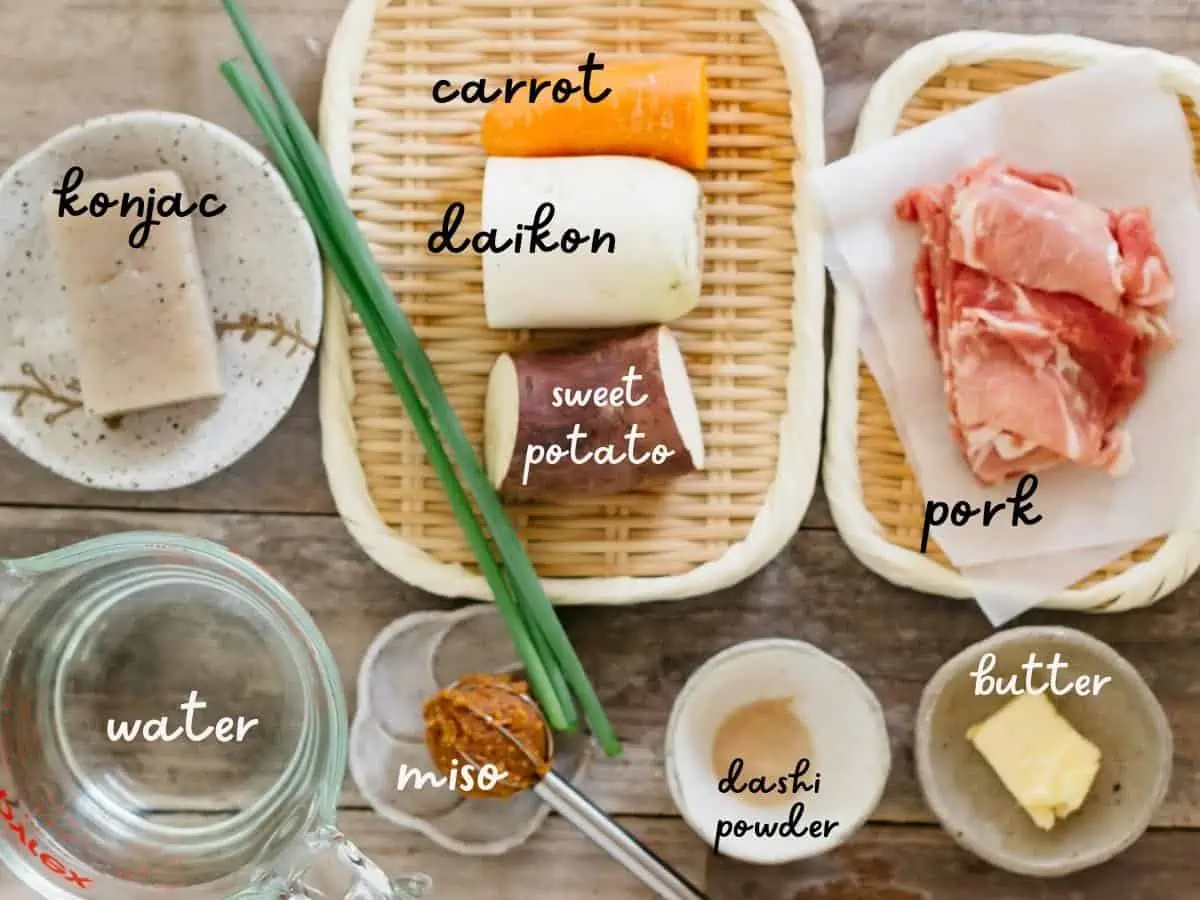
The main ingredients for tonjiru are pork as the name of this dish indicates, and root vegetables such as burdock root, satoimo which is taro. It can be difficult to get ingredients in Australia that you can get easily in Japan, so I used carrot, daikon, sweet potato, konjac, and thinly sliced pork belly from a local Japanese grocery store.
How to Make Tonjiru
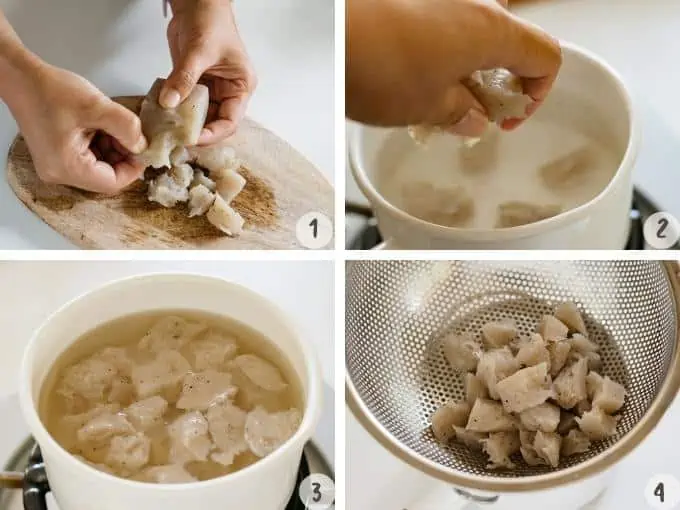
1. Prepare the konjac to remove the fishy smell. If you are interested to know more about Konjac I have provided more detail in my Konjac post about this ingredient.
2. Cut the vegetables into uniform bite size pieces. This type of cutting is called “Rangiri” in Japanese. Rangiri is a way of cutting cylindrical vegetables such as carrots or daikon and consists of random, diagonal cuts made while rotating the vegetable one-quarter turn between cuts. The large, evenly cut surfaces allow for absorption of flavor, making this method particularly suitable when simmering.
If you are using Gobo burdock root, wash it but there is no need to peel the gobo. However, In order for the flavors to penetrate through easily, daikon needs to be peeled because it has thick skin.

3. Stir fry the prepared konjac and veggies in a pan over medium heat until the veggies look transparent.
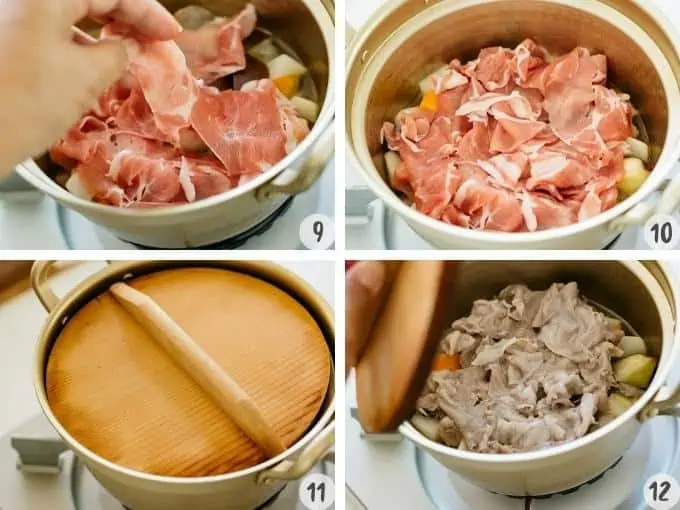
4. Add just enough water to cover the veggies, and place the thinly sliced pork over the vegetables and steam cook veggies and pork together for about 5 minutes with a lid on.

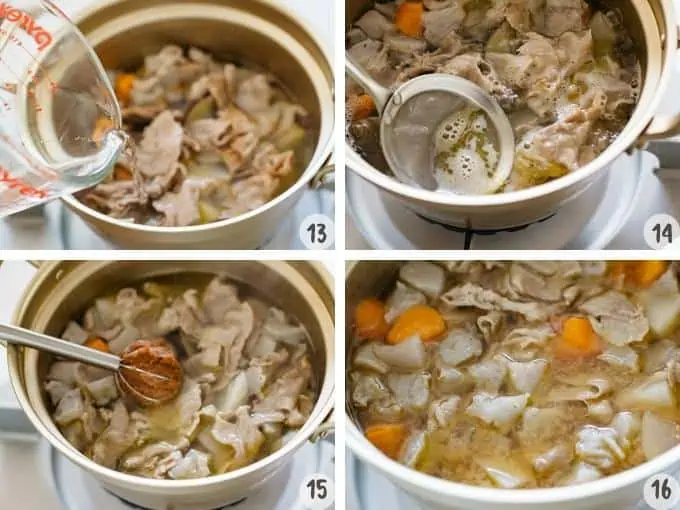
5. Pour rest of the water, bring it to a boil, turn the heat off and add 2 tbsp miso paste.
6. Ladle to a soup bowl, garnish with green onions or scallions. You can also sprinkle shichimi togarashi and sesame oil for more flavors.
Tips for Making Sekihan
- When we cook ordinary rice in a rice cooker, we let the rice grain absorb some water before cooking it so that when the rice is cooked it is soft. However, do not leave glutinous rice in water if you are going to use a rice cooker or a pressure cooker, because the water absorption rate of glutinous rice is higher so there ends up being not enough water to cook it or if you add water to cook, it ends up soggy.
- Traditionally, the rice is cooked by steaming, when we did not have pressure cookers. If you are going to decide to cook this dish in the traditional way, you need to soak the rice in water for 6-8 hours and if the rice is old, it needs to be soaked for longer. Then drain the soaked liquid and steam cook the rice.
- It’s important to add the salt at the right time when cooking. Do not add the salt to the Azuki Beans. The salt makes the azuki beans firm and will not be cooked properly. The salt needs to be added when cooking the rice (after the beans have cooked).
FAQ
A : You can substitute root vegetables with parsnips, pumpkins, and also you can add tofu and shiitake mushrooms and shimeji mushrooms. Konjac also can be replaced with Shirataki noodles.
What to Serve with?
Related Recipes

Tonjiru 豚汁
Ingredients
- 3.5 oz Konjac or ¼ of Konjac or 100g
- 1.8 oz Carrot ½ or 50g
- 2.5 oz Daikonn ¼ or 70g
- 3.5 oz Sweet potato or 100g
- 1 tbsp butter *1
- 13.5 fl oz water 400 ml
- ½ tsp dashi powder *2
- 2 tbsp miso paste
- 1 tbsp scallion
- ¼ tsp shichimi togarashi optional
Instructions
- Prepare konjac by tearing into bite size chunks then boil it and drain. Set aside.
- Cut carrot, daikon, sweet potato randomly to bite size chunks.
- Melt butter in a pot over medium heat, and saute the vegetables and konjac well until the edge of the vegetables become translucent.
- Add just enough water (about ⅓ of water listed in the ingredients) to cover the vegetables and konjac in the pan.
- Place the pork over the veggies and konjac, put the lid on to steam cook for about 5 min.
- Pour in the rest of the water, and bring it to boil, skimming off scum occasionally.
- When the water has boiled, add the miso paste and stir.
- Turn off the heat and ladle into a soup bowl. Garnish with chopped scallion and shichimi togarashi if you like.






My family loved this soup on a cold winters night, so tasty!
Yes, I am eating this almost everyday at the moment. So cold in Tasmania and this soup warm us up.
This soup looks like the one used in the introduction to Midnight Diner. I love that program, which is currently showing on Netflix.
Hi, I realised that you did not put pork in your ingredient list, but was shown in your photo and instruction. How much pork is needed? What kind of pork?
Thanks.
Hi Angeline, thank you for reminding me. I will fix the recipe. Any kind of pork, some use pork belly but I don’t like fatty meat so I use lean part of pork.
One more question. Are there any substitutions for the Konjac and the Daikon?
Hi Guy, you can substitute konjac with fried tofu called A-ge and turnips or similar for Daikon 😀
The recipe looks really good but you left out the pork from the ingredients list. How much pork do I use?