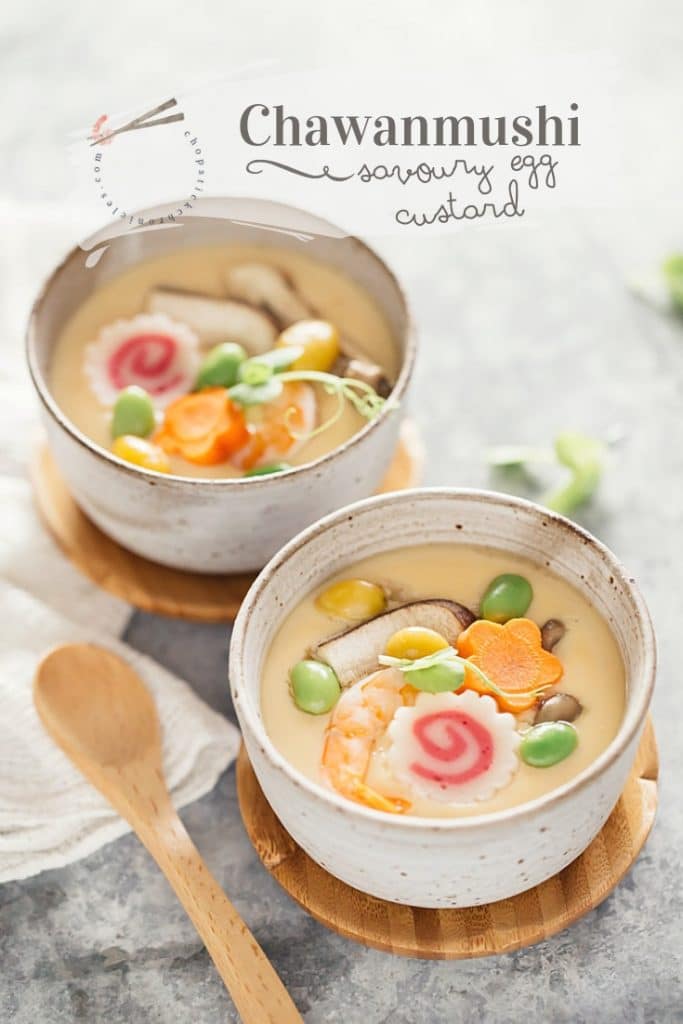
Master the ultimate Japanese dish “Chawanmushi” today. Silky smooth savoury soft egg custard subtly and delicately flavoured, yet packed with Umami. Furthermore, this sophisticated dish can be cooked in 30 minutes.

What is Chawanmushi ?
Chawan(tea cup) mushi(steam) literally means teacup steamed egg custard. Unlike other egg custard, Chawanmushi is not sweet but it has savoury flavour packed with umami from dashi stock and topping ingredients.

What the Egg mixture is flavoured with?
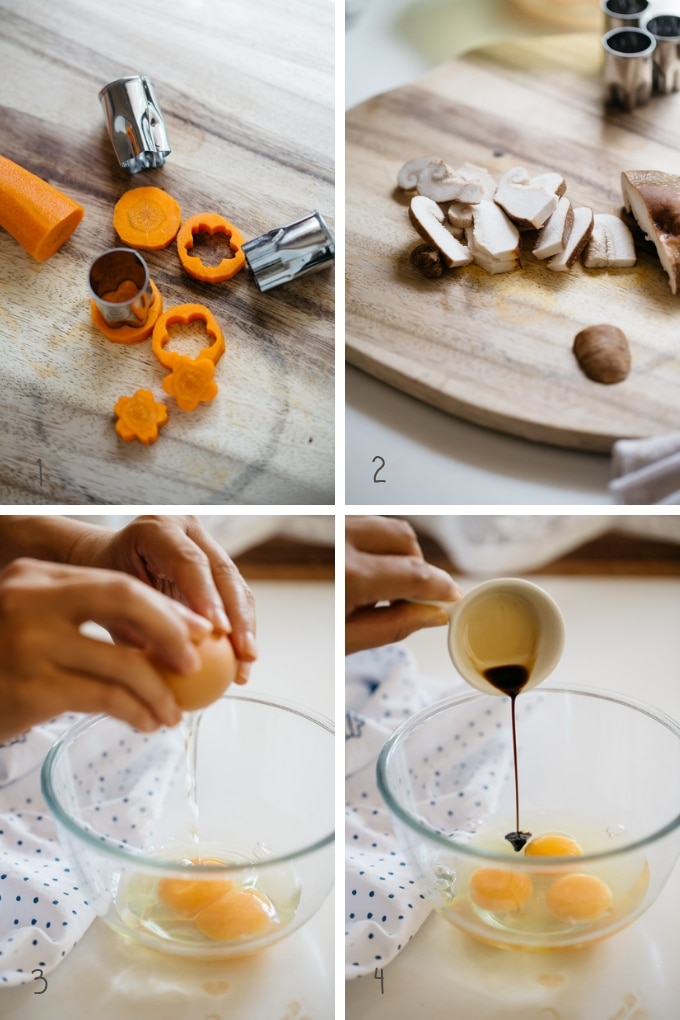
The Egg mixture making Chawanmushi only requires 4 ingredients – eggs, dashi stock, soy sauce(usukuchi), and mirin. If you like softer texture Chawanmushi, the perfect ratio of eggs to Dashi stock is 1 to 3. For example if your egg weigh 50g, you need 150ml of dashi stock. If you like harder texture Chwanmushi, change the ratio to 1 to 2.5.
Topping suggestions
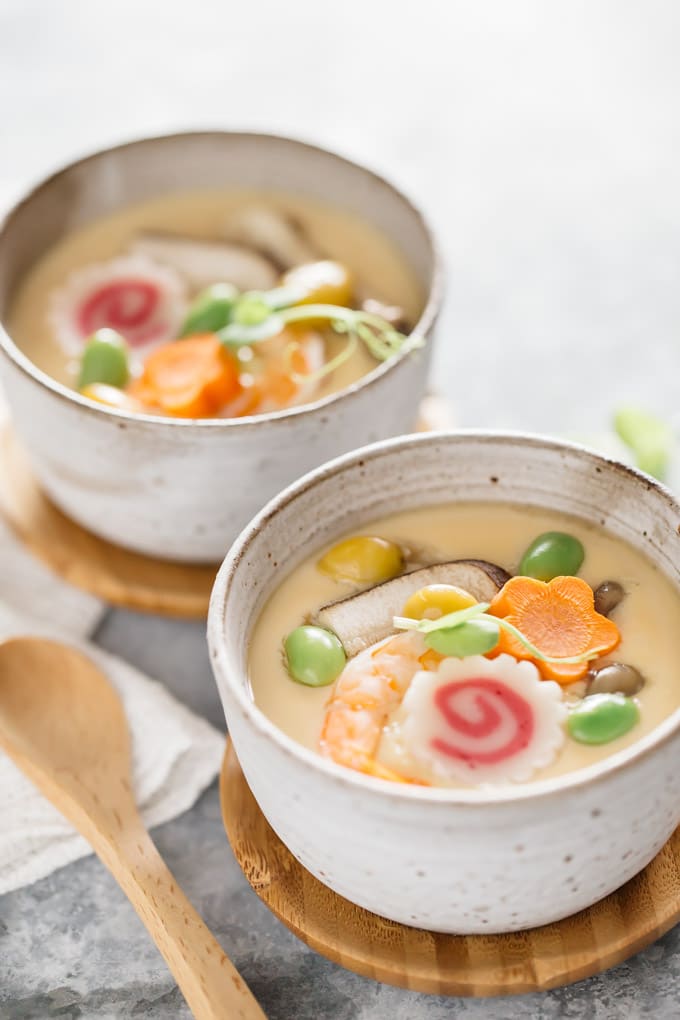
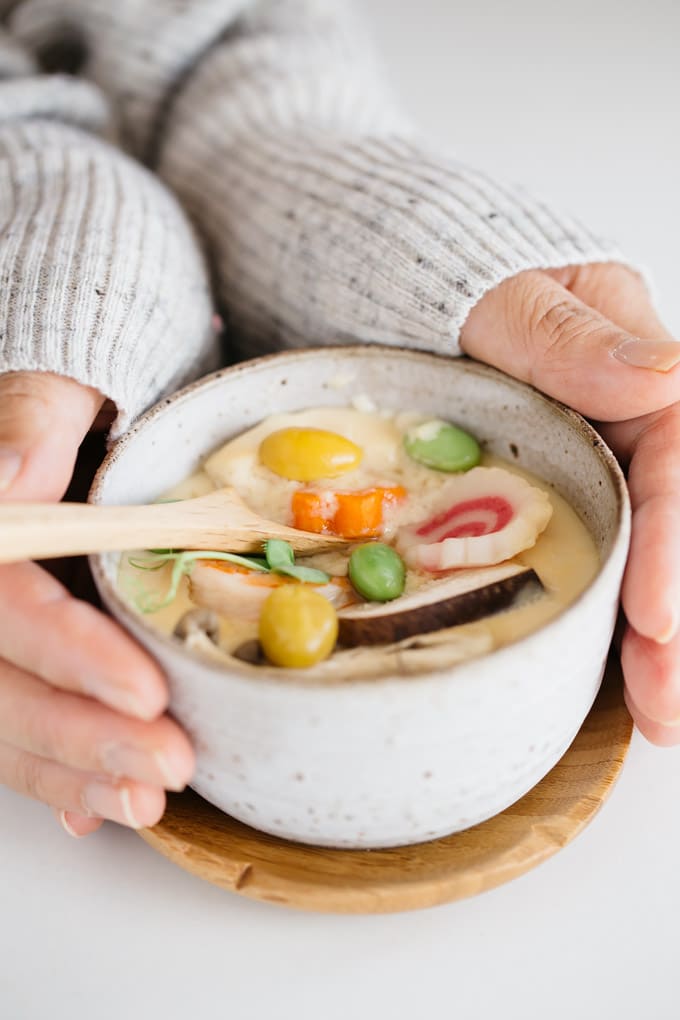
It is typically topped with fish cakes either (Naruto or Kamaboko), Shiitake mushrooms, Ginnan (Ginkgo nuts), and shrimps or chicken meat. Also wilted spinach or parboiled broccoli and decoratively cut carrots will add striking colour.

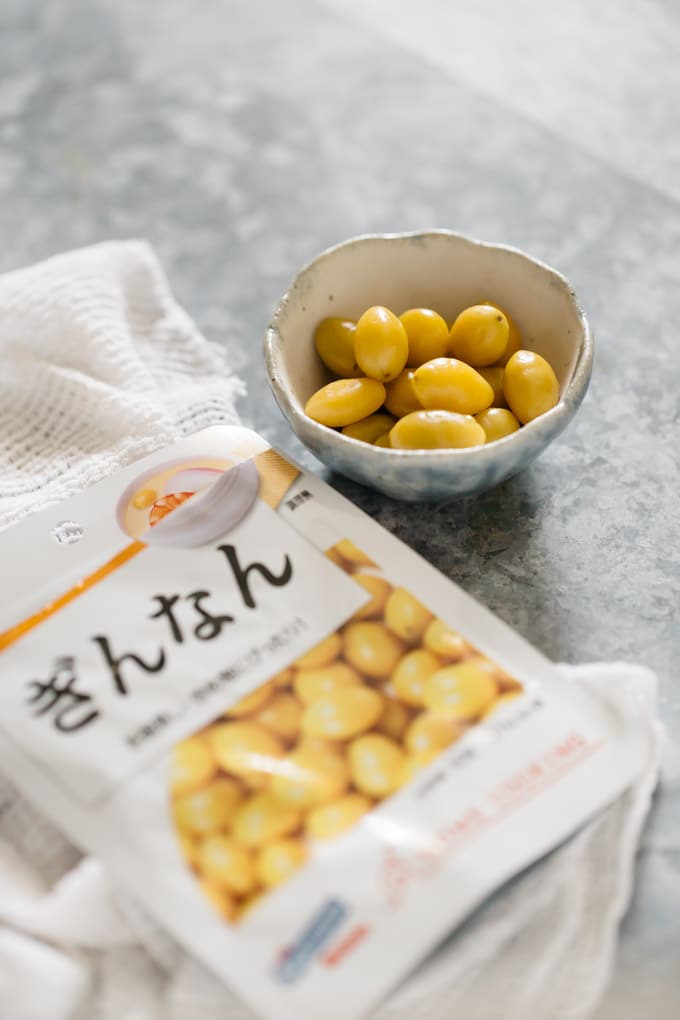
What is Ginnan?
Ginnan is Ginkgo nuts in English. It is seeds of Ginkgo tree and it has whitish coloured shell and yellow flesh. It has a delicious nutty flavour and often used as an ingredient in Japanese dishes such as Takikomi Gohan and Chawanmushi. Luckily I found it in dried form in a packet at a local Japanese grocery store. You can purchase dried gingko nut 
What is Naruto and Kamaboko?
Both Naruto and Kamoaboko are fish cake but in different shapes. Naruto has a pink spiral pattern which resembles the Naruto whirloops in the Naruto Strait. You have probably seen this fish cake in any Ramen dish as it is often used for a ramen topping.

Japanese tea cups to cook in
In Japan, Chawanmushi is very popular and often cooked at home in a special dish. It is teapot shaped and special Japanese pottery. They are commonly and readily available to purchase. They come with a little individual lid too.
I don’t have those pretty cups to cook
Like me and those who live outside of Japan, it is not possible to get those special pottery just for Chawanmushi. You can use ramekins or small mugs instead. Use whatever you have. I use my real tea cups I brought to Australia from Japan. Or if you really want one, you can purchase online Chawanmushi Lidded Bowl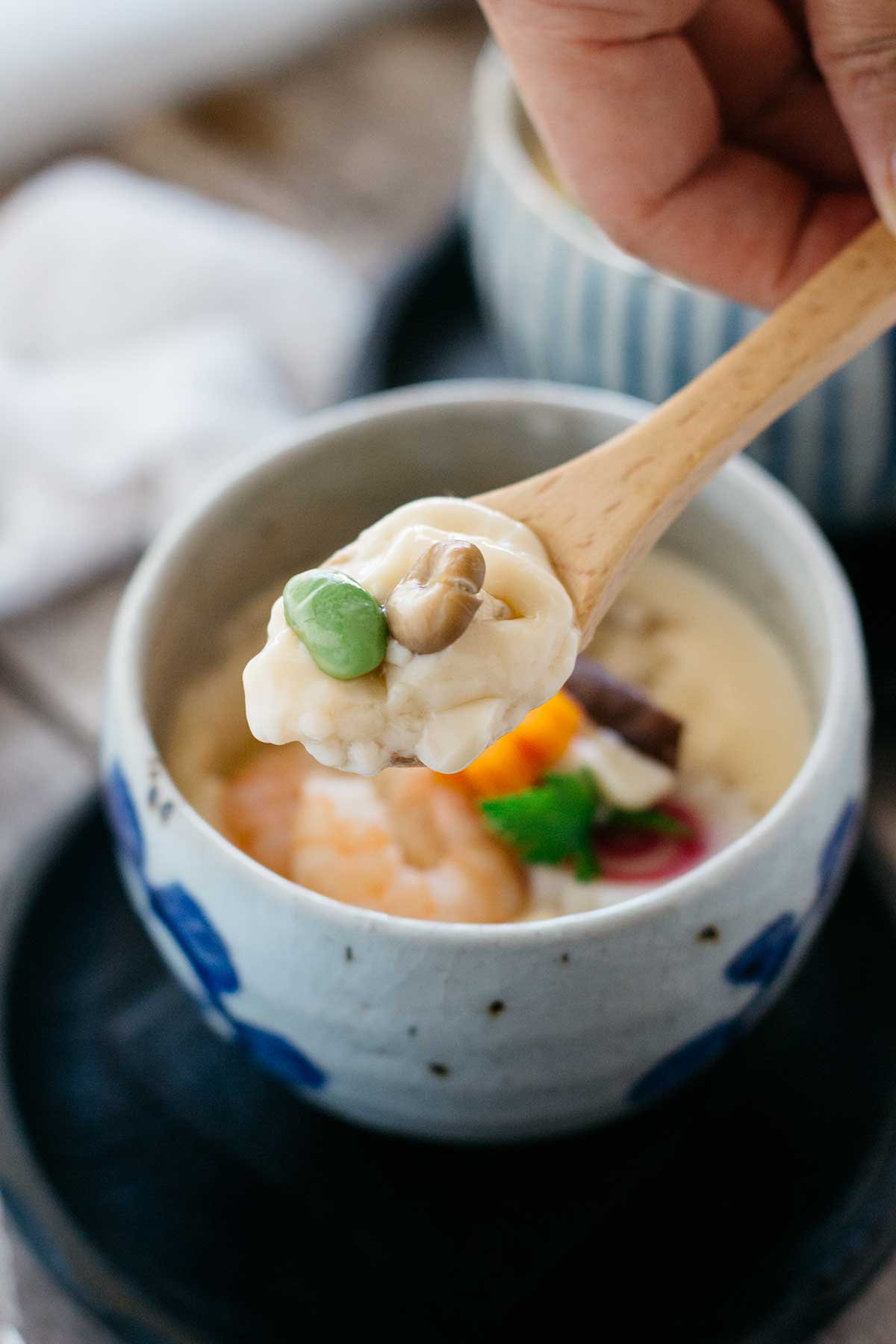

Tips to make Chawanmushi successfully
Although Chawanmushi is a fairly simple dish, the common failure in making it gives a porous and spongy texture. Follow the tips below to make perfect silky smooth Chawanmushi!
1. Try not to aerate the eggs too much.
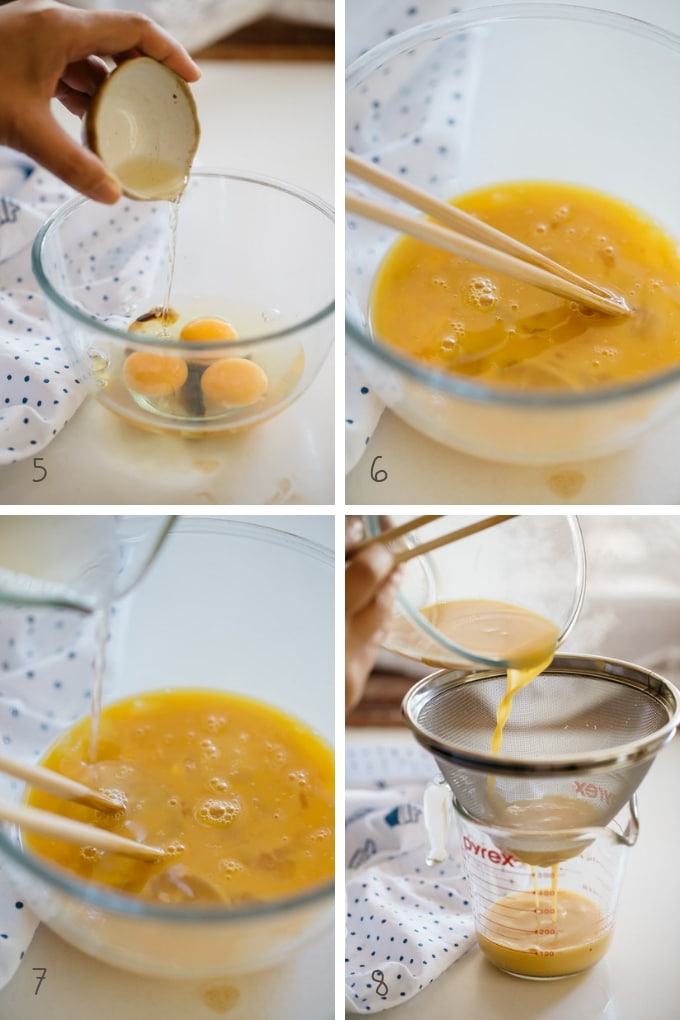
Because if you aerate the eggs too much it will make the Chawanmushi porous. So when you add Dashi stock to eggs, try not to over mix.
2. Drain the egg and dashi stock mixture with a sieve.
This one extra step makes it super silky.
3. Steam with gentle heat
Most importantly, if the steam is too strong this will make a porous and spongy egg custard. Keep a temperature of 70-80°C (158-176°F) which will coagulate the egg inside the steamer.

affiliate disclaimer
The site and our mobile application may contain links to affiliate websites. We receive a small affiliate commission for any purchases made by you on the affiliate website using such links.
We are a participant in the Amazon Services LLC Associates Program. This is affiliate advertising designed to provide a means for us to earn a small advertising fee by linking to Amazon. com and affiliated websites.
Here are my instructions for Chawanmushi. So if you like it, please rate it and leave a comment or any questions below. And don’t forget to check out my other Japanese classic recipes such as Saba misoni (makarel simmered in miso) Simmered Pumpkins.

Chawanmushi 茶碗蒸し
Ingredients
- 3 large eggs weigh 50g each
- 1/2 tsp usukuchi soy sauce *1
- 1 tsp mirin
- 375 ml Dashi stock *2
- 1 shiitake mushrooms
- 3 slices carrot
- 2 pieces of Kamaboko fish cake I used Naruto fish cake left over from making Ramen
- 2 shurimps
- Mitsuba to garnish Option, I did not have one so I used flat leaf parsley instead
- 3 shells edamame
- 9 Ginnan(gingko nuts)
- mitsuba leaves to garnish *optional
Instructions
- cut off stem of shiitake mushrooms and cut it into thin slices and slice the carrot about 3mm(0.1inch) and cut out using cookie cutters. *3
- slice Naruto fish cakes thinly and set aside
- in a large bowl eggs, soy sauce and mirin together with chopsticks and try not to whisk too much to avoid aerating egg.
- Pour Dashi stock into the ball small amount at a time and mix with egg gradually.
- Use a strainer, strain the egg mixture in order to achieve silky soft texture when it is steamed.
- divide the mixture into 3 tea cups(or mugs or ramekins)
- pour water about 3 cm (1.2 inch) high in a pot 20cm ( 7.9 inch) in diameter and bring it to boil over high heat.
- Once the water boiled, place tea cups in the pot and turn down to low heat.
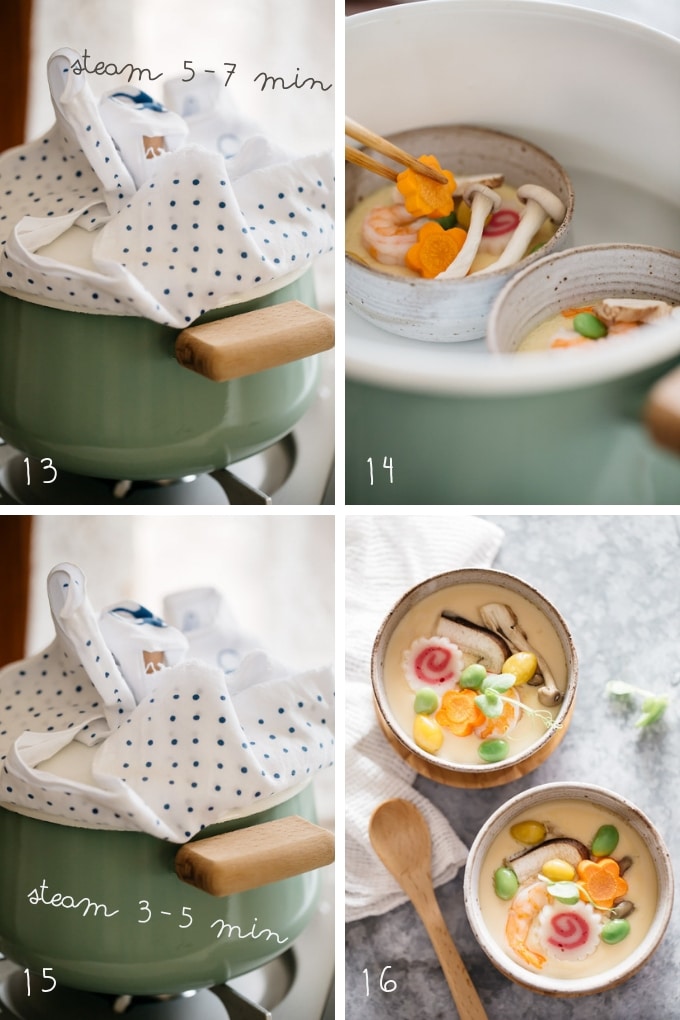
- wrap the lid with a tea towel, so that water does not drip over the chawanmushi. *4
- Put lid on and steam about 5-7 minutes.
- When the egg mixture nearly set, top with shrimp, naruto, shiitake mushrooms, edamame, carrot and Ginnan
- steam farther 5-3minutes.
- Turn the heat off leave the chawanmushi bowl in the pot for set farther 5 min.
- Garnish with Mitsuba (*5 if you have) and serve
Notes
 here.
*4 or cover the tea cups with aluminum foil to avoid the steam water dropped in.
*5 If you can find Mitsuba will add another delicate flavour to Chawanmushi but if you can not this is optional.
*6 All toppings are suggestions only. If you are allergic to shellfish, shrimp can be replaced with chicken meat. If you can not get Ginnan, just use edamame or something else. All together the toppings should be less than 1/5th of egg mixture amount.
here.
*4 or cover the tea cups with aluminum foil to avoid the steam water dropped in.
*5 If you can find Mitsuba will add another delicate flavour to Chawanmushi but if you can not this is optional.
*6 All toppings are suggestions only. If you are allergic to shellfish, shrimp can be replaced with chicken meat. If you can not get Ginnan, just use edamame or something else. All together the toppings should be less than 1/5th of egg mixture amount.





This chawanmushi recipe looks so delicious! I love how simple yet elegant it is. Can’t wait to try it out and impress my family with this lovely Japanese dish. Thank you for sharing the detailed steps!
Hi. I read that you said the ratio is 1-3, so 50g egg = 150 ml of dashi. How come the recipe said 3 eggs, but with 375ml of dashi and not 450ml? Is the this a harder custard? Or to compensate for the mirin and some sauce?
I dated a Japanese chef years ago, and he also told me 1-3 ratio is how they do it. I don’t remember exactly how to do this dish, so I searched and found your blog to be the closest to what I remember from him. He also strained and told me to keep the heat low to get that silky texture because the first time I made it, it was all bubbly. Thanks for posting your recipe, so I can properly make this again.
Hi, Mia yes I just wanted to make it a little firmer.
i haven’t made or eaten chawanmushi in many years, even though it’s one of my favorite japanese dishes. today, i saw your recipe and had to try it out! the ratios you provide for dashi and your tips on straining were so incredibly helpful… mine turned out perfect. so silky and creamy!
絶対にまた作りたいですよ。ありがとうございました!
こんにちは アナスタシアさん。Thank you for making Chawanmushi with my recipe. I am glad to hear the recipe was helpful 😀 また作ってね。
Thank you for another lovely recipe. 🙂 I have made this before and it was delicious, I’d like to try adding shrimp this time. Is it ok to use frozen shrimp and do you have a recommendation for how to use it – do I need to do anything to prep it in advance or can I just put it in with other ingredients on step 11?
Hi Kat yes you can use frozen shrimp. Thawed it ( I assume it is cooked?) and put in in at step 11.
Made this yesterday at home, amateur cook here with very little experience. This was super easy and the taste was amazing – I didn’t even pay attention to how long the eggs were steaming as was cooking other dishes from this same chef 🙂 Regardless, it was good.
I think the key is to put the egg through the strainer. Being Japanese myself, the taste was super authentic and look forward to making more of your recipes!
Arigatou gozaimasu Matt san 😀
Hi, I tried this for the first time, the taste was great but there was still liquid collected on the top of the custard and it had ‘split’ under the surface. Is that from not cooking it enough? I followed the timings and the method but substituted double peeled broad beans and very thin raw chicken slices with the shitake and carrot.
Hi Gerald, there are many causes for “split”. Ingredients substitution is fine and also if you followed the recipe, egg and dashi ratio should be correct. Did you mix the dashi and egg just before it is steamed? if there are some time between mixing and steaming, it might split, and also did you wrap your lid with kitchen towel? The water evaporated onto the lid dropped back into the Chawanmushi?
I’m going to cook this weekend. Question: table for 8. How many eggs do I need? And how much soup stock?? Thank you
If you hover over the serving number, sliding scale will appear. You need to sliding up and down to find the serving you want 😀
JUST DON’T MULTIPLY THE STOCK x 2. The recipe had confused me thinking that the stock was supposed to be times 2 with the “ *2 ” note 🙁
What’s the brand and model of the green pot with white lid you used to heat the chawanmushi and the cups you used? Thanks in advanced!
Hi Steve, I bought it from Ikea while ago, I am not sure if they still have it 😀
Thanks so much for the response! It’s the IKEA Kastrull, it’s been discontinued since. What a nice piece. Thanks again for the fast response and outstanding recipes.
V/r
Steve
You are welcome Steve 😀
Hi! Really want to make this recipe one serve at a time (maybe one with lunch, the other for dinner) but because it calls for three eggs I can’t just easily divide in half. Will this still be good after putting in the fridge for a few hours? Or would you recommend steaming one, refrigerating the raw mixture of the second until dinner, and then steaming fresh again? Thank you so much! x
Hi Chynna, yes this is great even cold 😀 But if you want warm freshly made, do second option. Both will work 😀
Thank you so much! Can’t wait to make it. ♡
Omg thank you so much for writing this recipe!!
This is the best chawanmushi I’ve ever made! The egg is amazingly jiggly but soft and so so so silky and smooth!
* I don’t have light soy sauce so I doubled the amount and added some salt.
* don’t steam with a glass container, it’d take about 1.5 times of time the recipe calls for
*I also tried making dashi(just Benito and kelp) for the first time in my life and IT’S AMAZING! Totally worth the effort!
My boyfriend loves making ramen from scratch so when he says the dashi tastes really good, you know the recipe is amazing!
We sautéed the rest of the kelp and made filling for onigiri and Benito for furikake!
You are welcome Tina 😀 Thank you sharing additional information to make Chawanmushi delicious!!
I would like t do this in a bamboo steamer because I’m cooking for 8 people. Do you think I’ll need to adjust the cooking time as the cups will not be partially submerged?
Hi Rick, yes you need to adjust the cooking time. I made this for making Chawanmushi for easiest possible and that’s why used a frying pan. I think you need to cook a little longer like 10 minutes? on low heat.
So easy to make and extremely delicious! You can use leftovers from last night’s dinner for toppings, and you could really make the flavor of the chawanmushi any way you want. I used chicken and sliced oyster mushrooms simmered in a teriyaki sauce. I didn’t have edamame or ginkgo nuts so I used some sugar peas out of the pods and sliced carrots. This is a new favorite!
P.S. loved all the tips from the author. Thank you!
Ohhh Thank you for your lovely comment 😀 I am glad to hear your Chawanmushi turned out fantastic and love all the variations you made! Fantastic <3
I’ve loved Chawanmushi for so long and now live somewhere that it is rare to find. Thank you for your recipe, I’ve doubled it for my family of four and it turned out perfectly!
Perfect! Chantal 😀 well done 😀
Thank you so much for sharing your recipe and all the beautiful photos and the helpful video. I had chawanmushi at a family’s house in Japan and it was my absolute favorite dish from my whole trip. They don’t offer chanwanmushi at Japanese restaurants where I live (in Washington DC) so I was super excited to find your easy-to-follow recipe. I’m very lucky that I live close to a small Japanese store so I can get most of the ingredients you listed, but they don’t have real mirin there. They have bottles that say “mirin” on them, but they aren’t wine – just a sweet liquid. Is that ok, or should I look for real mirin elsewhere? Also, there are lots of ginko trees where I live (and I’ve even seen people collecting the nuts when they fall in November!). Is it complicated to prepare the raw nuts from the trees to use in this recipe? Are the ones you use dried or cooked in some way? Thank you so much for your advice — arigato gozaimasu!
You are welcome ELizabeth 😀 If the bottle said Mirin, you can use that. For Ginko nuts, to prepaare Ginko nuts is not complicated but it is time consuming and a little bit of work to do. To be honest, I have ever done, so have a look at this site explains well with photos but it is in Japanese. If you don’t understand any part, don’t hesitate to ask me 😀 I will help. https://itiho.com/ginnan/
That’s so sweet of you to look that up for me – thank you! Between the videos and google translate, I think I understand what’s involved and I’m looking forward to giving it a try next fall 🙂
I bought the no-alcohol mirin and made your chawanmushi recipe twice now using ramekins. It came out super delicious, but both times it took much much longer to cook than the times you have listed here (more than 45 minutes + 10 minute to set with the heat off). When you say to turn the temperature down to low on the stove top, should the water still be simmering? Or is it just hot and steaming, but not simmering? When I turn my stovetop to low, the water stops simmering and is just steaming. I wonder if maybe that’s why it’s taking so long to cook… Do you have any advice?
Thank you again!
Can you get ready make dashi?
Yes, Teresa. It Look like this.
 You can buy them from any Asian or Japanese grocery stores.
Hi! If you this kind of dashi, how many packets of dashi power do u put? 1 packet? How much of water will u mix?
Hi Justin, each packets is different so you need to follow your packet direction 😀
Thank you!! Yes, this is very tasty and flavorful dish.
Thank you for the comment and drop by 😀
I need to try this out! Looks flavorful and delicious!
Ha Jamielyn yes Chawanmushi is packed with Umami 😀
Wow! This dish is beautifully put together! I myself have never tried chawanmushi, your presentation makes me ready to dive in!
Thank you Tisha 😀
Hi Shihoko, I love chawanmushi and I think yours looks very pretty. What is the orange and the green (bean?) thing on top of the custard?
Thank you Wendy. Green one is edamame beans. I used frozen edamame beans. Orange is just carrot cut out to shape flower 😀
This is literally my favorite recipe. I make it at least once a week!
Hi Max. Thank you for letting me know. I am glad that you like the recipe 😀
so delicious!
Yes! 😀