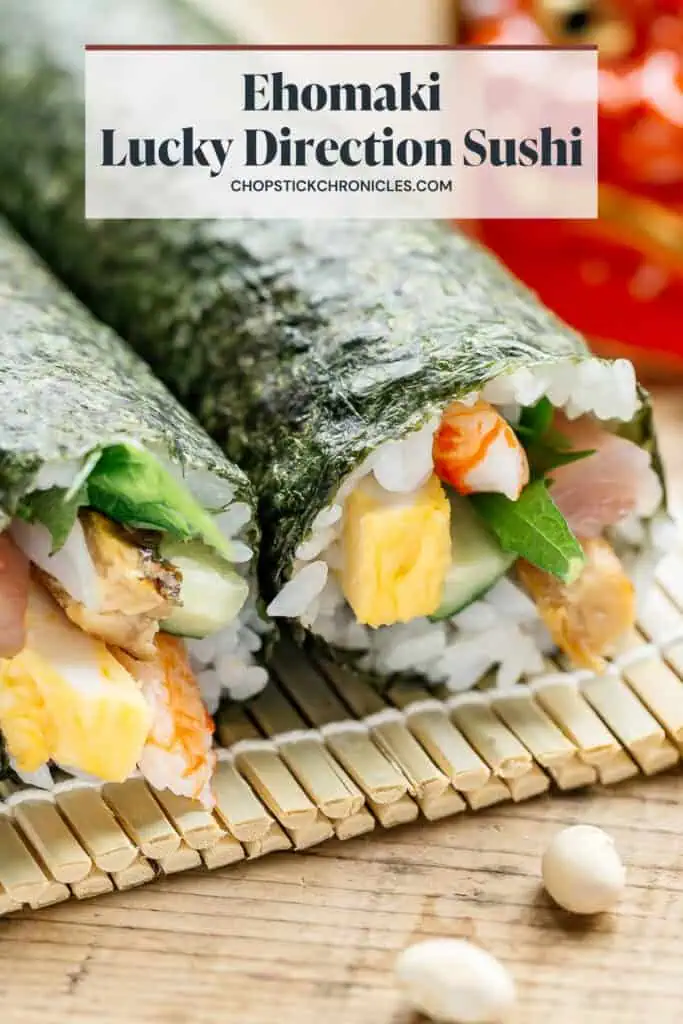
Ehomaki is a special sushi roll eaten in Japan to celebrate Setsubun at the start of February every year to mark the beginning of spring! The tradition of eating this colorful and oversized sushi roll is to bring good fortune and prosperity for the year ahead. Packed with a variety of ingredients representing the seven lucky gods of Japanese folklore, Ehomaki is traditionally eaten in silence while facing the year’s lucky direction (west south-west for 2025). Learn how to make this lucky sushi and join in this fun and delicious Japanese culinary tradition for good luck this year!
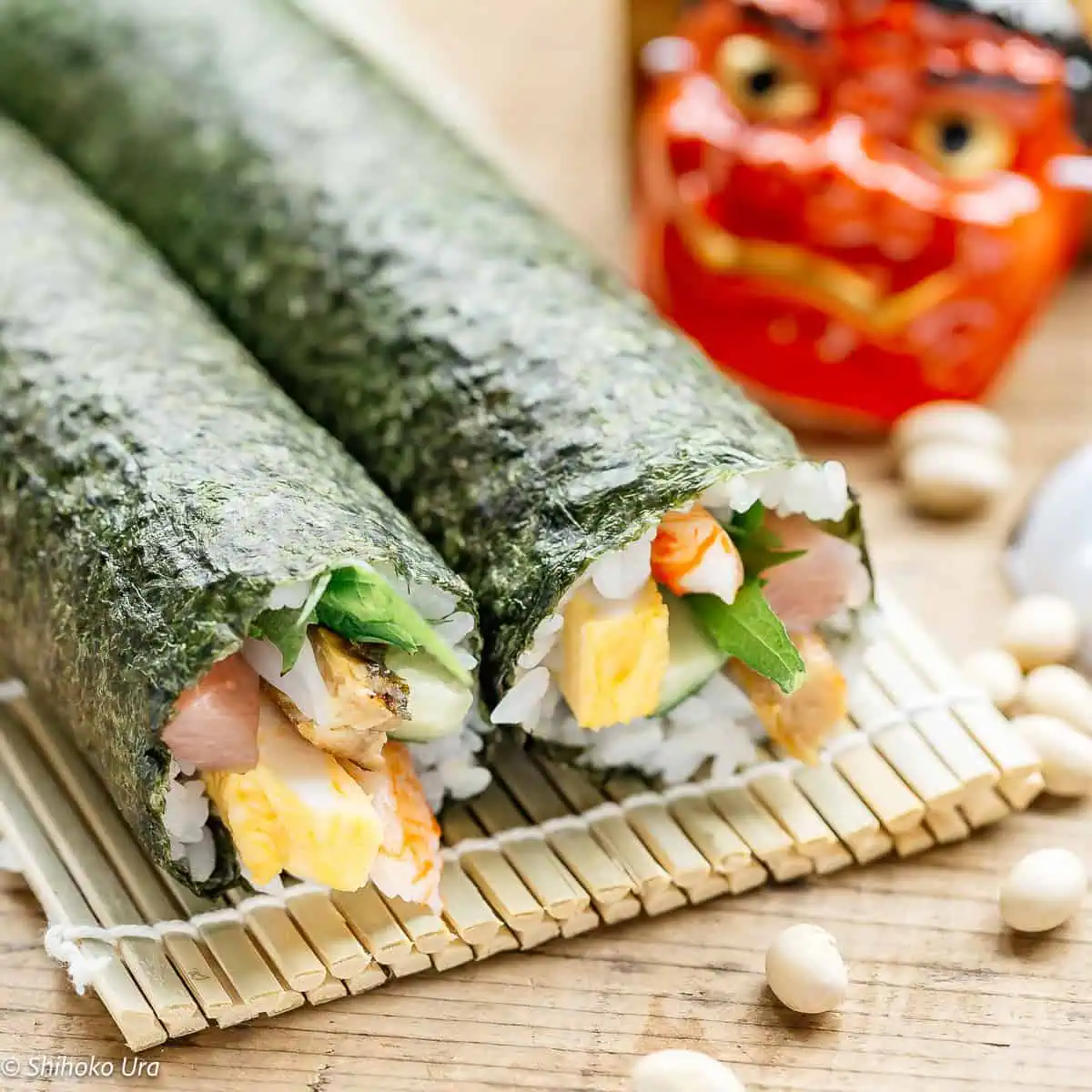
Table of contents
What is Ehoumaki?
Ehoumaki is a special type of ‘futomaki’ (thick sushi roll) sushi because it specifically has 7 fillings for the Setsubun festival. It is said that 7 fillings are derived from the seven gods of fortune and brings good luck and prosperity for the year. Unlike regular maki sushi, Ehomaki is extra large because of these fillings and is usually about 3-4 inch/8-10 cm in diameter and 8-10inch/20-25 cm long. Also unlike other sushi, ehomaki rolls are left uncut, as cutting it is believed to “cut” one’s good luck. Traditionally, people eat the entire Ehomaki in one sitting, facing ‘eho’ which is the year’s lucky direction. For 2025, the lucky direction is west south-west. The sushi roll is also eaten in complete silence to fully focus on making the wishes for the coming year. So if you chat while you are eating the ehomaki, your good luck will slip away!
The origins of ehomaki can be traced back to the Osaka region (Kansai) during the Edo to Meiji periods (1603-1912). It began as a local tradition among merchants and geisha, who would celebrate Setsubun by eating these festive rolls while praying for prosperous business ventures. Initially, these rolls were known as “Maru Kaburi Sushi” or “Taimaki Sushi.”
Ehoumaki and Setsubun Rituals
Setsubun(節分) is a traditional Japanese holiday that marks the beginning of spring according to the lunar calendar. It usually falls on February 3rd or 4th, but in 2025 it is the 2nd of Feburary. The word “Setsubun” literally means “seasonal division,” and it’s considered a time to cleanse away the evil of the former year and drive away evil spirits for the year to come.
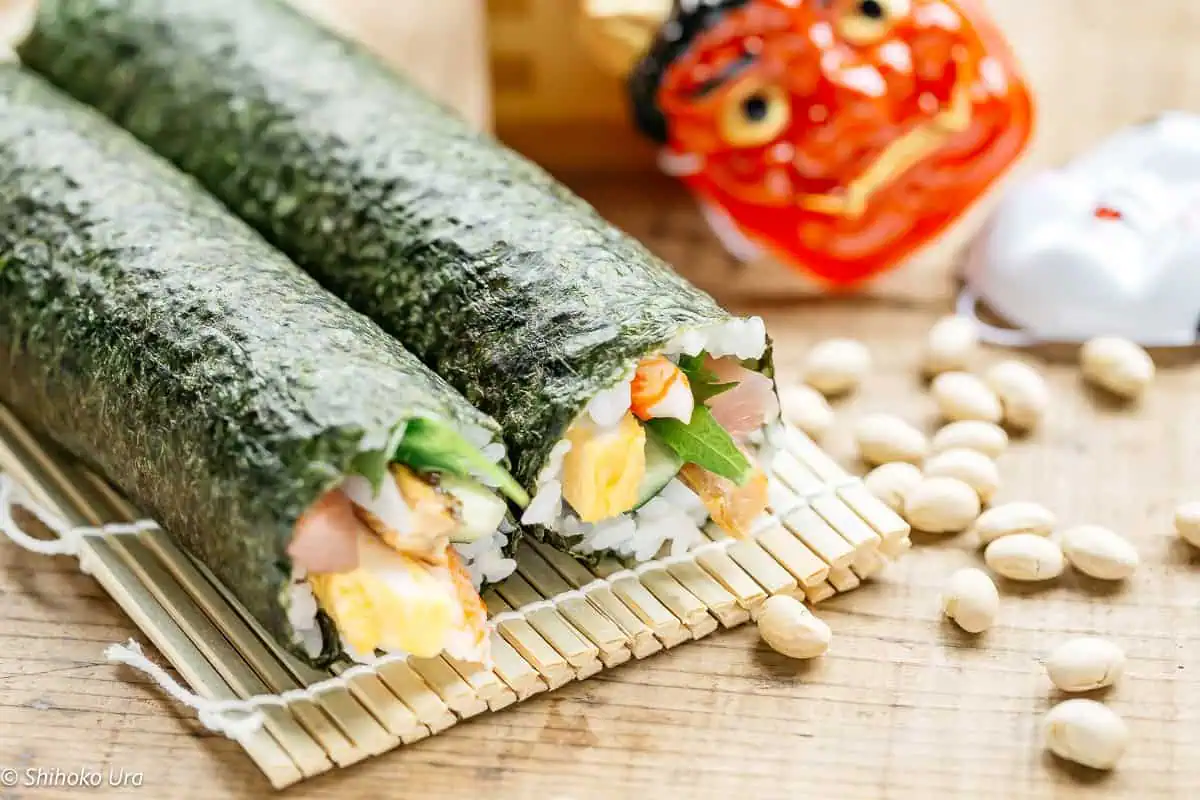
There are a few traditional customs to celebrate Setsubun in Japan. The most common Setsubun custom is bean-throwing. It sounds odd but it’s fun. People throw roasted soybeans from their homes and temples around the country while shouting, “Fuku wa uchi, Oni wa soto (Demons out, good luck in)” to drive away evil spirits from home. Eating this special futomaki sushi is the other popular custom.
In some regions of Japan, people hang sardine head and holly leaves on their front doors during Setsubun. This practice is known as “hiiragi iwashi” (holly sardine). I remember my mother used to this when I was a young child.
Ehomaki Ingredients
Nori Seaweed Sheet
Like other sushi, nori seaweed is an essential ingredient to hold all the delicious fillings together.
Sushi Rice
Sushi rice is made by cooking short-grain Japanese rice and then seasoning it with a mixture of rice vinegar, sugar, and salt. The sticky nature of sushi rice is essential for Ehomaki as it helps bind all the ingredients together and keeps the roll intact. This is particularly important for Ehomaki, which is larger than regular sushi rolls and contains multiple ingredients. The rice should be sticky enough to hold together but not mushy, and each grain should remain distinct. In order to make perfect sushi rice, see this post.
7 fillings
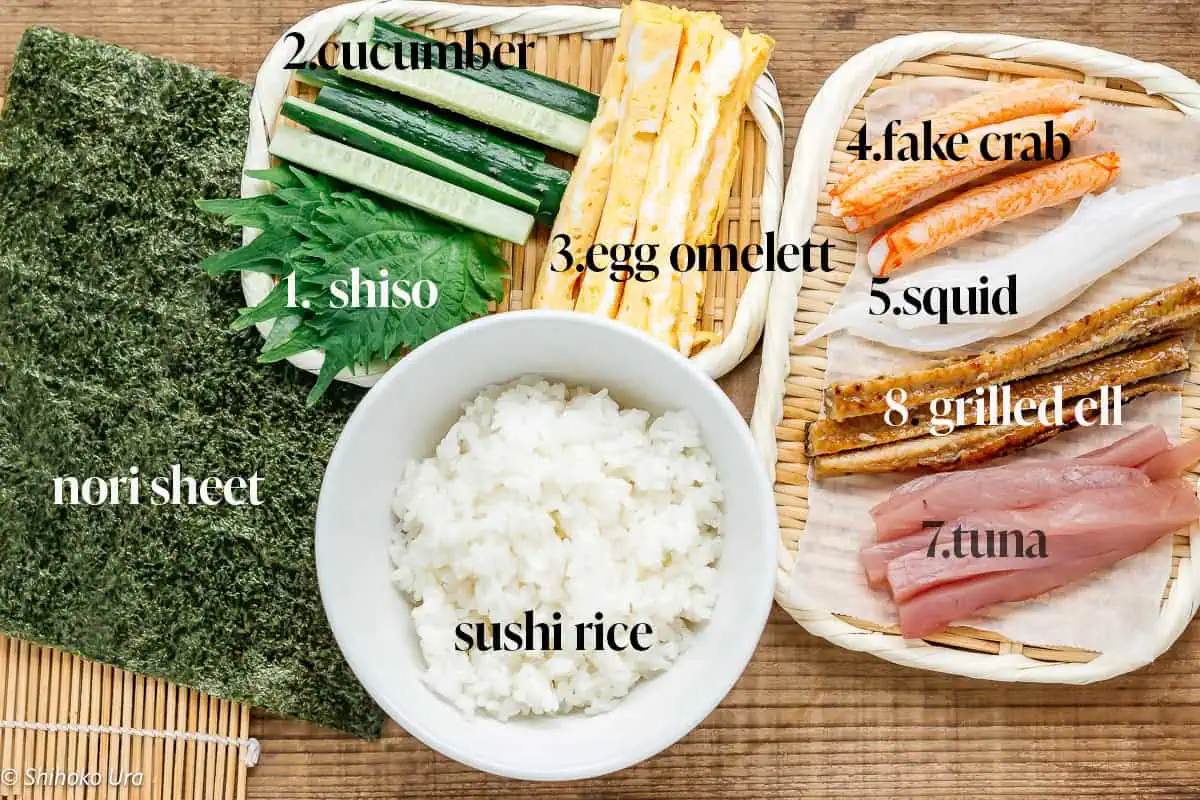
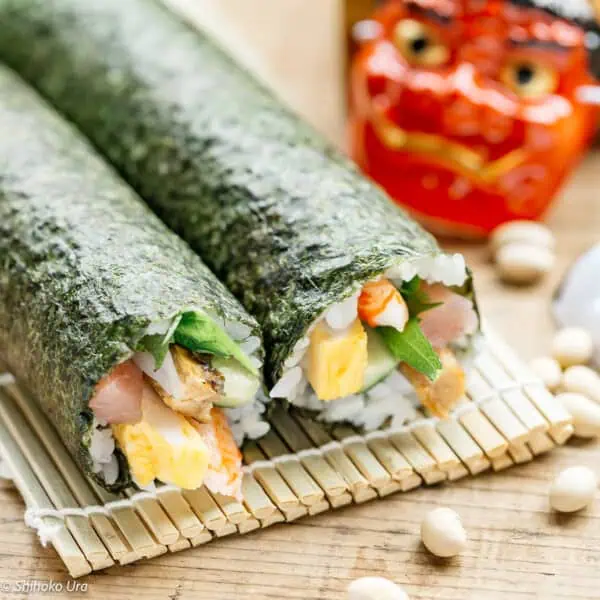
Ehomaki has to have 7 fillings, derived from the Seven Gods of Fortune, because it is said to bring good luck. There are no limits to what those 7 fillings can be. The fillings I used are fake crab meat, Tamagoyaki(egg roll), cucumber, shiso leaves, squid, sashimi tuna, and grilled eel. However, you can use your own imagination and aim for good luck with any 7 ingredients you like!
Suggestions for your 7 fillings
Sea Food
- Tuna: both lean (akami) and fatty (toro) tuna are popular choices for their distinct flavors.
- Salmon: raw or smoked salmon adds a rich, buttery texture and flavor to the roll.
- Anago or Unagi (eel): grilled and glazed with a sweet soy sauce, eel adds a rich, smoky flavor to ehomaki.
- Ebi (Prawn/Shrimp): Cooked shrimp adds a sweet and delicate flavor.
- Ikura (Salmon Roe): These bright orange eggs add a pop of color and a burst of salty flavor.
- Tobiko (Flying Fish Roe): These tiny, crunchy eggs add texture and a subtle smoky flavor.
- Yellow Tail (Hamachi):Yellow tail is a prized fish in Japanese cuisine, known for its rich, buttery flavor and tender texture. In ehomaki, it’s often used raw (as sashimi) or lightly seared. Its mild taste and creamy texture make it a luxurious addition to the roll.
- Kani (Crab Meat): Crab meat adds a delicious subtle seafood taste to ehomaki. It’s usually used in the form of imitation crab (surimi/kanikama) or real crab meat if available.
- Kazunoko (Herring Roe):Herring roe, or kazunoko, is considered a delicacy in Japan. It has a crunchy texture and a mildly salty taste. In ehomaki, it adds a unique textural element and is believed to symbolize fertility and abundance for the new year.
- Ika (Squid): Squid provides a tender yet slightly chewy texture to ehomaki. It’s often sliced thinly and can be used raw or lightly cooked. Squid has a mild, sweet flavor that doesn’t overpower other ingredients in the roll.
Other ingredients
- Shiitake mushrooms: the mushrooms are cooked with a sweet soy sauce based seasoning before being added to the sushi.
- Tamago yaki: tamagoyaki, which literally means “grilled egg,” is a type of Japanese omelette that’s often used as a filling in ehomaki and other sushi rolls.
- Kanpyo (dried gourd strips): this sweet, thin strip of dried gourd is often paired with seafood in ehomaki.
- Cucumber: Often included to add crunch and freshness alongside the seafood.
- Shiso Leaves : Shiso, also known as perilla or Japanese basil, is a fragrant herb commonly used in Japanese cuisine. When used in ehomaki, shiso leaves add a unique and refreshing element to the roll. It is available from Japanese grocery stores or Asian grocery stores though, be careful not to confuse it with Egoma (Korean perilla) as it looks very similar.
- Avocados: this adds a nice creaminess to the sushi roll.
- Wagyu beef: adding beef cooked in a savoury-sweet seasoning is popular nowadays in sushi.
The exact combination can vary depending on regional preferences and you can really pick whatever you like. The key is to create a diverse and colorful roll that represents abundance and good fortune for the coming year!
How to Make Ehomaki?
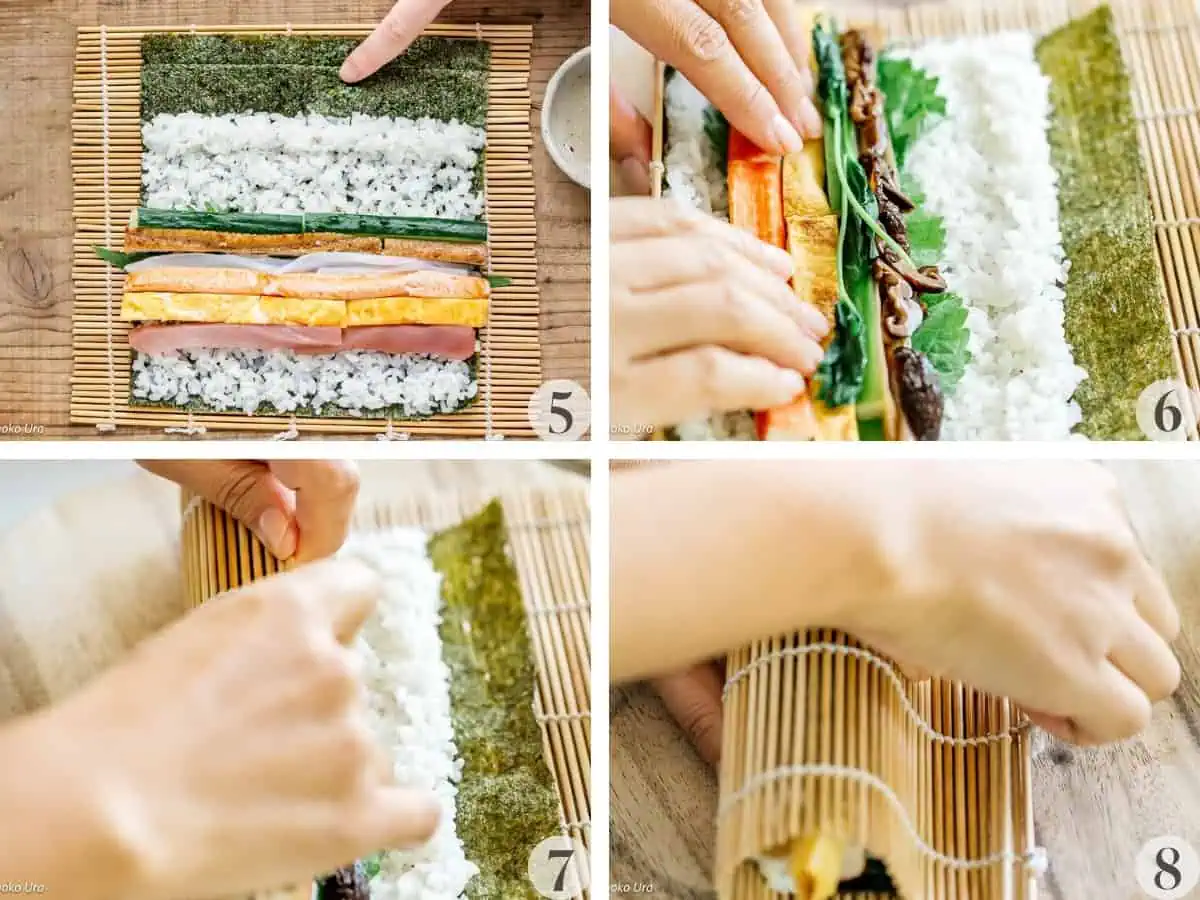
- Prepare the sushi rice: Cook the rice according to package instructions. Once cooked, mix with sushi vinegar and let it cool to room temperature.
- Prepare the fillings: Cut all your chosen ingredients into uniform long, thin strips. This will make them easier to roll.
- Set up your rolling station: Place a bamboo mat on a clean, flat surface.
- Place the nori: Put a full sheet of nori on the bamboo mat, shiny side down.
- Spread the rice: Spread a thin, even layer of sushi rice over the nori, leaving about an inch of nori uncovered at the top edge.
- Add the fillings: Arrange your seven fillings in a line across the center of the rice.
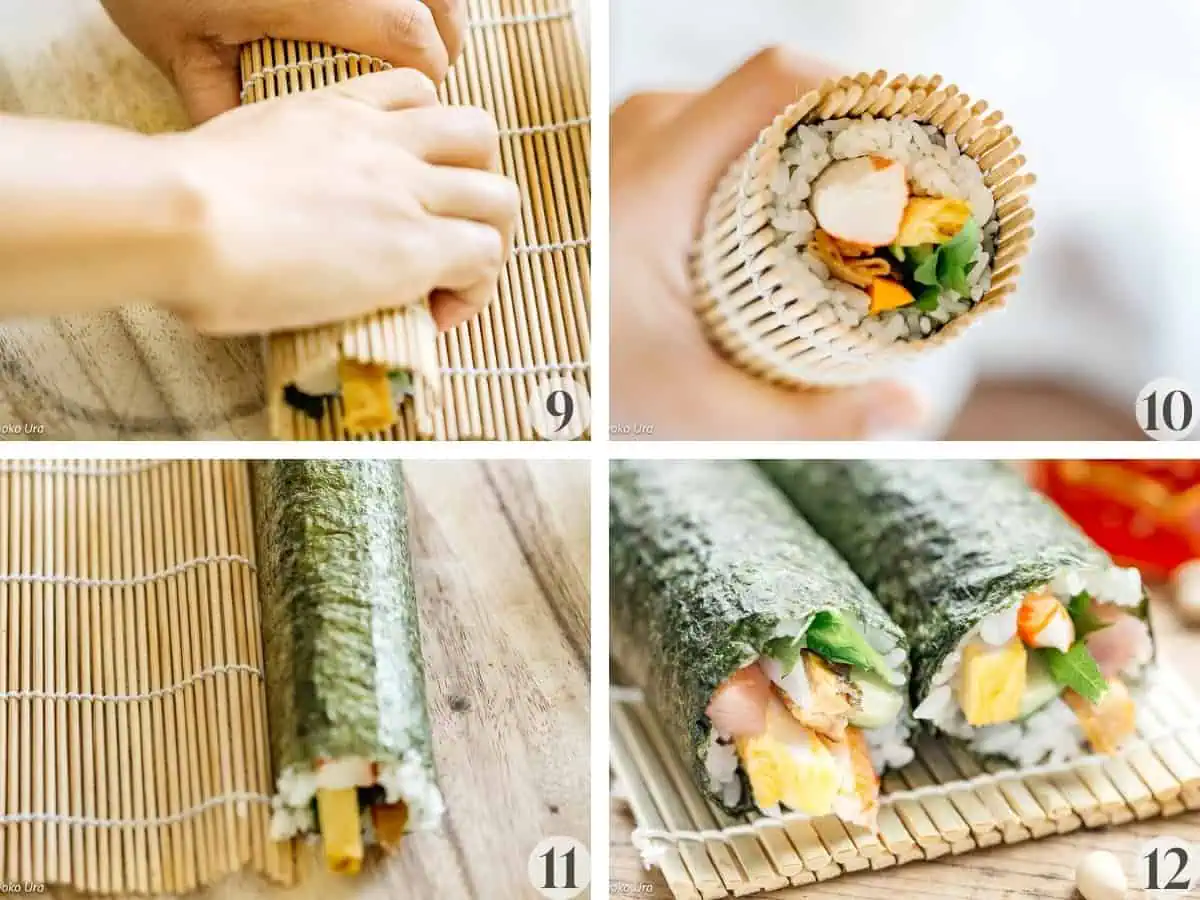
- Start rolling: Using the bamboo mat, start rolling the nori from the edge closest to you. Roll tightly, applying gentle pressure to keep the roll firm.
- Seal the roll: When you reach the uncovered strip of nori at the top, moisten it slightly with water or vinegar to help it seal. Complete the roll.
- Shape the roll: Gently squeeze the bamboo mat around the roll to ensure it’s tight and has a good shape.
- Let it rest: Allow the roll to rest for a few minutes to allow the nori to soften and seal.
- Serve whole: Remember, ehomaki is traditionally eaten whole, without cutting. It’s meant to be eaten while facing the lucky direction for the year, in silence, and preferably in one sitting.

Tips to Roll Perfect Ehomaki
- Balance Flavors and Textures: Select a mix of ingredients that offer different tastes and textures. For example, combine crunchy cucumber with soft egg omelet and chewy unagi.
- Prep Ingredients Carefully: Cut all fillings into long, thin strips of similar size. This ensures even distribution and makes rolling easier.
- Place the fillings in the centre of the rice. Do NOT layer the fillings on top of each other. Place them next to each other.
- Roll Tightly: Use your bamboo mat to apply even pressure as you roll. This prevents gaps and ensures the roll holds together.
- Seal with Care: Moisten the final edge of nori with a bit of water to help it seal properly.
- Let it Rest: After rolling, let your Ehomaki sit for a few minutes. This allows the nori to soften slightly and helps it seal which makes it easier to eat whole.
What to Serve with Ehomaki
Tonjiru Soup – Tonjiru with lots of ingredients goes well with ehomaki because it creates a nutritionally balanced meal. Tonjiru soup is made with firm pork, daikon radish, carrots, sweet potato, konjac, green onions, etc. It’s a warm and comforting soup to eat along with the sushi roll.
Asari no Suimono (Clear Clam Soup) – Asari no Suimono is a delicate and light Japanese clear soup made with clams (asari). This soup is known for its subtle, yet complex flavors and its ability to cleanse the palate. It’s a perfect companion to richer dishes like Ehomaki.
Shiraae Mashed Tofu Salad – This delicate and creamy salad is made with mashed tofu and various vegetables, creating a light and refreshing contrast to the Ehomaki.
Kelp Noodle Salad – Kelp noodle salad is a light, refreshing, and nutritious dish that complements the flavors of Ehomaki perfectly. This salad uses kelp noodles which have a unique, slightly crunchy texture.
Gari Sushi Ginger – Gari, also known as sushi ginger or pickled ginger, is a common accompaniment to sushi dishes, including Ehomaki. It’s made from young ginger that’s been thinly sliced and pickled in a solution of sugar and vinegar. The pickling process gives it a a sweet, tangy flavor with a hint of spiciness that tastes delicious with sushi.
More Sushi Recipes


Stay Connected
Also don’t forget to follow me Youtube, Pinterest, Facebook, Twitter, and Instagram to keep up to date with all the latest happenings on Chopstick Chronicles. Don’t forget to use the hashtag #ChopstickChronicles so I can see your wonderful creations!
Ehoumaki 恵方巻き
Ingredients
- 4 seaweed nori sheets
- 4.5 cups of sushi rice *1
- 12 shiso leaves
- 1 rolled egg tamagoyaki *2
- 1/2 cucumber
- 8 imitation crab meat (kanikama)
- 4 strips of sashimi grade tuna
- 4 strips of sashimi grade squid
- 4 strips of grilled unagi eel
Instructions
- Prepare the sushi rice by following the recipe link in recipe notes *1.
- Cut all your chosen ingredients into uniform long, thin strips. This will make them easier to roll.
- Place a bamboo mat on a clean, flat surface.
- Put a full sheet of nori on the bamboo mat, shiny side down.
- Place 1.5 cup rice on top and spread it out about 5mm thick leaving a 3cm (1.2 inch) gap at one edge of the nori sheet.
- Lay out the fillings next to each other in the centre of the sushi rice. Do not layer the fillings on top of each other. *3
- Place a little water or vinegar on to the larger edge of the seaweed then roll the other side towards it and press down on the fillings as you roll then squeeze tightly.
- Repeat for the remaining amount of rice and fillings.
- Do not cut the sushi roll. Eat as a whole sushi roll without talking while facing this year's lucky direction.




Hi my friend, thanks for the post. Keep writing.
Thank you Ichi Tokyo 😀