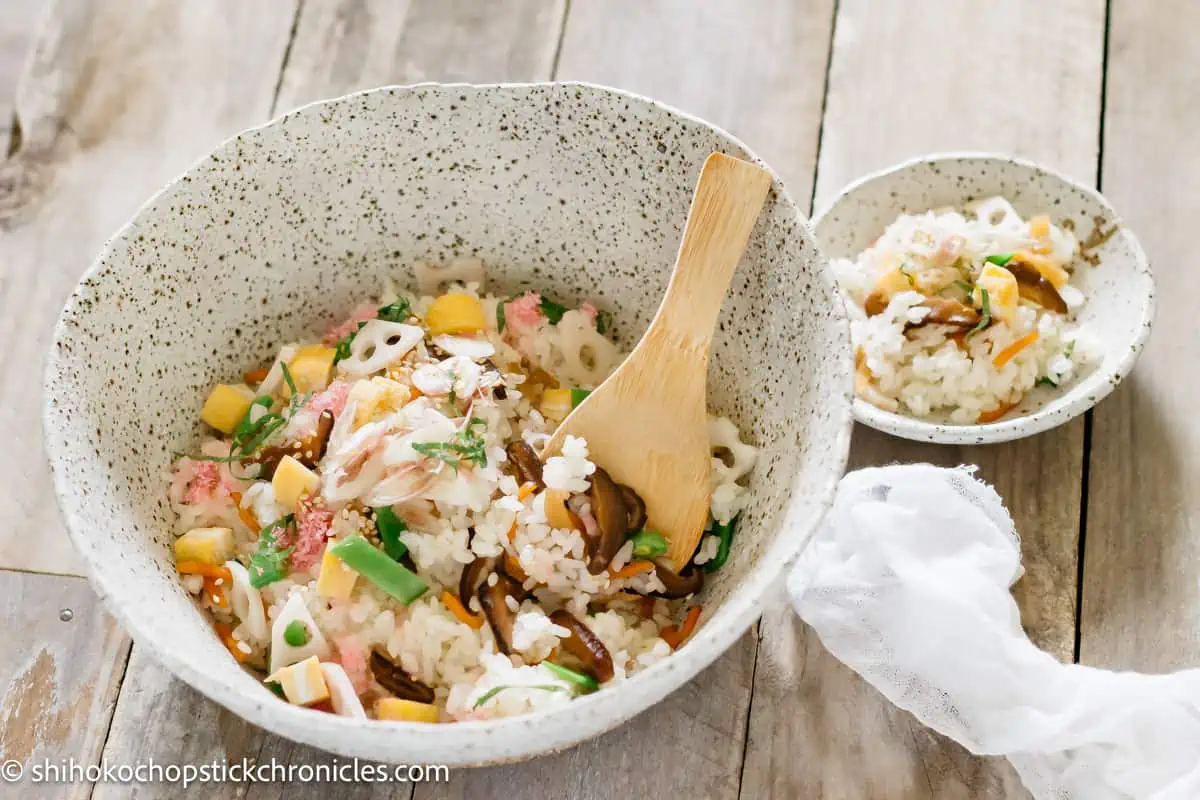
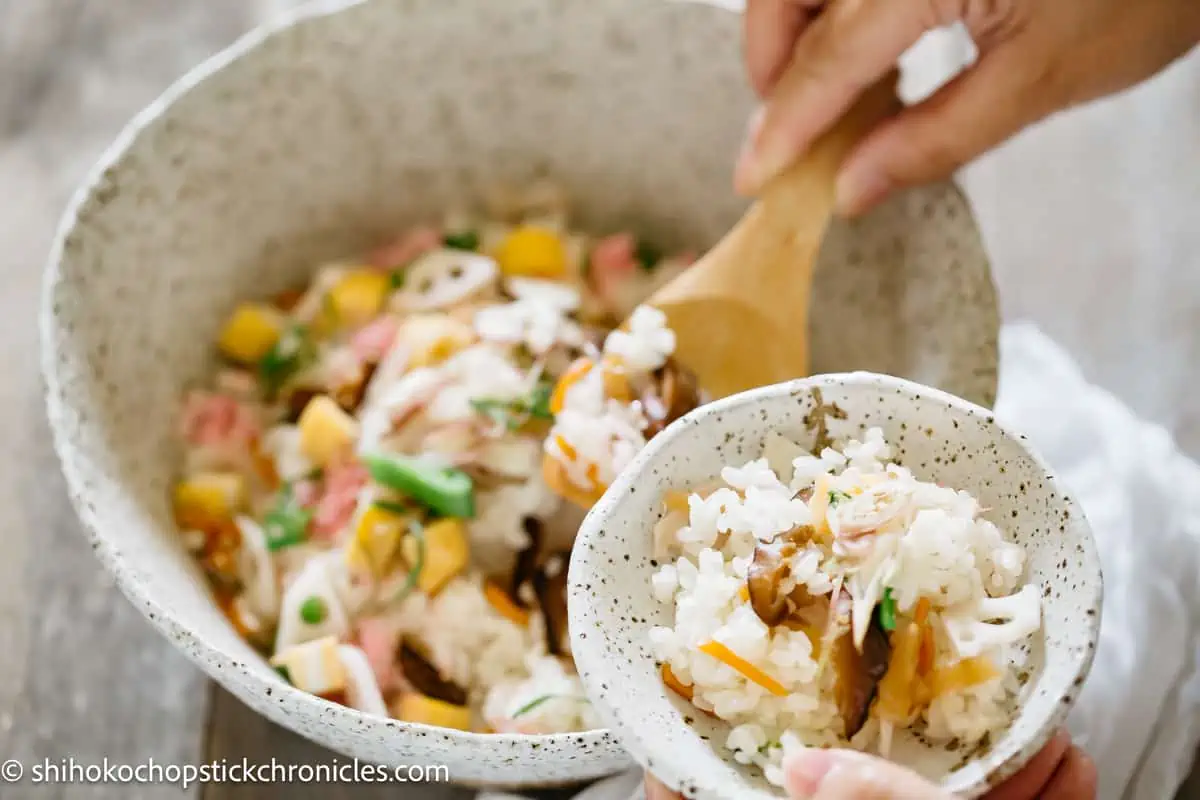
With its rainbow of ingredients and harmonious balance of flavours, this chirashi sushi, or ‘chirashizushi’, is a delicious explosion of colours and tastes that delights all the senses. This Japanese dish translates to “scattered sushi” because it’s made by tossing all the sushi ingredients together in a bowl rather than rolling. The end result is a vibrant culinary creation with a variety of fresh toppings beautifully arranged on a bed of seasoned sushi rice with each bite showcasing the harmonious medley of tastes and textures in the bowl. It’s so simple to make and such an easy way to enjoy sushi without the need for any rolling. It’s typically eaten in Japan when enjoying special occasions and celebrations so it’s perfect for any gatherings and parties!
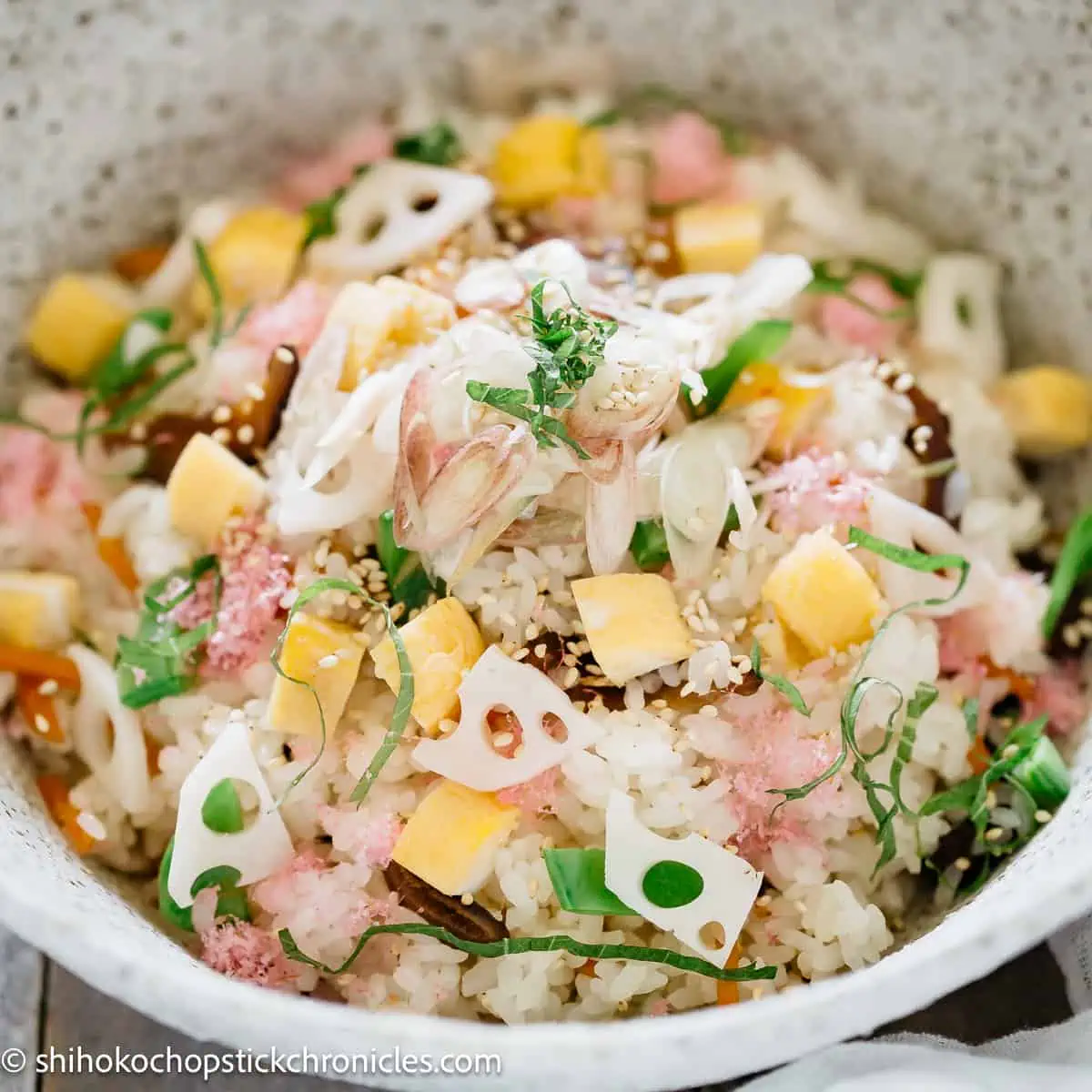
Table of contents
What is Chirashi?
Chirashi is a type of sushi that consists of a bowl filled with sushi rice and various toppings. The name comes from the Japanese verb “chirasu” which means “to scatter” in English and refers to the way the ingredients are scattered on top of the rice.
Typical chirashizushi, which is eaten to celebrate special occasions, is made by mixing the ingredients together with the rice and serving in a large wooden tub called a hangiri. However, there is another type of chirashi which started in the early 1900s in Edo (Tokyo) in which an assortment of fresh sashimi (raw fish/raw seafood) is served artistically over a bed of sushi rice in a lacquer box.
This is also called Edomae chirashi sushi or kaisen (seafood) chirashi and differs from typical chirashizushi which is mixed together and usually uses only cooked seafood or none at all.
There are other variations on chirashi sushi including how it is presented and how it is named depending on the regions. Other names include “bara zushi” (deconstructed or disassembled sushi), “maze sushi” (mixed sushi), or if 5 different ingredients (gomoku) are used to mix into the sushi rice then it is called “gomoku chirashi” or “gomoku sushi”.
Unlike nigiri sushi or maki sushi, chirashi bowls don’t require any skill, handwork, or rolling so it’s a convenient option for enjoying sushi. It’s also a versatile and customisable dish since you can choose your favourite toppings based on personal preferences. Chirashi is a popular choice during celebrations like New Year’s Day and Hinamatsuri Girls day in Japan.
Chirashi for Special Occasions
Chirashi is a go-to dish for many Japanese festivals and special occasions. It is typically served for Girl’s Festival (Hinamatsuri) on the 3rd of March. But why is Chirashi often eaten at Hinamatsuri? It is said that the Japanese used to eat Narezushi which is a preserved food made by soaking fish in rice and fermenting it in the Heian period. People ate the Narezushi around March as the fermenting process finishes around that time. Over the time, the appearance of the sushi becomes eye-catching and gorgeous from just plain fermented fish and rice. Reference: Hinamatsuri (in Japanese language). This dish is perfect for your own special occasions too because of its beautiful presentation and ability to feed many. You can prepare a large bowl of chirashizushi for everyone to serve themselves from at your next family gathering, picnic, or dinner party!

Ingredients used in Chirashi
This delightful dish offers a vibrant mix of colours, textures, and flavours that come together to create one tasty bowl of sushi. Here are some common ingredients used in chirashi:
Sushi rice
Chirashi starts with the foundation of perfectly cooked vinegared sushi rice. Short-grain rice, specifically Japanese rice, is typically used for its stickiness and ability to hold together when combined with other ingredients.

Common toppings
- Seafood: Typical chirashizushi doesn’t always use fish/seafood and is most often vegetarian, but if seafood is used, it’s cooked. Some seafood topping options include cooked shrimp, crab, octopus, squid, unagi (bbq eel), grilled salmon, or salmon roe. However edomae chirashi sushi, another type of chirashi, features an assortment of sashimi grade fish like salmon, tuna, yellowtail (hamachi), or snapper (hirame).
- Vegetables: To add color and crunch, chirashi commonly includes an array of vegetables such as cucumber slices, avocado chunks, renkon lotus roots, shredded or julienned carrots, radish sprouts (kaiware daikon), shiitake mushrooms, kanpyo, edamame beans, or thinly sliced seaweed salad.
- Tamagoyaki or Kinshi Tamago (Japanese Omelet): this adds sweetness and softness to the chirashi bowl. It is made by whisking eggs with sugar and cooking them in thin layers before rolling them into omelet form and slicing into thin strips.
- Pickled Ingredients: Various pickled items like pickled ginger slices (gari) or pickled daikon radish can be found in chirashi bowls too. They provide acidity and balance out the richness of the other components.

Garnishes
- Sesame Seeds
- Myoga : Also known as myoga ginger or Japanese ginger. Its flower buds are edible and has a unique aroma and spiciness and used for garnishing condiment for many Japanese dishes.
- Shiso (and other fresh herbs): is a type of Japanese herb which has a cross between mint and cinnamon with a hint of clove flavour. You may find this special herb in your local market or Japanese grocery stores. You can also easily grow this herb which I do.
- Tobiko or Masago: These small orange-colored fish roe varieties are often sprinkled on top of chirashi to enhance both the taste and visual appeal. Tobiko has a slightly crunchy texture, while masago has a smoother mouthfeel.
- Shredded nori
Special Ingredients Note
Sakura denbu – is a pink cod flake. It is very finely flaked cod that is coloured pink. More information on sakura denbu is in my Sushi Cake post.

Kanpyo – is dried strips of dried gourd fruit which is a type of melon. You can buy this dry or cooked and seasoned to be ready to use straight away. Also mentioned in the Futomaki Sushi rolls post.

Equipment required : Wooden Tub (hangiri)
A hangiri is a wooden tub that is used for making sushi rice in Japan. It has a shallow and flat bottom. You need to wet it before use so that the rice will not stick to the tub and so that it will not soak up the vinegar for the rice. If you don’t have one, it is a good investment if you love sushi and make sushi often. Otherwise you can use a large bowl. Never use the rice cooker bowl for mixing the vinegar in. The acidity of the vinegar will damage the rice cooker bowl.

How to Make Chirashi Step by Step
1. Cooking the sushi rice
Follow your rice cooker directions to make the rice and follow my perfect sushi rice recipe.
2.Preparing the ingredients
While the rice is being cooked, make sushi vinegar and prep the other ingredients. I chose to use renkon lotus root, snow peas, sakura denbu and tamagoyaki (Japanese egg omelette) cut into dices.
3. Assembling the bowl with vegetables and garnishes
Once all the ingredients are ready, it’s time to assemble your chirashi bowl: Take individual serving bowls or one large sharing platter if preferred. Divide the cooked sushi rice equally among the bowls/platter making sure it covers the bottom. Mix in the ingredients by cutting through the rice rather than mushing it together. Scatter some toppings creatively on top of the rice and garnish.


Tips for Making Sekihan
- When we cook ordinary rice in a rice cooker, we let the rice grain absorb some water before cooking it so that when the rice is cooked it is soft. However, do not leave glutinous rice in water if you are going to use a rice cooker or a pressure cooker, because the water absorption rate of glutinous rice is higher so there ends up being not enough water to cook it or if you add water to cook, it ends up soggy.
- Traditionally, the rice is cooked by steaming, when we did not have pressure cookers. If you are going to decide to cook this dish in the traditional way, you need to soak the rice in water for 6-8 hours and if the rice is old, it needs to be soaked for longer. Then drain the soaked liquid and steam cook the rice.
- It’s important to add the salt at the right time when cooking. Do not add the salt to the Azuki Beans. The salt makes the azuki beans firm and will not be cooked properly. The salt needs to be added when cooking the rice (after the beans have cooked).
Variations & Suggestions
Depending on the region of Japan and households, there are many types of chirashi that exist such as gomoku chirashi, kaisen chirashi (or kaisen don if regular rice is used), and others as mentioned above. Other variations of chirashi include Poke bowls and Sushi Cake.

Short Cut
Chirashi is easy sushi to make though a little time consuming because you need to make sushi rice, make the ingredients to mix in, and preparing topping ingredients separately. So in Japan, you can buy ready-made Chirashi Sushi Mix in packages. You cook rice, and open the packet and mix it into the cooked rice. Top with your chosen toppings.

What to Serve With Your Chirashi?
Chirashi is quite filling so I usually I serve with miso soup or Japanese clear soup and pickled ginger, rice bran pickles, daikon pickles, pickled daikon and carrot, cucumber sunomono, or Asian cucumber salad.
How to Store Chirashi?
It is best served freshly made because otherwise any sushi needs to be stored under 50°F (10°C) and the quality goes down. However, it is easy to make too much more than you need to serve, so it can be stored in the fridge and also freezer.
Fridge – The quality of cooked rice starts to deteriorate at 35-37°F(2-3°C) and it becomes dry. It is difficult to store sushi in the condition it is made. We need to separate sushi rice and topping ingredients and wrap them with plastic wrap, then wrap around with newspaper. Store it in the vegetable and fruit compartment in your fridge. It will keep for a few days. The chilled chirashi can be enjoyed again, by steaming or microwave the sushi rice then top with separated toppings.
FAQ
A : While both the Chirashi bowl and poke bowl are similar, there are some differences that set them apart. Typical chirashi sushi doesn’t use raw seafood/fish (unless it is a particular type of chirashi). The presentation also differs and poke bowls often feature some sauces or seasonings.
A : Sashimi is a dish comprised solely of thinly sliced raw fish, served with soy sauce and wasabi on the side. On the other hand, chirashi is a bowl of sushi rice topped with various types of sashimi (or none at all) and additional ingredients such as vegetables.
A: This recipe is not as soy sauce is used to flavour some ingredients. You can make gluten-free chirashi if you use gluten-free soy sauce to season some ingredients.
Stay Connected
If you like the recipe please rate the recipe and leave comments below. Also don’t forget to follow me on Youtube, Pinterest, Facebook, Twitter and Instagram. This way you keep up to date with all the latest happenings on Chopstick Chronicles. Don’t forget to Sign up for a weekly newsletter so you never miss out on new authentic delicious Japanese recipes!

Chirashi Sushi ちらし寿司
Equipment
Ingredients
Sushi Rice
- 2 cups Japanese short grain rice *1
- 1.8 cups water
- 1 5cm strip of Kombu Kelp *2
- 4 tbsp vinegar
- 2 tbsp sugar
- 2 tsp sea salt
Mixing-in Ingredients
- 4 dried shiitake mushrooms, soaked in a night before *3
- ½ carrot (cut into matchstick like) or 70g
- ¼ kanpyo *4
- ⅔ cup Shiitake dashi *5
- 2 tbsp sugar
- 2 tbsp mirin
- 2 tsp soy sauce
- ¼ tsp salt
Topping Ingredients
- 3 eggs (large)
- 2 tsp sugar
- ½ tsp salt
- 2 tbsp water
- 1 tsp cooking oil
- 4 snow peas (parboiled and cut)
- ¼ cup renkon sliced thinly *6
- 2 tbsp Sakura denbu(pink cod flake) *7
- 2 myoga flower buds (for garnish) *8
- 2-3 Green Shiso leaves (for garnish) *9
- 1 tbsp white sesame seeds
Instructions
Sushi Rice
- Wash the rice a few times till the water becomes clear.
- Drain the water and place the rice in a rice cooker. Add 10% less amount of water than rice and the piece of kombu kelp if you have.
- Set the rice to cook as per your rice cooker.
- While the rice is cooking, in a small pot, heat the rice vinegar, sugar, and salt together to make the sushi vinegar on medium heat until the sugar dissolves.
- Moisten the wooden tub with water and wipe excess water off with a cloth.
- Once the rice is cooked, remove the kelp strip (if you used a kelp strip) from the rice and place the rice into the wooden tub. Pour the sushi vinegar over it and mix with a wooden spatula to flavour the rice while fanning it to cool it down.
MIxing-in Ingredients
- While the rice is being cooked, prepare "mixing in" ingredients. Squeeze excess water out of shiitake mushrooms. Don't discard the water because it is "shiitake dashi" and will be used to cook other ingredients.
- Remove the stem off the soaked mushrooms and slice mushrooms thinly.
- Place shiitake dashi, sliced shiitake mushrooms, carrot, kanpyo and all seasonings in a saucepan.
- Bring it to boil, then simmer until most of the liquid evaporates.
- Turn the heat off, Drain any excess liquid left with a sieve.
Toppings
- Make tamagoyaki. Crack the eggs into a small mixing bowl and add all seasonings for tamagoyaki, and whisk all together.
- Strain the egg mixture with a sieve twice.
- Heat the oil in a rectangular frying pan over medium heat.
- Pour 1/3 of the egg mixture into the pan. Break any bubbles formed with a pair of chopsticks and scramble gently.
- When the surface is solidified a little, fold and push the egg to one end of the pan with chopsticks
- Wipe the empty side of the pan with oil-soaked kitchen paper and pour another 1/3 of the egg mixture into the empty space of the pan.
- Lift the folded egg up to let the egg mixture run under it.
- Fold and roll the egg from one side of the pan and wipe the empty space of the pan with the oil-soaked kitchen paper.
- Pour the last 1/3 of egg mixture and repeat fold and roll.
- Turn the heat off and remove the tamagoyaki egg roll from the pan. When it is cooled down, cut it into small cubes and set aside.
- Defrost frozen lotus roots and string snow peas and parboil them and set aside.
Assemble Chirashi
- Mix the cooked and drained excess liquid mixing-in ingredients into the sushi rice. Do not mush it, rather by cutting motion. *10
- Scatter tamagoyaki cubes, snow peas, renkon lotus roots and sakura denbu over the sushi rice.
- Garnish with chopped shiso leaves and thinly sliced myoga Japanese ginger.
- Sprinkle white sesame seeds.
Notes
Nutrition
Chopstick Chronicles is a participant in the Amazon Services LLC Associates Program, an affiliate advertising program designed to provide a means for sites to earn advertising fees by advertising and linking to Amazon.com. As an amazon associate I earn from qualifying purchases.