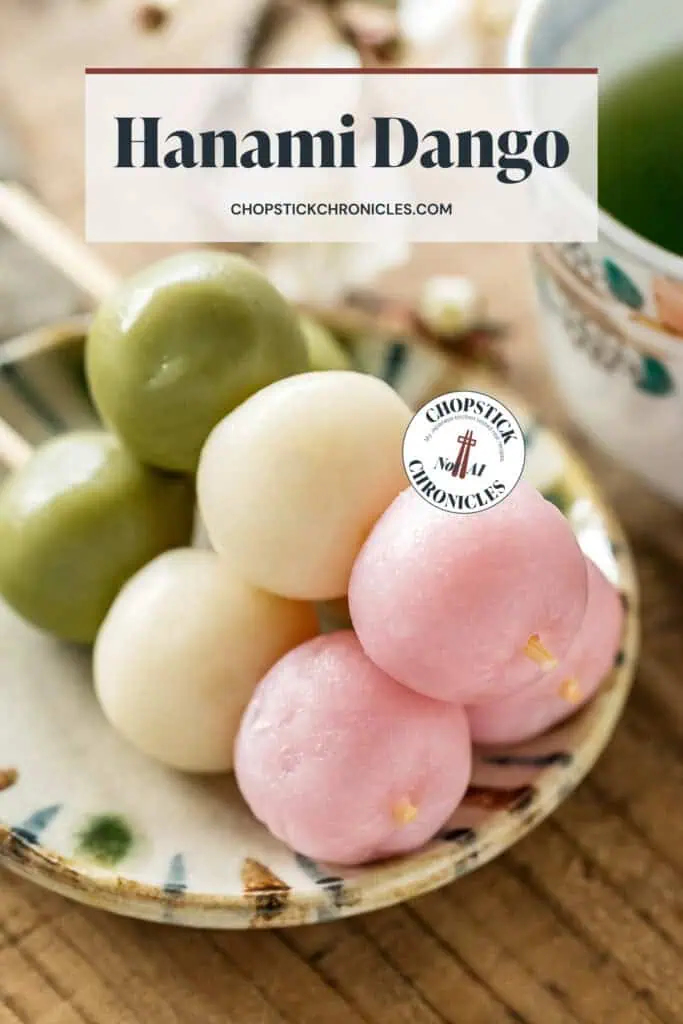
Hanami dango are the perfect little treat to capture the essence of spring and celebrate the season’s arrival! These tri-colored rice dumplings are deliciously sweet with a chewy texture just like mochi. Hanami dango are often eaten during the tradition of cherry blossom viewing in Japan but are a popular snack all year round. Prepare this cute and iconic Japanese dessert easily at home with this recipe!
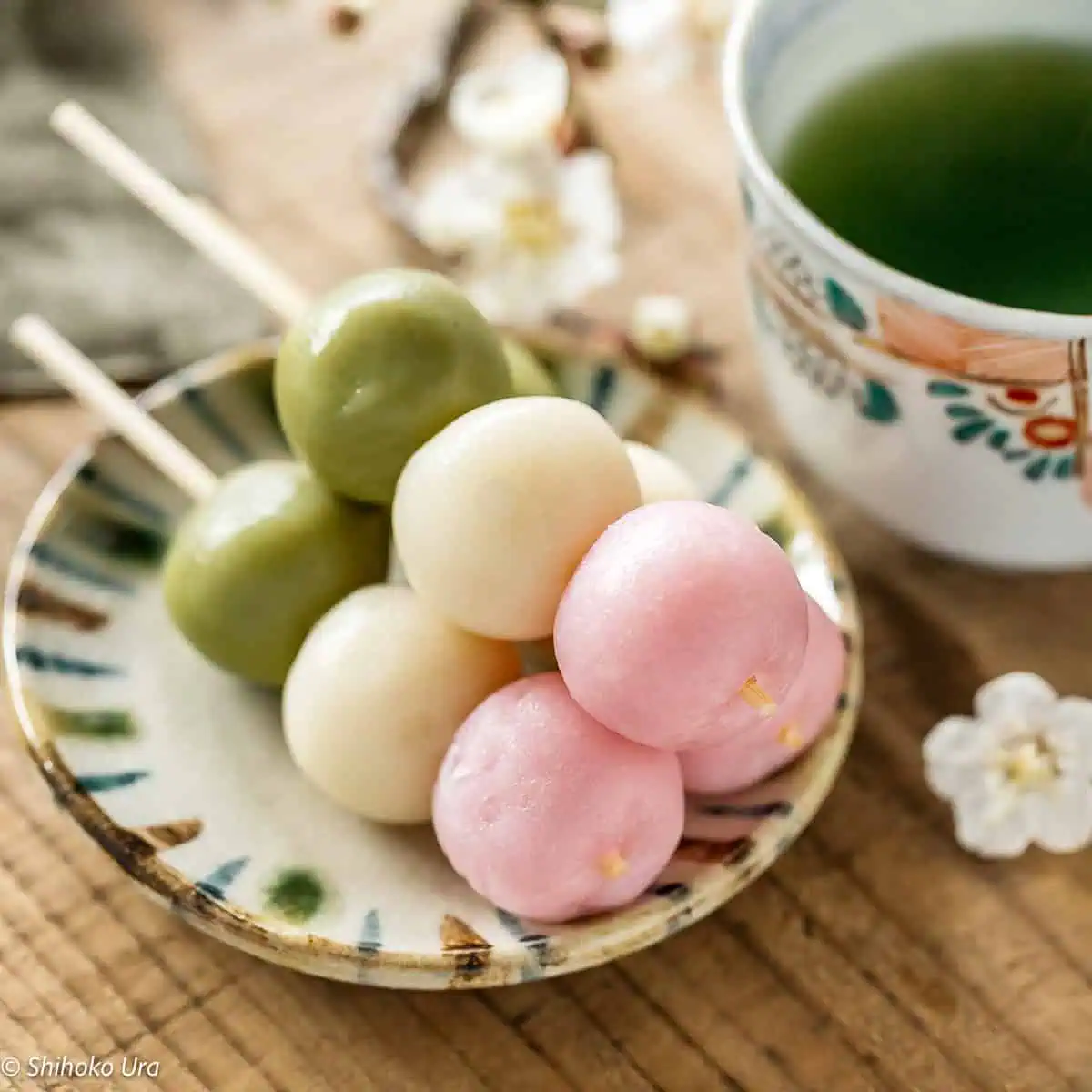
Table of contents
What is Hanami Dango?
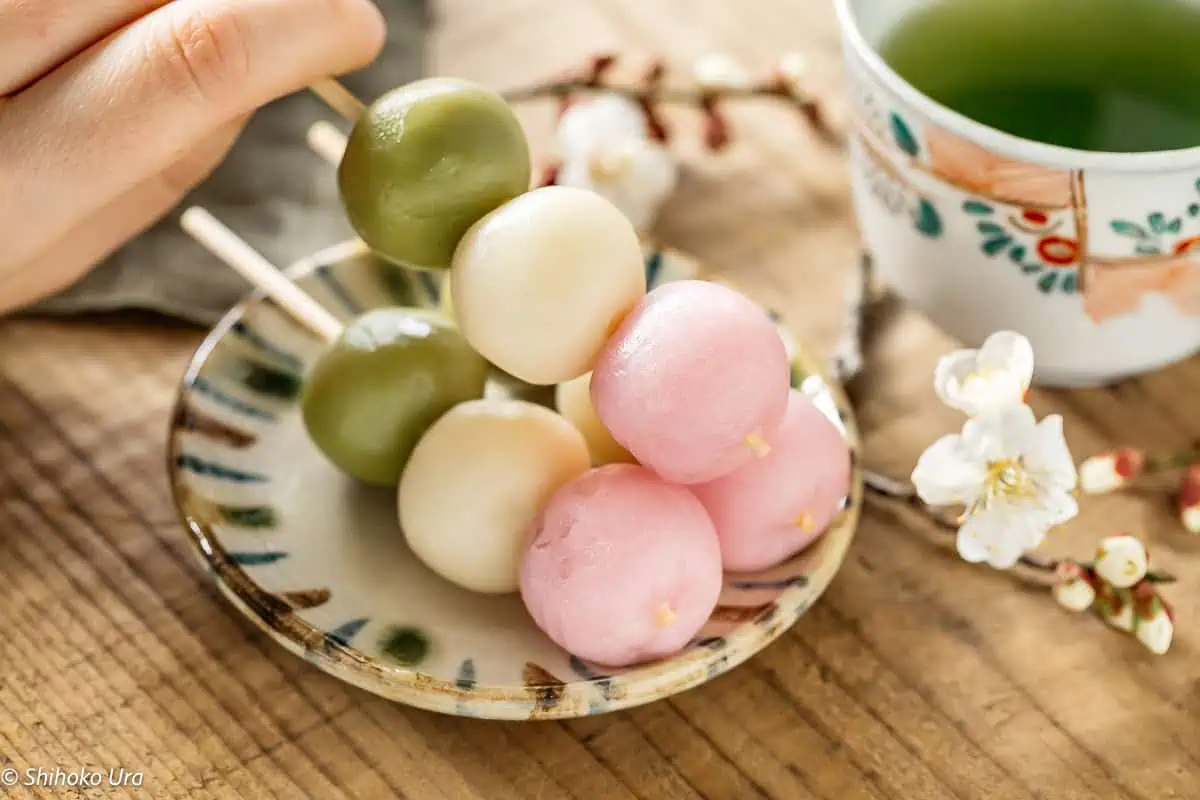
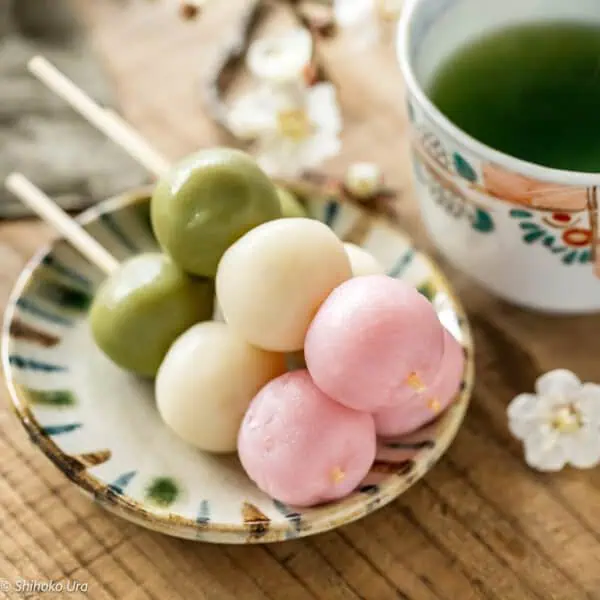
Hanami dango, also known as sanshoku (three colour) dango, is a traditional Japanese sweet typically made to celebrate the arrival of spring in Japan. It’s made from three different coloured rice dumplings (dango) skewered on a bamboo stick. The dango are coloured in pink, white, and green to representing the changing seasons through the flowers which bloom in spring (pink), the pure colour of snow (white), and the beauty of new growth (green). The dango are called ‘hanami’ because they are often eaten during ‘hanami’ which is the practice of viewing the bloom of the sakura flowers during the cherry blossom season festival.
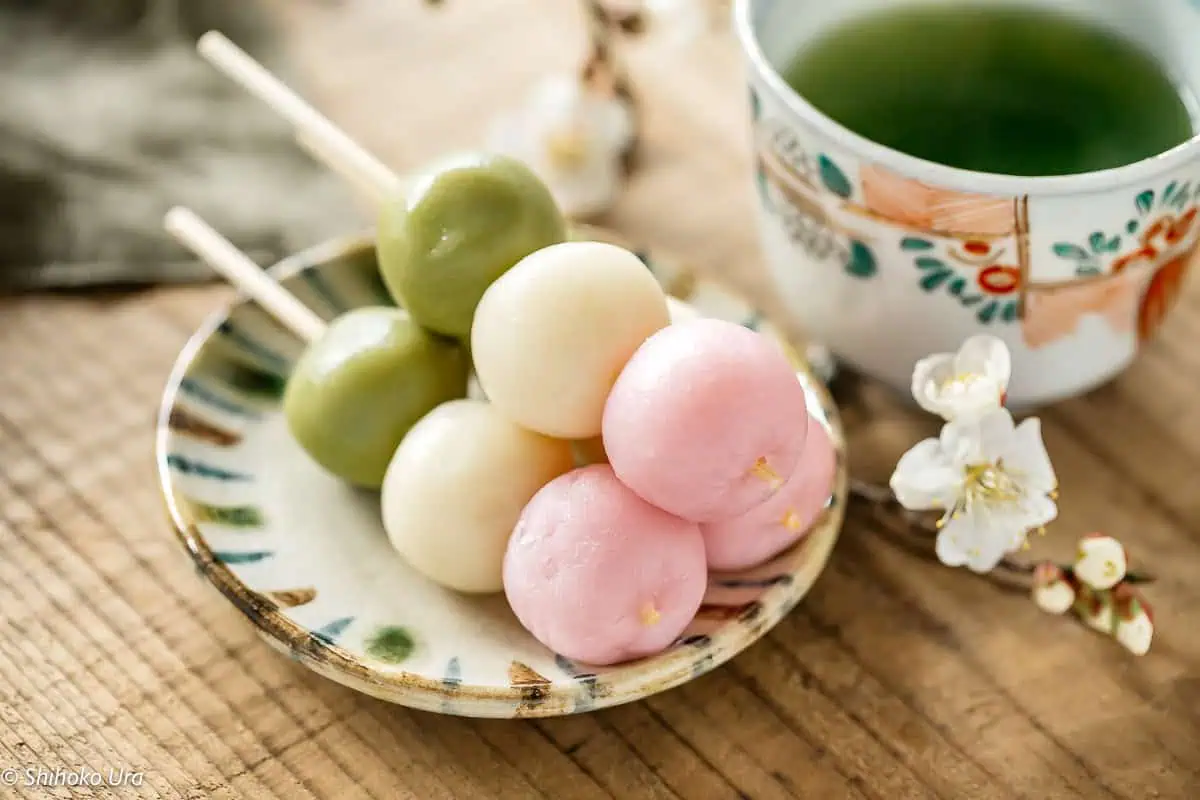
The dango are made rice flour, either shiratamako, joshinko or mochiko, and sugar and water. They have a bouncy chewy texture similar to mochi and a sweet taste. The white dango is just made from sweet rice flour. The soft pink dango is made by adding red food colouring and can be flavoured with sakura (cherry blossom) powder. The green dango can be made with matcha green tea powder or yomogi (mugwort). Although the dango are made for the hanami season, they’re a popular snack to eat any time of year.
Ingredients Required to Make Hanami Dango
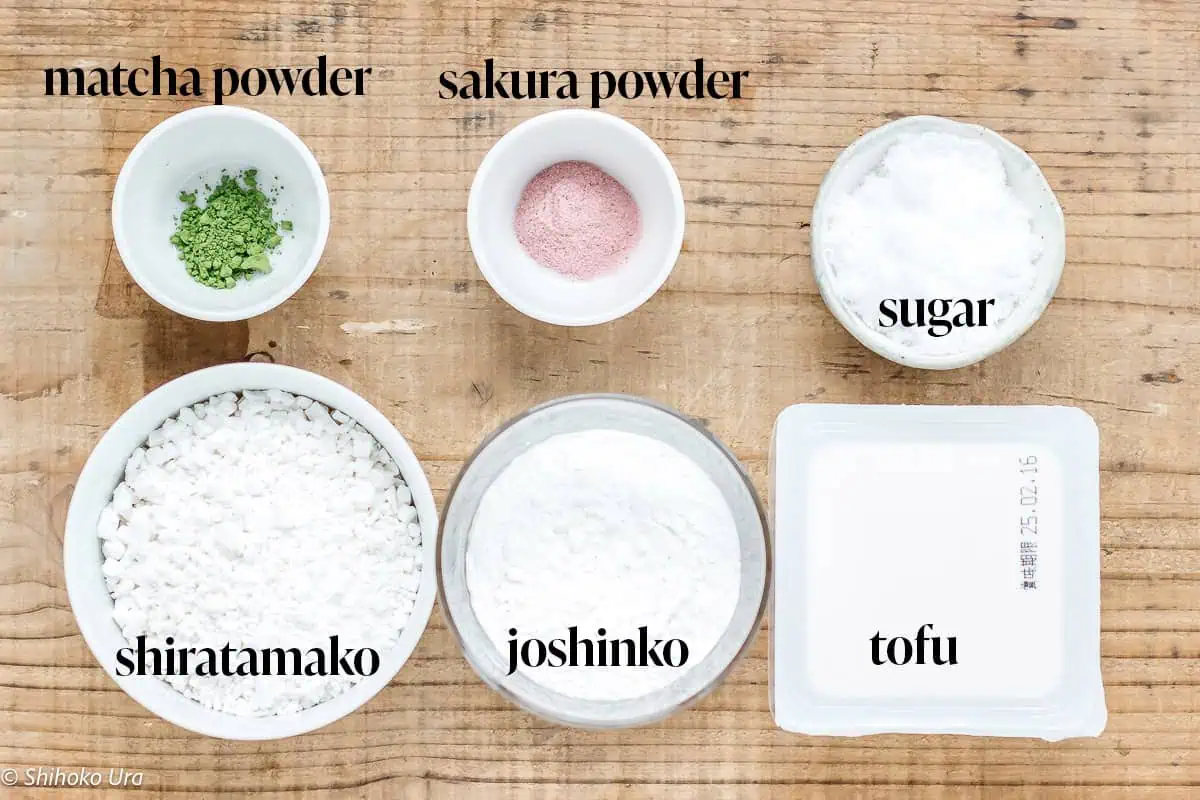
Joshinko (rice flour)
Joshinko is a key ingredient in making hanami dango. It’s a type of non-glutinous rice flour that’s finely milled from short-grain Japanese rice. Joshinko provides a smooth, less sticky texture to the dango compared to glutinous rice flour (mochiko or shiratamako). This helps create the perfect balance of chewiness and softness in the dumplings.
Shiratamako (glutinous rice flour)
Shiratamako is a type of glutinous rice flour, also known as sweet rice flour or mochiko. It’s made from mochigome, a short-grain japonica glutinous rice. Shiratamako is responsible for the signature chewy, sticky texture that’s characteristic of hanami dango. It gives the dumplings their soft and bouncy consistency. f you can not get shiratamako, this ingredient can be substituted with Mochiko.
Sugar
sugar adds sweetness to the dango because hanami dango are meant to be sweet.
Water
Water is essential for hydrating the rice flours (joshinko and shiratamako) to create a dough that can be shaped into round dumplings. The right amount of water helps achieve the proper consistency of the dango dough. Too little water results in a dry, crumbly dough, while too much can make it sticky and difficult to handle.
Flavoring and coloring
To create the traditional tri-color appearance.
– For pink: You can use food coloring or natural alternatives like sakura powder.
– For green: Matcha powder or yomogi is commonly used.
Ingredients Substitutions and Variations
Rice Flour Substitutions
Due to the nature of each flour, if you replace it completely, you won’t get the same texture. If don’t mind the difference in texture, you can try making dango with Mochiko only if joshinko or shiratamako are not accessible in your country.
Sugar Alternatives
Replace white sugar with coconut sugar or brown sugar for a deeper flavor.
For a lower-calorie option, try using stevia or monk fruit sweetener.
Water
What I often like to do is to use tofu instead of water because I think tofu adds a bouncy texture to the dango and I prefer that “mochi mochi” texture. It also adds extra protein and nutrition. Silken tofu is typically used for this substitution because it has a smooth and creamy texture and high water content.
Colouring
For the green dango, yomogi powder is typically used but this can be difficult to get outside of Japan so instead you can use matcha powder or green food colouring. For the pink dango colour, sakura powder might also be difficult to access so it can be substituted with strawberry powder, beetroot juice, or food colouring.
How to Make Hanami Dango Step by Step
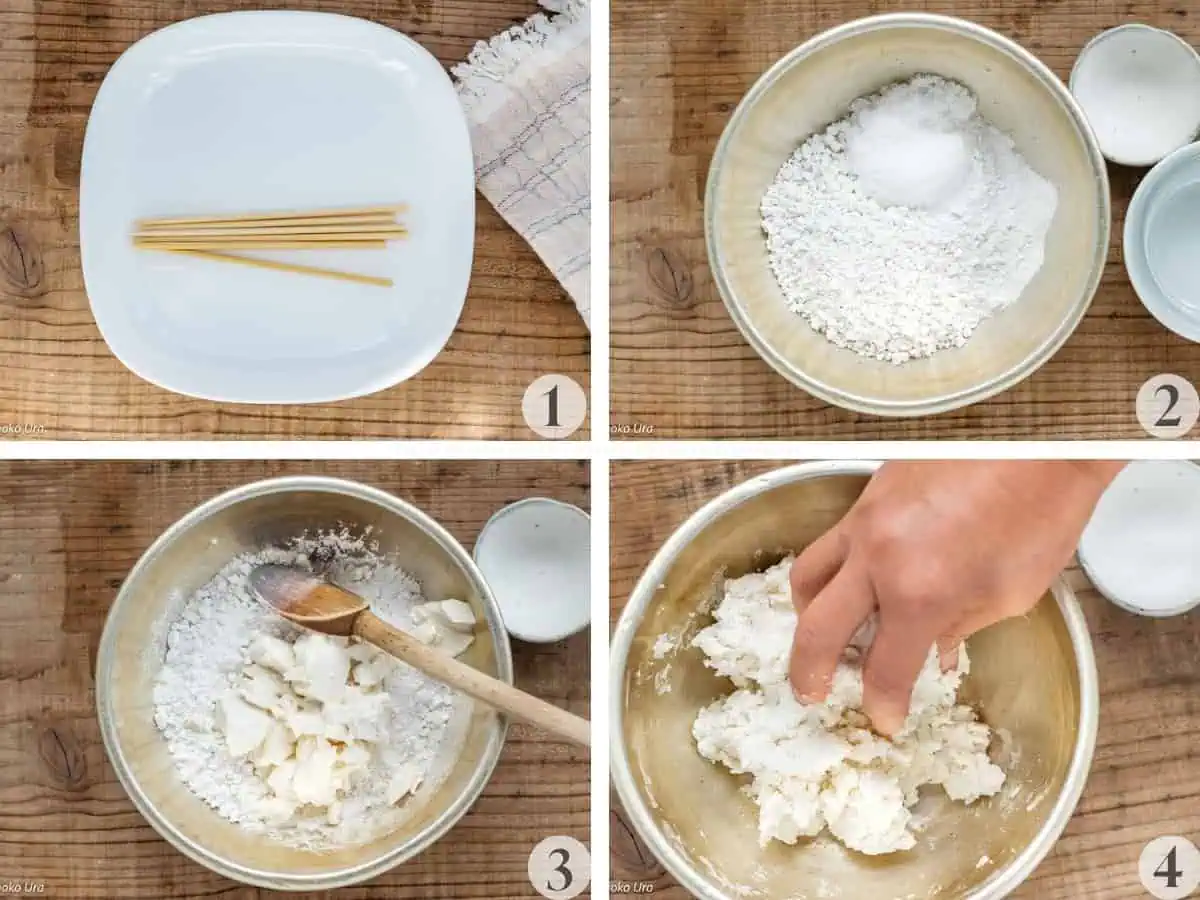
1. Prepare the Dough:
- In a large bowl, mix joshinko, shiratamako, and sugar.
- Gradually add warm water, stirring until it comes together to form a dough.
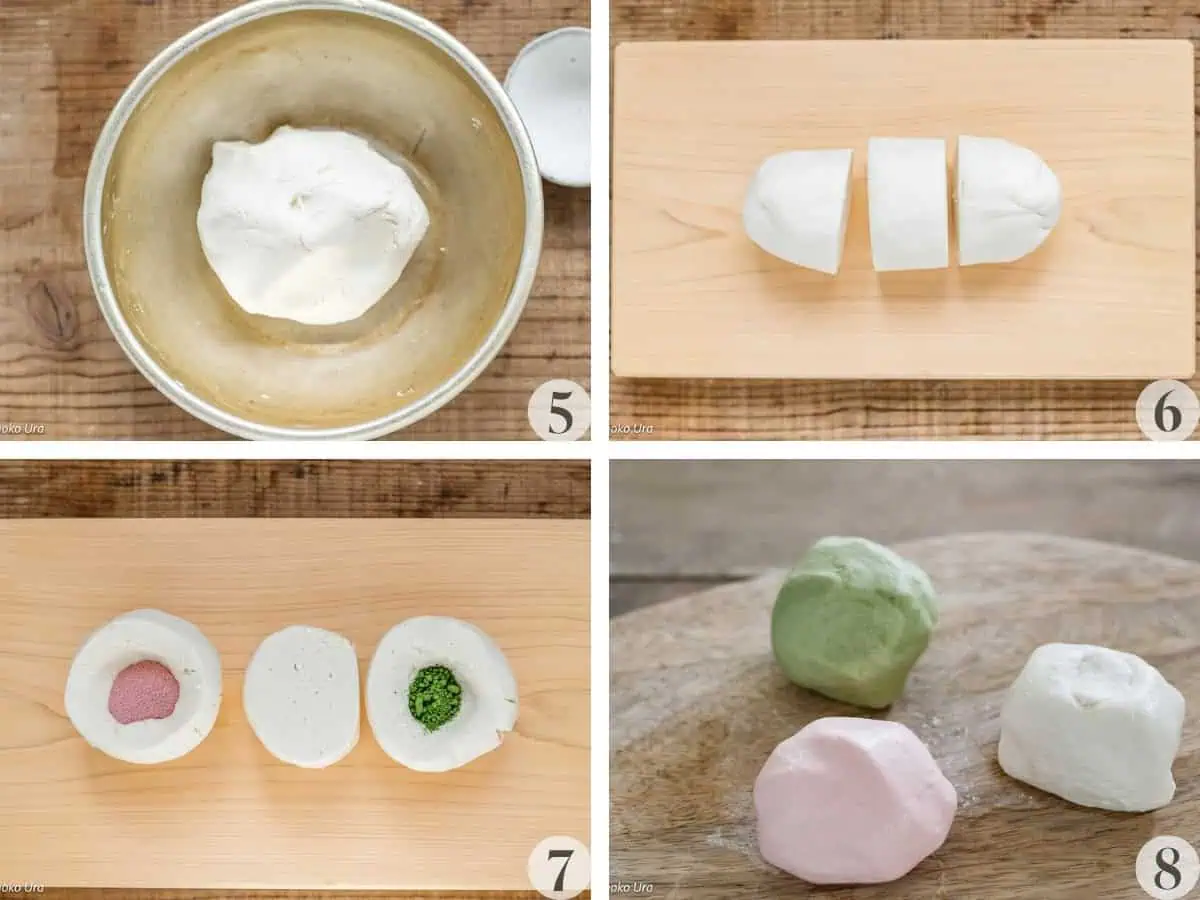
2. Divide and Color the Dough:
- Divide the dough into three equal portions.
- Leave one portion white.
- Add sakura powder and/or red food colouring to one portion and knead until it turns and evenly colored light pink.
- Add matcha powder or yomogi powder or green food colouring to the last portion and knead until green.
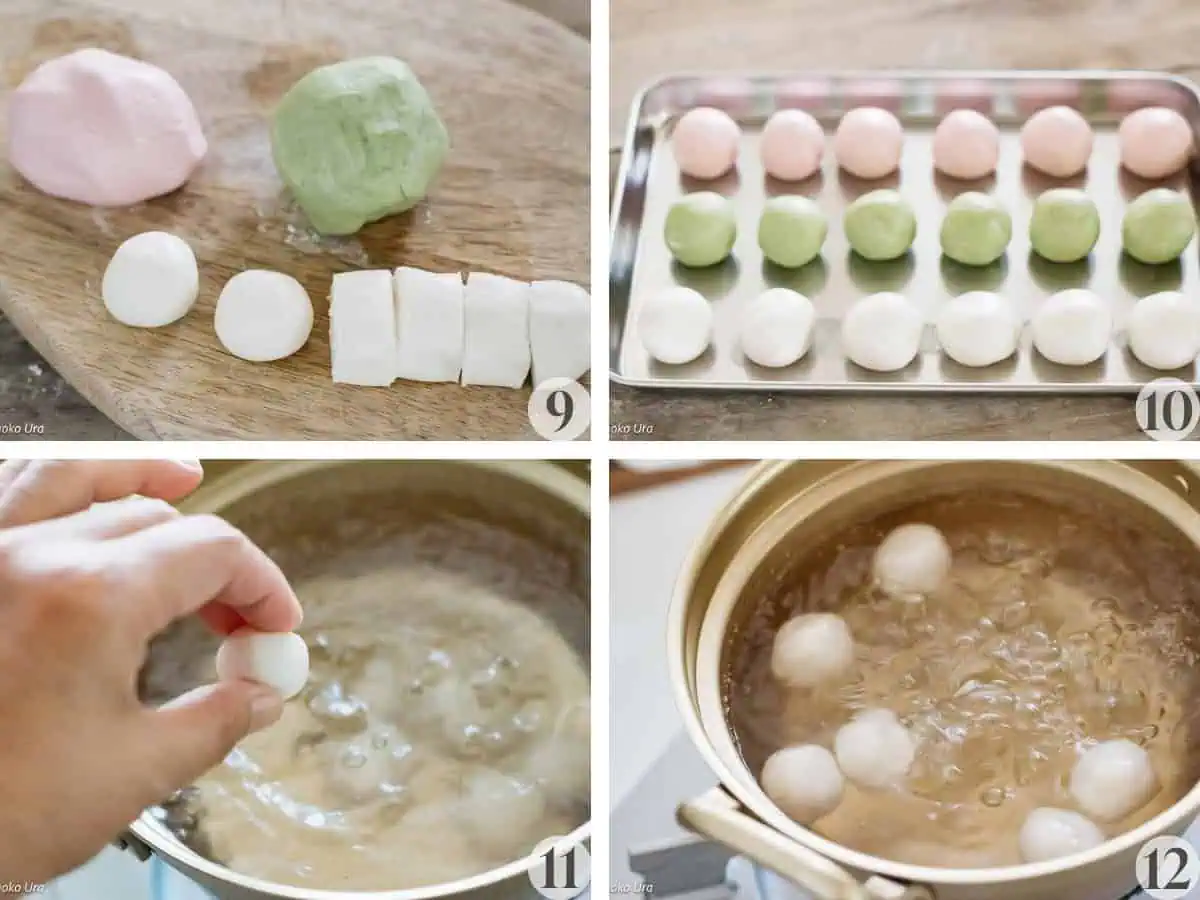
3. Shape the Dango:
- Divide each colored dough into 5-6 small pieces.
- Roll each ball of dough (green, pink, and white) into 6 uniform-sized balls.
4. Cook the Dango:
- Bring a large pot of water to boil.
- Gently drop the dango balls into the boiling water.
- Once the dango floats to the surface of the water, leave them cooking for a few minutes more.
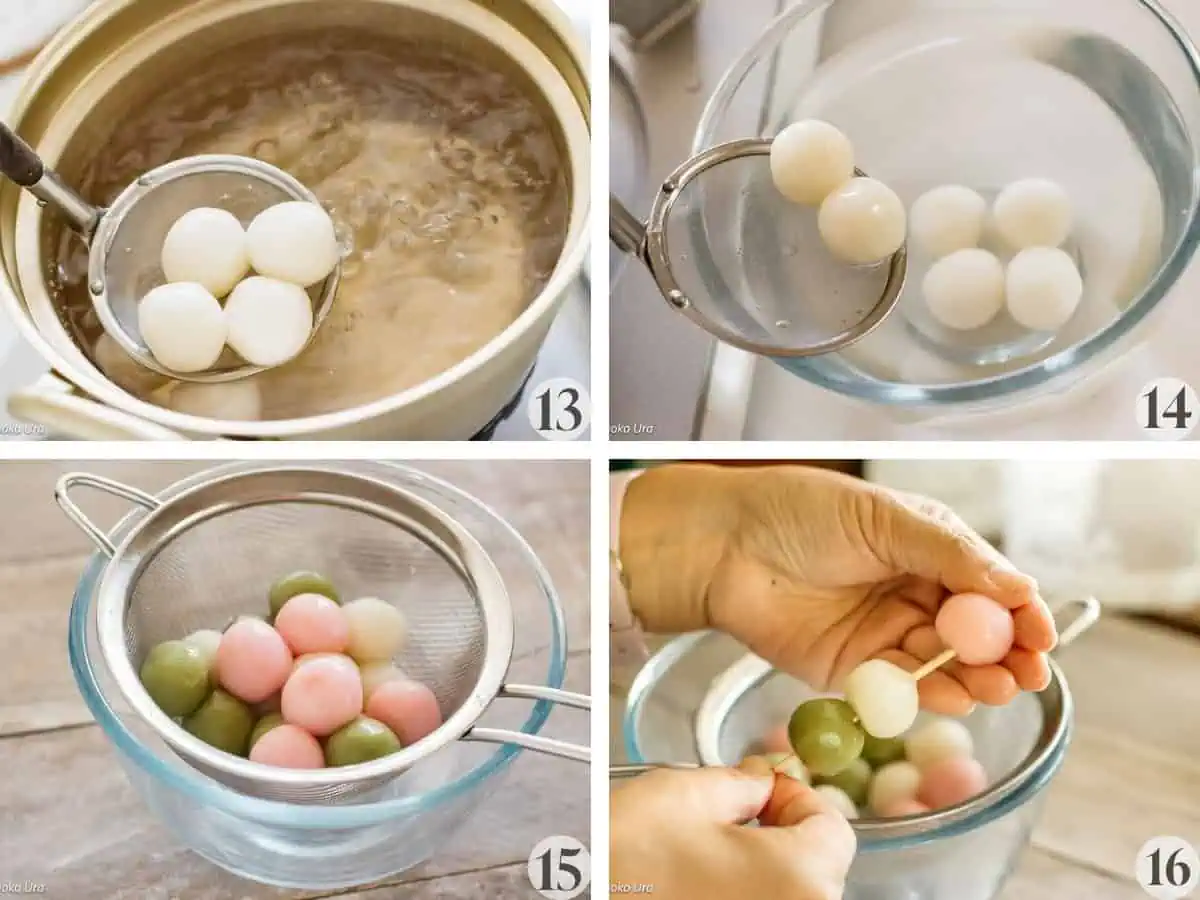
- Remove with a slotted spoon and place in cold water to stop the cooking process.
5. Assemble the Hanami Dango:
- Thread three dango balls (one of each color) onto a skewer.
- Traditionally, the order is pink, white, then green from top to bottom. Repeat until all the dango are skewered.
6. Serve:
Enjoy your hanami dango!
Shiho’s Kitchen Tips to make hanami dango
- Adjust water as needed to achieve the right dough consistency.
- If the dango are too soft after boiling, you can grill them lightly for a firmer texture.
- If you are using red food coloring for pink dango, it requires only a couple of small drops to make the subtle pink colour like the colour of cherry blossom flowers. When the dough is cooked, the colour will intensify a bit. Matcha will add dull green hue, whereas yomogi powder adds a sharp dark green hue.
- Soak the skewers in water before place dango on them. Soaking makes it easier to skew the dango.
Serving Suggestions
Traditional Hanami Style:
Serve the colorful dango on a plate alongside a cup of green tea for the traditional way to serve the dango. This classic pairing is perfect for enjoying under cherry blossoms during hanami season.
Dessert Platter:
Arrange the dango skewers on a large platter with other Japanese sweets like mochi, dorayaki, daifuku and other wagashi. Add some fresh fruit slices for a beautiful and varied dessert spread.
Tea Time Treat:
Eat the dango with Japanese teas like sencha, hojicha, matcha, or mugicha. The sweetness of the dango complements the slight bitterness of the tea wonderfully.
Ice Cream Pairing:
Serve slightly chilled dango alongside a scoop of matcha or vanilla ice cream. The contrast in temperatures and textures creates an interesting dessert.
Japanese-style Dessert Bowl:
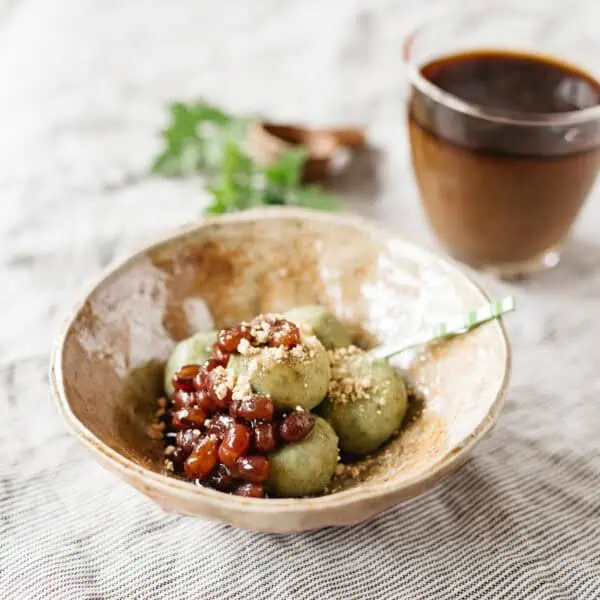
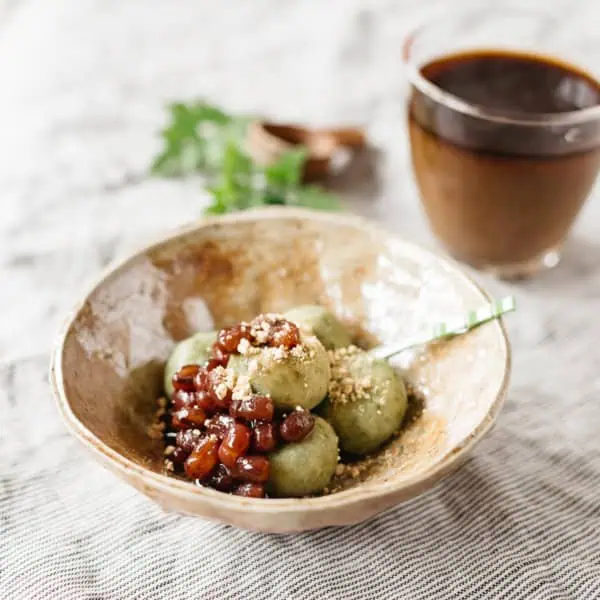
Create a dessert bowl by serving the dango skewers with sweet red bean paste (anko) on the top or on the side.
How to Store
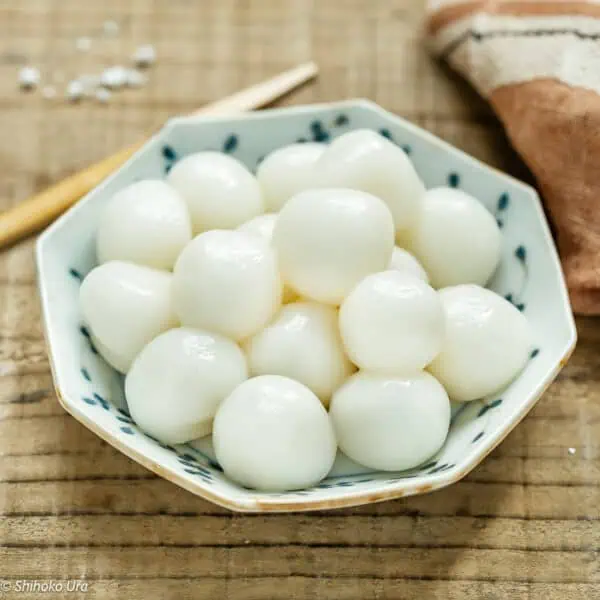
You can store any leftover cooked dumplings in the freezer. Dango will keep for a few months in the freezer. Scatter the balls onto a flat container or plate lined with plastic wrap. Make sure that each dango ball doesn’t touch each other to avoid them sticking. Cover with another sheet of plastic wrap and leave it in the freezer. When the balls are frozen, put them in a ziplock bag and return them to the freezer.
Hanami Dango 花見団子
Ingredients
- 100 g Glutinous rice flour Shiratamako
- 50 g Joshinko
- 150 g Water *1 or Silken tofu read above post
- 4 tbs white sugar
- 1/4 tsp Matcha powder for green colour *2
- 1 tsp Sakura powder and a drop of Pink colouring for pink colour *2
Instructions
- Place the shiratamako, joshinko, and sugar in a large bowl.
- Gradually add silken tofu (or water), stirring with a wooden spatula until it all comes together to form a dough.
- Divide the dough into three equal portions.
- Add the matcha powder (or alternative coloring) into one of the dough portions and knead until the dough turns green.
- Add 1/2 tps of sakura cherry blossom powder (or alternative coloring) into one of the other dough portions and knead into the dough until it turns light pink.
- Roll each ball of dough (green, pink, and white) into 6 uniform-sized balls.
- Boil a pot of water and add the dango balls.
- Once the dango floats to the surface of the water leave them cooking for a few minutes more, then scoop them out and put them into a bowl of ice water to stop the cooking process.
- Place one green dango, one white dango, and one pink dango onto a skewer and repeat until all the dango are skewered then serve!
Notes
- Substitutions: If you don’t have tofu, you can replace it with water. The texture will be slightly different. Flour and water ratio is 1:1
- When the dough is cooked, the colour of the dango will be intensified. However, sakura powder does not add much pink colour, so I dropped one drop of red food colouring.




Good morning Shihoko-San… I am a Brazilian Nikei and a big fan of your site. I love the recipes you share! However, as an enthusiastic cook living outside of Japan, I face some challenges when trying to replicate the recipes. One of the main obstacles is the measurement system used in the recipes. I would like to request the possibility of including international measurements (such as grams, milliliters, etc.) alongside the traditional measurements. This would make things much easier for me and possibly for other followers of the site who also face the same challenge. I thank you in advance for your time and consideration…
Hello Jorge san, Thank you for your feedback on Chopstick Chronicles :D. OKay I will try, I usually use grams? though.
Hi, Shihoko —
Should dango be served warm, cold, or room temperature? Curious since I’ll likely freeze mine to use at an event.
Hi Cin Clinton, Dango can be served warm, cold and room temperature and also you can freeze too.
If you’re using tofu, how much should you use in the classic 6 skewer recipe? Is it 90g, just like the water?
Hi Zia, you need to add a little bit at a time. Every tofu contain different amount of moisture so I can not tell you exact amount. You need to adjust the amount by adding a little bit at a time to make a dough like your earlobe firmness.
I’m considering making these for a potluck, but I’m not sure how early to make them, since they’re best served fresh. After making them, how much time would I have before they start drying out/worsening in texture? Also, do dango travel well?
If you think making dango isn’t a good idea for a potluck, do you have any suggestions for good Japanese dishes to bring to potlucks?
(Sorry for bombarding you with so many questions…😅)
Hi Mio, if you make this dango on the day you have the potluck should be okay and I think it is a good idea. How about Temari sushi? It is easy to make.
For some reason the pink balls turned out to be harder than the white ones after I added the color…. Is this normal or did I do something wrong?
Hi Hazu, I am not sure but just adding colour should not change the texture over all.
Can I also add more matcha to make it have more flavor?
Hi Iris yes you can 😀
Hi! Can I add lychee powder to the white one and sakura powder to the pink one? Also, how is it different when i use water?
Hi Iris yes you can. Nutritional facts will be different 😀