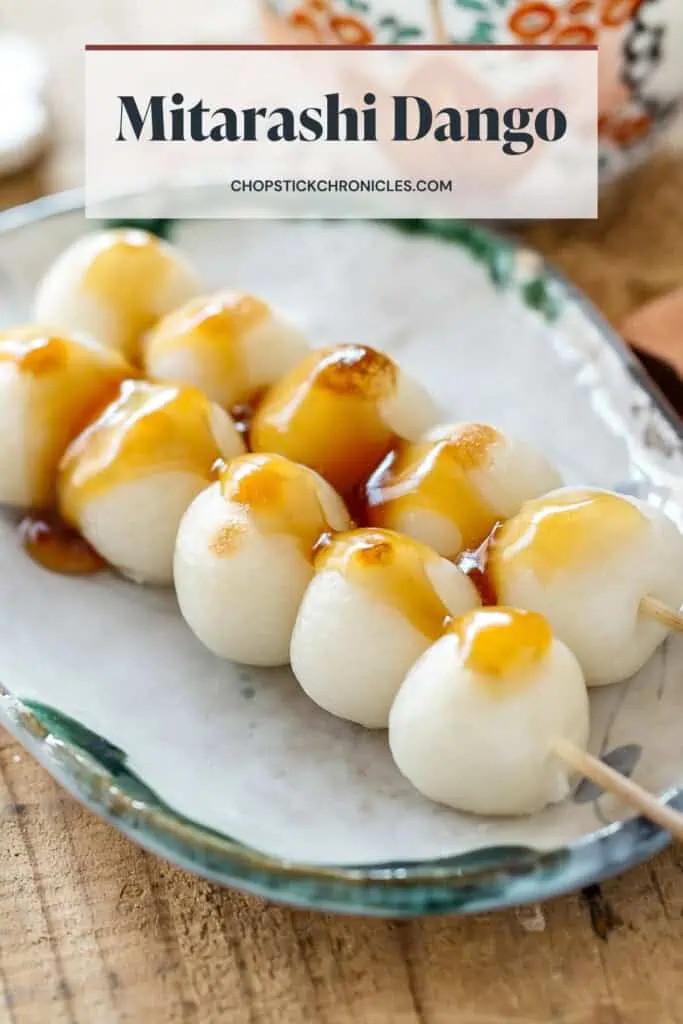
Mitarashi Dango is a variety of sweet Japanese rice dumplings grilled and covered in a sweet soy sauce glaze. The soft chewy little balls are stacked on a skewer with the delicious sweet soy glaze coating each one with hints of char grill in every bite. They’re a popular street food snack in Japan that are simply irresistible with their fresh toasted aroma and glossy sauce. Recreate this delicious snack easily at home with this recipe featuring a secret ingredient to make the dango extra soft and bouncy!

Table of contents
What is Mitarashi Dango?
Mitarashi dango is a type of Japanese sweet similar to mochi. Its main ingredients are glutinous rice flour and a sweet soy sauce glaze. It is gently grilled to give it light charring on the outside, which creates a perfect balance of savoury-sweet. It’s said to have originated from the Kamo Mitarashi Tea House in Kyoto.
The name was derived from the water bubbles of the “Mitarashi” where you purify your hands with water at the entrance of a famous shrine in the city called Shimogamo shrine. The dango were used as an offering for the gods and are still served there today as 5 dango on a stick to represent a body and are believed to bring good health.
Mitarashi dango are also found all over Japan at grocery stores, convenience stores, specialty confectionary shops, traditional restaurants, and at food carts run by street vendors who make them fresh before your eyes.

Ingredients Required to Make Mitarashi Dango
Here are the ingredients needed for this mitarashi dango recipe:
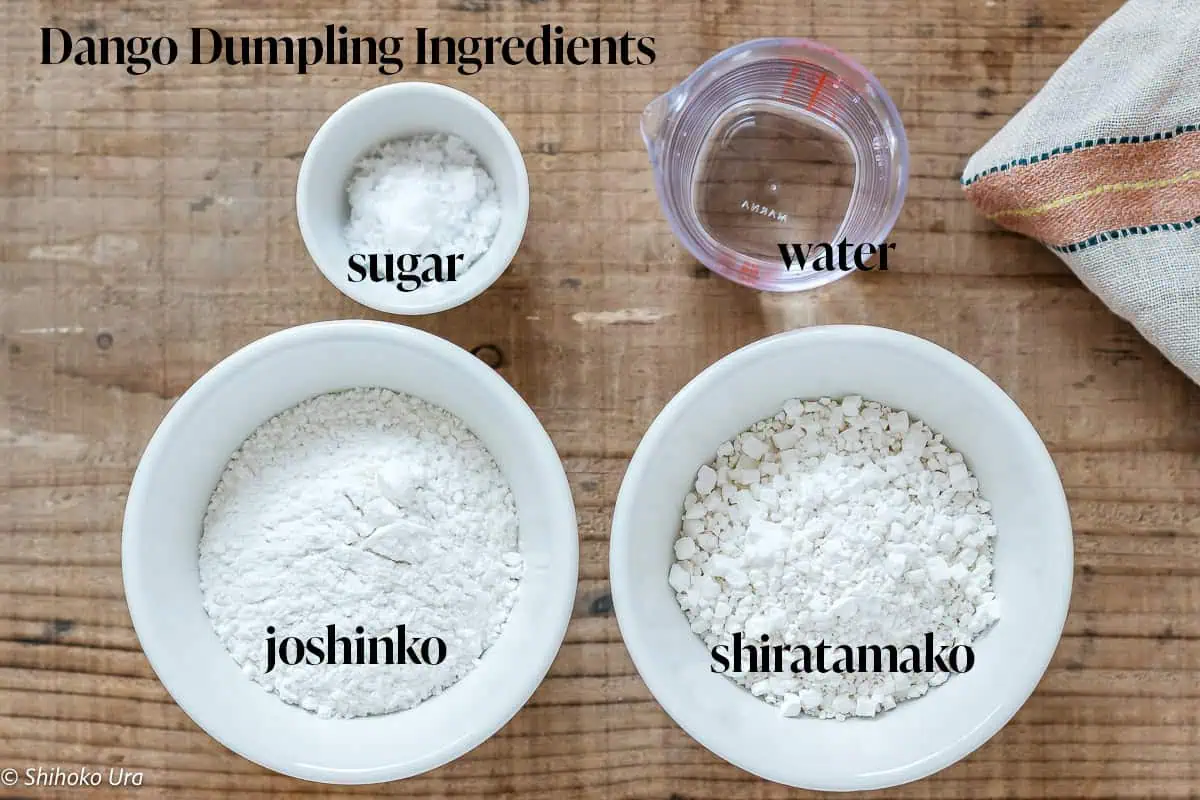
For Dango Dumplings
- 上新粉 Joshinko (Rice Flour) : This is the main ingredient for the dango. It’s a fine, powdery flour made from short-grain Japanese rice (uruchimai). It gives the dumplings their chewy texture.
- 白玉粉 Shiratamako (Glutinous Rice Flour) : this sticky rice flour is often mixed with joshinko to add extra chewiness and helps bind the dumplings together.
- Sugar : sugar adds a subtle sweetness to the dango dumplings.
- Water : The amount of water should be about 90% of the flour weight. You should aim for a dough firmness similar to your ear lobe. So do not add water all in one go. Instead, add the water gradually, watching the consistency of the dough.
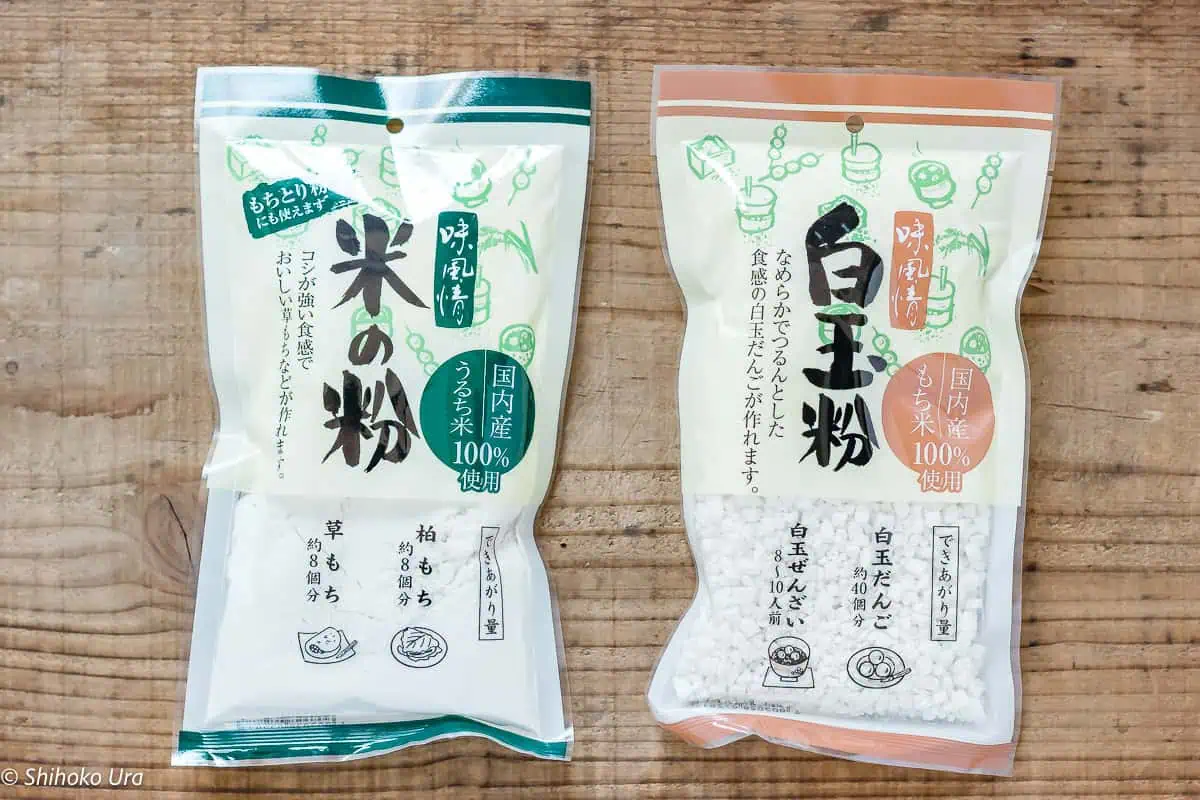
Using Shiratamako or Mochiko (another glutinous rice flour) creates very soft dango. If you prefer a firmer, more chewy texture, try using more Joshinko, a non-glutinous type of Japanese rice flour, which creates a tougher texture. Use a 50-50 ratio for this or adjust to your tastes. Alternatively, you can also use glutinous rice flour from Thailand, which may be more accessible. In Australia, you can easily find it in the international aisle at the grocery store. It comes in an easily recognisable green packet. Try checking Asian stores in your country for it.
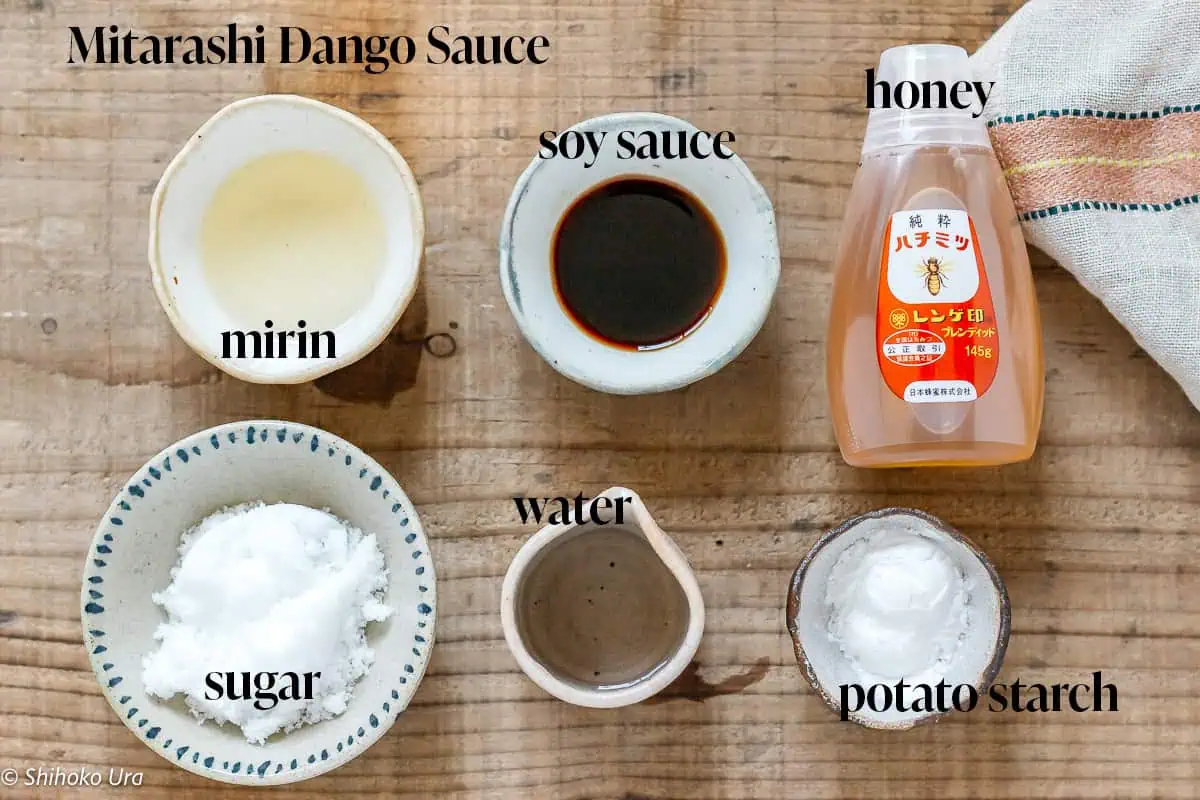
For Mitarashi Sauce
- Soy Sauce: Provides the savory base for the sauce, giving it a rich umami flavor.
- Sugar: Balances the saltiness of the soy sauce and creates the signature sweet-savory taste.
- Mirin: A sweet rice wine that adds depth and a slight glossiness to the sauce.
- Water: Used to adjust the consistency of the sauce.
- Potato Starch or Cornstarch: Used as a thickening agent to create the right texture of the sauce.
- Honey (optional) : Traditionally, mitarashi dango sauce does not use honey, but adding honey provides a more complex sweetness compared to plain sugar, and the floral notes in honey can add an extra layer of flavor to the sauce.
Ingredients Substitution and Variations
Flour Mix
While the traditional recipe uses a combination of joshinko (non-glutinous rice flour) and shiratamako (glutinous rice flour), you can use Mochiko (sweet rice flour) which is similar to Shiratamako instead.
Sauce Variations
- Using brown sugar or different sugar instead of white caster sugar for a richer flavor
- Use Kaeshi sauce as a base.
Healthier Options
- Adding silken tofu to the flour instead of adding water makes the dango much more soft and squishy. It also adds more protein and gives the dango a delicious chewy texture. This texture is often described with an onomatopoeia in Japanese called “mochimochi”!
- Using alternative sweeteners like stevia or monk fruit in the sauce instead of sugar
- If you would like to make Mitarashi Dango gluten free, use gluten free soy sauce instead of normal soy sauce.
Step by Step Instructions to Make Mitarashi Dango
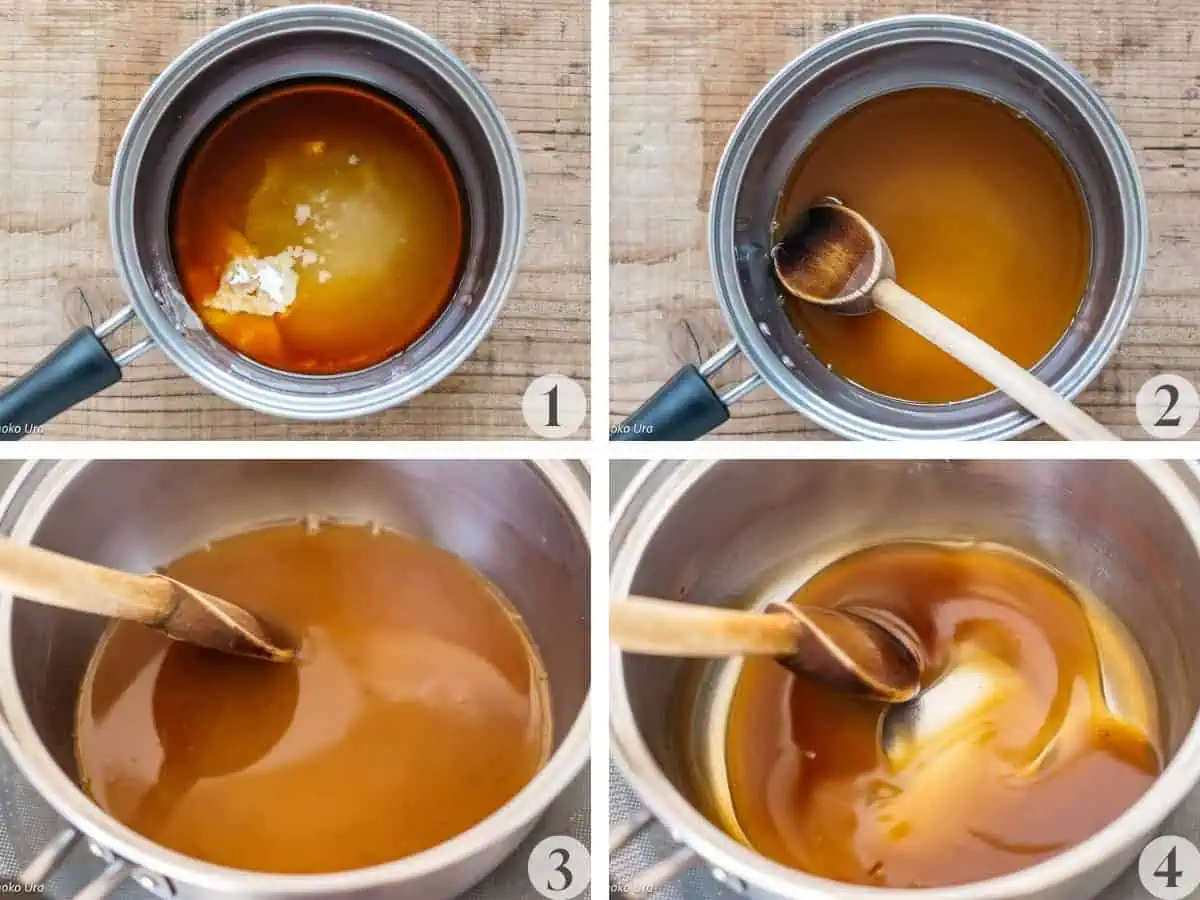
1. Prepare the Mitarashi Sauce:
- In a small saucepan, combine all sauce ingredients.
- Heat the mixture over medium heat, stirring until the sugar dissolves.
- Stir continuously until the sauce thickens. Set it aside.
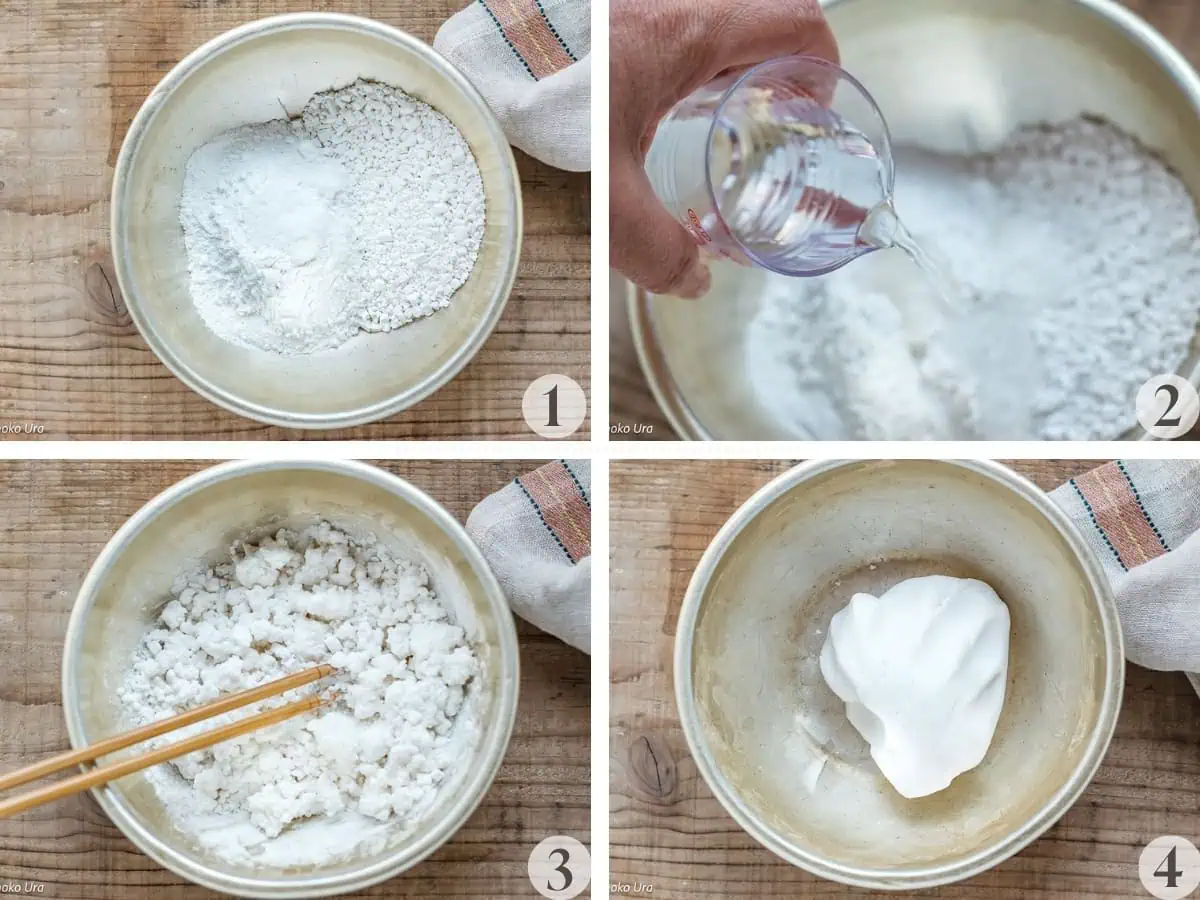
2. Prepare the Dango Dough:
- In a large mixing bowl, combine joshinko, shiratamako, and sugar.
- Gradually add water while mixing with a pair of chopsticks until the dough comes together.
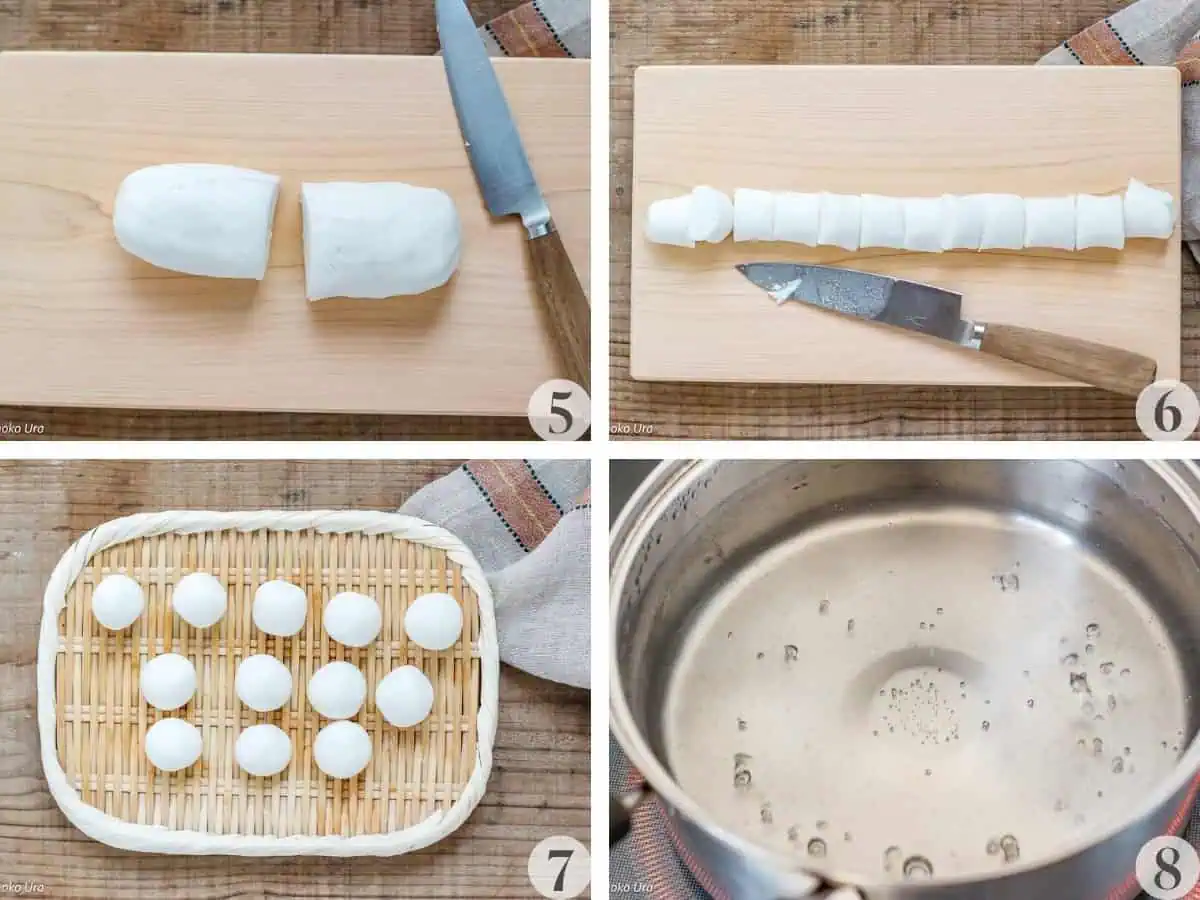
3. Shape the Dango:
- Divide the dough into two equal portions. Roll both dough to a thin cylinder shape. Cut it into 12. It will make 24 equal shape pieces.
- Roll each portion into a small ball, about 2.5 cm (1 inch) in diameter.
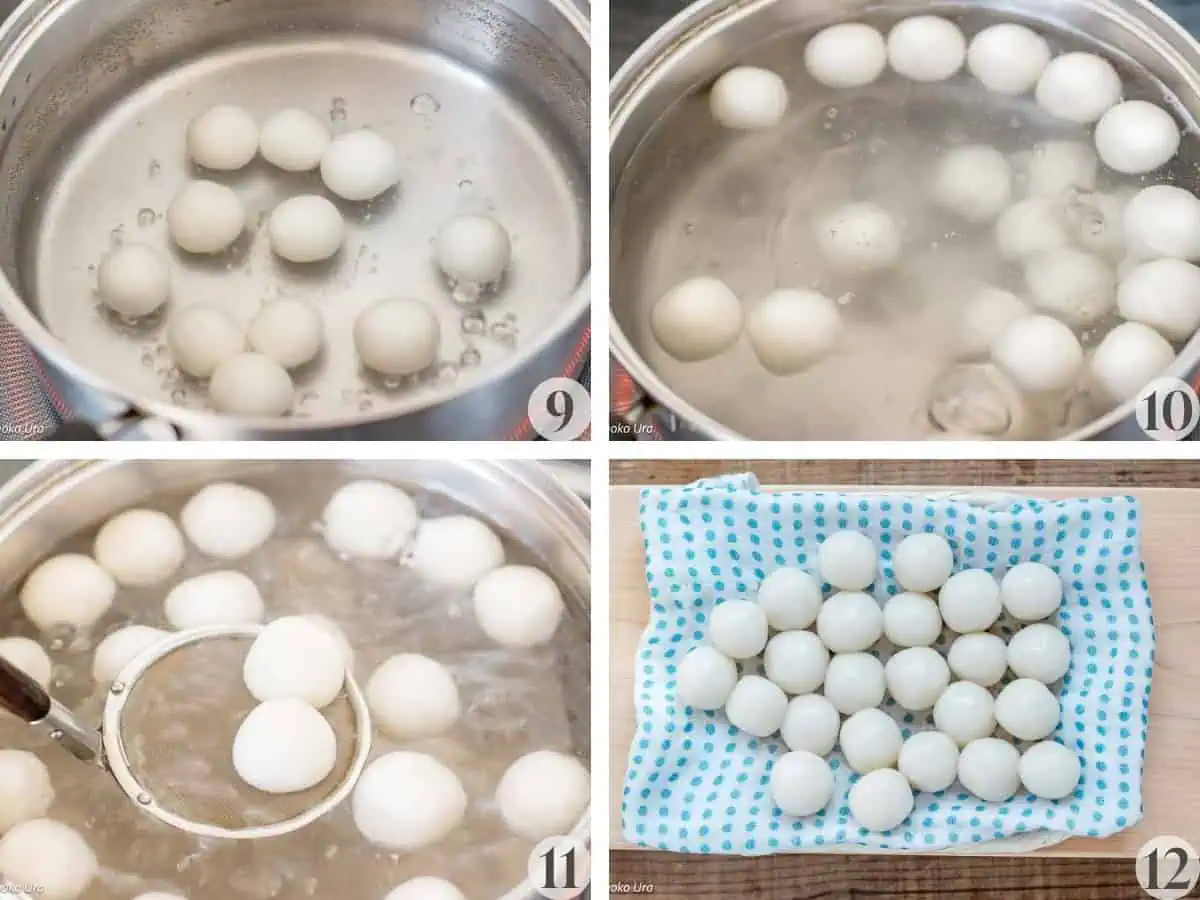
4. Cook the Dango:
- Bring a large pot of water to a boil.
- Gently drop the dango balls into the boiling water.
- When they float to the surface, cook for an additional 1-2 minutes to make sure the dango is cooked through.
- Remove the dango with a slotted spoon.
5. Skewer the Dango:
- Once cooled briefly, thread 5 dango onto each bamboo skewer.
6. Grill and Glaze the Dango:
- Heat a grill pan or frying pan over medium heat.
- Lightly grill the dango skewers, turning them to achieve a slight char on all sides.
- Brush the warm mitarashi sauce over the grilled dango, coating them generously.

7. Serve:
- Place the mitarashi dango on a serving plate.
- Drizzle any remaining sauce over the top.
Enjoy your homemade mitarashi dango while they’re still warm!
Tips to Make Perfect Mitarashi Dango
- Use the right rice flour: For the best texture, use shiratamako (glutinous rice flour) or a mix of shiratamako and joshinko (non-glutinous rice flour). This will give your dango the perfect chewy consistency.
- Adjust water carefully: Add water gradually to your flour mixture. The dough should be soft but not sticky. Shiratamako and water ratio is 1:1 weight in general. The perfect amount of water changes depending on the season and humidity, so first add about 3/4 of the amount and see how it goes. The texture of the dango should be chewy but not too hard. If you find the dough too dry, add a little more water; if it’s too wet, add more joshinko.
- Wait for the dango to float completely to the surface in the boiling water and let them sit for a bit to make sure they’re fully cooked. If they’re not fully at the surface or are sinking, it means they’re not cooked all the way through.
Serving Suggestions and Variations
Traditional Serving of Mitarashi Dango:
- Skewered on bamboo sticks, typically 3-5 dango per skewer
- Served warm or at room temperature. In the summer it can be serve chilled.
Modern Presentations:
- Mitarashi Dango Parfait: Layered with ice cream, fruits, and sauce
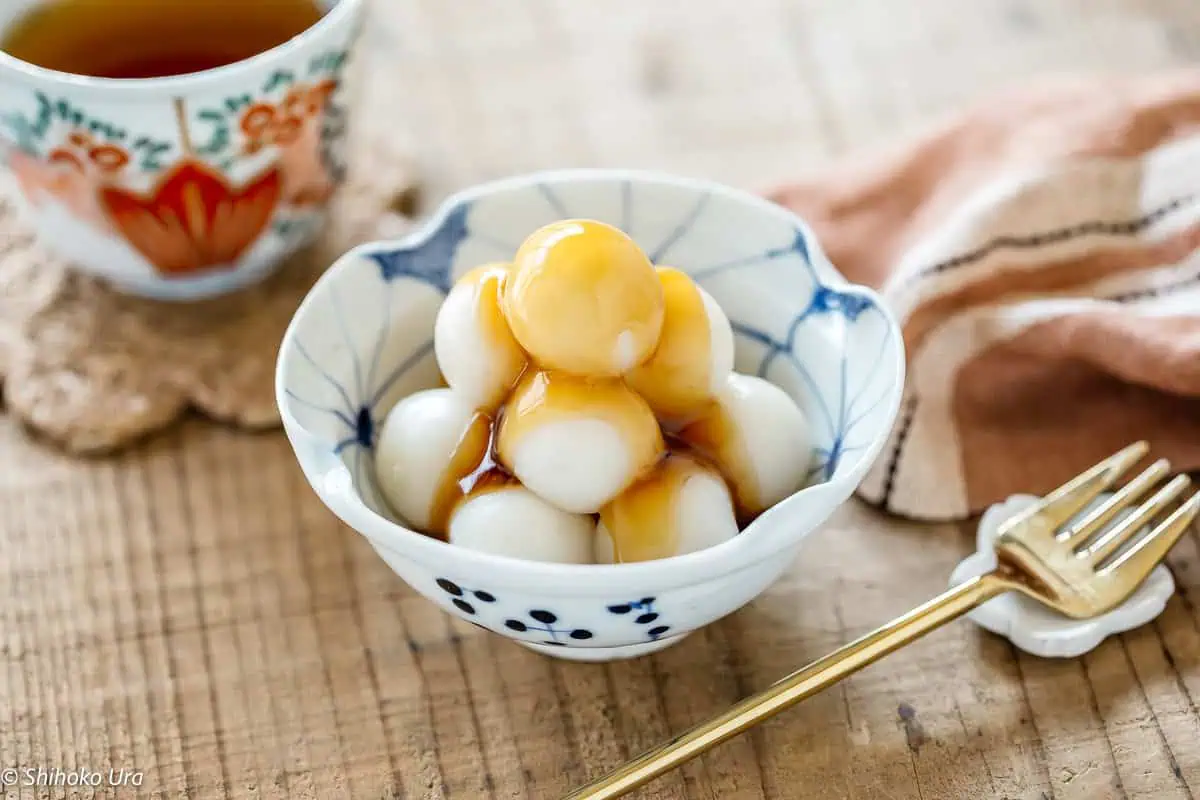
- Dango Bowl: Served in a bowl with the sauce drizzled over in a deconstructed style
Accompaniments:
- Serve with green tea, mugicha, or hojicha for a traditional pairing
- Matcha latte or hojicha latte.
- As part of a Wagashi dessert platter: Create a Japanese dessert platter by serving mitarashi dango alongside other traditional sweets like mochi, dorayaki, or taiyaki for a tea ceremony or special occasion.

How to Store Mitarashi Dango
Mitarashi dango lose their chewy texture and harden fairly quickly. Therefore they are better consumed freshly when made. But you can also freeze mitarashi dango if you follow these steps. Wrap them individually with plastic wrap and then put them in a ziplock bag. They will keep for about 3-4 weeks in a freezer. It is best to thaw them naturally at room temperature, which takes about 30-60 minutes.
A : It is traditionally 5. It originated from an anecdote when Emperor Godaigo washed his hands at Mitarashi. One big water bubble came out followed by four more water bubbles. It also is said to represent a body with the top dango being the head followed by 4 limbs. When you make Mitarashi dango at home, I don’t think the number matters. It’s all up to you!
A : Both silken or firm tofu works, however, I recommend using silken tofu for a smooth chewy texture. If you cannot get tofu for whatever reason, you can replace it simply with water.
A : It depends what you have. The easiest method is to pan-fry or grill using a non-stick frying pan. Be careful not to burn your fingers when you flip the dango skewers. You don’t need any oil for this. If you have a kitchen torch, you can use that. I like the burnt marks it creates and the toasty aroma it gives off.
Mitarashi dango is a popular sweets in Japan and one of my favourite types of dango. It tastes amazing served warm or cold with sweet and salty mitarashi sauce. If you love it, you can try other popular types of dango too like 3-colour Hanami Dango, Shiratama dango, or Yomogi Dango served with sweet anko red bean paste.

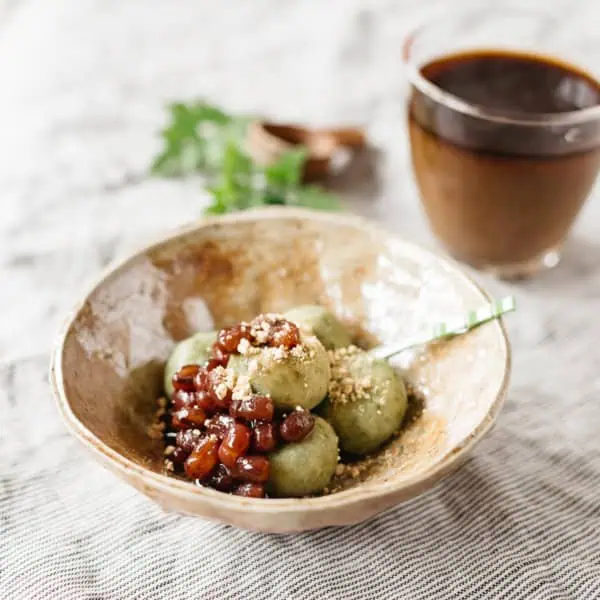
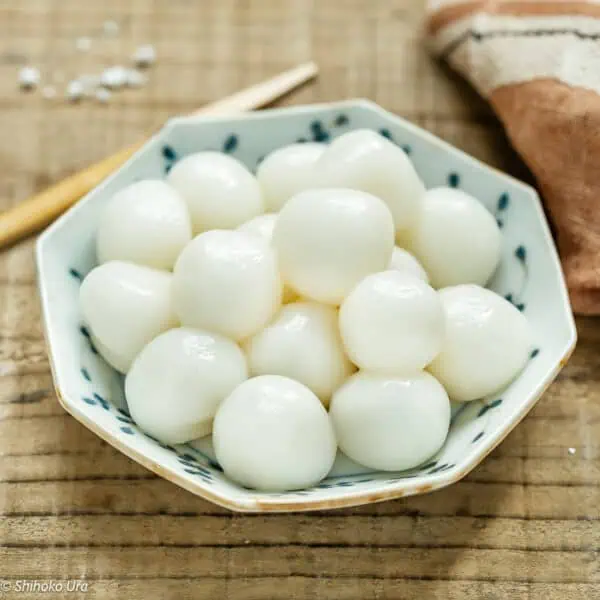

Don’t forget to check out other types of Dango recipe on Chopstick Chronicles too! Such as Sanshoku (three coloured ) dango, Yomogi dango, and Shiratama dango.
If you liked my recipe for Mitarashi Dango, please rate it and leave a comment below. Also, don’t forget to follow me on Youtube, Pinterest, Facebook, Twitter and Instagram to keep up to date with all the latest happenings on Chopstick Chronicles. Don’t forget to use the hashtag #ChopstickChronicles so I can see your wonderful creations!

Mitarashi Dango みたらし団子
Ingredients
Mitarashi Sauce
- 1 tbsp soy sauce
- 1 tbsp mirin
- 2 tbsp sugar
- 1 tbsp potato starch
- 3 tbsp water
- ½ tbsp honey *optional
Dango
- 70 g Shiratamako
- 70 g Joshinko
- 1½ tsp sugar
- 130 ml water
Instructions
Mitarashi Sauce
- To make the Mitarashi sauce, place all ingredients for the mitarashi sauce in a small pot over medium heat and stir constantly with a wooden spatula until the syrup becomes thick and clear. Set aside the sauce.
Making Dango
- Place the Joshinko, the Shiratamako and sugar in a large bowl.
- Add water gradually and mix well until it forms a dough.
- Divide the dough into 2 equal portions.
- Roll each dough into a long cylinder shape and cut each into 12.
- Roll all the dough pieces into a small round ball shape.
- Boil a large pot of water and add the dango balls.
- Once the dango rises to the surface of the water, scoop them out with a skimmer or sieve.
- Thread 5 balls each onto a skewer.
- Char or grill the surface of the balls in a frying pan (or lightly torch) then set aside.
- Roll the skewers in the syrup to serve or brush it over the top.






Hi! Will the dango remain soft if I place it in the fridge ?
Hi Bev, no it will become hard.
Hi! You’re a life saver! I’ve been looking for these perfect dango for months and i’m so happy right now, i ate the whole batch by myself :’) I used Martini instead of mirin because I had it on hand, but I’ll buy mirin next time ! Thank you so much
Is it possible to sub out the silken tofu with firm tofu and water?
Yes 😀
Loved this recipe! Made two batches yesterday and they came out perfect! I used the glutinous rice flour in the green bag since I couldn’t find the other type of rice flour at the oriental store. Also added a little extra tofu since 1/1 tofu and rice flour wasn’t exactly enough. My sauce was thicker than the one in the picture and a little more milky but maybe it’s because I used corn starch? Regardless, it was a great recipe (so easy and tasty) and I’m totally gonna use it from now on! Thanks so much!
Thank you for your lovely comment and rating Rebekah 😀
Hi I have no access to the Japanese type of rice flour. Can I substitute them with glutinious rice flour instead?
Hi Angie Yes 😀
Hi! I loved your recipe. However the balls turned out a bit grainy after I boiled them. Is there any way to fix that for next time?
Hi Tenzin Sangmo, I would pound them all together in a Japanese mortar then shape, but it will be sticky.
Would I be able to mix and roll the dough the day before, and then cook them the day-of? Or do you recommend mixing and rolling the dough AND boiling, and then only using the frying pan the day-of? How quickly do they harden after you make them? Should the sauce go on last-minute? Will the sauce keep in the fridge pre-made?
I need to have these ready in the morning the day after tomorrow. Having no experience with these, I am not sure how much time I would need to make a few hundred so I wanted to get started the day before. Thank you for any clarification or tips on how to handle this!
Hi CS, I have never made that many amount at once, so I am not sure. However, if I were you I would roll the dough and make the sauce keep in the fridge. On the day in the morning, cook dango and reheat the sauce. Hope it helps
Yum! Thank you for sharing the recipe.
You are welcome 😀
Delicious! Thank you for this recipe!
You are welcome Gina 😀
These are delicious! Hubby and I loved them! Thanks for taking the time to explain everything.
You are welcome 😀 Beth, I am glad you and your hubby loved Mitarashi Dango 😀
can the dango be frozen after boiling and cooling, then brought to room temperature and grilled?
can the dango be frozen before boiling, then boiled frozen?
thank you,
Hi Jing Thank you for your question. I am updating this recipe tomorrow. And answered to your question in the post 😀
For the silken tofu, should I use firm or soft? Looking forward to this and want to get it right, I love fresh dango!
Hi Christina, usually silken tofu is softer. Use soft and smooth one 😀
Can anything else be used instead of potato starch?
Hi Brandon, you can use flour instead of potato starch.
this is super great i love it!
thank you very much!
For freezing, so you freeze with the sauce or freeze the sauce separately? Thanks.
Hi Christine, you can freeze dango with sauce. Also you can just freeze dango only and make sauce fresh when you are ready to eat 😀
Should i use regular rice flour or glutinous rice flour? Thanks!
Hi Rose, Glutinous rice flour 😀
For the grilling part, are we supposed to have oil in the pan?
Hi Anonymous, NO oil, instead I used non-stick frying pan or you could use torch burner 😀