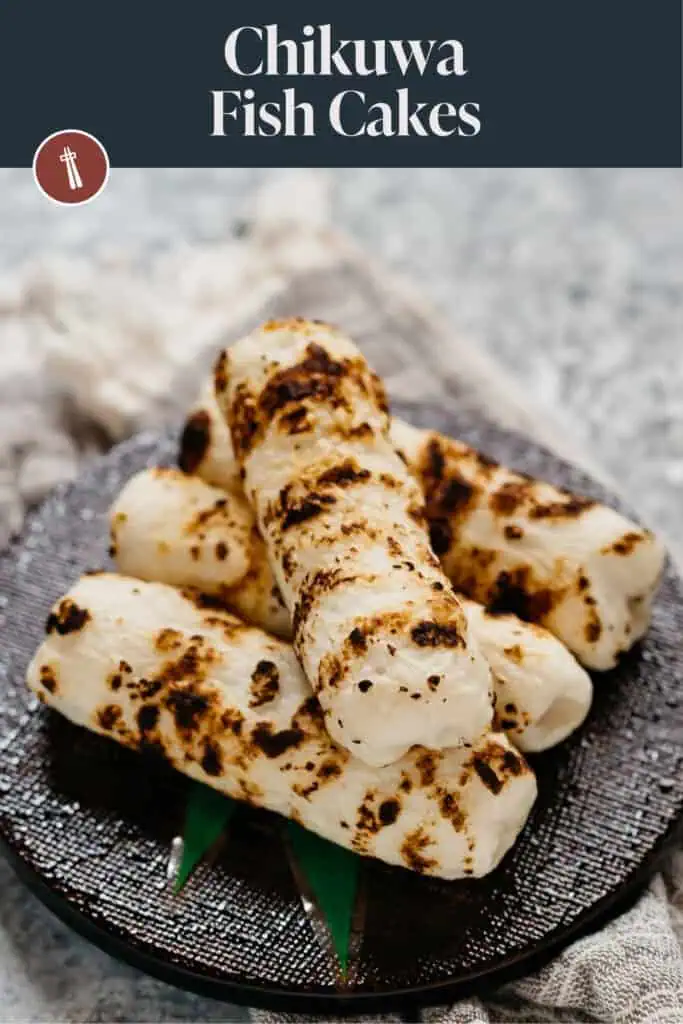
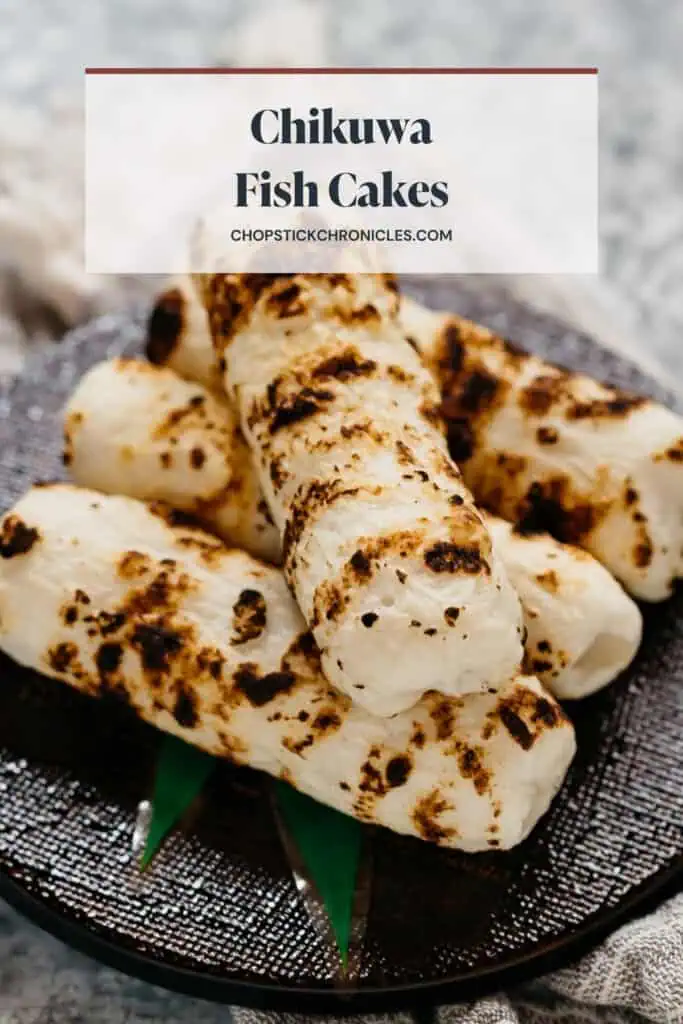
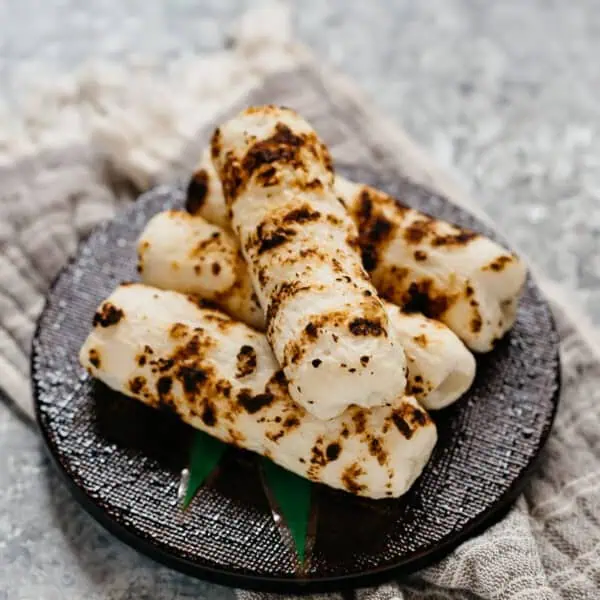
Make your own homemade Chikuwa to eat as a snack and for main meals and bento boxes! This type of Japanese fish cake has a classic savoury flavour and a unique tube-shaped design that makes it versatile and ideal for various dishes. Making your own chikuwa at home isn’t difficult and requires only a few simple ingredients and tools!
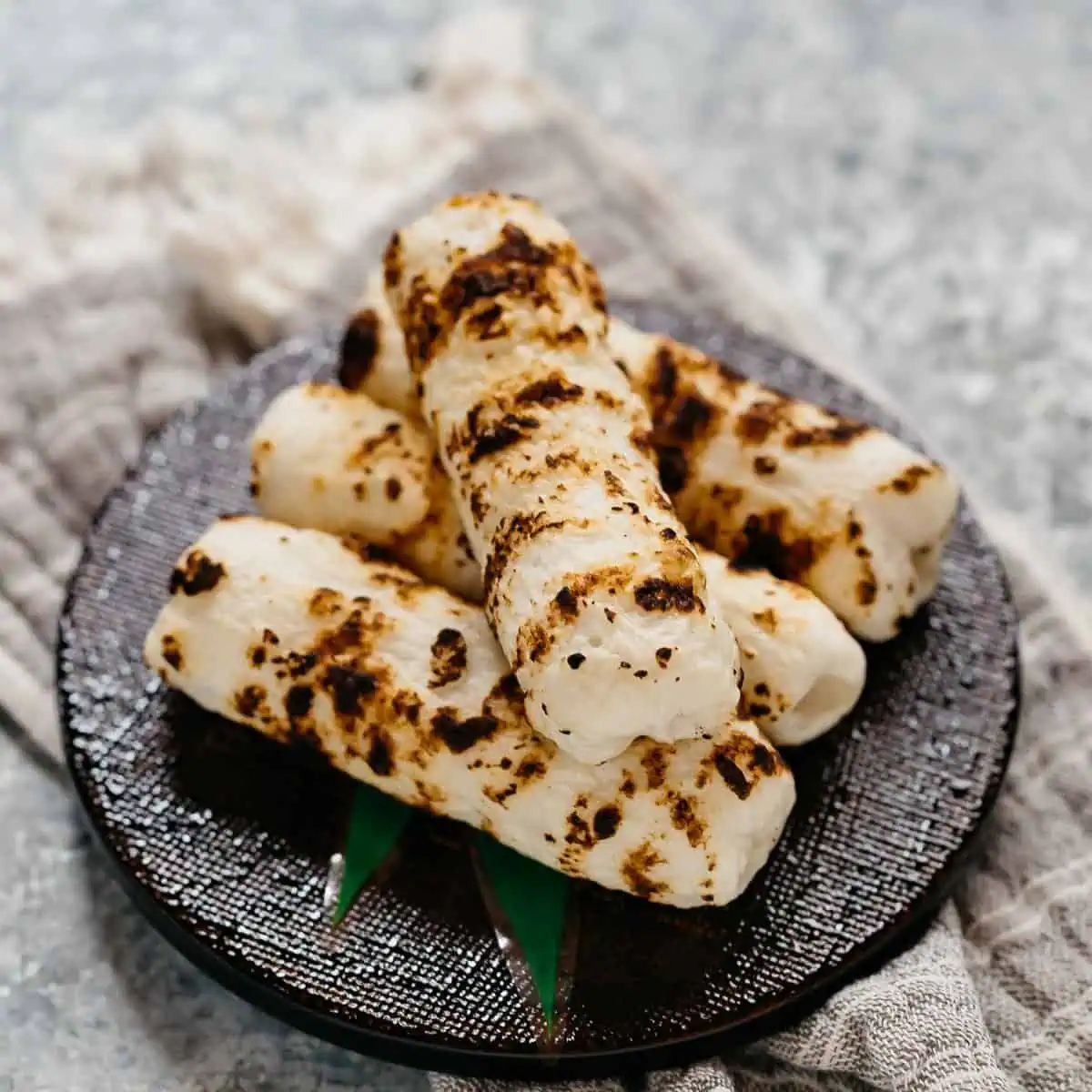
Table of contents
What is Chikuwa?
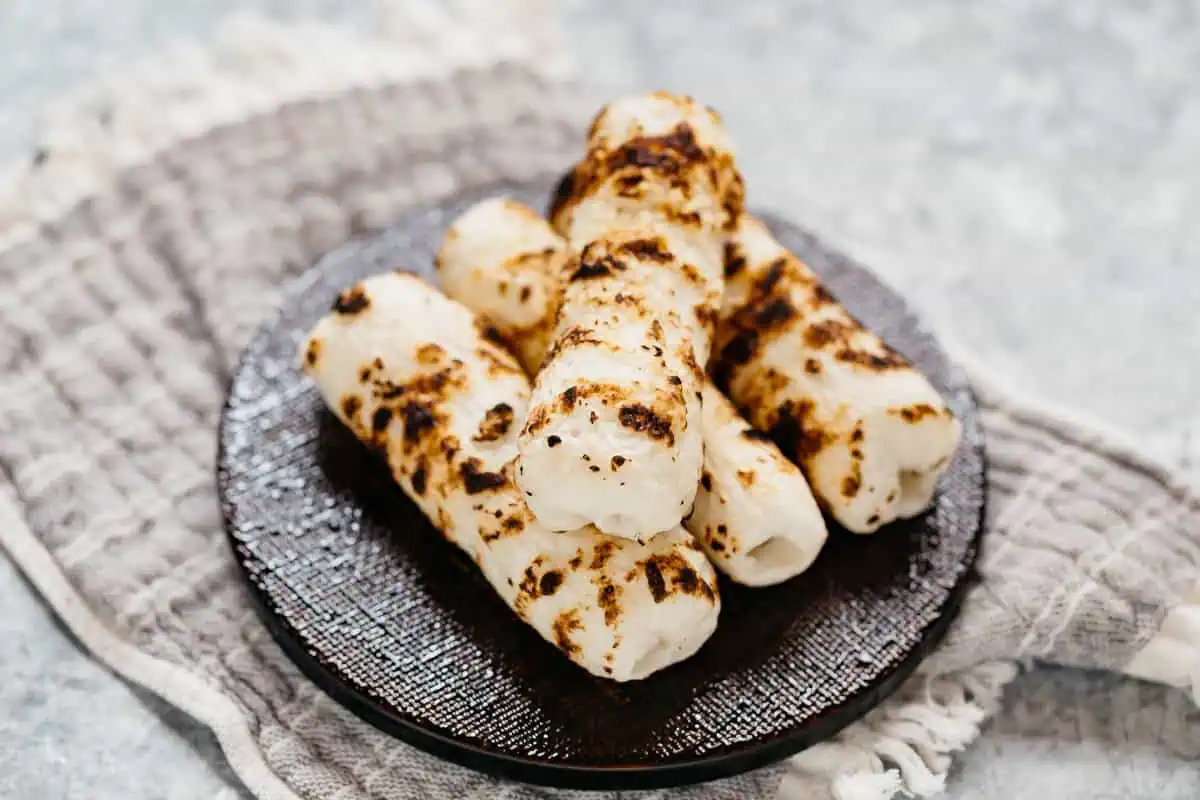
Chikuwa is a traditional Japanese fish cake made from ground fish meat that is formed into a tube shape. Like most Japanese fishcakes, chikuwa fish paste is typically made from white fish meat which is pureed and mixed with other ingredients like egg white, sake, salt, sugar, and starch. The mixture is then shaped into cylindrical tubes and cooked until firm and springy.
Chikuwa has a mild and slightly sweet flavor, with a firm yet tender texture. It is often used in Japanese stews like Oden, stir-fries, noodle soups, and bento boxes. It can be eaten on its own but can also be stuffed with cheese or vegetables like carrot or cucumber sticks and eaten as a snack or added to a meal or bento box. Grilling the chikuwa can also add a delicious smokey flavour. The versatility of Chikuwa makes it a staple in many Japanese households.
Main Ingredients
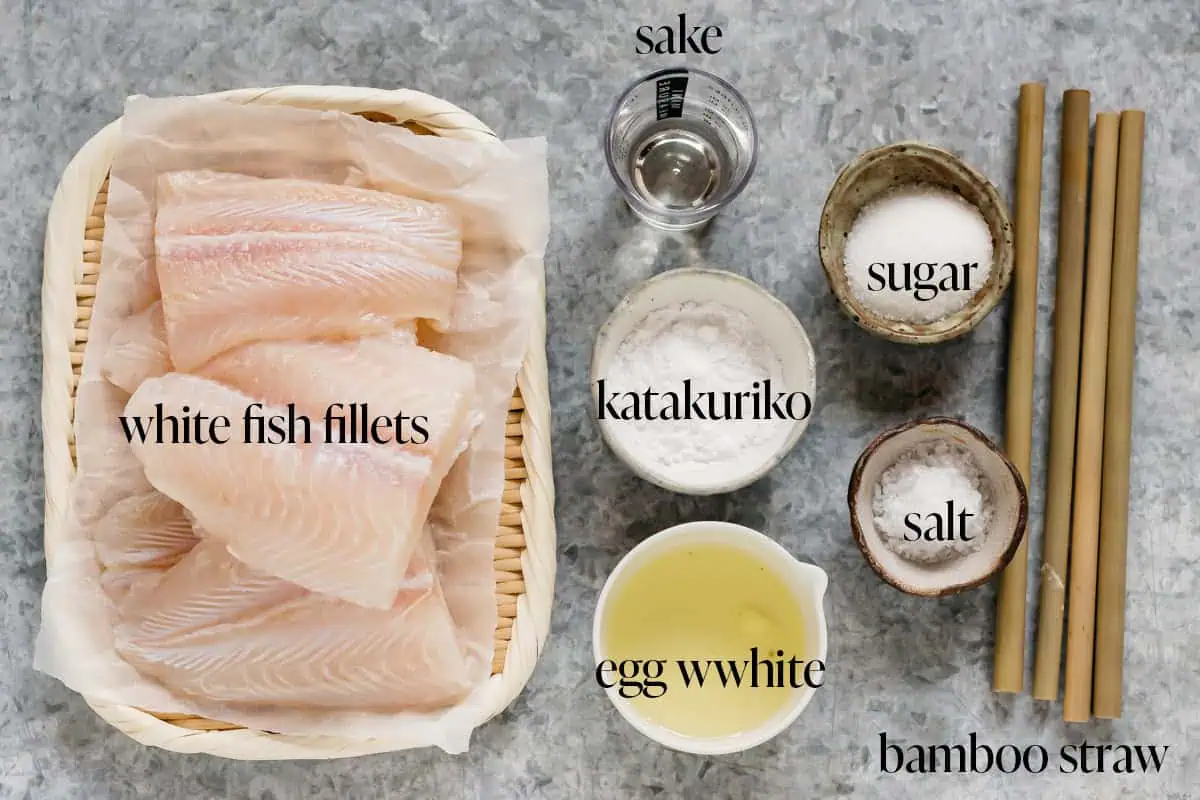
To make homemade Chikuwa, you will need the following essential ingredients:
- White fish fillets : white fish is the main ingredient in chikuwa and provides the base flavor and texture for the fish cake. Choose white fish fillets like hoki or pollock for ground fish meat. If fresh fish is not available, you can use frozen fish fillets too.
- Egg white : egg whites help bind the other ingredients together and gives chikuwa its smooth and bouncy texture.
- Sake : sake adds depth of flavor to the chikuwa while also helping to tenderize the fish mixture.
- Salt : salt helps to season the fish paste and enhance its flavor.
- Sugar: A small amount of sugar adds a touch of sweetness to the Chikuwa.
- Katakuriko Starch (potato starch) : potato starch is used as a thickening agent in chikuwa. It helps hold everything together and gives it its characteristic slightly chewy texture.
Equipment Needed
You don’t need any special equipment, just a couple basic tools that you likely already have or are easy to find.
Japanese mortar and pestle OR a food processor : One essential piece of equipment for making chikuwa is a large mortar and pestle or food processor. This will be used to grind up the fish paste that forms the base of the chikuwa. If you prefer a traditional approach, a mortar and pestle can give you more control over the texture of the paste. However, a food processor can save time and effort in grinding up the ingredients quickly and efficiently.
Bamboo Straw : Another important tool for making chikuwa is a bamboo straw. The straw is used to shape and mold the fish paste into long tubes before they are cooked and creates the signature hollow inside of chikuwa. You don’t need anything special though, I just used cheap bamboo straws that are thick and usually used for boba tea. You can find them at many shops nowadays or online.
Grill : some kind of grill or open flame is necessary to cook the chikuwa. I recommend the Iwatani grill because it has rails specifically designed for cooking things on a stick like yakitori and chikuwa. Alternatively you could use a bbq, a portable gas camping stove, or a gas cooktop if you have one at home.
Steps to Make Homemade Chikuwa
Follow these step-by-step instructions to make delicious Chikuwa at home:
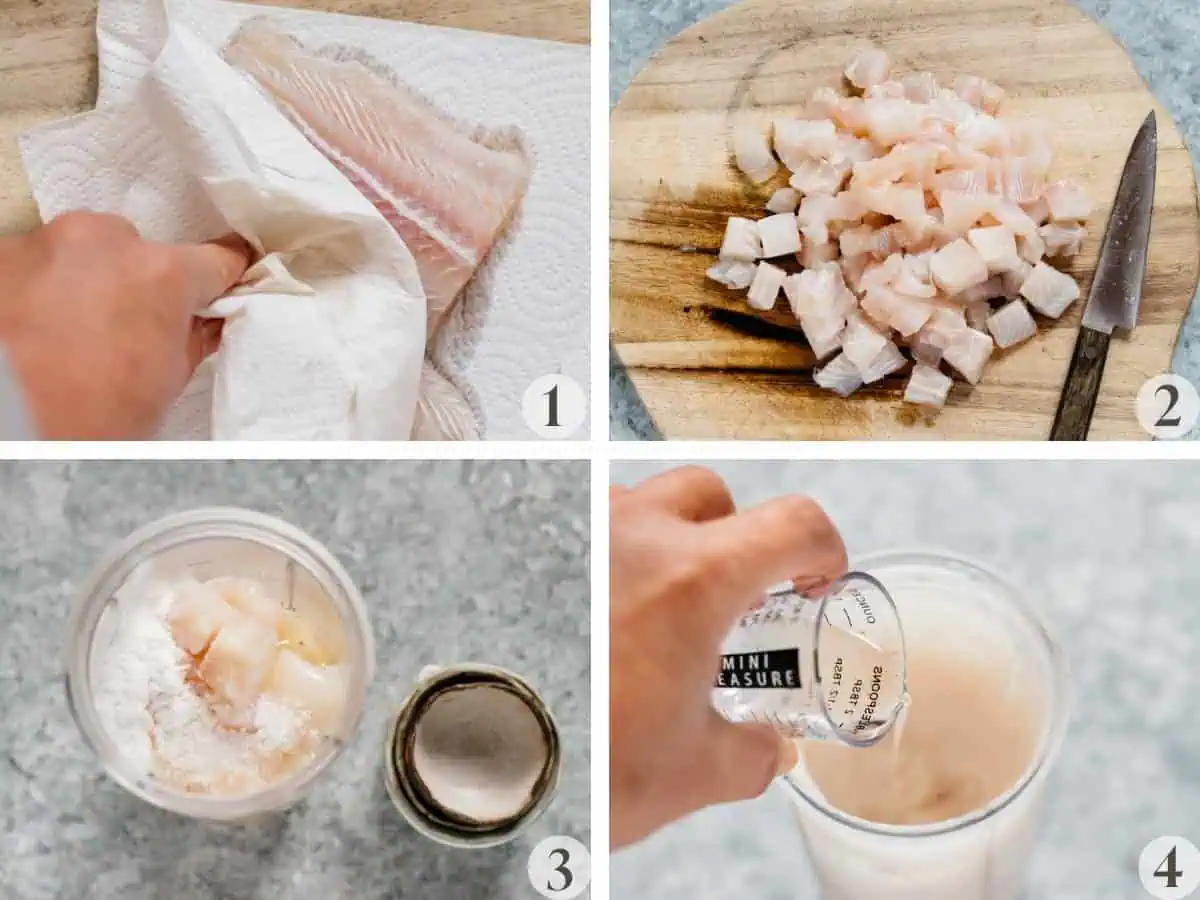
- Prepare the fish paste: If you are using frozen fish fillets, defrost the frozen fish fillets half way through, not completely defrosted. Pat dry the fish fillets with paper towel. Cut the fish fillets into small pieces and place them in a food processor. Add egg white, salt, sugar, katakuriko starch, and sake. Blitz until you achieve a smooth and sticky paste.
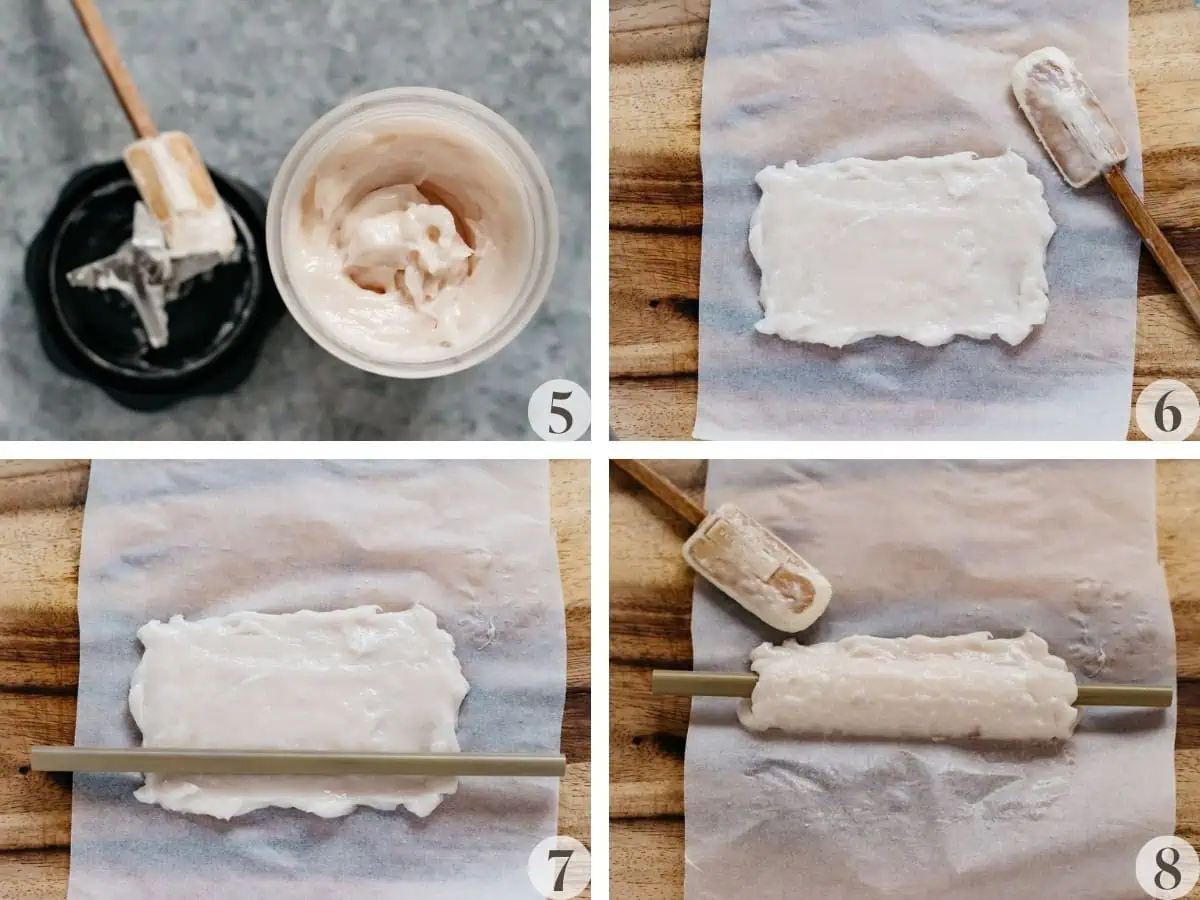
- Shape the Chikuwa: Take a portion(about 1/5th) of the fish paste onto a sheet of parchment paper and spread it thinly into rectangular shape. Place a bamboo straw over the edge of the spreaded fish paste and roll them all together from one end like rolling sushi. Repeat the process for the rest of the fish paste.
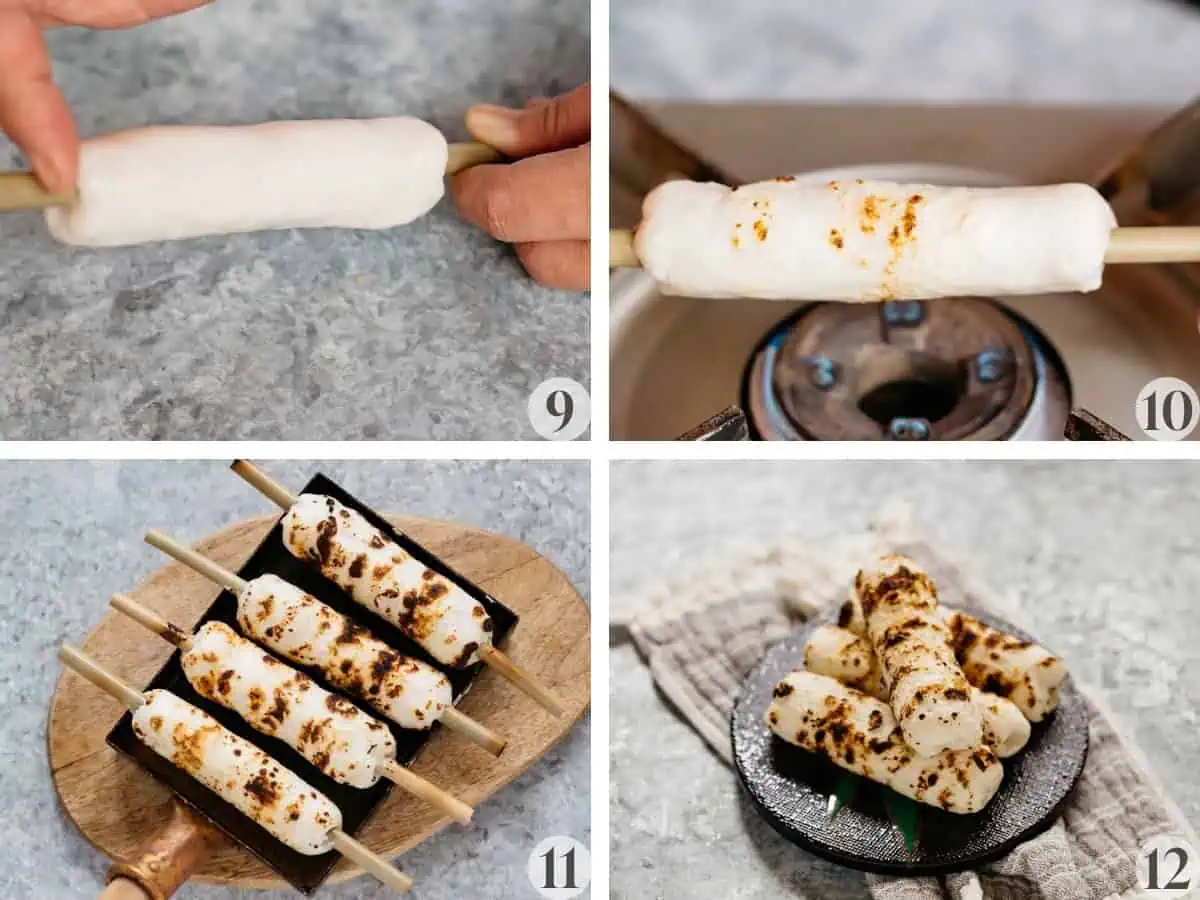
- Cook the Chikuwa: heat a grill or stovetop griddle over medium heat. Place the Chikuwa on the grill and cook for about 3-4 minutes on each side, or until golden brown and firm to the touch.
- Serve and enjoy: Once cooked, remove the bamboo skewers from the Chikuwa and serve them hot or use them to create other dishes.
Tips for Making Perfect Homemade Chikuwa
Here are a few helpful tips to make delicious homemade chikuwa :
- Blend the fish paste thoroughly: Take your time to blend the fish paste until it becomes smooth and sticky. This will help the Chikuwa hold its shape and prevent it from falling apart during cooking.
- Adjust the amount of sake content: The amount of sake needed may vary depending on the moisture content of the fish and other ingredients. Add sake gradually until you achieve a sticky and pliable fish paste.
- Cook over medium heat: Cooking the Chikuwa over medium heat ensures even cooking and prevents burning. Adjust the heat if necessary to achieve a golden brown color.
- Remove bamboo skewers before serving: Remember to remove the bamboo skewers from the Chikuwa before serving. They are used solely for shaping the Chikuwa and are not meant to be consumed.
Serving Suggestions
Chikuwa can be eaten on its own but it’s more often used in other dishes. Here are some suggestions :
Oden
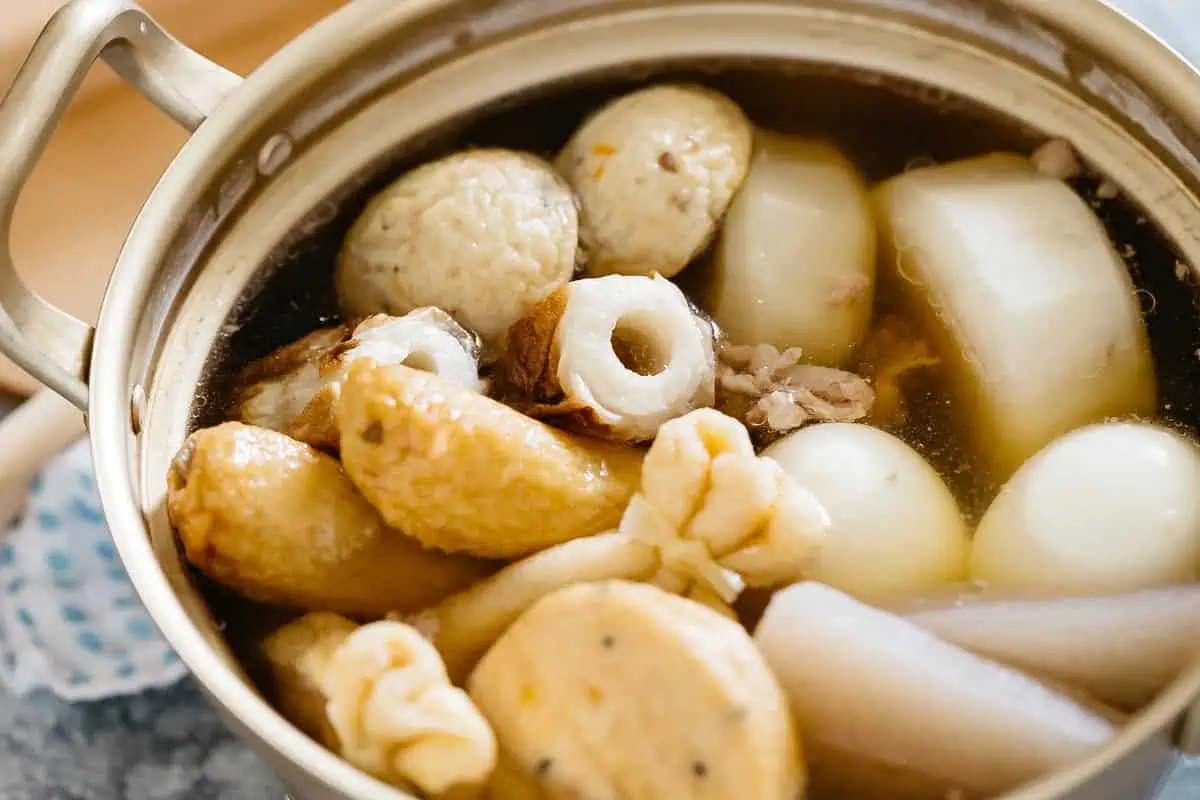
When you think of a delicious way to enjoy chikuwa, the first thing that comes to mind for Japanese people is probably Oden. This Japanese stew is full of different ingredients like radish, fried tofu, and fish cakes served in a flavourful dashi broth. The chikuwa absorbs all the delicious flavour of the oden stew. It’s a staple in winter months and can be found at every convenience store or made at home.
Chikuwa Isobeage
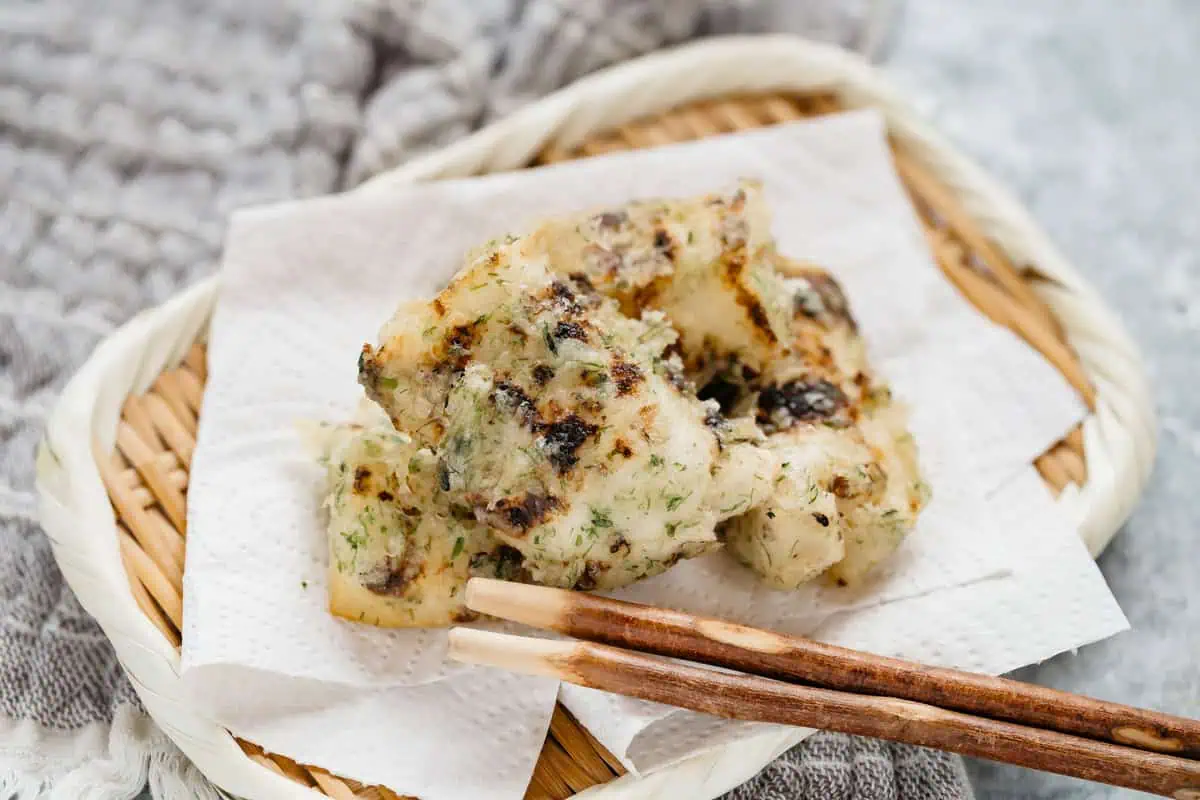
Fried Chikuwa Isobeage is a dish made from chikuwa dipped in tempura batter with seaweed flake (aonori) and deep fried until crispy and golden. You can eat it as a side dish with rice, and it goes very well with soba and udon.
Chikuwa Appetizer
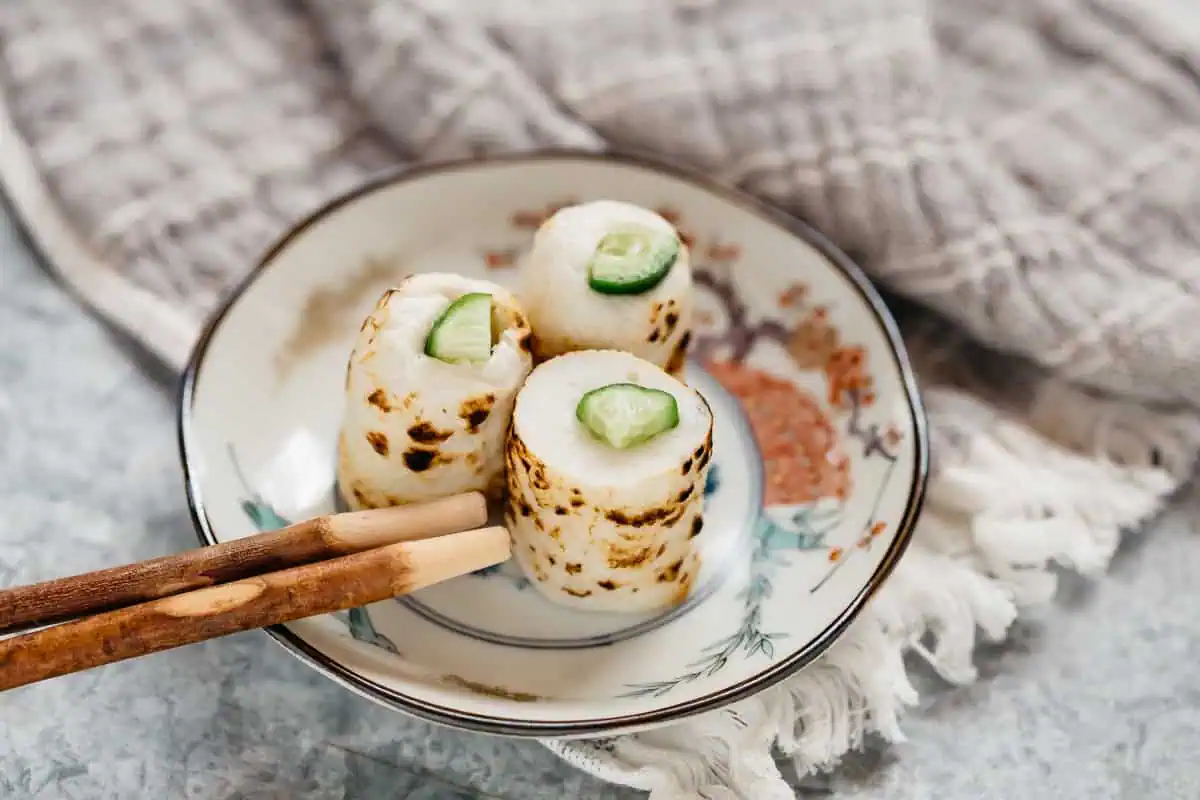
Inserting cucumber sticks, gobo (burdock root), or cheese sticks into chikuwa is simple but tasty. You can then cut the chikuwa into bite-size pieces and eat it as a snack, add to a bento box, or serve as an appetizer or side dish.
How to Store Chikuwa
If you have leftovers or want to make Chikuwa in advance, here are some tips on how to store it properly :
- Refrigeration: Place the cooked Chikuwa in an airtight container or wrap them tightly in plastic wrap. Store them in the refrigerator for up to 3 days.
- Freezing: If you want to store Chikuwa for a longer period, you can freeze them. Wrap each Chikuwa individually in plastic wrap and place them in a freezer-safe container or bag. They can be stored in the freezer for up to 2 months.
- Thawing and reheating: To enjoy frozen Chikuwa, thaw them overnight in the refrigerator. Once thawed, you can reheat them by grilling, pan-frying, or microwaving until heated through.
More Japanese DIY Recipes


Homemade Chikuwa(Tube Shaped Fish Cake) ちくわ
Equipment
- 6 Bamboo straw
Ingredients
- 500 g White fish fillets
- 1 Egg white
- 1 tbsp Katakuriko (potato starch) (0.5oz/15g)
- 1 tsp Salt (0.2oz/5g)
- 1 tbsp Sugar (0.5oz/15g)
- 1 tbsp Sake (0.5floz/15ml)*1
Instructions
- Defrost the frozen fish fillets half way through, not completely defrosted (if you are using frozen fish fillets like I did).
- Pat dry the fish fillets with a paper towel.
- Cut the fish fillets into small pieces and place them in a food processor.
- Add egg white, salt, sugar, and katakuriko starch. Blitz until you achieve a smooth and sticky paste.
- Add sake gradually until you achieve a sticky and pliable fish paste.
- Shape the chikuwa around the bamboo straw. Take some of the fish paste (about 1/5th) and spread it thinly into a rectangular shape on a sheet of parchment paper.
- Place a bamboo straw over the edge of the spreaded fish paste and roll it all together.
- Repeat the process for the rest of the fish paste.
- Heat a bbq grill or gas stovetop over medium heat.
- Place the chikuwa over the flame and cook for about 3-4 minutes on each side, or until golden brown and firm to the touch.
- Remove the bamboo straw to serve.




These look delicious!
I always wondered how they got the hole through the middle.
Do you need to oil the straws?
thanks
Hi Claire, no you don’t need to oil the straws, When the fish mixture is cooked, it will came off easily 😀