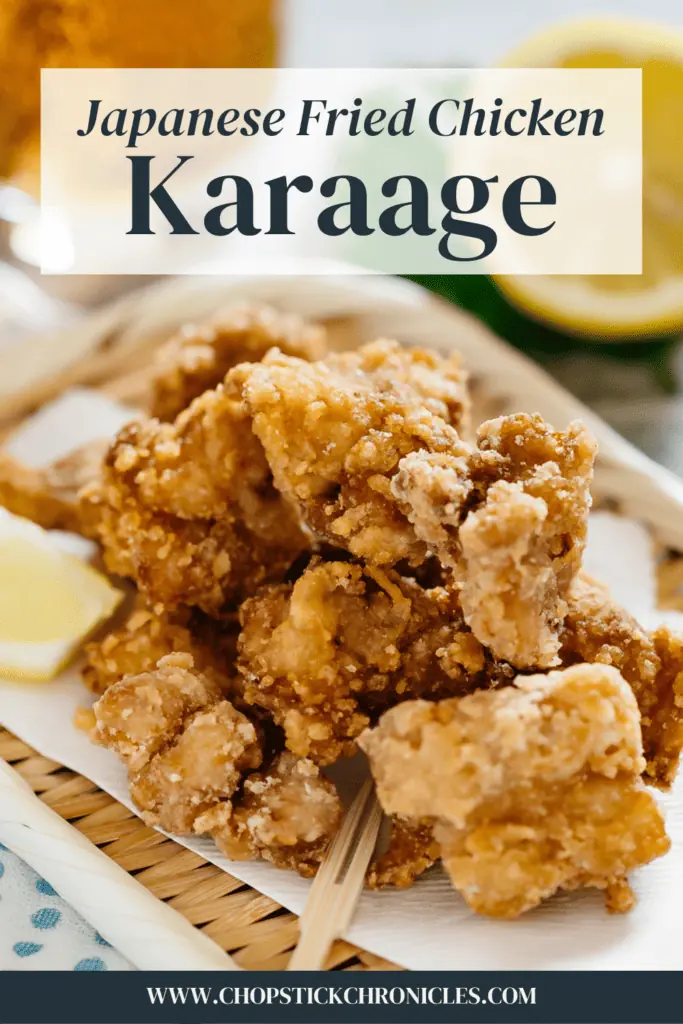
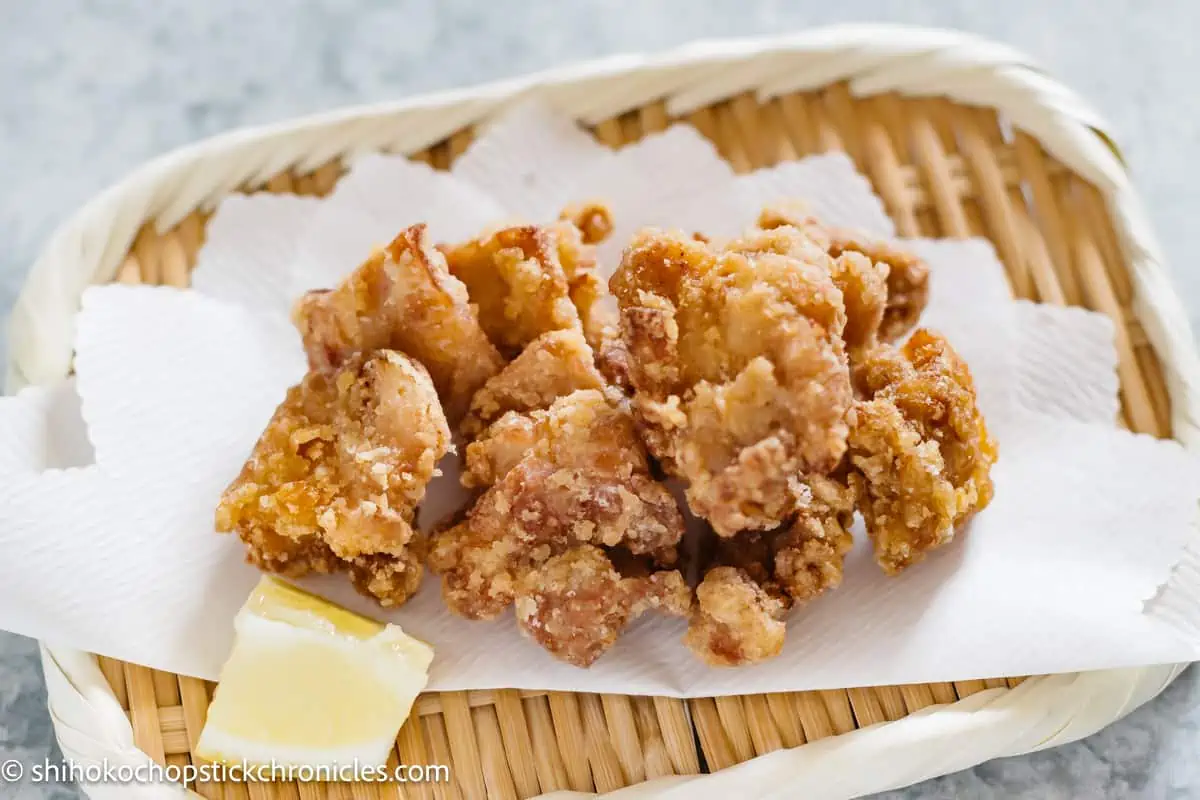
Super crispy and full of flavour, Karaage is a popular dish that everyone loves. This Japanese fried chicken consists of bite-sized pieces of chicken marinated in a blend of soy sauce, sake, ginger, and garlic and deep-fried until crispy and golden brown. Rather than a heavy crumb coating, karaage is coated in starch making it super crunchy yet light and not oily. With its perfectly crispy exterior, juicy meat, and irresistible seasoning, karaage chicken offers a perfect blend of crunchiness and tenderness in every bite.
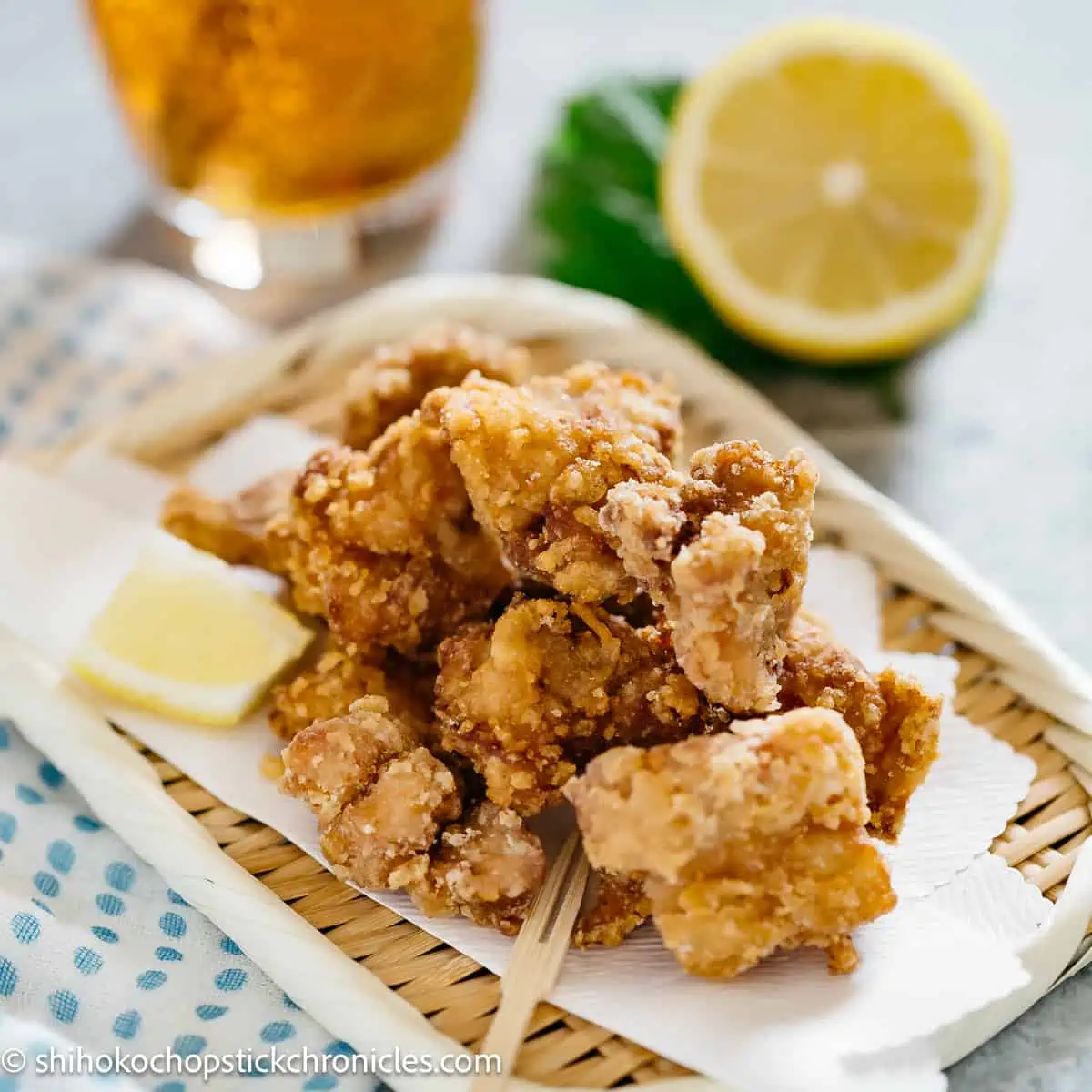
Table of contents
What is Karaage Chicken?
Karaage (pronounced like kah-rah-ah-geh) is a type of Japanese fried chicken that has apparently been eaten in Japan for about 300 years according to the Japanese Karaage Association. It’s a very popular dish in Japan and abroad as a staple in Japanese restaurants. The word “Karaage”(唐揚げ ) itself actually refers to a Japanese cooking technique that involves an ingredient being lightly coated in flour and then deep fried.
This technique can be used for fish or vegetables too but most often refers to fried chicken. Unlike chicken katsu which is made with a panko crumb coating and seasoned simply with salt and black pepper, karaage chicken has a light starch coating and a flavourful marinade.
Traditional tori Karaage (chicken karaage) is prepared by marinating boneless chicken pieces in a combination of soy sauce, ginger, garlic, sake or mirin (rice wine). The marination process helps infuse the flavors deep into the meat while adding tenderness. It’s then coated in katakuriko (potato starch) and fried to crispy golden brown. The result is bite-size fried chicken pieces with a juicy and delicious inside and crispy outside.
Main Ingredients of Tori Karaage Chicken
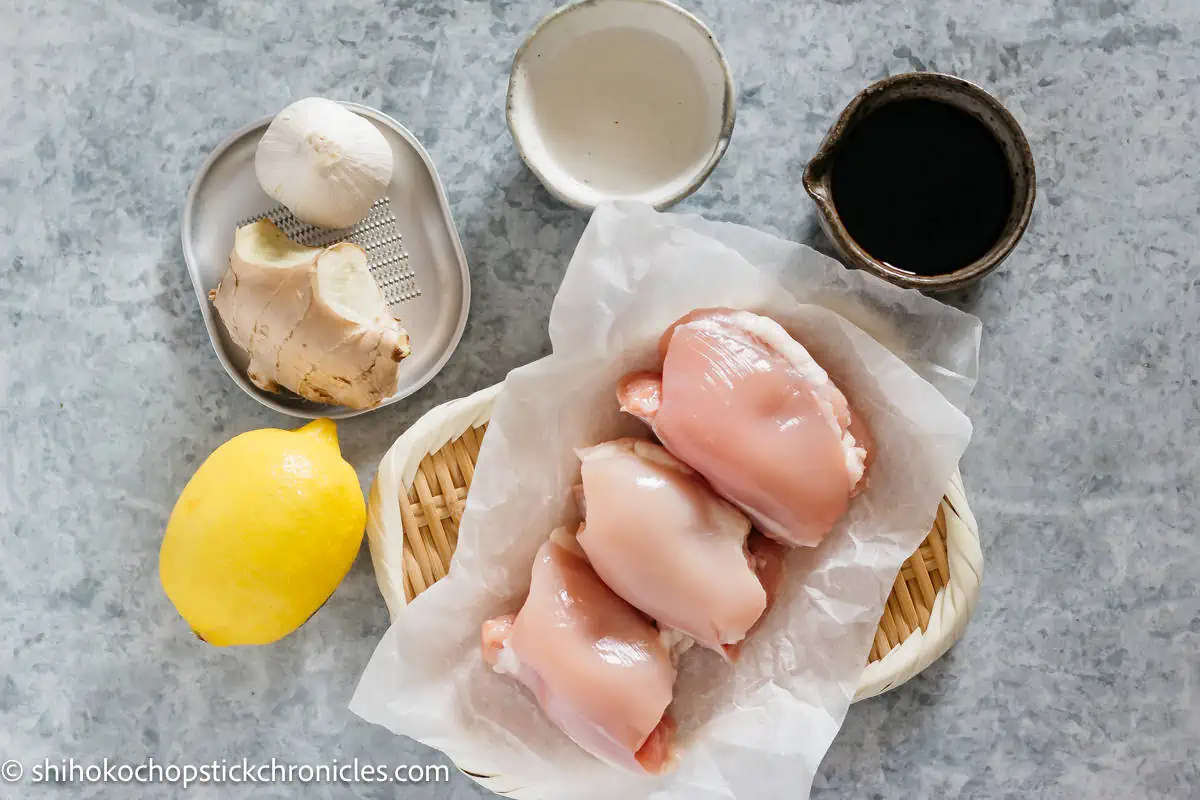
Here are the key ingredients to create this delicious dish:
Chicken
The star ingredient of tori karaage is, of course, chicken (tori). Boneless pieces of chicken thigh or breast are commonly used to make this dish. Thigh meat is preferred as it tends to be more moist and flavorful compared to breast meat. Skinless or skin-on chicken thighs can be used depending on preference. Chicken wings are also a good option.
Marinade
soy sauce, ginger, minced garlic, and sake. Ginger not only contributes a subtle spiciness but also helps tenderize the chicken by breaking down proteins. Mirin can be used instead of sake, however this isn’t typical and it will have a sweeter taste.
Sake and mirin are traditional Japanese rice wines which add sweetness to the marinade.
Wheat Flour/Cornstarch/Potato Starch
Coating the marinated chicken with flour or starch is what gives tori karaage its signature crispy texture when deep-fried. While katakuriko (potato starch) is commonly used, wheat flour or corn starch can also be. A 50:50 combination of flour and a starch can also be used. However, I usually use only katakuriko (potato starch) because I believe it gives a crispier texture. Make sure to drain the marinated liquids so that the flour or starch does not soak up all the liquid and become sticky.
Vegetable Oil
High-quality vegetable oil like canola oil or peanut oil is best for frying karaage due to their neutral flavour and high smoke points that ensure crispy results without overpowering the taste.
Step by Step Instructions
Marinating the Chicken
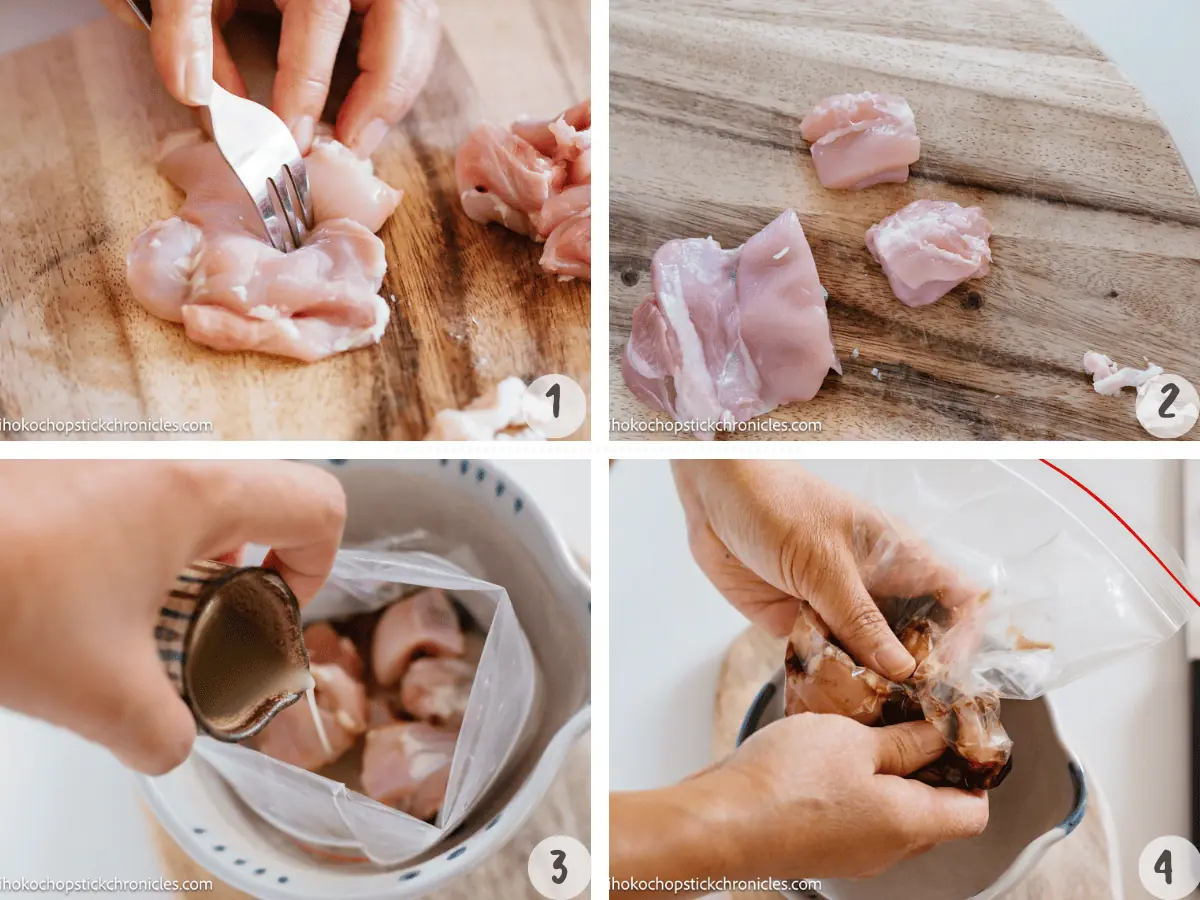
1. In a large bowl (or a large ziplock bag which I used), combine the grated ginger, minced garlic, soy sauce, and sake.
2. Add the chicken pieces to the marinade mixture and gently mix until they are well-coated.
3. Cover the bowl with plastic wrap and let it marinate in the refrigerator for at least 20 minutes.
Coating the Chicken Pieces
4. Remove the marinated chicken from the refrigerator.
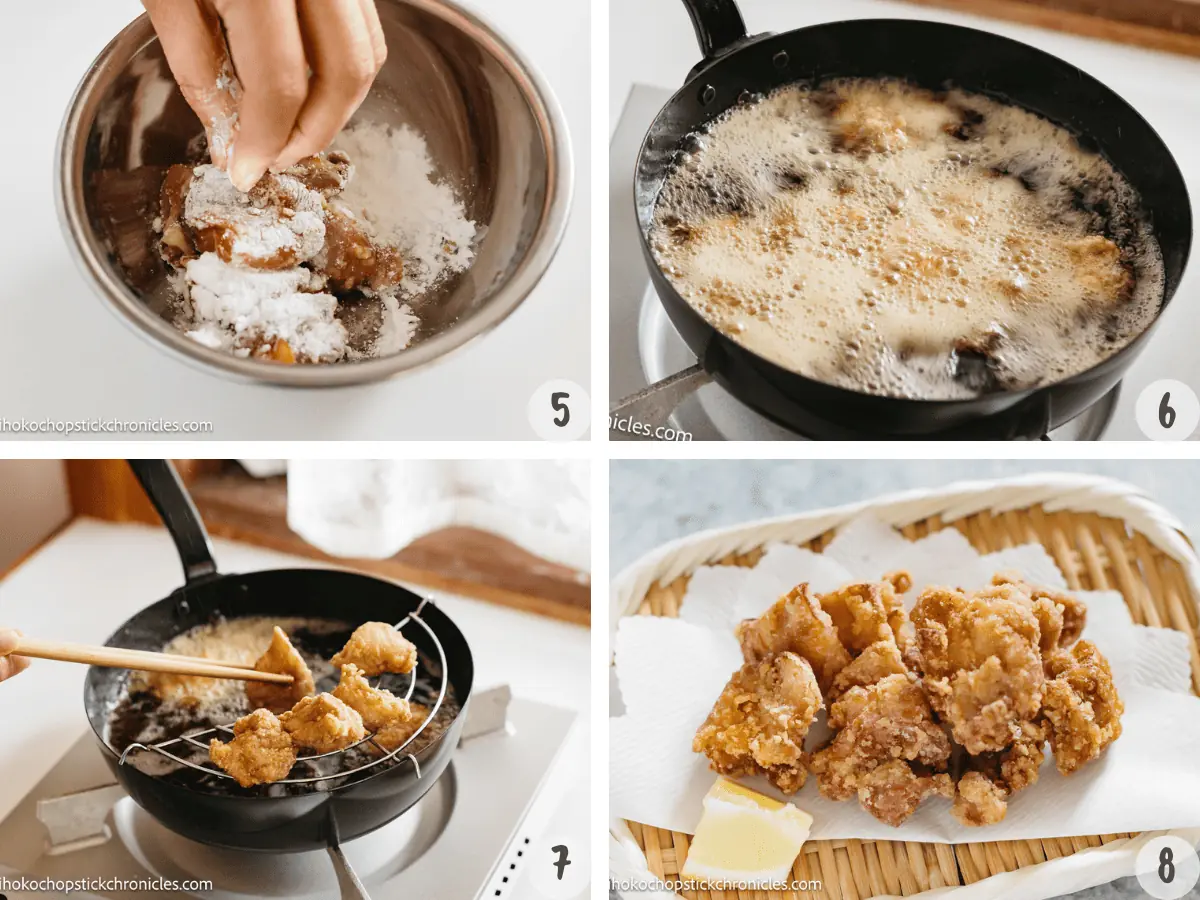
5. Coat each piece of chicken evenly with all-purpose flour or katakuriko potato starch by either rolling them in a shallow dish filled with flour or placing them in a ziplock bag containing flour and shaking gently until coated.
6. After coating each piece of chicken with flour individually, shake off any excess flour.
Frying Process
7. Heat vegetable oil in a frying pan or deep fryer over medium-high heat until it reaches around 170°C -180°C (340°F -360°F). *see the tips below to know ideal temperature without a thermometer.
8. Gently place several coated chicken pieces into the hot oil, making sure not to overcrowd the pan.
9. Fry the chicken for approximately 4-5 minutes, turning occasionally, until they turn golden brown and crispy on all sides.
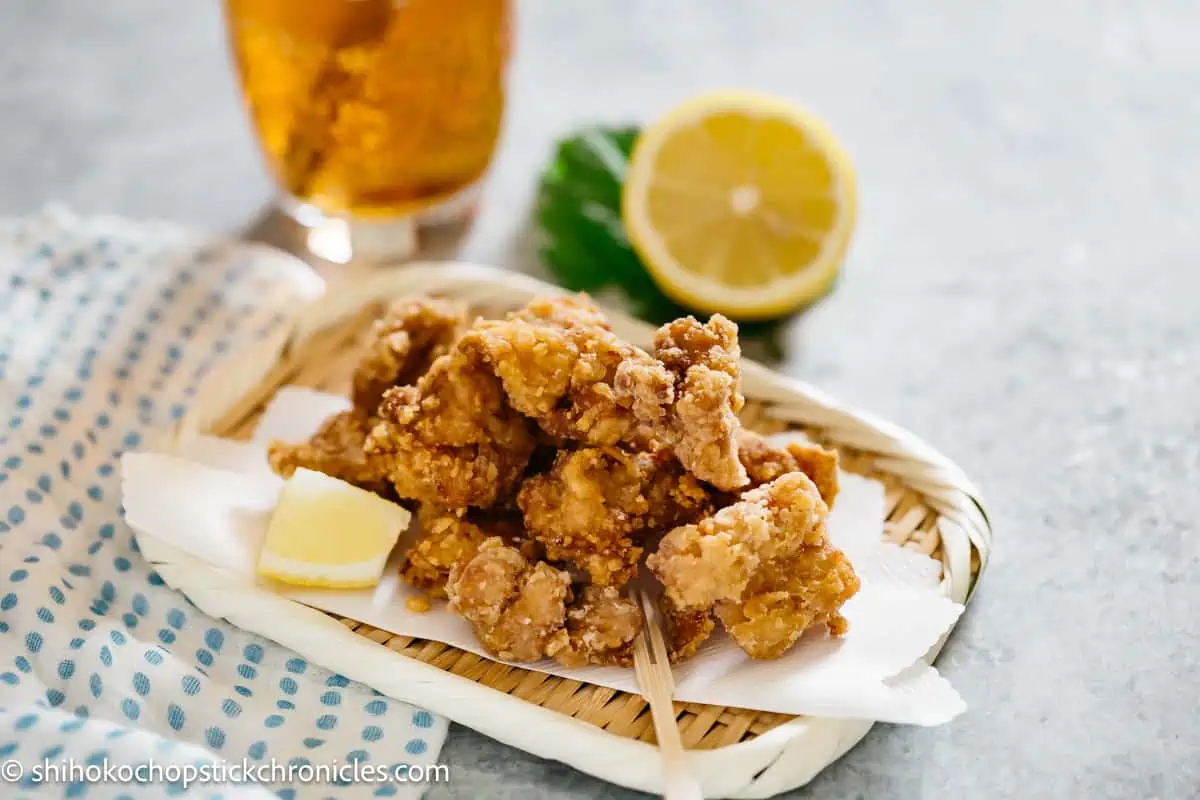
10. Use a slotted spoon, tongs or chopsticks to transfer the fried chicken onto a plate lined with paper towels to drain excess oil.
11. Continue frying the remaining chicken.
How to serve Karaage Chicken and variations?
One reason why chicken/tori karaage has become so beloved globally is its versatility. While traditionally made with chicken thighs or chicken breast, it can also be prepared using other meats like pork or fish as well as vegetarian alternatives such as tofu or cauliflower. Each variation brings its own unique twist to this delightful dish, making it suitable for everyone’s preferred taste.
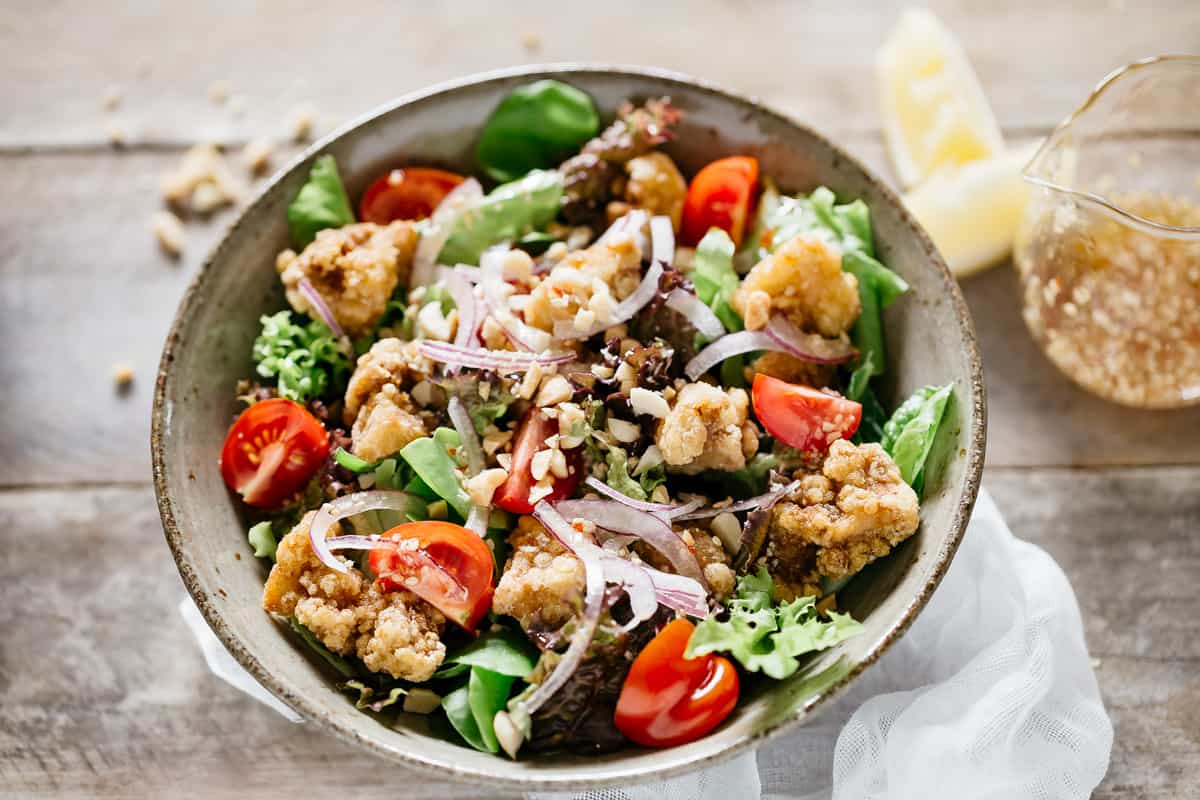
Whether served as an appetizer or main course, Karaage pairs wonderfully with various dipping sauces such as soy sauce mixed with a squeeze of lemon juice, Japanese mayonnaise (kewpie mayo), or spicy chili sauce. You can serve the deep-fried chicken with shredded cabbage, lettuce leaves, sliced tomatoes and a lemon wedge.
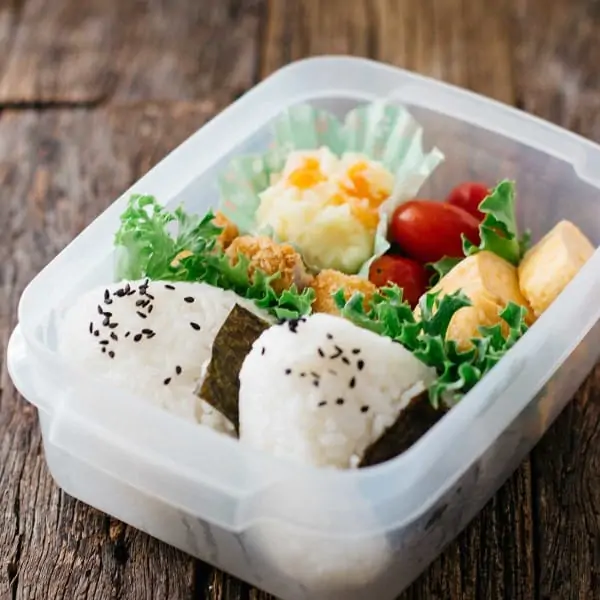
Karaage is also perfect for lunch and a common bento box filling. Karaage is always the most popular bento menu because it is delicious when it gets cold too. It also tastes delicious in a Karaage salad or cut the chicken pieces smaller to make karaage popcorn chicken.
Craving the crispy, savory goodness of Japanese karaage but following a plant-based diet? Try our delicious Cauliflower Karaage! This vegan twist on the classic Japanese fried chicken dish uses tender cauliflower florets coated in a flavorful blend of soy sauce, ginger, and garlic. The result is a crispy exterior that gives way to a juicy, flavorful interior – mimicking the beloved texture of traditional karaage.
The possibilities are endless when it comes to enjoying Karaage!


Tips to Create “To Die For” Crispiness
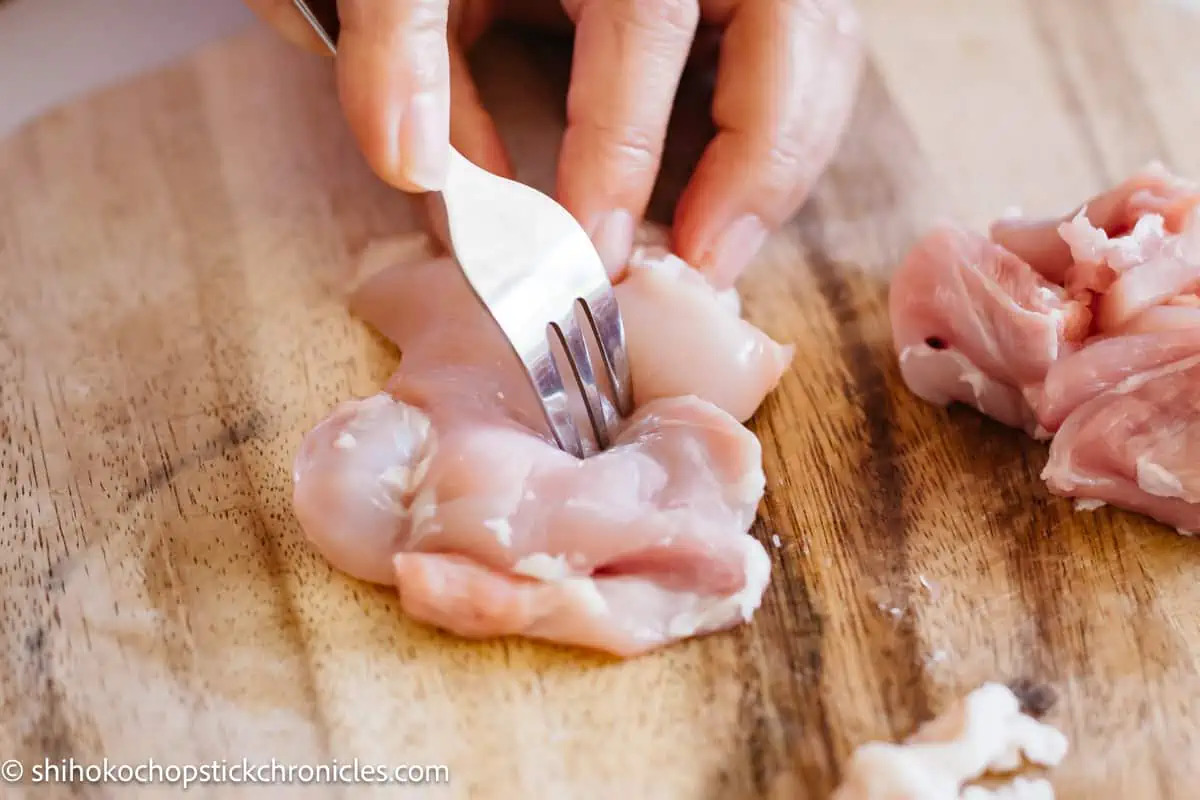
- Poke the chicken with a fork so that the marinade penetrates through the meat well.
- Make sure the meat isn’t too big. Cut the meat into uniform size.
- Marinate the meat for at least 20 minutes.
- Make the deep frying oil temperature 180°C(356°F). If you have an electric deep fryer that you can set the temperature, set it to 180°C (356°F). If you don’t have a deep fryer, you can use a frying pan. Place about 500ml oil on medium heat. You can tell whether it is the right temperature to deep fry or not when you drop a little piece of crumb into the oil if it floats back up when it is halfway down.
FAQ
A : Though they both involve frying pieces of chicken, there are distinct differences that set them apart in terms of flavour, ingredients, and preparation techniques. Karaage is seasoned with a marinated and fried in a light coating of starch or flour. Fried chicken (Japanese chicken katsu) is seasoned with salt and pepper and fried in a panko crumb coating.
A : Yes, you can freeze karaage chicken without compromising its taste or texture. However, there are a few things to consider before freezing. Freezing works best when the karaage chicken is at its freshest. If the chicken has been sitting out for too long or has already been reheated once, it may not freeze well. Allow the freshly cooked karaage chicken to cool down completely at room temperature before placing it in the freezer and use airtight containers or freezer bags designed for freezing food to prevent freezer burn and maintain flavor.
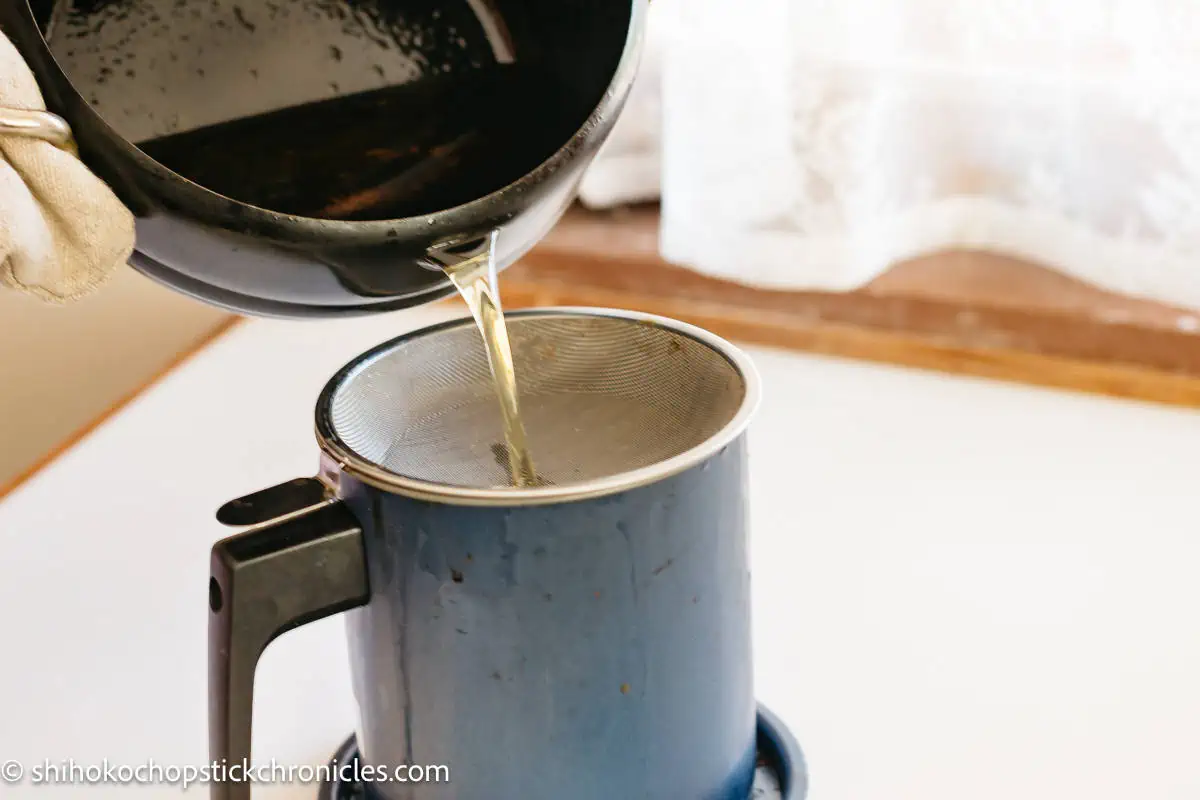
A : n Japan, we cook lots of deep-fried food and most households have a Cooking oil container with a strainer. I bought one when I went back to Japan. I reuse deep fry oil 2-3 times. Draining the deep fried oil down the kitchen sink pipe is not good for the environment. When I throw the oil, I scrunch a few kitchen paper towels in a milk carton and drain the oil into it. Seal the milk carton and throw it in the bin.
Stay connected
If you like the recipe please rate the recipe and leave comments below. Also don’t forget to follow me on Youtube, Pinterest, Facebook, Twitter and Instagram. This way you keep up to date with all the latest happenings on Chopstick Chronicles. Don’t forget to Sign up for a weekly newsletter so you never miss out on new authentic delicious Japanese recipes!

Karaage Chicken 鶏の唐揚げ
Video
Ingredients
- 400 g chicken thigh
- 1½ tbsp soy sauce
- 1½ tbsp sake
- ½ tbsp ginger juice
- ½ tbsp minced garlic
- 3 tbsp Katakuriko potato starch *1
- 500 ml Cooking oil for frying *2
Instructions
- Cut the chicken thigh into bite sized pieces.
- Put the chicken pieces, soy sauce, sake, garlic, ginger in a ziplock bag and seal it. Rub them all together and leave it for at least 20 minutes.
- Drain the marinated liquid of chicken and dust the chicken pieces with Katakuriko (potato starch).
- Heat the oil in a deep frying pan or a frying pan to 180°C(356°F) and cook the chicken pieces until golden brown.
- Serve with rice, salad leaves, and a lemon wedge.





Tried this recipe last night and it was so yummy! Next time I definitely have to remember poking holes in the chicken so it can marinate better. I think I will also marinate the chicken for longer as well. I did taste the flavor when I cooked the chicken, but I think with more of everything, it would be better. But that’s just me personally- I love strong flavors! Overall, the chicken turned out to be delicious and sooooo crispy. I paired it with yakionigiri and a cabbage salad I make with Japanese mayo and white and black pepper. I definitely recommend it!
Thank you for leaving a lovely comment and rating 😀 I am glad you loved my Karaage chicken recipe <3
Will the air fryer work with this recipe?
Hi Eileen, I have not tried air fryer but I don’t think so.
I like wasabi mayo (literally wasabi paste mixed into mayonnaise ) and a splash of lime juice.
Perhaps the provided pronunciation guide comes close in Australia and the UK, but will lead N. American English speakers astray (where people speak that old school 17th and 18th century rhotic English)
It’s like this:
KAH – RAH – AH – GAY
The ‘r’ is more like a quick tap of the tongue to that ridge right behind your upper teeth. Sort of like a Spanish ‘r’.
My son and his Japanese wife taught me how to make karaage after I fell in love with it in a bar in Osaka Japan. It’s OK to substitute mirin for the sake and I ALWAYS use potato starch for the coating (no wheat flour or cornstarch). Always poke a fork in the meat over and over so the marinade absorbs better. NEVER marinate the chicken with added sesame oil cuz it coats the meat and inhibits absorption of the marinade. You can add some sesame oil to the cooking oil before frying to get that great flavor. I ALWAYS use peanut oil because it has a very high smoke point and I can get maximum crispy-ness on the chicken. I always make tonkatsu sauce for dipping. Great recipe.
Thank you fir these advices specially the use of mirin ! And potatoe starch!
Right on the money with those suggestions.
Hello! What’s the best sauce or dip for karaage? Can’t wait to try your recipe 🙂
Merielle, you don’t need any dip or sauce.