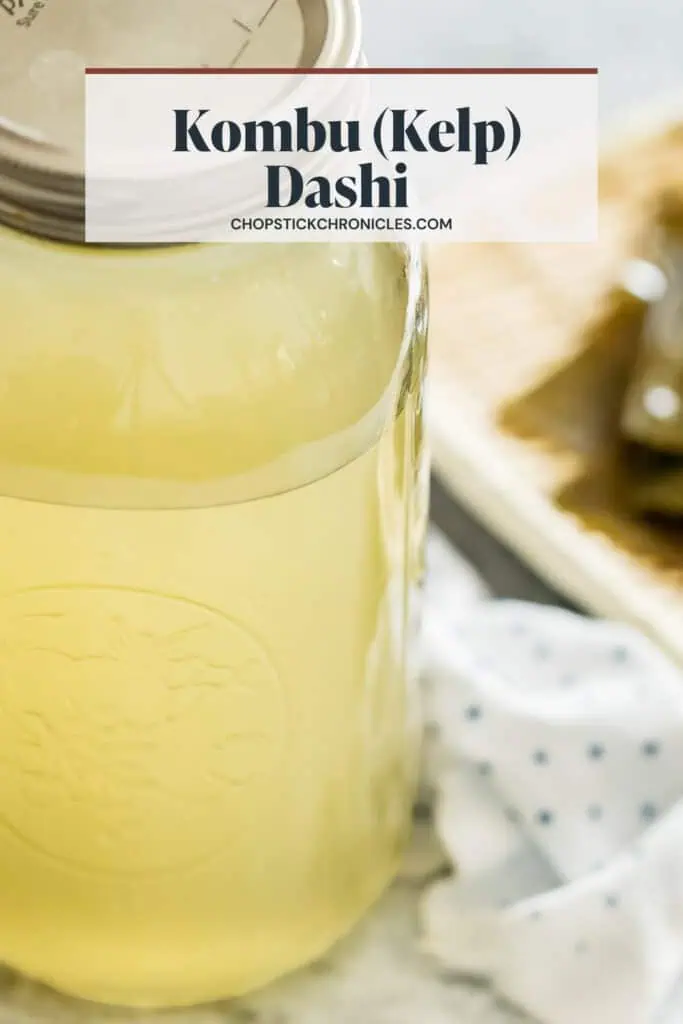
Kombu dashi (昆布だし) is another key Japanese dashi stock. Its delicate and mellow and elegant flavour enhances the overall taste of any Japanese dish such as oden and stews. This dashi broth is particularly good for vegan and vegetarian people because it is made from a type of seaweed. Read on to learn how to make delicate kombu dashi successfully.
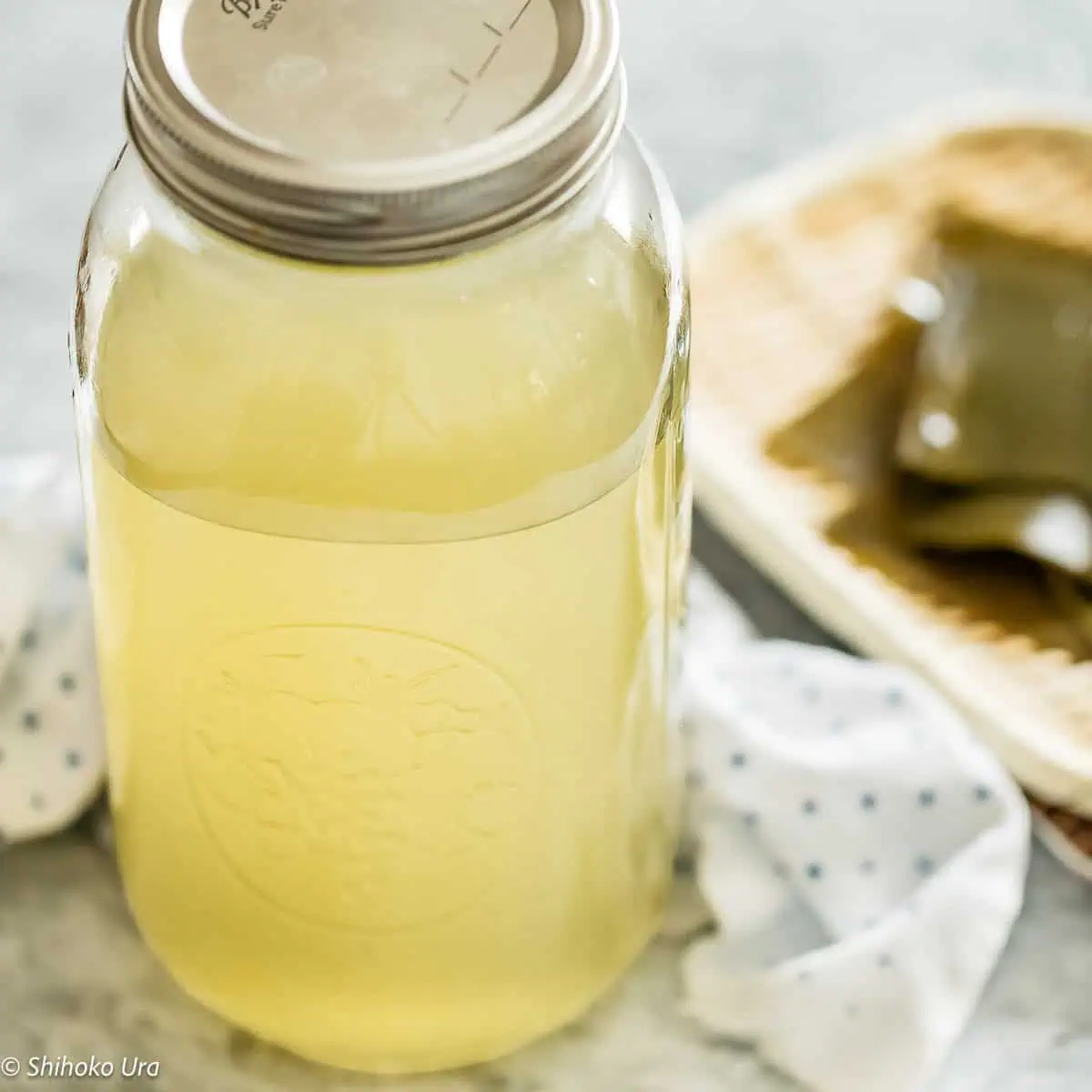
Table of contents
What is Kombu Dashi?
Kombu dashi is Japanese dashi stock made from kelp seaweed (kombu). Kombu seaweed is an edible sea vegetable packed with nutrients and minerals such as potassium and is what provides umami richness to dishes. It’s also a great source of dietary fiber. Kombu contains decent quantities of glutamic acid which is one of the umami flavors. This glutamic acid is the white powder you will see on strips of dried kombu so don’t wash it off because that’s where all the umami is!
This edible kelp is usually added to soups and broths as a flavor enhancer and is also added when cooking Sushi Rice and can remove the starchiness from beans making them more digestible. Dashi made by extracting the umami from Kombu is particularly suitable for simmered dishes such as simmered Kabocha squash, oden and one-pot dishes (Nabemono). Kombu dashi is also a primary ingredient for miso soup.
Types of Kombu Suitable for Dashi
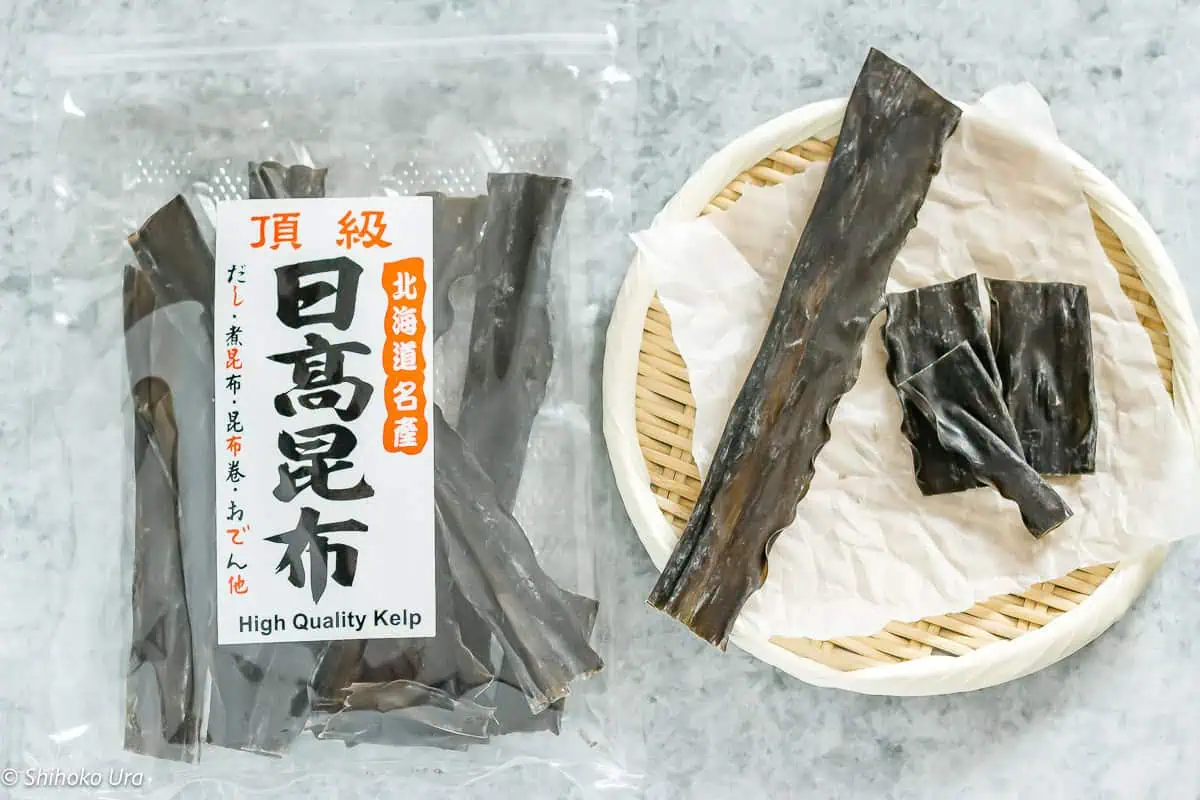
There are many different types of Kombu kelp in Japan and not all are the same. Some are suitable for eating and some are suitable for making soup stock. For making Kombu dashi, we need to get dried kelp. They have many different names according to where they are produced, how the kelp can be cooked, and the species of kelp.
For instance, the kelp produced in Hidaka (日髙 in the photo), Hokaidō island is called Hidaka Kombu (日髙昆布). Hidaka Kombu is said to be suitable for both eating and for making dashi stock because kelp produced in the Hidaka area usually has a lower fibre content and is softer compared to other kelps. Other types of kombu include Ma Kombu, Rishiri Kombu and Rausu Kombu.
Two Methods to Make Kombu Dashi Stock
1. Steeping in Water Overnight (Mizudashi)
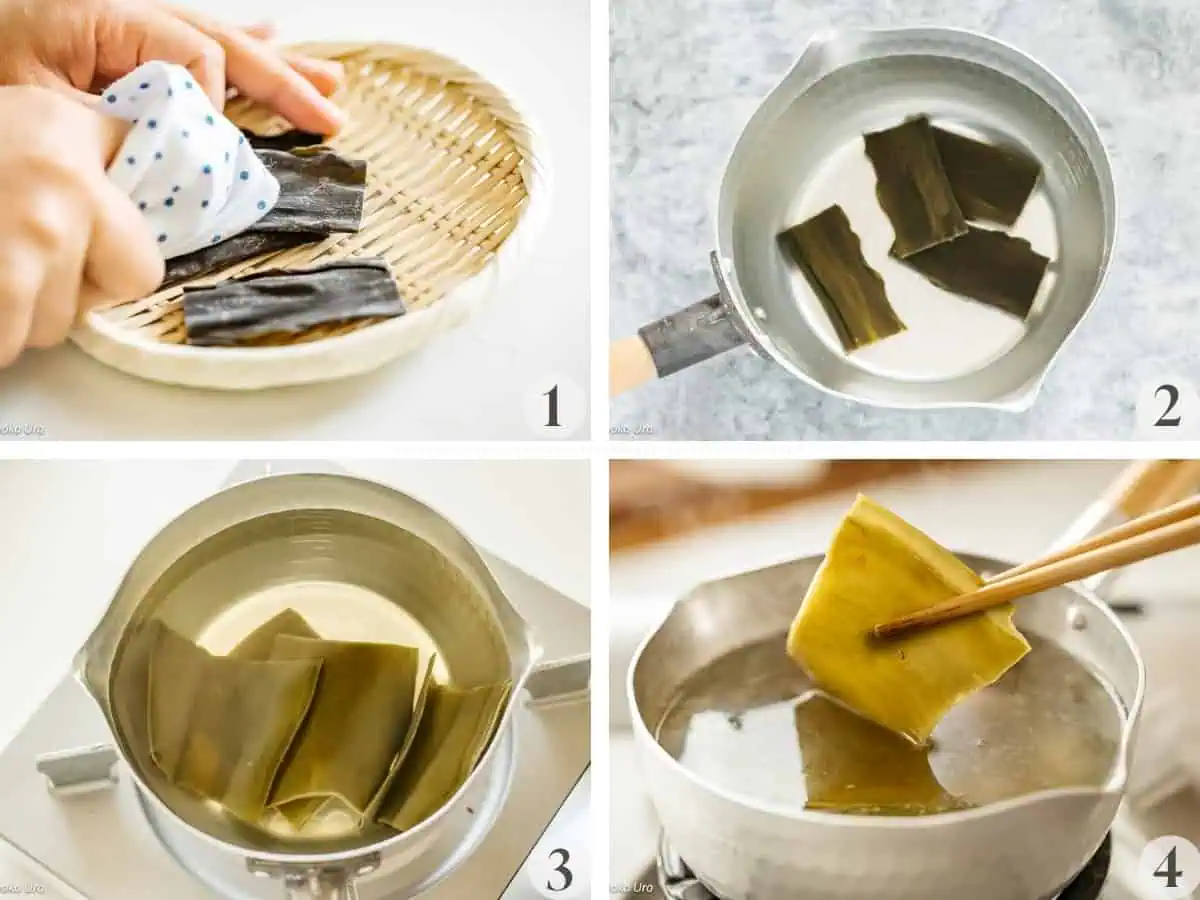
The ratio of dashi ingredients to water is generally 2-4%. So we need about 1oz/30g of Kelp and 4 cups (about 1 litre) of water. Wipe the kombu kelp briefly with a clean cloth. Fill a container with cold water and add the kelp. Let stand overnight. Remove the kelp the next morning.
2. Steeping & Simmering (Nidashi)
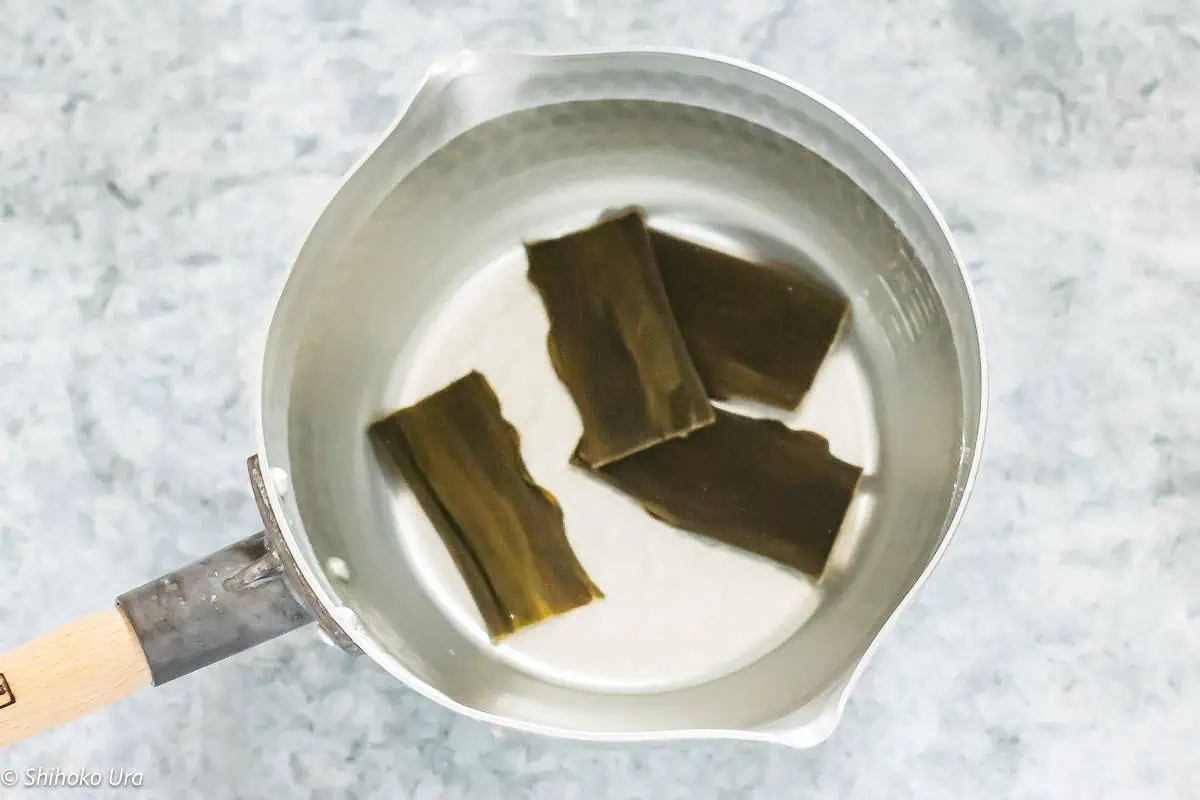
Another way is steeping the kelp in water for at least 30 minutes and then put it over medium heat. Remove the kelp just before the water reaches boiling point. It is important to not let the water boil.
2 Tips for Making Kombu Dashi Successfully
- Clean the kombu kelp with a well wrung out damp cloth. Kelp is naturally dried on beaches so it may contain sand. Do not wash under running water though, for it may wash off umami on the surface.
- The best timing of removing the kelp is when you see small tiny bubbles form on the kelp when you put it over the heat. We don’t want to lose the delicate flavour by overheating. The appropriate temperature for extracting the Kombu umami flavour is said to be 140°F (60°C), which is when you see tiny bubbles on the Kombu appear. Turn the heat off and remove the Kombu.
How to Store Kombu Dashi
You can make the stock in advance. If you make a large amount and save it, it will be convenient to use it when you need it. Knowing how to preserve dashi means you can easily incorporate it into your everyday cooking.
Dashi stock does not keep for a long time at room temperature. If you leave it at room temperature, it will not only lose its flavor, but also cause bacteria to grow and spoil it. Therefore, if you take the stock and cannot use it within the same day, you will need to store it in the refrigerator or the freezer.
Refrigerator Storage
Let the kombu dashi cool at room temperature, then transfer it to an airtight container and store it in the refrigerator. It will keep for about 5 days, but the flavour will start to fade after a few days. So I recommend to use it up as soon as possible.
Using the “Mizudashi” steeping method is very convenient as you can store it in the refrigerator without having to transfer it. Please do not replenish it and use it up within 5 days.
It is also important to know that leaving kombu kelp in when storing, will make it spoil easily, so be sure to remove the kombu kelp before you store it in the refrigerator.
Freezer Storage
After the kombu dashi has cooled down briefly, transfer the kombu dashi to a zip lock freezer bag or ice cube tray and place it in the freezer. Don’t overfill the freezer bag. If you freeze it in a thin board shape with an even thickness, you can break it up and use only the amount you need. If frozen in an ice cube tray, once it has frozen, transfer them to a freezer bag or an airtight container for storage as the flavor may be lost or the odor from the freezer may be transferred due to exposure to air.
It can be stored for about a month, but the flavor will start to deteriorate after about two weeks, so again, it is recommended to use as soon as possible too.
FAQ
A : I recycle the kombu to make “Kombu Tsukudani”. Cut the Kombu into small squares. Place them in a saucepan with a cup of water and 1 tbsp of vinegar. Simmer for about 20 minutes. Add 2 tbsp each of soy sauce, sake, mirin and sugar. Simmer until the sauce reduces (about 20 minutes). Sprinkle sesame seeds over.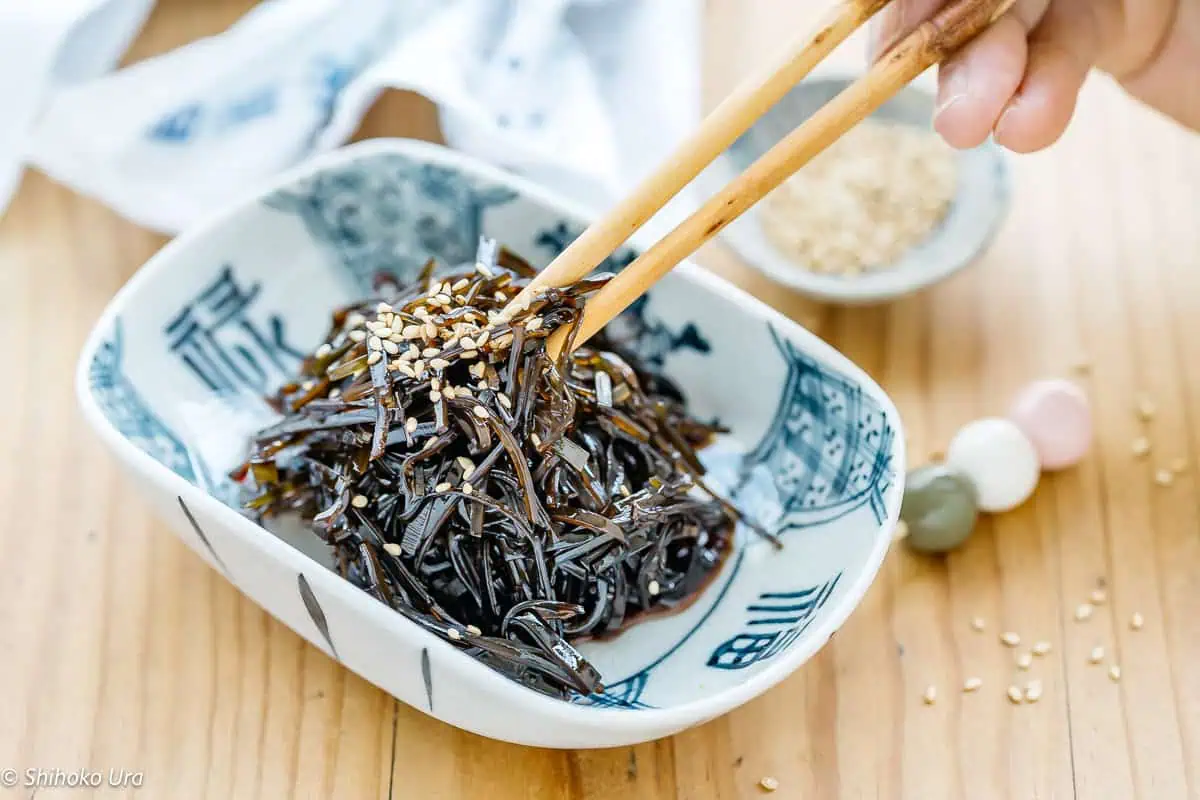
See The Complete Dashi Guide
Dashi plays a fundamental role in Japanese cuisine. It ultimately determines the overall taste of the Japanese dishes. Mastering Dashi makes cooking Japanese food more fun and definitely more flavourful! Learn how to prepare 5 different dashi broth .
- Katsuo (bonito flake) Dashi
- Kombu (dried kelp) Dashi
- Niboshi (dried infant anchovies/sardine) Dashi
- Shiitake (dried shiitake mushrooms) Dashi
- Awase (combined) Dashi


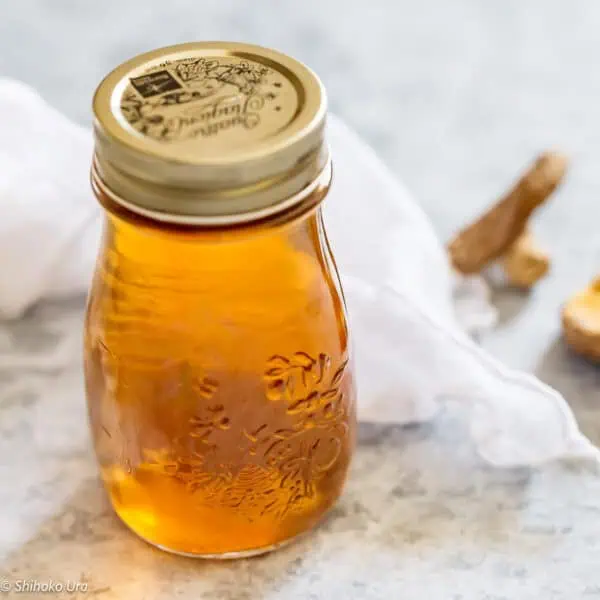

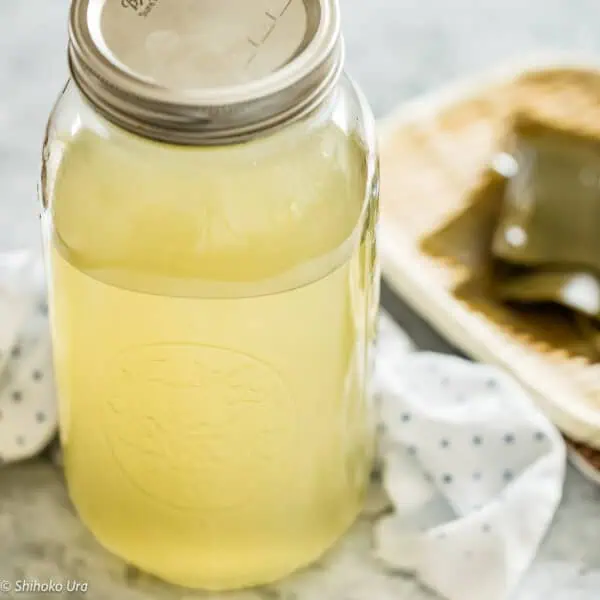
Kombu Dashi 昆布だし
Ingredients
- 1 oz/30 g Kombu Kelp *1
- 4 cups/1 liter water
Instructions
Steep (Mizudashi) method
- Clean the kelp with a well wrung out damp cloth briefly *2
- Fill a container with the water and add kelp to steep (soak)
- Let stand overnight, remove the kelp the next morning. *3
Steep & Simmer (Nidashi) method
- Clean the kelp with a well wrung out damp cloth briefly.
- Fill a saucepan with the water and add kelp to steep for 30 minutes up to 1 hour.
- Put the saucepan over medium heat. When the small bubbles form, turn the heat off. *4
- Remove the kelp and transfer the kombu dashi to storing jar. *3






Good ones. I don’t add sugar as this is widespread cooking Japanese health detrimental for health, but all the rest works perfect
Hi Igor, I do not add sugar to any dashi as well.
Thank you so much for the thorough explanation about dashi. So interesting and helpful! I have one question though: when you do the steep and simmer method (or, both methods, I guess!), do you cover the pot while steeping or while bringing to a simmer? And is this the same for all dashi varieties?
Hi Elizabeth, no I don’t cover the pot 😀
Thank you!! using this to make miso soup 🙂
Fantastic Lauren, I use this dashi to make miso soup for my vegetarian partner too 😀
Thanks for the clear instructions and also the tip what to do with leftover kombu
Konnichiwa Shihokosan.
Thank you for the beautiful recipes (and photos!). Could you tell me whether there is a difference in flavour between the nidashi method and the mizudashi method, and if so which you prefer?
Domo arigatogozaimasu.
Konnichiwa Henry-san, in terms of flavour, I would say Nidashi method will have strong umami rich flavour as opposed to light mellow flavour of Kombu umami of mizudashi method :D. I don’t have preference as both are suit for different recipes.
Hi! Great post. I made kombu dashi yesterday with warm water. Now that it’s cooled I put it in the fridge. How long can I keep this dashi before using it in my dish? Does it stay for like a week?
Thanks a lot 😉
Hi Phyll, like two days in fridge but if you freeze, it will last a couple months:D
Hello! New fan here 🙂
For the overnight, should I put it jn the fridge?
I’ve nvr made an overnight kombu before, do you think it will taste stronger or bitter? Thanks !
Hi Mentari, yes if the temperature is hot. I never taste it bitter 😀
Hi ! Thanks for this lovely recipe. I made it and turned out very tasty. I also followed your recipe for the leftover kumba. How long can I keep it? It is quite a lot for one person. Can I store it in the fridge? Thanks
Hi Sylvie, it will keep about a week in fridge.
Hi Shihoko, Thanks for your detailed recipes I have been wanting to make miso soup for ages and managed to get a hold of some ‘kombu’ but it is of the variety Laminaria ochroleuca. Seems to not even be from Japan!! Do you think I could use it to make dashi?
Thanks in advance.
Hi Rayna, it is binomial name for Kombu Kelp so I assume it is the same thing.
Du bist großartig, ein ganz wunderbaren Rezept, danke fürs teilen!
Viele Grüße aus Berlin,
Jesse-Gabriel
Hallo! Ich liebe Deutschland Gern geschehen. Vielen Dank für das Lesen meines Blogs 😀
Thank you for this post. I grew up in Japan and my Mum would make this Kombu Dashi. I’ve just made it with kelp using the hot water and it turned out well.
Oh Hi Yoki, I am glad that you could make Kombu Dashi like your mum made 😀