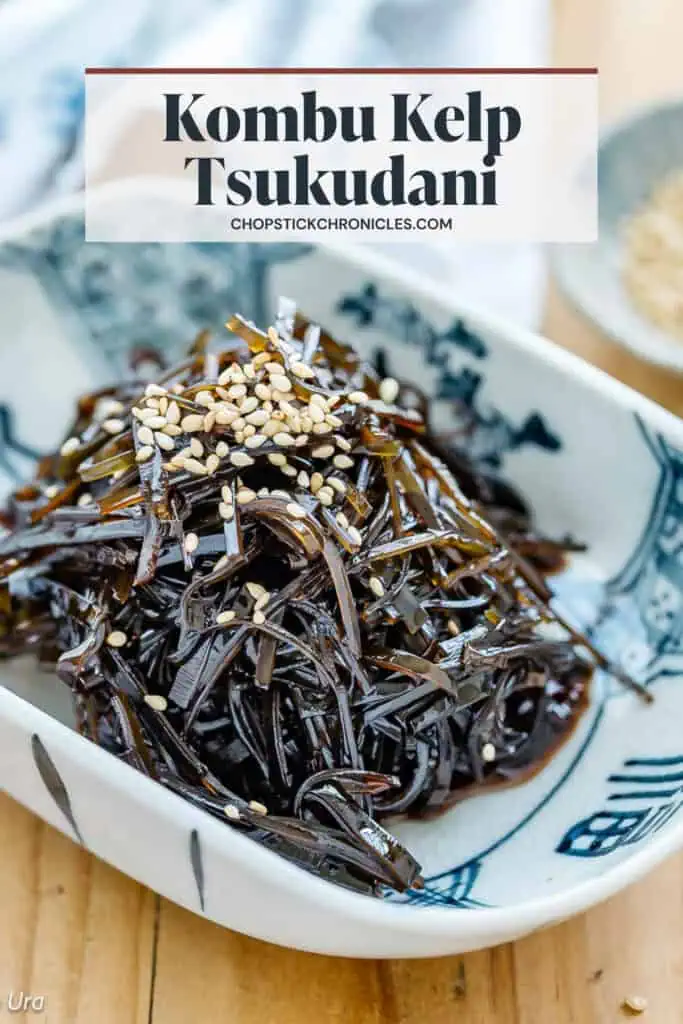
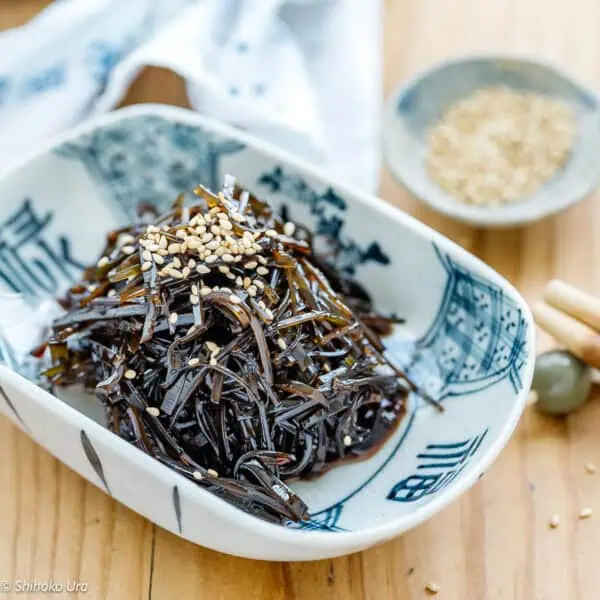
Kombu Tsukudani brings a burst of umami to any meal! The dish is made from kombu kelp simmered in soy sauce and other seasonings giving it a slightly sweet and salty flavor. It’s a simple yet flavourful little dish that works perfectly as a side to Japanese meals and as a filling for onigiri (rice balls). It’s also the best way to use up the leftover kombu sheets from making sushi rice and dashi (soup stock) so there’s no waste!
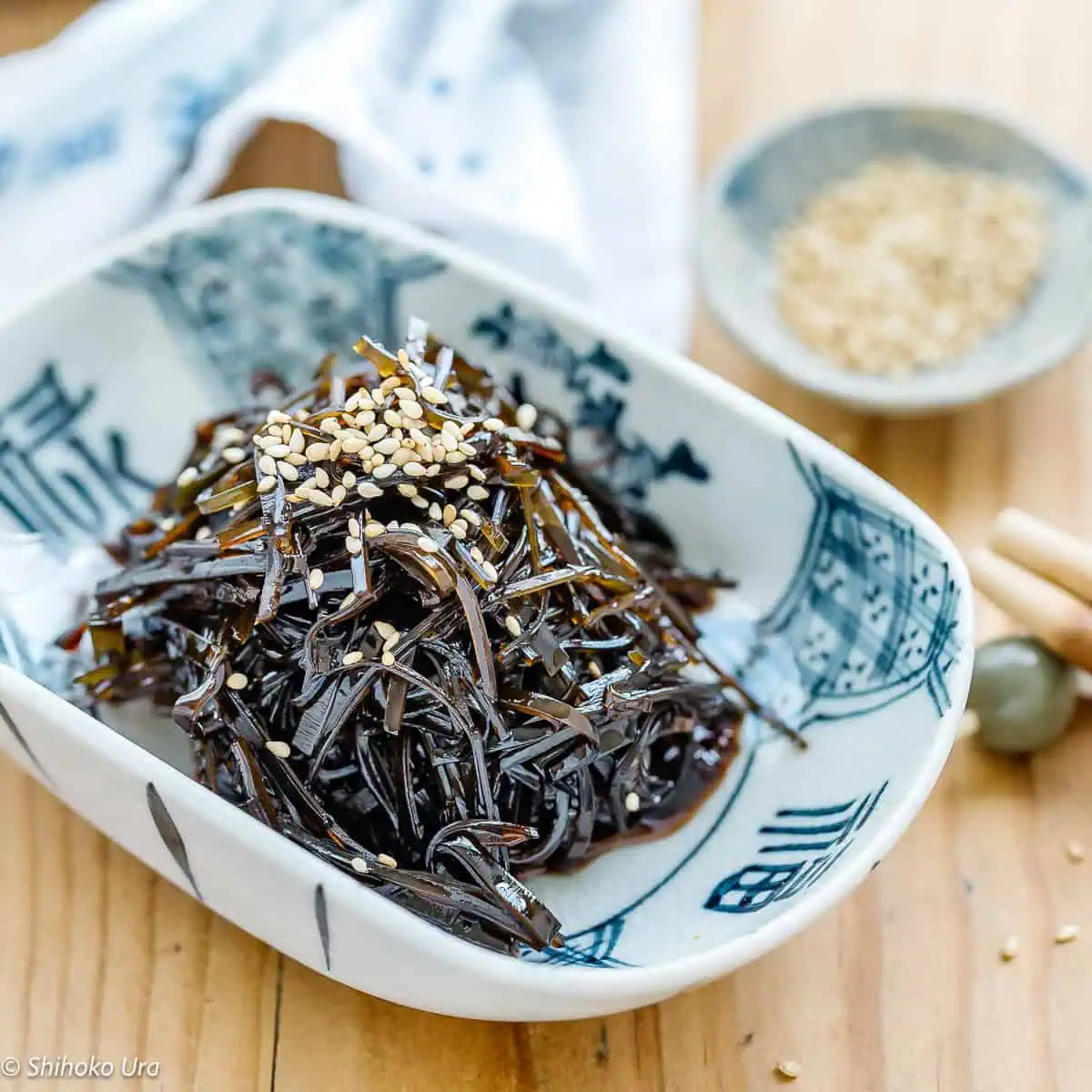
What is Kombu Tsukudani?
Tsukudani is a Japanese dish made of ingredients simmered in a mixture of soy sauce, mirin, sake and sugar until tender and deeply flavorful. Typical tsukudani ingredients include small seafood (such as tiny fish), shellfish (such as clams), beef, vegetables (like shiitake mushrooms), and seaweed. It is mainly made to be eaten as an accompaniment to rice, so it has a strong sweet and salty flavor, which also helps to preserve it longer.
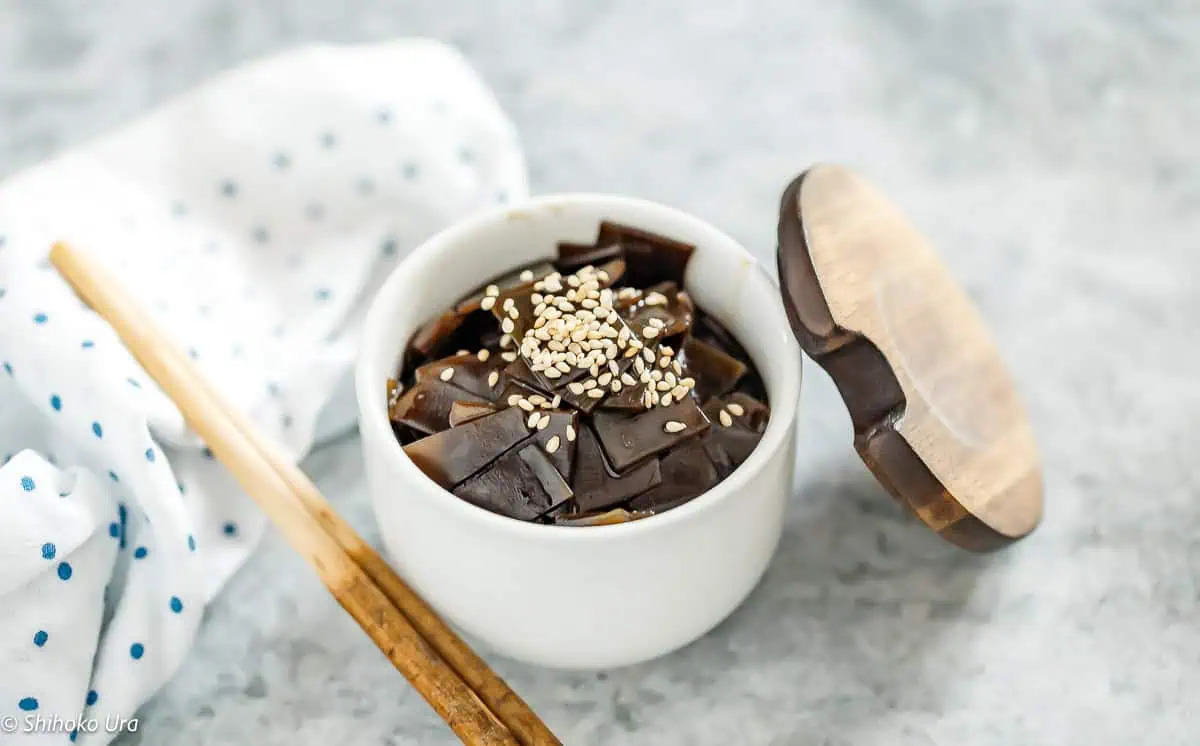
Kombu Tsukudani is a very common type of tsukudani. The star ingredient in this dish is kombu, a type of edible kelp seaweed that is rich in umami. It’s often enjoyed as a side dish or a condiment, adding a savory kick to plain rice, onigiri (rice balls), or even as a topping for tofu and other dishes. It’s a delicious and efficient way to reduce waste by making use of the used kombu from making dashi and sushi.
Origin of Tsukudani
Tsukudani originates from the Edo period, when Tokugawa Ieyasu ordered skilled fishermen from Tsukuda Village in Settsu Province to come to Edo. These fishermen were forced to live in reclaimed tidal flats on the south side of Ishikawa Island at the mouth of the Sumida River (present-day Tsukuda island, Tokyo), and the food made by the fishermen who lived there is said to be tsukudani.
Tsukudani began when the fishermen of Tsukudajima boiled small fish and shellfish with salt and soy sauce as a preserved food for their own use, either as food during bad weather or for professional use when they went fishing.
Reference : kisetsumimiyori
Ingredients you Need to Make Kombu Tsukudani
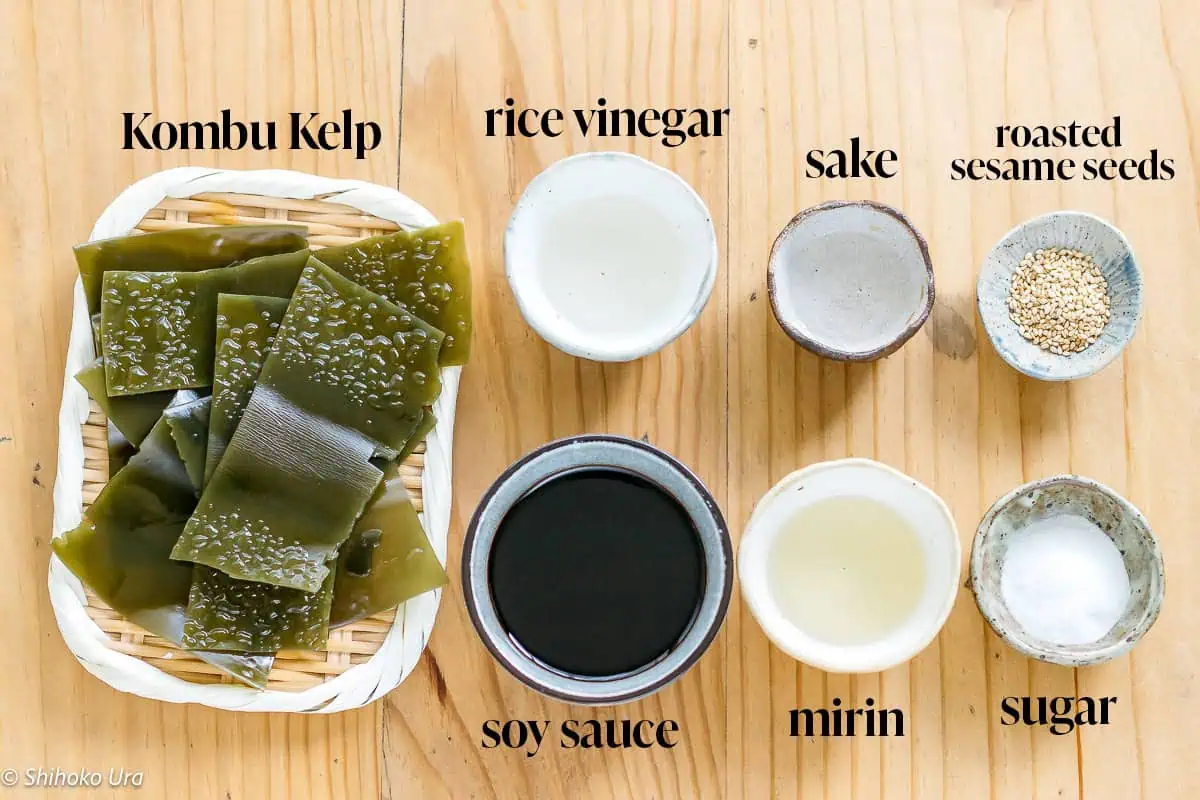
To make Kombu Tsukudani, you’ll need the following ingredients:
Kombu Seaweed/Kelp
Look for dried kombu in the Asian section of your grocery store or at a specialty Japanese/Asian supermarket. When preparing kombu for tsukudani, soaked kombu in water is used so that it’s soft and easy to cut into small pieces. This process helps to release the natural umami flavors of the kombu.
Condiments
- Soy Sauce : Provides the salty, savory base for the dish.
- Mirin : A sweet rice wine that balances the salty flavors.
- Sake : Adds depth and complexity to the flavor profile.
- Sugar : Helps to balance the flavors and adds sweetness.
- Rice Vinegar : Vinegar helps to make the kombu kelp tender and soft.
Optional Ingredients
Red chili flakes or sesame seeds for added flavor and texture.
Step by Step Instructions
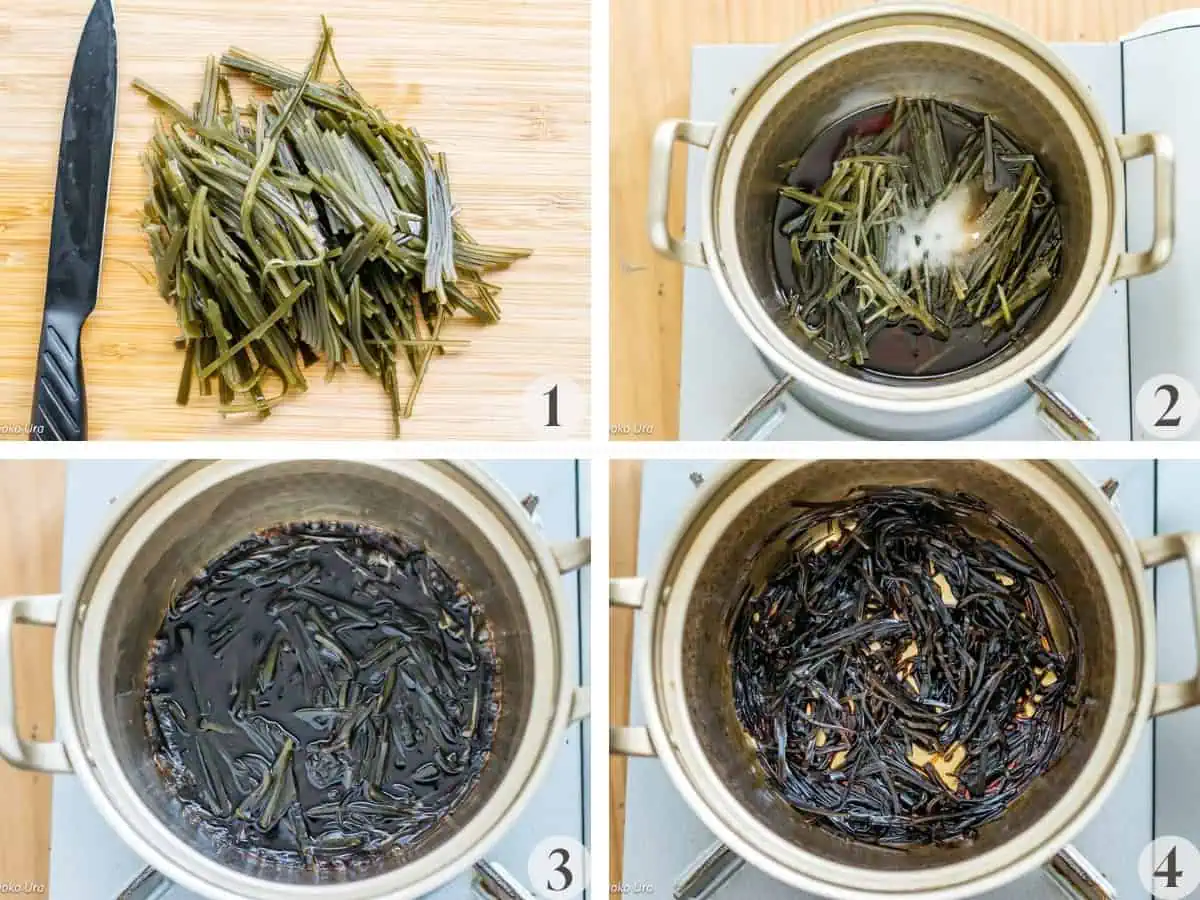
- Soak the kombu: Start by soaking the dried kombu in water for about 20-30 minutes until it becomes soft.
- Cut the kombu: Once softened, cut the kombu into small thin strips.
- Place the cut kombu and all condiments into a pot.
- Simmer the kombu: Add the cut kombu pieces to the saucepan. Reduce the heat to low and let it simmer for about 20-30 minutes, or until the liquid has reduced and the kombu is tender and flavorful.
- Optional: Add red chili flakes or sesame seeds for extra flavor and texture.
- Serve: Allow the kombu tsukudani to cool slightly before serving. It can be stored in an airtight container in the refrigerator for up to a week.
Tips to Make Kombu Tsukudani
Here are some tips to ensure your Kombu Tsukudani turns out perfectly:
- Use high-quality kombu: The quality of the kombu can greatly affect the flavor of your dish. Look for thick, dark green kombu with a white powdery coating, which indicates high umami content.
- Use the leftover kelp used to make dashi or sushi: I assume that many people just throw it after they make Kombu Dashi (kelp dashi). It is such a waste to trow away as the kelp used to make dashi is ideal for making tsukudani as it is already soaked and soft.
- Add a little rice vinegar: add a tiny bit of rice vinegar while cooking to make the kombu tender and soft. The kelp used to make dashi stock ends up being a little harder than regular kelp, so adding vinegar will make kombu kelp softer for tsukudani. A substance called “alginic acid” that makes up the fibers of kelp has the characteristic of melting in response to alkalinity. Vinegar is a seasoning with alkaline properties, so it is very useful for loosening hardened alginic acid.
Serving Suggestions
Kombu Tsukudani can be enjoyed in a variety of ways :
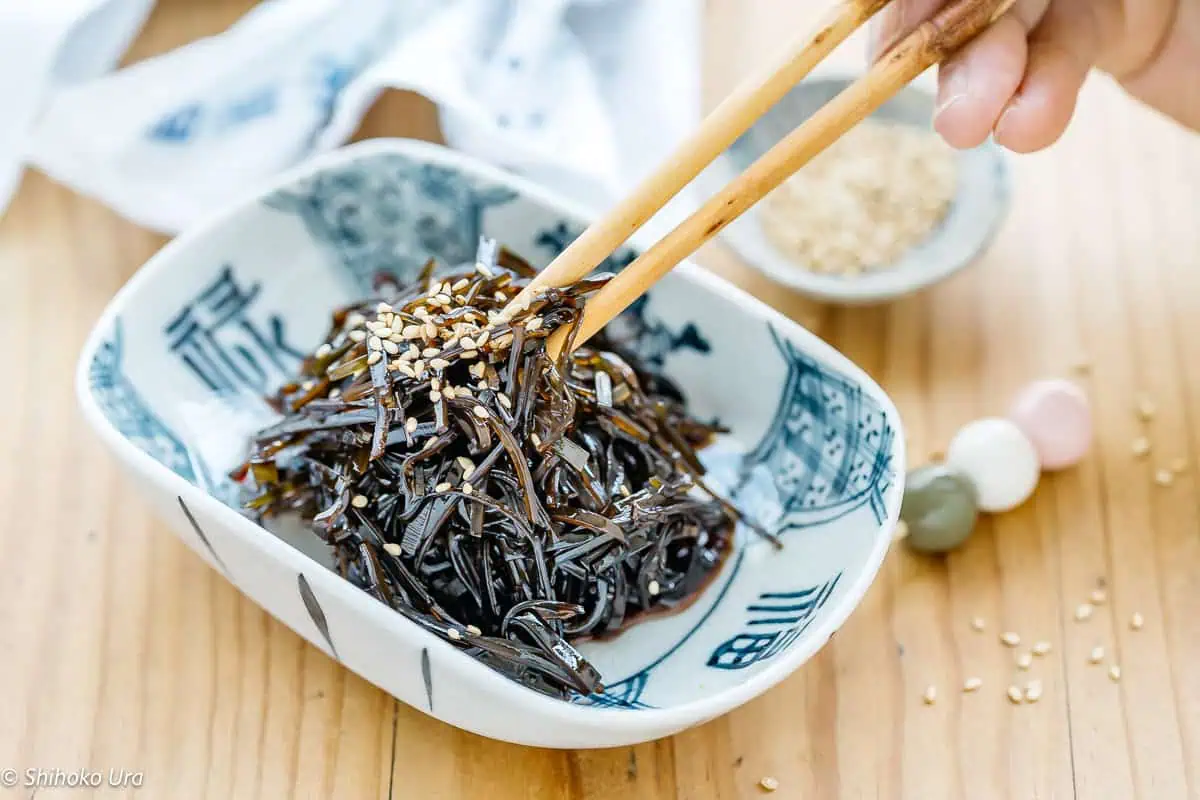
- As a side dish: It’s most commonly served alongside steamed rice because it adds rich flavour that’s balanced with the plain rice.
- In onigiri: Use it as a filling for rice balls for a tasty snack or obento lunch option.
- As a topping: Sprinkle it over tofu, salads, or noodles to add a burst of umami flavor.
- With bento: Include it in a traditional Japanese bento box for a well-rounded and delicious meal.
How to Store Kombu Tsukudani
Refrigerated : It can be stored in a clean container for about 10 days.
Freezer : It can be stored in a clean container for about 2 months. I recommend dividing kombu tsukudani into small portions in plastic wrap or small freezer bags and then freezing them, so you can thaw only the amount you need. To thaw, defrost naturally in the refrigerator or at room temperature as defrosting in the microwave may damage the texture. Consume as soon as possible, as the moisture that comes out will cause the tsukudani to spoil easily.
More Condiment Recipes


Kombu Tsukudani 昆布の佃煮
Ingredients
- 100 g Kombu Kelp *1
- ¼ cup Soy sauce
- 1 tbsp Mirin
- 1 tbsp Sugar
- ½ tbsp Sake
- ½ tbsp Rice vinegar *2
Instructions
Kombu kelp preparation
- Start by soaking the dried kombu kelp in water for about 20-30 minutes until it becomes soft. *3
- Once softened, cut the kombu into small thin strips or small square shape.
Making Tsukudani
- In a saucepan, combine soy sauce, mirin, sake, and sugar. Bring the mixture to a gentle boil, stirring to dissolve the sugar.
- Add the cut kombu pieces to the saucepan. Reduce the heat to low and let it simmer for about 20-30 minutes, or until the liquid has reduced and the kombu is tender and flavorful.
- Add red chili flakes or sesame seeds for extra flavor and texture(Optional)
- Allow the kombu tsukudani to cool slightly before serving. It can be stored in an airtight container in the refrigerator for up to a week.