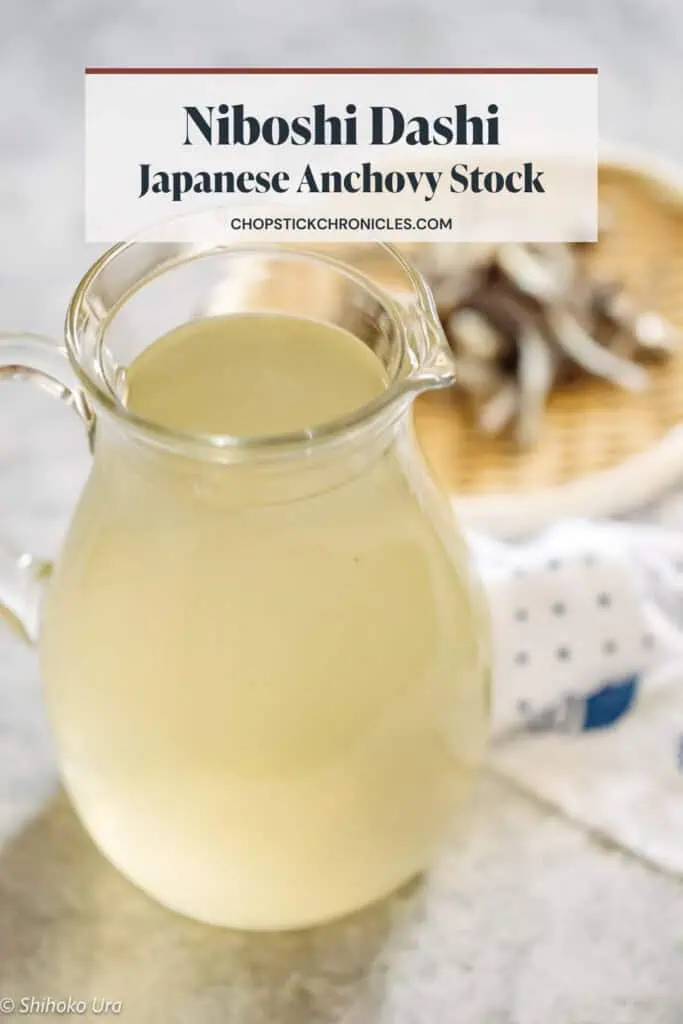
Add depth and umami to soups, sauces, stews and more with Niboshi Dashi! This traditional Japanese broth is made from dried baby anchovies/sardines which gives it a unique flavour and packs in nutrients. Just like other dashi, niboshi stock is a key ingredient in many Japanese dishes and is essential for creating rich and authentic flavour!
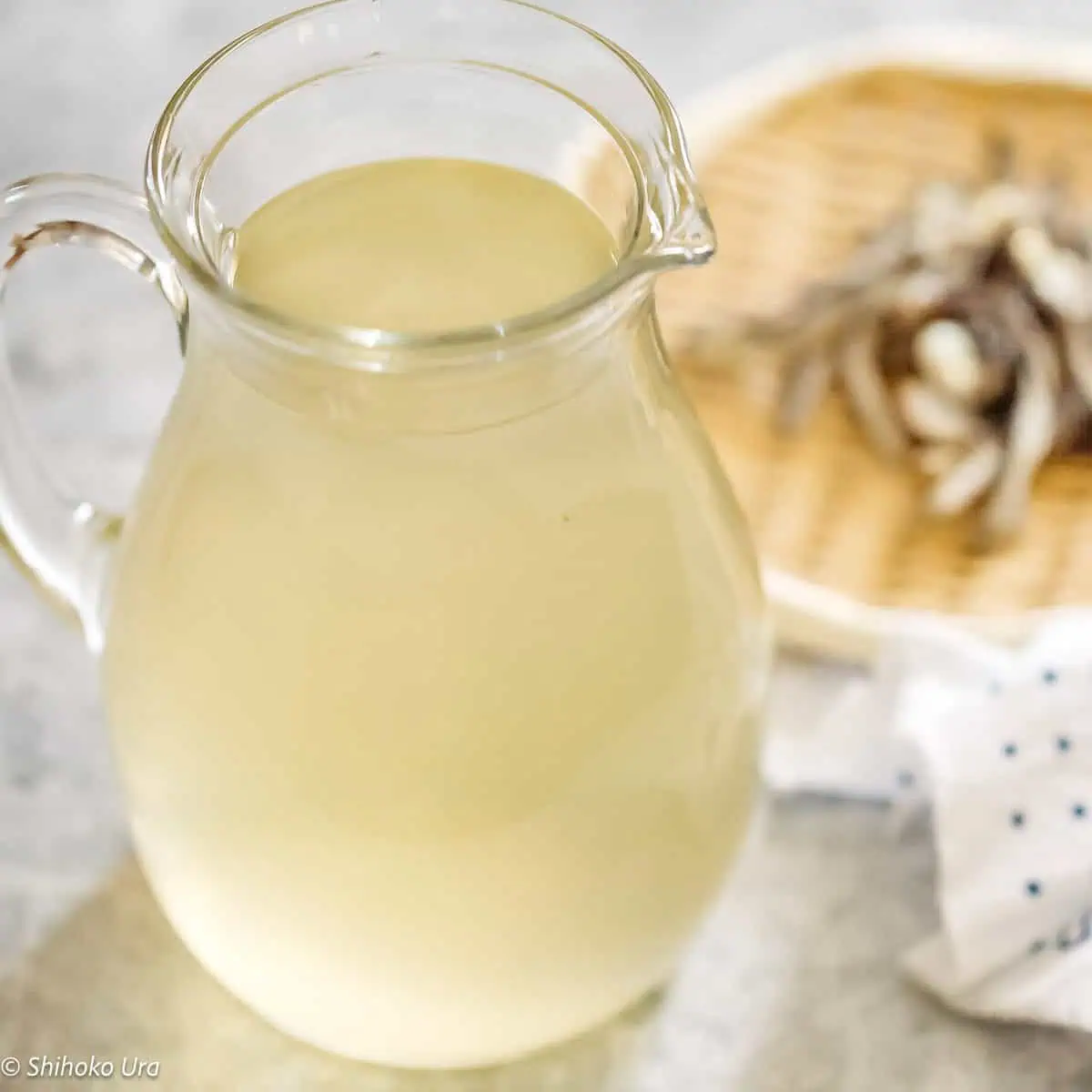
Table of Contents
What is Anchovy Stock(Niboshi/Iriko Dashi)?
Anchovy stock, also known as Niboshi or Iriko dashi in Japanese, is a flavorful and versatile broth made from dried anchovies/sardines. Niboshi is boiled (“ni”) and dried (“boshi”) baby anchovies/sardines. They are also known as “Iriko” or “Jako” in Japanese. This traditional dashi, just like other types of dashi, is an essential ingredient in Japanese cuisine. It adds depth and umami to dishes such as soups, stews, sauces, and marinades. The main umami component is inosinic acid, which is the same as bonito dashi, so Anchovy stock can replace Katsuo (bonito) dashi broth in any dish.
You may be familiar with anchovy stock if you love Korean food too. The Korean counterpart to Niboshi Dashi is called “myeolchi yuksu”. This broth is essential in Korean cooking too and is used to make dishes like doenjang jjigae (soybean paste stew), soondubu jjigae (soft tofu stew), kongnamul guk (soybean sprout soup), kimchi jjigae, and many more Korean recipes.
Ingredients you Need to Make Niboshi Dashi
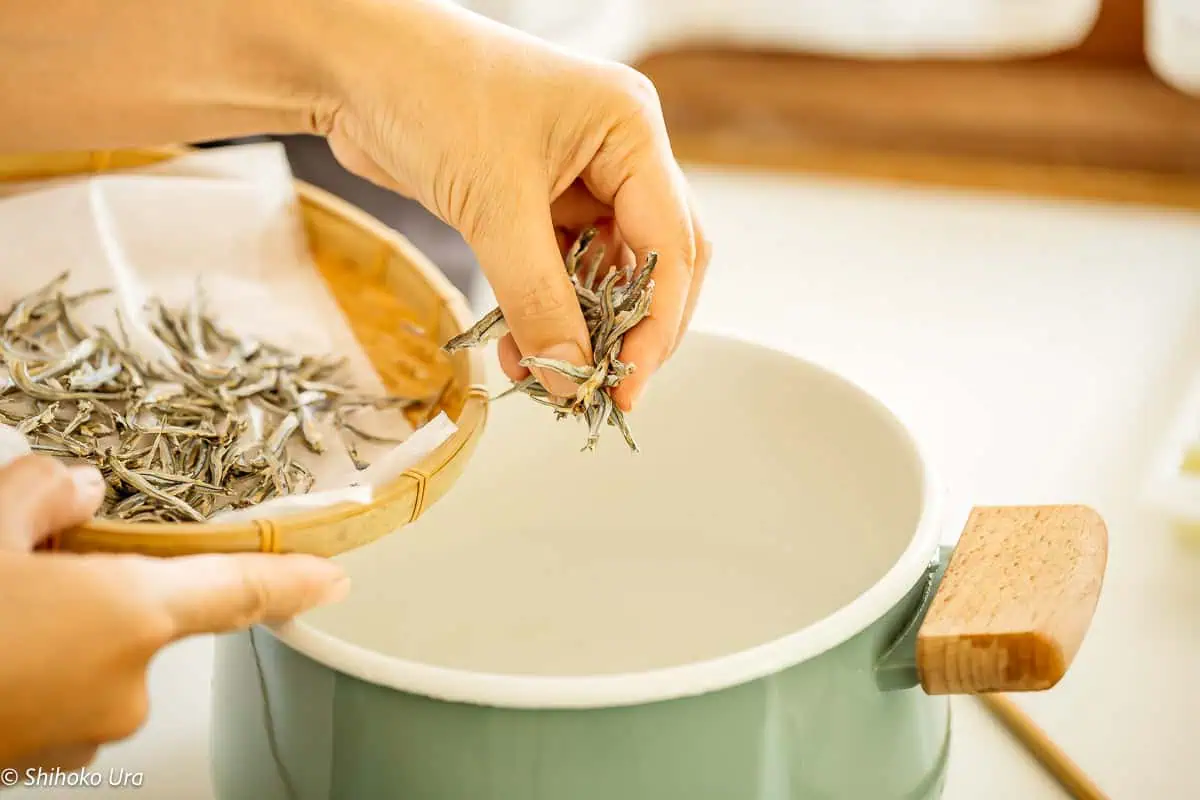
Anchovy dashi is an essential base stock for many Japanese and Korean dishes. Making it from scratch at home is simple and requires just two key ingredients:
Niboshi (Dried Anchovy)
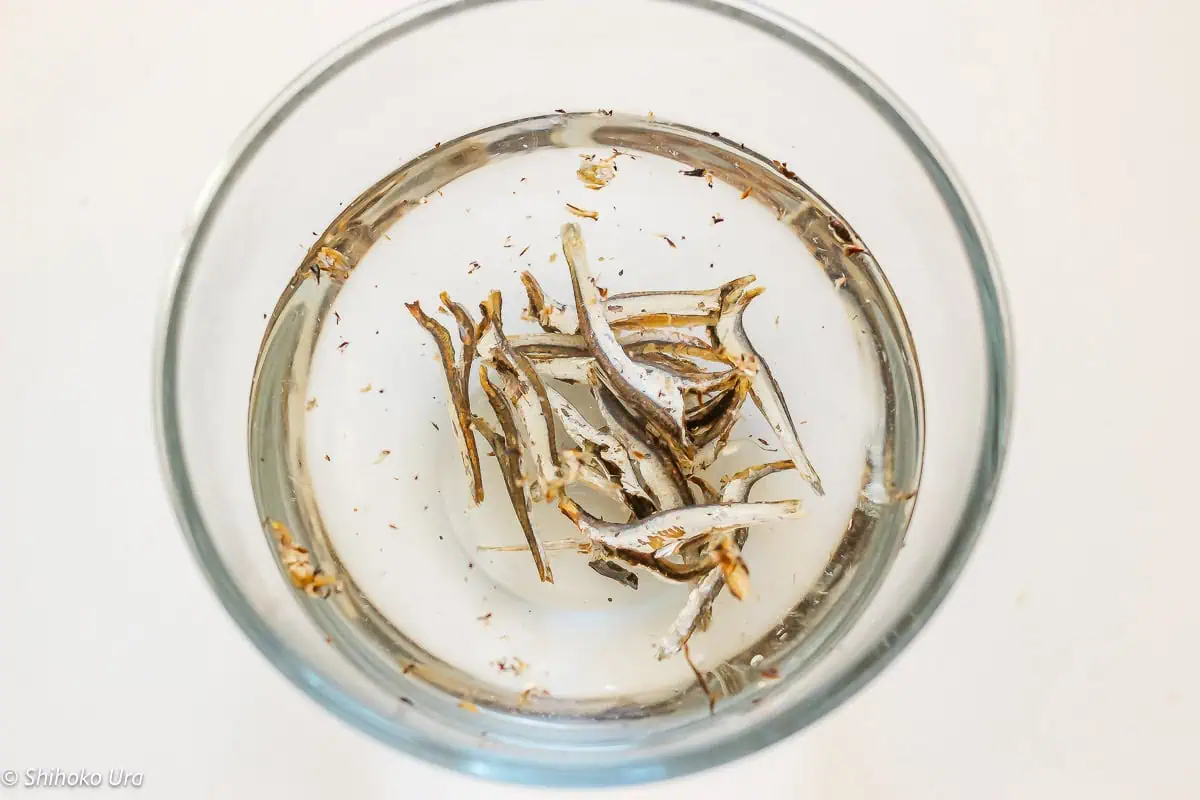
The main ingredient in anchovy stock is, of course, dried anchovies. In Japan, there are different types of “niboshi” (small dried fish). Just like katsuo (bonito) and kombu (kelp), there are different types of niboshi depending on what types of fish are used to make the niboshi. One is whiteish coloured and called Shiro (white) kuchi and the another is a blueish colour and is called Ao (blue) kuchi. Aokuchi has a stronger fishy flavour.
Niboshi (dried sardines/anchovies) can be purchased from Japanese or Asian grocery stores. If it’s not available near you, you can also buy them online. Avoid any dried fish which have a rip in the belly or oxidised oil stains.
Water
Use filtered or spring water if possible to avoid any unwanted impurities or off-flavors in your anchovy broth.
Two Methods to Make Niboshi Dashi
1. Steeping in Water Overnight (Mizudashi)
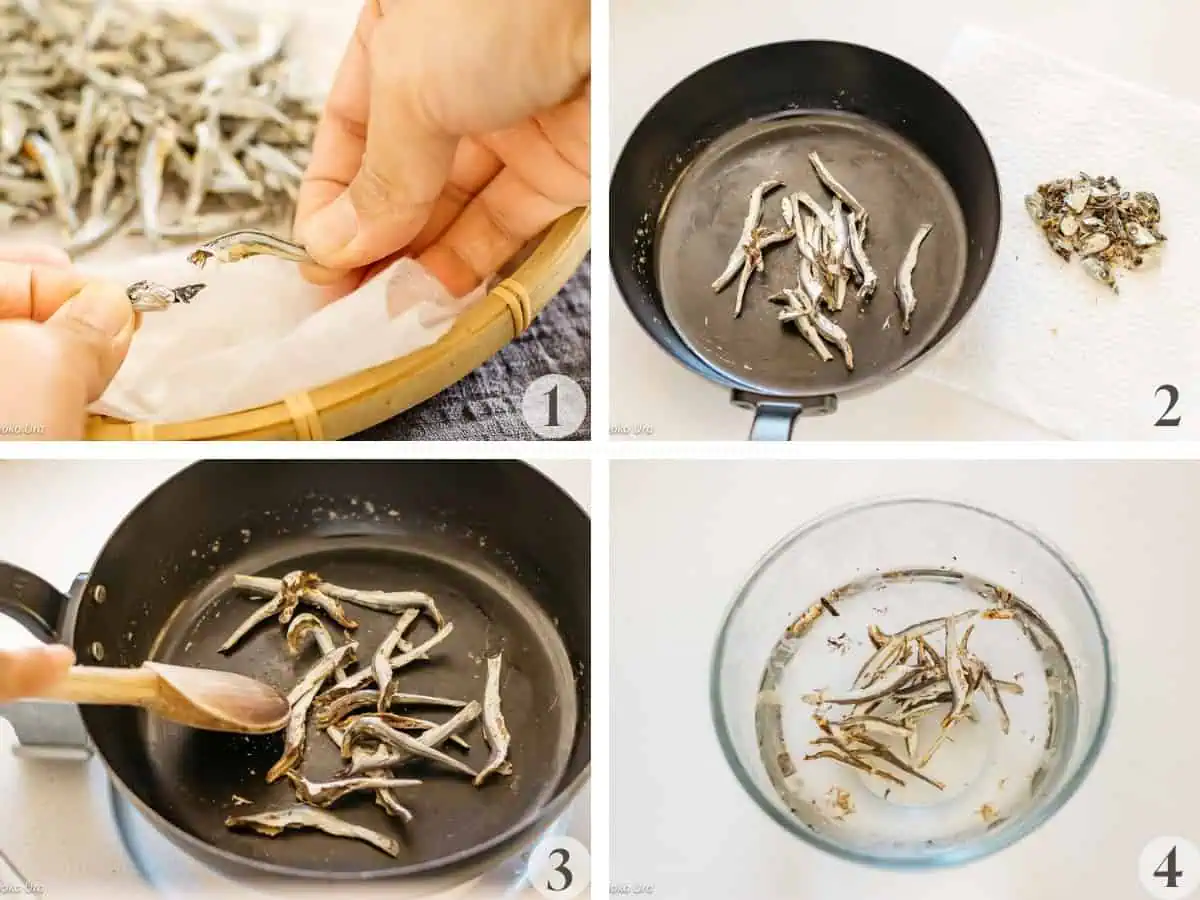
Pluck off the heads and remove entrails of the dried baby anchovies. Parch the prepared dried anchovies without using any oil in a frying pan for a few minutes. Fill a container with cold water and add the dry roasted baby anchovies. Let stand overnight. Strain the dashi the next morning.
2. Steeping & Simmering (Nidashi)
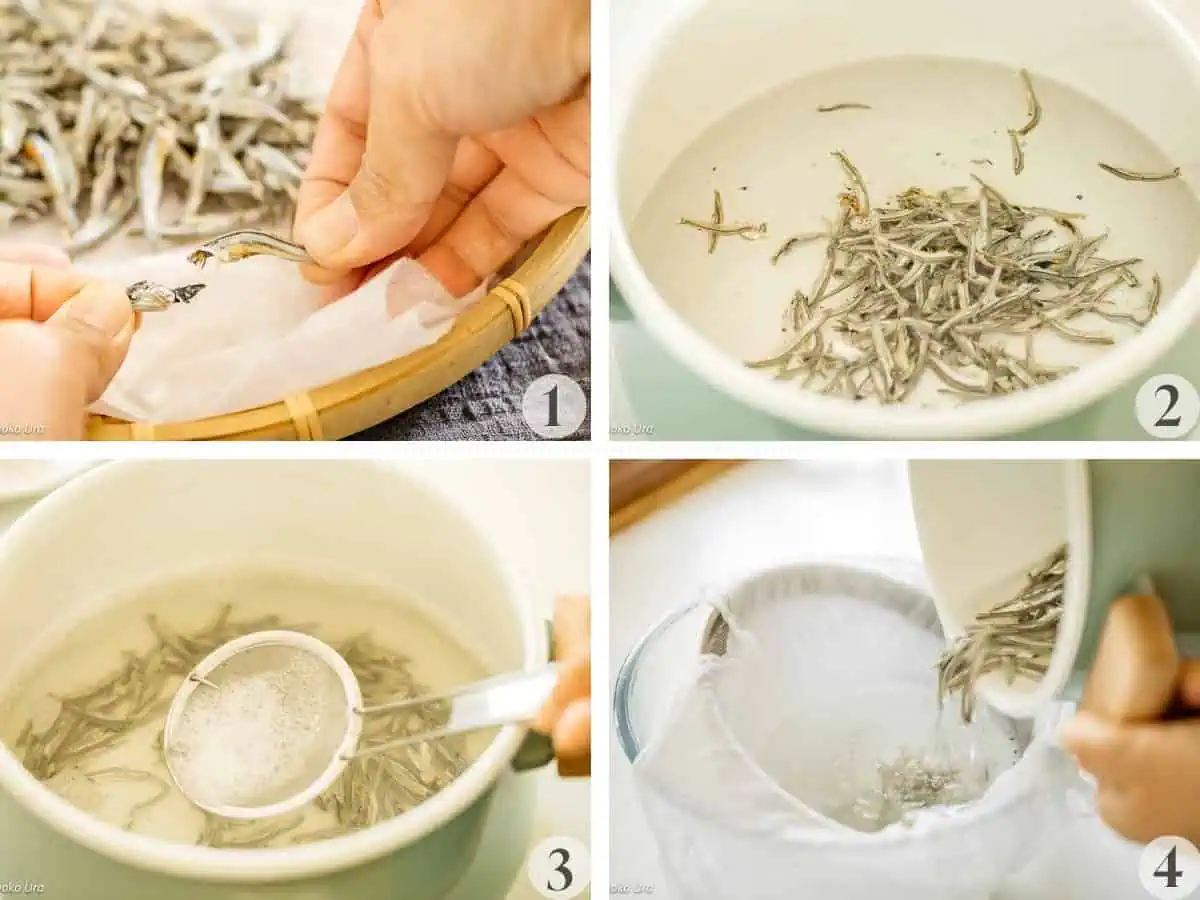
Preparation of dried baby anchovies is the same as Mizudashi. The heads and entrails need to be removed. Place the niboshi in a saucepan with water to steep for 30 minutes. Put a pot or saucepan over medium high heat. When the water boils, turn it down to low heat and simmer for 3-5 minutes. Remove any scum off the surface from time to time. Strain the anchovy stock through a sieve lined with kitchen paper towel.
Tips to Make Delicious Anchovy Stock
- Remove the heads and entrails carefully. We don’t want to extract any bitter taste from the heads and entrails.
- When you use the steeping & simmering (nidashi) method, once the water boils, turn the heat down to low to simmer and remove scum off the surface carefully. Extract the umami flavour slowly by simmering 3-5 minutes over low heat.
Culinary Use of Anchovy Stock
Anchovy stock is great for any kind of Udon noodle soup such as Tempura Udon, Kake Udon and Kitsune Udon. It is also good with making miso soup.
Recipes Use Anchovy Stock


How to store the Niboshi dashi?
It will keep for a couple of days in the fridge. You can also freeze it in an ice tray. When It is frozen, take them out of the ice tray and place the dashi cubes in a ziplock bag. In this way, it is convenient to thaw the amount you need.
FAQ
A : Don’t discard anchovies, they can be put to use! Just like Katsuo dashi and Kombu dashi, you can use the leftover anchovies to make Tsukudani or Furikake. Place the leftover dried baby sardines in a saucepan with 2 tbsp of the dashi, 1 tbsp each of sugar, sake, and soy sauce. Cook over medium heat until the liquid ingredients almost evaporate.
See The Complete Dashi Guide
Dashi plays a fundamental role in Japanese cuisine. It ultimately determines the overall taste of the Japanese dishes. Mastering Dashi makes cooking Japanese food more fun and definitely more flavourful! Learn how to prepare 5 different dashi broth .
- Katsuo (bonito flake) Dashi
- Kombu (dried kelp) Dashi
- Niboshi (dried infant anchovies/sardine) Dashi
- Shiitake (dried shiitake mushroom) Dashi
- Awase (combined) Dashi
Stay Connected
If you liked the Anchovy stock recipe, Please leave comment below and rate the recipe.
If you like the recipe please rate the recipe and leave comments below. Also don’t forget to follow me on Youtube, Pinterest, Facebook, Twitter and Instagram. This way you keep up to date with all the latest happenings on Chopstick Chronicles. Don’t forget to Sign up for a weekly newsletter so you never miss out on new authentic delicious Japanese recipes!
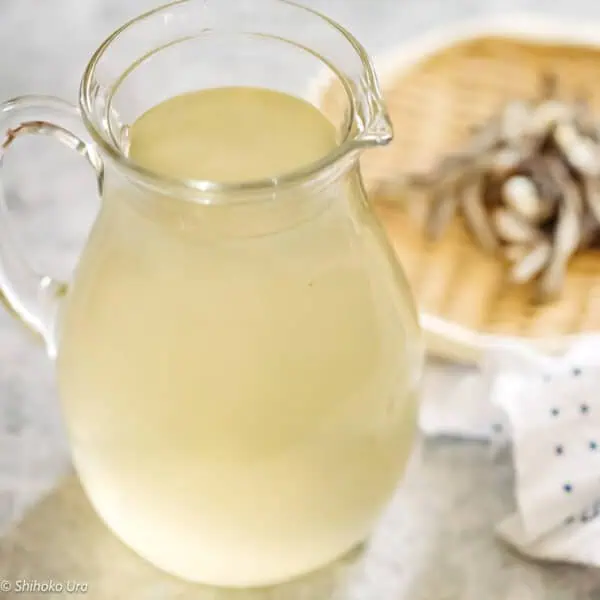
Niboshi Dashi (Anchovy Stock) 煮干しだし
Instructions
Steep (Mizudashi) method
- Pluck off heads and remove entrails of the dried baby anchovies. *2
- Place the prepared dried anchovies in a small saucepan over low-medium heat to dry roast them for a few minutes without using any oil.
- Fill a container with cold water and add the dry roasted baby anchoivies.
- Let it stand overnight.
- Line a sieve with a sheet of kitchen paper towel and place it over a large bowl.
- Strain the dashi into the large bowl. *3
- Use it for cooking or store in the fridge. *4
Steep & Simmer (Nidashi) Method
- Pluck off heads and remove entrails of the dried baby anchovies.
- Place the prepared baby anchovies in a saucepan with water to steep for 30 minutes.
- After 30 minutes steeping, put the saucepan over medium-high heat and bring it to boil.
- When the stock boils, turn the heat down to low and let it simmer for 3-5 minutes.
- Remove any scum off the surface as often as necessary. *5
- Strain the stock through a sieve lined with kitchen paper towel.
- Use it for cooking or store in the fridge. *4
Notes
Nutrition
Chopstick Chronicles is a participant in the Amazon Services LLC Associates Program, an affiliate advertising program designed to provide a means for sites to earn advertising fees by advertising and linking to Amazon.com. As an amazon associate I earn from qualifying purchases.






Nice recipe! I used it to make a miso salmon hot pot, with a handful of veggies and some fresh tofu. Perfect for a chilly autumn evening. Thanks for the intro to niboshi!
Thank you Jeff and you are welcome 😀