
Mirin is an indispensable condiment in Japanese cooking. The mellow sweetness of mirin is different from that of sugar, which gives rich flavour and umami to dishes.
Knowing and understanding all about Mirin will make your Japanese cooking skills improve dramatically.
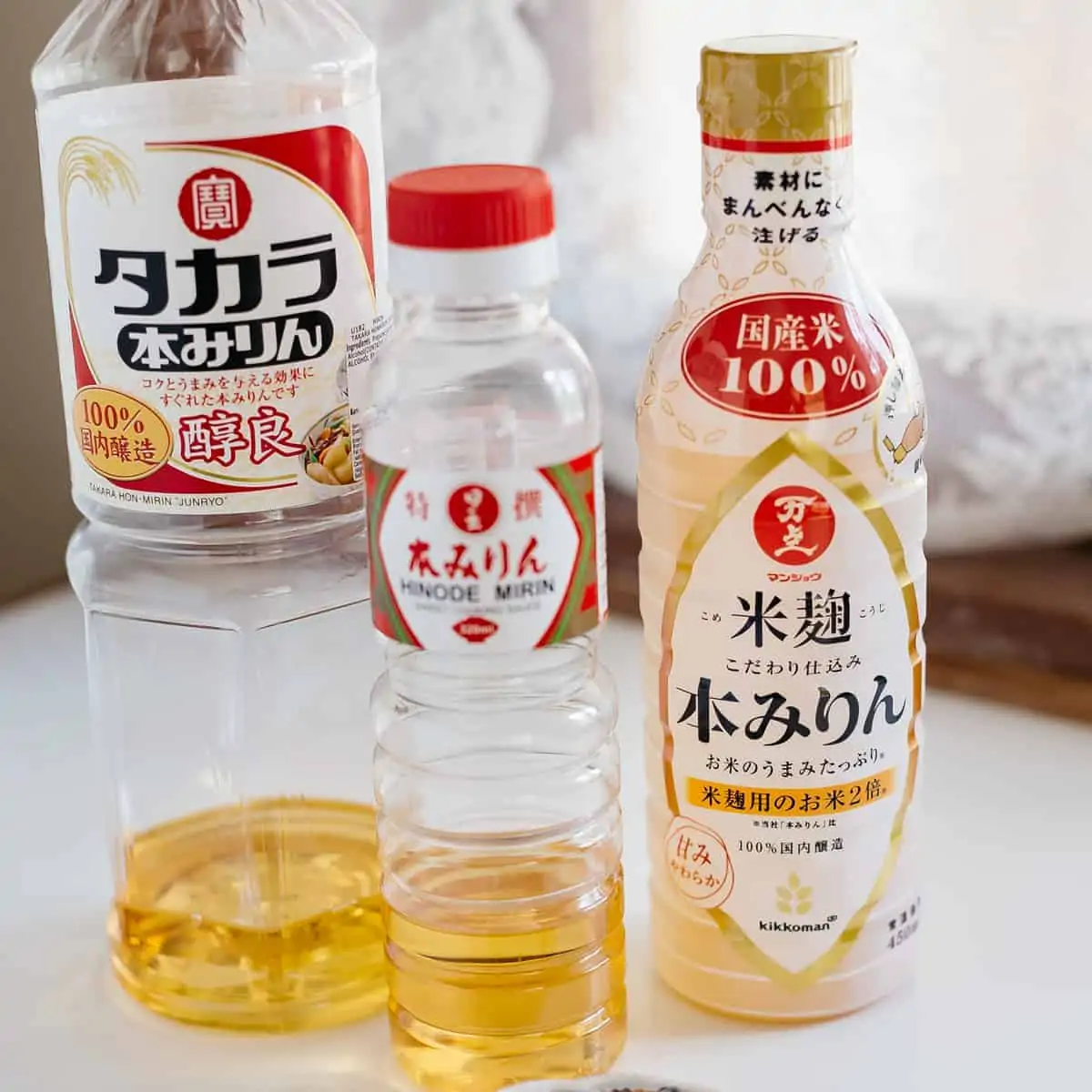
Table of contents

What is Mirin?
Mirin is a type of rice wine seasoning brewed from glutinous rice, rice koji, and alcohol (such as shochu). Similar to sake and is sometimes known as sweet sake; however, it has more sugar and less alcohol. It is made by combining steamed glutinous rice and rice koji and fermenting it together in distilled alcohol then allowing it to age for 6-12 months and finally filtering out the rice to be left with the clear liquid. During the fermenting process, the starch contained in the glutinous rice breaks down into sugar, which gives this seasoning a mellow sweetness. This sweetness is different from the sweetness of sugar which is why this is a unique condiment and essential to bringing umami flavour into Japanese cooking. The richness and depth of flavour are also created by succinic and amino acids that are contained in rice koji. Reference

Three Types of Mirin
There are 3 types of Mirin:
- Hon mirin(本味醂): This type has 14% alcohol content and 0% salt so it needs to be cooked to eliminate the alcohol.
- Mirin style seasoning (mirin fu chomiryo みりん風調味料): This style of seasoning is sold as “Aji Mirin”. This type is made by mixing sugars with acidic compounds and flavours. It contains nearly no alcohol content (less than 1%) and has less than 1% salt content. You’ll find it is also cheaper than hon mirin as it does not take as long to make and has no liquor tax. It’s convenient to use as you don’t have to cook it to remove the alcohol content but it will have a different cooking effect.
- Fermented seasoning (Hakko chomiryo 発酵調味料): This type is made in the same way as hon mirin and contains about 2% salt content and 14% alcohol content. However, although it has the same alcohol content as hon mirin, it is treated as a seasoning instead of liquor as it contains salt and can therefore not be drunk as alcohol. When using this type, be careful when adding other seasonings such as soy sauce as it may become very salty.
5 Reasons to Use
There are 5 reasons why we use mirin in Japanese cooking:
1. Add Mellow Subtle Sweetness
It brings out a subtle sweetness and adds a sophisticated umami taste to food. This subtle sweetness and rich flavour come from the unique way mirin is composed which creates a sweet taste that sugar can not replicate.
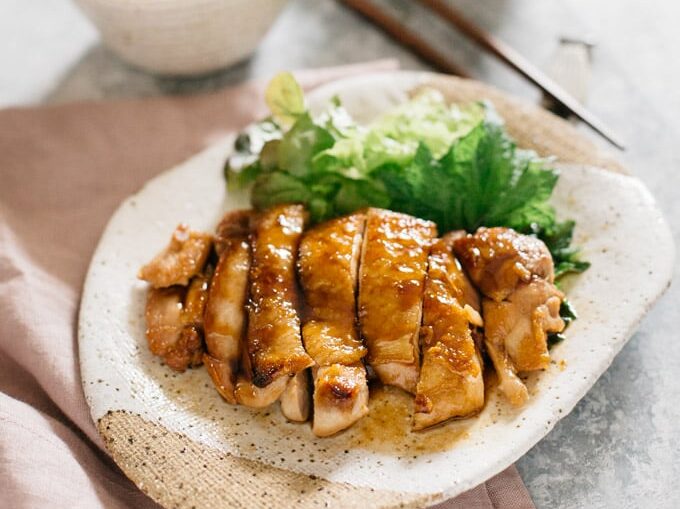
2. Add Beautiful Shine and Gloss
It adds a beautiful shine and gloss. This is because of the sugar it contains. It gives food a delicious and appetising appearance, which is an important element of Japanese cuisine.
3. Prevents Foods from Breaking Apart
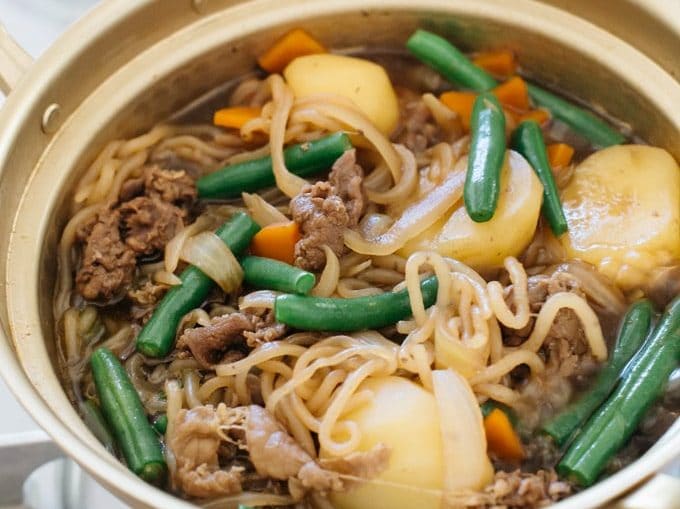
It prevents food from breaking apart while cooking/simmering. When mirin is used to cook meats and fish, it prevents the muscle fibres from collapsing due to the alcohol and sugars. When it’s used for cooking vegetables, it prevents the starch from escaping out of the vegetables which allows them to keep their shape.
4. Suppress Odour
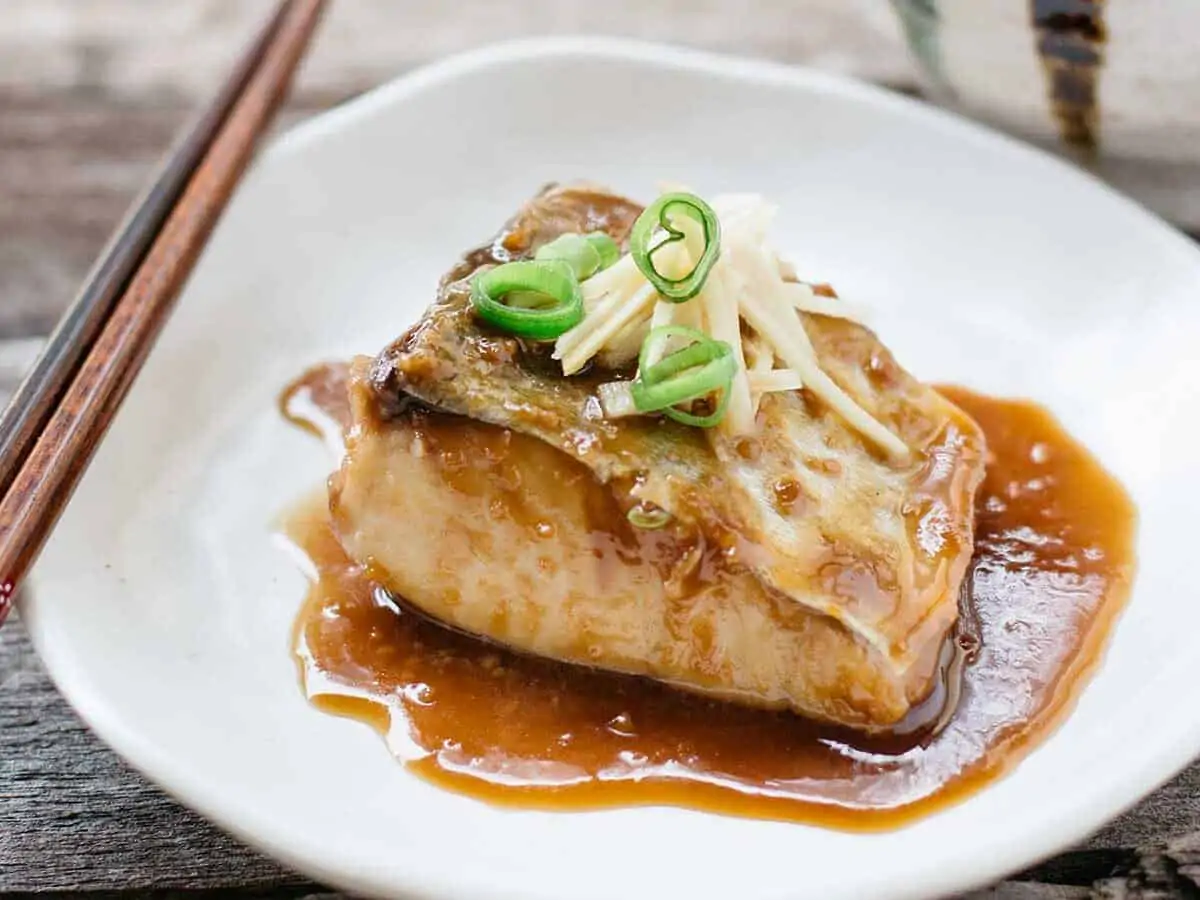
It suppresses odour. When the alcohol that is present is exposed to heat (such as when boiling), it evaporates and also evaporates odours. This is why it is often used when cooking fish.
5. Penetrates Flavour Easily
It helps sink in flavours. The alcohol helps other seasonings penetrate into ingredients to deepen the flavour.
Where Can You Buy?
You can buy Mirin from your local Japanese/Asian supermarkets. It can also be found in some larger supermarkets nowadays, such as Woolworths in Australia. Make sure you read the name on the bottle correctly to choose the right type of this condiment you want to use. If the bottle has 本(hon) it is Hon Mirin, where it has 風(fū) is Mirin Style Seasonings(Aji Mirin). Well known brands are Kikkoman, Hinode, and Takara.
How to Use Mirin?
When adding seasonings in Japanese cooking, we follow a ‘sa shi su se so” order. Sa for sugar and sake, shi for salt, su for su (vinegar), se for soy sauce, and so for miso. Due to the alcohol content, it needs to be added early when cooking so it falls into the “sa” category. However, mirin style seasoning doesn’t contain alcohol and needs to be added at the end of cooking. Read more about the order of how to use Japanese cooking by reading “5 Essential Japanese Seasonings and Condiments“.
Mirin Substitute
There are some ways that you can substitute mirin; however, due to the unique compounds of this condiment created when it is produced, the flavour will not be an exact match. If you can’t find them, you can substitute dry white wine, dry sherry, or sake. The sweetness of it is about 1/3 of the sweetness of sugar. To substitute the condiment with white wine, sherry, or sake, you will need to add 1 teaspoon of sugar for every tablespoon used. Read more about Japanese food substitute.
How to Store?
Due to the alcohol content of hon-mirin and fermented seasoning mirin, it does not easily spoil therefore it can be stored in the cupboard. Store these in a cool and dark place. However, mirin style seasoning does not contain alcohol and therefore it must be stored in the fridge once opening and follow the use-by date written on the label.
Japanese Recipes Using Mirin
FAQ
A: No they are not the same. Mirin is a sweet-tasting seasoning made from glutinous rice, rice koji and shochu. On the other hand, rice wine vinegar is a sour-tasting seasoning made by acetic acid that sake fermented.
A: No they are not the same either. Cooking sake is a seasoning that makes sake easier to use for cooking by adding salt, or and sweet ingredients such as citric acid and succinic acid to sake.
Chopstick Chronicles is a participant in the Amazon Services LLC Associates Program, an affiliate advertising program designed to provide a means for sites to earn advertising fees by advertising and linking to Amazon.com. As an amazon associate I earn from qualifying purchases.





Does mirin has gluten, lectin which are bad for health? Does it cause diabetes.
In general, Mirin is made from rice and alcohol so gluten free, however you need to check the label if anything gluten additives are added or not.
Hi SHihoko,
Thank you explaining. Im new to Japanese cooking and often wondered this.
Can you tell me about your cook book? Is it basic recipes for meals or a “how to ferment Japanese style?
Thank you
Natasha
Hi Natassha, Thank you for drop in and am glad that the article is useful. The book is how to make fermented foods such as Miso and also how to use them in daily Japanese cooking. There are over 70 recipes 😀
wonderful recipe
Hi Ruthrae, Thank you for leaving the comment.