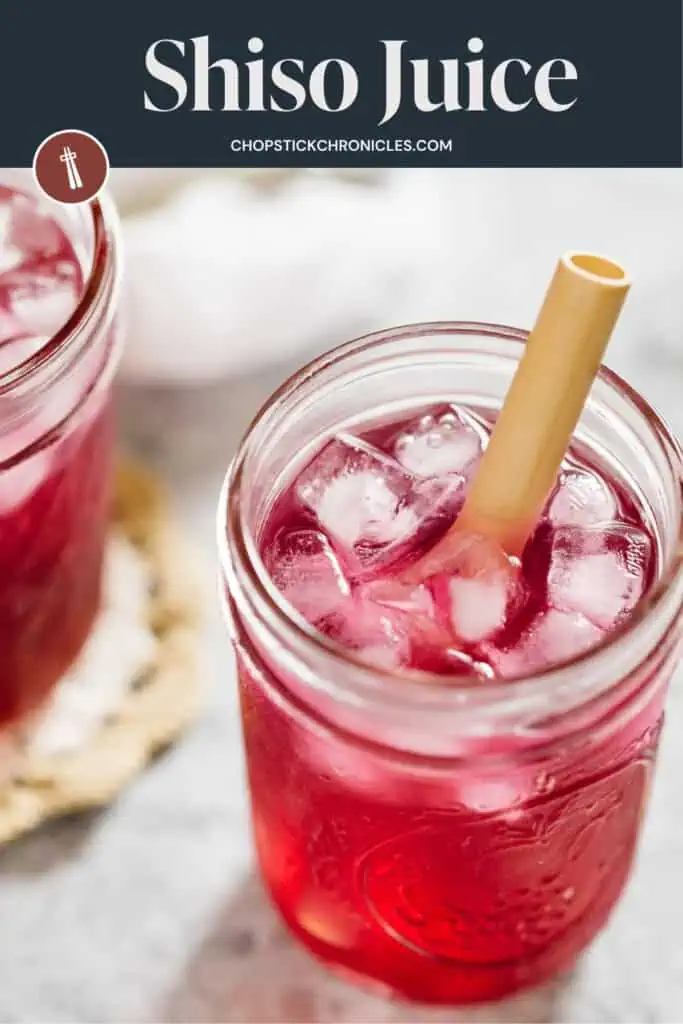
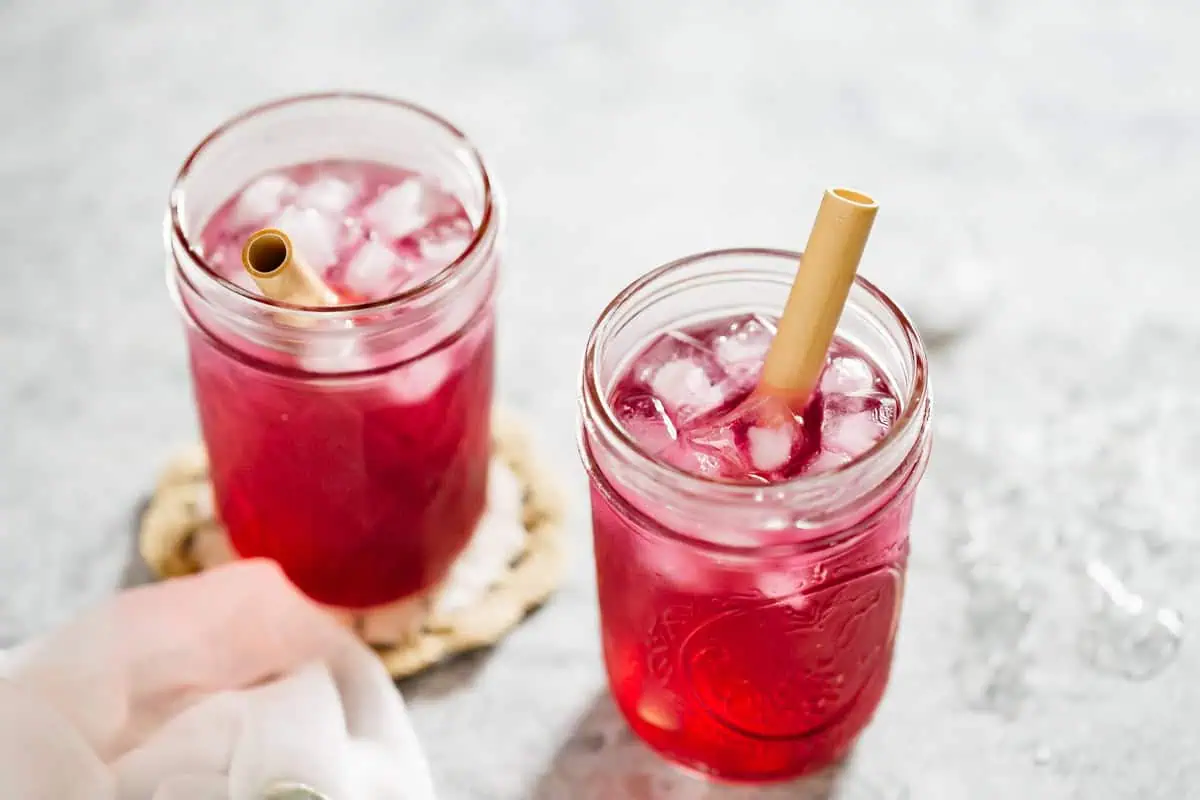
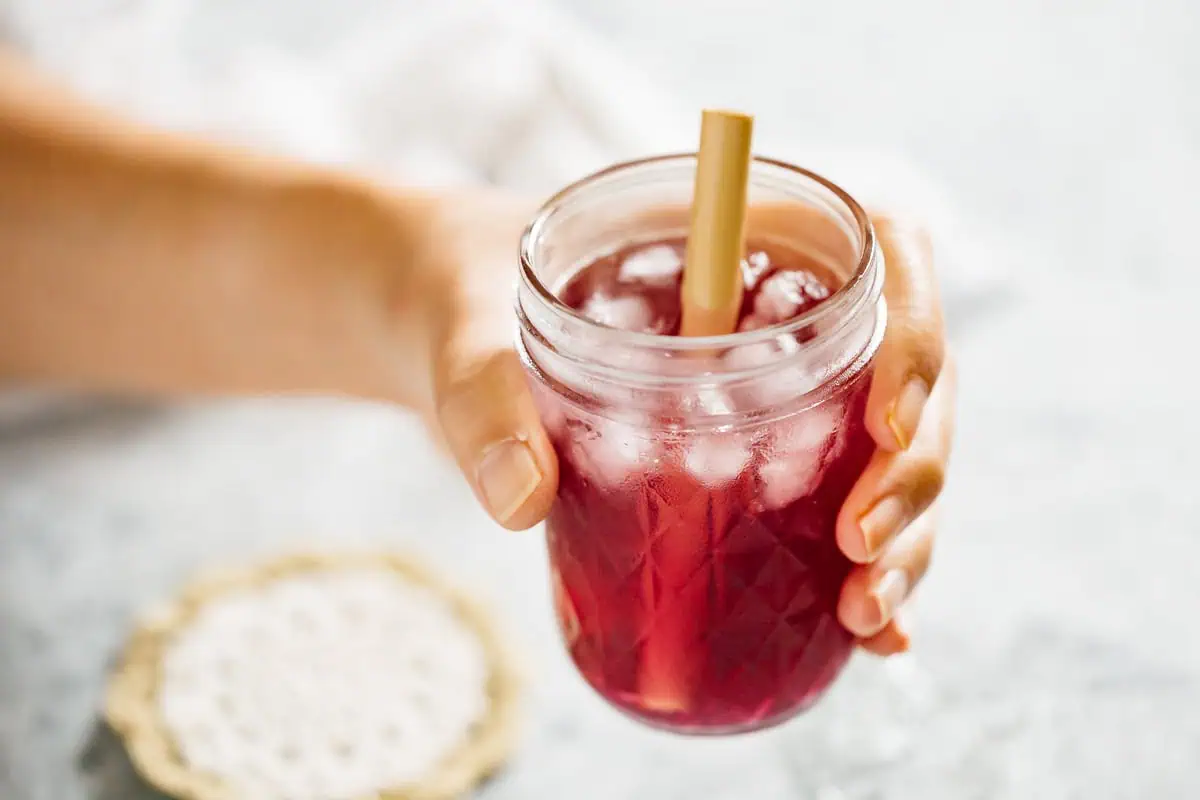
Quench your thirst with this vibrant and delicious shiso juice! This unique beverage is made from the aromatic and flavourful leaves of the shiso plant (perilla), which is a staple herb in Japanese cuisine. With its refreshing taste and numerous health benefits, it’s the perfect drink for summer!
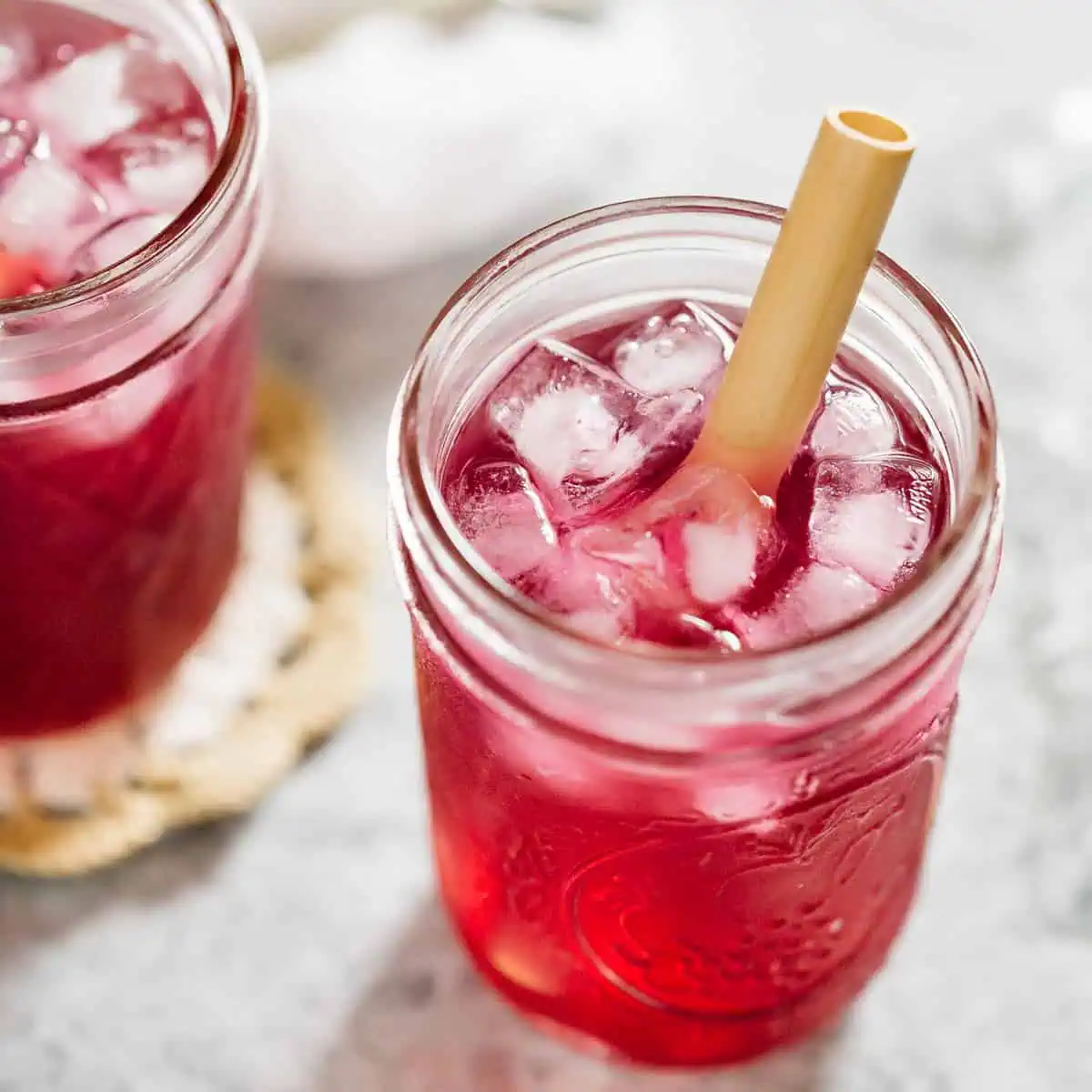
Table of contents
What is Shiso Juice?
Shiso juice, also known as perilla juice, is a refreshing and healthy beverage made from the leaves of the shiso plant. Shiso, or perilla, is a type of herb that belongs to the mint family and has the botanical name ‘Perilla frutescens var. crispa’ . It looks similar to Korean Perilla leaves, however the taste is different. Japanese shiso leaf is shaped like a spade with a serrated edge, whereas Korean Perilla is flatter and has a less serrated edge.
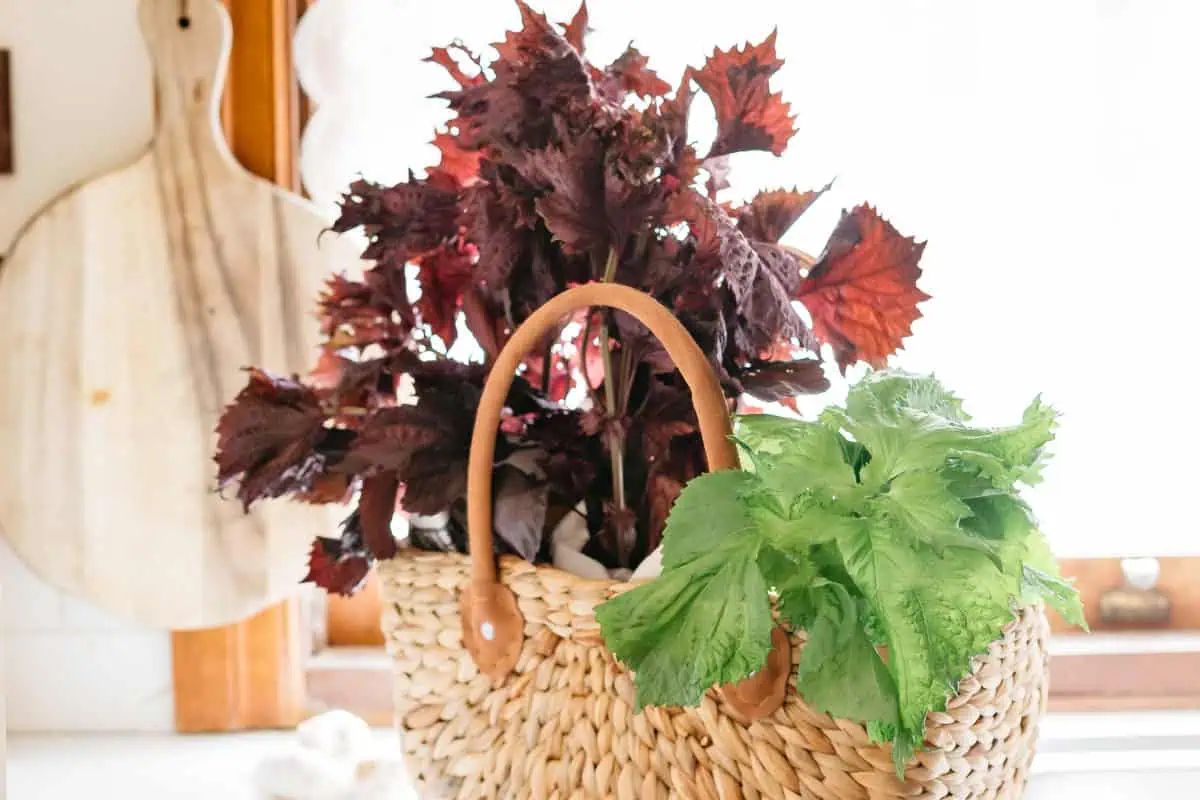
Both green and red/purple shiso varieties are commonly used in Japanese cuisine for the unique flavor and aroma the herb has. Shiso is typically used when making tempura, sashimi, and sushi, and as a garnish for donburi (rice bowl) dishes. ‘Aka shiso’ (red perilla leaves) are mainly used for adding colour to umeboshi (pickled plums) and to make a rice seasoning (furikake) called yukari. It can also be turned into a syrup to make juice.
Shiso juice has a slightly sweet and tangy flavor with hints of mint and basil. It is often enjoyed as a refreshing drink on its own or mixed with other ingredients such as lemonade or sparkling water for added zest. Some people also use shiso juice as a cocktail mixer or incorporate it into recipes for marinades, dressings, and desserts.
Health Benefits of Shiso Juice
Shiso juice is not only delicious, but is also believed to have various health benefits. It is rich in antioxidants and vitamins A and C, which can help boost immunity and protect the body against free radicals. It is also said to be anti-inflammatory, anti-bacterial, and high in iron and potassium.
Shiso juice is also good for those who are dieting. The rosmarinic acid contained in this herb suppresses the digestion and absorption of sugar and fat.
It’s also said that this juice prevents the rise of blood sugar. However, the syrup contains sugar so drinking too much is not a good idea. In Japan we only drink this occasionally and only one small glass a day.
Shiso Juice Ingredients
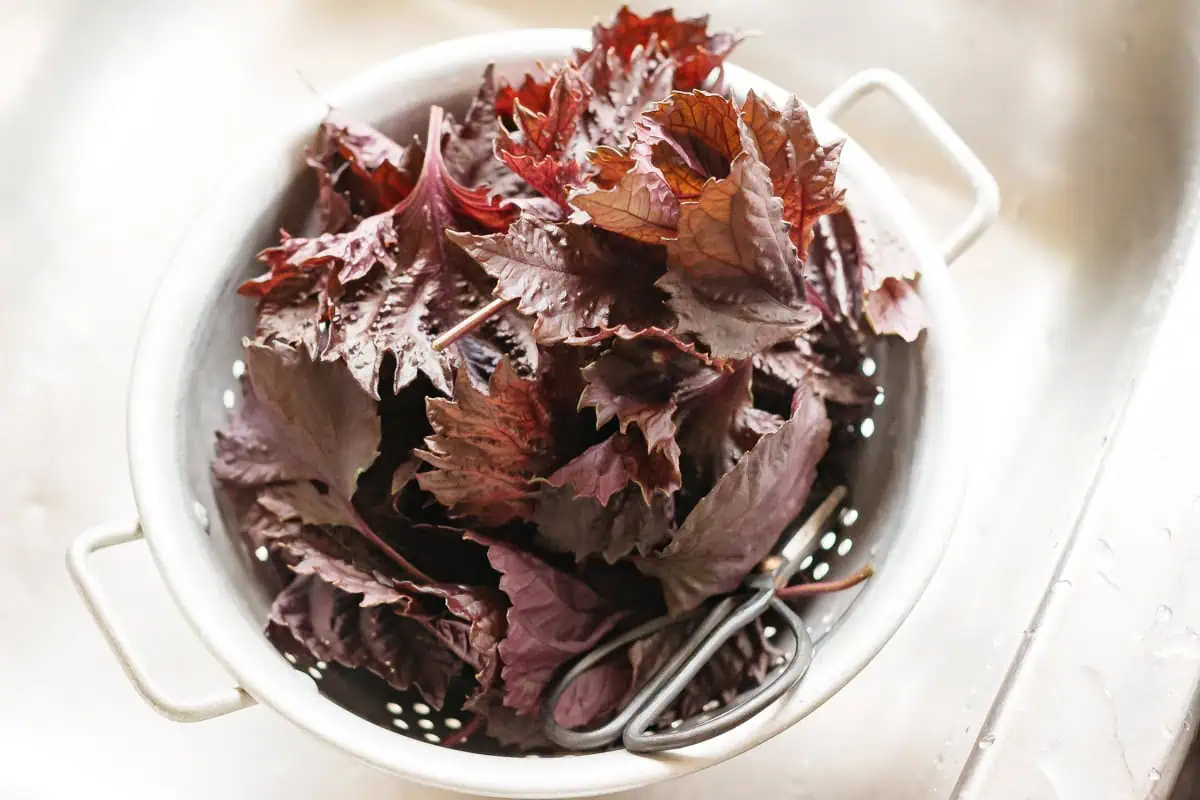
- Red Shiso Leaves : red shiso rather than green shiso is needed to make this juice. This type of shiso is also known as “Aka(red)Jiso“. Unlike green shiso, red shiso is not available all year round. It is available between June and July. It has more of an astringent taste than green shiso; so it’s not suitable to eat fresh.
- Water : The addition of water helps to dilute the strong flavor of the shiso leaves.
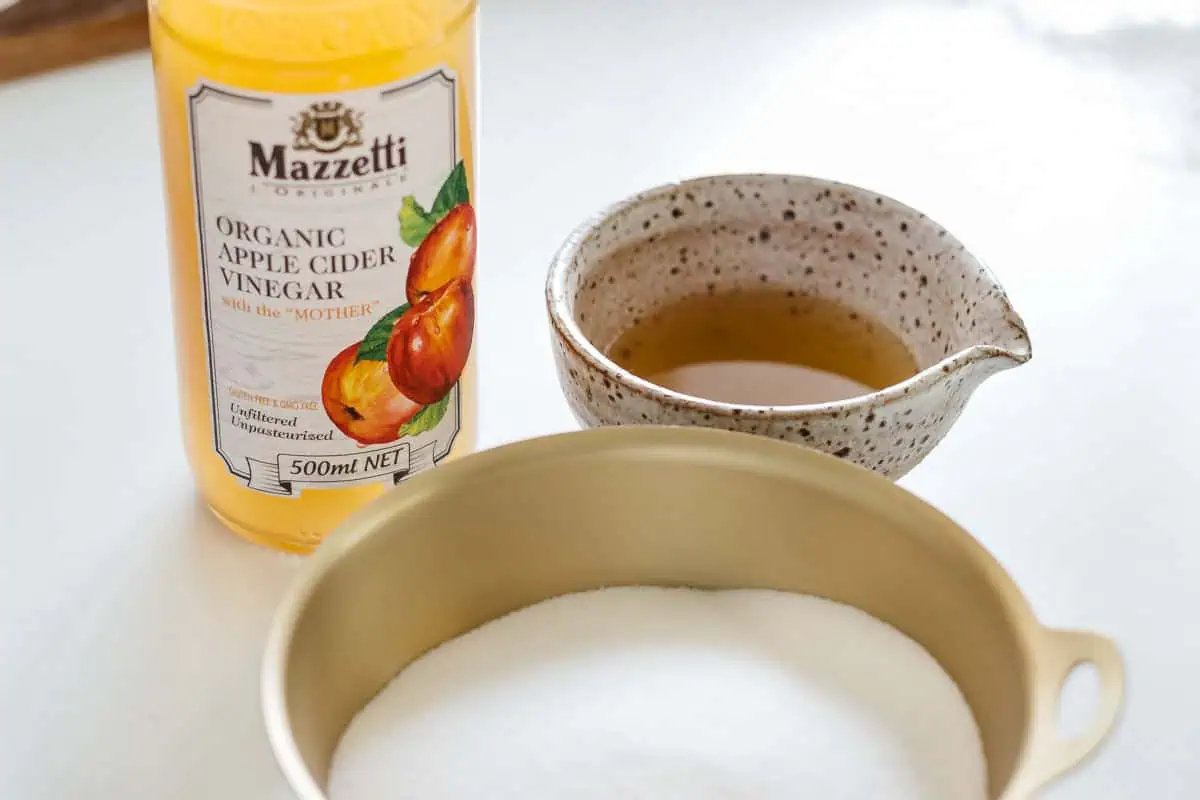
- Vinegar : Apple cider vinegar adds a tangy kick to the juice, as well as providing probiotics and enzymes that can support gut health. Adding the vinegar creates the vibrant bright color of the juice. Apple cider vinegar can be substituted with citric acid, lemon juice, or rice vinegar.
- Sugar : adding sweetness.
How to Make Red Shiso Juice?
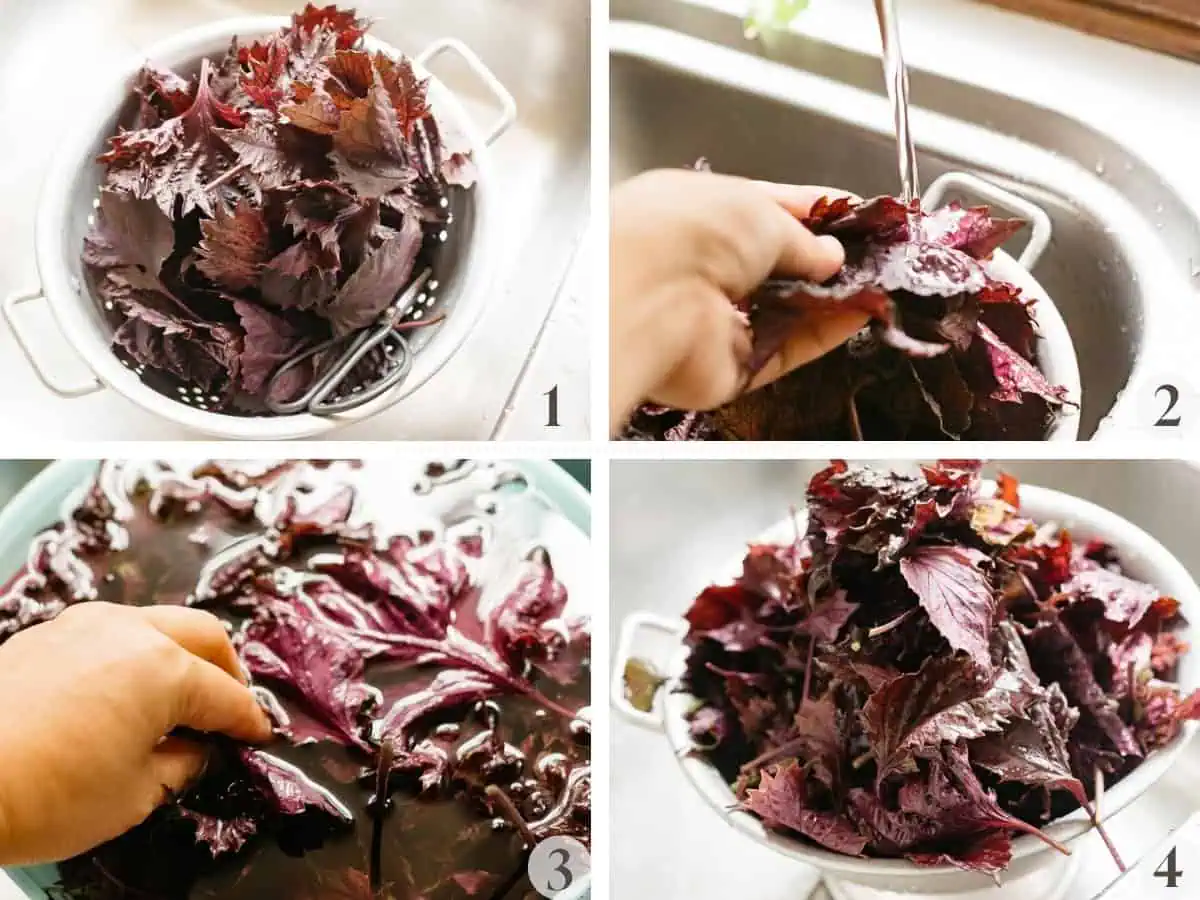
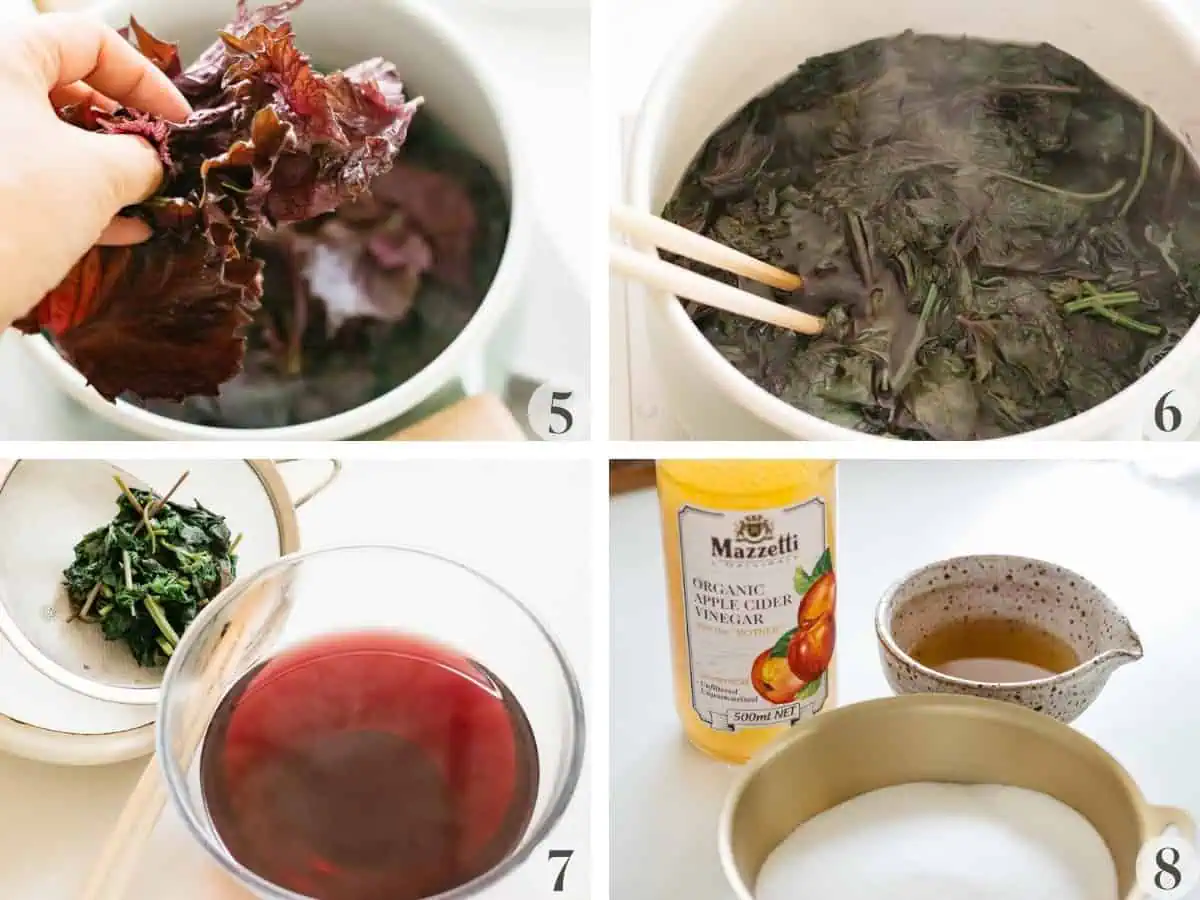
- Prepare shiso leaves to boil. Wash the shiso leaves thoroughly under cold water to remove any dirt or debris. Trim the shiso leaves.
- Bring 2 cups of water to boil in a large pot and add the prepared shiso leaves.
- Turn the heat down to medium heat and cook the shiso leaves for about a few minutes. The leaves colour will change from purple to a greenish colour.
- Drain the shiso leaves with a sieve and squeeze the leaves to extract as much as you can. It is hot so be careful not to burn your fingers. I used a spoon to extract all the liquid.
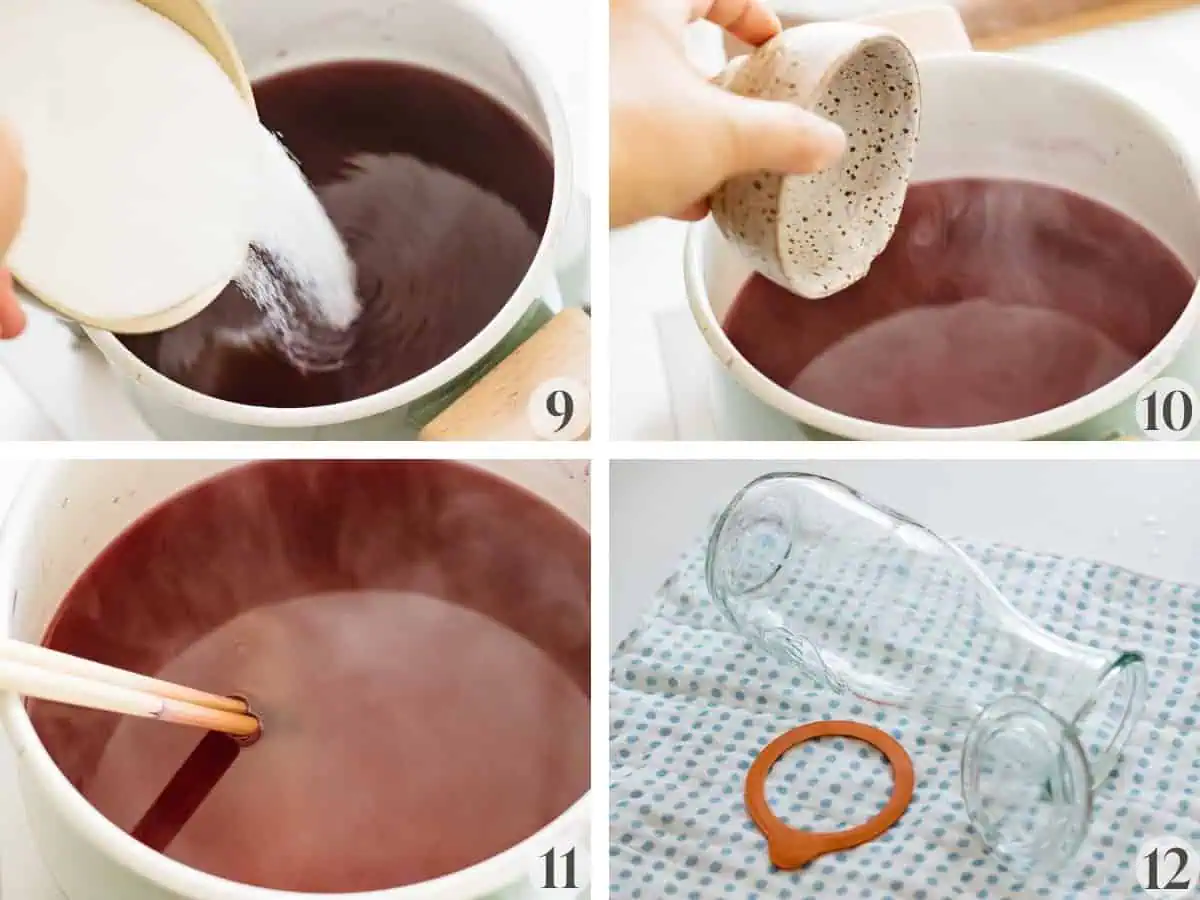
- Place the strained liquid back to the pot and bring it to simmer.
- Add the sugar, and when the sugar has dissolved, turn the heat off and add the apple cider vinegar.
- Cool the syrup down and keep it in a clean bottle in the fridge. If you sterilize the container in which you keep the syrup, it will last about 6 months in the fridge.
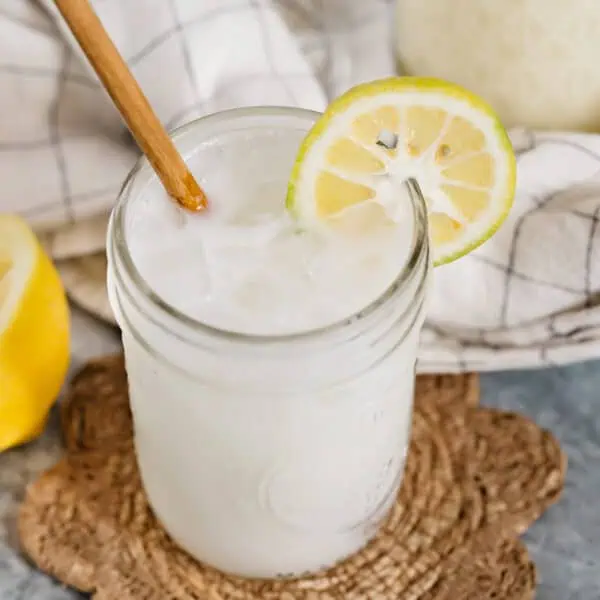
- Serve over ice cubes for a refreshing summer drink. To make red perilla juice (red shiso juice), place 1/4 cup of the syrup into a glass and pour about 200 ml of mineral water or fizzy soda water over the top. Add ice cubes.
How To Store Shiso Juice
If you have made a large batch of shiso juice and are wondering how to store it properly, here are a few tips to help you keep it fresh and tasty for longer.
- Refrigerate : The best way to store shiso juice is to keep it refrigerated. Make sure to transfer the juice into a clean glass bottle or jar with a tight-fitting lid before placing it in the fridge. This will help prevent any contaminants from getting into the juice and extending its shelf life.
- Seal tightly : When storing shiso juice, make sure to seal the container tightly to prevent any air from getting in. Oxygen can cause oxidation which can affect the taste and quality of the juice over time.
- You can adjust the amount of sugar depending on your preference, but if you store the syrup for a long time until winter or early spring, mold will easily form if there is not enough sugar. When making with citric acid, aim for at least 250g of sugar per liter of water (when making with apple cider vinegar, aim for at least 150g of sugar per 900ml of water). reference : Kogome
- Freeze for longer storage : If you have made a larger batch of shiso juice that you won’t be able to finish within a week, consider freezing some of it for later use. Pour the juice into ice cube trays or freezer-safe containers and place them in the freezer until solid. Thaw out individual portions as needed.
FAQ
A : You may find red/purple shiso leaves at local Asian/Japanese grocery stores or local farmers’ market like I did.


Stay Connected
If you liked the post or made the shiso juice and if you liked it, please leave comments below and rate the recipe.
If you like the recipe please rate the recipe and leave comments below. Also don’t forget to follow me on Youtube, Pinterest, Facebook, Twitter and Instagram. This way you keep up to date with all the latest happenings on Chopstick Chronicles. Don’t forget to Sign up for a weekly newsletter so you never miss out on new authentic delicious Japanese recipes!

Red Shiso Juice 紫蘇ジュース
Ingredients
- 18 oz Red/Purple Shiso leaves * 1 or 500g
- 2 cups water *2 or 500ml
- ½ cup sugar *3 or 100g
- ¼ cup apple cider vinegar *4 or 60ml
Instructions
- Prepare shiso leaves to boil. Wash and trim the shiso leaves.
- Bring 2 cups of water to boil in a large sauce pan or pot and add the prepared shiso leaves.
- Turn the heat down to medium heat and cook the shiso leaves for about a few minutes. The leaves colour will change from purple to a greenish colour.
- Drain the shiso leaves with a strainer/sieve and squeeze the leaves to extract as much as you can. It is hot so be careful not to burn your fingers. I used a spoon to extract all the liquid.
- Place the drained liquid back to the saucepan and bring it simmer.
- Add the sugar, and when the sugar has dissolved, turn the heat off and add the apple cider vinegar.
- Cool it down and keep it in a clean bottle in the fridge. If you sterilize the container in which you keep the syrup, it will last about 6 months in the fridge.
- To make shiso juice, place 1/4 cup of the syrup into a glass and pour about 200 ml of mineral water or fizzy soda water over the top. Add ice cubes.
Notes
Nutrition
Chopstick Chronicles is a participant in the Amazon Services LLC Associates Program, an affiliate advertising program designed to provide a means for sites to earn advertising fees by advertising and linking to Amazon.com. As an amazon associate I earn from qualifying purchases.





It looks great but I haven’t tried yours yet. 🙂 How do you think it would taste with only green shiso? I know the brilliant red would be missing. I expected shiso would re-seed itself because last year I had a lot, however that didn’t happen. I asked around and was given four small plants but they are all green. Will I miss a lot of flavor? Oh, and also, is there a difference in taste between the Japanese and the Korean (flat, smooth) variety? Thank you.
Hi Sara, I have not made syrup with green shiso myself but my guess is that the flavour will be milder. Japanese and Korean ones do look similar but in terms of flavour, they are very different. Korean one is almost tasteless, it does not have the same flavour as Japanese one.
Also I’m not sure if you’re already aware but if you haven’t tried the recipe then giving a star rating isn’t required, you can ask a question or comment without providing a rating at all 😊
When I finally made it, it came out more like a strong tea or strong juice than a syrup. Because I didn’t realize how much shiso it takes to make it syrupy. It shrinks down quite a bit so you can stuff a lot into a large pot. It was very good. I thought I might need more flavor because I put too much water in so I added some dried hibiscus which blended in very well. That’s good to know about the Korean one having less flavor. I’ll lean more towards the Japanese variety then. That batch lasted about a month. Thank you for your help Shihoko.
Hi Sara, thank you for letting me know. Glad your alteration of this recipe was a good one 😀
thank you for sharing about red shiso. I have been growing my own in sweden and its just becouse i miss japan so much from my last visit there.
I tried red shiso in Tokyo and i loved it 🙂
I stumbled upon your site and will probably not find it again but I hope you will continue this blog.
Wow from Sweden! Thank you for visiting my blog Jenny 😀
Excellent and informative article. I grew saison for first time this year (red) and needed recipes. Red Shiloh juice amazing. There are more recipes to try.
I have the dark red perilla plant often leaves used to brew tea..and then somebody passed me a very similar mixed colored..redpink in center vein branching out in green/ purple. Edible ? Is there a colorful series?
Leaves similar, stems squarish with young shoots exactly like perilla.
Hi Lynda, I am not sure but sometimes red one and green one can be mixed.
I just got the mixed green/ purple one and wondering if they are good for the juice/ tea as well?
Great. Hope to find the seeds in Düsseldorf, my home town in Germany, where we enjoy the biggest Japanese diaspora in Europe..
Du kannst Shisopflanzen in guten Gartenmärkten finden. Meine bestand aus 3 Blättern und füllt inzwischen das ganze Hochbeet 😉
I just tried this at home. It’s super easy to make and goes great with a gin and tonic. The colour is amazing. Cheers!
PINK SHISO JUICE IS MY FAVORITE TIME OF YEAR!
I impulsively grabbed some shiso at the nursery a couple of years ago because it looked like a crazy Dr Suess plant. I stuck it in a big pot and it self reseeded itself for 2 years. It dies off as soon as temperatures drop, and in the spring all the seeds sprout and refill the pot. I use this recipe for basic guidance. REFRESHING AND PINK! Keeps for quite a while in the fridge.
Thank you Julia, it is my favourite too.
can you tell me about how many cups of shiso equals 18 oz? Colanders come in different sizes and cup measurements would be very helpful.
Hi Joan, I don’t think cup measurements are not helpful as it varies how people fill them up? I will try my best though, when I have shiso again in summer. It is not in season in Brisbane at the moment in July.
I will go ahead and try filling up a colander full and see how it turns out. I’m here in California and my red shiso is begging to be picked! I brought a couple of plants home from my mom’s yard before she passed. That was 11 years ago and it reseeds itself, giving me lots of new plants.
I went ahead a filled up my colander, pressing down lightly. I substituted 1/4 cup stevia for the sugar, but found it a little too sweet for me. Could probably have used more akajiso to make the syrup stronger, but all in all, a very refreshing summer beverage. Thank you for the recipe!
One cup is 8 ounces so 2 and 1/4 cups
Wonderful ideas on Shinzo. I grow mainly green shush. I cut fine strips and put it over rice. I also make a shiso/ basil pesto.
Can you please send me some recipes?
What do you use for the pesto? Similar recipe, but sub shiso for basil?
Please would you tell me how to use the shiso leaf that is green on one side and purple on the other side. And do you know the specific name of that type of shiso? Thank you!
Hi Linda, I think it is “Korean Perilla”. They are called “egoma” in Japanese and different from “Shiso”. They are taste very different too. Egoma is pickled in soy sauce but I never used it.
it is used in korean ssam – meat wrapped in lettuce and/or perilla leaves.
Korean one is different from Japanese. They look similar but less flavour and it is called “Egoma”.
Hi Linda, I just used the Shiso that is green and red and it worked great. The red color still drains out and the vinegar changes it from dingy to vibrant pink. Probably could Use less vinegar. Good luck!
Is it okay to skip the vinegar part.
Hi Monica, actually the vinegar makes that vivid beautiful pink colour and you don’t taste much vinegar. I would not skip it.
Hi Shihoko,
Thanks for the recipe. I’m making it right now.
I miss umeboshi too!
We make our own here in Australia out of apricots. This year we are trying out white nectarines as well.
You should give it a try, especially if you like honey umeboshi.
Wow really Carolyn, Thank you for the information about using apricots and stone fruits. Have you tried Rhubarb Umeboshi, It is easy to make and it is surprisingly just like real Umeboshi 😀 https://www.chopstickchronicles.com/umeboshi-rhubarb/
Yes we have tried rhubarb “umeboshi”, my husband found a recipe online and we tried it with the rhubarb growing in our garden (green one). It tastes great and it’s hard to tell the difference from the real thing (except the colour).
It’s really fun trying to make Japanese food with Australian ingredients. My husband calls it “survival Japanese cooking” 🤣
Fantastic 😀
Where or how could I get shiso seeds or plant? I want info from someone who’s more knowledgeable about these things. I want to get a plant that’ll help me n family stay healthy. I usually drink tea and I wonder if this will also be good also.
Hi Mai Vue, it depends on where you live. I live in Brisbane, Australia and I can get seedlings from a local farmers market.
I was thinking of trying stevia instead of sugar. Hopefully it turns out ok. I grew up eating green perilla leaves and has always been one of my favorite foods. Never had Shiso juice before but I bet I will love it. Thank you so much for sharing. Please let me know if stevia is a big no no. Thanks.
Hi Nicole, Stevia is OK. I personally would try if I am reducing sugar intake. I think it should work 😀
This recipe brings back fond memories. My aunt Namiko served this during my “mushi atsui” summer visit in 2008. Very refreshing in the oppressive heat and humidity. I have akajiso that return every year so will make the syrup to enjoy through the summer
Konnichiwa Melvin-san 😀 Akajiso juice is so refreshing inst it!? especially for high humidity summer like we are having now in Brisbane. I did not get Akajiso, so envy you.
Good day. Recently had an awesome shiso granita at restaurant Kei in Paris. It had a beautiful tart flavour, but I can’t figure out how it’s prepared. Do you have any idea? Thank you and have a good day.
Hi Corne, Thank you for the comment. Sorry I am not sure. Did you take a photo? I will try to find out 😀
Would you recommend making shiso juice with green shiso leaves, rather than the red/purple? I’ve only been able to find the green shiso variety around my area, wondering if they will have a similar taste.
Hi Claudia, I have never tried green one. We use purple one for colour. Taste probably similar but I don’t know how the colour turn into?
So how do I know if I have the correct plant?
Do you have a picture ?
Green shizo taste more like licorise/minth and red shizo more like cumin/cinnamon/berries
delicious I wanna try it soon!
I hope you enjoy it, thanks!