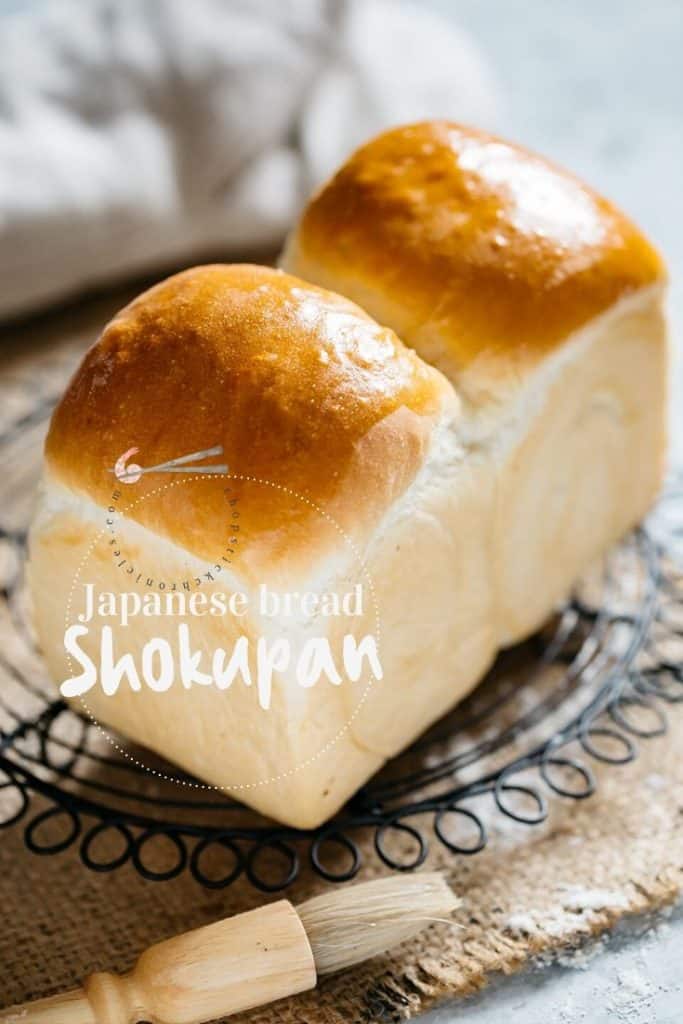
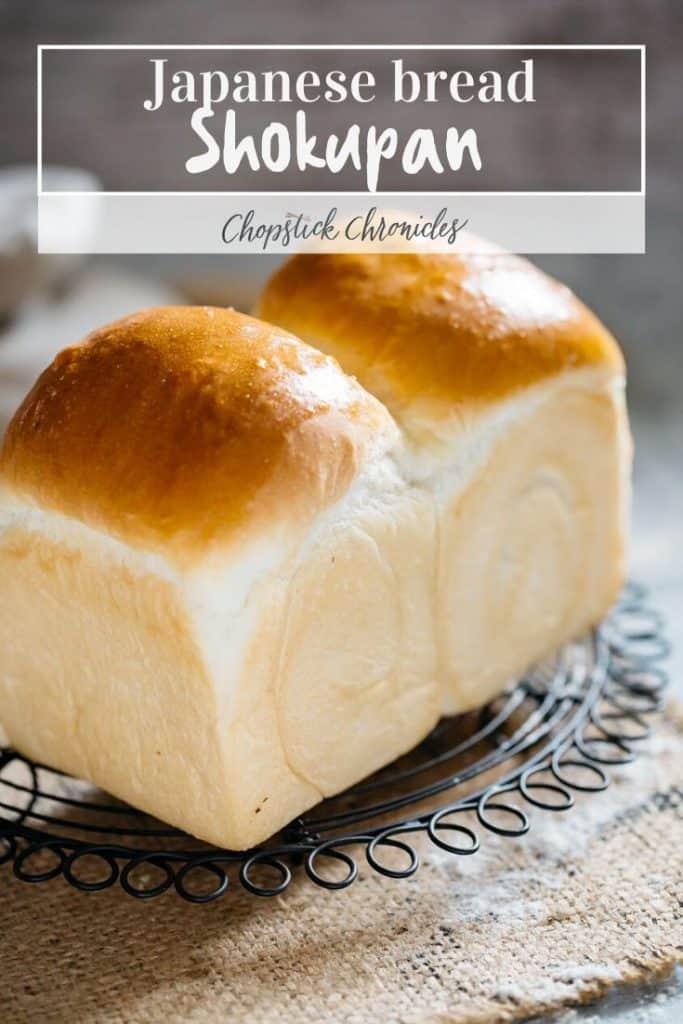

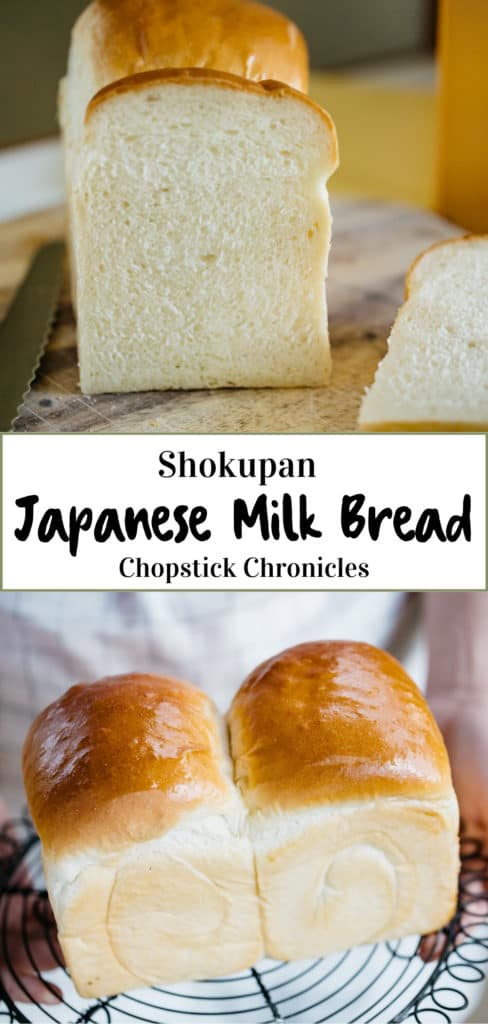
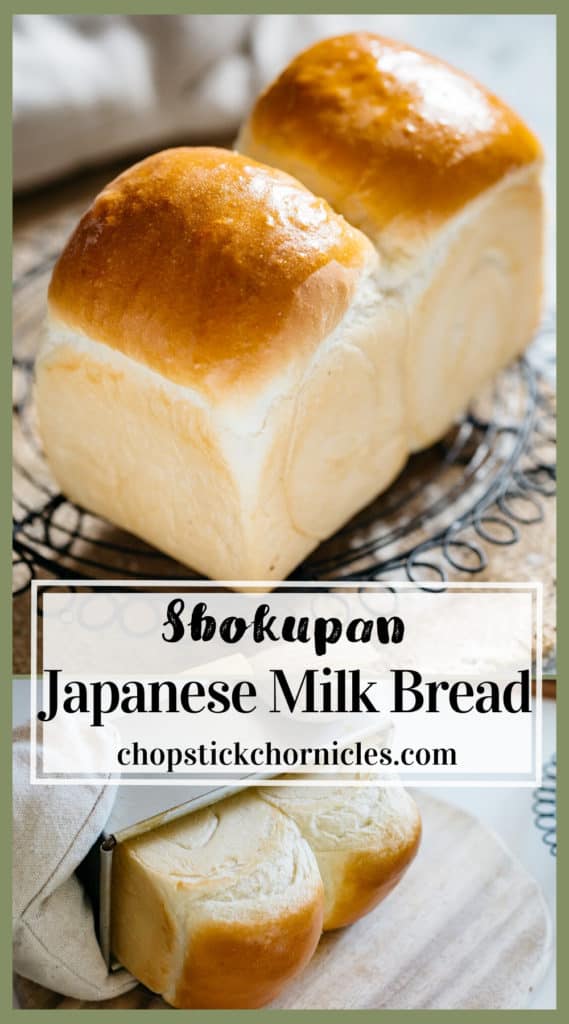
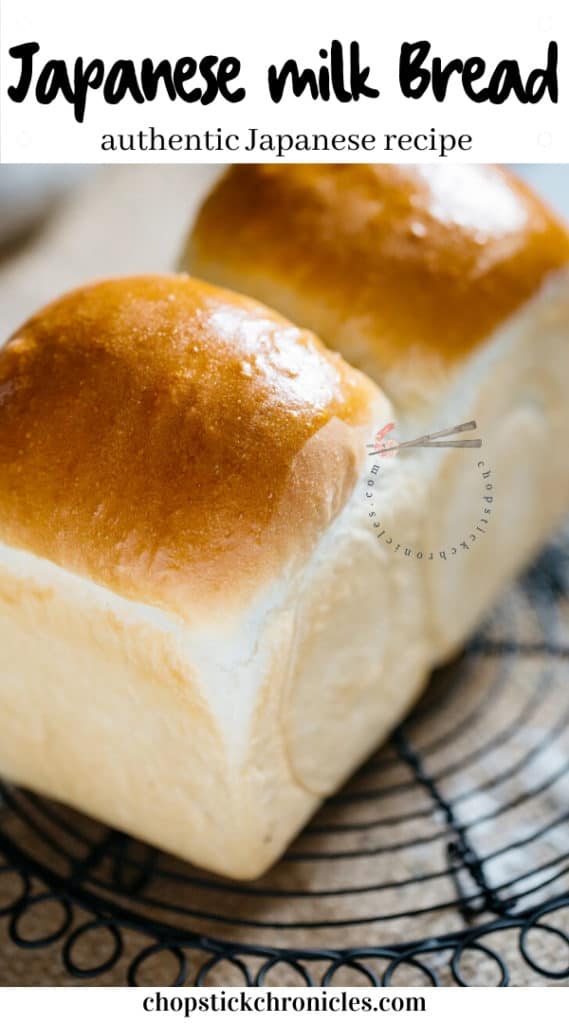
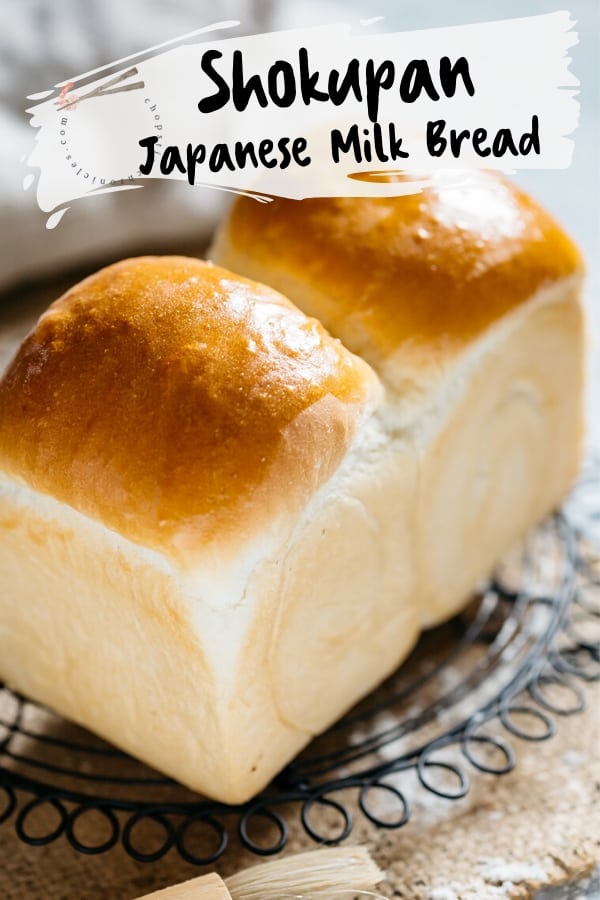
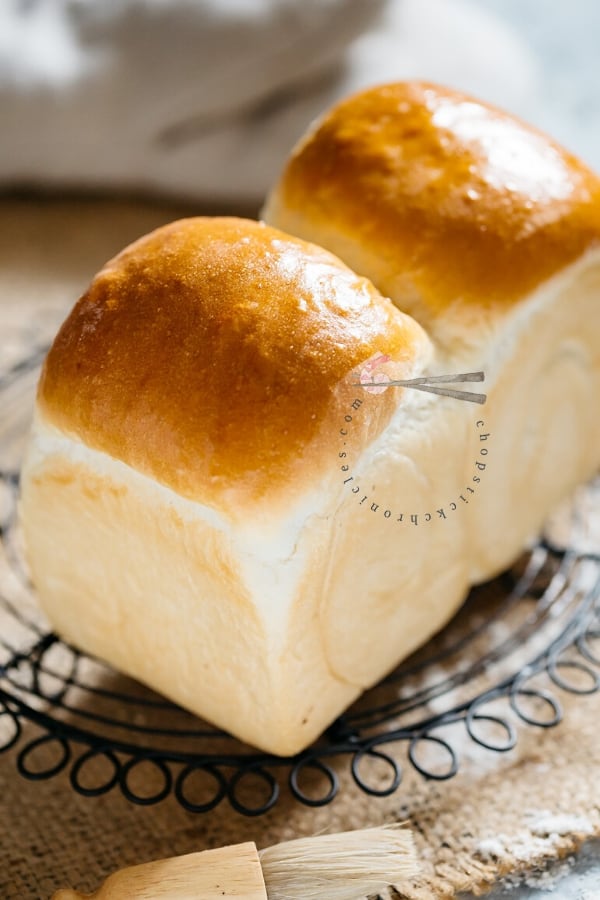
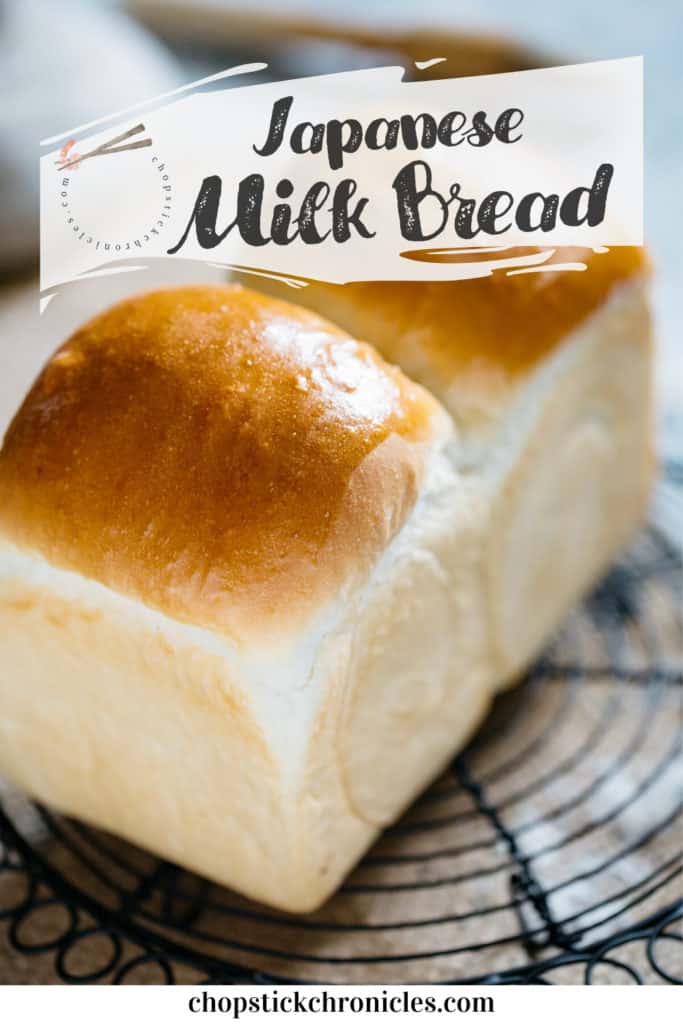
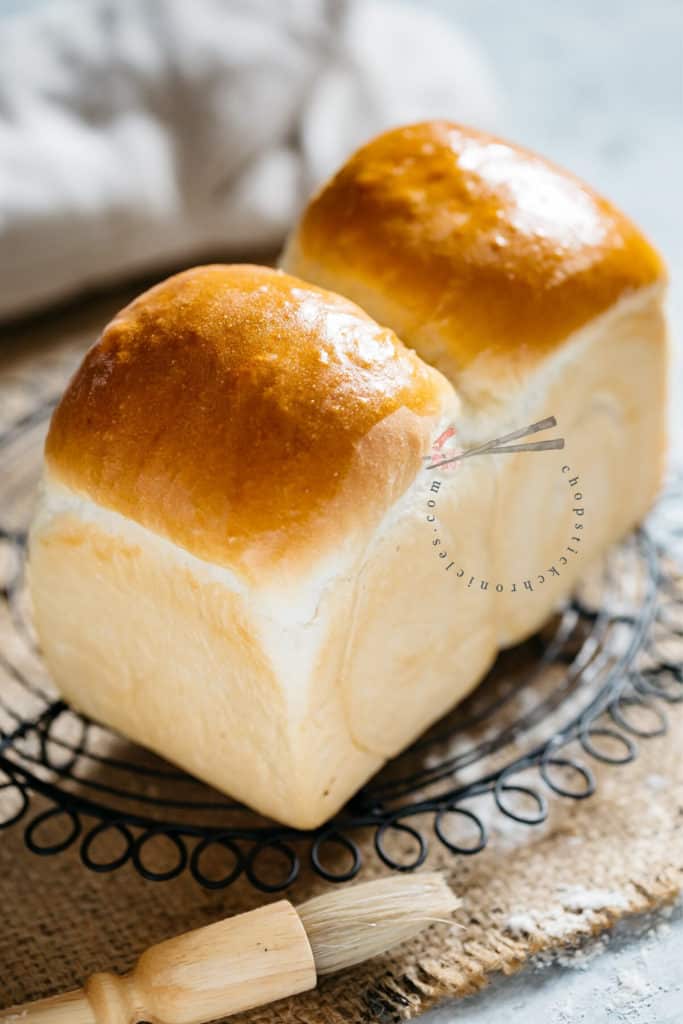

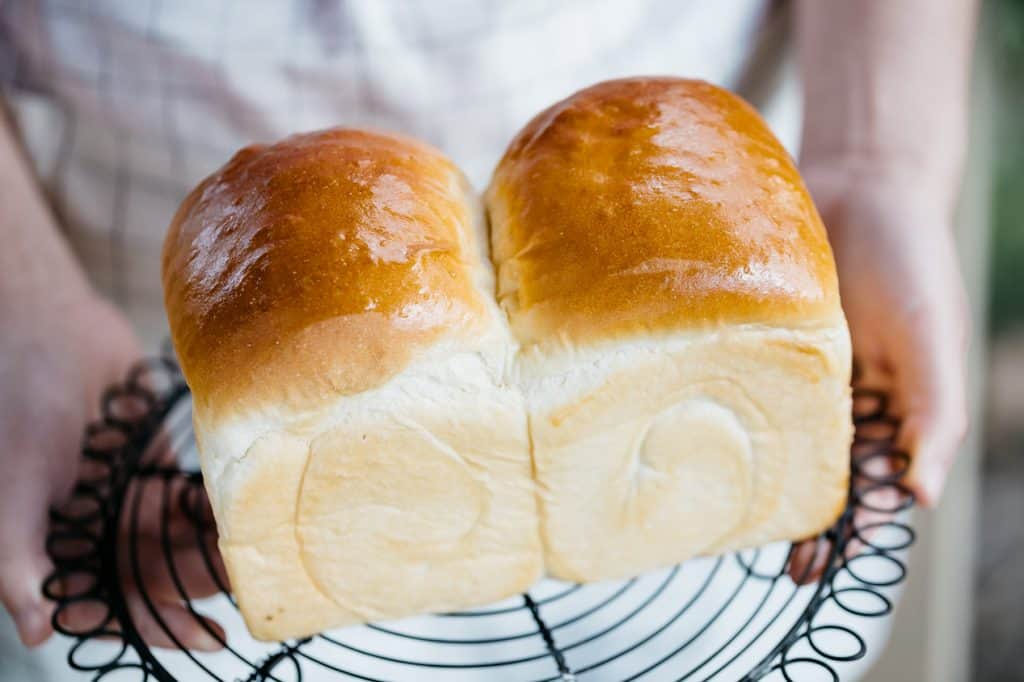
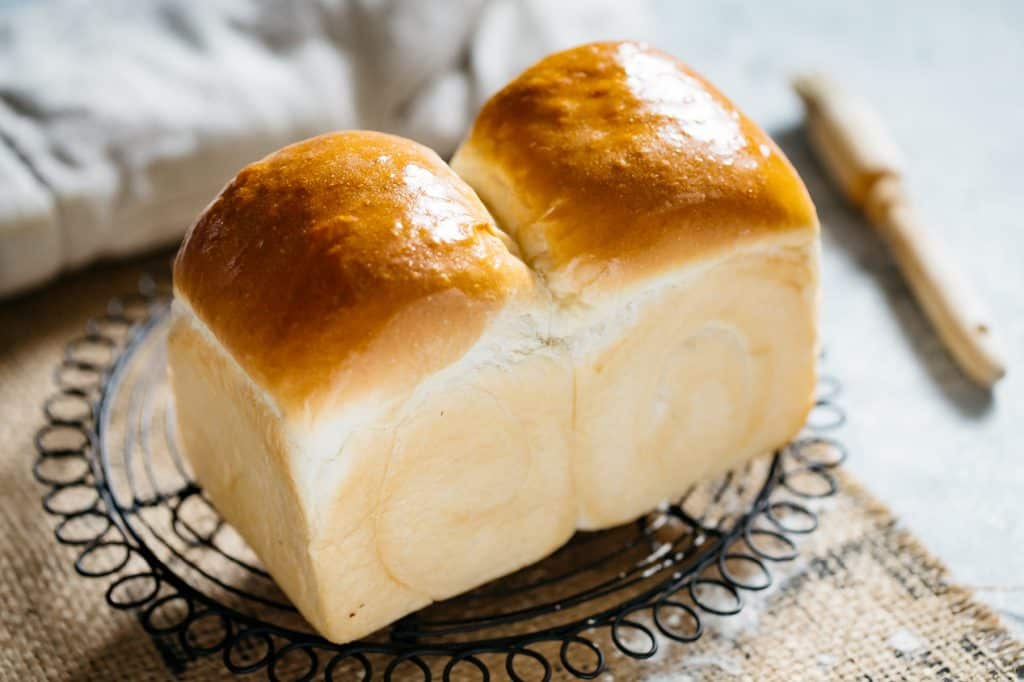
Have you ever eaten Shokupan, the Japanese milk bread? You must try it! It’s the delicious, soft and fluffy white bread loaf that you can get in Japan. The golden brown crust and soft white inside make it irresistible. It is amazingly fluffy and stays moist for longer than ordinary bread because of the Yudane method.

Why is Japanese Bread So Fluffy?
Why is Japanese bread so soft and fluffy and has the mochi-like texture? The answer is because of the “Yudane” method. The Yudane method makes the bread pillowy soft and fluffy and also keeps the bread from drying out quickly. This is because the heated gelatinised starch in the flour keeps the moisture inside the bread.
What is the Yudane Method?
Yudane is made by mixing bread flour and hot boiling water. Adding hot boiling water gelatinises the starch. The gelatinised starch not only allows the starch to take in more water, but also increases the sweetness of it. Therefore by adding Yudane to a bread dough (the yudane method), you can make soft, moist and sweeter bread which lasts longer.
Yudane vs Tangzhong roux
- The Yudane method originated in Japan and it became widespread and the popular way to bake bread in Asian countries when Yvonne Chen introduced “Tangzhong” roux as a secret ingredient to bake the super soft and light Japanese milk bread in her book called “Bread Doctor”.
- Yudane ratio of flour and water is usually 1:1 whereas “Tangzhong roux” is made by 1:5 ratio of bread flour to water. The Tangzhong mixture is made by heating up to 149°F(65°C) then cooled down to room temperature and added to the bread dough. I will explain how to make Yudane in a paragraph below.
- I have often seen this type of bread also called “Hokkaido Milk Bread” or “Japanese Milk Bread” on social media platforms such as Pinterest. Those breads are made by the same principle either adding Yudane or Tangzhong roux to bread dough.
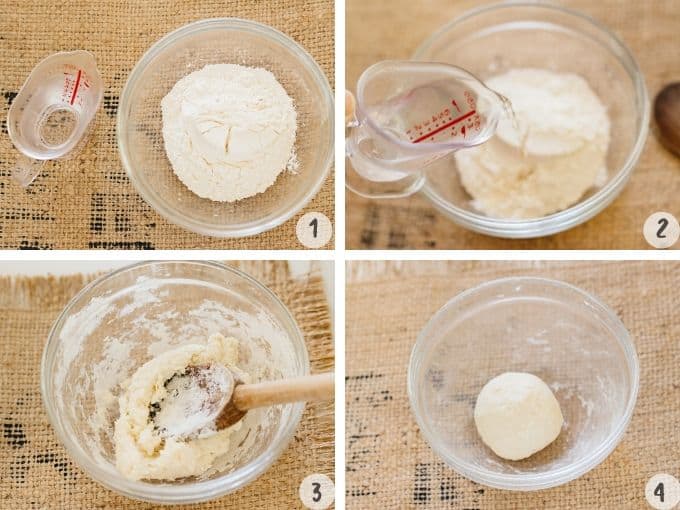
How to Make Yudane?
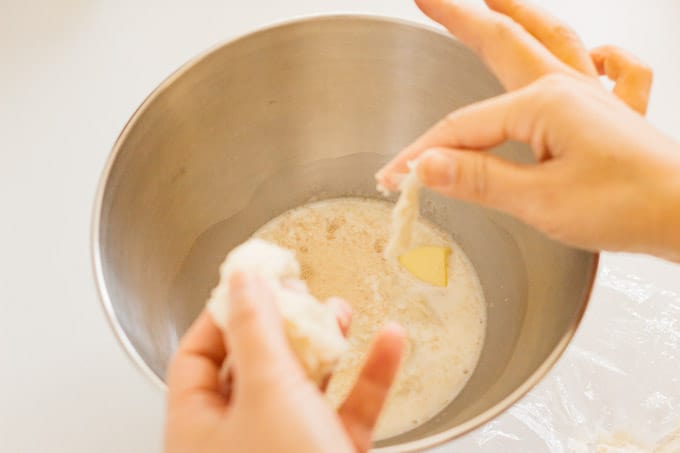
We need to deduct 20% of total flour ingredients to make Yudane. So to make 1 standard loaf size dough, we need 250 x 0.2 = 50g bread flour. Yudane flour to water ratio is generally 1:1, but I found it is easier to make yudane with 1:08 ratio. Then simply add hot boiling water (should be above 194°F/90°C) and combine them with a wooden spatula. The ideal combined dough temperature will be around 122°F/50°C. When it is cooled down, wrap with a sheet of plastic wrap and leave it on the kitchen bench or in the fridge.
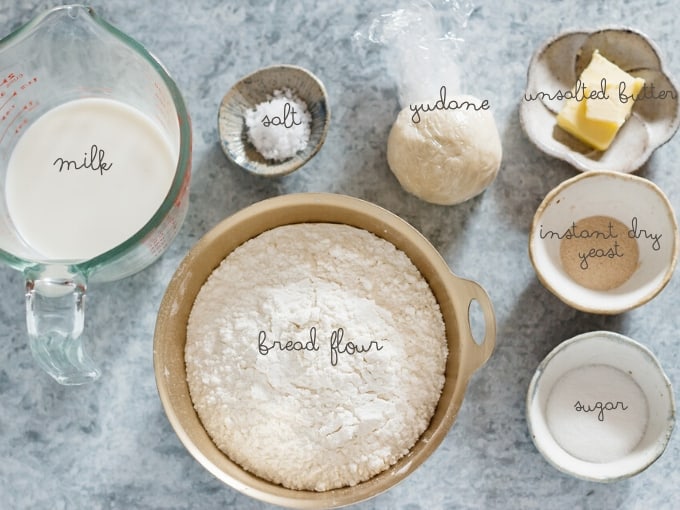
Ingredients
You need to gather bread flour, milk, sugar, unsalted butter, Salt and Yudane that you made the night before. Some ingredients will be further explained as I have received many questions about this.
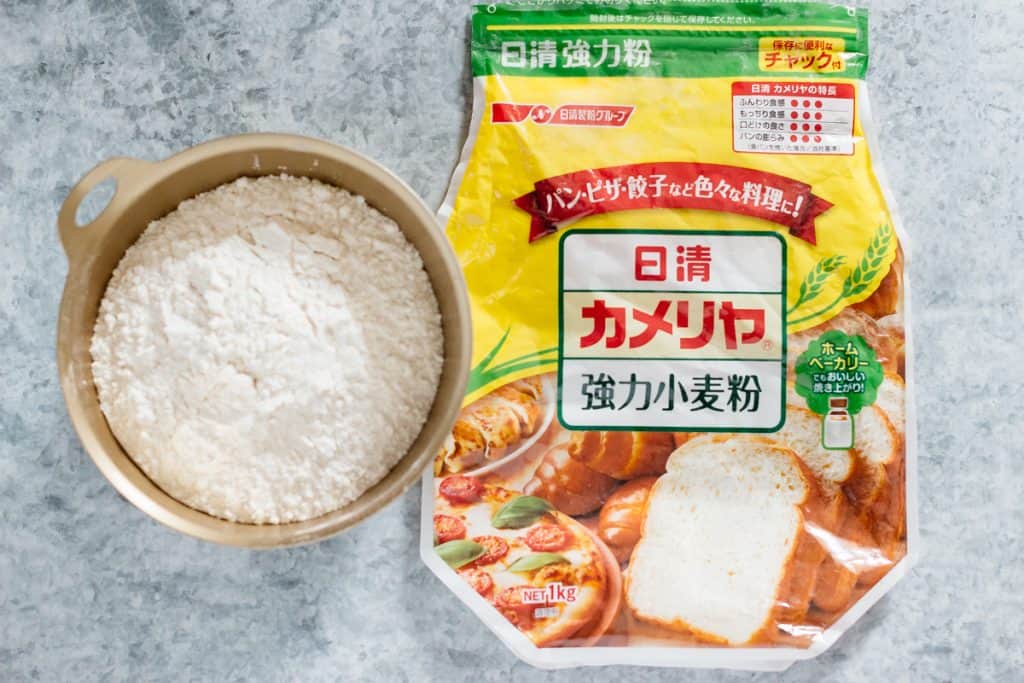
Flour
For making fluffy Japanese milk bread, we need to use bread flour that contains around 12% of protein. I use Japanese brand Nisshin flour. You can use all-purpose flour but all-purpose flour has around 10% protein content therefore the bread will not rise as high as the shokupan made with bread flour.
Yeast
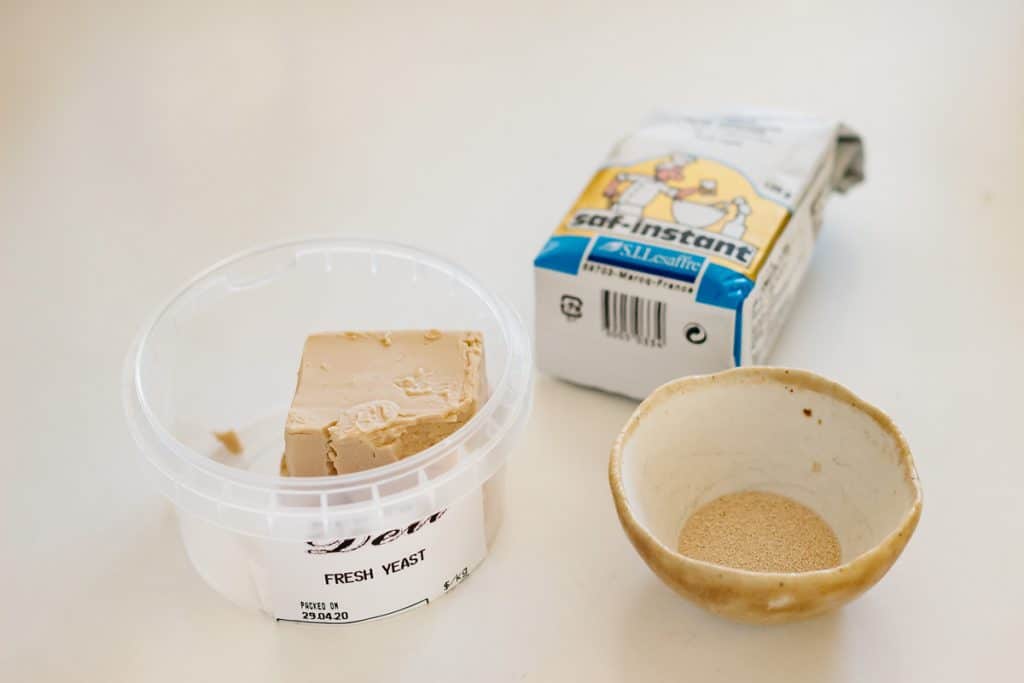
I usually use LeSaffre Saf-Instant Yeast Gold for making shokupan Japanese milk bread. If you cannot find instant active dry yeast but can find fresh yeast, you can substitute. This recipe requires 3g of dry yeast, so you would need 3g x 3 = 9g of fresh yeast.
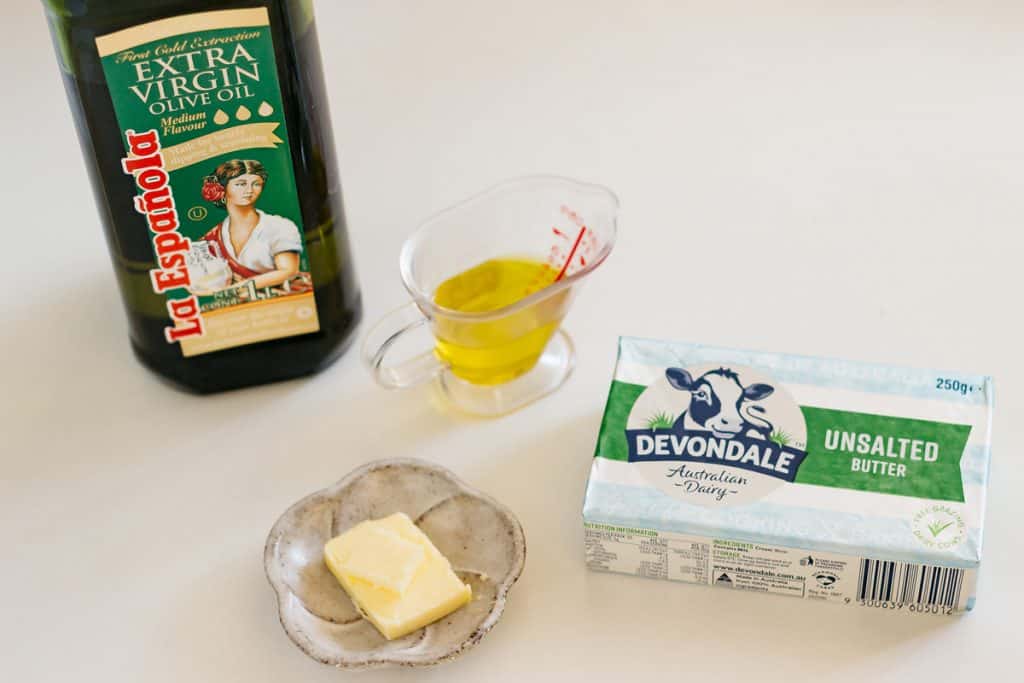
Butter
We need to use unsalted butter. Because the salt content of butter will affect the gluten formation. If you don’t have unsalted butter, and would like to use oil instead, you can. However it is a little bit tricky because butter is solid and oil is liquid. Generally speaking, you can replace 3/4 of the amount of butter with oil.
Milk
Some readers have asked if they can replace the whole milk with other types of milk. Using different milk does not affect the fluffiness and lightness of the bread. I tested using coconut milk and almond milk. Read the result in the FAQ.
Bakers Percentages
Some readers have asked to change the amount of the ingredients to make bigger or smaller sized bread loaves. Baker’s percentage is great because it is universal even when each country uses different units of weight. In the table below, is the bread ingredients mixing ratio. Each ingredient is shown as a % of the flour.
| Ingredients | weight | percentage |
| Bread flour for Yudane | 50g | 20% |
| Hot water | 40g/ml | 16% |
| Bread flour | 200g | 80% |
| Milk | 150g/ml | 60% |
| Sugar | 15g | 6% |
| Instant dry yeast | 3g | 1.2% |
| unsalted butter | 10g | 4% |
| Salt | 5g | 2% |
Using Cup Measurement
If you don’t have a kitchen scale, don’t worry. I have figured out measurements for using cups. However, you need to be as precise as you can. For example, when you measure 1 cup of flour, you need to spoon flour to the measuring cup, then level the surface with the back of a knife. The cup measurements are included in the recipe cards’ note section.
How to Make Shokupan Japanese Milk Bread?
This is the basic process of making the shokupan Japanese bread in 8 steps using Yudane method.
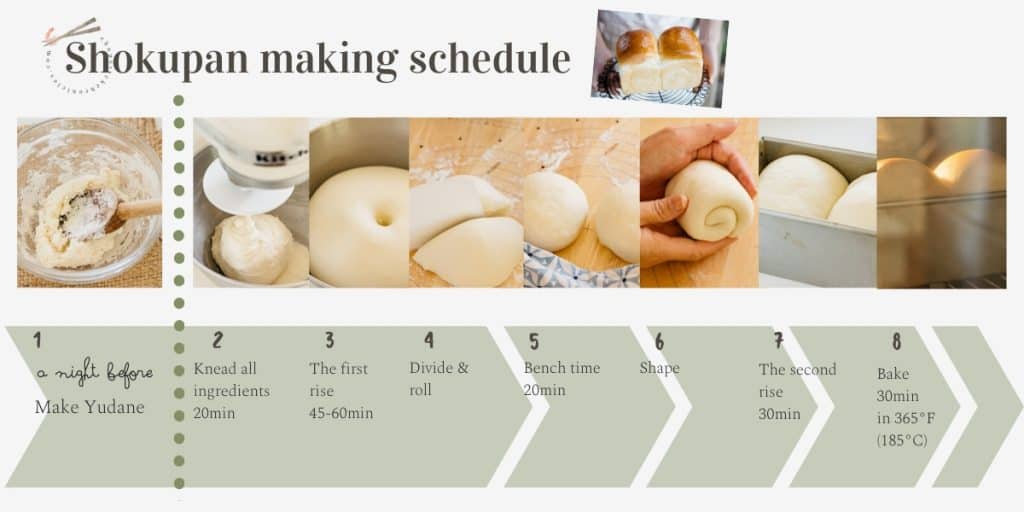
- Make Yudane the night before. (8-12 hours)
- Knead all ingredients using a stand mixer, bread machine or by hand (20min)
- The first rise (45-60 min depends on the temperature)
- Divide & roll
- Bench time (20 min)
- Shape
- The second rise (30 min)
- Bake (30 min)

Tips for Making Shokupan Japanese Milk Bread Successfully
- Start making Yudane the night before with boiling hot water. When the mixture combines the temperature of the dough should be around 122°F/50°C.
- Leaving Yudane longer will result in better Japanese bread.
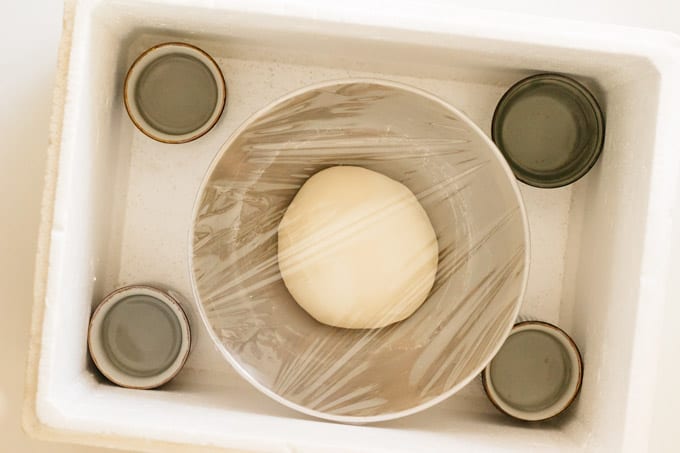
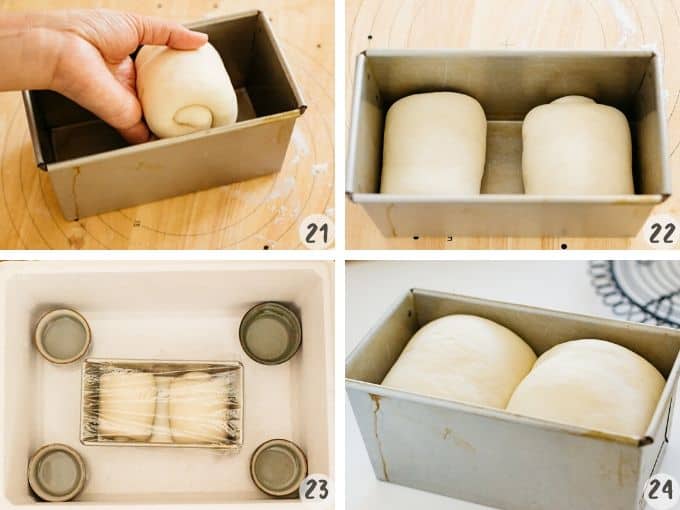
- The dough rising temperature should be around 86°F(30°C). My oven has a defrost function and I set the temperature to 86°F(30°C), so I use that setting for rising. Or use a styrofoam box with 4 little cups with hot water in the corners of the box.
Other Recipes That Call for Shokupan Japanese Milk Bread
The fluffy, soft and moist Japanese milk bread is the basis of other delicious Japanese creations.
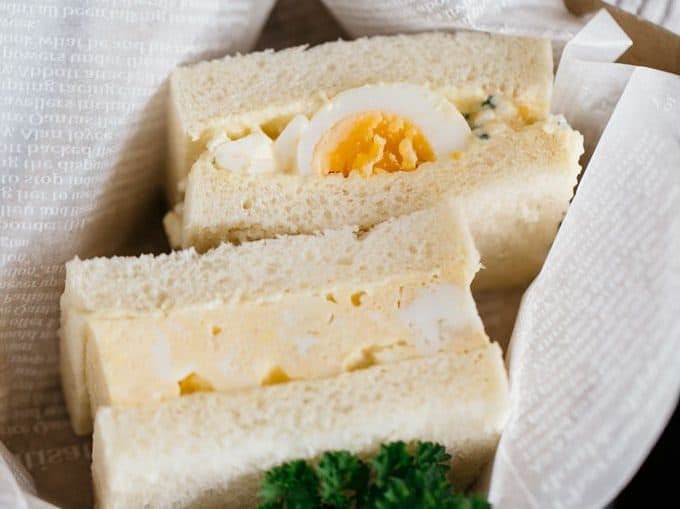
- Tamago Sando (Japanese egg sandwich). This egg salad sandwich is super popular and for good reason.
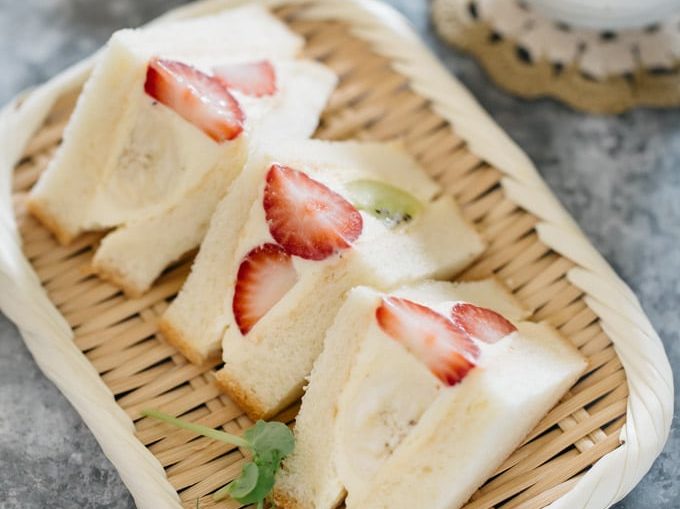
- Fruit Sando (Japanese fruit sandwich). Another popular sandwich in Japan, often made with strawberries and cream.
- Panko (Japanese bread crumbs). You can use this Japanese bread to make Japanese bread crumbs which are so crispy and perfect for using to make pork katsu or chicken katsu.
- Simply toasting the bread with some butter or jam is also great. The bread is so delicious that even eating it simply like this tastes amazing.
- You can also use this recipe to make super soft Japanese bread rolls.
How to Store the Bread?
Another tip that I can give you is that this bread is super soft, so it is better to slice it the following day. I bake the bread on a Saturday and slice it on Sunday. It will stay moist for a few days just sitting on the kitchen bench. In my household, the bread is eaten in a day or two. But if you wish, slice them and individually wrap and place them in a ziplock bag to freeze. It will last about a month.
FAQ
A: Yes, you can. But as you can see the all purpose flour did not rise well in my experiment. The texture of the bread was not fluffy, but rather it was like eating a savoury muffin. 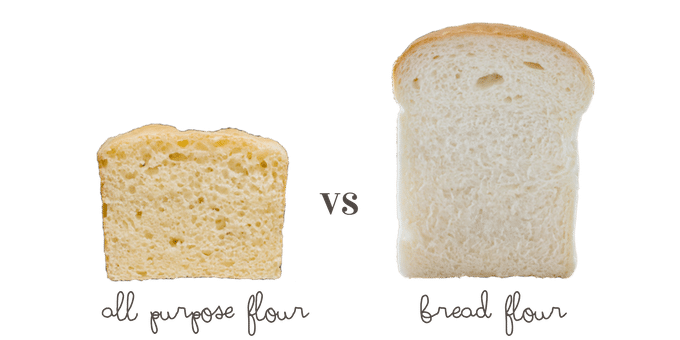
A: Using different milk does not affect the fluffiness and lightness of the bread. The coconut milk I used was the “Ayam Premium Coconut Milk 100 % Natural” which contains 24.3 g fat in 100ml and it is quite rich and thick. The almond milk that I used was “Sanitarium So Good Almond Milk” and contained only 1.4g per 100ml. It was very thin milk. The almond milk bread turned out fluffier and coconut milk bread was denser. Hope these experiments using different ingredients helps you make a decision as to which ingredients to use.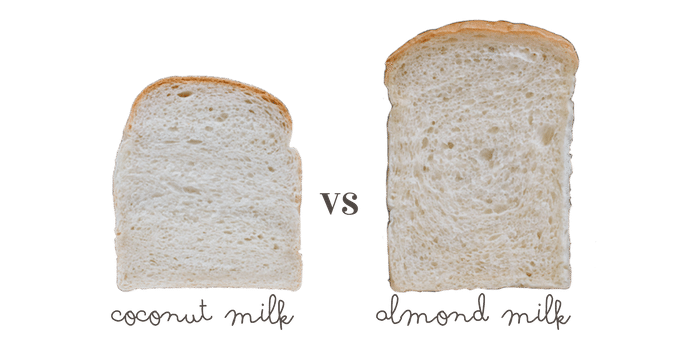
A: You can hand knead, however, because this has yudane in the dough which is very moist, the dough is quite sticky. Therefore, this recipe is more suitable for machine kneading. I usually use either a machine or bread mixer to knead and rise.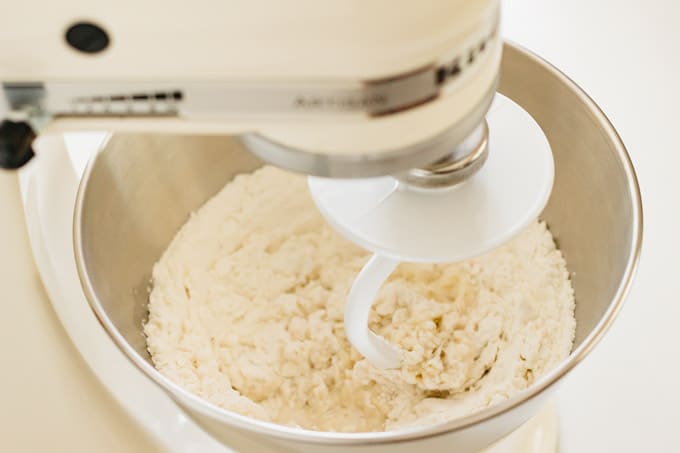
A: Yes you can. Some of my readers and myself have only rested the dough for about a couple hours in the fridge and the bread made with that shorter resting time of the yudane was quite successful. However, the longer you rest the yudane the better the quality of the bread.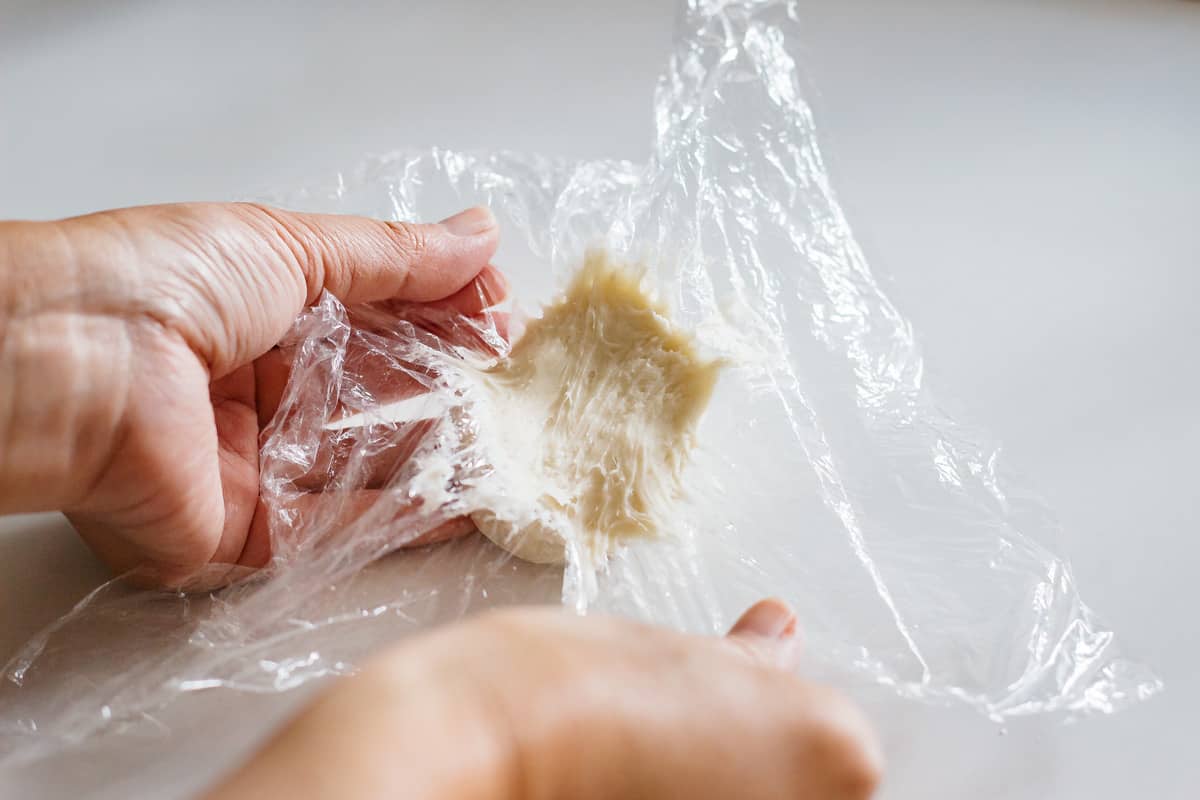
A: My bread form size is 3.9 x 7.9 x 3.5 inch (10 x 20 x 9 cm). I bought it in Japan. This is similar to what I have from Amazon.com.
Stay Connected
This is not a popular effortless “No Knead” type of bread recipe, however, it is worth the effort to bake this bread especially if you love any Japanese baking stuff. This is the bread you must try!
If you liked my recipe for Shokupan Japanese milk bread, please rate it and leave a comment below. Also, don’t forget to follow me on Youtube, Pinterest, Facebook , Twitter and Instagram to keep up to date with all the latest happenings on Chopstick Chronicles. Don’t forget to use the hashtag #ChopstickChronicles so I can see your wonderful creations!

Shokupan 食パン
Video
Ingredients
Yudane
- 50 g Bread flour *1
- 40 ml boiling water above 194°F(90°C)
Bread
- 150 ml milk (room temperature) *3
- 15 g sugar
- 3 g dry instant yeast *2
- 10 g unsalted butter (room temperature)
- 200 g Bread flour *1
- 5 g salt
Instructions
- Make Yudane the night before. Place bread flour in a bowl and add boiling water and mix well. Put cling wrap and refrigerate overnight. *4
- Pour the room temperature milk into a stand mixer bowl.
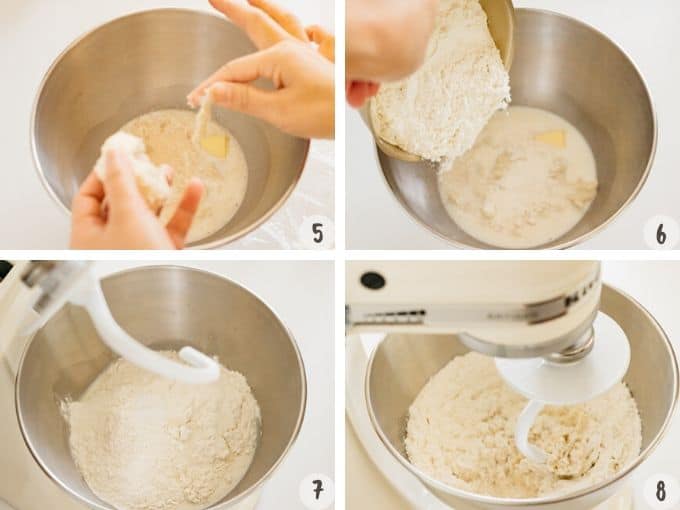
- Add sugar,butter and yeast to the bowl then add the yudane as you tear it into small pieces.
- Add the bread, flour and salt.
- Attach the kneading hook onto the stand mixer and combine all ingredient on low speed 1.
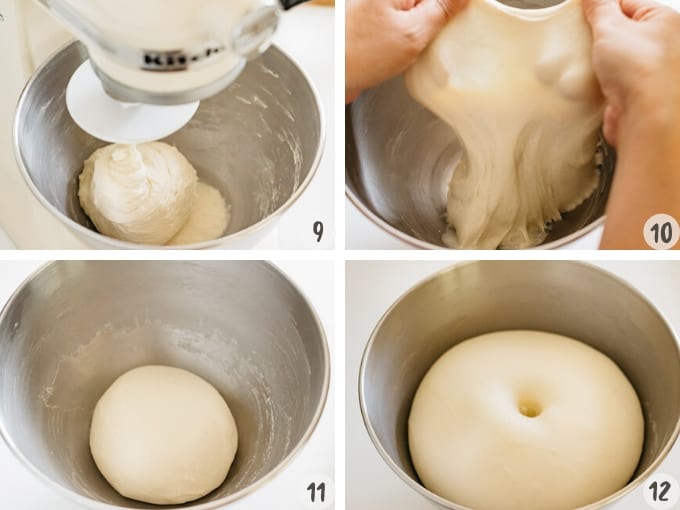
- When all ingredients are combined, turn the speed up to 5 or 6 and knead the dough for 20 min.
- Roll the dough round and place the dough into a greased bowl. Wrap with cling wrap to rise for about 45 min to 1 hour at about 86°F(30°C) or until double the size.
- Use your finger, to test if the dough has risen by dusting your finger with flour and poking the dough. If the dough doesn't bounce back and the hole you poked stays there, it is ready.
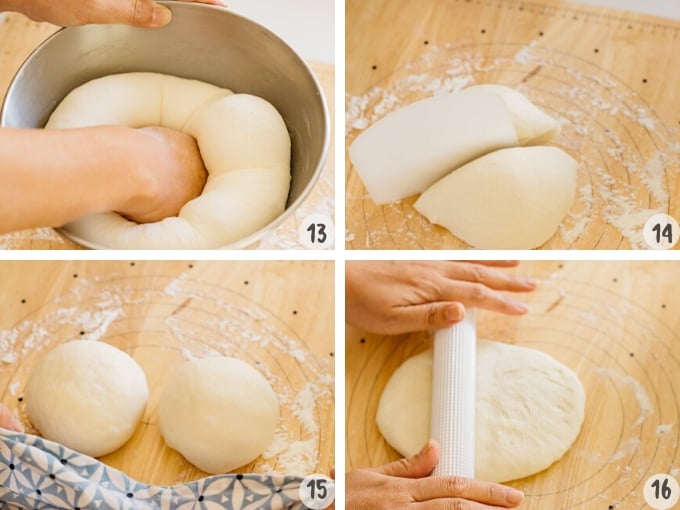
- Punch the dough down and cut the dough into two equal parts with a scraper and roll them.
- Cover the rolled doughs with a wet cloth and stand it for 20 minutes bench time.
- Roll out each dough to about 5.9×7.8inch (15 x 20 cm) rectangle with a rolling pin.
- Fold the dough tightly not letting any air in towards the centre from left and right.
- Rotate the dough 90 degrees and roll it from one end.
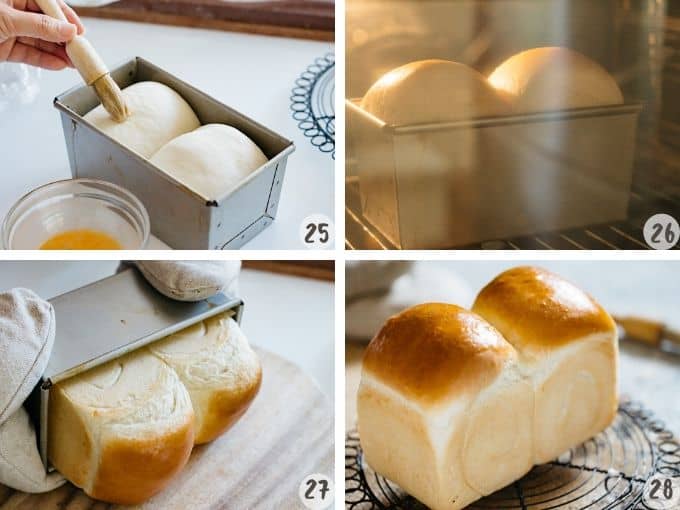
- Spray one loaf bread tin lightly and place the rolled dough in the end of the tin facing the centre.
- Cover it with a wet cloth and let the dough rise for a second time until the dough rises to the size of the bread tin about 30 min.
- Start to preheat the oven to 365 °F(185°C).
- When the dough has risen to be level with the tin, it's ready to bake.
- Bake the dough for about 25 -30 minutes in preheated oven.
- Remove the bread from the tin and cool it down on a rack. * 5
- Whisk an egg, rightly brush over the bread dough.(Optional)
Notes
Nutrition
Chopstick Chronicles is a participant in the Amazon Services LLC Associates Program, an affiliate advertising program designed to provide a means for sites to earn advertising fees by advertising and linking to Amazon.com. As an amazon associate I earn from qualifying purchases.
This recipe was originally posted in 2017, since then had received so many questions and suggestions. So I have decided update the post and the recipe in order to answer all the questions asked. Thank you for those who left comments below and rate the recipe highly.





This shokupan recipe is fantastic! I’ve always wanted to try making Japanese milk bread at home, and your detailed instructions made it feel so approachable. I love how soft and fluffy the bread turned out—definitely a new family favorite! Thanks for sharing!
I just tried your shokupan recipe and it turned out amazing! The crust was perfectly golden, and the inside was so soft and fluffy. Thank you for sharing such a detailed and easy-to-follow guide. I can’t wait to make it again!
I’ve made this bread a dozen times. It is the best bread I have ever had. I do have trouble each time I make this with both the first rise and the second rise. I know I have good yeast as all other breads I make rise perfectly well and extremely close to their rise time estimates. Does any one have an idea or a tip on how to get this to rise better? I am using the proof function on my oven. Thanks.
I think it’s because there’s an error in the recipe list which says 3g dry yeast, whereas in the narrative above the formula for wet yeast refers to 5g. I’ve just made this for first time and it hasn’t risen properly. Annoying!
I tried this Shokupan recipe, and it turned out fantastic! The texture is so soft and fluffy, just like the bread I had in Japan. Thank you for sharing such detailed instructions! I can’t wait to make it again and experiment with different fillings!
Absolutely worth the wait to let the starter sit overnight in the fridge! It turned out very well and I am so glad you included photos and video of the steps. I am going to add some cinnamon and brown sugar to the next one for french toast.
This Shokupan recipe looks absolutely delightful! I’ve been wanting to try making soft Japanese bread at home, and your detailed instructions make it really approachable. I can’t wait to taste that fluffy texture. Thank you for sharing!
Hi there! I am currently trying this recipe, yudane now happily relaxing int he fridge! I just wanted to let you know one other excellent bread proving method. I pop the covered bowl in the microwave and shut the door, but not fully (keep the light on) which creates a warm spot just perfect for rising yeasted products. Works perfectly in both winter and summer. Fold a tea towel over the top of the door to stop it from closing completely if that’s a risk, too (husbands have a habit of coming along and closing things!)
Thank you Meg for your lovely comment and sharing alternative way of bread proving 😀
Thank you for sharing this recipe! Your steps are so clearly written, and measurements are spot on! I made the Yudane the night before, and the Shokupan for lunch, you are right – it is waaaay to soft to slice when still warm, but we got too greedy! haha! this is a keeper! thank you!
Thank you so much for making Shokupan with my recipe and am glad your bread was successful 😀
Can I form the loaves and refrigerate (I need to leave for a hockey game!) then remove from fridge to continue steps 16 and on?
Hi Becky, yes you can. Cover the dough with plastic wrap to prevent it from drying out and allowed to return to room temperature before back to the bread making process 😀
I have a question about the dried yeast quantity. Closer to the top it says one teaspoon (5g.) but one teaspoon is only 2g. Further down, it says 3g. What quantity should I use? (I am ready to make this today so may have to guess. I would still like to know though.)
It looks delicious! I can’t wait!
Thank you Yvonne for your enquiry. I will try to fix the recipe asap, as many ask same questions.
Thank you for the article, it is very useful for us.
Shihoko, thank you for the best recipe for Shokupan I’ve ever made!
My bread turn out beautifully!
Thank you Elaine, I am glad the recipe worked out for you 😀
Your use of mls and grams is of course absolutely correct. Thank you for such a clear recipe. I love the delicious results 😃
Thank you Cathrine for your kind words <3
Really dumb to list a recipe in different metrics, i.e grams mixed with milliliters. To make the recipe more user friendly, you should just stick to just grams. You can say your grams were based on say whole milk and let the reader adjust as necessary. Nary to be more empathetic- meaning put yourself in the position of the reader. If you did that, you’d probably do away with all those silly asterisks too.
Hi Frank, thank you for your feedback. You may want to read this article explain well the reason to use different metrics 😀 Weight vs Volume
Frank, I’m having a hard time finding where Ura-san asked how to make the recipe more user-friendly and if she used too many asterisks. Or are you just projecting due to an unmet need? My 4 year old does that a lot, it’s ok ☺️
Is the oven temperature for conventional vs fan forced?
Hi TM, My oven is fan forced.
Can the Yudane be stored and used 20-24 hrs later?
Yes 😀
Can this be made with the lid on the tin for a flat top loaf?
Yes Breanna 😀
I absolutely love the detailed instructions and tips you’ve provided in this Shokupan recipe! It turned out so fluffy and delicious. Definitely going to make this again and share with my friends. Thank you for such a wonderful post!
Love this recipe. Clear instructions, not overcomplicated. My bread making is always chaotic but the bread turned out so fluffy and light and delicious – exactly like the one I had in Japan every day and way better than I expected for a first try.
And that despite me kneading by hand, proofing the dough in a cold kitchen, using a Western-Style loaf pan, rolling the dough too tight and therefore needing extra time on the second proof… There is much room for error in bread making but also endless possibilities for saving the dough, it’s so fun. Found the yudane method super interesting. I’m going to make this a lot from now on, thank you 🙂
Thank you Karen 😀
I’m tempted to make this bread. but I lack of bread flour at home and I have an insane amount of whole wheat flour instead. not sure if I could chance this recipe with it. I really love shokupan or most Asian bread that reminiscent with the fluffy texture. I know whole wheat will never replicate that. but I really would like to make this. 😵💫
Hi Max, you can make Shokupan with whole wheat but it will be totally different recipe.
Just made this again today and it turned out even better than last time 😀 Some people may be wondering if this can be made without a stand mixer (I only have a hand mixer and even then, 20 mins is a bit of a crazy amount of time), but I experimented today with hand kneading and it turned out great! I used the slap and fold method until it was the right smoothness and passed the window pane test. It’s a little wet and messy at first but it’ll come together pretty well with just a bit of work. Would recommend
Thank you Harp 😀
I dont have a handmixer as well (it failed on me), so I used my hands to knead, and it was for less than 20 mins. I think it’s to eyeball the dough. after a while, I just rounded off using a scraper (too lazy to knead! haha). SO i think this is a very forgiving recipe, which gives us very good bread! Thank you Shihoko!
Really easy to follow and a lot quicker than I was expecting! I tried a shokupan recipe before that took really long and was really frustrating, so I happy I found this :DD Can’t wait to make more!
This stood out for me as an exemplary recipe.
I made a few alterations to the recipe because I was using heritage flours.
I also reduced the butter on health grounds and used a little liquid Barley malt instead of the sugar. The malt was at lower level because I don’t generally put sugar in my bread.
So maybe I didn’t make Shokupan after all!
This recipe worked exceptionally well. Thank you very much indeed.
Adendum
Just one thing your readers might want to be aware of: Cows milk contains casein and it’s a superb crumb softener. Oats, milk and soy milk do not contain casein and they will not soften the crumb. Personally I would substitute water. Milk has been used as a crumb softener for many hundreds of years. This loaf leverages both a scald and the cows milk to get an extra soft crumb.