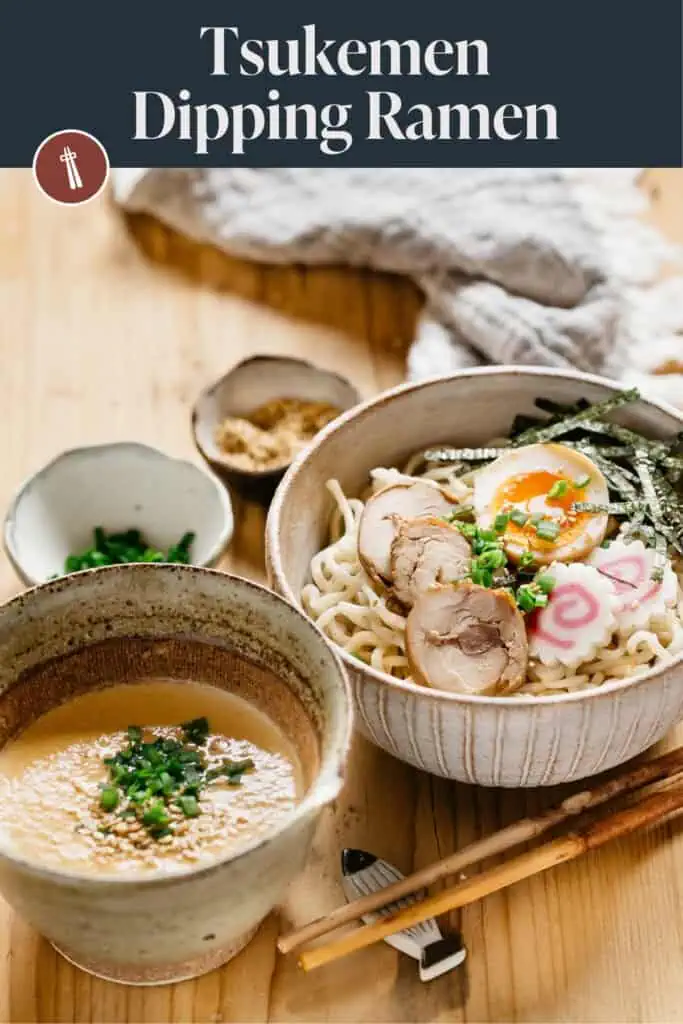
Take your average bowl of ramen to the next level with this Tsukemen recipe! Tsukemen is a mouthwatering Japanese noodle dish where the noodles are served separately from the broth. A traditional bowl of ramen is deconstructed and transformed so that the soft and chewy ramen noodles are dipped inside a thick and flavor-packed soup. The result is a fun dining experience, a mouthwatering explosion of textures and flavors, and a balance of hot and cold making this dish perfect for summer!
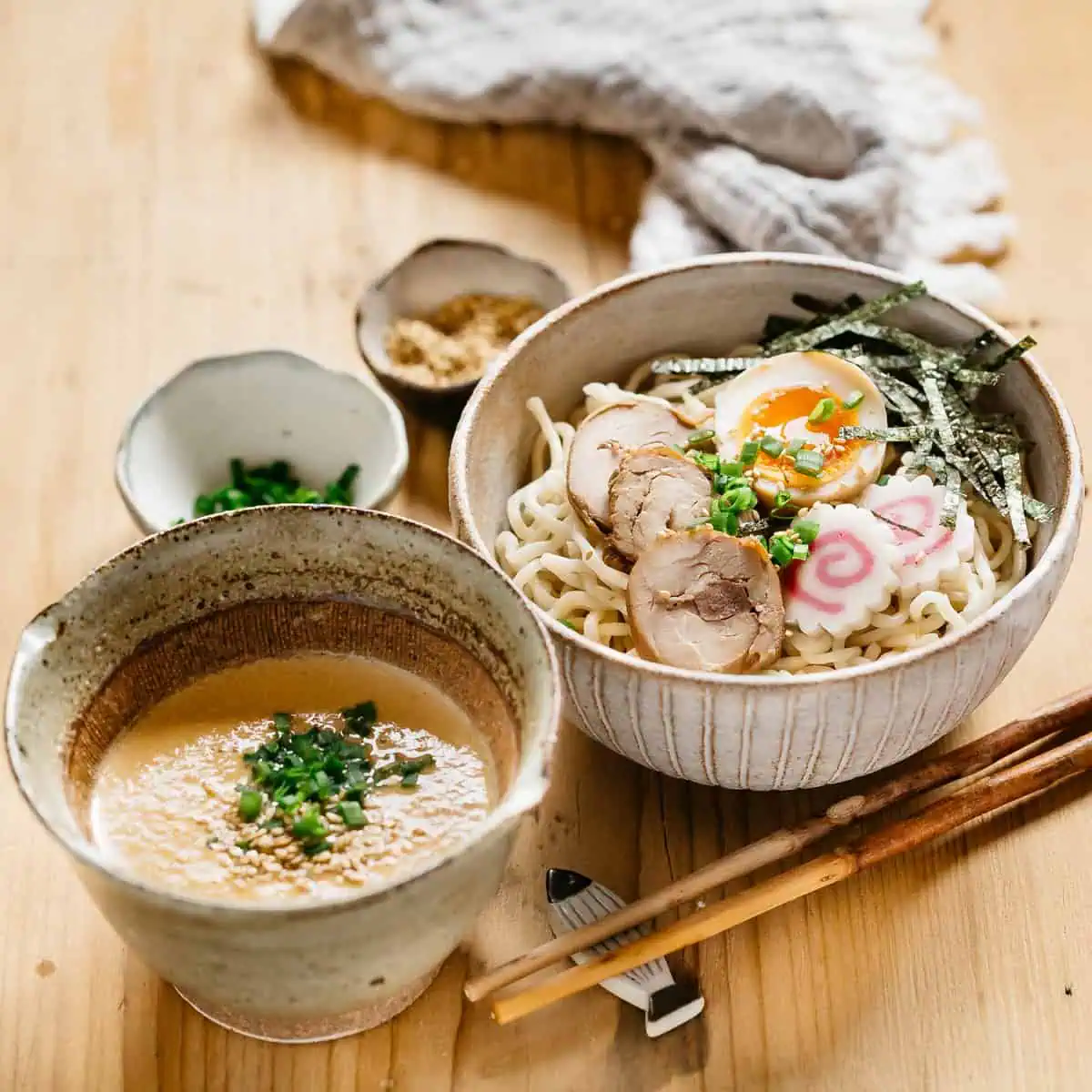
Table of contents
What is Tsukemen?
Tsukemen, or ramen dipping noodles, is a dish that offers a spin on traditional ramen. The term “tsukemen” literally translates to “dipping noodles,” which perfectly describes the unique way this dish is eaten.
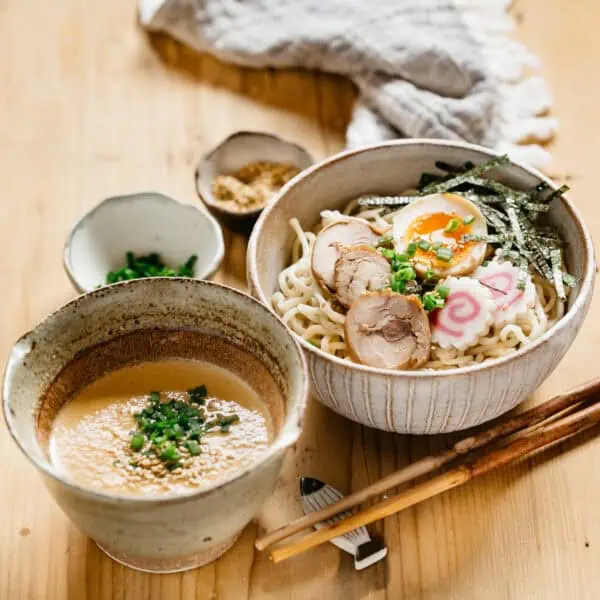
Unlike traditional ramen, where the noodles are served in a soupy broth, tsukemen is served with the noodles and broth separate. The noodles are typically cold or room temperature while the thick and rich soup (known as tare) is served hot in another bowl ready for the noodles to be dipped.
There are many variations nowadays of tsukemen because of the numerous ways the broth can be made. For this recipe I made a thick sesame flavoured soup but you can also make something with miso for example and even add spice to the broth.
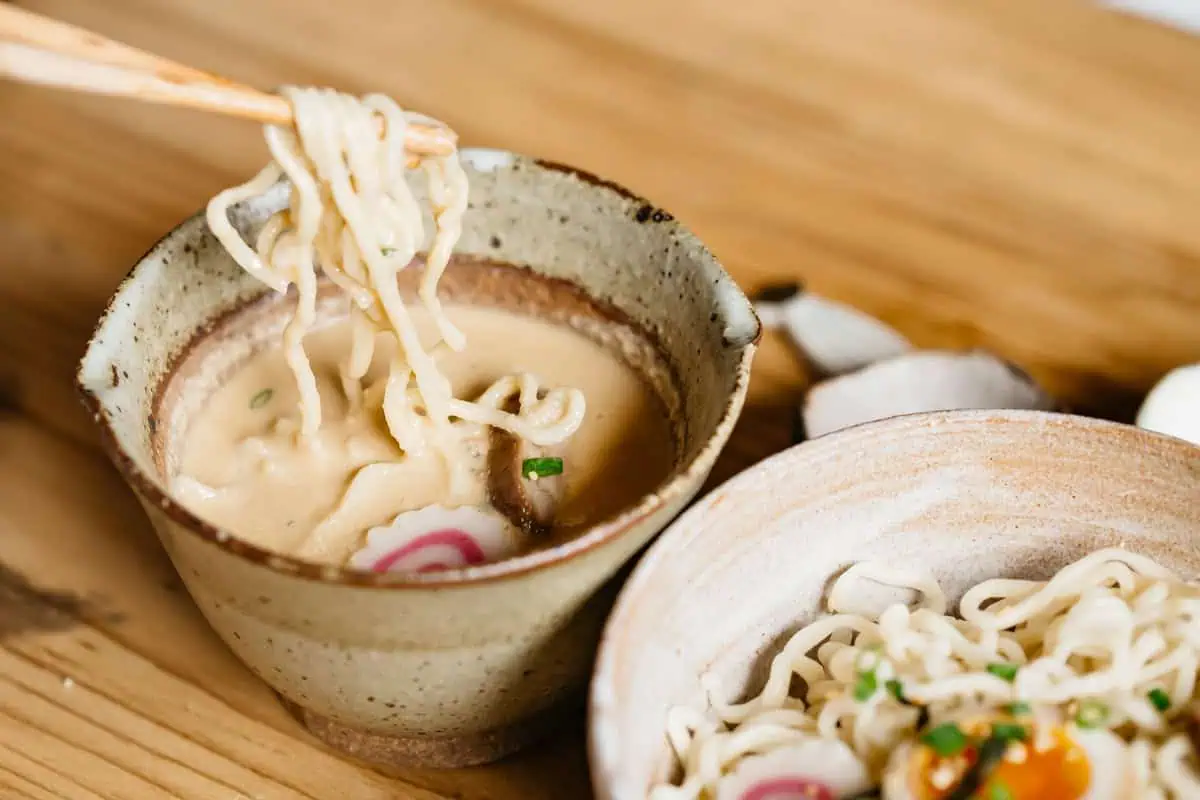
To eat tsukemen, take a small portion of the cold noodles with your chopsticks and dip them into the rich soup. Then slurp up the perfectly coated noodles along with some of the soup’s flavors. This dipping process allows for greater control over how much broth gets absorbed by each mouthful of noodles. Eat it along with your favourite toppings to enjoy delicious tsukemen at home.
Brief History of Tsukemen
The origin of the dish isn’t certain but it is believed to have been invented in Tokyo by Kazuo Yamagishi at a ramen restaurant called Taishoken. He and other staff would dip cold leftover noodles into a broth to eat on hot days in the summer. The staff would dip the leftover noodles into a bowl filled with soup, soy sauce, and other ingredients similar to zaru soba. Although it started as a “makanai-meshi”, meaning a meal prepared for staff rather than customers, it soon became requested by customers too.
Yamagishi’s creation was originally called “special morisoba” and was added to the restuarant’s menu in 1955. Its popularity eventually spread over the years so far that it is now a common type of ramen served in many places across Japan.
– reference Taishoken
The Basic Ingredients of Tsukemen
To create the perfect bowl of tsukemen, several key ingredients are required:
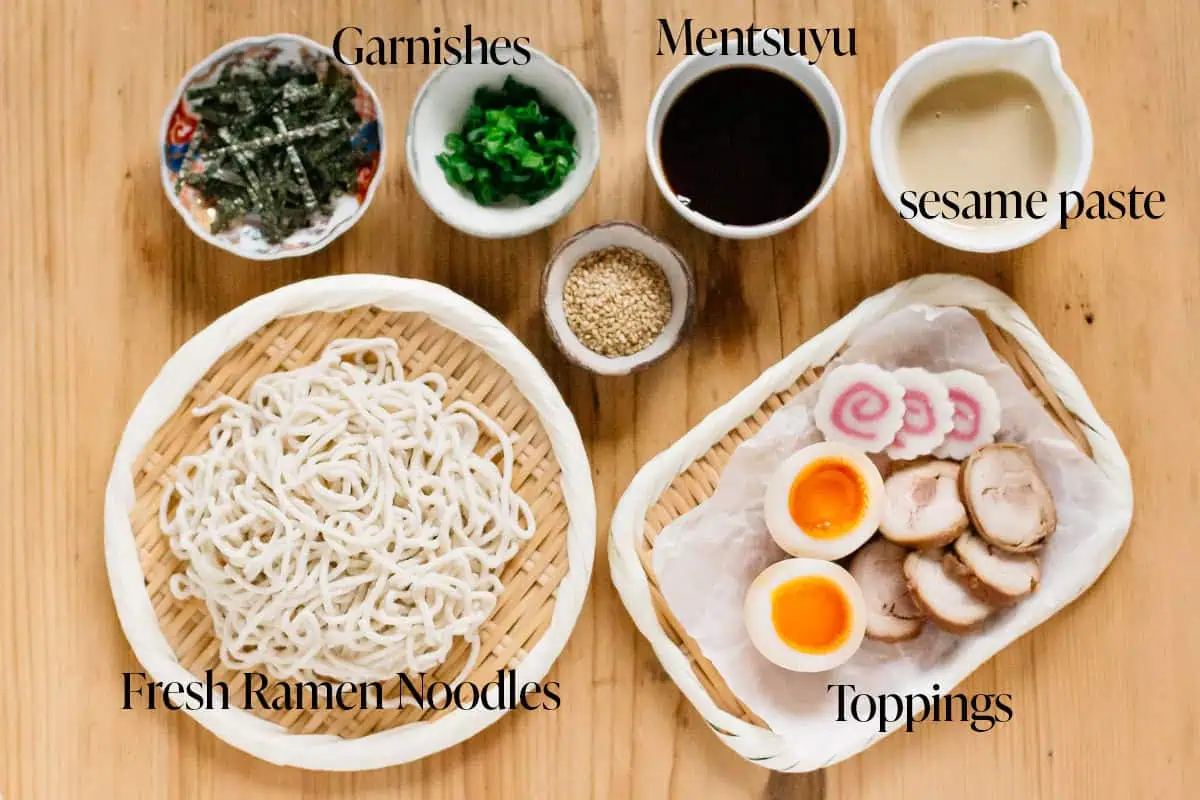
Ramen Noodles
The star of any tsukemen dish is undoubtedly the ramen noodles. The thick and chewy wheat-based noodles have a dense that allows them to hold onto the rich dipping sauce without becoming soggy. You can purchase ready made ramen noodles from Asian grocers or local supermarkets. Or you can even make your own ramen noodles at home following my easy recipe.
“Tare” Dipping Broth
Unlike traditional ramen, where the noodles are served in a hot soup, tsukemen features a separate dipping broth or “tare”. The tare, which accompanies the noodles in tsukemen, are the key to creating the delicious taste. Tare can vary greatly depending on regional preferences and personal choices but often includes dashi broth, soy sauce, bonito flakes, tonkotsu (pork bones), chicken bones, vegetables, and various seasonings like miso, rice vinegar, garlic, ginger, sesame oil, chili oil or powder for added depth and spiciness. It tends to be thicker and more concentrated than typical ramen broths since it needs to pack a punch when eaten alongside plain noodles. For this recipe I made a sesame broth which adds a delicious nuttiness to the ramen.
Toppings for Tsukemen
One of the reasons behind tsukemen’s popularity is its versatility. You can find numerous toppings available such as tender slices of chashu (braised pork belly), marinated soft-boiled eggs (ajitama), bamboo shoots (menma), nori seaweed strips, and green onions or scallions. This makes it easy and fun to customize your tsukemen bowls according to your preferences. Here are some popular topping options:
Chashu (Braised Pork) : Chashu is a popular and common topping for Japanese ramen dishes. It’s made with tender slices of braised pork belly that are marinated in soy sauce, mirin (sweet rice wine), sake, sugar, and other aromatics like garlic and ginger. It has a melt-in-your-mouth softness and a rich and meaty flavour to add to the ramen.
Ajitama (Ramen Eggs) : Ajitama is a soft-boiled egg marinated in soy sauce-based seasoning mixtures such as mirin or sake along with dashi stock for added umami flavor. These eggs have a slightly runny yolk which adds creaminess when dipped into the flavorful broth.
Naruto fish cake : this is a type of fish cake with a pink spiral on the inside. It’s a very typical topping ingredient for ramen and other noodle dishes in Japan.
Garnishes : Various toppings can be added to enhance the taste and texture of tsukemen. Popular choices include chopped green onions, seaweed (nori), bamboo shoots (menma), bean sprouts, fried garlic, nori flakes, or even a sprinkle of sesame seeds.
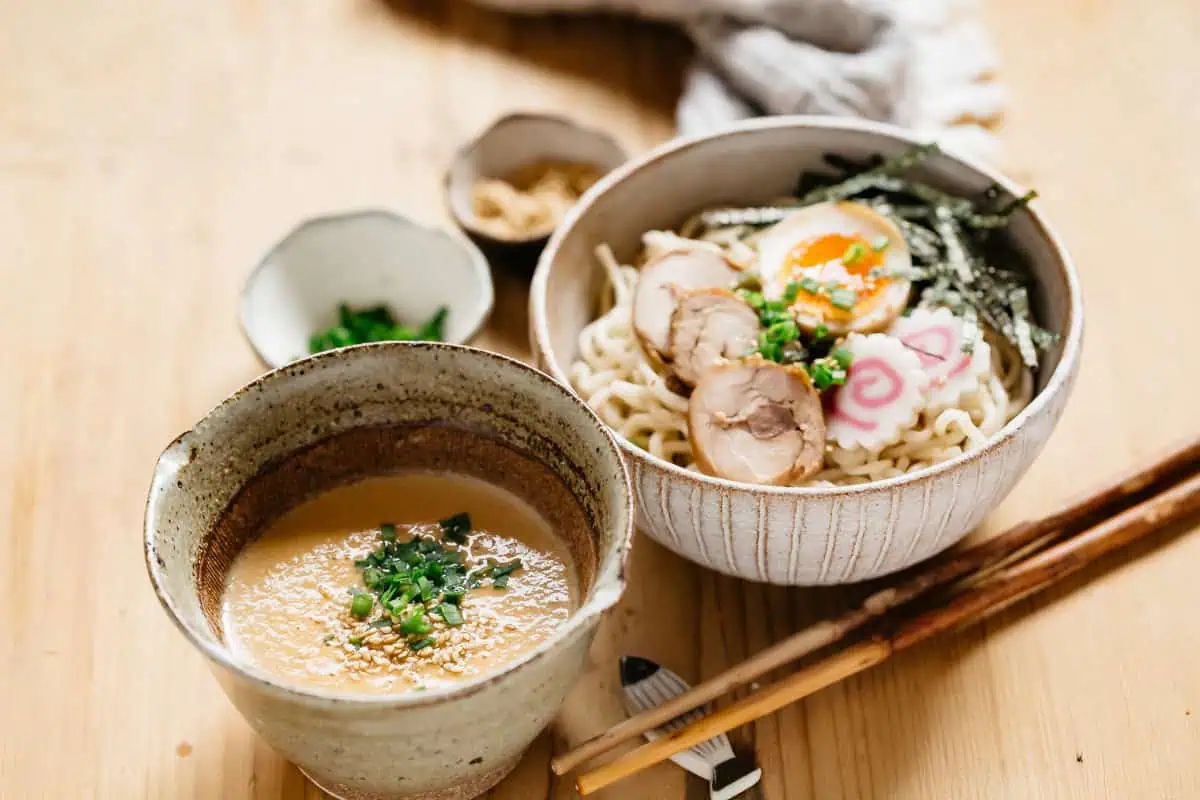
Step-by-step Instructions of Making Tsukemen
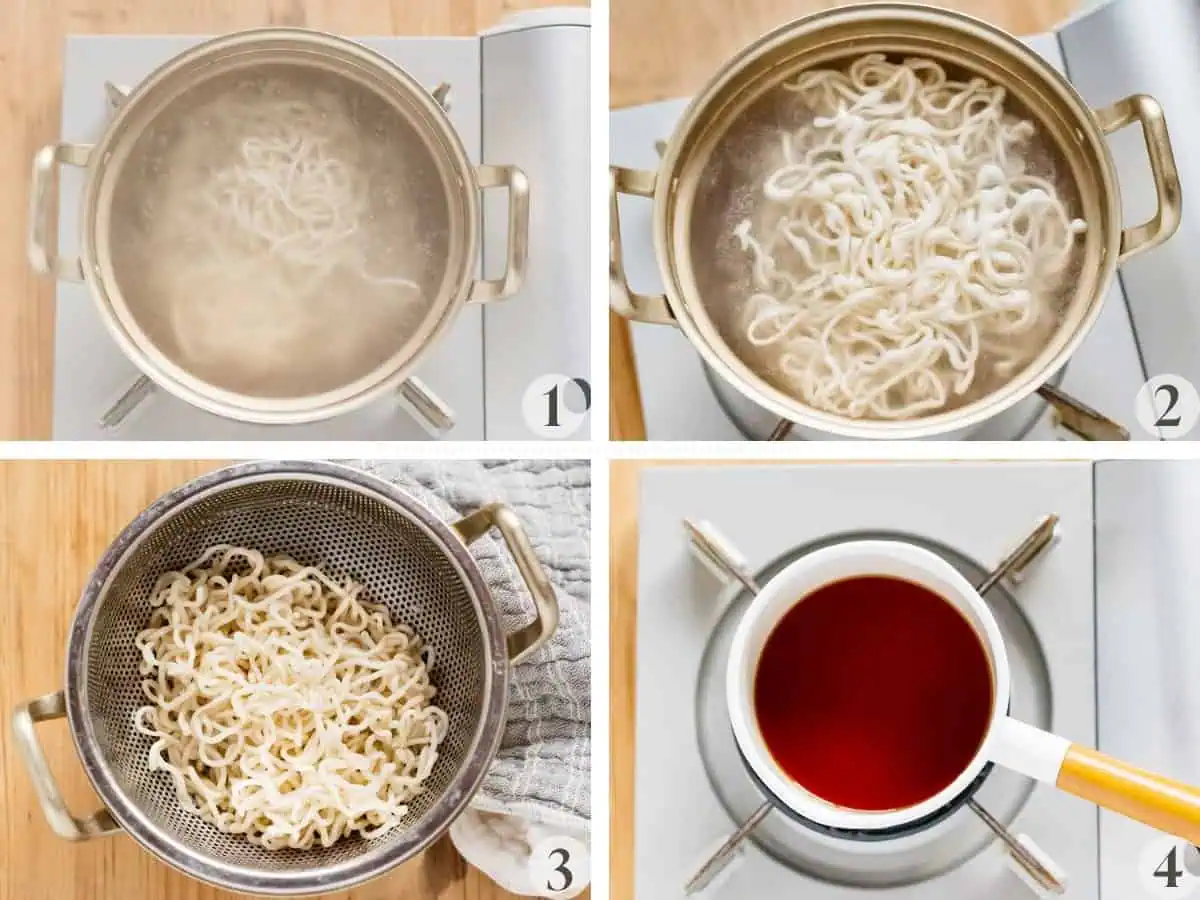
- Cook the noodles : Start by cooking the fresh ramen noodles according to the package instructions or by following my homemade ramen noodle recipe. Tsukemen noodles are usually thicker than regular ramen noodles and have a chewy texture. Boil the noodles in a large pot, then drain and rinse the noodles under cold water to stop them from cooking further and to remove excess starch.
- Prepare the toppings : While the noodles are cooling down, prepare your desired toppings. Common tsukemen toppings include sliced chashu pork, boiled egg, bamboo shoots, nori seaweed, and green onions. You can also add extras like corn or shiitake mushrooms for added flavor.
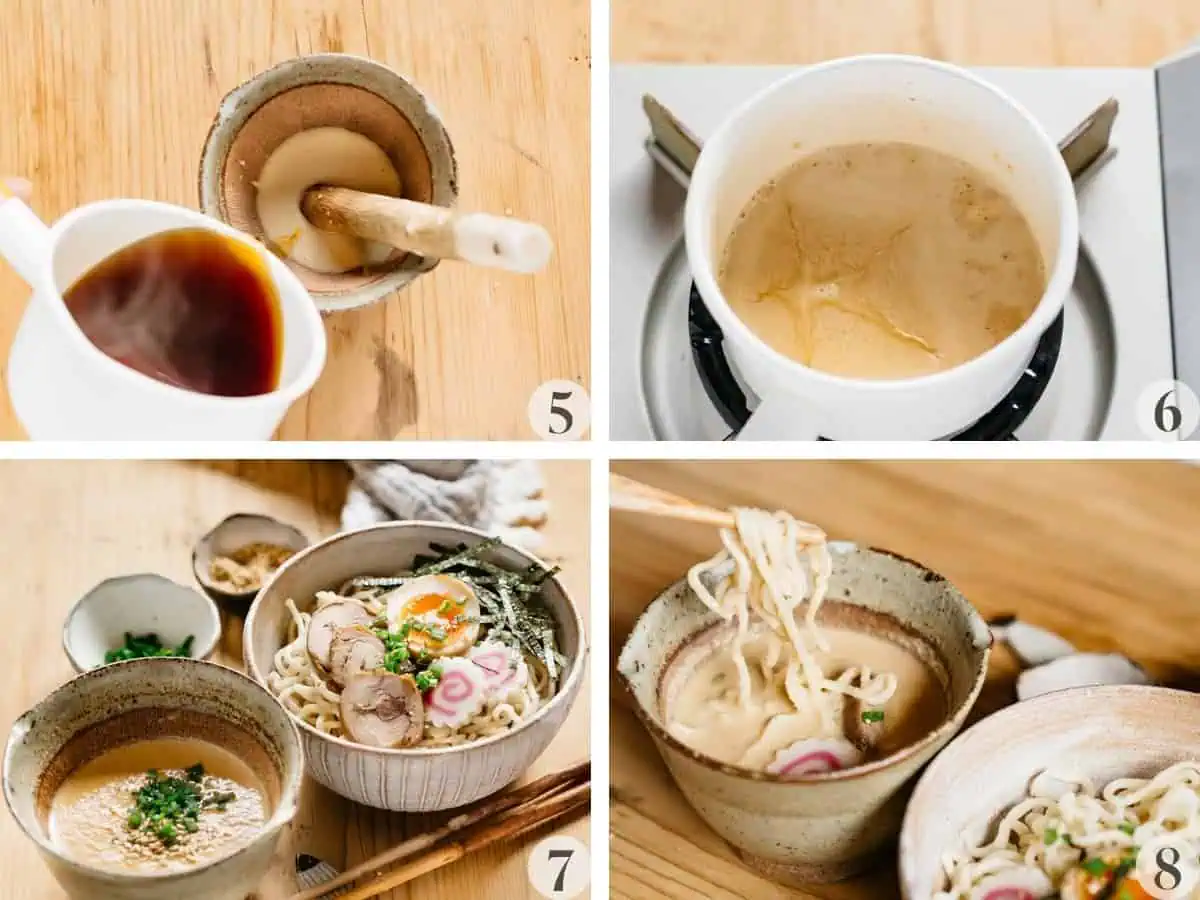
- Make the tare dipping broth : for this tsukemen broth combine sesame seed paste and heated mentsuyu together until it becomes a thick sauce. Transfer to a small pot and heat the sauce up.
- Assemble your meal. Place your cooked noodles in one bowl and arrange your chosen toppings on top. Pour the broth into a separate smaller bowl for dipping.
- Dip and slurp to eat the tsukemen. Take some noodles with your chopsticks and dip them into the broth before taking a bite. The delicious nutty flavor of the broth will perfectly complement the cold chewy noodles as you slurp them up.
Tips to Make Tsukemen
- Choose the right noodles: Tsukemen noodles are typically thicker and chewier than traditional ramen noodles. Look for fresh or dried noodles specifically labeled for tsukemen or make your own at home so you can make them the right thickness.
- Cook the noodles al dente: To achieve the perfect texture for tsukemen noodles, cook them slightly underdone (al dente) before serving them alongside the dipping broth. This will prevent them from becoming soggy while soaking in the broth.
- Be creative with the dipping sauce: I made a sesame flavoured sauce for my tsukemen but you can easily adapt it to make it suit your tastes. Add seasonings and spice it up with chilli oil or create your own broth.
FAQ
A : Ramen is a noodle soup dish that typically consists of wheat noodles served in a rich broth, which can be made from pork, chicken, or fish. The broth is often flavored with soy sauce or miso paste and topped with ingredients such as sliced pork belly, soft-boiled eggs, green onions, and seaweed. On the other hand, tsukemen is a dipping noodle dish where cold noodles are served alongside a concentrated dipping sauce. The noodles are cooked separately and then chilled before being dipped into the thick sauce made from a variety of seasonings and ingredients.
A : While there is no strict rule dictating whether or not you should drink the tsukemen broth, it is generally acceptable to do so in Japanese culture. The rich and flavorful broth is too delicious to let go to waste, so it’s perfectly acceptable to savor every last drop. However, if you find the broth too salty or intense for your taste, feel free to leave it be. There are no hard and fast rules when it comes to enjoying this dish especially when you’re making it at home, so feel free to do what you want.



Tsukemen : Dipping Ramen Noodles
Ingredients
Ramen Noodles, Toppings and Garnishes
- 2 portions fresh ramen noodles *1
- 6 slices Chashu *2
- 1 Ajitama ramen egg *3
- 6 slices Naruto fish cakes
- 1 tbsp Finely chopped scallions
- 2 tbsp shredded nori seaweed sheet
- ½ tbsp Toasted sesame seeds
"Tare Dipping Sauce"
- 2 tbsp roasted sesame seeds paste *4
- 2 tbsp Mentsuyu *5
- ¼ cup Water
Instructions
Ramen Noodles
- Boil plenty of water(not listed in the above ingredients)in a large pot.
- Add fresh ramen noodles and cook for about 3 minutes.
- Turn the heat off and drain the noodles.
- Rince the cooked noodles under running cold water to stop them from cooking further and to remove excess starch.
- Place the cooked noodles in a ramen bowl.
- Topped with sliced chashu, naruto fish cake and ajitama ramen egg.
- Garnish with finely chopped scallions and sesame seeds.
"Tare" Dipping Sauce
- Place toasted sesame seeds paste in a Japanese mortar.
- Dilute the mentsuyu with water in a small saucepan and heat over medium heat.
- Add it to the sesame seeds paste gradually while the sesame paste is being grinded.
- Transfer it to a small saucepan and heat it up over medium heat.
- Once it has boiled, turn the heat off and pour it in a bowl to serve along with the ramen noodle bowl.





i loved this! The sauce was so easy to make, thank you for the recipe
Hi Lillie, I am glad you loved it <3
Loved the nutty sesame taste of the dipping sauce. Having the noodles separate and dipping them was a fun way to eat ramen.
Thank you Richard 😀