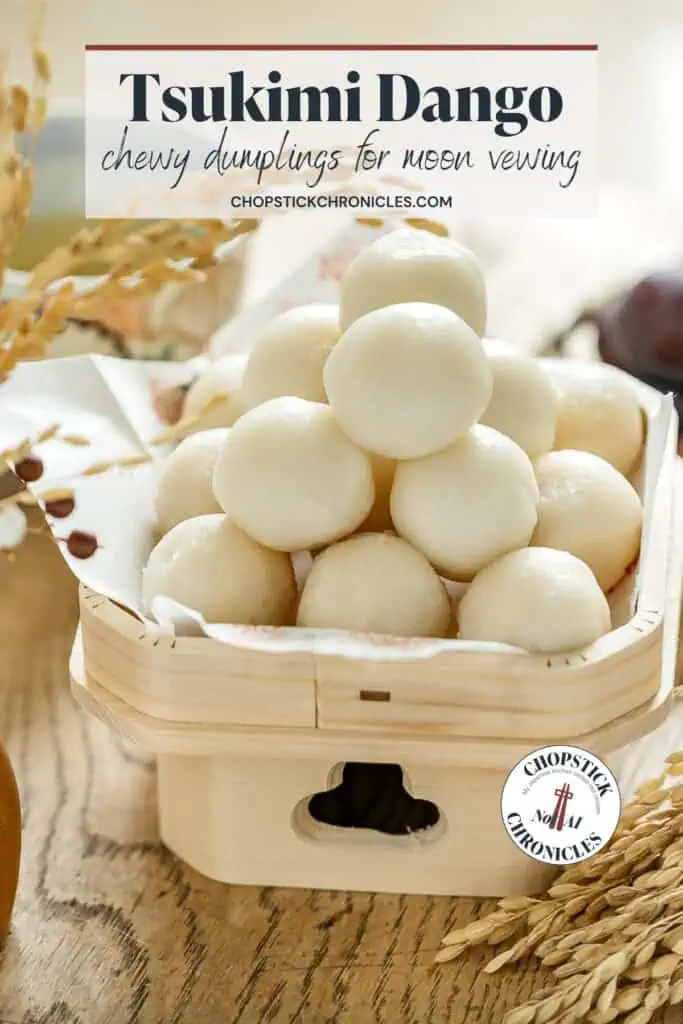
Tsukimi Dango are traditional Japanese rice dumplings made to celebrate Tsukimi, the autumn moon-viewing festival in Japan. These soft and chewy white dumplings are shaped to resemble the full moon and are traditionally stacked into a small pyramid as an offering to give thanks for the autumn harvest. Learn how to make Tsukimi Dango at home with this easy recipe and enjoy this beautiful Japanese autumn tradition!
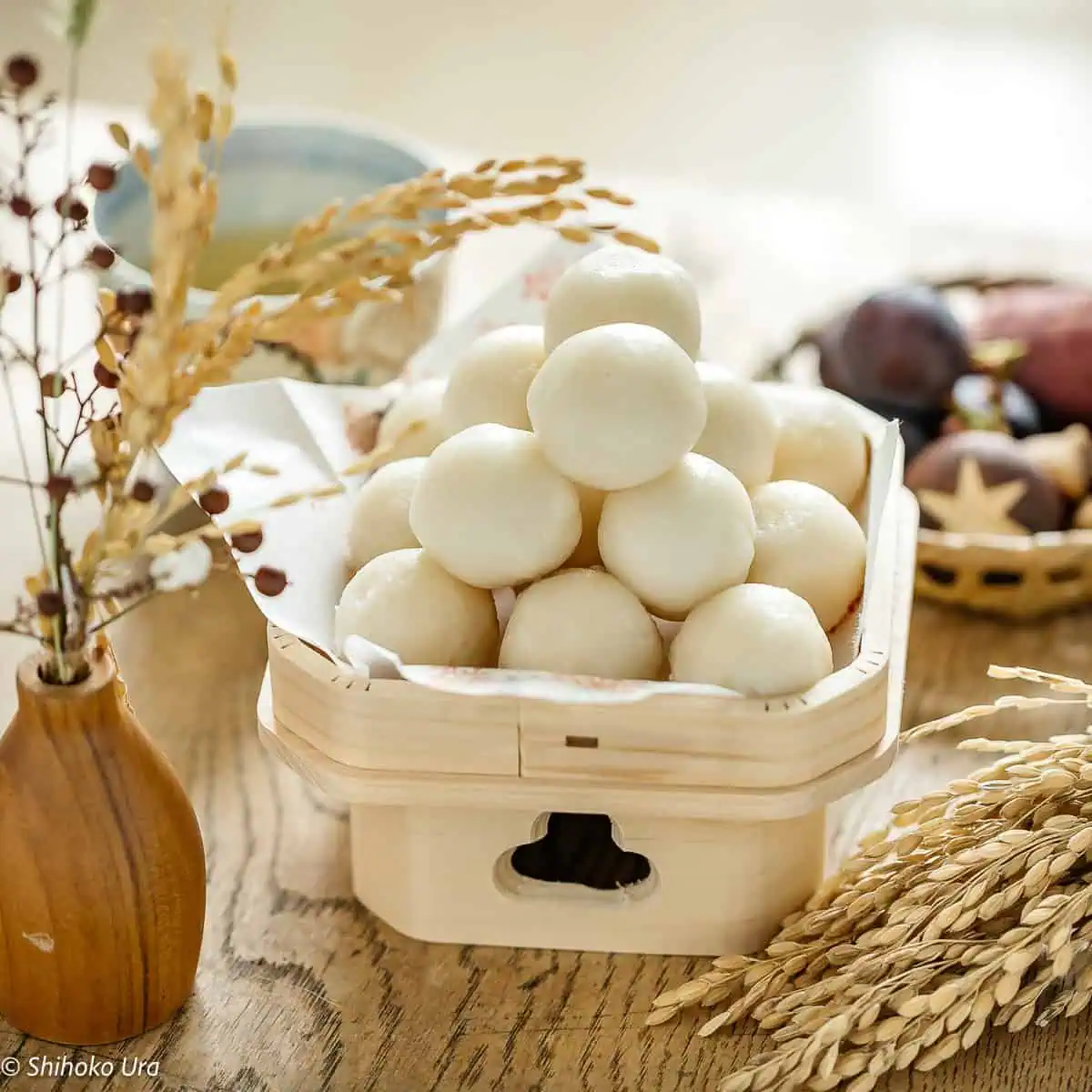
Table of contents
What is Tsukimi Dango?
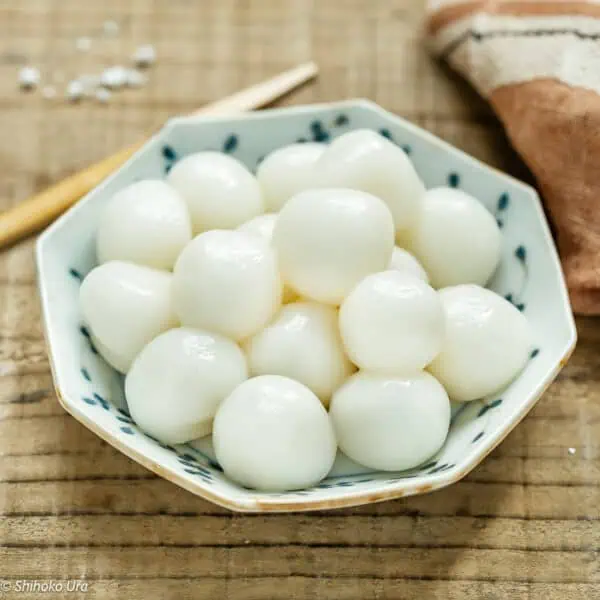
Tsukimi Dango (月見団子) are small Japanese rice dumplings traditionally prepared for Tsukimi, Japan’s autumn moon-viewing celebration. “Tsukimi” means “moon viewing,” while “dango” refers to Japanese dumplings made from rice flour. The white, round shape represents the full moon, and the dango are displayed as an offering to give thanks for the autumn harvest.
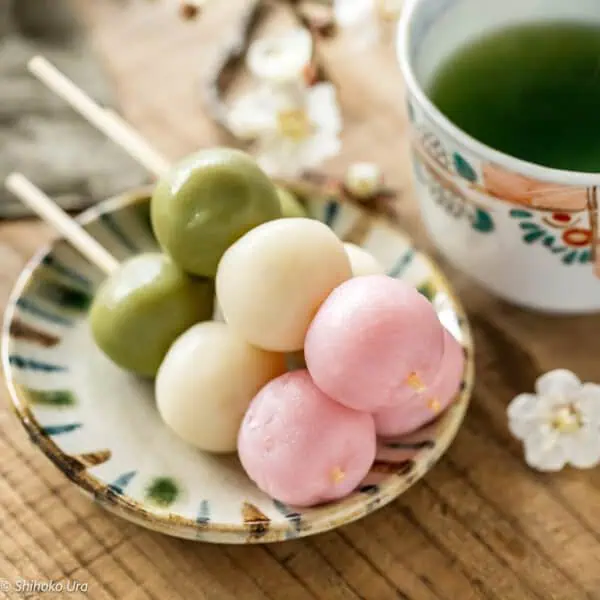
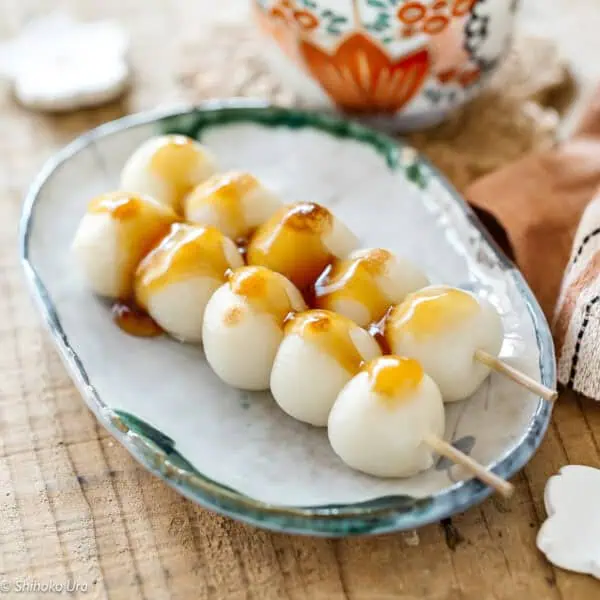
Unlike colorful Hanami Dango or Mitarashi Dango covered in a sweet soy sauce glaze, Tsukimi Dango are traditionally plain and simple. They are often arranged in a pyramid of 15 dumplings for Jugoya (十五夜), meaning the fifteenth night, when people gather to admire the beautiful autumn moon.
The Tradition of Tsukimi in Japan
What is Otsukimi?
Otsukimi (お月見), also called Tsukimi (月見), means “moon viewing” and is a traditional Japanese custom of admiring the autumn moon. During Otsukimi, families decorate with susuki (Japanese pampas grass), prepare seasonal foods, and display Tsukimi Dango as an offering to the moon in thanks for a good harvest.
The main moon-viewing celebration is called Jugoya (十五夜), meaning “the fifteenth night.” It takes place on the 15th day of the eighth month of the traditional Japanese lunar calendar, when the moon is especially bright and beautiful. Because the modern date follows the lunar calendar, Jugoya falls on a different day each year, usually in September or early October.
Why Do Japanese People Offer Tsukimi Dango?
Tsukimi Dango are traditionally offered to the moon to show gratitude for the autumn harvest and to pray for another season of abundance. Their round, white shape represents the full moon, making them an important part of the Tsukimi display.
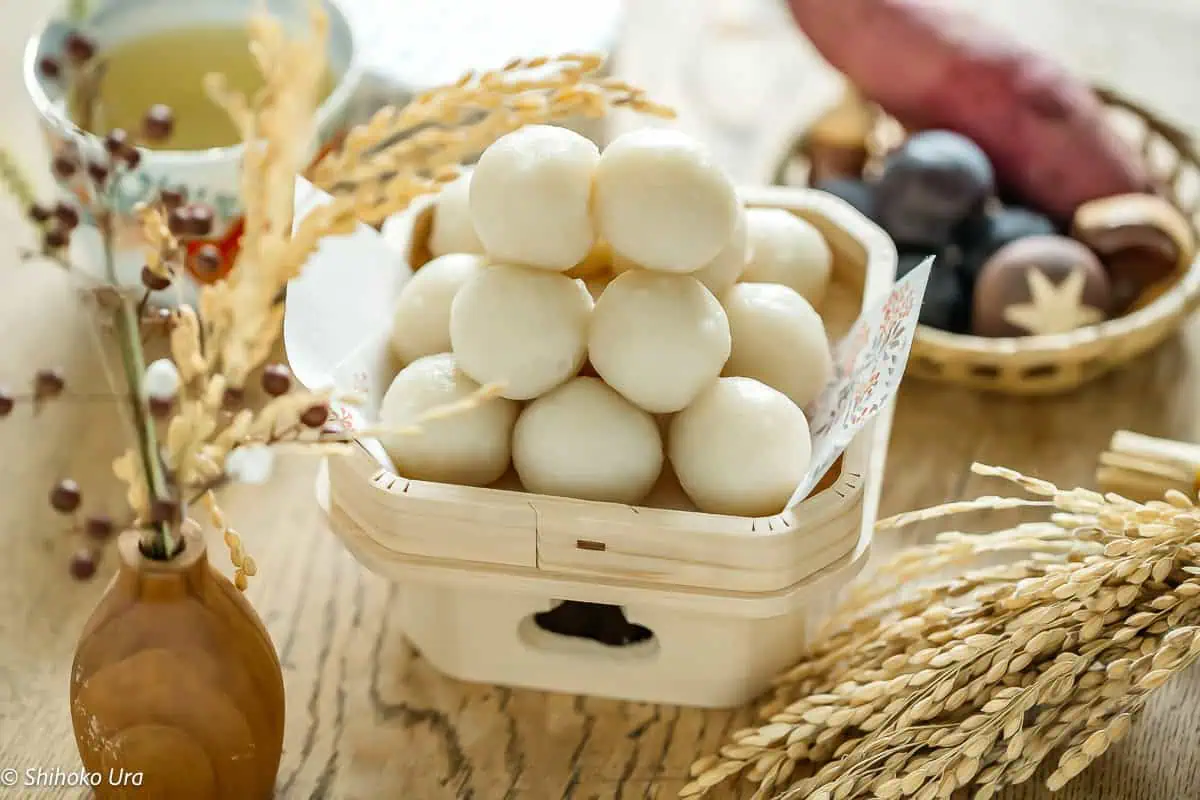
Along with dango, people traditionally display susuki (Japanese pampas grass), which resembles rice plants and represents a good harvest. Seasonal foods such as taro, chestnuts, sweet potatoes, and other freshly harvested produce may also be offered to give thanks for nature’s bounty.
Try displaying your homemade Tsukimi Dango with a few seasonal offerings to experience this Japanese autumn tradition at home.
Why Are 15 Dango Used?
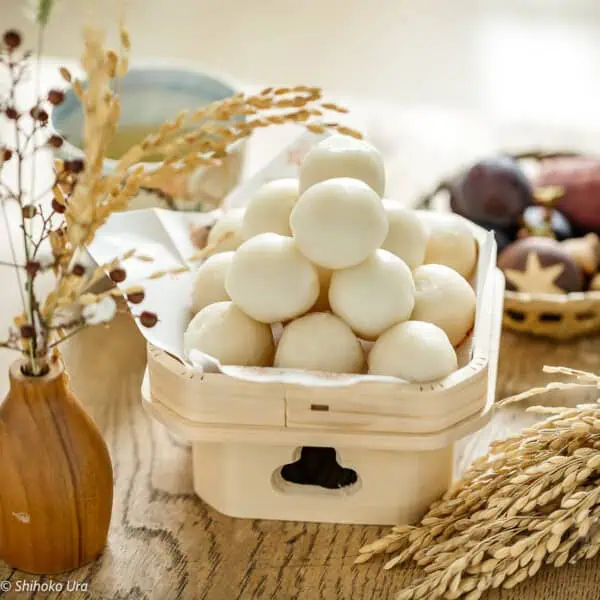
For Jugoya (十五夜), Tsukimi Dango are traditionally displayed in a pyramid of 15 dumplings. The number 15 represents the “fifteenth night,” when the autumn moon is traditionally admired. The dango are stacked neatly, with the top dumpling representing the moon.
The number and style of Tsukimi Dango can vary depending on the region and family tradition. Since this seasonal custom has developed across the country, some areas of Japan use a different number of dango or make them in different shapes.
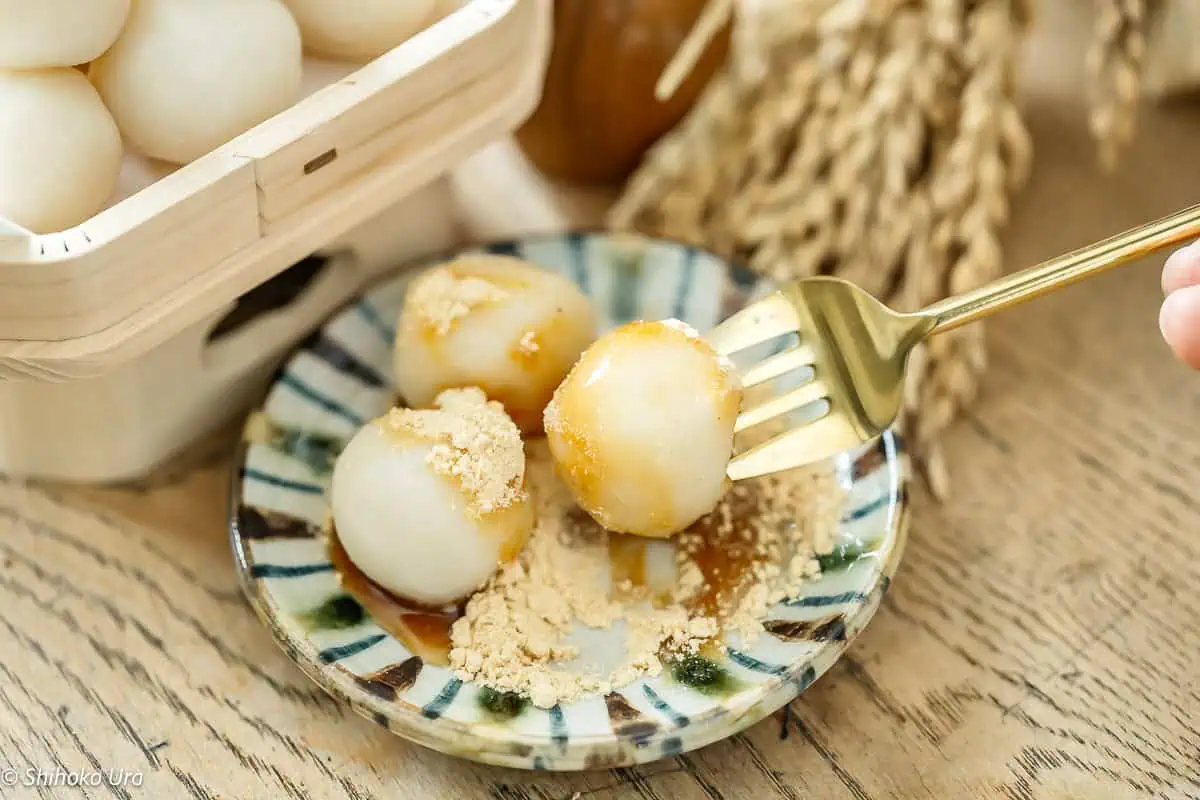
What Does Tsukimi Dango Taste Like?
Tsukimi Dango has a simple, mild rice flavor with a soft and pleasantly chewy texture, similar to mochi. Traditional Tsukimi Dango are not very sweet on their own, as they are made mainly as an offering for the autumn moon-viewing celebration.
After the Tsukimi display, the dango are eaten and can be enjoyed plain or with something sweet. Try them with anko (sweet red bean paste), kinako (roasted soybean flour), or a drizzle of kuromitsu (black sugar syrup) for extra flavor.
Ingredients for Tsukimi Dango
You only need a few simple ingredients to make Tsukimi Dango. Using a combination of joshinko and shiratamako gives the dango a soft but pleasantly chewy texture.
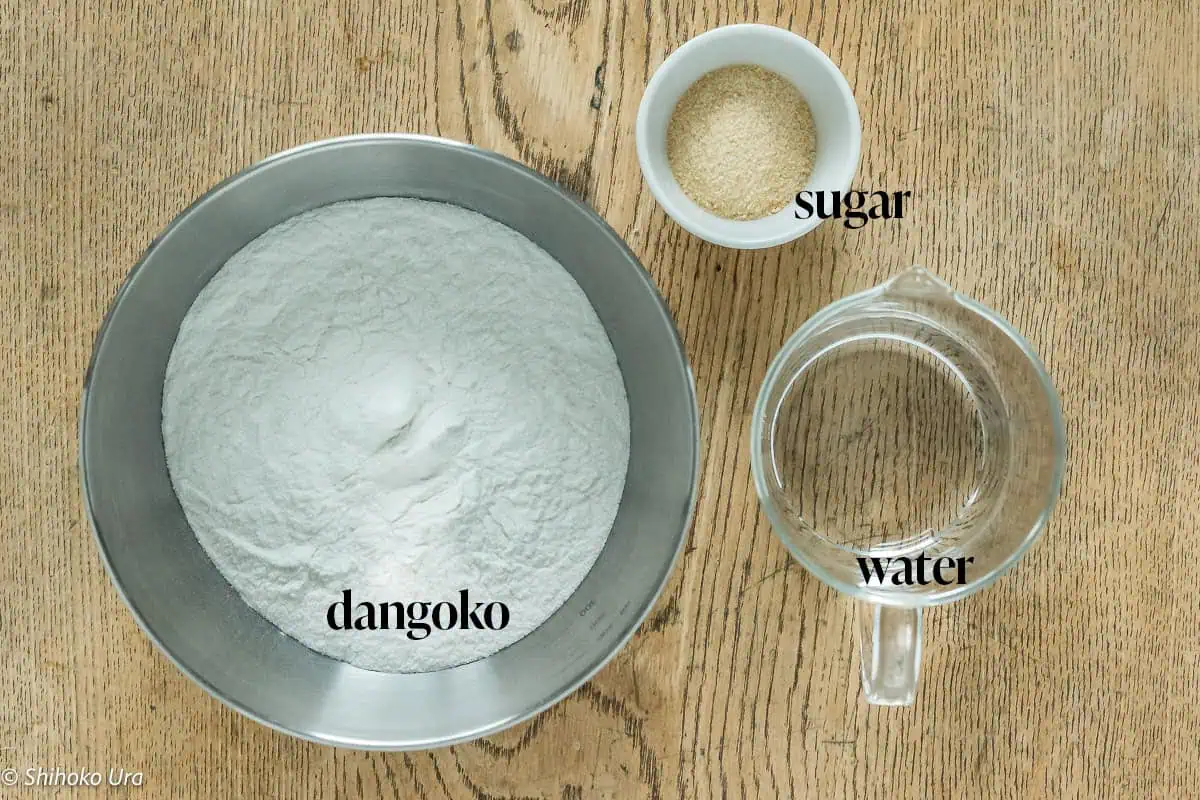
Dangoko
Dangoko (団子粉), or dango flour, is a convenient flour blend made specifically for making Japanese dango. It combines joshinko, which is made from Japanese short-grain rice, with glutinous rice flour made from mochigome. The exact ratio varies by brand, typically 50:50, 60:40, or 40:60.
Many traditional Tsukimi Dango recipes use joshinko alone, but this method usually requires steaming the dough first, then kneading it well to develop its elasticity before shaping. I find that dango made only with joshinko has a nice clean bite, but it can lack the soft, chewy texture I prefer.
This is why I like using dangoko for Tsukimi Dango. The addition of glutinous rice flour gives the dango a softer, chewy texture, and it is much easier to work with. Simply mix the dangoko with water, shape the dough, and boil the dango until cooked, with no steaming or extra kneading required.
Sugar
A small amount of sugar can be added to give the dango a gentle sweetness. Tsukimi Dango are traditionally quite plain, so you do not need much, especially if you plan to serve them with anko, kinako, or kuromitsu.
Water
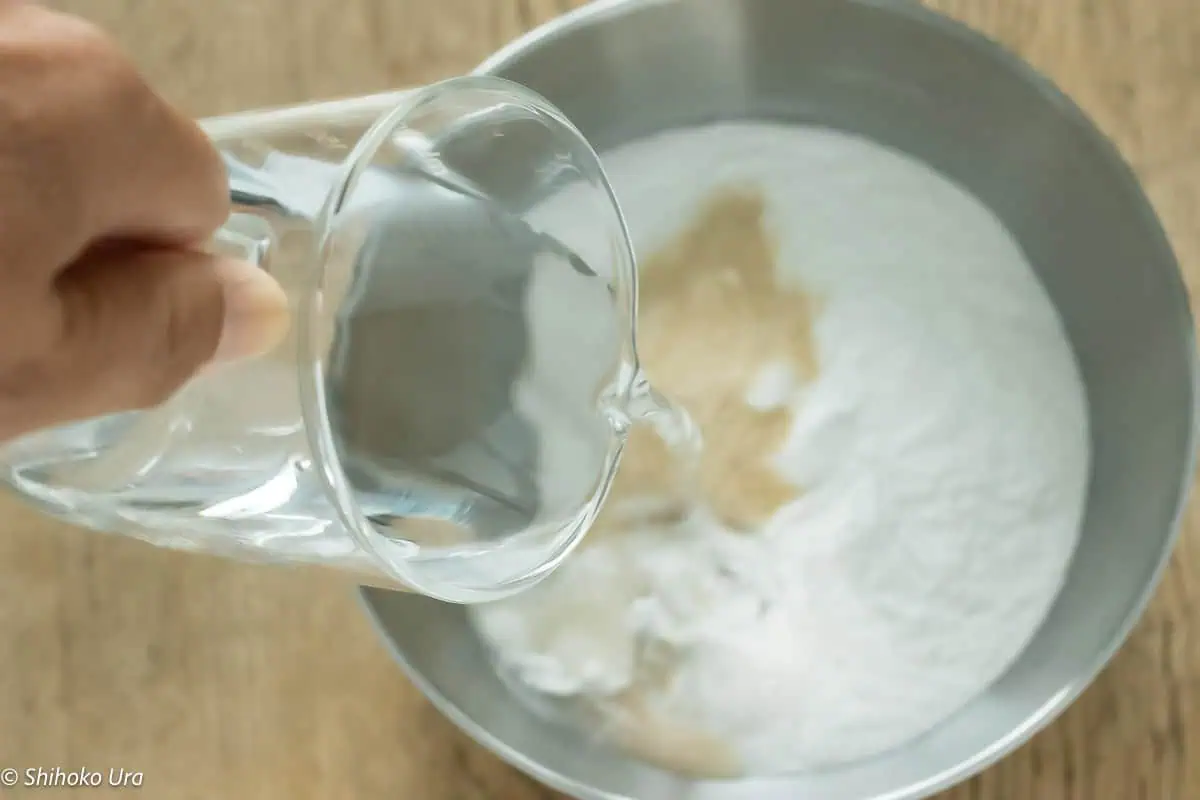
Water brings the rice flours together to form the dango dough. Add it gradually while mixing because different brands of rice flour can absorb slightly different amounts of water. The finished dough should be smooth, soft, and easy to roll without cracking or feeling sticky.
How to Make Tsukimi Dango
- Prepare the Dango Dough : Place Dangoko in a mixing bowl, then add the sugar and mix well. Gradually add the water, mixing as you go, rather than pouring it in all at once. Knead the mixture until it forms a smooth dough. The traditional way to describe the perfect consistency in Japan is “as soft as an earlobe.” It should feel soft and pliable without sticking to your hands or cracking when you shape it.

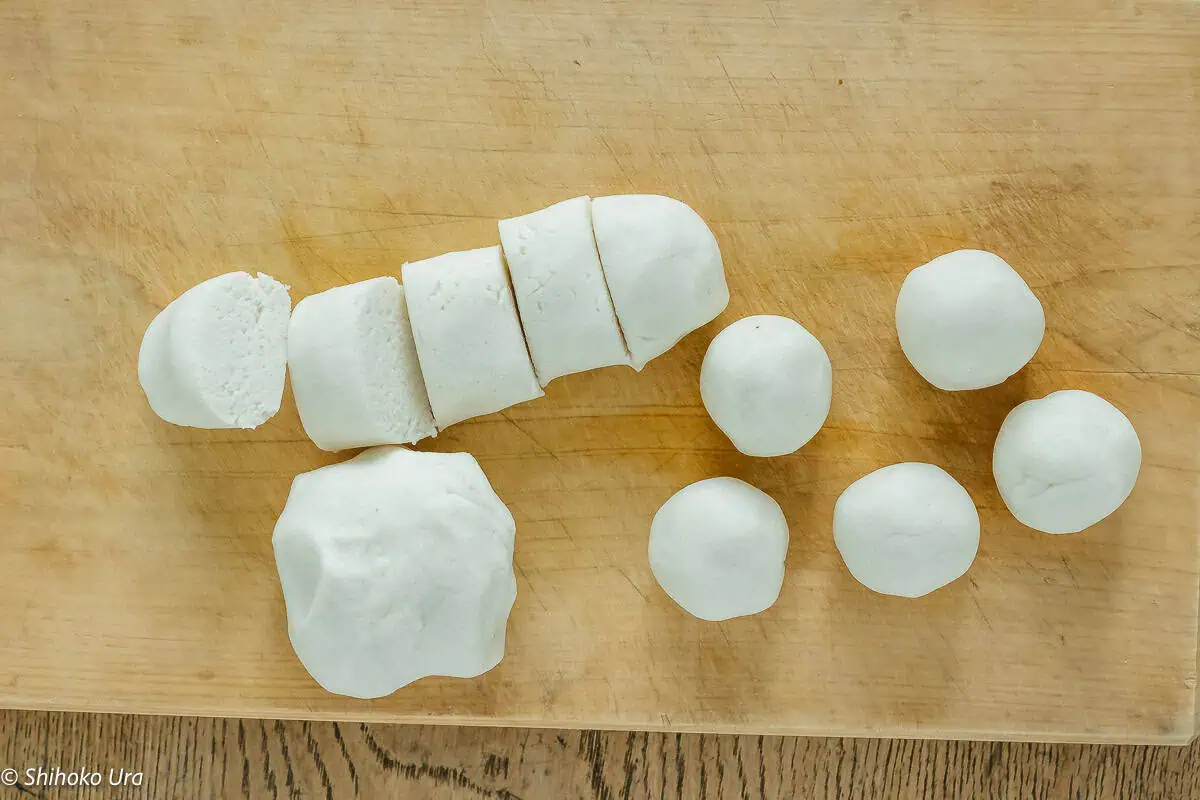
- Shape the Dango : Divide the dough into 15 equal portions so all the dango cook at the same rate. Roll each portion between your palms to make a smooth, round ball. Aim for about 2 cm (0.8 inches) in diameter for each dango. If you have a kitchen scale, weighing each portion is an easy way to keep them evenly sized.
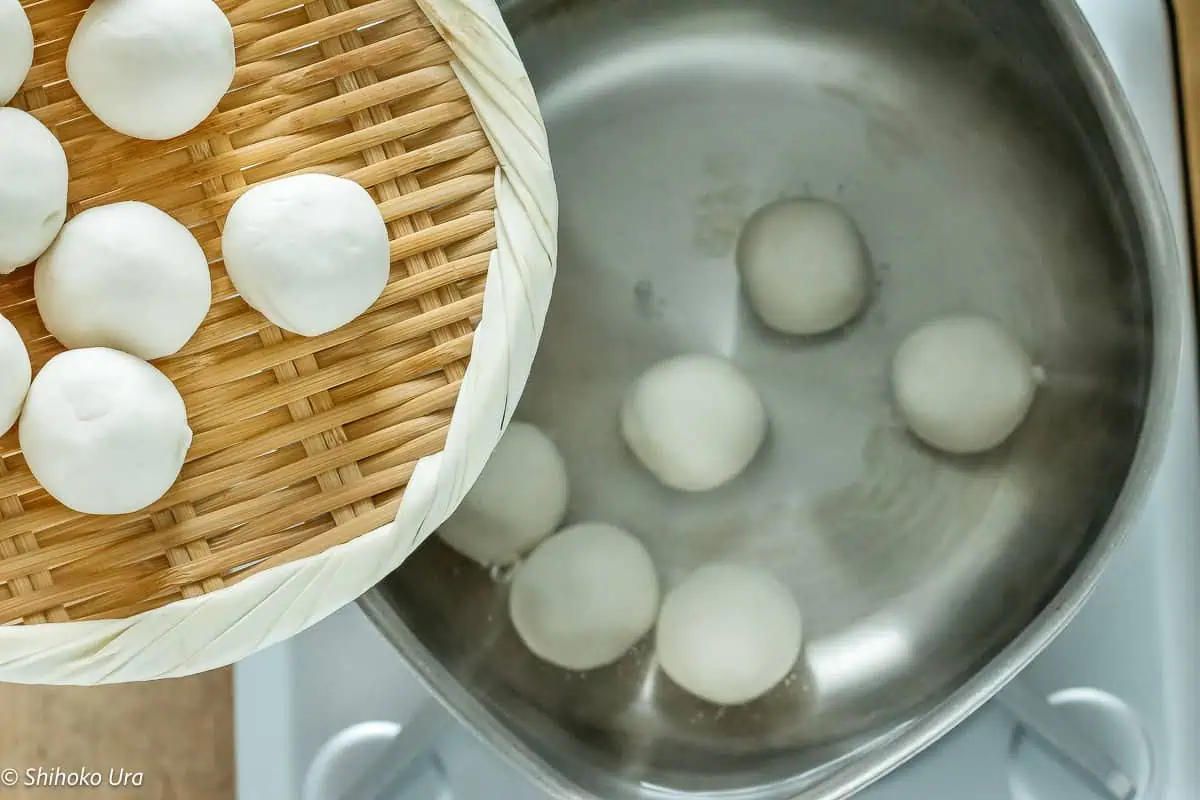
- Boil the Dango : Bring a large pot of water to boil. Then carefully add the dango into the boiling water. Avoid overcrowding the pot so they have enough room to cook evenly. The dango will sink to the bottom of the pot at first and then rise to the surface as they cook. Once they float, continue boiling for about 2 to 3 minutes to make sure the centers are cooked through.
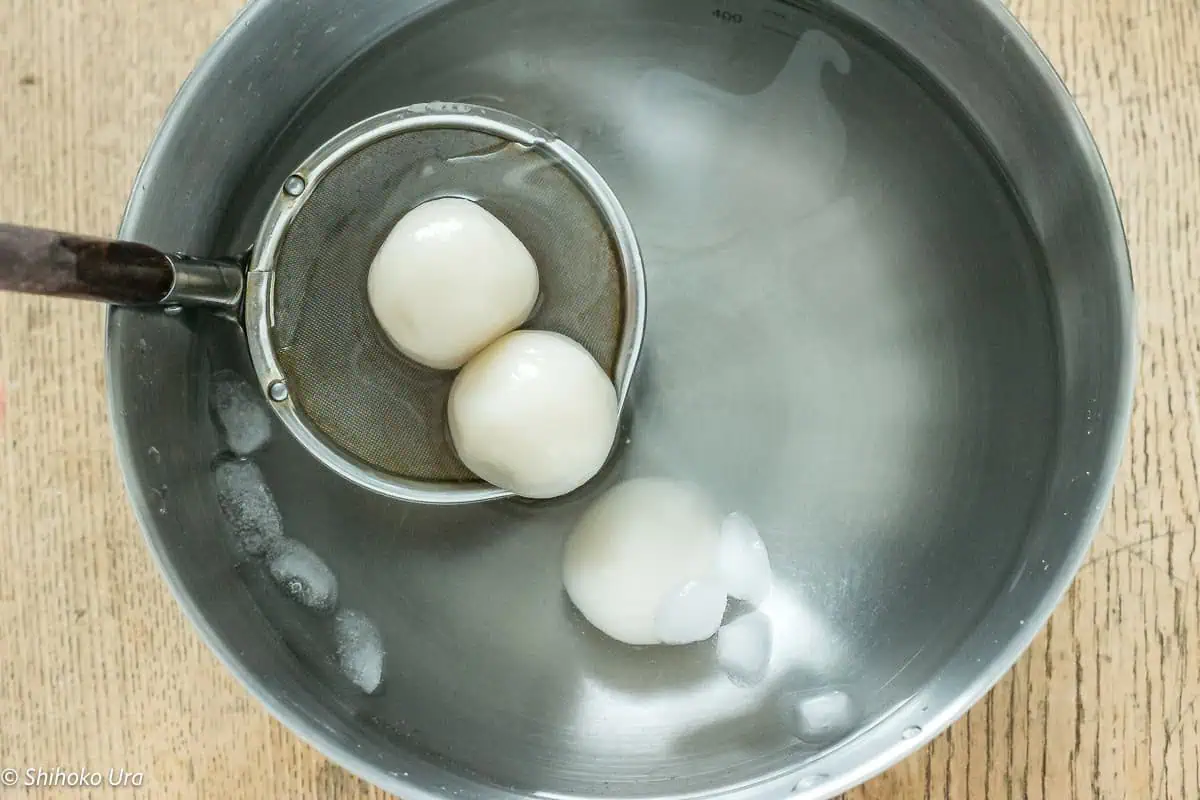
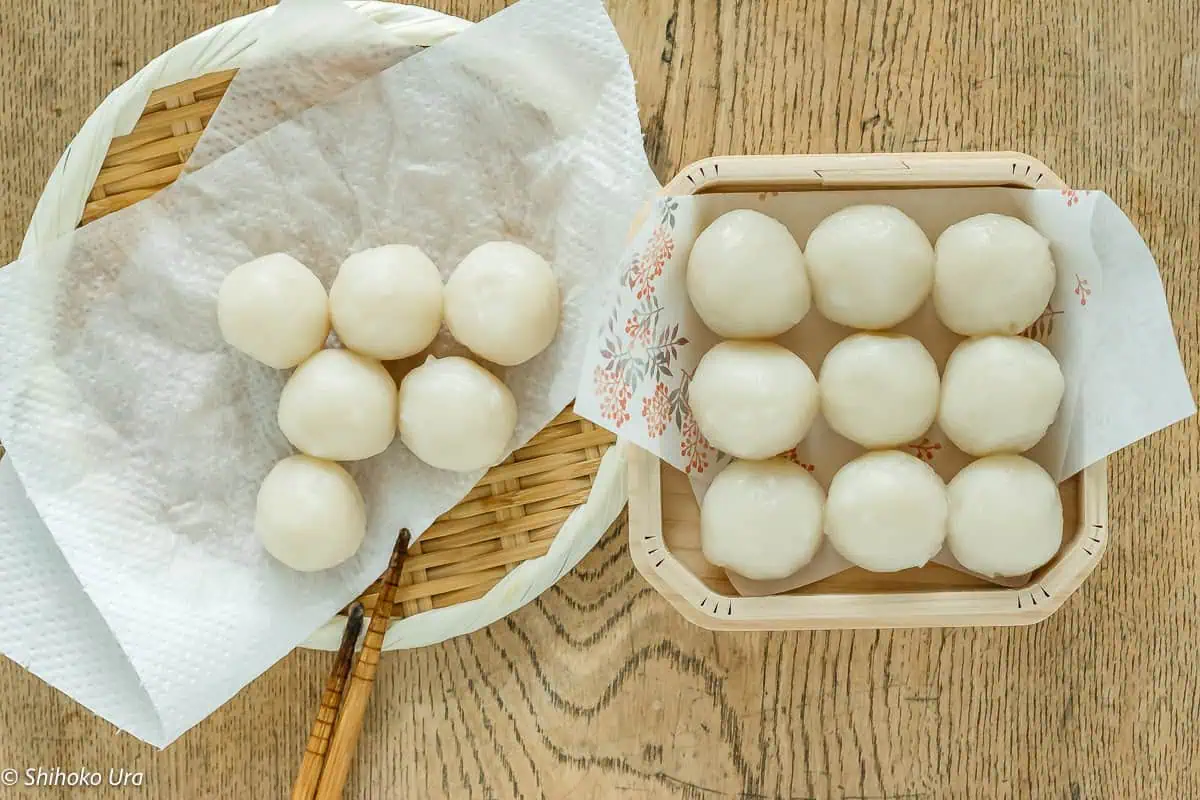
- Cool the Dango : Use a slotted spoon to transfer the cooked dango straight into a bowl of cold or ice water. Cooling them quickly stops the cooking process and helps give the surface a smooth texture. Leave them in the cold water for a few minutes, then drain well. Remove any excess water before arranging or serving.
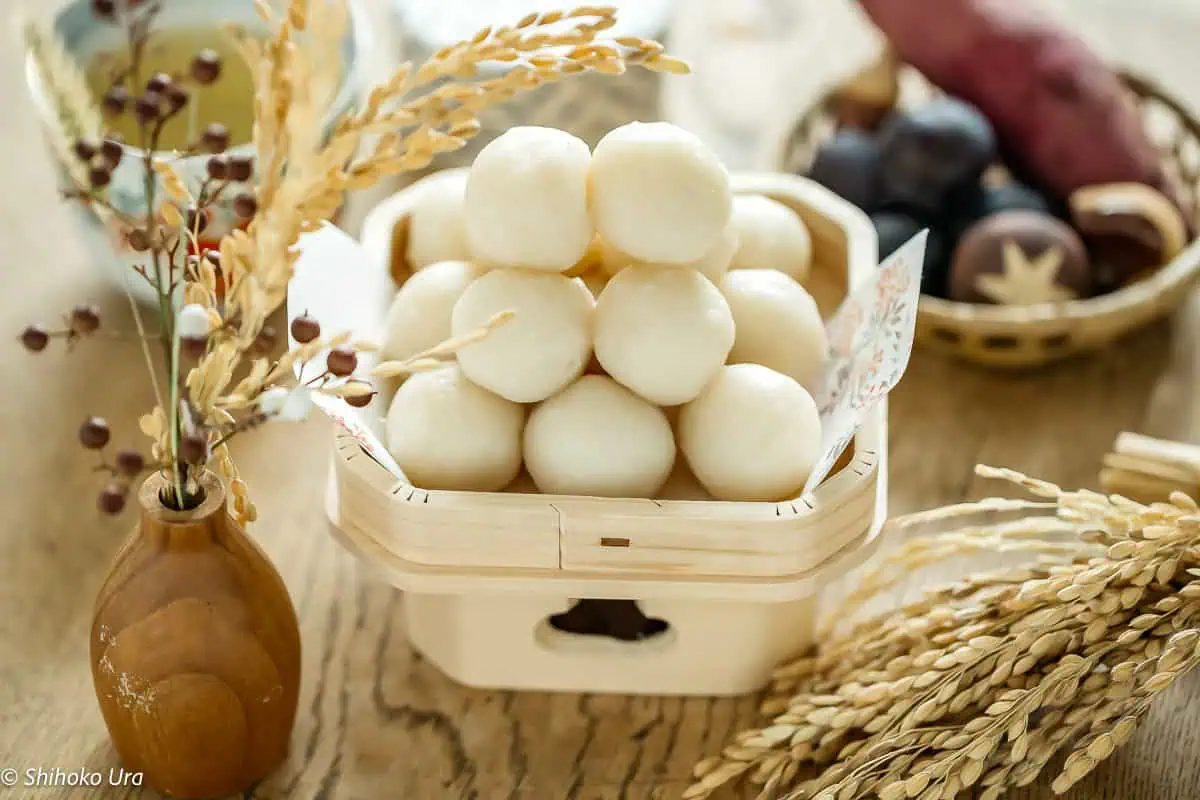
- Arrange for Tsukimi : Traditionally, 15 Tsukimi Dango are stacked into a small pyramid for Jugoya. Arrange 9 dango on the bottom in a 3 by 3 square, 4 dango in the second layer in a 2 by 2 square, and 2 dango on top. In Japan, the dango may be displayed on a sanpo (三宝), a traditional wooden offering stand, often lined with white paper. You do not need a sanpo at home, as a simple plate or small tray works just as well. Arrange your 15 freshly made dango into the traditional pyramid and enjoy your own Tsukimi celebration at home.
Shiho’s kitchen tips to make Tsukimi Dango
Measure accurately: Rice flour can be sensitive to small changes in the amount of water, so measure both carefully. This will help you get that soft and chewy texture similar to mochi without making the dough too sticky.
Add the water gradually: Add the small amount of water at a time while mixing and check the dough with your hands. Different brands of joshinko and glutinous rice flour can absorb water differently, so you may not need to add all the water.
Keep the dough covered: Rice flour dough dries out quickly, so keep any unused dough covered with a damp kitchen towel while you shape the dango. This prevents the surface from drying and cracking.
Keep the dango the same size: Divide the dough evenly and roll each piece to roughly the same size. This helps all the dango cook through at the same time and gives you a neat Tsukimi display.
Try dangoko as an alternative: If you can find dangoko (団子粉) at a Japanese or Asian grocery store, it is a convenient flour blend made especially for dango. The exact blend can vary by brand.
Don’t overcook the dango: Once the dango float to the surface, cook them only for the recommended additional time. Cooking them for too long can make the texture softer than you want.
Enjoy them fresh: Tsukimi Dango have their best soft and chewy texture on the day they are made. Like mochi, they gradually become firmer as they sit, so make them as close to serving time as possible.
How to Serve Tsukimi Dango
For a traditional Tsukimi celebration, arrange 15 dango in a small pyramid and display them on a sanpo or serving plate. Place autumnal flowers and susuki (Japanese pampas grass) nearby to create a seasonal moon-viewing display.
After admiring the moon, the dango are eaten and enjoyed with your favorite toppings. Since Tsukimi Dango have a mild rice flavor, they are delicious served with fermented anko, kinako, kuromitsu, or a sweet and savory mitarashi sauce.

Regional Variations of Tsukimi Dango
When you picture Tsukimi Dango, you probably think of the small, round white dumplings stacked in a pyramid. This is the style most commonly associated with Jugoya, but Tsukimi Dango can look quite different depending on where you are in Japan. Regional traditions have their own shapes and ways of serving them.
In the Kansai region, where I am from, Tsukimi Dango traditionally have an oval shape that represents satoimo (taro), an important autumn harvest food. The white dango may be partially wrapped in sweet anko (red bean paste), giving them a very different appearance from the round white dango commonly seen in other parts of Japan.
These regional differences are one of the things I enjoy about traditional Japanese food. Even a simple seasonal treat like Tsukimi Dango can tell you something about the local harvest, history, and food culture of each area.
How to Store Tsukimi Dango
Tsukimi Dango are best eaten on the day they are made, when they are soft and pleasantly chewy. If you have leftovers, place them in an airtight container and keep them at room temperature for up to 24 hours, as long as they are plain and your kitchen is cool.
I don’t recommend storing dango in the refrigerator because the rice starch quickly firms up at cold temperatures, making the dango hard and less chewy. If you need to keep them longer, freezing is a better option.
To freeze, arrange the dango in a single layer so they do not stick together, freeze until firm, then transfer them to an airtight container or freezer bag for up to 1 month. Thaw at room temperature, then briefly warm them in simmering water or the microwave until soft and chewy again.
FAQ
A : Dangoko (団子粉) is a convenient blend of rice flour and glutinous rice flour that gives dango a pleasantly chewy texture. If you can’t find it, use 30% joshinko and 70% shiratamako, then gradually add water equal to about 70 to 75% of the total flour weight until the dough is soft and smooth, about as soft as an earlobe.

Tsukimi Dango (Moon Viewing Dumplings) 月見団子
Ingredients
- 150 g Dangoko *1
- 1 tbsp sugar
- 120 ml water
Instructions
- Place the dangoko and sugar in a mixing bowl. Gradually add the water while mixing with your hands until a smooth dough forms. It should feel soft and pliable (like an earlobe)
- Divide the dough into 15 equal portions. Roll each piece between your palms into a smooth ball, about 2 cm (0.8 inches) in diameter. Keep the remaining dough covered with a damp kitchen towel while shaping to prevent it from drying out.
- Bring a large pot of water to a rolling boil. Carefully add the dango and cook until they rise to the surface. Once they float, continue boiling for 2 to 3 minutes to cook them through.
- Remove the dango with a slotted spoon and immediately transfer them to a bowl of cold or ice water. Leave for a few minutes, then drain well.
- For a traditional Jugoya display, arrange 9 dango (3 × 3) on the bottom, 4 (2 × 2) on the second layer, and 2 on top. Display them on a sanpo (三方), tray, or serving plate.
Notes
- 50 g joshinko
- 100 g shiratamako
- 120ml water, added gradually