
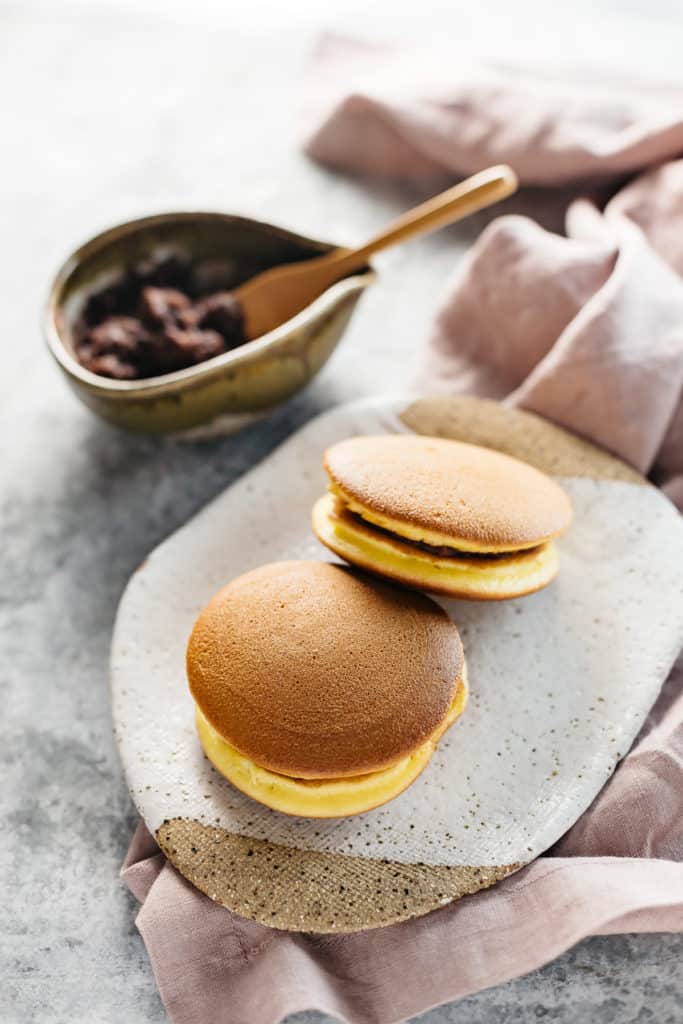
Dorayaki is one of the well-known and popular traditional Wagashi (Japanese sweets). These little delights have a delicious subtle flavour palette without an overbearing sweetness, which makes it hard to eat only one.

The honey pancake and azuki bean (red bean) paste are a perfect pairing for a simple yet irresistible treat.
What is Dorayaki?
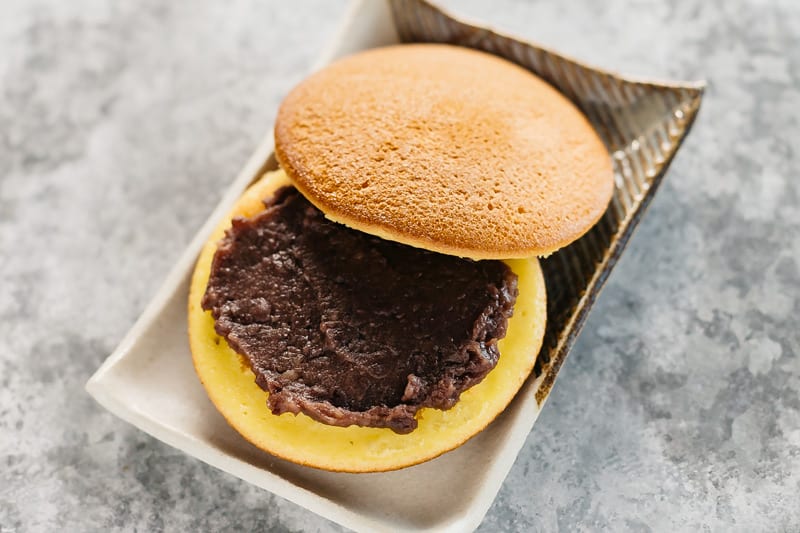
Dorayaki (doh-ra-yaki) are cute and tasty traditional Japanese sweets made from sweet azuki bean paste sandwiched between two fluffy honey pancakes. However, they do differ a bit from regular pancakes. The cake batter of Dorayaki contains honey and mirin so the flavour and texture of Dorayaki is more like the Japanese “Kasutera” sponge cake.
What is Dorayaki made of?
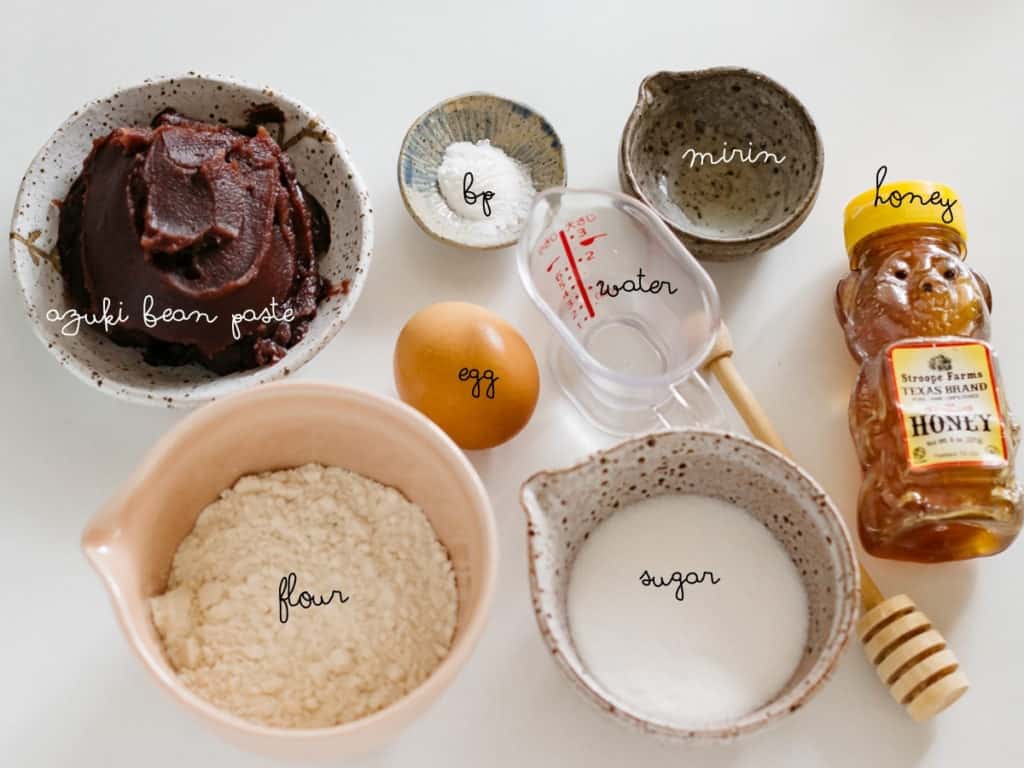
You need the following ingredients to make Dorayaki
- All purpose flour
- baking powder
- sugar
- egg
- honey
- mirin
- water
- Azuki beans paste (also known as sweet red bean paste)
When was Dorayaki invented?
Dorayaki originated in Japan many years ago in the early 1900s and is believed to have been based on the shape of a gong (meaning “dora” in Japanese) that was left by a samurai. The longevity of this traditional dessert shows just how popular and delicious it truly is.

There are a few theories of where the name originated. One is that the origin of the name comes from the fact that the shape is similar to the gong of a Japanese musical instrument called “Dora”. Another theory is that the cake was baked on this musical instrument, hence became to be called “Dora Yaki”.
I am from the Kansai region of Japan. In Kansai, Dorayaki is known as “Mikasayama Manju”. Because the famous mountain Wakakusayama in Nara prefecture is also called Mikasayama and the round shape of Dorayaki look like the shape of the gentle slope of that mountain.
How to Make Dorayaki?
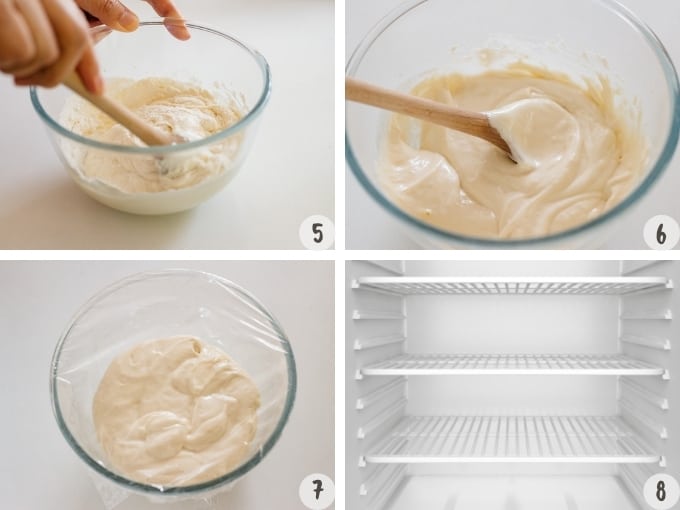
- Make batter – Sift flour and baking powder and set aside. Whisk egg, sugar, honey, mirin together till the colour becomes pale and fluffy. Fold the flour in till you don’t see any flour left. Wrap the mixing bowl with a cling wrap sheet and refrigerate for 30 minutes to rest.
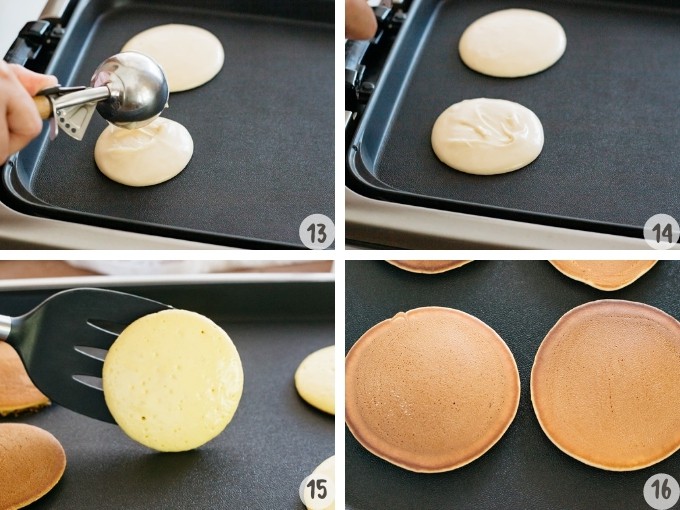
- Fry the batter – Scoop out the batter on to a hot plate on 320°F (160°C) and cook one side for about a minute or bubbles form. Flip it over and cook the other side for a minute. Turn the heat off and remove the cakes onto a cooling rack or a plate. I use a hot plate but you can use a sandwich press or a frying pan.
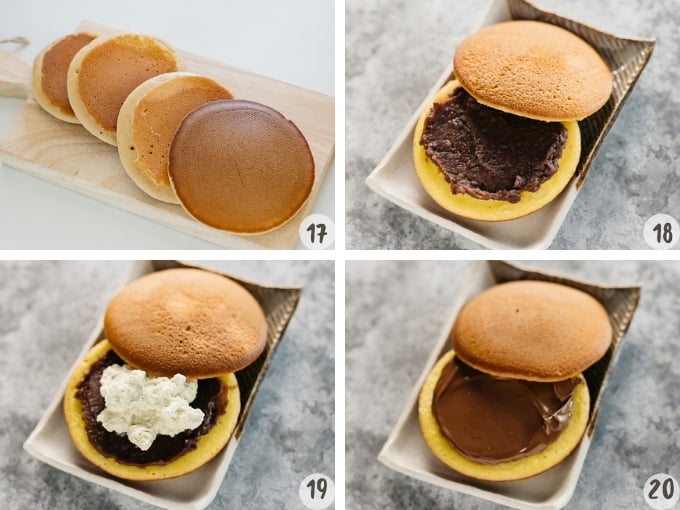
- Sandwich sweet Azuki bean paste – Spread sweet azuki bean paste on one dorayaki cake and place another dorayaki cake onto the other to sandwich the sweet azuki bean paste.
What to Have Dorayaki with?
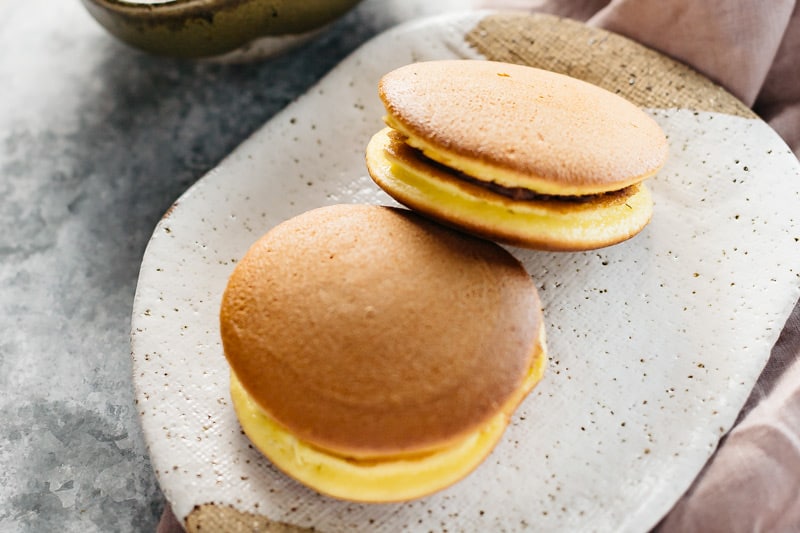
Dorayaki is a finger-food sweet that makes it a perfect snack to eat with your hands. It’s portable and easy to pack so you can take it on a picnic or work or school. It’s also a lovely treat to enjoy with Matcha latte or Hojicha roasted Japanese tea for a relaxing Japanese-style afternoon or morning tea.
2 Tips to Make Perfect Dorayaki
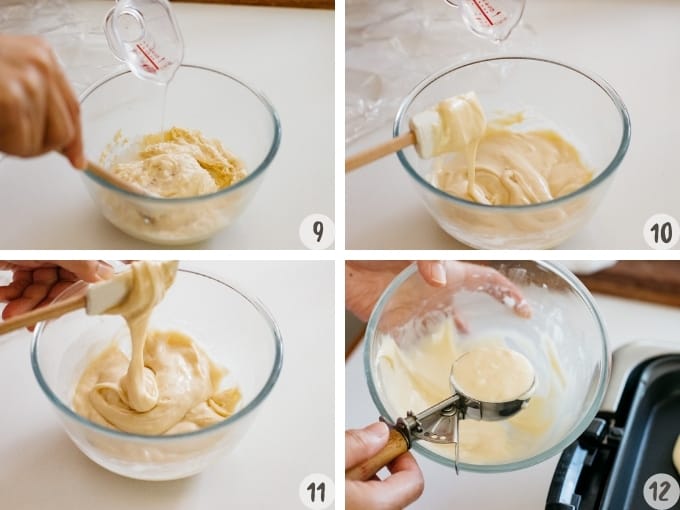
- Let the pancake batter rest in the fridge and add water to smooth the batter.
- Use an ice cream scoop to make sure each pancake is the same size.
Filling Variations
Traditionally, Dorayaki filling is Anko, the sweet azuki bean paste. But I am aware that if you didn’t grow up with this flavour like me, some people don’t like it. Dorayaki has evolved and nowadays I see many different filling variations. The one quite popular filling is Nutella! My favourite is chestnuts in azuki bean paste. Other popular ones are custard, fresh cream, or a combination of those fillings. Be creative and find your favourite fillings!
Other Japanese Sweets to Check
How long Do Dorayaki Last and How to Store Them?
Dorayaki should last fresh for a couple of days if stored properly in an airtight container. However, if you are like the famous cartoon character, Doraemon, and want to make as many as you can and store them for longer so that you can enjoy Dorayaki every day. Great news because you can! Many Japanese sweets can be stored frozen. Wrap them individually with cling wrap then put them in a zip lock bag. It can be stored in the freezer for a month.
FAQ
A: This is a sweet treat that I would indulge in once in a while.
A: No because this recipe uses flour but you can substitute this for gluten-free flour.
A: No, this dorayaki batter recipe uses egg so this is not vegan.
Stay Connected
Here is the recipe. When you made this and liked it, please leave a comment below and rate the recipe.
If you like the recipe please rate the recipe and leave comments below. Also don’t forget to follow me on Youtube, Pinterest, Facebook, Twitter and Instagram. This way you keep up to date with all the latest happenings on Chopstick Chronicles. Don’t forget to Sign up for a weekly newsletter so you never miss out on new authentic delicious Japanese recipes!
Recipe Measurement

Dorayaki どら焼き
Ingredients
- 150 g all purpose flour (1 cup)
- 1 tsp baking powder
- 2 eggs Large eggs weigh 50g each
- 110 g caster sugar
- 1 tbsp honey
- 1 tsp mirin
- 40 ml water
- 200 g sweet azuki bean paste *3
Instructions
- Sift flour and baking powder and set aside.
- Place eggs, sugar, honey and mirin in a large mixing bowl and beat all together until the egg mixture becomes pale whitish in colour.
- Fold the sifted flour and baking powder in and combine till you don't see any flour.
- Wrap the mixing bowl with cling wrap and rest it in the fridge for 30 minutes.
- After 30 minutes rested in the fridge, add 40 ml of water to smooth the batter. *1
- Set the hot plate 320°F (160°C). *2
- Pour 1 scoop of ice cream scooper of the batter onto the pan. If you are using a frying pan, cook one or two at a time and if you are using an electric pan, you can make a little more at once.
- Place a lid on and cook one side for one minute and 30 seconds or when you see bubbles start to form, flip it over with an egg flipper.
- Cook the other side for about one minute.
- Remove the cake off the heat and place it between the folded kitchen towel to avoid the cake becoming dry.
- Keep making the cake until all batter is cooked.
- When the cakes are cooled down, spread sweet azuki bean paste on one cake and sandwich with another cake and repeat it to make 8 Dorayaki.




can the dorayaki batter be kept sealed overnight in the refrigerator like pancake batter?
Hi Aimee, I have not tried but I think it will work.
Just saw the movie AN… tried your receipe… with Nutuella.. just whow. Many thanks.
Hi Arun, That is the movie I would love to see!! how was it?
your recipe has two small issues:
in an illustrated guide you say to add the water and then to refrigerate the dough and in the written guide you say to refrigerate first and add water afterwards.
in the written guide you also did not include a step when to add the flour.
nonetheless, i made these pancakes for breakfast today. i did not like the amount of sugar used and omitted this ingredient altogether: honey and mirin add enough sweetness, not to mention the filling. i added water after refrigerating the dough and used sparkling water for an extra boost.
it’s a good recipe and yields tasty results, will definitely use it again, maybe in matcha or cocoa flavour.
thanks.
Hi dv8 Thank you for your feedback. It is my mistake. I will fix the recipe. Thank you 😀
I wish the ingredients were in US measurements. I did the switch and it calls for 25 cups of baking powder. Would love to try this recipe.
Hi Kathleen, I will have a look, that is not right. Thank you for bring my attention to it.
Ohaiyo Shihoko-San.
Regarding your ingredients; what is the significance of: *4 ???
as in: 1.06 cups sweet azuki bean paste *4
In theU.S. *4 could mean “multiply by 4”
But when I change the quantity.. *4 doesn’t change.
Konbanwa Doug san, It means there is a not and look *4 in recipe note section 😀
These look delicious!
Thank you Wilhelmina
Your Dorayaki look lovely! They sound like an amazing but elegant treat. I loved that you included the history of this dish along with all of the different recipe step photos. I am really looking forward to trying your recipe!
Thank you Audrey 😀
These are perfect! They remind me exactly of the traditional recipe.
Hi Krissy 😀 yes it is authentic traditional recipe ;D
Your dorayaki is amazing. It’s perfect for a breakfast pair with Caffè mocha.
Hi Lello Pasta Bar 😀 yes it will be the perfect match ;D
This looks great! I think my kids will love it! Can I use chocolate chips instead of nutella for the filing?
Hi Cindy Of course! you can add anything you fancy 😀
What a fantastic recipe, as I’d never tried Dorayaki before! So delish.
Hi Aimee Thank you, try Dorayaki very soon 😀
I love dorayaki so much! Thank you for the recipe! I was trying to find a store in Kyoto, where the would sell them fresh, but so far no luck, so I am gonna make them myself! Looking forward! 🙂
Oh my gosh, these are heaven. Thank you for a great recipe.
You are welcome Lindsay 😀
These are incredibly delicious and so easy to make!
Yes They are easy to make and delicious 😀
You share the BEST recipes! These are delicious!
These look so amazing! Can’t wait to try out this recipe!
Thank you Wihlemina 😀
Yum! These look delicious, can’t wait to try!
Thank you Britni 😀
I would totally fall into a trap involving these, too! I love red bean paste. And yes, that pouch would come in handy so much 🙂
😀 Thank you Sues
Nice post, this dorayaki looks so yummy!!
Thank you. Ariasmith 😀
wow! i wanna try this for breakfast
yes what a delicious breaky xD