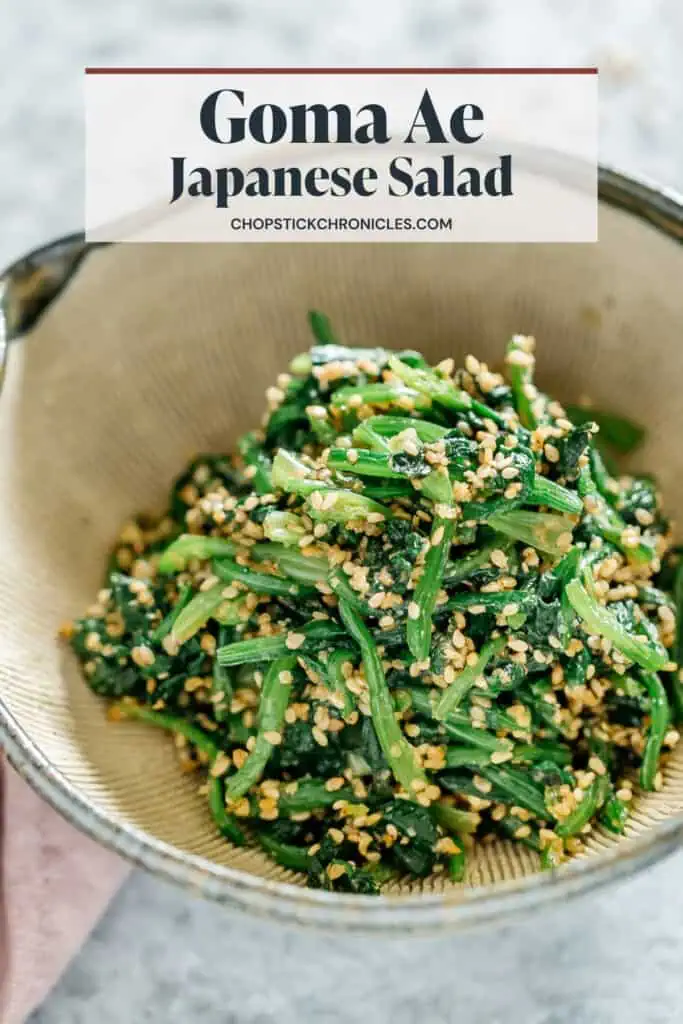
Goma ae (胡麻和え) is a Japanese side dish made from vegetables dressed with sesame sauce. It makes eating healthy super easy because it’s so delicious. You’ll find yourself craving vegetables with goma ae and eating them more and more because the dressing draws out the vegetables’ natural umami flavour!
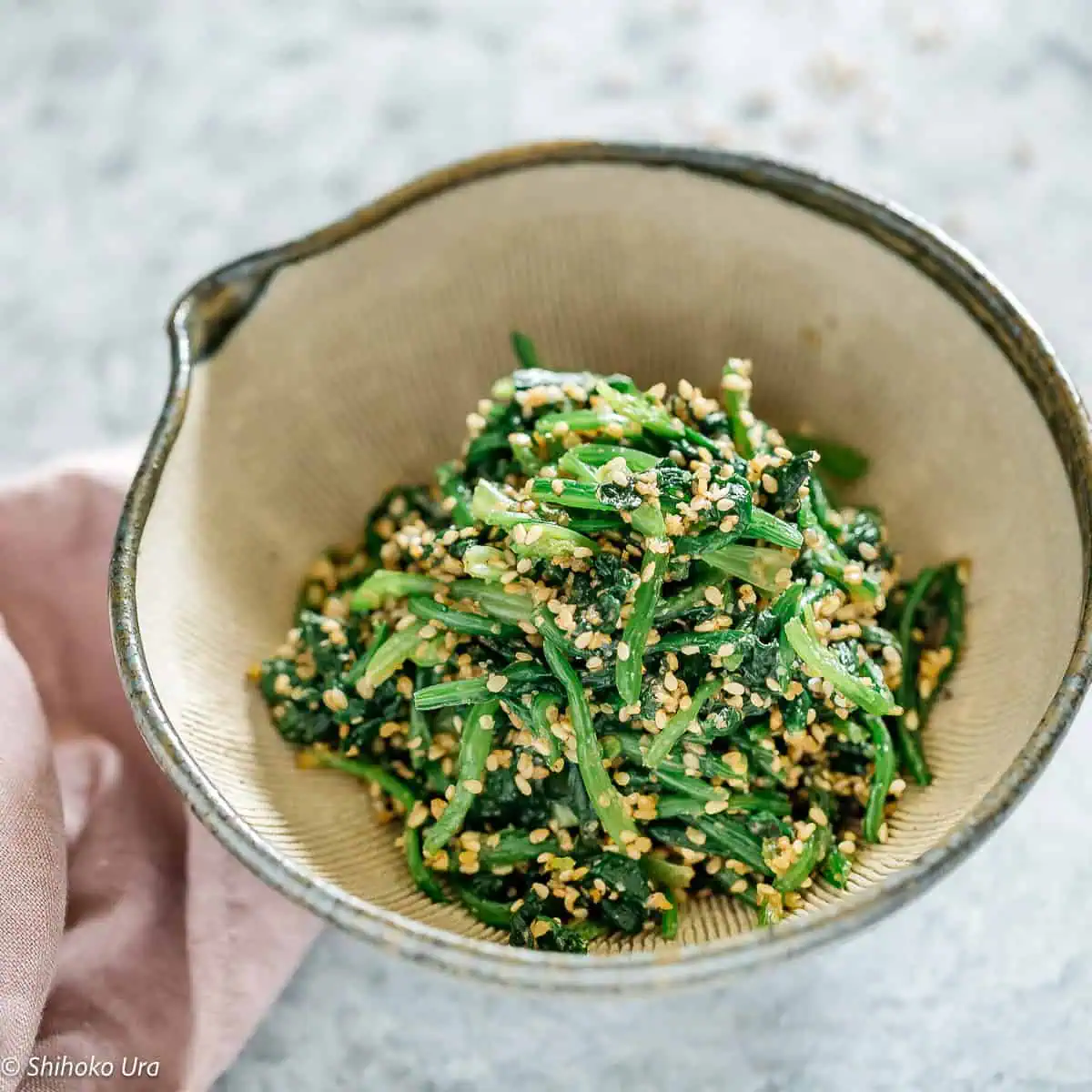
Table of contents
What is Goma Ae?
Goma Ae is a Japanese dish made from vegetables dressed in sesame seeds. Goma is the word for sesame seeds in Japanese and Ae is from the verb Aeru which means to dress vegetables, salad etc. It is also spelled gomaae in some Japanese restaurants. You will find many vegetables dressed with sesame salad dressing. Typical and common vegetables used for gomaae are green beans and spinach.
Ingredients Needed to Make Goma Ae
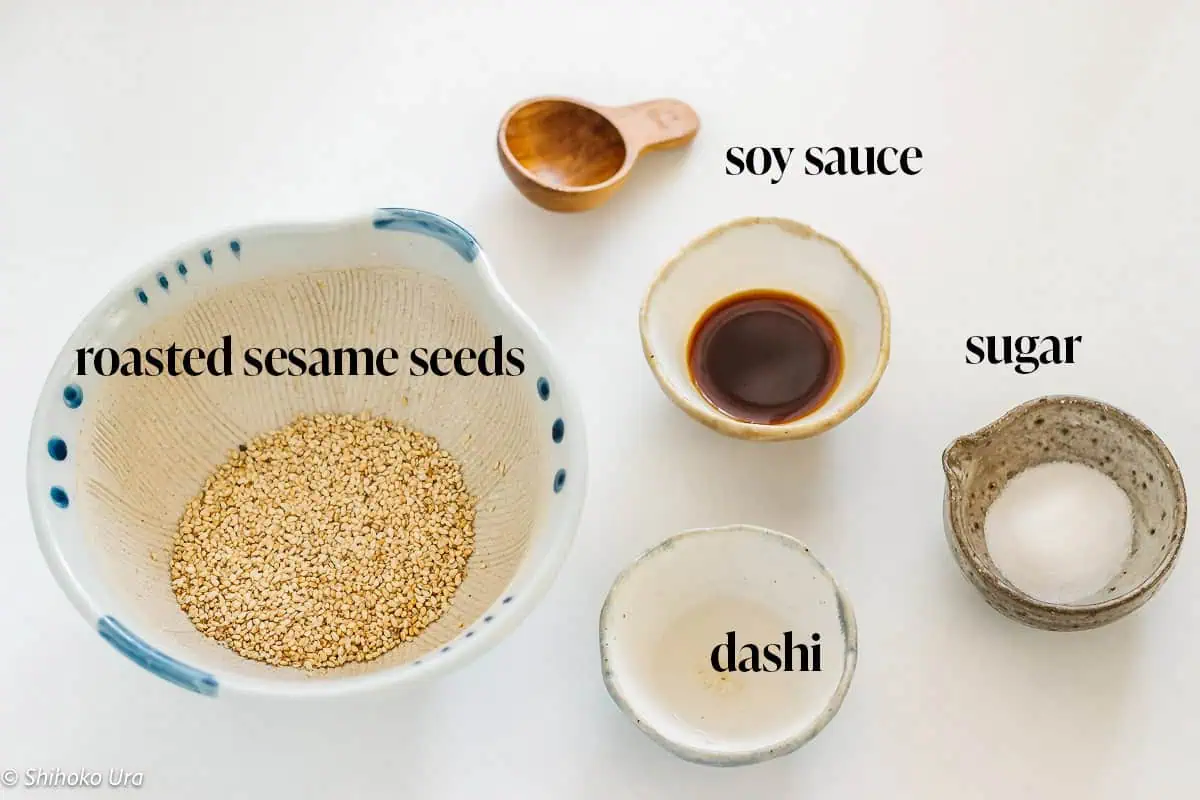
Goma (sesame seeds)
Sesame seeds are the key ingredient to this tasty side dish. They’re nutritious and add a delicious nutty flavour to the vegetables.
We use two varieties of sesame seeds; black sesame seeds (kuro goma) and white sesame seeds (shiro goma) in Japanese cooking. Black sesame seeds have a more bold aroma and are less oily while white sesame seeds have a subtle flavour and more oil. Both types are used to make goma ae.
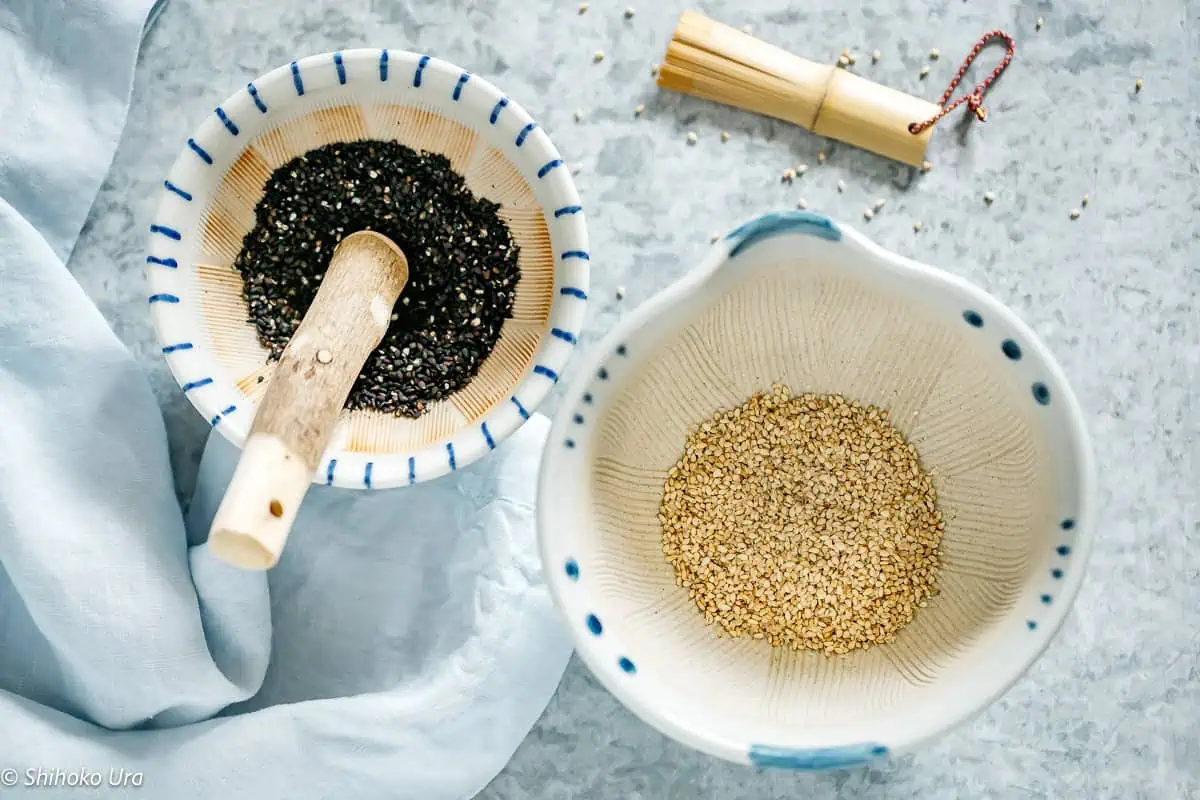
You will also find toasted sesame seeds, ground sesame seeds, and sesame paste in Japan. Toasted white sesame seeds are often grounded and used for Goma ae dressing. Black sesame seeds are more aromatic so it is used for toppings and deep-frying batter. Also, it is used for sweets such as Black sesame ice cream and sesame cookies.
Variety of Vegetables to Make Goma Ae
The most common types of gome ae are “Spinach Gomaae” and “Green beans Gomaae”. But there’s more variety than this and several different kinds of vegetables can be used with different types of sesame seeds.
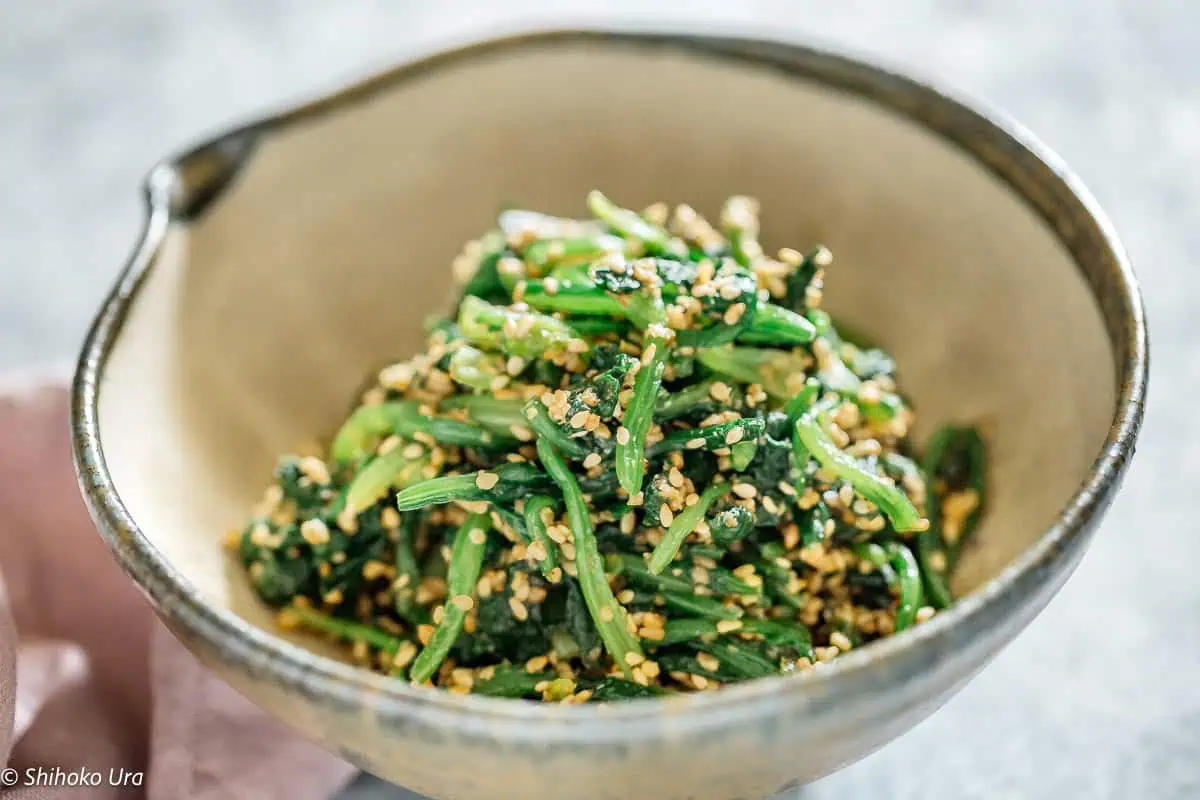
Spinach (hōrensō)
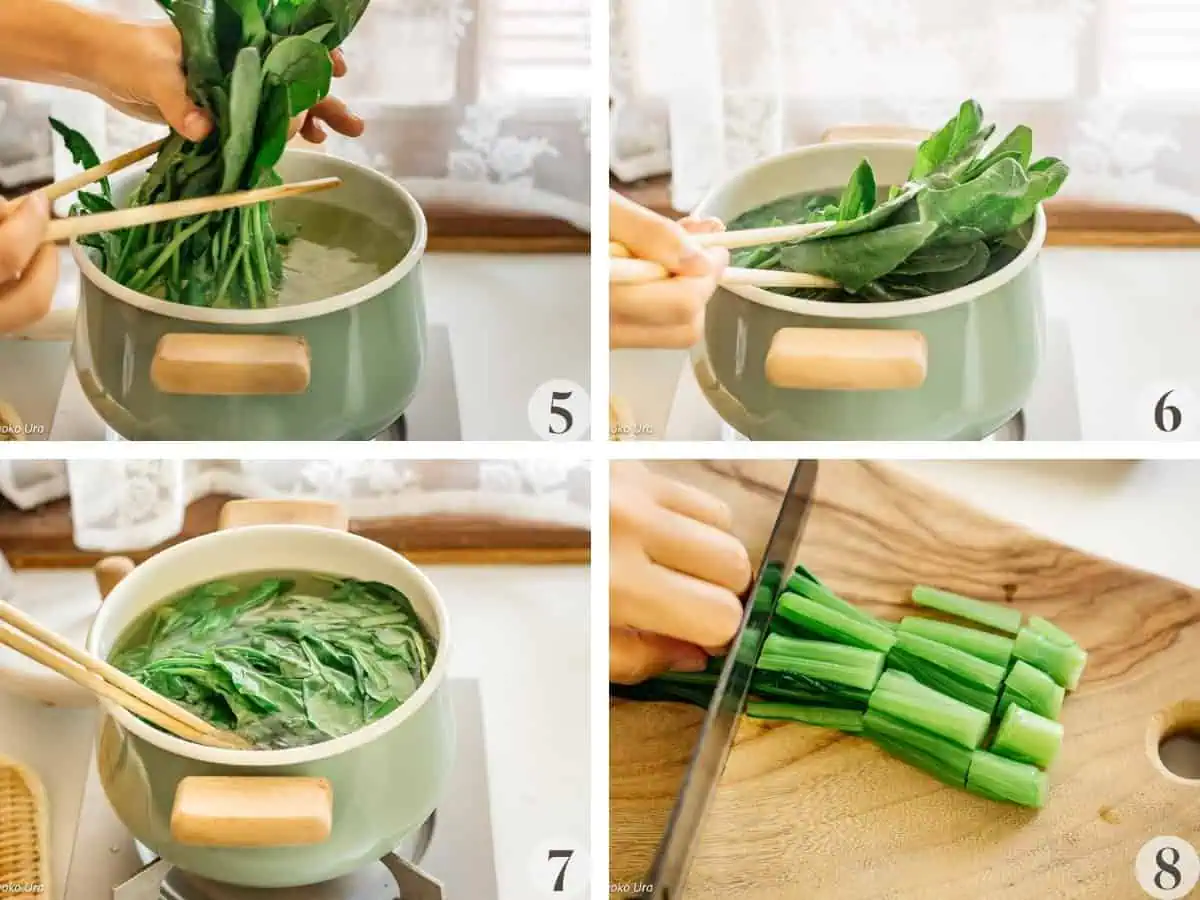
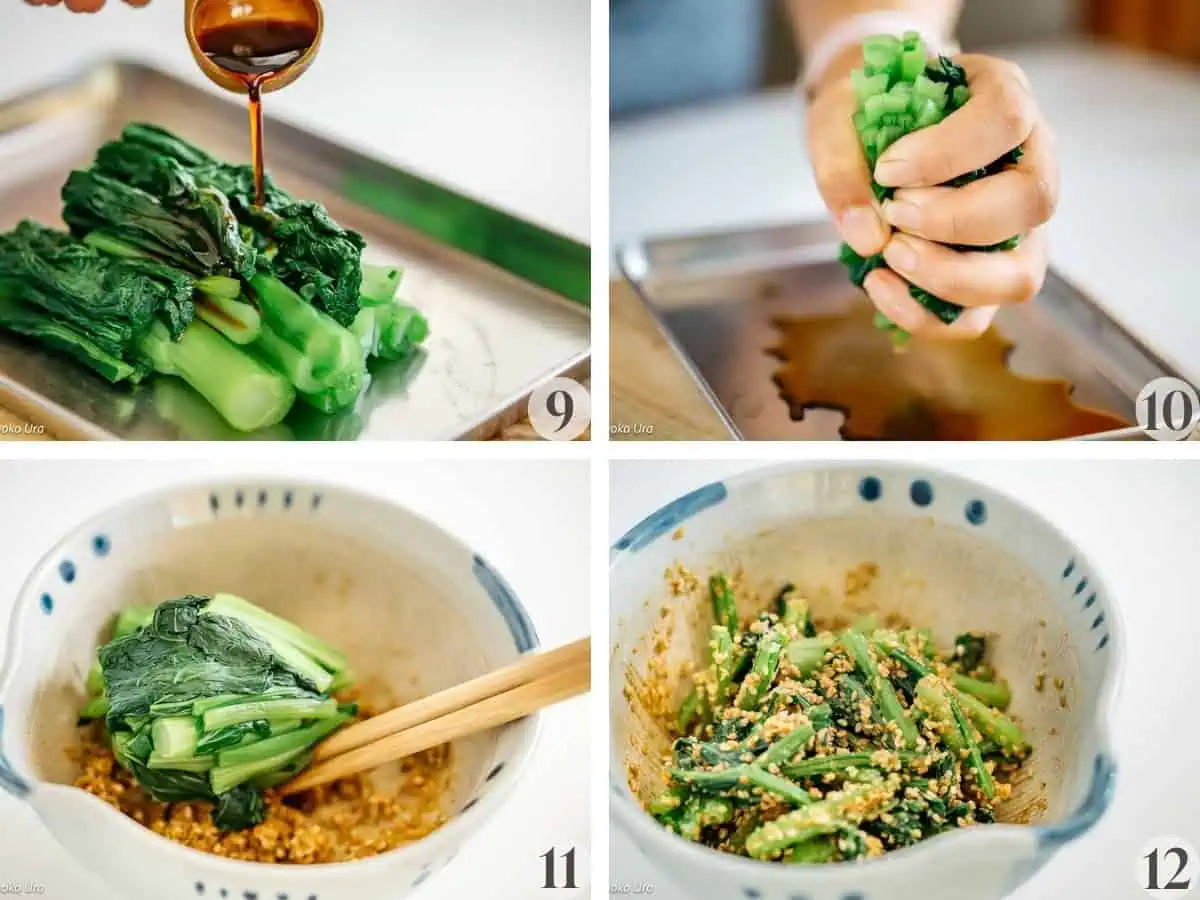
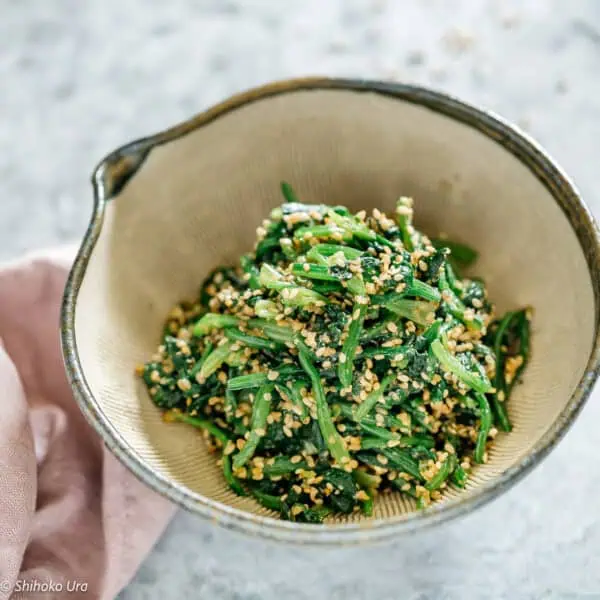
Goma ae is my favourite way to eat spinach. It’s a popular choice for goma ae because spinach is readily available all year round and the sesame dressing helps eliminate some of the bitter flavor. When you cook the spinach, boil a large pot of water and put the stem side of the spinach in the boiling water first for about 30 seconds, by holding the leaves with your hand. Then let the leaves fall in the boiling water for 30 seconds.
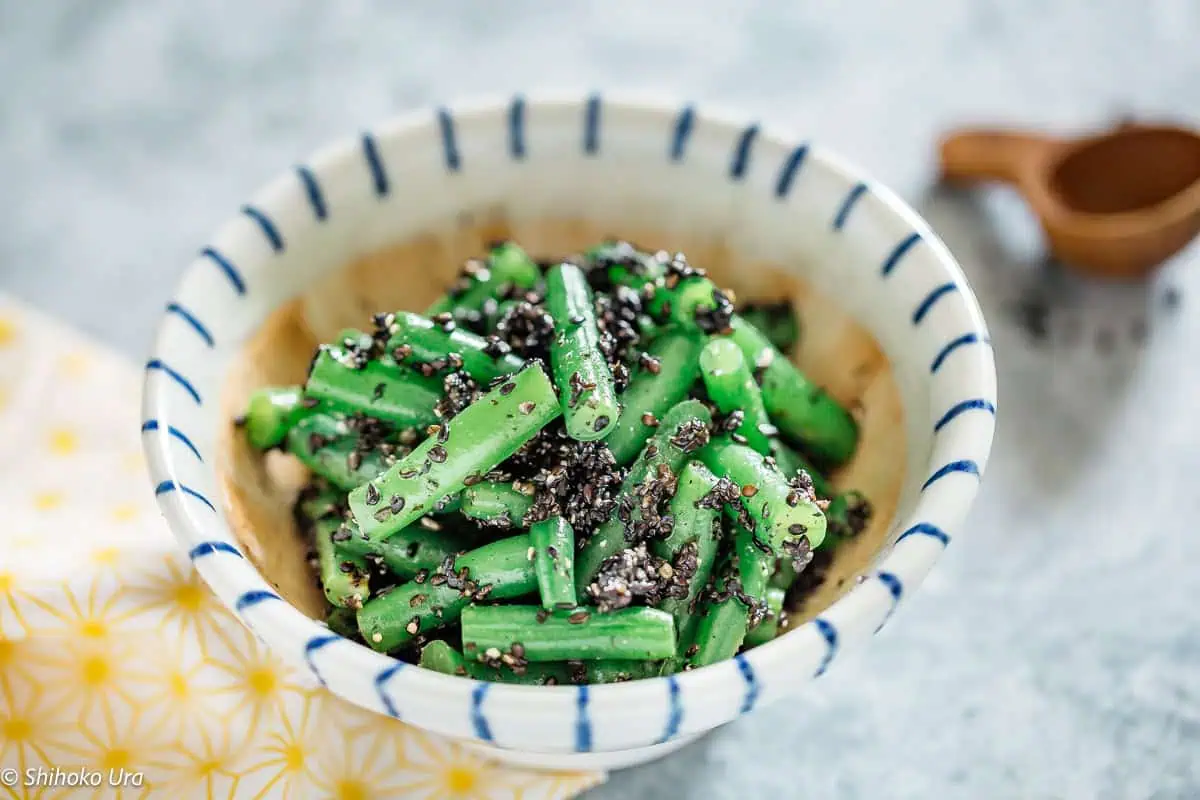
Green Beans (sayaingen)
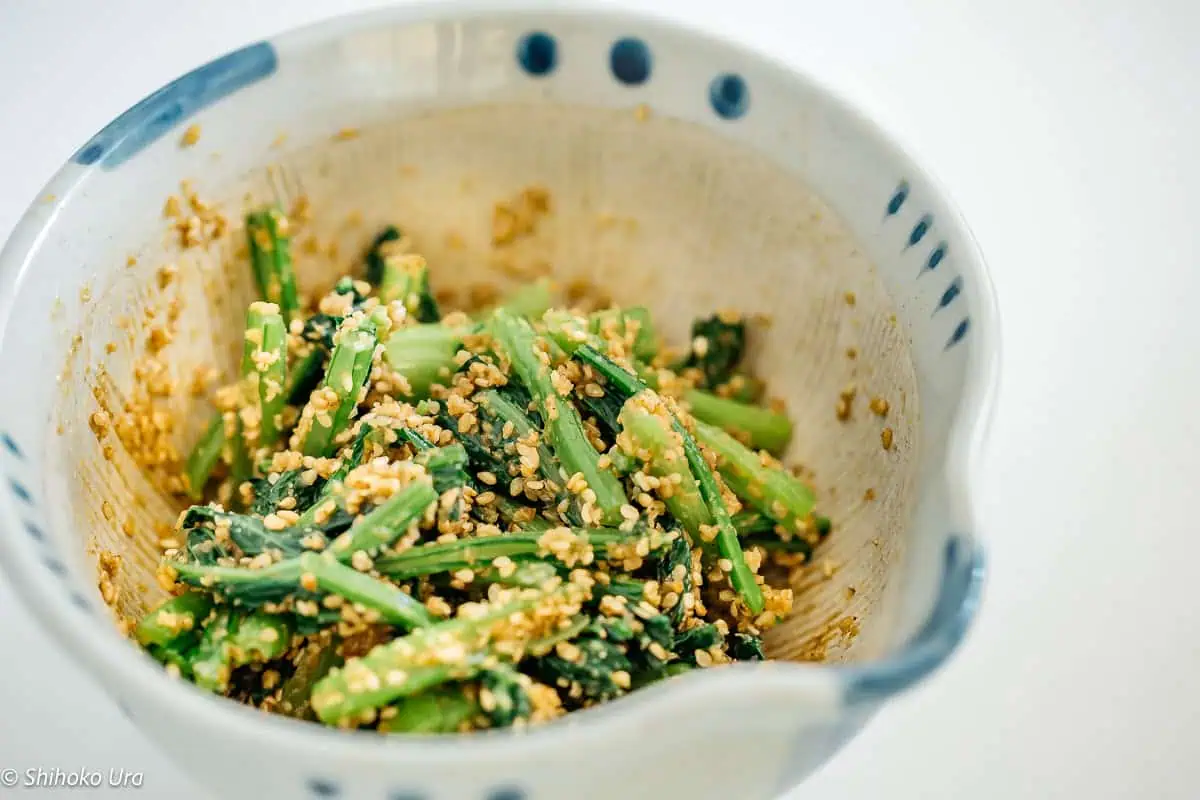
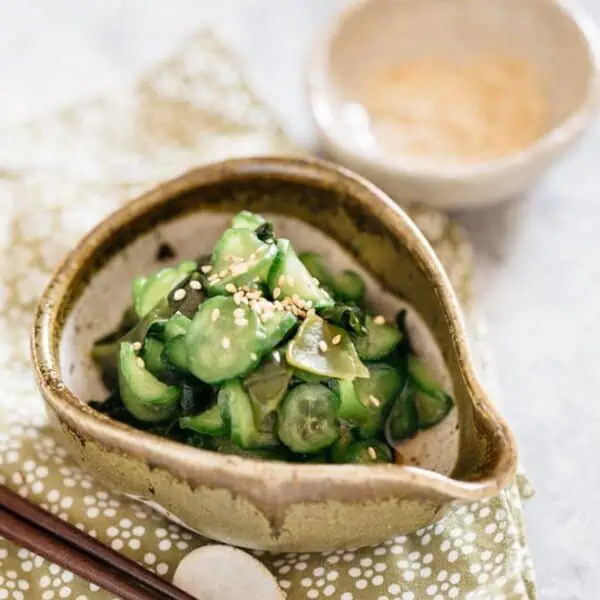
Green beans are also a readily available vegetable even outside of Japan. So this is a great vegetable to use for goma ae. I used black sesame seeds for this to create some variety in flavour and texture.
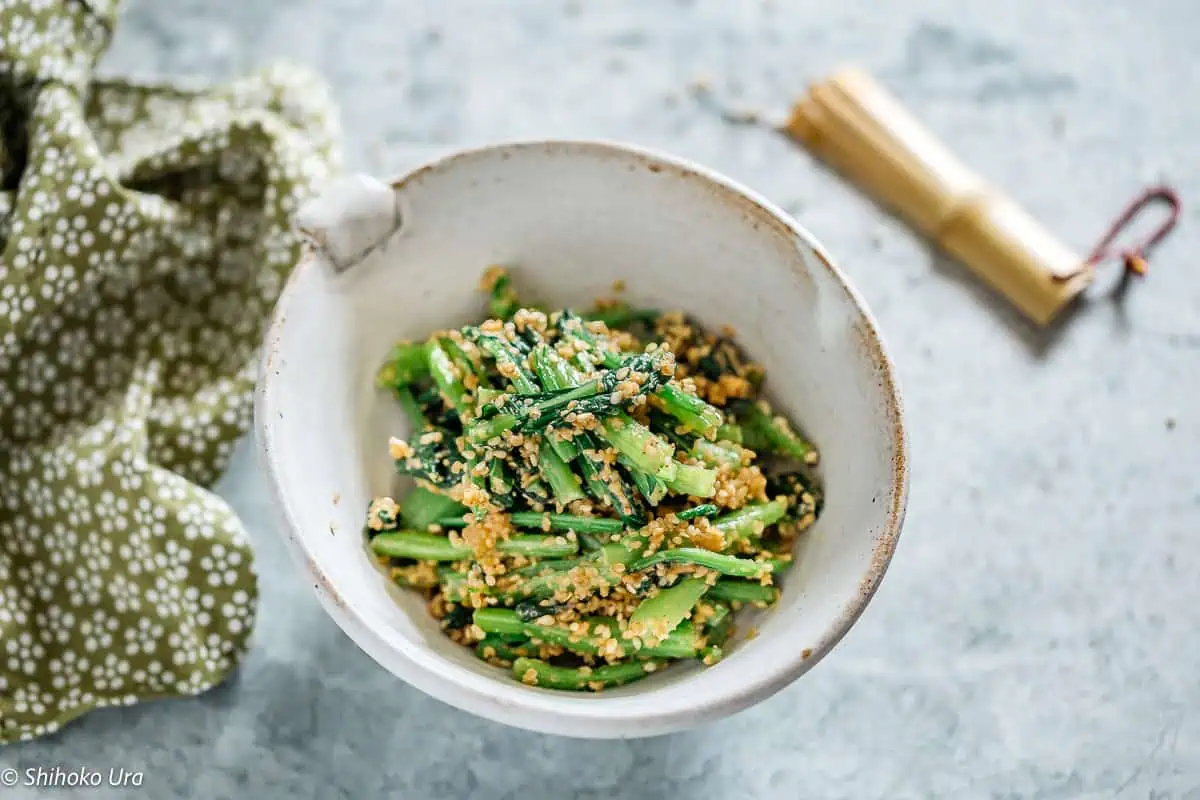
Japanese mustard spinach (komatsuna)
Komatsuna is known for its impressive nutritional value. It contains vitamin C, calcium and beta carotene. It’s commercially grown in Japan and Taiwan but you can also get Komatsuna from your local Asian/Japanese grocery stores.
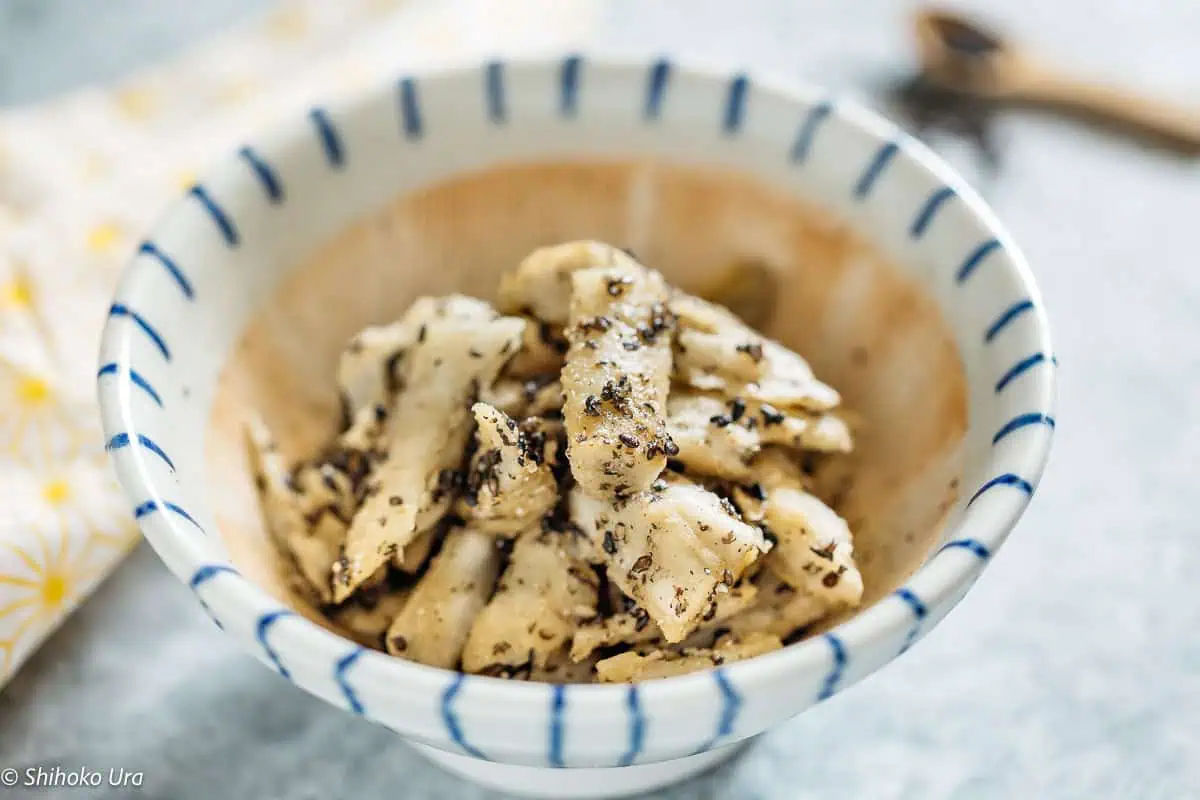
Burdock roots (Gobo)
Gobō is the Japanese name for burdock roots. Burdock roots are a good source of potassium, fiber, amino acids, calcium, and antioxidants. It is a popular vegetable for its distinctive flavour in Japan commonly consumed as “Kinpira Gobō“.
Other variations
You can use gomaae for broccolini, broccoli and carrots as well. You can also add walnuts, peanuts, peanut butter, and pine nuts etc to create more variations of the dressings.
Handy Kitchen Equipment to Make Goma Ae
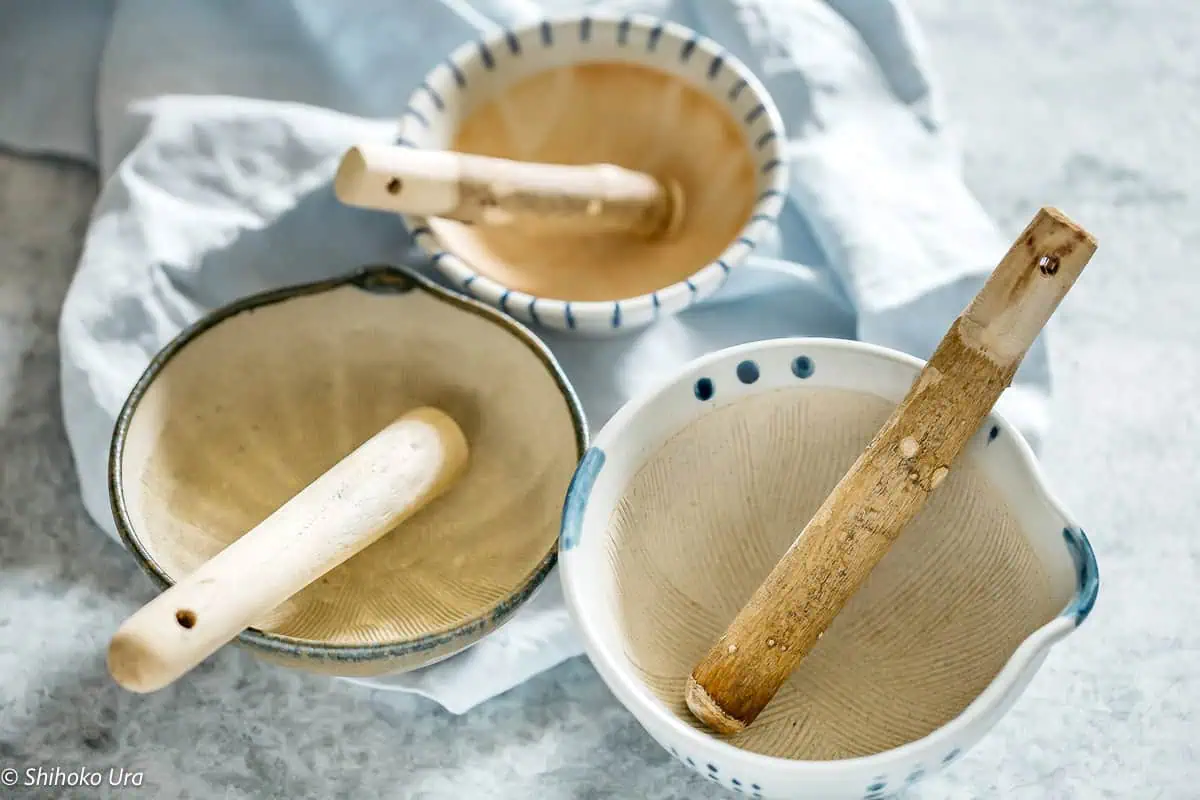
Japanese people use a ceramic mortar, which is called “Suribachi” in Japanese, and a pestle to grind sesame seeds. There are a variety of designs, sizes, and colours. An all-round good size to have is around 18-20 cm(7-8 inch) in diameter.
How to Make Goma Ae
- Blanch vegetables such as spinach or green beans, squeeze out moisture and set aside.
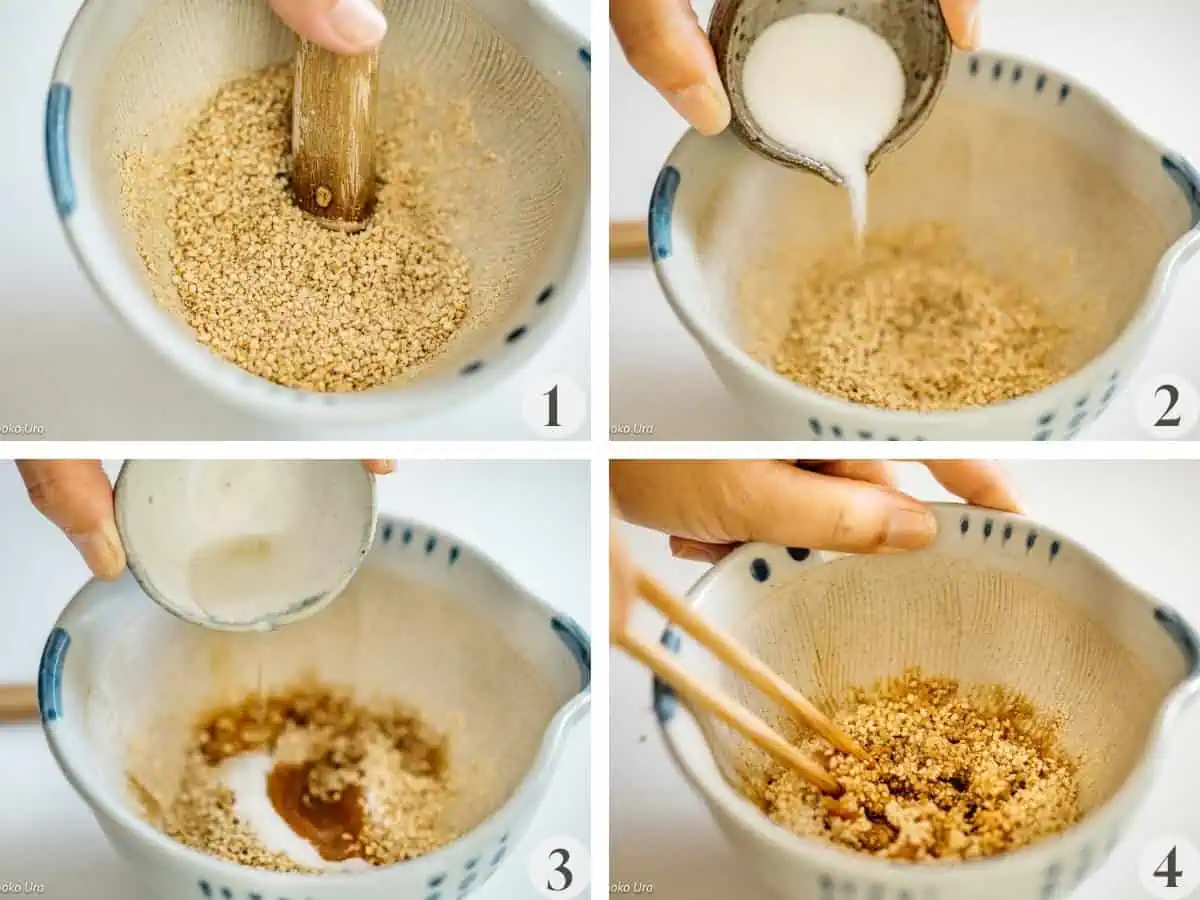
- Grind the sesame seeds in a Japanese mortar with a wooden pestle until they are crushed but still have some texture.
- Add soy sauce, sugar, and mirin. Mix well until everything is fully incorporated.
- Add prepared vegetables and toss together.
Tips to make Goma Ae
- Remove the moisture from the vegetables well: If there is any moisture left in the vegetables, it will cause the sesame sauce to become watery. Drain the boiled vegetables thoroughly before tossing them with the dressing.
- Toss just before eating: Sesame dressing will become watery as time passes after mixing the dressing and ingredients, so be sure to mix it just before eating.
- Ground the sesame seeds: The flavor of sesame varies depending on how well it is ground. When making sesame dressing, I recommend grounding it into half pieces. Half-grinding means grinding so that half of the sesame seeds are ground, and half of the sesame seeds remain in the form of grains. You can enjoy the aromatic flavor of sesame by grounding the sesame seeds half way through. Also, when using commercially available roasted sesame seeds, the flavor will be even better if you lightly roast them again before using.


Stay connected
If you like the recipe please rate the recipe and leave comments below. Also don’t forget to follow me on Youtube, Pinterest, Facebook, Twitter and Instagram. This way you keep up to date with all the latest happenings on Chopstick Chronicles. Don’t forget to Sign up for a weekly newsletter so you never miss out on new authentic delicious Japanese recipes!
Goma ae 胡麻和え
Video
Equipment
- Japanese mortar and wooden pestle
Ingredients
Gomaae dressing
- 3 tbsp sesame seeds *1
- ½ tbsp sugar
- ½ tbsp soy sauce
- ½ tbsp dashi *2
Spinach (Hōrensō)
- 200 g Spinach *3
- 1 tsp soy sauce
Green Beans (Sayaingen)
- 200 g Green beans
Japanese mustard spinach (Komatsuna)
- 200g g Japanese mustard spinach
- 1 tsp soy sauce
Gobō burdock roots
- 200 g Gobō burdock roots
- 1 tsp vinegar
Instructions
Gomaae dressing
- Place the sesame seeds in a Japanese mortar and grind them.
- Add the sugar, soy sauce and dashi. Combine them well altogether and set aside.
Spinach (Hōrensō) and Japaneses mustard spinach (Komatsuna)
- Wash the spinach.
- Boil water in large pot.
- Add the spinach bunch into the boiling water from the stemside first, while holding leaves with your hands. Cook the stem for 30 seconds, then let the leaves cook for another 30 seconds. So altogether just parboil for 1 minute.
- Take the spinach out and put them immediately in icy cold water to avoid the spinach being cooked further.
- Squeeze out the excess water and cut the spinach about 4cm/1.5inch long.
- Season spinach with soy sauce and squeeze out excess liquid again before combining with goma ae dressing.
- Add the spinach to the goma ae dressing in the mortar and toss together with the sesame sauce.
- Serve immediately. *4
Green beans (Sayaingen)
- Wash and trim the ends of the green beans and parboil the green beans for 2 minutes.
- Drain the water and cool the cooled green beans under the running water to avoid it being over cooked.
- Add the cooked green beans and toss together until the sesame sauce coats the green beans well.
- Serve in a small bowl immediately.
Gobō burdock
- Wash the gobō burdock roots and scrub the skin with the back of a knife.
- Smash the burdock roots with a wooden pestle. This step makes the sesame sauce flavour penetrate well.
- Boil water with the vinegar to prevent oxidation and to remove any astringent taste. Add the prepared burdock and cook for about 5 minutes.
- Drain the water, and toss together with sesame sauce.
- Serve in a small serving dish.






I absolutely loved the Goma ae recipe! The sesame dressing was so flavorful and added a delightful twist to the spinach. Can’t wait to try it with other vegetables. Thank you for sharing such a fantastic dish!
I love how you explained the process of making Goma ae! The tips you provided for getting the right texture really helped. Can’t wait to try it out with my favorite vegetables. Thank you for sharing this delicious recipe!
I loved how you explained the steps for making Goma ae! The tips for balancing the sesame flavor really stood out to me. Can’t wait to try this at home! Thank you for sharing such a delicious recipe!
I loved reading about Goma ae! It’s such a simple yet flavorful dish, and your tips on achieving the perfect sesame paste really inspired me to try making it at home. Can’t wait to experiment with different veggies! Thank you for sharing!
I loved this post! Goma ae is one of my favorite Japanese dishes, and your detailed explanation of the preparation process made it feel so accessible. I can’t wait to try making it at home! Thank you for sharing!
Thank you WealthDT6 😀
I absolutely loved your post on Goma ae! The step-by-step instructions made it so easy to follow, and the history behind the dish added such a nice touch. I can’t wait to try making it at home—thank you for sharing!
Thank you 😀
I absolutely love the detail you provided on making goma ae! The step-by-step instructions and tips for achieving the perfect sesame paste really helped. I can’t wait to try this at home – it sounds so delicious and healthy! Thank you for sharing such a wonderful recipe!
You are welcome, and Thank you for leaving a comment 😀
I absolutely loved this post! Goma ae is one of my favorite Japanese dishes, and your recipe made it look so approachable. I can’t wait to try it at home. Thank you for the detailed explanation and the beautiful photos!
I absolutely loved this post! Goma ae is such a delicious and versatile dish. Your recipe makes it seem so simple to prepare. I can’t wait to try it at home! Thank you for sharing the tips and background on the ingredients too.
I absolutely love the simplicity and depth of flavor in Goma ae! Your recipe makes it look so easy to prepare. Can’t wait to try it out at home—thank you for sharing such a delightful dish!
I absolutely loved the detailed explanation of goma ae! Your tips on the sesame dressing are incredibly helpful. I can’t wait to try making it at home. Thank you for sharing such a delicious recipe!
Thank you for your feedback and 5 star rating 😀
Hello Shihoko, I just found your blog today and we had the shungiko Goma-ae today. We are so affected with the Japanese cuisine that I just can say: I am more than happy that I found your blog !!! It was delicious and I will make it with different greens in the near future.
Thank you Christiane 😀
Thanks for the recipe, I loved it.
I’d really love to try this recipe, but what do you recommend if I don’t have a mortar and pestle?
Hi Anita, do you have a small food processor?
Thank you for this recipe! I have tried many gomae recipes and this is definitely one of the best. I like how the sauce is more like a thick paste. I think I’ve made it too watery in the past. Your ratios make sense. Saving this one for the books!
Hi Stefani, Thank you 😀 for 5 star rating and great to know your gomaae turned out good with my recipe Thank you!
Thanks for this recipe. I needed to eat more green vegetables and this is easy and yummo.
Ohhh Thank you Frank. I have been making this a lot too lately to lose the wight I gained in holiday season.
We live in the country
Getting I ingredients is almost impossible
Such as dashi, bonito flakes etc.
I have looked at online sites but find them unsatisfactory, mostly they are there for Asian speaker’s I need to be able to be confident in what I am buying
For instance, Miso, how do I buy a low sodium Miso.How ma y others are frustrated?
Hi Roy I understand your frustration and sorry that I don’t have solution. I also live outside of Japan and sometimes I don’t get what I need. I would like to help you to get the right ingredients that you are looking for as much as I can. For low sodium miso, you can may be contact Hikari Miso.
Hi Roy, this will only be helpful if you live in Australia like me, but you could try Exotic Groceries (.com.au). I haven’t noticed any low sodium miso, but they do have good English labelling on their products and deliver country wide. You can certainly source dashi and bonito from there.
Thank you Saskia for the information.