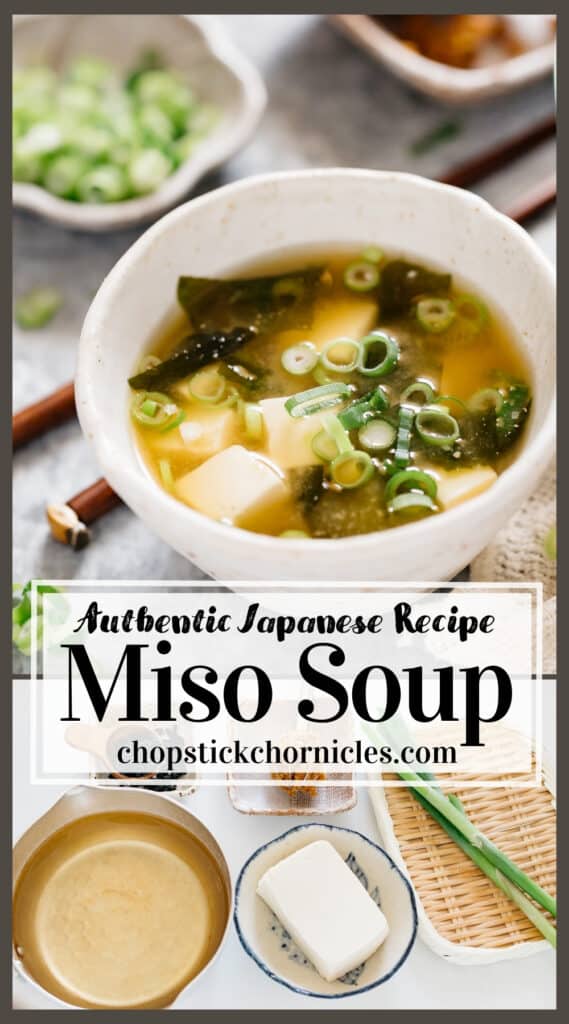
Miso soup also is known as “miso shiru” is a very simple yet very delicious and flavourful soup packed with umami. It’s an integral part of Japanese cuisine and a staple at nearly any Japanese restaurant. It’s also an easy thing to make yourself to bring a taste of Japan into your everyday cooking.
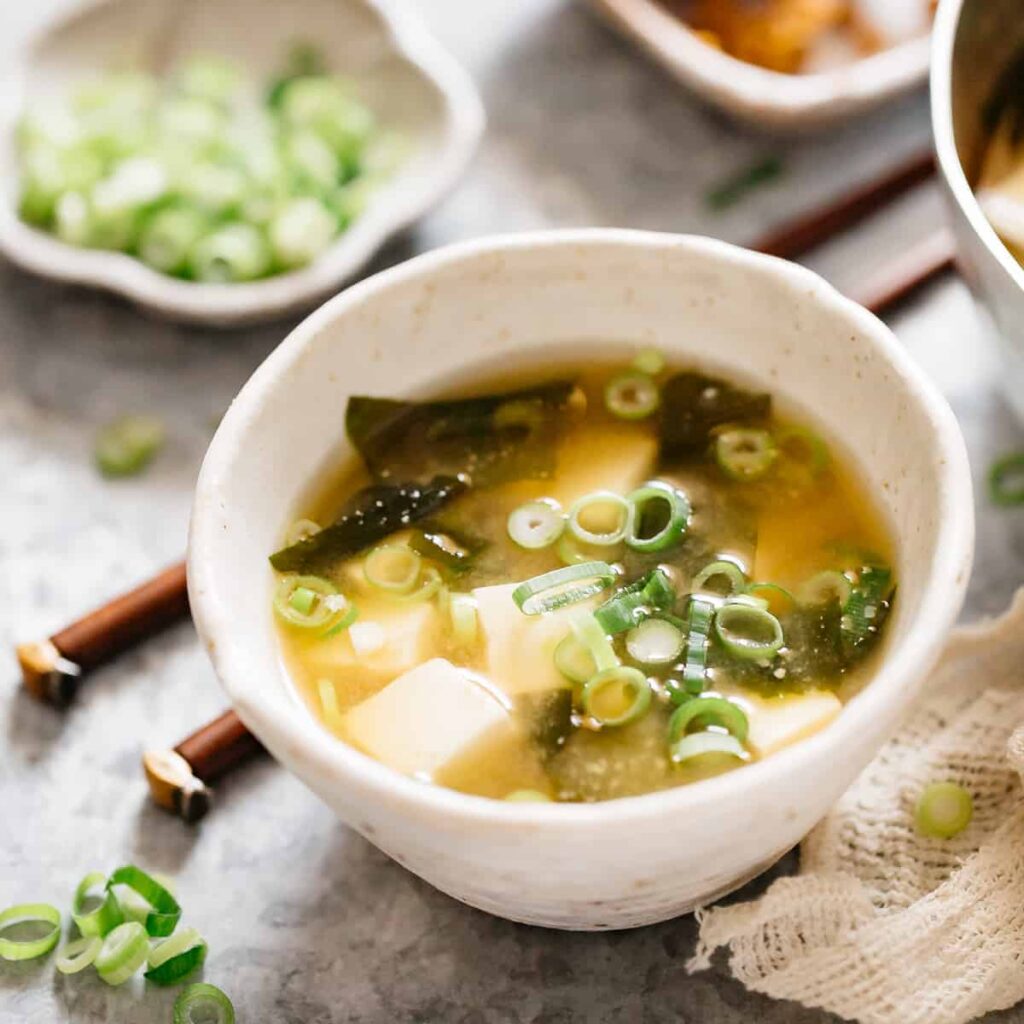
Enjoy it served simply with just green onions or add a variety of ingredients to make delicious flavour-packed combinations. Let’s learn the authentic miso soup formula with homemade miso paste!
Table of contents
What’s Miso Soup?
Miso soup is a traditional Japanese soup made from base ingredients of miso paste and dashi. From there many other types of ingredients are added to create varieties of miso soup for different tastes, regions, seasons, and festivities. Green onions, seaweed (wakame), and silken tofu are some of the key ingredients as they pair well with the flavour of the miso creating a well-rounded soup.
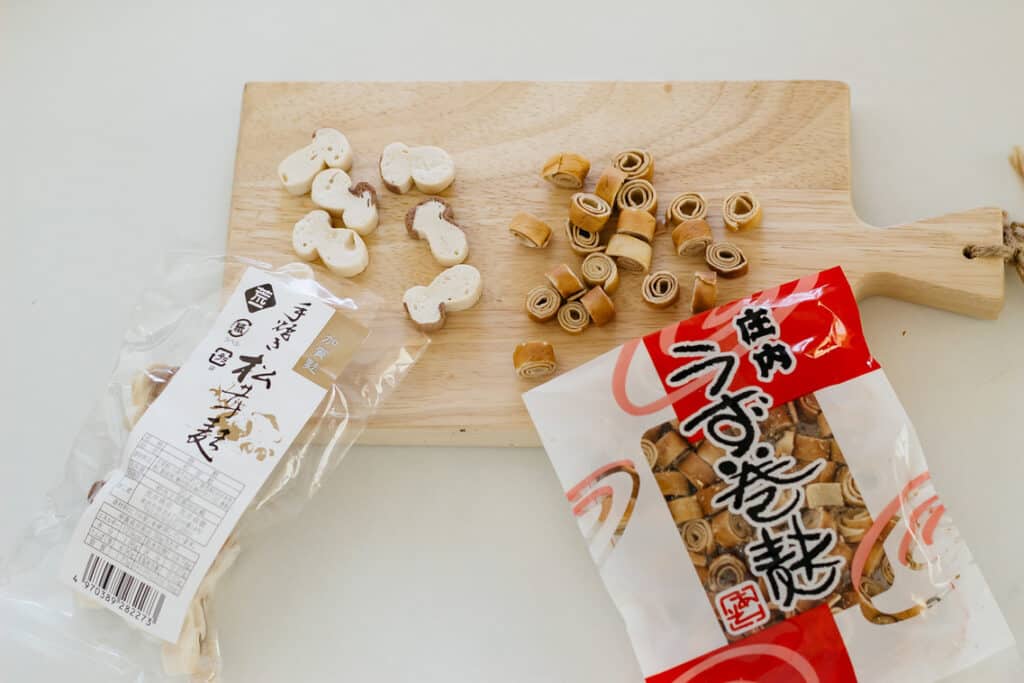
There are many other ingredients you can choose to add flavour, texture, and colour. My personal favourites are purple sweet potato and somen noodle. Other options include mushrooms, onions, daikon (radish), and clams. You can add what you like, however, typical miso soup recipes do not contain too many additional ingredients. Japanese people generally will use seasonal ingredients to create miso soup that fit the current season and utilises vegetables that are at their peak.
How Is It Made?
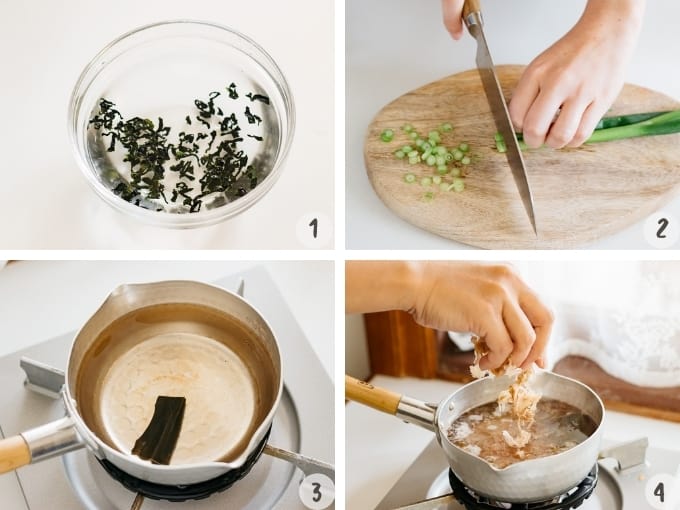
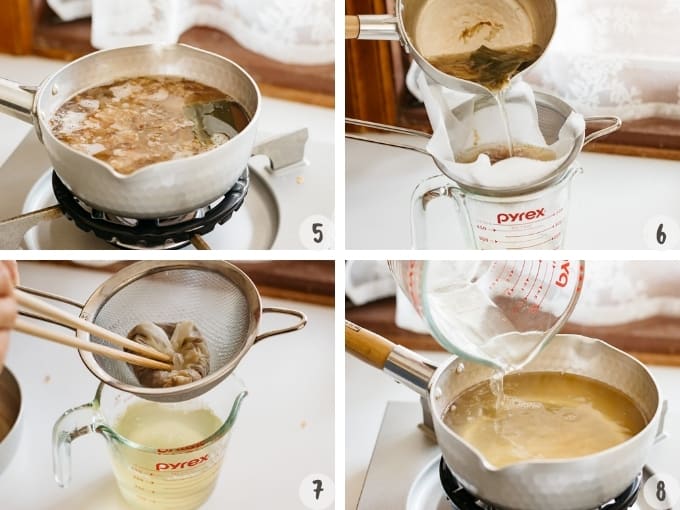
- Prepare Dashi – You can either prepare dashi from instant dashi powder or from scratch. See the dashi making from Dashi granules and how to make various dashi on my post Dashi guide.
- Cook ingredients – Cook your chosen ingredients in the dashi.
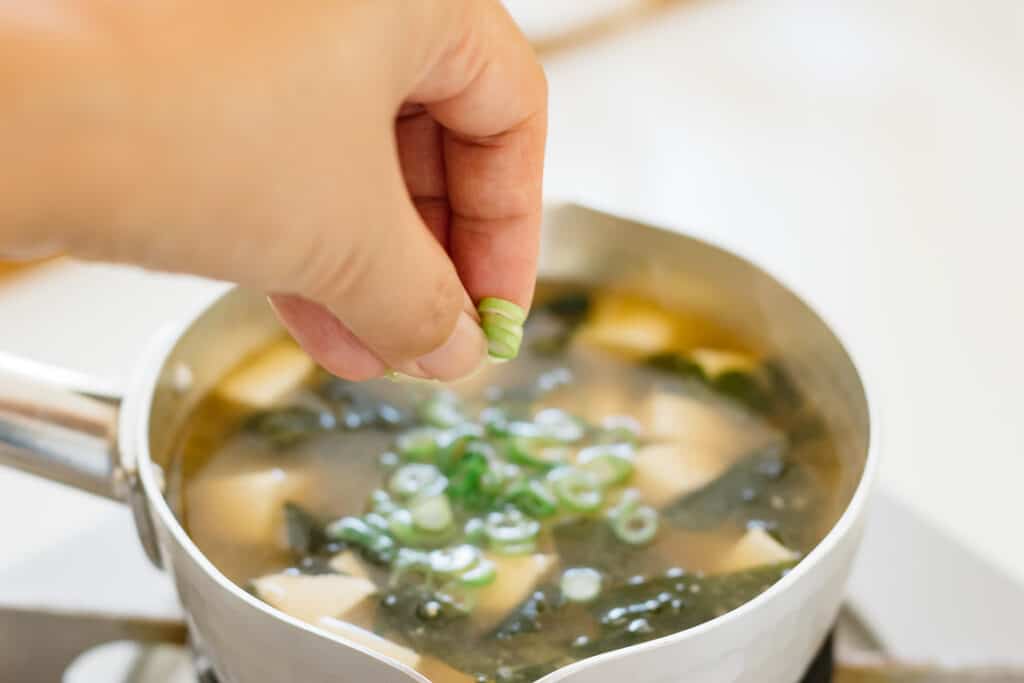
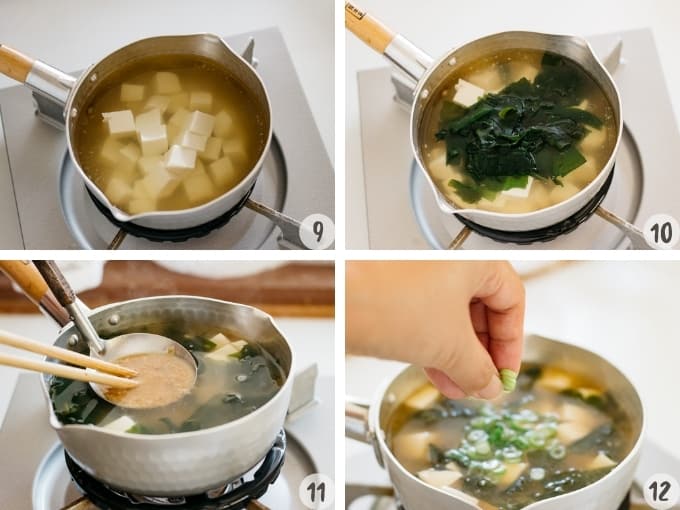
- Add miso paste – When the ingredients are cooked, add miso paste into the soup and let it dissolve. Do not let the soup boil, as it will lose the miso flavour. Garnish with finely chopped scallions to serve.

What Goes Into The Soup?
Dashi
Dashi can be prepared from scratch or you can use instant dashi powder. If you are going to make it from scratch, read my Dashi Guide. There are many different types of dashi based on what ingredients are used to make it.
Essentially Japanese follow this culinary flavour combination. Use this as a guide when you decide which ingredients to use. If you keep this basic in mind and devise a combination of dashi and ingredients, your variations will expand dramatically.
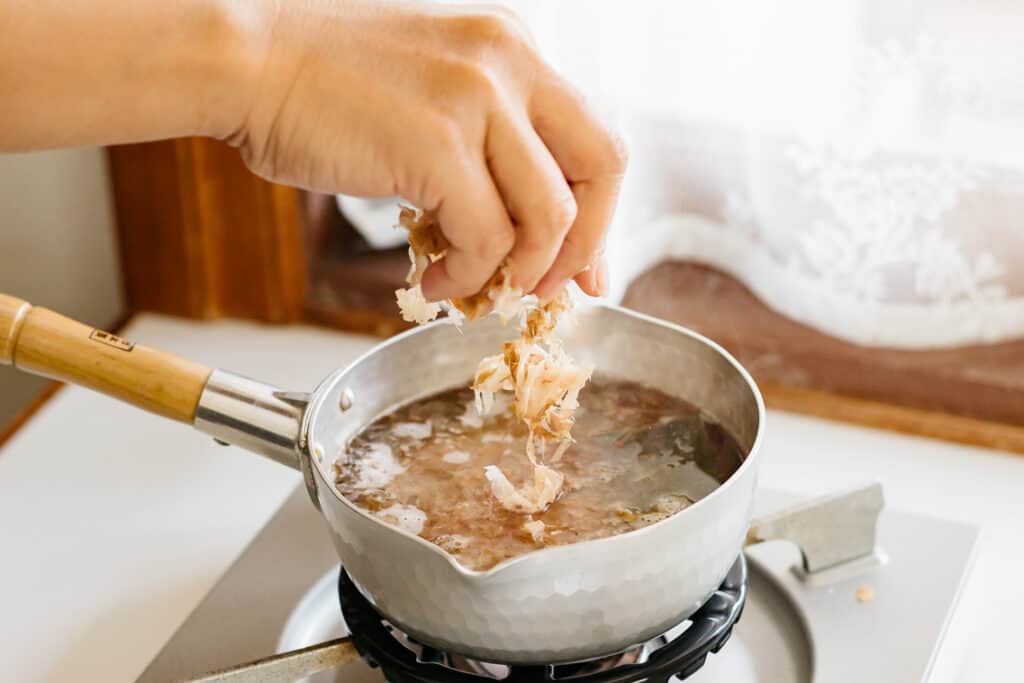
The basic combination of dashi stock and ingredients is when the dashi stock is made from plant-based such as Kombu kelp and Shiitake mushrooms, with perfectly matched ingredients of animal products such as meat, egg or fish.
When the dashi is made from an animal product such as Bonito flake and Iriko dried anchovies, well-matched ingredients are vegetables, mushrooms, and tofu etc.
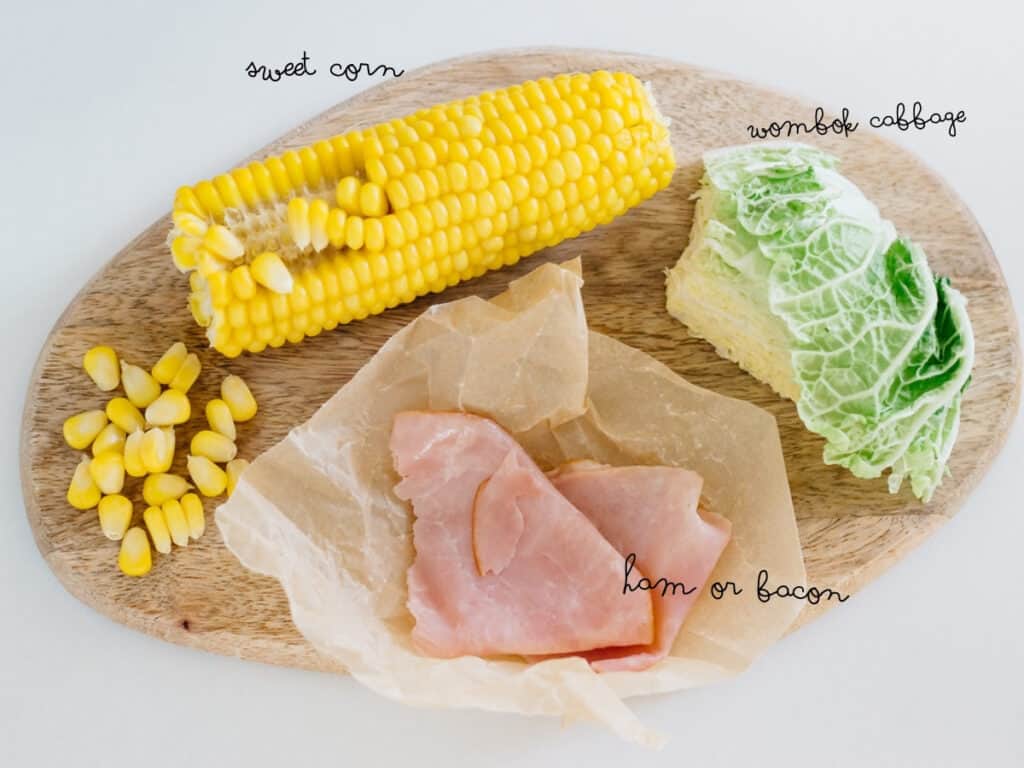
Awase dashi which is made from a combination of kombu kelp and bonito is compatible with both plant-based and any meat, egg and fish. Reference: Misoshiru Kihon
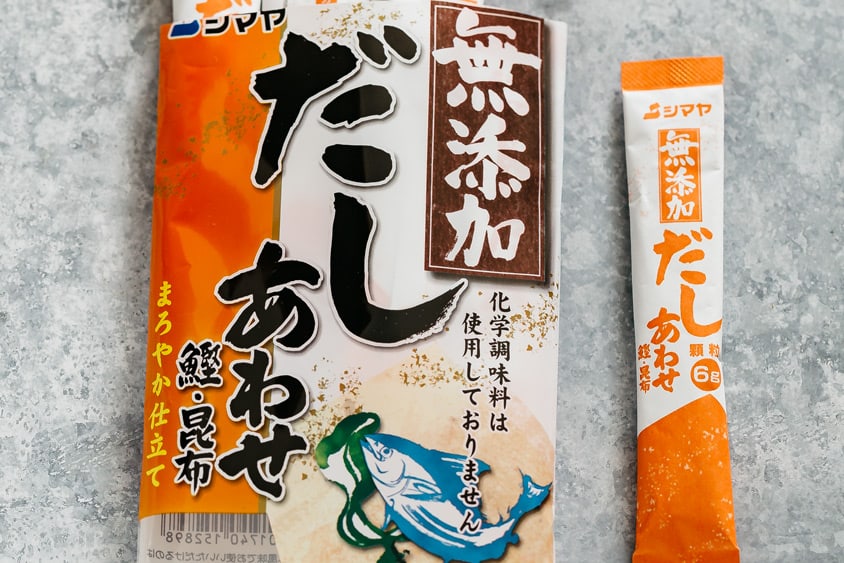
If you are going to use dashi powder, I would recommend using one with no additives. The package is marked as “無添加” like Awase Dashi Powder with No MSG (Bonito and Kelp Soup Stock)
Miso
There are mainly three types of miso paste: red, white, and mixed. Each type of miso has ingredients that are suited to each miso paste.
Red Miso: Red miso is often dry and has a rich umami taste. Ingredients that have a strong taste of their own are recommended such as meat and shellfish.
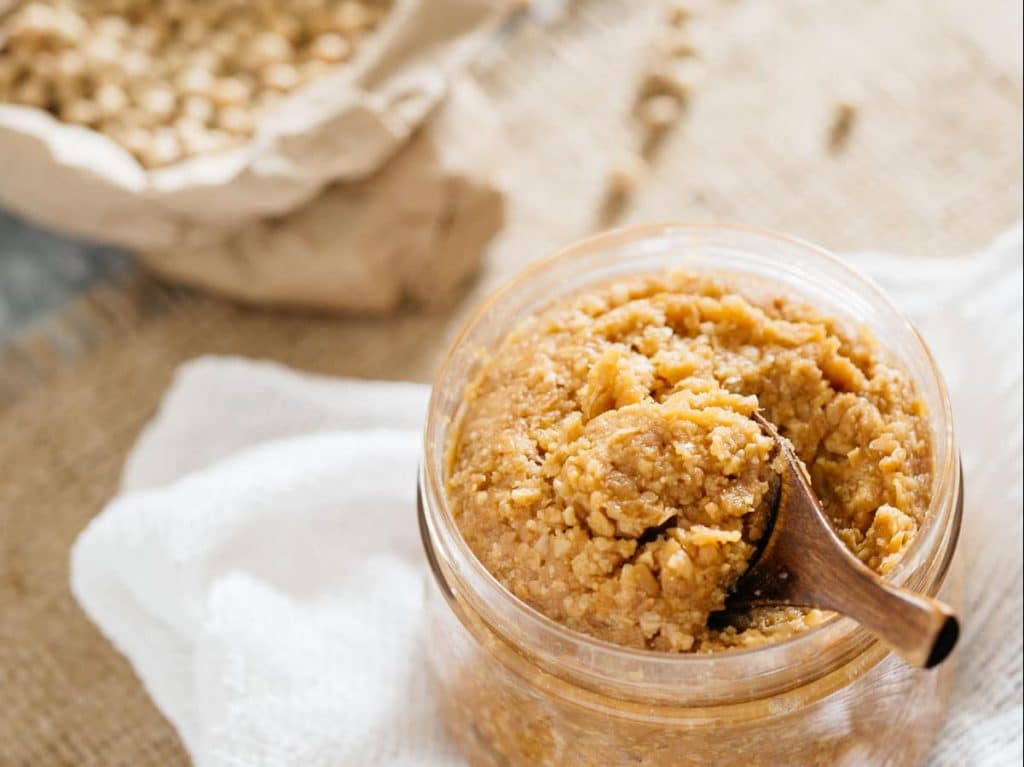
White Miso: Light and mild flavoured white miso goes well with not only ordinary ingredients but also sweet ingredients such as dumplings.
Awase Miso: Awase miso does not have a distinctive taste like red and white miso. So it does not dictate the ingredients. If you keep the ingredients simple, you can enjoy the deliciousness of this white miso flavour.
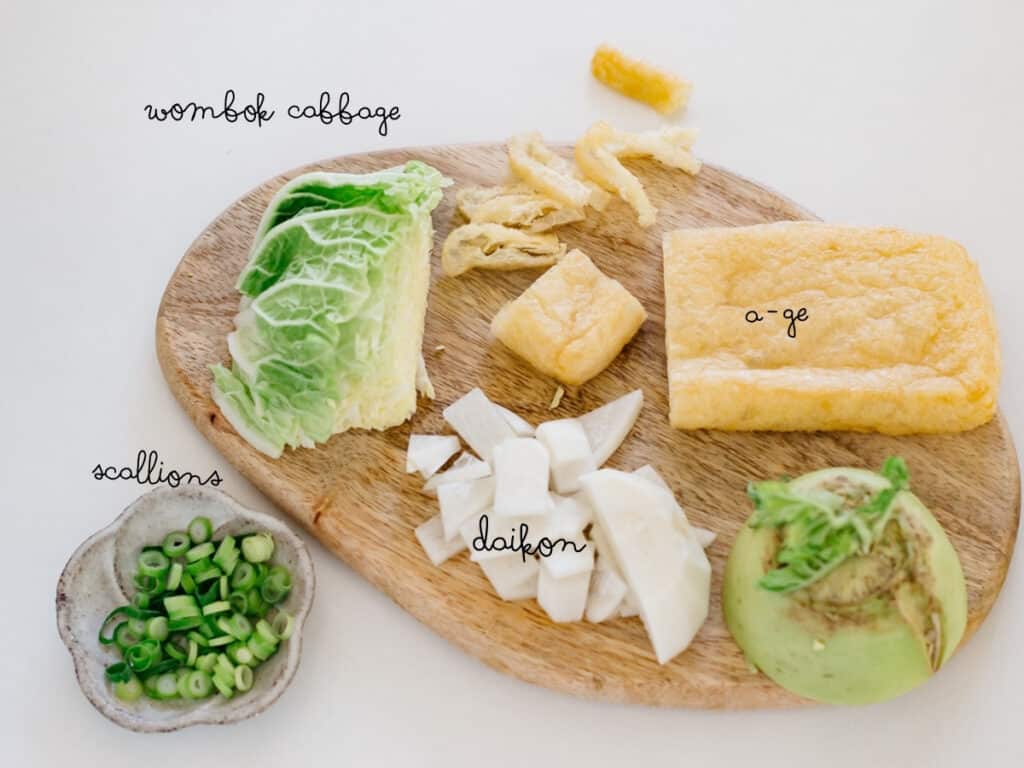
Garnishes: Suikuchi
Finish the miso soup with garnishes with “Suikuchi”. “Suikuchi” is a fragrant garnish which enhances the miso soup flavour. Green shallots are often and most commonly used but there are many others. For example, mitsuba, shiso (which is my favourite), mustard, shichini togarshi, sesame seeds, ginger, yuzu, and others. They all have a lovely fragrance and enhance the taste of the soup.

Where Do I Get Ingredients From?
The base ingredients of miso soup are dashi stock and miso paste. These are staple Japanese ingredients so both should be stocked at your local Japanese or Asian supermarket. If you don’t have a store nearby, you can purchase them online. Nowadays, miso has become more commonly used so you should actually sometimes find it from regular supermarkets in your country too.
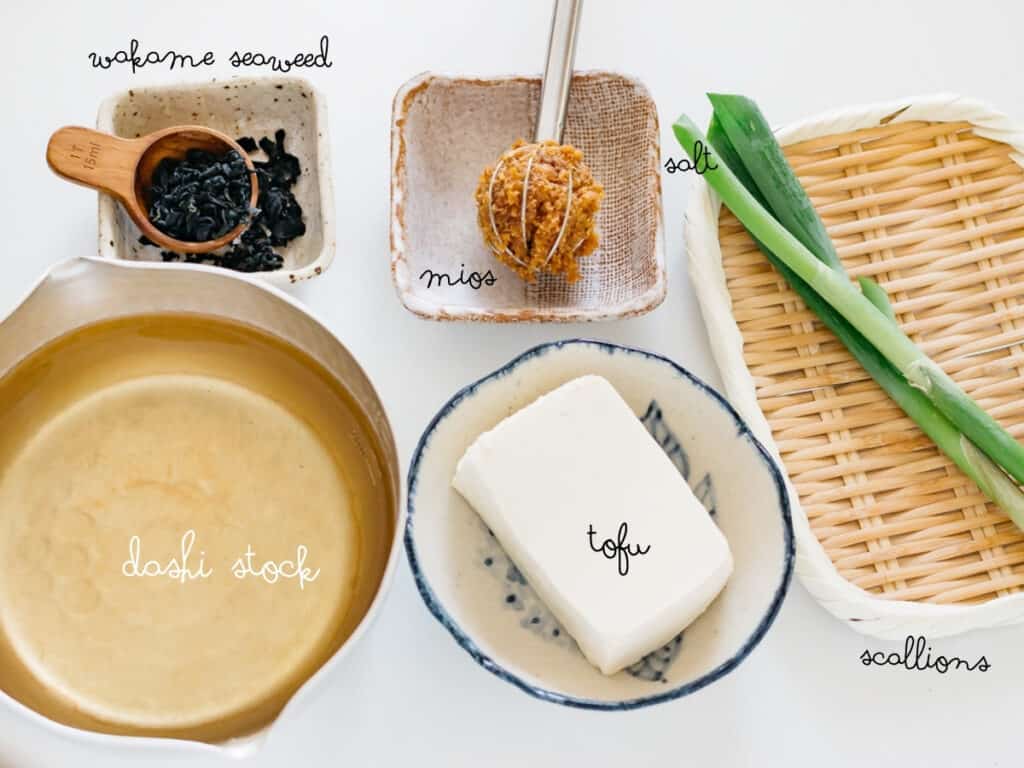
If you live here in Australia, you can find miso paste at Woolies and Coles. If you live in the US, you can find it at Wholefoods and Trader Joe’s. Beyond dashi and miso paste, the ingredients you wish to add to the soup can fit best to whatever you have access to.
Weight Loss, Fasting & Miso Soup
Miso soup is a great food for those wanting to lose weight and maintain a healthy diet. Depending on the ingredients you choose, this soup can be low carb and low calorie while still being a satiating side dish.
If you are doing intermittent fasting, miso soup can be a good option for you. You can eat it to get you through a fasting day as it is a lower calorie soup option that can help you feel full. Just be mindful of the ingredients you choose to add to avoid breaking your fast.
It’s best to make your own miso soup because the pre-packaged instant versions can contain high levels of sodium and provide much less nutritional value. Making your own means you know what’s going in it and is much healthier. Overall this authentic Japanese soup is also a tasty way to incorporate more vegetables into your diet and is a great addition to a healthy meal plan.
Miso Soup & Gut Health
Miso soup is made from miso paste which contains a probiotic known as Koji. Probiotic rich foods, such as yoghurt, fermented foods, and miso promote healthy gut bacteria and good digestion and fight off bad bacteria that can upset your stomach.
However, sometimes when introducing a probiotic-rich food to your diet, your body may initially react badly causing you to feel sick and potentially have diarrhoea. This is not common but it can happen though it shouldn’t last long once your stomach has adjusted to the introduction of healthy bacteria.
The probiotics can eventually promote healthy digestion which should stop bloating and constipation. Miso soup is also made from soy, which in some people can cause diarrhea as well. I have never experienced any adverse effects from miso soup but I have grown up eating foods like this. So just be careful if it is your first time eating miso soup.
Useful Gadget To Have
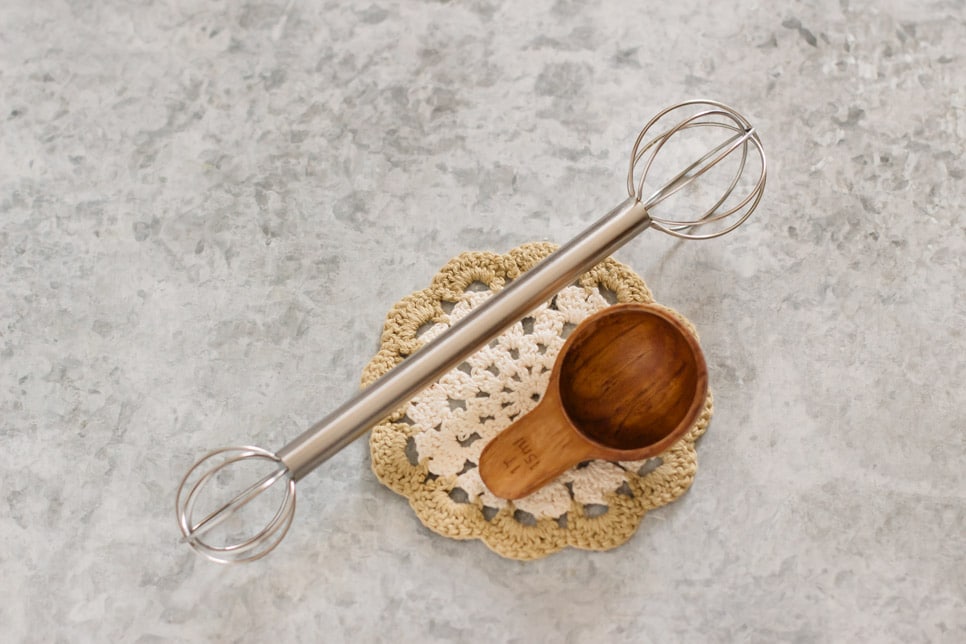
I have to give a special mention of the gadget I love. It is called the “Miso Muddler”! Stick one side into the miso paste and circle it. The larger side scoops out 2 tbsp equivalent of miso paste and the smaller side scoops out 1 tbsp equivalent. Then you can use it as a mixer! Whoever invented this gadget is a genius.
FAQ
A: No, miso soup is made from dashi which is usually made from seafood including bonito and anchovies. However, dashi can also be made from shiitake mushrooms which can make it vegan/vegetarian.
A: No, It cannot be frozen.
Related Miso Soup Recipes

Japanese miso soup 味噌汁
Video
Ingredients
- 400 ml Dashi stock *4
- 1 tbsp miso paste
- 100 g tofu
- 2 tbsp wakame (dry)
- 2 tsp green shallots chopped
Instructions
- Reconstitute wakame seaweed by putting them into a small bowl of water.
- Dice the tofu and set aside.
- Bring Dashi stock to boil in a saucepan over medium heat *5
- Add the diced tofu into the dashi stock to cook.
- Drain and squeeze out excess water out of the wakame seaweed and add wakame to the saucepan to cook for a few minutes. *1
- Turn the heat off and add miso paste
- Using a sieve, dissolve the miso paste. *2
- Once all the miso has dissolved, turn the heat back on.
- Turn the heat off just before the miso soup reaches boiling point. *3
- Serve Miso soup and garnish with chopped green shallots





What kind of miso paste did you use?
Hi Shanel, I make my own miso, I used it.
I’m keen to know what type/ brand of tofu you use? Many thanks,
Hi Alexandria, I use firm(Momen) and Silken(Kinugoshi) tofu from local Japanese grocery stores 😀