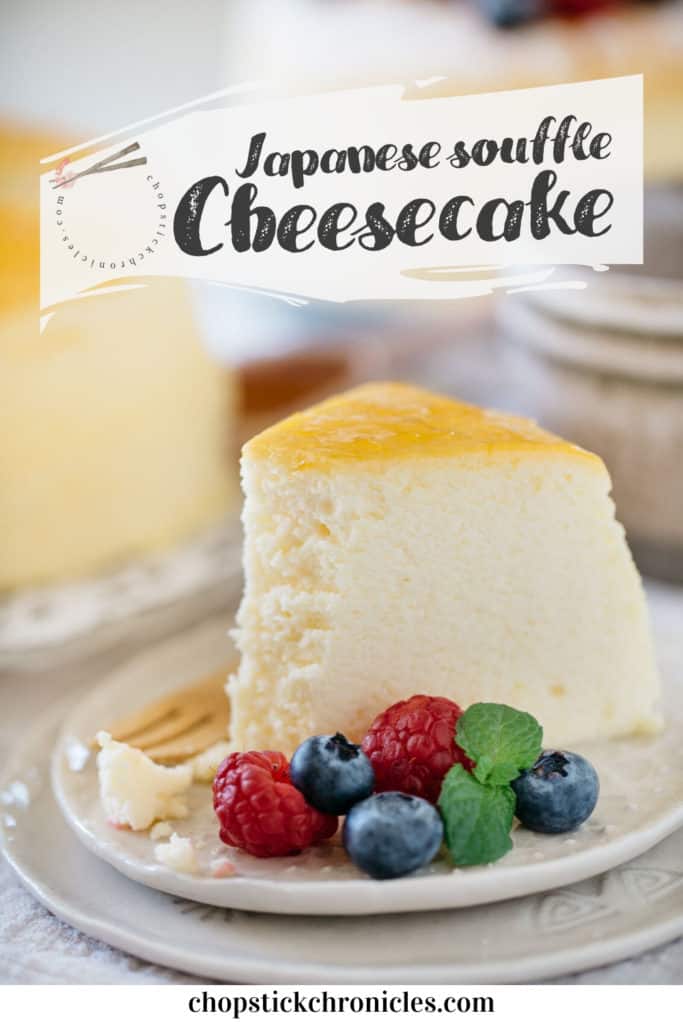
This jiggly Japanese cotton cheesecake has garnered popularity around the world because of its fluffy soft texture and lovely flavour. And the good news is that you can make it at home yourself! A few simple ingredients and a little bit of time are all you need to enjoy this soft and jiggly Japanese cheesecake at home.
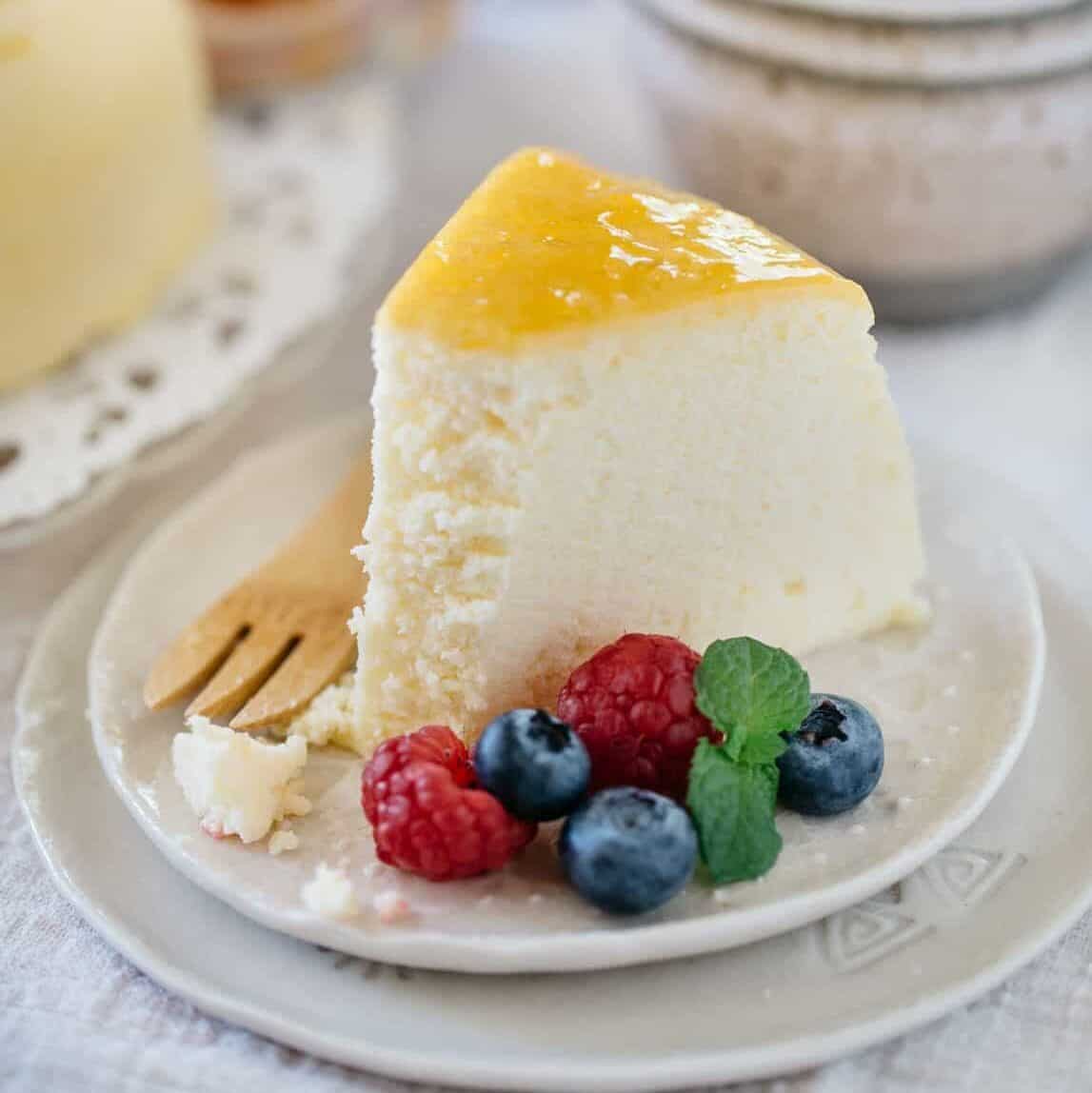
What is Japanese Cheesecake?
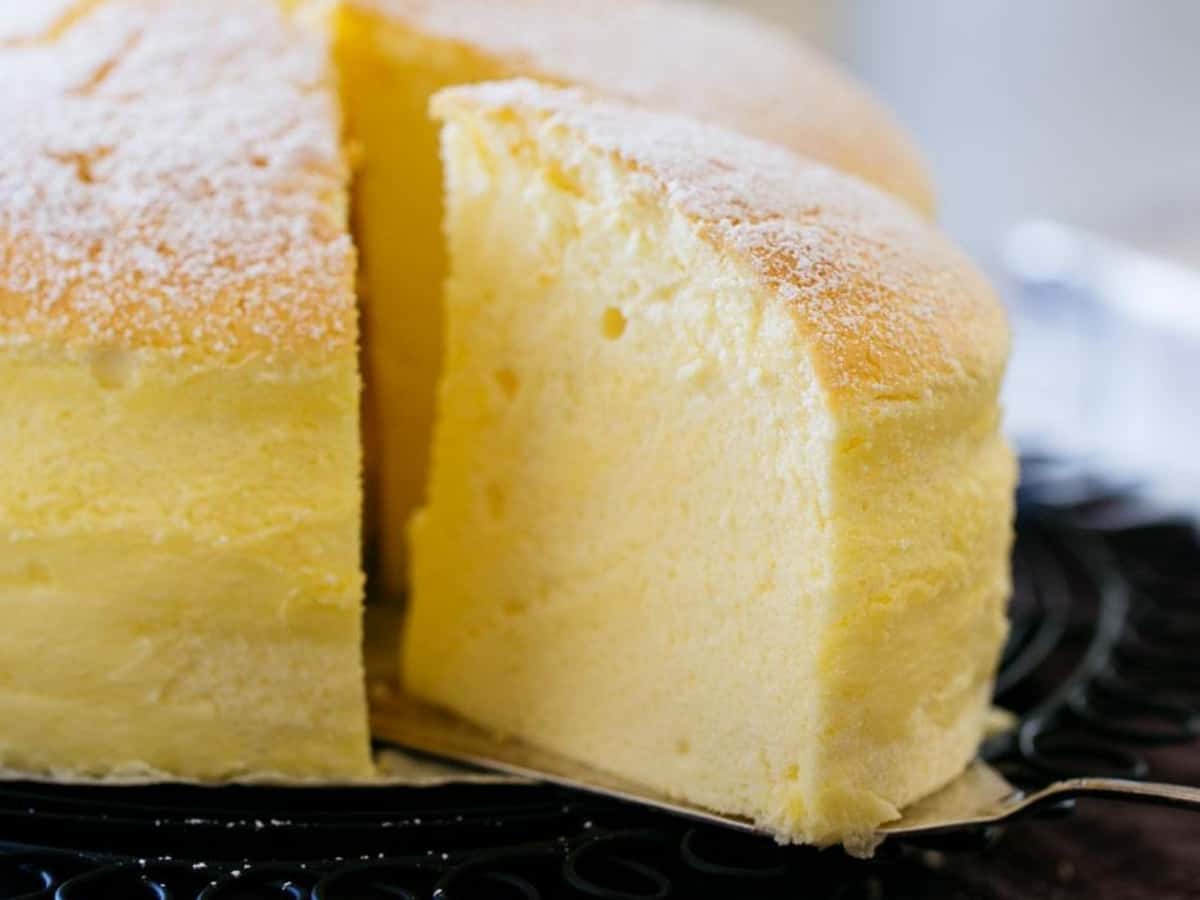
Yes, it is called “Japanese” cheesecake. It is also known as Japanese cotton cheesecake or Japanese soufflé cheesecake. Because it’s the cotton-like fluffy texture is distinguishably different from the rest of the cheesecakes. Also it does not require oriental ingredients. You just need to master the baking technique to make this jiggly and fluffy cheesecake.
Ingredients
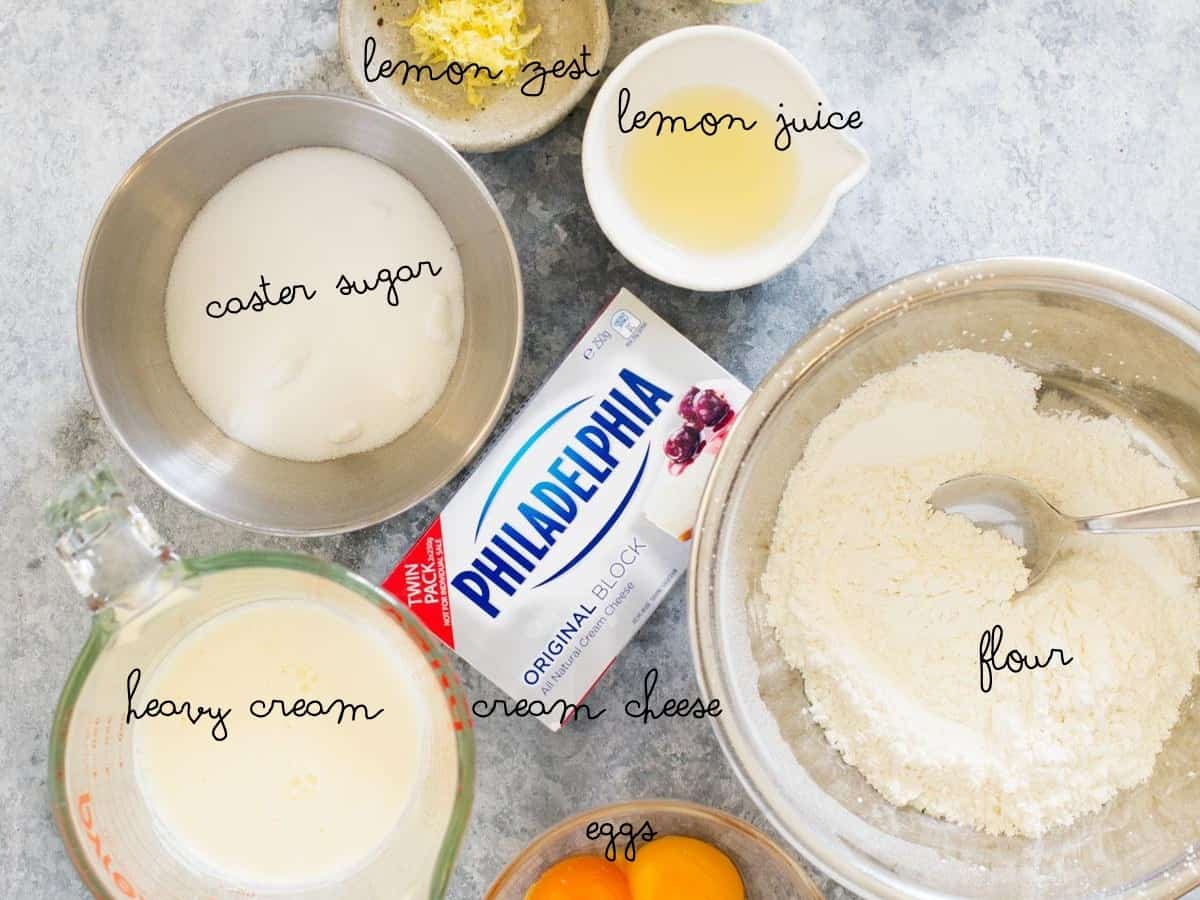
- Cream cheese – not all cream cheese are the same. I recommend using the Philadelphia brand cream cheese.
- 6 eggs – large size (1.8oz/50g each) Although using many eggs, Japanese cheesecake does not have an eggy taste.
- Cake flour + Corn starch – use protein percentage around 9% and corn starch makes the Japanese cheesecake fluffy!
- Lemon – juice and zest. I used an organic non-waxed lemon.
- Apricot Jam – this can be optional but it makes the cheesecake glossy and it also enhances the sweet tangy taste of the Japanese cotton cheesecake.
How to Bake a Japanese cheesecake?
The following is the brief process of baking a Japanese soufflé cheesecake.
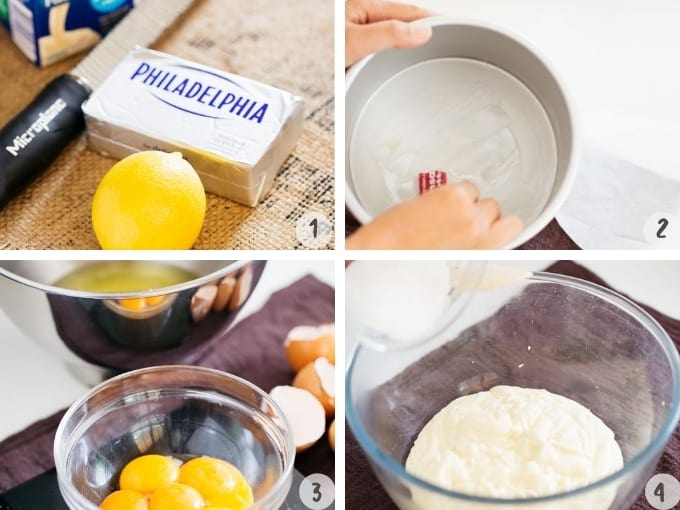
- Let the cream cheese warm to room temperature. Leave the cream cheese out of the fridge at least 1 hour prior to start making Japanese cheesecake. (photo 1)
- Preheat the oven to 338°F (170°C)
- Prepare a cake pan and set it aside. Prepare a 7 inch (17cm) diameter cake pan by greasing well with unsalted butter and line the bottom of the cake pan with a round cut parchment paper.
- Sift cake flour and cornstarch
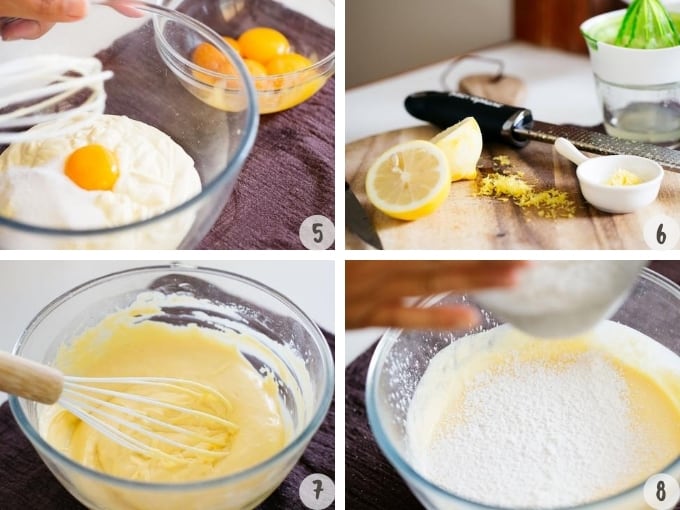
- Make the cream cheese batter. Whisk cream cheese and add heavy cream and milk. Then add sugar to combine. Add egg yolks and mix one yolk at a time.
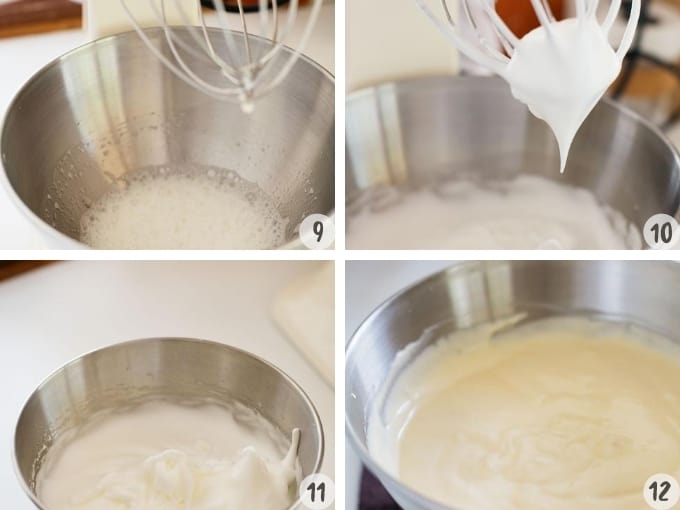
- Make soft peak meringue and fold it into the cream cheese batter at three different times.
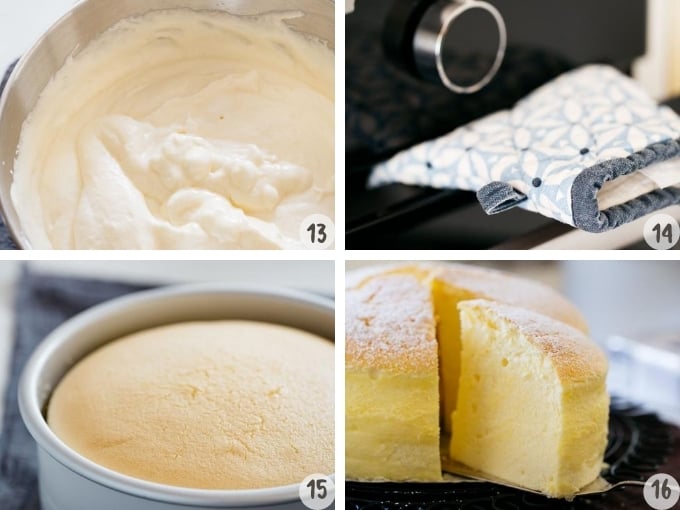
- Bake it in a water bath. Reduce the baking temperature to 320°F (160°C) and gradually reduce the temperature as stated in the recipe below.
- Glaze the cheesecake top with apricot jam. Glaze the top of the cake with apricot jam diluted with brandy.
Tips to Bake Jiggly Cheesecake
- Carefully separate the egg yolks and egg whites and refrigerate the egg white just before whipping. The equipment to make the meringue must be dry. Any trace of oil and water will impact on the quality of the meringue. Whipping up cold egg whites will make fine meringue and the meringue needs to have soft peaks for Japanese soufflé cheesecake.
- You may have seen these jiggly and fluffy Japanese soufflé cheesecakes before. They have become quite popular and I often see videos of them on Instagram. Japanese cheesecakes are jiggly and fluffy when they are just baked and still warm but they are best served rested in the fridge overnight. They are moist yet airy and soft and don’t have an eggy taste.
Troubleshooting Your Japanese Cheesecake
Two common failures when baking this soufflé cheesecake:
- It does not rise well.
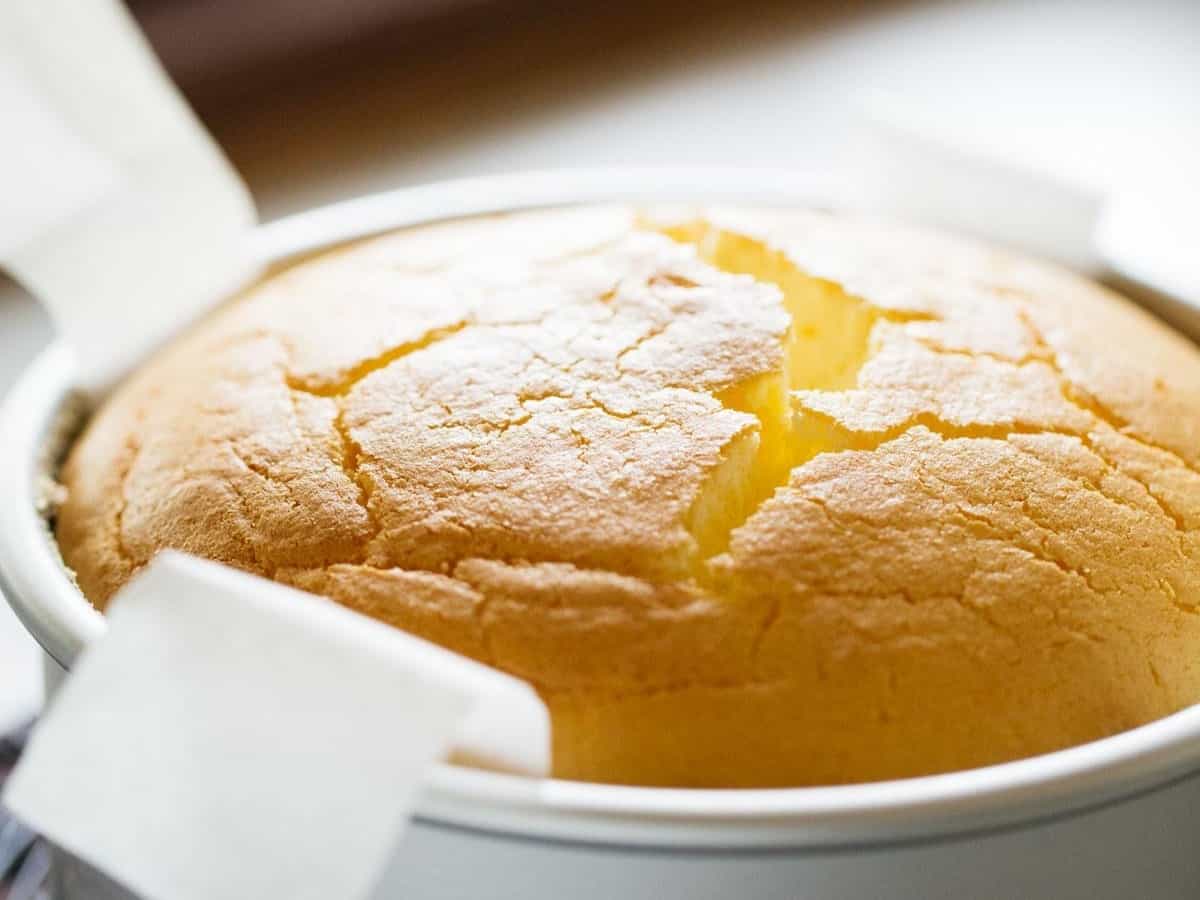
- The top of the cheesecake cracks open while it is being baked.
Both of the mistakes can be avoided if you are careful with the meringue and you know how to operate your oven well. Read below to find solutions.
A: Prepare the baking tin and grease it well. I have tried this with baking paper and without baking paper and I have discovered that using lining paper is the best option. This is because if it is not greased well when the cheesecake batter is about to rise, the batter will be pulled by the lining paper if it sticks to it and it causes the top of the cake to crack. Also, if the baking temperature is too high the cake can crack. Every oven is different, so knowing your oven is important.
A: The temperature for baking Japanese soufflé cheesecake is important. If the baking temperature is too low, it will not rise well. My oven has just been installed last year after the previous oven broke. Since then I have had to bake cheesecakes a few times to test to see which temperature and timing work best.
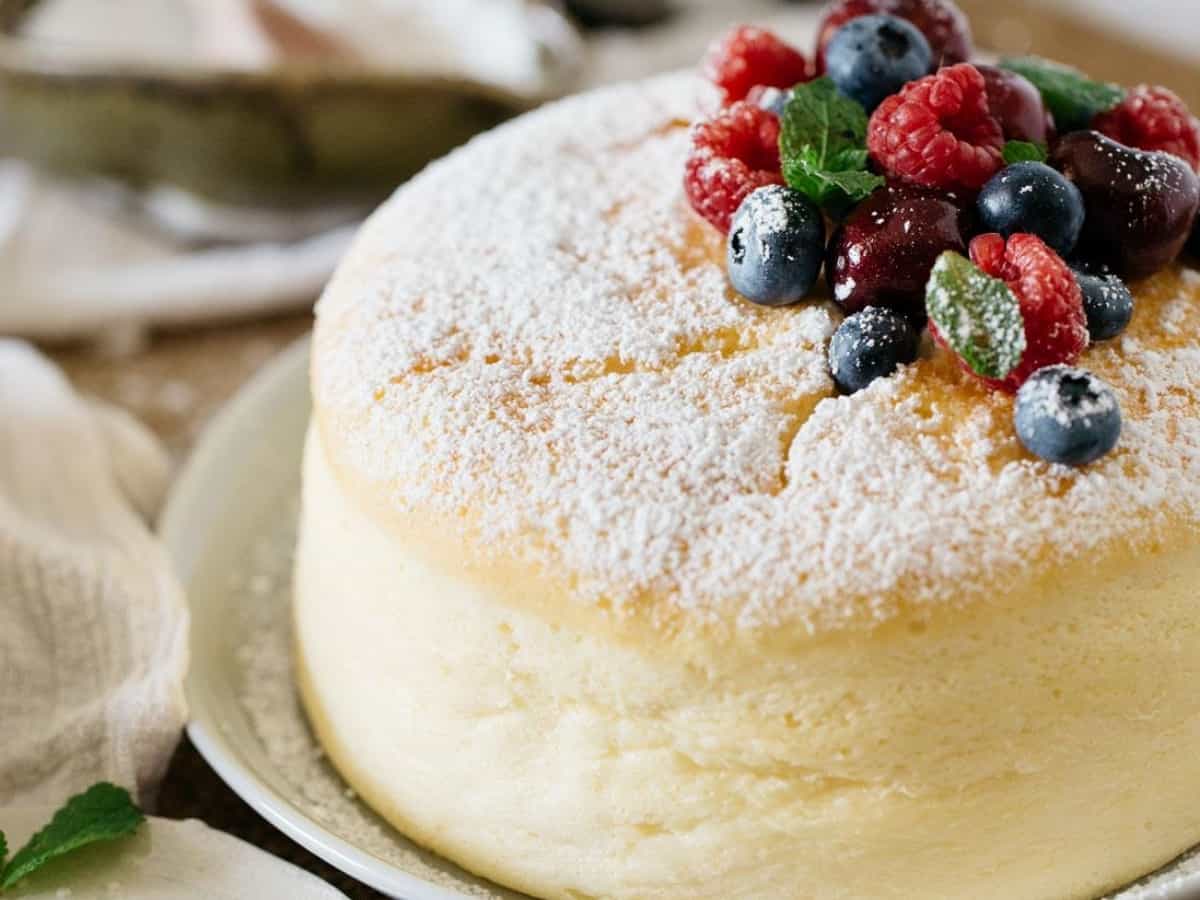
A: Nonetheless, Japanese cheesecake is delicious even if it’s cracked in my humble opinion. They still taste great but just are not perfect looking. Japanese cheesecake deflates a little anyway and will close up the crack. You can hide the crack with fruits and other toppings like the photo below suggests.
How to Store?
They will keep for a few days in the fridge. You can also freeze them. Slice and individually wrap with cling wrap. Keep them in an airtight freezer container. They will keep for a month. Defrost naturally to eat.
Checkout other Fluffy Japanese Baking
- Fluffy Japanese Pancakes
- Fluffy Japanese Bread “Shokupan”
- Japanese Hot Dog Buns “Koppepan”
- Gluten Free Fluffy Pancakes
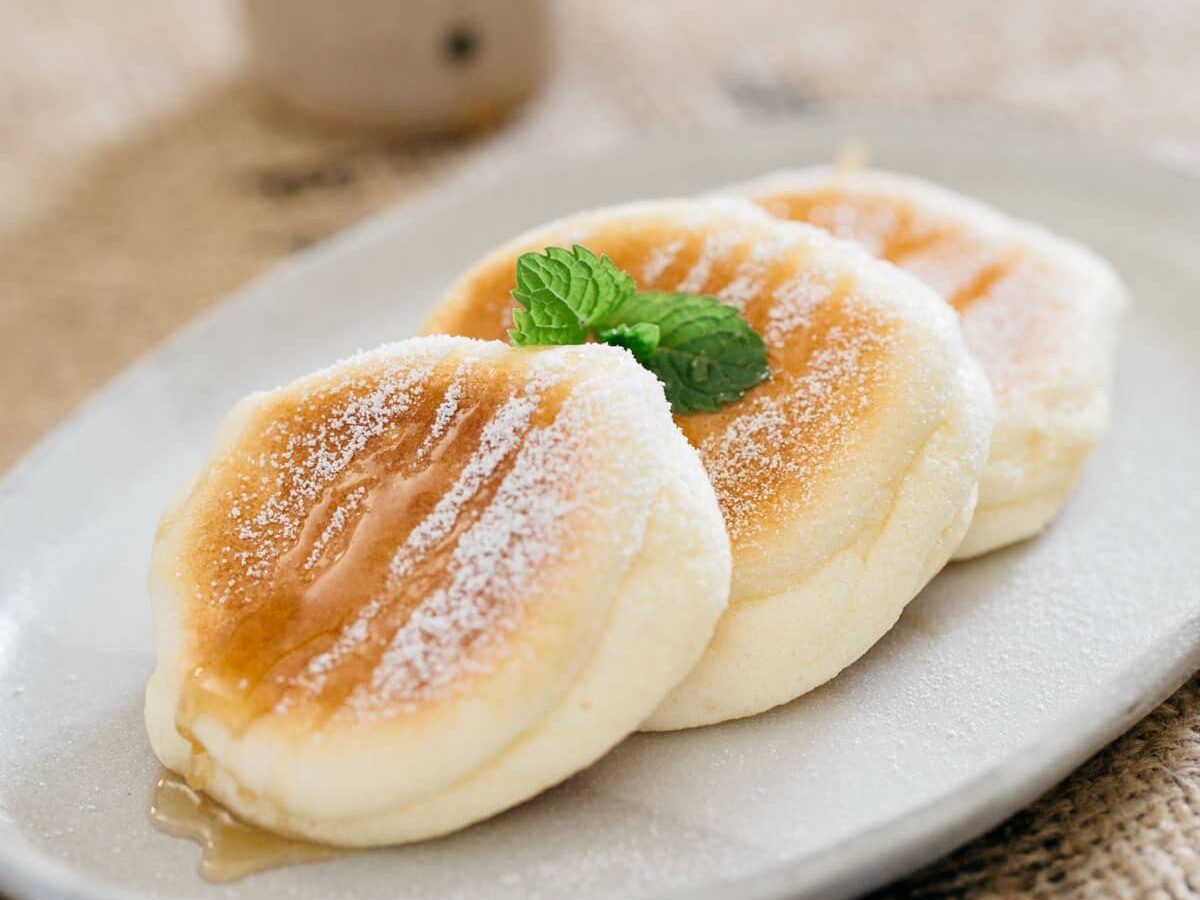
- Japanese Souffle Pancakes

Japanese Souffle Cheese Cake チーズケーキ
Ingredients
- 200g Philadelphia cream cheese *1
- 6 egg yolks *2
- 20g caster sugar
- 100ml heavy cream (Whipping cream)
- 100ml milk
- 1 tbsp lemon juice
- 2 tsp ½ lemon zest *3
- 40g plain flour
- 10g corn starch
Meringue
- 6 egg white *4
- ¼ tsp cream of tartar
- 60g caster sugar
Apricot glaze
- 30g apricot jam
- 1 tbsp water or Brandie
Instructions
- Leave the cream cheese at room temperature to soften. *5
- Prepare the 7 inch (17cm) in diameter and 3 inch (7.5cm) tall round cake pan. Spread unsalted butter thinly and line the bottom with baking paper and set aside in fridge. *6
- Sift the flour and corn starch and set aside
- Separate eggs to yolks and whites. Refrigerate the egg whites in a bowl. *7
- Stir the softened cream cheese with a wooden spatula to make it a smooth cream texture.
- Combine milk and cream. Add the milk and cream mixture a little bit at a time and mix well each time.
- Add sugar and add egg yolks one at a time and mix well each time.
- Sieve the cream cheese mixture into a large mixing bowl to avoid any lumpy bits.
- Add lemon juice and lemon zest to the mixture and mix well. *8
- Sift the flour and cornstarch into the egg yolk and cream cheese mixture and combine them.
- Start to preheat the oven to 338°F(170°C) degrees Celsius. * 9
- Make the meringue. Set the stand mixer and whip the egg whites till large bubbles form. Add the cream of tartar and whip.
- Add 1/3 of the caster sugar in 3 to 4 different times and whip the egg whites each time the sugar is added. Whip till soft peaks form (when the stand mixer’s attachment is lifted, the white egg peak bends a little bit).
- Remove the mixing bowl from the stand and hand whip to stabilize the meringue form.
- Fold 1/3 of meringue into the cream cheese mixture with a whisk carefully trying not to break the fine meringue form. Repeat the same one more time.
- This time, add the cream cheese mixture into the meringue bowl and fold all together carefully with a spatula.
- Pour the mixture into a prepared round cake tin. Fill the tin about 0.6 inch (1.5 cm) down the rim of the tin, tap a couple times on a kitchen bench to release the air bubbles. *10
- Place and bake it in a water bath in the preheated oven. Turn the oven temperature down to 320°F (160°C) and bake for 20 minutes. *11
- After baking on 320°F (160°C) for 20 minutes, turn the temperature down to 284°F (140 °C) and bake for a further 55 minutes. (it took about 20 minutes at my oven temperature to get down to 284°F (140°C)
- Turn the oven off after its baked in 284°F (140°C) for 55 minutes. Leave the cake inside the oven for a further 30 minutes to cool the cake down gradually.
- After leaving the cake for 30 minutes with the oven turned off, remove the water bath and leave the oven door slightly open and let it continue to cool down gradually.
- Place the cheesecake (still intact in the round tin) in an airtight container and refrigerate overnight. *12
- Remove the cake from the tin.
- Glaze the top of the cheesecake with apricot jam glaze with a brush and slice it with a sharp and warm knife to serve.




Hi Shihoko! Thanks for your great recipe, I have had the best results with yours over any other on the internet! You have great attention to detail 🙂 One question- how deep is your water bath??
Hi Jocelyn, I am glad you had the best result with my recipe 😀 I did not pay much attention how deep but fill about 1/3 to 1/2 deep of the mold hight.
Hi Shikoku
What size tin would you use if you use less eggs and other ingredients?
Julia
Hi Julia I would try a little smaller like 15cm(6inch)
Hi Shikoku
I am making the 2 egg version for four people, do you use a smaller tin and are the baking times different.
Thanks
Julia
HI Julia, yes I would use 15cm (6 inch) tin and baking time might be different. You need to experiment. If you don’t care how it look(I am talking about it might crack) try it with same time flame.
Hi Shihoko,
I have recently bought yuzu honey while holidaying in Japan and would like to know if I can incorporate this ingredient into your recipe? Can you advice please?
Hi Susan, lucky you 😀 Yuzu is my favourite citrus. Is it yuzu flavoured honey? You can use it just like you use honey. I would drizzle over yoghurt. I can not remember which recipe I used honey in my recipes on top of my head, but you can use it just like honey 😀
I made it once and the cake seems denser and thicker after leaving it in the fridge overnight. Is that normal? Do I need to keep it in a sealed airtight container?
Hi Karrotcake, yes it does to some extent, but not much though. Did you Turning down the temperature gradually and left in the oven after it is turned off? It should be still fluffy and soft and I actually like the cake left in the fridge overnight 😀
Hello Shihoko!
I’ll be making this recipe once I get my brand new hand mixer. I’m so excited! I just have one question about the water bath technique, how high does the water level have to be? Should it be as high as the batter?
Hi Myreen, The water level is about 2-3cm( 0.8- 1.2 inch) above from the bottom of the baking tray 😀
Hi, would like to ask if I should be using the fan forced setting or the top bottom heating? Thank you for your lovely recipe!
Hi Mabel, I use fan forced setting. 😀
This is such a fun way to take cheesecake to the next level! Perfect for a party!
Thank you Liz 😀
OMG I’m in love with this souffle!!! The apricot glaze on top just adds a whole new level of flavor 🙂
Thank you Aimee 😀
Hi. My cake was rising just fine, during the first 20mins, then it just went flat right after. any possible reasons? i did ope the oven to top up the water bath as it was dying out.
Hi Shaun, Opening the oven door caused temperature drop and it is probably the reason that your cheesecake deflated.
What would be measurements if I use a 6 inch tin? Thanks a lot!!!
Hi Emili, if you hover over the servings number, sliding scale appear. Slide it down to 7 servings 😀
What would be measurements if I had an 12 inch pan? I don’t have an 8 inch or 9 inch pan.
Hi Grace, for 12 inch pan, hover over the serving in the recipe card and slide it up to 10 serves 😀
Hi, Recipe looks great! I want to make about 3 cheesecakes for an upcoming event. Would you recommend that I triple the recipe and split this into 3 pans? Or would I have to make 3 separate batches for the best results?
Hi Sam, I would recommend to make 3 different batches a day before and refrigerate them. It actually better to keep them in the fridge over night.
wonderful i love it !!!
Thank you! <3
Hi.
I would like to know what is going on after i baked for 80 mins (first 25 mins at 160 c. and another 55 mins at 135 c. If i do higher than this, it would crack on surface before the time)
Then I take it out and press a bit surrounding my cheesecake and i heart moist, is it normal? Should I reduce the temperature and leave it longer?
Thank you very much
Hi Jazz, I have tested the recipe about 15 times with different temperature settings. As you suggested you may need to leave it longer to find the best temperature for your oven. Sometimes depends on the oven, the actual temperature inside the oven is lower or higher than it indicate.
did u microwave or heat the cream cheese over double boiler or u just use plain spatula to break it down? baking again this monday:)
Hi Shan, left it in room temperature at least 30 minutes before starting cooking 😀 Apart from that, nothing special.
Hello Shihoko, thank you for sharing such a lovely recipe. I baked the cheese cake yesterday with a 23cm silicon cake mould and the cake is a bit flat. It shrunk at least 30 % from its highest to what it is now sitting in the fridge. I am sure everything went well except my cake mould is too big for the job. Unfortunately this is the only one I can get here in Exmouth WA. Shihoko, where can I get a smaller cake tin like the one you use, preferably online?
Hi Jen, Thank you for trying this recipe. I bought my cake tin from executive chef shop in Brisbane. They have online shop but you might have to pay for shipping or can you find similar commercial chef equipment shops in WA?
Ridiculous to post a recipe with Celsius and gram measurements as most readers are not Japanese I
Hi Giorgi, Thank you for your feedback. If you hover over US metrics, the measurements change to cups and also in the recipe notes, Celsius converted to F° 😀
Most of the world uses the metric system and it provides more consistent results, so it’s honestly not THAT ridiculous. It’s what culinary schools use.
Made souffles last night which led me here. Looking forward to this recipe and I will probably use a vanilla bean for extra flavor!
Hi Lily, Thank you for your comment 😀 I think especially making sweets and cakes precise measurement required ( that’s what my high school baking club teacher always told us)
hi, why did you use milk instead of butter like other recipes? just curious with the outcome, i am baking this one on friday and i want to know why milk insewad of butter. also, is it reallycold egg as in cold eggs when whip to meringue like from the fridge and whip?
Hi Shan, I never use butter and I don’t know other recipes. I always use milk and cream. That is Japanese people make Japanese cheese cake.
thank you for the reply. super love japanese cheesecake but on the process if baking it right. iv tried other recipes but wasnt a success especially in achieving the dark colored top and i always underbake it, scared that it may burn since m using a big oven more like industrial oven and the crack top..i am excited to try your recipe because of milkand cold eggs for whipping.. baking tomorrow. hope its a success:)
Hi Shan, I have tried many times with my new oven. I think the key to success is making right meringue and the temperature control of the oven. Hope yours work out 😀
i made it but didnt turn out well. the bottom half is dense and the top half is not same texture.. probably made a mistake somewhere:)… did u use freshmilk?
Hi Shan, sorry to hear that your cheesecake did not turn out well. May be meringue and batter did not folded and combined properly? yes I use fresh milk and cream.
I’m halfway through this recipe right now, and I cant see any part of the instructions where I should add the milk.
Is milk supposed to be in the ingredients list of the recipe?
Hi Maddi, Yes I should have add the process mixing milk and cream. Sorry. I am going to fix it now.
I loved this Japanese Cheesecake.Was very tasty and not very sweet.Awesome.
Thank you Usha 😀
Thank you very much for sharing the recipe. I’m just wondering if it’s possible to bake this cake while my dumb oven doesn’t not have the option to bake without the fan… I have tried making this cake twice, but I had no choice other than baking with the forced fan on (otherwise the oven wouldn’t work). My fist cake was shrinking, and the second one was cracked on top. They both tasted alright, but the final results were a bit too moist.. I am not sure if it’s because of my dumb baking techniques or my oven (I preheated the oven at 185c, then started baking at 150c for 20 mins, then 130c for another 30 mins…)
Would truly appreciate it if you could give me some advice.
Hi Anna, this is hard one to advice as all ovens are different. I baked 15 or more times to get right temperature and timing for my oven to get perfect result for photos. Though, cracked open was as delicious as perfectly rounded top one. The baking temperature 150°C is a bit low I think. Have you tried at 160°C?
I am just a dumb American, can someone please translate the ingredients into cups?
Hi Janine, I have changed US metric to cups, however I recommend to weigh precisely to make the cheesecake successfully.