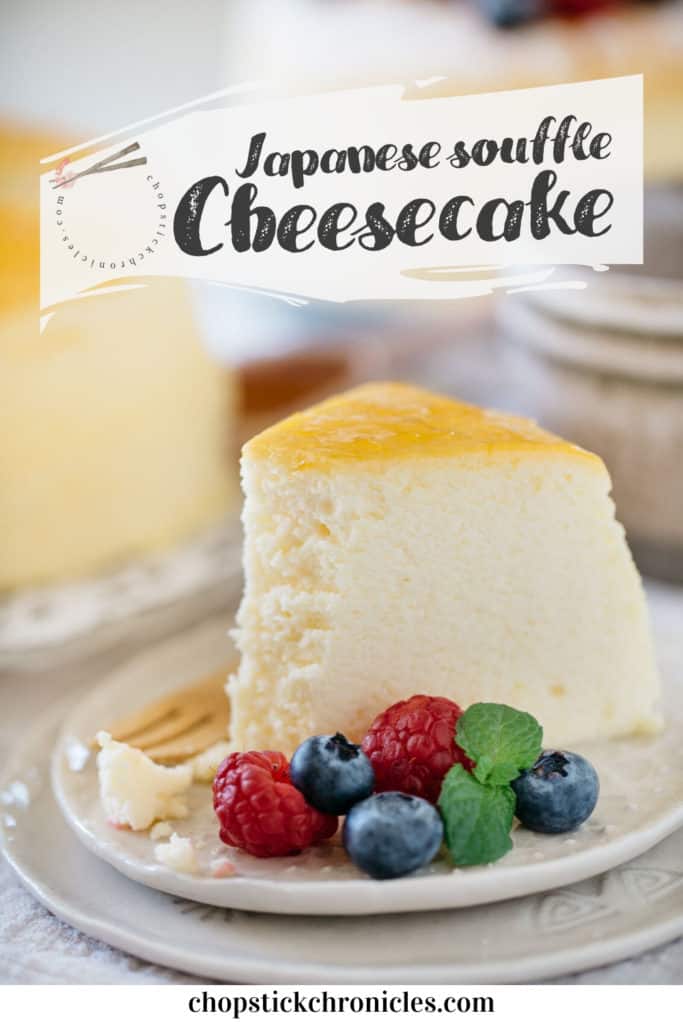
This jiggly Japanese cotton cheesecake has garnered popularity around the world because of its fluffy soft texture and lovely flavour. And the good news is that you can make it at home yourself! A few simple ingredients and a little bit of time are all you need to enjoy this soft and jiggly Japanese cheesecake at home.
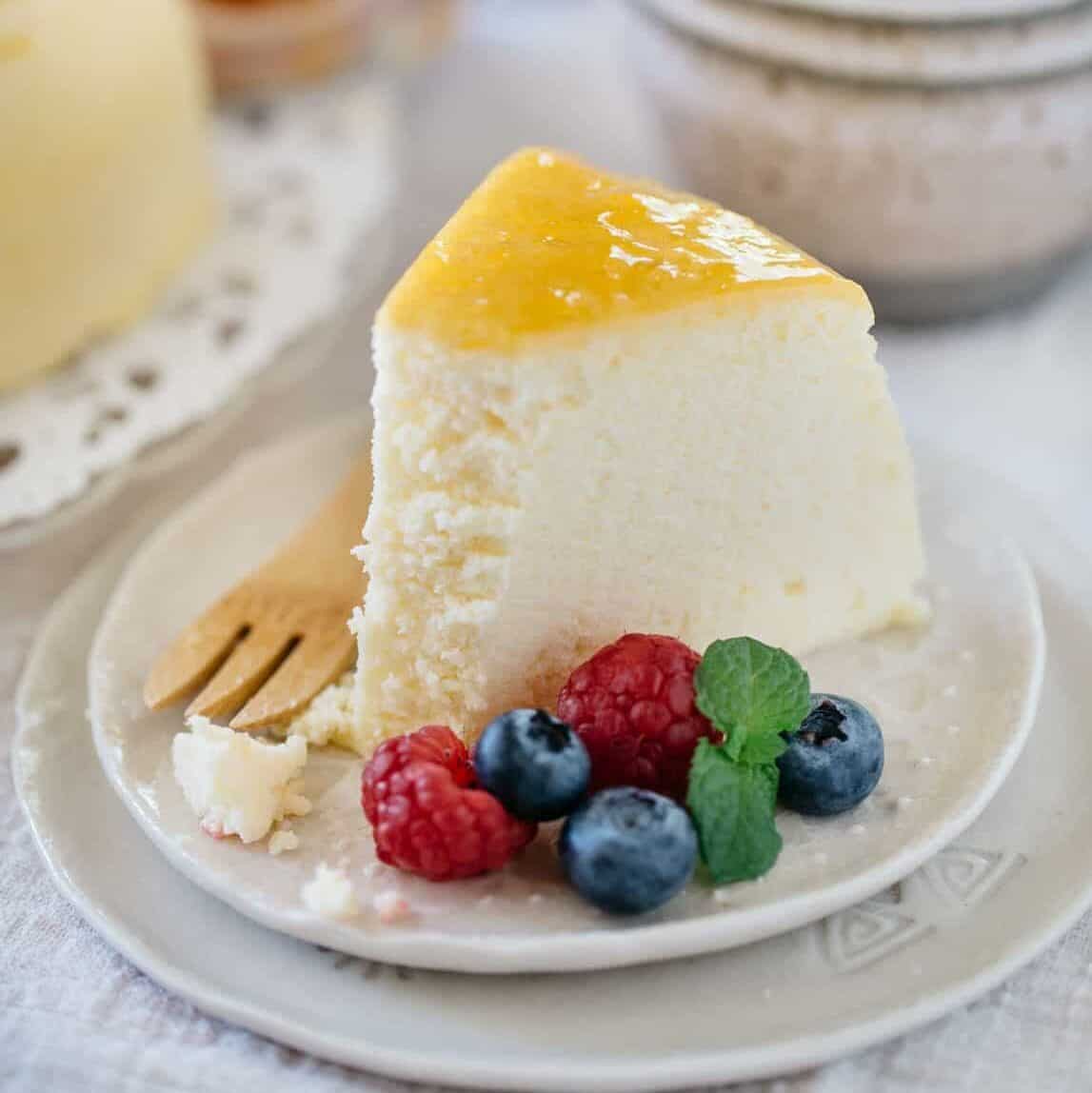
What is Japanese Cheesecake?
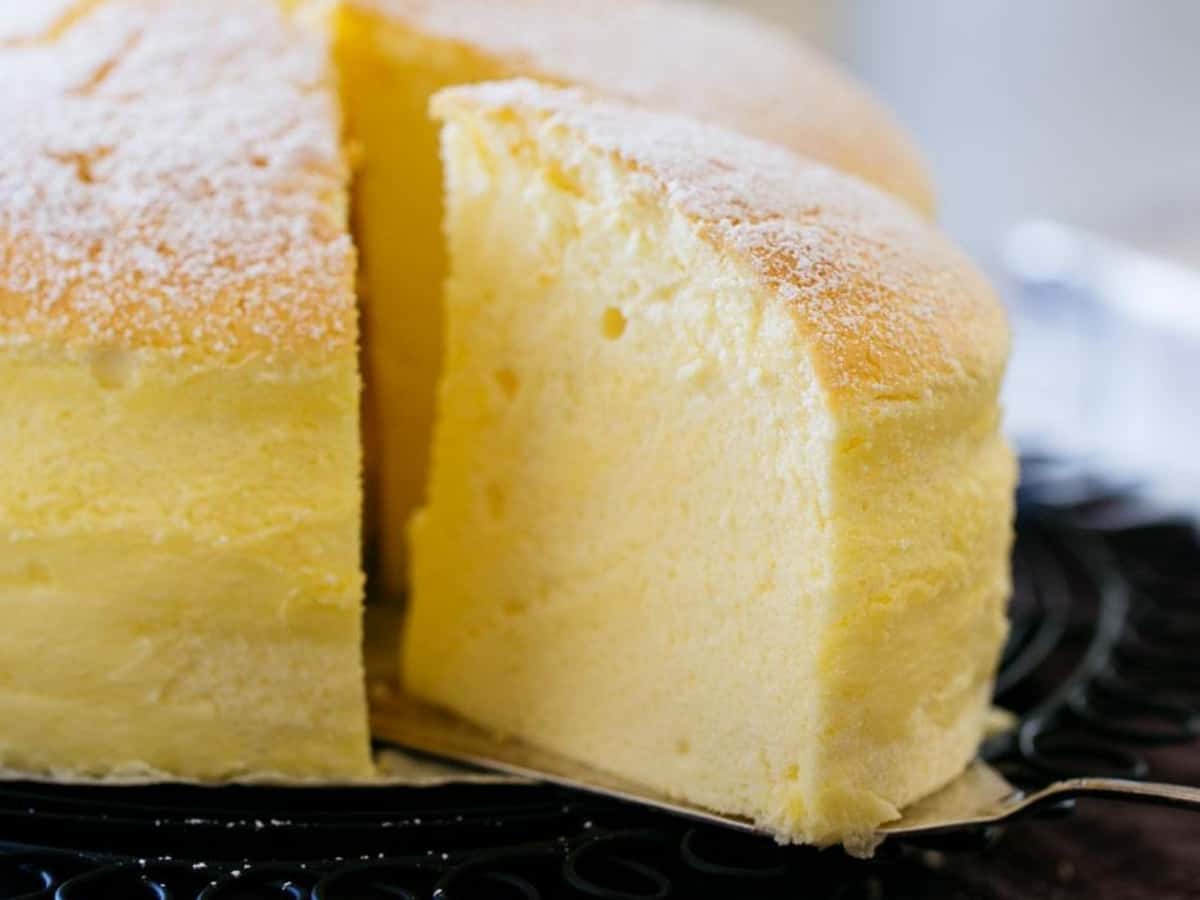
Yes, it is called “Japanese” cheesecake. It is also known as Japanese cotton cheesecake or Japanese soufflé cheesecake. Because it’s the cotton-like fluffy texture is distinguishably different from the rest of the cheesecakes. Also it does not require oriental ingredients. You just need to master the baking technique to make this jiggly and fluffy cheesecake.
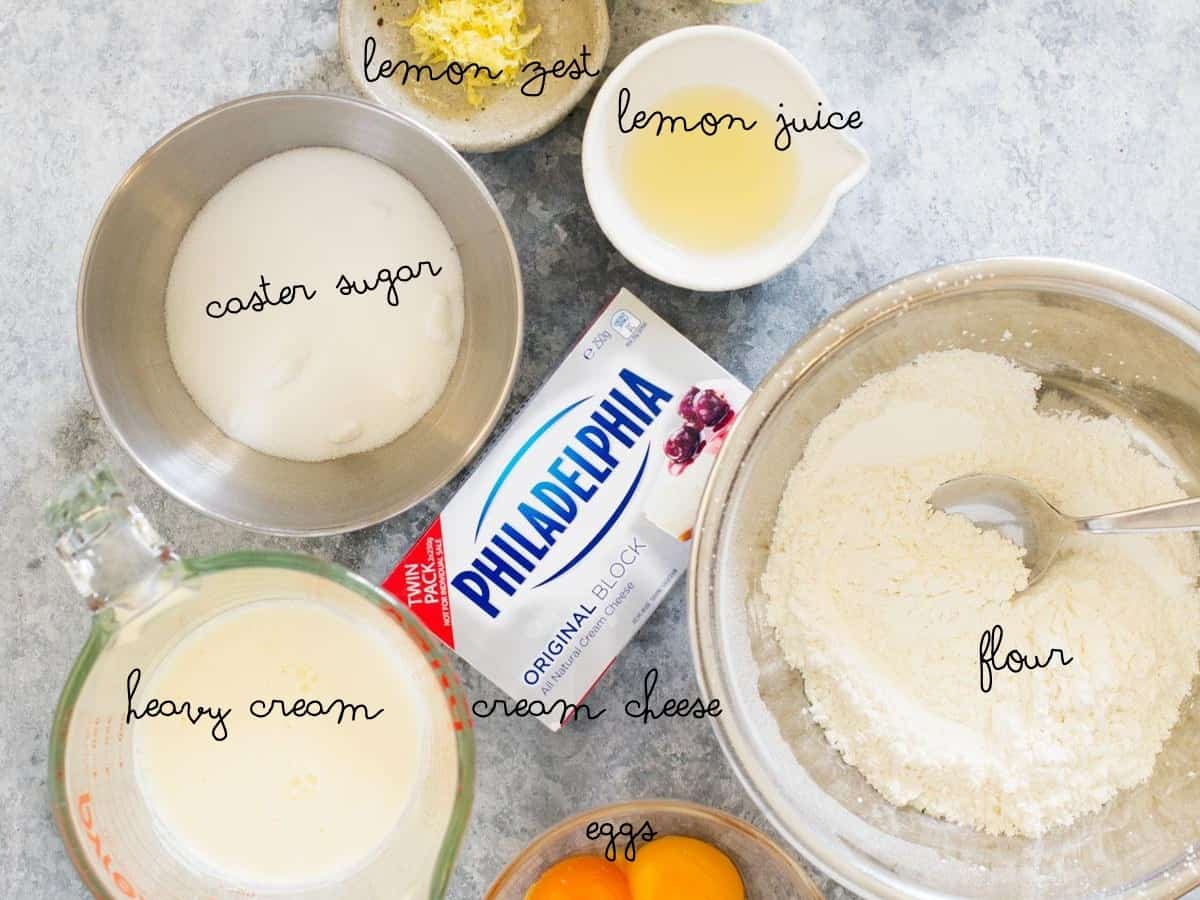
Ingredients
- Cream cheese – not all cream cheese are the same. I recommend using the Philadelphia brand cream cheese.
- 6 eggs – large size (1.8oz/50g each) Although using many eggs, Japanese cheesecake does not have an eggy taste.
- Cake flour + Corn starch – use protein percentage around 9% and corn starch makes the Japanese cheesecake fluffy!
- Lemon – juice and zest. I used an organic non-waxed lemon.
- Apricot Jam – this can be optional but it makes the cheesecake glossy and it also enhances the sweet tangy taste of the Japanese cotton cheesecake.
How to Bake a Japanese cheesecake?
The following is the brief process of baking a Japanese soufflé cheesecake.
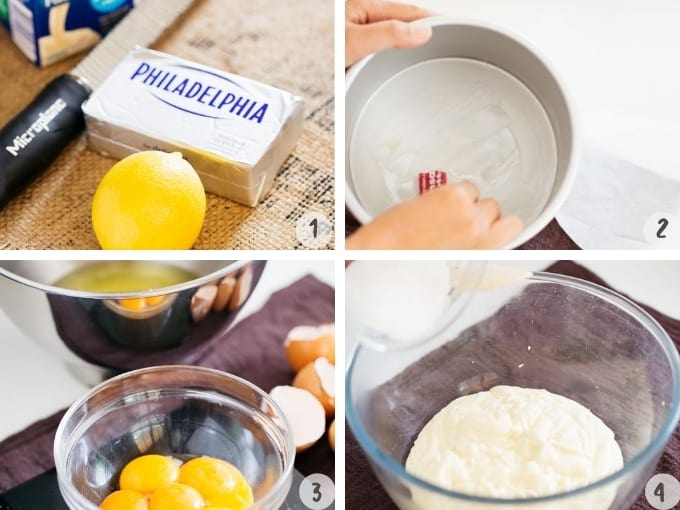
- Let the cream cheese warm to room temperature. Leave the cream cheese out of the fridge at least 1 hour prior to start making Japanese cheesecake. (photo 1)
- Preheat the oven to 338°F (170°C)
- Prepare a cake pan and set it aside. Prepare a 7 inch (17cm) diameter cake pan by greasing well with unsalted butter and line the bottom of the cake pan with a round cut parchment paper.
- Sift cake flour and cornstarch
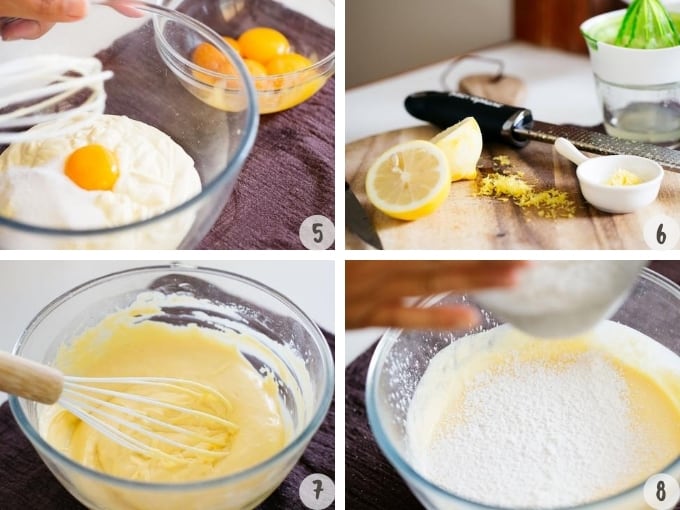
- Make the cream cheese batter. Whisk cream cheese and add heavy cream and milk. Then add sugar to combine. Add egg yolks and mix one yolk at a time.
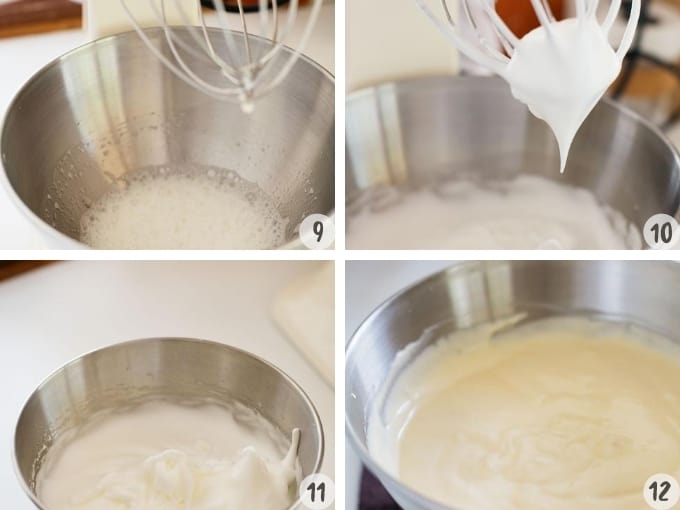
- Make soft peak meringue and fold it into the cream cheese batter at three different times.
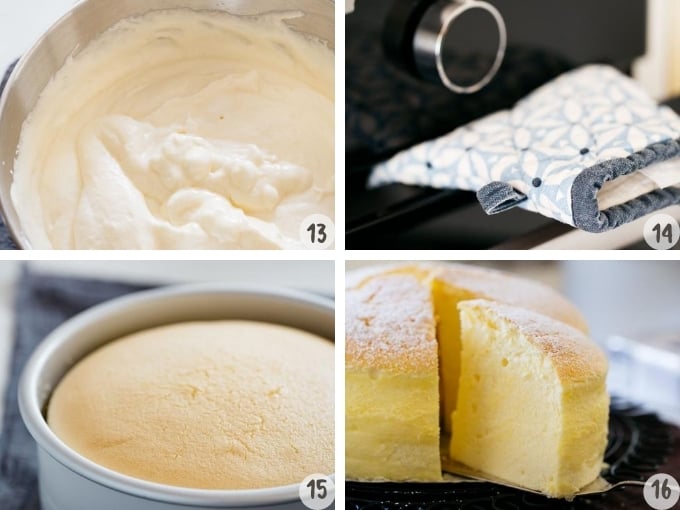
- Bake it in a water bath. Reduce the baking temperature to 320°F (160°C) and gradually reduce the temperature as stated in the recipe below.
- Glaze the cheesecake top with apricot jam. Glaze the top of the cake with apricot jam diluted with brandy.
Tips to Bake Jiggly Cheesecake
- Carefully separate the egg yolks and egg whites and refrigerate the egg white just before whipping. The equipment to make the meringue must be dry. Any trace of oil and water will impact on the quality of the meringue. Whipping up cold egg whites will make fine meringue and the meringue needs to have soft peaks for Japanese soufflé cheesecake.
- You may have seen these jiggly and fluffy Japanese soufflé cheesecakes before. They have become quite popular and I often see videos of them on Instagram. Japanese cheesecakes are jiggly and fluffy when they are just baked and still warm but they are best served rested in the fridge overnight. They are moist yet airy and soft and don’t have an eggy taste.
Troubleshooting Your Japanese Cheesecake
Two common failures when baking this soufflé cheesecake:
- It does not rise well.
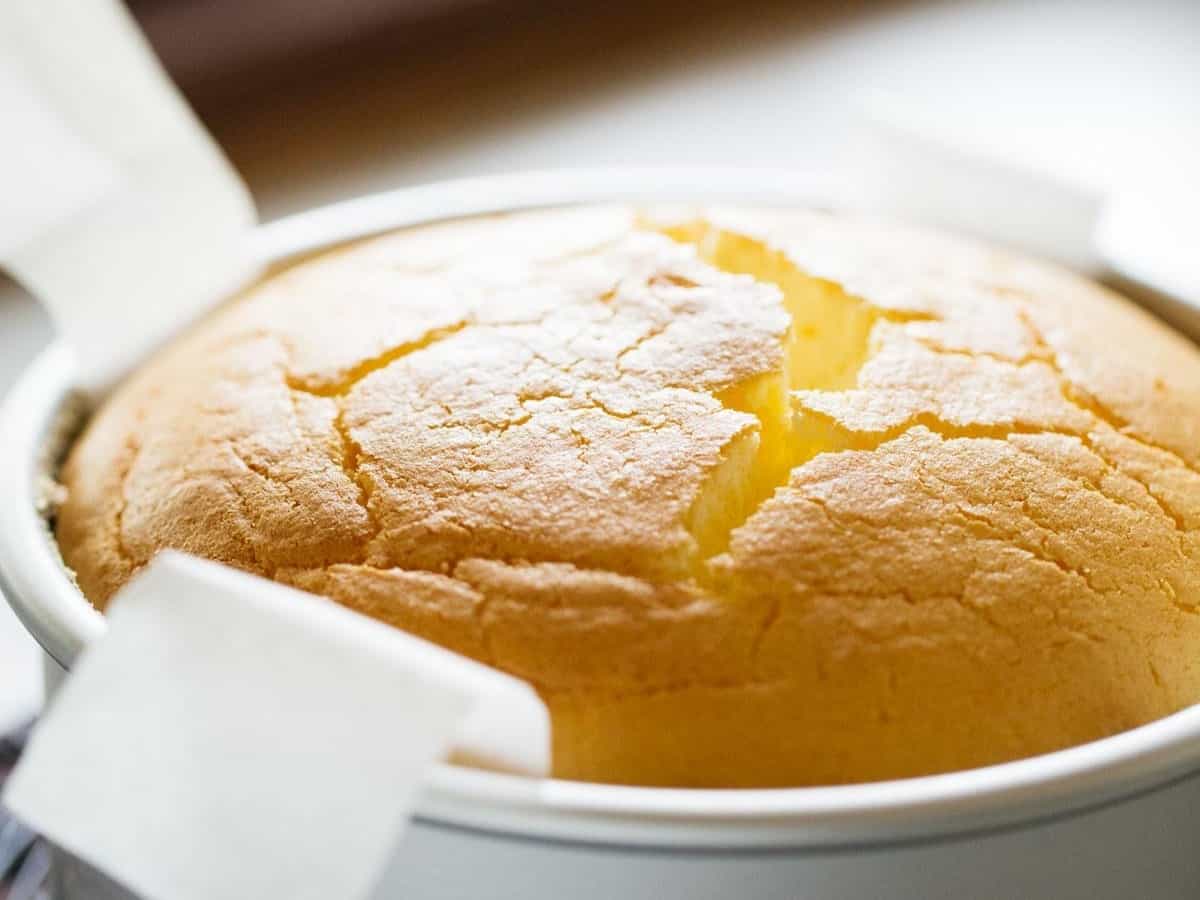
- The top of the cheesecake cracks open while it is being baked.
Both of the mistakes can be avoided if you are careful with the meringue and you know how to operate your oven well. Read below to find solutions.
A: Prepare the baking tin and grease it well. I have tried this with baking paper and without baking paper and I have discovered that using lining paper is the best option. This is because if it is not greased well when the cheesecake batter is about to rise, the batter will be pulled by the lining paper if it sticks to it and it causes the top of the cake to crack. Also, if the baking temperature is too high the cake can crack. Every oven is different, so knowing your oven is important.
A: The temperature for baking Japanese soufflé cheesecake is important. If the baking temperature is too low, it will not rise well. My oven has just been installed last year after the previous oven broke. Since then I have had to bake cheesecakes a few times to test to see which temperature and timing work best.
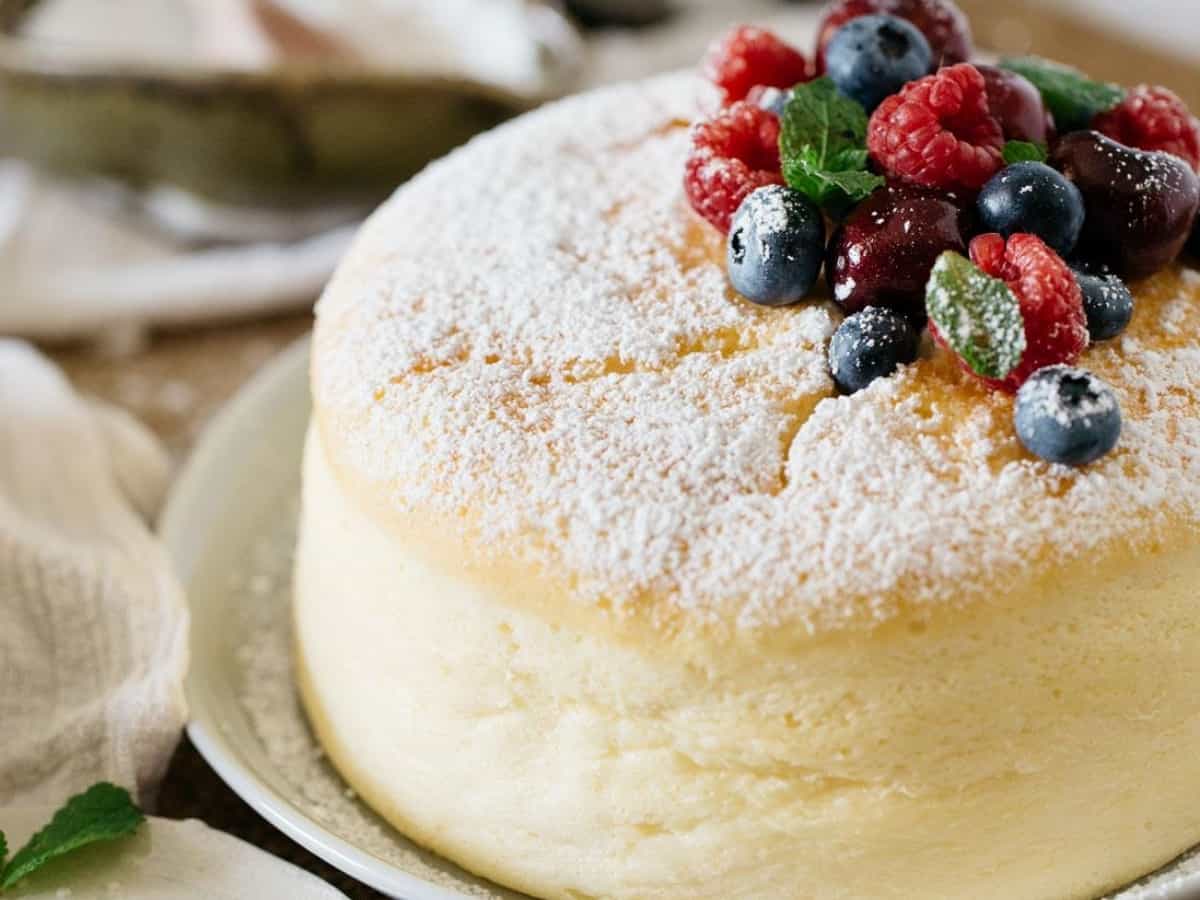
A: Nonetheless, Japanese cheesecake is delicious even if it’s cracked in my humble opinion. They still taste great but just are not perfect looking. Japanese cheesecake deflates a little anyway and will close up the crack. You can hide the crack with fruits and other toppings like the photo below suggests.
How to Store?
They will keep for a few days in the fridge. You can also freeze them. Slice and individually wrap with cling wrap. Keep them in an airtight freezer container. They will keep for a month. Defrost naturally to eat.
Checkout other Fluffy Japanese Baking
- Fluffy Japanese Pancakes
- Fluffy Japanese Bread “Shokupan”
- Japanese Hot Dog Buns “Koppepan”
- Gluten Free Fluffy Pancakes
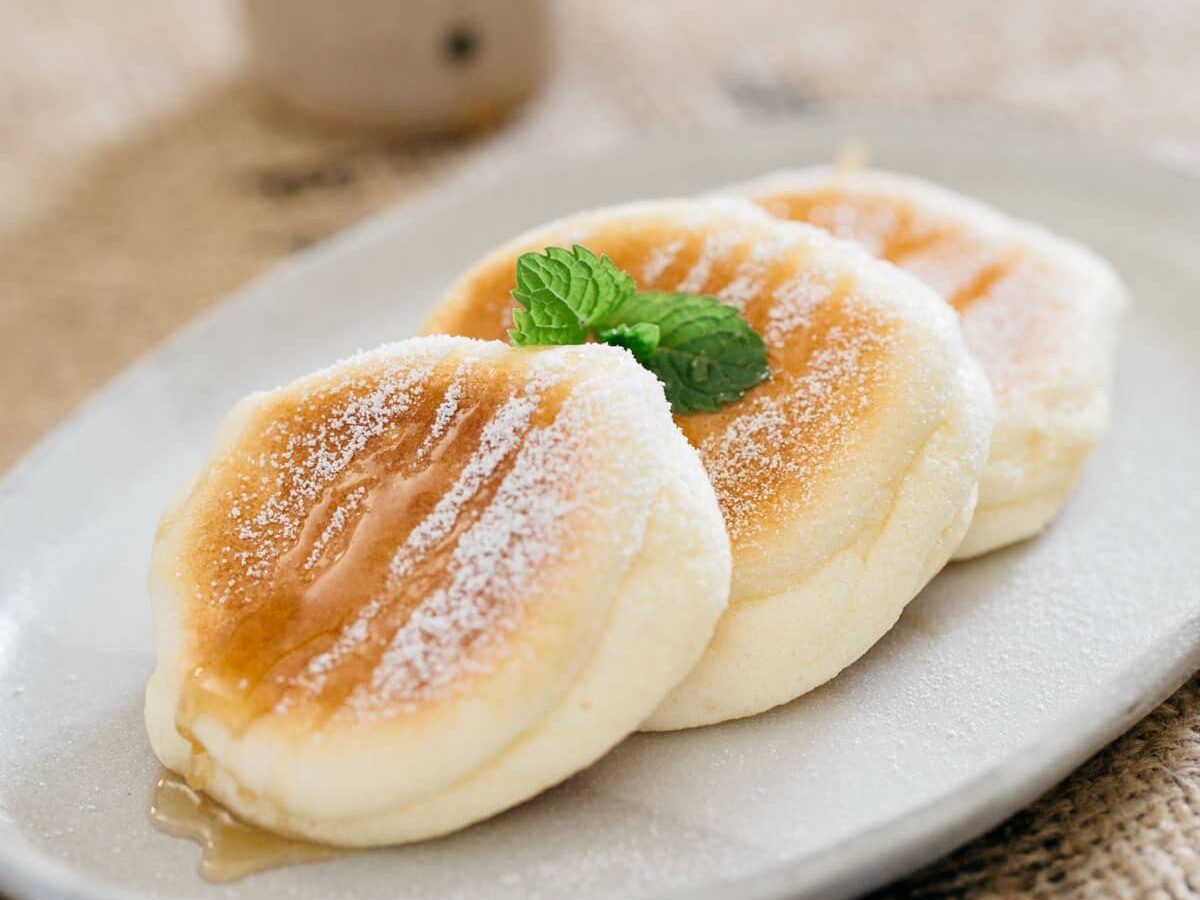
- Japanese Souffle Pancakes

Japanese Souffle Cheese Cake チーズケーキ
Ingredients
- 200g Philadelphia cream cheese *1
- 6 egg yolks *2
- 20g caster sugar
- 100ml heavy cream (Whipping cream)
- 100ml milk
- 1 tbsp lemon juice
- 2 tsp ½ lemon zest *3
- 40g plain flour
- 10g corn starch
Meringue
- 6 egg white *4
- ¼ tsp cream of tartar
- 60g caster sugar
Apricot glaze
- 30g apricot jam
- 1 tbsp water or Brandie
Instructions
- Leave the cream cheese at room temperature to soften. *5
- Prepare the 7 inch (17cm) in diameter and 3 inch (7.5cm) tall round cake pan. Spread unsalted butter thinly and line the bottom with baking paper and set aside in fridge. *6
- Sift the flour and corn starch and set aside
- Separate eggs to yolks and whites. Refrigerate the egg whites in a bowl. *7
- Stir the softened cream cheese with a wooden spatula to make it a smooth cream texture.
- Combine milk and cream. Add the milk and cream mixture a little bit at a time and mix well each time.
- Add sugar and add egg yolks one at a time and mix well each time.
- Sieve the cream cheese mixture into a large mixing bowl to avoid any lumpy bits.
- Add lemon juice and lemon zest to the mixture and mix well. *8
- Sift the flour and cornstarch into the egg yolk and cream cheese mixture and combine them.
- Start to preheat the oven to 338°F(170°C) degrees Celsius. * 9
- Make the meringue. Set the stand mixer and whip the egg whites till large bubbles form. Add the cream of tartar and whip.
- Add 1/3 of the caster sugar in 3 to 4 different times and whip the egg whites each time the sugar is added. Whip till soft peaks form (when the stand mixer’s attachment is lifted, the white egg peak bends a little bit).
- Remove the mixing bowl from the stand and hand whip to stabilize the meringue form.
- Fold 1/3 of meringue into the cream cheese mixture with a whisk carefully trying not to break the fine meringue form. Repeat the same one more time.
- This time, add the cream cheese mixture into the meringue bowl and fold all together carefully with a spatula.
- Pour the mixture into a prepared round cake tin. Fill the tin about 0.6 inch (1.5 cm) down the rim of the tin, tap a couple times on a kitchen bench to release the air bubbles. *10
- Place and bake it in a water bath in the preheated oven. Turn the oven temperature down to 320°F (160°C) and bake for 20 minutes. *11
- After baking on 320°F (160°C) for 20 minutes, turn the temperature down to 284°F (140 °C) and bake for a further 55 minutes. (it took about 20 minutes at my oven temperature to get down to 284°F (140°C)
- Turn the oven off after its baked in 284°F (140°C) for 55 minutes. Leave the cake inside the oven for a further 30 minutes to cool the cake down gradually.
- After leaving the cake for 30 minutes with the oven turned off, remove the water bath and leave the oven door slightly open and let it continue to cool down gradually.
- Place the cheesecake (still intact in the round tin) in an airtight container and refrigerate overnight. *12
- Remove the cake from the tin.
- Glaze the top of the cheesecake with apricot jam glaze with a brush and slice it with a sharp and warm knife to serve.




Hi Shihoko.
You listed 2 ingredients apricot jam and water or brandy for the glaze, but didnt tell us what to do to turn these ingredients to the glaze. Step 19 just says to put it on but i cant find the steps to turn jam into glaze. Also can use other spirit like vodka? Or must be brandy?
Hi John thank you for letting me know. I just combine them together and put it on 😀 You can use other spirit but brandy’s flavour match with apricot nicely I think.
Hi. I tried your recipe. It came out a little crumbly when cut and it has 1-2mm dense yellow base. I’m not sure what may have caused these?
Hi Odelia, Sorry to hear your cheesecake was not successful. I am only guessing but probably how you mix the batter with Meringue?
is it possible to replace the cornstarch with wheat flour(which would mean using twice the amount as the cornstarch) or cornflour because I cant seen to find any anywhere
Hi Lilla, can you find potato starch?
never mind I successfully found cornstarch it took some time but I found it:) I just finished making the cake and it’s in the oven now but please tell me the cake was supposed to be put in the water bath because I put it in the water bath
Hi Lilla, that’s great!. Yes it is in the water bath.
Hi Shihoko,
I can’t wait to give this recipe a try – thank you for such a comprehensive outline.
I was hoping to create a yuzu flavoured cheesecake so do you think it will work if I substituted the lemon juice for yuzu juice? I won’t be able to substitute the lemon zest for yuzu zest because I don’t have fresh yuzu on hand but I’m hoping using yuzu juice will impart the yuzu taste without affect the cake’s integrity.
What do you think?
Thanks again.
yomow
Hi Yomow, Yuzu flavoured cheesecake would be fantastic. If Yuzu is readily availbale here, I would use it for myself as it is my favourite citrus. Go for it!!
Hello! Shihoko!! love you recipe! i did the exact same, it was OK till i turned off the Oven, then after few minutes it started to deflate and shrink all the way back down, so disappointing, what went wrong?
Hi Menna, 😢 I know how disappointed you were. Did you take it out of oven after turning the oven off or left it in the oven?
This looks like a great recipe, and looks similar to Israeli cheesecake. I dint have access to cream. Any ideas of what I can use instead? Would it better to sub with a dairy product like yogurt or quark cheese or something like coconut cream?
Hi Rikal, Thank you for visiting and trying to make this cheesecake. Unfortunately I don’t have answer for substituting cream as you need to use quite large amount of cream and am not sure substituting this amount of cream work or not. Sorry.
My cheesecake was fine until the last 10 minutes when the center started to crack. I have an oven thermometer so I’m certain the temperature is right. Do you think it was overcooked in the last few minutes?
Hi Rose, it is really hard to say… everyones oven are different.
Hi! Did u use convection fan setting or grill for your oven?
Hi Rachel, on my oven it says “bake”. I believe it is similar to convection fan.
Hi! this looks really good! can i use heavy cream instead of whipping cream? If i’m using an 8 inch tin instead of a 7 inch, how should i adjust the measurements for the ingredients? Many thanks!
Hi Jolene, I use cream contains above 30% fat. So yes you can use heavy cream. I don’t think you need to adjust the measurements. You can hover over the serving number to change the amount of ingredients to 9 but the measurement will be easier if you stayed with 8.
Hi Shihoko, reading your recipe, I have a question and hope you can clarify. It’s around baking temperature/time.
“Place and bake it in a water bath in the preheated oven. Turn the oven set down to 160 degrees Celsius and bake for 20minutes. After baking on 160 degrees Celsius for 20 minutes, turn the temperature down to 140 degrees Celsius and bake for a further 55 minutes. (it took about 20 minutes at my oven temperature to get down to 140 degree)”
While waiting for the oven to get down to 140 degrees Celsius (and you mentioned it took your oven 20 minutes), where did you leave the cake? In the oven while the oven temp drops to 140? or you took it out before putting it back in for 55mins at 140? If the cake is left in the oven, I presume the 55mins includes the 20mins it took to drop the temperature to 140?
Would really appreciate it if you could clarify.
Many thanks.
Regards,
Amateur baker
Hi, Amateur baker, yes, you leave it in the oven. Never take out or even try to open the door. The cake will defrate.
I chose this recipe for my first time making a Japanese soufflé cheesecake and it was delicious!! I think my pan was a bit large but it still turned out lovely. I can’t wait to try more of your recipes.
Thank you Lauren for letting me know 😀 That’s fantastic!
Hi Shihoko,
I made the cake today and it’s delicious but I must have made a mistake when mixing because the cream cheese kind of separated toward the bottom. So it wasn’t a uniform texture. Could this have been due to mixing or perhaps my oven?
Hi Barbara, I think it may be the way all ingredients mixed?
The flavor was amazing. BUT we followed every single step, and double checked over and over again, the cake was BURNT within 12 minutes of being in the oven at 320Fahrenheit (160 degrees Celsius) . Our oven went into lockdown mode because it thought it was on fire. So we turned the oven off, and then we waited, and took the cake out , the entire top layer is black / dark brown. We peeled off the top and tasted the middle, it was cake like but mushy still. Do you know what may have happened and how can we make it right next time?
Hi Odele and Ethan, I am sorry to hear what happened. I am not sure as all ovens are different. I baked about 18-20 times to get right temperature and times to get perfect no crack cheesecake. But with 320°F (160°C) and only 12 minutes in to get the entire top layer is black is rare thing to happen I think. Which rack did you put in? Because I do bake in water bath method, I usually put the oven tray lower than the middle. And also your oven setting was bake? not grill?
Hi, thanks for the lovely recipe!
Do you think it would work as cupcakes? I guess I would have to bake them for a shorter time, how long do you think it would take?
Thanks!
Hi Sofi, I think it would work. Yes you need to shorten the time but everyone’s oven is different. I would try from 15 to 20 minutes.
Hello,
I found your blog while lookng for information about making miso.
Amazing, I already had a very good memory of Japanese cakes as being not too sweet, this cheese cake is lovely and aromatic, and the texture is just incredible. People love it and I passed the link to the recipe to at least 5 people already! Thank you!
Ohhh Thank you Laloutre 😀
This is such a fun way to take cheesecake to the next level! Perfect for a party! I tried it on the home it was so amazing , its taste is marvelous.
Hi Soniya, That is fantastic!! 😀
All ingredients same except fresh lemon juice for 2nd cake and bottled juice for 1st cake.
Also eggs yolks were room temp for 2nd cake, cold yolks for 1st cake.
Hello. We love this recipe. We’ve made it twice. 1st time was truly successful – wonderful texture and flavor.
2nd time the texture was very different. Less cheesecake and more crumbly cake-like.
The knife does not cut cleanly even after warming the knife under water. What could have caused this texture difference?
Hi polly, I am not sure but did you use same ingredients?
I made a few soufflé cakes with only whole milk and it tasted good. But today I ran out of milk so I used a 18% cream instead… is this bad? I don’t want to cut the cake coz it’s for a company event..
Hi Jen, I am not sure but if it raised and look good I think should be fine.
This looks amazing! will surely try making this one at home this coming weekend! Will let you know how it turns out
Thank you Neil 😀