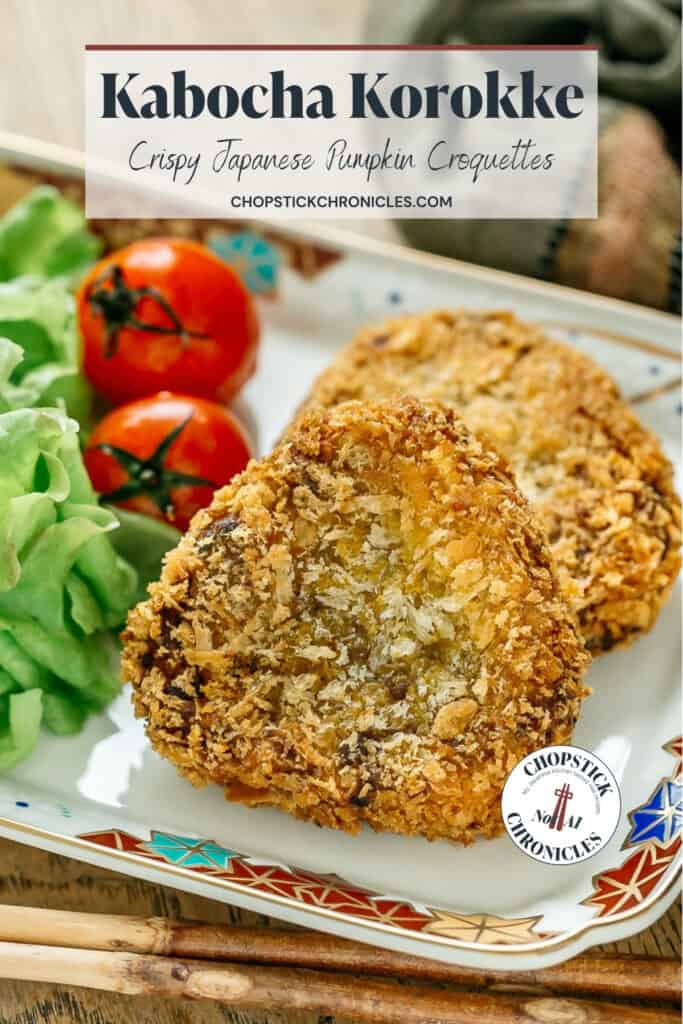
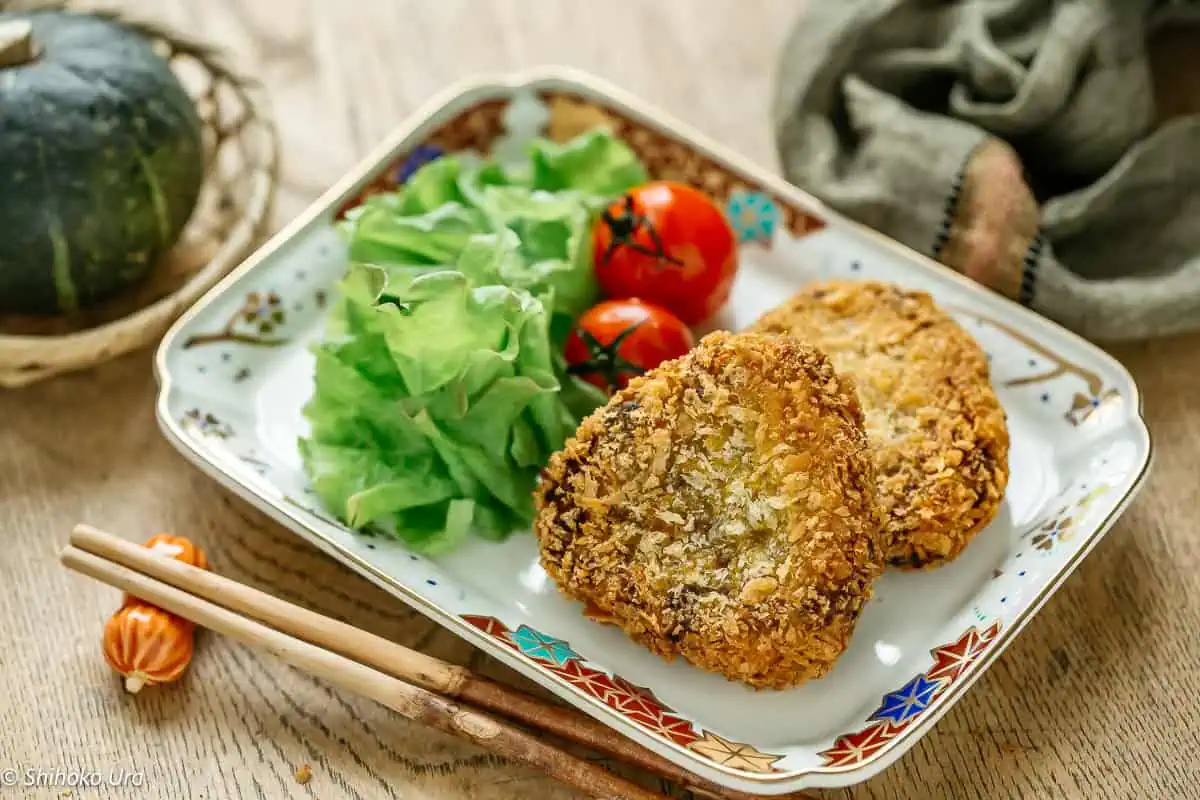
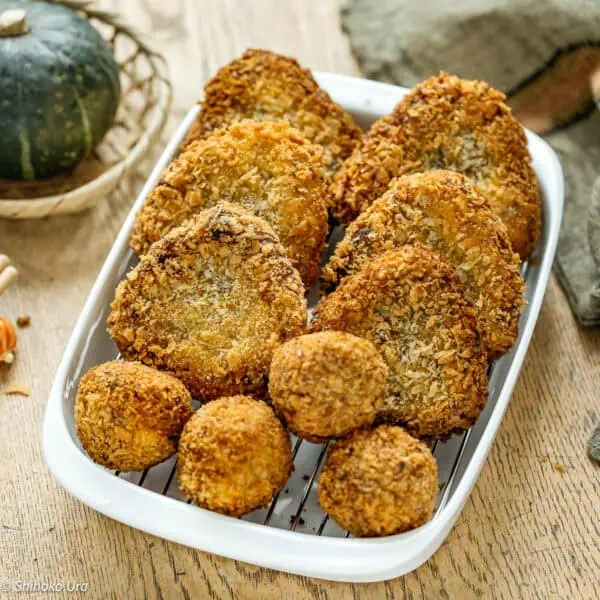
These Japanese pumpkin croquettes have a crisp, golden coating with a naturally sweet and creamy mashed kabocha squash filling. Unlike classic potato korokke, kabocha gives the filling a richer flavor and fluffier texture. Kabocha korokke was one of my favorite dishes in Japanese school lunches (gakko kyushoku (学校給食), so this recipe brings back a lot of childhood memories for me. They are delicious freshly fried and make a great side dish, snack, or addition to a Japanese-style meal.
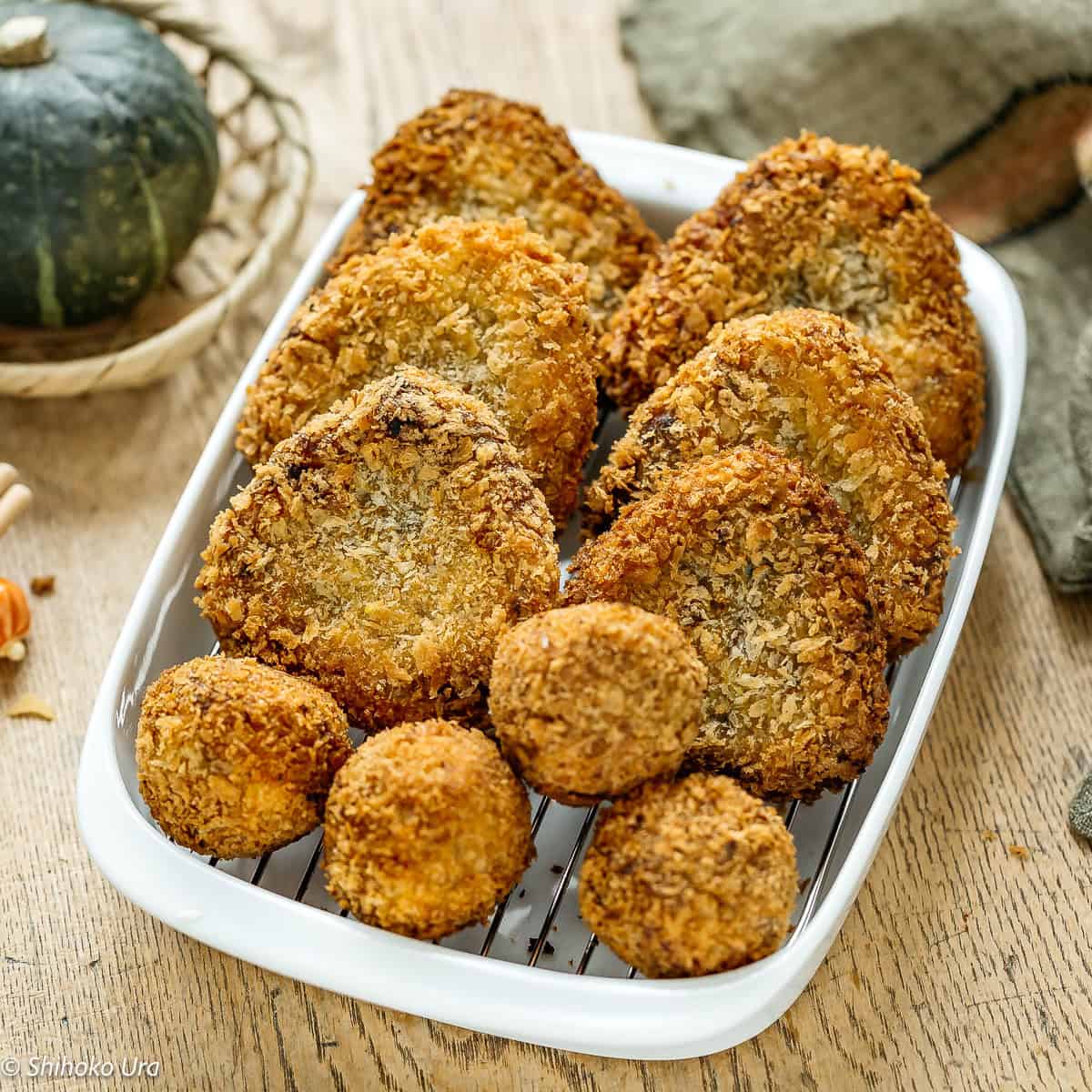
Table of contents
What is Kabocha Korokke?
Kabocha korokke (かぼちゃ コロッケ) are Japanese pumpkin croquettes made with mashed kabocha squash coated in panko breadcrumbs and fried. Korokke is the Japanese version of a croquette and is usually made with mashed potatoes.
Kabocha korokke replaces the potato with kabocha pumpkin, which has a naturally sweet flavor and a relatively dry, starchy texture. This gives the croquettes a creamy, almost fluffy center while keeping the filling firm enough to shape and fry.
In Japan, kabocha korokke are enjoyed as a main dish, side dish, bento item, or snack. They are also sometimes served as part of Japanese school lunches which are nutritionally planned meals served to students at Japanese elementary and junior high schools.
Kabocha Squash vs Other Types of Pumpkin
Kabocha squash, also called Japanese pumpkin, is a type of winter squash with dark green skin and dense, naturally sweet flesh. It is drier and starchier than other types of squash, which makes it especially good for korokke because the mashed filling holds its shape without needing extra ingredients to firm it up.
If you cannot find kabocha, you can replace it with butternut squash. However, butternut has more moisture and a softer texture so it’s best to roast it instead of boiling to avoid any excess water. You can try another type of pumpkin or squash but make sure to choose one with dry, starchy flesh rather than a watery variety for croquettes. This makes it easier to shape and keeps the creamy, fluffy center. You can also replace part of the kabocha with sweet potatoes for a sweeter, denser filling.
Why You Will Love This Recipe
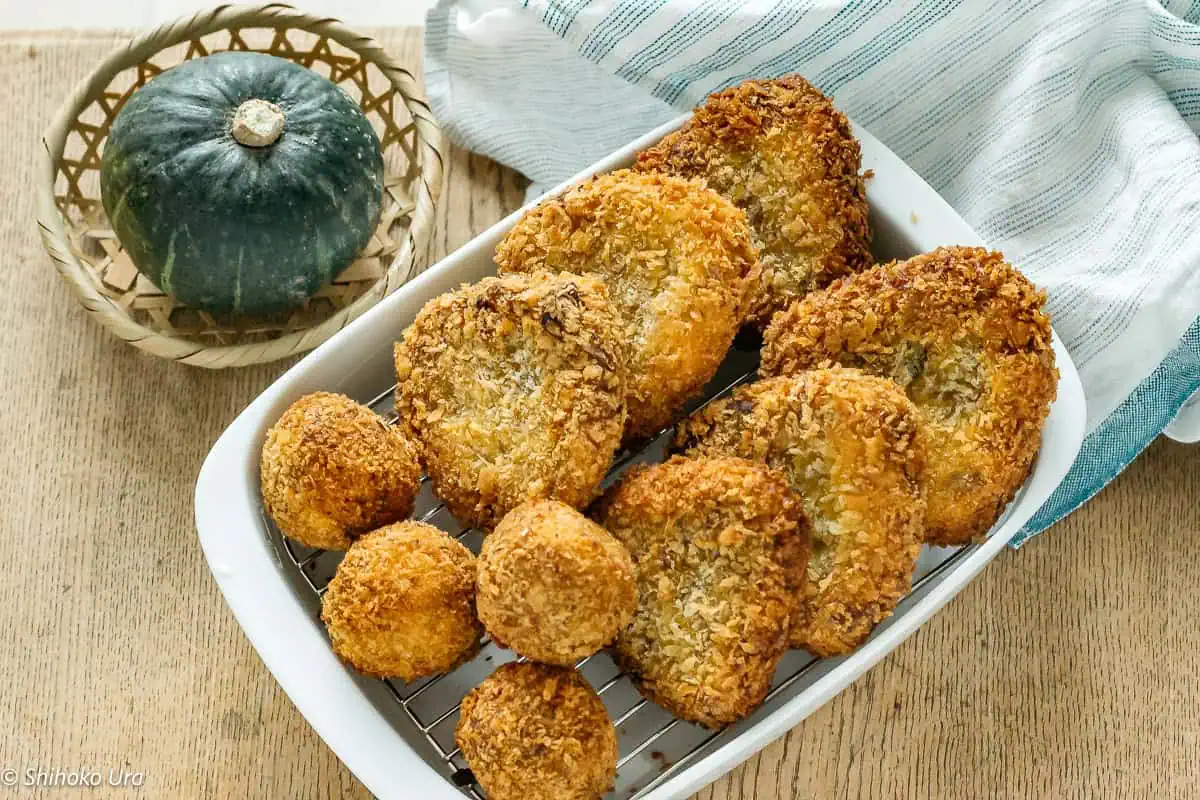
- Crispy outside, creamy inside: The panko breadcrumbs make the outside crisp and golden brown, while the kabocha filling stays soft and creamy.
- Naturally sweet: these croquettes are savoury but the kabocha squash adds a natural subtle sweetness.
- Simple ingredients: This recipe uses everyday ingredients to turn kabocha into satisfying Japanese pumpkin croquettes.
- Easy to prepare ahead: Shape and bread the kabocha korokke, then keep them in the fridge until you are ready to cook.
- Perfect for different meals: Serve them for lunch or dinner, pack them into a bento, or make smaller ones for a snack.
- Two ways to cook: For the classic crispy coating, deep fry the korokke. You can also bake them in the oven for an alternative to frying.
Ingredients You Need
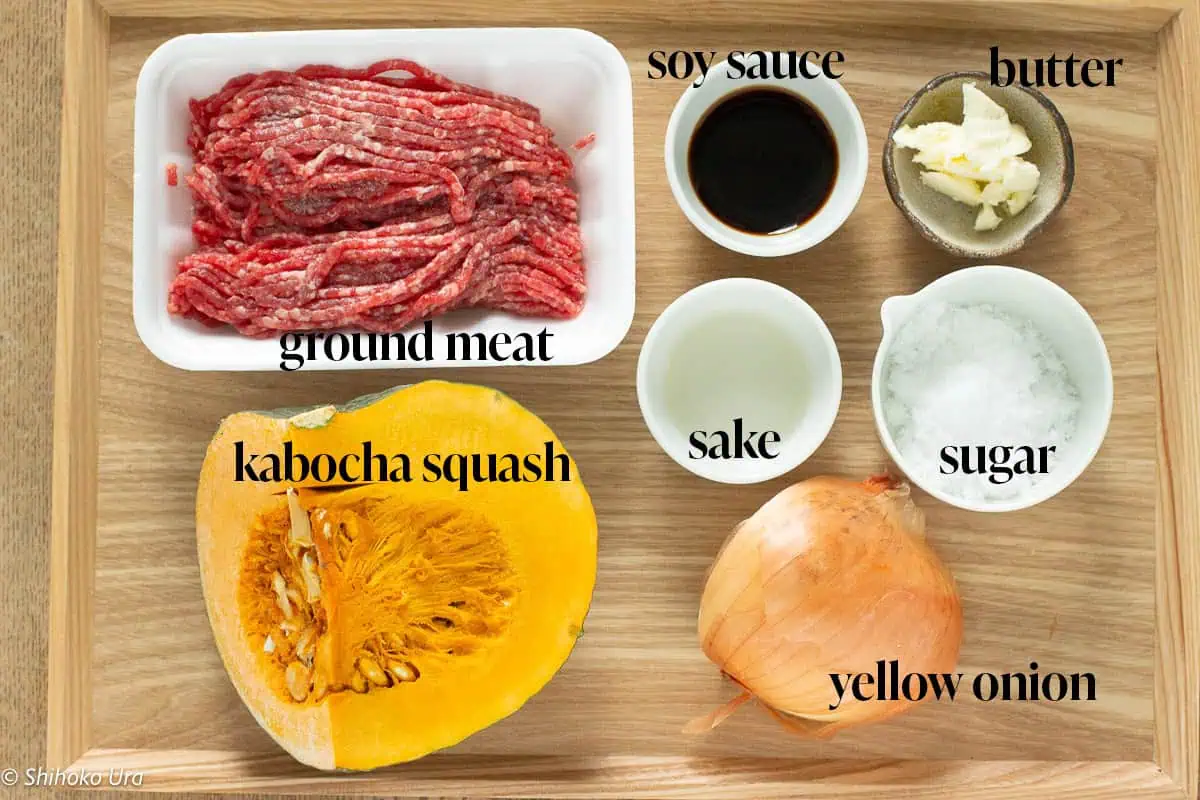
Kabocha Squash
Naturally sweet and starchy kabocha pumpkin makes a creamy filling that holds its shape well. Choose kabocha with firm, dark green skin and dense flesh without too much moisture.
Yellow Onion
Finely chop the onion and sauté it until soft. The sautéed onion adds sweetness and savory depth that pairs especially well with the kabocha.
Ground Beef and Pork
I used ground beef but aibiki minchi (合い挽きミンチ) is a mixture of ground beef and pork that is commonly used for korokke.
Sake
Added to the ground meat as it cooks. Sake adds depth to the savory flavor of the meat and helps balance the seasoning.
Sugar
The sugar is added to the ground meat together with the soy sauce to give the meat a distinctly Japanese sweet and savory seasoning that contrasts with the natural sweetness of the kabocha pumpkin.
Soy Sauce
Soy sauce seasons the ground meat with saltiness and umami. Combined with the sugar and sake, it creates a sweet and savory meat mixture that is stirred into the mashed kabocha.
Batter Mixture
I mix all-purpose flour, egg, and water together in a bowl to make a simple batter. Sometimes people coat the korokke separately in flour then egg but I find it easier and quicker to make it into a batter. It’s especially great when making a whole batch of croquettes. The batter creates an even coating that helps the panko breadcrumbs stick well to the soft kabocha filling.
Panko Breadcrumbs
After dipping each korokke in the batter mixture, coat it generously with panko breadcrumbs and gently press the panko onto the surface. Japanese panko has larger, lighter flakes than regular bread crumbs, which gives the kabocha croquettes their crisp, airy coating when deep fried.
Oil for Deep Frying
Use neutral oil suitable for deep fry cooking, such as canola, vegetable, or rice bran oil. Add enough to a deep pan or pot to fry the kabocha korokke evenly.
How to Prepare Kabocha for Korokke
Cut the Kabocha Safely
Kabocha squash is very firm, so use a stable cutting board and a sharp, heavy knife. Cut the kabocha in half, scoop out the seeds and stringy parts with a spoon, then slice it into even pieces so they cook at the same rate.
If the kabocha is particularly hard to cut, microwave it briefly for 2 to 3 minutes to soften the skin slightly before cutting.
Steam the Kabocha
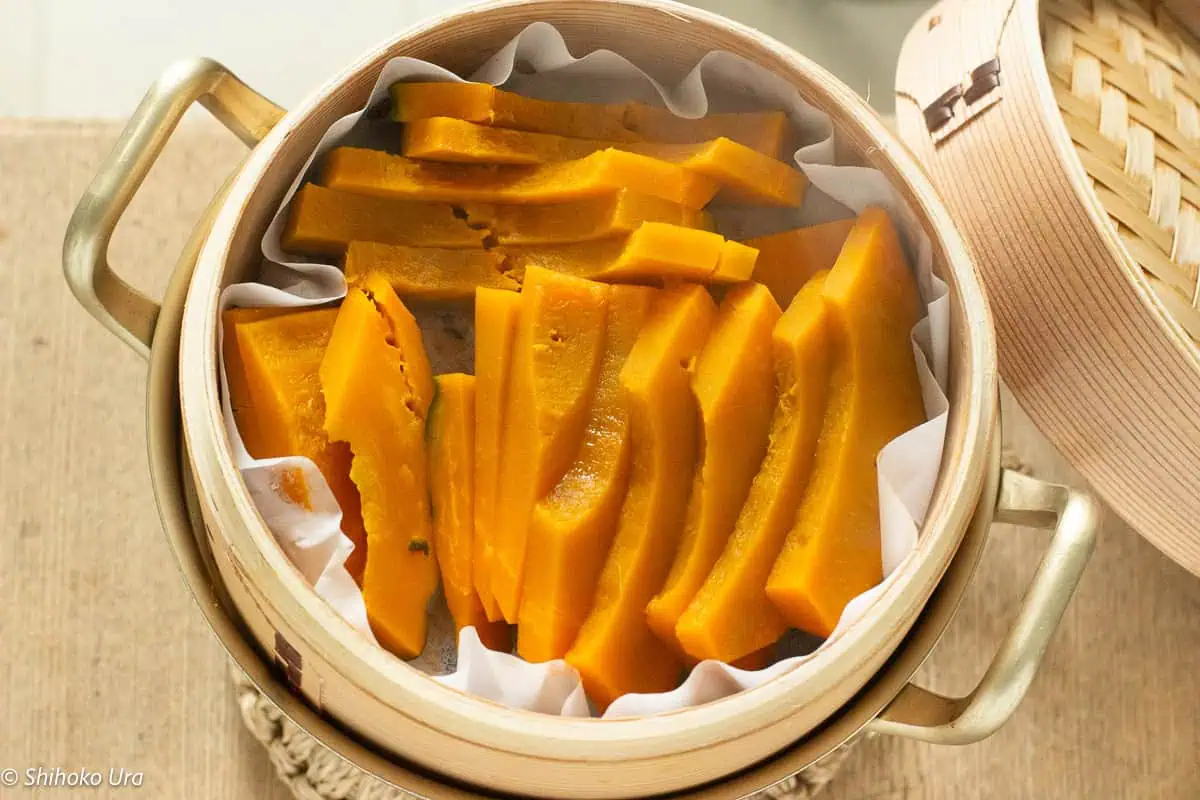
I prefer to steam kabocha rather than boil it when making kabocha korokke. Steaming prevents the flesh from absorbing too much water, which is important because excess moisture can make the filling soft, sticky, and difficult to shape.
Place the kabocha slices in a steamer for about 10 to 15 minutes, or until the flesh is tender enough for a fork to slide through easily. Let the cooked kabocha sit uncovered for a few minutes so any surface moisture can evaporate.
Mash the Kabocha
While the kabocha is still warm transfer it to a large bowl. Mash it with a fork until mostly smooth.
I like to leave a few small pieces of kabocha rather than making it completely smooth. They give the kabocha croquettes a little more texture.
How to Make Kabocha Korokke
Step 1: Sauté the Onion and Ground Meat
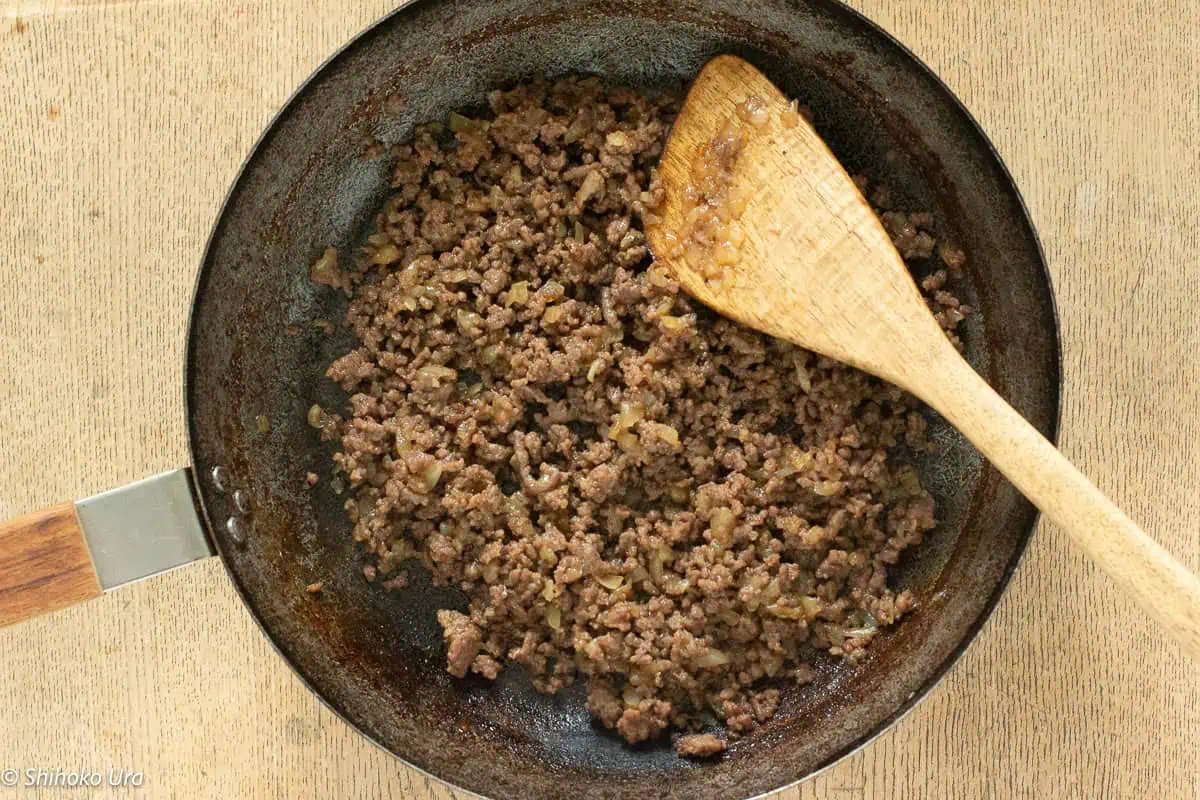
- Melt the butter in a pan over medium heat. Add the finely chopped yellow onion and sauté for about 3 to 4 minutes, or until it becomes soft and translucent.
- Add the ground beef and cook for another 3 to 4 minutes, breaking it apart as it cooks.
- Add the sake, sugar, and soy sauce, then stir and continue cooking until the meat is cooked through and most of the liquid has evaporated. This is important because excess moisture can make the korokke difficult to shape.
Step 2: Make the Kabocha Filling
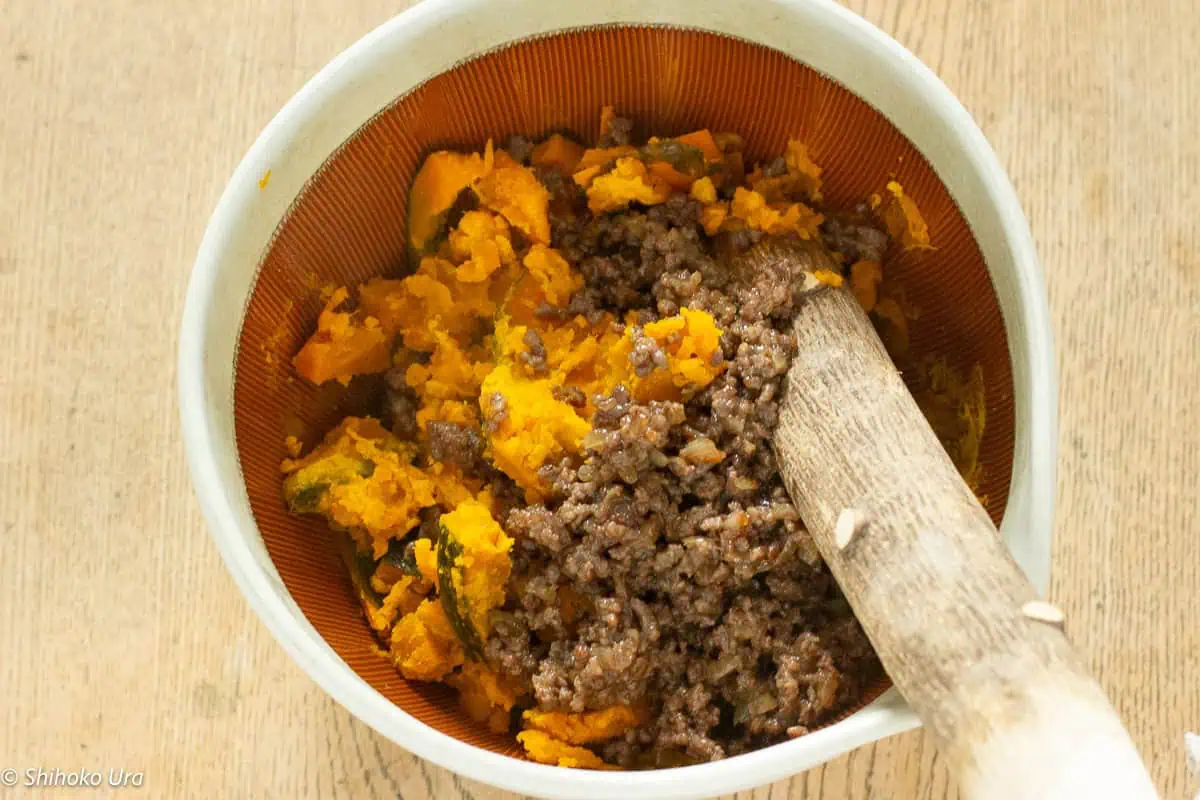
- Add the cooked onion and meat mixture to the mashed kabocha squash. Season with a little salt and pepper, then stir until everything is evenly combined.
- The finished mixture should be soft and creamy but firm enough to hold its shape when pressed together. If it feels very soft, let it cool before shaping because the mixture will firm up as it cools.
Step 3: Shape the Croquettes
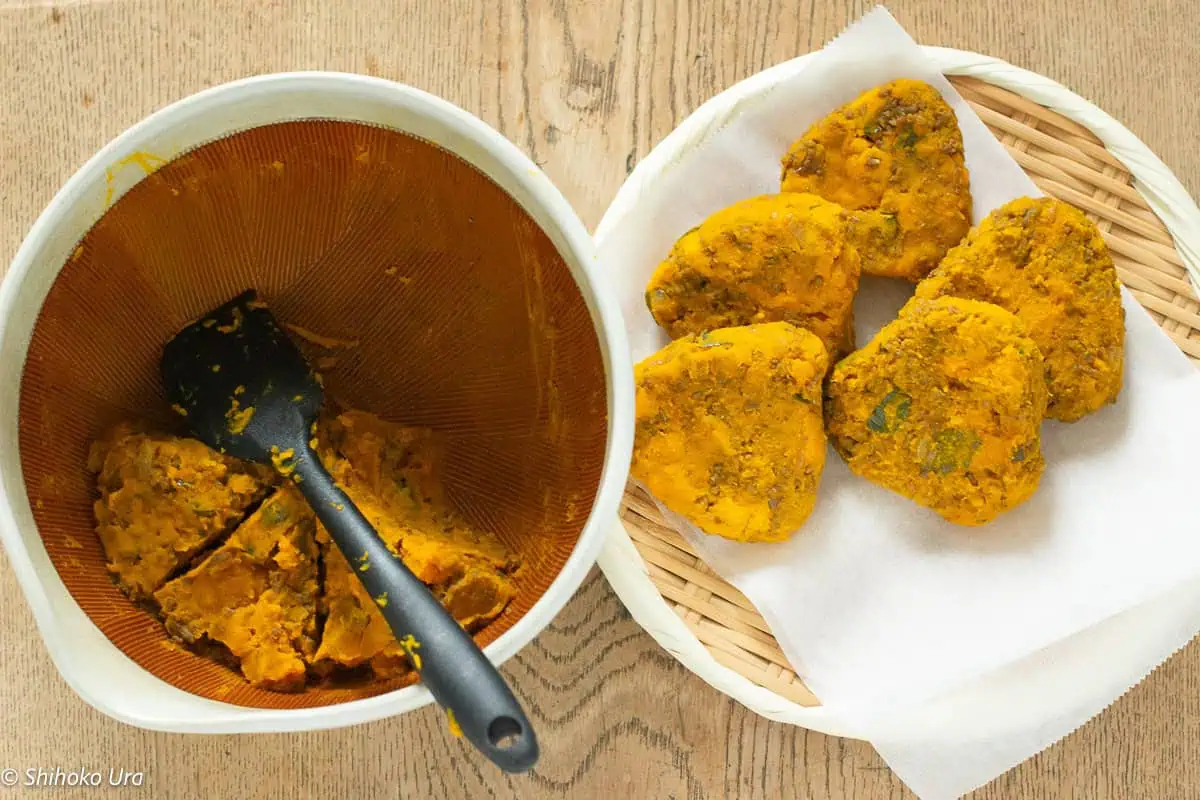
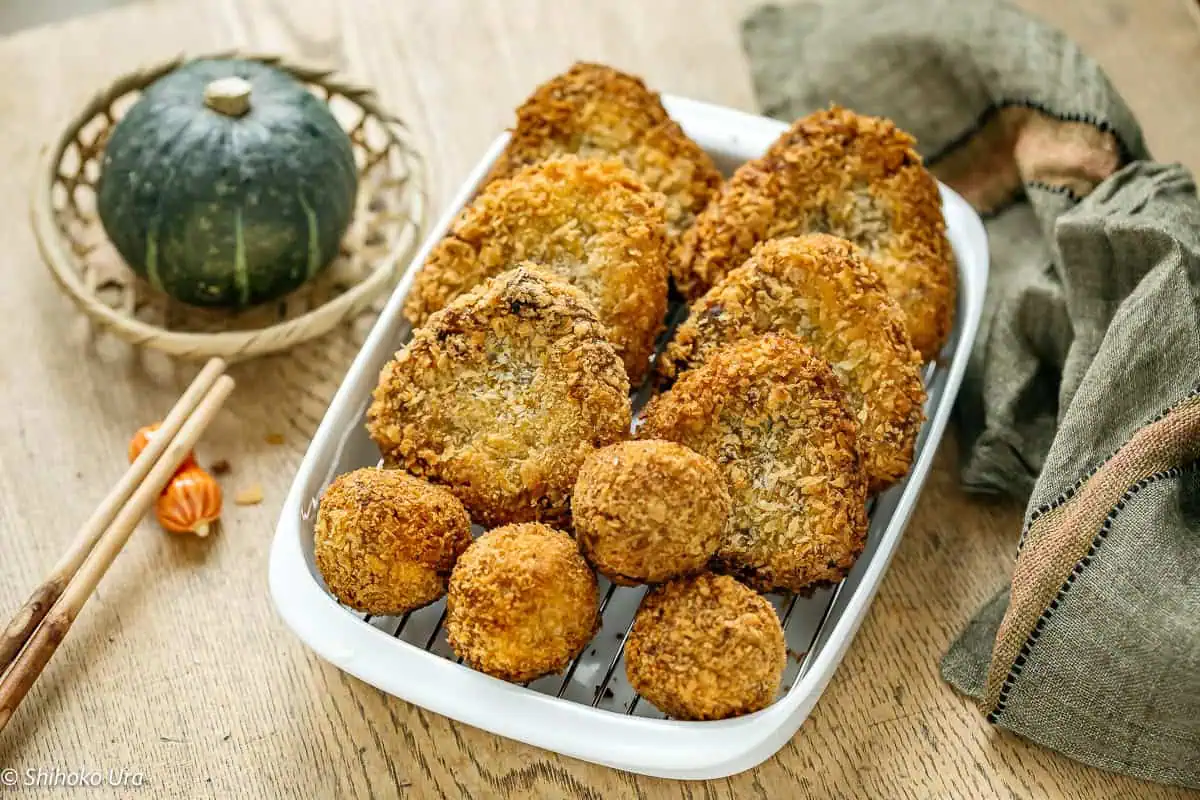
- Let the kabocha mixture cool until it is comfortable to handle, then divide it into equal portions. Shape each portion into a flat triangle, the shool lunch kabocha korokke shape, or make small balls if you want bite-sized croquettes.
- Gently press the mixture together so there are no cracks around the edges, but avoid packing it too firmly. Keep each korokke about the same size to help them cook and brown evenly.
Step 4: Batter and Coat with Panko
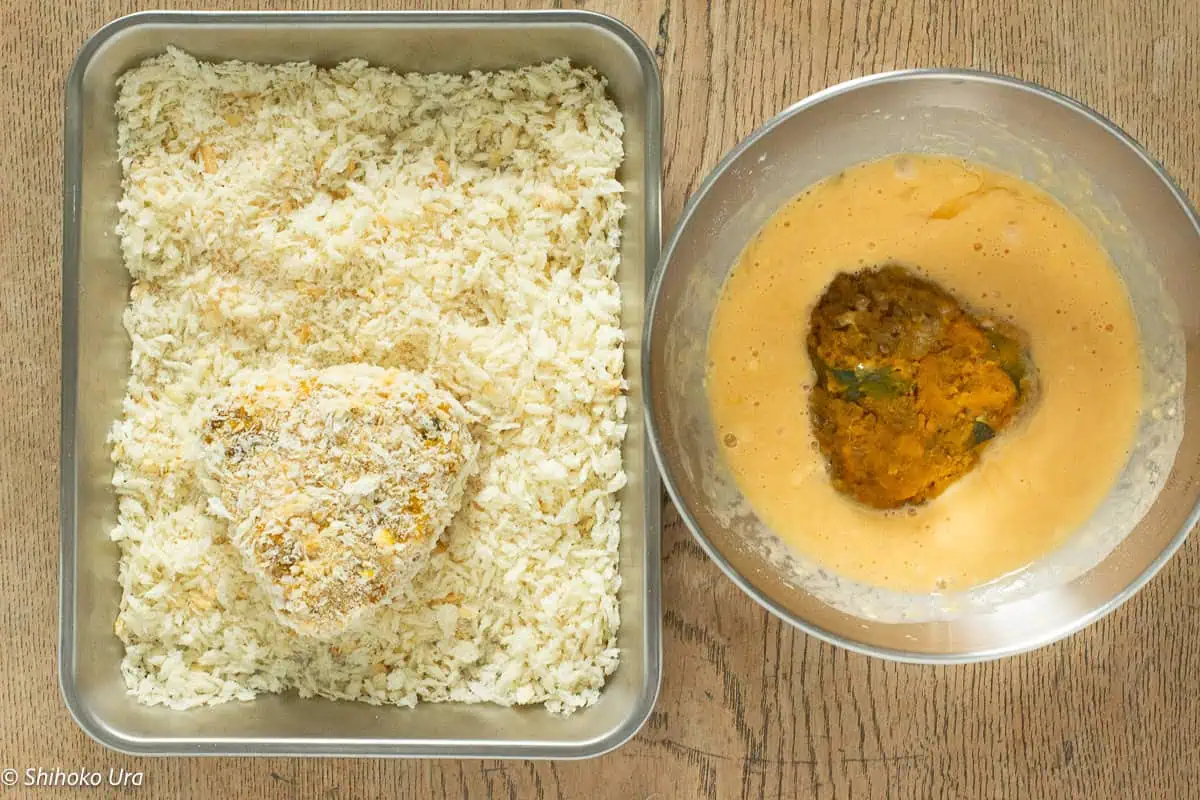
Mix all-purpose flour, egg, and water together to make a smooth batter. Dip each shaped korokke into the batter and allow the excess to drip off. Transfer it to the panko breadcrumbs, coat it completely, and gently press the panko onto the surface, adding a sprinkle of extra crumbs anywhere the coating looks thin.
Step 5: Deep Fry Until Golden Brown
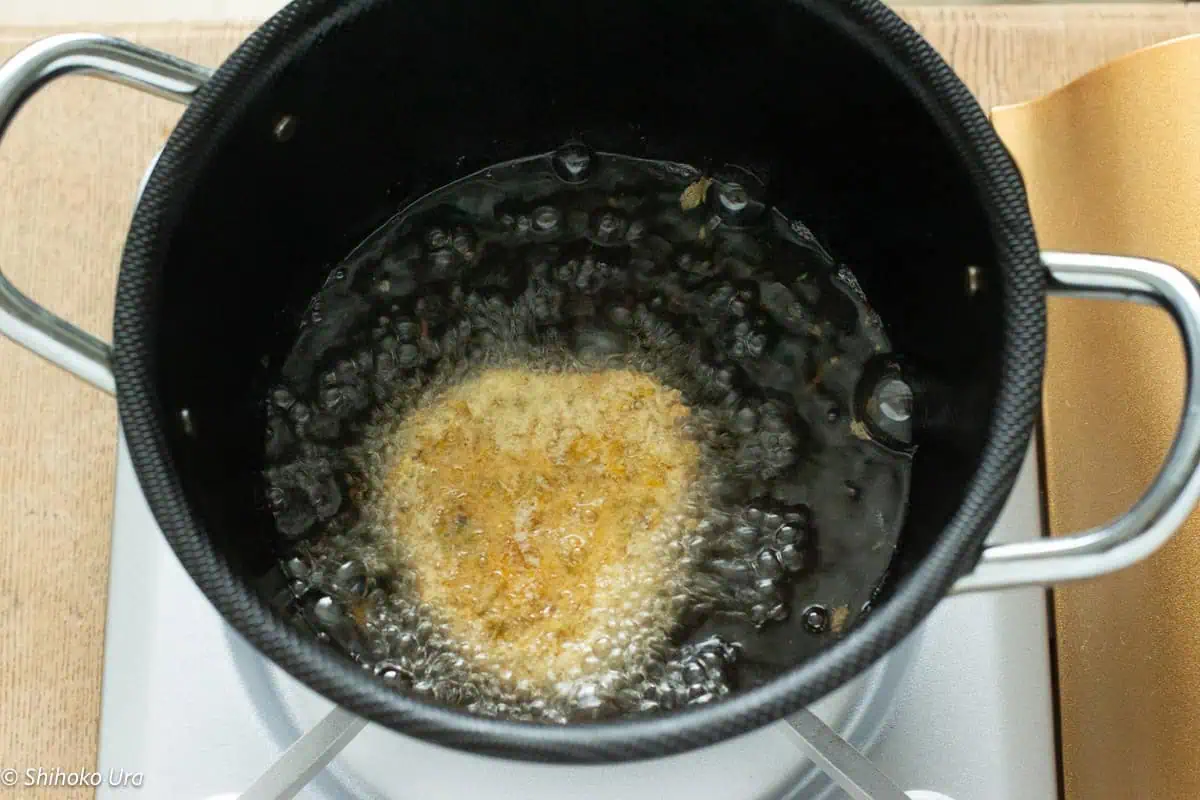
- Heat enough neutral oil in a deep pot or pan to comfortably deep fry the korokke. Once the oil reaches the correct frying temperature, carefully add the croquettes in small batches so the oil temperature does not drop too much.
- Fry until the outside is crisp and evenly golden brown. Since the kabocha and meat filling is already cooked, you are mainly frying the coating and heating the center.
- Remove the korokke from the oil and place them on a wire rack or paper towel to drain any excess oil. Serve them hot while the panko coating is at its crispiest.
Shiho’s Kitchen Tips for Perfect Kabocha Korokke
Keep the filling fairly dry : The kabocha mixture should feel soft and creamy but hold together easily when you shape it. I prefer steaming the kabocha squash rather than boiling it because it does not absorb as much moisture. Also, cook the seasoned meat mixture until most of the liquid has evaporated before mixing it with the kabocha.
Let the filling cool before shaping : Warm filling is softer and can be difficult to shape and coat. Let it cool until it feels firm enough to handle, or place it in the fridge briefly if necessary.
Let the kabocha remain the star : The ground meat is seasoned with sake, sugar, and soy sauce, but the natural sweetness of the kabocha pumpkin should still be the main taste. Taste the filling before adding extra seasoning.
Keep the croquettes the same size : Divide the mixture into equal portions before shaping rather than estimating each one as you go. This helps the kabocha korokke fry evenly and makes it easier to know when each batch is ready.
Keep an eye on the oil temperature : Make sure the oil is hot enough before you deep fry the croquettes. If the temperature drops too low, the panko breadcrumbs can absorb more oil instead of quickly becoming crisp.
Do not overcrowd the pan : Fry only a few croquettes at a time, leaving plenty of room around each one. Adding too many at once lowers the oil temperature and can leave the coating greasy rather than light and crisp.
Watch the color, not the filling : The kabocha squash, onion, and ground meat are already cooked before frying. Once the outside is evenly golden brown and crisp, remove the croquettes and drain the excess oil.
Variations
Kabocha and Sweet Potato Korokke
Replace part of the kabocha with cooked sweet potatoes for a sweeter and slightly softer filling. Mash them together while warm, then stir in the cooked onion and meat mixture as you would for the original recipe.
Butternut Squash Croquettes
If you cannot find kabocha, butternut squash is a good substitute, although its flesh generally contains more moisture. I recommend roasting it rather than boiling it so you do not introduce extra water, then let it cool before shaping.
If the mixture still feels too soft, chill it in the fridge until it becomes firm enough to hold its shape. The finished croquettes will be softer and less starchy than those made with kabocha, but they will still have a naturally sweet flavor.
Small Kabocha Korokke
Instead of traditional triangle kabocha korokke, shape the mixture into small balls. These bite-sized kabocha croquettes are easy to pack into bento boxes and also make a convenient snack or party dish.
Keep the balls similar in size so they brown evenly, then coat them in the batter and panko breadcrumbs before frying until crisp and golden brown.
What to Serve with Kabocha Korokke
Kabocha korokke are best served freshly fried while the panko breadcrumbs are still crisp and golden brown. I like to serve them with tonkatsu sauce, which adds a tangy flavor. If you do not have tonkatsu sauce, you can make a quick dipping sauce by combining ketchup with Worcestershire sauce. Adjust the ratio to your taste, depending on whether you prefer it sweeter or more tangy.
For a Japanese-style main meal, serve the kabocha croquettes with finely shredded cabbage or a simple salad, steamed rice, and a bowl of miso soup. You can also serve one or two as a smaller side dish alongside other Japanese dishes.
How to Store Kabocha Korokke
In the Fridge
Let cooked kabocha korokke cool completely before storing them. Place them in an airtight container lined with a piece of paper towel to absorb excess moisture, then store in the fridge for up to 2 to 3 days.
Avoid putting hot korokke straight into a sealed container. Trapped steam creates moisture and quickly softens the panko breadcrumbs.
Storing Uncooked Kabocha Korokke
You can prepare the kabocha croquettes ahead and store them after coating with the batter and panko. Arrange them in a single layer in an airtight container and refrigerate for up to 24 hours before you deep fry them.
Freezing Kabocha Korokke
For longer storage, freeze the breaded, uncooked korokke in a single layer on a tray until firm, then transfer them to a freezer-safe container or bag. Keep them frozen for up to 1 month for the best taste and texture.
Cooked korokke can also be frozen once completely cool. Wrap them individually before placing them in a freezer-safe container so they do not stick together.
How to Reheat Kabocha Korokke
For the best crispy coating, reheat cooked korokke in the oven or air fryer rather than the microwave. Heat until the center is piping hot and the outside has become crisp again.
The microwave will warm the kabocha squash filling quickly, but it also tends to make the panko coating soft. If you are reheating frozen cooked korokke, thaw them overnight in the fridge first, then reheat in the oven or air fryer to restore that crisp, golden brown coating.
More Kabocha Squash Recipes

Kabocha Korokke (Kabocha Squash Croquette)カボチャのコロッケ
Ingredients
Kabocha Squash Filling
- 400 g kabocha squash
- ¼ large yellow onion finely chopped
- 150 g ground beef and pork *Aibiki minchi or 100% beef
- 1 tbsp butter
- 1 tbsp sake
- 2 tbsp sugar
- 1 tbsp soy sauce
- pinch salt & pepper
Batter and Coating
- 4 tbsp all purpose flour
- 1 large egg
- 2 tbsp water
- 1½ cups panko breadcrumbs
- Neutral cooking oil, as needed for deep frying
Instructions
- Remove the seeds and stringy parts from the kabocha pumpkin, then slice it into even pieces.
- Place the pieces in a steamer with the skin side down and steam for 10 to 15 minutes, or until a fork easily slides into the flesh. *1
- Let the kabocha sit uncovered for a few minutes to release excess moisture.
- Transfer it to a large bowl, and mash while still warm. I like to leave a few small pieces for texture.
- Melt the butter in a pan over medium heat. Add the finely chopped onion and sauté for 3 to 4 minutes, or until soft and translucent.
- Add the ground beef and pork and cook for another 3 to 4 minutes, breaking it apart as you stir.
- Add the sake, sugar, and soy sauce and continue cooking until the meat is cooked through and most of the liquid has evaporated. *2
- Add the cooked onion and meat mixture to the mashed kabocha. Season lightly with salt and pepper, then stir until evenly combined.
- Let it cool completely before shaping.*3
- Divide the mixture into 8 equal portions and shape each portion into a flat triangle. You can also make small balls if you are preparing the korokke for a bento or snack.
- Combine the all-purpose flour, egg, and water in a bowl and whisk until you have a smooth batter. *4
- Dip each shaped korokke into the batter and let the excess drip back into the bowl.
- Place it in the panko breadcrumbs and gently press the crumbs over the entire surface.
- Sprinkle a little extra panko over any bare areas so the filling is completely covered.
- Heat the oil in a deep pot or pan to 170°C (340°F). Carefully lower 2 to 3 korokke into the oil at a time and deep fry for about 2 to 3 minutes, turning as needed, until crisp and evenly golden brown. *5
- Transfer the cooked korokke to a wire rack or paper towel to drain the excess oil.
Oven Option
- For an oven version, preheat the oven to 220°C (425°F).
- Before coating the korokke, lightly toast the panko in a pan with a small amount of olive oil until pale golden, then use it to coat the battered croquettes.
- Arrange the korokke on a baking sheet lined with parchment paper and bake for 15 to 20 minutes, or until hot and crisp. *6, *7