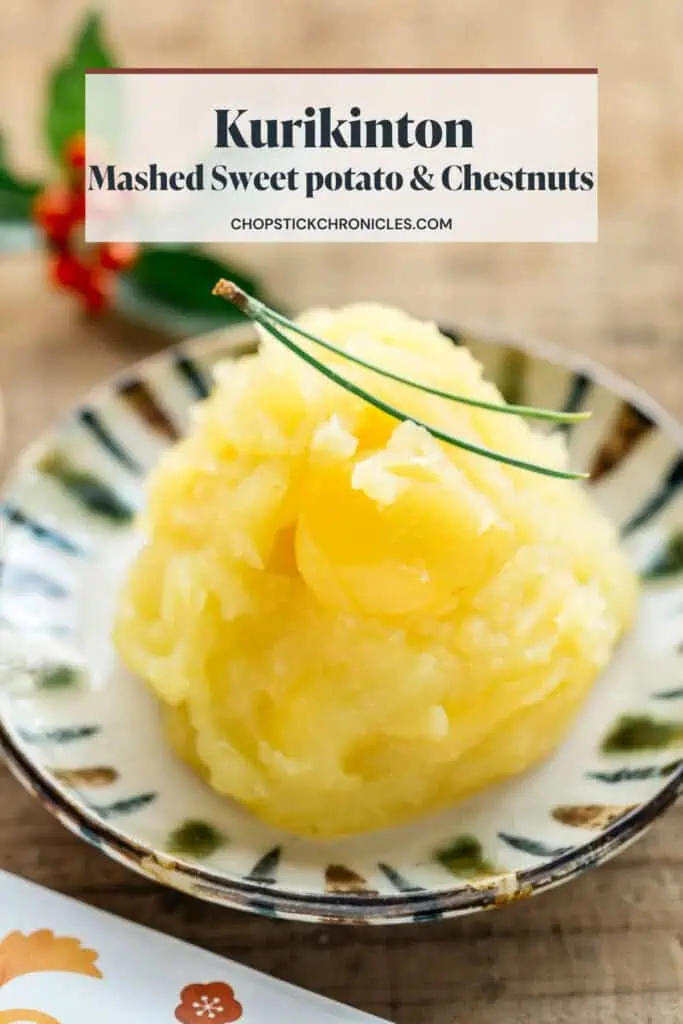
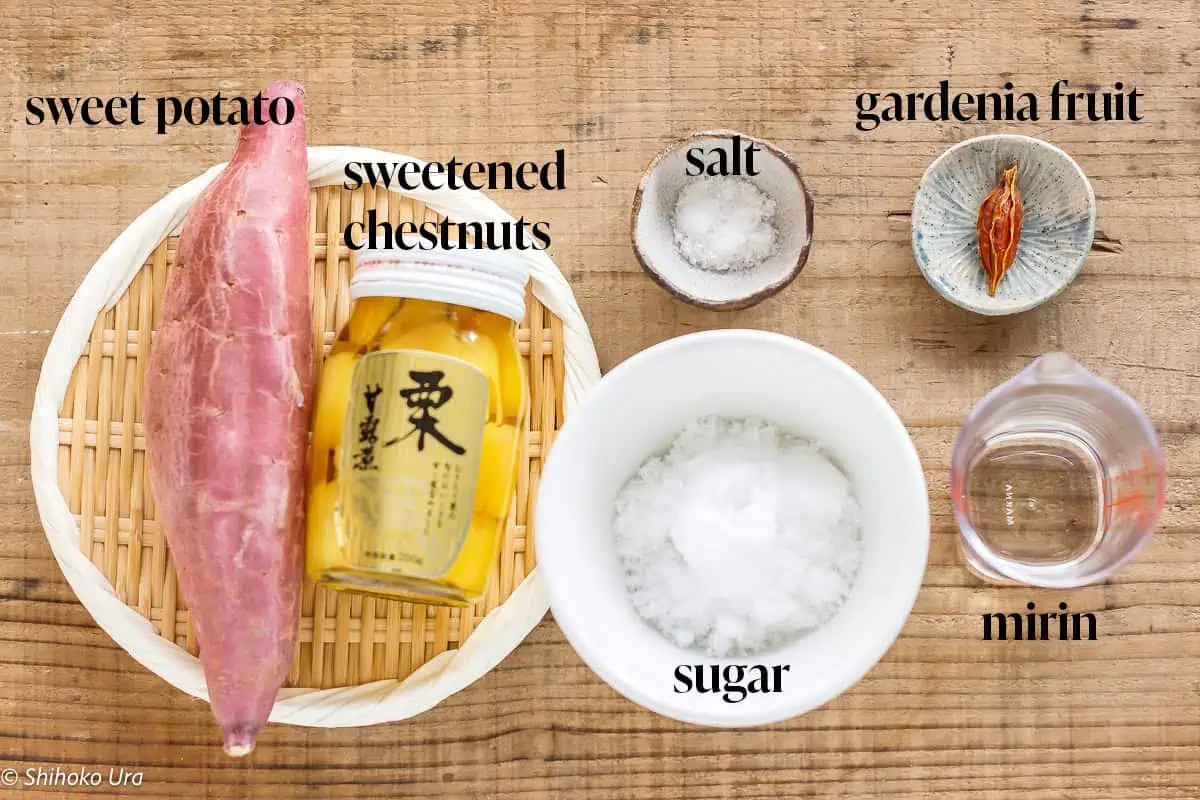
Kuri Kinton is a staple of the New Year’s (osechi ryori) feast in Japan. This special dish is made from Japanese sweet potato mashed with candied chestnuts creating a sweet, smooth, and golden paste. It adds a delicious and sweet element to any meal and represents economic prosperity and good luck in the new year’s feast!
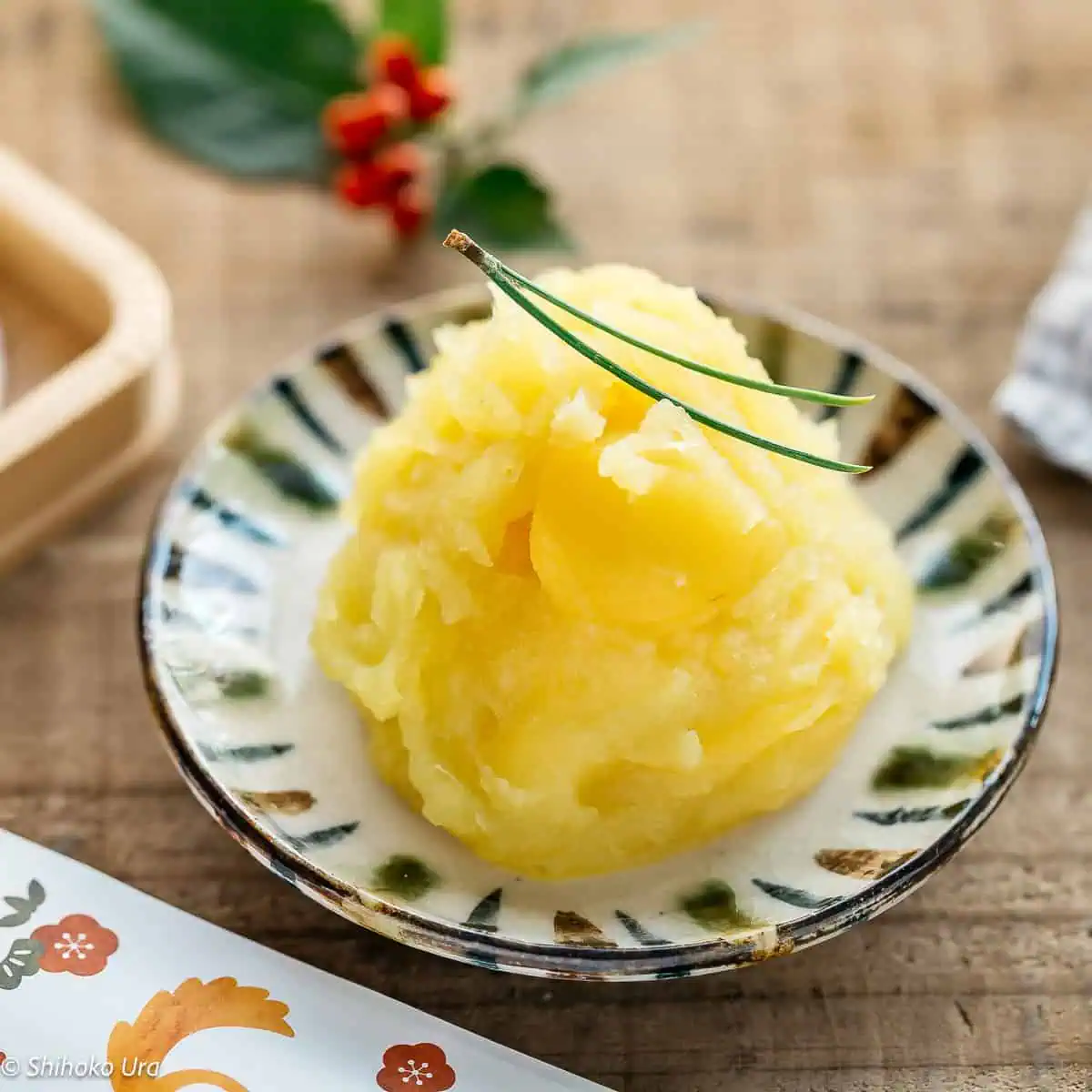
Table of contents
What is Kurikinton?
Kurikinton is Japanese sweet potato mashed with candied chestnuts. It is one of the traditional osechi ryori dishes eaten to celebrate the new year in Japan. ‘Kuri’ means chestnuts, and ‘Kinton’ is written as “Golden Futon” in Kanji character. Typically Japanese sweet potato is cooked with gardenia pods (Kuchinashi-no-mi) from the gardenia/cape Jasmine plant for a bright yellow color, then mashed with chestnuts. The combination of sweet potatoes and chestnuts creates a rich, sweet dish with a delightful mix of smooth and chunky textures. It is eaten as part of the New Year’s feast (osechi ryōri) as it symbolizes wealth and good economic fortune for the coming year due to its golden color and luxurious taste.
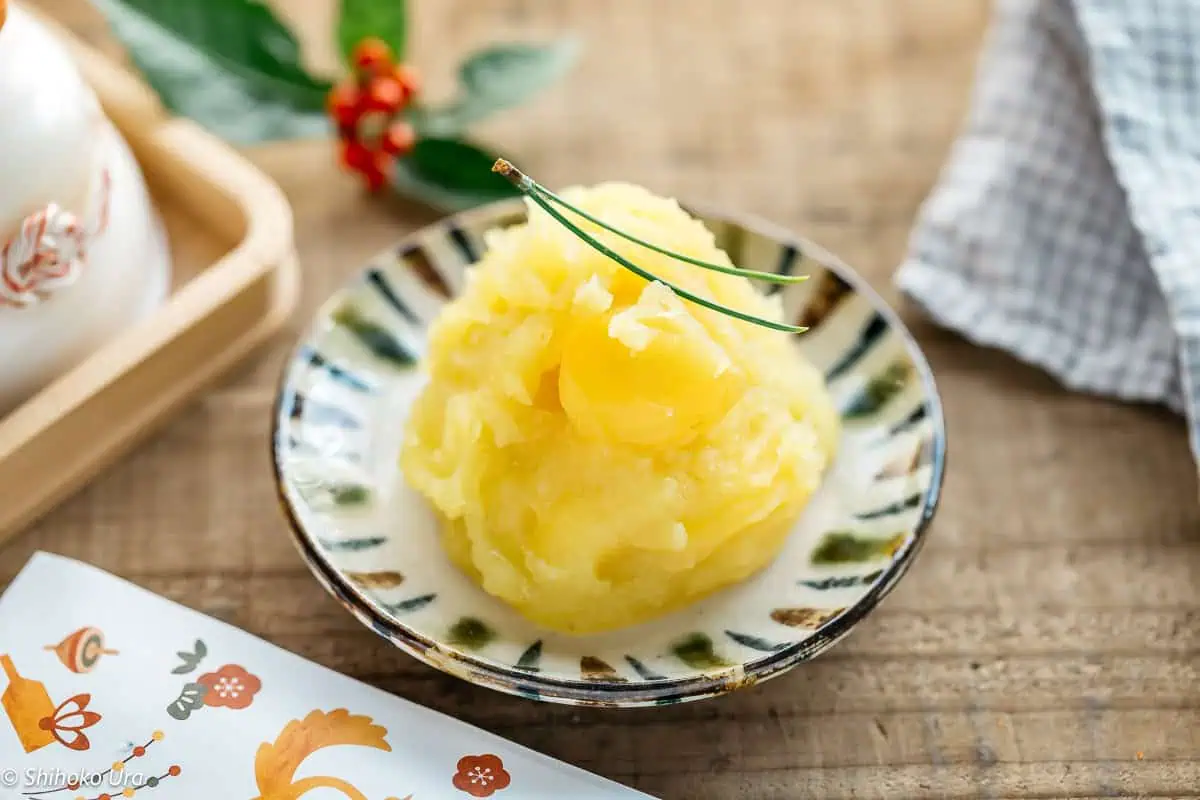
Key Ingredients of Kurikinton
Japanese sweet potatoes
Satsumaimo is Japanese sweet potato. They have purple skin with bright yellow flesh. It’s necessary to specifically use Japanese sweet potatoes because they have the right sweetness and starchiness. For this dish it is steamed or boiled until soft, then mashed and combined with the candied chestnuts.
Harvesting Japanese purple sweet potatoes begins around August. Freshly harvested sweet potatoes are not necessarily sweet and delicious. It is said that purple sweet potatoes become sweeter after it has been stored for 2 to 3 months when the starch has been saccharified. Therefore, purple sweet potatoes are in season from October to January. Pick sweet potatoes that are plump and thick and feels heavy when you hold it. Thin sweet potatoes are said to have more fibers. So when it is mashed, the texture will not be smooth. Also the sweet potatoes should have taut uniform and bright purple skin. Avoid ones that have wrinkles and blemishes on the skin. reference: Satsumaimo
Candied Chestnuts in Syrup
Candied chestnuts in syrup, known as “kuri no kanroni” in Japanese, is a sweet preserve. The process involves simmering the chestnuts in the sugar syrup until they become tender and absorb the sweetness. This results in glossy, candied chestnuts that are both a treat on their own and an ingredient in other desserts like mont blanc or as a topping for various sweets. You can make this from scratch too.
Gardenia Fruit
Gardenia fruit or cape jasmine fruit pods, also known as kuchinashi no mi (クチナシ) in Japanese, is used as a natural food coloring agent to give the traditional Japanese New Year’s dish its distinctive gold/yellow color. You can purchase this from Japanese grocery stores or Asian grocery stores. If you do not have access to Asian grocers near by, you can purchase it online. If you can’t purchase it at all, then it can be omitted (but the color of the dish will not be golden yellow) or substituted with 1 tsp of turmeric or saffron.
Sugar
Sugar is necessary for adding sweetness but not too much is needed since the sweet potato and chestnuts already add their own sweetness. As Kurikinton is often prepared in advance for New Year celebrations, sugar acts as a natural preservative, helping the dish stay fresh longer.
Mirin
Mirin is a sweet rice wine that adds a more complex, less direct sweetness compared to sugar. It complements the sugar without making the dish overly sweet. Mirin also contributes a subtle umami flavor. Like sugar, mirin helps create a shiny, appetizing appearance in the finished dish. See Japanese substitution post if you can not access this ingredient to see what can be substituted.
Salt
A little bit of salt is added to the dish to enhance the flavors and balance the sweetness.
How to Make Kurikinton
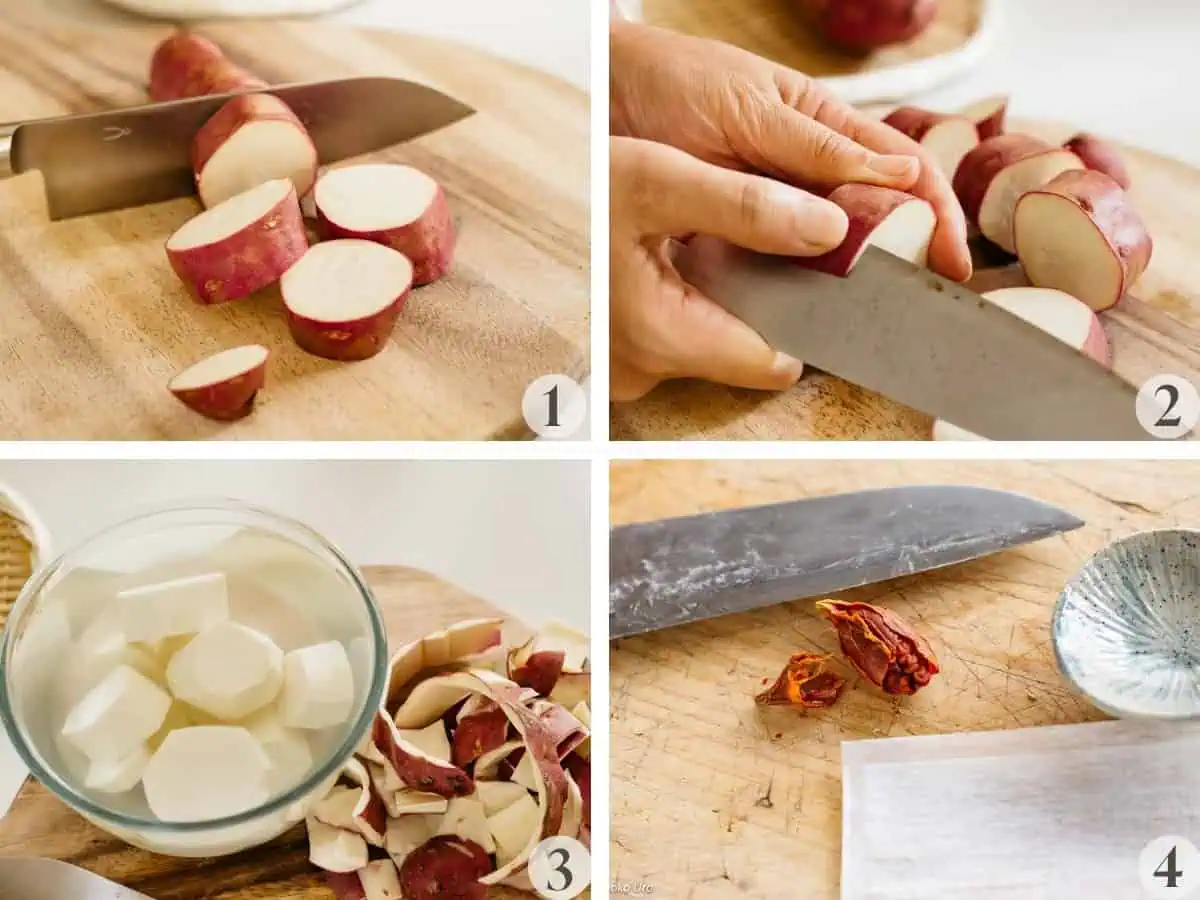
- Wash and cut sweet potatoes into 2cm pieces.
- Leave the cut sweet potatoes in the water of a large bowl to remove the astringent taste.
- Peel the skin.
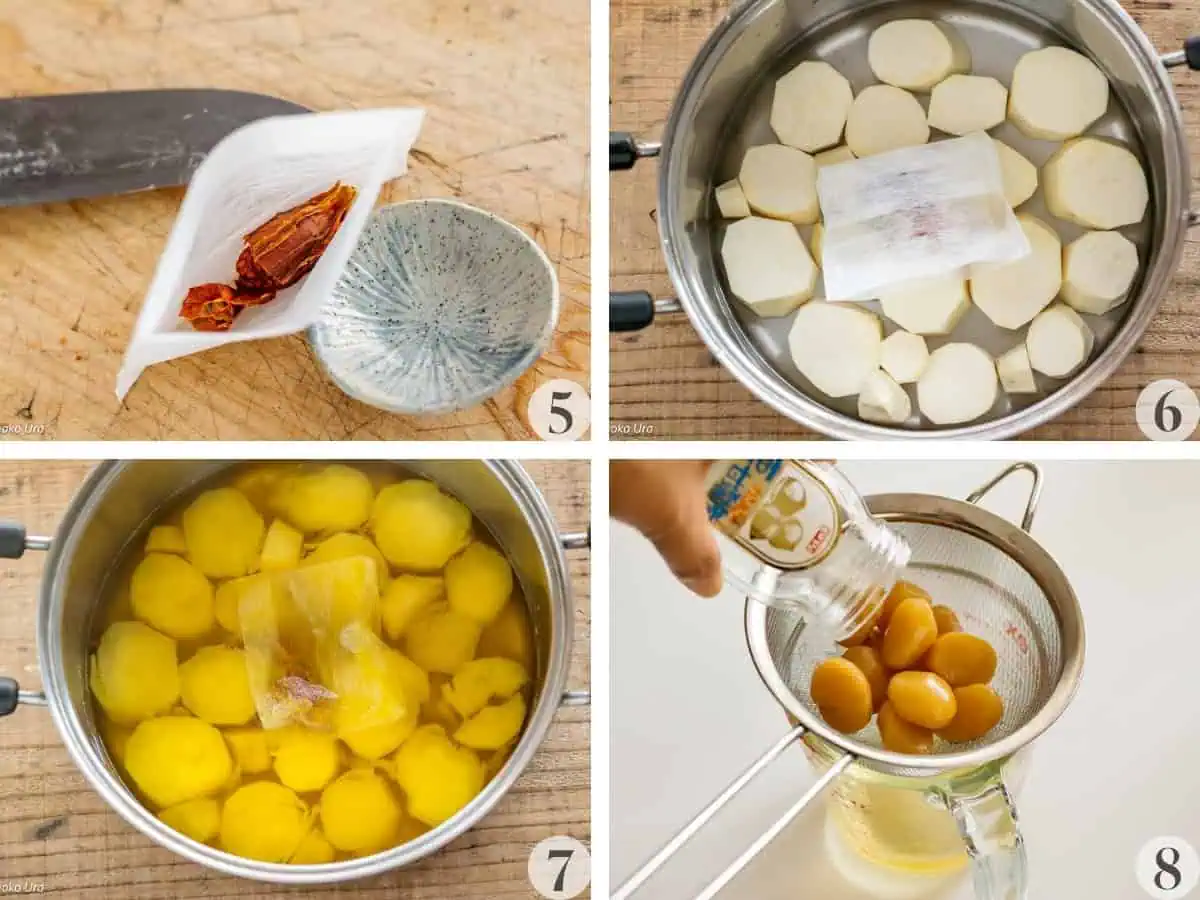
- Cook the sweet potato and drain the chestnuts jar to separate the chestnuts and syrup.
- Strain the cooked sweet potato.
- Place the strained sweet potato back into the cooking pot.
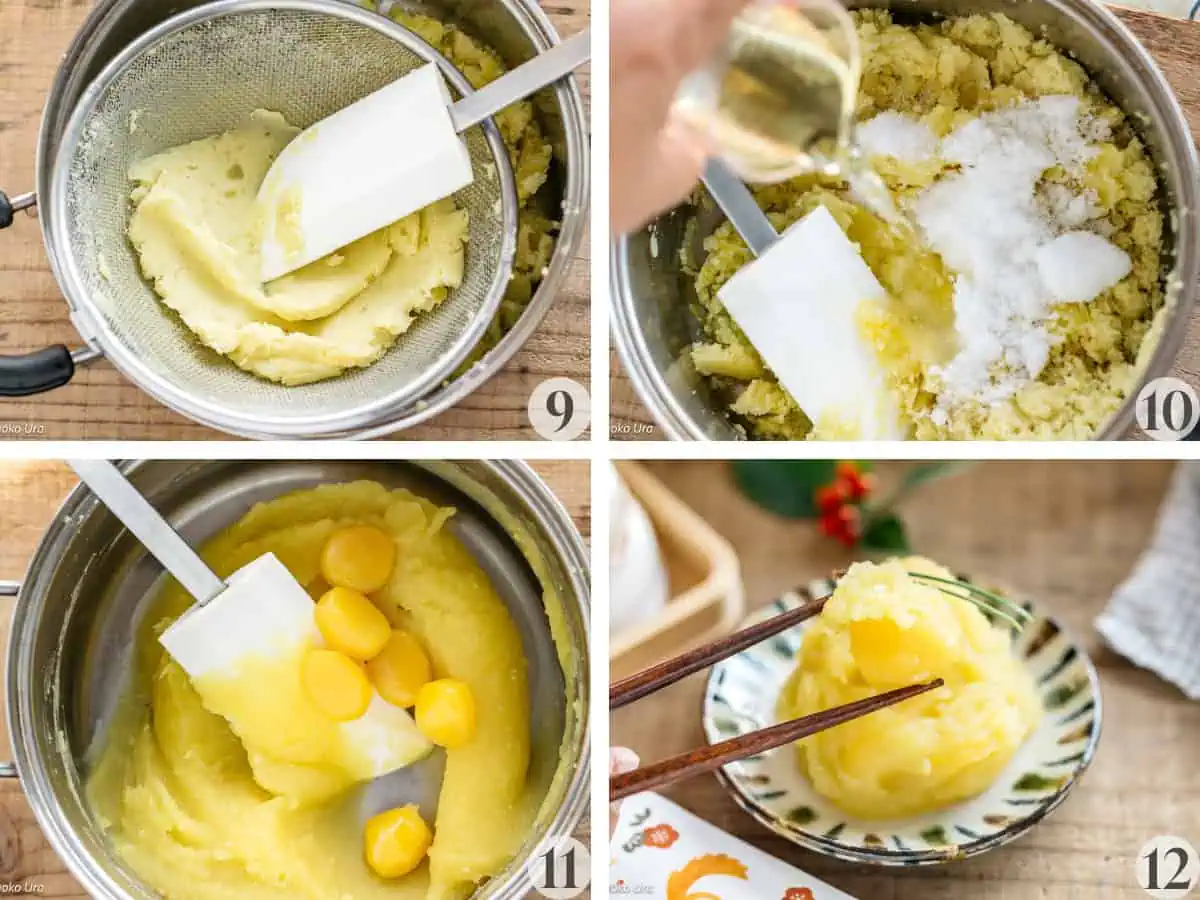
- Add all other ingredients and turn the heat on.
- Stir continuously over low to medium heat until all the seasonings dissolve and reduce a little.
- Add chestnuts to the mashed sweet potato.
Tips to Make Kurikinton
- Peel the skin of the sweet potatoes thickly. Japanese sweet potato has a lot of fibre near the skin. So in order to make silky smooth mashed sweet potato, the skin needs to be removed well.
- Cook with a bag of crushed cape jasmine/gardenia fruit for a striking golden yellow colour. If you can’t access this ingredient, substitute with 1 tsp of turmeric or saffron.
- Strain or mash while the sweet potatoes are hot.
What To Serve Kurikinton With
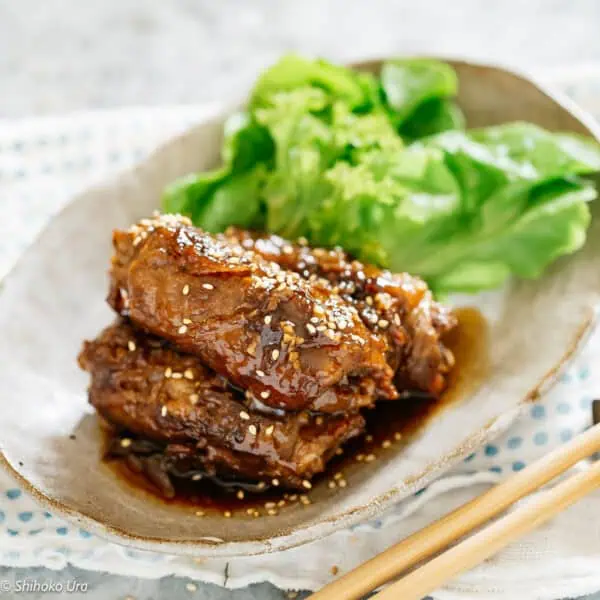
Since kurikinton is sweet, it works well as a side dish to savoury dishes. Also since it is sweet, it is good to be served as a snack or dessert with tea. Here are some recipes it would pair well with:
What to Serve Kurikinton With



More Osechi Ryori Recipes
- Pickled Daikon and Carrot Kōhaku Namasu
- Datemaki Rolled Omelette
- Sweetened black soybeans Kuromame
- Sekihan Azuki bean rice
- Osechi Ryori
FAQ
A: The dish is made with sugar so it will last for a while with New Year’s day in mind. Keep it in an airtight container and refrigerate. It will keep about 3-5 days. If you have lots of leftovers, you can turn this into a Japanese sweet potato pie.
A: There is not anything you can substitute for candied chestnuts. So you can either make it from scratch or omit this ingredient and increase the mirin amount to 1/3 cup.
Stay Connected
If you like the recipe please rate the recipe and leave comments below. Also don’t forget to follow me on Youtube, Pinterest, Facebook, Twitter and Instagram. This way you keep up to date with all the latest happenings on Chopstick Chronicles. Don’t forget to Sign up for a newsletter so you never miss out on new authentic delicious Japanese recipes!
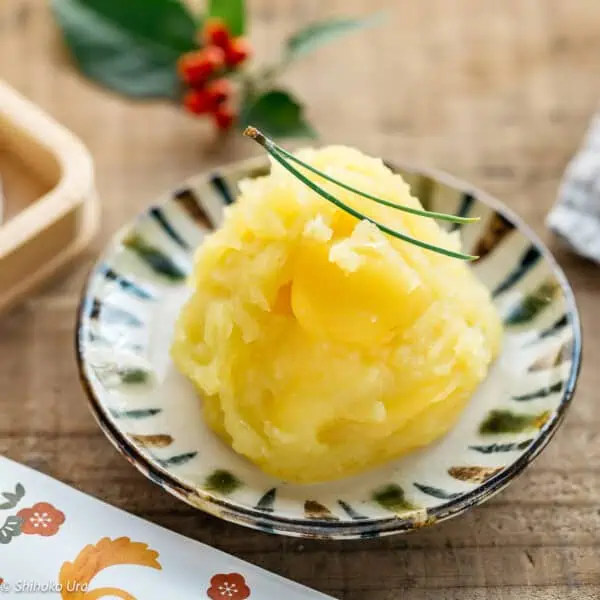
Kurikinton Mashed Sweet Potato 栗きんとん
Ingredients
- 2 Japanese purple sweet potato *1
- 1 jar sweetened chestnuts *2
- 1 Gardenia fruit *3
- 1/4 cup sugar
- 2 tbsp mirin
- 1/3 cup of the syrup from the jar of sweetened chestnuts
- 1/2 tsp sea salt
Instructions
- Wash sweet potatoes and peel the purple skin thickly.
- Cut the potatoes into about 0.8 inch (2cm) thickness and soak them in a large bowl of water for about 15-20 minutes to remove the astringent taste.
- Separate the chestnuts and syrup and set aside.
- Drain the soaking water and place them into a pot with enough water to cover the sweet potatoes.
- Crush the gardenia fruit and put it in a tea bag (which you can get at Japanese one coin shop such as Daiso).
- Place the bag of crushed gardenia fruit or 1 tsp turmeric into the pot.
- Bring the water to boil over high heat, then turn it down to medium to simmer for about 20 minutes. Insert a skewer to test if the potato is cooked.
- When the sweet potato is cooked, remove the bag of gardenia fruit, drain the water and while the sweet potato is hot, strain the potato using a sieve with a wooden spatula.
- Place the strained sweet potato back into the cooking pot, with sugar, chestnuts syrup, mirin, and salt and cook over medium heat.
- Stir the mashed sweet potato continually avoiding the bottom of the pot burning.
- When the mixture has thickened slightly, turn the heat off.
- Add the chestnuts to the pot and coat them with mashed sweet potatoes.
- Leave the Kuri Kinton to cool down, then serve!
Notes
Nutrition
Chopstick Chronicles is a participant in the Amazon Services LLC Associates Program, an affiliate advertising program designed to provide a means for sites to earn advertising fees by advertising and linking to Amazon.com. As an amazon associate I earn from qualifying purchases.




I was wondering if I can use peeled chestnuts (so no syrup) because I cannot find sweetened chestnuts in syrup in this country. I assume the syrup is essential to the recipe? What can I use as a substitute instead (honey, agave syrup)?
Thank you!
Hi Mari san, yes the syrup add the sweetness, but as you mentioned you can substitute with honey or agave syrup if you can not get the one in a jar.
Shihoko san,
パリからの新年あけましておめでとうございます
Thank you so much for sharing your recipes : ) I made your recipes including Kuri Kinton (I substituted jar of chestnuts in syrup with peeled chestnuts and agave syrup: 1/3 cup = 1/2 agave syrup + 1/2 water), Kansai Ozoni, and Sekihan (a bit of a failure because I don’t have a hotpot or pressure cooker, so I tried to make it in my rice cooker which has a sweet rice function – I put too much water! Maybe you can advise me for next time?).
It was all delicious! I took a picture but could not figure out how to send it to you.
あけましておめでとうございます。まりさん。wow my dauther is in Paris now and hope she is making her own Kosechi(small osechi 🤣) like you made Osechi. Well done Marisan! You can add may 1/4 cup of water more? I would experiment using my rice cooker too and getting back to you shortly. You can sand message using facebook messenger through Chopstick Chronicles facebook page 😀
so simple to make wow!
thank you, I hope you try it out 🙂