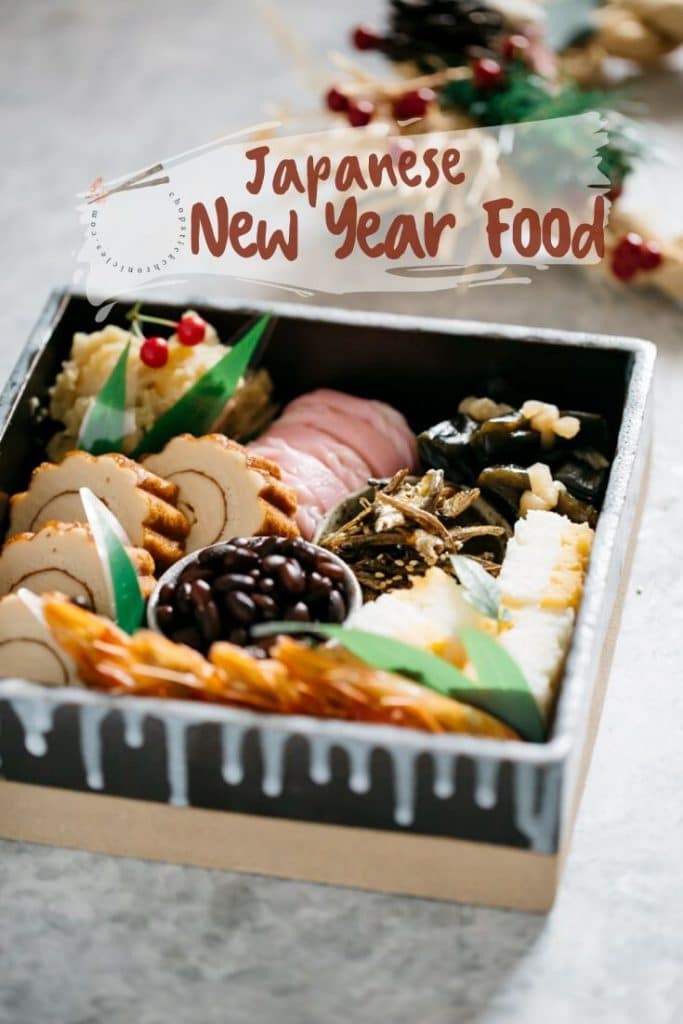
As the New Year approaches, Japanese families prepare for a cherished culinary tradition: Osechi Ryori. This elaborate feast is made up of a variety of delicious traditional dishes each with its own symbolic meaning to celebrate hope, prosperity, and new beginnings. From sweet mashed chestnuts for wealth to golden prawns for long life, every dish sets the tone for the year ahead. The New Year can’t start without eating Osechi Ryori!
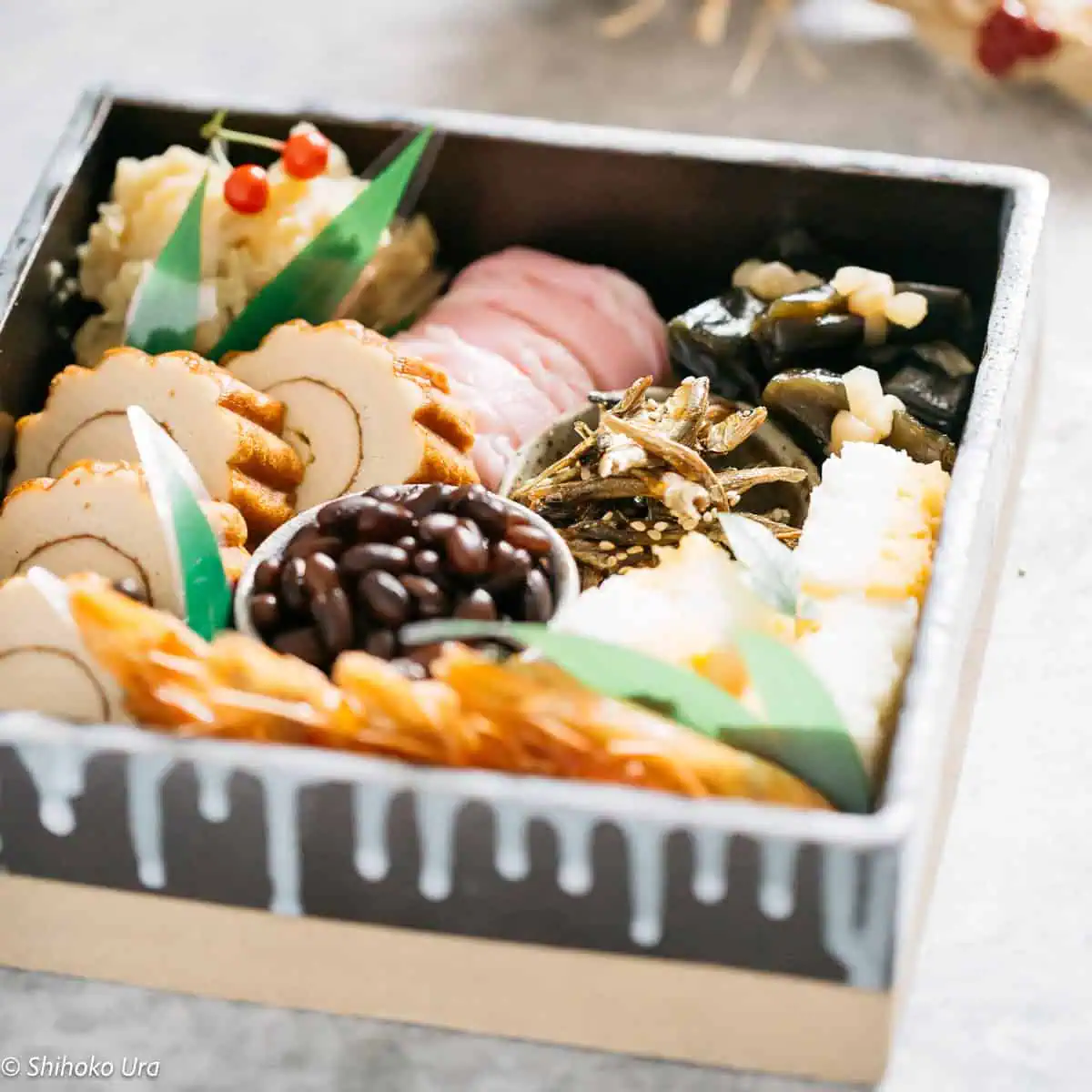
Table of contents
- What is Osechi Ryori?
- History and Traditions
- What’s in the Osechi Ryori?
- Two Coloured Eggs (Nishiki Tamago)
- Tazukuri (Candied Sardines)
- Datemaki (Sweet Rolled Omelette)
- Kouhaku Kamaboko (Kamaboko Fish Cake)
- Kuri Kinton (Candied Chestnut & Sweet Potatoes)
- Konbumaki (Kombu Rolls)
- Kazunoko (Herring Roe)
- Kuromame (Sweet Black Beans)
- Ebi Umani (Simmered Shrimp)
- Kouhaku Namasu (Daikon & Carrot Salad)
- Presentation and Arrangement
- Stay connected
What is Osechi Ryori?
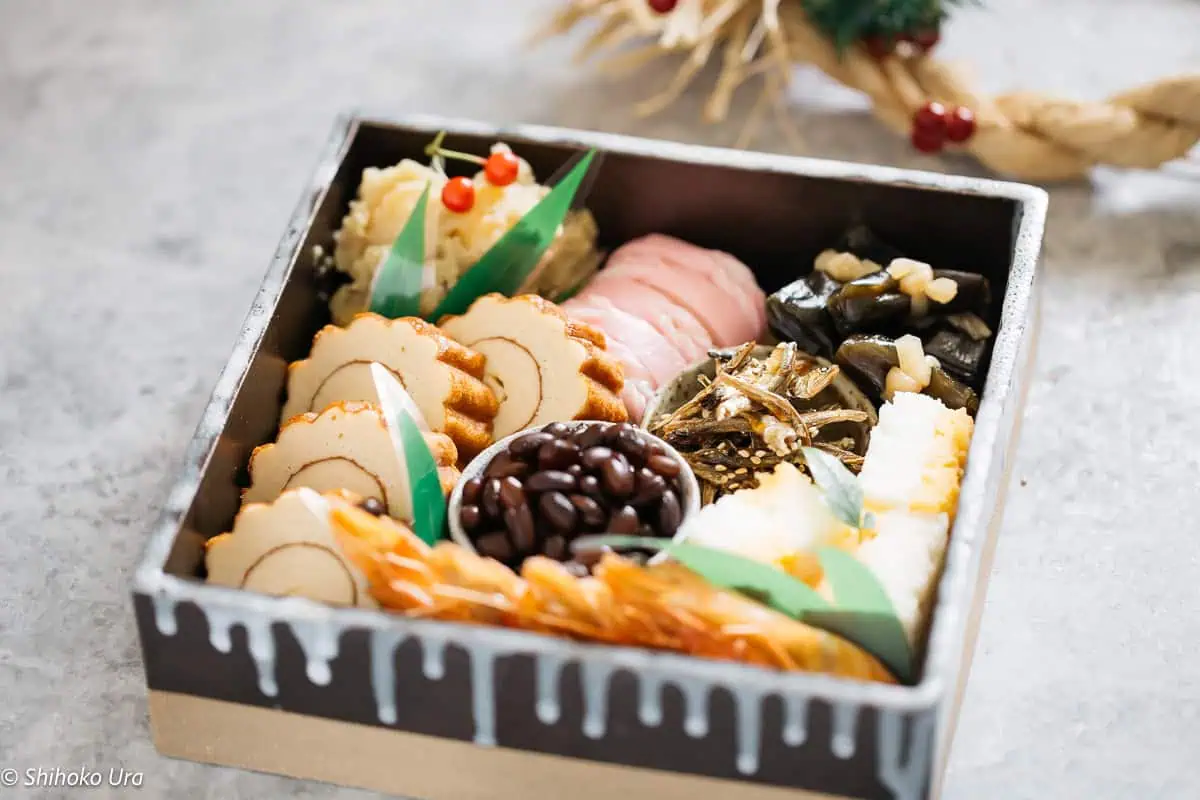
Osechi Ryori is the Japanese traditional feast that is eaten on New Year’s day. It holds deep cultural significance and consists of a variety of dishes each with an auspicious meaning and special wishes for the new year. The various dishes are beautifully arranged in special stackable boxes called jubako. These special boxes are traditionally black and red in colour sometimes with beautiful designs and are stacked in tiers. The celebratory dishes on the top tier vary slightly between the kanto region (Tokyo area) and the kansai region (Osaka area).
Traditionally, Osechi is prepared in advance to last the first three days of the New Year, allowing families to relax and enjoy the holiday without cooking. Some families still make Osechi at home but nowadays many opt to order pre-made sets from department stores or restaurants.
History and Traditions
The history of Osechi Ryori (osechi cuisine) streches back over a thousand years to the Heian period (794-1185). It is said that it originally began as an offering to the gods during seasonal festivals. There was a custom called “Sekku” in which harvested crops were offered to the gods at “Setsu” (the change of seasons). It’s believed that this is how the custom of Osechi Ryori was born in the Imperial Court during the Heian period.
Over time, this ritual evolved into a family feast for the New Year since it is the most important and the first of the festivals. The tradition of preparing Osechi dishes in advance stems from the belief that using the hearth during the first three days of the New Year would offend the deity of the fire and bring bad luck. It also allows families to have a break from cooking and enjoy the holidays.
The practice of serving Osechi in jubako (special lacquered boxes) began in the Edo period (1603-1867).
What’s in the Osechi Ryori?
Each dish in the Osechi spread is chosen for its symbolic meaning, representing wishes for good fortune, health, and prosperity in the coming year. Knowing those special wishes incorporated into each ingredient makes Osechi Ryori even more fun!
Two Coloured Eggs (Nishiki Tamago)
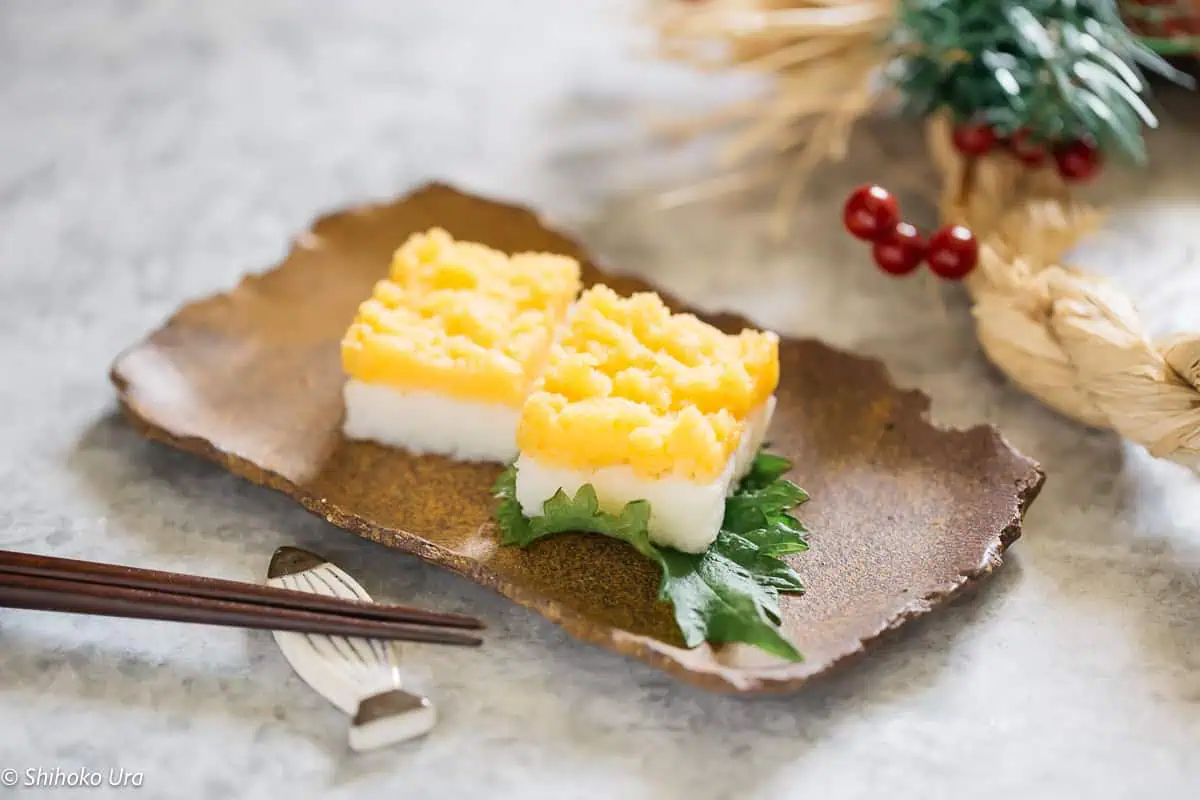
This dish is made from eggs separated into yolks and whites and steamed. The yellow yolk and white of the egg white are used as a metaphor of gold and silver to represent wealth and good financial luck for the new year. Also, the word “Nishiki” can represent two colors ( 二色) and also a brocade (錦) so it is said to have the meaning of treasure.
Tazukuri (Candied Sardines)
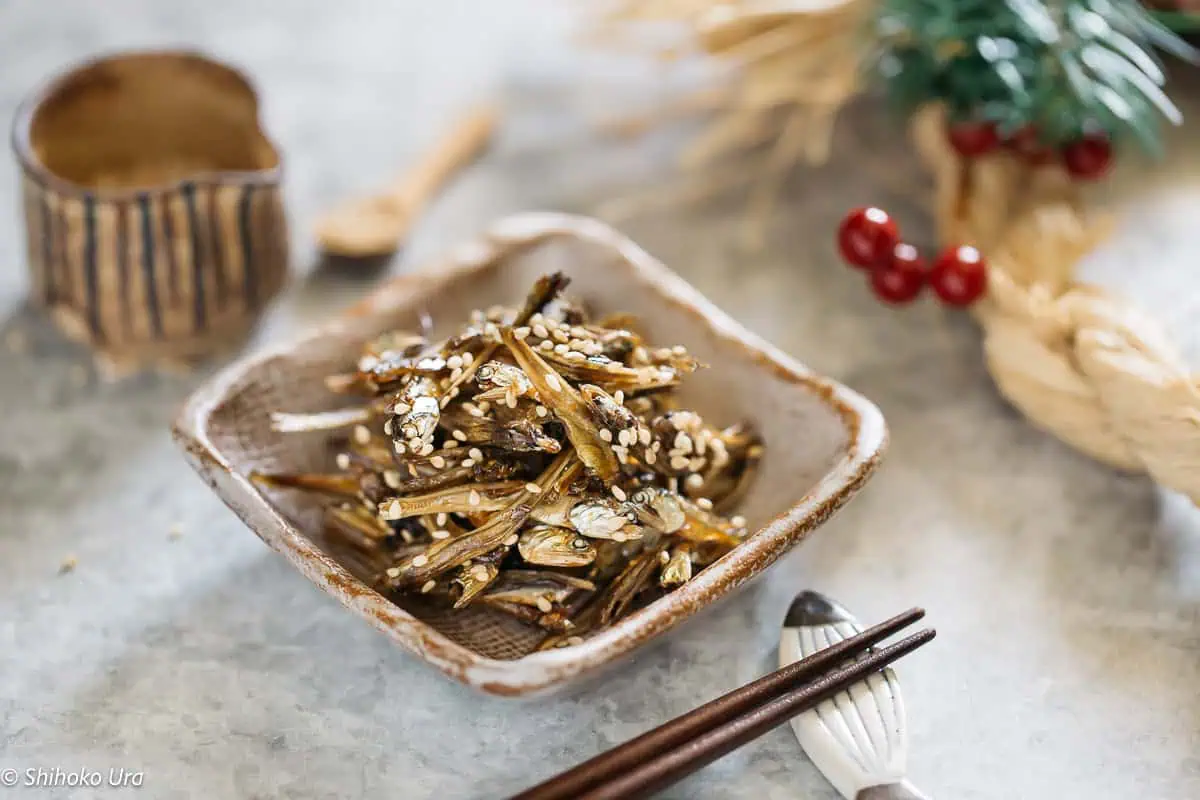
Tazukuri is dried young anchovies, roasted, and mixed with sugar, soy sauce, and mirin. A long time ago, when sardines were used as fertilizer for rice fields, the harvest was very bountiful and 50,000 bales of rice were harvested, which led to the name “tazukuri”, referring to the process of cultivating rice paddies. For this reason, it has been eaten for a long time as a symbol of rich harvest.
It is also called “Gomame'” and has the kanji for “50,000 rice”, which is also named to pray for a good harvest. In addition, since many young fish are used, it is said to be auspicious for “prosperity of descendants”.
Datemaki (Sweet Rolled Omelette)
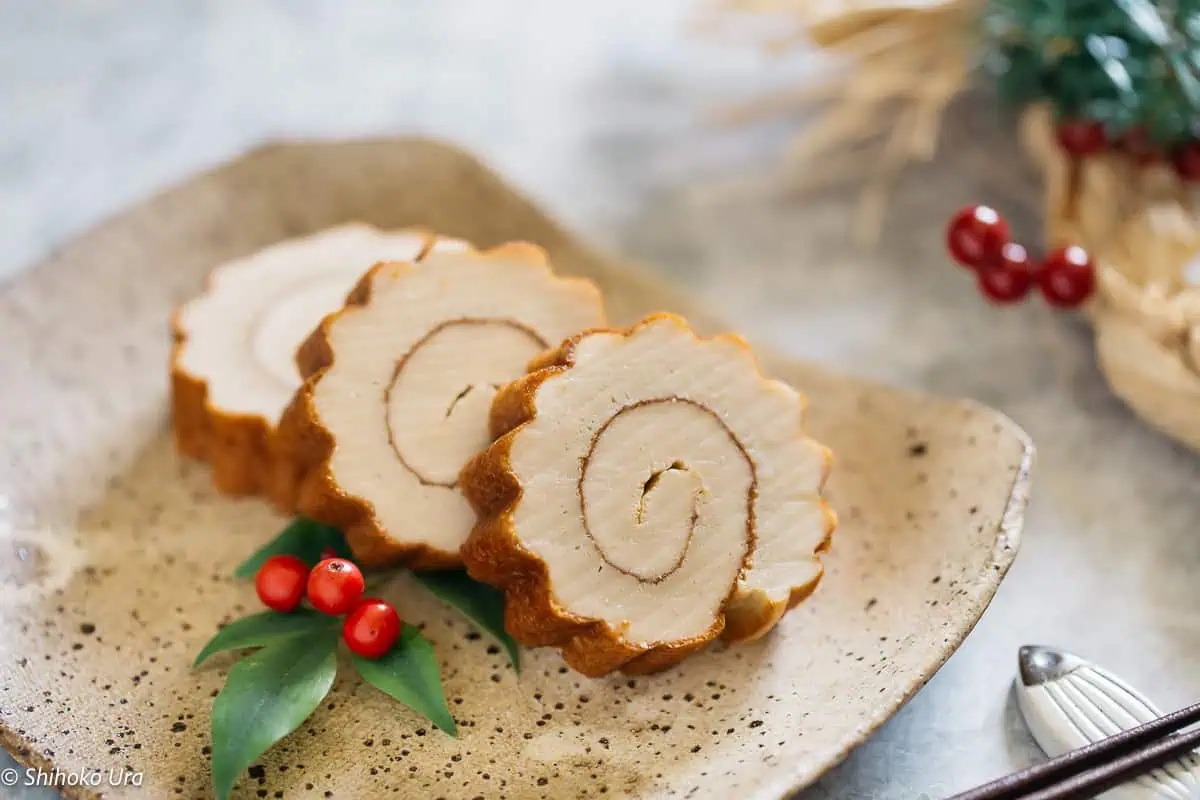
Datemaki is a special type of sweet rolled omelet made from fish cake with seasoning. It was called “kastella kamaboko” during the Edo period in reference to the kimonos that fashionable people wore, who were called “datemono”. Since the omelette is rolled (‘maki” in Japanese), the dish became known as “datemaki”. Also, in the past, important documents and pictures were made into scrolls, so it is considered a symbol of intelligence and is eaten with the wish for success in studies.
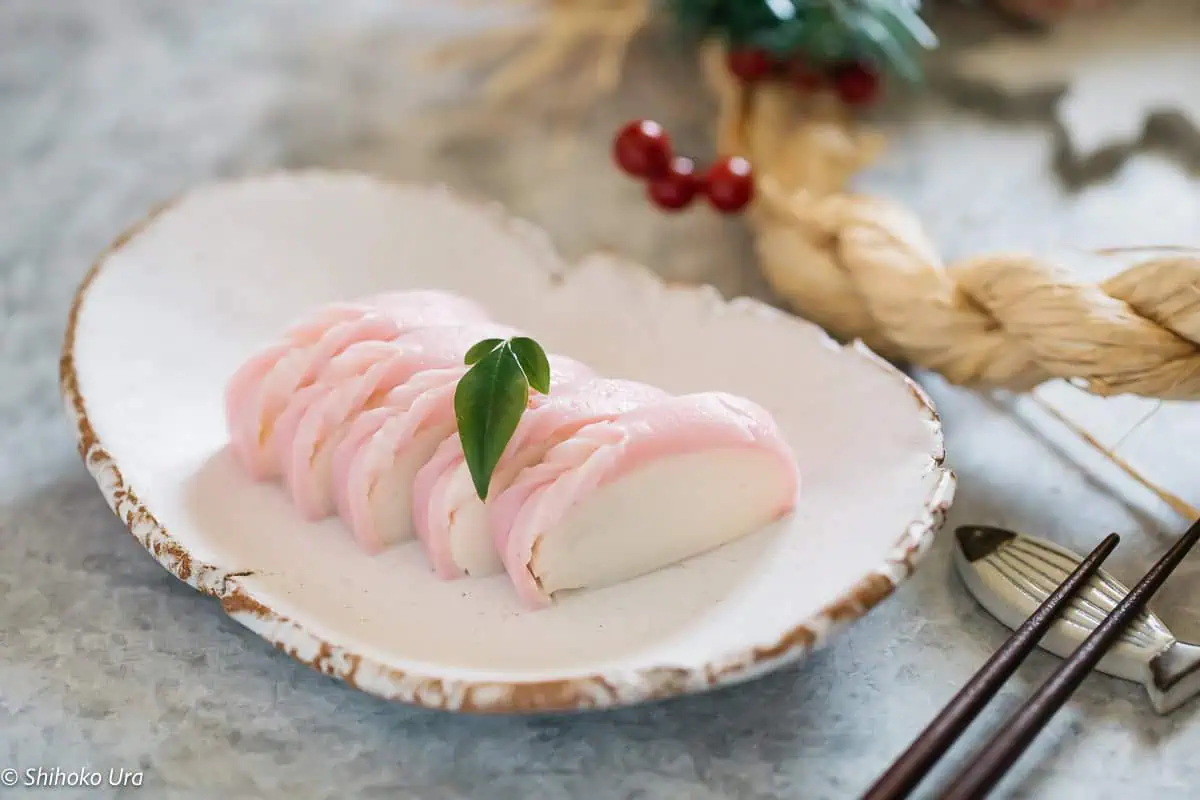
Kouhaku Kamaboko (Kamaboko Fish Cake)
Kamaboko is a common type of fish cake in Japan. The special Kohaku Kamaboko is eaten as part of the new year cuisine as it symbolizes the first sunrise of the year. The color combination also holds special meanings as the pink part carries the red colour which has the meaning of auspiciousness and is said to ward off evil spirits while the white represents purity and sacredness.
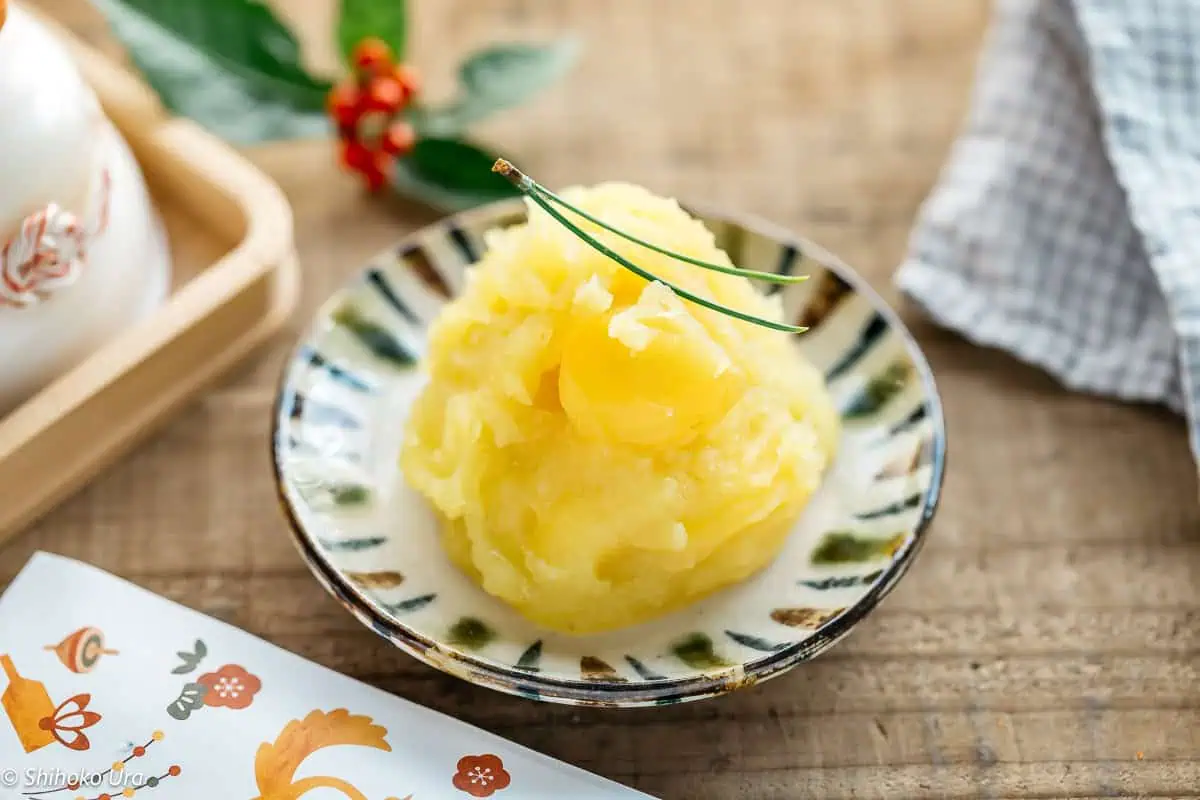
Kuri Kinton (Candied Chestnut & Sweet Potatoes)
This dish is made out of mashed sweet potatoes with candied chestnuts and adds a delicious sweet element to the feast. The word “kinton” is written “金団”, used as a metaphor of golden treasure so the dish represents good fortune and economic prosperity for the new year. So Kuri Kinton brings hope that the year will be wealthy. In addition, Kuri (chestnuts) represent an abundance of Mountain food and have been respected as an auspicious food by saying “Kachi guri (winning chestnuts)”. Chestnuts are a good food, and by eating them on the first day of the year, you can bring good luck and hope for a prosperous year.
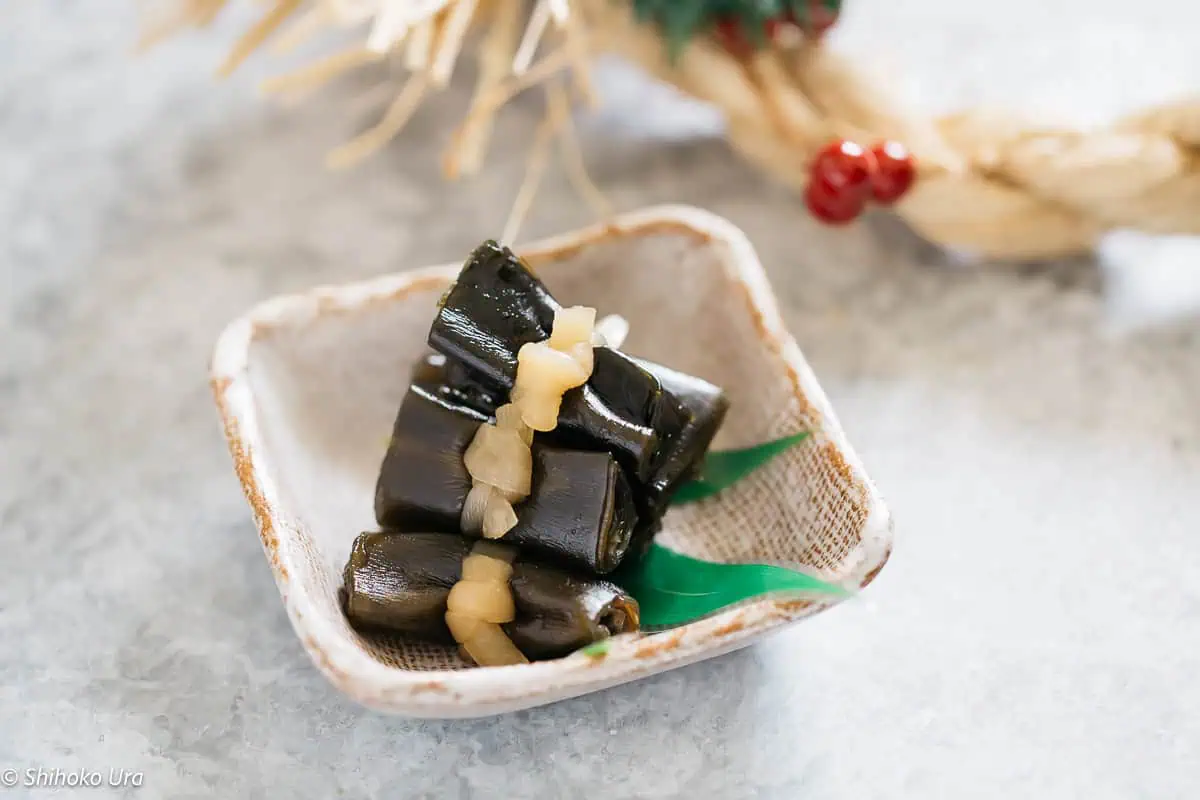
Konbumaki (Kombu Rolls)
Kobu is kelp and maki is roll so this dish is rolled up konbu. This dish plays on the word “yorokobu” which means to be happy. It also uses the word “maki” which is associated with important documents and scrolls so is thought to bring good wishes for studies. Kelp is also a healthy food containing plenty of fiber and minerals.
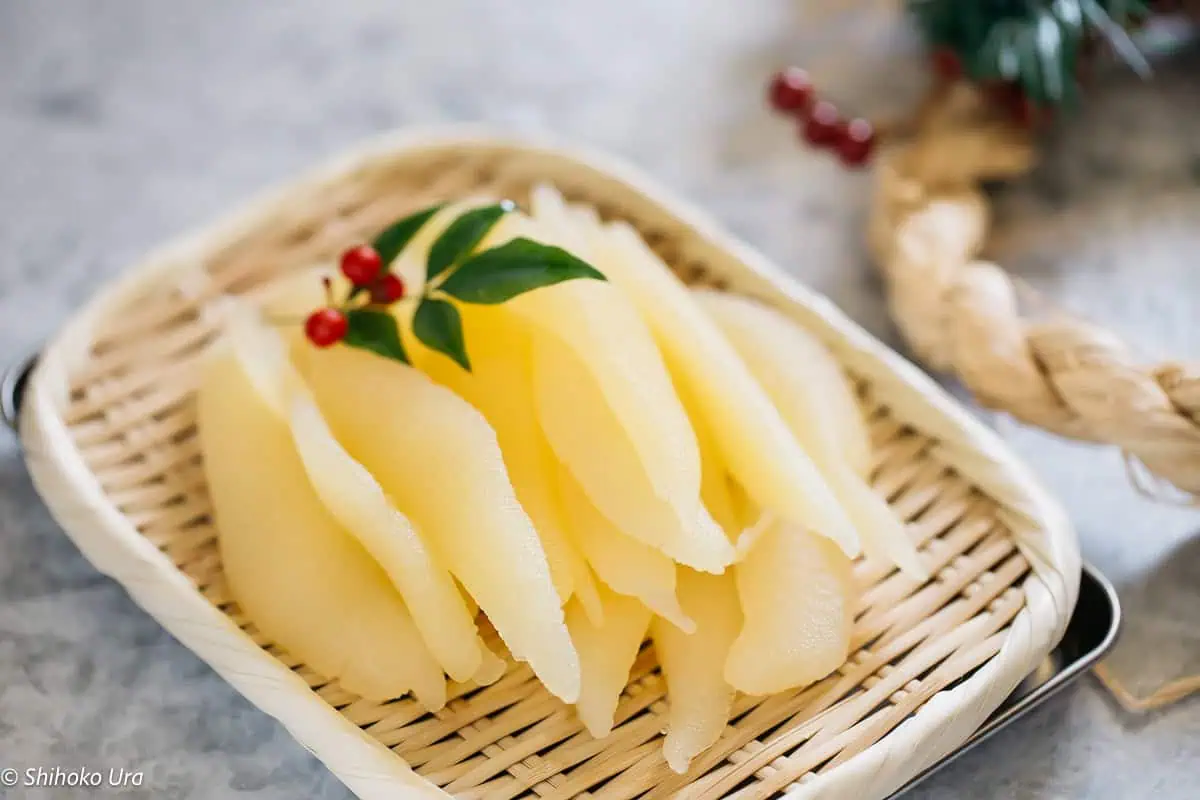
Kazunoko (Herring Roe)
Kazunoko is herring roe. This dish is like a prayer for descendants’ prosperity. It has long been served for Osechi Ryori as it is another auspicious food. Herring roe is eaten because the herrings have many offspring and Japanese people wish their children to be prosperous. It also has an element of wordplay with the word “kazu” meaning numbers and “ko” meaning children so it represents having many children. It is a luxurious and quite expensive food nowadays called “yellow diamond”.
Kuromame (Sweet Black Beans)
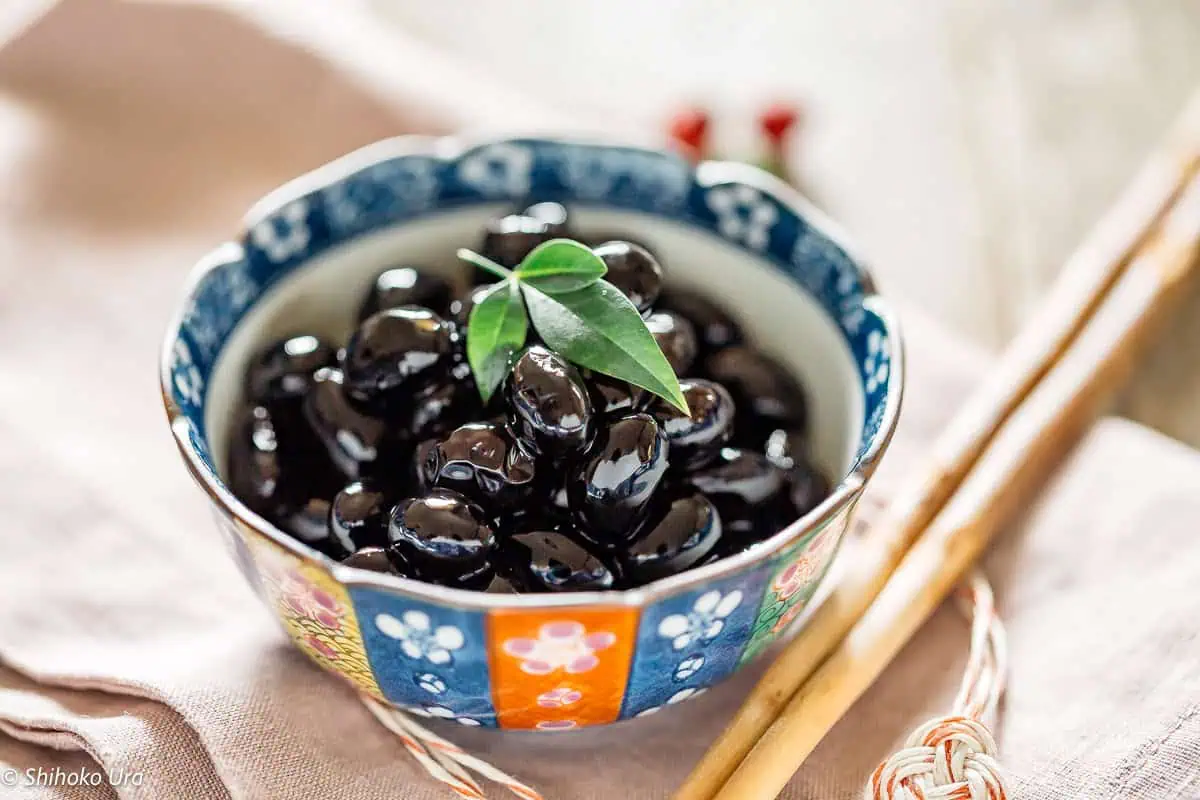
Kuromame literally means black beans. This dish is made from black soybeans simmered in a sweet sauce. Mame is also a word for durable and healthy in Japanese so it brings wishes for a long life. Many osechi dishes are a play on words. “Mame ni Hataraku” which means work diligently is a meaning behind this dish.
Ebi Umani (Simmered Shrimp)
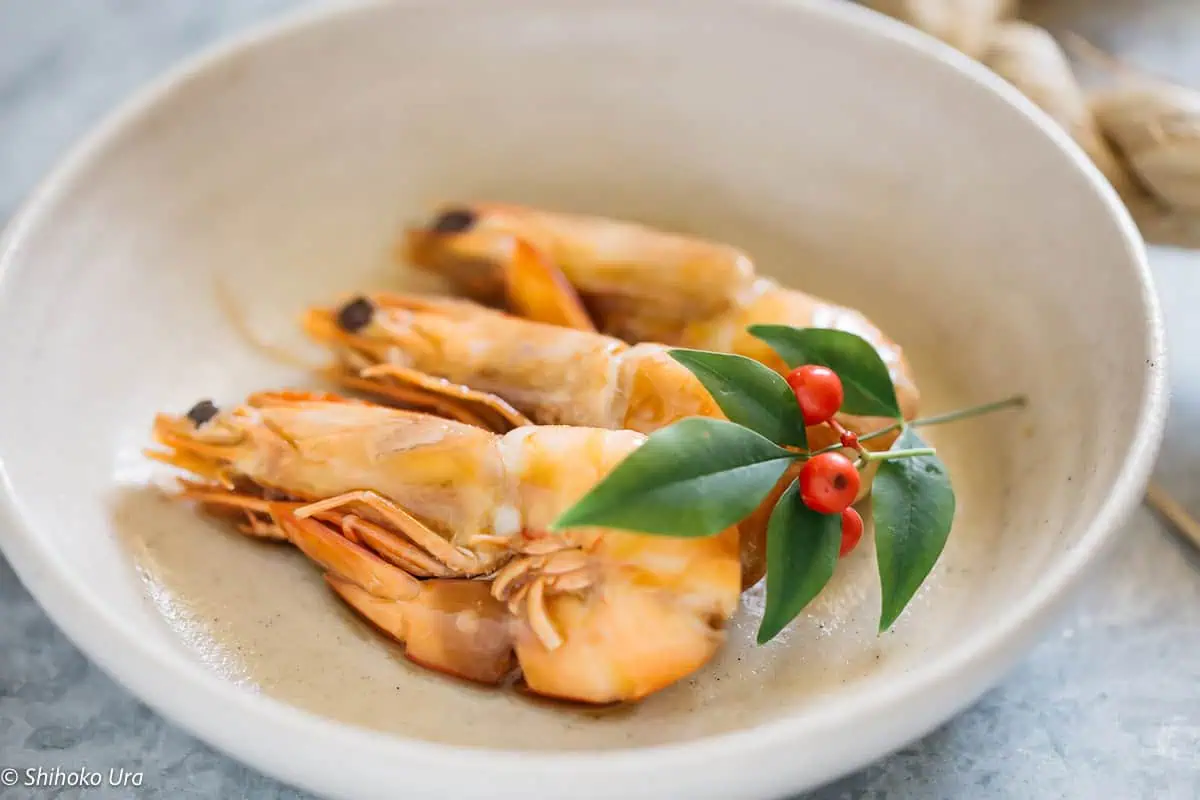
Shrimps with bright red heads are served elegantly and have meaning in their appearance. As you can see from the shrimp’s appearance, its “bent waist and long beard” are said to represent longevity. Because of its “eyes sticking out” appearance, it was associated with “medetashi” and was thought to be a food suitable for auspicious occasions. In addition, the repeated shedding of the skin gives the image of being “reborn” and symbolizes growth and development.
Kouhaku Namasu (Daikon & Carrot Salad)
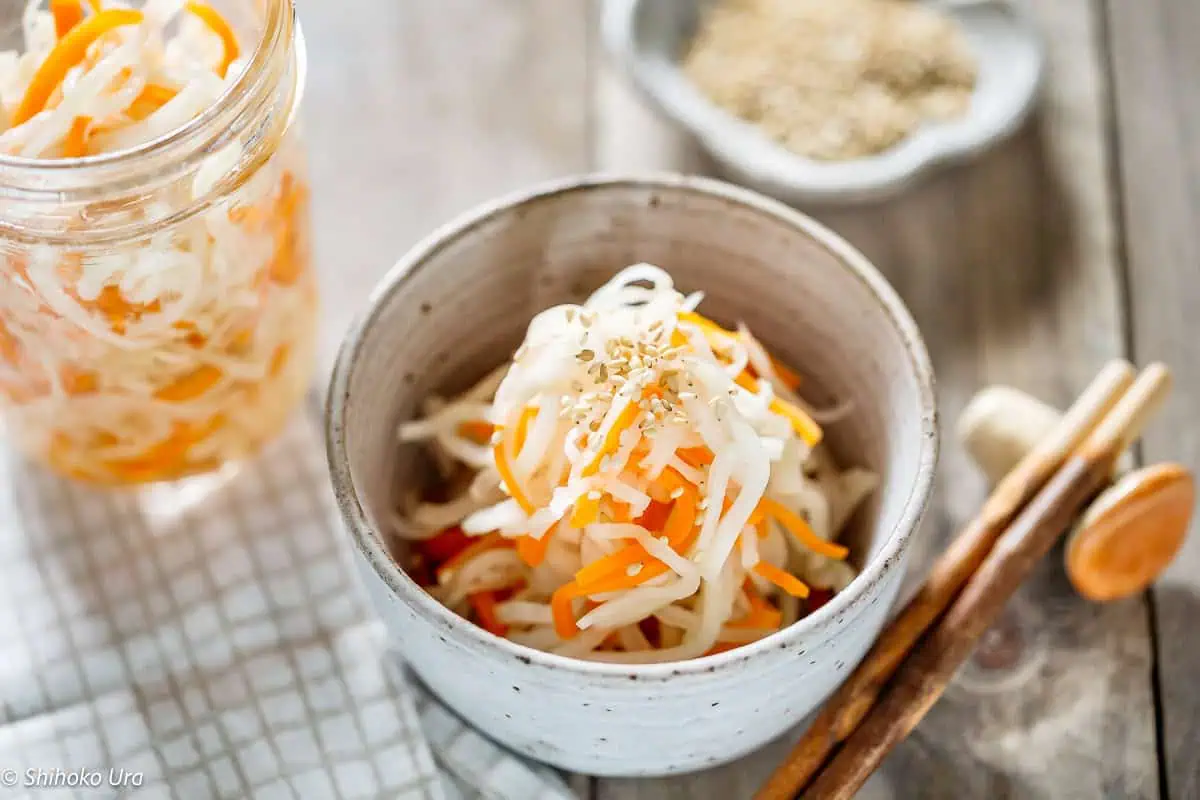
Kohaku namasu is made from thinly sliced daikon and carrot lightly pickled with vinegar. The dish is filled with the wish of peace in red (carrot) and white (daikon). They are also the color that represent happiness and celebration. It used to be made with raw (“nama”) seafood, so the name of namasu was given. Nowadays, instead of raw seafood, dried persimmon, kelp, and shredded yuzu are also used.
Presentation and Arrangement
Jubako : The Special Box
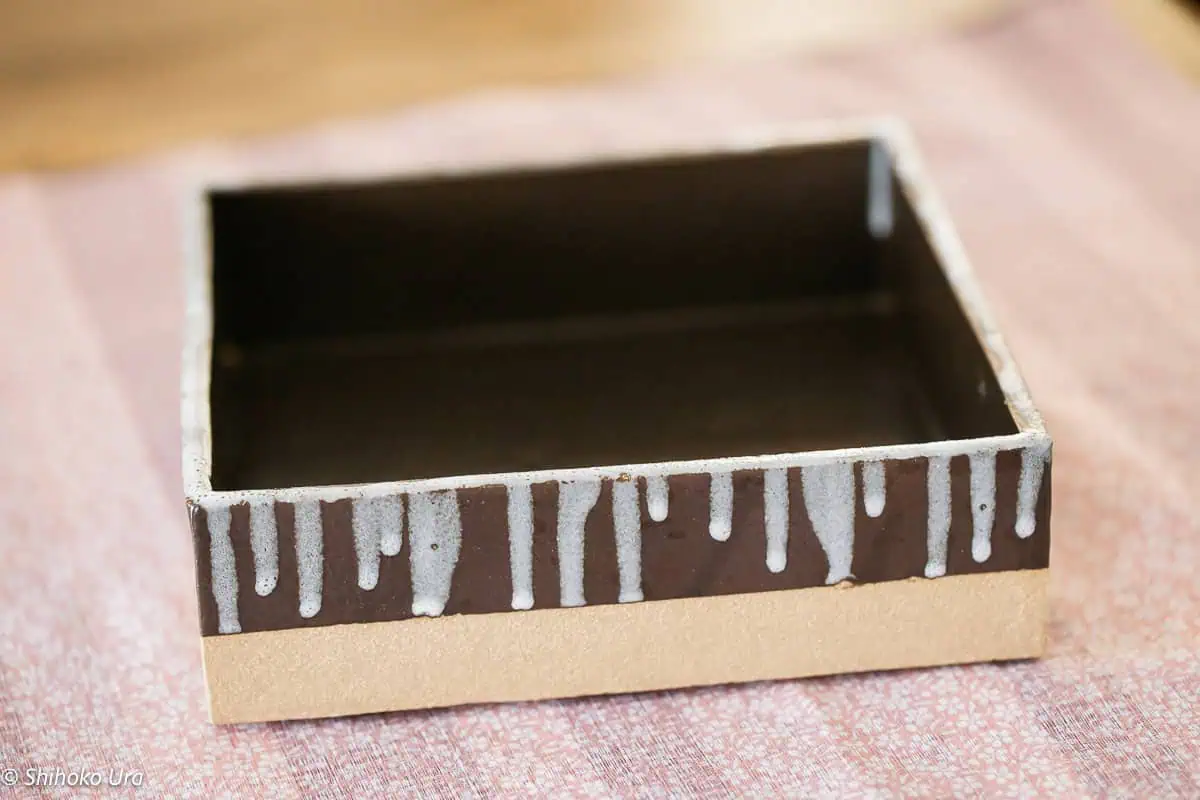
Jubako is the special multi-tiered food box that Japanese use for packing osechi ryori. It is generally 2 or 3 tires and measures 19cm x 19cm x 6cm (7.5inch x7.5 inch x 2.4 inch). They are usually beautifully lacquered as well. I brought mine from Japan but can also get them online. Alternatively, you can use any square food containers or a square baking dish.
What Goes Into the First Tier (Ju)
This tier is packed with celebratory foods (like those listed above) and typically contains the sweet black soybeans, herring roe, and candied sardines. In the Kansai region, the candied sardines are usually substituted with pounded burdock. This top tier should also be packed with colorful appetizers to emphasize the festive atmosphere and catch eyes when the lid is first opened. Also, pack dishes that have sweet flavor for children who can not consume sake (alcohol).
What goes into the second tier?
Mainly an abundance of ocean foods such as grilled fish and prawns are served in the second tier among refreshing vinegared side dishes such as kouhaku namasu. Also, the burdock root dish called “tataki gobo” and vinegared lotus root “Su-renkon” also go into the second tier.
What goes into the third tier?
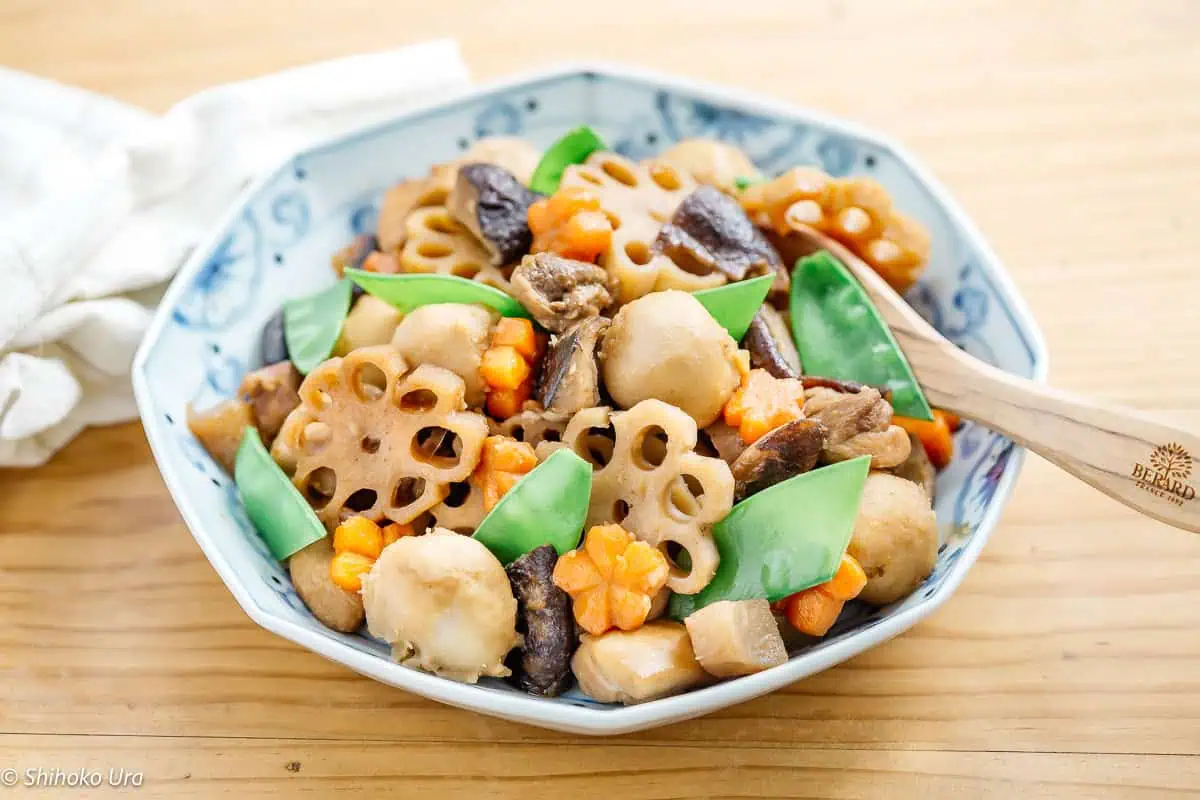
The third tier is usually filled with simmered food of mountains such as potatoes, carrots, and other root vegetables such as Chikuzenni. Also, nowadays many people incorporate western dishes such as roast beef, glazed ham and beef roll ups.
Stay connected
If you like the recipe please rate the recipe and leave comments below. Also don’t forget to follow me on Youtube, Pinterest, Facebook, Twitter and Instagram. This way you keep up to date with all the latest happenings on Chopstick Chronicles. Don’t forget to Sign up for a weekly newsletter so you never miss out on new authentic delicious Japanese recipes!