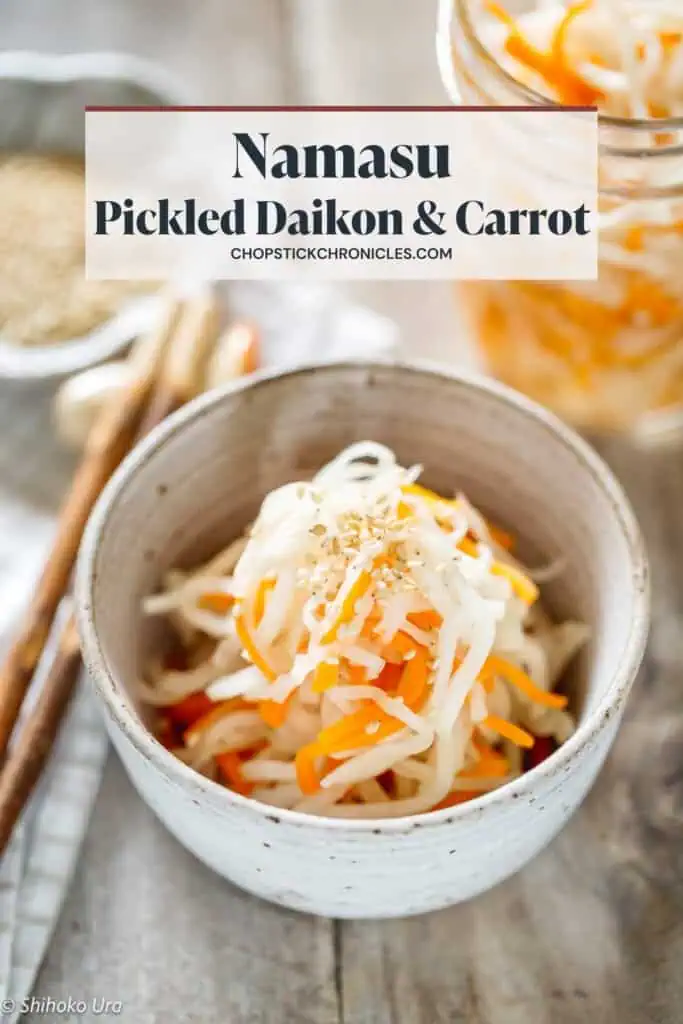
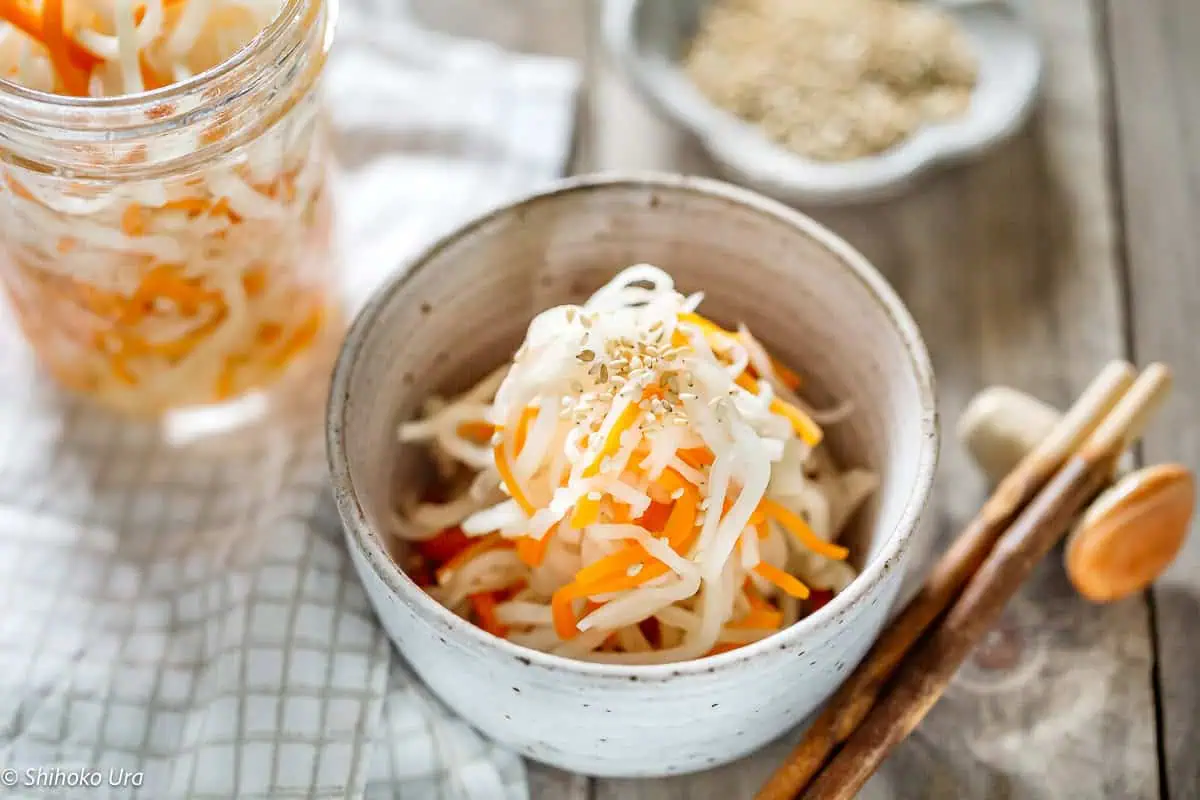
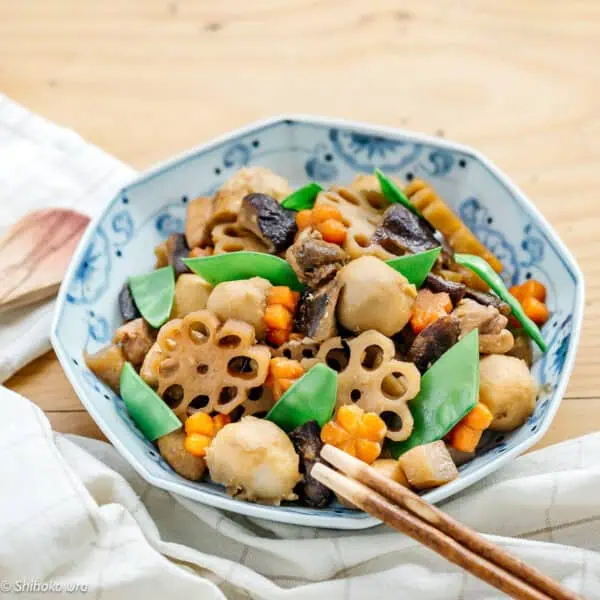
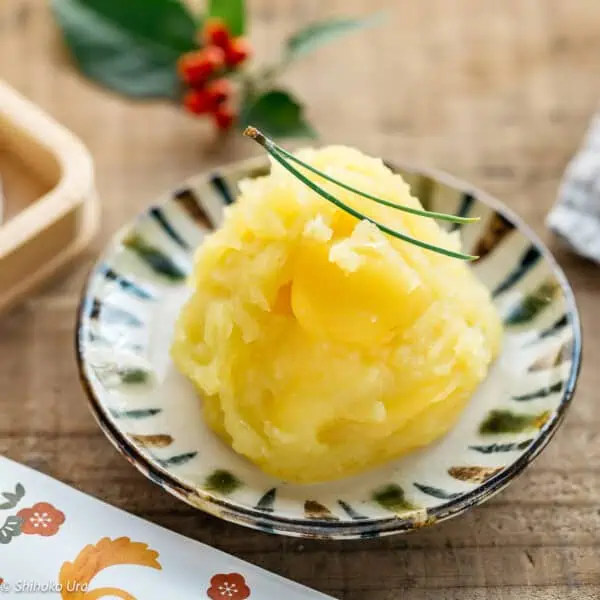
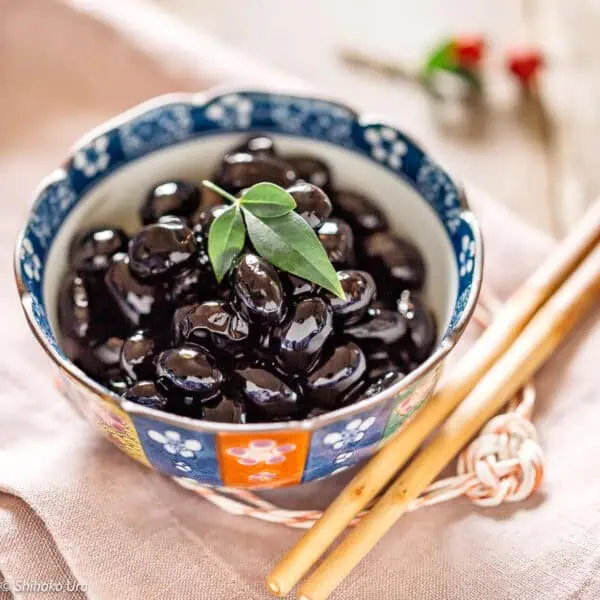
Refresh your tastebuds with tasty Namasu! This quick and easy Japanese food combines pickled daikon and carrot creating a light, tangy, and crunchy side dish/appetiser. It has the perfect balance of sweet and sour flavour so it’s very refreshing and works well as a palate cleanser particularly for heavier dishes. Namasu is a part of the traditional New Year’s dishes known as Osechi Ryori but it can be eaten any time with any meal!
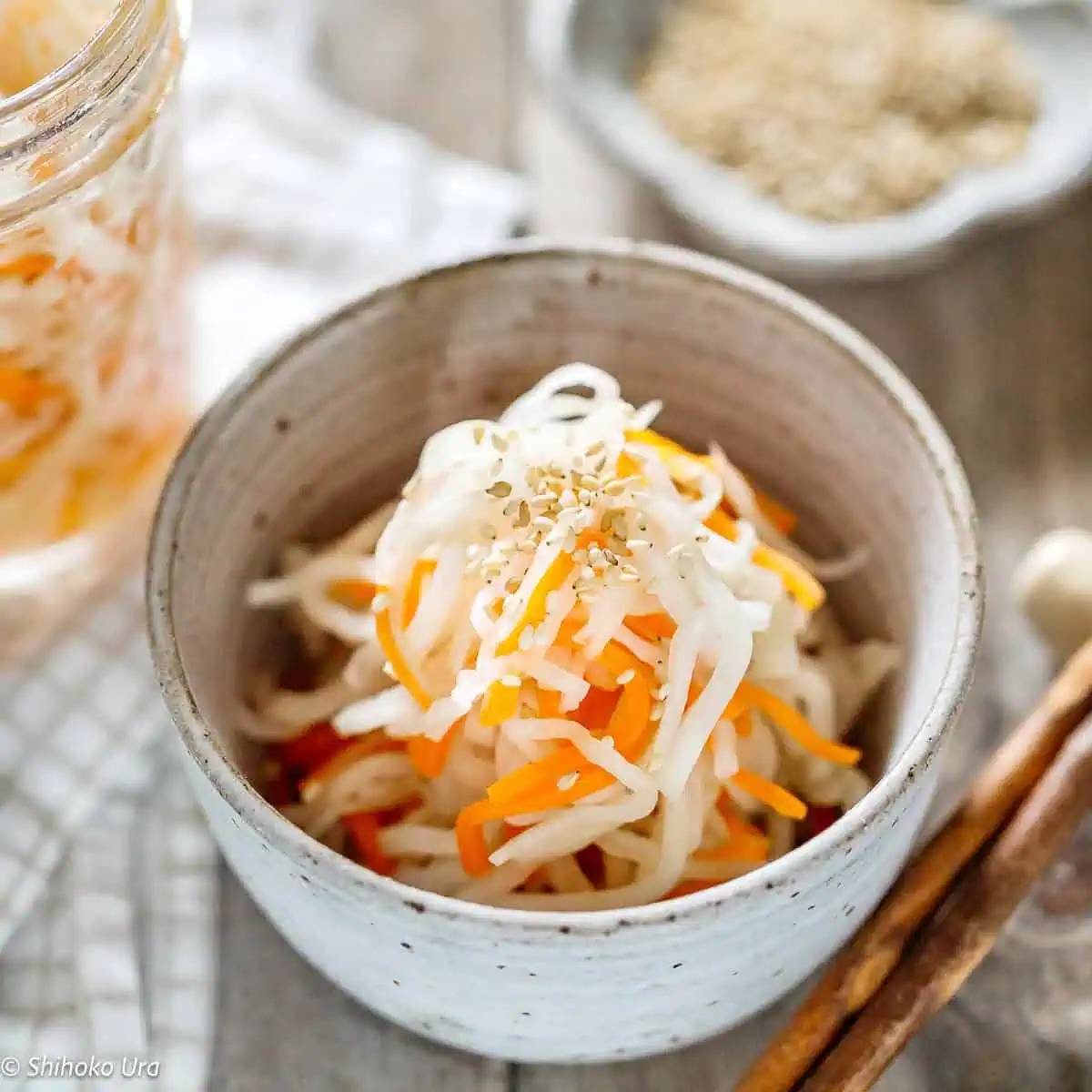
Table of contents
What is Namasu (Pickled Daikon and Carrot)?
Namasu is a traditional Japanese dish made from vegetables typically cut into thin matchsticks and pickled with vinegar. The term “Namasu” used to refer to ancient Chinese dishes made by raw meat or fish with seasonings, and it eventually became the current form of vegetables pickled with vinegar. The thinly cut vegetables pickled in a tangy vinegar mixture creates a refreshing salad with a delicious sweet and sour flavour and satisfying crunch.
The pickled daikon (white) and carrot (red) are specifically called Kōhaku (red and white) Namasu and it is eaten as part of Osechi Ryori for the Japanese new year celebration. Because daikon and carrot resemble the celebration colours of red and white, Japanese people eat Kohaku Namasu to wish for good fortune and peace in the family.
Although it’s typically eaten as a celebration food, this namasu can be eaten with any meal to add a burst of freshness!
Ingredients for Making Namasu
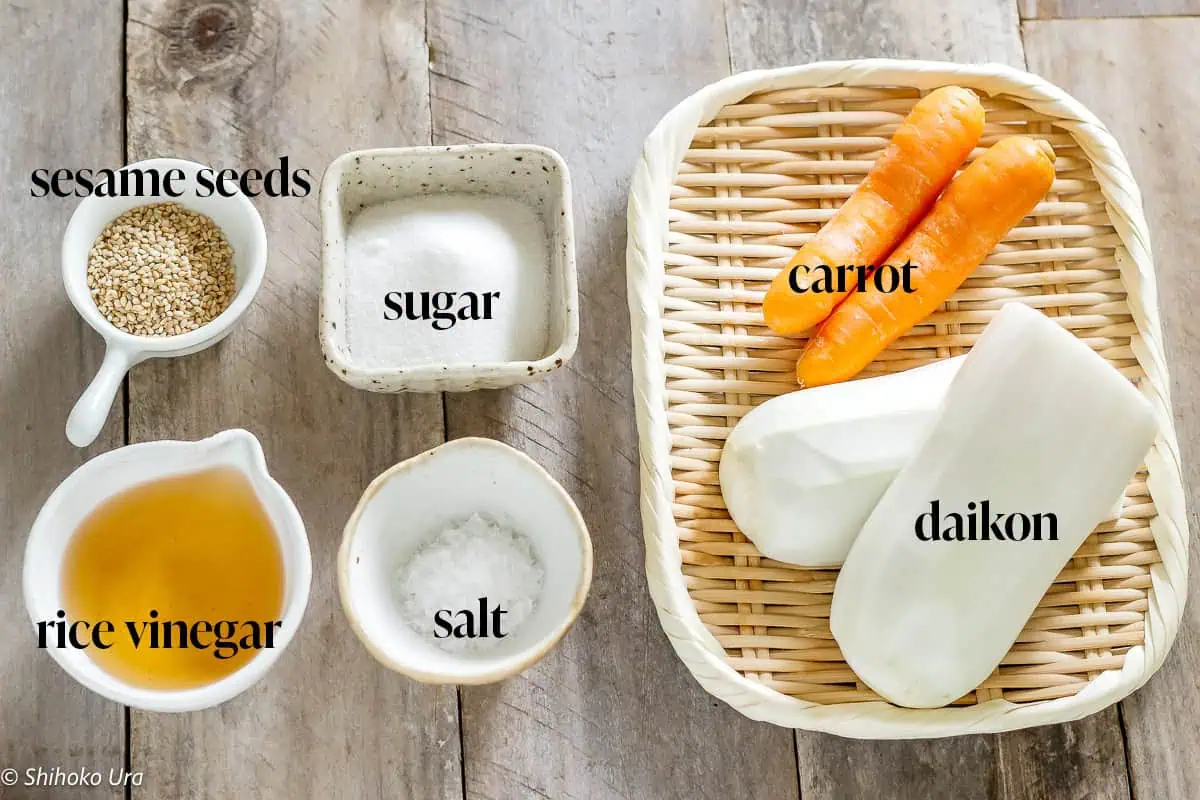
Here are the main ingredients you’ll need for this namasu:
Daikon Radish
This is one of the primary vegetables used in namasu. Daikon is a long, white radish with a mild, slightly peppery flavor. It’s julienned or cut into thin strips for this dish.
Since the daikon and carrot is eaten raw, f you have a choice, buy a whole daikon radish, and use the top part closer to the leaves. This part is sweeter with a juicy and crispy texture due to the fibres so it suitable to make vinegared vegetables. Choose a daikon radish which is heavy when you hold it and has a smooth and moist surface. Read more about Daikon in this post.
Daikon can be substituted with Turnip (kabu in Japanese), Radish (Hatsuka daikon), Kohlrabi or winter melon (called ‘Tōgan” in Japanese).
Carrot
Thinly sliced or julienned carrots are added for color contrast and a touch of sweetness.
Salt
A small amount of salt is used to draw out excess moisture from the vegetables, which helps to crisp them up.
Rice Vinegar
This is the key flavoring ingredient that gives namasu its characteristic tangy taste. Rice vinegar is milder and slightly sweeter than regular vinegar. If necessary, you can substitute the rice vinegar with apple cider vinegar or white vinegar.
Sugar
A bit of sugar is added to balance the acidity of the vinegar and create a sweet-sour flavor profile.
How To Make Pickled Daikon and Carrots
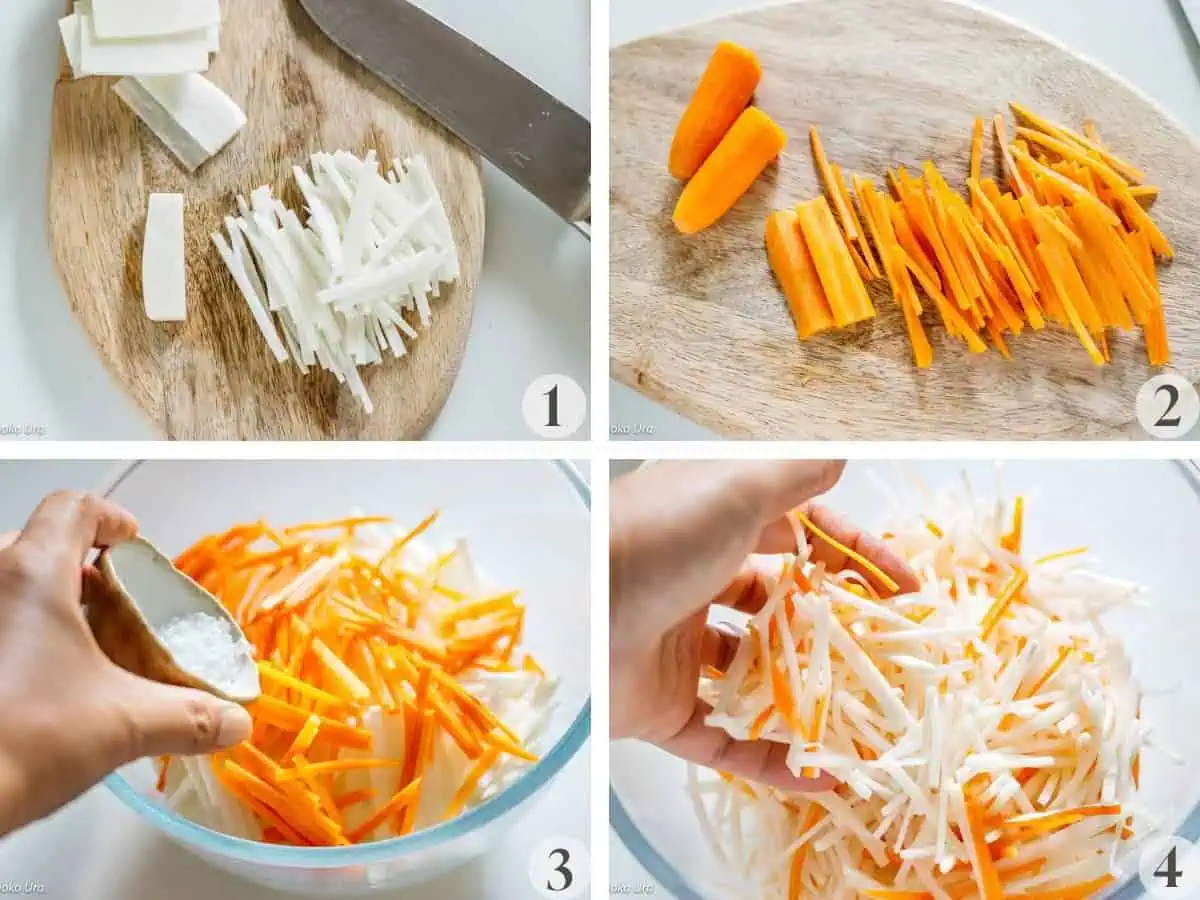
- Peel the daikon radish and carrot. Using a sharp knife or a mandoline slicer, cut them into thin julienne strips about 2-3 inches long.
- Place the julienned daikon and carrot in a bowl. Sprinkle with 1 teaspoon of salt and gently mix. Let it sit for about 10 minutes. This process will help draw out excess moisture and soften the vegetables.
- After 10 minutes, gently squeeze out the excess water from the vegetables using your hands or a clean kitchen towel. Place the squeezed vegetables in a clean bowl.
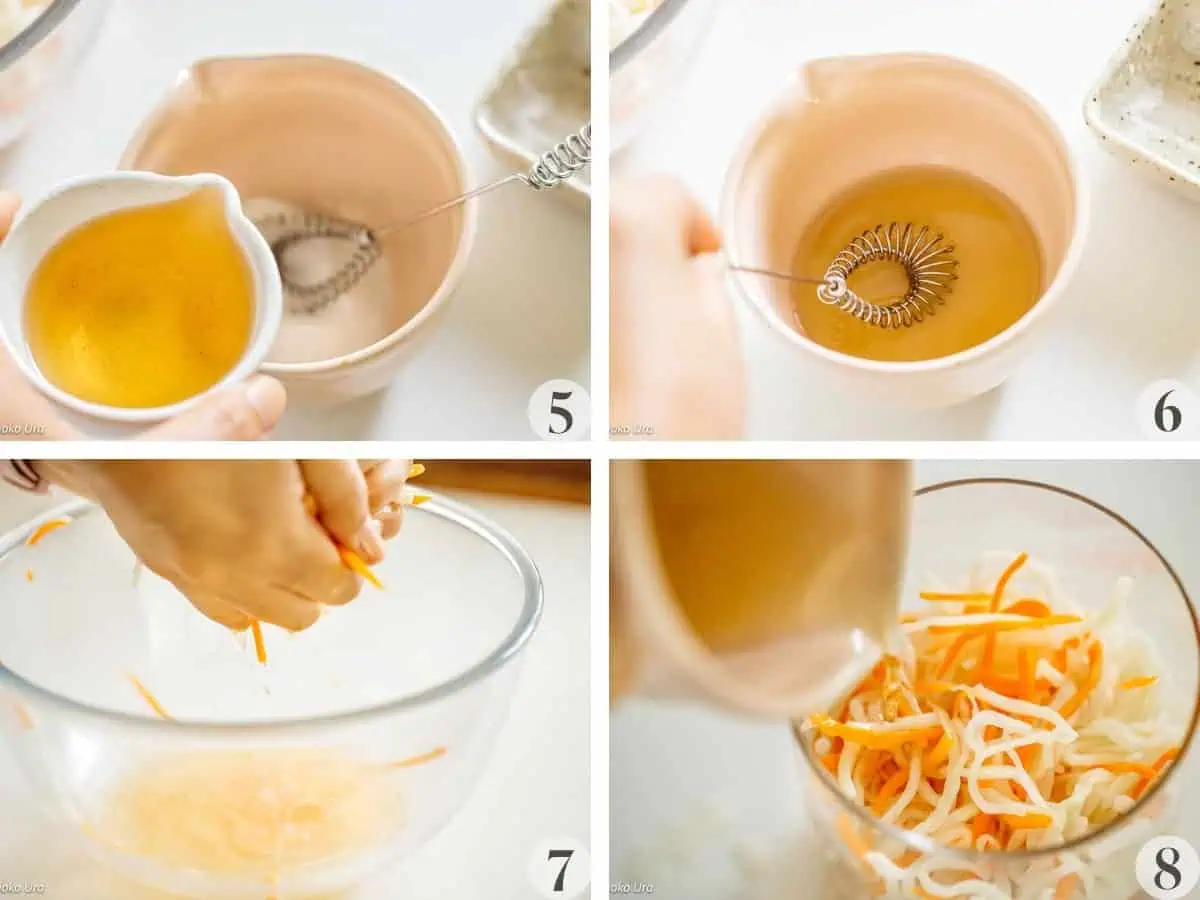
- In a small bowl, combine together the rice vinegar and the sugar until the sugar dissolves completely.
- Pour the dressing over the vegetables and mix well to ensure all pieces are coated evenly.
- Cover the bowl with plastic wrap and refrigerate for at least 30 minutes to an hour. This allows the flavors to meld and the vegetables to pickle slightly.
- Before serving, give the namasu a gentle stir. You can garnish it with a sprinkle of toasted sesame seeds if desired.
- Serve chilled as a side dish, in a bento box, or as part of a larger Japanese meal.
Tips to Make NAmasu
- Cut the daikon and carrot the same size and like matchsticks.
- Sprinkling salt over daikon and carrot gives a light salty taste and draws out some moisture simultaneously.
- Be careful not to over squeeze out the moisture, because this little bit of moisture left over will neutralise the acidity.
Variations of Namasu
Namasu is typically made simply with vegetables pickled with vinegar but it is versatile and open to many variations. Some popular variations include cucumber slices for extra crunch, adding in wakame seaweed, or mixing in citrus fruits like yuzu or mikan for a bright, zesty twist. Seasonal ingredients can also play a role, with spring namasu featuring tender bamboo shoots or autumn versions including persimmons. Some regional variations might include local specialties, such as Okinawan bitter melon or Hokkaido scallops. The dressing, too, can be adjusted, with some recipes calling for a hint of soy sauce, a dash of yuzu juice, or even a sprinkle of shichimi togarashi for a spicy kick. These diverse interpretations allow for personal preferences and the celebration of local and seasonal produce.
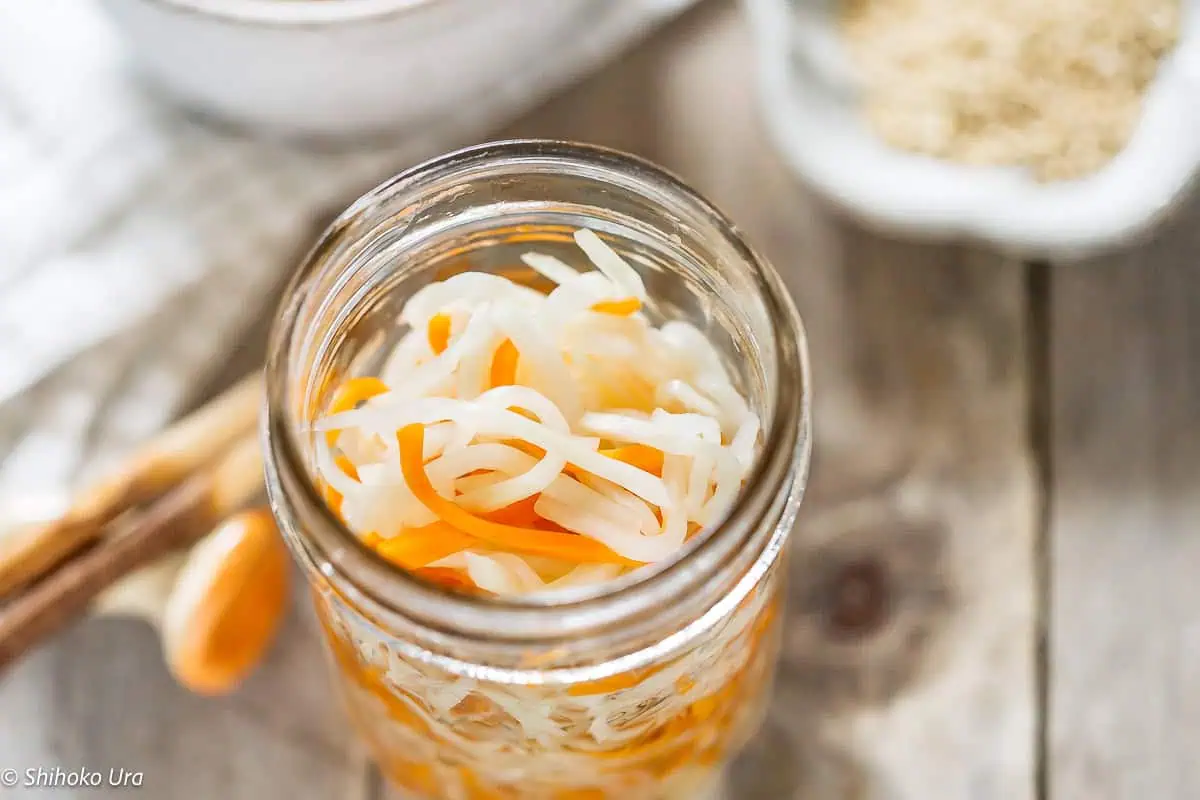
Namasu with Hoshigaki Dried Persimmons
A delightful variation of the traditional namasu is to incorporate hoshigaki (dried persimmons). Hoshigaki are loved for their rich sweetness and chewy texture which adds a unique and tasty contrast to namasu. To create this version, simply slice the hoshigaki into thin strips and add them to the julienned daikon and carrot before dressing. The natural sugars in the dried persimmons complement the tangy rice vinegar dressing and the deep orange hue of the persimmons add a visual contrast to the daikon and carrot. It’s an elegant twist that’s perfect for special occasions or as a unique addition to your New Year’s osechi ryori spread.
What To Serve With?
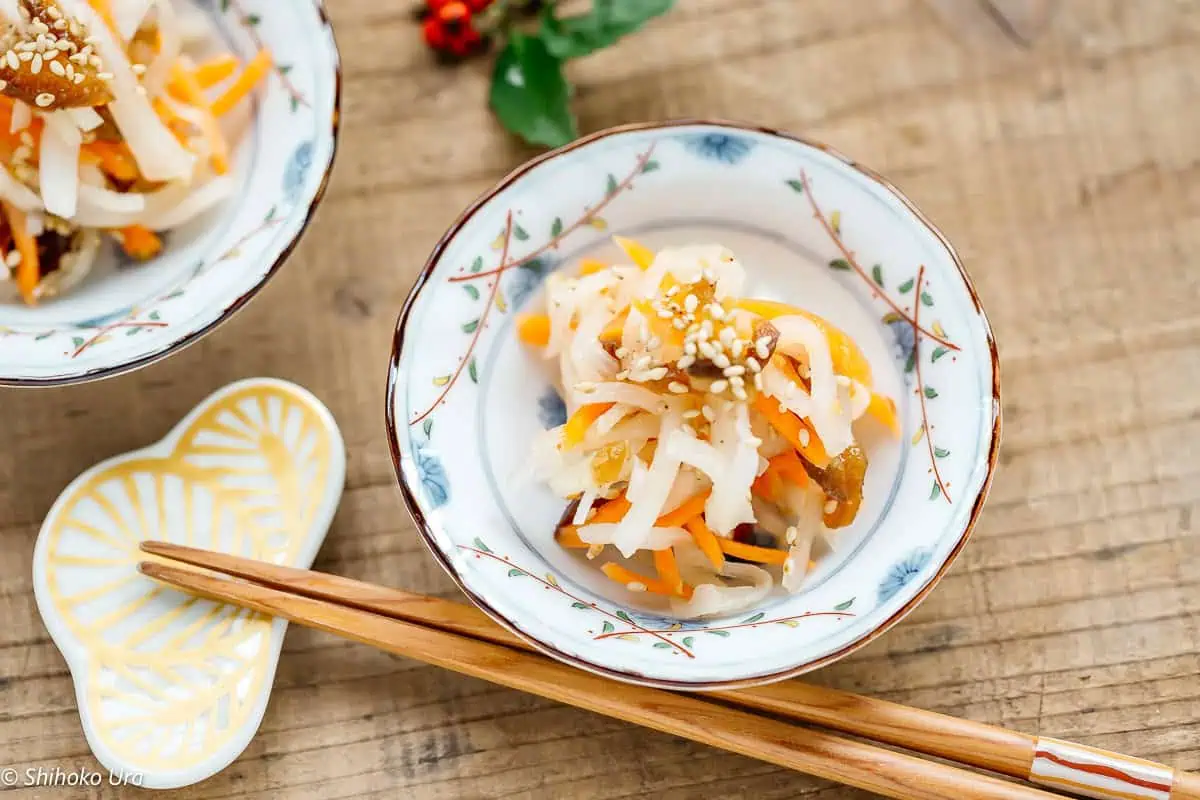
For its refreshing flavor and crunchy texture, it is good to be served as either an appetizer or side dish (this type of dish is called “Hashi yasume” in Japanese) to Tonkatsu, Karaage, Fried Shrimp, Beef Negimaki, Chicken Nanban and Teriyaki Meatballs.
How To Store The Pickled Daikon and Carrots
Namasu will keep for about a week in the fridge. You can also freeze with vinegar for about a month in the freezer. Thaw it back naturally.

Stay Connected
If you like the recipe please rate the recipe and leave comments below. Also don’t forget to follow me on Youtube, Pinterest, Facebook, Twitter and Instagram. This way you keep up to date with all the latest happenings on Chopstick Chronicles. Don’t forget to Sign up for a weekly newsletter so you never miss out on new authentic delicious Japanese recipes!
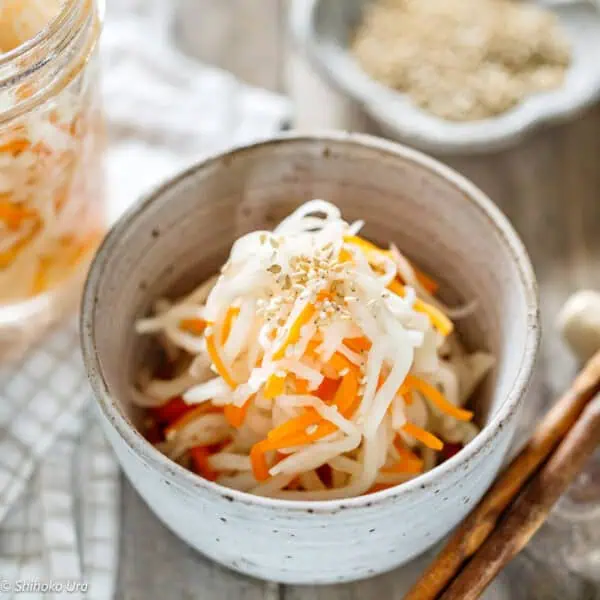
Pickled Daikon and Carrot (Kōhaku Namasu 紅白なます)
Ingredients
- 250 g daikon *1
- 50 g carrot
- 1 tsp sea salt
Vinegar Mix
- 4 tbsp rice vinegar *2
- 2 tbsp sugar
- 1 tsp sesame seeds for garnish
Instructions
- Wash the daikon and carrot.
- Peel the daikon radish and carrot. Using a sharp knife or a mandoline slicer, cut them into thin julienne strips about 2-3 inches long.
- Place the julienned daikon and carrot in a bowl. Sprinkle with 1 teaspoon of salt and gently mix. Let it sit for about 10 minutes.
- Squeeze the excess water out of the daikon and carrot with your hands then discard the water and return the daikon and carrot to the bowl.
- In a small mixing bowl, combine all the vinegar ingredients and let the sugar dissolve completely.
- Pour the vinaigrette over the daikon and carrot. *3
- Cover the bowl with plastic wrap and refrigerate for at least 30 minutes to an hour. This allows the flavors to meld and the vegetables to pickle slightly.
- Before serving, give the namasu a gentle stir. You can garnish it with a sprinkle of toasted sesame seeds if desired.
- Serve as a side along with other dishes.
Notes
Nutrition
Chopstick Chronicles is a participant in the Amazon Services LLC Associates Program, an affiliate advertising program designed to provide a means for sites to earn advertising fees by advertising and linking to Amazon.com. As an amazon associate I earn from qualifying purchases.






Can I use regular mayonnaise in yakimesh?
simple and delicious great!
thank you! 🙂