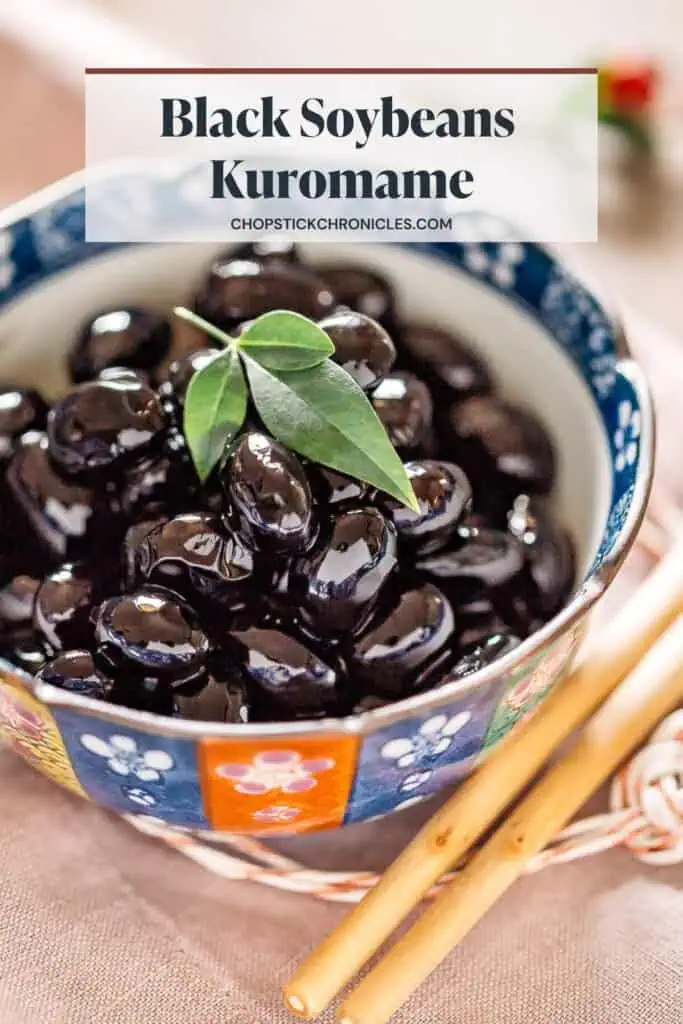
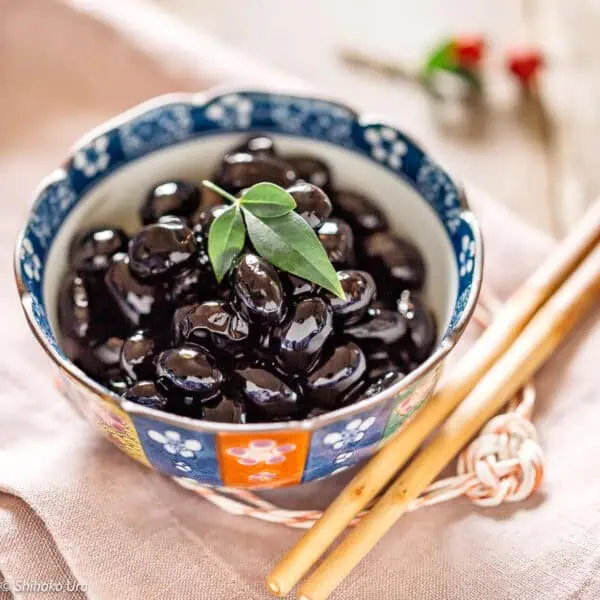
Deliciously sweet and soft, Kuromame (black beans) are a staple celebration food for New Year but can be eaten any time! These glossy black soybeans are simmered until tender and infused with a sweet soy sauce seasoning. They make part of the traditional new year’s meal as a symbol of good health and strength for the coming year. Whether served as part of the festive osechi ryori (traditional New Year’s foods) or enjoyed on their own, kuromame offer an authentic taste of Japanese cooking.
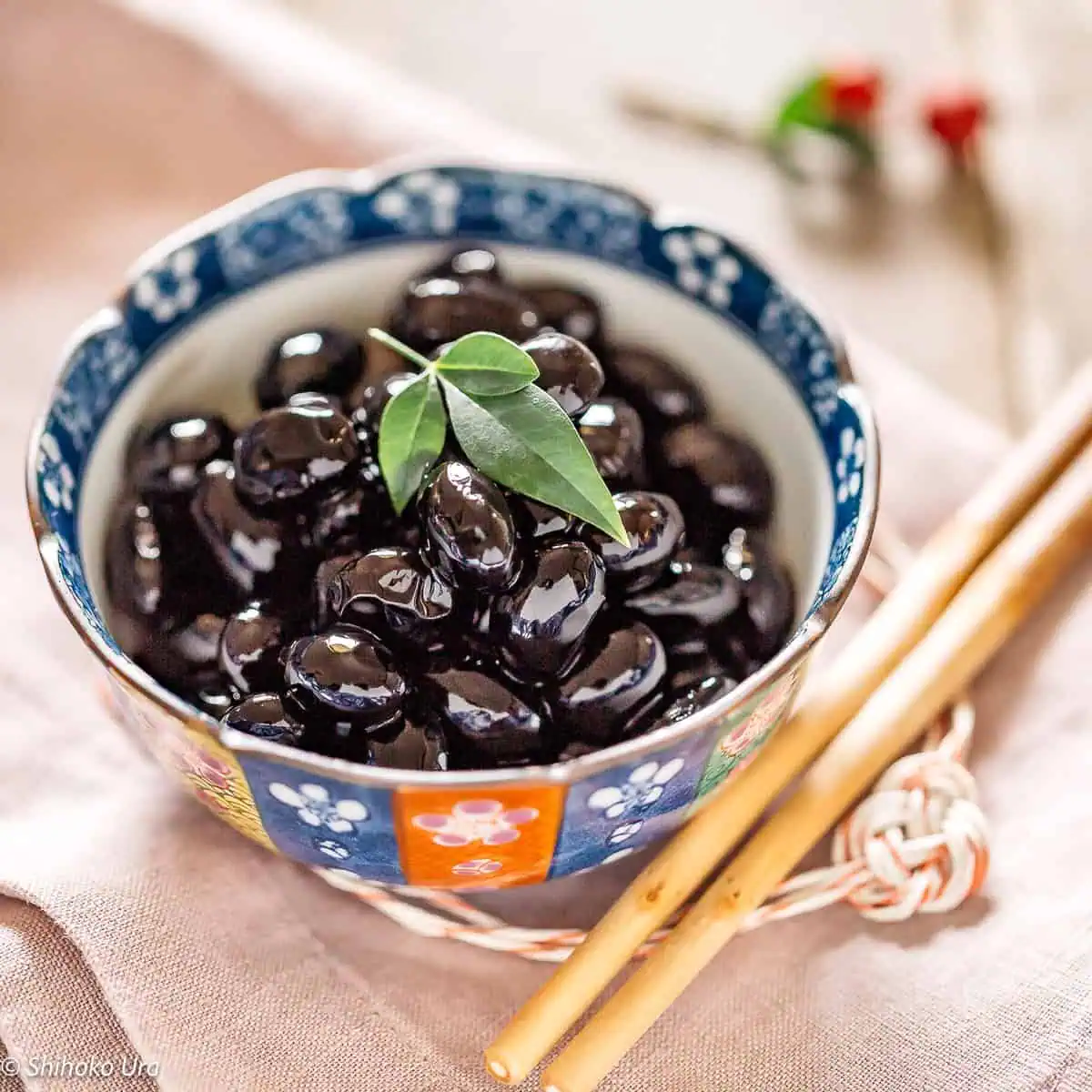
Table of contents
What is Kuromame?
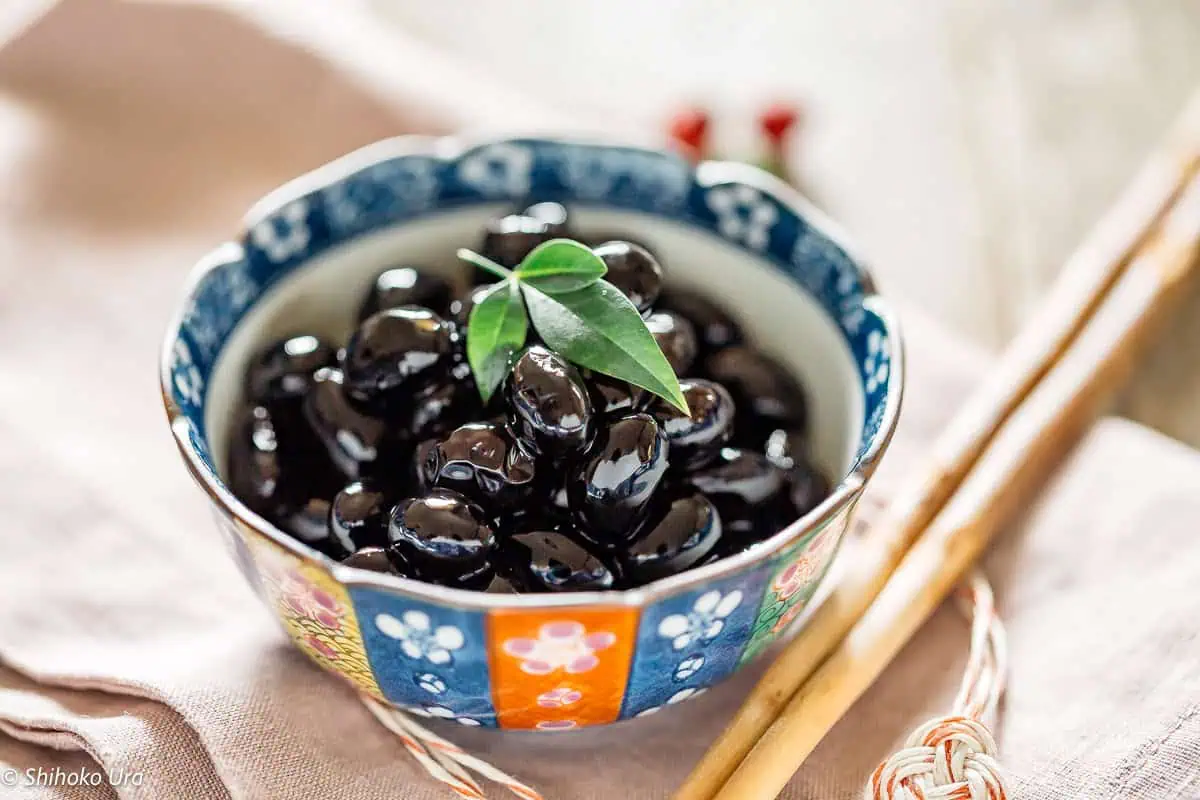
Kuromame, literally meaning “black beans” in Japanese, is a traditional dish particularly eaten during New Year celebrations. These are black soybeans that are carefully simmered until tender and glossy. The cooking process involves slow-cooking the beans in a mixture of sugar and soy sauce, resulting in a delightful balance of sweetness and umami flavors.
Kuromame is not just valued for its taste but also for its symbolic significance. In Japanese culture, these shiny black beans are a traditional Japanese new year food because they represent good health for the coming year. That’s why this dish is an essential part of osechi ryori, the traditional New Year’s feast. Beyond its festive role, kuromame can also be enjoyed year-round as a nutritious and flavorful side dish or bento box addition.
Key Ingredients for Kuromame Recipe
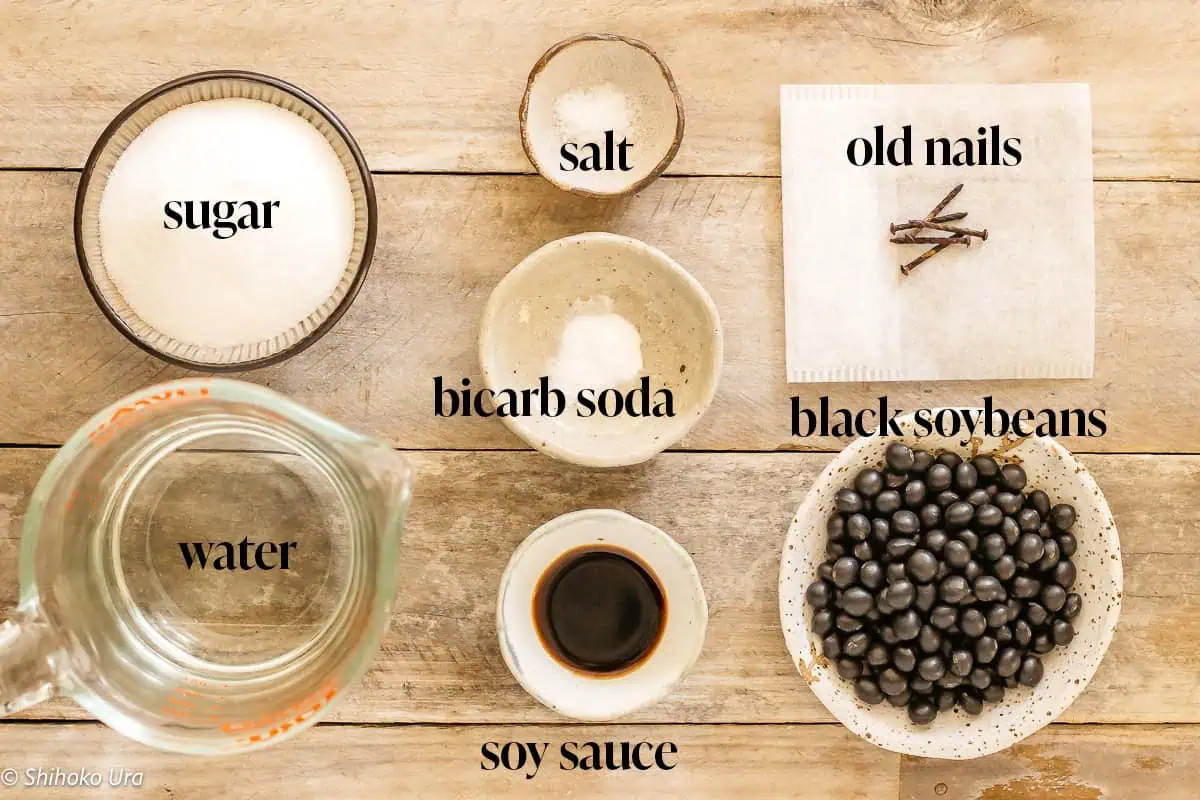
There are just a few simple ingredients in this classic recipe. Here’s a bit more information about what I used, along with any substitutions you can make.
Black Soybeans
Black soybeans, known as “kuromame”in Japanese, are the key ingredient in the traditional kuromame dish. These beans are have a deep, ebony colour and are slightly larger in size compared to regular soybeans. They’re a special type of bean because they have a glossy exterior that becomes even more lustrous when it’s cooked, they’re soft and tender, and they have a mild nutty flavour that makes it perfect for absorbing the sweet cooking liquid. They’re also rich in protein, fiber, and antioxidants as well as anthocyanins which give them their dark colour and various health benefits. So they’re not only delicious but nutritious too.
Look for beans that are uniform in size with a deep black colour and no blemishes for the best results for this dish. You should be able to buy black soybeans from your local grocery store. If not, you can always find dried black soybeans online.
Sugar
Sugar is necessary for sweetening the kuromame beans. The sugar also helps to create a glossy appearance on the beans as they cook. Often, a combination of white and brown sugar is used to add depth to the sweetness.
Soy Sauce
Soy sauce is is used to add an umami, savory flavor to kuromame. It adds depth and complexity to the dish, balancing out the sweetness. The salty component of soy sauce also helps to enhance the natural flavors of the black soybeans. In kuromame recipes, it’s typically used in smaller quantities compared to sugar, as it’s quite potent.
Rusty Nails
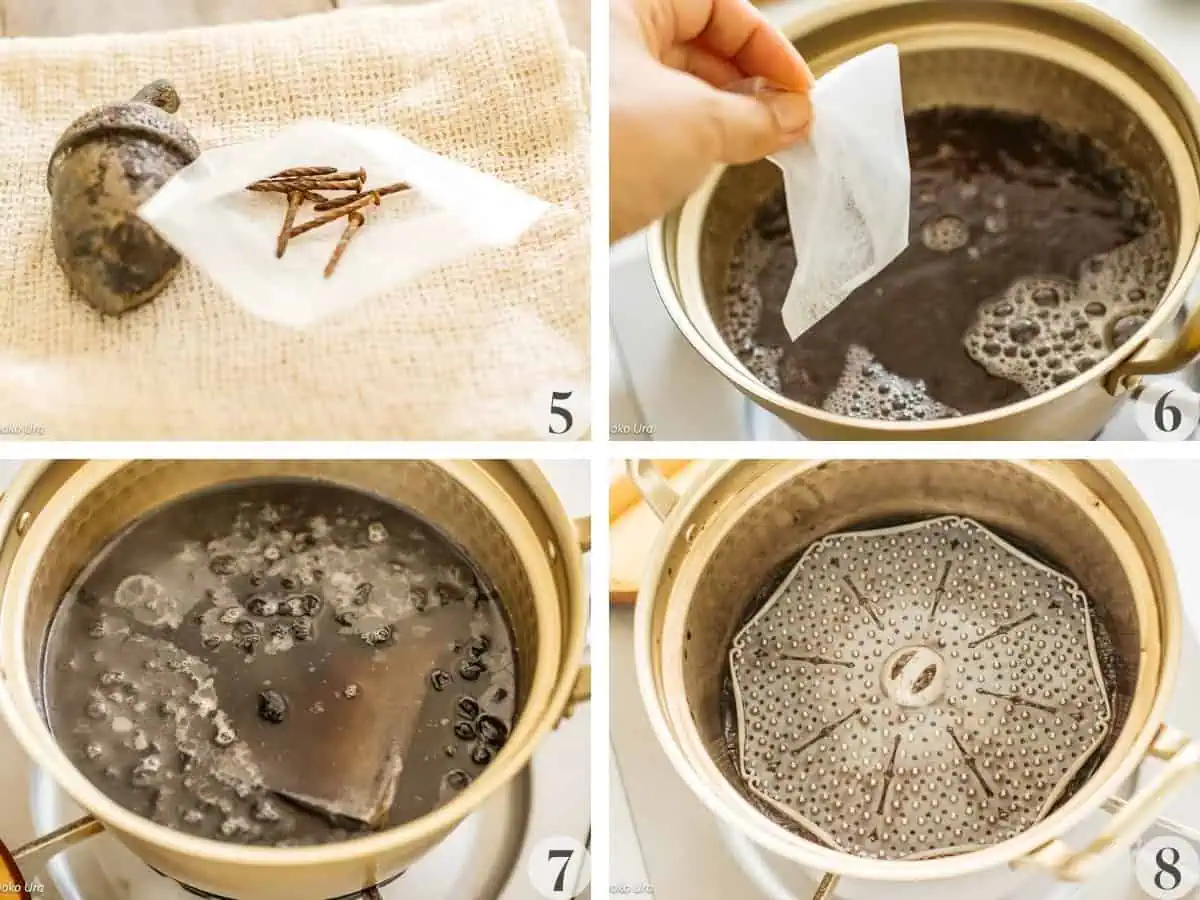
This might seem like a very weird ingredient but it’s a traditional “ingredient” that’s used to achieve the signature jet-black colour of kuromame. The colour is a result of the chemical reaction that occurs when the iron oxide of rust mixes with the tannin in the beans. I put the rusty nails in a tea bag to make it easier to get them all out (because of course we don’t leave them in since it is not possible to eat them).
Ingredient Substitution
Black Soybeans
While black soybeans are the traditional ingredient in kuromame, there are a few substitutes you can use if you can’t find them:
- Regular soybeans: These are the most similar in texture and nutritional profile. They won’t have the same deep color, but they’ll absorb the flavors well.
- Black beans: These have a similar appearance to black soybeans and can work well in the recipe. They have a different texture but will still provide a nice contrast in color.
- Adzuki beans: These small red beans are commonly used in Japanese cuisine and can be a good substitute. They’re smaller than black soybeans but have a pleasant, slightly sweet flavor.
- Navy beans or Great Northern beans: These white beans can be used if you don’t mind losing the traditional black color. They’ll absorb the flavors of the sauce nicely.
- Black turtle beans: These have a similar appearance to black soybeans and can work well, though they have a slightly different texture and flavor.
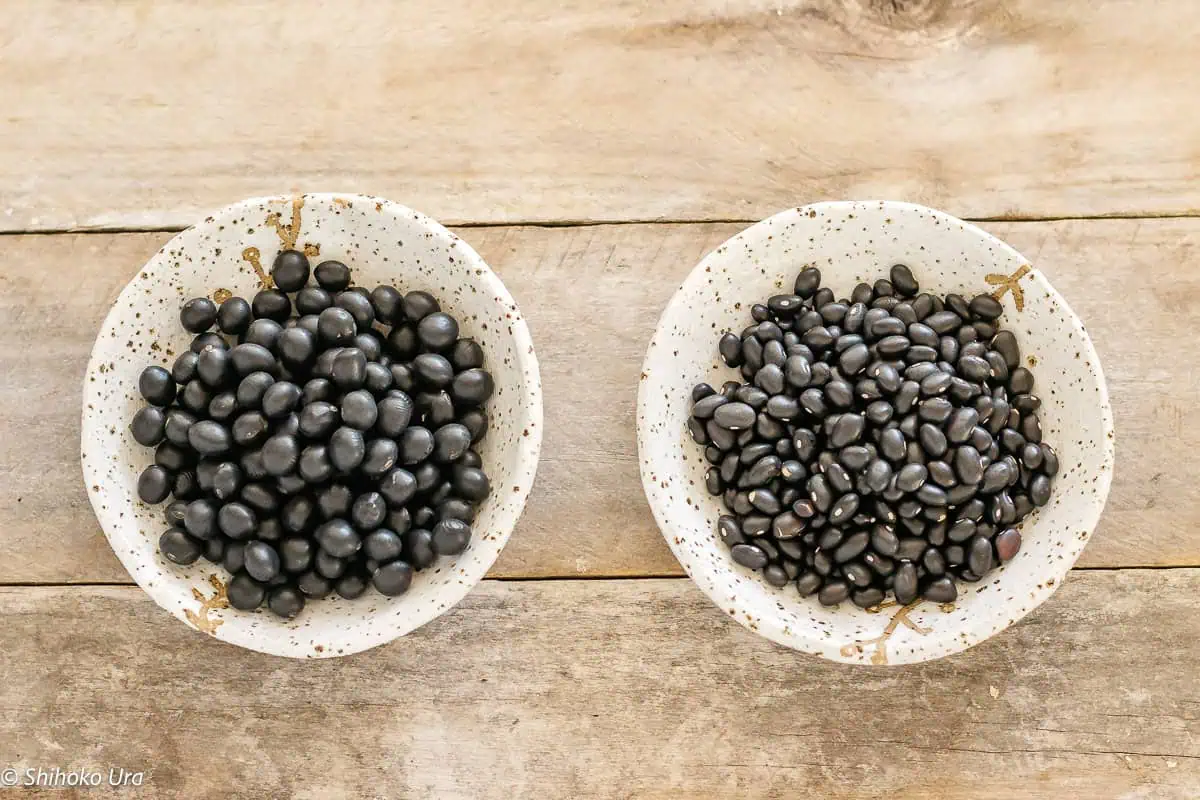
Remember that when substituting, the cooking time might need to be adjusted as different beans may require different cooking times to become tender. Also, the final dish may look and taste slightly different from traditional kuromame, but it can still be delicious!
Soy Sauce
If you can not get access to Japanese soy sauce such as Kikkoman brand soy sauce, or can’t have regular soy sauce for any reason, there are alternatives. Here are some options:
- Tamari: This is a gluten-free soy sauce alternative that’s very similar in flavor to regular soy sauce. It’s an excellent 1:1 substitute.
- Coconut aminos: Made from coconut sap, this is a soy-free alternative that’s slightly sweeter than soy sauce but still provides a savory umami flavor.
- Liquid aminos: These are similar to soy sauce but are typically gluten-free and contain less sodium.
Rusty nails
We don’t all have rusty nails lying around and not everyone wants to use rusty nails in food, so instead you can use a cast iron pot or an iron fish. Iron fish are fish-shaped cast iron that can be used to add iron to meals when cooking.
Step by Step Instructions for Kuromame
Cooking kuromame is time-consuming because you need to soak the beans overnight. However it is worth every single minute. Here’s a quick overview of the main steps to the recipe.
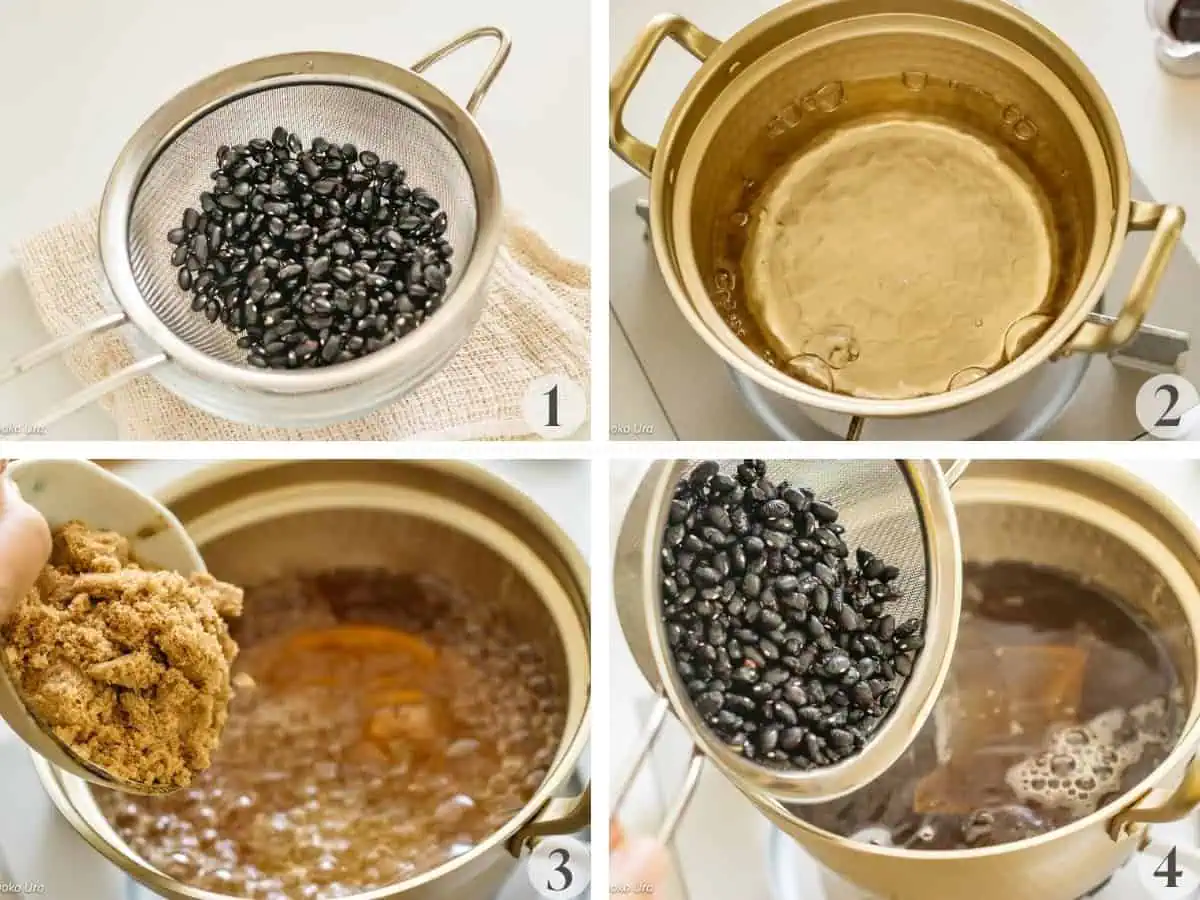
1. Cook The Soy Sauce and Sugar Mixture
Rinse black soy beans with cold water and discard any bad beans.
Then cook 1/2 tbsp of soy sauce, 2 cups water, 1/2 cup sugar, 1/4 teaspoon salt and 1/4 teaspoon bicarb soda in a saucepan over medium heat until the sugar is completely dissolved.
2. Soak Soybeans Overnight
Then, add the cleaned soybeans in the saucepan with the mixture while the sauce is still hot. Then cover 3-5 rusty iron nails with cheesecloth or muslin cloth and add it to the cooking pot or saucepan. I used an empty tea bag that you can purchase from shops like Daiso. Read above for substitutions for the nails.
3. Boil To Remove Scum
Next, bring the beans to a boil over high heat. This will bring a layer of scum to the surface. When it does, turn the heat to low and use a ladle to take the scum off the top.
Repeat this step by adding more water, boiling it again, and removing more scum.
4. Simmer On Low Again
Place a drop lid (Otoshibuta) on top of the pot of beans. If you don’t have a drop lid, you can make it, see this post for how to make Otoshibuta. Simmer the beans over low heat for another 3-4 hours.
After the beans are soft, you are ready to serve them!
Two Tips to Prepare Soy Black Beans
Here are some tricks so that your Kuromame turns shiny and plump with no wrinkles:
1. Add the beans when the shoyu soy sauce and sugar mixture is hot because this helps the beans become soft without wrinkling.
2. Add either rusty nails or a fish cast iron. *my cast iron is shape of a chestnut in the photo.
How to Store Kuromame?
Any leftover kuromame can be stored in a container in the refrigerator for a few days. It can also be stored in the freezer and it will stay fresh for about a month. When you are ready to reheat it, I suggest reheating the beans on the stovetop instead of the microwave.
What To Serve With Homemade Kuromame
This is a side dish that is usually served with other traditional New Years’ recipes. I compiled all of my favorite Osechi Ryori recipes into one complete guide. This Osechi Ryori lunch plate has photos, descriptions, and links to my favorite recipes!
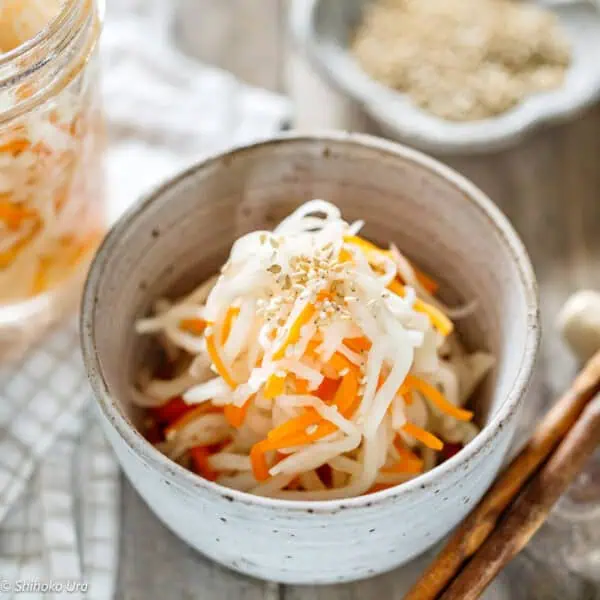
More Osechi Ryori Recipes
If you enjoyed this Kuromame recipe, here are some more Osechi Ryori recipes you might want to try next. They are some of my favorites!


FAQ
A: No, these are not the same as black beans. They are an entirely different type of soybean. I used black soybeans in this recipe. Black soybeans are the same thing as white soybeans, except they have a black color seed coat on the outside.
A : Yes, you need to soak the black soybeans in the hot soy sauce and sugar mixture. This way they will become soft without getting too wrinkled.
Stay Connected
If you like the recipe please rate the recipe and leave comments below. Also, don’t forget to follow me on Youtube, Pinterest, Facebook, Twitter, and Instagram. This way you keep up to date with all the latest happenings on Chopstick Chronicles.
Don’t forget to sign up for newsletters so you never miss out on new authentic delicious Japanese recipes!
Kuromame (Sweetened Black Beans) 黒豆
Ingredients
- 100 g black soybeans *or ½ cup
- 90 g caster sugar *or ½ cup
- 2 cups water
- ½ tbsp soy sauce
- ¼ tsp salt
- ¼ tsp bicarb soda
Instructions
- Rinse the black soybeans and drain.
- Pour 2 cups of water into a saucepan and add the sugar, soy sauce, salt and bicarb soda.
- Cook over medium heat until the sugar has dissolved.
- Remove from the heat and while the sauce is hot, add the black soybeans (kuromame).
- Add 3-5 rusty nails in a tea bag or wrapped in muslin cloth into the saucepan also (see substitutions for the nails in the post above).
- Put a lid on and leave it for 7-8 hours or overnight in room temperature.
- Next day, Take the lid off and bring the soaked beans to boil over high heat.
- When scum starts to form on the top, turn the heat to low and remove the scum from the top with a ladle.
- After removing all the scum, turn the heat to high, add a half cup of water and bring to boil again.
- Turn the heat down to low and remove the scum again from the top.
- Place an otoshibuta (drop lid) on top of the beans and simmer over low heat for 3-4 hours.
- Occasionally check under the drop lid to make sure the water is covering the beans. If not, add more water.
- After 3-4 hours, check if the beans are soft, and if they are then remove from heat and serve!
Notes
Nutrition
Chopstick Chronicles is a participant in the Amazon Services LLC Associates Program, an affiliate advertising program designed to provide a means for sites to earn advertising fees by advertising and linking to Amazon.com. As an amazon associate I earn from qualifying purchases.






Hi Shihoko,
Do you need to soak the beans in water overnight, prior to beginning this recipe? I am used to cooking dry beans by first soaking overnight in plain water (or water with baking soda). I am concerned that if I soak them only in sugar/salt water they will not hydrate properly.
No you don’t and if you do the beans will get wrinkle. You put the beans in hot water and then leave it overnight, so basically soaking in hot water.
Kuro mame no recipe arigatou gozaimasu:-) It would be even better if , instead of encouraging people to use aluminum foil, which is an environmental disaster from the mining of it to the day it’s disposed of. “Otoshi-buta” alternatives abound- ceramic saucers, glass pot lids, stainless steel bento tops, etc.! Let’s take career of the nature that provides all these wonderful foods. Also, why not use traditional , more wholesome sweeteners such as brown rice syrup (gennai no kome ame) , which is available from natural food distributors. Instead of importing cane sugar from tropical countries where child labor is still common , let’s encourage producers of lore local, organic sweeteners. In N. America, maple syrup is a more ecological option, in Europe, beet syrup, barley malt, apple/pear syrup (especially in German-speaking regions) etc. are healthier and more traceable. Grain syrups contain more complex carbs than cane sugar and provide a lovely mellow sweetness and sheen.
Good suggestion Thank you mary.
To learning allways
Found organic black diy beans on nuts.com. Are these the same as kuromame? Link to the web below.
Hi Dorothy Yes, it looks same beans.
this looks so yum i have to try it soon !
Great! 😀 thank you