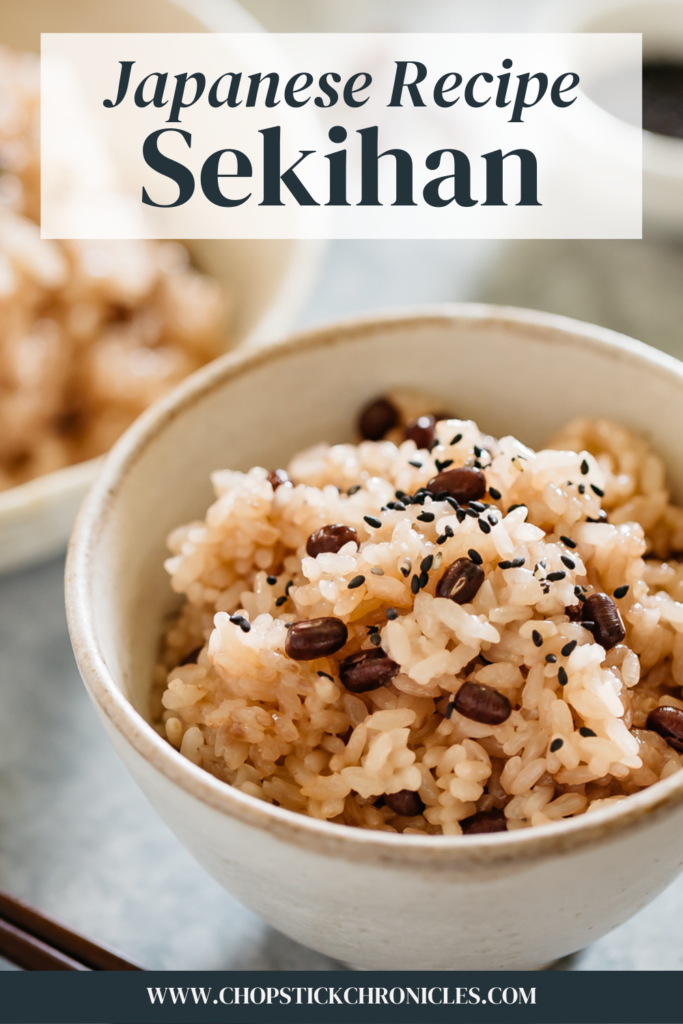
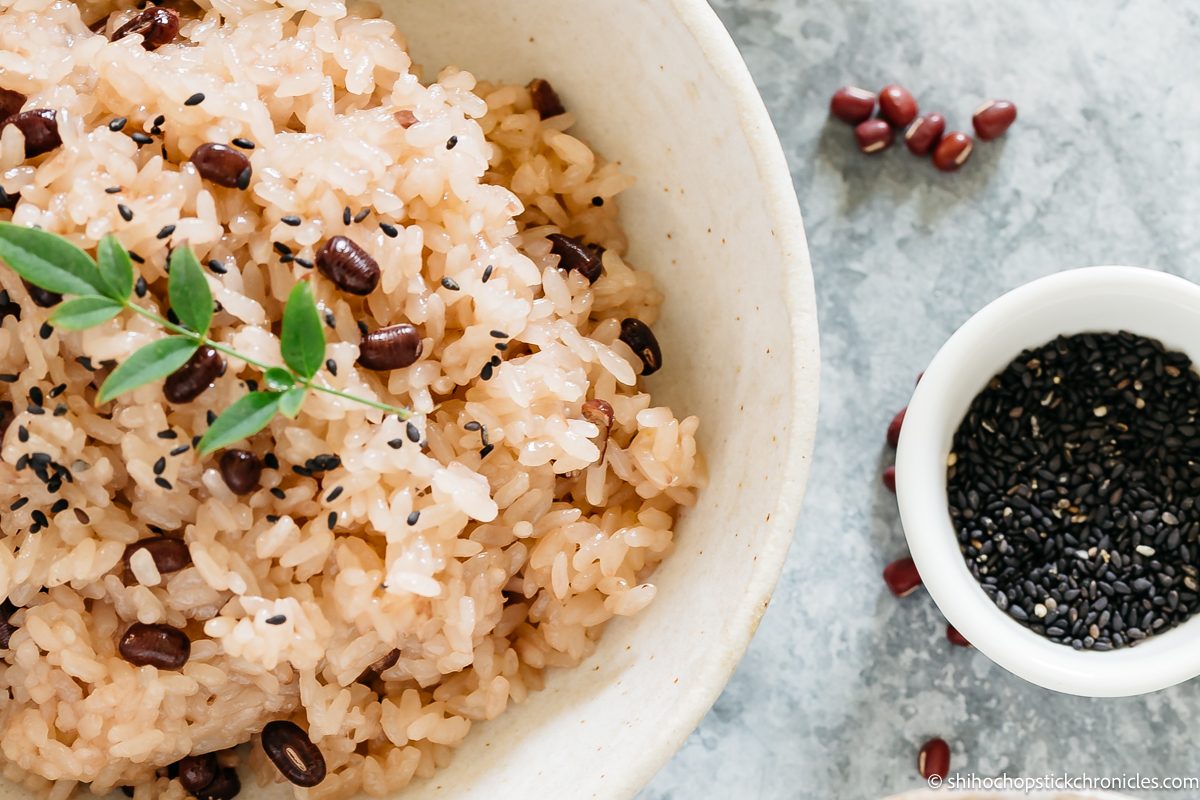
Sekihan, or ‘osekihan’ or ‘red rice’, is a traditional rice dish in Japanese cuisine. It’s made from glutinous rice and azuki beans giving it a soft and chewy texture, unique flavour, and signature red tinge. This classic red colour has made sekihan a staple food for special occasions like New Year, birthdays, and other celebrations. It’s a popular type of rice in Japan and can be served as part of a comforting meal at home as well as to celebrate happy events!
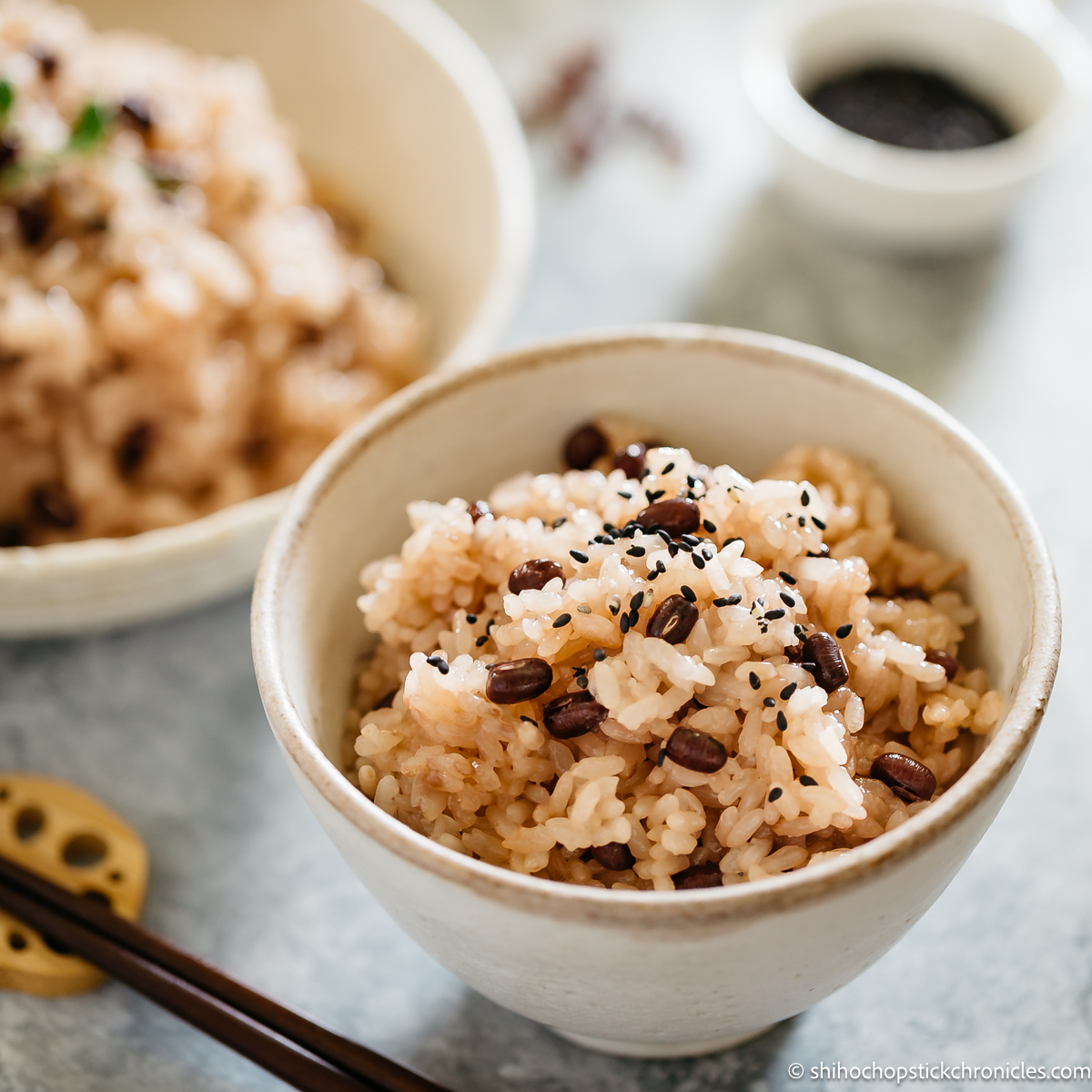
Table of contents
What is Sekihan?
Sekihan is a traditional Japanese dish made from sticky rice and azuki beans. The word ‘sekihan’ translates to red rice because of the signature red colour the rice has from the red beans (azuki beans). Because of its red colour which symbolises happiness, good fortune, and auspicious beginnings, sekihan is often eaten when celebrating special or happy occasions. This is why it is part of the ‘Osechi Ryori’ New Year’s feast eaten in Japan when bringing in the new year. Although it’s associated with celebrations, sekihan is also eaten day to day and can be found as pre-packaged rice balls (onigiri) in convenience stores and supermarkets in Japan.
The red beans not only add the classic colouring of the rice but also bring a slightly nutty slightly sweet flavour. The rice used is also often called sweet rice, but sekihan is not sweet. It has a unique flavour but is a savoury dish especially as it’s usually seasoned with a sprinkle of salt and black sesame seeds.
Ingredients used in Sekihan
Here are the ingredients commonly used to prepare sekihan.
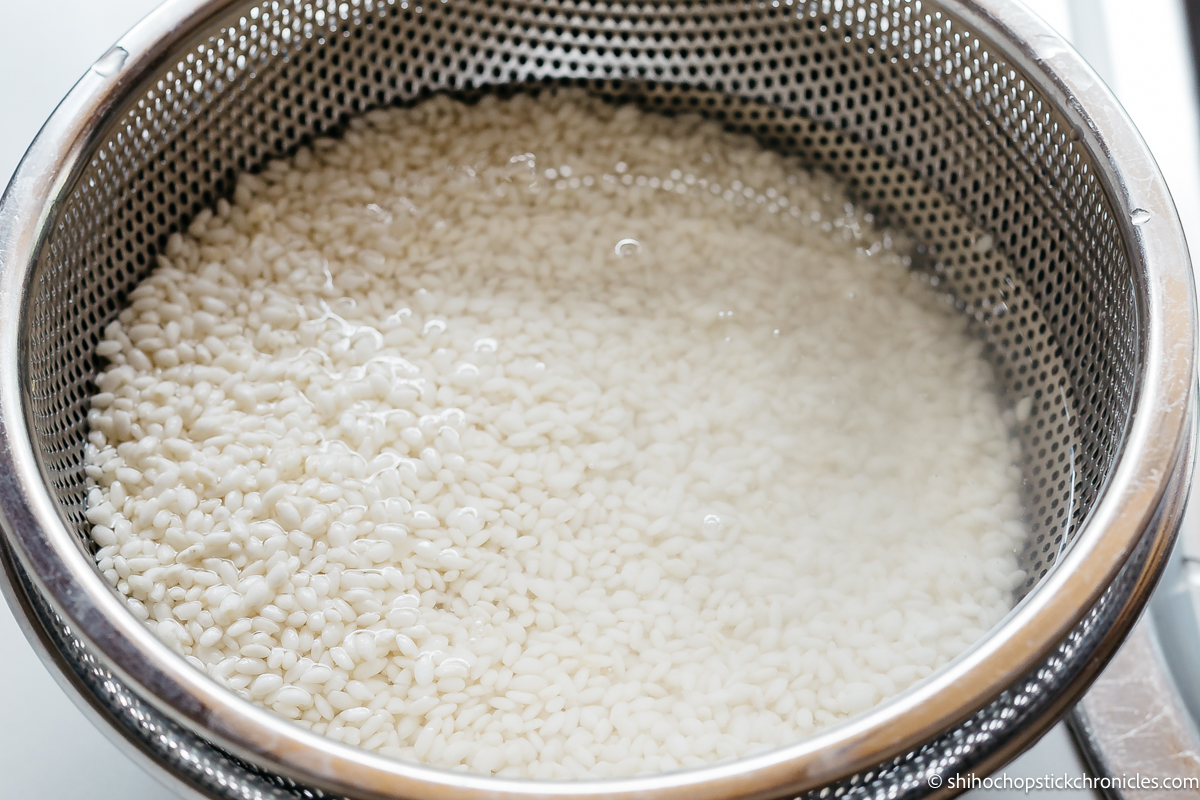
1. Glutinous Rice: Also known as sticky or sweet rice, glutinous rice has a high starch content that gives sekihan its characteristic stickiness. This is the same type of short-grain rice that is used to make mochi (rice cake) so it’s sticky and very filling. That’s why it is also called ‘Mochigome’. The rice grain colour is very white unlike ordinary rice grains, which are transparent. This type of rice can be bought from Asian grocery stores or online Mochigome. Read more in “How to make Mochi” post.
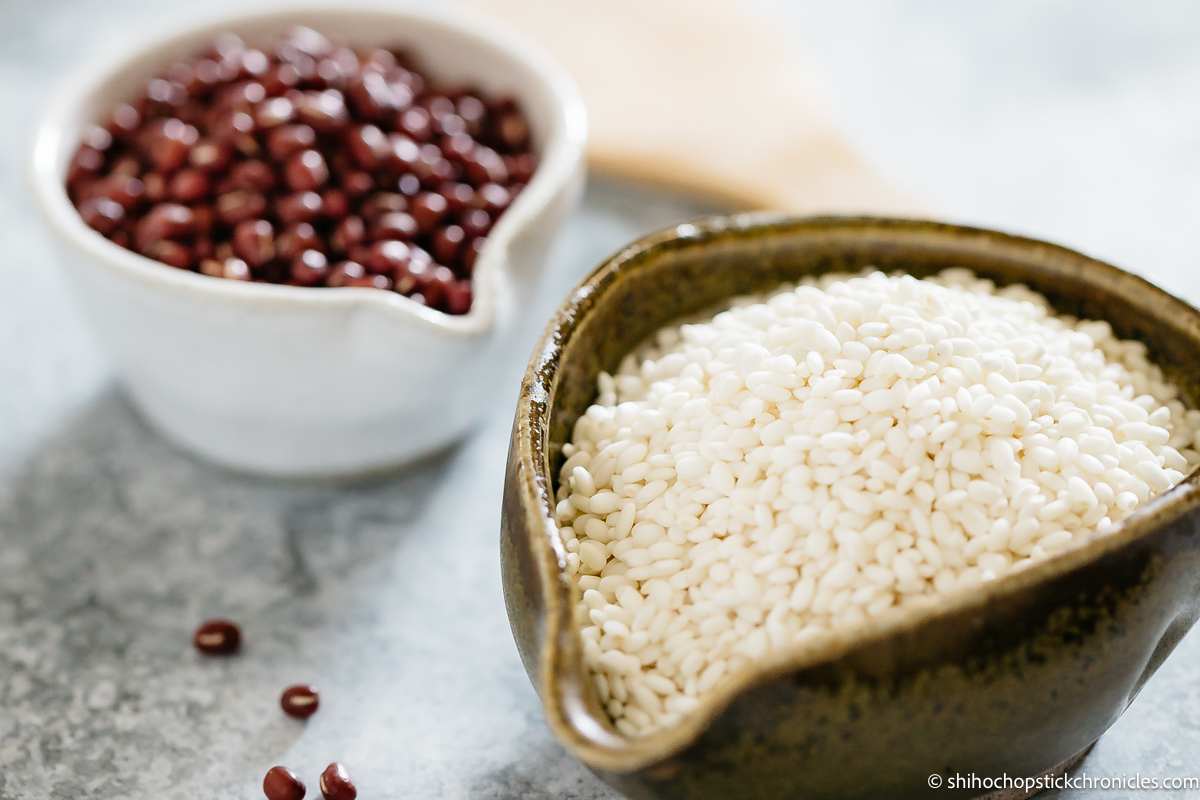
2. Azuki Beans: These small reddish-brown beans are a staple ingredient in many Japanese sweets. It is usually made into a paste called Anko and used as a filling for various types of mochi, dorayaki, and other desserts. But in sekihan it is savoury. The beans also provide a rich red hue to the dish when cooked.
4. Sesame Seeds and Salt: Toasted black sesame seeds and a bit of salt are usually sprinkled on top of the sekihan at the end.
Mochigome (glutinous rice) and Azuki beans, can nowadays be found in outside of Japan. In Australia (and other countries), they can be found in Asian or Japanese grocery stores or in the Asian food aisle of regular supermarkets.
Instructions
Here are instructions for how to effortlessly prepare delicious sekihan using both a pressure cooker and an Instant Pot. Whichever you use, the process is pretty much the same as follows:
1. Wash the rice, drain the water and leave the drained rice to the side (or you can do this step while the beans are cooking).
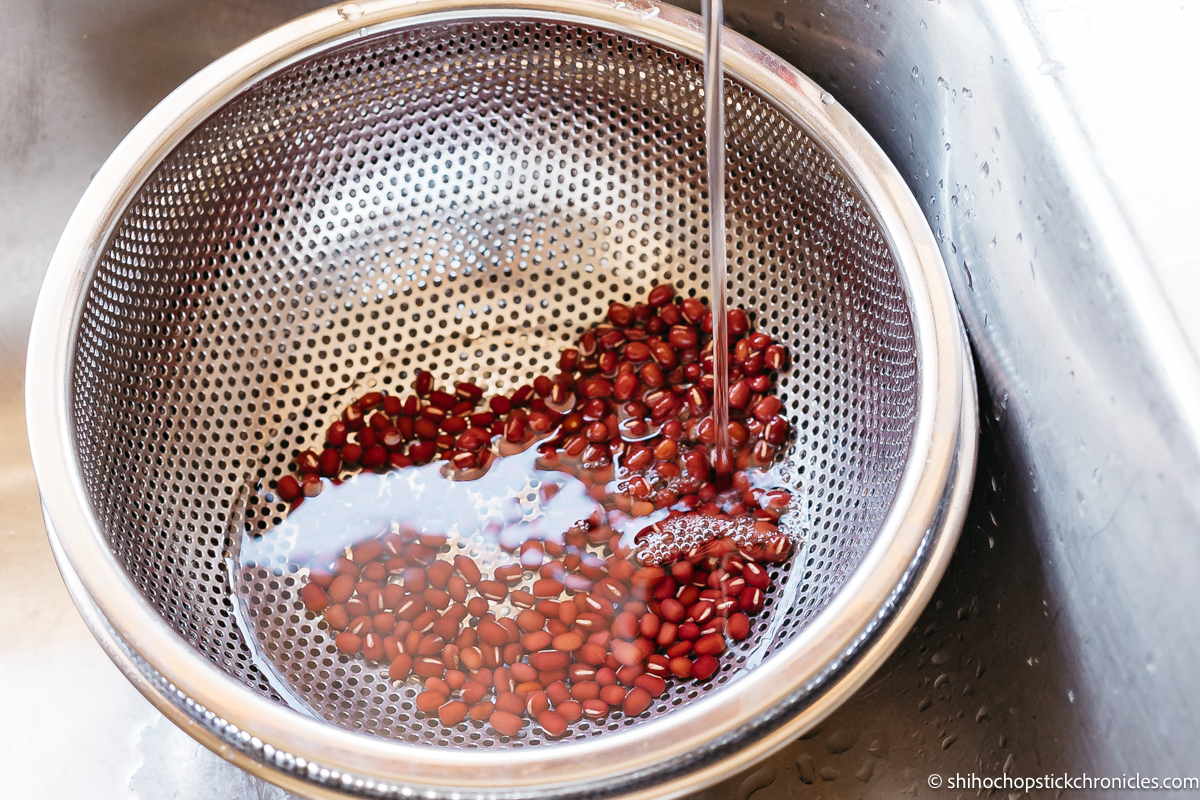
2. Wash azuki beans and drain the washing water.
3. Set water and azuki beans in the pressure cooker/instant pot and cook the azuki beans.
4. Release the pressure, and open the lid, and scoop up the water with a ladle and pour it back in several times to oxidise the beans. Continue this step a few times to make sure the colour comes out later in the rice.
5. Then add rice and salt into the pressure cooker/instant pot.
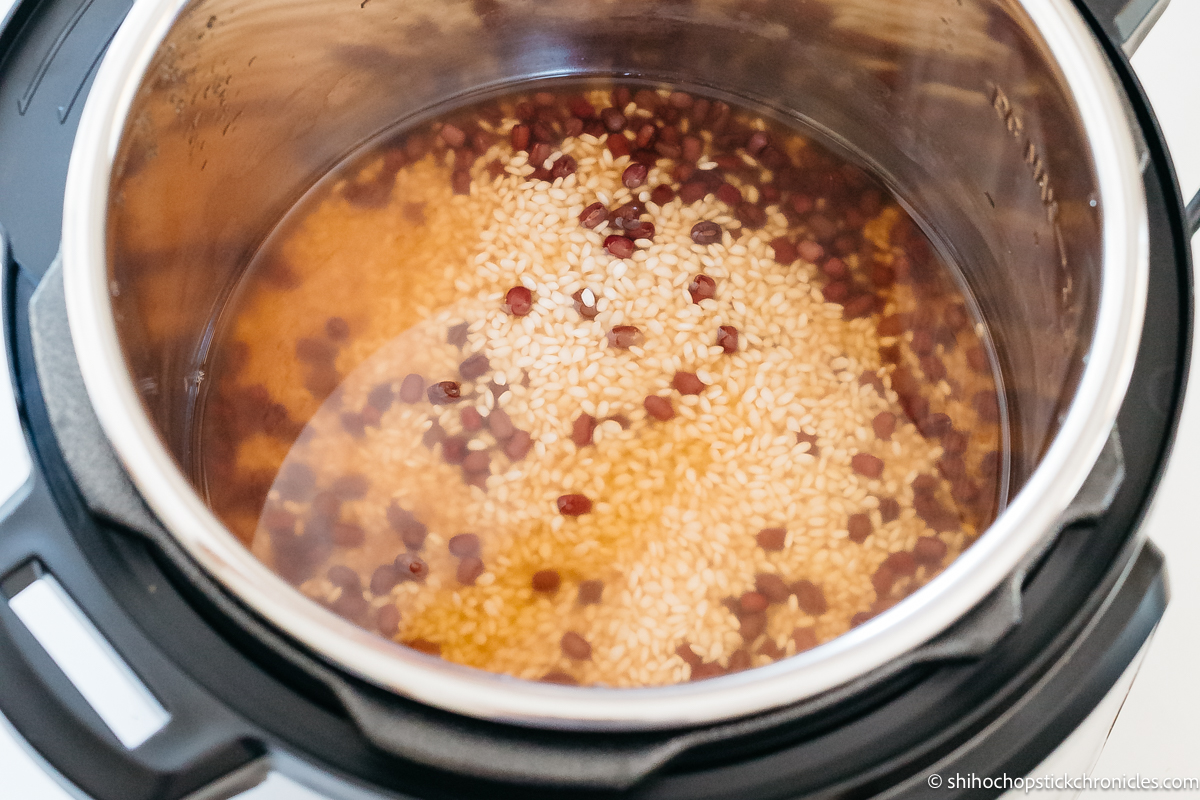
6. Cook all for 3 minutes.
7. Release the pressure naturally.
8. Open the lid and stir the rice and serve with a sprinkle of salt and black sesame seeds.
Popular Occasions to Serve Sekihan
Sekihan holds a significant place in Japanese culture and is often served on joyous and special occasions such as New Years, birthdays, weddings, or festivals because of its celebratory red colour. My mum always makes this rice for New Year’s and our birthdays because she knows how much we all love it.
What to serve with Sekihan
- Miso Soup: Simple miso soup with tofu and seaweed or more hearty soup with added seasonal vegetables like spinach or mushrooms goes well with sekihan.
- Pickles (Tsukemono): Tangy and crunchy pickles like radish and cucumber are a classic side dish in Japan and complement sekihan perfectly.
- Grilled Fish: Delicate white fish such as sea bream or mackerel pairs well with the subtle flavours of the red bean rice.
- Simmered Vegetables: A side dish of simmered vegetables like carrots, daikon radish, lotus root, or bamboo shoots in soy sauce-based broth (nimono) is perfect along with sekihan.
- Tempura: Lightly battered and deep-fried vegetables or seafood tempura make for a delightful contrast when served alongside sekihan. Popular choices include shrimp tempura, sweet potato tempura, and eggplant tempura.
- Chawanmushi: chawanmushi is an excellent accompaniment to sekihan, as its smooth and custard-like texture balances the sticky rice texture.
Tips for Making Sekihan
- When we cook ordinary rice in a rice cooker, we let the rice grain absorb some water before cooking it so that when the rice is cooked it is soft. However, do not leave glutinous rice in water if you are going to use a rice cooker or a pressure cooker, because the water absorption rate of glutinous rice is higher so there ends up being not enough water to cook it or if you add water to cook, it ends up soggy.
- Traditionally, the rice is cooked by steaming, when we did not have pressure cookers. If you are going to decide to cook this dish in the traditional way, you need to soak the rice in water for 6-8 hours and if the rice is old, it needs to be soaked for longer. Then drain the soaked liquid and steam cook the rice.
- It’s important to add the salt at the right time when cooking. Do not add the salt to the Azuki Beans. The salt makes the azuki beans firm and will not be cooked properly. The salt needs to be added when cooking the rice (after the beans have cooked).

If you liked my recipe for Sekihan Azuki bean rice, please rate it and leave a comment below. Also, don’t forget to follow me on Youtube, Pinterest, Facebook and Instagram to keep up to date with all the latest happenings on Chopstick Chronicles. Don’t forget to use the hashtag #ChopstickChronicles so I see your wonderful creations!

Sekihan- Azuki Bean Rice 赤飯
Video
Ingredients
- 2 cups of glutinous rice used the cup attached to the Instapot
- 1/4 cup azuki beans
- 2 ½ cups water
- 1 tsp salt
- Black sesame to sprinkle
Instructions
Instructions for Instapot
- Wash the azuki beans and drain out the water.
- Add 2 & ½ cups of water and the azuki beans in a pressure cooker. Close and lock the lid and set the Instapot.
- Press [Pressure cook] then use the [+] [-] button to set 10 minutes and press [Pressure level] button to set low pressure. *1
- While pressure cooking the Azuki beans, wash the glutinous rice and drain the water.
- When the pressure cooking time is up, release the pressure instantly, by pressing [Cancel] on the front panel and then turning the steam release on the lid to “Venting” position.
- Open the lid and scoop up the water with a ladle and pour it back in. Continue this step a few times to make sure the colour comes out later in the rice.
- Add the washed rice and the salt. Close and lock the lid and set the instantpot.
- Press [Pressure cook] then use the [+] [-] button to set 3 minutes and press [Pressure level] button to set low
- When time is up, let the Instapot continue to cook using the cooker’s residual heat and steam by pressing [Cancel] and wait for the pressure to come down naturally (takes about 20 minutes).
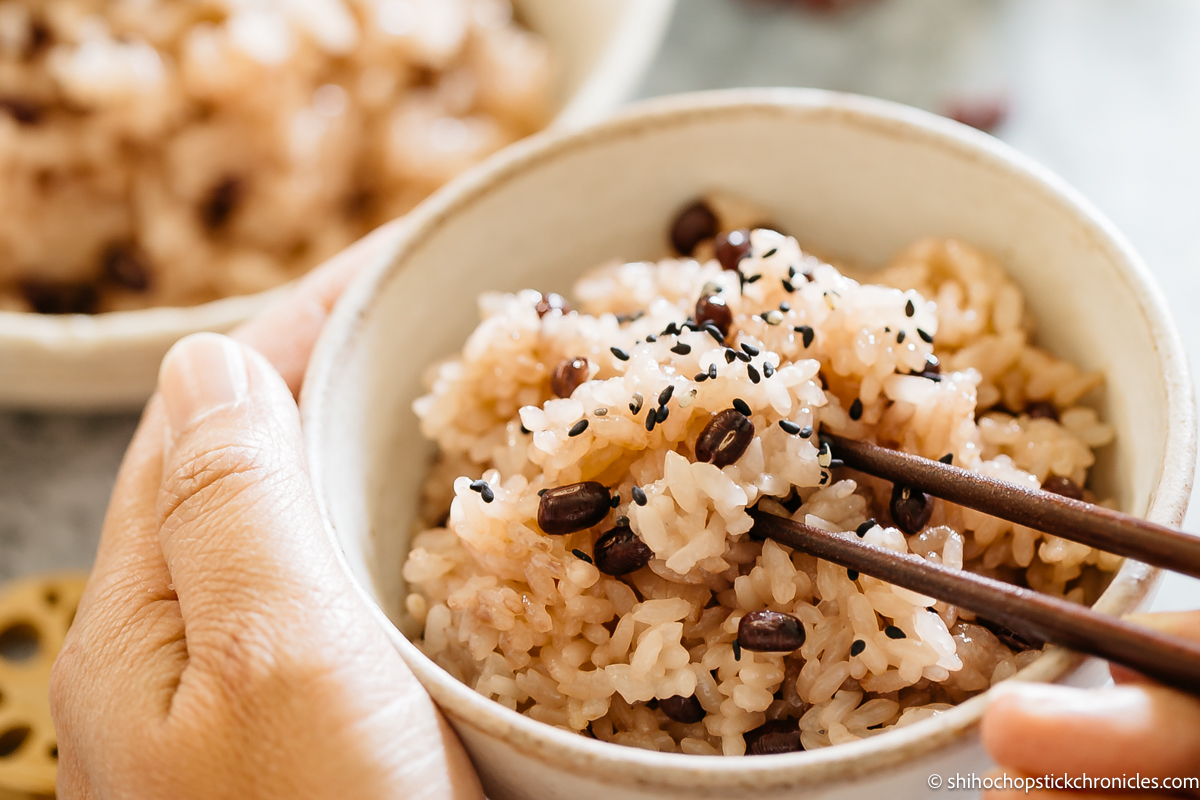
- Once all the pressure has released, stir the rice (without mashing or over-mixing) then serve with the sprinkled black sesame!
Instructions for pressure cooker
- Wash the azuki beans and drain out the water.
- Add 2 & ½ cups of water and the azuki beans in a pressure cooker, lock the lid and cook over high heat.
- When the pressure indicator pin rises, turn the heat down to low and cook for 10 minutes.
- Meanwhile, wash the glutinous rice and drain water.
- Release the pressure in the cooker rapidly (as per the instructions of your pressure cooker).
- Open the lid and scoop up the water with a ladle and pour it back in.
- Continue this step a few times to make sure the colour comes out later in the rice.
- Add the rice and the salt and put the lid back on and cook it over high heat and wait for the pressure pin to rise again.
- Once the pin rises, turn the heat down to low and leave for 3 minutes.
- Turn the heat off and allow the pressure to release naturally.
- Once all the pressure has released, stir the rice (without mashing or over-mixing) then serve with the sprinkled black sesame!






Hi! I’ve been wanting a recipe for osekihan that didn’t require too much monitoring and steps, and this one is perfect! Thank you for developing this and sharing it.
Hi Lemi san, You are welcome. I make this often as my son’s favourite food so it is have to be easy one and effortless 😀
Shihoko this is the BEST sekihan recipe I have tried. I had my doubts about the time but the rice turned out perfect. I even froze some and they defrost perfectly, too. Thank you for sharing a great recipe!
Hi Donna, I am glad the recipe worked for you <3
This turned out great! At first I thought there wasn’t enough beans but it was just right.
Thank you Steve 😀
I like simple dishes with few ingredients, I’m curious to try it only because I can’t imagine the consistency of these ingredients cooked for such a short time…
Hi, can you use canned adzuki beans for this recipe? Does it change at all? The original recipe uses dried beans, correct? Thanks!
Hi Yoko san yes I use dried beans. Is your canned azuki beans cooked?
Very delicious, thank you,
But may I ask If i double the recipe. Do I double the water and everything, but keep the timing the same?
Thank you
Hi Robb Yes.
If I want to make more, can I just double the recipe, including the water?
Hi Aloha yes.
When you say to use the cup they comes with the Instant Pot for the rice, do you also mean I’m supposed to use it for the water and azuki beans too? Because I used a regular measuring cup for the water and beans and it ended up with a lot of water still on top. of the rice.
Hi Lynn, the cup is the regular measurement cups. However you can use the cup comes with, you just need to use same amount rice and water ratio. So if you use two cups of rice, add two cups of water.
OK I never in 1 million years thought that this recipe would work! No it was like three minutes to cook the beans in like three minutes to cook the rice. I thought it was going to be a total fail. But it wasn’t! This was delicious this was perfect my whole family loved it. It was enough for all four of us for dinner and enough for two Oniggiri for my children for breakfast in the morning. 10 out of 10!
Thank you Cristen. I am glad that your whole family loved Sekihan 😀
Hi Shihoko, I want to make this recipe but I don’t have an instant pot. I have a very good rice cooker and will use that. Do you have a recipe for a regular rice cooker? Thank you so much, Debbie
Hi Debbie, do you have a pressure cooker?
Domo arigatoo!!
I’ve made the recipe several times since New Year & now.
Thank You Yooko for trying this 😀
Hello Shihoku san,
Could you please clarify the measurements for the rice and beans as I don’t have an Insta pot. When you refer to cups, do you mean the metric or standard rice cooker cup size?
Many thanks
Lee-Anne
Hi Lee-Anne san, the measurements of the cup I am using is the Japanese one. Japanese 1 cup measurement is 180ml. However, it does not matter what cup you use, you can even use a mug if you like. The ratio of rice and water is 2:2.5. Hope this help 😀
If I want to change the proportion of rice to bean, can you suggest water/cook time changes? I’d like to change it one to one.
Hi Lena yes if you are changing the ratio of rice and beans, however I have never tried one to one it is a lot of beans so I don’t know.
Thanks for sharing this recipe. I’m not sure what you mean by “scoop up the water with a ladle and pour it back in”. Are you basically just moving the water around without stirring?
Hi Jill yes in order to aerating which gives the rice shine when it cooked 😀
wonderful i love it!
thank you 🙂 !
Ohhh, I can’t wait to try this recipe with my new IP!!! It’s one of the first dishes I wanted to make since I love my mom’s sekihan which she makes every New Years, and other occasions. One thing, the color of the rice is a lot lighter red color than what I typically see with my mom’s version, which she does on the stove top. So I actually prefer a darker red…should I just ladle/pour back the water a little more than what you noted in the recipe to get that darker color? 🙂
I look forward to seeing more Japanese recipes using the IP. 🙂
Arigato gozaimasu!
Hi Vivian, darker colour may be due to the amount of Azuki bean used or quality of Azuki beans. Laddling makes only make the rice shiny not darken the colour I think. And also it is may be the lighting of the photography too.
When you freeze your onigiri, what’s the best way to prepare to eat it? Microwave? Refrigerate then microwave? Thanks 🙂
Hi Jan, Microwave. I will not recommend defrost them in refrigerator because it makes the rice balls dry.
Thanks so much! Good idea to freeze small portions:)
You are welcome 😀
Sounds easy and delicious. The beans are not soaked first, right?
Hi Dalia, super easy! No soaking required if you use a pressure cooker 😀
Hi!
Just wanted to say thank you again, this has become one of our winter staples. Though I just cook the beans and rice together, since on any ordinary day the colour does not matter so much. 😉
Thank you Dalia 😀