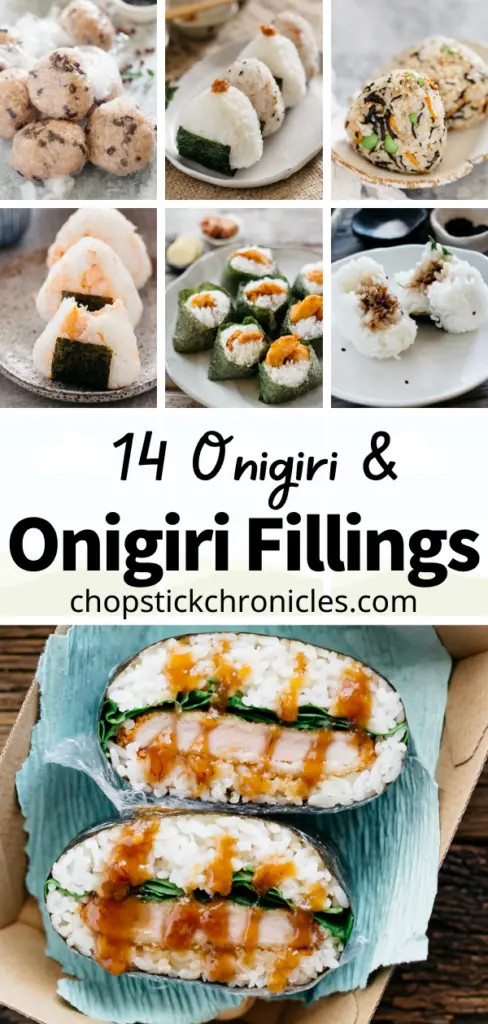
Onigiri are popular Japanese rice balls loved for their delicious taste, convenience, and affordability. These tasty rice balls are comparable to sandwiches and are eaten as a snack or part of lunch nearly anywhere in Japan. You can find them in supermarkets and convenience stores. But you can make them easily at home! Getting the triangular shape can be tricky without practice, but you can simply make them round or use an onigiri mold.
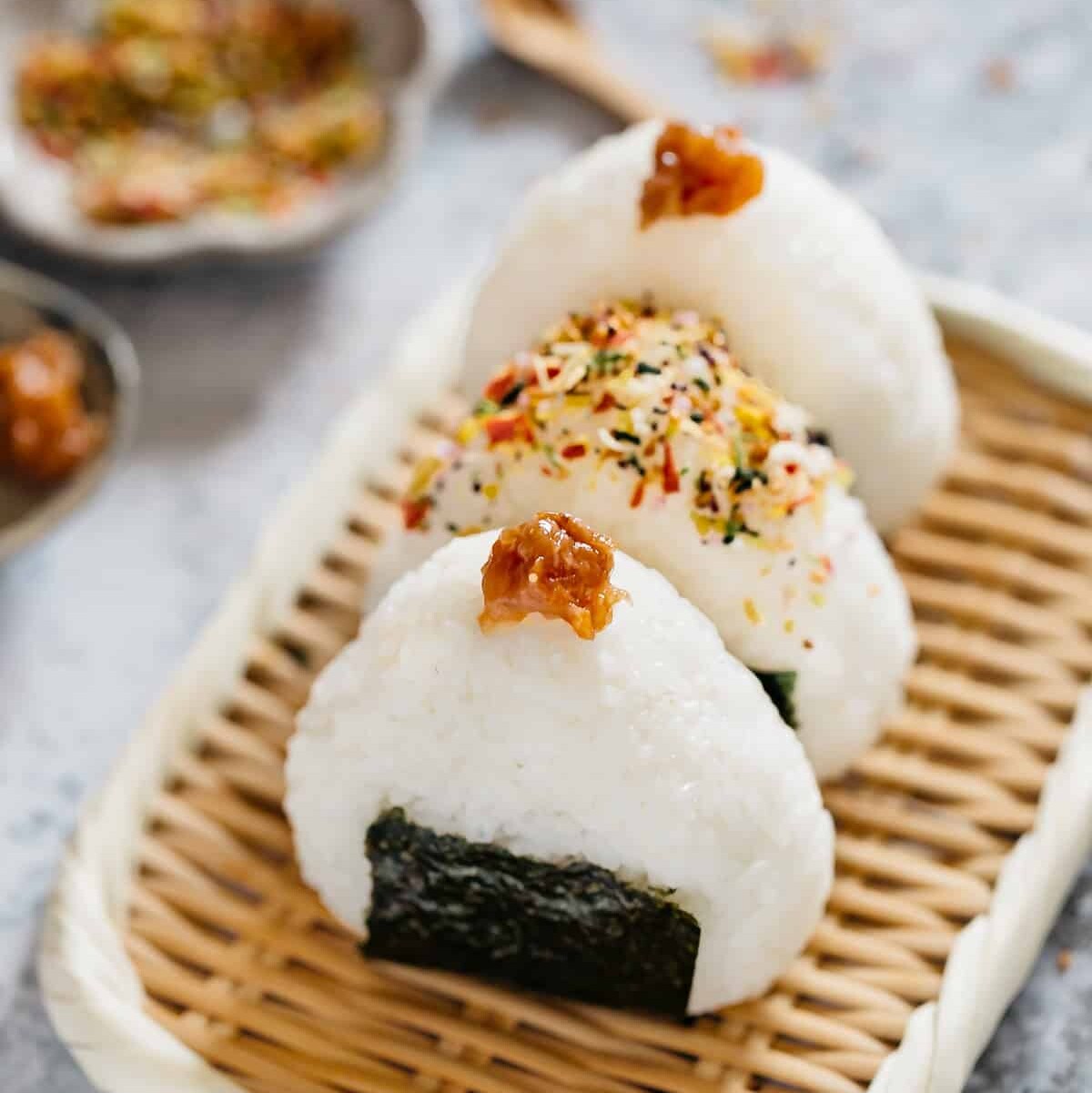
Onigiri, also known as omusubi, usually contain a filling inside such as salmon or shrimp tempura and are covered in nori (seaweed). It may sound like sushi but it is not the same because onigiri rice is just sprinkled with salt, not seasoned with rice vinegar. However, other seasonings can be used to add extra flavour such as soy sauce, sesame seeds, or furikake. There also many different ingredients that can be used as fillings to create delicious onigiri flavors. Read below for 14 onigiri fillings that you can try now!
1. Tuna Mayo
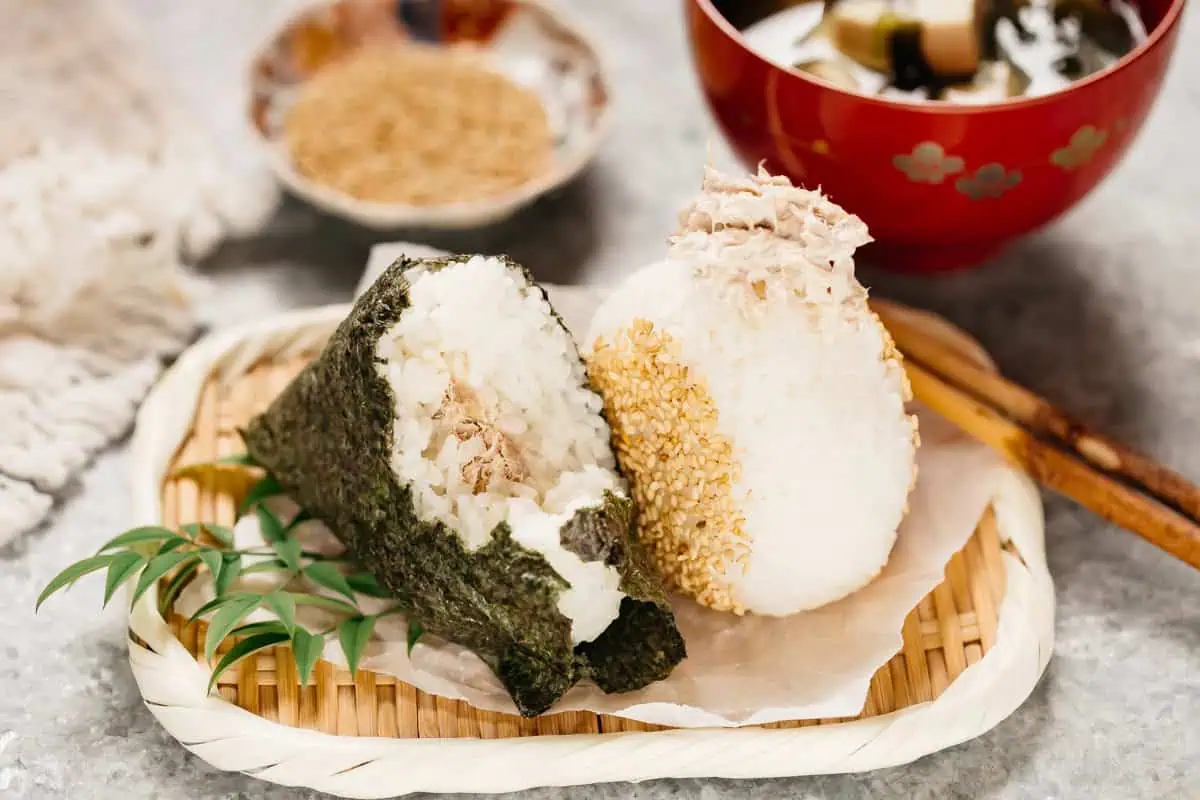
Tuna mayo is one of the most popular fillings. It is simply canned tuna mixed with mayonnaise. Although it’s simple, the flavours go so well with the plain rice and seaweed. It’s also very easy to make, the ingredients are easily accessible, and they’re perfect for a kid’s lunch box.
2. Shio Sake (salted salmon) Onigiri
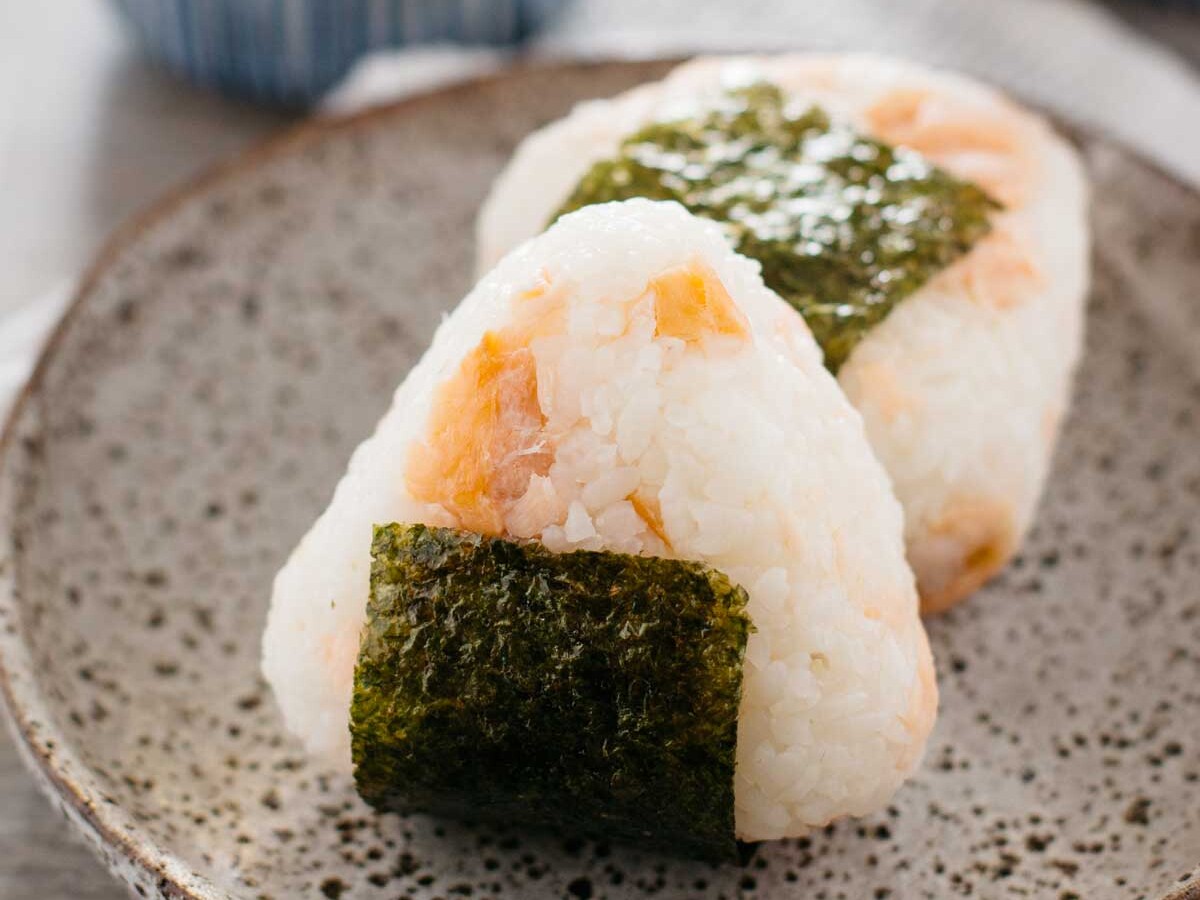
Salmon is another favourite onigiri fillings because salmon and white rice go perfectly together. Salting the salmon brings out extra flavour and makes it taste fantastic. You can make Shio sake (salted salmon) following this recipe.
3. Umeboshi (pickled plum)
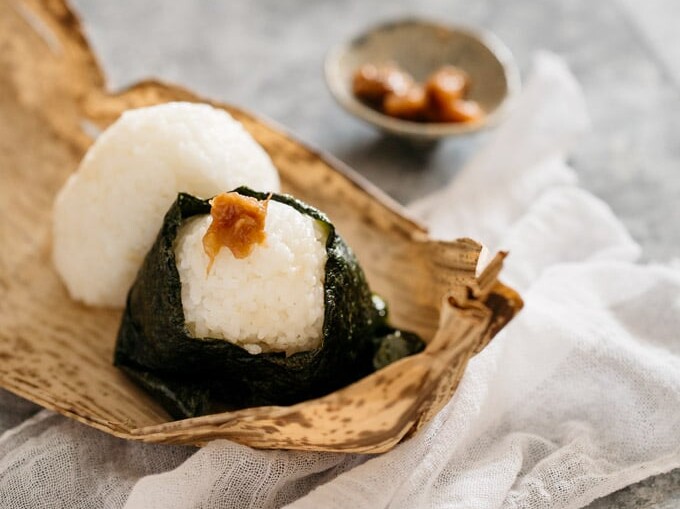
Umeboshi (pickled plum) is a very standard, common, and popular ingredient for onigiri. You will find this everywhere when buying onigiri in Japan. The tangy slightly sour plum brings a little bite of flavour to the simple white rice. If you can’t find umeboshi near you, you can make your own.
4. Karashi Mentaiko
These onigiri are a little different because the rice is grilled! After the rice is grilled, its topped with mentaiko mayonnaise. Mentaiko (or tarako) is marinated pollock or cod roe which is mixed with mayonnaise to create a delicious coating for the onigiri rice balls.

5. Kombu no tsukudani (shimmered Kombu)
Kombu is a type of kelp that is used often in Japanese cooking to make things such as dashi. After using it to make dashi there’s no need to throw it away because you can reuse it to make tsukudani! Kombu tsukudani is kombu simmered in a broth made of soy sauce, sake, mirin and sugar. Once it’s cooked, chop it up thinly and fill in the onigiri. This is one of the most common and popular onigiri fillings in Japan!
6. Okaka(bonito flake)
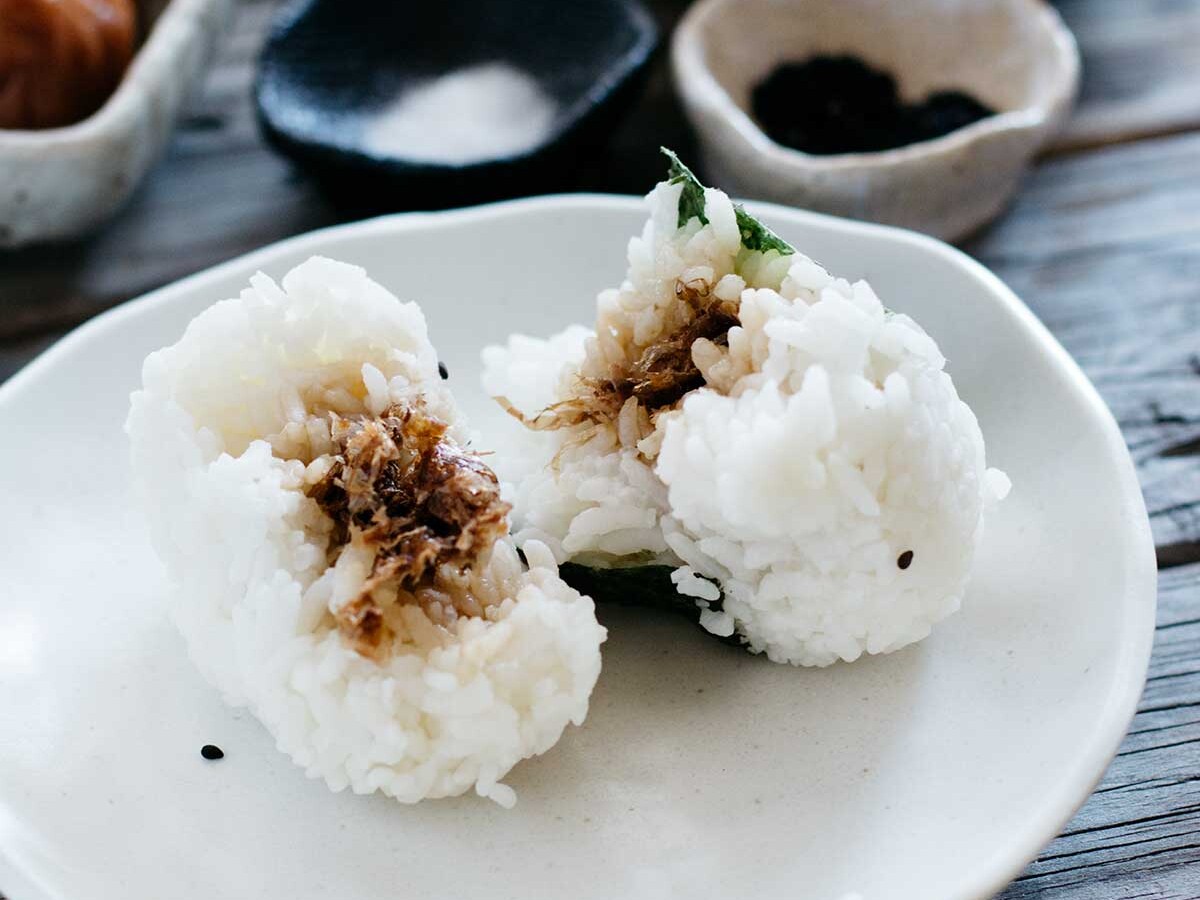
Okaka is another onigiri filling made from “katsuoboshi” (bonito flakes) seasoned with soy sauce. This onigiri is easy, quick, and healthy.
7. Tenmusu
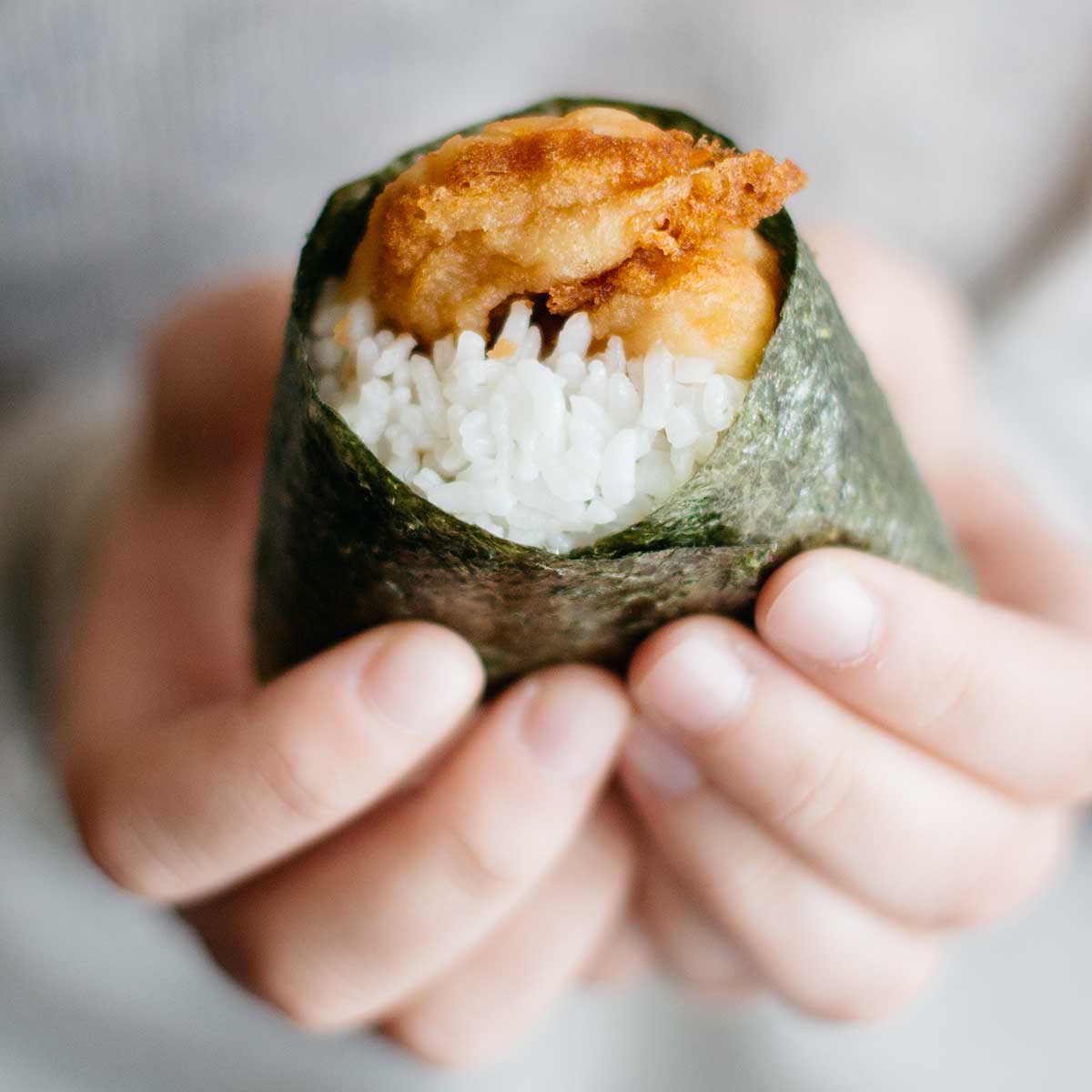
Tenmusu will definitely be a crowd favourite. You can’t go wrong with tempura shrimp with a sweet sauce covered in rice. It’s so delicious and a perfect lunch or picnic food!
8. Sekihan
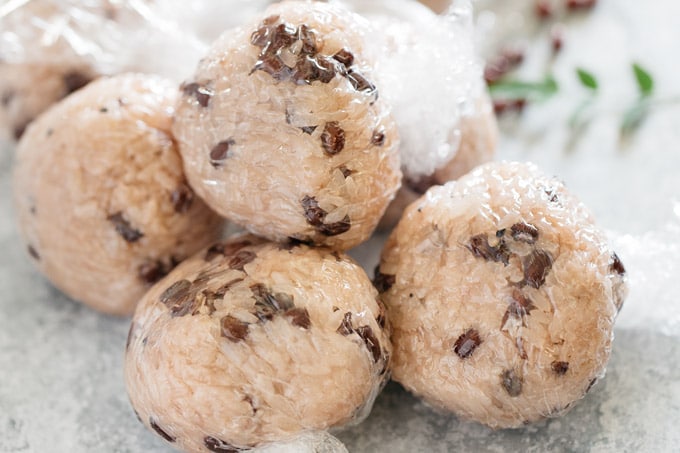
Sekihan is slightly different to other onigiris because of the rice. There is a different type of rice used in Japan for this. Typically, onigiri is made using Japanese short-grain rice or sushi rice. However, sekihan is made from glutinous rice with added azuki beans. Sekihan is a very common type of rice in Japan and is often used to make onigiri too.
9. Omurice onigiri
Omurice is ketchup flavoured chicken fried rice covered in a thin egg omelette. Shape the ketchup rice to make it in a portable and convenient onigiri form and wrap with the thin omelette. This type of onigiri is usually round instead of triangular and not coated in seaweed.
10. Yaki Onigiri
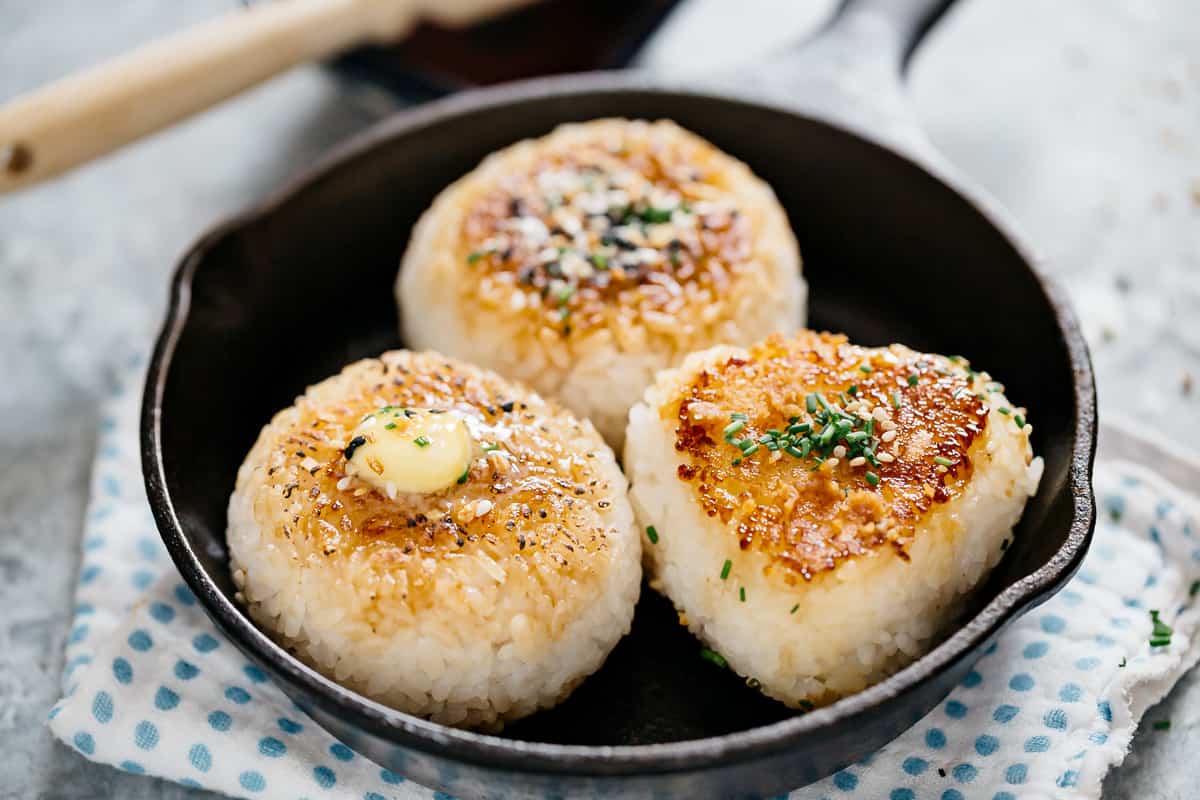
This is another grilled onigiri recipe! Yaki onigiri are coated in soy sauce and grilled to create a tasty crispy crust. It’s simple but it elevates plain onigiri and is very easy to make.
11. Takikomigohan (seasoned rice )Onigiri
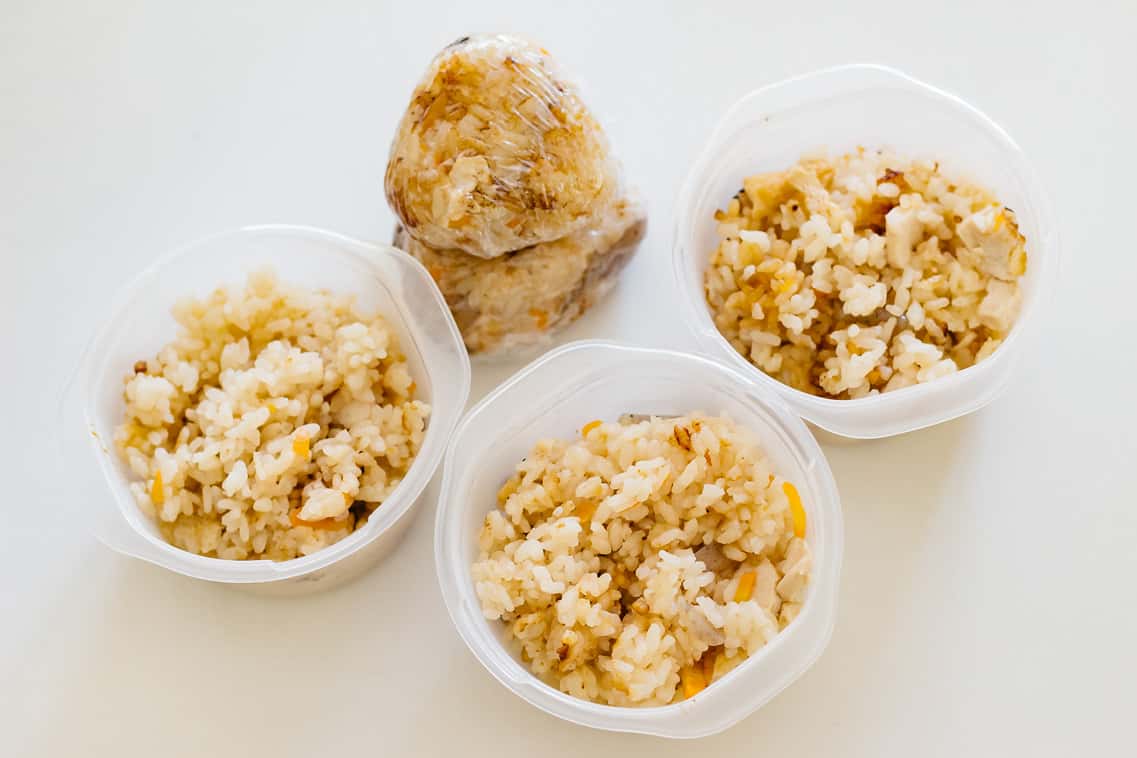
Takikomigohan is a type of Japanese seasoned rice that can be made easily in one pot. It is typically made with dashi, soy sauce, mirin, sake and sugar with vegetables and proteins such as tofu and chicken. This rice is perfect to use for onigiri because the fillings are cooked and mixed all throughout the rice so it’s very flavourful.
12. Hijiki gohan onigiri
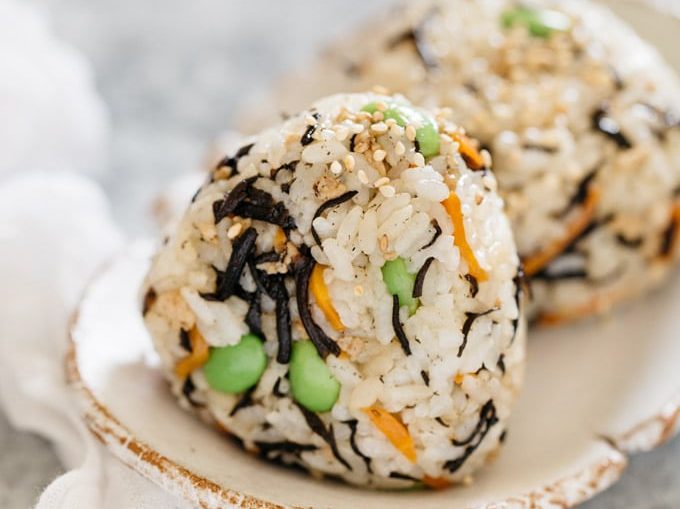
Hijiki gohan is another type of rice that is seasoned and cooked with ingredients. The main ingredient is hijiki, which is a type of seaweed. Turn the rice into onigiri to create a little ball of delicious and healthy goodness.
13. Spam Musubi
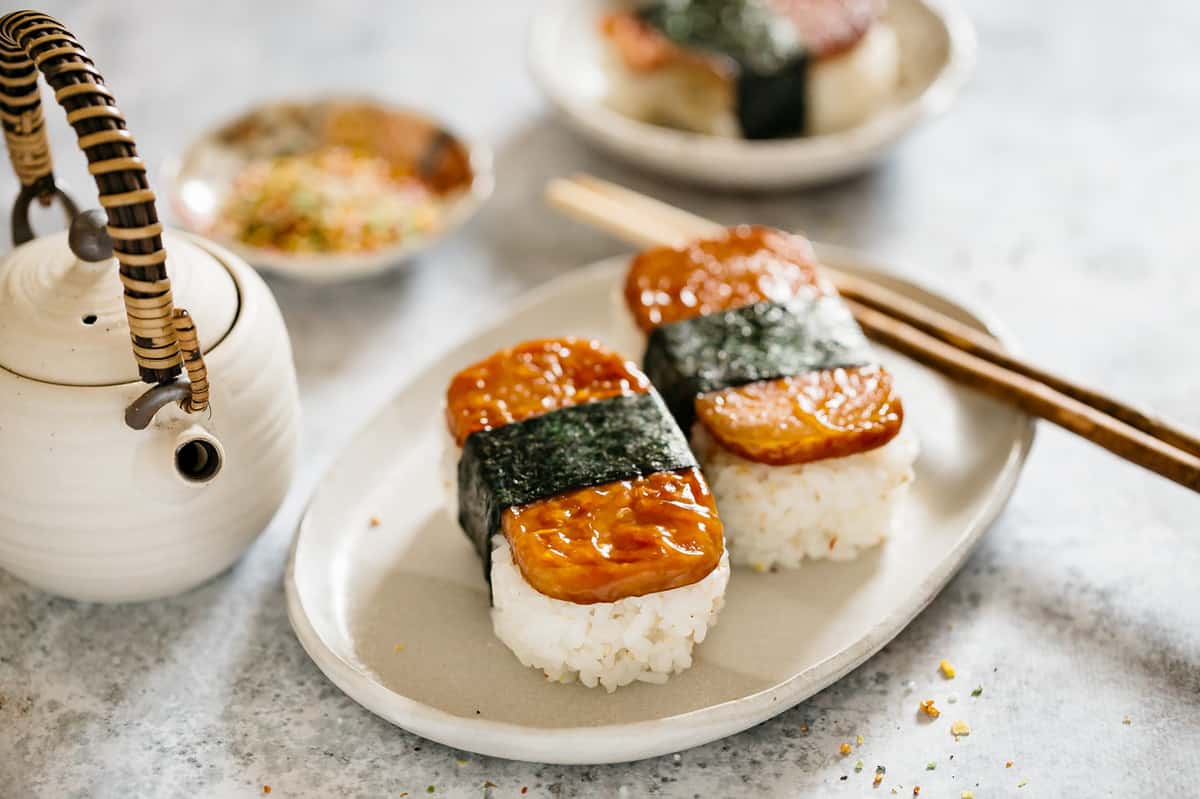
Spam musubi is a bit of an outlier as it isn’t technically Japanese, it’s Hawaiian. It’s still on the list because it is a version of onigiri and it’s well-known and delicious! This onigiri is made from a fried slice of spam cooked in a sweet soy sauce.
14. Onigirazu
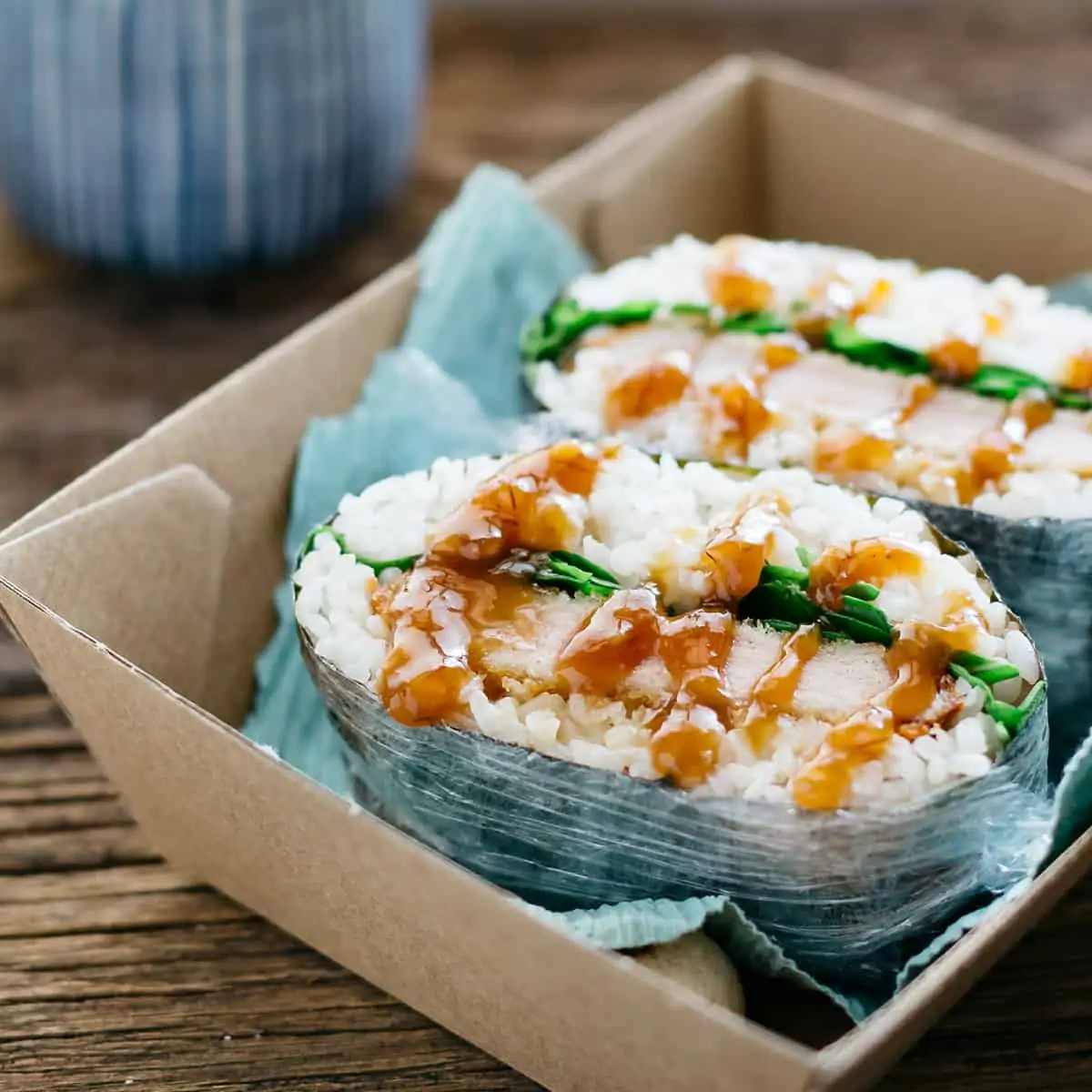
Onigirazu is basically a rice sandwich. This onigiri is very easy to make because you do not need to shape it and you can use ingredients you have on hand. A good flavour combo is bacon, egg, and lettuce but it’s up to your taste!
Tips for Making Onigiri and Onigiri Fillings
- Use freshly cooked rice to make onigiri. It’s a small thing but it makes a difference. It makes it easier to mold the onigiri and the warm steam from the rice softens the seaweed.
- Feel free to be creative with onigiri fillings. There are no rules! Chicken or thinly sliced beef sounds delicious and may be a popular ingredient in western countries.
- Japanese ingredients can be found at asian/Japanese supermarkets or sourced online. Otherwise use ingredients that are accessible to you because onigiri fillings can be adapted to suit you and your tastes.
- Keep a small bowl of water beside you to lightly wet your hands every now and then. This will prevent the rice from sticking to your hands and make it easier to shape the onigiri. Or you can use plastic wrap and leave them this way to take the onigiri on the go.





I so love Japanese food! Thank you for the well informed and beautiful pictures to present each onigiri.
Some have already been part of my fusion culinary but can’t wait to try out the rest of your delightful recipes. Everything looks soooo pretty AND delicious!
Hi Pauline, thank you so much for the lovely comment <3