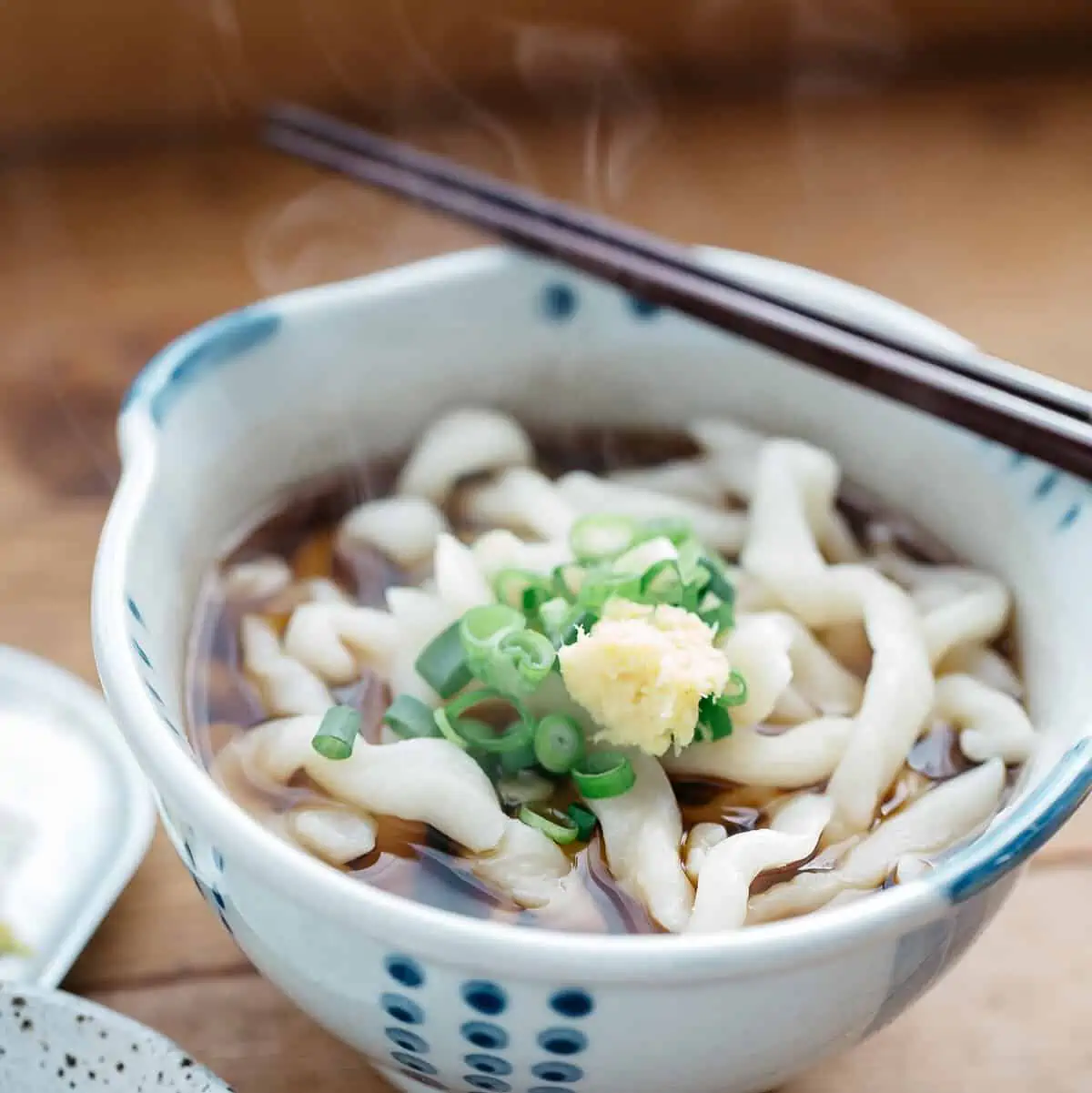
Kakeudon is such a heartwarming and comforting staple in Japanese cuisine that I often make, especially when the weather is cooler. This seems like a plain dish but the simplicity of it is what makes it great. The soup has a delicate and refined taste from the light umami broth. Pour it over the soft and chewy udon noodles to create something sophisticated with no fuss. It tastes delicious just like this or you can serve it topped with tofu or tempura and green onion. You can make it using pre-made udon noodles or make your own from scratch.
What is Kakeudon?
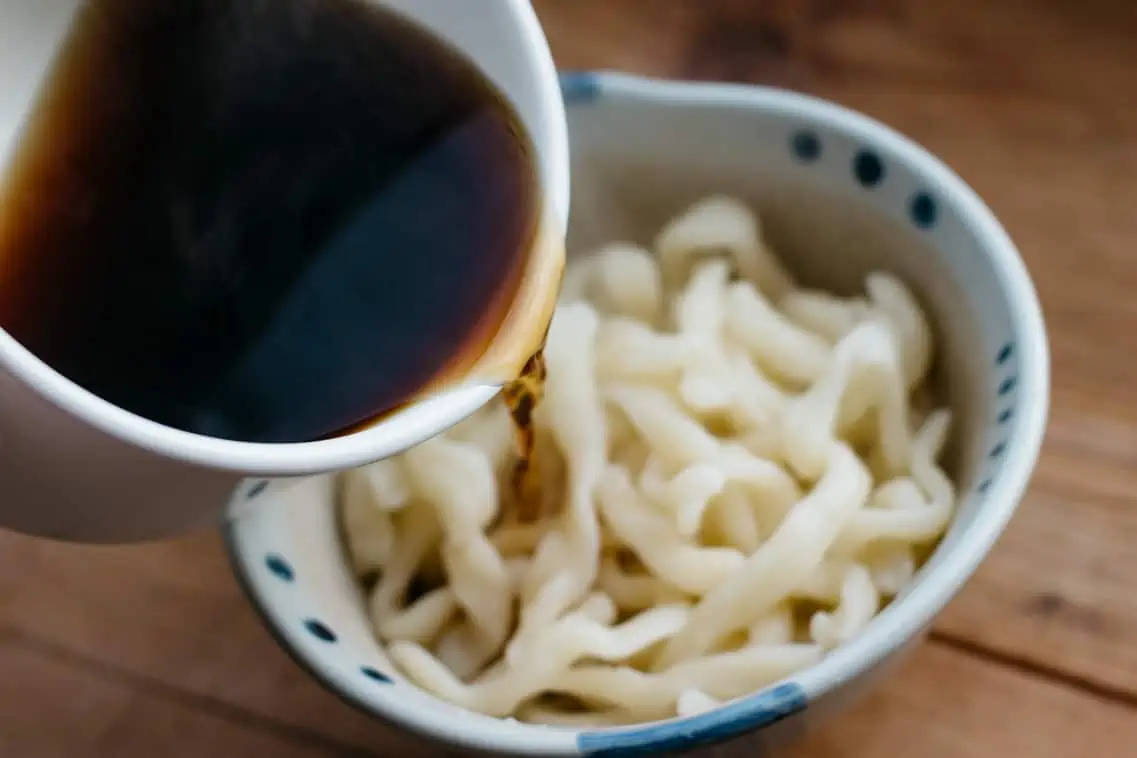
Kakeudon refer to the most basic udon noodle soup. Udon are Japanese noodles made from wheat flour that can be served in many different ways. For Kakeudon, the udon noodles are simply covered in a light umami dashi broth. This udon soup bowl is named after the action to pour “kake-ru” hot broth over the noodles called ‘kakejiru’. The hot broth is a simple soup stock made from a combination of dashi broth, soy sauce, mirin, sake and sugar. For this dish, cook the udon noodles in a pot with boiling water, drain them into a bowl then pour the simple umami broth over the top. From there, this udon noodle soup can transform into other types of udon noodle dishes with different toppings. Add Inari (seasoned fried tofu) to make Kitsune udon, tempura shrimp to make Tempura udon, and tenkasu (tempura bits) to make Tanuki udon.
Kake Udon vs Su-Udon
Basically Kake udon and Su udon are the same dish called differently by regions. In the Kanto region in places such as Tokyo, this dish is known as Kakeudon. Whereas in the Kansai region, which includes cities like Osaka and Kyoto, it is called Su-udon (su means “plain”). Although both dishes are essentially the same, there are slight differences. Both dishes are simply boiled udon noodles served in a simmering bowl of hot broth, however Su-udon (from Kansai) has a much lighter broth. This is because they use kombu dashi with usukuchi shoyu- a light coloured soy sauce. In the Tokyo Kanto region, they use katsuobushi (bonito flakes) and koikuchi shoyu (dark soy sauce).
Why You Will Love Kakeudon
It’s a comfort dish. You eat it and you just feel warm and happy. The simplicity of Kakeudon is what makes it so enjoyable. It has no fuss to it yet it’s somehow so flavourful, comforting, and delicious because of the chewy texture of udon noodles and the umami rich udon broth. It’s easy to make, filling, and easy to adjust with toppings to make it even yummier.
Ingredients you need
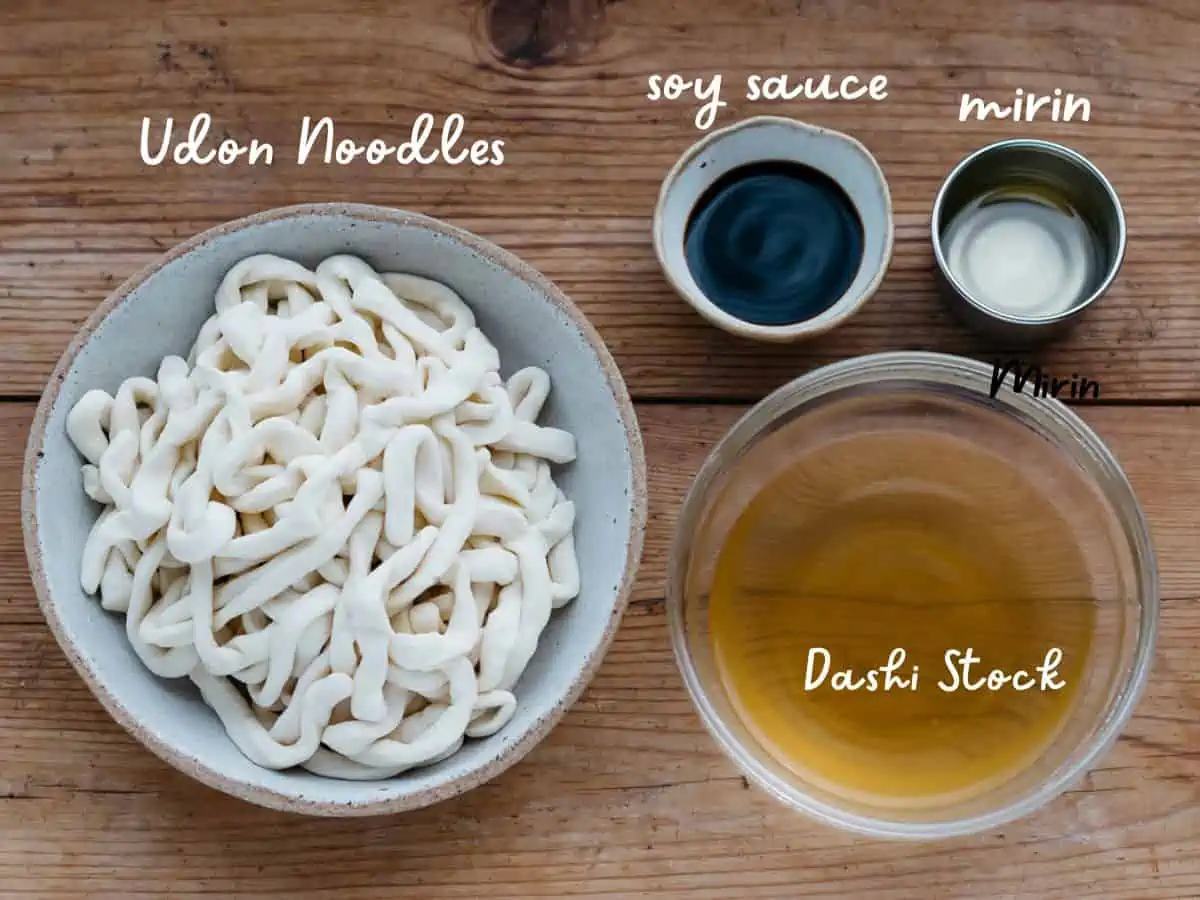
Udon Noodles
You can use store bought fresh/frozen/dry udon noodles from asian/Japanese stores and some major supermarkets. Or make your own at home from scratch following this recipe! It’s made using just 3 simple ingredients: flour, water, and salt. It is super easy and actually fun to make.
Dashi Japanese soup stock
You can make the dashi stock from katsuobushi (bonito flakes) like Kanto region Kake udon or use dashi kombu like su udon. It’s your choice! Of Course if you would like to make plain dashi completely vegan, substitute the bonito flakes with dried shiitake mushrooms. Also you can use store bought instant dashi stock by following the package instructions for a shortcut.
Japanese Condiments
soy sauce, mirin, sake, and sugar
How to Make Kakeudon
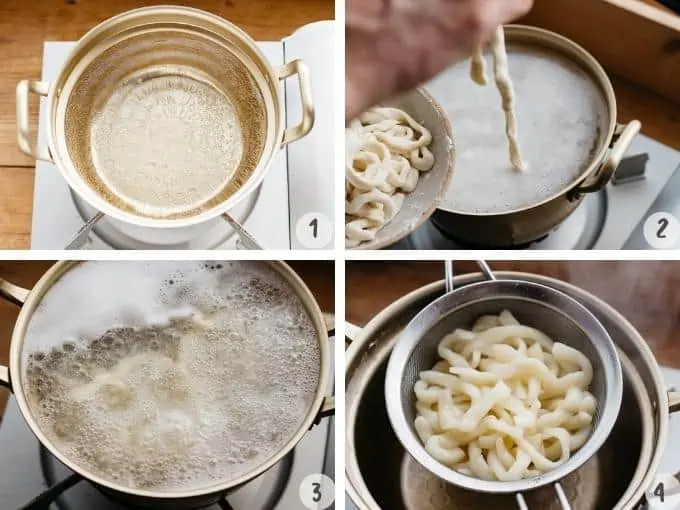
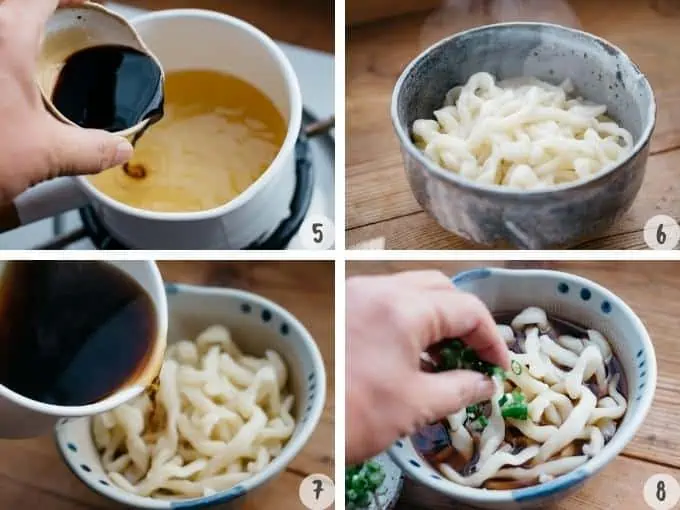
1. Make and cook udon noodles- if you are making udon noodles from scratch, remember that making udon noodles is easy but it takes at least 3 hours to rest the dough. Boil the noodles in a large pot of water with no salt (because udon already contains enough salt). Once you’ve cooked and drained the noodles, rinse them under cold water to remove the starch.
2. Make udon soup- Make the udon broth according to which region you would like to mimic. Use katsuobushi (bonito flakes) and dark soy sauce for Kanto region kakeudon or kombu dashi and light coloured soy sauce for Kansai region su-udon. Add the soy sauce, mirin, sake, and sugar to your broth to finish.
3. Serve- Put the udon noodles in serving bowls then pour the soup broth over the noodles. Garnish and serve!
Topping Suggestions
The raw form of this dish is very plain. The umami broth brings all the flavour so toppings aren’t necessarily needed. A little sprinkle of green onion may be all you need. However, there are more things you can add. Other topping suggestions are tenkasu (tempura bits), slices of Japanese fish cake, seasoned fried tofu (inari), tempura, grated ginger, finely chopped spring onion, yuzu kosho, shichimi togarashi (spice mix), seaweed, and wakame.

More Udon Noodle Recipes
Beef udon
Yaki Udon (Fried udon noodles)

Kakeudon かけうどん
Ingredients
- 2 servings udon noodles *1
- 2 cups dashi stock *2
- 2 tbsp soy sauce
- 2 tbsp mirin
- 2 tsp sugar
- 1 tbsp finely chopped scallions *optional
- 2 tsp grated ginger *optional
Instructions
Cook Udon noodles
- Boil water in a large cooking pot.
- Add udon noodles and cook for about 2-3 minutes.2 servings udon noodles
- Turn the heat off and drain the udon noodles.
- Serve into two noodles bowls.
Make Dashi Broth
- Place dashi, soy sauce, mirin and sugar into a sauce pan and bring it to boil.2 cups dashi stock, 2 tbsp soy sauce, 2 tbsp mirin, 2 tsp sugar
- Turn the heat off and pour it over the cooked udon noodles.
- Garnish with your choice of toppings.1 tbsp finely chopped scallions , 2 tsp grated ginger






I love noodles of all kinds, so this recipe was a pleasant surprise. Not surprised at where I found it, but surprised because I expected to be routed to the homemade Ponzu recipe.
(love your blog and the content which makes it enjoyable! Thank you for the thoughtful work that makes it lovely)
Hi Mary, Thank you for your lovely feedback, I just posted my Ponzu recipe 😀