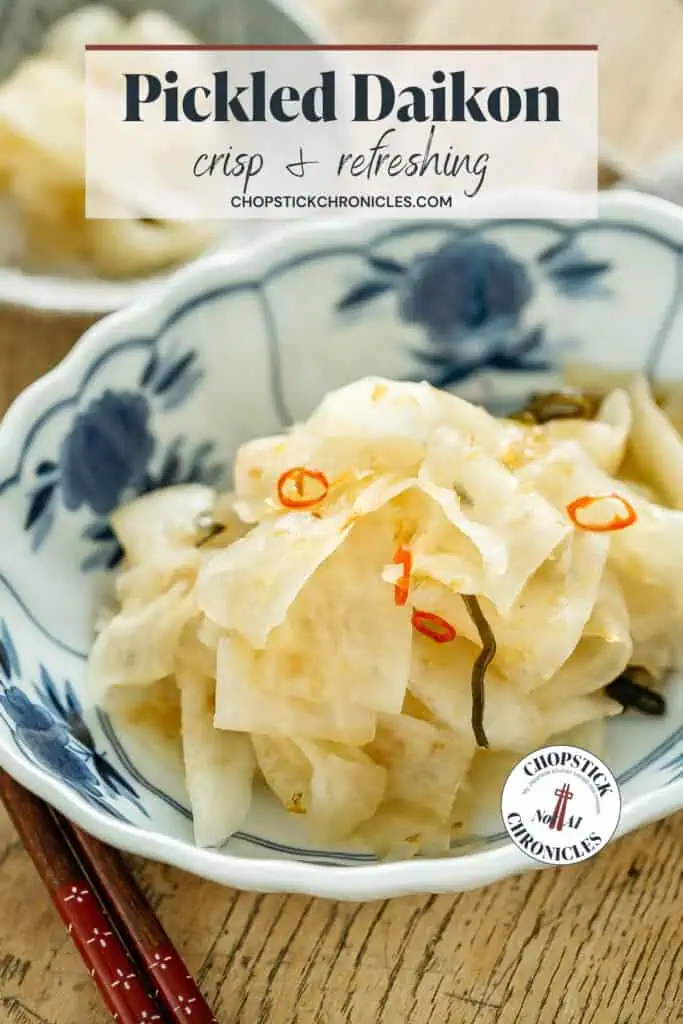
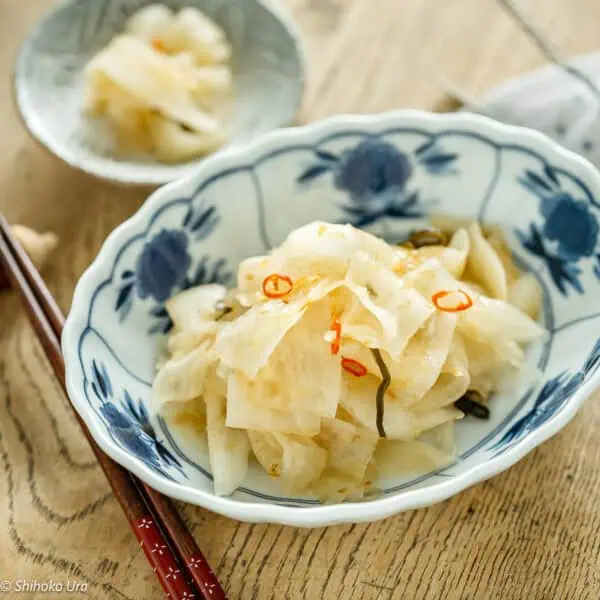
Pickled daikon is a simple Japanese side dish with a crisp texture and a refreshing sweet and tangy flavor. It is a common type of tsukemono (Japanese pickles) often served alongside rice and other dishes as a refreshment. This easy and delicious recipe comes from my aunt in Japan who taught me her secret is to keep the daikon at the right temperature while it slowly pickles. Only a few simple ingredients are needed to make a batch of this crunchy and flavourful daikon radish tsukemono!
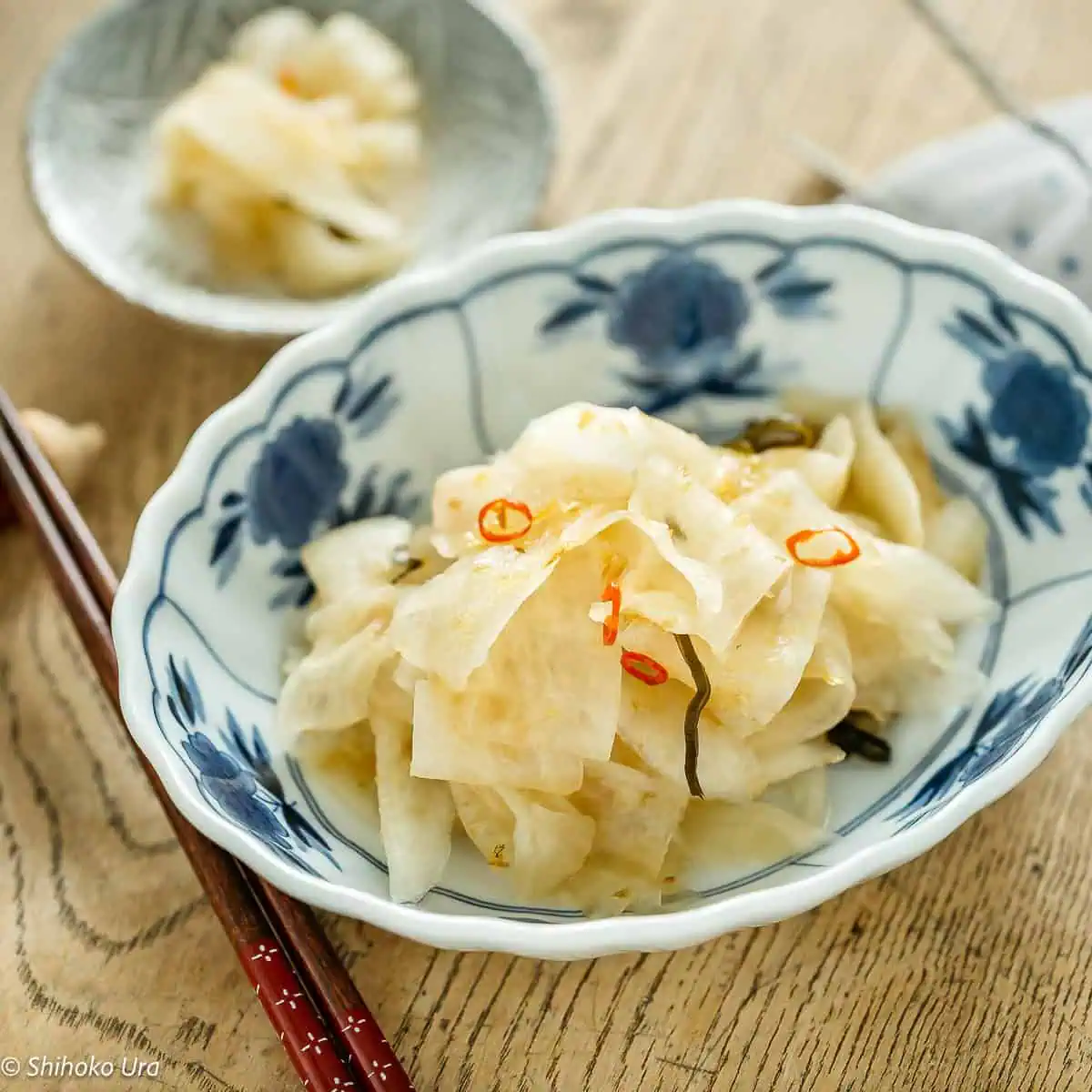
Table of contents
What is Pickled Daikon?
Pickled daikon is a type of Japanese pickle, known as tsukemono (漬物), made from daikon radish soaked in a seasoned pickling mixture. Daikon has a naturally crisp texture and mild flavor, which makes it perfect for absorbing the sweet, salty, and tangy flavors of the pickling liquid. In Japan, pickled daikon is usually served in small portions alongside steamed rice, grilled fish, or other dishes as a refreshing addition to a meal.
Why You Will Love This Pickled Daikon Recipe
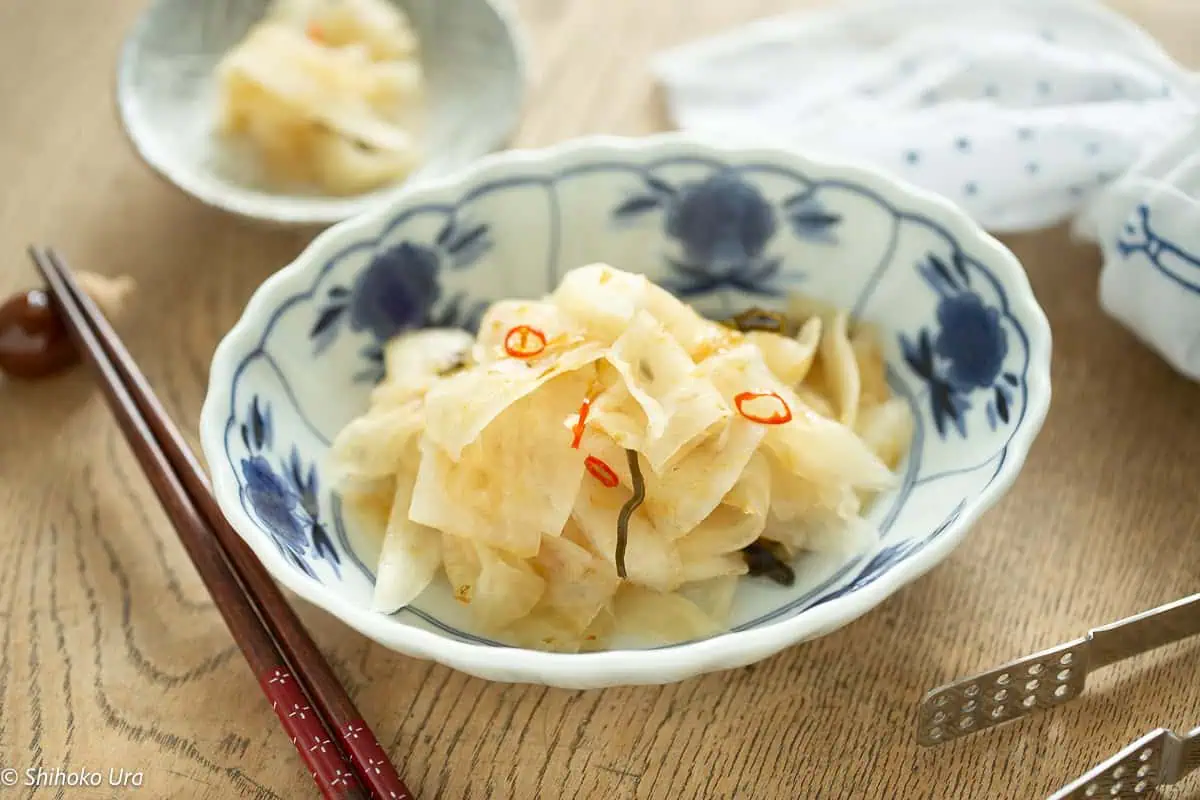
This pickled daikon recipe creates a delicious combination of textures and flavors. The daikon stays crisp and absorbs the sweet and tangy pickling liquid, along with plenty of umami from kombu and katsuobushi.
It’s also a perfect example of traditional Japanese home cooking using simple ingredients. Unlike takuan, which is traditionally made by drying and fermenting daikon over a longer period, this quick pickled daikon is much simpler to make at home. My aunt taught me to refrigerate the daikon while it pickles, so it gets that satisfying crunch without the long fermentation process.
Once made, you can keep it in the fridge and serve a few slices whenever your meal needs something crisp and refreshing.
Ingredients You Will Need
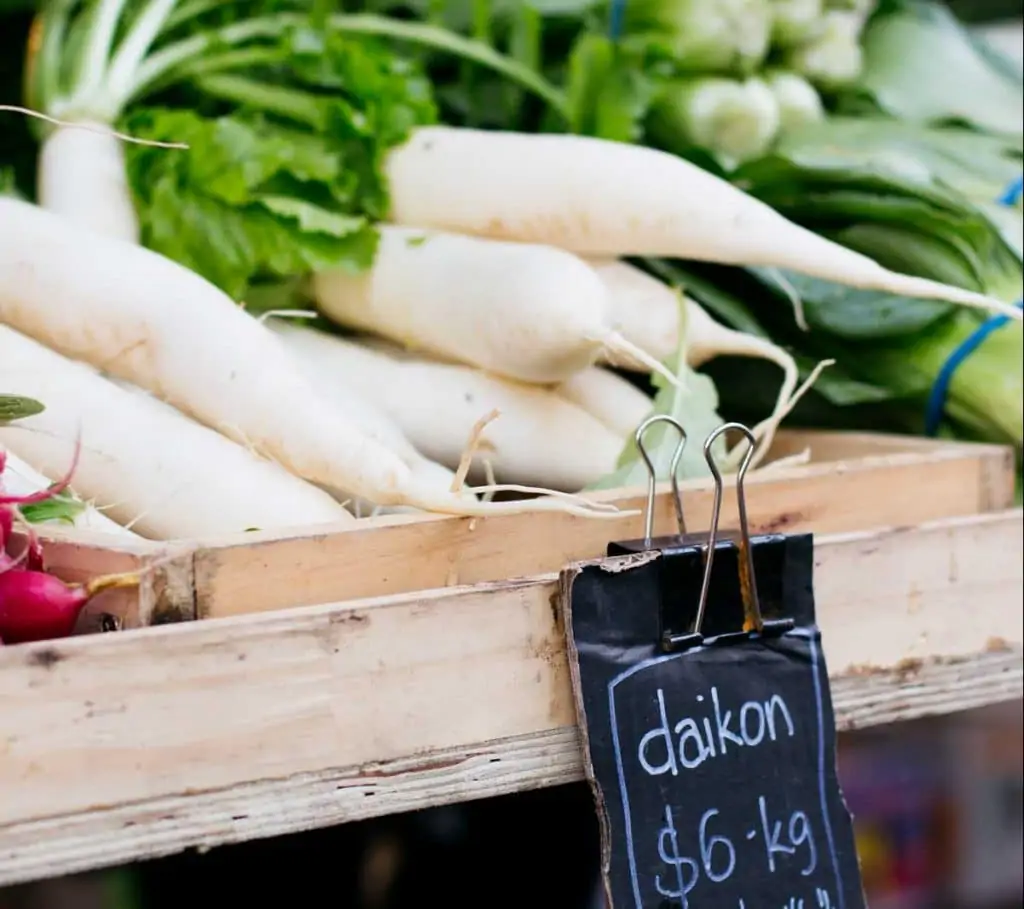
Daikon Radish : Look for a firm, heavy daikon with smooth, white skin and no soft spots. The upper and middle sections have a milder, slightly sweeter flavor, making them especially good for pickling.
Salt : Salt draws excess moisture from the daikon, which helps it stay crisp and allows the pickling flavors to soak in better.
Rice Vinegar : Rice vinegar gives the daikon a clean, gentle acidity without making the pickles taste too sharp.
Sugar : Sugar balances the acidity of the rice vinegar and gives the pickles their mild sweet and tangy flavor.
Kombu : Kombu adds a subtle umami flavor to the pickling liquid and gives the daikon more depth without overpowering its fresh taste.
Dried Chili : Dried chili adds a little heat that complements the sweet and tangy pickling liquid. Remove the seeds if you prefer a milder flavor.
Mirin : Mirin adds a subtle sweetness and helps round out the acidity of the rice vinegar. It also gives the pickling liquid a little more depth than using sugar alone.
Katsuobushi (Bonito Flakes): Katsuobushi adds a rich, savory umami flavor to the pickled daikon. As it sits in the pickling liquid, the bonito flavor infuses into the daikon and gives the pickles a distinctly Japanese taste.
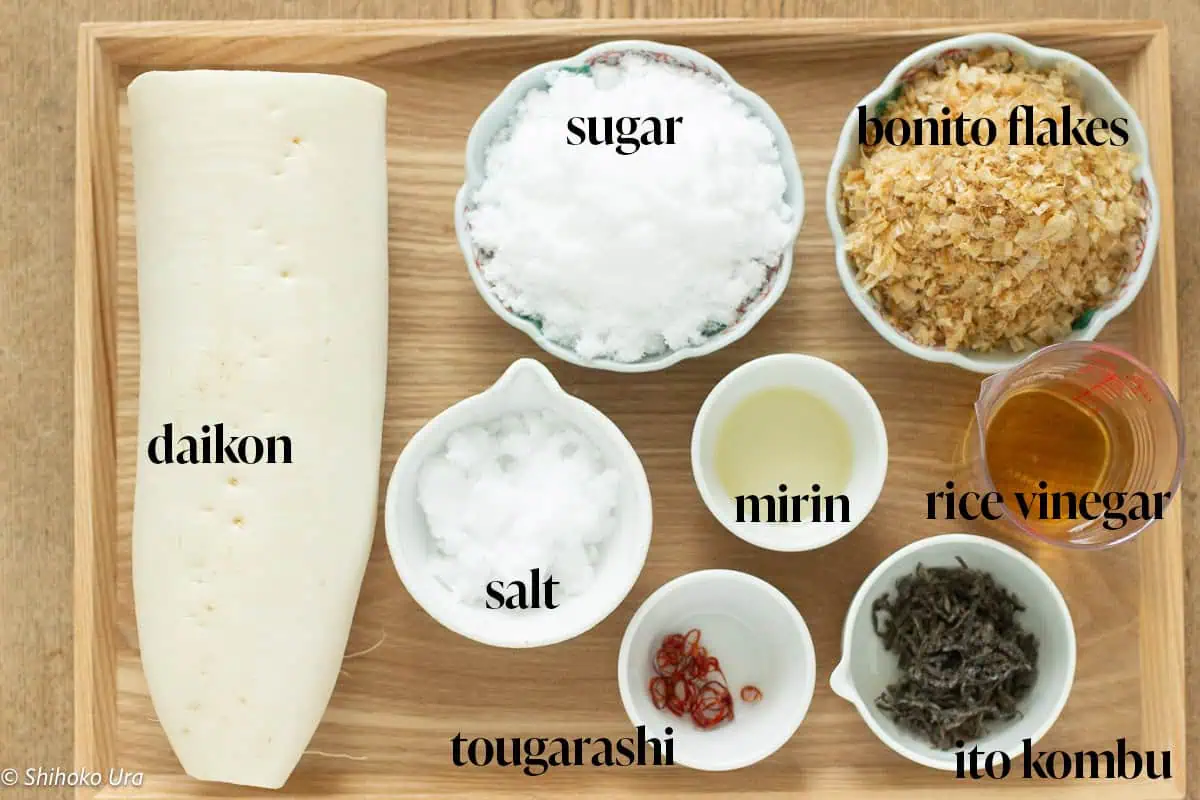
How to Make Pickled Daikon
Making pickled daikon is not difficult, but it takes time. Salting the daikon for several hours and then allowing it to slowly pickle at a cool temperature gives it its characteristic crisp texture and deep flavor.
- Prepare the Daikon : Peel the daikon and slice it into strips about 3 to 5 mm (0.1 to 0.2 inch) thick. I use an adjustable ceramic slicer because it makes it easy to keep every piece close to the same thickness. Even slices are important here. If some pieces are much thicker than others, they will not salt and pickle at the same rate.

- Salt the Daikon : Sprinkle the sliced daikon evenly with salt, toss well, and leave it for 7 to 8 hours. During this time, you will notice quite a lot of liquid coming out of the daikon. Drain away this liquid, then gently squeeze the daikon to remove the remaining moisture. Don’t squeeze so hard that you crush the slices because you still want that satisfying crunch in the finished pickle.
- Make the Pickling Liquid : Combine the rice vinegar, sugar, and mirin in a saucepan. Gently heat the mixture just until the sugar has completely dissolved, then remove it from the heat and let it cool. There is no need to vigorously boil the mixture. You only need enough heat to dissolve the sugar and bring the flavors together.
- Pickle the Daikon : Place a layer of the prepared daikon into a clean container. Sprinkle over a little katsuobushi, ito kombu, and dried chili, then spoon over some of the vinegar mixture. Continue layering the daikon and seasonings until all the ingredients have been used. Layering them this way distributes the kombu and bonito throughout the daikon instead of concentrating all that umami in one area.
- Leave it in room temperature : Cover the container and leave the daikon to pickle for about 1 week at around 9°C (48°F). This is an important detail in my aunt’s recipe, so I make this pickle during the cooler months when I can maintain a suitably low temperature. As the daikon rests, it will gradually absorb the sweet, tangy, and savory flavors while keeping its crispness. Once it is ready, chill the pickled daikon and serve it alongside steamed rice and your favorite Japanese dishes.
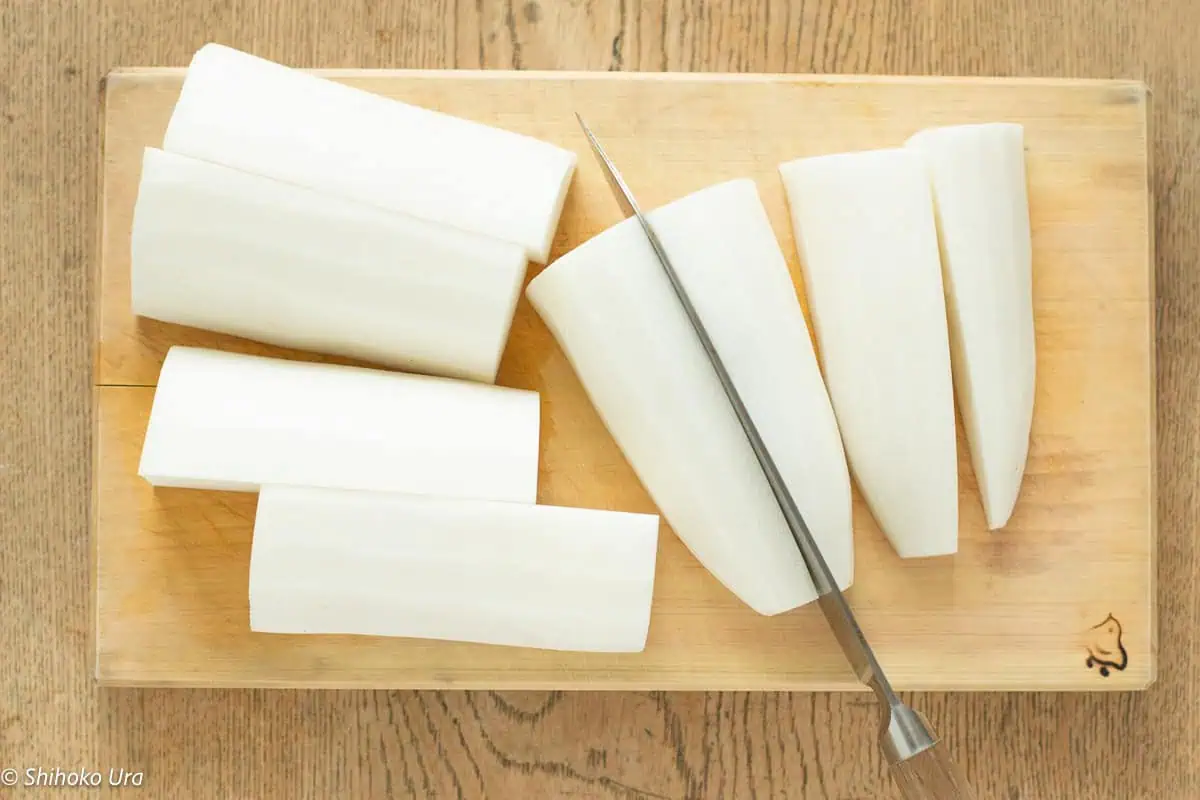
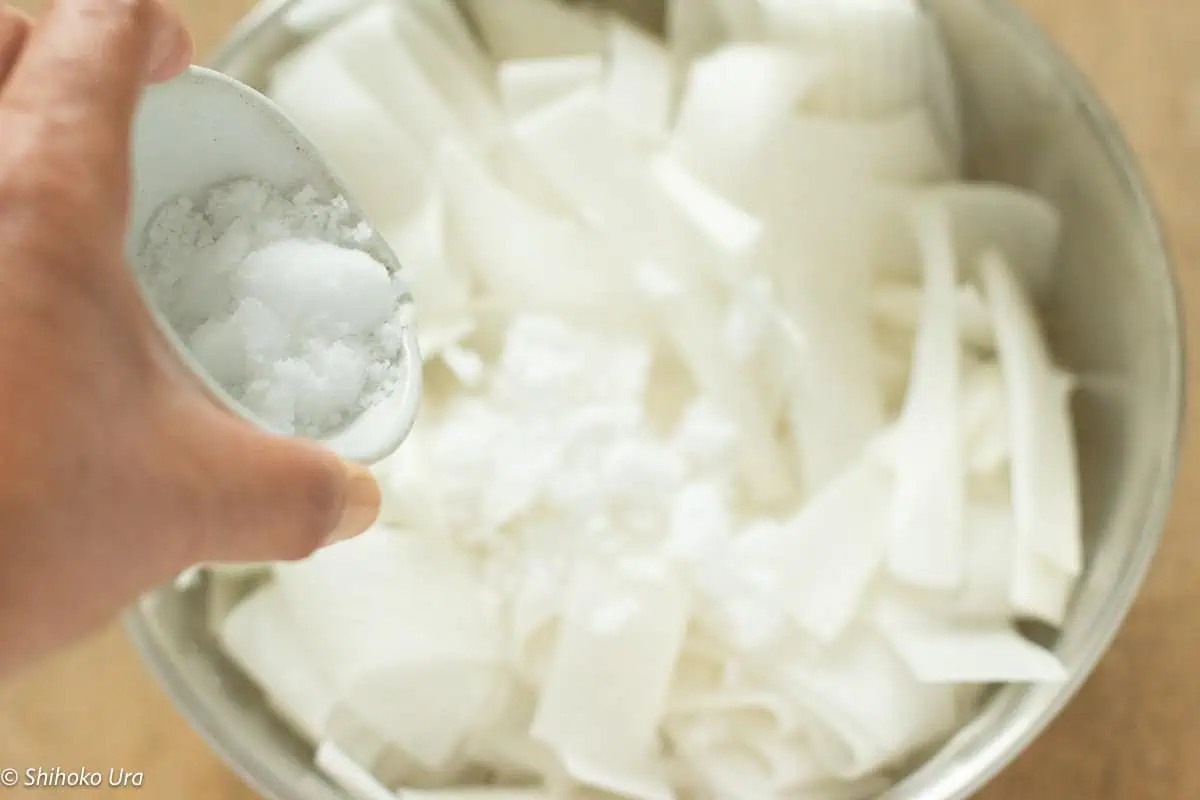
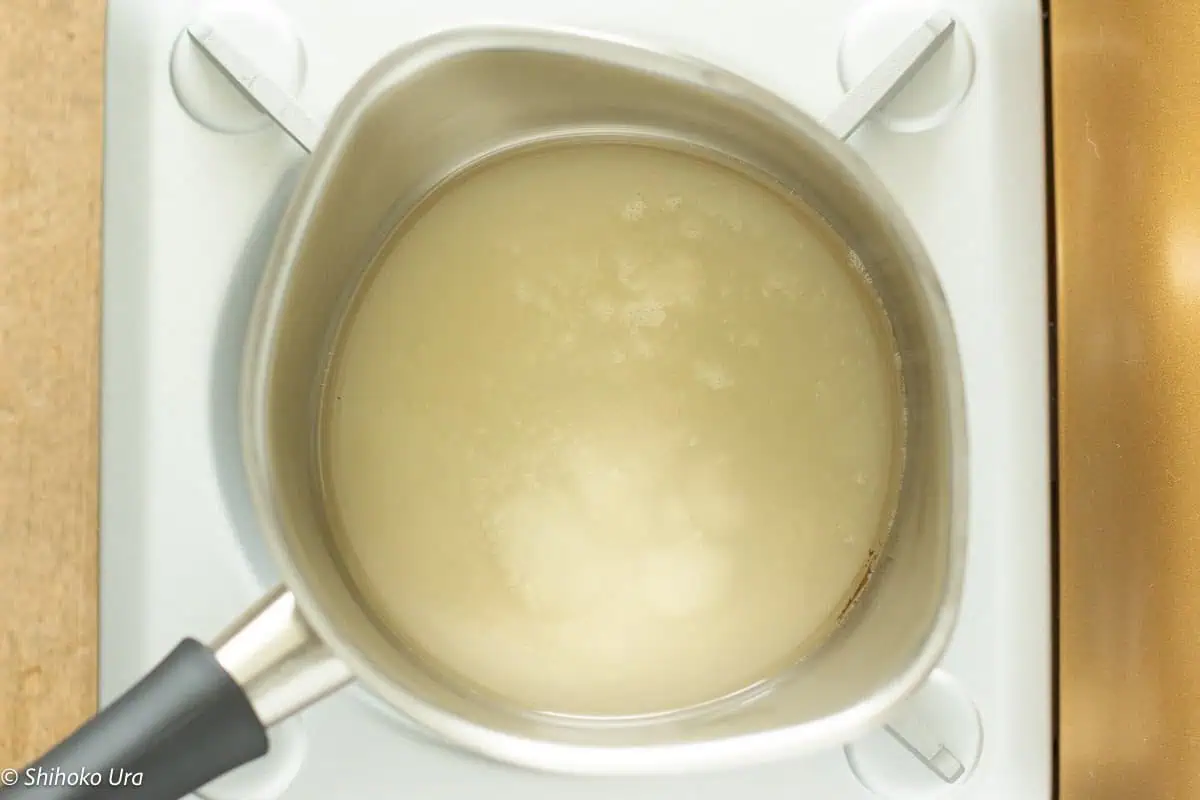
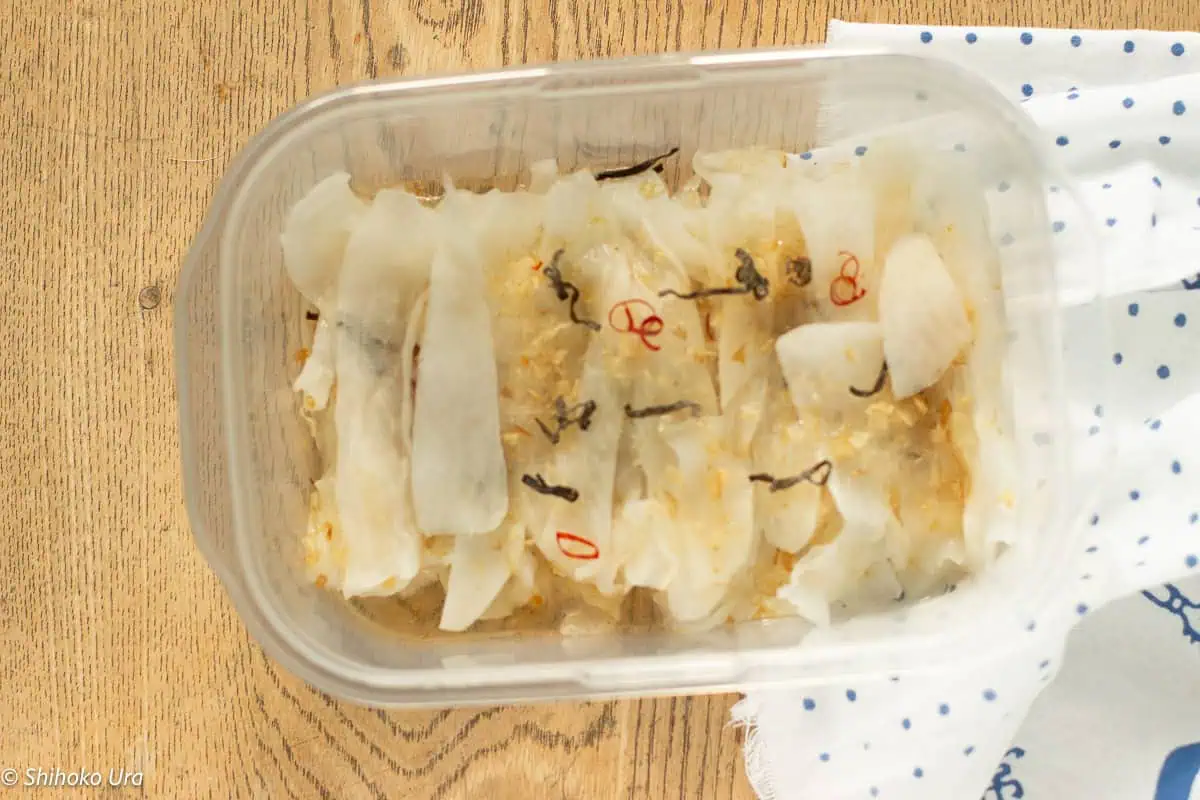
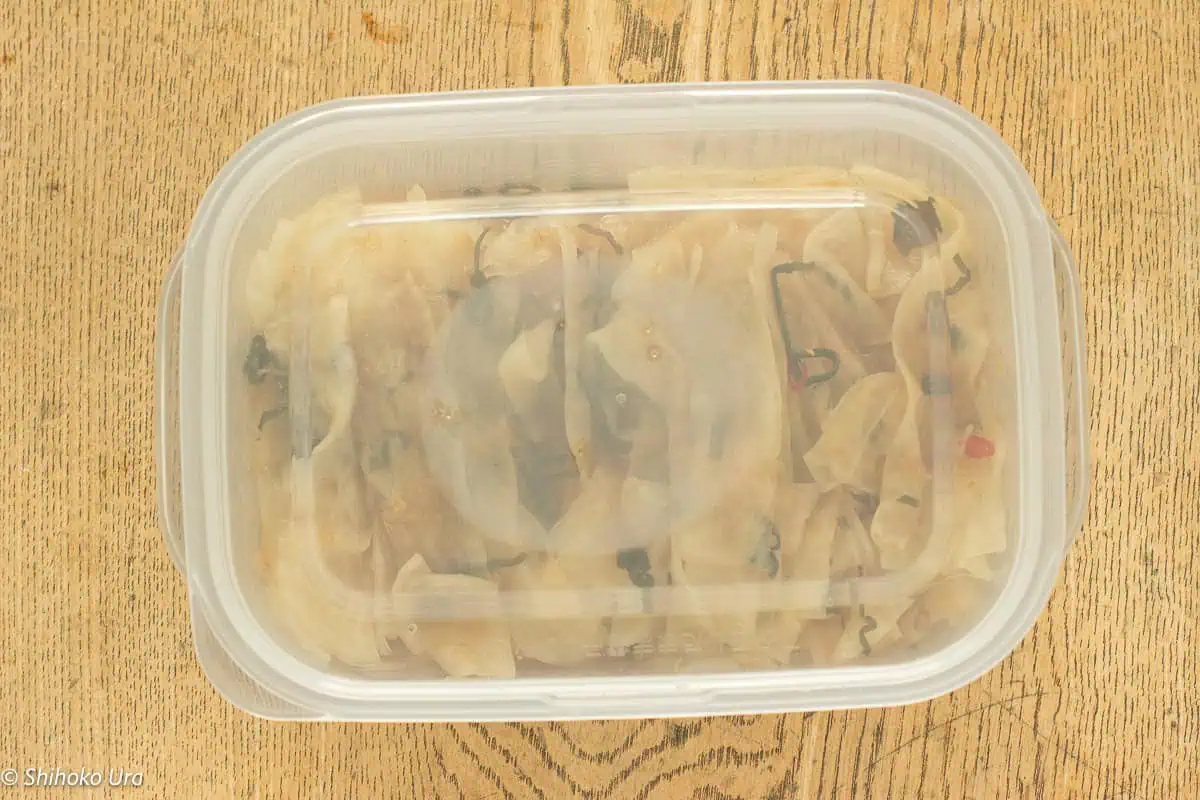
Shiho’s Kitchen Tips to Make Pidkled Daikon
Temperature Really Matters
When I asked my aunt for this recipe, she told me the most important thing was the temperature. Her ideal temperature for making this pickled daikon is around 9°C (48°F).
When I first made her recipe in Australia, it was winter and the temperature was around 8 to 14°C (46 to 57°F), which was why I decided it was the perfect time to try it. This is very much a cool-weather pickle, and I would not leave it at normal warm indoor temperatures for a week.
Don’t Rush the Salting Step
Give the sliced daikon a full 7 to 8 hours with the salt before adding the pickling mixture. You will see liquid collect as the salt draws moisture from the daikon, and removing that excess water helps the finished pickle stay crisp rather than becoming watery.
Layer in the Umami
Two ingredients that make my aunt’s version especially flavorful are ito kombu and katsuobushi. Ito kombu is kelp cut into fine threads and katsuobushi is dried bonito shaved into thin flakes.
I layer both between the salted daikon rather than simply mixing everything together at once. As the daikon sits, the kombu and bonito slowly season each layer and add a deep umami flavor.
How to Serve Pickled Daikon
In Japan, pickled daikon is usually served in a small dish rather than as a large side. A few crisp slices are enough to add a refreshing sweet and tangy flavor between bites of steamed rice and savory dishes.
I especially like serving it with a simple Japanese meal of steamed rice, miso soup, and grilled fish. It also works well alongside karaage and other richer foods because the vinegar cuts through the richness and refreshes your palate.
You can also include it as the pickle component of an ichiju sansai style meal. Serve it chilled and include some of the kombu and katsuobushi from the pickling mixture for extra flavor.
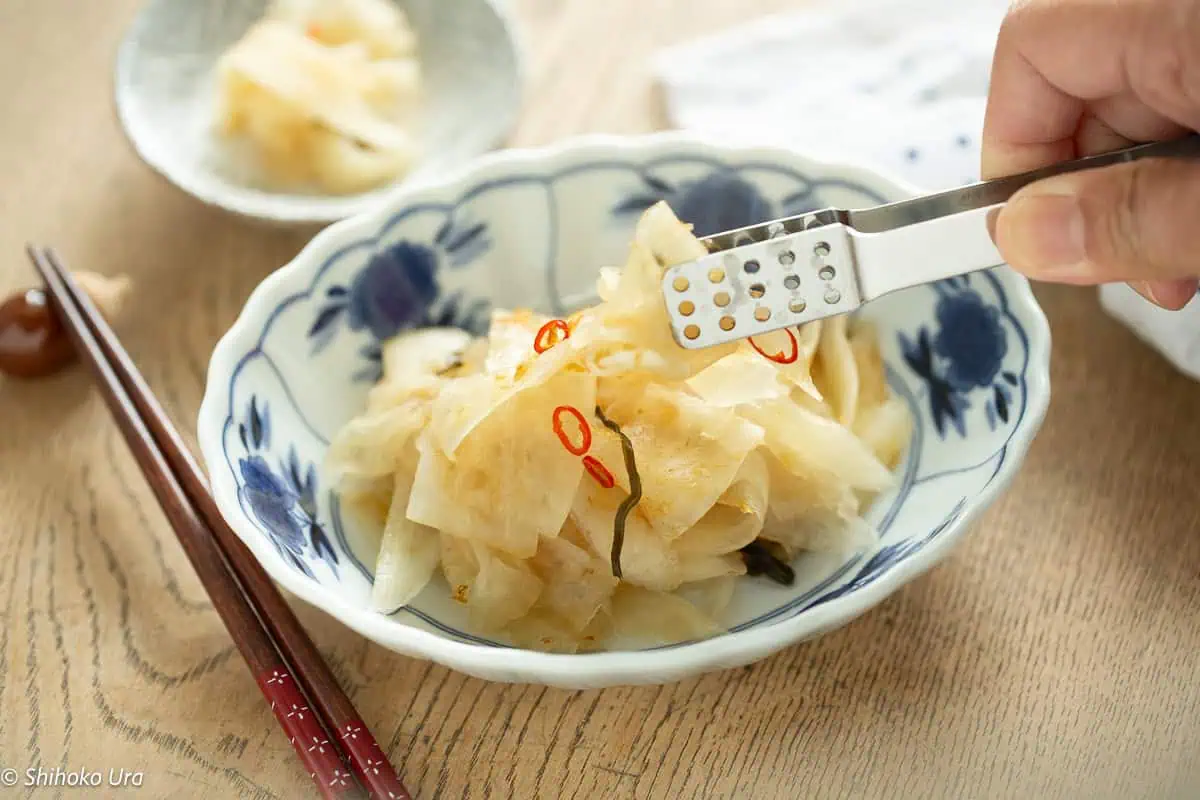
How to Store Pickled Daikon
Once the pickled daikon has finished pickling, transfer it with enough pickling liquid to keep it moist into a clean airtight jar. Secure the lid tightly and store the jar in the refrigerator rather than continuing to leave it at cool room temperature.
Always use clean chopsticks or utensils to remove the daikon from the jar. This helps prevent contamination and keeps the remaining pickles fresh and crisp.
Variations
Once you have made the original version, you can easily experiment with the vegetables and seasonings. Try adding thinly sliced carrots to the daikon for extra crunch, sweetness, and color.
For a bright yellow version, add a small amount of turmeric to the brine. Start with just a little because turmeric quickly colors both the daikon and the pickling liquid and can become quite earthy if you add too much.
Rice vinegar gives this recipe the mild Japanese flavor I prefer, but you can experiment with other vinegars. Apple cider vinegar gives the pickles a fruitier acidity, while white vinegar creates a noticeably sharper brine, so you may need to adjust the sugar slightly to suit your taste.

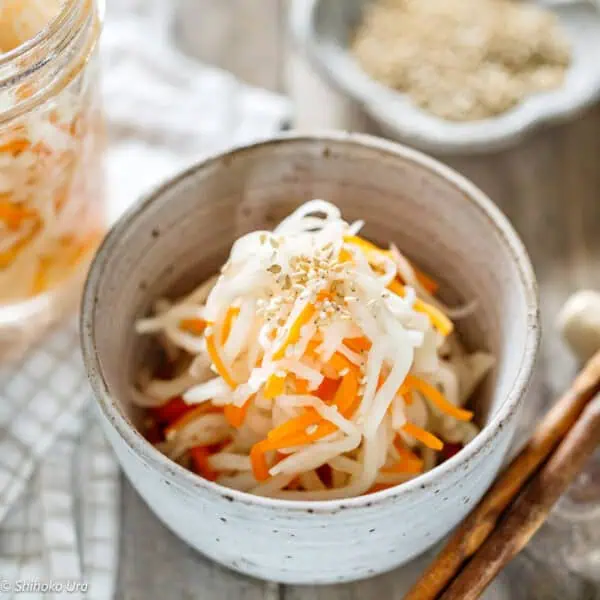

Daikon No Tsukemono (Pikled Daikon)大根の漬物
Video
Ingredients
- 1 kg Daikon Radish
- 50 g salt
- 60 ml rice vinegar
- 10 ml mirin
- 100 g sugar
- 15 g bonito flake
- 15 g threaded kelp
Instructions
- Wash the daikon radish and slice it about 15cm long and 5mm thickness.
- Sprinkle salt over the sliced daikon and toss to evenly coat every piece with salt.
- Leave it for 7-8 hours.
- After 6-7 hours, drain and squeeze out the excess water off the sliced daikon radish (do not wash them).
- Combine the rice vinegar, mirin, and sugar in a small saucepan. Bring it to boil over medium heat, when all the sugar has dissolved, turn the heat off and let it cool down.
- Lay the daikon radish into a large container and sprinkle a little bit of bonito flake, kelp, and the vinegar mixture. Repeat the process until all the ingredients are used.
- Leave it in cool room temperature for a week.





There is very little liquid in the recipe. Should the daikon be covered in liquid?
I hope this is the correct.
Hi Nick, yes it is very little liquid 😀
Whenever I pickel or lactose fermented food I always submerge it in the liquid. I adden much more of the solution and it tasted delicious. Was this a mistake to do it this way. Your no waste use of daikon tops is beyond good. Thanks for that also.
That is fantastic, Nick 😀 Thank you so much for making pickled daikon with this recipe 😀
Hello! I have googled it konbu and threaded kelp with zero results. I live in the United States and am hoping you can provide a link to purchase it online. Thanking you in advance for your reply. Sincerely, Sandee
Hi Sandra, you can search “Kombu Kelp”? you can use this and cut them into thin strips.
Try KOMBU with an “m.”
Kombu is available in nearly every Asian grocery store. (L.A. is full of those; Wichita might not be!)
But Amazon is a good choice.
The type I found here in Portugal us not pre-cut so I was cutting slivers for a LONG time! 😱😂
Ohhhh Thank you for your advice Sofia from Portugal!!
Hi Shihoko-san!
I’m planning to make this for my Father-in-law (who grew up in Japan) in the fall, when I harvest daikon from my garden. I’d really like to preserve it so that we can keep in the pantry. Do you have any tips on how i could safetly store it long term without refridgeration? (I know from fermenting/pickling other veggies that pressure canning to preserve ruins textures and lactobacteria, so wondering if you can point me in a better, more authentic direction. I suspect the answer is “eat it faster” though lol)
Thank you for sharing your Aunt’s recipe!
Corrie
Hi Corrie san, Lovely to hear you are growing Daikon and preserve it for your father in law 😀 I am planning on “Kiriboshi daikon” post which is finely chopped dried daikon. Basically, it is just dried daikon so you can finely chop a bit like matchsticks and either sun dry or using dehydrator/freeze dryer 😀 hope it helps to preserve daikon 😀
Dear Shihoko-san,
i tried your recipe sometime last year when daikon was in abundance. Oiishi! I liked it so much that I was craving for it. I’ll be making my 2nd batch sometime soon.
I’ve a query: I live in the tropics and the weather gets so hot. What I did last time was placed the jar into the fridge soon after it cooled down. It still taste yummy!
I’m going to make an extra for a friend who absolutely enjoys pickles!
Arigato gozaimasu,
Evonnlyn
Thank you Evonnlyn 😀
Hi Shihoki-San,
I haven’t finished the recipe, but have no doubt it will be wonderful.
The sugar-mirin-vinegar mixtrure is more of a heavy syrup. Did I boil off the water in the vinegar & mirin or is that the way it’s supposed to be?
I’m looking forward to the finished product.
Happy New Year. –Jack, Connecticut, USA
Hi Jack san, yes it is supposed to be bit like a syrup 😀 This is my favourite, hope you like it too!
Wonderful on so many levels: family tradition being upheld, simple, nutritious and delicious. Thank you for sharing your story and recipe!