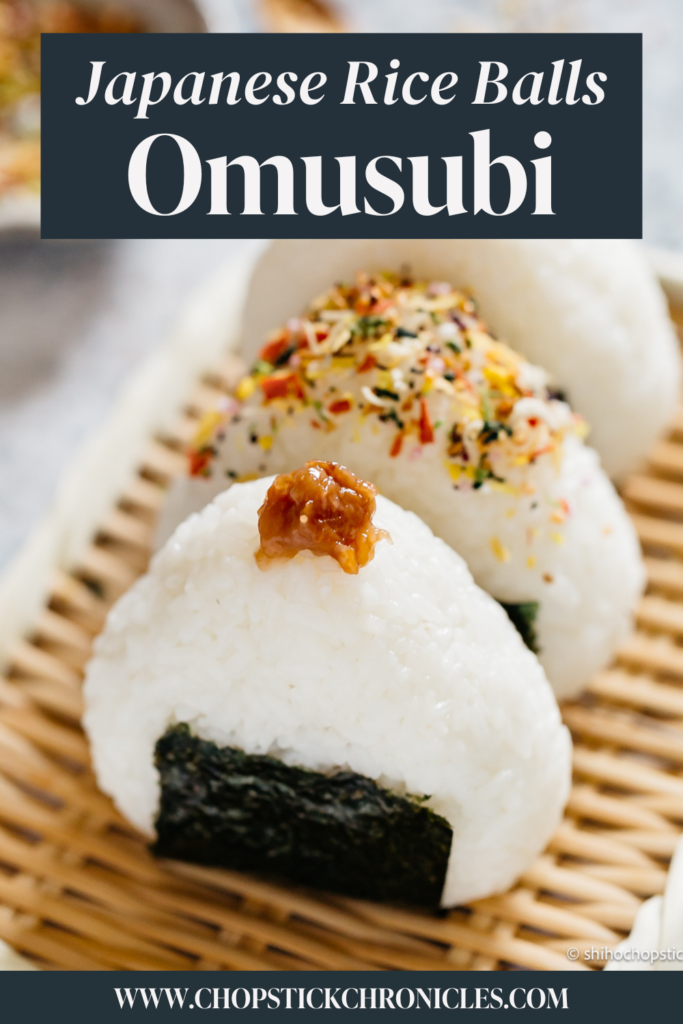
Omusubi, aka Onigiri, is one of those foods that proves that simple really is the best. These humble little rice balls are a beloved staple in Japanese cuisine and are the best selling food in Japanese convenience stores! This is no surprise since they’re so nutritious, delicious, and convenient. They’re made from rice wrapped in nori seaweed and are usually plain, seasoned, or stuffed with fillings. They’re increasingly popular across the world with innovative flavours being created that put modern spins on this classic Japanese food. You can easily make delicious omusubi at home with your own favourite flavours and enjoy it as a snack or a meal!
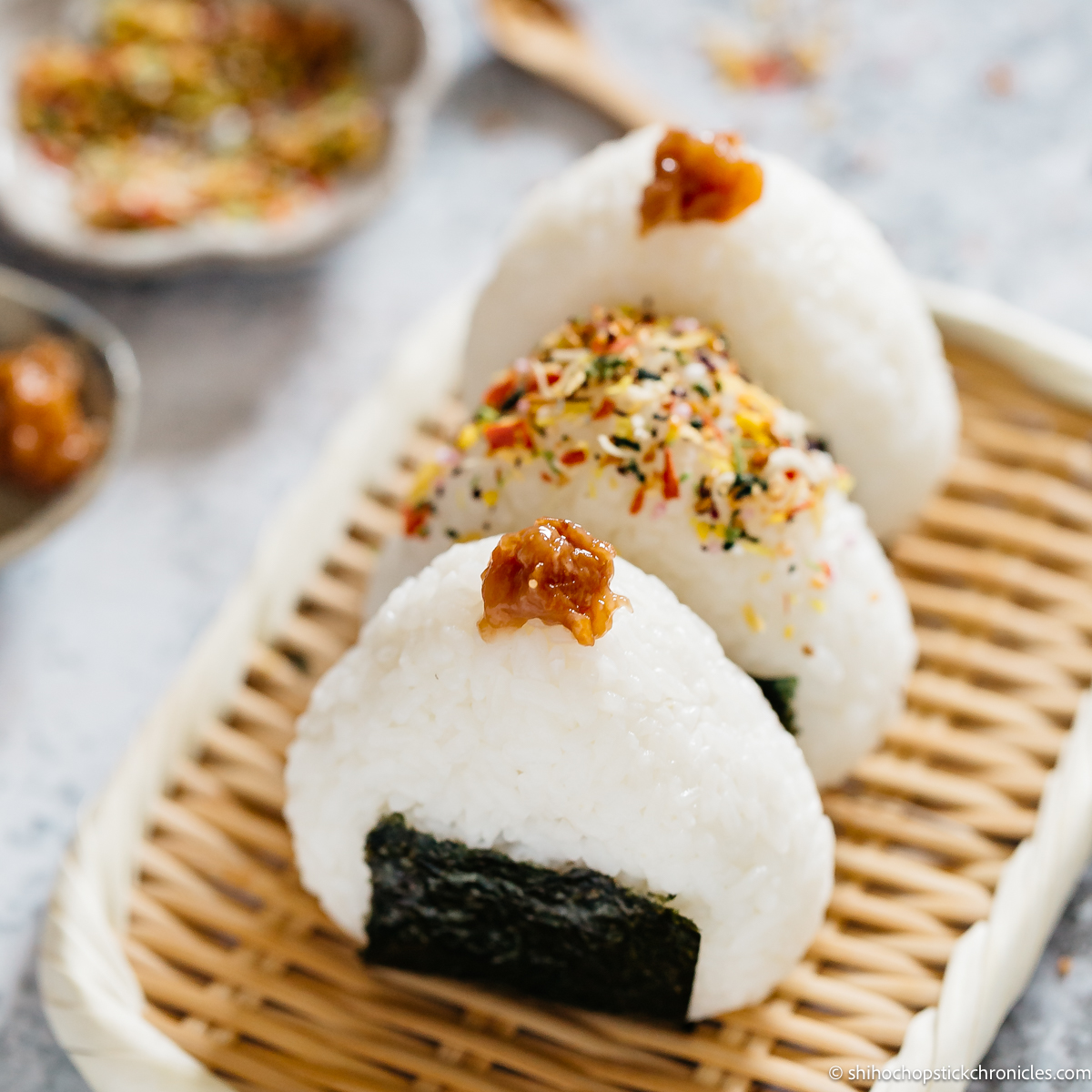
Table of contents
What is Omusubi?
Omusubi, also known as onigiri, is a popular Japanese food that consists of rice shaped into a ball or triangle often wrapped in seaweed (nori) and made either plain, seasoned, or with some kind of savoury/salty filling. Traditional fillings include pickled plum (umeboshi), tuna salad, grilled salmon, or seasoned vegetables. Nowadays many flavours exist making it easy for everyone to love onigiri. They can be eaten as a snack, lunchbox item, or even a quick meal on the go.
Omusubi can sometimes be confused for sushi but they are very different. Omusubi is made from plain rice and the fish fillings are cooked unlike sushi which uses seasoned vinegared rice and raw fish. Both foods though are very well loved in Japan. Omusubi has been a staple in Japanese cuisine for centuries; its origin dates back to over 2000 years ago! It has become popular across the world now, just like sushi and other Japanese foods like ramen. I was surprised to see how popular it was on my recent trip to Paris where I visited an onigiri shop called Omusubi Gonbei that always had a long queue at lunch time. Their omusubi was truly delicious though and only about 2 to 3 euros, so I do recommend it if you go to Paris!
Ingredients of Omusubi
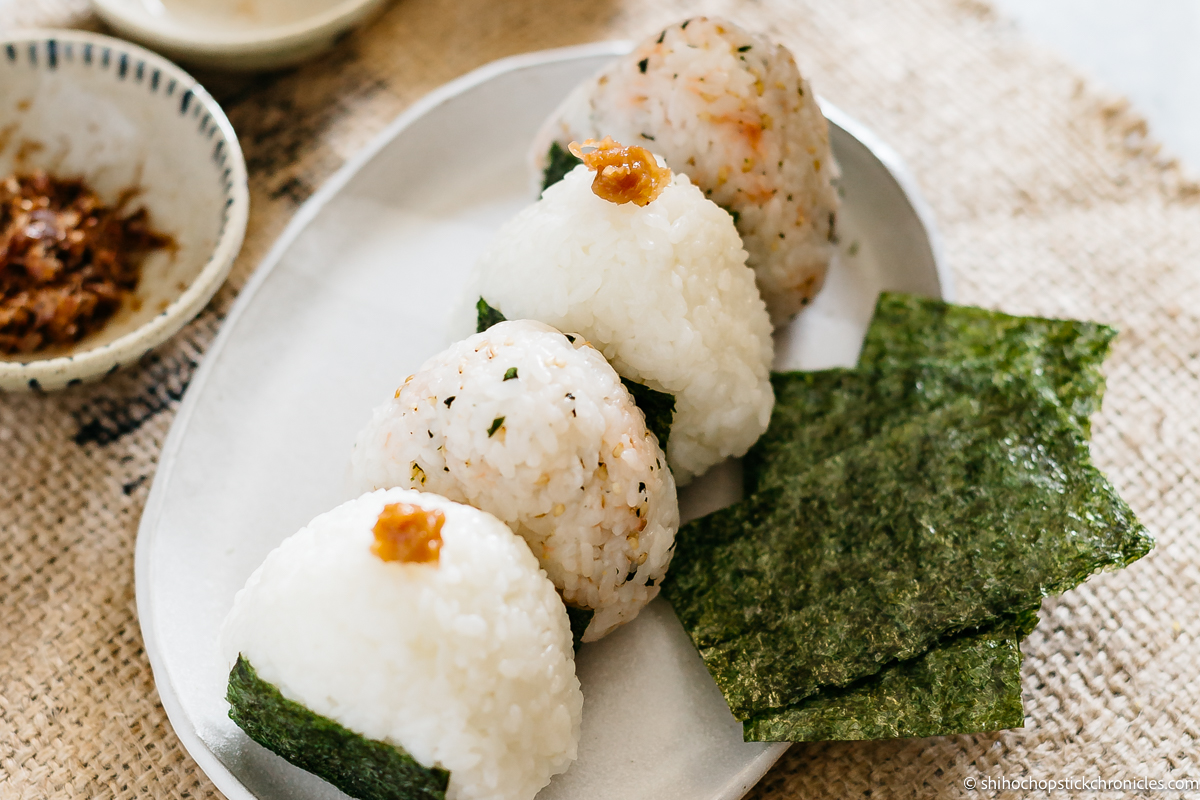
Omusubi typically consists of three main ingredients: rice, filling, and seaweed.
Rice
The most important ingredient in omusubi is the rice itself. The best rice for making onigiri is high quality short-grain Japonica “Koshihikari” white rice, because it absorbs the optimal amount of water which helps the omusubi to stick together. It is also important to cook rice as the Japanese do. Read here how to cook rice the Japanese way.
This Japanese rice is available from Japanese/Asian grocery stores. You can also get this rice from major supermarkets if you are in Australia (the brand is called Sun rice). This type of rice is also used for making sushi, so it may be labeled sushi rice.
Filling/seasonings
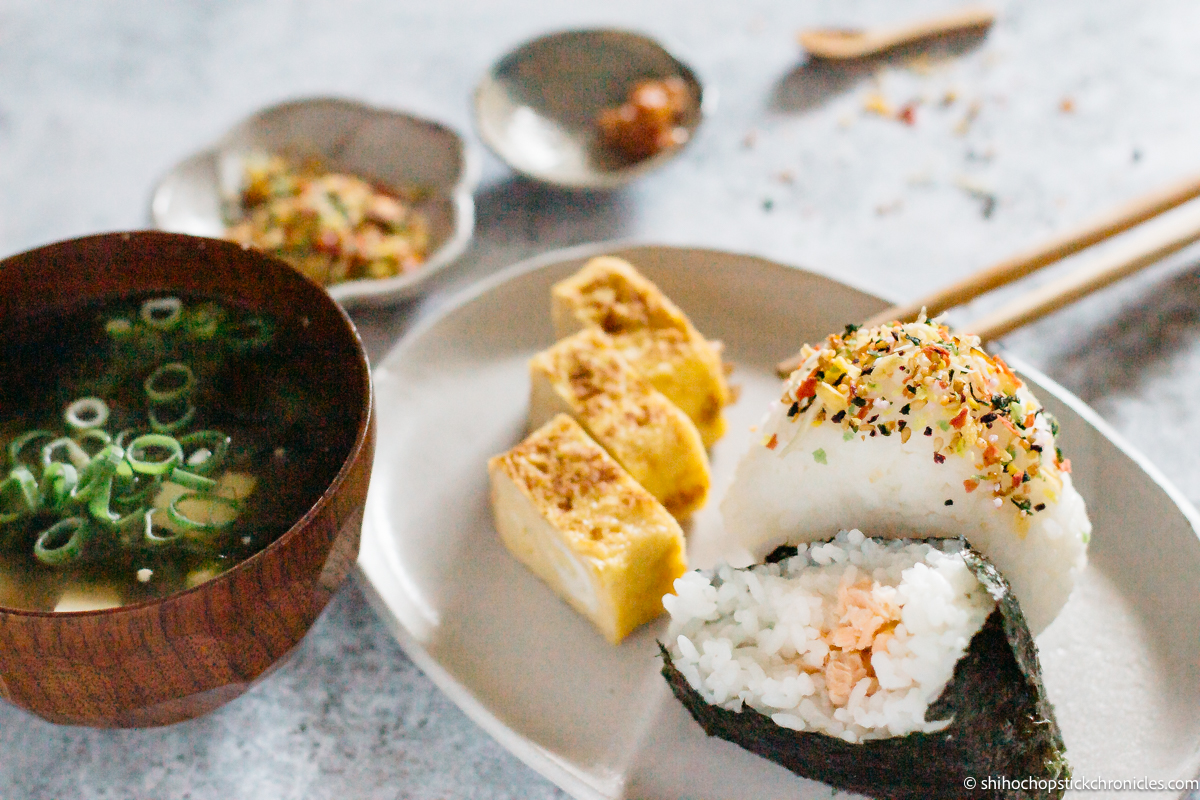
Omusubi is not only delicious but also versatile and customizable. You can get creative with different fillings and seasonings to suit your taste preferences or just eat them plain. Onigiri are very often just seasoned with a bit of salt and wrapped with nori or sprinkled with sesame seeds.
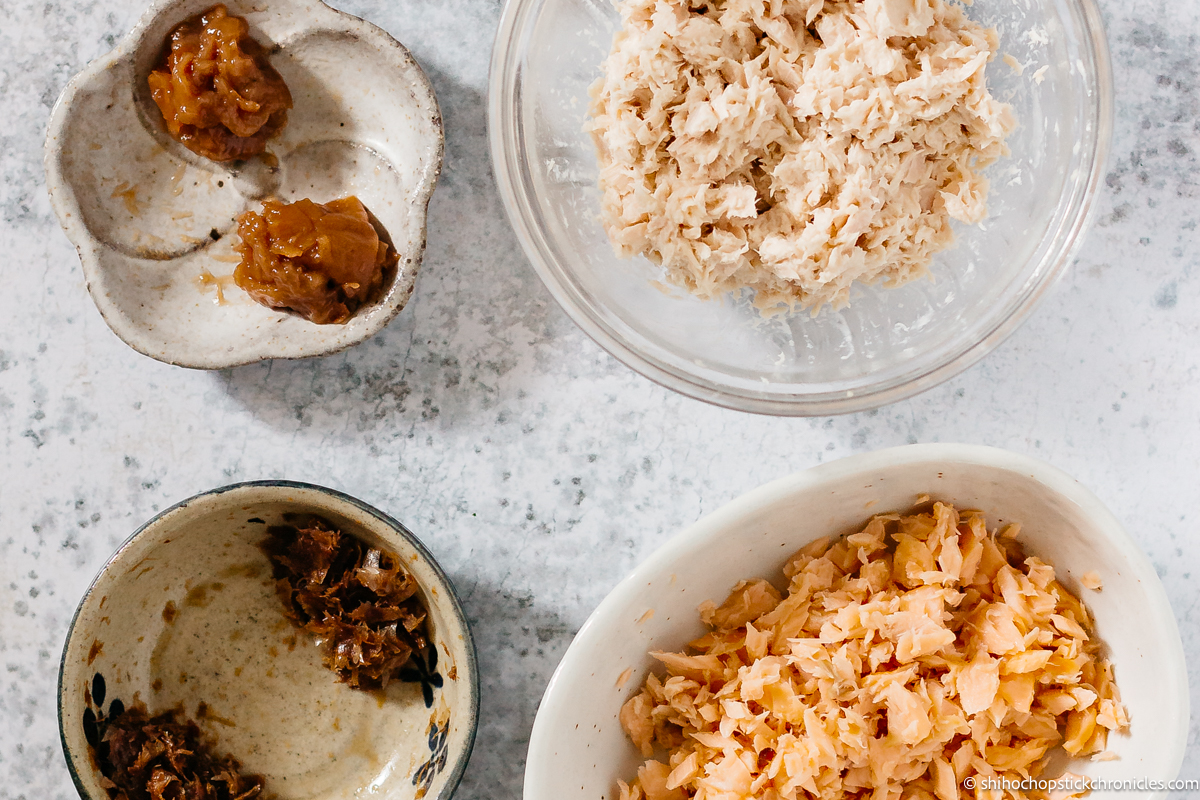
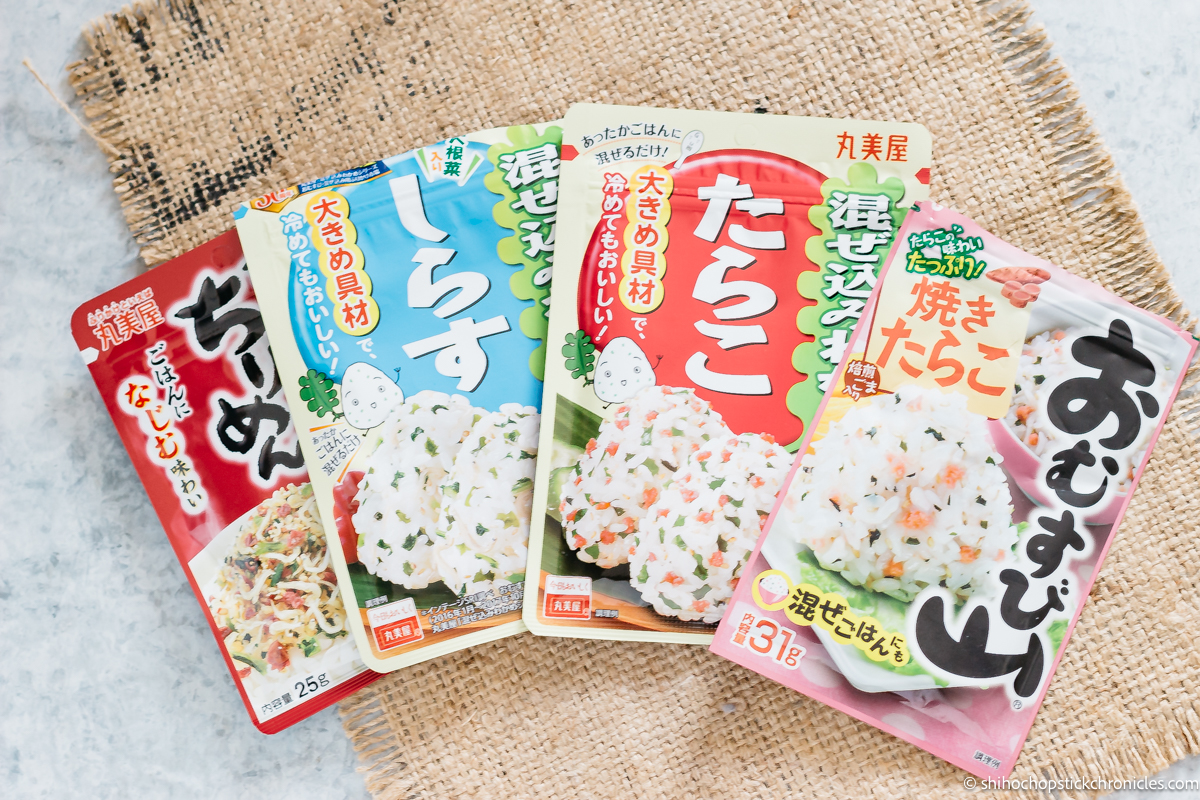
Seasonings: besides plain salt, other seasonings used for omusubi are furikake or yukari (which is a type of purple seasoning made from red shiso leaves). Popular brands of seasonings are Mizkan Omusubiyama and Marumiya. Flavors can range from wakame seaweed & salmon, daikon leaves, pickled plum & bonito flake, tuna Mayo, grilled cod roe etc. Just add the seasoning and mix into hot freshly cooked rice, then leave for a while. The dry seasoning ingredients will be steamed by residual heat in the hot rice and become soft and delicious.
Meat/Fish Fillings: typical ingredients are grilled salmon (shiojyake), tuna mayo, and shrimp tempura. You can also use yakiniku beef, fried chicken, or teriyaki chicken.
Vegetable Fillings: common vegetarian ingredients include pickled plum (umeboshi), konbu/kombu (seasoned kelp), katsuobushi (dried fish flakes), and takana (pickled Japanese mustard leaf).
The filling can be placed in the center of the rice ball or mixed into the rice before shaping it into a ball.
Seaweed
A key component of omusubi is the outer layer of dried seaweed called nori. The nori not only adds a unique flavor to the dish but also helps hold everything together when wrapping around the rice ball.
Use your favourite seasonings and fillings to create delicious and satisfying omusubi that can be enjoyed as snack or meal when paired with other dishes. You can also make your own authentic Japanese bento boxes by adding onigiri along with things like Tamagoyaki, Korokke, Karaage chicken, Teriyaki Meatballs, Yakitori, Tsukune chicken meatballs, and salad.
How to Make the Rice Balls
The freehand method
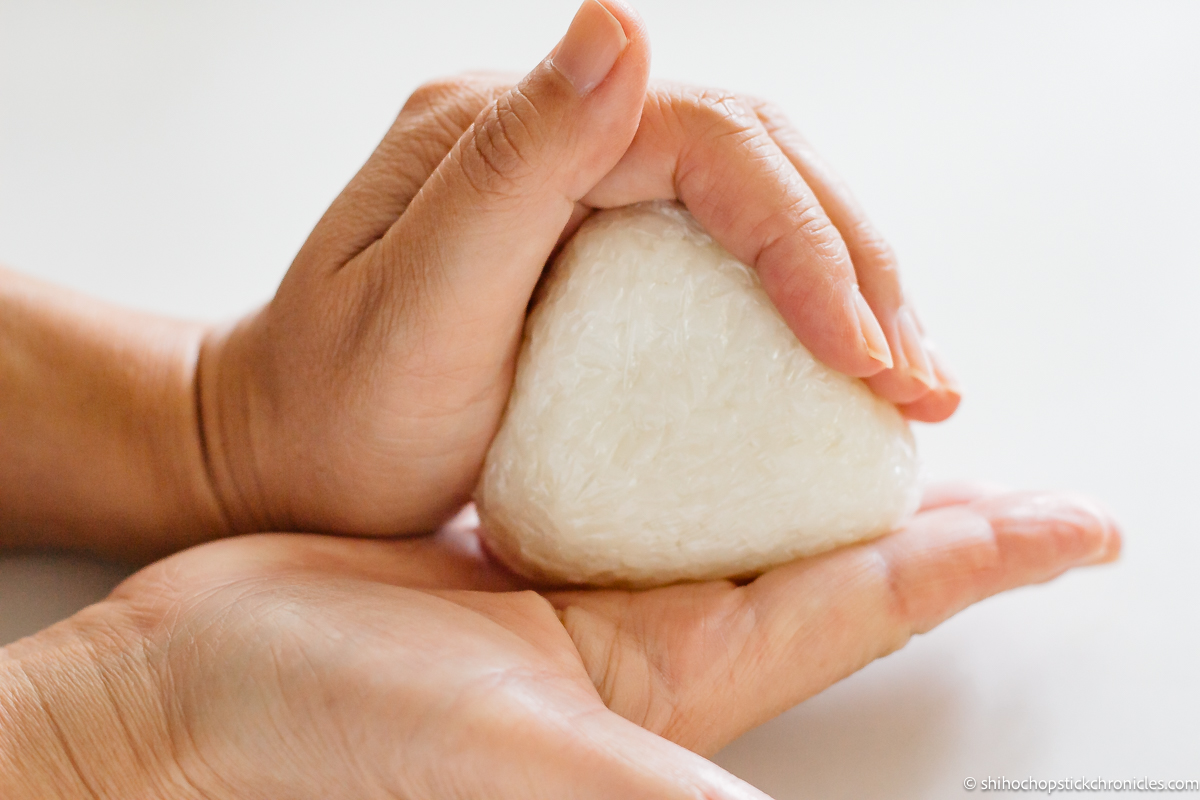
Basically, grab a handful of cooked rice and squeeze into balls (any shape) with your hands. However, you need to choose good rice. If the rice is too dry and does not hold moisture, it will not stick together. You need to wet your hands before you handle cooked rice or use plastic wrap. Then shape the rice balls with your hands while you are squeezing.
Using molds
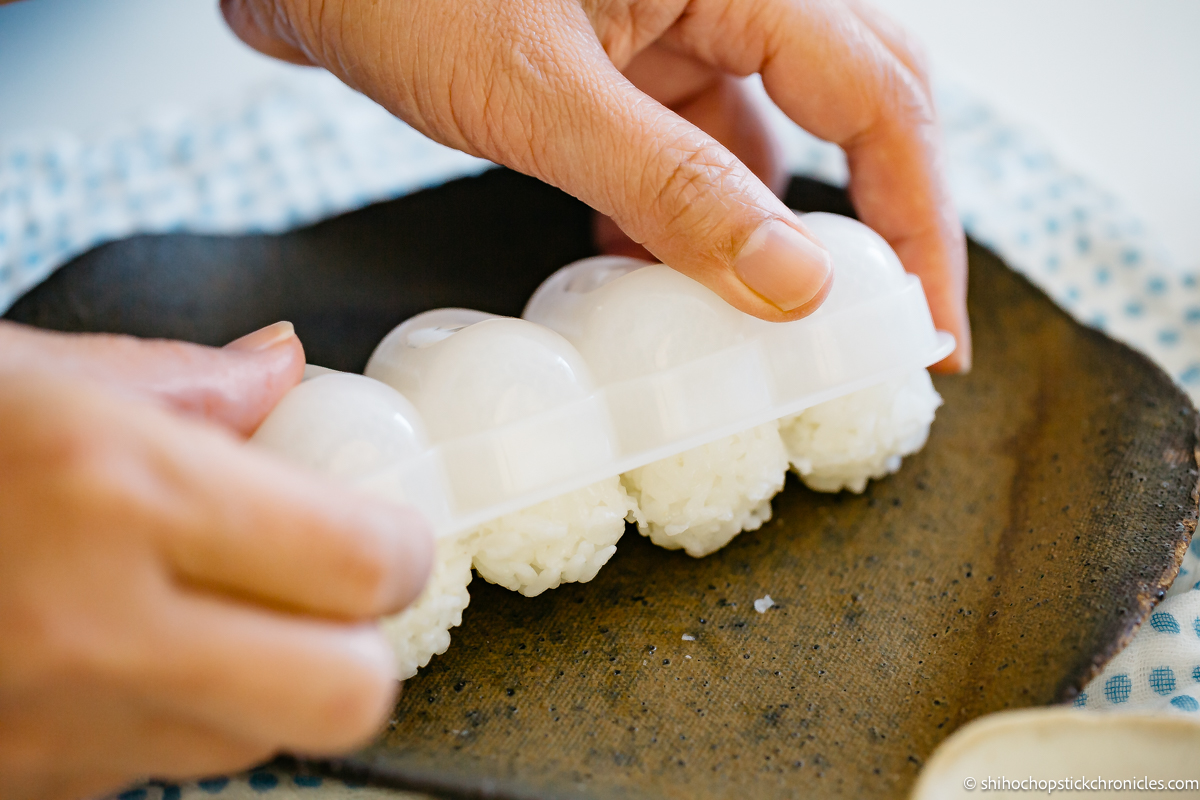
If you are not confident in shaping onigiri freehand, there are molds available to help. When you use a mold, you also need to wet the mold before you put rice in it to avoid the rice sticking to it. Onigiri Molds are available from Japanese/Asian grocery stores or online.
Shapes of Omusubi
This shape is probably the easiest to make. Wet your hands so that the rice will not stick to them, and shape it into round balls. You can make it like a sphere or flatten it a bit like a circle. You can see this round circle shape of onigiri for takikomi gohan and sekihan azuki bean rice at convenience stores in Japan.
Round shaped
This shape is probably the easiest to make. Wet your hands so that the rice will not stick to them, and shape it into round balls. You can make it like a sphere or flatten it a bit like a circle. You can see this round circle shape of onigiri for takikomi gohan and sekihan azuki bean rice at convenience stores in Japan.
Triangle shaped
Shaping into triangles may be a little more difficult. Initially, you squeeze the rice the same as for shaping round rice balls. Then put it in one palm and use the other hand to form one triangular corner. Then keep rotating the rice ball on the palm while you squeeze the next corner every rotation.
Tawara (round cylinder) shape
This shape is not as difficult as the triangular one actually. Start with a round shape and then squeeze into a cylinder shape. This shape is known as Tawara which means straw bales.
Wrapping Rice Balls
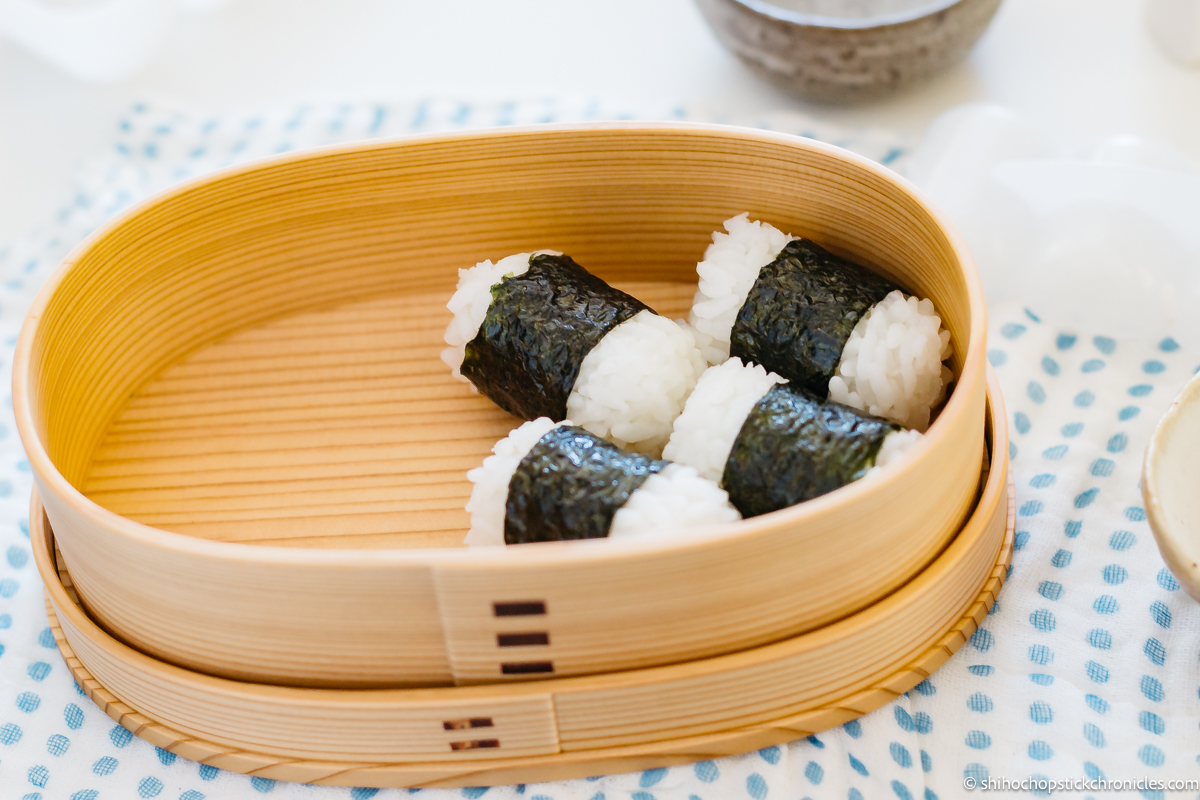
We want to keep the nori sheet as fresh as possible. Have you ever bought Japanese rice balls wrapped with a rather complicated looking plastic wrap that separates the nori seaweed sheets? Rice ball Film Wrap are available online or you can make them at home. The instructions are in the FAQ below. Onigiri are also often served with the nori already wrapped around the rice which makes the nori soft and formed into the rice. If you prefer this way then it’s not necessary to separate the nori and the rice with any plastic wrapping.
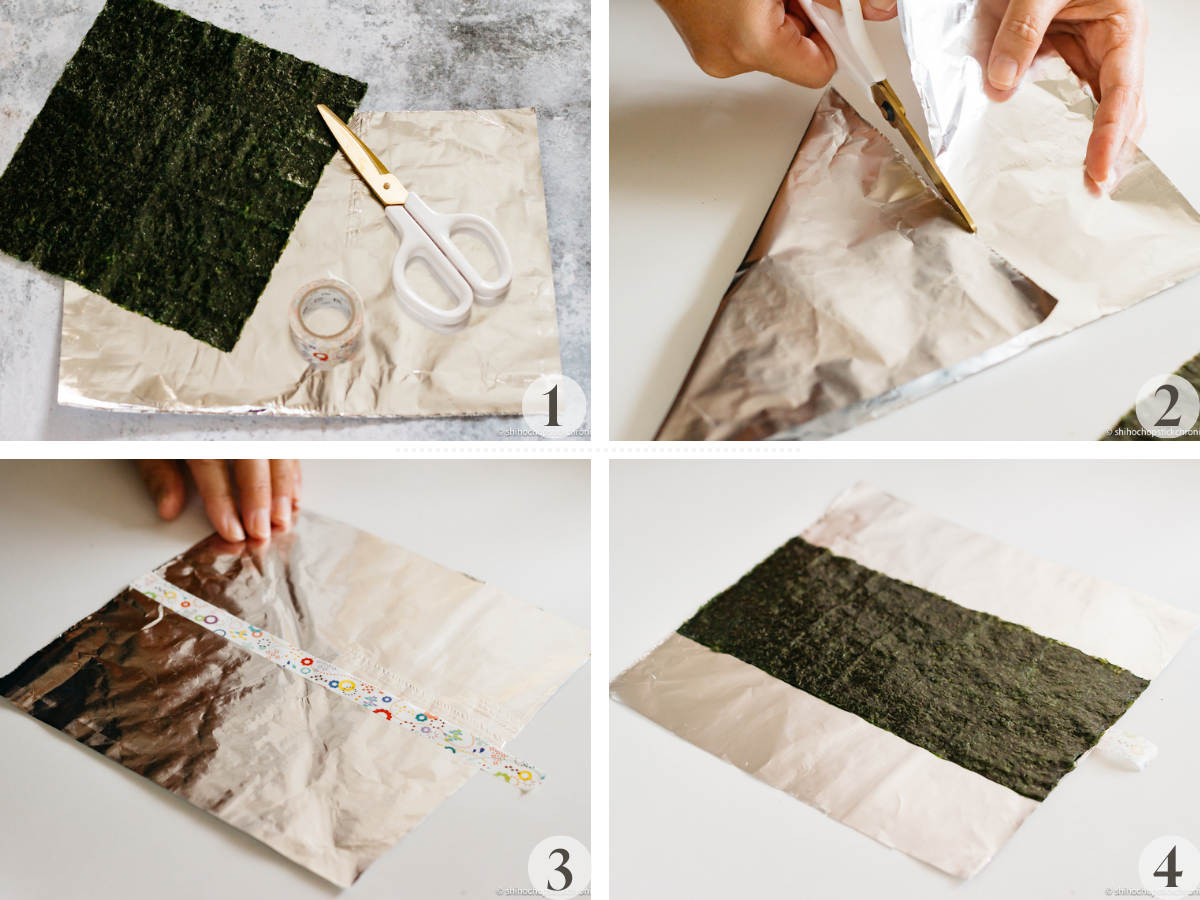
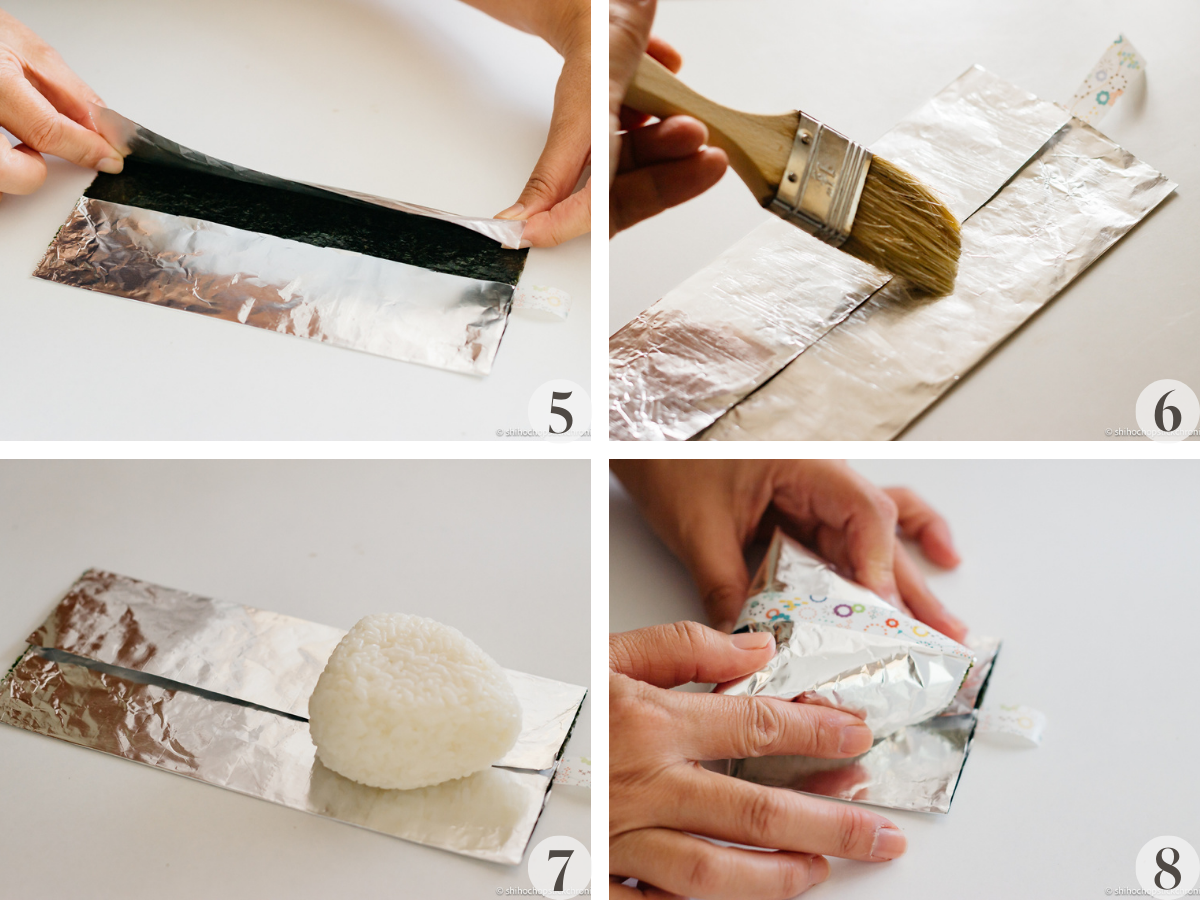
Here is the instruction for making your own onigiri wrapping to separate the rice from the nori. You need aluminum foil and masking tape. Also, see the video.
- Stick masking tape vertically over the center of the aluminum foil on the kitchen bench or on a flat surface.
- Flip it over and place a nori sheet on the center vertically.
- Fold both sides of aluminum foil in.
- Spread sesame seed oil (or olive oil) over the aluminum foil.
- Place onigiri on the top half of the aluminum foil.
- Fold the bottom half over the onigiri to cover the onigiri.
- Secure the top with the end of the masking tape to seal it.
Tips to make delicious Onigiri
- Choose the correct rice -> Japonica short-grain rice, such as Koshihikari or labeled as sushi rice.
- Cook rice like Japanese do
- Use a mold for an easy way to shape the omusubi.
- Use plastic wrap or make your hands damp if using your hands to shape the omusubi to avoid the rice sticking all over your hands.
Onigiri variations
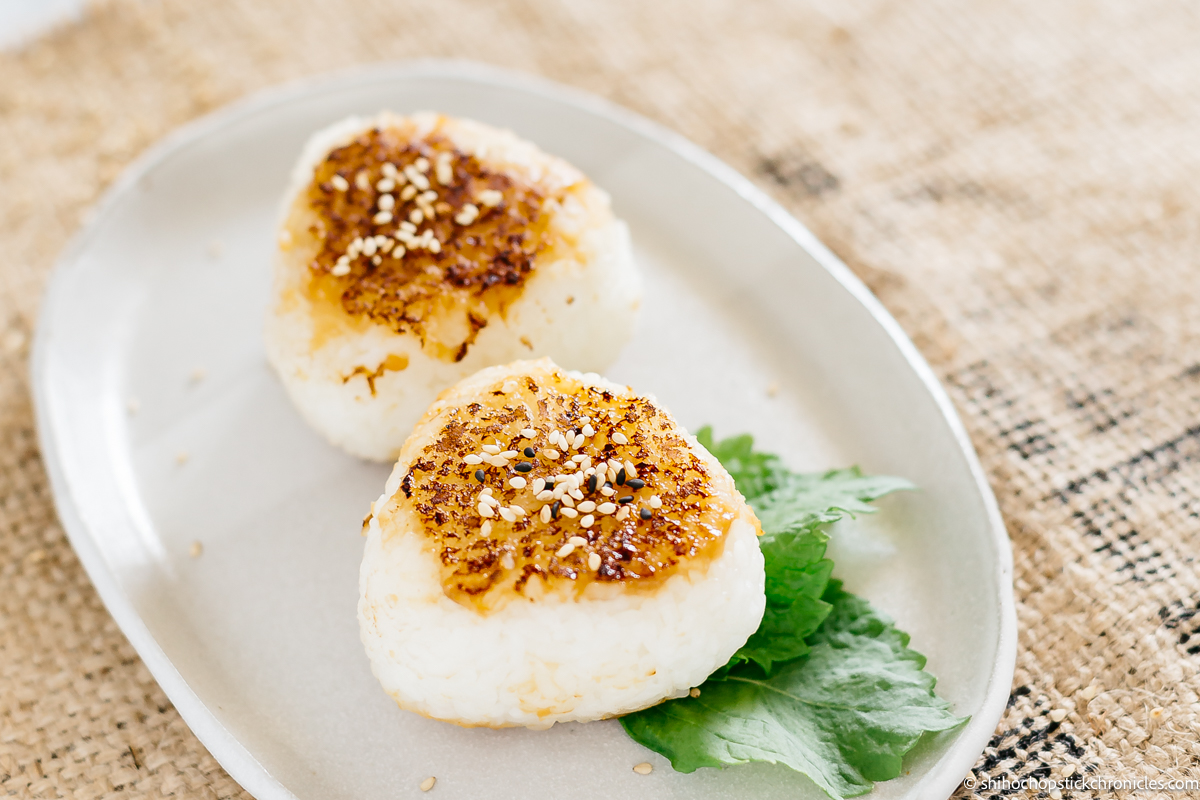
- Yaki Onigiri Grilled Rice Balls : this onigiri is coated in miso melted butter then grilled.
- Sake onigiri : salmon onigiri.
- Mentaiko Onigiri : mentaiko (marinated pollock or cod roe) mixed with mayo is spread on the onigiri and then they are grilled.
- Spam Musubi : a Hawaiian take on omusubi. These have grilled spam on top.
Rice dishes that can be shaped into balls
- Sekihan azuki bean rice
- Sekihan with chestnuts
- Ketchup rice : If you wrap the ketchup rice with a thinly fried egg, you can make Omurice onigiri. This is actually sold in convenience stores in Japan.
- Takikomi gohan
- Hijiki Rice
How to store
Unlike convenience stores’ rice balls, homemade rice balls do not contain any preservatives so it’s best to eat them fresh. It’s also tricky to store rice without it going dry in the fridge. Also if you use your hands to make them without plastic wrap, even though you wash your hands before you make the rice balls, contact with your hands will introduce germs which shorten the life of the rice. So it’s always recommend to eat the day you make them for the freshest and most delicious omusubi.
If you choose to wrap the omusubi with plastic wrap instead of the nori seaweed, it increases the life of the rice. You can keep them in a ziplock freezer bag. It stores in the freezer for a month.
Stay connected
If you liked my Onigiri recipes, please leave a comment below and rate the recipe!
If you like the recipe please rate the recipe and leave comments below. Also don’t forget to follow me on Youtube, Pinterest, Facebook, Twitter and Instagram. This way you keep up to date with all the latest happenings on Chopstick Chronicles. Don’t forget to Sign up for a weekly newsletter so you never miss out on new authentic delicious Japanese recipes!

How to Make Japanese Onigiri (Rice Balls) おむすび
Video
Ingredients
- ½cup/310g rice (uncooked) *1
- 1 nori (seaweed) sheets *2
- 1 seeded umeboshi pickled plum
- 2 tbsp of bonito flakes *or 2.5g if you have a kitchen scale
- ½ tsp soy sauce
- ½ tsp mirin
- 95 g tinned tuna *3
- ½ tbsp Japanese mayonnaise
- 1 piece Salted salmon *4
Instructions
- Cook the rice according to your rice cooker or if you don’t have a rice cooker, follow the instructions here. *5
- Transfer the cooked rice to a separate bowl to cool it down. I used a Japanese wooden bowl*6 for sushi making.
- Prepare all the fillings that you are going to use and set aside. *7 see some suggestions
- I used Umeboshi (pickled plum), Okaka (bonito flakes), and Tuna. For Umeboshi, deseed the plums then divide the flesh into three chunks. For Okaka, place bonito flakes into a small mixing bowl and combine with soy sauce and mirin. For Tuna, drain the brine or olive oil and mix with 1 tbsp mayonnaise.
- Prepare seaweed sheet (nori). *8
- Place plastic wrap over a rice bowl.
- Place ⅙ of the cooked rice ( 3/4 cup or 120g) over the centre of the plastic wrap and make a well.
- Put about 1tsp of umeboshi (or any fillings of your choice) on the centre of the rice then cover with the rice around.
- Wrap the plastic wrap over the rice and squeeze and mould the rice into a triangle shape with your hands.
- Remove the plastic wrap and cover the bottom of the rice triangle with a nori sheet and set aside.
- Repeat the same steps as above to use rest of the rice with other fillings that you prepared.
Notes
Nutrition
Chopstick Chronicles is a participant in the Amazon Services LLC Associates Program, an affiliate advertising program designed to provide a means for sites to earn advertising fees by advertising and linking to Amazon.com. As an amazon associate I earn from qualifying purchases.





I absolutely love how you’ve broken down the process of making onigiri! Your detailed instructions and tips make it seem so easy and fun to try. Thank you for sharing such a delightful and informative post!
Hi Heirloom project, thank you for lovely comment <3
I love these! Such a simple recipe to follow.
I have made them twice now. The first time I made as the recipe suggests with tuna Mayo filling.
I’ve just made a second batch today but changed it up slightly. I added some veggie stock cubes and a dash of soy sauce when I cooked the rice for extra flavour.
I used smoked tuna, Mayo, and corn for the filling. It turned out really nice!
Thank you for such an easy to follow recipe!
Hi Ariel, thank you for making onigiri with my recipe and nice adoption.
Over here, onigiris are extremely pricey. I’m happy to see they’re quite super easy to make ! 😀
Thank you for making Onigiri 😀
Does short grain brown rice work as well as white sushi rice? I live onigiri, but I’m trying to be healthier with brown rice.
Yes Cassi if the rice is sticky enough to hold the shape.
I loved the onigiri with umeboshi filling and it was a great way to bond with my dad and my brother, who helped make them. I made this recipe today as part of a project for my college class. I’m researching how the online Japanese community creates and engages in Japanese culture within their own homes, by cooking and eating Japanese dishes. If anyone would be interested in sharing their thoughts on this subject, please reach out to me!
Thank you so much Hannah san for your comment. I am sorry that I did not reply to your request in time of your project 😞
Hi Shiho! I actually still have time before my project is due, and I would still love to hear from you! Do you think you could get back to me before next Wednesday?
Ok, no problems 😀
Hi. I lived I’m Japan for a while and at Don Quixote they are always selling a ramen egg onigiri. The rice is cooked in what I think is tonkotsu broth. My husband is Japanese and we both miss this onigiri. Have you ever made a ramen egg onigiri and if so do you have any tips?
Hi, Olivia. Thank you for your comment to let me know of the Onigiri. It is new flavour onigiri for me, I have never heard of. They are evolving all the time :D. I am going back to Japan for short period of time soon and will research about ramen egg onigiri.
My daughter can smash through an onigiri like there’s no tomorrow! that’s all we ate every morning when we were in Japan. I LOVE the miso butter onigiri! What an awesome idea!
That’s great! 😀
I don’t cook much Japanese food but with your easy step-by-step photos, I don’t feel at all intimidated. What a delicious recipe!
Thank you Renee, I am glad to know that step by step photos are useful 😀
I’ve been watching some Youtube videos about Japanese food, and I’ve heard onigiri mentioned a lot. So it’s wonderful to see exactly how to make it, and how easy it is! Thank you so much! Also, I can’t believe that you can buy onigiri molds! Japan is a wonderful place and I really want to visit some day – mostly to taste all the ymmy food!
Bookmarking this post to try making later!
Thank you so much for 5 star rating and a lovely comment Helen 😀
This is the first time that I actually read the blog post preceding the recipe. Usually, the preamble isn’t informative and entertaining, like yours. So, thank you!
Also, I just had breakfast, but now I’m hungry again. I’m going to try to make onigiri later.
Thanks again!
You are welcome and thank you for reading my story 😀
These are wonderful! Thanks for a great recipe.
You are welcome Taryn Thank you.
Thank you Taryn 😀
This looks amazing!
Thank you Wilhelmina 😀
I’ve never had rice balls, but these look amazing!!
Hi Tayler, they are simple and delicious, if you have never had before, you should try it ;D
wow super easy to follow great recipe!
thank you very much 😀
Hi SHIHOKO
You gave me some inspiration to make onigiri with my year 2 students at the end of term as a fun activity! We are reading the Japanese folk tale called “The rolling rice balls” Thank you!!
You are welcome Shoko san 😀 If you can make before 15th/Nov, please share the photos on any social media with the hashtag #OnigiriAction. Your photo will deliver 5 meals to children in need 😀
Hi Shihoko! May I know if I can use regular rice or do I have to use japanese rice?
Hi Dee, It does not have to be ‘Japanese’ rice but make sure it is short grain glutinous rice.
Is short grain glutinous rice always sweet or does it sometimes have a different taste if it’s not explicitly marketed as “sushi rice”?
Hi Greg, Short grain glutinous rice is not sweet. They may taste sweet when it was made to mochi because they add sugar. The type of rice Japanese people usually eat is “Koshihikari”. They are different from the rice making mochi. I am in Australia and the short grain rice is not sticky enough to make rice balls so I buy the rice marked sushi rice.
Mmm… onigiri is one of my favorite snacks! I love how light, yummy, and portable it is! And your onigiri is just beautiful!
I love Onigiri so much! I live in Washington, DC, but there is a small Japanese store that I have bought onigiri from a couple times and it is such a good snack or light lunch. My favorite is tuna mayo 🙂 I should make them at home!
Hi Allie, make sure you use Japanese rice, otherwise rice will not stick together 😀