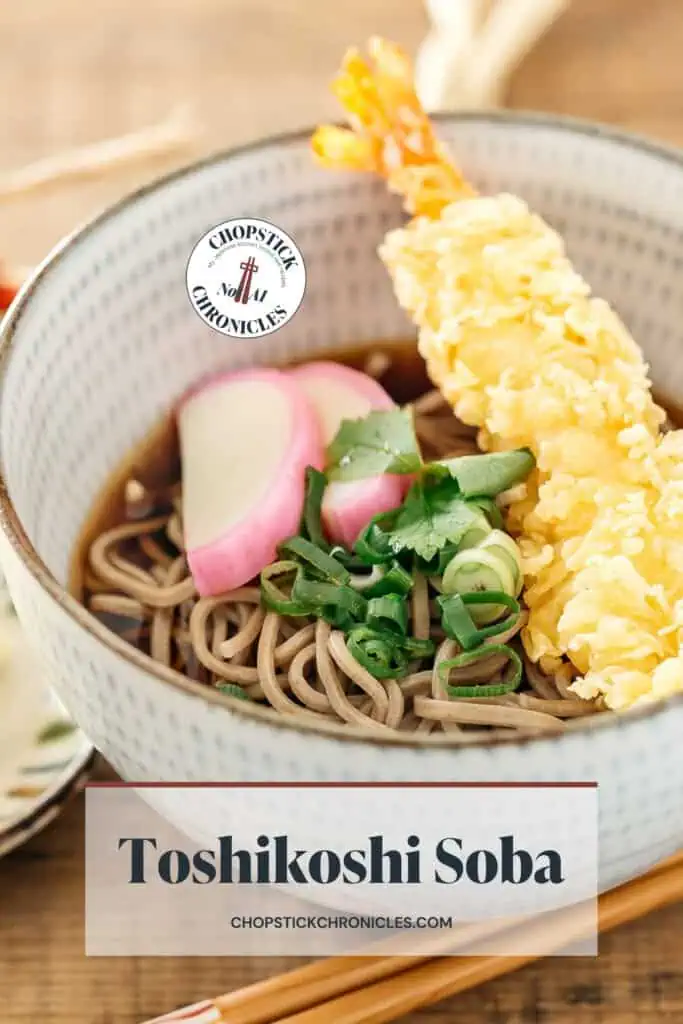
As the year draws to a close, Japanese households prepare for a cherished tradition that bridges the old year with the new: Toshikoshi soba. This dish made from buckwheat noodles is not only a delicious meal but also a symbol of longevity, strength, and hope for a prosperous year ahead. Served hot in a savory broth, toshikoshi soba is traditionally eaten on New Year’s Eve to reflect on the past year while slurping noodles that represent the wish for a life as long as the soba itself. This tasty dish is easy to prepare in just 15 minutes so you can participate in a Japanese new year custom at home!
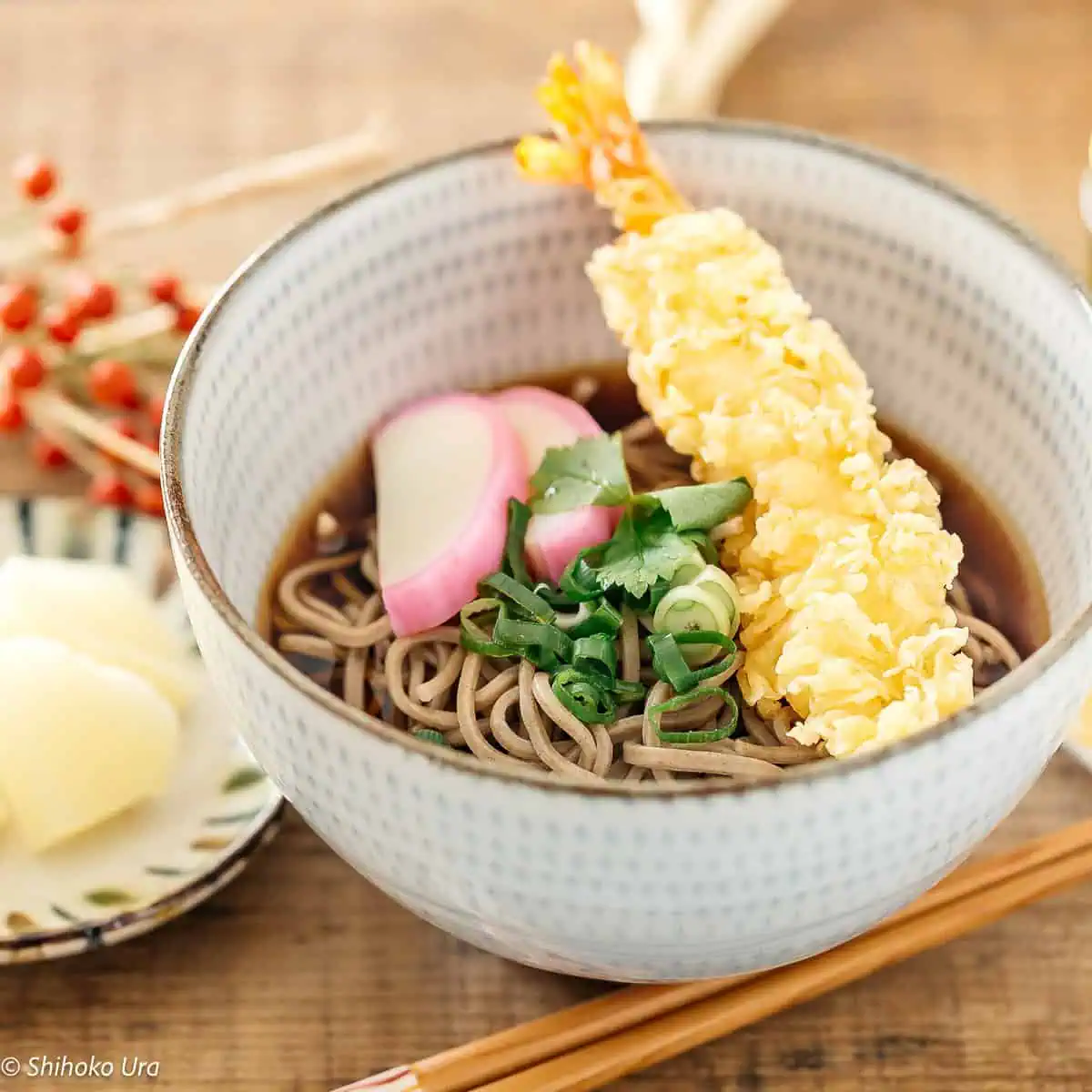
Table of contents
What is Toshikoshi Soba?
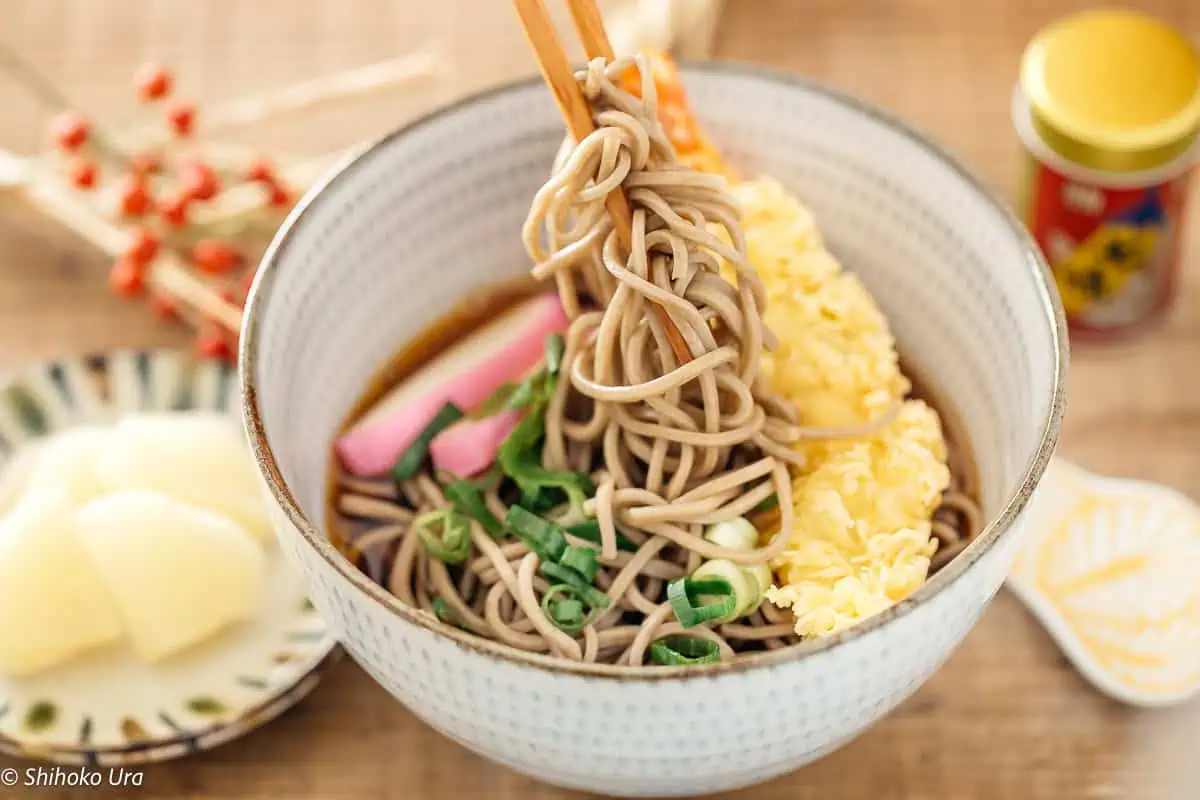
Toshikoshi soba, which translates to “year-crossing noodles,” is a traditional Japanese dish eaten on New Year’s Eve. This custom, dating back to the Edo period, involves eating long buckwheat noodles served in a hot flavorful broth topped with spring onions. The long, thin noodles symbolize longevity and prosperity for the coming year. It’s believed that eating these noodles will help one cross from the old year to the new with good fortune. Toshikoshi soba is typically garnished with simple toppings like green onions, kamaboko (fish cake), and tempura, allowing the subtle flavor of the buckwheat to shine through.
Key Ingredients to Make Toshikoshi Soba
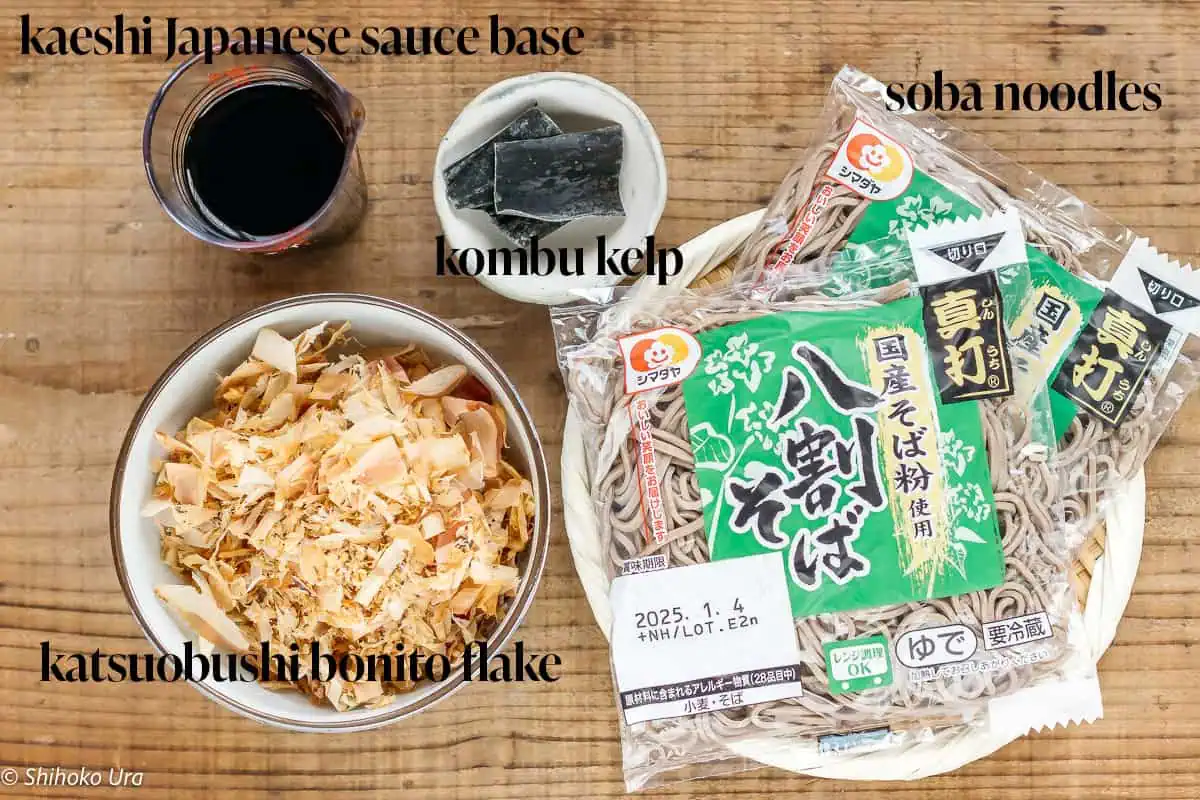
To prepare Toshikoshi soba, you’ll need the following ingredients:
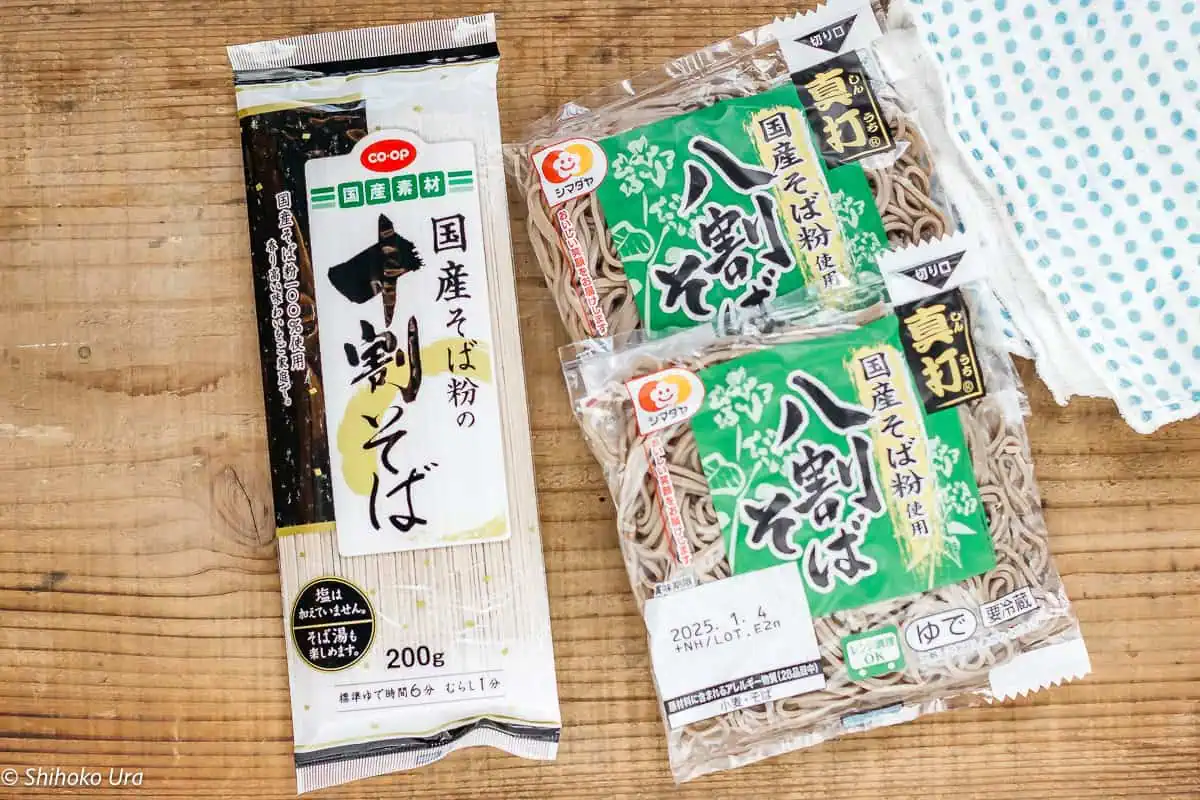
Soba Noodles
Soba noodles are thin, Japanese noodles made from buckwheat flour. The word “soba” actually means buckwheat in Japanese. These noodles have a distinctive somewhat nutty flavor and a slightly grainy texture.
Traditional soba noodles are made with 100% buckwheat flour, known as “juwari soba.” However, many modern varieties include a percentage of wheat flour to improve the noodle’s texture and make them easier to work with. These are called “nihachi soba,” typically containing 80% buckwheat and 20% wheat flour.
Soba noodles are known for their nutritional value. They’re rich in protein, fiber, and various vitamins and minerals. Buckwheat is also gluten-free, making 100% buckwheat soba a great option for anyone with gluten sensitivities.
Awase Dashi
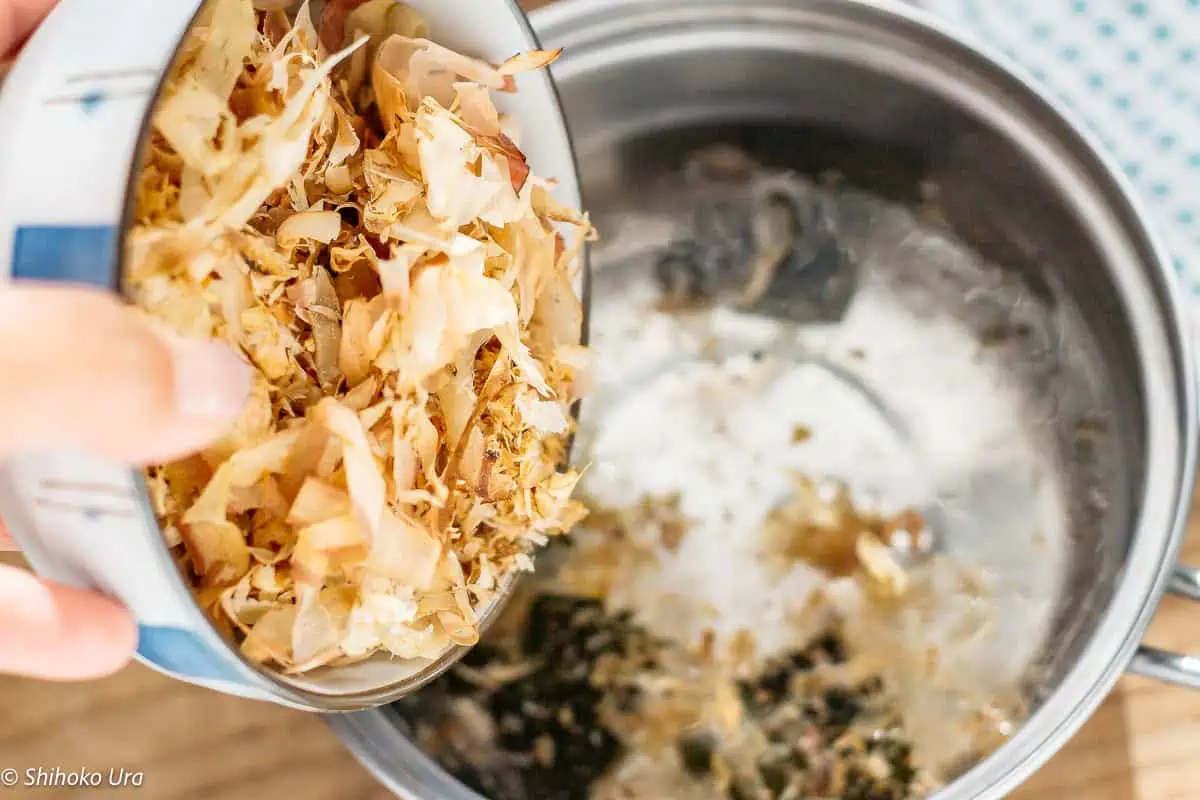
Awase dashi is the heart and soul of many Japanese dishes, including this Toshikoshi soba. This broth, which translates to “combined dashi”, is crafted from two key ingredients: kombu (dried kelp) and katsuobushi (dried bonito flakes). Together, they create a rich umami flavour that serves as the foundation of the Toshikoshi soba soup and elevates the whole dish. As I explained in the awase dashi recipe, I usually make dashi stock with the following ratio: 100 (water) : 3 (ingredients). It’s typically seasoned further with “kaeshi” (a type of Japanese soup base seasoning) to create a balanced broth.
Kaeshi
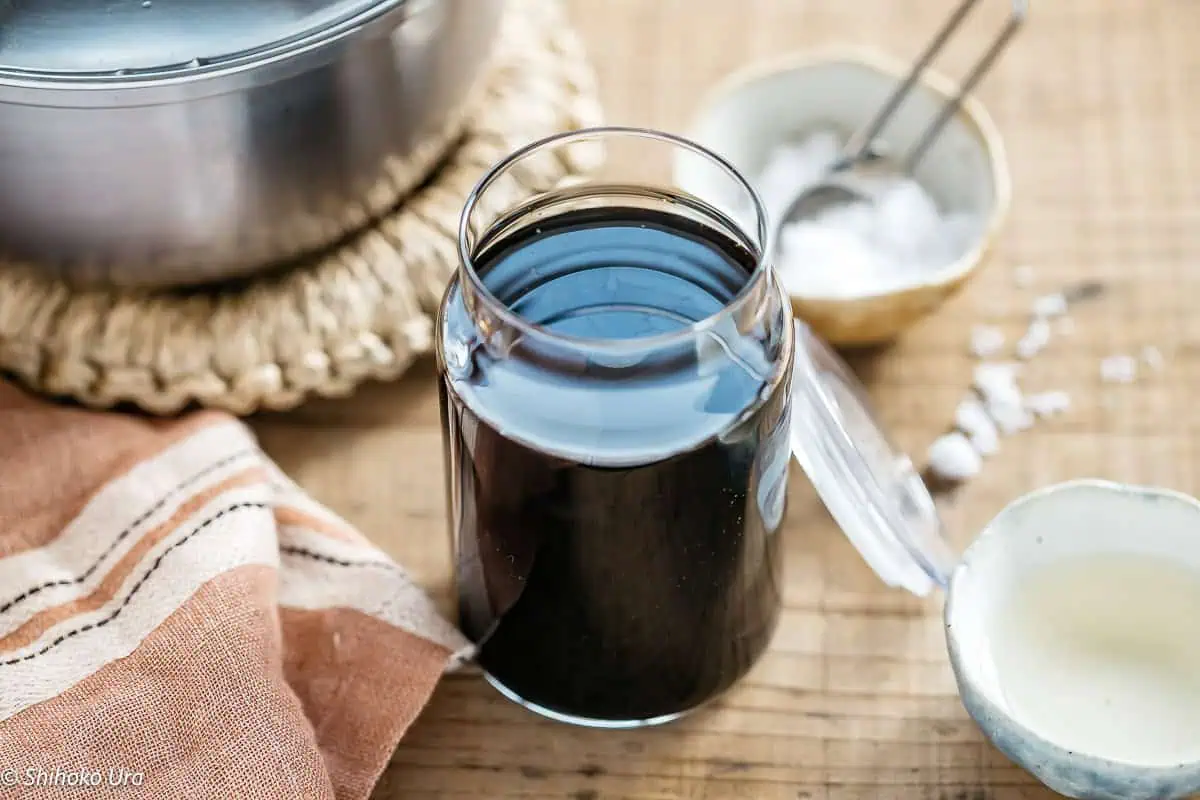
Kaeshi is a key ingredient in enhancing the flavor profile of this traditional New Year’s Eve dish. Essentially, kaeshi is a concentrated seasoning mixture that forms the base of the tsuyu (dipping sauce) or soup for the soba noodles. The basic ingredients of kaeshi typically includes soy sauce, which provides the primary savory and salty notes, and mirin, which adds depth and a subtle sweetness, and sugar. Sometimes, sake (rice wine) is also added to the mix for additional complexity.
For making toshikoshi soba, kaeshi is usually combined with awase dashi to create the final soup. The ratio of kaeshi to dashi can vary, but it’s often around 1 part kaeshi to 8 parts dashi for noodle soup, and 1 part Kaeshi to 3 parts dashi for dipping sauce, depending on the desired strength of flavor.
Toppings
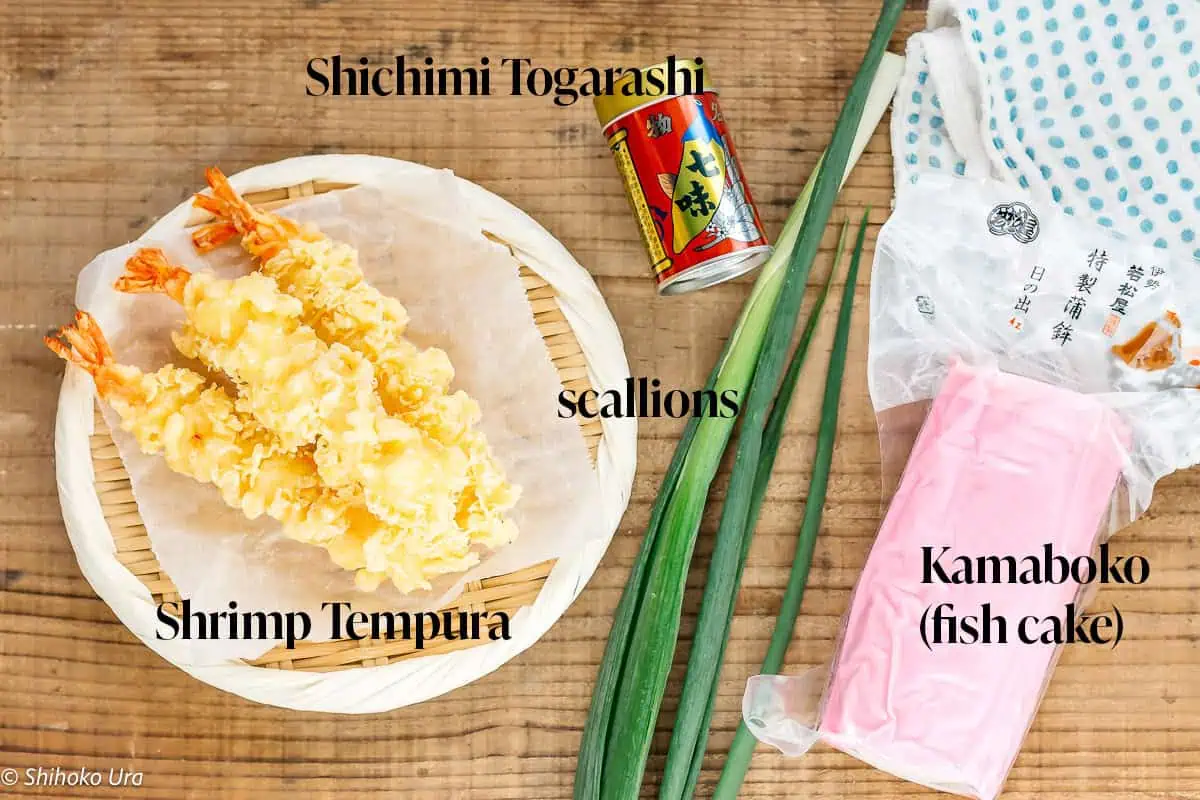
The most simple and traditional toshikoshi soba has just green onions as a topping but there are more topping options than this. Toppings also vary from region to region. Here are some suggestions:
- Kamaboko: Pink and white fish cake slices, often cut into decorative shapes.
- Green onions: Finely chopped scallions for a fresh, sharp flavor.
- Tempura shrimp: Crispy battered shrimp.
- Tenkasu: Tempura byproduct.
- Eggs: boiled or raw.
- Garnishes : Grated daikon, which will add a mild, refreshing taste and aids digestion. Yuzu zest will provide a citrusy aroma and flavor. Shichimi togarashi, a seven-spice blend, will be good for those who enjoy a bit of heat.
Step by Step Instructions for Toshikoshi Soba
Here are step-by-step instructions for making toshikoshi soba:
1. Prepare the toppings
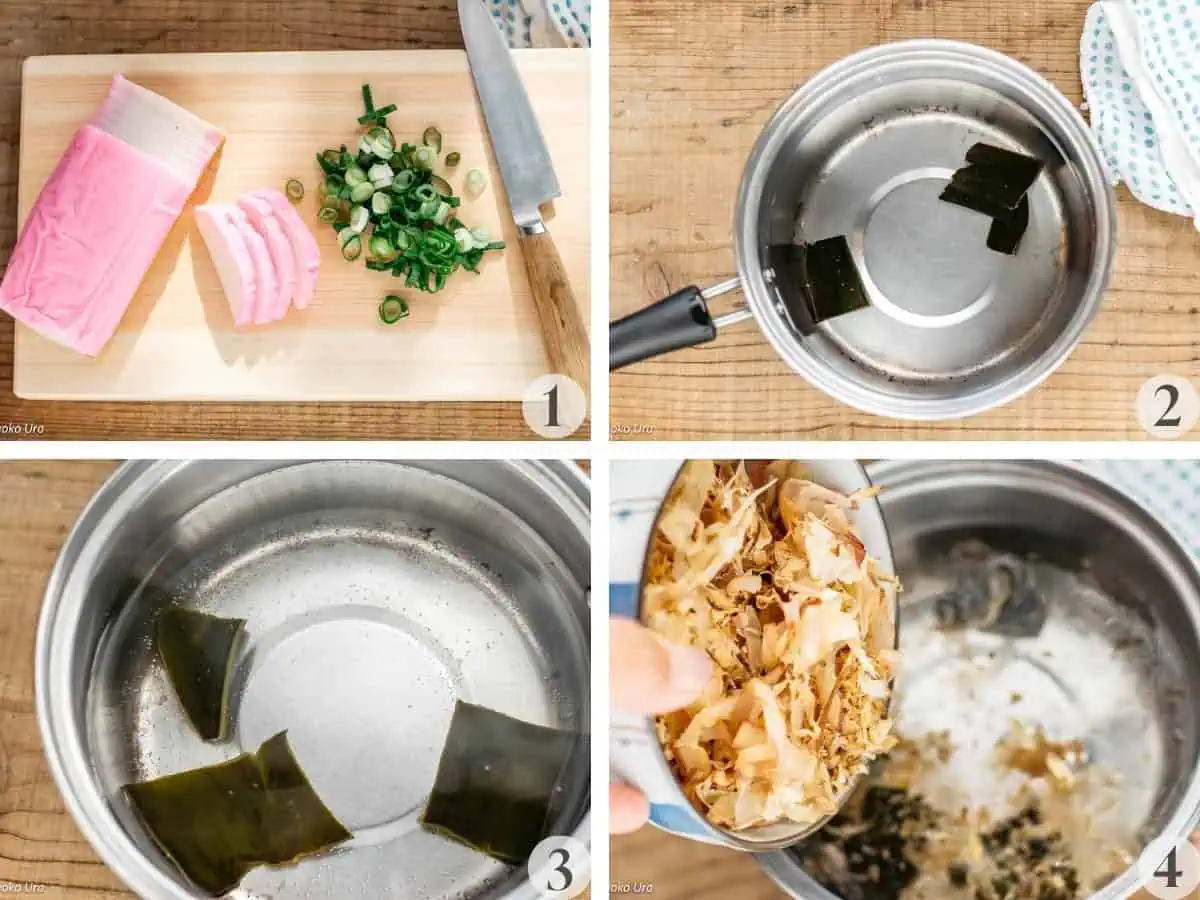
While the dashi broth kombu kelp are steeping, prepare your chosen toppings. Slice green onions, cut kamaboko into thin slices, and make tempura shrimp if you don’t have them already.
2. Prepare the broth
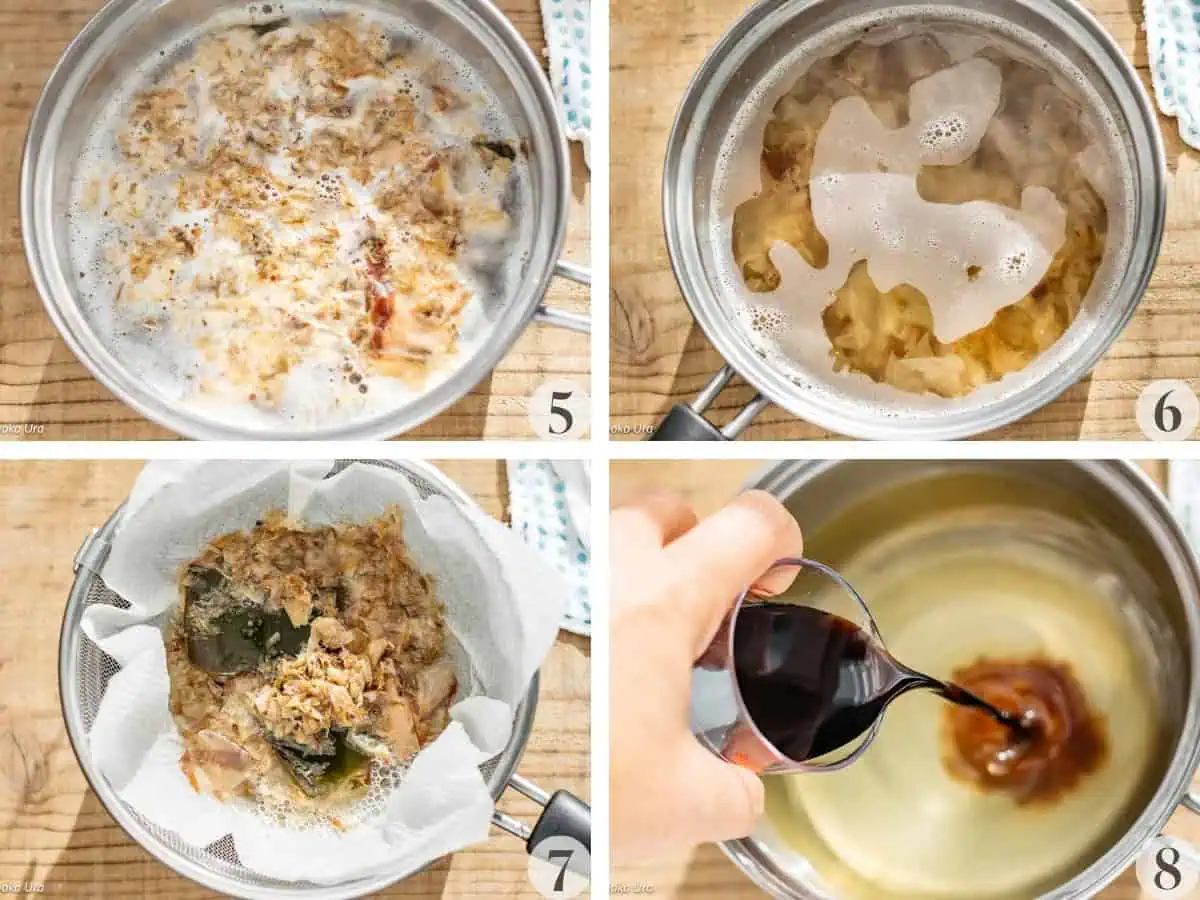
In a medium saucepan, combine dashi stock and kaeshi (soy sauce, mirin and sugar mixture). Bring to a gentle simmer over medium heat. Turn the heat off to set aside.
3. Cook the soba noodles
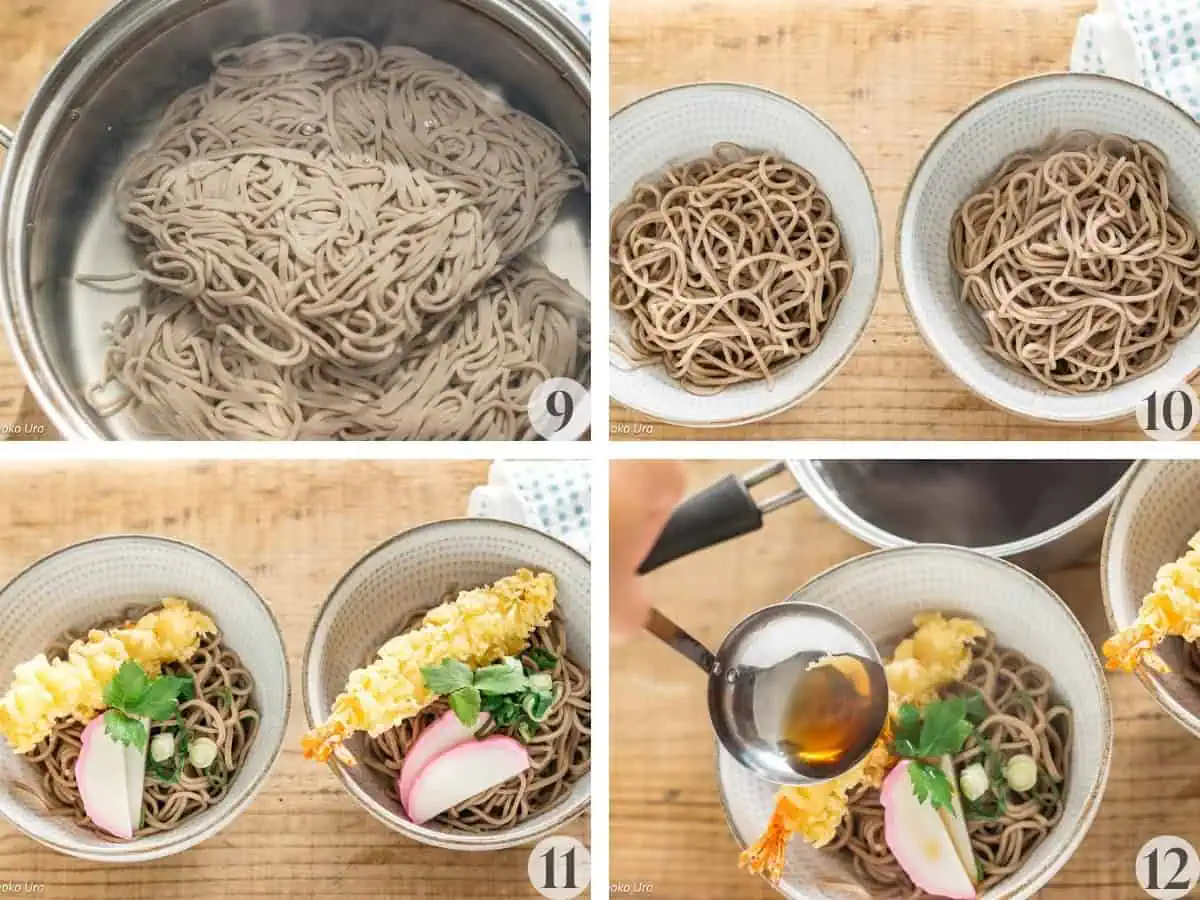
Bring a large pot of water to a boil. Do not add salt. Add the soba noodles and cook according to package instructions, usually about a couple minutes. Stir occasionally to prevent sticking.
4. Assemble
Divide the cooked soba noodles between serving bowls and arrange your prepared toppings on top of the soba noodles. Ladle the hot broth over the noodles.
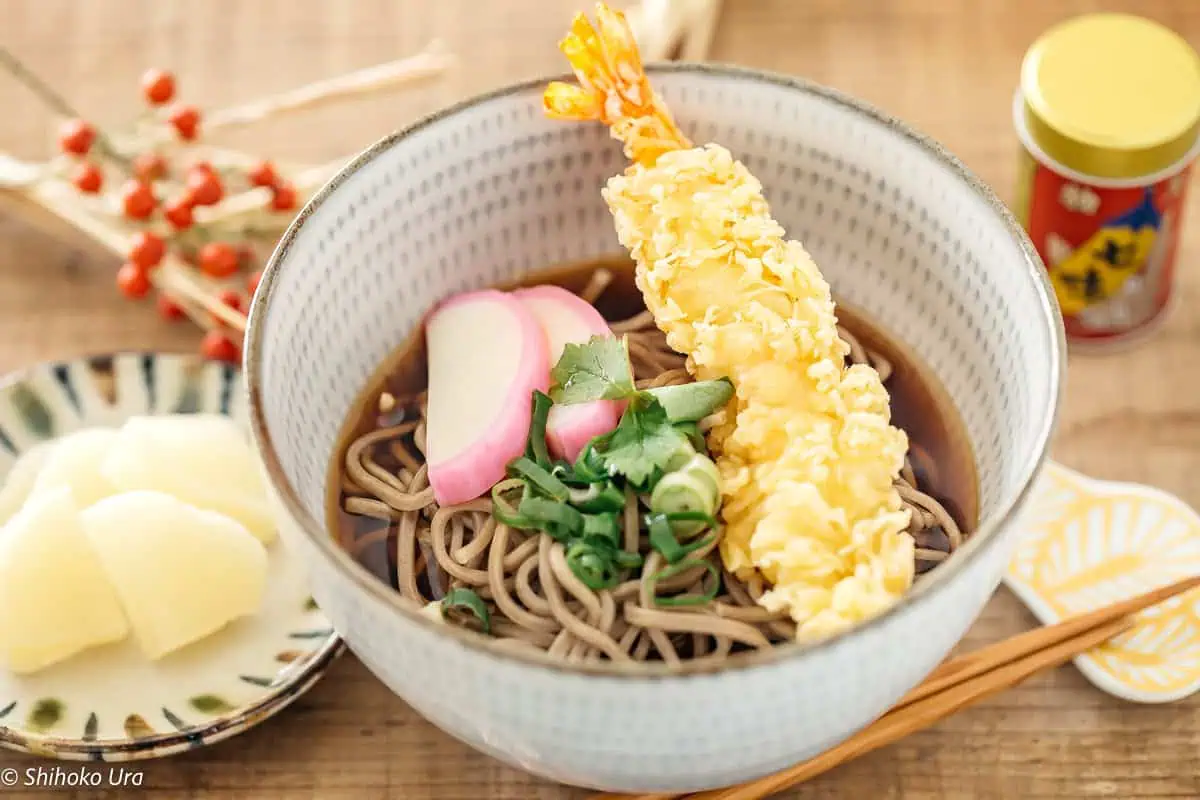
Toshikoshi soba is best enjoyed right away while the broth is hot and the noodles are at the perfect temperature.
Tips to make delicious Toshikoshi soba
- Make homemade dashi – For the best flavor, make your own awase dashi stock using kombu (kelp) and katsuobushi (bonito flakes). This creates a more complex and flavourful broth rather than instant dashi.
- Don’t over cook the soba noodles – Soba noodles cook quickly and can become mushy if overcooked. Aim for a tender but firm texture.
- Timing is key – Prepare components in advance, but assemble the dish just before serving to maintain the ideal temperature and texture of both noodles and broth.
Serving Suggestions of Toshikoshi Soba
Serve toshikoshi soba with complementary sides and accompaniments to create a well-rounded and symbolic meal. Here are some suggestions for what to serve with Toshikoshi soba:
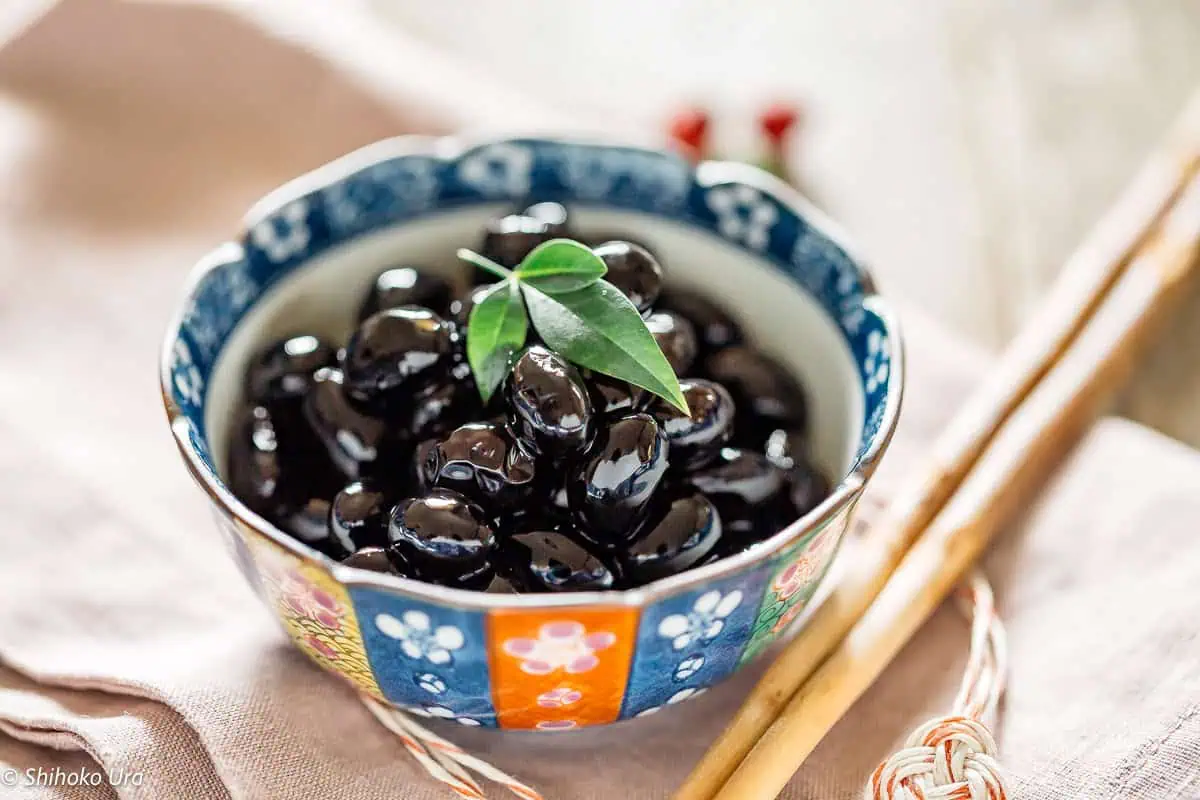
Kuromame (Sweet Black Soybeans)
These sweet and savory black soybeans are a classic New Year’s dish symbolizing good health for the coming year.
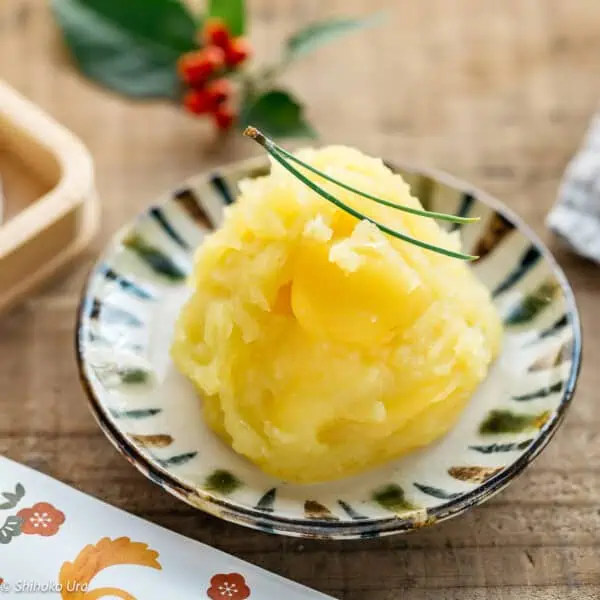
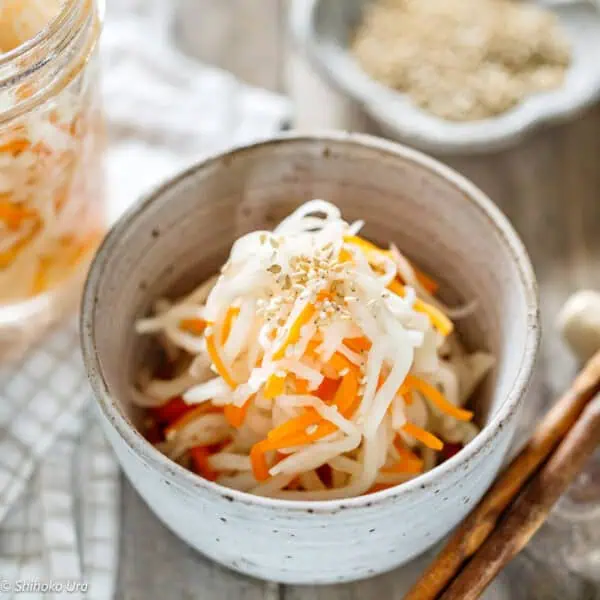
Pickled Vegetables (Tsukemono)
A small dish of various pickled vegetables provides a tangy contrast to the soba and aids in digestion.


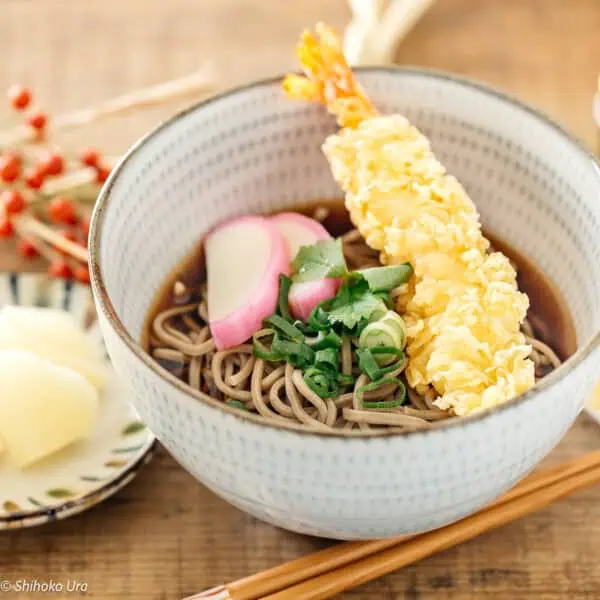
Toshikoshi Soba 年越し蕎麦
Video
Ingredients
Broth
- 700 ml water *1
- 3 g kombu Kelp
- 15 g katsuobushi bonito flake
- 75 ml kaeshi *2
Soba Noodle
- 180 g soba noodle
- 2.6 L water to cook soba noodle
Topping
- 2 tempura prawn *3
- 4 slices Kamaboko fish cakes *4
- 1 tbsp finely chopped scallions
- ¼ tsp Shichimi togarashi (Japanese seven spices) (optional)
Instructions
Soba Broth
- Clean the kelp with a clean damp cloth, place the kelp in a saucepan with 700ml water and let it stand for about 30 minutes. *5
- Heat it over medium heat and when the tiny bubbles form and rise up to the surface, add Katsuo bonito flakes and turn the heat off.
- When the bonito flakes sink to the bottom of the saucepan, Strain the dashi into a large bowl with a sieve lined with a kitchen paper towel.
- Pour the strained dashi stock back into the saucepan and add 75ml kaeshi.
- Heat the soba tsuyu over low-medium heat. Also start to heat the water for cooking soba noodle.
Soba Noodle
- When the water for cooking soba noodle boil, add the soba noodles. Loosen the noodle with chopsticks and cook them according to the boiling time indicated on the package. *6
- Drain the boiling water, and divide the noodle into serving bowls.
Assemble
- Top the noodles with your choice of toppings and pour the soba tsuyu soup over the toppings and noodles.
Notes
 to the same amount of water of the recipe.
*2 If you can not find Mirin, substitute it with 2 tbsp of dry sherry with 1 tsp of caster sugar.
*3 See how to make Tempura prawn.
*4 optional. If you can not get kamaboko, you can substitute with anything you want, such as chicken, boiled eggs, tofu, etc.
*5 .The most common type of soba noodle available outside of Japan is dry soba noodles. For these noodles, you need about 70-90g (2.5-3oz) for one serve. Boil 1-1.3L (0.26-0.34gal) of water in a large pot, and cook the soba noodles for about 4 min. This cooking time may vary so check the packet instructions.
* Nutritional facts are calculated based on one tempura prawn.
to the same amount of water of the recipe.
*2 If you can not find Mirin, substitute it with 2 tbsp of dry sherry with 1 tsp of caster sugar.
*3 See how to make Tempura prawn.
*4 optional. If you can not get kamaboko, you can substitute with anything you want, such as chicken, boiled eggs, tofu, etc.
*5 .The most common type of soba noodle available outside of Japan is dry soba noodles. For these noodles, you need about 70-90g (2.5-3oz) for one serve. Boil 1-1.3L (0.26-0.34gal) of water in a large pot, and cook the soba noodles for about 4 min. This cooking time may vary so check the packet instructions.
* Nutritional facts are calculated based on one tempura prawn.




Can you make this in a batch and keep it hot in a crockpot?
Hi Rachel, no you can’t sorry.
Konnichiwa Shihoko,
This recipe was delicious! I have now tried about 7 or 8 of the recipes on your blog, and they have all been amazing! My boyfriend grew up in Japan, and he is quite particular about using authentic recipes. He has been very happy with everything that I’ve made from your blog! Thanks so much for helping me learn how to cook Japanese dishes!
You are welcome Elisabeth 😀 Happy Japanese cooking!
This soup was really fantastic! Best for the wet season.
Thank you, Yes It is Japaneses comfort food 😀
Awesome recipe, loved it!
Thank you James 😀
Question….is the soup part eaten as well or used mostly to flavor everything. Thank You and Happy New year!.
Hi Lin, some people drink all. So it’s up to you 😀